Categories
Bitcoin Blockchain News Opinion People

JPMorgan Strategist: Crypto Bear Market Almost Over

The worst of the crypto winter, according to a JPMorgan analyst, is about to end for crypto assets, companies, and individual investors. As a last option for many failed crypto companies, deleveraging is projected to be nearing its end.

“Indicators like our Net Leverage indicator show that deleveraging is already well progressed,” said Nikolaos Panigirtzoglou, JPMorgan’s strategist and Managing Director. Deleverage holdings have risen significantly during the weak market, according to Panigirtzoglou.

Other crypto enterprises with “stronger balance sheets” are making it their business to help restrict the virus spread by the bear market, according to him, which accounts for part of the reason for this forecast. He added.

The analyst was clearly referring to FTX’s assistance in the BlockFi situation, a Bahamian bitcoin futures market. To assist BlockFi in “managing the market from a position of strength,” the exchange provided a $250 million emergency credit line.

As a second factor, venture capital financing has not been significantly impacted by the present market conditions, which also influenced the prediction, In spite of the recent Crypto Winter, financing has topped $5 billion in the months of May and June.

By swiftly selling off its assets, a company is able to lower its leveraged positions and pay off its obligations. After Terra’s UST stablecoin plunged, several crypto companies have reduced their leveraged bets in response.

As of recently, a $670 million loan from Voyager Digital was unpaid by Three Arrows Capital, a Singapore-based crypto hedge fund. Due to the present overpowering circumstances, it has been difficult for the crypto hedge fund to navigate the market. This has made it vulnerable to bankruptcy.

According to current market conditions, firms like Celsius Network are among those with exposures to significant leverages that seem to be backfiring.

In the next weeks, the crypto market’s future trajectory is uncertain, but it is expected to have a significant impact on investors and crypto businesses.


Categories
Bitcoin Blockchain News

Hacker asks 10 Bitcoin for Chinese Stolen Data

An unknown hacker has made a proposition to sell the personally identifiable information of over one billion Chinese citizens in exchange for ten Bitcoin (BTC), which is roughly equivalent to $200,000 USD at the current exchange rate.

The information that is obtained includes the names, birthplaces, houses, telephone numbers, national identification numbers, criminal records, and other particulars of private persons dwelling inside the boundaries of the country.

It is believed that the hacker obtained access to the database of the Chinese police department in Shanghai, grabbed more than 26 gigabytes worth of personal information from the database, and then deleted the database.

Because of the enormous quantity of data that was at stake, many of them were skeptical about the validity of the hacker’s claim as soon as they heard it for the first time.

On the other side, the hacker revealed some of the information in order to demonstrate how extensive the assault was.

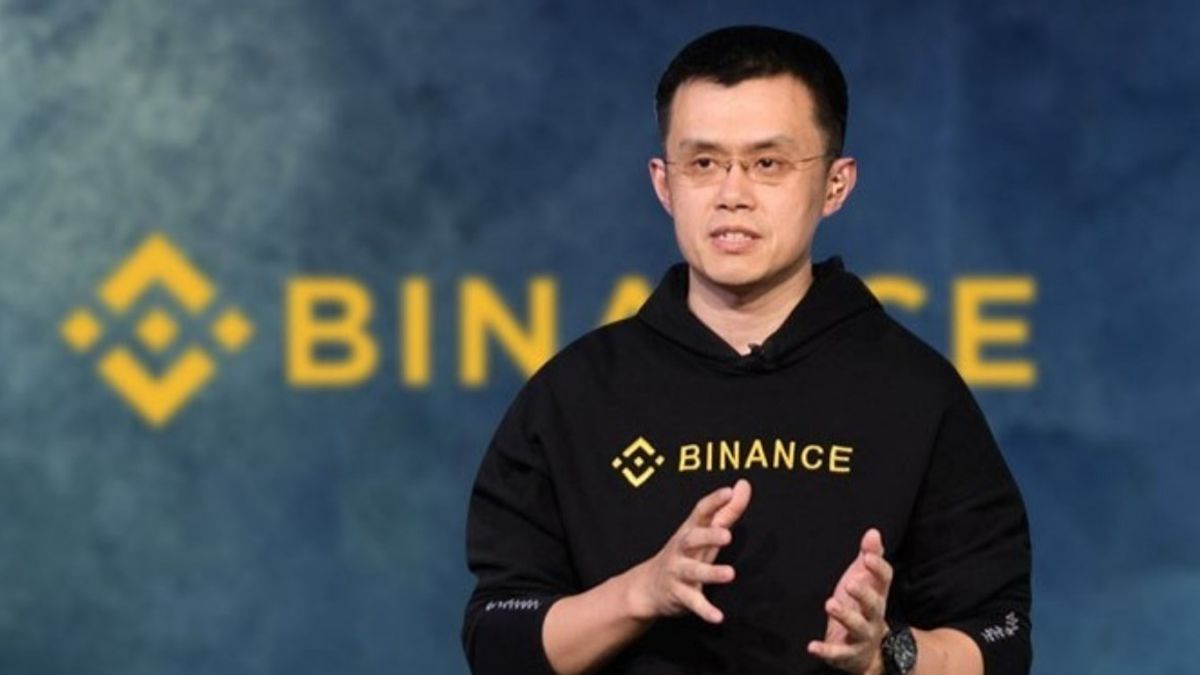
The Chief Executive Officer of Binance, Changpeng Zhao, has acknowledged the claims that have been made against the business.

He made the revelation earlier on this day through Twitter that the threat intelligence obtained by his organization had found someone who was proposing to sell the personal information of one billion people of a nation in Asia. The country in question is located in Asia.

The compromise in security “was presumably brought about by a weakness in an ElasticSearch deployment by a government agency,” according to the reporting of CZ.

On the other hand, he has said without equivocation that the vulnerability was brought about as a consequence of “the government engineer writing a tech blog on CSDN and mistakenly including the credentials.”

Binance has reportedly strengthened its security protocols in order to confirm the accounts of users whose data may have been compromised as a result of the attack, as stated by Zhao.

In addition to this, he strongly suggested that the same policy be implemented across all of the other platforms.

Categories
Blockchain News Technology

Voyager is looking into strategic options after freezing withdrawals

This past Sunday, crypto broker Voyager Digital posted a series of tweets outlining its search for new strategic options in order to preserve its clients’ funds and maximize their return on investment.

Within days after the suspension of trading, deposits, withdrawals, and loyalty incentives on the platform of the brokerage business, a statement was issued

More than $650 million in claims against the hedge fund Three Arrows Capital (3AC) and over $350 million in cash at the Metropolitan Commercial Bank are among the firm’s crypto assets.

Voyager said in a press statement on Friday that trading, deposits, withdrawals, and loyalty awards on its platform had been discontinued.

It allows the brokerage business more time to continue exploring strategic possibilities with multiple interested parties while safeguarding the value of its platform, according to Stephen Ehrlich, Voyager Digital’s CEO.

After 3AC failed to pay back its debts, Voyager filed a notice of default on the platform. This has had a severe impact on the service.

Despite 3AC’s demise, the brokerage business says it is seeking all legal options to collect, including a court-ordered liquidation procedure in the British Virgin Islands.

As part of its strategic review, Voyager has hired Moelis & Company and The Consello Group as financial consultants, and Kirkland & Ellis LLP as legal counsel.

Voyager has received a $500 million line of credit from Alameda Research, a quantitative trading business, to satisfy its clients’ liquidity needs. As of this writing, the broker has tapped $75 million from the line of credit.

As a result of the present bear market, the corporation has joined a growing list of companies that are struggling to meet their financial obligations.

Celsius, Babel Finance, and CoinFlEX all stopped accepting withdrawals from their platforms last month.

Crypto companies have reduced the quantity of their personnel to comply with the current market crisis and other measures.

Coinbase, the world’s most popular cryptocurrency exchange, lay off 18 percent of its workforce in June.

Many leading cryptocurrency companies, like CryptoCom, BitFi and Gemini have also decreased their workforces.

Categories
Blockchain News Technology

This is Why Binance CEO Took Jab At Vauld

CEO Chengpang “CZ” Zhao of Binance slammed Vauld, a Singapore-based crypto exchange, and loan business, on Twitter.

CZ, in response to a report on Vauld’s suspension of withdrawals, warned against utilizing platforms that need VC backing. As far as he is concerned, they lack a solid business plan.

Because one of the firms financing Vauld is a rival of Binance (Coinbase), CZ’s jibe makes a lot of sense. Vauld is also backed by Valar Ventures, led by Peter Thiel, and Pantera Capital, which are both well-known investors.

David Schwartz, CEO of Ripple, also tweeted “RIP Vauld” in response to Vauld’s announcement.

Today, Vauld published a corporate statement announcing that its platform has been suspended due to market volatility, mentioning all withdrawals, trading, and deposits.

According to the site, the decrease in the crypto market was attributed to the collapse of Terra, Celsius’ suspension of withdrawals, and 3AC’s debt failure. Since June 12th, 2022, close to $200 million has been removed.

Last month, CEO Darshan Bathija issued a statement that is in sharp contrast to the suspension. According to a blog post by Bathija, the business has no exposure to Celsius or 3AC and is able to maintain liquidity despite the challenging market.

It was determined that Vauld’s primary account had a large number of transactions with 3AC, CEO Alex Svanevik disclosed. A month ago, Vauld revealed 3AC’s bankruptcy in a blog post.

The interactions with 3AC that Svanevik described occurred over a year ago and may not necessarily indicate exposure.

Centralized exchanges have been shutting down their services one after another, and Vauld is the latest to do so. With the bear market as an excuse, organizations like Three Arrow Capital and Celsius have also stopped operations. As a consequence, there are many people who are opposed to trading.

Lark Davis, a well-known cryptocurrency investor, and influencer urged his fans to avoid using centralized exchanges for their cryptocurrency holdings. In an interview with Satoshi Act Fund CEO Dennis Porter, he urged investors not to store any quantifiable cryptocurrency in exchanges.

Categories
Altcoins Blockchain News

Jed McCaleb’s Ripple stash may run out this year

Former Ripple Labs CEO Jed McCaleb had just 81.53 million XRP coins remaining to sell after selling billions of XRP tokens in 2014. McCaleb’s supply was predicted to run out in May of that year by the middle of February 2021. Selling went longer than expected, but the current data suggests that just $26 million is remaining.

When Ripple co-founder Jed McCaleb departed the firm in 2014 and founded Stellar, it was well known that he was holding billions of XRP.

XRP was being sold in big sums by McCaleb in February 2021 according to sources. According to xrpscan.com, McCaleb’s “Tacostand” wallet sold 38 million XRP, or $22 million, on February 14.

In May 2021, if the selling continued at its current pace, McCaleb’s XRP supply would be depleted. There was a slowdown in purchases, and McCaleb’s wallet still contains around $25 million worth of XRP.

McCaleb continues to dump XRP, as seen by the 22,007,874 XRP sold in three days on June 29, 2022, according to an observer. At the time of his departure from Ripple, McCaleb had around 9 billion XRP in his possession, and he has been selling them ever since.

To keep the XRP price stable, Ripple and McCaleb had an arrangement in place where the former Ripple executive would lock part of his cash. McCaleb sold $1.22 billion worth of XRP in February 2021 alone.

Even Nevertheless, McCaleb ceased the ‘Tacostand’ selling when the SEC initiated a complaint against Ripple. Despite this, It was initially authorized to sell 1 billion XRP per year between 2018 and 2019, and then it was increased to over 2 billion XRP by 2020.

According to data compiled and tracked by a web page, McCaleb sold 2.74 billion XRP in 2021. McCaleb sold 627 million XRP this year, according to statistics.

Unless McCaleb takes a break from selling XRP for many months, his stockpile of XRP may be depleted by the end of the year after he’s sold 627 million XRP so far this year.

Categories
Blockchain Ethereum

Ethereum ‘Merge’ Major Network Upgrade

This week, Ethereum mainnet went live with the “Gray Glacier” network update, a step toward the planned shift to a proof-of-stake consensus mechanism for the blockchain.

Tim Beiko, an Ethereum Foundation engineer and Community Manager, revealed the Gray Glacier update on June 16 in an official blog post. A date of June 29 had been set for the rollout of the update, according to the article.

Beiko warned that due to time zone differences and block timings, the exact date of the update may change. When it comes to Ethereum’s “Difficulty Bomb” or “Ice Age,” this update is designed to move it back 700,000 blocks or about 100 days.

Before Monday, June 27, node operators were urged to upgrade their nodes in order to account for block timings that may vary. On June 30, the update was spotted in block 15,050,000.

As mentioned in the report, Ethereum users do not need to do any specific actions in order to welcome the update unless they are instructed to do so by the exchange or wallet service they use.

In contrast, node operators who do not upgrade their software will see their clients sync to pre-fork blockchains when the upgrade occurs. You will be unable to transmit Ether or operate on the post-upgrade Ethereum network if you are locked on an incompatible chain, according to Beiko in the blog post.

There are still some node operators who haven’t done the recommended upgrade. Only 71% of customers were genuinely ready for the update before it launched, as noted on Ethernode.

However, because of the move to proof-of-stake on the Ropsten testnet, this new difficulty bomb only impacts the mainnet.

The Ethereum difficulty bomb is a method used by the Ethereum team to discourage miners by reducing their earnings from mining in order to minimize mining activity while the network progressively transitions from PoW to PoS. The Gray Glacier update is now live, indicating that The Merge has finally begun to take effect.

Merge has been widely expected as Ethereum’s last network upgrade from a Proof of Work consensus method to a Proof of Stake consensus mechanism. An update is planned to take place in Q3/Q4 of this year, and enhancements that serve as forerunners have already been implemented by the Ethereum team.

Categories
Blockchain News

Polygon And Fantom Hacked

Within the crypto world, a new DNS assault has been discovered. Hackers targeted Fantom and Polygon after first deceiving the vigilance of Ankr’s DNS provider, particularly their customer service, and getting access to the domain name registrar in order to launch attacks on Fantom and Polygon.

A hacker uploaded a phishing pop-up on Fantom and Polygon users on the morning of July 1, which the hacker had made and posted. The warning was sent on Twitter by an account that simply went by the name CIA.

The con artist initially attempted to trick Ankr’s DNS provider (a third party domain name system), which granted them access to the RPC (remote procedure call, remote procedure call interface) of both the Polygon and Fantom networks. This was the first step toward the scammer’s success.

To be more specific, the hacker pretended to be an employee of Gandi, a web service that provides Ankr DNS hosting. He then asked that they change the email address of the Ankr domain administrator to another email address that he had previously supplied to them. He did this by emailing a false ID to Gandi’s customer care and asking them to make the change.

Mudit Gupta, Chief Information Security Officer at Polygon, has also validated the aforementioned information, which can be seen above. Users are strongly encouraged to make the transfer to other connections or to a different node provider in the meantime.

Scams using cryptocurrencies are becoming more complex, which means that users need to keep their information up to date and exercise extreme caution while doing transactions in order to prevent losing funds.

Categories
Blockchain News

An $8.7 million DeFi Exploit was used to hack Crema Finance

In the early morning hours of Sunday, a security vulnerability was discovered in the Crema Finance protocol, which is used by the Solana network. The incident resulted in a loss of around $8.7 million, all of which is believed to be held by the hacker in distinct wallet addresses across the Ethereum and Solana networks.

Crema Finance describes itself as a protocol for focused liquidity. Users are able to trade Solana-based assets with one another using the app at minimal slippage and with economical costs. According to the information provided on its website, Crema Finance has managed a historical trading volume of more than $1.3 billion and counts more than 38,000 customers.

However, according to reports, the most recent attack was caused by a weakness that was connected to the protocol’s “ticks account,” which is a feature that is used for “error management” in Solana transactions. The attacker was able to alter Crema Finance’s pools after obtaining a flash loan via Solend, which is another Solana-based DeFi protocol.

Over $8.7 million was stolen, with just $2.27 million remaining in their Solana account once the thief was finished. The vast bulk, around 6.43 million dollars, was sent to Ethereum by means of the Wormhole protocol.

In the meanwhile, the Crema Finance team has sent an on-chain message to the unknown attacker in an attempt to communicate with them. The group has offered a reward of $800,000 to the hacker in the event that they agree to restore the stolen property within three days. If the hacker continued to disobey the team’s demands, they threatened to use “police and legal authorities” in their pursuit.

The hack of Crema Finance is noteworthy for a couple different reasons. It is the first assault on the Solana network that originated from flash loans, among other things, and that makes it notable. Over the course of the previous several years, multiple hacks in the multi-billion dollar range have been perpetrated in DeFi using flash loans, which, by their very definition, do not need approval.

As it would seem that hackers have moved their focus to the so-called “Ethereum killer,” Solana-based DeFi protocols, many of which are closed source, will presumably need to tighten up their security in order to avoid being compromised.

Categories
Bitcoin Blockchain News Price Analysis

Bitcoin indicator forecasts $15.6K price bottom

One of the market’s most reliable indications says that Bitcoin (BTC) has to fall lower before putting in a macro bottom.

Bitcoin’s MVRV-Z Score is nearly, but not quite, suggesting a price reversal, according to data from many sources, including on-chain analytics company Glassnode.

New data suggests that the market has room to fall much more, despite the continuing discussion over whether or not BTC/USD will go below its current macro low of $17,600.

MVRV-Z is presently in its traditional green zone but isn’t at the point which has previously accompanied price bottoms, as highlighted by Filbfilb, co-founder of trading package DecenTrader.

Measurement of Bitcoin’s spot price in relation to its “fair worth” is measured by MVRV-Z.

One of the most effective Bitcoin peak and bottom prediction methods is based on market capitalization and realized price data, as well as standard deviation.

LookIntoBitcoin points out that MVRV-Z has nailed every macro peak and bottom on BTC/USD in its history with a two-week accuracy.

In March 2020, the measure fell below the green zone for the first time since the metric was first introduced in 2012.

“For me, this chart is the one.” On the most recent readings, Filbflabb said:

At the present price of $15.6k, we usually hit our bottom when MC reaches a 30 percent gain on its cap.” In good macro times, anything above here is a danger of things being different this time, in my opinion.”

A price of $15,600 is consistent with a number of previous forecasts on when Bitcoin would reach its bottom.

According to the renowned Twitter account CryptoBullet, this location was one of many critical areas to keep an eye on during the weekend’s upgrade.

The average departure from Bitcoin’s 50-month moving average is $16,000, they revealed.

In addition to the fact that Bitcoin’s RSI (relative strength indicator) is already at its lowest point ever, this is another sign that the market is oversold.

Categories
Altcoins Blockchain News

Colombia Government Launches National Land Registry on XRP Ledger

According to recent reports, the Colombia government is poised to take use of XRP blockchain technology. More than 50 million Colombian citizens will soon be able to access the first National Land Registry on the XRP Ledger (XRPL), a software and blockchain development startup that is Ripple’s longtime partner.

For the last year, Barcelona-based business has been working with Colombia’s “Digital Government” program and Ministry of Information Technology and Communication on the project, which has resulted in the creation of Colombia’s first “digital government.”

By employing XRP Stamp, the country’s National Land Agency will be able to verify and certify digital files and records on XRP Ledger, which is a blockchain-based initiative (XRPL). The data is subsequently added to the blockchain and preserved there permanently. QR codes are used to verify the authenticity of a product.

Colombia’s government agency, the Colombian Ministry of Information Technology and Communication, has been praised by Peersyst Technology for its willingness to allow blockchain technology to enter the country and for its interest in transparency.

Most of Peersyst’s blockchain-based initiatives are built on the XRP blockchain, which has a long-standing cooperation with Ripple. It’s as if the two organizations are twins, united in their pursuit of the same blockchain objectives.

When it comes to Bitcoin and cryptocurrency rules in Colombia, the Latin American nation is behind the curve. Colombia, in contrast to other countries like Argentina, Brazil, and El Salvador, has just recently enacted a statute governing cryptocurrency exchanges that have established regulatory principles and created a flourishing climate for digital assets.

In order to safeguard residents from the hazards of cryptocurrency-based Ponzi schemes, a measure enacted by Colombia’s Congress early last month clarified the country’s cryptocurrency exchange operating model for the first time. Before becoming law, the measure must still go through three more hearings and debates before being finalized.

The absence of effective regulation hasn’t put a damper on Colombians’ interest in or ownership of cryptocurrency. Six percent of Colombians will hold cryptocurrency in 2021, according to Triple-A, while eighty percent of Colombians expressed interest in it throughout the study.

Categories
Ethereum Price Analysis

Ethereum (ETH) Price Analysis 07/02

This week, Ethereum has been on a downward trend and shows no signs of abating. There were no significant losses, but a red candle continued its streak on the fifth day of the seven-day span.

Traders who are still dealing with a lack of clarity about the future course of price movement are alarmed by this development. In spite of this, the asset has lost more than 11%. As a direct result of the current scenario, it has lost all of its previously accrued advantages.

Ethereum has retested the $1,000 support as a result of the current slump. Because of last week’s high demand, the price was unable to meet the target. The cryptocurrency was trading at $997 only a few hours before this article was written.

Traders’ fears have grown as of late due to the current status of the market. Several indicators, not only the fear and greed index, are leaning toward the negative.

For instance, the Relative Strength Index is one of them. The measure is nearing the oversold zone, with a reading of a little over 30. Oversold conditions might develop by the end of the week if we continue to see a decline.

The Moving Average Convergence Divergence (MACD) is another useful tool. It was on an ascent throughout the previous intraweek session and showed no response to the constant drop in price.

12-day MA looks to have run out of steam, as it has stalled. ETH’s decline from its most recent condition is causing it to fall as well.

A bearish divergence will occur if the 12-day and 26-day exponential moving averages intersect. As a result, there may be increased selling pressure in the near future. During this bearish run, more important levels may collapse.

There is still a lot of liquidation taking on in the derivatives market. More than $200 million has been sold in the previous 24 hours.

Categories
Bitcoin Blockchain News Technology

Bitcoin Miners and Bitcoin Crash

In the last seven days, the price of bitcoin has fallen by nearly 10%. High selling pressure from BTC miners, according to the data, has caused the currency’s price to fall below the critical $19K price threshold.

According to Julio Moreno, a senior analyst at Cryptoquant, Bitcoin miners have entered a capitulation stage. He stated that they’ve seen an increase in the total amount of money exchanged between miners and traders. At a time when prices are at historic lows, a surge has been seen.

Bitcoin miner capitulation occurs in two forms according to the CEO of CryptoQuant Ki-Young Ju. Initially, experienced miners were selling their wares at a profit. As a second option, new miners are selling at a loss.

In contrast, the recent surge in Bitcoin sales has significantly impacted the BTC market’s ability to maintain a steady price. Research by Moreno said that the income of mining companies has decreased over time. The cost of mining has increased due to the difficulty. When the price of Bitcoin fell by 39 percent during the same time, mining difficulty rose by 51 percent.

Miners, says Moreno, have become sellers as profits have dwindled. The number of Bitcoins that miners sent to exchanges in June was roughly 23,000. Since May 2021, this has been the highest monthly reading. As a result, miners have been forced to work in the “highly underpaid” area.

One of the largest bitcoin miners in existence, Bitfarms, released its monthly report on July 1. In June 2022, 420 new Bitcoins were created. There has been a 58% increase from June 2021 to June 2021. Meanwhile, the company sold a total of 3,353 Bitcoins for $69 million throughout the month. They utilized a part of the funds to pay off their building.

This month, the price of the world’s most popular cryptocurrency, Bitcoin, fell to a low of $17,800. Over the last 30 days, BTC has lost 35% of its value. At the time of this writing, it is selling for $19,157. There has been a 24% decline in the 24-hour trading volume of Bitcoin, which now stands at $24.9 billion.

Categories
Blockchain News

FTX may buy BlockFi for 99% below its valuation

FTX, a cryptocurrency derivatives exchange based in the Bahamas, is purportedly in the process of closing a deal to purchase BlockFi, a source has revealed. At a cost of $25 million, BlockFi will be acquired for less than a tenth of its most recent value.

According to people with knowledge of the issue, CNBC is reporting that FTX is likely to purchase the falling crypto lender, which was valued at roughly $5 billion in its previous Series E investment in July of 2021.

Both companies refused to comment when approached about the problem, with the BlockFi spokesperson remarking that the business does not comment on “market speculations.”

To refresh your memory, FTX has recently indicated an interest in BlockFi’s wealth management and trading business by providing an emergency $250 million line of credit to help BlockFi “navigate the market from a position of strength.”

According to rumors, FTX’s desire to acquire a share in BlockFi led to the $250 million credit line. In exchange for $250 million, FTX received a 25 percent stake in BlockFi’s stock, the source said.

BlockFi is one of the few companies in the crypto sector that has taken a significant impact as a consequence of the market circumstances caused by the seemingly endless crypto winter.

As CEO Zac Prince stated in a tweet on June 13th, the crypto lending behemoth has had to reduce its employees by 20%. According to Prince, the company’s growth rate has been badly affected by the drastic change in macroeconomic circumstances, much like many other IT businesses.
By cutting market expenditure, removing non-critical suppliers, and decreasing executive remuneration for Flori and myself and other executives as well as by slowing staff growth and reducing the size of our team we have been on the route to profitability,” stated Prince.

Early this month, it was reported that the previously $4.8 billion-valued business was attempting to obtain capital that would bring the company to a $1 billion valuation

Categories
Bitcoin Blockchain News

El Salvador Buys 80 More Bitcoins

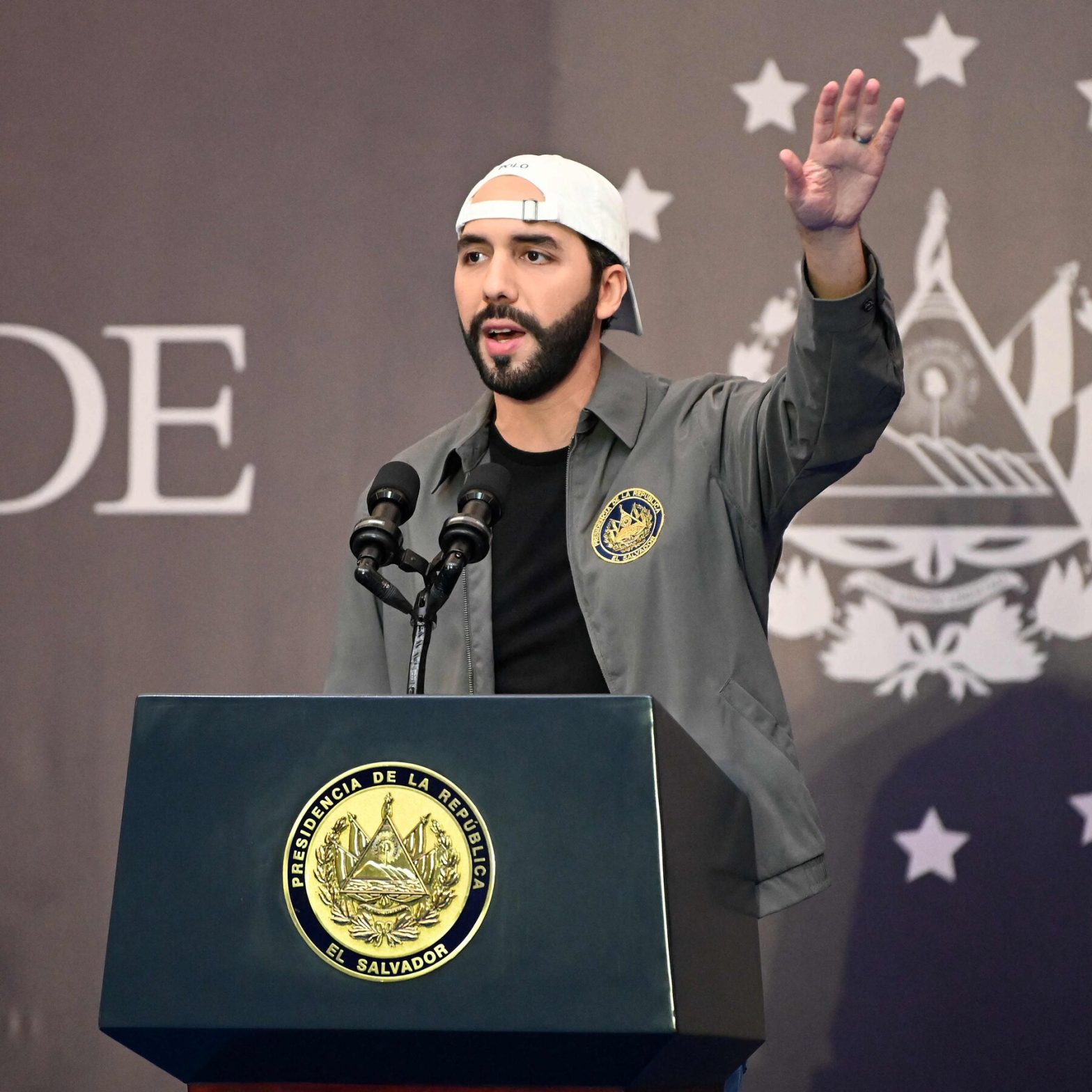
As of this writing, El Salvador balance sheet now stands at $1.5 million, thanks to the purchase of 80 BTC. The government claims to have paid an average of $19,000 for each of the digital currency’s bitcoins.

On Friday, El Salvador’s president, Nayib Bukele, tweeted an image showing the transactions, along with the announcement.

Last year, Bukele signed a bill declaring Bitcoin legal money in El Salvador, making it the first nation to do so. Since then, the country has been building up its cryptocurrency holdings. El Salvador has just made the lowest Bitcoin purchase since including the digital currency in its treasury last year.

Bitcoin’s latest drop below $20,000 coincides with the county’s most recent investment by the country in the cryptocurrency industry. The coin was trading at $19,409 at the time of this writing.

The country of El Salvador currently owns 2,381 BTC, which is worth $46.2 million. The country’s Bitcoin investment has fallen by more than 50 percent, resulting in an estimated $40 million in unrealized losses as a result of the market crisis.

In spite of this, El Salvador’s finance minister indicated that the loss does not constitute 0.5 percent of the country’s general budget and would not have an impact on the country’s fiscal health. In May, the government bought 500 bitcoins at a price of $30,744 apiece, totaling $15.5 million.

Bukele, on the other hand, feels that investors should not be alarmed about the present bear market since it will return.

After the bear market, President Trump predicted that the price of bitcoin will increase dramatically. Investors need not be concerned by the market’s decline, according to him, since their Bitcoin investments are secure.

Other reports show MicroStrategy just acquired 489 BTC for $10 million, raising its total Bitcoin holdings to 129,699 BTC, worth roughly $2.4 billion at current pricing. MicroStrategy is a major business analytics organization.

Even though MicroStrategy’s Bitcoin investment has lost more than 30 percent of its value, the company’s CEO continues to be a believer in the currency.

Categories
Blockchain News Regulation

Will Europe’s New Crypto Regulation Become a Global Model?

The European authorities have come to an agreement on a set of standards at a time when there is an increasing desire for stringent crypto regulation.

The Council and the Economic and Monetary Affairs Committee’s negotiators were able to reach a temporary political agreement on new regulations for cryptocurrencies and digital assets.

Provisions on supervision, consumer protection, and environmental protections will be included for crypto-assets as part of the Markets in Crypto-Assets (MiCA) guidelines.

A number of the most important clauses that were agreed upon are relevant to people who issue and trade crypto-assets. The guidelines address aspects of cryptocurrency transactions like transparency, disclosure, authorization, and oversight.

The new MiCA guidelines make it mandatory for crypto players to educate customers about the potential dangers, expenses, and fees linked with cryptocurrencies.

In addition, the new regulatory framework will regulate public offerings of crypto-assets, which will promote both the integrity of the market and the stability of the financial system.

However, there is not yet complete clarity with regard to features like NFTs, decentralized exchanges, and stablecoins. An advocate of cryptocurrencies named Patrick Hansen said that investors would still need to search for further clarification on those elements.

Please keep in mind that there is not yet complete clarity on any of these elements, so take the following remarks with a grain of salt.

A member of the European People’s Party named Stefan Berger referred to the MiCA guidelines as a successful European initiative. He went on to say that we are the first continent to have a regulation in place for crypto-assets.

In the crypto world’s equivalent of the Wild West, MiCA will be the organization that establishes worldwide standards. MiCA will provide a fair playing field for service providers, enforce high standards for customer protection, establish a unified market, and give legal certainty to crypto-asset issuers.

According to Berger, the implementation of tokens will have the same transformative effect on the global financial system as did the development of the common market in the 17th century.

According to him, today is the first time ever that dependable authorization and regulatory frameworks for new tokens are being built, and this is all thanks to the MiCA law.

Categories
Blockchain News

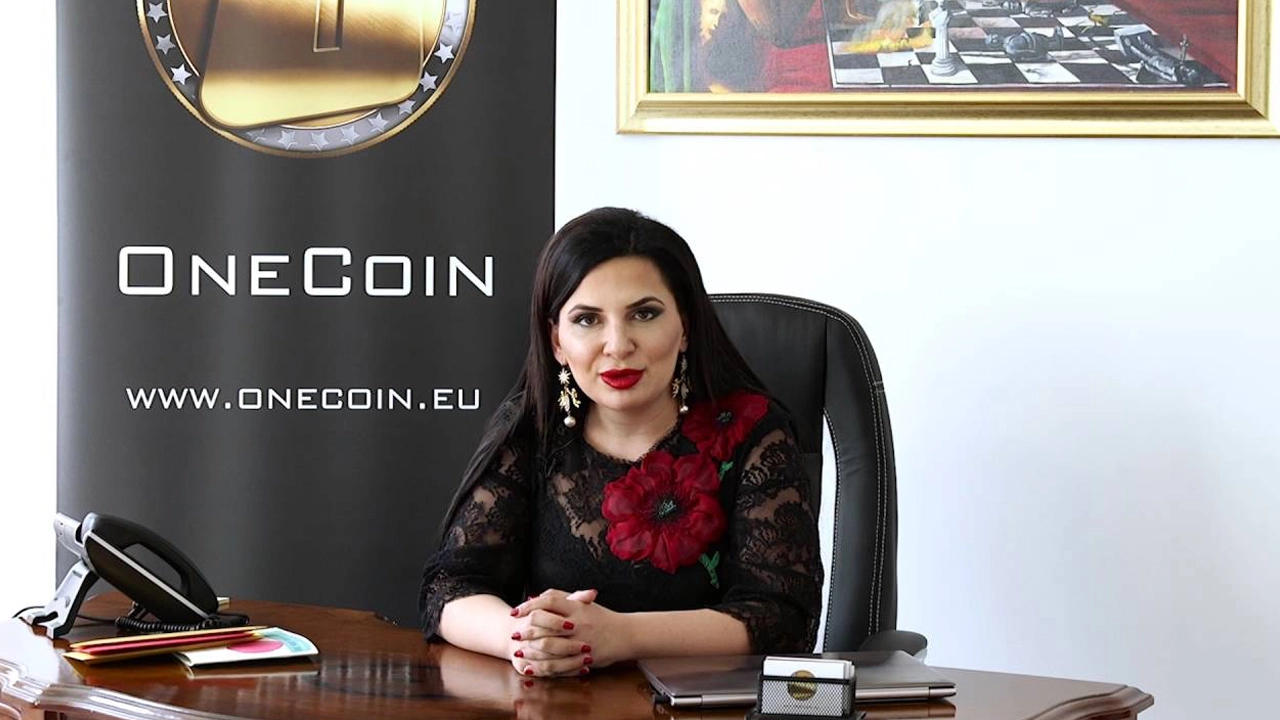
Cryptoqueen Has Been Added to FBI’s Top Ten Most Wanted List

When the term “Cryptoqueen” was conferred upon Ruja Ignatova in a true-crime podcast in 2019, it was done so with a great deal less affection than usual.

Ignatova is credited with inventing the so-called cryptocurrency OneCoin, which later turned out to be a fraudulent Ponzi scam.

Since 2014, her OneCoin Ltd. is said to have scammed more than 3 million investors out of a total of over $4 billion, according to law authorities.

A number of allegations have been made against her business, including that it attempted to bribe the presidents of Serbia and Bulgaria.

Ignatova may now add “Most Wanted” to her list of titles courtesy of the Federal Bureau of Investigation (FBI) in the United States.

The FBI put her on its top-ten list on Thursday and is offering a reward of up to one hundred thousand dollars for information that leads to her apprehension.

According to the FBI, Ignatova was last seen in Athens. This information comes from their investigation. This occurred in the year 2017

Ignatova was once included on the list of most sought individuals maintained by Europol; however, she is no longer on that list.

Ignatova is a German native who received her doctorate in economics and grew up in Germany. The ethnic Bulgarian was at the height of her popularity at the time when she was recognized for her sophisticated style and extravagant parties.

Even though there were already widespread rumors and suspicions about her actions at the time, she was nevertheless able to draw a gathering of more than 3,000 people to Wembley Arena in London in 2016 to listen to her speak.

Since that time, a class-action lawsuit has been filed against OneCoin, and her brother and other colleagues have been hauled to court for their involvement. The dramatic nature of the case has garnered attention from across the globe.

It has been said that Kate Winslet would have a role in a movie that is based on the experiences of a OneCoin investor. According to Variety, an agreement has been reached on a three-part documentary on Ignatova as well.

Categories
Bitcoin Blockchain News

Grayscale Sues the SEC After the Rejection of a Bitcoin ETF

In response to the SEC’s denial of its application to convert the Grayscale Bitcoin Trust (GBTC) into a Bitcoin Spot Exchange-Traded Fund, leading asset management company Grayscale Investments has launched a lawsuit (ETF).

Grayscale’s plan to transform its $40 billion Bitcoin Trust into a spot ETF was rejected by the SEC on Wednesday because it didn’t fulfill typical consumer criteria, including those “intended to prevent fraudulent and manipulative actions and practices.”

As a result of this argument, the regulator stated the New York Stock Exchange (NYSE Arca) does not have an arrangement with another licensed platform that handles “substantial” volumes of BTC trading to monitor the price of bitcoin. If the NYSE Arca had accepted GBTC, it would have been listed on the NYSE Arca.

U.S. investors may not be adequately protected from market manipulation and volatility by the Grayscale Bitcoin Spot ETF plan.

Asset management business stated it disagrees with SEC’s decision, adding that the SEC is failing to provide equitable treatment to Bitcoin investment vehicles, as it has done to many Bitcoin Spot ETFs, shortly after the SEC rejected the application.

Only a few Bitcoin Futures ETF applications have been approved by the Securities and Exchange Commission in the past.

So, Grayscale has petitioned the US Court of Appeals in Washington, DC, to have its judgment reviewed. In a statement, the business said it will keep working to turn its GBTC into an exchange-traded fund (ETF).

On the topic, Grayscale Investment’s CEO, Michael Sonnenshein, said that the business is ready to “use all of the firm’s resources to fight for our clients and the equal regulatory treatment of bitcoin investment vehicles.”

After Jane Street and Virtu Financial (VIRT) agreed to be “approved participants” in Grayscale’s plan on June 27, Grayscale signed its own agreements.

Categories
Blockchain News NFT

Binance Makes TikTok’s Khaby Lame Brand Ambassador

TikTok sensation Khaby Lame has been named Binance’s official brand ambassador. On Twitter, Binance announced the relationship, which they feel would enable them to promote a wide range of crypto education.

Khaby Lame, an Italian-born Senegalese who just surpassed 142 million TikTok followers, has lately become the most popular user.

Binance also announced the introduction of the Khaby Lame NFT line in its official statement. As a result, Binance expects the relationship will help dispel crypto and Web3 misconceptions, as well as expand the Binance ecosystem..

This isn’t Binance’s first foray into celebrity sponsorships; they’ve done it before. Recently, Binance partnered with Football superstar Cristiano Ronaldo on an exclusive multi-year NFT partnership. The Weeknd and Binance collaborated on the first-ever crypto-powered globe tour.

During this time, Khaby Lame has collaborated with a slew of well-known companies. Khaby has endorsement partnerships with Amazon, Netflix, Amazon Prime, and Dream 11.

During the Khaby announcement, Binance focused on a wide range of crypto education. A global Binance ecosystem has been envisioned in this movie, which is in line with previous recent Binance initiatives.

Binance has just teamed up with Cambodia’s security and exchange authorities to further grow the crypto sector. To further its reach in Southeast Asia, it obtained licenses in the Philippines for both virtual asset service providers and electronic money issuers.

In Europe, the Autorité des Marchés Financiers, a French market regulator, just approved Binance. As a result of the permission, a Binance subsidiary was officially registered as a supplier of digital assets services. As for the Gulf, Dubai and Bahrain have granted Binance digital asset licenses, allowing the company to operate there as well.

In addition, a $1 million BUSD scholarship program in Ukraine was established by the corporation.

The future of Binance’s worldwide dominance is in doubt, given the fierce competition it faces from Crypto.com and Coinbase, as well as the bleak market conditions.

Categories
Blockchain News Regulation

India Central Bankers Warn of the Dangers of Cryptocurrency

Governor Shaktikanta Das made a new statement on Thursday, a month after reiterating the Reserve Bank of India (RBI) position on cryptocurrencies. Last month, when the cryptocurrency market collapsed due to the Terra meltdown, Das issued a similar statement.

When several India investors lost money due to the crash, he cautioned investors about the volatility of cryptocurrencies. Due to their speculative nature, Das stated on Thursday that investing in cryptocurrencies is a treacherous endeavor.

The RBI Governor described the asset class as a “clear threat.” He continued by stating that we must be aware of the emerging threats on the horizon.

The public must be aware of the impending dangers. Clearly, cryptocurrencies pose a threat. Anything whose value is derived solely from conjecture, without any underlying basis, is speculation.

He indicated that cryptocurrency speculation is occurring under a sophisticated name.

Das explained that the potential for technology to disrupt financial stability must be avoided. However, he acknowledged that technology has expanded the financial sector’s reach and that its benefits must be fully exploited.

While technology has expanded the financial sector’s reach and its benefits must be maximized, its potential to disrupt financial stability must be avoided. As the financial system becomes increasingly digitized, cyber threats increase and require special consideration.

In light of last month’s crash of the Terra, the RBI Governor discussed the difficulties of regulating space. At the time, he stated that regulating cryptocurrencies is difficult because they have underlying value.

Previously, Das characterized the cryptocurrency market as a threat to macroeconomic and financial stability. Privately created cryptocurrency is a threat to our financial and macroeconomic stability, he stated.

Investors should remember that their investments are at their own risk. He added that the cryptocurrency has no underlying, not even tulips.

Categories
Blockchain News

Taiwan central bank governor talks interest-free CBDCs

According to a story that was published on Wednesday by a local news site called bnext.com, Chin-long Yang, the governor of the Central Bank of the Republic of China (Taiwan), advocated a no-interest design for the pilot of the country’s central bank digital currency, also known as CBDC.

When asked to justify the decision, Yang said that a CBDC that offers interest payments on deposits of digital assets is likely to become an alternative for deposits of fiat currencies like the New Taiwan Dollar (NT$) held in banks.

According to Yang’s explanation, once the banks’ available deposits begin to diminish, this will lead to a matching rise in the cost of financing, which will, in turn, lead to an increase in the cost of borrowing money for customers.

Yang cautioned further that even interest-free CBDCs might lead to “digital bank runs” during times of financial instability, which could swiftly snowball into a liquidity crisis for financial institutions. 

Yang cautioned further that even interest-free CBDCs might lead to “digital bank runs” during times of financial instability, which could swiftly snowball into a liquidity crisis for financial institutions.  Nevertheless, the governor of the country’s central bank acknowledged in recent years a significant increase in the demand for electronic payment solutions:

In Taiwan, the percentage of electronic payments as a proportion of total payments is expected to reach 60 percent in the first quarter of 2022, up from 40 percent in 2017. 

As a result, there is a likelihood that there will be a growing demand among the general public for a CBDC that offers a secure and trustworthy kind of digital payment solution that has no commission, no credit risk, and no liquidity risk associated with it.

In the present phase of its CBDC pilot program, Taiwan is in the second stage, during which the country’s central bank is supplying the CBDC to five chosen Taiwanese banks for distribution among customers of those institutions. Next an analysis of the outcomes of the pilot program, the central bank will go on to the following phases. 

However, it was previously determined via experiments that the distributed ledger technology that is a part of the CBDC is incapable of handling high-frequency consumer transactions in large volumes. In the case that the power goes out, another issue that raises concerns is the fact that the payment system would lose its functioning.

Categories
Blockchain News

Jon Cunliffe Compares Crypto Meltdown Victims To Amazons

Bank of England (BoE) deputy governor Jon Cunliffe believes that institutional investors will emerge from crypto’s present crisis with the commercial might of Amazon and eBay at their disposal.

Cunliffe compared the current crypto winter to the dotcom catastrophe of the 1990s, which saw several e-commerce platforms including Global Crossing, British business Boo.com, and American online shop Webvan, among others, lose their stock values.

Amazon (AMZN), IBM (IBM), and eBay (EBAY) are just a few of the companies that made it through the dotcom bust and are now emerging as major players in their respective areas. In the long run, Cunliffe expects the same outcome for investors who weather the crypto-winter.

Further, the public servant, who is 69 years old, equated internet technology to the current notion of cryptocurrency. Cryptocurrency technology and finance will continue beyond this weak market because it has the potential for tremendous efficiency and changes in market structure, like the dot-com boom.

After mentioning the Bank of England’s interest in CBDCs and stablecoins in April last year, Cunliffe presented an update on the work the bank has made in exploring these concepts.

A CBDC or a virtual currency that might be used in stablecoins created by private enterprises, he says, is the preferred option for the country’s financial industry, although he adds that more research is being conducted.

You may have heard about Tether recently launching a stablecoin based on the British Pound Sterling known as GBPT, which is expected to become live in early July. Tether said that the UK government’s support for crypto was a crucial factor in the decision to launch the program.

Two months ago, the British government announced ambitions to turn the nation into a worldwide hub of crypto technology. Rishi Sunak, chancellor of the Exchequer, has said that stablecoins would be integrated into the country’s financial system as part of these ambitions.

Categories
Altcoins Bitcoin Blockchain Ethereum News Technology

Proposals to Exempt Crypto Issuers from Russia Taxes Approved

Reuters reported that Russia policymakers signed a measure to exclude token issuance from paying value-added taxes (VAT) only days after the country’s officials submitted a plan to oversee the illicit issue of crypto if authorized.

Members of Russia’s Federal Assembly, the State Duma, passed the draft legislation in its second and third readings earlier this week. The chamber has 450 members who are in charge of establishing national policy.

Instead of penalizing people and businesses for illicit cryptocurrency issuance, the newly developed plan proposes to enable digital asset issuers to produce and launch tokens free of VAT.

An investigation by other agencies is required before any of the written legislation can be implemented, according to a report in the media.

The Federation Council, often known as the upper house, which represents the interests of the nation’s regions, would then vote on the measure. Russia President, Vladimir Putin, will have to sign it before it can take effect.

Digital asset issuers will be free from paying VAT under the proposed legislation as well as new tax rates on earnings produced from the selling of cryptocurrencies.

The current exchange rate for crypto and traditional assets is both 20%. Russian businesses would be subject to a 13 percent tax, while international businesses would be subject to a 15 percent tax under the proposed legislation.

A legislative framework for the usage of cryptocurrencies in Russia is being developed by Russian financial authorities and legislators.

The Bank of Russia has previously advocated a complete ban on Bitcoin mining and crypto activity. Financial authorities in China, on the other hand, feel that regulating crypto assets instead of outright banning them is the better option.

President Putin pushed both committees to come to an agreement on the legal status of digital assets as the debate raged on. Cryptocurrencies are currently being defined as legal tender by both the U.S. Congress and the state legislatures.

Categories
Bitcoin Blockchain News

Microstrategy Purchases $10 Million in Bitcoin

At a time when Bitcoin prices are expected to decline further, Michael Saylor’s Microstrategy has revealed its current stance on the cryptocurrency market. In terms of institutional investment, the corporation is the biggest.

On Wednesday, the SEC reported that the corporation has added up to 480 BTC in the last several months. For nearly $10 million in cash, MicroStrategy bought around 480 BTC between May 3 and June 28. The average cost of a Bitcoin purchase, including all fees and costs, is about $20,817.

The total number of Bitcoins controlled by the corporation now stands at 129,699. According to the report, MicroStrategy and its subsidiaries possessed 129,699 Bitcoin as of June 28, 2022. For an overall purchase price of $3.98 billion, including fees and expenditures, they were purchased at an average buying price of $30,664 per BTC.

The CEO of Microstrategy, Michael Saylor, made the news on Twitter. At an average price of $20,817 per BTC, MicroStrategy has acquired an additional 480 bitcoins for $10.0 million. Since 6/28/22, MicroStrategy has had 129,699 Bitcoin worth $3.98 BTC at an average price of $30,664 per BTC in their possession.

Speculation over the company’s Bitcoin holdings was rife earlier this month, after a precipitous drop in Bitcoin prices. Microstrategy’s strategy was ready to manage the dip, according to Saylor, who made it clear that erratic activity was expected.

As recently as last year, he claimed that his business intelligence organization had foreseen the volatility of the Bitcoin market prior to implementing the plan. He said that his company had set up its financial sheet in such a way that it could keep onto Bitcoin even if things became tough.

Earlier in the day, Bitcoin’s price fell below the $20,000 level for a short while. There have been no drops below $20,000 in a week for Bitcoin. According to CoinMarketCap, Bitcoin is now trading at $20,063, down 4.43 percent in the previous 24 hours.

Categories
Altcoins Blockchain News

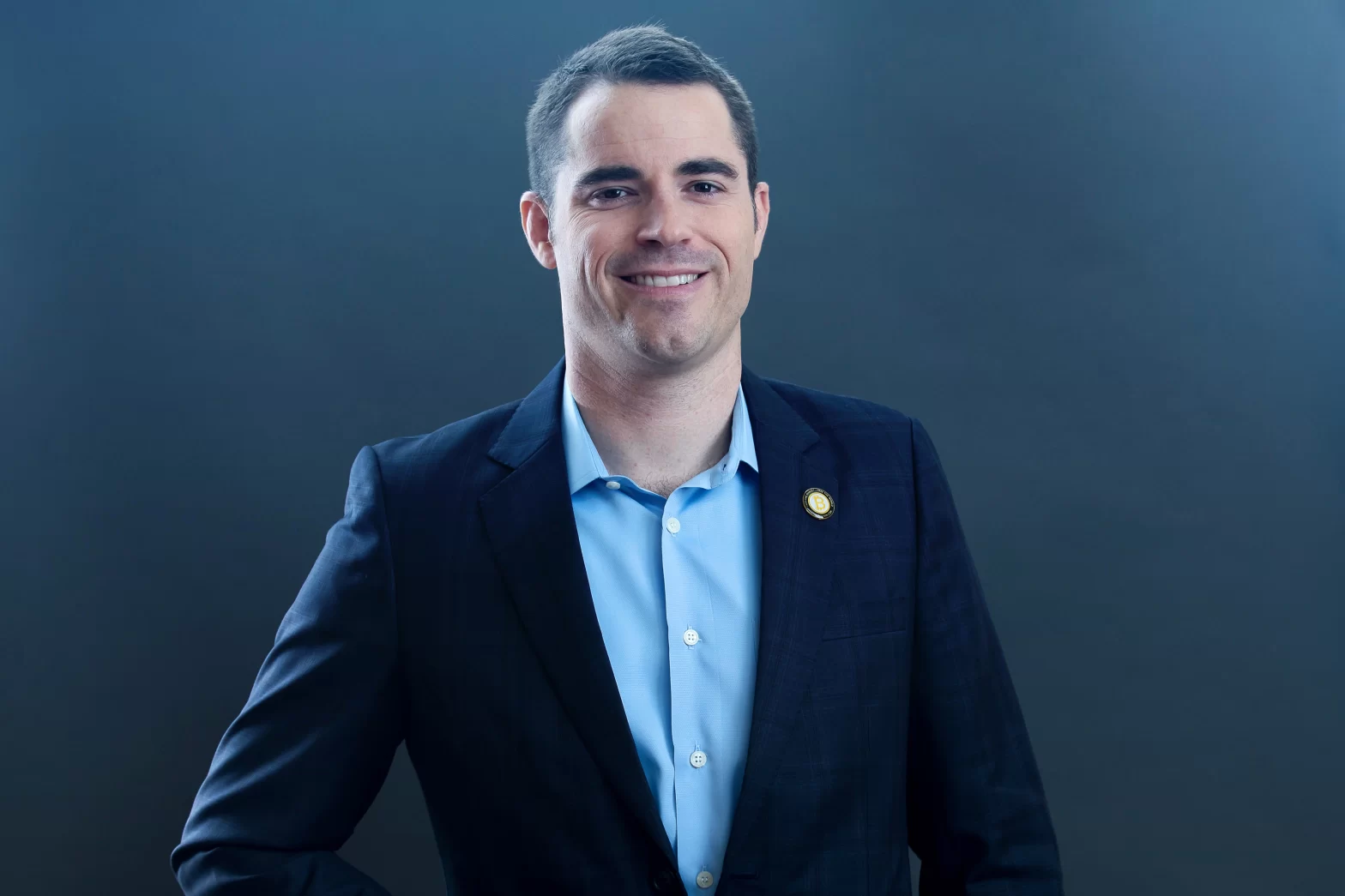
Roger Ver denies owing CoinFLEX $47M USDC

Roger Ver, an early investor in Bitcoin and a supporter of Bitcoin Cash, has fought back against accusations made by the cryptocurrency investing platform CoinFLEX involving a claimed debt of $47 million.

In a tweet published on Tuesday, Ver said that he had not defaulted on a debt to a counter-party and claimed that the cryptocurrency company owed him a significant amount of money. Ver did not specifically identify CoinFLEX in his post.

The denial came in response to reports that circulated on social media suggesting that the BCH proponent was engaged in the platform’s decision to block withdrawals after a high-net-worth customer who had stakes in several prominent crypto businesses failed to settle their bills.

Shortly after the announcement was made, the CEO of CoinFLEX, Mark Lamb, came to Twitter to assert that the firm had a formal contract with Ver, which required Ver to personally guarantee any negative equity on his CoinFLEX account and top up margin on a consistent basis.

According to Lamb, CoinFLEX sent Ver with a notice of default and was speaking to him on calls often about this matter with the purpose of resolving it, despite the fact that the company claimed it did not owe Ver anything.

The chief executive officer of CoinFLEX expressed his dismay at the fact that Roger Ver had to resort to such strategies in order to divert attention away from his legal obligations and duties.

On Tuesday, it was announced that a CoinFLEX account controlled by a person of high integrity and large wealth had suffered losses of $47 million since the account had been permitted to approach negative equity without being liquidated.

Starting on June 28, the platform intended to address its liquidity issue by creating a new token known as Recovery Value USD (rvUSD), and it anticipated that users will once again be able to withdraw funds beginning on June 30.

Following remarks made by Lamb and Ver on Twitter, the price of CoinFLEX’s native token, which is called FLEX, has decreased by more than 84 percent in the last 30 days, falling from $1.19 to $0.80.

Categories
Blockchain News

In the Face of Market Turmoil, Kaiko Receives $53M in Funding

Kaiko, a blockchain data supplier for institutional investors and businesses, revealed on Tuesday that it had raised $53 million in Series B fundraising.

Eight Roads led the round, with participation from Revaia and previous investors such as Alven, Point9, Anthemis, and Underscore also participating.

Cryptocurrency’s recent downturn has removed more than $2 trillion from the $3 trillion recorded in 2021, making this current revelation even more significant.

Digital asset data provider notes that fresh funding will assist strengthen its position as a worldwide industry standard for central and decentralized blockchain data services.

As of 2014, Kaiko has been providing a wide range of market data, pricing services, indexes, and industry research in the crypto and DeFi space. Customers and partners like as Deutsche Boerse, ICE Global Network, Messari, and Paxos may benefit from the company’s data offerings to better analyze market patterns.

As of January, Kaiko has released its first ranking of cryptocurrency exchanges, with the goal of providing a comprehensive framework for comprehending the fragmented market.

Ambre Soubiran, Kaiko’s worldwide head, said that the company intends to consolidate its position as a leading provider of institutional data solutions in the next year after receiving the fresh capital.

‘Over the coming year, we will strengthen our position as an industry leader in institutional data solutions, acting as a key bridge between centralized and decentralized financial markets,’ added Soubiran.

Kaiko intends to increase its worldwide footprint in order to reach a broader audience with additional funding.

There are currently four worldwide offices in Paris, London, New York, and Singapore that enable the Paris-based crypto analytics organization to sell its goods and services in various areas.

ICE Global Network, Deutsche Börse, Oanda, and Bloomberg are just a few of the notable companies that have partnered with Kaiko.

Additionally, the company has negotiated deals with asset managers in Europe and North America who have not been named.

Categories
Blockchain News

Robinhood Has Listed Chainlink (LINK)

Chainlink (LINK) has been added to Robinhood cryptocurrency trading platform. When it was first launched, the exchange was only able to handle tokens such as the Shiba Inu, Solana (SOL), and Polygon (POLY) (MATIC).

The listing was announced by Robinhood through Twitter. Chainlink’s price has risen by roughly 5% since then. At the time of this writing, LINK is trading at $7.01 per token. The 24-hour trading volume of Token has increased by over 50% to $605 million.

With a market worth of nearly $3.2 billion, Chainlink is the 22nd most valuable cryptocurrency. The token’s future might be greatly aided by this recent listing. Some tokens, like LINk, made it through the current market crash. In the last 30 days, it has fallen by a meager 4%.

Chainlink revealed earlier last month that PancakeSwap has incorporated Chainlink keepers into the BNB network. Automating the CAKE/USD prediction market will make it more safe for customers. The Chainlink price data was previously incorporated to assist safeguard the prediction market, according to the report.

Meanwhile, 15 separate Chainlink services were integrated last week over 5 different chains, totaling 15 integrations. Ethereum, BNB chain, Avalanche, Moonbeam, and Polygon are just a few of the prominent chains on this list. Hybrid smart contracts are the goal of this project, which is geared at Web3 developers.

A report claims that Sam Bankman-FTX Fried’s wants to purchase Robinhood. This is a topic of debate inside the exchange. However, no official announcement has been made in this regard.

The FTX has not yet approached Robinhood with an acquisition offer. In the meanwhile, the share price of Robinhood has increased by nearly 25% in the last 5 days. It is now selling for an average of $9.03 per unit. Its stock, on the other hand, has fallen by 76% since it became public.

When asked about a potential relationship with the Crypto exchange, Bankman Fried said that they are open to the idea. In spite of this, there are no active debates on the subject.

Categories
Bitcoin Blockchain News

Binance Executives Continue To Load Up On Bitcoin

The largest cryptocurrency exchange in the world, Binance, and its executives have shown strong support for Bitcoin despite its price decline amid intense market pressure. Brian Shroder, CEO of Binance, stated that he will continue to purchase Bitcoin during price declines, just as he did when Bitcoin was at $29,000 and $19,000.

Business Insider reported on June 28 that Binance.US CEO Brian Shroder intends to continue supporting Bitcoin and accumulating it during price declines.

Shroder remains bullish on Bitcoin despite its price plummeting by 70 percent. His orders to purchase Bitcoin (BTC) at $29,000 and $19,000 were executed successfully.

“I continue to buy, I’m continuing my personal investment journey, and obviously I believe in crypto for the long term on a personal and professional level.”

In fact, Binance’s CEO “CZ” has always supported Bitcoin, holding a bullish long-term outlook on the industry. The CEO of Binance disclosed that he holds no fiat currency, only cryptocurrencies.

Brian Shroder, the CEO of the United States, invests in over 30 distinct digital assets. There are a number of intriguing projects, coins, and tokens associated with technology-related crypto assets. The token’s utility, governance structure, and economics are distinct.

In addition, Shroder is optimistic about Helium because of its utility for Internet of Things devices. The blockchain-powered wireless network transmits and receives data to and from the internet, and rewards users who host device hotspots with HNT tokens.

Since November’s all-time high, the price of Helium’s HNT tokens has decreased by 80 percent. Currently, the price is $10.90 per unit.

Binance.

After recently announcing zero-fee trading for Bitcoin, the U.S. CEO announced his exclusive support for Bitcoin.

Brian Shroder intends to cultivate favorable user sentiment toward Bitcoin trading in order to attract new users to his platform. Similar to Robinhood, Binance.US would not earn a spread on its no-fee transactions. Instead, the exchange will generate revenue from new staking services and other sources.

Categories
Bitcoin Blockchain News Technology

Grayscale seeks Wall Street partnerships for a Bitcoin ETF

Jane Street and Virtu Financial (VIRT) have been named as approved participants in Grayscale Investments’ Grayscale Bitcoin Trust (GBTC-USD), according to Yahoo Finance.

To be ready for a potential SEC approval of the Bitcoin Trust’s conversion to an Exchange-Traded Fund (ETF) on July 6, the business struck an agreement with the market makers, according to the article.

An exchange-traded fund (ETF) is a collection of securities designed to follow an index. ETFs allow investors to increase their diversification while decreasing their overall exposure and risk.

Grayscale’s worldwide head of ETFs, David LaValle, commented on the new alliances, noting that the deal will go into force after the SEC gave its clearance. That would make the company seem “operationally ready” for ETF designation, he said.

There were a lot of potential players, but Jane Street and Virtu have signed on the dotted line. According to LaValle, “it’s a significant vote of confidence that the market is ready for GBTC to become an ETF.

Although multiple financial companies have applied for a Bitcoin Spot ETF, the Securities and Exchange Commission (SEC) has refused to approve the idea.

However, the SEC rejected an application for a Bitcoin ETF conversion from asset management firm Skybridge Capital and financial adviser First Trust earlier this year.

Concerns about the market’s maturity and the possibility of market manipulation are to blame for the continuous rejections. Grayscale, on the other hand, is hopeful that the regulator will rule in its favor next month.

“We are unambiguously dedicated to turning GBTC to an ETF,” Michael Sonnenshein, CEO of Grayscale, said while detailing the company’s progress since applying for an ETF.

He went on to say that the company’s goal of bringing well-known virtual asset investment vehicles to American investors is aligned with attaining a favorable conclusion with the SEC.

When the Grayscale Bitcoin Trust was first introduced in 2013, it offered a way for investors to purchase and sell Bitcoins using their brokerage accounts. According to GBTC’s records, more than 850,000 U.S. investors control a combined 3.4% of the entire Bitcoin supply.

When Grayscale filed Form 19b-4 with the SEC last year to turn the asset into a Bitcoin Spot ETF, it began its ETF conversion process.

Categories
Altcoins Blockchain News

Hedge Funds Dump USDT? Tether’s CTO addresses rumors

Earlier this week, Tether Chief Technology Officer, Paolo Ardoino, addressed what he termed “open and concerted assaults” by certain hedge funds against USDT. TERRA/demise LUNA’s has sparked a new round of fear-mongering, according to him.

Recently, USDT’s status as the leading dollar-pegged stablecoin was put to the test. There has been a lot of speculation in the crypto community about recent events, including a new preference for USDC and USDT’s constant depeg.

“Open assaults” on USDT are being done by hedge funds that have conspired to destroy USDT’s liquidity by shorting substantially and then re-purchasing at a lower price, Paolo Ardoino claims in an extensive Twitter thread.

Tether is not or was not 100 percent supported, and tether has or previously had exposure to Evergrande and 85 percent exposure to Chinese CP, among the FUD, pushed by hedge funds, according to him.

According to him, the attackers have not stopped despite all the openness tether has shown and their “commitments to phase out exposure to CP to shift into U.S. Treasuries.”

When it comes to Tether’s commercial paper exposure, Ardoino said that it has been cut from $45 billion to only $8.4 billion. In the wake of recent challenges for hedge funds, he repeated Tether’s 100% support and referred to them as “holy heroes” in the industry.

Co-founder of Tether and BlockV CEO Reeve Collins spoke with CNBC on the young DeFi market, adding that difficulties are to be expected when a new industry emerges.

A recent rescue of several failing crypto businesses by FTX was also brought up by the speaker.

While it’s nice to see that FTX has taken the initiative, they have the financial wherewithal to step in and take the company to the next level, even if they had an excellent audience and a great product for a while.

Categories
Bitcoin Blockchain Price Analysis

Bitcoin (BTC) Forecast 06/27

According to information provided by Cointelegraph Markets Pro and TradingView, the Bitcoin to US Dollar exchange rate followed stock markets in their downward trend as the month of June entered its last week.

After a relatively calm weekend, the price of the pair had dropped below $21,000 when this article was written, marking the first time in three days that it had fallen below that threshold.

Bitcoin is still trading at a price that is much lower than its 200-week moving average (WMA), which is now sitting at $22,430. Despite the widespread lack of optimistic confidence among traders, investors continued to maintain their predictions for a further price decline.

“Bitcoin has voiced its opposition to the $21K support. That’s not a problem at all. We have a system in place for the levels, “A tweet by the contributor to Cointelegraph Michael van de Poppe during the day’s Twitter discussion is below.

In a subsequent piece, it was stated that further lows were on the way, which would attract traders to establish long positions. There was support located at $20,325 and close to $20,100; however, if neither of these levels held, a drop below $19,000 as possible.

In the meanwhile, another trader and analyst by the name of Credible Crypto outlined the conditions that must be met in order to be certain that this month’s lows of $17,600 would not be challenged. It would be necessary for him to go down to the low-thirties-thousand-dollar area.

In a video update, he said that “I don’t believe we’re going to see new lows” if the company is able to “reclaim $25,000 and push up to the low $30,000s” (that is, $28, $29, and $30,000) at that time.

Accordingly, “I’d anticipate it to happen before we recoup $25,000 if we’re going to see new lows.”

Bitcoin was on course to complete its first-ever month below the 200-day moving average (200WMA) on the day, which would distinguish the current bear market from others that have occurred in the past.

In recent days, large declines in BTC supply have been seen across a majority of exchanges. This comes after “whales” recently made news for purchasing coins for roughly $20,000 each.

According to information provided by the on-chain analytics company Glassnode, the highest cumulative change in BTC that was not retained on exchanges occurred on June 26.

As a result of assets moving to other locations, the 30-day moving average of the change in supply that was retained on exchanges decreased by 153,849 BTC.

Categories
Bitcoin Blockchain News Opinion People

Jiang Zhuoer disputes $4 billion in borrower loans

Former BTC.Top CEO Jiang Zhuoer claims that the number of loans to bitcoin miners that are at risk is much lower than what has been reported. He argues that there are only a finite number of mining rigs that can be used for mortgages and a finite number of loans due to a lack of institutional support and poor liquidity.

Although the Bitcoin price crash has made it difficult for mining companies to repay their $4 billion in loans backed by mining equipment as collateral, a recent Bloomberg report stated that this is the case. As the market continues to decline, mining rigs are being sold at a discount.

It was revealed by Colin Wu in a tweet on Monday that Jiang Zhuoer thinks the data on bitcoin miner loans is exaggerated, according to Colin Wu. On the other hand, no loans were ever made to Bitcoin miners for any of their rigs at all. Due to a lack of companies that could control or evaluate mining rigs, only a small number of mining rigs were eligible for loans. A large number of cryptocurrency miners were unable to obtain loans as a result of the issue.

Loans are available from cryptocurrency investment firms like Galaxy Digital, NYDIG, and BlockFi. Because banks won’t loan money to upgrade mining equipment, these loans are secured by mining equipment.

Ethan Vera, a co-founder of Luxor Technologies in Seattle, estimated that mining rigs were collateral for $4 billion in loans. Lenders like Babel Finance have made token-backed loans popular, but Vera says mining equipment is a better security.

Additionally, the decline in Bitcoin’s value is hurting miners. Some Bitcoin miners must pay back loans and put up collateral to cover equipment purchases they made with Bitcoin.

According to a JPMorgan report from May and June, 20 percent of all reported Bitcoin sales came from publicly listed Bitcoin miners. As a result, the current rate of Bitcoin sell-offs is likely to scupper any hopes of a rebound in the Bitcoin price.

Since mid-May and again in June, the difficulty of mining Bitcoin has decreased due to the crypto market crash. On the other hand, the hashrate dropped from 266 EH/s on June 8 to under 200 EH/s on June 26. The sudden drop in power demand is directly related to the decline in hash rate. Mines may have been shut down or sold because of this.

Categories
Blockchain News

Anonymous has vowed to expose Do Kwon’s alleged misdeeds

Anonymous, a hacktivist collective, has vowed to “make sure” Terra co-founder Do Kwon is “brought to justice as quickly as possible” for his role in the May 2016 collapse of Terra (LUNA) and TerraUSD (UST).

Do Kwon was implicated in the collapse of the stable coin Basis Cash in late 2020 under the pseudonym “Rick Sanchez” in a video released by the Anonymous hacker group on Sunday? The video purportedly rehashed a laundry list of Kwon’s alleged wrongdoings, including his alleged withdrawal of $80 million per month from LUNA and UST before its collapse.

Unfortunately, there is nothing that can be done to undo the harm that you have already done, Do Kwon, if you are reading this. Only by holding you responsible and ensuring that you are brought to justice as quickly as possible can we move forward.”

Since Do Kwon joined the crypto sphere, the hacking organization has promised to investigate his activities to reveal his alleged misdeeds.

Do Kwon’s “whole history since he joined the crypto realm to see what we can learn and put to flight,” Anonymous claimed.

They also took issue with Kwon’s arrogant methods of mocking his competition and critics and behaving as if he would never fail.

Decentralized multinational activist group Anonymous (Anonymous) was founded in 2003 on 4chan and is renowned for conducting cyberattacks against government institutions and private enterprises.

Elon Musk, the CEO of Tesla Motors, was accused in June of 2021 by the same YouTube channel of killing lives by manipulating cryptocurrency markets with his power and influence on Twitter. 3.4 million people had seen the video as of Monday morning.

Notably, there are a number of YouTube channels claiming to be connected to the hacking collective Anonymous. However, because of the group’s decentralized and anonymous structure, most people agree that there isn’t an official YouTube channel for it.

Categories
Blockchain News

Harmony Protocol offers $1M for stolen $100M assets

If the hacker can return the stolen goods, which are valued at $100 million, Harmony Protocol will pay them a reward of $1 million. This $1 million reward offered by Harmony is also being offered by the staff at Harmony. There would be “no criminal charges” sought after the cash are returned, according to the team’s tweet.

An assault was launched against the Horizon Bridge leading to the Harmony Layer-1 chain, which resulted in the theft of assets worth more than $100 million. Horizon functioned as an intermediary between Ethereum, Binance Chain, and Bitcoin transactions.

Twitter was used to make the announcement to the general public that the network had started an investigation into the event and was receiving help from national authorities.

The team behind the Harmony Protocol has issued a reward of one million dollars for the recovery of the one hundred million dollars worth of bitcoin that was taken in the assault on the Horizon bridge. The hacker will also get the prize if they provide information on how the assault was carried out. If the monies are recovered, the team said, there would be no further action taken against the hackers in the form of criminal proceedings.

However, it seems that crypto Twitter believes that a reward of one million dollars for a hack of one hundred million dollars is insufficient.

The founder and CEO of Harmony said in another tweet that the company has not discovered a probable smart contact vulnerability that prompted the assault. He further noted that more information has been obtained that demonstrates that the security of the private keys has been breached.

Additionally, he said that in order to encrypt and safely store private keys, Harmony made use of a passphrase and a key management system. However, the attacker was successful in obtaining some of these private keys, decrypting them, and then using them to sign illegal transactions.

Categories
Bitcoin Price Analysis

Bitcoin (BTC) Market Update 06/26

On June 26, Bitcoin (BTC) made the most of the weekend’s volatility by seeing BTC/USD reach its highest level in more than a week after being squeezed.

The largest cryptocurrency reached a price of $21,868 on Bitstamp, and data from Cointelegraph Markets Pro and TradingView tracked it during this time.

A reversal then set in under $21,500 just hours before the weekly close, with Bitcoin still on track to close out its first “green” weekly candle since May. This occurred just hours before the weekly close.

The occurrence came after a series of warnings that a return to volatile conditions, both up and down, was possible during low-liquidity weekend trading. Despite this, on-chain data confirmed what had appeared to be buying by Bitcoin’s largest-volume investor cohort just before the uptick.

A popular analytics resource known as Game of Trades made the observation that “unusual whale activity detected in Bitcoin.”

“The demand for the supply that is being held by entities with balances of 1,000 to 10,000 BTC just experienced a significant uptick. Let’s see if the trend continues, shall we?”

A chart that accompanied the article and was provided by the on-chain analytics company Glassnode showed a significant shift upward from the time that BTC/USD reached its monthly low of $17,600.

According to a report by Cointelegraph, whales had been eagerly purchasing BTC below $20,000, which resulted in the formation of new support clusters.

The monthly close appeared to be on track to make June 2018 Bitcoin’s worst June on record, with losses of almost 33 percent for the month.

According to information gathered from an on-chain monitoring resource called Coinglass, not only would this month have the worst performance since before the bear market bottom in 2018, but it would also tie with May 2021.

Categories
Blockchain News

Morgan Creek Digital is rescuing BlockFi to counter FTX

In response to FTX’s bailout, Morgan Creek Digital, BlockFi long-time supporter, is reportedly looking to raise $250 million, as reported by cryptocurrency news website Coindesk. BlockFi’s long-term supporters are claimed to be devastated by the rescue, which might wipe them out.

FTX has inked a $250 million revolving credit facility agreement with BlockFi, and the firm’s shareholders are concerned that this might leave them with nothing in the event of FTX’s takeover of BlockFi.

FTX’s $250 million credit line to BlockFi provides Morgan Creek Digital managing partner Mark Yusko the benefit of purchasing BlockFi “at virtually zero price,” according to the leaked conversation. Existing shareholders of FTX stand to lose a lot if the company goes through with this plan.

In the event that FTX makes this purchase, it will also wipe out the business’s management and any workers who have stock options, in addition to any equity investors who have invested in the company before. The creators of BlockFi, according to Yusko, had a good reason for agreeing to the rules in advance, as shown in the leaked phone conversation transcripts.

It was the only one of numerous emergency finance proposals BlockFi received that didn’t require the rescuer to take a stake in the company’s customer assets. As a result, if BlockFi had declined to accept FTX’s offer, its depositors would have been left with a short period of time without compensation.

According to reports, Citigroup (C) and Akin Gump, two legal firms Celsius recruited for assistance on various solutions, have purportedly urged Celsius to file for bankruptcy.

Someone informed of this situation says that a Goldman Sachs representative is looking for commitments from Web3 crypto fund investors, funds that specialize in distressed assets, and conventional financial institutions with a lot of capital.

In order to complete this transaction, Goldman Sachs will need to find $2 billion in new capital from investors. In the case of a bankruptcy filing, the Celsius transaction would allow investors to acquire Celsius’ assets at significant discounts, according to the sources cited.

Categories
Blockchain News

Goldman Sachs wants $2 billion to buy Celsius Assets

Celsius Network, a crypto-lending startup, looks to be on its way out, and Wall Street behemoth Goldman Sachs is apparently planning to buy it out.

Despite Celsius’ financial difficulties, Goldman Sachs is reportedly preparing to raise $2 billion from investors in order to buy Celsius’ assets.

In the event Celsius files for bankruptcy, the transaction would allow investors to acquire Celsius’ assets at substantial discounts. As of early this month, Celsius had more than $11 billion in assets under management and had also lent a total of $8 billion to its customers.

Celsius had major liquidity concerns when the cryptocurrency market collapsed. A report says Goldman Sachs is looking for support from Web3 cryptocurrency funds and traditional financial institutions that have a lot of money. Bank of America is also in contact with distressed asset funds.

The majority of Celsius’ assets are cryptocurrencies, which will be sold at low prices and then managed by the investors that participate in Celsius.

According to Arthur Hayes, the former CEO of BitMEX and co-founder of the exchange, Goldman Sachs isn’t investing any of its own money into the planned deal.

Please don’t trust Goldman Sachs until they expressly state that they are risking their own money. GS is doing what advisory banks do, bringing together a group of investors, and helping them arrange the acquisition of troubled assets for a hefty fee, he tweeted on Saturday.

After successfully purchasing Celsius’ assets and restoring withdrawals, he believes the community should celebrate. There is little doubt that a full-blown crypto bull run would be sparked if creditors were able to recoup some of their losses.
Before depositors are able to get their money back from bankrupt CENTRALISED crypto lenders, users should see any ‘bailouts’ as public relations gimmicks.

It’s safe to assume that Celsius is on the verge of going out of business. An Akin Gump Strauss Hauer & Feld restructuring counsel has been recruited by the crypto lender, as previously reported. To assist it prepare for bankruptcy, advising company Alvarez & Marsal has hired additional experts from Celsius, the Wall Street Journal reported on Friday.

Since halting withdrawals, Celsius has been quiet. “Our focus remains to be stabilizing our liquidity and operations,” the company said in a notice on June 19. It’s going to take some time.”

The corporation has previously said that it will no longer organize Q&A sessions with members of the community.

Categories
Blockchain News

BitPanda Lays Off Employees

In an effort to “get out of it financially healthy” in the midst of an unforgiving bear market, Austrian cryptocurrency and stock trading platform Bitpanda has joined the growing list of businesses to announce a mass layoff.

The bear market has caused multiple catastrophic consequences for many ecosystems over the last few weeks, including the de-pegging scandal involving Terra (LUNA) and Abracadabra’s Magic Internet Money (MIM).

Bitpanda, which was directly affected by the crashes, made the “difficult decision” to reduce the number of employees it had to about 730.

While the precise number of workers who have been asked to leave Bitpanda is still unknown, data from LinkedIn shows that the company is in the process of firing about 277 full-time and part-time workers.

While the precise number of workers who have been asked to leave Bitpanda is still unknown, data from LinkedIn shows that the company is in the process of firing about 277 full-time and part-time workers.

In the statement titled “The Way Forward,” Bitpanda backed the decision to reduce staff by emphasizing the necessity of being “robustly well-capitalized” in view of the hazy economic climate, stating:

We are certain that the new organizational design will help us be more focused, successful, and stronger as a firm. It is a difficult but essential decision.

The business provides itex-employees with support packages that include references, mental health aid, and an employee assistance program (EAP). When discussing its hypergrowth era, a period when the market capitalization of cryptocurrencies exceeded $2 trillion, Bitpanda disclosed issues with internal systems and infrastructure that made it difficult to successfully onboard new employees:

“We reached a point when adding more members didn’t increase our effectiveness but instead increased coordination costs, especially given the current state of the industry. We now understand that our hiring pace was unsustainable. That was a bad move.
Requests for comment from Bitpanda have not yet been answered.

Categories
Blockchain News

Bybit Exchange Gets Into Argentina

Argentine people will soon be able to use a cutting-edge crypto platform thanks to the expansion of Bybit Exchange’s activities in the country.

For multinational crypto firms, Argentina’s unrelenting growth in the crypto business has become something of a “lookout.” Argentine customers will be served directly by Singapore-based crypto broker Bybit, which announced last year that it will extend its trading operations to include them.

Customers in Argentina will be supported in their cryptocurrency trading and purchasing activities using Bybit’s platform, which will be developed by the company’s expert development team in order to better fulfill their needs.

Bybit made the following announcement in honor of this significant achievement:

“Bybit has taken this choice, which is a crucial step for us in Latin America, considering the degree of penetration and the quick rate of crypto adoption in Argentina.”

A foreign currency control system, like the one used by the Venezuelan authorities earlier, has brought Argentine residents closer to crypto in recent years. The government has begun to restrict the amount of USD that citizens may trade using this method. Interest in the new financial system has also been impacted by inflation data.

President Alberto Fernandez of Argentina was asked in August 2021 whether Argentina should follow El Salvador’s lead and recognize Bitcoin as a currency. Fernandez said “no.” There is no reason for Argentina to reject the proposal, he stated in response.

President Cristina Kirchner’s words came at a time when Argentina was rated 7th in the world’s inflation index. As a result, Argentina must accept an IMF loan in order to address its domestic economic situation, provided that it restricts its use of cryptocurrency and that the Central Bank of Argentina has officially banned cryptocurrency trading through its domestic banks, which has followed the process of receiving cryptocurrency from specific barriers. However, the tide of crypto acceptance in this country cannot be stopped.

All of Bybit’s investing options and tools will be accessible to Argentines registered before July 11, and Dai stablecoin deposits will earn an APY of 22%. Bybit has become a worldwide sponsor of the Argentine football team, which is quite an accomplishment.

Categories
Ethereum

Ethereum merger stalled? Developers fear Shadow Fork

As a result of a recent Ethereum Core Devs Meeting, various concerns relating to the merging client teams were found.

Developers are optimistic about their ability to combine the Sepolia testnet by July 6th, despite the problems.

The difficulties surrounding Wednesday’s 7th mainnet shadow fork were extensively discussed at the dev meeting. The developers claim that the merging was a failure. After the activation, 20% of the nodes fell off, and considerably more fell subsequently.

According to an independent researcher, the Erigon nodes were experiencing problems because of the nature of shadow forks rather than the merging itself.

As with Hyperledger Besu nodes, a concurrency flaw in the nodes using bonsai tries was the root cause of the problem. Besu is used by a quarter of the network validators. Following the merge’s activation, some validators encountered problems.

Other clients have found a problem, although the main cause of this is currently being researched.

On the other hand, the developers are sure that they will be able to release a testnet merge on July 6, 2022.

Gray Glacier’s hard fork will take place on June 29th, as you should know. This hard fork will move the Ice Age/Difficulty Bomb upgrade back by 700,000 blocks as a result of the changes made. That’s around the length of a year.

Customers have plenty of time to prepare for any software difficulties that may arise after the Gray Glacier update on the 6th of July, thanks to the Sepolia deployment.

After the merger, the Ethereum supply will be reduced by three Bitcoin halvings. It’s been speculated by prominent cryptocurrency investor and investor Lark Davis that a successful merger might result in more demand for Ethereum and a decrease in supply, causing its price to soar.

As of right now, the price of Ethereum Classic (ETC) has risen by nearly 21% to $1,220. After a successful merger, it’s unclear how it will alter the trend.

Categories
Altcoins Blockchain News Regulation Technology

Cardano’s Charles Hoskinson suggests crypto regulation reform

Founder and co-founder of Ethereum, Charles Hoskinson, has proposed a new approach to the regulation of cryptocurrencies and associated activities to the US House of Representatives. Software-based assumptions form the foundation of this strategy.

During a congressional hearing on Thursday, Hoskinson argued that the software developers of the many crypto projects involved should be responsible for ensuring compliance.

He stated that the self-regulation pattern in the banking industry could be emulated in the regulation and compliance of cryptocurrencies. He believes that, like banks, exchanges should be permitted to develop and manage KYC-AML procedures.


Banks are the ones implementing KYC-AML, not the SEC or CFTC. Hoskinson pointed out that they are the ones on the front lines. The relationship between the public and private sectors is also worth emphasizing. It is up to us, as inventors, to create the software that will aid in the establishment of these limits.

As the US Congress is now searching for the best way to regulate the crypto business, this proposal comes at a great moment for the crypto industry as a whole.

Charles Hoskinson claims that since crypto technology is able to store and transfer user data, regulatory tasks may be automated by developers in the domain, like the banking industry.

When it comes to crypto rules and compliance methods and reducing the rivalry that comes from numerous regulatory bodies, a 34-year-old American entrepreneur believes that this trend would be beneficial.

It seems that Hoskinson was alluding to the CFTC vs. SEC war of crypto regulatory dominance (SEC).

Ex-CFTC Commissioner Brian Quintenz tweeted in August of last year that the SEC has no jurisdiction over commodities like gold, wheat, or cryptocurrency. Former Commissioner of the Commodity Futures Trading Commission Christopher Giancarlo said that only the CFTC has expertise in regulating crypto.

In light of the SEC’s string of litigation against crypto projects and the complaints of certain crypto enterprises about irrational limits imposed by the US regulator, Hoskinson’s proposal looks to be the right way forward for crypto legislation.

Categories
Blockchain Gaming News Technology

Axie Infinity will compensate Ronin victims and reopen the bridge

The developer of the play-to-earn game Axie Infinity, Sky Mavis, has said that it would compensate those individuals who were hacked via the Ronin bridge and will reopen the bridge the following week.

In March, cybercriminals perpetrated a crime that resulted in the theft of more than $620 million. The stolen funds included around 17,600 Ether (ETH) and 25.5 million USD Coin (USDC) tokens.

As soon as the bridge reopens on Tuesday, users will be able to withdraw one ETH for each one that they had before the assault, as stated in a story that was published by Bloomberg on Friday.

According to a story published in April, Sky Mavis has successfully raised $150 million in new funding, spearheaded by Binance, to reimburse hacking victims. During the investment round, many investors participated, including Animoca Brands, 16z, Dialectic, Paradigm, and Accel.

Soon after the intrusion, the hacker used TornadoCash to mask their activity while moving the stolen assets around. This is a big problem for the decentralized finance (DeFi) business, which has already incurred losses of more than 1.22 billion dollars in 2018.

The breach of Ronin was one of the most significant incidents that occurred in recent memory, and it sent tremors across the cryptocurrency sector. In spite of this, the Ronin blockchain continued on its path toward accomplishing key milestones without being derailed.

The value of all nonfungible tokens (NFTs) sold on the blockchain has already exceeded $4 billion, and the network continues to be widely used as a digital collection medium.

This milestone was reached at the beginning of June. It is now just behind Ethereum in terms of the total volume of all-time sales of NFTs. It is superior to several other products, including Solana (SOL), Flow (FLOW), Polygon (MATIC), and WAX (WAXP).

In the world of cryptocurrencies, incidents like hacking, rug-pulling, and protocol weaknesses are all too prevalent. It would seem that hardly a single day goes by without reports of yet another security breach.

On Friday, Cointelegraph published an article stating that the Horizon Bridge to the Harmony layer-1 blockchain had been hacked, resulting in the exchange of alternative cryptocurrencies worth a total of $100 million for ether. According to Immunefi’s estimates, the cost of damages caused by cybercrime reached $10.2 billion in 2021.

Categories
Blockchain News Technology

Solana Launches a New Blockchain-Based Smartphone

This is the first Android smartphone to be released by the newly founded mobile technology section of Solana Labs, Solana Mobile.

Saga will be the name of the company’s next smartphone, according to an official report released on Thursday.

To ensure that web3 transactions are both accessible and safe, the new flagship mobile device is said to have been built to make use of the network’s blockchain.

The co-founder of Solana, Anatoly Yakovenko, said that the gadget represents the beginning of a new era for the web3 mobile experience.

Over 7 billion cellphones are now in use throughout the globe, and more than 100 million individuals have digital assets. According to him, Saga is a game-changer for the mobile web3 experience.

A renowned technological company, OSOM, developed and released Saga, which has a specialized crypto wallet for safekeeping and management of users’ cryptocurrency holdings. Some of the most recent Android characteristics will be included in the phone, including safety features to keep the device safe.

According to the article, interested customers may place pre-orders for the phone, which will be delivered in the first half of next year.

Solana Mobile Stack (SMS) is an open-source software toolset for Android native web3 apps that can be deployed on the blockchain.

An Android stack for wallets and applications is provided by the Solana Mobile Stack, which consists of a collection of libraries optimized for use with the Android platform.

It was mentioned in the paper that SMS has a Seed Vault that safeguards the network’s custody with rapid transaction confirmation.

The Solana Mobile Stack also provides DevOps libraries and Android programming layouts. Solana’s private key storage is likewise protected by this feature. Instant access to the new infrastructure is provided.

The company recently created a $10 million ecosystem investment and grant fund to support the adoption of web3 and the creation of Android-native decentralized apps. Solana Foundation Developers using the Solana Mobile Stack will benefit from the additional funding.

South Korean web3 companies creating decentralized applications on the basis of Solana will benefit from a $100 million investment from Solana Ventures and Foundation, which was announced earlier this month.

Categories
Blockchain Ethereum

Ethereum Staking Cap Proposed by Lido

Lido, the DeFi platform, suggested a cap on the network’s staked Ethereum share on Friday, citing a possible systemic danger presented by the coin.

Several well-known Ethereum engineers, including co-founder Vitalik Buterin, have said that no one protocol should have a majority staking ETH, according to a governance proposal presented on Friday by the fifth-largest DeFi protocol.

It is still too early to cast a vote on the proposition. First, Lido wants to determine whether or not a restriction on staking is necessary, and to what degree.

Lido Staked Ethereum (stETH) had a significant decline recently, resulting in large-scale market liquidations, prompting this suggestion. After the decline, the stETH and ETH prices diverged, which might hamper the impending integration process.

In terms of liquid staked Ethereum, Lido is by far the most popular supplier of this kind of token, which can be traded for staked Ethereum. Once the merging is active, its primary product, stETH, may be redeemed for ETH.

According to Lido’s plan, the blockchain faces an existential danger if staked Ethereum is concentrated in the hands of only one protocol.

Limiting stakes was also said to be done in good faith, believing that other liquid staking methods would do the same. Rocket Pool’s recent introduction would also enable newcomers to step in and fill any gaps in supply.

The value difference between stETH and ETH, if allowed to expand, might potentially constitute a “systemic” danger to the merger.

Lido, on the other hand, said in its proposal that if it chooses to restrict its staking exposure, a centralized exchange-led KYC standard might dominate the market.

Other liquid staking providers may be unable to expand rapidly enough to satisfy demand, resulting in a liquidity shortage.

As Lido put it, “the winner takes all” in the market for staking derivatives might be a “winner-takes-all” situation.

The idea is now up for discussion. Lido’s future is currently in the hands of the community.

Categories
Blockchain News

The OSC has reached a settlement agreement with Bybit

On the day after the Ontario Securities Commission (OSC) filed a Statement of Allegations against the crypto asset trading platform, Bybit stated that it has struck a deal with the OSC.

As part of the agreement, Bybit will take a number of steps in order to register with the Canadian regulator. OSC fines Bybit and KuCoin for allegedly violating securities rules and running unregistered crypto-asset trading platforms, prompting today’s statement.

According to the settlement agreement, the exchange has paid the OSC $7,707 (CA $10,000) in fees and disgorged income of about $2.47 million. The deal does not include any further financial penalties for Bybit.

Ontario citizens will not be able to open new accounts, receive new items from current accounts owned by Ontario investors, or be targeted by marketing and promotional activities by Bybit.

The exchange is now in registration talks with the province’s regulator, and if those talks fail, the company will suspend operations in Ontario. Existing Bybit cryptocurrency investors will be compelled to close out their holdings in prohibited products including leveraged contracts, margin trading, or credit extensions.

According to the exchange, investors in Ontario who have untapped cash or assets may use them to purchase unlimited items or withdraw them from their Bybit account.

The OSC’s efforts to safeguard investors in Ontario are much appreciated by Ben Zhou, co-founder, and CEO of Bybit, who said in a statement that the company looks forward to working with the OSC in all aspects of the registration process.

Bybit was contacted for more commentary but had not responded by the time of publication. If any new information comes to light, this article will be updated.

In the wake of a succession of warnings and legal proceedings against Ontario-based crypto exchanges, the Ontario Securities Commission has issued its latest caution.

The Ontario Securities Commission (OSC) set a deadline of April 2021 for crypto businesses operating in Ontario to register with the OSC in accordance with the province’s securities legislation. Bitvo, Fidelity Digital Assets, and Bitbuy are only three of the eight registered cryptocurrency trading platforms in Ontario as of June 1.

Categories
Blockchain News NFT

Binance Partners Together With Soccer Legend Cristiano Ronaldo

Cristiano Ronaldo, one of the world’s most famous footballers, has signed a deal with Binance, a cryptocurrency exchange, making him the latest high-profile celebrity to sign a lucrative deal with a digital asset firm despite the current crisis.

As part of a partnership with Binance, the legendary Portuguese footballer will collaborate with the exchange to create a collection of non-fungible tokens (NFTs).

Bitcoin has fallen more than 70 percent since its peak last autumn, erasing five years of gains for investors in the cryptocurrency. A “Lehman moment” has been predicted for the digital asset market as a result of the sell-off, which has put some of the largest traders and lenders in danger.

“My relationship with the fans is very important to me,” said Ronaldo. “So the idea of bringing unprecedented experiences and access through this NFT platform is something that I wanted to be a part of.” 

—Cristiano Ronaldo

Crypto prices have continued to fall despite the millions of dollars spent to attract new investors since their November highs. After the February Super Bowl, anyone who invested in Bitcoin would have lost 50% of their money.

Cryptocurrency exchanges’ revenues have been slashed by the fall in prices and a decrease in trading activity. There have been a slew of layoffs at major exchanges in the last few weeks, including Coinbase, Gemini, and Crypto.com. Binance, on the other hand, has stated that it is in good financial health and plans to continue expanding by hiring more staff and making more high-profile deals.

Changpeng Zhao, CEO of Binance, said Cristiano Ronaldo is one of the world’s greatest footballers and has become an icon in multiple industries.

Lionel Messi, Ronaldo’s main competition at PSG and Argentina, recently signed on as a global brand ambassador for cryptocurrency fan token company Socios.

Financial regulators in several countries have taken issue with high-profile athletes promoting digital assets. The National Securities Market Commission of Spain and footballer Andrés Iniesta got into a fight over social media posts, and Binance was caught in the middle of it. Apparently, Iniesta was unaware that he was paid to promote the exchange, and the exchange blamed this on a misinterpretation.

After retired footballer Michael Owen promoted NFTs he claimed couldn’t lose their initial value, the UK’s Financial Conduct Authority issued a warning about the dangers of investing in crypto assets in May.

Categories
Bitcoin Blockchain News

Bitcoin Spot Trading Fees on Binance.US have been canceled

Binance, the top cryptocurrency exchange, which has an American subsidiary, has eliminated fees from its spot market for Bitcoin trading pairs.

The zero-fee trading service is available for traders who want to exchange BTC for USD, USDT, USDC, and BUSD in the spot market, according to the exchange’s official announcement.

We take great pride in the fact that we now charge zero fees for trading Bitcoin (BTC) across four significant trading pairs: BTC/USD, BTC/USDT, BTC/USDC, and BTC/BUSD. The only significant cryptocurrency exchange currently offering free Bitcoin spot trading services to all users without a minimum trading volume requirement is Binance.US.

Additionally, Binance.US modified its fee structure and provided additional trading fee discounts to customers who could fulfill certain requirements. Customers will save an additional 25% on both maker and taker fees for all trading pairs when they pay with Binance Coin (BNB).

Given the severe market downturn that is affecting all cryptocurrency investors, the company believes that its revised pricing model is what the sector needs right now.

We believe that given recent market developments, this is the ideal time to provide our customers and the larger crypto community with a chance to save money.

The action was taken shortly after Binance CEO Changpeng Zhao disclosed that the company is focusing on lowering trading costs and raising awareness of cryptocurrencies.

Binance in the interim.

US is not the only cryptocurrency exchange in the US to offer users zero-fee trading.

Leading US cryptocurrency trading platform Coinbase introduced a zero-trading-fee service in beta in March for a select group of users. Users would be able to buy and sell cryptocurrency assets without having to pay transaction fees, according to the exchange’s new Coinbase One feature.

Similar to this, bitFlyer USA, the American branch of the Japanese exchange bitFlyer, reportedly introduced a 0% trading fee service to both new and existing customers in 2020. The exchange still offers the service as of the time of publication.

Categories
Blockchain News

Failed Cryptocurrency Projects Will Not Be Rescued by Binance

After FTX lent a helping hand to struggling crypto lenders BlockFi and Voyager, there have been whispers that Binance, with its huge cash reserves, may announce some rescues as well. That’s all changed thanks to Binance, who’s finally spoken up.

Companies are not encouraged to sponsor “poor” or failing crypto initiatives, according to the firm’s statement. If a project is badly developed, managed, or run, it falls under this category. According to a recent blog post by Binance, such enterprises should not be protected or given bailouts.

“Bad businesses should not be sustained. Let them fail and move on to the next person. If you don’t interfere, it will be replaced by better ones. During the current market downturn, several crypto lending organizations were forced to liquidate because of their significant overleverage.

But Binance reveals another kind of ventures seeking a rescue. This is a list of Binance-listed projects that have made minor errors of judgment. Binance explains these project types:

Spending too much money, not having enough money in reserve, or having other small issues may be fixed. Product-market fit, producing income under normal market circumstances, effective business models and respectable teams are some of the characteristics of these initiatives.

These can be rescued and the underlying issues that lead to their current predicament may be remedied.

The crypto-friendly SEC Commissioner declared her opposition to FTX’s $250 million liquidity injection to save BlockFi shortly after the announcement. It’s a natural process to separate the strong firms from the weak, she remarked. Allow the process to unfold organically. Peirce said the following in an interview with Forbes:

In crypto, there is no way to get out of a jam. Nobody wants me to come in and declare that we’re going to find out a method to save you if we lack the power to do so. If we did, “I would not want to use that power, we really need to let these things play out,” despite the fact that we could.

Also, according to crypto parent Hester Peirce, the slump might serve as a useful teaching tool for both market players and authorities.

Categories
Blockchain News

Uniswap Labs buys Genie to add NFTs to its products

The development team that was responsible for creating the decentralized exchange, Uniswap Labs, recently made an announcement that it has bought Genie, the world’s first NFT marketplace aggregator.

The acquisition of Genie, as stated in the statement made by the firm, would result in an expansion of the Uniswap (UNI) ecosystem as well as the integration of ERC-20 tokens and NFTs into its platform.

Uniswap is the world’s biggest decentralized exchange protocol, making it an easy and secure platform to get access to the advantages of digital ownership. It also provides deeper liquidity than the main controlled exchanges. The business also said that they are thrilled to apply what they have learned while developing DeFi products to NFTs, which will provide even more individuals with access to digital ownership and value.

The purchase was carried out by Uniswap Labs, and there would be no fallout for any component of the Uniswap ecosystem as a result of the transaction. According to the corporation, neither the Uniswap Protocol nor the Uniswap Governance will be changed as a result of the purchase. Neither will the UNI coin.

Users of Genie will continue to enjoy unhindered access to the Genie website until the new NFT experience goes live in the autumn of this year. The firm did not disclose any other information on when they aimed to implement the new NFT capability, and they did not provide any specifics.

Anyone who used Genie more than once before April 15 will get a free token as a token of appreciation for their participation in the Genie community as it transitions into the Uniswap ecosystem. Initially, it was stated in the announcement that users who had GENIE:GEM NFTs would also be eligible for the airdrop; however, this information was then withdrawn, and it was stated instead that USDC would be airdropped to holders of Genie Genesis NFTs. On the basis of a snapshot that has already been taken, the airdrop is scheduled to go live in August, and participants will have up to a year to submit their claims.

Throughout the course of the summer, Uniswap Labs will devote its time and energy to the process of incorporating NFTs into the developer APIs and widgets that it offers. According to the firm, this would transform Uniswap into a full platform in Web3 for both consumers and creators.