Categories
Altcoins News

Algorand Launches A Crypto Research Program With Italian University

Algorand Foundation, a popular blockchain project, has announced a collaboration with Università Bocconi to launch the Algorand Fintech Lab, a research program that will focus on a variety of crypto-related themes.

The three-year relationship, announced yesterday by Algorand, is part of the Algorand Global University Program, which requires participating schools to submit technical research activities as well as promote the decentralized Algorand platform.

In the following three years, the Università Bocconi will be able to develop and operate the research facility thanks to the agreement. Professor Claudio Tebaldi will direct the facility, which will be housed in the Bocconi Baffi-Carefin Research Center.

Hugo Krawczyk, chief researcher at Algorand Foundation, commented on the move, saying that some of the research lab’s operations will include holding seminars, accepting papers from interested parties, and creating crucial data sets.

“We’re excited to support Università Bocconi in setting up the Algorand Fintech Lab, which has the mission of developing and disseminating knowledge in the area of fintech technologies, with a focus on the crucial challenges in the crypto-finance area while promoting blockchain literacy and social innovation.”

Notably, the lab’s initial focus will be on the potential of four previous crypto-related research investigations conducted by various Bocconi organizations.

Cryptocurrencies and financial markets, the impact of Central Bank Digital Currencies (CBDCs) on monetary systems, decentralized finance (DeFi) and fintech, and societal usage of blockchain are the four primary topics of research the lab aims to begin with.

The new lab will focus on a cutting-edge problem integrating data science and finance, with consequences for financial institutions’ monetary policy, according to Professor Bruno Busacca, Dean for Fundraising and Alumni Engagement.

Categories
Altcoins Guides & Tutorials

Everything You Need To Know About Helium (HNT)

Despite the fact that there are thousands of cryptocurrencies targeting a wide range of use cases, only a few are tapping into the nascent Internet of Things industry. Iota (MIOTA), one of the most prominent blockless platforms for connecting devices with IoT, may be familiar to crypto enthusiasts, but Helium is a blockchain-based project with the similar use case and a different strategy.

Helium is a blockchain-based network for IoT devices that connects wireless devices to the network via nodes that act as hotspots. The network is powered by the native token HNT, which is paid out whenever Hotspots transport connection data across the network.

As the need for the Internet of Things is expanding exponentially with the growth of technology, Helium becomes an even more vital initiative. Want to learn more about Helium (HNT), but aren’t sure where to start? There is no need to be concerned. This tutorial will teach you everything you need to know about the project and prepare you to dive into the most user-friendly trading experience possible.

What is Helium (HNT)?

Helium (HNT) is a blockchain and cryptocurrency that was created specifically to enable Internet of Things (IoT) devices. Users can secure prizes by providing connectivity or confirming data on the site. The project’s purpose was to create a peer-to-peer wireless network that would make connecting anything to the internet easier by compensating anyone who wanted to run it. Thousands of ready-to-use devices, strong integrations, and robust developer tools are currently available on the platform. As a result, it’s one of the best-performing IoT networks available.

The Helium token is the network’s principal crypto and utility token. On July 29, 2019, this coin was officially launched into the market. The token has a variety of functions within the system. It allows IoT devices to safely share data. In addition, while delivering service, the hotspot hosts my HNT. There is a maximum supply of 223,000,000 HNT, which is worth noting. Furthermore, upon the token’s introduction, the developers did not execute a pre-mine.

History

Helium was formed in 2013, just a few years after Bitcoin, the first cryptocurrency, was launched. Helium was founded as Helium, Inc. in order to become the first worldwide peer-to-peer wireless network capable of connecting various devices and forming the Internet of Things, which anybody can use anywhere in the world.

Amir Haleem, Sean Carey, and Shawn Fanning co-founded Helium. From 2015 to 2019, the project received more than $53 million in four consecutive funding rounds. The network became online in 2019, with the goal of resolving typical challenges in the IoT market, such as privacy.

How it Works

The creators presented a novel concept dubbed WHIP as part of Helium’s distinctive approach to the industry. WHIP is an open-source wireless network technology that adheres to industry standards. It was also designed to run on current commodity radio chips from a variety of vendors, requiring no unique technology or modulation. DWNs are the name for these networks (decentralized wireless networks).

Helium allows users to create hotspots and receive prizes. When users submit legitimate proof of coverage challenges, participate in proof of coverage as a target, witness a proof of coverage challenge, or transport device data over the network, they can earn. Hotspot hosts can also receive awards by participating in consensus groups.

What Makes it Unique

The Helium ecosystem’s strategy to create an IoT network across private hotspots is noteworthy. Developing a decentralized open wireless network based on blockchain technology is a lofty ambition that has the potential to propel blockchain technology into the mainstream.

Furthermore, the proprietary Proof Of Coverage architecture encourages the deployment of more hotspots around the world and ensures that users receive HNT tokens based on their performance and total coverage. It also aids hotspots in establishing their present location using GPS data, allowing owners to demonstrate their coverage.

Every Helium hotspot has a score ranging from 0.0 to 1, with higher values indicating greater network trust and coverage quality. Helium Consensus Protocol, a new consensus method based on HoneyBadger Byzantine Fault Tolerance, also draws aspects from HoneyBadger Byzantine Fault Tolerance.

LongFi, an open-source protocol that operates in the sub-GHz frequency spectrum, allows for long-range wireless coverage. For a charge, any device can broadcast messages inside the Helium network’s service region.

Bottomline

Helium transforms the way blockchain is used to link devices on the Internet of Things while also encouraging network participants. Users can earn HNT as a reward for supporting and securing the network thanks to specifically built mining devices that let them to mine more efficiently with less electricity.

Helium may find a valuable role in the global network of IoT devices as the necessity to link devices via the Internet of Things becomes more critical. Helium justifies the appellation “The People’s Network” with valuable technology that allows users to effortlessly generate and distribute radio frequency for wireless devices.

Categories
Ethereum

Review: Could 2022 Be Ethereum’s Year?

To begin with, 2022 is all about Ethereum. Almost everything groundbreaking and significant in the world of blockchain right now is taking place in the Ethereum ecosystem. In the coming year, I see three major trends fueling growth in the Ethereum ecosystem.

Decentralized autonomous organizations (DAOs) symbolize the future of how communities, missions, and businesses will all come together in one place. While DAOs have been around for a while, I believe 2022 will be the year that they begin to gain traction as a preferred structure for creating new businesses.

This will also be a pivotal year for DAO governance, as users get more comfortable using stakes to exercise voting power and delegating voting power to those who are experts on specific themes. This could, in the long term, spark a shareholder revolution in traditional markets as well.

The ecosystem of decentralized finance (DeFi) will continue to interact with traditional finance. By the end of 2021, it is expected that at least one big existing centralized finance (CeFi) entity would provide customers with access to the DeFi ecosystem.

As providers attempt to meet regulatory standards without introducing centralization, I believe we will see the rise of some decentralized identity management components that provide a layer of know your customer (KYC) to DeFi.

The Ethereum ecosystem’s end goal, third and most critically, is now visible. The transition to proof of stake on Ethereum, as well as a broader movement in user behavior from layer 1 to layer 2, is already underway. By the end of 2022, Ethereum will largely serve as a platform enabling other blockchains (layer 2 networks) to communicate with one another. The Ethereum future is a multi-chain future.

The beginning has come to an end. If the cloud is any indication, broad adoption has a long and beautiful future ahead of it, possibly another 10-15 years. The uncertainty concerning the key platforms on which this growth will occur, as well as the largest, most enduring participants in the ecosystem, has come to an end, in my opinion.

The Ethereum ecosystem is the first significant beneficiary. While there is still a lot of doubt regarding which ecosystem will win the layer 2 challenges, the Ethereum ecosystem will win regardless of who wins layer 2. It’s difficult to deny Ethereum’s total domination in terms of developer skills and participation money.

Categories
Bitcoin Regulation

Estonia and the US Partners to Regulate Crypto

“The U.S. is one of the most important partners in the field of security in Estonia, and also in financial matters. We highly value cooperation with the U.S. in the prevention of money laundering, including their advice on risk analysis systems.”

According to a recent news article, Estonia finance minister, Keit Pentus-Rosimannus, has stated that the government is eager to work with the United States to establish new legislation aimed at monitoring cryptocurrency transactions.

According to the source, the finance minister made the remarks during a video chat with US Treasury Secretary Janet Yellen on the topic of implementing new digital asset legislation.

The meeting also included a discussion of the global tax reform proposal led by the Organization for Economic Cooperation and Development (OECD), which Estonia joined in October.

So far, 130 countries and jurisdictions have signed on to the OECD’s tax reform initiative, which intends to stop banks, digital asset enterprises, and multinational corporations from evading taxes.

The tax agreement law, according to Minister Pentus-Rosimannus, will be presented to the country’s parliamentary body, the ‘Riigikogu,’ and if enacted, will help identify and eliminate the “anonymity” of cryptocurrency transactions, including Bitcoin and non-fungible tokens (NFTs).

The minister stated that she is urging the United States to work with Estonia to develop legislation that will support the fast expanding crypto business.

Estonia was one of the first countries to regulate the cryptocurrency business; in 2017, the North-Eastern country began providing licenses to cryptocurrency exchanges.

To prevent future financial fraud, the country’s financial officials revealed that over 500 exchanges had their licenses revoked.

The decision was motivated, according to the regulators, by a $230 billion money laundering scheme involving the Estonian branch of Denmark’s largest lender, Danske Bank A/S.

Despite the bank’s denials, reports reveal that the bank allowed the transaction to take place for its own benefit.

Categories
Bitcoin Ethereum

Bitcoin and Ethereum Analysis 2/10

Bitcoin price is trading sideways around a key resistance level, implying that a significant change is imminent. While XRP slacks, Ethereum is already exhibiting signs of a comeback rally. Some altcoins have already risen, demonstrating their strength and hope.

For nearly a week, the price of bitcoin has remained stalled around $42,000. After dipping into the liquidity pool for the third time below $41,492, the major crypto could create a bottom. This swing low could set off an uptrend that extends above the previously indicated support floor.

After a 10% gain, the subsequent rally tries to retest the $45,678 resistance level. The rally might extend to $48,027 or the 200-day Simple Moving Average (SMA) around that level in some situations.

If the aforementioned optimistic scenario comes to fruition, BTC might gain 15% in total.

While the price of Bitcoin appears to be rising, a breach of the liquidity pool’s lower limit at $39,057 will result in a lower bottom, undermining the bullish argument. This development could push BTC below $30,000 in the near future.

The price of Ethereum is following Bitcoin’s lead and is currently hovering around $3,153. ETH has rebounded above it, but there’s a risk it’ll cut through it to generate another swing down, completing the bottoming process.

This development in ETH is projected to set off an upswing to $3,629, or a 15% increase, closely tracking the rise in BTC. In other situations, the rally may be able to break through immediate resistance and make a push for the $3,852 barrier and the liquidity that lies above it. If the optimistic scenario pans out, ETH might earn 22 percent in total.

Regardless of the optimism, Ethereum must break beyond the $3,431 200-day Simple Moving Average (SMA) to complete its 22 percent increase. If the rally fails, the price might fall by 6% to the $2,963 support level.

A closing below this barrier on a six-hour candlestick will result in a lower low, undermining the bullish argument. This swing low could signal the start of a downtrend that takes ETH to $2,764.

Categories
Altcoins

What You Need To Know About Stacks (STX)

The Stacks (STX) protocol gives Bitcoin a programmable layer. Without changing any of Bitcoin’s basic programming, this second layer enhances and expands its usefulness and scalability. Stacks allow developers to construct Dapps, smart contracts, and digital assets that are secure and decentralized like Bitcoin.

Stacks, for example, is a different entity from Bitcoin that uses the token for its fundamental process. Stacks’ transactions, for example, are settled on the Bitcoin blockchain, and network nodes are rewarded in Bitcoin. Additionally, Bitcoin serves as the platform’s reserve asset.

History

Muneeb Ali and Ryan Shea, both Princeton University alumni, co-founded Stacks in 2013. Ali began working on Stacks shortly after graduating with a degree in mechanical engineering and computer science, and as CEO of Hiro PBC, he continues to use the platform. Ryan Shea, the platform’s second co-founder, served as co-CEO from 2013 until 2018, when he departed to pursue his own secret venture, which he believes would solve the world’s greatest challenges in the twenty-first century.

Stacks was created in response to the reality that the internet has become increasingly centralized in the hands of a few large corporations, rather than being an open, end-to-end system controlled by its users.

How it Works

Stacks and Bitcoin are linked via a new consensus method known as Proof-of-Transfer (PoX). This mechanism is said to have the high-security features of a Proof-of-Work mechanism while keeping the high-scalability of a Proof-of-Stake mechanism.

The Proof of Transfer method involves two parties:

Miners: They bid BTC for the right to write blocks on the Stacks blockchain and earn rewards. Newly minted STX (Stacks’ native coin) and transaction fees are the prizes.
Stackers: They lock their STX in order to receive BTC from Miners, with the BTC received proportional to the amount of STX locked.

What Makes It Unique

Simply put, there isn’t anything about Stacks that isn’t innovative. Beginning with how it was created. Unlike most crypto projects, the protocol was in development for up to eight years before it was released. Much of this time was spent by the network’s team going through a rigorous peer-review process in which experts from Princeton and Stanford pulled apart their concept to find any flaws.

Stacks examines the functions that make Bitcoin work, with the goal of extending its capability beyond what was previously considered possible without having to hard fork or change the original blockchain.

To do so, it connects directly to the Bitcoin blockchain using its revolutionary consensus process (Proof of Transfer, or PoX).

As part of this, it introduces Clarity, a new smart contract coding language built on an easy-to-use syntax that makes it accessible while preserving top-level security.

It requires a distinct data storage solution due to its lightweight architecture, which it achieves by outsourcing this service to commercial cloud storage providers via its own storage system, Gaia. The feature of Gaia that distinguishes it from comparable systems is that it allows users who are wary about online storage to keep their data locally.

The Blockstack Naming Service, which was built within Stacks, is an integrated naming service. This allows users to assign names to assets that are readable by people.

A combination of public and private keys is used to secure the assets.

Finally, as if all of this wasn’t enough innovation for one blockchain, the network has acquired official support in the United States. This came in the form of millions of dollars in development finance and, perhaps more critically, SEC approval for Stacks’ initial coin offering, making it the first-ever blockchain token to do so.

Bottomline

That’s everything there is to know about the network protocol. In general, Stacks’ decentralized ecosystem is still in its early stages, with a lot more work to be done in the future.

Stacks, on the other hand, is continually updating new plans for the community, such as native project activities, the development of new infrastructure (bridge), and any key network events (Stacks Accelerator Day),… As a result, further Stacks advancements might be expected in the near future.

Categories
News

Victims of BitMart $200M Hack Speaking Up Again

According to a report from CNBC, cryptocurrency exchange BitMart offered a full refund to victims of the platform-wide $200 million hack, but some users have yet to get their funds. On December 4th, hackers used a stolen privacy key to get access to one of BitMart’s hot wallets, or crypto wallets that are connected to the internet, and made off with a variety of tokens.

BitMart declared shortly after the occurrence that it will use its own funds to “cover the problem and pay affected users.” However, according to CNBC, a number of disgruntled individuals have yet to receive their money back.

According to a CNBC story, an Iranian exile said he held $53,000 worth of SafeMoon on BitMart, with $40,000 coming from a loan. The publication also spoke with a Kansas-based investor who has $35,000 in limbo and alleges that if nothing is done to remedy the matter, he and 6,800 other investors may file a class-action lawsuit against BitMart.

SafeMoon was the hardest damaged of all the tokens taken in the BitMart attack, according to statistics from blockchain security firm PeckShield. According to CNBC, SafeMoon users are fighting back on Twitter, using the #WenBitMart hashtag to demand their money back.

This may be the only way customers feel they can draw attention to the problem, as CNBC says that when users contact BitMart to inquire about the status of their missing coins, they are met with ambiguous comments.

It’s yet unclear how BitMart plans to compensate all affected customers. According to CNBC, while the exchange could buy back all of the tokens that were lost, it may do so at a considerably higher price. Other people wonder if BitMart will employ insurance to reimburse users.

Categories
Altcoins News

Polygon Blockchain Game Causing The Network To Start Slacking

In recent days, Polygon has seen pricing increases. It appears that a network-based play-to-earn game is to blame.

Polygon, an Ethereum layer-two solution known for its quick processing speeds and low rates, has been thrown off by Sunflower Farmers, an agriculture game built on the network.

Users resorted to social media to express their dissatisfaction with the number of failed transactions and the slowness with which transactions were processed. While networks like Solana and Ethereum have had similar problems in the past due to a complicated DeFi project and an NFT decrease, many people are astonished that the source of this problem is a simple game in which participants try to accumulate resources.

Several analysts have linked the situation to an unintentional distributed denial of service (DDOS) assault, in which numerous IP addresses target a single server’s bandwidth or resources.

The impact of this unintentional attack on the Polygon network is expected to be significantly higher than the Ethereum network’s slowdown four years ago, which was triggered by Cryptokitties, a popular NFT at the time. During this time, the Ethereum network was sluggish for weeks.

Transaction fees have risen to around 50 cents, from less than a cent earlier, more than fifty times their former worth, due to the increased utilization of network resources.

The number of active addresses on the Polygon network has increased by more than 60% in less than a week. Many of these are thought to be bots employed by some players to harvest resources in the game.

Bots have long been used in play-to-earn games. Axie Infinity, a popular play-to-earn game, has having trouble detecting bot activity in their games.

Dan Elitzer, the co-founder of Nascent, a crypto investment business, reacted to the occurrence by doubting the long-term viability of running a blockchain with such low fees.

Categories
News Regulation

Pakistan Investigating Binance in a $100 Million Crypto Scam

After receiving many complaints about an ongoing scam that involves investors being duped into transmitting funds from Binance wallets to unknown third-party wallets, Pakistan’s federal authorities launched a criminal inquiry.

According to a statement from the FIA’s cybercrime department, the notice summoned Binance Pakistan’s general manager or growth analyst to come and explain the company’s viewpoint on the exchange’s linkage with fraudulent online investment mobile applications.

According to local reports, the FIA’s Cyber Crime Wing has issued a summons to Binance Pakistan’s General Manager Hamza Khan in order to determine the exchange’s connection to fraudulent online investing mobile applications.

Under the guise of unrealistic profits, investment fraudsters in Pakistan asked people to register on Binance and transfer funds to third-party wallets. The following is taken from the FIA notice:

“A relevant questionnaire has also been sent to Binance Headquarters Cayman Islands and Binance US to explain the same. These schemes benefit old clients at the cost of new clients and ultimately disappear when they have made substantial capital base worth billions of rupees.”

People from all around Pakistan filed complaints with the FIA last month, alleging that at least 11 mobile applications had ceased working over time and had robbed them of billions of Pakistani rupees, according to the FIA.

According to the statement, the early investigations revealed that each such application had an average of 5,000 customers, with HFC, one of the applications, having a high of 30,000 customers.

According to the FIA, the alleged investment ranged from $100 to $80,000 per individual, with an average of $2,000 per person, putting the total swindle at approximately $100 million.

The Pakistani government detected at least 11 fake mobile apps based on citizen complaints that suddenly ceased running after successfully taking the user’s payments. MCX, HFC, HTFOX, FXCOPY, OKIMINI, BB001, AVG86C, BX66, UG, TASKTOK, and 91fp are among the apps detected by FIA.

The fraudsters joined the victims to a Telegram group for professional betting signals in addition to pushing them to sign up on Binance to transfer the monies. On average, each program had roughly 5,000 users.

Categories
Altcoins Guides & Tutorials

What is Harmony (ONE)? Everything To Know

Despite the fact that the overall functionality and use of blockchain technology and decentralization has long been established, scalability remains a challenge for many blockchain-based applications. Congestion is a prevalent problem that various blockchain technologies claim to tackle due to their inability to scale.
Harmony (ONE) is a decentralized app platform that seeks to provide decentralization and scale to decentralized app producers and users. Harmony improves overall efficiency, scalability, and interoperability by incorporating innovation and a variety of technologies into its platform, allowing for optimum functionality.

Read on to learn everything about Harmony.

What is Harmony?

Harmony is a blockchain platform that allows developers to create decentralized apps. The Harmony blockchain claims to overcome Ethereum’s bottleneck difficulties by introducing a new sharding-based blockchain that uses a unique consensus mechanism. The system is intended to make ultra-fast transactions and interoperability possible. Developers can use Harmony’s block platform to create and scale intuitive decentralized applications (dApps) that help speed up cross-chain token swaps.

Harmony Protocol is a robust blockchain platform thanks to sharding, which enables the decentralized network to scale while preserving security. The Harmony blockchain platform is a hybrid of Ethereum and the Harmony platform’s unique solution. Harmony is a platform that developers can choose for its growth and scalability because of these characteristics.

The Harmony bridge may be used to support both Decentralized Finance (DeFi) and non-fungible tokens (NFT).

Its blockchain platform will be recognizable to developers because both Ethereum and Harmony use the Solidity programming language and Ether.js – working on Harmony will feel very similar to developing on the Ethereum blockchain. On the user end, transactions will be confirmed in two seconds, and users will be able to effortlessly switch between the Harmony and Ethereum blockchains.

History

The network was co-founded and developed by a dev team with extensive experience in encryption and computer science, and it provides Dapp developers with scaling and interoperability. Stephen Tse is the founder and CEO of Harmony, while Nick White is a co-founder and active member of the Harmony community. The startup was formed in 2017 with a 12-member development team, including Tse, seven of whom had previously worked at Microsoft, Google, Amazon, and Apple.

Engineer Stephen Tse previously worked for Google, Microsoft, and Apple. To further the project, Harmony should implement cross-sharding and cross-chain infrastructure by the end of 2021.

How it Works

Harmony has a unique PoS mechanism called effective proof of stake (EPoS), which allows many nodes to participate in network actions, such as sharding enhancement. The goal of EPoS is to improve network delegation and ensure proper reward compounding without jeopardizing the network’s decentralization. It enables validators to stake tokens and secure nodes based on the value of those tokens.

Nodes on Harmony discover similar nodes that may be significant to the formation of its consensus and invite them to participate in the process. This improves the efficiency and cost-effectiveness of the processing.

The use of sharding by Harmony developers closely resembles that of Zilliqa, in which each shard is allowed to process a fraction of the overall network.

The more transactions that are made on the network, the more nodes that are accessible to process them become available.

Because the Zilliqa sharding technique does not account for the division of blockchain data storage, Harmony’s engineers chose to implement a deep sharding mechanism that shards both the transaction and consensus levels. This new feature allows nodes to collaborate with other comparable nodes to reach a consensus.

Every new entry in the crypto world is vulnerable to hacking at some point. The network defends itself and its sharding network against bad actors by assigning nodes to each shard at random. Because it’s nearly impossible for the code to estimate which shard it’ll be sent to, the chances of a successful assault are slim.

This approach, known as Distributed Randomness Generation or DRG, has been applied on a number of crypto platforms.

The network discovered a major issue in the solutions given by OmniLedger and RapidChain after examining them. Both of these technologies had one flaw: either the speed or the security were compromised.

The Verifiable Random Function (VRF) system suggested by Algorand and the Verifiable Delay Function (VDF) proposed for the future version of Ethereum are combined in the DRG Harmony. Validator nodes produce random numbers and deliver them to a leader node, which is a different sort of node. The leader nodes then use a BFT consensus to come up with a final number based on these possibilities. The VDF of Algorand comes into play here, as the aforementioned amount is delayed to keep the transaction secure.

What Makes It Unique

Harmony is a one-of-a-kind initiative in the cryptocurrency market, as well as the DeFi and Dapps sectors, because it aims to provide quick validation and ensure that blocks are formed in seconds, with near-instant finality for transactions on the ledger. By incorporating sharding, Harmony greatly decreases the time it takes to validate transactions.

Harmony Grants is a program run by the project to recruit additional Dapp developers to the network and to encourage innovation and Dapp creation. Harmony is unique in that it uses a Verifiable Random Function for security and sharding purposes, in addition to FBFT and game theory.

Bottomline

Despite being in a crowded sector, the network has made the wise decision to harness Ethereum’s massive user base rather than competing with it. Because the space is still fresh, there isn’t yet a clear winner. Harmony’s decision to overcome the blockchain’s fourth trilemma — privacy — could prove to be a competitive advantage. Regardless, Harmony is clearly transitioning from a cross-chain solution to a truly decentralized platform. We’re curious to see if the Harmony token will remain popular once Ethereum 2.0 is fully implemented.

Categories
Bitcoin News

Banks Adopting Cryptocurrency in 2022

It’s no surprise that a number of businesses have recognized cryptocurrency’s importance in the present and future, given the steady increase in individuals investing in and spending it over the last few years. Banks are no exception; in recent months, an increasing number of banks have stated their intentions to adopt cryptocurrencies.

What are the main causes for this, though?

Before we get into the reasons why banks are adopting crypto, let’s quickly discuss what has happened in the past in this respect. Back in 2014, before the crypto boom took place, Wall Street executives were already starting to sweat over the concept of digital assets replacing—or at least competing with—traditional legal tender.

While banks are centralized and have a single authoritative individual or group, cryptocurrency uses a decentralized system, wherein no one person holds all the data or power of the network at any one time. Not everyone is a fan of this power-to-the-people model, and banks began to worry that crypto was a threat.

Several countries throughout the world have taken steps in recent years to prohibit the ownership, sale, or mining of cryptocurrencies in order to preserve their national currency as the exclusive form of legal money. Cryptocurrencies have been banned in China, Algeria, Ecuador, and North Macedonia, with other nations such as Russia and Vietnam taking steps to restrict their use.

Even in places where bitcoin is completely legal, the relationship between cryptocurrencies and banks has been tense to say the least. However, several institutions are increasingly revising their minds about cryptocurrencies and the rules that govern it.

With the rise in popularity of cryptocurrency, there is a greater demand for services that can help people adapt digital currencies and keep up with current trends. Take the United States, for example. According to Gallup, Bitcoin is owned by 6% of all investors in the United States. Of course, this is a significant figure, and banks are beginning to see that cryptocurrencies will play a significant role in the American economy’s future.

One good example is US Bank. The business offered a Bitcoin custody solution for institutional investment managers in October of 2021. In May, another bank, Wells Fargo, said that it will start offering crypto money to its wealthiest customers.

While most countries accept payments in traditional legal cash such as dollars, euros, or pounds, this is not always the case. Some governments have made cryptocurrency their official currency. This is frequently caused by a national currency crisis or a reliance on external financial sources.

Given how cryptocurrencies have the potential to revolutionize people’s financial fortunes, and the fact that there is currently a large quantity of cryptocurrency in circulation, it makes sense for banks to get involved.

Consider the example of Wells Fargo, which was previously highlighted. Wells Fargo declared in 2021 that it will only sell crypto money to high-net-worth customers, rather than all customers.

There’s little doubt that crypto will continue to grow inside the financial industry in the next decades, with more and more banks adopting it in some form or another every year. What are the chances? One day, our own national currencies may be completely superseded by crypto. With this one, only time will tell!

Categories
News Technology

PayPal to Launch Its Own Cryptocurrency

As its crypto business grows, PayPal, the American payments behemoth, is considering developing its own stablecoin. In September, Bloomberg reported that PayPal subsidiary Curv was working on a stablecoin.

Bloomberg was the first to report on PayPal’s efforts to create its own stablecoin after developer Steve Moser discovered evidence of the company’s efforts in its iPhone app. According to Bloomberg, buried code reveals work on a “PayPal Coin.” The code indicates that the coin will be backed by a greenback. In an emailed statement to Bloomberg, PayPal said:

“We are exploring the possibility of launching a stablecoin; if and when we move forward, we will be working closely with relevant regulators.”

PayPal has recently been particularly active in its crypto asset operations, boosting its clients’ access to crypto and educating them on the subject. Creating a secure method for withdrawing cryptocurrency to third-party wallets.

The images and code in the PayPal app came from an internal hackathon held by PayPal’s blockchain, crypto, and digital currencies division, according to Bloomberg. A hackathon is an event where engineers quickly explore and build new products that may never see the light of day.

PayPal’s US customers were able to hold crypto assets in October 2020, and in March the following year, they were able to purchase compatible cryptocurrency from the platform’s 29 million merchants.

The payment provider charges a minimal transaction cost of less than 2.3 percent in addition to not collecting fees for holding crypto assets.

PayPal offers the same level of fraud protection for crypto purchases as it does for fiat currency purchases, which is a significant benefit.

Categories
Bitcoin

US Congress On The Environmental Impact Of Bitcoin Mining

According to sources, the US Congress will convene a hearing to examine the environmental impacts of cryptocurrencies, with a focus on Bitcoin mining.

The House Energy and Commerce Committee’s Oversight and Investigations subcommittee is drafting a list of witnesses to analyze the energy usage of cryptocurrencies that use the proof-of-work consensus technique, with a special focus on Bitcoin, according to sources.

The House will not be meeting with executives from the bitcoin industry for the first time. Six crypto executives were called to a hearing in December by the House Financial Services Committee to investigate crypto laws.

Sources have yet to reveal the date of the hearing or the list of witnesses who will be called to testify. They appear to be optimistic, though, that the hearing will take place as soon as possible, with analysts predicting a date in late January.

It’s worth noting that the United States is now the world’s top provider of Bitcoin hash rates, following a significant exodus of miners from Mainland China due to regulatory crackdowns.

According to sources, the committee’s worry has grown as a result of the events in New York. According to a report published by the New York Times, Bitcoin miners have taken over many abandoned industries and factories throughout the city in pursuit of cheap electricity and lax monitoring. Concerns have been expressed that these moves will likely increase greenhouse gas emissions, and the House has already received 70 letters to that effect from worried environmentalists.

Bitcoin has received a lot of bad press and setbacks as a result of environmental concerns regarding its proof-of-work consensus algorithm.

It was subjected to harsh restrictions in China last year. Bitcoin mining and even cryptocurrencies have been practically prohibited in the country due to the government’s declaration that it is harmful to the environment. The action resulted in a huge migration of mining companies, resulting in an increase in mining operations in the United States and other countries.

While certain governments, such as Brazil’s, and even some cities in the United States, such as Miami’s, have created rules to foster this growth, not all governments have been so accommodating. Swedish regulators supported a resolution to ban the mining process in the EU, claiming that it put too much burden on energy supply, even from clean sources, forcing it to shut down.

Categories
Altcoins Guides & Tutorials

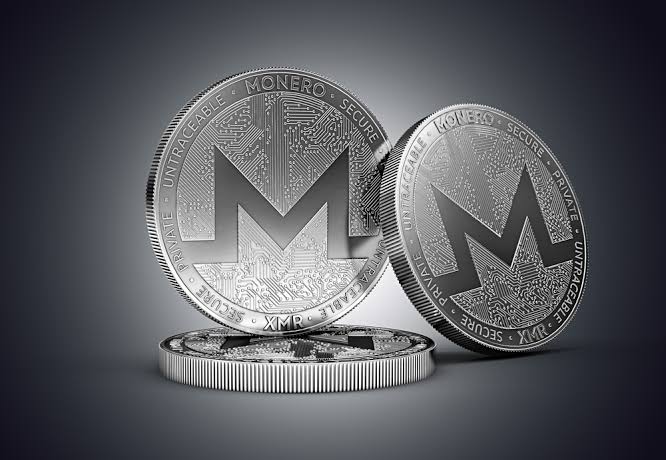
Everything to Know About Monero (XMR)

Monero is a cryptocurrency that runs on a blockchain with greater anonymity. Unlike Bitcoin, which is completely transparent, Monero strives to keep wallets and transactions completely private. With a Monero wallet and the Monero (XMR) currency, it enables rapid, secret transactions between any two people anywhere in the world.

Although it is more private than other cryptocurrencies, it is built on the same blockchain technology as other cryptocurrencies, with open-source code and community development. Continue reading to learn more about Monero and whether it’s a good fit for your crypto strategy.

What is Monero?

Monero (XMR) is a privacy-focused open-source cryptocurrency that was introduced in 2014. 1 It is based on the concept and runs on it. These blockchains, which are the foundation of digital currencies, are public ledgers of participants’ activity that display all of the network’s transactions.

Monero’s blockchain has been designed to be as opaque as possible. By masking the addresses used by participants, it makes transaction details such as the identity of senders and recipients, as well as the amount of each transaction, anonymous.

History

Monero’s beginnings may be traced back to the release of the CryptoNote whitepaper in 2012, a cryptocurrency research paper written by developer Nicolas van Saberhagen, whose true identity is unknown. It introduced the above-mentioned cryptographic algorithms and offered “CryptoNote,” a new type of electronic cash.

Bytecoin was the first cryptocurrency to emerge based on the CryptoNote technology in July 2012, and its codebase was forked in 2014 to create Bitmonero, which is now known as Monero.

There is no single founder or CEO for Monero. It is being developed by a core group of developers, the most of whom have chosen to remain unknown.

Riccardo Spagni (aka FluffyPony), who served as Monero’s chief maintainer until December 2019, is one of the few engineers with a name. Spagni began his cryptocurrency career by mining Bitcoin in 2011, and went on to co-found Tari, a Monero merge-mined sidechain dedicated to promoting and empowering non-fungible tokens (NFTs).

Monero’s development is primarily funded by donations from the community, as it is an open-source initiative. Hundreds of people from all around the world have contributed proposals and funds to the project using Monero’s Community Crowdfunding System (CCS).

How it Works

Monero, like other major cryptocurrencies, uses proof-of-work mining to manage XMR issuance and motivate miners to add blocks to the blockchain. Every two minutes, new blocks are added.

However, enthusiasts may find that mining XMR is easier than mining other cryptocurrencies, because the algorithm that rules the process is meant to prevent specialist hardware from being used.

This means that consumers may be able to mine XMR using a laptop (CPU) or graphics card (GPU), both of which are lower-cost and more commonly available technology.

What Makes It Unique

Monero’s major distinguishing characteristics are its secrecy and anonymity. The Monero software is not like Bitcoin or Ethereum. With a clear roadmap, it is regularly improved to improve security, privacy, and network functions.

Monero is designed to be used as money, and its name is derived from the international Esperanto language, which means “currency.” Monero, like other cryptocurrencies, can be stored in a wallet (including compatible hardware wallets). Monero transactions, on the other hand, use numerous levels of privacy technologies to obfuscate every layer of the transaction, unlike those on public blockchains, which allow anybody to see every transaction.

Anonymity is already a feature of Bitcoin and other cryptocurrencies, but Monero takes it a step further.

Bottomline

Monero has made substantial progress towards real financial anonymity, while Bitcoin took the first steps toward a more private digital currency over a decade ago. Monero is the most valuable privacy coin by market cap, thanks to its excellent encryption and features like stealth addresses and ring signatures, as well as its resilience to ASICs.

Categories
Bitcoin

Goldman Sachs’ Thoughts On Bitcoin Hitting $100k

Goldman Sachs, the world’s largest investment bank, believes Bitcoin will bridge the gap between it and gold. If the digital asset reaches this, the bank expects that prices will approach six digits for the first time.

Goldman Sachs’ head of FX and EM Strategy, Zach Pandle, projected that once Bitcoin eats into gold’s market share, it will exceed $100,000. Bitcoin’s float-adjusted market capitalization is below $700 billion, according to the executive’s public statement, representing for less than 20% of the “lstore of value market between it and gold.

He arrived at this conclusion by evaluating the value of readily available gold for investment at $2.6 trillion.

According to the CEO, if Bitcoin’s market share hypothetically grows to at least 50%, the leading cryptocurrency might reach $100,000 within five years. If his prediction comes true, Bitcoin will have an annual compound return of 18%.

Over the last 12 months, gold has not provided investors with remarkable returns, forcing some to look to other asset classes. According to a Goldman Sachs return scorecard for the year 2021, gold barely gained 4% and ranked last on the list. Bitcoin, on the other hand, led the list with a 60 percent year-over-year rise, according to the investment bank.

These data may have had a significant impact in Zach Pandle’s prediction that Bitcoin would eat into gold’s market share.

Because to its poor performance since the beginning of the year, Bitcoin’s market capitalization has dropped to $789 billion. The asset is currently trading at $41,979, with trading volumes down by 24% in the last day.

In the past, gold was thought to be a safe haven asset that was immune to inflation. According to David Jones, market strategist at Capital.com, the measures for 2021 indicate that its attractiveness to investors is declining as it is locked in a no-land man’s between the expanding stock market and cryptocurrencies.

Categories
Bitcoin

Bitcoin Review: Is It A Good Time To Buy?

The Federal Reserve’s recent announcement on January 6 about rising interest rates as soon as March is still having a significant impact on bitcoin prices. The flagship cryptocurrency is still trading over the $42,000 mark set in early December.

This was a weekend action that sent shockwaves around the world on Saturday morning. Bitcoin prices, on the other hand, have been unable to hold above $52k since then, and a pattern of recurring support around the $45k level has surfaced many times in recent weeks.

In the same way, the marginal reaction to such support has dwindled over time. Before the Christmas break, the $52k level was retested.

After price action retreated quickly back to support, the bounces have become increasingly shallow, signaling that bulls are losing speed and may soon be unable to defend support. We’re currently looking at a descending triangle, and bearish breakdowns are common.

According to the Crypto Fear & Greed index, which has been dialed down to 15, there is a “tremendous amount of institutional demand on the sidelines.”

Low volume, according to some investors, might be the catalyst for an extended bearish market.

On-chain measurements reveal a general lack of activity, notwithstanding a mildly optimistic undertone in supply dynamics. Meanwhile, illiquid coins are flocking to dormant wallets in droves, and investor profitability and cyclical measures are turning gloomy.

With both bull and bear indications present, we predict sideways consolidation to continue into 2022.

Furthermore, at 39.6 million, the number of non-zero addresses is 40% larger than the peak reached at the end of the 2017 bull market, demonstrating that the number of users has increased over the last five years.

Given the parabolic nature of Bitcoin, predicting whether it will hold or break on its next test is impossible. This is a turning point, and it should be treated as such. If sellers pass the next test, the path to deeper breakdowns might open up rapidly.

Despite being one of the top outperforming mainstream financial assets in the world, you should assess your crypto investment strategy and understand what you’re getting into before investing in the pioneer crypto.

Don’t put money into something just to avoid missing out. Don’t risk more than you can afford to lose; enter at a reasonable price and distribute your money around to minimize risk.

Categories
Bitcoin

The Crypto Market Has Lost $300 Billion So Far in 2022

The ongoing bitcoin market crisis is showing no signs of abating, as more and more coins being liquidated. The crypto market has seen over $175 million in liquidations in the last hour; this is just one example among many. On less than two days, approximately $900 million has been liquidated in the market.

Coinglass, a cryptocurrency liquidations analytics portal, has now noted that Ether has seen somewhat more liquidations than Bitcoin.

According to coinglass, contract liquidation has reached $102 million in the last half hour, with $40 million in BTC and $42 million in ETH. BTC is currently trading below $42,000, while ETH is trading below $3250.

The bitcoin market is now in a bearish situation, according to numerous observers. Long before the commodity fell to new 2022 lows, however, popular Bitcoin skeptic CryptoWhale had already predicted a bear market, stating three days ago that Bitcoin is not only in the early stages of a terrible bear market, but that the asset will never rise beyond prior all-time highs again.

Although his point has already been partially demonstrated to be correct, the final half may be a stretch. This week, glassnode said that the crypto king was not in a bull market, contrary to popular belief. Bitcoin, on the other hand, is still well-positioned for a substantial price increase, according to its on-chain research.

At the time of writing, Bitcoin is trying to stay above $40,000. Ether has also shrunk dramatically, losing roughly 15% of its value in just seven days. Other crypto, such as Cardano, Solana, and XRP, are in the red, with BNB down 14%, as the others try to recover from daily losses.

Categories
Altcoins Guides & Tutorials

Sandbox (SAND): What You Need To Know

The founder of The Sandbox, a world-building computer game comparable to Minecraft and Roblox, released SAND, an Ethereum-based utility coin. For years, free versions of the game have been accessible for Android, iOS, and Windows users, although the most recent edition had only 1.2 million active users as of 2018. Both Minecraft and Roblox have over 100 million users.

With a new edition of The Sandbox that uses SAND and non-fungible tokens (NFTs) as the basis of an in-game economy, owner Animoca Brands hopes to revolutionize the competitive gaming industry landscape. The SAND utility token has been available since its initial coin offering in August 2020. (ICO). Here’s everything you need to know.

What is Sandbox?

The Sandbox is a play-to-earn blockchain game that allows users to construct a virtual environment using Ethereum’s non-fungible tokens (NFTs). Players can create their own avatars to access The Sandbox metaverse’s various games, locations, and hubs. You might think of the game as a blockchain-based DeFi version of Minecraft.

The Sandbox promises to allow gamers to create, own, and monetize their gaming experiences using SAND, an Ethereum-based ERC-20 utility token. SAND lets users to play games, buy equipment and building materials, and modify their appearance within The Sandbox metaverse. This isn’t something you get with every coin.

Background

The Sandbox was first released in 2011 by Pixowl as a mobile gaming platform meant to compete with Minecraft. It became an international smash, with more than 40 million downloads. However, in 2018, Arthur Madrid and Sebastien Borget, the company’s co-founders, decided to investigate the possibility of constructing a 3D metaverse on the blockchain. Their goal is to allow people to really own their works as NFTs and earn incentives while doing so. Along with Axie Infinity and Decentraland, the new Sandbox project was introduced in 2020 and quickly became one of the fastest-growing games in the crypto market.

The Sandbox received $93 million in funding from investors led by SoftBank, the Japanese mobile company, in November 2021. Over 50 partnerships were formed as a result of the game, including Atari, a well-known game company, CryptoKitties, The Walking Dead, and hip-hop artist Snoop Dogg are among them.

How it Works

To track ownership of the digital LAND and NFT ASSETS on its application, the Sandbox program uses the Ethereum blockchain. Users can interact with the ecosystem even more by using Ethereum wallets to store their SAND tokens.

Developers can also use many tools within the Sandbox platform to build the motion and interactions that users would encounter on their virtual real estate:

Voxel Editor: Users can develop and bring to life items such as flora, fauna, and avatar-oriented equipment using voxels, the smallest unit of three-dimensional design (such as clothing or weapons).

Game Maker: Software that enables users to construct 3D games on their own LAND utilizing ASSETS they have generated or purchased on the market. 

Users can upload their works to The Sandbox marketplace, where they are initially registered on the Ethereum blockchain as ERC1155 tokens (ASSETS). SAND can then be used to buy and sell these ASSETS.

What Problem It Solves

There are several characteristics of The Sandbox that make it a market pioneering initiative. The software addresses one of the most significant inequities in gaming: locked funds. When you play classic centralized games, you put all of your work and money into that one game. These funds are lost permanently or until you rejoin the network if you stop playing.

The Sandbox gives players a variety of options for accumulating value and transferring it to other games or altogether outside of the gaming ecosystem. The game’s creators used NFT technology to make it easy for players to keep track of their creations. NFTs are cryptocurrency tokens based on the blockchain that can be used to represent in-game assets. They are both verifiable and transferrable on the blockchain.

Lack of transparency is another issue that The Sandbox addresses. In a traditional centralized gaming system, there is no way for gamers to fully know the scarcity of a digital item without relying on the makers’ word. Using a rudimentary Ethereum blockchain explorer, users can readily confirm the scarcity, history, and capabilities of in-game assets in the Sandbox.

Bottomline

The Sandbox is a metaverse-based user-generated content platform that allows users to create and contribute. The Sandbox, unlike other popular play-to-earn games, has no predetermined gaming world. It has a flexible approach that allows users to personalize anything using free and simple tools. Users’ content can be monetized in the form of NFTs or used to improve their game experience.

Categories
Bitcoin

CSI And NYDIG Partners Together to Offer Crypto Services

Computer Services Inc. (CSI), a prominent fintech solutions provider, has teamed up with New York Digital Investment Group (NYDIG), a digital asset business, to allow banking customers to purchase, sell, and store bitcoin (BTC).

The service will be integrated into CSI’s comprehensive suite of digital banking technology, which already includes a wide range of solutions for traditional financial institutions, such as digital payments and mobile banking, according to the statement.

Because of the increased interest in Bitcoin, CSI decided to offer a comprehensive range of Bitcoin services to traditional financial institution customers.

According to a study performed by NYDIG last year, 80% of respondents said they would be willing to buy bitcoin with their bank accounts if the option become available.

Furthermore, 71% of those who had already become acquainted with the world’s largest cryptocurrency stated that they would not mind switching their primary bank for one that offers bitcoin services.

Because of the increased interest in Bitcoin services among bank customers, CSI, which serves 2,700 traditional financial institutions, has decided to offer bitcoin services to banking clients.

CSI’s group president of Enterprise Banking, Giovanni Mastronardi, stated that the organisation is committed to assisting its clients in staying on the cutting edge of innovation.

Community banks in the United States have expressed interest in providing Bitcoin services to its customers, according to the release.

The key challenge, according to Patrick Sells, NYDIG Chief Innovation Officer, has been their inability to “create a secure and compliant environment to sustain the trust that their consumers invest in them.”

Although a few U.S. institutions, such as Five Star Bank, have been allowed to offer Bitcoin services to their customers through the NYDIG solution, Sells believes the project will assist more community banks stay compliant and secure.

Categories
Blockchain Ethereum

Vitalik Buterin On Ethereum 2.0

Vitalik Buterik, a co-founder of Ethereum, estimates the network is about halfway through its development. In the most recent episode of the Bankless podcast, the programmer revealed this.

During the podcast, Buterin was questioned about his thoughts on the network’s progress, and he said, “We are 50% of the way there.” He claimed that the development of the Beacon Chain, which provides the framework for proof-of-stake, helped the team reach this milestone. He went on to say that the London hard fork was also crucial to the network’s recent progress in the last year.

During the podcast, the Ethereum co-founder also discussed the steps the project aims to follow to make Ethereum 2.0 a success. Buterin’s ultimate objective is to leave the past in the past and develop an Ethereum that genuinely becomes simpler and easier over time, according to him.

For better administration and acceptance, Buterin noted that Ethereum needed to be easier to iterate and less data-intensive.

The executive wrote a paper called “Endgame” at the end of last year, in which he suggested that in the next years, everyone would work together. Buterin proposed techniques that would enable for a decentralised block confirmation mechanism to achieve this goal.

The founder admitted that the Ethereum network was not yet ready for “direct mass adoption,” emphasising the need for more scaling protocol improvements as well as considerably lower fees.

Buterin praised the network’s efforts with scaling protocols thus far, noting that the community remains resolute and committed to it. Aside from scaling, the CEO emphasised the need of security when it comes to the upcoming changes.

Buterin compared a blockchain network to a state that requires armed forces to protect it, revealing that network members have a similar role in securing the blockchain, noting that extra security is required with each new block.

According to Buterin, higher bandwidth and adoption will make the network more secure, as more defenders will be able to run nodes and verify that everything is running well.

Categories
Blockchain Ethereum

Ethereum Blockchain Now Burns Around $23k Per Minute

According to data from Ultrasound Money, an Ethereum network tracker, the network now burns an average of 6.18 ETH per minute after 152 days since the implementation of the EIP-1559 proposal, which gave the Ethereum blockchain deflationary functionalities and the ability to burn gas fees, putting the burn rate at $23,484 per minute at today’s price of $3,800 per ETH.

The network has burned a total of 1,362,500 ETH so far, putting the total burn at $5.18 billion at the time of this article.

The Ethereum network has been going through a series of hardfork updates to migrate from a Proof-of-Work (PoW) consensus mechanism to a Proof-of-Stake (PoS) consensus mechanism.

A hardfork occurs when a major change to a blockchain network’s protocol occurs, resulting in a divergent split between the old protocol and the newer version.

One of the improvements was the London hard fork, which includes five new Ethereum Improvement Proposals (EIPs), all of which are temporary until the permanent Ethereum 2.0 update.

One of the enhancements is EIP-1559, which proposes the implementation of a ‘base fee’ that tracks gas fee prices across the Ethereum network to ensure accurate gas fee projections for network users. It also provides deflationary functionalities to the Ethereum network, allowing it to burn gas costs.

According to Ultrasound Money, OpenSea, the popular Ethereum network NFT marketplace and the world’s largest NFT marketplace, has accounted for the most burns on the network, totaling around 145,700 ETH, or $553.7 million, since it was activated 152 days ago. This is 10.69% of the total number of burns.

Apart from OpenSea, ETH transfers account for 132,760 ETH ($504.5 million) and Uniswap V2 accounts for 114,560 ETH ($435.3 million), respectively.

Axie Infinity, a popular play-to-earn website, is ranked eighth, with 16,915 ETH burned for a total of $64.3 million.

Categories
Altcoins Guides & Tutorials

Elrond (EGLD): The Internet Scale Blockchain

Elrond is a blockchain-based platform designed for scalability, speed, and security. It creates a network powerful enough to operate at “internet scale” by putting a new spin on existing technology.

You’ve probably heard of the scalability trilemma if you’ve been around the cryptosphere for a while.

The scalability issue: utilizing today’s technology, particularly Proof of Work (PoW), the consensus method used by Bitcoin, the three key qualities of a mature blockchain network (scalability, security, and decentralization) are hard to achieve concurrently.

Let’s learn about Elrond, how it works, and the problem it solves.

What is Elrond (EGLD)?

“A highly scalable, fast, and secure blockchain platform for distributed apps, enterprise use cases, and the new internet economy,” Elrond sums it up wonderfully. The Elrond network, which was founded in 2017, intends to enable faster and more cost-effective transactions through smart contracts that are managed by a distributed network of computers. Elrond was created by brothers Beniamin and Lucian Todea to address difficulties with blockchain scalability.

They concentrated on creating a blockchain platform that was superior than any other blockchain platform at the time. Elrond Network was conceived with the goal of creating an interoperable and highly-level scalable blockchain network. Elrond is quite a powerful network. With an average cost of $0.001, it can execute nearly 10,000 to 15,000 transactions per second.

Elrond Network believes in decentralization in its purest form. The network is aimed to compete with major blockchain platforms like Ethereum, Zilliqa, and others by utilizing features such as sharding and a secure proof-of-stake. Furthermore, it is the first network to implement state, network, and transaction sharding simultaneously.

Prior to performing an IEO, the Malta-based platform raised $1.9 million in a private investment round from various angel investors. Later, the network held an initial coin offering (IEO), raising $3.25 million and exchanging 25% of the entire quantity of its ELGD tokens.

History

Lucian Todea and Beniamin and Lucian Mincu conceived and released Elrond in 2017. The Mincu brothers also co-founded ICO Market Data, a data aggregator for initial coin offerings, and MetaChain Capital, a digital asset investment company. The Elrond team launched a private funding round for the project that brought in over $2 million.

Elrond held an ICO in July 2019 that raised about $3.2 million by selling 25% of its total supply. Elrond was initially traded under the ticker ERD, but after the mainnet was published, the ticker was changed to EGLD (eGold).

How it Works

Smart contracts, transaction settlement, and token issuance are all available on the Elrond network, which is similar to other cryptocurrency networks.

To offer a variety of products and services, developers can use programming languages (such as Rust, C, and C++) to run bespoke programming logic (smart contracts) and construct new programs (decentralized applications).

Elrond is distinguished by its sharding and proof-of-stake design modifications, which aid in the processing of about 12,500 transactions per second.

Sharding

Sharding divides the network into shards, allowing nodes to process only a portion of the network’s transactions. Other competing blockchains, like as Zilliqa and Polkadot, use this method as well.

‘Adaptive State Sharding,’ Elrond’s transaction processing technique, divides nodes into subsets to verify transactions. The shards broadcast the transactions to the metachain (Elrond’s core blockchain), where they will be settled.

One-third of the nodes validating transactions in each shard are reshuffled to a new shard every 24 hours, with the goal of preventing validators in each shard from colluding.

Secure Proof of Stake (SPoS)

The Secure Proof of Stake governance system, which keeps the distributed network of computers running Elrond’s blockchain in sync, is at the heart of the project.

SPoS is utilized by computers running the Elrond software to secure the network, validate transactions, and distribute freshly generated EGLDcoins, much like regular PoS.

Elrond’s network, however, is made up of shards rather than a single chain, hence its SPoS consensus method is utilized to choose validating nodes to produce blocks inside a shard rather than throughout the entire network.

Validators must check the work of block producers and sync with other shards in the network to achieve final settlement. These contributors are rewarded with EGLD tokens once a batch of transactions is successfully added to the Elrond blockchain.

What Makes it Unique

Elrond’s implementation of Adaptive State Sharding sets it apart from other sharded blockchains.

You might be wondering what Adaptive State Sharding is. Adaptive State Sharding combines three types of sharding (state, transactions, and network) to accelerate transactions by parallel processing.

In brief, Elrond’s Secure Proof-of-Stake consensus method combines eligibility based on the amount of EGLD tokens staked by validators with a network rating for each node, resulting in meritocracy and the elimination of computational inefficiency associated with Proof of Work (PoW). This approach is regarded as a secure and low-latency consensus solution.

Bottomline

Elrond emphasizes scale and fast transaction rates as the project’s key sources of intrinsic value, claiming that the network can execute up to 15,000 transactions per second. Elrond is a highly functional ecosystem thanks to its rapid transaction speeds, scalability, decentralization, and full custody of users’ assets.

Elrond aspires to become a model of the new internet economy as the project progresses. The project provides fast transaction speeds and tools for dApp development and deployment for public and enterprise-grade use cases.

Categories
Bitcoin News

Airbnb Customers Want An Option To Pay In Crypto

Airbnb CEO Brian Chesky polled his nearly 400,000 Twitter followers on Monday, asking what they wanted from the rental platform in 2022.

When renting their next house or apartment on Airbnb, the majority of respondents want to be able to pay with Bitcoin (BTC) or other popular digital currencies, according to Chesky. Clear pricing displays, a visitor loyalty program, up-to-date cleaning charges, and improved customer service were among the other recommendations.

Got 4,000 suggestions. Here are the top 6:

1 – Crypto payments (top suggestion)
2 – Clear pricing displays
3 – Guest loyalty program
4 – Updated cleaning fees
5 – More long-term stays & discounts
6 – Better customer service

Already working on most, will look into others now! https://t.co/rxEM4BXZci— Brian Chesky (@bchesky) January 5, 2022

Some governments ban foreign transfers, according to one person who suggested the crypto payment option. As a result, he relies on digital assets. “We are looking into this,” Chesky, who has been actively replying to several tweets, responded.
Since 2013, his internet travel and booking company has received $336 billion in payments, according to the executive. Visa, MasterCard, Apple Pay, Google Pay, and PayPal are presently accepted as payment methods by Airbnb.

Chesky also stated that he has seen a variety of token concepts, hinting that Airbnb’s cryptocurrency payment options will not be limited to just one or two digital assets. Visa, MasterCard, Apple Pay, Google Pay, and PayPal are presently accepted as payment methods by Airbnb. Since 2013, the accommodation company has processed $336 billion in transactions, according to the CEO.

On top of new authentication technologies like biometrics, distributed ledger and blockchain technology, artificial intelligence, virtual and augmented reality, and cloud technologies, Airbnb mentioned crypto in its prospectus as one of the important components in its success.

There are, however, dangers. Payment information is now housed on centralized servers that are vulnerable to hackers, according to proponents of crypto adoption for vacation rentals.

Categories
DeFi News Technology

Aave Has Announced That It Is Developing a Mobile Wallet

In order to go mainstream, Aave is bringing DeFi closer to individuals in 2022. To the delight of its community, the project has announced the development of a mobile wallet.

With the announcement of the development of a mobile wallet, the protocol has taken 2022 by the scruff of the neck. Stani Kulechov, the project’s founder, made this announcement to the public.

In 2021, members of the community proposed creating a mobile app for Aave, which spurred interest in the ecosystem. The proposing team, 2001DeFi, intended that the new mobile app would make onboarding new users to the Aave protocol easier, resulting in an increase in Aave TVL.

Stani Kulechov, on the other hand, claims that the Aave mobile wallet is not the same as the previous idea. “Aave is developing something mind-blowing,” he added.

Based on the limited information available, it appears that the wallet will include multi-chain and NFC capabilities from the start. According to users, 2022 could be the year that Web 3.0 mobile apps become ubiquitous. “IOS and Android will be a little flexible on the guidance enabling this to aid with the existing rail on-ramp,” one user hoped. The protocol has a TVL of $12 billion and over 1.6 million ETH, according to DeFi Pulse.

The open-source protocol’s transaction volume has increased drastically in recent months as more investors flock to it. It attracts investors due to the variety of features it provides, including the chance to earn dividends on the platform.

Users can also borrow assets from Aave after providing the required collateral. Another element that has helped significantly to Aave’s success is the possibility to take out flash loans.

The development of a mobile wallet for the protocol will be a significant advance. The AAVE coin has been trading at $252 since the announcement, after reaching a 48-hour high of $270.11.

Categories
News Regulation

Crypto.com Ads Banned By UK Regulator

As part of its ongoing fight against digital assets, the UK’s advertising authority has banned two “misleading” commercials by Crypto.com.
The first ad, which said “purchase Bitcoin with credit card instantly,” came on the Daily Mail app in September, while the second, which showed on the Love Ball app in July, claimed readers they could “make up to 3.5 percent every year.” The percentage in the text has risen to “8.5 percent.”
The Advertising Standards Agency accused Crypto.com of deceiving the public by failing to disclose danger, exploiting investor inexperience irresponsibly, and failing to explain how the 8.5 percent number was calculated in its judgement.

The second ad, which appeared on July 30 in Lion Studios’ Love Balls smartphone game, stated, “Earn up to 3.5 percent p.a.,” while the text stated, “8.5 percent p.a.” Consumers would believe their investment would rise by the higher amount presented, but the return would depend on the type of crypto invested and the length of time, according to the ASA.

The advertising were also irresponsible, according to the ASA, because they used customers’ “inexperience or credulity” and neglected to make clear that crypto investments are not regulated in the United Kingdom.

The advertisements failed to convey the investment’s risks, were reckless, and exploited buyers’ inexperience or credulity, according to the regulator.

The watchdog also took issue with the proposal that people acquire cryptocurrency on loan without being warned about the risks of debt.

There were no fines levied, only warnings that future commercials must include information stating that the value of bitcoin investments can go up as well as down.

Following the ASA’s engagement, both adverts were immediately withdrawn, according to a Crypto.com spokeswoman. The firm has agreed to go “above and beyond the ASA’s requirements” by guaranteeing continuing compliance with the Financial Conduct Authority’s Treating Customers Fairly outcomes 2 and 3, which deal with fair marketing practices.

“We believe building a fully regulated industry is the best way to accelerate the world’s transition to cryptocurrency, which has long been our mission. Engaging regulators to ensure compliance and building trust remain Crypto.com’s highest priorities. We appreciate the collaborative dialogue and engagement from the ASA regarding advertising in the UK in this relatively new industry, and remain committed to working with them and regulators around the world to ensure all of our activities are compliant with the most recent regulatory guidelines.”

As it aims to bring digital assets into the mainstream, the crypto platform has been pursuing a high-profile marketing approach.

Crypto.com has announced that it will collaborate with FTX to air the first cryptocurrency commercials during the Super Bowl. It comes after the Singapore-based crypto platform agreed to a $700 million, 20-year deal to name the Staples Center in Los Angeles after it.

Categories
Altcoins Guides & Tutorials

What is Filecoin (FIL)? Everything to Know

The value of the underlying cryptocurrency, FIL, is projected to rise as the Filecoin network grows (with more miners providing storage space and more users putting their trust in it with their data). This is due to the fact that the number of transactions requiring digital currency will increase. If enough people use Filecoin, it might become the quickest and cheapest way to store data on the internet. As if that weren’t enough, the entire quantity of FIL that will ever be produced is capped to 2 billion tokens, giving it even more value.

Here’s everything you need to know about the cryptocurrency.

What is Filecoin?

Filecoin (FIL) is a decentralized file storage and sharing network that uses blockchain technology to give users access to a slew of new business opportunities. Decentralized file-sharing systems have never been more popular. Filecoin uses several technologies to present its customers with a unique experience that translates into more opportunities to earn cryptocurrency.

In its most basic form, Filecoin works in the same way as other file-sharing systems like Dropbox. The primary distinction is that instead of a centralized authority keeping data, users can bid on available storage given by miners. In this way, Filecoin is an example of a blockchain application that isn’t related to finance.

FIL, the network’s native cryptocurrency, is not an ERC-20 token because Filecoin manages the network using its own blockchain technology. Because Filecoin runs its own consensus, which incentivizes network participants to provide the best services, it requires its own token.

History

Protocol Labs, a firm founded by computer scientist Juan Benet, developed Filecoin as an open-source software. Protocol Labs is also the creator of IPFS and libp2p, two protocols that aspire to replace existing Internet protocols.

While studying computer science at Stanford, Juan Benet also cofounded the game production firm Loki Studios. Loki Studios was purchased by Yahoo in 2013. Juan Benet then founded Protocol Labs as part of the Y Combinator startup program.

The initial coin offering (ICO) for Filecoin, which took place in August and September 2017, raised $257 million, making it the largest ICO ever. Digital Currency Group, Coinbase cofounder Fred Ehrsam, Stanford University’s startup accelerator StartX, and AngelList founder Naval Ravikant were among the investors who supported Protocol Labs.

After the ICO, the Filecoin mainnet was released in October 2020, and by November 2020, the Filecoin network had a storage capacity of more than 1 exbibyte, thanks to the involvement of more than 70 enterprises.

How it Works

Filecoin is a peer-to-peer data storage network based on the InterPlanetary File System (IPFS) protocol that is decentralized. When a user wishes to save personal data using the network, they choose storage miners on the network and pay them in FIL to host their files. Miners are the computers that store the data of users and are critical to the Filecoin network’s security.

Files can be saved in an untrustworthy manner via a peer-to-peer network because to Filecoin’s decentralized nature. Users can select from a variety of Filecoin miners based on cost, redundancy, and performance, ensuring that each user has the optimal storage choice for their data.

Filecoin (FIL) can also be connected with decentralized applications (dApps), allowing data to be stored with any Filecoin miner. Miners will carry out these various types of “deals” for users while also collecting money for doing so. A new block will be added to the chain every 30 seconds, and miners will receive their FIL rewards.

A user can examine the proofs on the blockchain to ensure that their submitted data is saved appropriately. Proofs are publicly verifiable cryptographic math problems that miners on the Filecoin network submit on a regular and automatic basis. Proof of Replication (PoRep) is a technique used by Filecoin to show that a miner has received all of the data and has coded it in a unique way when compared to other miners.

That means two distinct disks will be used for the identical data in two different agreements. The usage of PoRep ensures that data is received in a secure and timestamped manner. The miner then employs Proof of Spacetime (PoSt), which necessitates the usage of random miners to verify the storage of random data fragments. This demonstrates that the data is still being securely saved during the transaction.

Bottomline

Filecoin could be the solution to a slew of inefficiencies in worldwide data storage and retrieval. More importantly, it gives clients more flexibility of choice, reducing their reliance on contracts with large storage providers like Amazon Web Services, Dell, or HPE. As a result, Filecoin may help to make the cloud storage business more competitive.

You should expect to see additional blockchain-based file sharing protocols enter the market if Filecoin is any indication of what’s to come in the future. These systems allow users to earn a passive income while also reducing their carbon footprint and waste by eliminating the need to purchase gear. As a result of these factors, Filecoin is expected to skyrocket in the next months.

Categories
Gaming

A Look Into MetaWars: NFT Gaming in Space

Due to their rapid accessibility, entertainment value, and potential to disrupt the gaming industry, blockchain games have long been hailed as one of the primary on-ramps into the cryptocurrency and decentralized finance (DeFi) sphere.

Until recently, the majority of these games were underwhelming and lacked long-term entertainment value. By traditional gaming industry criteria, the majority of them would be classified as mini-games or MVPs. However, MetaWars, a new space exploration, conquest, and fighting game, aims to break the norm by offering a gameplay experience that rewards players with digital assets for their efforts and success. Here is everything you need to know about MetaWars.

What is MetaWars?

MetaWars is a multiplayer strategy/roleplaying game with a large cosmos fuelled by a burgeoning digital currency based on blockchain technology. Use a large collection of NFTs to forge your own path and have an impact on every major event in the Galaxy. It’s up to you to earn a piece of the great treasures that await when battles flare and regimes fall.

MetaWars is a multiplayer game set in a large world in which each player assumes the role of a warrior or an entrepreneur participating in galaxy-wide operations. Gamers will travel across the cosmos using a variety of NFTs to explore and battle. Furthermore, they will form alliances and compete against destructive pirates in order to transform the galaxy and make a large sum of money.

How it Works

MetaWars is a decentralized application (DApp) that will be released on the Binance Smart Chain (BSC) blockchain in the near future. MetaWars and its features will be accessible via a conventional online browser and Web3 wallet, as with most blockchain games (such as MetaMask).

Thanks to the game’s story feature, which will progressively emerge via several alliance missions, players will be sent voyaging across the world. This could involve assisting with the defense of the alliance, building starports and ships, and exploring unknown space sectors.

Each main planet will be divided into different parts, which will be referred to as terrain. Players can buy and develop their land to generate money by mining, farming, and renting it out, but they must safeguard their assets against other players who want to loot their resources.

The following are the three main gameplay mechanics in MetaWars:

  • Combat: Players will face a variety of enemies as they travel across the MetaWars universe in this tactical exploration and fighting game. This will eventually lead to PvP and PvE battles, with the winners enjoying a rewarding experience.
  • Exploration: MetaWars has a large cosmos to explore, full of potential riches. Players will be able to explore a cosmos brimming with possibility and danger as the story progresses.
  • Development: Players will be able to create thriving businesses across the MetaWars realm, allowing them to monetize their conquests and efforts while also contributing to the larger, more sophisticated MetaWars player-to-player industry mechanic. Players will acquire and upgrade their fleet of ships, buy and develop their terrain and make use of the marketplace to buy or sell assets as they proceed through the game.

Understanding MetaWars

Users can earn money in the MetaWars game, which features a futuristic sci-fi concept and a multi-layered, key strategic battlefield. In essence, players are given the opportunity to envision themselves in a genuine space exploration with resources that they can conserve and employ. Users can unravel mysteries, find new universes, and defend their riches from adversaries while exploring. All of these challenges allow players to earn NFTs by playing to win. They can then profit from these digital treasures by monetizing them.

Your major purpose as a player is to work with several game commanders to “reshape the galaxy in missions.” Players would be able to have fun while earning NFTs and collecting limited edition robots through various auctions in the play-to-earn gaming ecosystem.

Conclusion

MetaWars’ play-to-earn concept is not only open, but also fair. Furthermore, the community controls the distribution of in-game tokens. MetaWars is destined to change the crypto market with NFT gameplay, thanks to all of the intriguing gameplay features and its unique and engaging setting.

Categories
News Regulation

Estonia Has No Plans of Banning Crypto

The Estonia Ministry of Finance said on Sunday that new draft legislation for virtual asset service providers (VASPs) will not prohibit customers from owning or trading cryptocurrency, but the proposed requirements for VASPs, which include high capital requirements, could apply to decentralized wallet creators.

Following reports that the planned measure will effectively ban decentralized finance (DeFi) and non-custodial wallets, the White House issued a statement on Sunday. Users have complete custody of their crypto and private keys with a non-custodial wallet.

The new draft legislation for virtual asset service providers (VASPs) does not prohibit consumers from owning or trading cryptocurrency, but the proposed conditions for VASPs, which include high capital requirements, could apply to decentralized wallet makers.

The measure, according to Estonian Finance Minister Keit Pentus-Rosimannus, is intended to tighten anti-money laundering (AML) standards for VASPs, reducing the formation of anonymous accounts in particular. If passed, Estonian VASPs will be compelled to identify their consumers while issuing accounts or wallets under the new regulation.

According to the statement, the legislation does not include any provisions prohibiting users from owning and exchanging virtual assets, nor does it force clients to reveal their private keys with wallets. Estonia’s new bill responds to the Financial Action Task Force’s (FATF) guidelines on VASP regulation.

The FATF advice specifies that DeFi apps are not VASPs in and of themselves, but that creators, owners, operators, or other persons who maintain control or substantial influence in DeFi arrangements can be considered VASPs under the FATF definition.

According to the Ministry’s announcement, developers, owners, or other persons who profit monetarily from such programs could likewise be deemed compelled entities as VASPs.

The Ministry reaffirmed that no services will be prohibited, and that businesses that want to provide such services in Estonia must merely follow the AML rules. The bill now needs to pass Parliament before it can take effect in the first half of 2022.

Categories
Bitcoin News

Melania Trump Celebrates Bitcoin’s Birthday

Melania Trump marveled at Satoshi Nakamoto’s life-changing creation as the crypto world celebrated Bitcoin’s 13th anniversary since the Genesis Block on Monday.

The first lady, who is swiftly becoming a force to be reckoned with in the blockchain sector, conveyed her pleasure over the first block, which has now become a major aspect of Bitcoin’s mystery and mythology, by sharing a screenshot of Block 0.

It is widely reported that Bitcoin’s market cap exceeds USD$1 Trillion.  Today marks the 13th anniversary of the Bitcoin Genesis Block.  Happy Anniversary, #SatoshiNakamoto #MelaniaNFT pic.twitter.com/aZqNJFcZmd— MELANIA TRUMP (@MELANIATRUMP) January 3, 2022

According to CoinGecko, the market capitalization of Bitcoin is just over $880 billion at the time of writing. In early December of last year, its market value surpassed $1 trillion for the first time.

At the time of writing, the post has over 30,000 likes and over 8,000 retweets. Following that, many in the bitcoin world, including Morgan Creek Digital co-founder Anthony Pompliano, speculated that Mrs. Trump might be a “Bitcoiner” or involved in the Bitcoin industry.

Others pointed to Mrs. Trump’s husband, former US President Donald Trump, who has repeatedly attacked Bitcoin in recent years, calling it a “scam” and claiming that it is built on “thin air.”

In mid-December 2021, the former First Lady officially launched her NFT platform, releasing her first digital collectible, “Melania’s Vision.” The NFT sale took place on the Solana blockchain, according to Melania Trump’s official website, with the auction closing on December 31.

Categories
Altcoins Guides & Tutorials

Everything You Need To Know About Hedera (HBAR)

For its capacity to manage transactions in a decentralized and distributed ledger, blockchain has received a lot of traction.
Bitcoin was the first blockchain program to complete transactions without the use of a central authority. Despite the fact that Bitcoin is transparent, completing a transaction takes more than an hour. As a result, transactions on the blockchain network consume a significant amount of your time. The challenges that blockchain couldn’t solve led to the development of a new technology known as “Hedera Hashgraph.”

Hedera Hashgraph has the potential to dominate blockchain development. Continue reading to find out why.

What is Hedera?

Hedera is a public distributed ledger and governing body founded in 2018 by Leemon Baird, Mance Harmon, and Zenobia Godschalk. It was created from the ground up to accommodate new and existing web-scale applications. It incorporates distributed ledger technology into its products to embed computational trust, allowing enterprises and individuals who may not know or trust each other to interact rapidly and affordably. The public distributed ledgers assist in the creation and exchange of value, the verification and authentication of critical data, the proof of identity, and other tasks.

Hedera Hashgraph, based in Richardson, Texas, has raised a total of $125 million in funding over seven rounds. Boeing HorizonX Ventures, Tata Communications, BlacTower Capital, and Vestinwolf Alternatives are among the 19 investors who have put money into the company.

Hedera Hashgraph’s CEO and co-founder is Mance Harmon. With over 20 years of strategic leadership experience in global organizations, government agencies, and high-tech startups, he is an accomplished technology executive and entrepreneur. The Hedera public network was based on the hashgraph distributed consensus algorithm by Dr. Leemon Baird, co-founder and chief scientist of Hedera Hashgraph. Hedera Hashgraph has the advantage of not requiring a computationally intensive proof of work.

How it Works

The biggest distinguishing feature of Hedera Hashgraph is its hashgraph data structure for grouping transactions, which claims to execute more transactions more cheaply than existing blockchains.

The Hashgraph is a patented technique that was originally created for private usage, in which all nodes constantly communicate their information with one other.

The Hedera Hashgraph is the first public network implementation of the algorithm.

Hashgraph Consensus Service

Hedera Hashgraph employs the Hashgraph consensus method, which is powered by two types of nodes, to ensure that all computers in its distributed network agree on its transaction history.

Mirror nodes communicate this information to other stakeholders throughout the network, while consensus nodes determine transaction sequencing and history.

The Hedera model ensures that transactions will not be undone later by employing a small number of nodes to establish its history. This is in contrast to how most traditional blockchains establish consensus, which is determined by users proposing blocks to be added to the chain in a market competition open to everybody.

As a result, Hedera Hashgraph claims to incorporate the benefits of both public and private blockchain networks in its features.

Hedera Governance

The Hedera Hashgraph is governed by the Hedera Governing Council, which is in charge of the consensus nodes that determine transaction ordering.

The council will have 39 members by 2020, including Google, IBM, and Boeing. The network’s legal standing in various jurisdictions is safeguarded by the council, which manages the software, votes on improvements, ensures money are allocated correctly, and manages the network’s legal status.

It’s worth noting that the council has a limited number of seats. Each member can serve for a maximum of two three-year terms in a row. Members have an equal vote on network and platform decisions throughout this period.

While members of the Governing Council now manage mainnet nodes, the Hedera team plans to offer it up to anybody who wants to operate nodes in the future.

What the Future Holds

The company launched the Hedera Token Service on the Hedera mainnet in February 2021, allowing anyone to generate tokens on the network. More than 60 early ecosystem partners had joined Hedera at the time of launch, and they had integrated, were in the process of integrating, or were exploring the Hedera Token Service to help applications issue tokens across the supply chain, DeFi, payments, energy, and more.

The cost of transferring tokens using HTS is only $0.001. On Hedera, there are now a large number of projects developing tokens. This project is expected to be completed within the next few months, according to estimates. Simultaneously, the Hedera Hashgraph mainnet is projected to get a considerable number of updates in the next months.

According to Hedera’s future roadmap, measures have been made to reduce the amount of network downtime while maintenance is undertaken (unlike decentralized coins that work constantly even while being upgraded).

In addition, the Hedera network will implement a feature called scheduled transactions. It is a method by which a person can specify a future time for a transaction to take place. This can also be used when a transaction needs to be signed by a certain number of people before being sent.

Conclusion

Hashgraph promises to provide everything needed to build apps that can grow to millions of users while still performing well. Hashgraph may be the next generation of blockchain technology, allowing developers to create applications with high speed, efficiency, and security.

LeewayHertz has a staff of highly skilled specialists with a thorough understanding of the developing Hedera Hashgraph technology. Using Hashgraph, we assist businesses in developing cutting-edge and secure apps.

Categories
News NFT

Samsung To Launch NFTs For TVs

It’s good to stare at your non-fungible tokens on a smartphone or laptop screen, but why not display them on your TV screen to remind everyone who comes to your house of the money you spent on digital art NFTs? We seem to be living in a world where it is going to happen. Samsung announced that starting in 2022, its TV lineup will have comprehensive support for NFTs.

“Samsung Electronics Unveils Its 2022 MICRO LED, Neo QLED, and Lifestyle TVs, With Next-Generation Picture Quality and Range of Cutting-Edge Personalization Options,” according to a press statement from Samsung. Samsung is the first major television manufacturer to make a considerable investment in NFTs.

“With demand for NFTs on the rise, the need for a solution to today’s fragmented viewing and purchasing landscape has never been greater. In 2022, Samsung is introducing the world’s first TV screen-based NFT explorer and marketplace aggregator, a groundbreaking platform that lets you browse, purchase, and display your favorite art — all in one place.”

Apart from incorporating NFTs into its products, Samsung Next, the South Korean multinational conglomerate’s venture capital arm, has been aggressively investing in NFT and metaverse initiatives. The firm took part in an investment round for a metaverse gaming platform on Wednesday.

Aside from Samsung, several major corporations have jumped onto the NFT bandwagon. Coca-Cola entered the NFT market for charity purposes in July 2021. Visa paid $150,000 for a “CryptoPunk” NFT a month later.

Digital art collections and digital collectible NFT sales, on the other hand, dominated last year, accounting for 91% of total NFT sales. More NFT and metaverse-based enterprises are generating considerable sums of money to fund their initiatives as sales increase. Last year, blockchain gaming businesses raised over a billion dollars in funding.

When it comes to watching NFTs on Samsung’s 2022 televisions, the company is also paying attention to the finer points. The TVs’ smart calibration technology will adapt display settings to the creator’s preset values, so you can have peace of mind that your work appears immaculate, with true-to-the-original image quality, according to the company. You’ve probably heard of Dolby Vision and Netflix Calibrated Mode, and now NFTs are getting the same treatment.

Categories
Gaming

Everything To Know About AAA Blockchain Game Star Atlas

NFTs, the internet’s current craze, are expected to have a significant impact on the gaming industry. This innovative technology has the potential to transform the online video gaming industry’s economic potential. When you combine NFTs with the game business, as well as the concept of the metaverse, you’ll be witness to a technological revolution. One such initiative, Start Atlas, is setting the tone for the future generation of gaming. Star Atlas is creating a virtual game experience set in the far future with a dual token economy.

Star Atlas is a grand strategy game set in the distant future of 2620. Three factions compete for control of the space, vying for precious resources and assets. The ultimate goal of the project is to create a digital world that is parallel to our physical reality and has self-sustaining economies and business operations.

Decentralized finance (DeFi) components such as lending, yield farming, and automatic market-making, like those used by certain other decentralized autonomous organizations, help the project’s digital economy. The game will leverage Unreal Engine 5’s Nanite technology to achieve a full sense of immersion, allowing for hyper-realistic cinematic images.

Star Atlas allows users to explore the vastness of space in quest of valuable NFT-based jewels. It creates a new graphics technology by combining blockchain dynamics with NFT-based in-game items and a unique graphics engine.

Understanding Star Atlas

Star Atlas’ two tokens serve as the foundation for the entire system. The first is the standard in-game currency, $ATLAS. Players can earn $ATLAS by performing a variety of tasks, such as mining ore and selling it on the in-game market, or selling their assets. Almost everything in Star Atlas is an NFT, including starships, land, and mining platforms. “In the game, there are very few objects that aren’t held by gamers,” Wagner added.

Meanwhile, $POLIS allows you to participate in the game’s second aspect: political intrigue. From micro businesses and guilds to massive regional DAOs, Star Atlas has layers of government built in that are governed by players. Any player who owns $POLIS has the ability to make game decisions — and, perhaps most intriguingly, to outvote the creators.

“As $POLIS is spread, we relinquish our majority ownership, and it becomes very possible for the general public to enact changes that we don’t desire.” The concept is that in the future, we will not have complete control over the metaverse’s result.

Traditional gaming income structures, according to Wagner, are rent-based. When you become a player, you are buying entry to a game and renting time within the game universe. While you’re in the gaming world, you have access to things like your character’s appearance, clothing, and appearance. However, if you decide you no longer want to play that game, you will lose all of your things.

Gameplay

Players must embark on lonely and arduous excursions plagued with many risks as they acquire resources and attempt to outsmart other players in the metaverse in the Star Atlas game’s enormous environment.

In the game, players can design entire cities and micro-economies, or collaborate and form decentralized autonomous organizations (DAO) to govern specific territories. The virtual in-game stuff that players gather while playing can even be converted into real-world money.

Unlike most centralized gaming systems, which limit resale and complete ownership of in-game items, Star Atlas embraces decentralization wholeheartedly. Players will own all of the assets they collect in the game and will be able to sell those NFT-enabled in-game products on secondary NFT marketplaces.

Bottomline

By combining cutting-edge blockchain, real-time graphics, multiplayer video games, and decentralized financial technology, Star Atlas is striving to reshape the future of the NFT-based blockchain gaming sector. Star Atlas’ desire for cinematic-quality graphics is also something that no other blockchain competitor has attempted. The game can also take advantage of the Solana blockchain’s low transaction fees and transactional throughput of up to 50,000 TPS.

Due to the project’s nature, however, its future launch, let alone eventual success, may be questionable, as it is subject to major operational, technological, financial, and regulatory uncertainties and dangers.

Additionally, because Star Atlas is a blockchain-based project, the price of the ATLAS and POLIS tokens, which fluctuate with the cryptocurrency market, may have a direct impact on the project.

We hope you enjoyed the guide and look forward to hearing from us again.

Categories
Altcoins News

Cardano Starting The Year Off With Plans of Upgrading dApps

According to Charles Hoskinson, CEO of the blockchain development arm, Input-Output Global (IOG), Cardano would spend the next six to nine months of 2022 perfecting its decentralized apps (DApps) ecosystem.

Hoskinson revealed this in his first instructional podcast of the year, a Whiteboard video on DApps and Development, which he released in January. The goal of the podcast was to illustrate the benefits of Cardano’s DApp development approach over competing platforms like Ethereum.

The architectural considerations that went into creating Cardano’s extended UTXO (eUTXO) model, as opposed to Bitcoin’s UTXO model and Ethereum’s accounts-based architecture, were a major focus of the podcast.

The main distinction between these models, according to Hoskinson, was their expressiveness, which is a computer science phrase that describes the range of ideas that can be represented and communicated in a programming language. In the field, the more expensive a language is, the more concepts it may represent in terms of variety and quantity.

The expressiveness of programming languages in the blockchain business, according to Hoskinson, can be thought of as a spectrum. With its highly secure but very restrictive UTXO architecture that uses a functional approach to building smart contracts, Bitcoin, the industry’s foundational paradigm, is at the bottom end of this scale.

The Java Virtual Machine (JVM) is on the higher end of the spectrum, allowing nearly any type of programming to be done on it, but it is also extremely vulnerable to attack.

In his comparison, Hoskinson goes on to say that Ethereum’s EVM sits somewhere around the 80% mark of this spectrum because it has certain security limitations, but not enough to prevent assaults. Cardano, on the other hand, was designed to fall somewhere in the middle of this spectrum, or what Hoskinson calls to as the “sweet spot,” where transactions on both the Bitcoin and Ethereum blockchains may be carried out without being overly restrictive or compromising security.

“One of the first parts of the research agenda when we were looking at taking the UTXO model, because we really liked this functionality idea…, we said well let’s make it a bit more extensible and so we wrote the extended UTXO model. And really, we think that for a large class of applications, the sweet spot will be somewhere in the middle.”

Hoskinson’s study comes at a time when decentralized applications (DApps) are all the rage in the Cardano community. The community has been anticipating the release of several DApps that are in development since the announcement of the Alonzo hard fork, which added smart contract capabilities to the world’s largest proof-of-stake blockchain network, Cardano.

As we enter January, there is a lot of excitement because several DApps are set to launch in the next weeks. However, the price of ADA, the network’s native token, has not reflected the excitement. ADA is currently trading at $1.36, down 10.9 percent this week.

Categories
Altcoins Guides & Tutorials

Guide: What You Need To Know About Tezos (XTZ)

What is Tezos?

Tezos (XTZ) is a blockchain network that is connected to a digital token known as a “tez” or “tezzie.” Tezos is not dependant on tez mining. Instead, token holders are rewarded for participating in the blockchain’s proof-of-stake consensus method.

Tezos was beset by delays and legal concerns after a promising start and a highly successful initial coin offering (ICO). Tezos, on the other hand, survived the Bitcoin bear market thanks to its unique proof-of-stake system. Between October 2019 and February 2020, the price of tez more than tripled, reaching new highs. Tezos maintained its popularity in 2021, and it is still among the top 40 cryptocurrencies.

History

Arthur-breitman-and-kathleen-breitman
Arthur Breitman and Kathleen Breitman

Tezos’ origins begins in 2014, when Arthur and Kathleen Breitman, co-founders, began working on their next-generation blockchain. The Breitmans’ goal was to make Dapp creation easier and to create a unique decentralized ecosystem to meet the demands of the digital economy.

In September 2018, Tezos made its debut in Switzerland. Tezos used a dual company approach, as did many other projects in the field. Tezos was founded by Dynamic Ledger Solutions, a business that specializes in distributed ledger technology (DLS).

In addition, the organization raises funds through a foundation. The Tezos Foundation is the name of this non-profit organization. Importantly, the Tezos Foundation is the entity in charge of all operating funds, including those raised during the ICO.

Tezos jumped first into the market. In 2018, the firm hosted a world-record-breaking uncapped ICO. The event went off without a hitch. In just under two weeks, it was able to secure $232 million in Bitcoin and ether. The event’s success garnered international headlines. It also aided Tezos’ ascension into the limelight.

XTZ was given to investors in exchange for their Bitcoin and Ethereum. The Tezos ecosystem’s utility token, XTZ, is sometimes known as tez or tezzie. XTZ allows users to pay for services and execute smart contracts. There are now 741,546,948 XTZ in circulation.

Tezos has never stated how much XTZ it wants to issue in total. Developers left this option accessible in order to ensure that their platform never reaches market capacity.

How it Works

The backbone of the XTZ platform is made up of three major protocols.

The following are some of them:

Network Protocol

The network protocol’s purpose is to identify blocks and disseminate them throughout the chain. It essentially connects the “gossip” network and the entire protocol. The network protocol covers everything nodes need to keep the network running well, such as downloading the blockchain’s current status, connecting users, and publishing completed blocks to the network.

Transaction Pool:

The transaction protocol determines whether or not a transaction is valid. It keeps track of all blockchain data, especially that which is crucial to facilitating peer-to-peer transactions and blockchain activity.

Consensus Protocol

The consensus protocol allows the platform to reach a consensus on the blockchain’s current state. The DPoS model comes into play here as well. Any blockchain update, addition, or upgrade must be voted on by the platform’s stakeholders under this protocol.

The platform’s network shell is what connects all of these distinct protocols. The “blockchain protocol,” which combines the transaction and consensus protocols, is also referred to by the network shell.

The blockchain protocol’s shape is also the result of all network updates and revisions. The blocks that stakeholders add to the chain — which may contain transaction information or protocol updates — are allowed to execute changes to the whole network to enable the platform’s ability to “self-amend.”

What Makes it Unique?

Tezos’ governance is one of its distinctive features. To formulate new design decisions, most early blockchains rely on development teams and mining communities. Tezos, on the other hand, tries to incorporate the decision-making process within the user network itself. It generates incentives for user participation in the core development process as a result of this system. This decentralizes maintenance and democratizes the development process.

Tezos’ developers were also aware that some important attributes needed to be maintained throughout time. Tezos verifies that these qualities are preserved using formal mathematical proofs.

As a result, the Tezos network will stay decentralized. Tezos has a mechanism that allows for collaborative decision-making, despite the fact that other blockchains are decentralized.

Conclusion

The fascinating thing about cryptocurrencies is that blockchain technology is still improving, and many problems remain to be solved. At the moment, a number of programmable blockchains are vying for market share with Ethereum, the market leader. Although it was the first to market, it faces network congestion and hefty fees.

Tezos is undoubtedly a contender, and its latest tokenized asset deal demonstrates that its technology has real-world applications. However, it hasn’t seen the same price increases as its competitors. That gain could still happen, but there’s a risk investors won’t be able to forget about the company’s first issues.

Categories
News NFT

Eminem Buys Bored Ape Yacht Club NFT For $450k

Eminem paid an amazing 123.45 ETH for the Bored Ape Yacht Club NFT, which is worth roughly $452,000. Because it was dressed in hip-hop gear, the monkey sporting a military-style hat with a magnificent look shows some likeness to the rapper.

Since then, Eminem has used the NFT as his profile photo on the microblogging site Twitter. The sale takes the rapper’s OpenSea NFT holdings to at least 15 NFTs, which he bought under the name Shady Holdings.

The ape’s previous owner, GeeGazza, who uses the handle GeeGazza on Twitter, described the sale as “madness” and claimed it seemed like a dream. Eminem has yet to comment publicly on the deal.

I’m living in a simulation.

Thank you @Eminem for buying my ape and joining the club!

Madness. Let me write a lyric in your next single 🤣 pic.twitter.com/myGNRmMLeD

— GeeGazza  (@Gee__Gazza) December 31, 2021

Eminem, GeeGazza had long believed, should be the one to own the NFT. In November, he voiced this belief in a tweet. “You have no idea how long I’ve been manifesting that Eminem buys my ape.”

Six, a brand servicing firm, has come out to say that they handled the purchase on behalf of the rapper, who is regarded as one of the best of all time by some.

On the Ethereum NFT marketplace, OpenSea, BAYC is now ranked second among the major NFT projects. It’s one of the most exclusive NFT ventures, and it’s gotten a lot of attention from sports and entertainment personalities.

SABC #2615, Shaq Gives Back #4077, and Adult Fantasy Sub-Dude (130/151) are among Eminem’s other NFTs. The Shady Holdings address, in reality, contains a slew of ERC721 NFTs. Eminem bought BAYC #9055 from Geegazza, the owner of the NFT, and shared his joy on Twitter.

Eminem isn’t new to the NFT world. “I’ve been collecting since I was a kid, everything from comic books to baseball cards to toys, as well as every rap album on cassette I could get my hands on,” the Grammy-winning rapper said after launching his collection. “Not much has changed for me as an adult… I’ve attempted to recreate some of those collections from that time in my life, and I know I’m not alone,” he continued.

The collection was eventually sold at Nifty Gateway for $1.78 million. Eminem was also an early investor in MakersPlace, another Ethereum NFT marketplace, in August.

Categories
Gaming

Illuvium: A Decentralized Ethereum RPG Game

The crypto industry’s recent boom has resulted in it establishing its footprint on a global scale. Apart from that, some of the primary contributing causes to this success include its very portable nature, volatility, ease of use, the convenience it provides to its customers, and, of course, large profit margins. The introduction of Play-to-Earn games, where you play and earn money, is one of the industry’s successes, and one of the greatest at the time is Illuvium. Everything you need to know about the Ethereum-based role-playing game may be found right here.

What is Illuvium?

Illuvium is a blockchain-based fantasy battle game set in an open environment. Illuvium is often referred to as the first AAA game on Ethereum, and it aims to provide a source of pleasure for both casual and die-hard DeFi aficionados with a variety of collecting and trading features.

The realm of Illuvium is inhabited by creatures known as Illuvials, which can be kidnapped and nursed back to health by players who defeat them in battle. They become a faithful part of the player’s collection after that and can be employed in Illuvium’s auto battler gameplay to fight other adventurers.

The game is a hybrid of an open-world exploration game and a multiplayer online battle game. Players can spend their time exploring the vastness of the game environment or assembling a formidable squad of monsters.

lluvium has been in development since 2020, and it is being constructed by a global team of over 40 people, including the co-founders, Kieran Warwick, a serial entrepreneur and early cryptocurrency adopter, and Aaron Warwick, an experienced game designer. (They are also the brothers of Kain Warwick, the co-founder of the DeFi platform Synthetix.)

How it Works

In conventional RPGs, players are immersed in an universe in which they manage a cast of characters and are in charge of making decisions that affect future events. The more a character is used, the faster they can progress and gain new abilities. In Illuvium, players (known as Hunters) hunt down deity-like entities known as Illuvials, which can be kept on Shards.

NFTs are used to represent illuvials in the player’s digital wallet. Illuvials are separated into multiple classes (Fighter, Guardian, Rogue, Psion, and Empath), as well as affinities (Water, Fire, Earth, Air, and Nature) with diverse abilities.

If a user captures multiple of the same Illuvial type, they can be fused together to become more powerful via a burning mechanism that scrapes the old NFT and mints a new one.

Users can earn in-game rewards in the form of ILV tokens by engaging in tournaments or completing quests in the blockchain-based game, which has a play-to-earn framework. Users can also capture Illuvials and gather resources to purchase and sell on Illuvidex, the game’s in-game marketplace.

Illuvium also has a multiplayer battle arena mode in which players compete for ILV awards and a better rank.

Game Plot

Your character is the wreckage’s sole survivor. You come across amazing animals with godlike elemental powers as you explore the land around you. Because your race has already mastered similar energies, you can catch and manipulate these beings, which are known as Illuvials, and store them in shards of crystal.

Characters assume the position of a hunter and journey over the land, capturing Illuvials and unlocking obelisks that provide access to new, more difficult locations of the globe, in order to unravel the mysteries of this unique planet.

What Makes it Unique?

lluvium is different from other blockchain-based games. It has a completely 3D environment with over 100 different Illuvials strewn over its various locations. Each Illuvial was created by a group of professional artists. This makes the game’s aesthetics pleasing to the eye, which gamers are sure to like.

It also has a number of features that set it apart from other blockchain-based AAA games and titles. These characteristics include:

  • Layer 2 incorporation
  • IlluviDEX
  • Yield farming
Layer 2 Incorporation

Illuvium inherits the Ethereum blockchain’s security. The network is also bolstered by Immutable X (IMX), a layer 2 solution designed to scale apps that leverage NFT features.

Illuvium makes use of ImmutableX’s features to ensure that players can trade and mint NFTs with near-instantaneous transaction completion and no gas costs. When using IMX, players have complete control over their assets.

The IlluviDEX 

Illuvium comes with its own decentralized exchange (DEX), the IlluviDEX. Illuvial assets, such as Illuvial NFTs, can be traded on IlluviDEX. Each sale generates a 5% commission that goes into the ILV stakers’ rewards pool.

Yield Farming

The Illuvium yield farm program has been allotted 3 million ILV, or 30% of the maximum supply of 10 million ILV. Participants who provide liquidity over the course of three years and who participate in various reward programs will receive this via distribution.

Conclusion

Illuvium is the most ambitious blockchain game to date, and the first to deliver AAA-rated gameplay on the blockchain. It heralds a new era in gaming, since it is a fully decentralized protocol that allows users to earn distributions and vote on game-related topics. The initiative is generating a lot of buzz, and rightfully so. This big endeavor is definitely worth keeping an eye on.

Categories
Bitcoin

Nayib Bukele Shares Bitcoin Predictions For 2022

President of El Salvador, Nayib Bukele, recently made some Bitcoin-related predictions for the coming year on Twitter. Bukele is confident that at least two more governments will follow El Salvador’s lead and declare the largest cryptocurrency to be legal money.

2022 predictions on #Bitcoin:
•Will reach $100k
•2 more countries will adopt it as legal tender
•Will become a major electoral issue in US elections this year
•Bitcoin City will commence construction
•Volcano bonds will be oversubscribed
•Huge surprise at @TheBitcoinConf— Nayib Bukele 🇸🇻 (@nayibbukele) January 2, 2022

El Salvador, Central America’s smallest country, made Bitcoin its legal currency in early September, paving the way for “hyperbitcoinization.”

“Bitcoin Metropolis will begin building” this year, according to Bukele, signifying the establishment of the $1 billion BTC bonds-backed virtual city. He expects the Volcano bonds to be oversubscribed as a result of this development.

This tweet will age well— Nayib Bukele (@nayibbukele) January 2, 2022

El Salvador’s two in-house BTC-based programs, Bitcoin City and Volcano bonds, are also expected to grow rapidly, according to Bukele. The president envisions Bitcoin Metropolis being a fully functional city with residential sections, shopping complexes, restaurants, a port, and “everything around Bitcoin”.

Bukele also believes that Bitcoin will become a big political topic in the United States this year, and warned his Twitter followers to expect a “great surprise” at the Bitcoin 2022 conference.

Finally, he promised a big surprise during the Bitcoin 2022 conference in Miami, Florida this April. Last summer, Bukele said that he will be submitting a bill to Congress, with the help of Strike CEO Jack Mallers, to make bitcoin legal tender in El Salvador. One can only speculate as to what he has planned for this year’s convention, which he will be attending in person. Bukele’s predictions appear to be certain, but we’ll have to wait and see when and if they all come true this year.

Categories
Altcoins Guides & Tutorials

Getting To Know Theta Network (Theta)

Over the last two years, video streaming has exploded into a multibillion-dollar industry. In fact, in 2015, live video streaming accounted for nearly two-thirds of all internet traffic. However, the industry is far from flawless. Many of us have spent a lot of money on video streaming services only to be disappointed by the poor picture quality and frequent rebuffering. So, what’s the answer? According to Theta, blockchain-powered video transmission is the answer to the industry’s present problems. Read on and get to know Theta Network.

What is Theta?

Theta is a cryptocurrency and a decentralized video delivery network. This cutting-edge platform offers both technical and financial solutions to the streaming industry’s difficulties. As a result, the Theta blockchain was created to encourage bandwidth sharing across the network. Users can offer their unused bandwidth and computer resources in exchange for token payouts.

Theta’s engineers are using an innovative new blockchain to address several difficulties that the video streaming business is facing today. The platform’s design, in particular, removes bottlenecking in traditional content distribution pipelines. Professionals refer to this problem as the “last-mile” problem. For high-resolution, high-bitrate 4k, 8k, and next-generation streaming platforms, this is a serious challenge.

History

CEO Mitch Liu and CTO Jieyi Long created Theta in 2018. Liu earned a bachelor’s degree in computer science and engineering from MIT and a master’s degree in business administration from Stanford Graduate School of Business. He’s also a co-founder of Gameview Studios, a mobile social gaming studio, Tapjoy, an advertising and app monetization platform, and THETA.tv, a live streaming dApp.

Long graduated from Northwestern University with a PhD in computer engineering and co-founded THETA.tv with Liu. He has patented a number of innovations, including instant replays in video games and virtual reality live broadcasting. CPO Ryan Nichols, who was previously Director of Tencent’s Wechat app, is also part of the Theta executive team.

Samsung, DHVC, IBC, and Sony Innovation Fund are among the project’s backers, while Theta’s media advisors include YouTube co-founder Steve Chen and Twitch co-founder Justin Kan.

How Does It Work?

The Theta blockchain is a peer-to-peer (P2P) network for content sharing and transaction processing. It, like Tendermint’s system, uses Proof-of-Stake consensus, which means that users can process blocks if their token holdings increase in value over time.

Participants are divided into three groups:

  • Enterprise Validator Nodes: Enterprises that stake THETA tokens to gain access to the network’s transaction processing. Google and Samsung are two of the current Validator Nodes.
  • Guardian Nodes: Users who verify that the transaction blocks offered by the Enterprise Validator Nodes are correct.
  • Edge Nodes: Users who, in exchange for TFUEL, contribute their bandwidth or relay video feeds across the Theta network.

The network allows players to be compensated in TFUEL whenever they distribute any material, such as Video Sharing, by using THETA and TFUEL as native tokens. THETA, on the other hand, is intended to handle network governance. Theta addresses difficulties such as low-quality video and large platform infrastructure expenses, which would otherwise prevent smooth delivery of Streaming services to end-users.

What Makes It Unique?

Theta’s breakthrough is bringing blockchain’s benefits to the video streaming sector. This decentralizes video distribution, resulting in higher quality. As data demands grow, the peer-to-peer network reduces infrastructure bottlenecks. It also generates a long-term environment that encourages network users to participate. This is made possible by a one-of-a-kind dual token economy, in which users are rewarded for both consuming network content and sharing network resources.

Multi-level BFT, a modified Byzantine Fault Tolerant consensus that facilitates high transaction throughput; Aggregated Signature Gossip Scheme, which reduces messaging complexity; and Resource-Oriented Micropayment Pool, a double-spend resistant off-chain pool purpose-built for video streaming, were all introduced as part of the project.

Furthermore, the protocol is open source, allowing developers and partners to create decentralized applications (dApps) on the Theta blockchain. THETA.tv, created by the Theta team, was the first blockchain-based dApp, followed by Samsung VR, Cinedigm, Pandora.tv, and Play Labs.

Pros

  • Decentralized video streaming.
  • It aims to reduce the cost of streaming video by as much as 80%.
  • This project’s purpose is to improve the video quality of online video broadcasts.
  • Steve Chen, the co-founder of YouTube, works as a consultant for Theta.
  • Samsung Virtual Reality Collaboration

Cons

  • During Theta.tv’s testing, there was a lot of video buffering.
  • This is a brand-new initiative.
  • The initial coin offering (ICO) was a highly centralized and confidential process.
  • THETA has a low level of liquidity.
Categories
Bitcoin Price Analysis

Could Bitcoin Get to $200k This Year? Experts Think So

According to famous cryptocurrency analysts, Bitcoin’s price might reach $200,000 this year. Bitcoin is recovering from its worst month since May, after setting a new high this year. Cryptocurrency trading has decreased 16% in the last month, with many blaming the new Covid-19 version. However, Fundstrat Global Advisors co-founders Brock Pierce and Tom Lee anticipate Bitcoin will reach $200,000 in 2022.

Pierce discussed BTC’s performance over the last month in an interview with Fox. He stated that: “People like to speculate, claiming they have answers, but in truth, BTC’s market is volatile. According to him, BTC’s poor performance in December is a result of multiple events.”

BTC, according to Pierce, is a high-risk asset. BTC, he claims, is a store of value rather than an inflation hedge like gold or real estate. It does, however, have a more attractive return profile than the assets mentioned above. Pierce stated that financial volatility in the broader financial sector is what he expects will propel BTC past $100,000.00. “I would not be surprised if BTC goes beyond $100,000.00. It’s conceivable for it to break $200,000 for a moment and come back again,” he said.

He believes the leading cryptocurrency will briefly hit the price level stated before retracing down. Bitcoin’s price performance in 2022 will be determined by “external variables,” referring to the world’s huge money production. During the Market Rebellion Roundtable talk on December 23, Ton Lee forecasted $200,000 for BTC.

In the wake of ProShares releasing the first Bitcoin exchange-traded fund (ETF) in the United States, Lee reiterated his $100,000 BTC price estimate for 2021. While many believe the COVID-19 Omicron variant started and drove the current bear market, Pierce took a more analytical approach, saying, “BTC’s price is down because there are more sellers than buyers in the market.”

He admitted that some investors are putting their money into other cryptos, which is one of the causes for BTC’s poor performance. Some cryptocurrencies are aiding the Bitcoin concept’s development.

Bitcoin is a digital currency, he continued, but Ethereum aspires to create programmable contracts. Because each idea is unique, Pierce compares the crypto realm to the internet in 1999.

Categories
Gaming

All You Need To Know About NBA Top Shot

NBA Top Shot is a blockchain-based platform that is catapulting the traditional playing card market to new heights. It’s essentially a classic trading card concept that employs the same principles or processes as bitcoin via non-fungible tokens (NFTs). NBA fans from all over the world may buy, sell, and trade virtual cards known as “moments” on Top Shot’s official website.

The most well-known example of digital collectible cards is NBA Top Shot. They’re similar to trading cards, however instead of being printed on paper, they’re stored on a blockchain. This means you can store them in your digital wallet and send them to others, or you can sell them on the internet.

There are numerous cards for each time, similar to trading cards. Smaller packs increase the rarity of the cards, whereas larger packs increase the rarity of the cards. Packs with 10,000 or more cards are on the common tier. Packs of 150-4,999 cards are available in the rare tier, while packs of 25-499 cards are available in the legendary tier.

Each card in each pack has its own unique serial number. However, this might lead to a wide range of prices. For example, the lowest ask for a Jayson Tatum jump shot is $52; the highest sell, serial #5206, is $28,000. That’s a significant difference for the same card, so keep that in mind if you want to resell them.

How it Works

The highlights that are being offered come from actual NBA in-game plays. The league retains ownership of the actual highlights, but fans can purchase a limited edition version of the highlight in the form of a virtual card/video through the Top Shot platform. The platform will categorize and virtually value these artifacts as Common, Rare, or Legendary based on their scarcity, uniqueness of the moment, and the stock of the NBA star. These highlights are then grouped and sold in packs containing various sets of highlights that range in price from $9 to $230. If you’re lucky, one of your pack purchases will include a six-figure value highlight.

These pack drops, however, are a little more difficult to come by than they appear. Each user can only buy one pack at a time, and the number of available packs is incredibly limited. Furthermore, the timing of these pack deliveries isn’t announced ahead of time. Top Shot has released 31 packs since the start of the 2019-20 NBA season.

If you manage to snag a highlight (or two), you may either keep them in your virtual collection or sell them on the platform’s official marketplace, which serves as a secondary market for the website. Individual moments that are being exchanged and sold by everyone in the NBA Top Shot universe can be purchased here by other NBA fans.

Aside from the aforementioned collectibles, there are a couple of Luka Doncic highlights that are currently valued at around $90,000. Highlights from Damian Lillard, Giannis Antetokounmpo, and Devin Booker are also on the market for roughly $70,000 each.

Getting Started

These collectibles aren’t printed on paper and sold in stores like traditional trading cards. Rather, NBA Top Shot cards are stored on the Dapper Labs-developed Flow blockchain (the team behind early NFT phenomenon CryptoKitties). As a result, obtaining them is a little more difficult.

To begin, you must first register for NBA Top Shot with Dapper. You can do so by going to the Top Shot website and signing up. Creating a Dapper account provides you with a wallet where you may store your coins and buy crypto items.

Dapper’s registration process is simple. You sign in with Google or email, then supply and verify your phone number. Dapper then gives you a code, which you should keep safe in case you lose access to the device you’re using. Because it controls access to your account, it’s crucial to write it down somewhere and keep it safe.

Once you’ve signed up with Dapper, you can head straight to NBA Top Shot and login in using your account.

You’ll be welcomed with a handful of introductory films the first time you sign in, before being asked if you want to join the NBA Top Shot Discord channel. After that, you’ll be able to choose the team you want to support.

You’ll see your randomly generated username once you’ve logged in. You can easily change your username by clicking “change username,” heading to your Dapper Labs profile, and selecting a better option.

Now you can go through the available packs (which are almost always sold out!) and the marketplace where you can acquire used trading cards. However, in order to purchase anything, you’ll need actual money.

You’ll need to fill your Dapper account in order to purchase an NBA Top Shot moment.

You can do so by navigating to the site’s “Payment and Payouts” section. You can choose how much money to deposit into your account here, and you must agree to Dapper’s terms and conditions. Then you have the option of paying with a credit card, providing your information, or using cryptocurrencies. Dapper accepts Bitcoin, Ethereum, Bitcoin Cash, as well as the two stablecoins DAI and USDC.

Categories
News Regulation

Analysis: SEC vs. Ripple Lawsuit Could Come To An End In April

According to attorney Jeremy Hogan, the spectacular lawsuit between the US Securities Exchange Commission (SEC) and payments processor Ripple over the XRP cryptocurrency is now nearing its conclusion.

Jeremy Hogan, a well-known XRP lawyer, has given an estimate on when the long-running SEC v. Ripple legal dispute will be resolved. When asked for his honest assessment on when the case would be over, Hogan said that even in the worst-case scenario, the chances of it being extended past summer are slim.

The best estimate for the end of the litigation, according to him, is April. The SEC’s fight with Ripple could be finished by 2022, according to Ripple CEO Brad Garlinghouse. Garlinghouse noted the significant progress made thus far “despite a slow-moving legal process” in an interview with CNBC in November.

The SEC filed the lawsuit in December 2020, claiming that XRP — Ripple’s native currency, which is used by the company and other payment companies on an open-source decentralized ledger — has been an unregistered security in violation of US securities law since its launch in 2013, and that Ripple executives and investors should have known about it.

Ripple’s high-profile collaborations were jeopardized as a result of the action. For example, in early March, the blockbuster collaboration with MoneyGram, a money transfer services provider, came to an end.

With legal expert Hogan predicting that the lawsuit will be settled in April 2022, the question we’ll be asking between now and then is how will this all play out for the two parties involved.

Ripple has won several important court cases so far. Magistrate Judge Sarah Netburn decided in July that Ripple can depose William H. Hinman, the former director of the SEC’s division of corporate finance.

Furthermore, despite the legal drama, Ripple CEO Brad Garlinghouse recently stated during the one-year anniversary of the lawsuit that the business has had its best year yet.

Although expert discovery is set to end on January 14, the SEC and Ripple’s legal teams simultaneously submitted a motion on Dec. 10 asking the court to postpone the final expert deposition until January 19, 2022.

A victory for Ripple would surely be a setback for the SEC’s tedious pretense of “regulatory clarity,” as the agency has dubbed it. In addition to bringing cases, the US regulator will be compelled to provide clear, unequivocal recommendations to enterprises in the blockchain industry.

Categories
Altcoins Guides & Tutorials

Ethereum Classic (ETC): Everything You Need To Know

In 2016, a big issue shook the market when Ethereum (ETH) was divided into two distinct currencies. The Ethereum vs Ethereum Classic (ETC) controversy didn’t concentrate around fixing scalability concerns or introducing new features to the network, unlike some other well-known hard fork discussions. Instead, it was done to protect hackers from stealing millions of ETH. Read on to learn more about Ethereum Classic and the controversy.

What is Ethereum Classic?

Ethereum Classic (ETC) is a cryptocurrency that was created in 2016 as a permanent hard fork from Ethereum (ETH). Like the Ethereum network, the Ethereum Classic blockchain can handle smart contracts and decentralized apps, and it has its own Ethereum Classic currency.

In reaction to a severe hacking event, Ethereum Classic diverged from Ethereum, an uncommon but not unheard-of occurrence for cryptocurrency blockchains. 3.6 million Ethereum tokens were stolen as a result of the breach. The main Ethereum blockchain was updated to remove the erroneous transactions. Many in the original Ethereum community disagreed with this strategy, resulting in the fork. The unmodified Ethereum ledger, which retains the transactions from the hack, was used to build Ethereum Classic.

History

On July 30, 2015, the Ethereum Foundation, a Swiss non-profit created by Vitalik Buterin and the core Ethereum team, launched the Ethereum Classic mainnet via Frontier. The team’s main goal was to make the concept of executing smart contracts on the blockchain a reality.

In June 2016, the DAO, a popular dApp, was hacked, and $50 million was taken from users. The attacker took use of a flaw in the programming that allowed them to withdraw extra DAO tokens beyond the user’s first investment, depleting more than a third of the DAO’s capital. This generated a heated debate over how developers should react and whether or not the chain should fork.

The “Difficulty Bomb” is a method that was supposed to shift the Ethereum chain from Proof of Work to Proof of Stake in the future by raising the difficulty of mining rapidly. In an update named Ice Age, the upgrade was applied to the network on block 200,000. Following the hard split, Ethereum Classic updated its network on block 5,900,000 to permanently defuse the difficulty bomb, assuring the PoW consensus mechanism’s long-term viability.

How it Works

Ethereum Classic, like Bitcoin, relies on a Proof of Work (PoW) consensus process to validate transactions. Miners, who process transactions and build blocks using their time and processing capacity, are in charge of network security. When using the network, it’s critical that transactions take place in the correct order. Miners do this by solving computationally challenging riddles in order to generate blocks, which acts as a safeguard against malicious actors on the network.

The ability for users on the Ethereum Classic network to run smart contracts is a key feature. These smart contracts feature self-executing agreements, or if-then conditions, written in self-executing lines of code. Because the procedure is self-contained, no third party, such as a lawyer, is required to handle any transactions between a buyer and seller.

Ethereum Classic has said that it would continue to protect its blockchain using Proof of Work mining and will not include updates from the split Ethereum network. In addition, ETC has chosen a stable monetary policy.

Ethereum Classic vs. Ethereum

Ethereum Classic’s ETC has value as a speculative digital asset that investors may trade, while Ethereum’s ETH is the more legal and extensively traded. The Chicago Mercantile Exchange (CME) approved the trade of ether futures in early 2021. For such transactions, only Bitcoin and Ether have been allowed. Futures are contracts with a defined price and maturity date that are based on an underlying security. Ether futures allow investors to trade ether for speculative purposes as well as to hedge a stake in ETH or another cryptocurrency.

We can get a sense of how the investing community feels about ETC vs. ETH by looking at how much capital or investment dollars are invested in each currency. When the market capitalizations of the two cryptos are compared, ETH comes out on top. A cryptocurrency’s market cap is derived by multiplying the currency’s price (based on a fiat currency such as US dollars) by the total number of coins or tokens in circulation.

ETC has 129.5 million coins in circulation and a market capitalization of $5.1 billion, while ETH has 117.3 million coins in circulation and a market capitalization of almost $375 billion. As of August 29, 2021, ETC is worth $64.13, whereas ETH is worth more than $3,189 per coin.

Despite the fact that both networks support smart contracts, the aforementioned security concerns surrounding ETC will likely drive investors to invest in ETH and use Ethereum’s smart contracts rather than Ethereum’s Classic smart contracts.

Categories
Gaming

CryptoKitties: The Ethereum Blockchain P2E Game

What is CryptoKitties?

CryptoKitties is a game in which you can buy, sell, and breed virtual cats for real money. Each and every cat in the game is one-of-a-kind and difficult to duplicate. Because they are owned by a single individual, no one can take them away, and the virtual kittens cannot be destroyed.

Within the site, all of the kittens in the game may be traded, and some of them can even be sold for real money. The game is a dApp, which stands for Decentralized Application and is an important component of the DeFi industry. This signifies that the application is not owned by a single business or individual.

The game has recently risen in popularity, with stories of people gaining large sums of money by selling the virtual cats. The sales of these cats have skyrocketed, with sources claiming that over $12 million has been spent on virtual cat purchases.
How it Works

CryptoKitties are non-fungible tokens (NFTs) that were created utilizing the ERC721 token standard on the Ethereum network. Prior to the introduction of ERC721, blockchain tokens were fungible, or interchangeable; every Bitcoin or Ethereum token is identical to any other. ERC721 enabled the development of non-fungible, one-of-a-kind tokens.

Using smart contracts and ERC721 tokens, CryptoKitties was created to investigate the notion of digital scarcity. Each CryptoKitty has its own digital genome, which is kept in a smart contract. Any two CryptoKitties can be mated, and an offspring with its own distinct features is developed via a genetic algorithm (or “cattributes”). The immutable genotype contained in the smart contract determines its outward appearance, or phenotype.

Understanding CryptoKitties

The CryptoKitties game by Dapper Labs is largely responsible for the NFT mania. On March 11, 2021, digital artist Mike Winkelmann — popularly known as Beeple – sold a collage of 5,000 of his works on a non-fungible token at Christie’s for more than $69 million million.

CryptoKitties are unique and lucrative because they are based on non-fungible tokens (NFTs). Non-fungible simply implies that, unlike Ether or other ERC-20 tokens, one token is not identical to another. NFTs are based on a separate standard called ERC-721, which ensures that each token is distinct.

The first NFT collectibles to become popular were CryptoKitties. They were so popular when they were first released that they practically destroyed Ethereum, accounting for 95 percent of all transactions on the blockchain at one time, drowning out nearly all other DApps and spiking the price of Ethereum’s gas transaction fees. That turned out to be a foreshadowing of the No. 2 blockchain’s present difficulties in meeting the needs of the expanding DeFi and NFT businesses.

In a broader sense, the game CryptoKitties was the first Ethereum-based DApp aimed at a broad audience. CryptoKitties was founded by venture studio Axiom Labs during a hackathon at the ETH Waterloo conference in October 2017 and was quickly spun out into a new business, Dapper Labs.

“We launched CryptoKitties as an innovative and play-driven introduction to what blockchain can do and mean for consumers,” Dapper Labs’ CTO and ERC-721 standard creator Dieter Shirley told VentureBeat in 2018. “By engaging the community with fun and games, we reached much broader audiences.” 

Getting Started

Cryptokitties-1
The CryptoKitties MarketPlace. Credit: CryptoKitties

You’ll need a PC or mobile device, a cryptocurrency wallet like MetaMask, and some Ethereum to get your hands on your own CryptoKitty.

All you have to do now is go to the CryptoKitties marketplace, create an account, choose a cat you like, and click “buy now.” You’ll be met with a Dapper transaction window where you may complete your purchase if you have enough ETH in your wallet. You may also bid on a CryptoKitty that isn’t for sale, but the owner has the final say on whether or not to accept your offer.

Bottomline

You have now heard about CryptoKitties and how popular it has grown if you haven’t already. The game uses blockchain technology and allows you to buy and sell CryptoKitties to other players. It will cost you money to play, but if you’re skilled at breeding and want to make money, it is achievable with a little work.

CryptoKitties is the first step toward the creation of crypto-collectibles, a new type of digital goods that can be exchanged over the internet. CryptoKitties initially struggled with scalability, but the switch to a new blockchain has aided the growth of an entire new sector.

Categories
Altcoins News

A Look At Binance Coin’s (BNB) 1300% Gain In 2021

Binance Coin, or BNB, surpassed its two rivals, Bitcoin and Ether, among the three largest digital assets by market capitalization. According to Arcane Research, the coin — created by crypto exchange Binance Holdings Ltd. — increased about 1,300 percent in 2021. In comparison, market leader Bitcoin surged by 65 percent, while the second-largest cryptocurrency, Ether, increased by 408 percent.

On Binance, the world’s largest crypto exchange by volume, BNB is frequently utilized. Binance Smart Chain, a blockchain platform that allows smart contracts for use in Decentralized Finance (DeFi) and other applications, uses it as its native currency. According to Arcane Research, the BNB coin has benefited from BSC’s growing popularity as a rival to the Ethereum network.

Altcoins made significant increases in 2021, owing to a surge in investor interest in digital assets and the growth of the crypto industry. For example, the returns of Solana and Fantom, currencies linked to other blockchain systems that enable smart contracts, outperformed Binance Coin’s.

In a report, the research group noted that while Bitcoin exhibited gains in 2021, they’ve witnessed a continual flood of wealth seeping down into altcoins. The largest momentum, according to the firm’s experts, would be seen in tokens associated to the metaverse and GameFi, as well as Ethereum killers.

During the month of October, the Binance coin quadrupled in value, reaching $670. The cryptocurrency has declined in value over the previous two months, but it has built a support level around $530, which has held for more than a month. So it appears like BNB is waiting for the crypto market’s attitude to change before resuming its climb.

Binance has already gained 1,300 percent this year, even if it does not become bullish by the end of the year. The $750,000 fine imposed by Turkish authorities on Binance earlier this month has had no impact on the price. As a result, BNB should be optimistic in the first half of next year.

Categories
Altcoins News

Ripple CTO Says He Perfected The Bitcoin Code in 2011

Tiffany Hayden, a well-known XRP supporter, found on GitHub in 2017 that David Schwartz, one of the original architects of the XRP Ledger, was also a Bitcoin code developer.

When asked on Wednesday if he contributed to the Bitcoin code from the beginning or later, the Ripple CTO revealed that he did indeed optimize the code for mining pool apps in 2011. Other Bitcoin developers that attended were Peter Todd, Matt Corallo, and Gavin Andresen.

Andresen, who has since departed from Bitcoin operations, was chosen as the principal developer of the decentralized Bitcoin open-source software system by Bitcoin founder Satoshi Nakamoto. He then went on to work full-time at the Bitcoin Foundation, which was established to improve Bitcoin’s public awareness.

At the end of 2011, Schwartz, Arthur Britto, and Jed McCaleb were motivated by Bitcoin to start developing the XRP Ledger (XRPL). The trio aimed to build Bitcoin 2.0, a cryptocurrency that is similar to Bitcoin but better.

Ripple executives routinely highlight the advantages of XRP versus Bitcoin, primarily emphasizing the tons of emissions produced by BTC mining. For example, Ripple executive chairman Chris Larsen recently urged miners to convert to the (PoS) consensus method in order to reduce Bitcoin’s energy-intensive proof-of-work model’s carbon impact.

The executives also claim that, while Ripple is responsible for XRP’s market penetration and other achievements, the crypto asset can survive in the absence of the distributed ledger company.

Ripple is now looking at the prospect of establishing the red-hot (NFTs) market on the XRPL, in addition to XRP’s primary real-time payments use case. The company announced a $250 million creator fund in September to encourage tokenization innovation.

Categories
Altcoins Guides & Tutorials

Everything to Know About Near Protocol (NEAR)

What is Near Protocol?

Near Protocol (NEAR) is a layer-one blockchain designed to address the issues of slow transaction rates, low throughput, and incompatibility. The Near Protocol (NEAR) is a decentralized application platform that has the potential to disrupt systems, generate apps, and transform how people use the internet in general.

NEAR Protocol, like any other blockchain system, uses a native cryptocurrency as its default transactional token — NEAR. The NEAR coin may also be used as collateral for storing data on the blockchain or staking in a liquidity pool or yield farming.

Furthermore, the utility token is used to pay validators and developers that design smart contracts.

History

The NEAR Protocol, formerly known as ‘NEAR.ai,’ is a product of the NEAR collective, a worldwide distributed network of teams comprised of many different companies and collaborators.

NEAR.ai, which was co-founded by Alex Skidanov and Illia Polosukhin, was mainly focused on program synthesis, a topic that analyzes automatic programming from human specifications, before transforming into a full-fledged blockchain system.

NEAR.ai’s mission was to push the frontiers of program synthesis research while simultaneously creating a game-changing product based on this technology.

According to the NEAR founders, programming contests were a fantastic source for gathering diverse challenges that were supposed to be solved using multiple programming languages, which was in keeping with their initial objective.

How it Works

NEAR is a decentralized application deployment and operation cloud infrastructure operated by the community. It combines the features of a decentralized database with those of a serverless computing platform. The token that powers this platform also enables apps built on top of it to interact in unique ways.

It’s a complex technology with a single goal: to make it simple for engineers and inventors to design solutions that protect high-value assets such as money and identity while still being performant and useful to customers.

NEAR was built from the ground up to provide end-users with easy interactions, scale capacity over millions of devices, and provide app developers with new and sustainable income options.

As a result, NEAR is building the world’s first community-run cloud, capable of expanding Open Finance and assuring the Open Web’s future. It’s a blockchain-based decentralized application platform designed to be permissionless, highly functional, and secure enough to provide a robust and decentralized data layer for the future web, and it runs on hundreds of servers across the world.

NEAR is primarily a platform for hosting apps that have access to a shared and secure pool of money, identity, and data that are controlled by its users. It combines partition-resistant networking, serverless compute, and distributed storage into an unique system in terms of technology.

What Does Sharding Means?

The sharding process is generally used to fragment a blockchain network database, and more specifically in this context, it is intended to lower the network’s computational burden and make network nodes easier to manage.

It becomes much easier for each node to perform efficiently inside allotted shards by separating network processes into shards, or pieces. In other words, each node will only be required to run the code that is most relevant to the allocated shards, rather than the whole network’s code.
Furthermore, the NEAR Protocol uses a horizontal split, which means that nodes in the network can handle activities in a sequential sequence rather than vertically, which could pose further problems.
Conclusion

Categories
Altcoins

Polygon (MATIC) Was Hacked Earlier This Month

However, the attacker stole approximately 800,000 MATIC tokens (worth over $1.6 million) from the ecosystem before the vulnerability was rectified. The team stated:

“Polygon paid a total of about $3.46 million as bounty to two white hats who helped discover the bug. Despite our best efforts, a malicious hacker was able to use the exploit to steal 801,601 MATIC before the network upgrade took effect. The foundation will bear the cost of the theft.”

Following the hack, the Polygon team adopted a few measures to make its network more resilient in the future, as further stated in the blog post. The team improved its critical response processes and unified contact information and communication channels for partners. Finally, to minimize single points of failure during time-sensitive circumstances, the team identified and codified backups for critical internal resources.

MATIC, the Polygon ecosystem’s native token, has dropped more than 3% in the last 24 hours. For the time of publication, MATIC was selling at $2.48 per coin. MATIC’s value has increased by more than 13,000 percent year to date.

Categories
Gaming

Gods Unchained: A Dive Into the Play-to-Earn Trading Card Game

What is Gods Unchained?

Gods Unchained is a play-to-earn trading card game where players engage in epic duels with fantasy cards. The game is designed to revolutionize the way games are played by utilizing Ethereum technology to empower players with genuine digital ownership as well as the ability to acquire items that actually matter. 

The native GODS token, which serves as a payment system throughout the game, can be earned by players. Rare cards have a distinct real-world worth since they can be sold for GODS, which can then be converted into fiat currency. This strategy incentivizes users to participate by giving them entire control of the valuable items they amass over time.

Founders

When the game’s first mythic card was sold in 2018, it was announced for the first time. They’ve sold millions of cards since then, earned $15 million in Series A investment, and released their first season of the game. The game, like other NFT and crypto-based games, is gaining in popularity, attracting people who wish to earn money while having fun.

How it Works

Gods Unchained functions similarly to other online strategy games, with its own currency such as “gold” or “credits.” These currencies, on the other hand, take users’ real money and convert it for a more pleasant in-game experience. The in-game currency in Gods Unchained is real money. Players can use the game’s marketplace to acquire and sell cards in order to construct a deck that will win more matches and collect more cards as they do so.

Gods Unchained has a large number of players and great sales since it became popular. Gods Unchained’s events and competitions have been a huge success in terms of promoting the game and the community. The Gods Unchained development team is also working on releasing a mobile version of the game so that more players can connect.

The 6 main characters of the game are : God of Light, Goddess of Death, God of War, Goddess of Nature, God of Magic, and Goddess of Deception 

Getting Started

To start playing Gods Unchained, simply follow the steps below:

  • Gods Unchained’s official website may be found here.
  • Complete the account creation process.
  • Download and install the program on your PC
  • A verification email will be sent to you to confirm your account.
  • Run the program in the “Immutable” mode.
  • To begin the game, you must first log in.

For their first experience, the new user will be requested to play a tutorial game. After learning the basics, the player can go on to the various game types. There are three game modes available right now:

Solo Game mode: The player may compete against the computer to see how good they are.
Ranked Game mode: The gamer can win rewards by rising through the ranks.
Direct challenge: In a duel, gamers can compete against their friends.

What’s Unique About It?

The most compelling feature of Gods Unchained is that it provides players complete control over all of the in-game things they acquire. These products have a market-determined real-world worth and can be exchanged on NFT markets in the same way that traditional printed cards can be bartered in physical card games.

Another major plus is that Gods Unchained intends to employ Immutable X to streamline deals more efficiently . Immutable X is a decentralized exchange that scales Ethereum trades and offers traders near-instantaneous transactions for very cheap or no gas costs.

On a layer 2 Ethereum network, Gods Unchained mints goods as NFTs. Players who hold one of these cards have a valuable digital asset. Cards can be traded in for the game’s GODS currency, which can then be exchanged for real money. The Gods Unchained initiative might tackle a major problem in gaming: in-game purchases can be rather costly for players, with billions spent each year. Gods Unchained allows users to earn money and trade cards just by playing the game.

Conclusion

Gods Unchained aims to break the game industry’s mold by granting users ultimate control over their digital assets. Future upgrades will include a slew of entertaining enhancements, according to the makers. The game quickly became popular, and it attracted a large number of players. As a result, gross sales have improved as well. By now, more than $7 million in cards have been swapped, and blockchain fans regard this game as the next best thing. It will become even more popular if the native coin, GODS, is made accessible on other markets. It is unquestionably a game worth playing and profiting from. Blockchain games will eventually conquer the market, so get started today and welcome to the future!