Categories
Bitcoin Blockchain

What Russia Crypto Decision Mean For Regional Expansion

Binance is hoping for a progressive regulatory approach to crypto from Russia, as it will be a determining factor in the company’s aspirations to expand in the nation.

Binance, the world’s largest cryptocurrency exchange, said in a Reuters story on Thursday that it hopes Russia agrees to a good regulatory attitude on digital assets so that it can develop its operations in the region.

Gleb Kostarev, Binance Eastern European Director, stated that the company’s goal is to seek a license and do legitimate business where the law allows. He went on to say that the corporation is hoping for a favourable outcome from Russia since it could influence neighboring countries’ policies.

Russia’s regulators have differing views on how to regulate cryptocurrency and have yet to reach an agreement.

Remember that the Central Bank of Russia (CBR) suggested a ban on crypto mining and use in the nation, claiming that the currency’s volatile nature makes it very risky for investors and a threat to financial stability.

The move by the top bank was deemed severe by Kostarev, who added that Binance saw it as an invitation to talk with the regulator.

Ivan Chebeskov, the department director of the Russian Finance Ministry, said a few days after the planned ban that laws should be put in place to allow crypto while also protecting investors, rather than outright banning them.

In the midst of contradictory possibilities for crypto legislation in Russia, President Vladimir Putin has urged regulators to strike an agreement.

While digital assets are inherently volatile, he believes that crypto mining would provide Russia with a competitive advantage.

Meanwhile, Russia said in November that it will begin pilot testing of its digital ruble in early 2022 before making a final decision on whether or not to launch a Central Bank Digital Currency (CBDC).

Categories
Bitcoin

Goldman Sachs Thinks Mainstream Adoption is Bad For Bitcoin Price

In many ways, the year 2021 was a watershed moment for cryptocurrency. According to reports from crypto experts, this year appeared to be the year of bitcoin widespread acceptance.

The massive mainstream breakthrough, on the other hand, is a “double-edged sword.” According to a recent analysis by Goldman Sachs, this is the case.

On the one hand, prices are almost certain to rise. Crypto, on the other hand, appears to be becoming increasingly linked to the same adversary that bitcoin was meant to combat: traditional financial markets.

Goldman Sachs analysts Zach Pandl and Isabella Rosenberg wrote to investors on Thursday, pointing out that the entire market cap has decreased by 39% since November. The drop is noteworthy since it was mostly caused by macroeconomic forces outside of the cryptocurrency sector.

Massive crypto liquidations have frequently followed significant sell-offs in the financial markets. Bitcoin has reached its highest degree of correlation with the Standard & Poor’s 500, according to the Wall Street bank. The flagship cryptocurrency, in particular, is positively connected with frontier technology stocks, inflation proxies, and crude oil, while being adversely correlated with the USD and real interest rates.

“Mainstream adoption can be a double-edged sword. While it can raise valuations, it will also likely raise correlations with other financial market variables, reducing the diversification benefit of holding the asset class.”

To put it another way, the more connected bitcoin is with legacy markets, the lower the asymmetric profits will be.

The latest crypto market meltdown occurred after the US Federal Reserve announced plans to keep interest rates at zero percent while also significantly shrinking the size of its balance sheet whenever rate rises begin.

Massive crypto liquidations have frequently followed significant sell-offs in the financial markets. Bitcoin has reached its highest degree of correlation with the Standard & Poor’s 500, according to the Wall Street bank. The flagship cryptocurrency, in particular, is positively connected with frontier technology stocks, inflation proxies, and crude oil, while being adversely correlated with the USD and real interest rates.

To put it another way, the more connected bitcoin is with legacy markets, the lower the asymmetric profits will be.

The latest crypto market meltdown occurred after the US Federal Reserve announced plans to keep interest rates at zero percent while also significantly shrinking the size of its balance sheet whenever rate rises begin.

Categories
Altcoins

What is Nexo (NEXO)? – All You Need To Know

Nexo is a blockchain-based overdraft system that allows customers to take out short-term cryptocurrency loans. There is currently no other option for crypto owners to use their assets than selling and buying them.

Nexo is a very profitable business strategy in which crypto owners can use their holdings as collateral and subsequently withdraw cash. Users have complete control over their cryptocurrencies while also having immediate access to cash. They can also access the value of their crypto assets at the same time.

Credissimo, a major FinTech company that has been serving millions of people from all across Europe for over a decade, founded Nexo. Since its inception, the organization has disbursed $120 million in loans while amassing $155 million in cash.

In a number of European nations, the firm is considered as a market leader in the online consumer lending industry. In 2017, they handled over a million loan applications and awarded 79,000 loans. Recurring clients account for 78% of the site’s traffic.

How it Works

Nexo loans are received the same day or the next day by bank transactions including SWIFT, SEPA, or ACH. A personal or company account can be used to receive funds. The fast crypto loans function in tandem with the free Nexo card option. It calculates a loan limit based on the value of crypto assets kept in a customer’s Nexo account, with more credit being accessible instantly after the assets appreciate in value.

Nexo Oracle is the platform’s throbbing heart, in charge of the vast majority of its operational aspects:

  • Network management
  • Performing real-time asset monitoring
  • Using data analytics to manage the distribution of loans and payback schedules.
  • The Nexo Oracle uses this information to calculate the ultimate amount a customer will get, as well as the cost of borrowing against one’s collateral and the repayment time.

The Nexo Oracle will employ the Loan-to-Value (LTV) ratio in its computations to determine a client’s creditworthiness without having to review his or her bank account or credit rating data. The Oracle algorithm, for example, can analyze a client holding USD 1000 in BTC and assign a 50% LTV ratio, indicating that the client is eligible to borrow USD 1000 as the minimum loan amount in fiat money.

Features

Nexo’s users have access to a high level of asset liquidity, which is unusual in the crypto world. While withdrawing larger amounts of actual capital remains problematic, the company provides its retail clients with a free credit card that can be used for everyday transactions. It’s also worth noting that by using Nexo’s instant crypto loan service, customers may maximize their capital gains while also taking advantage of other benefits.

The owners are not forced to pay any transaction, platform, or withdrawal fees, which are typically charged by most providers. Additionally, because there is no sale event, additional taxes of up to 39 percent of a user’s earnings can be avoided.

Finally, Nexo does not conduct any credit checks that could negatively impact a user’s credit score. The value of crypto assets placed in the Nexo Wallet totally secures the crypto loans, making this possible. Furthermore, transparent smart loan contracts protect and ensure original ownership of digital assets, which cannot be changed once recorded on the blockchain ledger.

To its credit, the Nexo project has the support of Credissimo, a financial company with millions of consumers and more than a decade of expertise. Its main business activities are instant online consumer loans, e-commerce financing, and payment services. The Nexo project arose from the Credissimo team’s desire to provide similar capabilities to the realm of digital assets, enabled by modern crypto technology.

Given that crypto-related ventures are frequently subjected to regulatory scrutiny and public warnings, the situation with Nexo should be at least somewhat more relaxed, given that Credissimo is regulated by numerous European banking and financial services agencies.

What Nexo is Trying to Achieve

While the mainstreaming of cryptocurrencies is still underway, early adopters of these technologies have already amassed substantial riches. Nexo creators want investors, businessmen, miners, and non-professional users to all benefit from this riches by avoiding holding on to digital assets whose value can depreciate over time due to a lack of rules or a lack of technological infrastructure.

Nexo’s rapid crypto loans model aims to solve the protracted holding problem on two levels: users can keep their crypto assets while also gaining access to “live” currency in fiat currencies like USD, JPY, or EUR. Furthermore, the market value of digital assets linked to users Nexo accounts would be used to secure their crypto-backed loans.

Today’s digital assets are traded on cryptocurrency exchanges, with different requirements from one platform to the next. Their lengthy procedures and withdrawal restrictions are sometimes viewed as incompatible with the demands of today’s digital economy. This is exacerbated by the necessity to engage with traditional banks, who convert these assets into fiat currencies and charge additional costs and create procedural delays for clients.

Nexo’s goal is to eliminate these behaviors by providing globalized access to cash, allowing users to be more agile when it comes to capturing investment opportunities and meeting their liquidity demands on time. Owners of digital assets, on the other hand, are not compelled to pay additional transaction, withdrawal, or platform costs.

Bottomline

Nexo is one of the most intriguing startups in the cryptocurrency space, offering actual utility to the market. Brock Pierce, a crypto entrepreneur and former child actor, used a $1.2 million line of credit from Nexo to mortgage a home in Amsterdam. Pierce didn’t had to make a single payment because the price of Bitcoin has risen continuously since he took out his loan. Cases like this demonstrate how profitable Nexo’s services are for both the company and its clients.

Nexo has already paid two dividends totaling $3.5 million in its first two years as one of the leading financial institutions for digital assets, demonstrating the company’s strong commitment to its loyal consumers.

As Nexo expands their business to include more and more wonderful services, it will be interesting to see how their goods evolve. Nexo is the world’s most advanced provider of fast credit lines, having handled more than $2 billion for its 700,000+ members.

Categories
Bitcoin

Nigerians Taking Advantage of Decentralized Loans

Global climate change is continuing to test the world’s productivity, and it has already had a negative influence on Nigerians ability to maintain a minimum level of sustainable products production, as well as food security for a large portion of the population. Today, 100 million people in Africa are affected by numerous crises, catastrophes, and catastrophic levels of food insecurity, with the number of people affected rising by more than 60% between 2019 and 2020.

As a result, under the United Nations Sustainable Development Goals, social uplift has become a primary goal for environmental, social, and corporate governance (ESG) impact investing and worldwide interest (UNDP).

As public awareness of climate change grows, it becomes increasingly more critical to assist in bridging the gap between a strong global economy and less vibrant community-building projects.

Because millennials are becoming a more powerful force in the Nigerian economy, tapping into the cryptocurrency market, where many of these individuals are already active, could be the key to unlocking a new generation of economic opportunities and supporting African communities with a market worth over $2 trillion.

MELD is an open-source, non-custodial liquidity protocol for lending and borrowing crypto and fiat currencies. Its mission is to level the playing field between the “haves” and the “have-nots,” creating opportunities for the bottom 97 percent of the world’s population and assisting them in gaining financial control. MELD has teamed with Tingo, a Nigerian telco, to develop low-interest microloans that would provide highly efficient decentralized finance (DeFi) lending and borrowing options.

Tingo Mobile is democratizing access to mobile, technological, and financial services throughout Africa. Tingo Mobile is using technology to help the Nigerian agricultural sector.

Farmers and cooperatives in Nigeria can use their digital platform to sell their produce at wholesale or retail levels, getting the greatest possible market price. They presently process over 500,000 transactions per day, with an average value of $16 per transaction and a total value of $8 million.

The sale of produce (grain, corn, yam, beans, cassava, and so on), settlement, brokerage, escrow, and the organization of storage and transportation are all covered by these transactions. The transactions are completely anonymous, and all payments are issued and received through Tingo Mobile wallets, allowing for complete transaction supervision.

MELD’s relationship with Tingo is only one of several that will assist the company realize its admirable aim of providing economic freedom to oppressed people. MELD has also just begun collaborating with World Mobile to develop financial instruments that would allow individuals to access the internet in areas where it was previously unavailable. As a result, MELD maintains its focus on Africa as a crucial market, forming several alliances and complementing Cardano’s efforts.

CUDOS, a decentralized cloud computing network, has also just joined with the company. The partnership’s main purpose is to support each other’s protocols while also providing complete financial services to their consumers.

Categories
NFT

Ethereum and Rick & Morty Creators On the Future of NFTs

Non-fungible Tokens, or NFTs as they are more commonly known, have passed the hype stage. There are already a slew of artists vying to beat Beeple’s $69 million NFT selling record, as well as a slew of institutions eager to cash in on the new technology that appears to be rapidly decentralizing museums. NFTs are quickly becoming pieces of ostentation enthusiastically hoarded by the wealthy for show-off, as Ethereum’s Vitalik Buterin pointed out—and that’s a huge win for crypto.

But what if there was a way to make the process better? What if the pricing of NFTs could be determined in such a way that buyers didn’t have to pay so much in gas fees? How about an ownership certification system that can tell the difference between the original NFT owner and a buyer?

Vitalik Buterin, the founder of Ethereum, and Justin Roiland, the co-creator of the Rick and Morty animated series, discuss how the NFT user experience may be improved.

For non-transferable tokens, Vitalik developed a Proof of Attendance Protocol (POAP) with non-transferability properties. A POAP is a protocol mechanism that provides attendees with a pre-defined unique advantage in exchange for their attendance.

Consider it a keepsake you get for attending an event, but with the added benefit of allowing you to track down the original owners of each souvenir in case they all get mixed up or sold. That is the element of non-transferability. This, according to Vitalik, is similar to the’soulbound’ feature in the popular World of Witchcraft game, which prevents players from transferring valuables.

By including the soulbound function, digital ownership rights can be legitimately transferred to the rightful owner, regardless of their financial or social standing.

This invention is critical, particularly in the DAO sector, where participants’ non-transferable governance rights are critical for effective democracy. Linking NFTs to the user’s ENS or using the non-transferability function, which uses proof of humanity attestation, according to Vitalik, can help with this. The Ethereum Layer 2 protocol, ZSNARK, can be used to add a second layer of security.

The goal is to protect the art’s originality as well as the originality of the creativity.

Categories
Price Analysis

Dogecoin Price Analysis 1/28

The price of Dogecoin is now in a mixed reaction, with the currency trading at $0.14 at the time of writing this analysis. The currency has lost nearly 3% of its value since yesterday. With a reputation for volatility, it’s been a while since we’ve seen a significant price shift.

Dogecoin hit a lower high of $0.14, and the fact that it couldn’t hold on to it suggests a lack of demand at higher levels despite strong purchasing pressure.

After falling below the 50-day EMA and peaking at $0.15, the currency is now trading around $0.14, indicating that further decline is likely in the near future.

The last few candles are quite long, indicating that buying interest is currently relatively slow. With low volatility levels projected to persist for some time, the currency may challenge this level once more.

The most sensible thing to do now is keep an eye out for substantial buy signals around that level, because if it is broken to the negative, the DOGE/USD pair would drop even deeper to $0.125, a previous support zone. If it can’t be broken, we might witness a gradual rise till it reaches $0.14 once more.

Is now a good time to invest in Dogecoin? Well, the price is at $0.14, and because we’ve established that it might rise from here, there’s not much reason not to buy now. With high volatility predicted to persist for the foreseeable future, there’s a chance we’ll witness substantial price changes in the next 24 hours.

The DOGE/USD pair is about to retest a previous resistance level ($0.14), indicating that it may shortly break higher. If it manages to break through this level, we could witness a breakout towards $0.15, which previously served as resistance. There aren’t many signals pointing to a breakout just yet, but one is expected in the coming days.

The 100 EMA line, which is currently trading at 0.13992964, shows a downturn, however it is not as powerful as it was previously. The MACD is currently in the bearish zone, but has not yet turned bearish.

The Eliot Wave indicator indicates that a correction from the bearish slope is possible. Over the next week or so, this could evolve into a very sluggish and steady climb.

According to the Dogecoin price analysis, the DOGE/USD pair is likely to hit $0.14 again in the next 24 hours, so purchasing around these levels is advised. Even if volatility is low, bearish momentum isn’t very strong right now.

Categories
Altcoins Guides & Tutorials

Chiliz (CHZ): Everything To Know

Chiliz is a cryptocurrency that lets sports fans conduct one-of-a-kind interactions with their favorite teams.

Chiliz uses blockchain technology to offer a new sort of direct involvement between fans and their favorite sports teams, inspired by the socios of Spanish soccer teams, where an annual membership grants supporters access to early ticket and club voting privileges.

Fans can buy Fan Tokens for their favorite teams with the CHZ token, which is the Chiliz experience’s native cryptocurrency. Socios.com, the crowd management platform that powers the Chiliz experience, sells Fan Tokens for CHZ.

Understanding Chiliz (CHZ)

Chiliz is a project that aims to strengthen and bridge the gap between elite sports, sports teams, and esports and their global supporters. Chiliz is a subsidiary of Mediarex Group, a multinational sports and entertainment company created in 2006 and based in Malta. This business is on a quest to change the way the world interacts with technology. It believes that the full potential of blockchain technology may be achieved if it becomes a part of people’s daily lives in the real world.

Since 2016, the Chiliz team has been developing the product concept. Early in 2018, the crew began actively working on the project. After two years of innovation and development, the team generated 8.8 billion Chiliz tokens ($CHZ), the native token, in October 2020.

The CHZ token is a cryptocurrency that powers the world’s first scalable fan engagement and rewards platform.

Alexander Dreyfus, the company’s current CEO, is the brains behind Chiliz. He’s also a co-founder of a number of other IT companies. When he co-founded Winamax, the first French online poker room and sports betting website, in 2004, it is said that he gained a particular interest in sports involvement. The Chiliz team now consists of more than 80 specialists from 27 different countries. Through exclusive polls and ratings conducted on the platform, you can become an active participant in critical sports club decisions with Chiliz.

Chiliz provides solutions to sports and esports companies through ongoing innovation. It’s changing the way fans around the world connect with their favorite teams and athletes. Fans are no longer just observers, but also active participants in their favorite sports teams.

In 2018, the business established Socios.com, a dedicated portal for the sports and entertainment industries. It has catapulted bitcoin into the mainstream of sports culture. With the launch of Socois.com, the company has broadened its ambition for an exceptional fan experience.

How it Works

On the Ethereum blockchain, the CHZ token is an ERC20 token, and on the Binance Smart Chain, it is a BEP2 token. Chiliz.net, the platform’s own exchange, as well as world-class cryptocurrency exchanges like Kraken, sell CHZ tokens.

Once a fan has purchased CHZ tokens, they can use them to purchase Fan Tokens from Socios.com for their favorite teams.

Fan Token Offerings (FTOs) have been held by dozens of teams and sports organizations throughout the world, including FC Barcelona, the Golden State Warriors basketball team, and the Aston Martin Cognizant Formula One team. The pricing, supply, and distribution of Fan Tokens, as well as the specific prizes and skills that Fan Token provides, can all be customized by each franchise.

Fan Tokens, for example, can be used to gain access to exclusive meet and greets, memorabilia, and direct voting on each team’s direction.

Importantly, Fan Tokens can be burned or removed from circulation based on the team’s performance, which means that winning games or scoring points might make Fan Tokens more scarce and valuable.

Proof of Authority (PoA)

A Proof of Authority consensus technique is used to produce and verify Fan Tokens on the Socios sidechain.

Proof of Authority (PoA) differs from other consensus algorithms like Proof of Work and Proof of Stake in that it relies on a smaller number of authorised verifiers rather than a distributed network of anonymous nodes to maintain the network’s veracity.

While PoA is a less decentralized consensus mechanism, blockchain networks that want to be more scalable and efficient frequently utilize it. Other platforms that use the Proof of Authority consensus process include Energy Web Token (EWT) and VeChain (VET).

Oracles

Chiliz has announced a collaboration with Chainlink, a decentralized oracle network that offers real-time data to smart contracts. Chiliz hopes to use this relationship to develop one-of-a-kind non-fungible tokens (NFT) that can be used to commemorate significant events such as player milestones or championship victories in real time.

Bottomline

If you’re wondering where you can get Chiliz, look no further. Allow me to assist you with this. Chiliz is currently available on all major cryptocurrency exchanges, but some of the most popular ones include Huobi Global, Binance, Mandala Exchange, FTX, and OKEx. Check browse our other guide articles on our website to learn more about various cryptocurrencies. Thank you for your time, and if you found our content useful, do share it with others.

Categories
Bitcoin

Tesla Still Owns Over $1B Worth of Bitcoin

Tesla, the electric car company, has stated that its total bitcoin holdings have remained unchanged since the conclusion of the fourth quarter of 2021.

The corporation acknowledged in a Q4 earnings report released on Wednesday that it had neither added nor sold any bitcoins over the previous quarter.

Despite market volatility, Tesla’s bitcoin holdings stayed mostly stable in Q4 2021, and are now valued at $1.26 billion.

Tesla said roughly a year ago, in February 2021, that it had added $1.5 billion in Bitcoin. Following that, the company began accepting bitcoin as payment for its services, raising the value of the digital currency at the moment.

Later, though, the electric car company sold about 10% of its shares, ostensibly to demonstrate bitcoin’s liquidity, according to CEO Elon Musk.

Tesla, on the other hand, released a bombshell just two months later, announcing that it would no longer accept bitcoin as payment. The key reason for the company’s choice was the influence on the environment.

It has not acquired or sold any more bitcoin since then, however it is still considering resuming bitcoin payments at some point. According to the CEO, “Bitcoin is shifting heavily towards renewable energy use.”

While there have been rumors that Tesla has sold its bitcoin holdings, the company’s most recent financial report reveals that it is still HODLing.

Despite the fact that its BTC payment service is still unavailable, the company recently stated that it has began taking DOGE transactions.

Despite the crisis, numerous institutional investors remain optimistic about bitcoin’s future. One such investor is MicroStrategy, the largest institutional holder of the digital asset.

MicroStrategy lost $4 billion in paper profit from its bitcoin acquisitions during the latest market fall. Unfazed, MicroStrategy’s CFO, Phong Le, stated that the company will continue to invest in bitcoin.

Categories
News

Coinbase Reveals it Has Plans Beyond Cryptocurrency

Because its platform is frequently people’s first engagement with the crypto market, Coinbase has become synonymous with cryptocurrency. However, cryptocurrency trading is only the beginning of Coinbase’s long-term goals.

We already know that a non-fungible token (NFT) marketplace is on the way, and a new cooperation with Mastercard (NYSE: MA) reveals that the traditional banking industry is being bridged. Coinbase might be a wonderful growth company for investors if it can become a central element of our digital financial future.

Coinbase is the world’s largest cryptocurrency platform, with more than 73 million users and $255 billion in assets. And the company has gained this advantage by providing a user-friendly platform that makes the complicated world of cryptocurrency appear simple.

Coinbase’s goal is to become a next-generation financial hub, not just a site where people can buy and sell bitcoins. Users may now deposit wages directly into Coinbase, use a Coinbase Card to make conventional purchases, earn interest on crypto assets, and soon buy and sell NFTs on a Coinbase NFT marketplace.

All of these measures are aimed at bridging the gap between traditional finance and cryptocurrencies, which could play a significant role in future digital transactions. Coinbase is evolving into more of a bank or brokerage firm than merely a cryptocurrency exchange, and that focus is expanding with a new NFTs collaboration.

What’s significant about these actions is how simple it is to transfer money between traditional financial systems and cryptocurrencies. To purchase most NFTs today, you must first purchase cryptocurrency on an exchange such as Coinbase, transfer the money to a crypto wallet, and then purchase an NFT on an NFT marketplace. The procedure is difficult for people to understand.

Last week, we learned that Coinbase and Mastercard are teaming up to allow customers to buy NFTs with credit cards, once again integrating traditional banking with the realm of cryptocurrencies and Web 3.0, which is defined by cryptocurrency blockchains and personally transferable data.

Although no specifics have been disclosed, it’s likely that a credit card purchase would be used to buy a cryptocurrency (such as Ether) and then the NFT, all in one seamless transaction for users.

The Coinbase NFTs cooperation with Mastercard could be a precursor to what’s to come. Coinbase may dramatically ease the process of purchasing and owning NFTs by acting as a financial middleman, marketplace, and asset custodian, similar to how a broker acts as the custodian of stocks you possess. This would make purchasing NFTs easier and lower financial risk for holders.

Categories
Bitcoin

Vladimir Putin Doesn’t Want to Ban Crypto

Russia’s attitude on cryptocurrency may be changing as a result of unexpected remarks made by Russian President Vladimir Putin. Putin is unlikely to endorse a cryptocurrency outright, but he appears to feel that rather than prohibiting bitcoin, Russia might make a lot of money mining it.

In the wake of the Bank of Russia’s recent proposal to entirely ban cryptocurrency mining and trading operations, Putin has provided investors in the country optimism.

During a video call with government ministers on January 26, Russian President Vladimir Putin stated that Russia has some competitive advantages when it comes to mining cryptos like bitcoin.

Putin’s comments come after a senior official in the country’s Ministry of Finance stated that rather than prohibiting innovations, they need to allow them the opportunity to develop.

The ministry’s endorsement came in response to the Russian central bank’s proposal for a nationwide crypto prohibition.

The Bank of Russia, according to Putin, has its own stance on the subject, and believes that cryptocurrencies pose a risk to residents, owing to their extraordinary volatility. They do, however, have some competitive advantages in this area, particularly in the so-called mining. He cited the country’s plenty of electricity and well-trained workers.

After China, the greatest provider to bitcoin processing power at the time, imposed restrictions on the industry, leading to an exodus of miners, Russia saw a surge in mining activity. Russia, on the other hand, has long argued whether or not to prohibit cryptocurrency-related activity.

Putin has requested the Central Bank and the administration to meet shortly to address the cryptocurrency issue and come up with some form of “unanimous opinion.” The news is presumably good, as Russian authorities and regulators have been unfriendly, unsure, or contradictory in their approach to virtual assets at various periods.

Russia is said to have been experimenting with cryptocurrency in order to protect its economy from punishing US economic sanctions. The country, on the other hand, has been hesitant to develop a single regulatory framework for cryptocurrencies.

Nation-states, banking behemoths, and technology conglomerates are either embracing cryptocurrencies or admitting that they are a significant rival to their business at this time.

Categories
Altcoins Guides & Tutorials

Celo (CELO): What You Should Know

Celo is a mobile-focused platform that acts as a global payment infrastructure for cryptocurrencies.

Celo’s mission is to make financial activity available to everybody, wherever in the world, by allowing payments to be transmitted to and from any phone number on the planet.

Celo can support the creation of decentralized applications on its blockchain in addition to basic payments. These dapps thus far include one that allows anybody to contribute to a community’s universal basic income plan, as well as a social cause crowdfunding site.

What is Celo?

Celo (CELO) is a smartphone-based DeFi ecosystem that aims to increase bitcoin usage in novel ways. A proprietary payments infrastructure, stablecoins, a custom-built blockchain, and sophisticated programmability are all part of the platform. Celo was created in this fashion to facilitate the production of next-generation dapps and to simplify global payments for billions of people.

CELO is the network’s primary utility and governance token. To interact with the network’s sophisticated features, users must have this token. It’s also crucial to the platform’s community governance systems. The more CELO you have, the greater the weight of your votes. The token, in particular, has a fixed quantity of 1,000,000,000 tokens.

History

Celo was created by a group of people from a variety of well-known institutions around the world, including the World Bank, Google, Harvard University, Visa, MIT, the US Department of Justice, and Cambridge University, to mention a few. There are numerous organizations dedicated to the preservation and promotion of Celo.

Along with the platform’s mainnet launch, the Celo Foundation, a US-based non-profit organization that aids in the development and growth of the open-source platform, was also announced. The foundation also adheres to particular Celo community principles and contributes to environmental health, technical research, education, community participation, and ecosystem reach.

Furthermore, Celo was formed by Rene Reinsberg and Marek Olszewski in the 2017 model year, approximately four years ago. Both of them worked for GoDaddy, a company that specializes in online hosting.

Celo raised almost $46.5 million in just two years, from 2018 to 2020, by selling nearly a hundred and twenty million CELO tokens in both public and private sales. While the Celo client is thought to have emerged from the Ethereum Go language client go-Ethereum, the Celo blockchain is nothing like the Ethereum network, and the two are completely unrelated.

The platform’s virtual money, CELO, is akin to Ethereum’s currency, Ether. If you’re wondering if Celo works with the Ethereum blockchain, the answer is yes. Let me point out that Celo is not built on the Ethereum network and is a stand-alone chain.

How it Works

Celo is a decentralized social payment system that uses a multi-asset encryption framework. The network is an Ethereum hard fork that makes various changes to provide for greater scalability and mobile support. The entire network is ERC-20 compliant, which is noteworthy. With this title, you receive access to the Ethereum ecosystem, which includes wallets, DeFi applications, and DEXs.

The platform is unusual in that it combines a bespoke Address-based encryption technique with stablecoins to produce a monetary ecosystem that is well-suited for use in a social setting. Users are not required to learn new language or functionalities in order to use the platform. It works similarly to Venmo and CashApp, two prominent mobile money transfer platforms. Users can give money to the other party via their phone number, email address, or a variety of additional methods.

The network uses Address Based Encryption to perform this purpose. This protocol is a replacement for today’s identity-based systems. Rather than just providing everyone with a public key, the network requires users to first establish and store their own public-private key pair. They then directly register their private key with the network. This system, for example, allows you to integrate your email, cell phone, and other devices. Anyone can then use Celo to send you payments in a peer-to-peer method at a fraction of the cost of transferring fiat currency.

What Makes it Unique

When members join the network, they enjoy a variety of advantages. The platform’s open and decentralized design eliminates intermediaries. The decentralized economy is open to everyone. When you consider that a substantial percentage of the world’s unbanked live in developed countries like the United States, this plan makes perfect sense. According to the Federal Deposit Insurance Corporation’s most recent National Survey of Unbanked and Underbanked Households, slightly more than 6% of all U.S. households (14.1 million American adults) are unbanked.

Celo’s mobile scalability is another significant advantage. The platform employs a one-of-a-kind framework that combines a very efficient light client with full node incentives. The network will be able to scale up to 6 billion cellphones thanks to this technology. In the bitcoin markets, scalability has long been a problem. Early cryptos, such as Bitcoin and Ethereum, struggled to keep up with customer demand. Celo was created with the goal of supporting the whole mobile phone market.

Celo developers benefit from full EVM compatibility. Because Ethereum is the world’s largest Dapp ecosystem at the moment, this technique simplifies network adoption. Without having to recode their applications, these developers may give Celo consumers access to their Dapps.

Celo’s programmability incorporates a great level of flexibility. Developers can incorporate network elements into their dApps without learning new coding, and the network facilitates the production of multi-reserve assets.

Bottomline

If you plan on owning CELO for a long time, I believe it is the best option for you. However, it is critical that you understand the risks associated with investing in Celo and that you only do so if you are willing to accept them and bear any losses that may occur. Never put more money into something than you can afford to lose. It is critical that you conduct your own research before investing, rather than relying solely on the hype generated by the internet.
Categories
News

Trump Family Will Be Taking A Legal Action Against Trumpcoin

TrumpCoin (TRUMP), a low-cap cryptocurrency, has finally incurred the wrath of the Trump family six years after its launch.

On Jan. 25, Donald Trump’s second son Eric threatened legal action against the TRUMP coin, alleging that it was fraudulently utilizing his family’s name.

TRUMP is a cryptocurrency that was introduced in Q1 2016 to coincide with the start of the campaign season for the 45th President of the United States. “A Cryptocurrency designed by Patriots for Patriots throughout the World,” it states.

The TrumpCoin team evidently expected to face legal action from the Trump family at some time. About 24 hours following Eric’s threat, the TrumpCoin Twitter account retaliated by pointing to a disclaimer on its website that said that TrumpCoin is unrelated to the Trump campaign.

According to CoinGecko, TRUMP is currently trading at $0.28 with a 24-hour trading volume of $13,313 coins.

The Trumps are no strangers to the cryptocurrency market. Melania Trump recently put up for auction a hat she wore as First Lady. Solana was used to make the payment (SOL). She also wished Bitcoin (BTC) a happy 13th birthday at the beginning of the year.

Trump, on the other hand, does not hold Bitcoin in the same regard as his wife. He stated in October that bitcoin poses a challenge to the US Dollar’s global authority. He also expressed his hope that digital currencies such as China’s Digital Yuan do not pose an insurmountable challenge to the dollar.

TRUMP joins a small but increasing list of cryptocurrency professionals who have been chastised over naming and branding rights.

The estate of J.R.R. Tolkein, author of The Lord of the Rings, has taken aim at the cryptocurrency JRR Token for exploiting the author’s name. The crypto was obliged to stop down and delete any content that infringed on the estate’s copyrighted intellectual property on November 23 of last year.

Jack in the Box, a popular fast food chain, has also sued FTX for copyright infringement. The company claimed that FTX’s “Moon Man” mascot was a carbon copy of its “Jack” character. On January 21, the case was settled out of court.

Last August, Ripple Labs was sued in an Australian court for plagiarizing the name of a pre-existing nationwide payments program called PayID.

Categories
Bitcoin News

Russia Finance Minster Thinks Crypto Should Be Regulated, not Banned

“The first that should be done is to protect the interests of citizens, consumers of such services, those buying these assets or using the cryptocurrency in certain other process solutions. In this connection, from my point of view, regulation is needed, rather than prohibition. Regulation will exactly make it possible to support transparency enabling the protection of citizens.”

In a recent report, Ivan Chebeskov, the department director of the Russia Finance Ministry, argued that regulating cryptocurrencies rather than banning them would be more advantageous to protecting Russian residents’ rights.

The finance minister’s proposal on the crypto market came just days after Russia’s Central Bank urged that cryptocurrencies be outright banned in a paper titled “Cryptocurrencies: Trends, Risks, and Measures.”

Cryptocurrencies should be restricted, according to the research, because they are volatile and provide channels for criminals to undertake unlawful business operations such as money laundering and terrorist financing.

The finance minister’s proposal on the crypto market came just days after Russia’s Central Bank urged that cryptocurrencies be outright banned in a paper titled “Cryptocurrencies: Trends, Risks, and Measures.”

Cryptocurrencies should be restricted, according to the research, because they are volatile and provide channels for criminals to undertake unlawful business operations such as money laundering and terrorist financing.

The research also stated that using digital currencies can interfere with regulators’ ability to preserve the country’s monetary policies.

The dangers of investing in cryptocurrencies can be addressed, according to the current proposal for the country’s finance ministry, by regulating rather than outlawing the crypto market.

Chebeskov produced a model for cryptocurrency market regulation and forwarded it to the government office for review to back up his suggestion to control crypto.

While waiting for the government to respond to the regulation proposal, the office of the finance minister clarifies that the government has not taken an official position, but this is the arena in which we operate.

In a similar development, Russia’s Central Bank revealed that it is considering creating its own central bank digital currency (CBDC), which will be known as the digital ruble.

According to the statement, the CBDC would not replace the country’s present currency, but will instead serve as an extra form of fiat money in Russia.

Categories
Bitcoin

The IMF Advises El Salvador to Remove Bitcoin as Official Currency

El Salvador, which became the first country to accept Bitcoin as legal tender (alongside the US dollar) in 2021, requested a $1.3 billion loan from the IMF last year, but the body is hesitant to hand over the funds due to its reservations about Bitcoin.

The IMF held one of its consultations last year, during which officials visited a country to compile an Article IV economic appraisal report for the executive board. IMF executive directors concurred with conclusions underlining the significant risks associated with the usage of Bitcoin on financial stability, financial integrity, and consumer protection, as well as the accompanying fiscal contingent liabilities, according to a statement released Tuesday.

They encouraged El Salvador’s government to limit the reach of the Bitcoin law by removing the currency’s legal tender status, while other members “expressed worry about the risks connected with issuing Bitcoin-backed bonds.”

El Salvador’s Bitcoin law was passed in June of last year, and the cryptocurrency became legal tender in September—the same day BTC plummeted $10,000. The country has repeatedly ‘bought the dip’ when the price of Bitcoin falls, and it now has around 1,801 Bitcoin worth over $68 million.

El Salvador has remained committed to all things crypto, from its volcano-powered mining operation that yielded the country’s first currency in October to plans for a Bitcoin city with no income, property, capital gains, or payroll taxes, only a value added tax.

However, the country has met opposition to its ambitions. The World Bank has refused to assist in the deployment of Bitcoin, and some residents are wary about utilizing the digital currency.

Categories
Altcoins Guides & Tutorials

Everything You Need To Know About Neo (NEO)

Neo is a cryptocurrency and software platform that powers a number of digital currencies and smart contract applications, including the Neo and Gas coins. Formerly known as “Antshares,” it was the first blockchain platform established in China, including capabilities like as decentralized applications and smart contracts, as well as its own currency.

This article will tell you all you need to know about Neo, how it works, unique characteristics, and other critical aspects of the ecosystem.

What is Neo?

NEO is a non-profit community-based blockchain initiative that entered the market with the goal of providing an easy-to-use platform for Dapp developers. NEO is a blockchain and cryptocurrency that is open-source. It is a “distributed network for the smart economy,” according to the company’s whitepaper. NEO, for example, is a Greek word that means “new and young.” When you consider that many people perceive the platform to be a newer and younger version of Ethereum, the name is fitting.

History

It first appeared on the market in February 2014 as Antshares. Erik Zhang and Da Hongfei, two long-time blockchain fans, founded this company. During this period, the cryptocurrency itself was known as Antshares (ANS). With the creation of Onchain in 2014, the two engineers were able to broaden their idea.

NEO’s whitepaper was formally released in April 2016. The benefits and technical features of delegated Byzantine Fault Tolerance were discussed in the article. This was the first Chinese-born consensus method at the time. As a result, it got a lot of attention in the region’s media.

The crypto was introduced to the market through an initial coin offering (ICO) in August 2016. The event was a huge success, with over $4.5 million in financing secured for the project. These money were used to help NEO expand its strategy throughout the region. Onchain and Microsoft formed a Technology Strategic Partnership in September of that year. The agreement paves the way for collaboration on a number of projects.

Antshares officially changed its name to NEO in June 2017. This year, the cryptocurrency acquired its first US-based backing. The currency was listed on Bittrex in particular. The following year, VALID, a digital identity platform, formed a strategic agreement with the company.

How it Works

The first thing we notice about the NEO blockchain is that it can support a wide range of digital assets and can also digitize assets. Users can digitise, purchase, sell, record, circulate, and exchange various types of assets using NEO’s blockchain technology solutions.

In addition, the platform supports ICOs, decentralized apps of all kinds, and the tokenization of real-world assets. On the NEO platform, there are two different sorts of tokens.

The NEO token is the blockchain’s native coin, whereas GAS is the NEO network’s utility token. GAS works in the same way as Ether does in the Ethereum network in this digital currency’s ecosystem. Additionally, you can convert your GAS to NEO coins instantly.

One of the platform’s most appealing features is that it gives developers access to a virtual machine that simplifies smart contract programming’s key components and operations. The platform does not require developers to learn a completely new programming language.

The Delegated Byzantine Fault Tolerance consensus technique is used by the NEO network (dBFT). The method operates by having nodes act as bookkeepers, which is quite similar to an accountant’s role.

The data is then posted on the blockchain after the digital accountant completes the block verifications. When two-thirds of the network nodes agree on a bookkeeper’s version of the blockchain, a consensus is reached.

The dBFT mechanism also has the advantage of being quick, with the ability to handle over 1000 transactions per second. There is also a planned improvement to 10,000 transactions per second in the near future, which is impressive.

What Makes it Unique

Neo, unlike some other digital currencies, is part of a bigger ecosystem that includes smart contracts, distributed apps, and other features. Decentralized storage, data security, and cross-chain interoperability are among the features of the Neo program. Using the NEP-5 standard, any cryptocurrency can be launched on the Neo network.

In some ways, Neo is similar to Ethereum, which, in addition to its own money, offers smart contracts and decentralized applications (dApps). However, unlike Ethereum, which uses the Ethereum currency to pay transaction fees, Neo uses a second coin, Gas, to do so.

Conclusion

Since its launch, Neo has undergone a few important changes, including its name. Neo was founded in 2014 as AntShares and changed its name in 2017. Version 2.0 of the platform was released at the same time as the 2017 rebrand. In 2021, Version 3.0, often known as N3, was released.

Given NEO’s unique position in Asian markets, it’s difficult to imagine this platform failing. The network is constantly being upgraded by its engineers. For the time being, NEO holds the top rank in the crypto market as one of the most popular dApp creation platforms.

Categories
Bitcoin News

Singer Liam Payne Has a Twitter Account Dedicated to Crypto

On his new stan account for NFTs, Liam Payne is expanding out from his 34 million Twitter followers to develop his own crypto-centric micro-following.

The former member of One Direction asked his fans to follow him on his new account, @PaynoETH, which is completely dedicated to posting about non-fungible token news.
Payne stated in his first tweet on the new account, which acquired 26,000 new followers in half an hour and is named after the blockchain Ethereum, that this is the start of something new for him, which is always thrilling. “Join me on this wild NFT adventure as I share more about what’s going on in my life.”

Last year, the singer began experimenting in NFTs and has since nearly entirely focused his primary account on the cryptocurrency, with the exception of the rare post on other artists’ work. In some ways, his new burner account is a saving grace for those who are sick of seeing Nifty Gateway links strewn across their feed whenever Payne joins a new NFT Twitter Spaces chatroom.

He most recently revealed himself to be a member of the NFT collection World of Women, which strives to break crypto’s largely male environment and has also hacked Reese Witherspoon’s Twitter account.

Categories
Altcoins News

Elon Musk Will Eat Happy Meal on TV if McDonald’s Accepts Dogecoin

With a pledge to consume one of their most popular food combos, the McDonald’s Happy Meal, the world’s richest man is asking one of America’s oldest fast-food restaurant franchises, McDonald’s, to accept Dogecoin as a form of payment for its meals.

Elon Musk is back on Twitter promoting Dogecoin, just weeks after his electric vehicle firm, Tesla, began accepting the joke coin for purchases of belt buckles, chargers, and other Tesla-related products.

In the midst of a market meltdown that has seen the flagship cryptocurrency asset Bitcoin drop 50% of its value from its all-time high, prominent crypto entrepreneurs and supporters shared memes on Twitter about working odd jobs.

They were joined by McDonald’s, the worldwide fast-food behemoth noted for its ‘M’ shaped chart formation on Bitcoin’s weekly and monthly charts, which has been connected to temporary Bitcoin (BTC) market crashes.

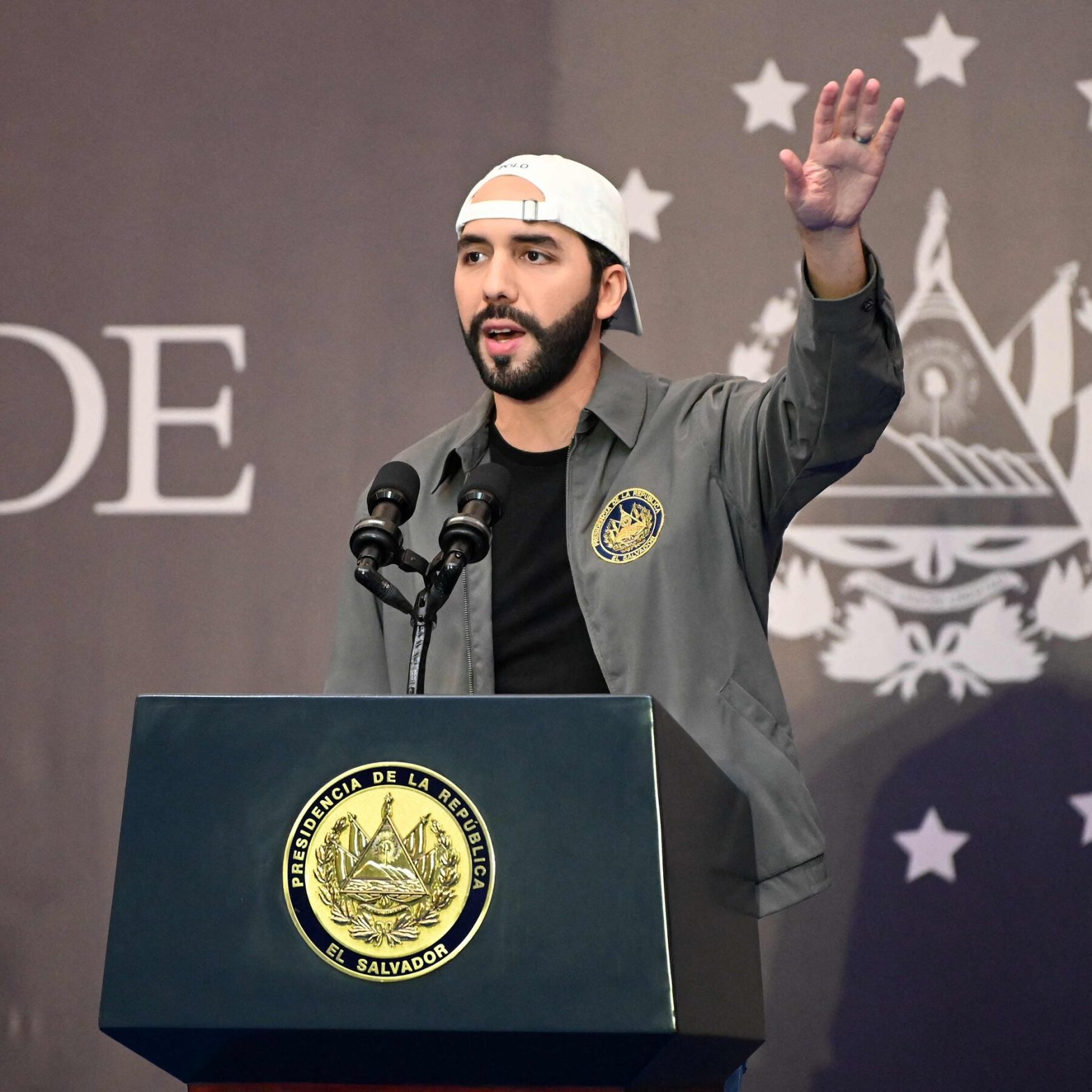
The President of El Salvador, Nayib Bukele, has joined the meme frenzy by posting a picture of himself in a McDonald’s outfit as his Twitter profile image. He then conducted a poll to determine whether he should quit his job at McDonald’s and launch a Bitcoin burger joint. According to the results of the poll, 86.4 percent of the 83,618 voters said “yes.”

McDonald’s also got in on the action by tweeting about it:

how are you doing people who run crypto Twitter accounts.” Binance’s official twitter account responded to the question with a picture of a crying face hidden behind a smiling mask. “McDonald’s consoled the world’s biggest crypto exchange with a “wagmi,” short for “we are gonna make it.”

Despite the fact that McDonald’s has yet to respond to Musk’s comment, many on Twitter are urging the company to take him up on his offer.

Musk has long been a proponent of Dogecoin. He sparked interest in the token, causing its price to rise to about 70 cents in May 2021, right before the market crisis, when it lost more than half of its value.

Dogecoin market valuation surpassed $90 billion at one point, making it more valuable than Moderna, Snowflake, Uber, FedEx, and BMW. Based on overall market capitalisation in the cryptocurrency ecosystem, Dogecoin was ranked as high as fifth.

The price of Dogecoin has not changed significantly since the tweet, but it is still too early to say whether the tweet will have an impact on the joke coin’s price. The news that one of America’s oldest fast-food restaurants is taking Dogecoin, on the other hand, bodes good for Dogecoin’s price and adoption.

Categories
Bitcoin

MicroStrategy Plans to Keep Investing in Bitcoin Despite the Dip

Despite the current downturn in the cryptocurrency market, MicroStrategy will continue to buy bitcoin (BTC). Despite the present bear market, MicroStrategy CFO Phong Le noted in a Wall Street Journal report today that the company’s position has always been to convert its excess cash reserve into the world’s largest cryptocurrency.

Lee explained that with bitcoin, their strategy has always been to buy and hold, to the extent that they have excess cash flow or find other ways to raise money, they still continue to put it into bitcoin.

Le’s statement echoed that of MicroStrategy CEO Michael Saylor, who said earlier this year that the company will not sell its bitcoin regardless of market conditions.

While Le did not say if MicroStrategy will buy more bitcoin this year than it did last year, he did say the company had no plans to sell any of the bitcoin it had acquired.

According to Le, if the bitcoin market gets more liquid, which might happen in the next year or two, the US-based software giant is considering buying bitcoin-backed bonds.

“We’re constantly looking at other ways to be additive to our shareholders as it relates to bitcoin.” 

MicroStrategy, a renowned publicly traded business intelligence organization, is one of the corporations with significant bitcoin holdings, alongside Tesla and Block Inc.

MicroStrategy has continued to acquire bitcoin after announcing its plan to transfer its excess cash reserve to the emerging asset class.

MicroStrategy has already amassed 124,391 BTC, making it the world’s largest corporate bitcoin holder.

MicroStrategy’s bitcoin holdings have lost a significant amount of value since the cryptocurrency peaked at an all-time high (ATH) of $69,044 in November, according to the company’s fourth-quarter financial report, which will be released on February 1.

With bitcoin trading at $36,386, MicroStrategy’s bitcoin holdings are now worth $4.53 billion, meaning that the firm has lost a massive $4 billion in profit as a result of the negative market.

Categories
Altcoins Guides & Tutorials

Everything You Need To Know About eCash (XEC)

The eCash (XEC) project builds on the success of Bitcoin Cash by extending its objective to deliver a more secure peer-to-peer electronic cash system to the rest of the globe. The creators, for example, took the good lessons acquired from Bitcoin Cash and applied them to eCash. As a result, it is more adaptable, secure, and scalable than its predecessor.

History

ECash (XEC) is led by Amaury Sechet, who was the principal developer of Bitcoin Cash (BCH) and forked that blockchain to create Bitcoin Cash ABC, the forerunner of eCash (BCHA). On November 15, 2020, the fork occurred. Sechet then chose to rebrand Bitcoin Cash ABC in order to build a new brand identity for eCash, arguing that reducing the number of decimal places will aid in the coin’s adoption:

There are no other currencies that have eight decimal places. Why should crypto be considered? Cryptocurrencies with a lower unit price appreciate more in a bull market. This enhancement was a no-brainer for the eCash team, who are motivated by both technological and price improvements.

Sechet was a key figure in the creation of Bitcoin Cash, spearheading its original split from Bitcoin in August 2017, its continuance after Bitcoin SV (BSV) was forked from it in November 2018, and its most recent split from Bitcoin Cash in November 2020. He worked as a software engineer at Facebook and as a lead developer at Stupid D Compiler before becoming interested in cryptocurrencies.

How it Works

The multi-layered approach of the eCash network combines a privacy-focused blockchain with an EVM Subchain to make it simple for developers to create Dapps and smart contracts. One of the most effective approaches for new blockchains to gain greater scalability is to separate smart contract functionality. The EVM designation, for example, means that Ethereum developers can port or expand their existing Dapps to the eCash network without having to rewrite their code.

On the eCash system, anyone can build customized tokens. The system does away with the normal technological requirements. Using the platform’s dashboard, you may create a unique token name, supply, decimal places, and icon.

This capability enhances the network’s usefulness by allowing enterprises to develop new revenue-generating tactics and enter whole new markets.

Sighash is used in eCash’s native wallet to boost security. This system allows users to keep track of their bitcoin holdings, as well as buy, sell, and trade it. This interface also allows you to keep track of your staking rewards.

When users invest XEC tokens, they get prizes and more. Staking contributes to the network’s security while also providing you with a low-risk passive income stream. Because your payouts are predetermined based on the number of tokens you stake, staking is less risky than trading. As a result, staking is significantly easier to obtain consistent returns than trading.

Avalanche, a revolutionary consensus method, is at the heart of the eCash concept. Regular users can participate in the validation process without having to buy expensive mining rigs thanks to our unique Proof-of-Stake technology. Avalanche comes with a lot of complex features. The network’s Adaptive Block Size (ABS) can expand up to 1TB.

Bitcoin, on the other hand, has a 1MB block size. Avalanche also has a Merklix-Metadata Tree, Canonical Transaction Ordering, and Pre-consensus functionality. This method allows for near-real-time processing and transaction completion on the network.

The CashFusion Protocol is a network privacy management add-on. The method offers a high level of anonymity that rivals the best privacy currencies. As part of the Electrum ABC network, the technology allows you to conduct private transactions. While the expense of tracing these transactions is far higher than that of conventional transactions.

What Makes it Unique

The developers of eCash (XEC) want the coin to be compatible with the Ethereum Virtual Machine (EVM) and interoperable with the Ethereum Decentralized Finance (DeFi) sector (ETH). The developers of eCash want to complete five primary tasks in order for the coin to be successful:

  • Assuring the privacy of transactions
  • Immutability of transactions is ensured.
  • Keeping transactions as close to free as possible
  • Enforcing globally secure transactions that take less than three seconds to complete
  • Making the coin’s infrastructure a public benefit that is paid by its social contract

To accomplish this, eCash’s creators have devised a bold plan that includes the following goals:

  • To achieve scalable block processing, use canonical transaction ordering.
  • Schnorr Signatures will be used to validate batches of signatures.
  • With blockchain pruning and faster initial sync, faster block propagation via graphene or other UTXO commitment is possible.
  • To achieve scalable block processing, Merklix-Meta Tree is used.
  • Market-driven growth to 1TB blocks will be supported by adaptive block sizes.
  • These far-reaching solutions would accelerate eCash to 50 transactions per user each day, with a total user base of up to 10 billion.
Categories
NFT

OpenSea Users Lost $1 Million to Hackers

Hackers are taking advantage of a weakness uncovered on the OpenSea nonfungible token marketplace to purchase NFTs at dramatically discounted prices and then flip them.

Since this morning, hackers have stolen more than $1 million worth of NFTs, according to cryptocurrency compliance firm Elliptic. At least three attackers, including Bored Ape Yacht Club, Mutant Ape Yacht Club, Cool Cats, and Cyberkongz, have been discovered as having exploited at least eight NFTs, according to the business.

NFTs are a blockchain-based asset that gives cryptographic proof of digital asset ownership. Bored Ape Yacht Club’s digital artwork is made up of enormous collections of cartoon apes that are subsequently utilized as profile photographs and access to a chat group.

The problem, which was identified at the end of December, allows certain users to remove their NFTs from the marketplace without having to pay delisting fees. The listing would, however, continue to be available on OpenSea’s and Rarible’s application programming interface backends. Cap10bad, the founder of the freshdrops.io NFT project, first discovered this bug.

In a Twitter thread, Rotem Yakir, a developer at the decentralized money business Orbs.com, revealed the vulnerability. People who relisted their NFTs without canceling them and then sold them at a higher price could be acquired at a lesser price using the glitch, according to Yakir.

Elliptic discovered that, as of today, one attacker exploited the problem and paid a total of $133,000 for seven NFTs before swiftly selling them for $934,000.

Despite the fact that the flaw was discovered and published weeks ago, the corporation claims that it has not yet seen any notable exploitation.

Security researcher Tal Be’ery corroborated Elliptic and Yakir’s findings earlier today when he provided data from the Ethereum blockchain suggesting that Bored Ape Yacht Club #8274 was purchased for $50,500 (22.9 ETH) in July and then sold for about $296,000 in August (130 ETH).

On its help website, OpenSea cautions against selling NFTs by stating that moving a listing does not cancel it.

Categories
Bitcoin

NYC Mayor Over Accepting First Bitcoin Paycheck Amidst Dip

During a 50% drop from all-time highs, New York City Mayor Adams was unconcerned about collecting his first Bitcoin payment.

For Eric Adams, the crypto supporter who is serving as the 110th mayor of New York City, Bitcoin (BTC) is a New York state of mind thing. When asked about losses during an interview, he was unflappable. He received his first Bitcoin payout on Friday during some epic downward price action.

Bitcoin’s price has plummeted from Friday’s highs of $41,000 to $35,000, implying that Adams’ first paycheck has been slashed by 15%.

“How much money did you lose, and do you have any regrets?” a CNN interviewer questioned on Sunday, in light of the price drop.

The newly elected mayor dodged the topic, instead focusing on Bitcoin technology and drawing parallels to investing in the S&P 500:

“It’s the same as when I invested in the stock market; we saw a drastic drop during 2018 and other times. The purpose of Bitcoin is to send a message that New York City is open to technology. We want to see a large amount of new technology in the city of New York and to encourage our young people to engage in these new emerging markets.”

He closed by saying that he is looking forward to bringing young people into space who have hitherto been denied access to modern technology.

Adams promised he’d get his first three paychecks in Bitcoin, which works up to $97,000 per year. Speculators can estimate he lost $5,000 in nominal terms on Friday in response to the interviewer’s query. That would imply he was paid around $32,333.

It’s worth noting that, pursuant to US Department of Labor regulations, the payment was first issued in fiat currency, in the form of US dollars, and then converted to digital currencies on crypto exchange Coinbase.

While the salary gesture is a positive indication for New York, the city’s crypto rules are quite strict by American standards. The financial center, according to cryptocurrency exchange Gemini, has probably the most extensive and granular crypto rules in the country.

The mayor, who is orange-pilled, definitely has his job cut out for him. “If Bitcoin can make it here, Bitcoin can make it anywhere,” as the old adage goes.

Categories
Blockchain Opinion Price Analysis

Overview Of The Crypto Bull Market

The crypto market in 2022 has been a sea of crimson, with some comparing the massacre to the’red wedding’ episode of the hit series Game of Thrones.

The cryptocurrency market has taken a beating since the beginning of the year, but for those who are used to the market’s volatility, it feels like any other Tuesday.

According to Trading View, the cryptocurrency market capitalization was at $2.25 trillion at the start of the year, with Bitcoin trading at $47,833 per coin.

Only four weeks into the new year, the cryptocurrency market capitalization has dropped to around $1.58 trillion, a loss of $670 billion in market capitalization. This indicates the market has dropped by almost 30% since the beginning of the year.

Bitcoin, as expected, is a big contributor to this trend, as it presently trades at $34,875, a price not seen since July 2021, and has lost about $13,000 since the beginning of the year. As of this writing, this reflects a Year-to-Date (YtD) loss of around 27.15 percent.

Bitcoin’s huge market capitalization and weight on the market contributed to a $225 billion loss, or 33.5 percent, in total market capitalization thus far in 2022, as it started the year at around $877 billion and is now at $652 billion as of this writing.

When Bitcoin sneezes, many believe the entire crypto market will develop a cold. This is evidenced by the fact that the altcoin market has experienced huge falls, with the majority of coins losing double digits. The market capitalization of altcoins has dropped by approximately 31.60 percent from $1.35 trillion at the start of the year to $919 billion, a loss of $431 billion in market capitalization.

Many people are puzzled as to why the market has taken such a battering at the start of the year, which has historically been positive for cryptocurrencies. We’ll dig right in because data suggests it’s a combination of variables.

The Federal Reserve of the United States will be a crucial factor (Fed). In order to combat rising inflation in the United States, the US Federal Reserve is predicted to raise interest rates many times throughout the year in 2022. With an increase in the interest rate, safer assets such as bonds and commercial papers will yield higher returns than before. As a result, investors are discouraged from investing in risky assets such as stocks and cryptocurrencies, as they may earn higher assured returns on safer assets.

The Fed has announced that interest rates will be raised at least three times this year, while JPMorgan CEO Jamie Dimon thinks that rates will be raised six to seven times in 2022. The market is assumed to be pricing in these characteristics, despite the fact that rate hikes are scheduled in March 2022. This casts doubt on Bitcoin’s role as an inflation hedge.

Aside from the predicted position and action of the US Federal Reserve, the sell-off on Wall Street, particularly in technology and growth-related equities, is another cause triggering the bleed in the crypto market. The cryptocurrency market and the stock market in the United States, notably the Nasdaq, have a significant association.

The Nasdaq, a tech-heavy index, lost 2.72 percent this week, its biggest weekly loss since March 2020. It had announced earlier in the week that it was in a correction after falling more than 10% from its November high. The Nasdaq has now dropped 14.3% from its November high. The reductions in the stock prices of the world’s most valuable firms, such as Apple, Tesla, and Amazon, are a big factor. Netflix stock fell 21.8 percent on Friday, impacting on the S&P 500 and Nasdaq, after the streaming giant forecasted dismal subscriber growth.

Categories
Altcoins Guides & Tutorials

What Is Huobi Token (HT)? Everything To Know

Huobi Token (HT) is the Huobi Global exchange’s native cryptocurrency. The exchange began operating in China in 2013, but later relocated to Seychelles due to more favorable crypto and finance rules. It became a popular choice for individuals looking to get into the new world of cryptocurrency, which allows users to invest in projects through trading and Initial Coin Offerings (ICOs) (ICOs). Huobi followed Binance’s lead in 2018 by launching an exchange token that allows for on-platform governance, rewards, and special event access.

It was established with the goal of facilitating transactions that are faster than those supported by existing blockchains, such as the Ethereum Network. Its HPoS consensus mechanism is mostly responsible for this.

History

Leon Li, a former Oracle computer engineer, co-founded Huobi. Leon Li was a long-time Bitcoin advocate who wants to spread the word about blockchain and crypto technologies to a wider audience. Jun Du (CEO of Node Capital and BiKi.com) and Herbert Rafael Sim, creator of Crypto Chain University and a media juggernaut with a past at Forbes, Huffington Post, and other publications, are the exchange’s other co-founders.

The company now operates Huobi Global, Huobi China, and Huobi US, as well as other products such as Quick Wallet, to make its clients’ lives easier. With a daily trading volume in the billions, the Huobi Token has played a significant role in one of the world’s largest crypto exchanges.

How it Works

The Huobi Token aims to improve the exchange’s customers’ experiences by giving them new options to save money on trading costs, gain access to new cryptocurrencies, and vote on platform decisions. Users of the HT platform can directly profit from the platform’s performance over time. If Huobi’s popularity continues to climb, so will the value of HT holders’ accounts.

The token is a component of the Huobi Eco Chain, which houses DeFi applications such as decentralized lending and borrowing services. The Eco Chain is a blockchain that is similar to the Binance Smart Chain, which is a well-known exchange-based blockchain. HT is an ERC-20 token that works as a network security token and provides Huobi users with perks and transaction methods.

It also has tokenomics that are comparable to BNB’s repurchase or coin-burning method. Using this strategy, Huobi uses 20% of contract revenue to purchase back HT from the network and remove it from circulation, so increasing its value.

The overall number of HT is 500 million, with 100 million set aside for platform operations and user rewards. 100 million HTs were given out as incentives to the Huobi team, and 300 million HTs were given away so customers could buy points cards (the giveaway is now over).

What Makes it Unique

The Huobi token provides a few unique features for consumers, but it’s largely a way to keep up with the crypto exchange industry’s changing economics. It was designed in part to compete with Binance’s native BNB cryptocurrency. The Huobi Token will serve as a common or uniform payment method throughout the ecosystem. It will also play a significant role in over-the-counter (OTC) trading and corporate payments.

There are numerous applications for HT. Users can save up to 65 percent on trading fees by simply keeping HT in their Huobi exchange wallet. Users with HT can also use the Huobi Prime platform to gain access to new crypto projects and earn tokens from them.

Huobi Prime allows anyone with a certain number of Huobi Tokens to buy a newly created token at a discounted price before it is listed on the Huobi exchange. Users can now participate in token launches that were previously exclusively available to a select group of investors.

Huobi Token is now ranked 60 on CoinMarketCap (at the time of writing) and has grown in value dramatically since its launch in 2018. HT was initially trading for around $1.30 USD. It hit about $35 during the all-time high period in 2021 before stabilizing. Many people are hopeful about the future price of their native tokens because other exchanges’ native tokens have also done well.

Using the token on Huobi’s own decentralized ecosystem, the Huobi ECO (HECO) Chain, is also a popular way to earn interest. HECO Chain is a public blockchain that is decentralized, EVM-compatible, and supports smart contracts and high-performance transactions. It features cross-chain capabilities as well as minimal gas fees.

Decentralized mining and staking functions, debit and credit mining capabilities, loan projects, and several other financial projects are all available in HECO’s current decentralized applications (dapps). The complete list of HECO dapps may be found here. Staking HT is possible both on the exchange and on the HECO network.

Bottomline

Huobi will profit and expand in tandem with the crypto trading market as more people become involved. It also has a fascinating loyalty and rewards program, which will help it stand out in the increasingly competitive crypto exchange market. I hope you discovered a lot of useful information today on the cryptocurrency.

Categories
Altcoins News

Ethereum Creator Vitalik Buterin Burned $7B Shiba Inu

Vitalik Buterin, co-founder of Ethereum, was recently interviewed on the UpOnly podcast. Buterin spoke for nearly two hours with Cobie and Ledger of the FTX-affiliated podcast, in which he explained the difficulty of burning 90 percent of 500 trillion tokens.

Buterin received the SHIB tokens and contributed 10% to the India Covid Crypto Relief Fund, which had a value of $1.2 billion at the time. He destroyed 90% of them (valued around $7 billion) at the time because he didn’t want to be a center of power.

He eventually torched nearly all of his remaining SHIB tokens. Buterin explained that accessing and sending SHIB tokens requires a series of complicated operations.

The money was in the shape of two numbers written on separate pieces of paper in a cold wallet at first.

Buterin explained that he had to add the two numbers together to get the private key. To finalize the transaction, he input the numbers into a $300 PC he bought at Target. Buterin then proceeded to burn the tokens, calling the whole thing ‘frightening’.

Buterin recently conducted a series of Twitter polls in which he asked users what money they would prefer for transactions and savings if Ethereum was no longer the dominant coin in 2035.

Buterin believes Ethereum will play a significant role in his future. According to Vitalik, Ethereum is still aiming for a transaction fee of $0.05, and that rollups and sharding are the best ways to scale without sacrificing security or decentralization. Within a few of years, he expects transaction costs to fall below $0.05. He also stated that the ZK-rollup Ethereum Virtual Machine is progressing well, and that most nodes will not be able to store the entire chain.

On Ethereum, a roll-up is a layer two solution in which transactions are performed outside of the main Ethereum chain and transaction data is reported on layer 1. Sharding is a term adopted from traditional databases that refers to a database’s horizontal scalability, similar to expanding the number of lanes on a motorway to alleviate traffic congestion. Ethereum is currently overcrowded, resulting in exorbitant gas fees.

Categories
News NFT

Elon Musk Thinks Twitter’s New NFT Feature is Annoying

Elon Musk, the CEO of Tesla (NASDAQ:TSLA), isn’t convinced by Twitter’s new NFT integration function. Musk attacked Facebook in a Friday morning tweet for committing engineering resources on NFT integration while doing little to combat spam activity on its network.

Musk’s critique of Twitter’s lack of effort to combat spam is not without merit. Malicious actors frequently create false accounts to imitate Elon Musk and other well-known personalities in order to promote cryptocurrency giveaways. An impostor posing as Musk, for example, was able to take $2 million from a number of unsuspecting victims in 2020. Crypto scammers have already set up shop on Musk’s tweet, expressing their displeasure with their activities. One person wrote: To celebrate Tesla merch buyable with Dogecoin, we are giving away $10,000,000 coins. Is it a unique opportunity in life to become a millionaire?

The launch of Twitter’s NFT tool comes months after the company enabled users to send and receive Bitcoin. An NFT is a unit of data kept on a blockchain, a digital ledger that also serves as the foundation for cryptocurrency. NFTs became popular as the technology progressed. NFTs come with certificates that can be used to validate the uniqueness of a digital item. They can be used to represent images, movies, audio clips, and other digital information.

Musk has frequently stated his support for the electric vehicle industry on social media and through his company. Musk said in March of last year that Tesla would accept Bitcoin payments, but later reversed his decision in May, citing environmental concerns. Tesla began accepting Dogecoin payments for some merchandise earlier this month.

Scammers posing as MicroStrategy CEO Michael Saylor recently stole more than $1 million in bitcoin from a single person. This problem isn’t limited to Twitter; fraudsters use identical strategies on government websites and a variety of other social media platforms, including YouTube.

NFT integration on Twitter is presently only available to users of Twitter Blue, the social media company’s premium service.

Categories
Altcoins

Stablecoin Trading Volume Rallies Up Amidst Falling Market

As the cryptocurrency market capitalization fell from $2 trillion to as low as $1.55 trillion in the previous 48 hours, data shows a surge in stablecoin activity as investors try to reduce the losses caused by the market sell-off.

Bitcoin, the most popular cryptocurrency, plummeted below its $40,000 support zone on Friday, trading as low as $34,349.25, a loss of around $5,250 in one day and a 12.83 percent drop. Bitcoin has lost around a quarter of its value this year, indicating the beginnings of a cryptocurrency bear market.

Altcoins have fared much worse, losing over 30% of their value since the beginning of the year, falling from $1.35 trillion to $919 billion, a loss of $431 billion in market capitalization. As a result, the altcoin market has practically lost its trillion-dollar status, with all of them posting double-digit losses for the year.

The daily trading volume of Tether’s USDT, the most capitalized stablecoin linked to the US dollar, has increased, according to data from Nomics. USDT trading volume increased by 68.74 percent from $68.45 billion to $115.50 billion between Thursday and Friday, the day of the crisis.

With a daily value of $109.21 billion on Saturday, the USDT trading volume showed no indications of declining. The second and third most capitalized stablecoins, Circle’s USDC and Binance’s BUSD, both experienced the similar surge.

Between Thursday and Friday, USDC witnessed a 126.13 percent increase in daily trading volume, rising from $3.98 billion to $9 billion, while BUSD saw an 86.18 percent increase in daily trading volume, rising from $3.40 billion to $6.33 billion.

On Friday, the trio had a combined transaction volume of $130.83 billion, which was more than Bitcoin’s daily transaction volume of $59.48 billion and Ether’s transaction volume of $43.69 billion on the same day. Even when the trading volumes of Bitcoin and Ether are added together, they still fall short of the trio’s daily transaction volume, indicating that traders are seeking refuge in the stablecoin during this weak market.

Categories
Altcoins Guides & Tutorials

TrueUSD (TUSD): What To Know About the Stablecoin

Stablecoins are digital currencies that are linked to fiat currencies or commodities. Stablecoins have historically aided merchants in maximizing trading profits by reducing the amount of time they spend dealing with traditional institutions each time they place a trade. TrueUSD is a stablecoin that is backed by the US dollar. TUSD’s tokens are backed by a variety of accounts, reducing the danger of associated hazards. Furthermore, it provides legal protection to all token holders against any form of exploitation.

It was launched by TrustToken, an asset-backed platform. It’s an ERC-20 token with a transparent collateralization system. True USD was created for the first time in 2018. The fundamental goal of this cryptocurrency was to provide its users with a reliable, stable, and simple currency.

History

As previously stated, the asset was created by TrustToken, a San Francisco-based exchange that specializes in asset-backed tokens that are easily exchanged around the world. TUSD, on the other hand, is the TrustToken platform’s first stablecoin.

With the goal of creating a more stable market, the team behind the TrustToken platform has made it a priority to tokenize assets such as real estate, movies, limited corporations, and other similar assets.

Rafael Cosman, co-founder and CEO of TrustToken, has ordered a monthly audit for the TUSD stablecoin. As a result, it acts as a hedge against the market’s volatility while also providing investors with a reliable and high-impact asset.

How it Works

The third-party escrow accounts are critical to the effective operation of every TrustToken tokenized asset. TrueUSD can be purchased or redeemed by anybody who passes the KYC and AML standards.

To keep themselves from issuing tokens, TrustToken uses publicly audited smart contracts. The money is never touched by the TrustToken staff. When an escrow account gets USD, new TUSD is instantly created. When a user redeems USD, an equal quantity of TUSD is immediately burnt. As a result, TrustToken assures a 1:1 USD to TUSD ratio between escrow funds and TUSD in circulation.

When a user passes the KYC/AML process, he or she can transmit USD to one of TrueUSD’s trust partners (along with Ethereum wallet address). The API then interacts with TrueUSD’s smart contract, which issues tokens in a 1:1 ratio and sends them to the supplied wallet once the funds have been validated by the escrow company.

When the tokens arrive in your wallet, you can use them for whatever you want. TrueUSD tokens combine the best of both worlds: fiat’s stability and confidence, as well as cryptocurrencies’ low costs, short transfer times, and worldwide reach.

A reverse procedure is followed if you want to convert TUSD back to US Dollars. The user returns TUSD tokens to the smart contract address, which alerts the trust corporation and initiates a fiat transfer to the user’s account.

What Makes it Unique

TrueUSD has risen to the top of the list of investment options due to the unique perks that come with its use.

TrustToken does not charge a fee for trading TUSD because it earns money on USD interests stored in customers accounts. One of these benefits is that the token guarantees users a transaction charge of zero or less.

Furthermore, investors are reassured of the worry of manipulations due to TUSD’s consistent attestation and high openness. Among other things, its transparency is praised. It also makes it simple to exchange the token for the corresponding amount of US dollars.

It has key benefits like:

  • By releasing attestations on a regular basis, it gives stronger legal protection.
  • To redeem USD in place of the token, a minimum of $10,000 is required.
  • Allows users to directly exchange USD for collateral accounts.
  • After completing a short KYC/AML process, the individual is better protected.
  • It is directly backed by US dollars.
  • Escrow accounts are frequently processed with attestations, which are transparent and available to the public.

Bottomline

TrueUSD (TUSD), because of its importance in the crypto sector, is currently gaining traction. Furthermore, with its top-rated attribute of transparency, it aspires to become the top-listed stablecoin. Since its inception a few years ago, the coin has experienced significant growth. As a result, it is correct to predict the asset’s success.

The asset’s availability on the Ethereum blockchain, for example, ensures that the token has the essential mechanism to explore the crypto ecosystem and develop exponentially among other stablecoins.

Categories
Bitcoin

MicroStrategy Lost $4B in Profit to The Dip

For crypto traders, November 2021 seems like a long time ago. Bitcoin, the world’s most valuable cryptocurrency by market capitalization, was sold for $69,000 at one time during that month.

However, the asset’s value has plummeted by up to 50% as a result of repeated drops. Fewer than 24 hours ago, the value of various cryptocurrencies, including bitcoin, plummeted.

Bitcoin, for example, was over $43,000 yesterday, but it was around $38,000 at the time of writing. Many traders have lost money as a result of the recent dip, depending on the size of their portfolio.

MicroStrategy, the largest publicly traded business intelligence and software company that has been bullish on bitcoin since its inception, is likely to have suffered the highest losses. With a total of 124,391 bitcoins, the company is the world’s largest corporate bitcoin holder.

MicroStrategy has lost about $4 billion in paper profit as a result of the bitcoin crash, dating back to November of last year, when the value of bitcoin was at $69,000.

The software company may appear to have suffered a significant loss, but a glance at MicroStrategy’s bitcoin buying history suggests differently in the long run.

The company’s total holdings of 124,391 bitcoins, purchased at an average price of $30,159 per bitcoin, were worth around $3.75 billion after fees and other charges.

Despite the recent bitcoin drop, MicroStrategy’s total holdings are currently valued a little over $4 billion, representing a profit of more than a billion dollars when compared to the capital invested.

The company had a $5 billion bitcoin hoard at the time of its previous purchase, but with the recent drop, the value has dropped to around $4 billion. MicroStrategy has sustained a significant loss as a result of the November bitcoin meltdown and the subsequent one. Will it ultimately succumb to the pressure to sell?

CEO Michael Saylor indicated in a recent interview that the corporation is adamant about not selling its bitcoin stockpile, regardless of market conditions. Furthermore, when the price of bitcoin dropped last year, the corporation took advantage of the opportunity and added 13,005 bitcoins to its portfolio.

As a result of MicroStrategy’s bullish attitude toward bitcoin and its willingness to buy on a dip, news of the business going bitcoin shopping again rather than selling could emerge shortly.

Categories
Bitcoin

El Salvador Just Bought Its Cheapest Bitcoin!

El Salvador, a Central American country, has added 410 Bitcoin (BTC) to its central bank as BTC values fall below $37,000, the lowest point since July 26th, 2021.

President Nayib Bukele revealed the latest contribution to El Salvador’s BTC reserve, confirming that 410 BTC were purchased for $15 million, putting the price per BTC at around $36,585.

El Salvador approved BTC as legal tender on September 7, 2021, as a way to combat catastrophic inflation and the country’s dwindling purchasing power. Today, the country has deliberately accumulated 1,801 BTC over the last four months, especially when the market experiences a brief price drop.

El Salvador’s most recent purchase is the cheapest it’s ever been since the country recognized Bitcoin as a legal tender.

With Bitcoin trading just above $36,000 and the ensuing sell-off, Bukele believes “some guys are selling really cheap,” bolstering his long-term goal of widespread Bitcoin acceptance.

BTC prices have been steadily rising since mid-July, as seen by statistics from Cointelegraph Markets Pro and TradingView, reaching an all-time high of about $69k in the first week of November. However, market values plummeted over the next three months as investors diverted their BTC winnings to other tokens.

According to a new forecast from Crypto.com, the global crypto industry will have one billion users by the end of 2022, as more developing countries follow El Salvador’s lead and accept BTC.

According to Crypto.com, if the growth rate continues at the same pace in 2022, we will have 1 billion crypto users by the end of the year. The analysis adds that, as a result of developing countries following El Salvador’s lead and adopting a friendlier approach toward the crypto business, countries can no longer afford to ignore the public’s growing interest in crypto.

Categories
Altcoins Ethereum News

Cardano Beats Ethereum In Chain Activity and Transaction Volume

In terms of transaction volume, Cardano (ADA), the largest proof-of-stake (PoS) blockchain network, continues to surpass Ethereum (ETH). According to data from Messari’s most active chains dashboard, the adjusted number of transactions performed on Cardano was over $6.5 billion in the last 24 hours, exceeding Ethereum’s $5.8 billion.

In addition, Cardano offers a lower charge structure than Ethereum, the second-largest blockchain network. Cardano transaction fees in the time span were a stunningly low $76,500, whereas Ethereum transaction fees hit $38.6 million. Cardano’s transaction fees, on the other hand, were around 568 times lower than Ethereum’s. Ethereum transaction fees have overtaken those on the Bitcoin network, which continues to be the leader in transaction volumes.

Cardano supporters have cited this disparity in costs, as well as Cardano’s dominance in transaction volume, as reasons to be bullish on the cryptocurrency, while Hoskinson emphasizes Cardano’s impressive trajectory, noting that they are only getting started with Basho.

Cardano’s high transaction volume is due to increased network activity. Sundaeswap, an automatic market maker (AMM) decentralized exchange, was the first decentralized application (DApp) on the Cardano blockchain. Yesterday, at 10.45 UTC, the platform went live. While the event was much anticipated and celebrated, it is also putting the Cardano blockchain to one of its most rigorous tests to date.

Due to severe congestion on the Cardano network, the DEX’s operation has been less than ideal. According to data from Adapools.org, a Cardano network tracking tool, network load on the Cardano network is around 89 percent at the time of writing. Due to the high volume of transactions, users have reported both failed and successful transactions taking longer to execute on Sundaeswap.

Remember that both Sundaeswap and IOHK creators predicted this outcome. Sundaeswap had already warned its members that the first few days after launch will be busy. IOHK has also announced an 11-point roadmap for bringing more scalability to the blockchain from now until 2022.

The introduction of a new version of the Cardano node, which is expected to boost network performance, will be one of the first scaling steps it will take this year.

The price of ADA has followed the crypto market movement due to the hype surrounding the introduction of Sundaeswap. ADA is currently trading at about $1.20, down about -10% for the day. This is a reversal of the price pump that ADA had been experiencing in recent days.

The price of ADA has dropped as a result of the crypto market crisis, which has seen Bitcoin go below $39,000 and Ethereum fall below $3,000. Cardano supporters, on the other hand, are enthusiastic about the price of ADA.

Categories
Altcoins Guides & Tutorials

PancakeSwap (CAKE): Everything To Know

For months, everybody with even a passing interest in cryptocurrencies has been enthralled by the food-based farming mania. PancakeSwap is one of the many platforms and networks that have sprung up as a result of the latest wave of DeFi protocols that allow users to bet their assets in return for the protocol’s tokens.

The majority of this operation has been taken over by the Ethereum network. It has developed the capacity to construct strong decentralized apps thanks to its enormous user base, developer community, and frameworks. All of this is due to its status as one of the first blockchains to support smart contracts. Read on to learn everything you need to know about PancakeSwap.

What it is

PancakeSwap is a Binance Smart Chain project. On September 1, 2020, the Binance Smart Chain (BSC) was released onto the market. This fourth-generation blockchain was created in order to function alongside Binance Chain. BSC is significantly more advanced than their previous chain, which is impressive. For example, the platform can facilitate transactions that are both speedier and less expensive. The network has ultra-high performance and can generate a block every three seconds.

CAKE is a BEP-20 token that is native to the BSC. The PancakeSwap token (CAKE) was introduced on Binance Smart Chain in September 2020. (BSC). The CAKE coin has had a fantastic year in 2021, with a massive price increase in February. CAKE’s main goal is to encourage people to provide liquidity to the PancakeSwap platform.

On September 20, 2020, PancakeSwap became live. Notably, the platform’s name was inspired by a current DEX trend of naming platforms after popular foods. On the BSC, it is now the largest and most widely utilized AMM for yield farming and staking. This rise can be ascribed in part to the Binance Accelerator Fund’s approval and promotion of it.

How it Works

PancakeSwap is a market maker that is automated (AMM). An order book isn’t used by AMMs to match customers and sellers. Instead, the site uses complex algorithms and liquidity pools to connect these parties directly. AMMs offer higher rates, faster processing, and less slippage. As a result, many of today’s most popular platforms, such as Uniswap and SushiSwap, are AMMs.

Users of PancakeSwap can provide liquidity to pools in exchange for LP (liquidity provider) tokens. As the pool’s aggregate value rises, these tokens gain value. People can profit from these permissionless liquidity pools without having to trade their assets directly. On PancakeSwap, you may presently stake in 69+ different liquidity pools. Users get returns ranging from 23.52 percent to 378.19 percent APY on average.

With the SYRUP pools, PancakeSwap also adds some unique pools to the equation. These are liquidity pools that pay out extraordinarily well. The APY on some of these pools ranges from 43.33 percent to 275.12 percent. When you stake in SYRUP pools, you can also win other tokens besides CAKE. In UST, LINA, SWINGBY, and other games, users can win rewards.

All holders of liquidity pool tokens receive access to different revenue streams just by participating. A part of the trading fees produced by the site is allocated to these users specifically. 0.17 percent of the average 0.2 percent charge is directly allocated to LP token holders.

Of course, PancakeSwap’s main feature is its simple DEX system (decentralized exchange). The DEX was designed from the bottom up to give novice users access to all of the tools they need to properly trade tokens. Tokens can be traded in a matter of seconds. Best of all, there is a large number of tokens to choose from.

What Makes it Unique

PancakeSwap makes use of a variety of unique features to provide end-users with a fantastic trading experience. For one thing, it has very low transaction costs and a speedy confirmation period, guaranteeing that trades are completed swiftly. It is also less vulnerable to displacement attacks like front-running than other AMMs, making it safer to operate.

PancakeSwap also has pyramid features that provide CAKE owners even more functionality. Taking the effort to figure it out, though, might be worthwhile.

Bottomline

PancakeSwap (CAKE) is becoming more and more important in the DeFi market every day. Users are growing increasingly interested in knowing about numerous DeFi firms that employ diverse technologies and ideas. In conjunction with Binance, PancakeSwap is fulfilling users’ DeFi objectives by providing a larger community of new experiences, innovative incentives, and enhanced overall results.

Categories
News Regulation

Bank of Russia Suggests A Ban on Cryptocurrencies

Cryptocurrencies have been the subject of intense regulatory scrutiny in recent months, with Russia becoming the latest government to explore outright banning the asset class.

The country’s apex bank is advocating for a comprehensive ban on cryptocurrencies, according to a paper titled “Cryptocurrencies: Trends, Risks, and Measures,” which was shared during an online conference with Elizaveta Danilova, the director of the Bank of Russia’s Financial Stability Department.

Cryptocurrencies are not only volatile, but they are also frequently used to support criminal operations such as money laundering and terrorism financing, according to the regulators.

Furthermore, according to the Bank of Russia’s assessment, permitting residents to withdraw money from the economy using digital currencies might jeopardize authorities’ ability to preserve the country’s monetary policy.

To defend the country’s existing financial regulations, the Bank of Russia urged in the report that new legislation prohibiting crypto-related activity be enacted.

According to the article, the ban should target entities that aid bitcoin circulation in Russia, such as cryptocurrency exchanges and peer-to-peer (P2P) trading.

Furthermore, according to the Bank of Russia’s study, the existing rule against the use of cryptocurrencies to pay for goods and services should be strengthened.

According to the research, institutional investors should be prohibited from investing in cryptocurrencies, and mutual funds that continue to participate in digital currencies despite previous prohibitions should face a penalty.

The mining of cryptocurrencies was not spared. The activity should be prohibited, according to the Bank of Russia, because it increases demand for other crypto services and has a negative impact on Russia’s electrical supply.

According to the Central Bank of Russia’s report, Russians’ crypto activity on offshore exchanges would be watched in order to gather appropriate data.

The potential to make payments quickly, cheaply, and efficiently has sparked a spike in interest in cryptocurrencies recently.

Several countries, like Russia, have made significant attempts to build their own Central Bank Digital Currency (CBDC) to suit citizens’ expectations, despite this being a major worry for global authorities.

Categories
Bitcoin

Prince Harry and Meghan Markle Amidst A Bitcoin Scam

Recently, Prince Harry and Meghan Markle’s names were linked to a sophisticated cryptocurrency hoax. The names of the Duke and Duchess of Sussex are being used to promote endorsements on social media relating to bitcoin investment plans, according to a story in the Daily Mail. The con artists utilized falsified images and interview clips in papers to spread false information that Harry and Markle backed the dubious enterprises.

‘People earning millions have home by using Harry and Meghan latest advice,’ ran one of the false headlines. The story also included logos from international news organizations such as the Mail, the BBC, the Guardian, the Sun, and Good Morning Britain to make it more credible.

Harry and Meghan astonished everyone in the studio by revealing how they make an extra 128K pounds every month, according to another bogus news article.

The scams came to light after a surge in consumer complaints to the UK’s financial services authority, which has increased by more than 400% in five years, according to the Daily Mail.

The identities of Harry and Markle aren’t the only ones being utilized in such frauds. According to the article, other celebrities such as Bill Gates, Sir Richard Branson, and Mark Zuckerberg are also being employed in these schemes to make rich quick.

Categories
News NFT

Twitter NFT Profile Photo Verification Feature

Twitter wants NFT holders to be able to publicly display their holdings to the rest of the world. This project has been in the works since the fourth quarter of 2021.

Twitter announced the launch of a feature that will allow users to use NFTs as their profile image on January 20. Other users will be able to verify the validity of the NFT, including its author, provenance, and other required facts, in addition to using it as a display picture.

Only Twitter Blue subscribers have access to the feature. Twitter Blue is a subscription service that gives users more control over how they use the microblogging site.

Apart from being restricted to Twitter Blue subscribers, the new NFT function is now only available on iOS devices, while the firm claims that support for Android and web users will be added in the coming months.

The necessity for an NFT verification tool arose as a result of the rising popularity of NFTs last year, with certain collections attracting tens of thousands of people. As right clickers ran riot, several Twitter users utilized NFTs as their display photos, but there was no way to verify genuine ownership of these tokens via the platforms.

“Twitter is where people go to talk about things that they care about, and often where people have their first experience with crypto and NFTs. We’re now seeing people use NFTs as a form of identity and self-expression, and as a way to join the thriving community and increasingly active conversation on Twitter.”

Twitter’s new functionality will support Coinbase Wallet, Metamask, Trust Wallet, and Argent when it launches. Regardless matter whether they are Twitter Blue subscribers or IOS users, users of the platform will just click on the photo to acquire important facts about the NFT.

Twitter has been in the forefront of promoting cryptocurrency acceptance. Using the Lightning Network, the business launched a Bitcoin tipping service for creators last year. The corporation went on to form a cryptocurrency team, led by Tess Rinearson, to push the envelope.

With crypto payments and NFT authentication under its belt, analysts expect Twitter to expand its crypto offerings with a plethora of additional products. The company’s embrace of cryptocurrency is inextricably linked to its founder’s “obsession” with Bitcoin. Jack Dorsey, who famously referred to the Bitcoin whitepaper as one of the most seminal works of computer science in the last 20 or 30 years, is said to have stepped down as CEO to focus on Bitcoin with Block.

Categories
Altcoins Guides & Tutorials

Quant (QNT): The Interoperable Blockchain OS

Quant Network, unlike other cryptocurrency projects, does not intend to complicate things by creating their own interoperable blockchain that connects to others. They’re developing a blockchain operating system that can run on top of other blockchains. This will provide both consumers and institutions with the user-friendly platform they require to fully realize the benefits of blockchain technology.

Quant (QNT) is a second-layer architecture that aims to give the market global interoperability. The platform enables all types of distributed ledger technology (DLT), such as blockchain, DAG, and Tempo, to transmit data between networks. The project’s purpose is to offer enterprise software solutions to the market that make DLT integration easier and increase DLT adoption.

History

Gilbert Verdian founded Quant Network in 2015, and its native token, Quant, was released shortly after.

The Quant protocol was created out of a strong desire to improve the efficiency of global information sharing. Verdian first noticed the problem while working for the British and then the Australian governments. He saw how beneficial distributed ledger technologies (DLT) may be in resolving his issues.

The Quant protocol now supports Bitcoin, Ethereum, and Ripple ledgers thanks to the addition of overledger capability. In the blockchain sector, the Quant protocol comes the closest to resolving interoperability difficulties. In an overledger operating system, it serves as a payment validator token.

One of the platform’s ultimate goals is to create seamless interoperability, allowing the fragmented world of ledger technology to be fairly spread. As a result, the Quant protocol is frequently referred to as a blockchain operating system/software.

How Does It Work?

The Quant protocol was created to eliminate communication, interoperability, and scale hurdles that are typical in blockchains. To accomplish this, layers are assigned to jobs that they are most equipped for, as follows:

  • The Transaction Layer is responsible for storing transactions. To group similar processes into one layer and validate them throughout the blockchain, various and segregated ledgers are used. A transaction that has been validated cannot be invalidated for any reason.
  • Information and data transfer are handled by the messaging layer. Smart contract data, metadata, and transaction data are the three categories of data that can be processed. Metadata is used to interpret messages and translate them into multiple languages that can be understood by different blockchains.
  • The Filtering and Ordering Layer is also in charge of messages. It does, however, require filtering searches into specific results, unlike the message layer. Every message on the digital ledger system is recorded in a database on a first-come, first-served basis. Because it is the sole layer having the history of messages carried across the protocol, the filtering and ordering layer is responsible for validation of off-chain messages.

What Makes it Unique

Quant offers a variety of features and benefits that set it apart from the competition. For starters, it was built from the ground up to eliminate any technical obstacles to DLT integrations. The protocol is simple to set up and use. To set up your network, you don’t need any knowledge of smart contract languages, cryptography, or DLT data structures. The user interface decreases the process’s technical complexity.

Quant allows users to connect to several DLTs. DLT technology is now accessible to mainstream businesses because to network APIs. Developers, governments, and individuals can finally take advantage of the full potential of DLT without having to pay experienced programmers.

Quant works with protocols and technology stacks that are already in use. The network uses ISO DLT-interoperability standards to ensure that business solutions may be deployed quickly and easily. It is also adaptable. Any two networks, regardless of their type, can exchange assets and information.

Quant was created by a team with extensive experience in enterprise security and key systems at the national level. To keep your data safe, the platform incorporates certain advanced security safeguards. The gateway, for example, does not keep any data. Instead, it functions as a second layer that coordinates the interactions between the multiple ledgers. Notably, at the source, all data is encrypted.

In the communication between the several ledgers, this technique adds no additional DLT, consensus, bottleneck, complexity, fork requirements, or single point of failure. To stay secure, the network relies on a single set of standards-aligned APIs.

Quant is completely obedient. As part of the firm’s ambition to serve large enterprise clients globally, this was considered as a vital prerequisite.

Quant’s approach is less expensive than the competition’s. Quant, on the other hand, was designed to serve as a software solution over existing networks. It does not necessitate the construction of additional infrastructure, which could result in bottlenecks. In most cases, the default settings are sufficient to get the operation up and running.

Conclusion

Although QNT appears to be a good investment, it’s important to remember that its future is contingent on a number of factors, including new technology solutions for Quant projects, the crypto market climate, legal positions, and so on. As a result, it’s critical to conduct your homework before buying and selling Quant.

There will be additional use cases for network patches linked to different blockchains if governments begin to generate digital fiat currency, such as digital dollars and euros. During this time, quantity will be extremely important.

Categories
News NFT

Meta Integrating NFTs into Instagram and Facebook Profile Photos

Meta, a multinational technology corporation, is apparently getting into nonfungible tokens (NFTs) by incorporating a function that allows users to display their NFTs on their Facebook and Instagram pages. Meta is now working on prototypes that would allow users to mint collectible tokens, according to the source.

Meta is also considering developing a marketplace that allows anyone to buy and trade NFTs. However, while the news may delight millions of NFT fans on social media, all of the initiatives are still in their early phases and may change as a result.

The conversations are in response to a desire to hire more people to help with Meta’s projects. On January 12, Meta launched a campaign to hire new staff, and roughly 100 people left Microsoft.

Meanwhile, to keep employees from leaving for Meta, Apple provided bonuses ranging from $50,000 to $180,000, as well as stock options.

Meta’s big rebranding, which was previously known as Facebook, allows the firm to focus on efforts other than social media. The startup unveiled its aspirations to establish a metaverse that combines physical and online social events last year. The company also showed off prototypes of haptic gloves that could be used in the future metaverse.

Potential revenues in the NFT industry are becoming increasingly difficult to overlook. Traditional brands are expected to enter the NFT arena and investigate how to profit from it, according to analysts.

Opensea, the top NFT marketplace, recently reached a monthly transaction volume of $3.5 billion. This means that just within the platform, almost $169 million is spent each day on NFT trading. According to NFT sales monitoring figures, the NFT market has a total sales value of $25 billion.

Categories
News Regulation

Indonesia Islamic Council Still Against Cryptocurrency

The Tarjih Council and the Central Executive Tajdid of Muhammadiyah, one of Indonesia’s major non-government Islamic organizations, have issued a new fatwa prohibiting Muslims from using cryptocurrencies, calling it haram (illegal).

The fatwa, or Islamic legal opinion, was issued on Tuesday, and it highlighted two key concerns with cryptocurrencies that make them illegal as an investment instrument and a medium of exchange under Islamic law:

  • Cryptocurrencies are unsuitable as an investing tool due to their speculative character. The crypto tokens are thought to have “gharar” (obscurity), implying that they are not backed by something tangible, such as gold, and hence are illegal under Islamic law.
  • Cryptocurrencies do not fit the requirements of Islamic barter or medium of exchange rules, which need legal cash to be accepted by both parties.

“This speculative nature and gharar is forbidden by the Shari’a as the word of God and the hadith of the Prophet SAW and does not meet the values ​​and benchmarks of Business Ethics according to Muhammadiyah.”

Muhammadiyah is the third Islamic organization in Indonesia to issue a fatwa prohibiting the usage of bitcoin. Previously, the Indonesian Ulema Council (MUI), the country’s highest clerical organization, deemed crypto haram as a transactional tool in November 2021. It did say, though, that crypto assets can be utilized as an investing instrument if they follow sharia principles. Another important Islamic body, the Nahdlatul Ulama (NU), declared crypto haram in October 2021 because to its speculative nature.

Despite mounting requests from Islamic organizations in Indonesia to prohibit the use of cryptocurrency, the country has seen a massive increase in popularity. In 2021, the country had $9.8 billion in crypto transactions, up 1,222 percent from the previous year. Not just for investments and transactions, but also as a trading commodity, crypto has become the preferred currency of many worldwide crypto exchanges.

Categories
Altcoins News Regulation

Ripple vs. SEC Lawsuit: Case Coming to An End

Ripple has won a tiny victory in its over-a-year-long legal battle with the Securities and Exchange Commission (SEC). Ripple has been granted access to emails within the SEC by a federal judge, which they hope will aid their case.

Ripple recently won a significant legal battle with the Securities and Exchange Commission. This came after U.S. Magistrate Judge Sarah Netburn determined that emails relating to a speech given by a high-ranking member of the commission on Ethereum in 2018 were ineligible for Deliberative Process Privilege protection.

A speech delivered at the time by William Hinman, then Director of the SEC’s Division of Corporate Finance, revealed to attendees at a Yahoo Finance Crypto Summit that Ethereum, like Ripple’s XRP, was not a security. He went on to say that the token was quite decentralized.

The speech has become a source of dispute in a year-long court battle in which the SEC claims Ripple and its co-founders knew XRP was a security that needed to be registered with the SEC but sold it anyway without following proper protocol.

Ripple’s staff has attempted to expose the reasoning behind the regulatory body’s decision that Ethereum is not a security, in the aim of exposing contradictions in the complaint against them and proving that XRP is not a security as well.

The judge’s judgment encompasses documents produced by Valerie Szczepanik, the SEC’s Head of Innovation and Financial Technology, describing various internal SEC conversations and mail sent between Hinman and other SEC officials discussing the preparation of the now-controversial speech.

Judge Sarah Netburn stated in her judgement that the details in the documents did not reveal any key links in the deliberation processes and, as a result, could not be protected by privilege.

The ruling is a direct outcome of the Ripple team’s perseverance in pursuing this judgment for several months, despite the fact that it is a minor milestone. Ripple’s attitude has been diametrically opposite to what has appeared to be the norm for many who have faced similar charges from the SEC. Instead of settling out of court, the team chose to take the SEC on in court.

Categories
Altcoins Guides & Tutorials

What You Should Know About Maker (MKR)

Maker (MKR) is an ERC-20 token that is native to the Maker Protocol, a decentralized finance (DeFi) initiative that allows users to leverage assets to generate Dai – a community-managed decentralized cryptocurrency that tracks the price of USD. Maker serves as a governance token, allowing MKR holders to vote on the Maker Protocol’s development as well as ideas influencing the use of Dai. Here’s everything you should know about Maker.

What is Maker (MKR)?

MKR is a decentralized ERC-20 coin that symbolizes a Maker Project investment. The network has long been a market pioneer. The platform, for example, was one of the first Ethereum-based tradeable tokens. Maker is now one of the most widely used Ethereum-based platforms. Maker CDP contracts have a total value of almost 2.1 million ETH.

History

Maker (MKR) was launched in 2015 as a method for investors and borrowers to get involved in the Maker ecosystem. The network was founded by a programmer named Rune Christensen and is headquartered in Denmark. He continues to serve as the company’s CEO to this day.

Maker has established agreements with Digix, Request Network, CargoX, Swarm, and OmiseGO since its launch. In the shape of DAI, the latter of these collaborations gave the OmiseGO DEX with a popular and reliable stablecoin option. Since then, additional exchanges have lent their support to this one-of-a-kind effort.

How it Works

Maker Vaults, which are smart contracts, are used to generate new Dai in the Maker Protocol. These contracts can be written using a variety of online interfaces and apps that operate as portals to the network (such as Oasis Borrow or Instadapp). When a user wishes to get their collateralized crypto out of a smart contract, they must first pay back the Dai they generated, as well as a stability charge.

The Maker Protocol can also be governed with the MKR coin. Voting proposals take the form of a smart contract that may be launched from any Ethereum address. The MKR community can then vote on the proposal they want to see passed, and the Ethereum address with the most MKR approval votes is given administrative permission to make the requested change to the Maker Protocol.

What Makes it Unique

The MKR token contributes to maintaining the value of DAI, its companion stablecoin, at $1. To maintain DAI’s dollar-equivalent value, MKR can be generated and destroyed in reaction to DAI price variations. DAI employs a method of collateralization (basically insurance), in which holders serve as part of the network’s governing mechanism. When purchasers purchase a smart contract-based collateralized debt position (CDP), which functions similarly to a loan, DAI is granted.

CDPs are purchased with Ether (ETH) and are exchanged for DAI. In the same manner that a house serves as collateral for a mortgage loan, ETH serves as the loan’s collateral. Individuals can, in effect, get a loan against their ETH holdings thanks to the mechanism. The DAI is “burned” or destroyed when the loan is returned. Along the way, you’ll be charged in MKR.

The MKR token is a workaround for when the price of ETH drops too fast for the DAI system to handle. If the collateral system is insufficient to cover the value of DAI, MKR is issued and sold on the open market to raise more collateral.

Bottomline

MakerDAO’s efforts to establish a stablecoin with no reserve-backing problems are believable. MakerDAO has a strategy to protect the value of its stablecoin DAI, which could lead to its wider use, thanks to the collateralization measures and enhanced failsafe of MKR.

MakerDAO also incorporates an emergency method dubbed “global settlement” as a safeguard. A group of people owns settlement keys in case something goes wrong with MakerDAO’s system. These can be used to initiate a settlement in which CDP collateral is delivered to DAI owners in Ether equivalent value.

MakerDAO also strives for transparency, posting recordings of its regular meetings online. MakerDAO and its MKR token are at the forefront of the decentralized finance (DeFi) industry, which has become one of the major success stories of 2019.

Categories
Bitcoin Ethereum

Bitcoin and Ether Donations Accepted at Breast Cancer Foundation

Susan G. Komen for the Cure, a U.S. breast cancer nonprofit, has announced that it will accept bitcoin donations in its fight against the illness.

Komen said in a statement today that for the program, it has worked with The Giving Block, an online platform that allows non-profits and charities to receive cryptocurrency payments.

The breast cancer nonprofit will take more than 70 cryptocurrencies from donors, including bitcoin, Ether, SHIB, DOGE, Bitcoin cash, Litecoin, and others, according to the release.

Notably, Komen will issue tax receipts to those who donate cryptocurrency to the fight against breast cancer.

“We are excited to welcome donors who want to support the mission of Susan G. Komen to end breast cancer through cryptocurrency and appreciate the partnership with The Giving Block to make this possible.”

Susan G. Komen for the Cure is a non-profit breast cancer organization based in the United States that is dedicated to eradicating breast cancer worldwide while also saving lives.

The organization advocates for breast cancer sufferers throughout the world by doing high-quality research and providing appropriate information and care to aid in the disease’s treatment.

Taxation has previously been a major concern for high-net-worth donors, as they are required to pay a large tax when making large crypto payments.

Giving Block, on the other hand, announced last month the debut of a service in conjunction with Taxbit to help individuals and institutions lower their tax exposure when donating substantial sums of cryptocurrency.

With cryptocurrency popularity still gaining momentum, several nonprofit organizations and charities have opted to accept the asset class from donors. UNICEF is one of the organizations accepting cryptocurrency donations, in its effort to fund open source technology that will be beneficial to children and young people globally.

Categories
News

Mastercard and Coinbase Strike A Deal TO Accept Crypto Payments

Mastercard and Coinbase have partnered to facilitate card payments on Coinbase’s future NFT marketplace. This implies you won’t have to buy cryptocurrency first and will be able to buy an NFT with fiat currency (also known as a government-issued currency, such as the USD) with your Mastercard credit or debit card.

The cryptocurrency exchange claims to be working with Mastercard to classify NFTs as ‘digital products’, which should make NFTs more accessible to those who are hesitant to buy and store cryptocurrencies. Most NFT marketplaces need you to first buy cryptocurrency, deposit it in a safe wallet, and then connect that wallet to the marketplace, which is obviously not as simple as making a regular online transaction.

Mastercard, one of the major credit card and payment corporations in the world, has recently been on a crypto collaboration binge. In October, Mastercard announced a partnership with Bakkt to allow banks and merchants in its network to offer crypto-related services. It’s also collaborated with companies like Gemini, BitPay, and Mintable.

Visa, a competitor, has also been involved in the crypto area. Coinbase is one of more than 60 collaborations with companies in the area that the company has.

Expanding the audience for NFTs, according to Mastercard’s executive vice president of digital asset and blockchain technologies, allows the emerging industry to sustain more producers and could ignite the next stage of digital commerce. He went on to say that getting more individuals participating in the NFT market in a safe and secure way is perhaps the greatest approach to help it develop.

American Express has also stated that it is looking into using stablecoins with its cards and network. However, Amex CEO Stephen Squeri recently told Yahoo Finance that a crypto-linked card will not be available some time soon.

Bitcoin and other cryptocurrencies were created to circumvent banks and intermediaries. However, as cryptocurrencies grow more mainstream, banks and payment businesses have welcomed such technology.

Categories
Blockchain News

Binance Burns $783 Million BNB Launching Auto-Burn

Last quarter, Binance, the world’s largest cryptocurrency exchange by volume, announced the first-ever Binance token (BNB) auto-burn program, removing 1,684,387.11 BNB tokens worth $783 million from circulation.

The number of tokens to be burned under the new program is calculated using a formula based on the total number of blocks produced on the Binance Smart Chain, a blockchain with smart contract functionality that runs alongside Binance Chain, and BNB’s average dollar-denominated price over the quarter.

When cryptocurrency tokens or coins are purposefully and permanently removed from circulation, they are referred to as “burned.” The development team behind a cryptocurrency asset is usually in charge of token burning.

It can be done in a number of methods, the most frequent of which is to send the coins to a so-called “eater address,” which has its current balance publicly viewable on the blockchain but no access to its contents.

Burning may entail the project’s developers purchasing tokens from the market or burning a portion of the supply currently accessible to them.

Burning can be done for a variety of reasons, but it is most commonly utilized for deflationary purposes: a drop in the circulating supply causes an asset’s price to rise, enticing traders and investors to participate. Another significant use case for token burning is to keep stablecoin prices pegged (cryptocurrencies whose value corresponds to another asset, like the U.S. dollar).

Binance has pledged to remove 100 million BNB, or half of the total supply, from circulation through a procedure known as burning, since BNB and Binance started in 2017. The number of tokens removed during this quarter was automatically determined using the Auto-Burn methodology, unlike previous quarterly burns.

BNB burns in the past reflected token usage and revenue made on the Binance centralized exchange. The BNB Auto-Burn effectively substitutes the old burn mechanism in favor of a more objective procedure outside of the Binance centralized ecosystem as a consequence of community feedback. Binance noted in the statement that BNB will continue to burn a portion of the Binance Smart Chain (BSC) gas fees in real-time.

“BNB is deflationary,” tweeted Binance CEO Changpeng Zhao, who just received a valuation of $96 billion according to Bloomberg’s Billionaire Index. As of this writing, the BNB coin is trading at $465, down 3.38 percent. He added that:

The implementation of the BNB Auto-Burn is a natural next step in BNB’s journey and will help the BNB community grow through providing greater autonomy, transparency and predictability.”

Categories
Altcoins Guides & Tutorials

Everything You Need To Know About ZCash (ZEC)

ZCash, like Bitcoin, is a peer-to-peer (P2P) cryptocurrency. However, unlike Bitcoin, its main focus is on private, anonymous, and fungible transactions, which Bitcoin cannot do.

Zcash, formerly known as Zerocoin, was forked from Bitcoin and introduced in October 2016. It is built on a unique cryptographic protocol that protects the identity of the sender, the identity of the receiver, and the amount transacted between the two parties.

The zk-SNARK technology is used by Zcash’s open cryptocurrency project. Zcash currencies provide privacy, anonymity, and fungibility thanks to a revolutionary cryptographic zero-knowledge proof methodology.

Zcash, on the other hand, does not incorporate privacy and anonymity by default because it, like Bitcoin, includes a transparent transaction feature. As a result, Zcash offers built-in anonymity and privacy protections for those who desire to use them.

History

Zcash has a long history that dates back to 2013. The project began as Zerocoin, a completely separate network. A couple of members of the John Hopkins University Department of Computer Science in Baltimore created this privacy coin. Zerocoin was created by Matthew Green, Christina Garman, Ian Miers, and Aviel Rubin in particular.

Following an MIT cryptographic partnership in 2014, a new protocol developed. This new coin has more advanced functionality than the previous one. Zerocash was the moniker given to it. In October 2016, the network saw the birth of the Zcash cryptocurrency. At the same time, the Zcash Foundation, a non-profit organization, was established. This organization is dedicated to the growth and extension of the Zcash ecosystem in the future.

How it Works

Apart from its privacy features, Zcash is a cryptocurrency that works in the same way as other cryptocurrencies.

Nodes verify and record both shielded and unshielded Zcash transactions on the blockchain. An open network of computers adds blocks using the Equihash algorithm, which estimates how much RAM a miner is dedicating to safeguarding the blockchain.

The goal of this design was to reduce the influence of specialized mining equipment, allowing smaller computers to compete for rewards more effectively. (However, large-scale mining companies had created Zcash-specific mining devices as of 2018.)

Another unique feature of Zcash was the way in which its coin was designed to be dispersed.

For the first four years of the blockchain’s operation, the Electric Coin Company, the Zcash Foundation, and some of their key employees and stakeholders received 80% of the block reward, while the Electric Coin Company, the Zcash Foundation, and some of their key employees and stakeholders received 20%.

This subsidy was set to expire in 2020, around the time that the protocol’s first “halving,” or reduction in the amount of new ZEC it can issue, occurs.

A vote to prolong the awards distribution to these companies has yet to take place as of early 2020.

Understanding ZCash

Hundreds of rival cryptocurrencies, like ZCash, have sprung up as a result of Bitcoin’s success. As cryptocurrency users realized that their transactions were easily traceable on the blockchain, the need for anonymity grew. Zooko Wilcox-O’Hearn founded ZCash in October 2016 in response to Internet users’ requests for an open banking system with additional privacy protections.

Bitcoin was a forerunner in the open financial system; ZCash aims to keep the same structure as Bitcoin, but with the added benefit of privacy and fungibility. The ease with which one commodity can be replaced for another is referred to as fungibility. Money is fungible because it can be exchanged for anything else, whether it is gold or a fiat money like the US dollar.

Because fungible instruments are vulnerable to fraud and theft, gold is held in underground vaults, while fiat currencies are monitored by treasuries and central banks at all times. To combat fraud and theft, Bitcoin implemented a system that made all transactions completely transparent and traceable.

Unfortunately, Bitcoin’s disregard for privacy is a weakness that it has attempted to address. Because wallet addresses were pseudonymous, some early Bitcoin users felt that using Bitcoin was anonymous. Legal action against darknet sites like the Silk Road, on the other hand, demonstrated that all it takes is a modest quantity of data to reveal the genuine person behind a Bitcoin wallet.

Zcash broke new ground by embracing Bitcoin’s open ledger structure and encrypting user information. This implies that, while all ZCash transactions are recorded on a blockchain, they are encrypted and may only be accessed by people who have been granted access.

The majority of anonymous digital currencies, such as Monero, rely on private keys made out of alphanumeric characters. Users of cryptocurrency are also given a public address that serves as their identity (similar to the Internet Protocol, or IP, address assigned to computer network users). To receive funds from another user, the sender must know the other user’s public address; this also means that the sender must know the other user’s address in order to effectuate the transfer.

Bottomline

Prior to Zcash, most cryptocurrencies, such as Bitcoin (BTC), were supposed to be “pseudonymous,” which meant that data about the amount users exchanged, the addresses they sent funds to, and the addresses they received funds from were all recorded on the blockchain and visible to everyone.

So, while some people may promote cryptocurrency as a form of privacy, this isn’t always the case. Whether by firms, governments, or criminal entities, data may (and occasionally is) connected back to the individuals who made transactions.

The desire for private blockchain transactions led to the creation of Zcash. Since it became well known that Bitcoin has no privacy, blockchain investors have been looking for these attributes. As a result, Zcash fills a vital gap in the market right now. As a result, Zcash is expected to remain a strong contender in the market for some time.

Categories
Ethereum

Ethereum Analysis 01/18

As it bounced off a key support level, the price of Ethereum saw a minor uptick. This bullish surge fizzled out, resulting in a sharp drop back to the aforementioned footing. With the chances marginally tilted in favor of bulls, ETH considers its next line of action.

From January 10 to January 12, the price of Ethereum increased by 16 percent, reaching a new high of $3,413. A daily support zone stretching from $2,927 to $3,151 was left behind by the rise. Surprisingly, the weekly support level of $3,061 is also located in this area.

ETH retraced downward due to a lack of impetus, retesting the support zone. If sidelined buyers join this upswing, there’s a significant probability the altcoin would rise 16 percent to retest the lower boundary of the two-day supply zone, which runs from $3,675 to $3,862.

To reach the indicated supply zone, however, Ethereum must first break through the 200-day Simple Moving Average (SMA) at $3,480.

If buying pressure rises dramatically, ETH may be able to break over this barrier and retest the $4,000 psychological barrier or the weekly resistance barrier in the near future. This would be a 28 percent increase in price.

While a retest of the $4,000 Ethereum price is possible, according to IntoTheBlock’s Global In/Out of the Money (GIOM) model, it is improbable. Approximately 5.42 million addresses that acquired roughly 21.41 million ETH are “Out of the Money” between $3,343 and $3,869 USD.

This cluster of underwater holders attempting to break even is likely to put selling pressure on an uptrend. As a result, breaking out of this cluster would necessitate enormous purchasing momentum, which is quite unlikely.

According to the 30-day Market Value to Realized Value (MVRV) model, the upswing that started here will be a short-term bounce. This on-chain measure is used to calculate the average profit/loss of ETH investors over the previous month.

This indicator is hanging around -10%, indicating that short-term investors who bought ETH are losing money and are hesitant to sell. This location is known as a ‘opportunity zone,’ since long-term investors tend to gather here, causing a reversal.

As a result, investors should expect Ethereum’s price to reverse course from its current levels.

The recent drop in on-chain volume for ETH from 28.78 billion to 11.93 billion over the past week also discourages a significant surge for Ethereum pricing. This 58.5 percent dip implies that investors are uninterested in ETH at present price levels, as well as a general decline in user activity on the Ethereum blockchain, implying a drop in interest.

The Network Growth chart for Ethereum pricing, which shows a strong downturn from 193,000 on October 29, 2021 to 94,300 on January 17, indicates the diminishing user interest much more clearly. The fact that the number of new addresses established on ETH has dropped by 51% indicates that investors have moved on and are no longer interested in the smart contract token at current prices.

While the outlook for ETH appears to be modestly optimistic, a breakdown of the immediate support zone, which extends from $2,927 to $3,151, will result in a lower bottom, invalidating the bullish thesis. This scenario could cause Ethereum’s price to drop 8% and retest the $2,712 weekly support level.

Categories
Blockchain

OpenSea Hits $3.5 Billion Monthly Trading Volume

With only two weeks remaining in January 2022, OpenSea, the world’s largest non-fungible token (NFT) marketplace, has seen its monthly trade volume in Ether (ETH) surpass $3.5 billion for the first time ever.

According to Dune Analytics, OpenSea has already eclipsed the all-time high of $3.42 billion established in August 2021 to reach a new all-time high in Ether trading volume, surpassing the $3.5 billion mark.

According to Dune Analytics, OpenSea’s trading volume reached an all-time high of $261 million on Sunday, setting a new daily volume record. Also worth noting is that each day in January, OpenSea has exceeded $169 million in trade volume.

The price increase in Bored Ape Yacht Club (BAYC) and its sibling collections, Mutant Ape Yacht Club (MAYC) and Bored Ape Kennel Club, appears to be fueling the growth in NFT trading volume (BAKC). The most popular NFT collection on OpenSea is still BAYC, which has a huge number of celebrity owners. OpenSea completed a $300 million Series C financing round earlier this year, backed by venture capital companies Paradigm and Coatue, as previously reported.

The additional funds raised the company’s worth to $13.3 billion, with plans to use the funds to improve products and increase personnel numbers. This represents a 786 percent increase from a July 2021 valuation of 1.5 billion to $13.3 billion.

With a current market capitalization of $13.3 billion, OpenSea is worth more than AMC Entertainment, Santander Consumer USA Holdings, American Airlines Group, and GameStop combined. Despite the fact that OpenSea is the world’s largest NFT marketplace, new participants are fast gaining ground.

LooksRare, a new marketplace that opened earlier this month, is one significant competitor. According to Dune Analytics’ data, this competition is already beating OpenSea in terms of trade volumes. However, there have been claims that the platform is flooded with wash trade in an attempt to manipulate the token-based rewards system.

The NFT market has been on a bull run and does not appear to be slowing down anytime soon, despite the fact that the cryptocurrency market started the new year with bears having the ultimate say. Sultan Gustaf Al Ghozali, a 22-year-old computer science student from Semarang, Indonesia, made a million dollars by converting 1,000 selfies into NFTs and selling them on OpenSea, as previously reported. People are debating whether or not the NFT market is in a bubble on social media as a result of this.

Categories
NFT

22-Year-Old Indonesian Becomes A Millionaire Selling NFT of His Selfie

Non-fungible tokens are one of the quickest-growing segments of the cryptocurrency business, with trade volumes on the largest NFT platform, OpenSea, expected to reach $15 billion in 2021, up a whopping 40,000 percent year over year. As NFTs became more widespread, a rising number of large corporations, investors, and celebrities jumped on board.

A 22-year-old Indonesian college student become a millionaire after participating in the NFT. Sultan Gustaf Al Ghozali snapped about a thousand selfies over the course of five years, which he then converted and sold as NFTs. From the ages of 18 to 22 (between 2017 and 2021), he snapped selfies in front of his computer, either seated or standing, to commemorate his journey to graduating as a computer science student in Semarang, Indonesia.

He then posted the selfies to OpenSea after converting them to NFTs. Ghozali set a low price of $3 for each NFT selfie when the sale started on January 9 because he didn’t expect customers to be interested in his work. While noting that individuals can sell his NFT selfies for more money, the artist appealed with them not to “abuse” the images because it would make his parents “disappointed” in him.

Ghozali’s NFT approach was distinct in that he provided some context for the selfies. To his surprise, the sale of his NFT selfies only lasted five days and made him a billionaire at the age of 22.

His whole NFT collection has a cumulative trade volume of over $1 million (roughly 317 ETH). Following that, Ghozali was able to make his first tax payment based on the income generated by the OpenSea platform.

Following the success of his rare NFT collection, he was propelled into the spotlight in recent weeks and became the talk of the town. Some high-profile members of the crypto community are said to have bought a few of Ghozali’s selfies and helped sell them to more customers.

The current surge in the NFT market comes while the bigger crypto market has remained stagnant in recent weeks, with Bitcoin down 9.7% since the start of the year. Meanwhile, Ethereum, the second-largest cryptocurrency, has dropped 14.6% in the last two weeks, trading at $3,268.60 at press time.

Categories
Altcoins

All You Need To Know About Kusama (KSM)

Kusama (KSM) is a testnet for the Polkadot (DOT) ecosystem and is an unrefined, experimental proof-of-stake network based on Polkadot’s codebase. Kusama maintains Polkadot safe by acting as a warning system for any faults or changes that can jeopardize the network’s stability. The Kusama network is designed to last as long as the community keeps it up to date, making it one of the greatest places to start new ventures and make high-risk investments. Here’s everything you need to know about the network.

What is Kusama?

Kusama is a permissionless network that allows developers to test and experiment with decentralized apps and blockchains before putting them on Polkadot. It’s a sandbox version of Polkadot that allows developers to diagnose problems with their applications before they go live. All improvements are tested on Kusama by Polkadot before being released on the mainnet. KSM is Kusama’s native token.
History

Founded in 2016, Kusama is the brainchild of Polkadot co-founders Gavin Wood, Robert Habermeier, and Peter Czaban. It’s also worth noting that Gavin Wood is one of Ethereum’s co-founders.

Gavin Wood, who is based in Switzerland, holds a master’s degree in computer science/software engineering from the University of York. He also holds a Ph.D. in Human-Computer Interfacing Music Visualization. He began his career as a programmer with InTechnology PLC. After that, he worked as a Research & Software Consultant at Microsoft Research Cambridge.

In 2013, Wood, Vitalik Buterin, and others co-founded the Ethereum Foundation. He is the co-founder of Grid Singularity, which he started in October 2015, as well as the President and Founder of Web3 Foundation and the Founder of Parity Technologies.

Robert Habermeier is a Berlin-based photographer. He is the Lead Developer at Parity Technologies, the Co-Founder of Polkadot, and the Co-Founder and Managing Director of Hypersphere Ventures.

Polygon Network’s third co-founder, Peter Czaban, holds a master’s degree in engineering science from the University of Oxford. Purse, a peer-to-peer Bitcoin marketplace, was where he started his career as a developer.

How it Works

The network is made with substrates and codes that are comparable to Polkadot’s. Kusama, also known as “Polkadot’s canary network,” is an evolutionary and multi-channel network developed to help Polkadot’s audit system. What is the auditing system and how does it work? Kusama, on the other hand, embraces new features and tests them out before they are rolled out to Polkadot.
To create their decentralized applications (DApps) and projects, most blockchain ecosystems only use a test network. Kusama, on the other hand, offers a working market and test network circumstances that other chains do not. Kusama additionally benefits from speedier governance parameters than the Polkadot ecosystem, allowing it to operate up to four times faster.
To process transactions and control network activity, Kusama employs two types of blockchains. The relay chain is the core network on which the validators are placed. The relay chain is responsible for overall system coordination and has minimal functionality. Parachains, on the other hand, are one-of-a-kind, allowing users to leverage the network to run multiple Layer 1 blockchains.

The ability to run these single layers linked to the relay chain protects the security of the parachains while also considerably increasing the Kusama network’s scalability and interoperability. There are also parachains, which are user-generated networks with varying designs, features, and use cases depending on the project that uses them.

What Makes it Unique

Kusama is a one-of-a-kind “Canary” testnet for Polkadot. A testnet is used by the majority of blockchain ecosystems to build decentralized apps (dApps) and initiatives. Kusama is able to provide a working market and testnet circumstances that other chains are unable to provide since it uses a live blockchain network. Kusama additionally benefits from faster governance parameters than Polkadot, allowing it to operate up to four times faster.

The utilization of two blockchains, the main network and user-generated networks, is another aspect of Kusama (Parachains). Parachains are a one-of-a-kind feature that allows users to run alternative layer-1 blockchains alongside the Kusama network.

The ability to run unique layer-1s that are coupled to the Relay Chain improves the Kusama network’s scalability and interoperability while also ensuring the security of the parachains.

Conclusion

Kusama is a network that serves as a testing platform. Before proceeding with the official launch on the Polkadot network, developers can experiment and analyze the efficiency of their code. Developers can use the network’s infrastructure to benefit from a more flexible governance system and cheaper staking requirements than the Polkadot network. Overall, Kusama is an excellent platform for parachain testing.

Categories
Blockchain News

Binance Will Establish a Crypto Exchange in Thailand

Binance, the world’s largest digital asset platform, is said to have partnered with the Gulf Energy Development PCL, which is owned by Thai billionaire Sarath Ratanavadi. The primary objective is to establish a cryptocurrency exchange in the Southeast Asian country.

Thailand has recently risen to prominence in the cryptocurrency market, as residents have begun to embrace the asset class. At the same time, many analysts believe that entering the crypto world might be extremely advantageous for the country, whose economy has been severely harmed as a result of the COVID-19 outbreak.

Jirayut Srupsrisopa, the Founder and CEO of the cryptocurrency exchange Bitkub, is one of these individuals. He recently urged Thailand’s government to welcome the digital asset market with open arms. According to him, doing so would multiply the country’s GDP by six times.

Another plan, according to a recent Bloomberg story, is in the works: the establishment of a local bitcoin exchange. It will be the outcome of a collaboration between Binance and Gulf Energy Development PCL, a Nasdaq-listed firm (controlled by the billionaire Sarath Ratanavadi).

The news has yet to be confirmed by representatives from the group and the Thai Stock Exchange. However, a representative for Binance stated that this was just the “initial step” in exploring potential in Thailand.

Binance’s latest initiatives to institutionalize its global operations are the collaborations. The corporation has been looking to relocate its headquarters for the past few months, and Ireland and France have been mentioned as potential locations.

Changpeng Zhao’s bitcoin exchange announced its plans to launch a digital asset venture in Indonesia over a month ago. It considered the option at the time with PT Bank Central Asia, which is owned by the island’s wealthiest family, the Hartono brothers.

Indonesia is the world’s 15th largest economy, with a population of roughly 273 million people. However, a large portion of the population is unbanked and has limited access to alternative types of basic finance.

As a result, Binance’s prospective settlement could provide options for individuals in need, while Indonesia’s most powerful businessmen may become involved in the cryptocurrency market.