Categories
News Opinion Technology

Austin’s mayor is a supporter of Web3 and cryptocurrency

Austin, Texas, Mayor Steve Adler has fully embraced the discovery of what blockchain technology and cryptocurrency payments may offer to his community by proposing two new initiatives.

The first project is to ensure that Texas’ fourth-largest city promotes blockchain technologies and “promotes equity, diversity, accessibility, and inclusion” in the technical environment. To that aim, May Adler asked the city manager to investigate how the city can use Web3 and blockchain in 20 different industries, ranging from smart contracts, supply chain management, and insurance to the arts, media, fundraising, and identity verification.

The City Manager is tasked with ensuring that the city government and the community as a whole foster an atmosphere that encourages the creation and development of new technologies, including but not limited to blockchain and other Web3-related technologies, protocols, and applications.

The second proposal of Mayor Adler directs the city manager to conduct a “fact-finding research” on how the city could implement Bitcoin (BTC) and cryptocurrency-related policies. Mayor Adler appears to want to create ways for Austin people to lawfully pay their bills using cryptocurrency through these efforts.

As the first set of regulations to consider under this effort, the city manager should look into ways to allow “the acceptance of Bitcoin or other cryptocurrencies as payment for municipal taxes, fees, and penalties.”

The impact of innovative applications on the daily lives of Austin citizens will determine the success of the two programs. On March 24, the municipal council will vote on the recommendations.

Since at least 2020, when a proposal to employ smart contracts for the MyPass identity verification protocol was presented, Austin’s City Council has been studying blockchain technological integrations.

Austin has joined forces with Miami, New York City, and the state of Colorado in rapidly growing cryptocurrency exploration initiatives and proposed policy implementation. Miami and New York have already launched their own city-wide coin projects on the Stacks layer-1 blockchain via City Coin, while Austin’s scheme is still in the works.

Philadelphia has expressed interest in participating in the City Coins scheme, and Colorado Governor Jared Polis stated in a Feb. 15 interview that the state will accept cryptocurrency for state tax purposes. He expects to accept cryptocurrency for a broader range of state government services in the future.
Categories
Bitcoin Opinion Price Analysis

Bitcoin (BTC) Forecast 03/13

Bitcoin has been fluctuating between troughs and peaks in recent weeks, leaving much to be desired. The price action, according to Glassnode, indicates a natural balance from which the Bitcoin market can either rebound or fall depending on investor emotion.

Glassnode noticed many indicators in its The Week On-chain Report that can provide insight into where Bitcoin’s market performance is headed. According to the research, the market is at a phase where bulls are attempting to establish a floor price.

This is reflected in Bitcoin’s price range over the last week. According to Glassnode, Bitcoin has been trading in a volatile consolidation range.

Bitcoin began the week at a low of $37,333, climbed to a high of $45,039, and then fell to conclude the week at $38,220. As a result, the market has reached a relative balance.

As the global macroeconomic and geopolitical stage continues to create market volatility, Bitcoin bulls strive to establish a price floor. The bulls have been suffering small but continuous sell-side pressure for more than two months, according to the article.

The analysis, however, focused at exchange inflows to address the question of which direction the market will break from equilibrium. This investigation focused on two types of exchanges that are now influencing the market.

On the one hand, there were exchanges that had seen significant inflows of Bitcoin over the course of several months. Binance, Bittrex, Bitfinex, and FTX were particularly significant in this regard. Since the end of July 2021, these exchanges have received total BTC inflows of approximately 200k BTC, or a 24.3 percent increase.

Other exchanges, on the other hand, have seen a total outflow of 253,000 BTC since July 2021. However, the increasing balances of some exchanges, particularly Binance and FTX, indicate a preference for futures trading rather than spot selling of Bitcoin.

Glassnode derived indicators that indicate investor mood among diverse categories of investors from exchange balances. Short-term Holders looked to be the source of the majority of sell-side pressure on the exchanges (STHs). The bulk of STHs are currently underwater in their holdings, having a realized price of $46,400.

Long-term holders (LTHs) continue to wield significant influence, keeping the price at present levels. With a realized price of roughly $24,100, LTHs investors are overwhelmingly in profit despite a small contribution from sell-side pressure.

Regardless, Glassnode found that any large degree of seller tiredness, or conversely, seller re-invigoration, can upset the delicate balance.

Categories
Altcoins Bitcoin Ethereum News Opinion

Bitcoin Ethereum Dogecoin Dominating Crypto Ownership

According to a new survey, while there are over 18,000 cryptocurrencies as of 2022, a few remain market favorites. Bakkt, a Bitcoin and crypto marketplace and custodian, performed a survey to determine the amount of engagement of women in the crypto market.

The findings of the poll, which included over 1,000 US customers, revealed some important insights into rising patterns in the crypto sector. The study, titled “Women and Crypto,” discovered that female crypto adoption outpaced male adoption.

While men are early adopters, women are more likely to be first-time buyers. According to the data, 38 percent of women in the study made their first cryptocurrency purchase in the previous six months, compared to 30 percent of men.

In the last year, 71 percent of women were first-time buyers, compared to 60 percent of men. The study also looked into these investors’ coin ownership habits. The top three coins owned by both men and women in the study were Bitcoin, Ether, and Dogecoin. Men, on the other hand, were more likely to own a greater variety of coins, according to the survey.

Nancy Gordon, the chief product officer of Bakkt’s Loyalty & Rewards business, stated that the study’s findings were extremely encouraging for women’s cryptocurrency adoption.

She observes that there was a tremendous appeal for accumulating cryptocurrency through channels such as giving and reclaiming points. These strategies have the potential to broaden the crypto market’s inclusion and accessibility, regardless of gender or financial level.

Other research have also verified the conclusions of Bakkt’s study. According to a new survey conducted by the crypto lending site BlockFi, many more women will invest in cryptocurrency this year.

According to BlockFi’s research, most women are drawn to cryptocurrency as a method to have an economic hedge. Their primary crypto investment strategy was discovered to be buy and hold; 70% of respondents had never sold their holdings after purchasing.

Categories
Altcoins Ethereum Opinion Price Analysis

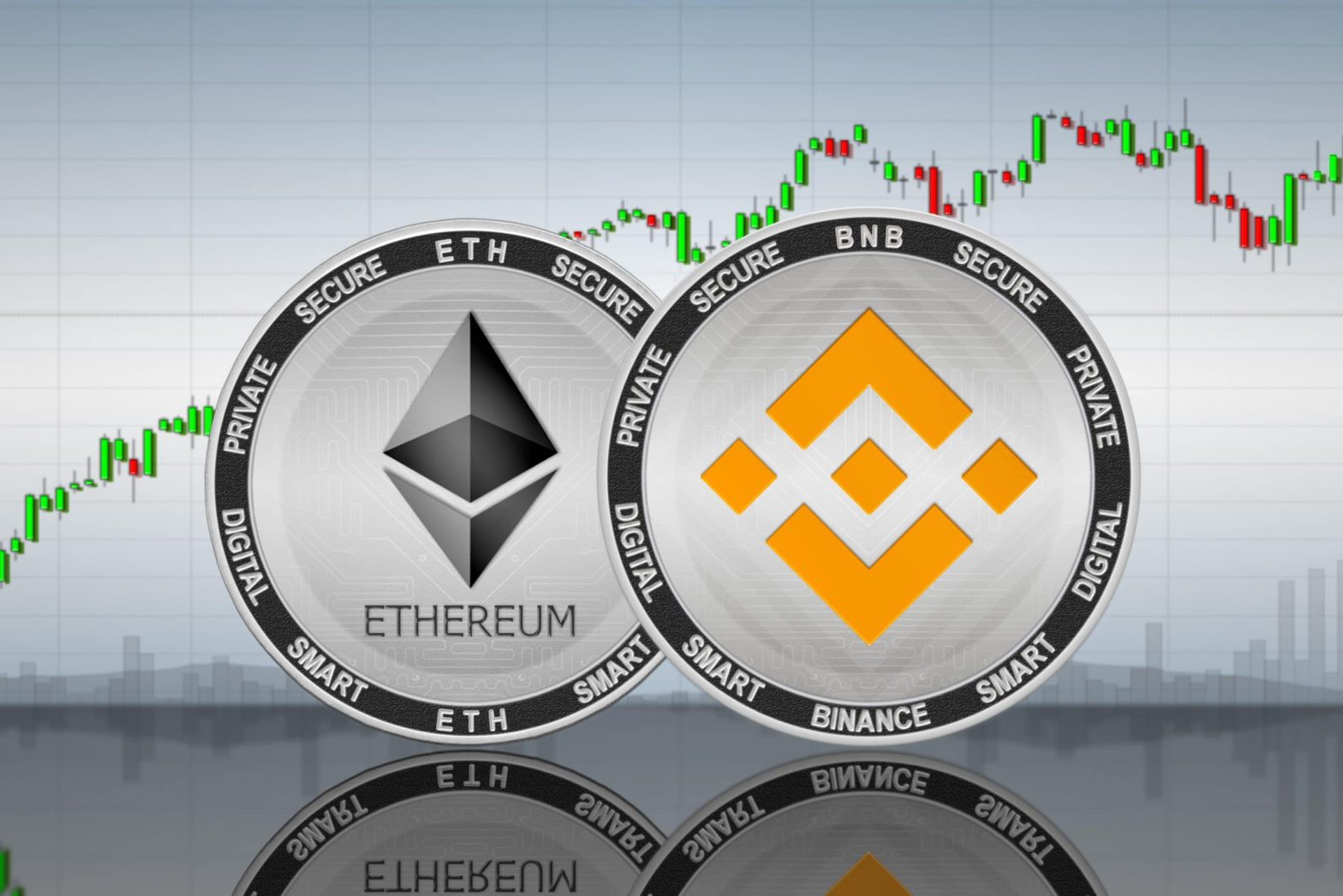
Ethereum and BNB Price Analysis 03/13

Many people will agree that the crypto market has been boring for the last six days. We saw a recurrence of the previous week, when it opened at $1.7 trillion and closed at the same price. The global cryptocurrency market cap reached $1.84 trillion during the current intraweek session.

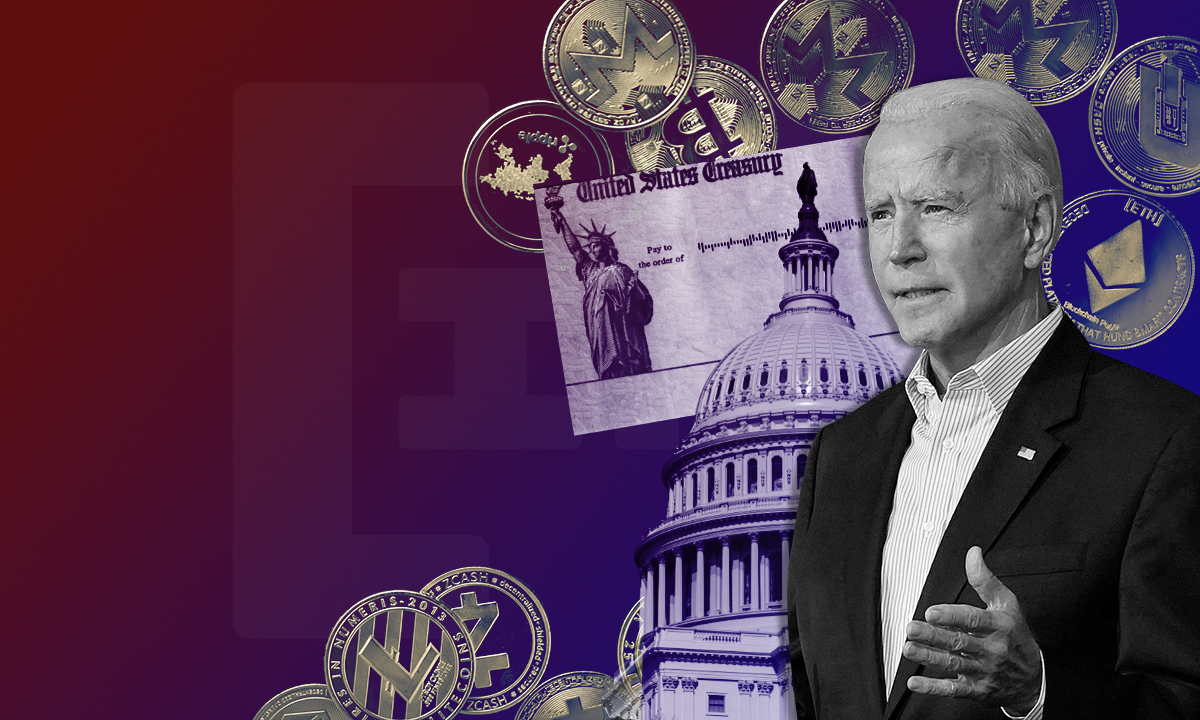
The high came as a result of the anticipation for US President Biden’s decision to sign the long-awaited executive order on digital assets. Unfortunately, the enthusiasm faded over time, and the sector was back below $1.8 trillion the following day.

The Crypto Fear and Greed index has also experienced little fluctuation, peaking at 28 in response to the executive order announcement. Another week has come and gone with little to no solid fundamentals.

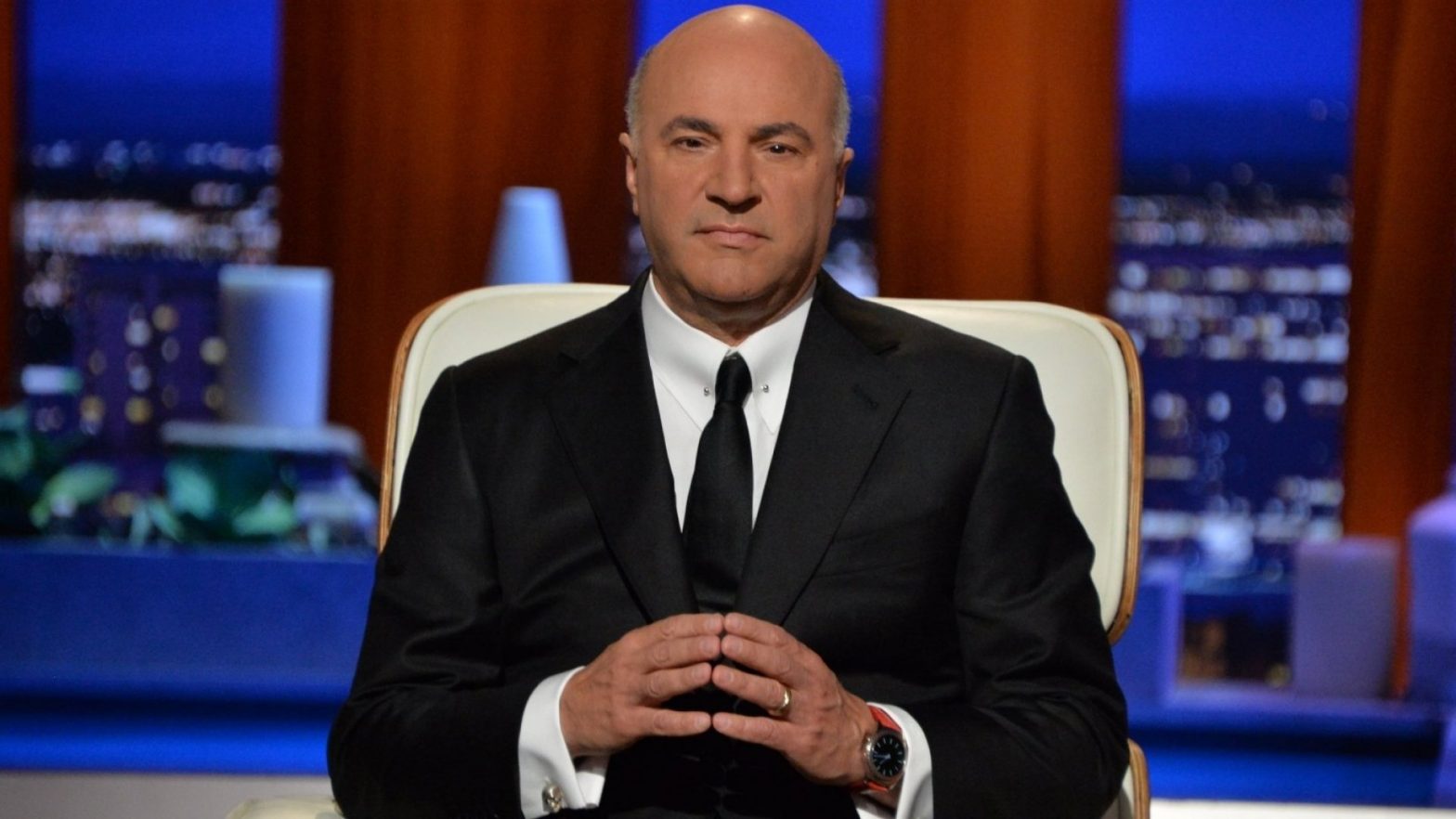
Nashville Soccer Club (SC), on the other hand, has established a partnership with digital asset management startup Valkyrie. Kevin O’Leary, commonly known as Mr. Wonderful, has acknowledged that crypto assets account for 20% of his entire investments. These are just a few of the stories that made the news.

While most assets improved in terms of stability, waves grew by more than 45 percent. According to one forecast, the $25 resistance level may be tested next. If the current momentum continues, the token may retest $30 and close between $28 and $25. The prediction was correct, and the coin has been the top gainer for the last six days.

The graphic above depicts the market’s current state over a seven-day period. Anchor Protocol lost about half of its value, making it the biggest loser throughout the time period under examination. Let’s take a quick look at how Ethereum and BNB have been performing.

Ethereum

Last week’s price movements were preferred to the seven-day timeframe. Ethereum had an almost perfect start, gaining 11% and turning the $2,800 barrier along the way. That rise lasted two days, as ETH traded above $3,000 for a few hours before relinquishing the peak on Tuesday.

The current seven-day period is markedly different, with ether failing to post any major gains at the start of the week. It began at $2,550 and fell to a low of $2,445. After the decline, the largest alt experienced little buy-back but failed to fully recover from the setback.

Tuesday saw a significant change in the picture, with Ethereum reaching a high of $2,626. The coin finished the intraday session up over 4%. However, the project began its downward trend on Thursday, losing the majority of its accrued profits over the next three days.

Based on the performance of the second largest coin over the last seven days, we can deduce that the asset reached a high of $2,774 and a low of $2,445. Ethereum did not experience any substantial gains or losses.

The peak indicated that Ethereum was on the verge of testing its pivot point but failed. It is continuing trading below the mark, indicating that it is firmly entrenched in bearish dominance. The Moving Average Convergence Divergence (MACD) is providing no comfort, as it has dropped below 0 again, and the fast line is currently at 80.

Binance coin, like the preceding digital currency, began the week on a strong note, gaining more than 9.88 percent during the first intraday session. The price rise has been prolonged for a second day. The coin finished that session below its pivot point as well as its DMA, leaving bulls expecting for better results.

BNB got the current seven-day session off to a sluggish start, as the intraday session was marked by a doji. On the second day, trade volume fell as another doji formed on the chart. Wednesday was a different story, as the fourth-largest cryptocurrency climbed about 4%.

Following that price increase, the token had a more severe selloff, losing more than 5% on Thursday. The correction has persisted at of this writing, with the exchange token down by 5%. The present price implies that all attempts to flip and remain above the pivot point have failed. Furthermore, BNB is currently trading below its 200-day moving average. More negative news from MACD, as the asset recently witnessed a bearish divergence.

Categories
Blockchain News

20% of Kevin O’Leary Is In Cryptocurrency

Kevin O’Leary, a Canadian businessman and television host known as “Mr. Wonderful,” has disclosed that crypto assets account for 20% of his entire interests. He revealed this in an interview with CNBC on Friday.

“I have millions of dollars, and cryptocurrencies and blockchain now account for 20% of my portfolio,” he stated.

One interviewer inquired whether any cryptocurrency would cease to exist within the next ten years.

“You must be versatile. I am the owner of 32 different positions, including equity FTX. The whole point is that you have no idea who will win. Is Ethereum going to triumph? Is Solana going to be victorious? Is it Avalanche or Helium? I own them all,” he said.

O’Leary’s recent revelation comes the same week that US President Joe Biden signed an executive order demanding that the government study the impact of bitcoin on financial stability and national security.

During the conversation, O’Leary claimed that he had purchased a stake in at least one private Bitcoin mining plant. He further stated that following the executive order, he sold his investments in publicly traded Bitcoin mining firms.

It’s worth mentioning that O’Leary was once a crypto skeptic before lately becoming a firm believer. In 2019, he referred to Bitcoin as a valueless money.

It’s not only O’Leary’s. There is a large list of other people who have previously expressed skepticism about cryptocurrency. Some, though, have eventually become believers. Don Tapscott, Niall Ferguson, Joe Weisenthal, and Kevin Roose are all previous crypto skeptics who have since become believers.

At the same time, billionaires and huge corporations have shown a strong interest in cryptocurrency in recent years.

In late 2020, Mexican billionaire Ricardo Salinas claimed that Bitcoin accounted for 10% of his liquid assets. He also advised prospective investors to study “The Bitcoin Standard,” an award-winning book written by Bitcoin educator Saifedean Ammous.

Seek Capital, the family office of billionaire Simon Nixon, declared plans to raise its crypto exposure last August, claiming that it is a crucial component of the future. Recently, fund manager Bill Miller stated that Bitcoin and other cryptocurrencies account for around half of his personal holdings.

Categories
Altcoins Price Analysis

Kadena (KDA) Price Analysis 03/12

In bull and bear markets, the mantra for long-term sustainable bitcoin projects is “always be building.” Despite the overall slump in the crypto market, Kadena (KDA) has reaped rewards for its forward-thinking approach to development, and the layer-1 proof-of-work (PoW) blockchain protocol has recently seen its price reverse direction.

According to Cointelegraph Markets Pro and TradingView data, the price of KDA increased 40% from a low of $5.94 in the early hours of March 11 to a high of $8.28, while its 24-hour trading volume increased 784 percent to $325 million.

The recent price increase for KDA can be attributed to three factors: a new listing on Binance, the launch of the first decentralized exchange (DEX) on the Kadena network, and impending roadmap goals that include the implementation of an NFT standard and wrapped native currencies.

The most important driver of KDA was its March 11 listing on Binance. Following the news, 24-hour trading activity increased from an average of $38 million to $325 million during Friday trading. The KuCoin exchange also saw significant trading volume, with $117.4 million in trades taking place before the Binance listing became live.

The implementation of new protocols on the Kadena network, including Kaddex, the first decentralized exchange in the project’s ecosystem that provides gas-free trading, was a second development that aided the price of KDA.

Kaddex also announced an interface with Simplex, which would provide a fiat onramp into the burgeoning DeFi ecosystem. Other protocols that have recently launched and linked with Kadena include Hypercent Launchpad, a platform that allows validated projects to be launched on Kadena, and the crypto liquidity provider ZoidPay.

The project’s forthcoming roadmap ambitions, which include the launch of a native NFT standard called Marmalade, are a third factor attracting attention to Kadena.

Other noteworthy milestones on the Kadena roadmap include the debut of wrapped native coins such as kBTC, kETH, and kUSD, a drive for additional US and global exchange listings, the development of lending platform infrastructure, and the launch of a sustainable mining program.

The project’s developers have also revealed intentions to deploy testnets for a Kadena Ethereum Virtual Machine (EVM) bridge and a Kadena to Cosmos bridge, which will allow for compatibility with other major blockchain ecosystems.

Categories
Ethereum News NFT

NFTs Are On Ethereum Layers 2

Ethereum is the most popular platform for creating and exchanging NFTs. According to this 1confirmation research, the Ethereum ecosystem accounted for 90% of the NFT trading volume in 2021. Users prefer it for its security, decentralization, and liquidity. Nonetheless, due to the high gas prices, it has become increasingly difficult for small investors to operate in Ethereum. This website allows you to examine the prices for minting, bidding, and listing NFTs on the Ethereum blockchain.

As a result of this, many retail investors are turning to alternative blockchains such as Binance Smart Chain, Solana, and Fantom. The truth is that none of these networks has the same level of development and opportunity as Ethereum does. Fortunately, there is a solution that could become commonplace by 2022.

Layer 2s are the most visible answer to Ethereum scalability difficulties. These are protocols that are created on top of the main chain to boost scalability while leveraging Layer 1 security. Most L2s are based on rollups, which means they work by grouping together a number of off-chain transactions and delivering a proof of those transactions to the L1. As a result, the gas price is distributed across hundreds of transactions.

There are two forms of rollups, which differ in how those bundled transactions are validated. On the one hand, there are optimistic rollups, which presume that all transactions are legal and allow anyone who notices a discrepancy to submit a fraud proof. The transaction is then evaluated individually to see whether it is honest or not. This technique works even when there is only one trustworthy entity watching over transactions.

Zero knowledge rollups, on the other hand, work by synthesizing the bundled transactions using a complicated encryption mechanism known as zero knowledge proof. This technique is capable of proving the validity of all transactions without displaying them.

These technologies can be leveraged to create NFT markets that use Ethereum’s security and development while charging 10x fewer costs. Let’s look at some Ethereum layer 2s that enable NFTs.

Arbitrum:

It is a hopeful rollup that runs on Ethereum; gas fees in this network are roughly 0.5 USD for a transfer and 0.8 USD for a swap. Treasure, NFT Alliance, Abrazaar, and Agora are the most popular NFT platforms on Arbitrum.

Optimism:

Another upbeat rollup, with gas fees of roughly $1 each transaction. Quixotic is the most popular NFT marketplace in Optimism, and the leading project is OptiPunks, a pfp (profile picture) collection.

Immutable X:

It is a Layer 2 with no prior knowledge that is solely focused on NFTs. Immutable X is currently offering no-fee transactions in its marketplace. The trading card game Gods Unchained is the most noteworthy collection.

Layer 2s are an Ethereum scaling option that can dramatically lower gas expenses. They function by executing transactions off-chain and submitting verification of those transactions to the main chain. Optimistic and zero knowledge rollups are the most prominent L2 mechanisms. The Ethereum L2 ecosystem is constantly expanding, yet it is still in its early phases. If these projects can get traction and obtain funding, their growth will be parabolic. Behind a rollup might be the next CryptoPunk or BAYC.

Categories
Altcoins News Regulation

Ripple Gets A Huge Win on SEC Case

Ripple secured yet another crucial victory on Friday when Judge Analisa Torres, a United States District Judge, denied the SEC’s petition to dismiss Ripple’s fair notice claim.

The SEC filed a motion last April to dismiss Ripple’s make-or-break fair notice defense, which sought to compel the SEC to provide some information through a discovery order and prove that the agency provided Ripple with fair notice that its XRP distributions would be prohibited under securities law since 2013.

If allowed, Ripple’s motion would seek to demonstrate that the SEC was aware of what it now alleges to be a regulatory violation in April.

As a result, the court determined on Friday that the SEC had failed to persuade it to strike out Ripple’s fair notice of affirmative defense by failing to reference case law where that had been done at the pleadings stage. Furthermore, the agency failed to demonstrate that the continuation of Ripple fair notice defense will cause it undue prejudice.

In that case, the court was also convinced that the SEC was on a mission to use delay tactics by increasing the time, expense, and complexity before the case could proceed to full trial, which led to the decision to refuse the SEC’s request.

The Court shall not determine, at this early stage of the litigation, that Ripple’s defense is invalid, according to the order. As a result, the SEC’s move to strike Ripple’s affirmative fair notice defense is DENIED.

However, the matter will now go to a full hearing because the court refused a similar petition filed last April to dismiss the action by Ripple CEO Brad Garlinghouse and co-founder Chris Larsen, giving a setback to the individual defendants.

“Today’s judgment makes it clear that there’s a fundamental question about whether the SEC ever gave Ripple fair notice that its XRP distributions – which have been ongoing since 2013 – would ever be illegal under securities law.”

Following the order, Ripple general counsel, Stuart Alderoty, made a statement. The Ripple case, which was brought by the United States Securities and Exchange Commission in December 2020, has been a thorn in the side of XRP holders, who remain hopeful that the two sides will reach an agreement without going to full trial, or, better yet, that the trial will take the shortest amount of time possible.

Categories
Bitcoin News

El Salvador $1 billion Bitcoin Bond Postponed Due to Ukraine Conflict

El Salvador is keeping an eye on the situation in Ukraine before deciding when to launch its $1 billion Bitcoin bonds.

Alejandro Zelaya, the country’s finance minister, confirmed this today during an appearance on El Salvador’s “Frente a Frente” TV show, adding that the bond was meant to be released between March 15 and 20 but could be postponed owing to the Russia-Ukraine conflict.

“We believe that between Mar 15 and 20 is the right timing, we have the tools almost finished. But the international context will tell us. I didn’t expect the war in Ukraine. We’re still finishing some details, almost everything is ready, the thing is there is also a timing issue.”

Meanwhile, El Salvador’s President, Nayib Bukele, said in November that the government will build “Bitcoin City,” the world’s first crypto-powered city, which will be financed by $1 billion in Bitcoin bonds.

The Bitcoin City will be erected near the Conchagua volcano in La Unión’s eastern section.

President Bukele anticipated that the bond will be oversubscribed earlier this year, as well as making other Bitcoin positive forecasts for 2022. El Salvador has been steadfast in its acceptance of Bitcoin as a legal tender alongside the US dollar.

The country has continued to add more Bitcoin to its balance sheet after introducing it legal tender in September of last year.

El Salvador now has around 1,701 BTC in its portfolio after reporting its most recent purchase in January.

President Bukele also said that revenues from the country’s Bitcoin investments are being used to build a pet hospital and 20 Bitcoin schools.

Meanwhile, the Latin American country has been praised and chastised for making Bitcoin official tender.

President Bukele recently chastised US senators for telling them to stay out of the country’s “internal affairs” after they demanded an investigation into the economic threats the US faces as a result of El Salvador legalization of Bitcoin.

Categories
Bitcoin Blockchain News

New South Korean President is Crypto-Friendly

Yoon Suk-yeol, the head of South Korea’s main opposition party, won the election on Thursday, March 10, with around 49 percent of the vote, thanks to a platform that appealed to crypto fans, among other campaign methods. He is now the President of South Korea.

Yoon, 61, had devised a superb strategy for disseminating a crypto-friendly narrative and attracting a large number of people in their twenties and thirties who were already knee-deep in cryptocurrency.

The former prosecutor, who is admired by South Korea’s youth for his role in imprisoning two former presidents accused of corruption, has promised to raise the capital gains tax threshold on cryptocurrency from $2000 to $40,000, making it one of the most generous government seigniorages on cryptocurrency in the world.

The President also promises to implement a comprehensive legal framework for digital assets, which he claims would assist the country “recover illegitimate earnings from unfair trade practices.”

In his final attempt to convince young voters, Yoon released at least 4000 NFTs containing a video of himself on the Aergo Blockchain on Monday, with sales taking place on CCCV, a South Korean marketplace, for 50,000 Korean won (US$40.78) each. His presidential opponent, Lee Jae-Myung of the Democratic Party of Korea, attempted to deploy similar techniques, however his manifesto mostly appealed to elderly people.

According to a recent report by the country’s National Federation of Business Entrepreneurs, four out of ten Koreans in their twenties and thirties have invested in cryptocurrencies, with deposits totaling more than 60 trillion Korean won ($50.9 billion) in the four largest South Korean crypto exchanges.

Meanwhile, Yoon’s crypto-friendly posture contrasts with past administrations, with the outgoing government slamming digital assets the hardest since 2017. His victory is consequently viewed as a victory for digital asset investors, with South Korea gaining the lead in terms of worldwide crypto adoption rates.

Categories
Blockchain Guides & Tutorials News

Bfarm Launches a BNB and BUSD Referral Program

Bfarm. Co is a novel yield farming program that allows users to maximize their income by staking their native Binance tokens on the BSC network to earn quick staking yields. Users also benefit from the large referral system, which allows them to invite other BNB users onto the network.

BFarm is a farming investment forum that was created to reward and benefit the community. The contract is most useful when the crypto ecosystem is experiencing severe market volatility, as it is right now.

BFarm ensures that consumers have a consistent daily revenue. It also provides stake returns in the form of a Return on Investment (ROI). This platform offers a strategy for short-term investors seeking quick profits, and the return rate is designed to have minimal impact on long-term investors. This plan includes a 16-day lockup return of 188 percent and a 2% quick credit giveaway incentive.

Users can earn a passive income by staking a minimum BNB stake of 0.05BNB Max unlimited or a minimum BUSD stake of $10 Max unlimited within the 8-day lockup period, which will yield 140 percent. There is a technique for this optimal return that includes a 25-day lockup return of 245 percent and a 3-month lockup return of 245 percent for those who want to arrange a monthly investment.

The BFarm referral program has five levels, each with its own set of benefits:

5-percentage level 1

3-percentage level

2-percentage level 3

0.5 percent at level 4

0.5 percent at level 5

Since it was cleared of any backdoors, scam scripts, or flaws by Hazecrypto security audit, the platform is impenetrable for users wishing to optimize their profits through staking.

The purpose of this program, according to BFarm’s whitepaper, is to establish a community that consistently profits users who are passionate about the company’s mission to build high-quality DeFi apps.

Categories
Bitcoin Blockchain News Regulation

Lawmakers Propose Legislations Imposing Penalties on China’s CBDC

Nine Republican lawmakers have endorsed legislation aimed at regulating US federal agencies’ policies in response to worries that China’s digital yuan could be used to bypass sanctions and compromise users’ personal information.

Louisiana Senator Law Cassidy and Tennessee Senator Marsha Blackburn submitted the Say No to the Silk Road Act on Wednesday, backed by seven other Republican senators. The bill would require certain government agencies to report on China’s central bank digital currency, or CBDC. The two senators expressed concerns about digital surveillance and privacy of citizens and overseas users as a result of China’s CBDC expansion.

If the bill is passed, the United States Secretary of Commerce and Commerce Representative will report on the effects of the digital yuan on trade as well as trade enforcement activities, while the Department of State will issue a warning about the CBDC. The bill also required the Office of Management and Budget to set criteria for agencies using the digital yuan, as well as foreign governments receiving military aid to reveal if they were using the CBDC.

“If left uncontrolled, technologies like as China’s digital yuan would enable Russia to circumvent global sanctions on systems such as SWIFT and enable the CCP to further spy and threaten their populace,” Blackburn warned.

With sanctions imposed by the United States and the European Union harming Russia’s economy, some sources say the country may turn to China for solutions, tapping into payment systems such as UnionPay. Many politicians have focused on digital assets as a possible way for Russia to circumvent these sanctions. On Wednesday, US President Joe Biden announced the signing of an executive order aimed at creating a regulatory framework for cryptocurrency, emphasizing its potential role in bypassing sanctions.

While crypto-related regulations in the US have not always been entirely partisan, Republican lawmakers appear to be leading the campaign against China’s CBDC, potentially undermining the dollar’s dominance. Senator Blackburn and Wyoming Senator Cynthia Lummis, both supporters of the aforementioned bill, addressed a letter to Olympic organizers in July 2021 urging them to prohibit US athletes from utilizing digital yuan during the Beijing Winter Games. According to reports, few foreign athletes used the digital currency at the tournament, despite the fact that Visa was also available.

Categories
Blockchain News

CEO of Ripple Says Biden Executive Order Is A Major Move

After months of anticipation, the Biden administration finally signed and released the long-awaited crypto executive order. According to the Executive Order on Ensuring Responsible Development of Digital Assets, multiple government departments in the United States are required to coordinate and consolidate policies on a national framework for crypto.

The majority of people in the cryptocurrency business believe the executive order is a significant step in the right direction.

Since its announcement in October, President Biden’s executive order has created a great deal of anxiety in the crypto sphere. Most people expected the directive to result in a multi-pronged regulatory crackdown against crypto assets. Industry leaders have been pleasantly surprised, to say the least.

Importantly, the directive enables the development of a coordinated government approach to preventing the use of cryptocurrency in unlawful operations, all while encouraging innovation and reinforcing the United States’ technological leadership in this quickly emerging field.

Circle co-founder and CEO Jeremy Allaire praises the Biden administration’s decision to employ a “whole-of-government approach to simultaneously exploit benefits while managing and mitigating inherent dangers in responsible innovation.”

The executive order, according to Brad Garlinghouse, CEO of blockchain payments firm Ripple, signals a critical inflection point and makes it obvious that “crypto is here to stay.”

Other analysts feel the executive order could assist crypto miners in addition to providing regulatory clarity in the crypto business. Jonathan Peterson, a strategist with the American international investment firm Jefferies, stated in a client note that they feel that the fact that the United States government is now more formally acknowledging, working with, and ostensibly backing the digital asset business would benefit public crypto mining companies.

Peterson noted the contrast between the United States and China, which put a blanket ban on cryptocurrency mining last year, forcing miners to relocate to friendlier states. The EO, according to the analyst, is just another indication that the regulatory environment in the United States is increasingly supportive of miners and cryptocurrencies.

Categories
Blockchain News

Crypto-Related Companies Surge After Executive Order

The stock prices of crypto-related companies have risen as the larger market has reacted positively to US President Joe Biden’s long-awaited executive order. This will need the development of a regulatory framework for digital assets, as well as the investigation of a future digital dollar by federal agencies in the United States.

According to TradingView, Coinbase was up 10.5 percent after market closing, while shares in Bitcoin advocate Michael Saylor’s MicroStrategy were up 6.4 percent.

Blockchain-related exchange-traded funds (ETFs) benefited from the market’s increased confidence in crypto, with ProShares Bitcoin Strategy ETF up 10% and Valkyrie Bitcoin Strategy ETF up 10.3%.

Riot Blockchain Inc. and Marathon Digital Holdings Inc. had the most gains in cryptocurrency mining businesses, with Riot Blockchain Inc. up 11.2 percent and Marathon Digital Holdings Inc. up 13.5 percent, respectively. In a letter to clients, Jefferies analyst Jonathan Peterson allegedly reaffirmed his buy recommendation for Marathon Digital Holdings Inc., arguing that crypto miners will benefit now that the US government is more formally acknowledging, working with, and seemingly backing the digital asset business.

While 10% swings are frequent in cryptocurrency, these are exceptionally dramatic moves in traditional markets. Despite the recent uptick, Coinbase is still almost 48 percent lower than its direct listing price in April of last year. Riot Blockchain is in even worse shape, down 76 percent from its most recent peak in February 2021.

Bitcoin (BTC) increased by 9% after learning about the leaked executive order, before reverting to its current 5% gain.

Aside from the initial positive price action, most investors saw the executive order as, if not a net positive for the crypto business, at least a lot less awful than had been predicted. President Biden characterized the emergence of digital assets as an opportunity to bolster American leadership in the global financial system and at the technical frontier.

The decree did not specify what kind of regulatory steps could be expected, but the overall tone from the US Federal government appeared positive. This indicates that the presidential order could help to extend the use of virtual currencies in the US banking system.

This was backed up by Treasury Secretary Janet Yellen, who stated in a statement that the measure will benefit both consumers and companies. Minnesota Congressman Tom Emmer presented an excellent critique of the presidential order’s omissions, advising his 48,000 Twitter followers that there is no reason to expect the US government to favor policies for open, permissionless, or private technology.

Categories
Blockchain News Regulation

Justin Sun Speaks Up On Recent Allegations

Recent claims leveled against Justin Sun have been refuted. Justin Sun, the founder of the Tron network, responded to the Verge’s reports that he was being probed by the FBI and the US Securities and Exchange Commission in a series of tweets posted today.

Sun maintains that the exchange is dedicated to cooperating with regulators and to implementing KYC facilities for its consumers. Poloniex, according to the Tron inventor, is not registered in Seychelles, does not operate in the United States, and does not serve US customers. He concludes by revealing his legal position on the matter.

Sun’s answer comes after The Verge published a piece on March 9th criticizing Justin Sun, Zhao Changpeng, and Poloniex. The piece effectively poked fun at Sun’s dubious reputation in the crypto market throughout the years.

The paper also stated that trading crypto assets on Poloniex was dangerous. It went on to say that Sun fled Beijing for Seoul in order to dodge the ICO prohibition, which could have a negative impact on the TRX coin.

As these charges emerge, they add to the already-existing criticisms leveled at cryptocurrency exchanges over the years.

Previously, exchanges such as Binance were beset by regulatory repercussions. Many of the aforementioned exchanges, as well as a few others, were forced to relocate to crypto-friendly locales in order to keep operations running.

Apart from the regulatory controversy, exchanges were hacked many times during that time period. The largest theft to date occurred in 2018, when hackers stole $534 million from Coincheck.

However, some of the largest exchanges have recently gotten into trouble with the SEC. Binance was hit with a slew of penalties last year, forcing it to close its doors in Singapore and Israel. The SEC also threatened to sue Coinbase, a US-based exchange, last year.

Categories
News Price Analysis

Gold Hits An All-Time High

Gold has reached an all-time high of $2,078.80 per ounce, sending its estimated market capitalization above the $13 trillion dollar barrier for the first time ever, as investors hurry to safeguard their investments from inflation caused by the ongoing Russian-Ukraine war.

Gold futures are currently up 0.55 percent, trading at $2,055.70 per ounce. The yellow gold reached a high of $2,069.89 per ounce during the Asian session, not far from the recently established all-time high. The dollar, which generally moves inversely to gold, is down 0.09 percent at 98.98 basis points but remains close to a more than one-and-a-half-year high achieved earlier this week.

Apart from the United States and the United Kingdom prohibiting Russian oil imports, DailyFX strategist Margaret Yang told Reuters that “there appears to be a lack of further escalation in hostilities between Russia and Western powers.” Geopolitical events are the primary drivers of gold, and if the political skies clear, I expect gold prices to quickly return to $1,800 levels.

Joe Biden, the Vice President of the United States, announced an embargo on Russian oil and other energy imports. Britain also stated that it will phase out Russian oil and oil products imports by the end of 2022, giving the market and businesses time to identify alternatives. Treasury yields in the United States are rising as investors anticipate the U.S.

Treasury yields in the United States are rising as investors expect the Federal Reserve of the United States to raise interest rates this month when it announces its policy decision next week. On the other side of the Atlantic, the European Central Bank will announce its policy decision on Thursday.

Apart from gold, other precious metals have been positive since the beginning of the war, as investors want to hold on to as much as they can as a hedge against inflation. Palladium, for example, is up 2.01 percent as of this writing, selling at $3,212.47 per ounce. The metal has risen by more than 38% since Russia’s invasion of Ukraine two weeks ago, reaching an all-time high of $3,417.02 per ounce on Monday.

Russia is a significant global producer of palladium, accounting for more than 40% of global exports. Palladium, according to ED&F Man Capital Markets analyst Edward Meir, “may move significantly higher since, of all commodities, it has the biggest percentage share coming out of Russia.” It recently surpassed previous year’s high. So, if it’s the same as last year’s high before the invasion, this tells me that we should be considerably higher after the invasion.

“In only a few months, the globe moved from loathing gold as prospects for a healthy global economic rebound dampened demand for safe-havens, to now growing concerned about stagflation and recession threats,” said Ed Moya, analyst at online trading platform OANDA.

Categories
Blockchain News NFT

Wladimir Klitschko Releases NFT Collection In Support Of Ukraine

Wladimir Klitschko, a former professional boxer from Ukraine, has joined the efforts of other celebrities in supporting the Ukrainian army and people during Russia’s current invasion.

Klitschko sees the cryptocurrency business as the most effective and compelling method for raising donations in these difficult times. Klitschko claims that all cash raised would be sent to UNICEF and other reputable organizations to help solve the severe military and humanitarian requirements generated by the Russia-Ukraine war.

The NFT collection is called “Vandalz for Ukraine: WhIsBe x Wladimir Klitschko,” and it features two well-known figures: Klitschko and the artist WhIsBe. They have joined forces to enter the NFT industry in order to fulfill an important social mission and assist underprivileged communities in Ukraine.

They believe that the NFT sphere is the best place for them to use their reputation and expertise to generate donations. The NFT collection has a variable pricing approach with objects priced at $100, $1,000, and $10,000 in order to reach the widest possible audience. People with varying budgets can so freely engage in the humanitarian effort.

Wladimir Klitschko and his elder brother Vitali (now the mayor of Kyiv, Ukraine’s capital) are the most visible public personalities in favor of fundraising activities. They advocate for the world community to actively assist Ukrainians in their resistance to Russia’s forces.

They also act as role models for other prominent people, regardless of their standing, who want to join the Ukrainian military forces. Although the eventual success of this collection is unknown, the popularity of similar NFT collections demonstrates its tremendous potential.

An NFT depicting the Ukrainian flag, in particular, fetched as high as $6.75 million at the start of March. As citizens from developed and developing countries support innocent victims subjected to war crimes, the total amount of crypto-based financial assistance to Ukraine has already surpassed $50 million.

Categories
Altcoins Blockchain News

Avalanche Debuts a Program to Speed The Shift to Scalable Subnets

The Avalanche Foundation, a non-profit organization, has unveiled the “Avalanche Multiverse,” a new incentive program worth approximately $290 million (almost four million $AVAX tokens). According to a press release, the new program will be divided into at least six phases, with a focus on the adoption and growth of Avalanche network subnets.

The Avalanche network is intended to provide faster transaction times and lower transaction fees. However, similar with other layer-1 EVM-compatible blockchains, growing network utilization has resulted in higher costs. These subnets are intended to address high-fee issues while still allowing the network to scale.

According to the Foundation, the subnets are native integers of the blockchain and hence have comparable properties. They can, however, be modified to meet the needs of specific apps that run on them.

Commenting on the foundation’s recent relocation Subnets, according to Emin Gün Sirer, Director of the Avalanche Foundation, will be the next growth engine in crypto, providing unique capabilities only conceivable with network-level governance and open experimentation on a never-before-seen scale.

The first set of institutions to engage with the Avalanche Foundation on the current reward program include DeFi Kingdoms, Aave, Golden Tree Asset Management, Wintermute, Jump Crypto, Valkyrie, and Securitize.

The latest Multiverse program news follows the debut of Avalanche Rush, an ongoing $180 million initiative that began last year. The initiative, which intends to assist digital assets and applications released on Avalanche’s default smart contract chain, the ‘C-Chain,’ led the $AVAX token price to increase by 113% at the moment.

The new Multiverse initiative may or may not have a similar effect on AVAX in the future. The coin was trading at $74 at the time of writing, signifying a two percent price rise in 24 hours.
Meanwhile, Ava Labs teamed with the big four accounting firm Deloitte last year in another development. The collaboration will allow Deloitte to use the Avalanche blockchain in a new disaster recovery platform called CAYG (Close As You Go).

Categories
Ethereum

Ethereum Gas Fees Have Dropped to an All-Time Low

For the first time in many months, Ethereum costs have fallen to record lows. Analysts attribute this to a variety of causes, including the network’s continued focus on scalability improvements.

Fees on Ethereum protocols have dropped to 7-month lows, and the decrease is being felt across the whole network. During the weekend, the cost of a network transaction was roughly 19 gwei, or little less than a dollar; slightly more than $0.99.

Transaction costs on the Ethereum network have not been this low since August of 2021. Notably, gas prices rose after remaining in this range for roughly three months, with experts attributing the increase to the growing interest in NFT and DeFi ecosystems.

Fees are currently 82.4 percent lower than their January highs, following a two-month downward trend. It may be difficult to pinpoint a specific cause for the latest dip, but a few possibilities can be recognized.

Possible outcomes include reduced network congestion as a result of increased usage of layer 2 solutions, more scalable chains, and lower interest in the NFT market. Ethereum’s supremacy in the DeFi space has dwindled from 97 percent a year ago to 58 percent now. The NFT ecosystem, on the other hand, appears to be the trend with the strongest association.

Trading volume on the Ethereum NFT marketplace OpenSea fell by over half in the first week of February, from $247 million to $124 million. During the same time period, the average gas price dropped from 134 gwei to 65 gwei. Both of these causes are extremely likely to have contributed to the current downturn. As beneficial as this breakthrough is for Ethereum users, it is not a long-term solution to the network’s scalability difficulties.

For a long time, the Ethereum network has been hampered by high gas fees, allowing competitor networks like Terra, Solana, and Avalanche, which offer greater scalability, to thrive. In order to control the situation, the developers have released multiple improvements, including Ethereum founder Vitalik Buterin proposing EIP-4488 in November.

Additionally, Zero-Knowledge technology and Optimistic technology are being developed. While both solutions significantly reduce network expenses, ZK roll-ups have shown more potential, despite being confined to one application per chain. The release of the zkEVM rollup is expected to solve Ethereum’s scalability issues.

Categories
Bitcoin News Price Analysis

Bitcoin – Gold Forecast 03/08

Cointelegraph Markets Pro and TradingView data tracked Bitcoin as it approached $38,000 an hour after Wall Street opened on Tuesday.

After reaching $39,240, the pair quickly reversed course as Biden confirmed the plans, adding to oil’s already robust gains and putting further pressure on stocks and risk assets.

“Today, I’m announcing that the United States is targeting the main artery of Russia’s economy,” he stated during a press conference.

They’ve banned all imports of Russian oil, gas, and energy. This implies that Russian oil will no longer be accepted at US ports, and the American people will give another powerful blow to Putin’s war machine.

On the announcement, Brent crude hit a high of $133 per barrel, but US markets had little to cheer about, with the S&P 500 down 0.5 percent on the day at the time of writing. Bitcoin, which is still trading within a familiar range, avoided serious losses by bouncing back to $39,000.

Meanwhile, gold jumped back beyond $2,000 per ounce on the latest twist in the Russia–Ukraine conflict, aiming for all-time highs. Similarly, not everyone was convinced that the worst was yet to come for stocks.

In what should be a bright lining for Bitcoin bulls, popular analytics account BTC fuel identified the equities market-related economic anxiety index, indicating that stocks may have already delivered their drop if history is any guide.

The biggest uncertainty was during the massive capitulation for the six occasions this happened. More crucially, stocks rose in the months that followed, rising by 18% on average after three months, they noted.

The most recent and significant such event in Bitcoin’s history was the March 2020 COVID-19 crash and its aftermath.

Categories
Blockchain News

Biden’s Executive Order For Crypto Coming This Week

A schism between crypto corporations and the US government over how sanctions against Russia should be enforced appeared to have reached a breaking point, drawing the attention of the White House.

According to Bloomberg, individuals familiar with the situation have claimed that President Joe Biden will sign an executive order this week defining the US government’s plan for cryptocurrencies, ending a two-week standoff since the US imposed sanctions on Russia.

Furthermore, Executive Order ‘E.O’ is intended to completely address the regulatory, economic, and national security concerns posed by digital assets, and will compel federal agencies to submit their reports by the end of the second half of 2022.

The Financial Stability Oversight Council (FSOC), which has been monitoring the financial risks presented by cryptocurrencies, and the United States Department of Treasury are among those anticipated to submit reports. 

According to sources, the E.O. will also give particular tasks to a wide range of state departments and agencies in crafting an all-around digital asset strategy to ensure that the United States maintains its competitive edge in the face of the explosive expansion of digital assets globally.

Although the White House has yet to respond, this E.O. may also herald the end of a lengthy dispute about CBDCs that the FED threw to Congress earlier this year, since the POTUS may expect the entire matter to be resolved by May 2022.

As the risks of utilizing cryptocurrencies to conduct crimes become more apparent, Biden’s administration has been under pressure to offer regulatory clarity on digital assets.

Although Coinbase has already pushed the envelope by barring certain Russian organizations that are not on the sanction list, other crypto corporations continue to underestimate the potential of cryptocurrency to pose actual economic threats. 

Binance CEO Changpeng Zhao ‘CZ,’ for example, has stated that the market capitalization of cryptocurrency is still much below the global threat threshold, which some in Washington disagree with.

Last week, a group of US legislators led by Senator Elizabeth Warren and Senate Committee Chairman Sherrod Brown addressed a letter to Treasury Secretary Janet Yellen, voicing concerns about Russia’s use of cryptocurrency to avoid sanctions.

Aside from the United States, Singapore and the European Union have pledged to adopt measures, some of which are expected to go beyond the scope of existing legislation, to prevent Russia from exploiting cryptocurrency to circumvent sanctions.

Categories
Blockchain Business News

Ventures Investments in Crypto Projects Was Over $25B in 2021

Bain Capital Ventures, one of the world’s top startup investment firms with $5.1 billion in assets under management, has announced the launch of a new $560 million crypto-focused fund.

According to a Bloomberg article published on Tuesday, the fund closed in November and has already invested $100 million in 12 unnamed projects.

Bain Capital Ventures has a track record of investing in the cryptocurrency and blockchain space, having previously funded firms such as BlockFi, Compound, and Digital Currency Group. Bain Capital Ventures’ most recent fund, BCV Fund I, is the first of its type, focusing only on the crypto sector.

According to a BCV spokesman, the crypto fund’s mission is to support entrepreneurs constructing the next generation of open internet infrastructure. The dedicated investment fund, according to the spokesman, is put up with a highly technical and collaborative approach to aid crypto and Web3 makers from seed to growth.

When questioned if cryptocurrencies will play a large part in venture capital in the future, the representative stated that the internet is undergoing a tremendous shift toward open, community-driven, and decentralized services.

The latest development follows a surge in venture capital interest in cryptocurrency throughout 2021. According to Pitchbook data, venture capital investment in cryptocurrency ventures surpassed $25 billion last year, the greatest amount ever recorded.

Despite the fact that crypto asset prices are very volatile in 2022, venture firms have continued to make significant investments in the sector. Sequoia Capital, an American venture capital firm, announced the formation of a $600 million cryptocurrency fund in February. Polygon secured $450 million in an investment round led by some of the best venture firms in blockchain.

Categories
News NFT

Immutable Goes Over $2 Billion in Market Value

Immutable, a Non-Fungible Token (NFT) startup based in Australia, has raised $200 million in a series-C funding round headed by Singapore’s government-owned investment firm Temasek.

Other investors in the round include Mirae Assets, ParaFi Capital, Declaration Partners, and Tencent Holdings, according to a Reuters story on Monday.

The latest fundraising round brings the Immutable’s worth to $2.5 billion, adding to the previously raised $60 million in September 2021. In 2019, Immutable additionally raised $15 million in a Series A investment.

Immutable co-founder Robbie Ferguson stated that the new funding will be committed to the company’s global expansion and that more talent will be added to various departments such as sales and marketing. In addition, the startup intends to investigate potential Mergers and Acquisitions (M&A) options.

Immutable is the company behind Immutable X, an NFT-focused layer-2 scaling solution. Several sites, including NFT marketplace OpenSea, social media platform TikTok, and video game retailer GameStop, are currently using the network. When compared to Ethereum, the second-largest blockchain network, Immutable X allows transactions to occur at a considerably faster rate.

Popular NFT games made by the Australian firm include Gods Unchained and Guild of Guardians. Many other companies, like Immutable, have conducted many investment rounds, the proceeds of which have been used to promote and develop blockchain games in some way.

Solana Ventures, the investment arm of Solana Labs, joined with Forte and Griffin Gaming Partners late last year to form a $150 million investment fund to invest in gaming firms built on the Solana blockchain.

Yield Guild Games (YGG), a decentralized autonomous organization (DAO) focusing on investing in NFT-based games, raised $4.6 million in a funding round as well. A portion of the funds were invested in digital assets such as games and virtual worlds.

Categories
Ethereum

Whales Loading Up on Ethereum Amidst Bleak Price Action

Despite the fact that the price of the world’s second-largest cryptocurrency by market capitalization has been volatile in recent months, major Ethereum investors, known as whales, have continued to add coins to their holdings.

Many investors have sold their crypto assets in a panic as a result of the current fall in the crypto markets. Prices have fallen across the board as there is little prospect of a de-escalation of the situation between Russia and Ukraine.

Negative sentiment, on the other hand, often creates an opportunity for other investors to benefit, and Ethereum whales have been taking advantage of the uncertainty to accumulate tokens at a discount.

Source: Twitter

According to statistics given by on-chain behavior analytics company Santiment, Ethereum’s whale-tire addresses remain high despite the asset’s price dropping by more than 48 percent from November record highs.

In fact, these whales had acquired 2.2 percent more supply in the last six months. The unwavering interest from large Ethereum investors may be an indication of better days to come, providing the broader crypto market finds its footing.

At the time of writing, the price of ether was $2,616.60. Given the continuous complexity of geopolitical events, skyrocketing inflation, and an impending Fed rate hike, Ethereum and other cryptocurrencies may even fall in the short term.

The bitcoin Fear & Greed Index, which monitors investor sentiment, has entered intense fear area, signaling an increase in adverse sentiment.

The announcement that Andre Cronje, one of the most active engineers in decentralized finance (DeFi), was quitting the sector made the outlook even more bleak. Cryptocurrencies linked to Cronje’s ventures, such as Fantom (FTM) and Yearn Finance, have dropped as much as 17% in the last 24 hours as the market reacted angrily to his unexpected exit.

Categories
Blockchain News

Singapore Shuts Down Crypto Transactions

Russia has been met with harsh criticism for its invasion of Ukraine. Singapore has joined other concerned countries in imposing sanctions on Russia that include a wide range of commercial operations, including cryptocurrency.

Singapore’s Ministry of Foreign Affairs (MFA) said in a news release that the government is making it illegal to enter into or assist cryptocurrency transactions with Russia. According to the notice, the prohibition applies to all types of digital assets, including NFTs.

“The prohibited cryptocurrency transactions cover all transactions that involve cryptocurrencies and extend to the payment and settlement of transactions that relate to digital assets (such as non-fungible tokens).”

Singapore, according to the government authority, was pursuing measures against Russia despite the United Nations Security Council’s (UNSC) veto. This is due to the fact that Russia’s invasion of Ukraine poses a threat to minor countries like Singapore if it is successful.

In the same line, Singapore has prohibited the facilitation of any transactions that will assist Russia in circumventing sanctions. Banks, finance businesses, insurers, capital market intermediaries, stock exchanges, and payment service providers are all covered by the statute.

The country has also frozen the assets of many Russian banks operating on its territory. VTB Bank, Vnesheconombank, Promsvyazbank, and Bank Rossiya are among them.

Similarly, Singapore has suspended all exports to Russia and the two Ukrainian breakaway territories, Donetsk and Lugansk, which Russia has opted to recognize as separate republics.

The city-state is the first and only country in South Asia to impose an embargo on Russia. Other countries, including the United States, the European Union, and the majority of the G7, have severed ties with the country.

They have also taken steps to keep Russia out of the cryptocurrency sector. As a result of Singapore’s decision, crypto exchanges operating within its borders will be required to comply with Russia’s ban. Several exchanges, including Coinbase, Binance, and Kraken, have stated that imposing a blanket ban on all Russians is not an option.

They are, however, willing to comply with a directive from the governments of the nations in which they operate. The crypto market has not been spared the consequences of the Russia-Ukraine situation.

Bitcoin, the market-leading cryptocurrency, has seen its value swing drastically as geopolitical events continue to influence market sentiment. Bitcoin has moved between a high of $44,950 and a low of $37,699 in the last 14 days. The first cryptocurrency is currently selling at $39,287, a -3.95 percent decrease in the last 24 hours.

Turbulence has also affected the remainder of the market. The crypto market’s capitalization has slipped below $1.8 trillion. The crypto market cap is currently at $1.78 trillion, a -3.51 percent decrease.

Categories
Blockchain News

Binance Introduces Bifinity, a Fiat-to-Crypto Payment Gateway

Binance, a leading cryptocurrency exchange, announced the opening of a fiat payment gateway today. The payment processor, dubbed Bifinity, will be Binance’s official fiat-to-crypto payment provider.

Bifinity will bring the world of cryptocurrency to businesses, retailers, and millions of consumers. Bifinity’s use of Intuitive APIs will enable retailers to begin taking cryptocurrency payments, providing consumers with broader access and user-friendly platforms for purchasing and trading cryptocurrency.

As the crypto and the Web3 economy continue to grow, we see greater demand to build improved fiat-to-crypto on-ramps to bridge the gap between the traditional finance industry and the decentralized and centralized crypto economy. At Binance, the vision is to increase the freedom of money globally. With the launch of Bifinity, we aim to accelerate mass crypto adoption,” said Helen Hai, President of Bifinity.

Bifinity provides customers with access to over 50 crypto assets throughout the world, as well as the ability to trade their crypto assets. Merchants can also benefit from the payment provider’s straightforward, intuitive, and seamless API connection. It charges businesses cheap payment processing fees and accepts all major payment methods, including Visa and Mastercard.

In other news, Bianance is apparently planning to buy a share in MX Global Sdn Bhd, a Malaysian digital asset market.

According to individuals acquainted with the situation, as reported by The Edge, the transaction is still awaiting permission from the Securities Commission of Malaysia (SC), but has already been approved by the Companies Commercial of Malaysia (CCM).

The Edge stated that it sought opinion from the SC, but the regulator stated that it does not comment on such applications. Datuk Fadzil, the CEO of MX Global, also declined to comment.

However, the Malaysian exchange was closely reviewed by numerous regulators, including the SC, last year. The trading firm was chastised for running a digital asset exchange without the authorization of the securities regulator.

Categories
Blockchain News Technology

Coinbase: “Crypto Tech Could Aid Sanctions Compliance”

Coinbase, a cryptocurrency exchange based in the United States, has advocated using bitcoins to help assure compliance with economic sanctions. This proposal is based on the ease with which existing banking infrastructures enable the laundering and evasion of fiat money.

The article, written by Coinbase’s chief legal officer Paul Grewal, discusses the growing number of worldwide sanctions imposed in the midst of the Russia-Ukraine war. The cryptocurrency exchange backed the government’s decision to impose penalties on individuals and regions, emphasizing the necessity of such measures in enhancing national security and discouraging unlawful acts.

Grewal points out that, notwithstanding the sanctions imposed by governments throughout the years, the most sought-after method of sanction evasion remains the laundering of fiat currency through established financial institutions.

He claimed that bad actors continue to exploit fiat currency to conceal the movement of cash by trading through shell firms, incorporating in established tax havens, and leveraging opaque ownership structures.

Grewal, on the other hand, stated that digital asset transactions are inherently public, traceable, and permanent – a crucial quality that governing agencies may use to discover and deter evasion.

Furthermore, noted crypto lawyer Jake Chervinsky emphasized why governments cannot utilize cryptocurrencies to avoid penalties. Recognizing this, Grewal warned that actors seeking to circumvent sanctions would require practically unattainable amounts of digital assets.

Coinbase has taken preemptive measures to build a global punishment program, such as limiting access to flagged businesses during the signup process, detecting evasion attempts, and anticipating risks using a sophisticated blockchain analytics software.

Furthermore, other crypto firms have begun to take efforts to further discourage the usage of cryptocurrencies based on the sanctions advocated by the US government.

For example, Satoshi Labs, a Prague-based crypto wallet supplier, has announced that it will no longer send crypto wallets to Russia. Satoshi Labs spokesperson Kristna Mazánkov stated that while Bitcoin (BTC) is apolitical, the decision to prohibit the shipment of crypto wallets in Russia was made because firm employees had personal ties to the conflict.

In addition to assisting law enforcement in tracking suspicious activity on a transparent blockchain, cryptocurrencies serve an important role in protecting individuals’ privacy; a principle that exists in the traditional banking system.

Categories
Blockchain DeFi News

DeFi Godfather Exits The Crypto Space

Two of the industry’s most accomplished developers are leaving the DeFi field. Andre Cronje, the self-described “DeFi architect” who rose to notoriety as the founder of the yield optimization protocol Yearn.Finance, has announced his retirement from DeFi and crypto.

https://twitter.com/AntonNellCrypto/status/1500405473337565191?s=20&t=OkH2QJmElMT_yOQGFCo2lg

Anton Nell, another constructor most recognized for his ties to the Fantom ecosystem, will be retiring alongside Cronje. Nell announced the news on Twitter on Sunday. “Andre and I have decided to close the chapter of contributing [sic.] to the defi/crypto sector,” Nell wrote, adding that it was “a choice that has been coming for a while now.”

Nell, who collaborated closely with Cronje on several initiatives, indicated that the two will be shutting down the websites they control and leaving the space. Nell spent a brief stint assessing ICO ideas for Crypto Briefing alongside Cronje before to working on Fantom.

Cronje’s future in crypto has been called into question after he deactivated his Twitter account and changed his LinkedIn page to reflect that he had stopped working on Yearn.Finance, Fantom, and the broader Ethereum ecosystem. In a Telegram chat, he later announced to the Keep3r Network community that he would be departing the project.

Cronje, who was Chief Code Reviewer at Crypto Briefing previous to his multiple DeFi commitments, confirmed the report and stressed that the protocols he and Nell created would continue to run (note, because they are deployed as immutable smart contracts, there is no way to shut them down). Cronje told Crypto Briefing in a private message that they are merely trying to transfer the domains and webapps we manage and moving away from defi/crypto. Cronje stated that the pair would resume their jobs in traditional finance.

Yearn is a pseudonym. banteg, a finance developer, commented on the news, emphasizing that Cronje “hasn’t worked on [Yearn] in over a year… Even if he did, there are 50 full-time employees and 140 part-time employees to back him up.”

Cronje and Nell had a huge impact on DeFi in the few years they were there. Cronje was dubbed the “Godfather of DeFi” after popularizing the yield farming movement at the leadership of Yearn.Finance, which garnered a cult following thanks in part to the stratospheric increase of the YFI token during a period known among crypto enthusiasts as “DeFi summer.” Cronje went on to create a popular suite of goods on Ethereum and other EVM-compatible blockchains.

Cronje became well-known for his “test in production” credo, which he used to launch products on the blockchain before undergoing audits.

Cronje was most recently the project leader of Solidly, a new Fantom project inspired by Curve Finance’s vote-escrowed tokenomics and OlympusDAO’s “(3,3)” flywheel design. Solid recently debuted on Fantom, attracting billions of dollars in liquidity to the network.

The reaction to the upgrade has been divided, but many active crypto users have voiced their gratitude and support for the couple.

Categories
Altcoins Bitcoin Ethereum Price Analysis

Bitcoin Ethereum Uniswap Price Analysis 03/06

For a brief while, the global crypto market was positive, but then reversed course. The altering situation has had an impact on all major coins like Bitcoin in the market, which are now showing bearishness as a result of the fresh developments. Analysts feel that the current market rally was a significant opportunity for investors because it provided them with a wonderful opportunity to improve.

Similarly, it bolstered the market to considerable strength. A recent market change resulted in a significant investment for Shiba Inu, whose 42 billion tokens worth $1 million were purchased by an investor. Along with that, there was excellent market progress.

In contrast, the main cause of the market’s downturn is the increased tempo of bombardment in Ukraine.

According to recent sources, the bombardments in Ukraine have risen, affecting the worldwide crypto market. As it rises more, there is a danger that the market will lose more value. The primary target of the ongoing losses is Bitcoin, which mirrors the pattern of gains seen for Bitcoin.

Here’s a quick rundown of the market condition utilizing three distinct currencies: Bitcoin, Ethereum, and Uniswap.

Apple co-founder Steve Wozniak refers to Bitcoin as “pure gold” because of the potential rewards of investment that it provides to investors. Wozniak has taken a different stance on other cryptocurrencies than he has on Bitcoin. On the one hand, he supports Bitcoin, while on the other hand, he is skeptical of other market currencies.

Bitcoin has lost 0.81 percent in the last 24 hours, according to data from the previous day. In comparison, if we look at its performance over the last seven days, we can see that it has lost 1.08 percent. Losses are generally consistent when compared to other bearish bouts; positive drive is required. If Bitcoin turns green, the market will gain much-needed stability. Bitcoin is currently trading in the $38,869.16 area.

Its market capitalization is expected to be $737,796,919,648. Simultaneously, its 24-hour trading volume is predicted to be $19,538,168,109.

Ethereum closely tracks Bitcoin developments. Its losses are frequently close to Bitcoin’s profits. It has lost 0.57 percent in the last 24 hours, which is consistent with the recent trend. When compared to the weekly performance, it displays a 6.12 percent loss. As a result of the ongoing losses, the price has shifted to the $2,628.81 level.

Ethereum is also anticipating much-needed stability, which Bitcoin may commence in the event of a probable rally. If this occurs, the price may rise above $3,000. This coin’s current market cap is estimated to be $315,069,735,259. Its projected 24-hour trading volume is $7,991,764,339 USD.

Because of the dominating bearishness, Uniswap is also going through a terrible period. It has suffered losses of 3.59 percent as a result of the current circumstances.

The situation has not changed in the last seven days, with a loss of 13.38 percent. This coin is currently worth $8.65. Its market capitalization is projected to be $5,944,408,964. In comparison, the expected 24-hour trading volume is $149,713,327.

The market has seen no signs of hope in the recent 24 hours, and the bearishness persists. According to the data, its market cap has dropped to $1.75T. The current scenario indicates that its value will continue to deteriorate, as there are few chances of change in the future days. Russia may step up its onslaught, causing greater damage to the market, as seen in recent days. Despite the odds, there is optimism for the market to improve as a result of its endurance.

Categories
Blockchain News

Social Tokens Could Be The Next Big Thing For Crypto

The COVID-19 pandemic, as well as other recent occurrences, have underlined the need for a fully digital economy, producing Metaverse ecosystems, Web3 platforms, and digital tokens acceptance.

The Ukrainian government, for example, recently requested the cryptocurrency community on Twitter for donations in Bitcoin (BTC), Ether (ETH), and Tether (USDT). Nonfungible tokens, or NFTs, have also gained popularity as artists and creators throughout the world find new methods to monetize using these models. While these use cases are innovative, they also show that blockchain-based concepts that emerge early on can take years to gain traction in general society.

This appears to be the case with social tokens, or tokens issued by individuals and communities to encourage participation. While social tokens were anticipated to be the next big thing in the crypto sector in 2020, they appear to be gaining traction this year due to rising interest from non-crypto natives.

According to Jan Baeriswyl, token design specialist at Outlier Ventures, a venture capital business that supports the development of new technologies, social tokens are fungible, ERC-20 tokens that can be used for reasons other than financial transactions. For example, social tokens can be used to gain entry to specific communities, such as those found on Discord.

Beariswyl explained that because social tokens are less economically focused, they are more accessible to the masses, which is why we are seeing more demand. He went on to say that social tokens can take numerous forms for different reasons, saying that these digital tokens can be used by creators to communicate with followers or by communities to raise awareness for specific causes.

Furthermore, social tokens are being used to assist creators and communities in gaining access to Web3 platforms that provide decentralized models and incentives for community participation. According to Andrew Berkowitz, CEO of Socialstack, a social token issuance platform built on Ethereum, Polygon, and Celo, Socialstack caters to non-crypto native communities to help issue social tokens that enable for the growth of Web3.

Berkowitz noted that Socialstack recently assisted Project Zero — a non-profit group dedicated to safeguarding the ocean from climate change — in launching a social token in order to build a “environment of value that benefits both the earth and individuals.” Michele Clarke, Project Zero’s founder and CEO, told Cointelegraph that their social token, PZero, allows community members to receive rewards by doing certain tasks.

Clarke, for example, stated that Project Zero already has a user base of around 1 million people. Users can now be rewarded with PZero for raising awareness about specific concerns.

“This can be further amplified by an ambassador with a massive following, a brand partner or collectible artist or news piece that causes a spike into the millions or even hundreds of millions, and we have had a few activations reach over a billion.”

Clarke further stated that one of the primary goals of Project Zero’s social token is to convert members’ short attention spans (typically observed during a significant crisis) into long-term commitment with the group.

According to Jake Beaumont-Nesbitt, Project Zero’s founder and chief community experience officer, the project was formed eight years ago and was decentralized by design because it is made up of a science-based community situated all over the world. Given this, Beaumont-Nesbitt noted that Project Zero was a logical fit for the Web3 ethos because the organization has always existed without centralized platforms or third-party middlemen. Beaumont-Nesbitt stated that by incorporating social tokens into a Web3 approach, Project Zero is now able to better engage with its community.

Clarke mentioned that Project Zero community members will be able to exchange their social tokens for a variety of digital and real-world items.

While Project Zero symbolizes what Baeriswyl would call a community social tokens, other projects are aimed toward individuals, particularly as the creator economy gains traction. Calaxy, for example, is a token-based creative app established by NBA star Spencer Dinwiddie and ex-financier Solo Ceesay. While Calaxy is still in development, Ceesay says the mobile app will effectively allow creators to create their own social fan-tokens within a Web3 ecosystem.

While social tokens are gaining popularity, it’s also vital to note the regulatory risks. The most important problem to address here is a social token in the form of a security.

Ceesay said that tokens issued on Calaxy are stable coins that are collateralized one-to-one with USDC, ensuring that social tokens are not perceived as securities. Ceesay, for example, mentioned that a Calaxy user may be an eight-year-old boy who is a fan of a specific sports player. “We don’t want these users to have a volatile asset,” Ceesay added.

Categories
Altcoins News Regulation

Is Ripple Winning Over SEC?

According to market statistics from Santiment, crypto whales are scooping up a huge part of XRP coins, with accumulations totaling hundreds of millions of dollars in the previous seven days. The erratic swing of the crypto asset’s trading volume portends significant price consequences for Ripple in the coming weeks. There are currently around 350 whale addresses, each of which holds more over 10 million XRP.

The increased buying frenzy also indicates that most Ripple investors are confident that Ripple will win a landmark victory in the ongoing legal battle with the SEC over allegations that they raised over $1.3 billion through an unregistered securities offering. In a recent interview, attorney Joseph Hall, a former SEC officer, stated that the SEC should not have filed the complaint in the first place.

He implied that Ripple would prevail, given the Commission’s lack of basis for bringing the case. He even suggested that the commission’s regulatory activities be halted. The current scenario seen in November-December 2020 shows the most likely direction of future price movements.

Following the rapid acquisition of about 1.3 billion XRP at that time, the XRP price dramatically increased in proportion to BTC over the next three months as the crypto asset showed to be a more stable cryptocurrency throughout the overall crypto market decline. Analysts at Santiment believe that a similar rationale may be applied to the projected price dynamics in the next weeks.

The first conceivable price drift is the anticipated rapid spike in the XRP price if the SEC lawsuit is won by Ripple. Pundits believe that Ripple is unaffected by the current institutional and regulatory turmoil. As most governments focus their policy on BTC and ETH, XRP may benefit from a more stable environment for long-term growth.

Furthermore, most long-term XRP investors tend to be future-oriented and are unwilling to open short positions even in the face of slight price increases. Because the quantity of XRP short-term holders is substantially lower than that of BTC, XRP prices tend to be more stable in such settings.

The second possible price consequence is that the crypto market is about to enter a new phase of decline. As whales move their preferences toward Ripple’s XRP rather than Bitcoin, Ethereum, or Solana, they anticipate a drop in demand for the big crypto currencies.

The presence of a time lag between the changing whales’ behavior and future price movements is the main practical benefit of this approach. As a result, individual investors have taken precautionary steps, such as increasing their holdings of XRP and stablecoins. Close monitoring of XRP accumulation can also be used to predict the general stability of the crypto market and the likelihood of a future unfavorable trend reversal.

Categories
Blockchain Opinion People

BlockFi Analysis: More Women Will Be Getting Into Crypto This Year

According to a survey conducted by BlockFi, many more women will invest in crypto this year. According to the results of the quarterly Real Talk survey, which was released last week, 60% of respondents want to buy cryptocurrencies in the next three months. One in every three women polled stated they would buy cryptocurrency in 2022.

The poll results demonstrate a dramatic shift in women’s consumer perceptions toward cryptocurrencies in just one year. Only 29 percent of women polled in the company’s latest survey, released in September 2021, said they planned to buy cryptocurrency within a year. According to the findings of the survey, there is a significant reluctance among women to take on investment risks.

The majority of women who are interested in cryptocurrency do so in order to get an economic hedging. According to the new survey, 24% of women polled already possess a crypto asset. The majority, or 70%, are holding and have never sold since purchasing it. It is the most popular crypto approach among women. According to the poll, relatively few women are involved in crypto trading, NFTs, staking, mining, and other crypto products.

Six months ago, only 23% of women indicated they knew how to acquire cryptocurrency; now, that figure has nearly quadrupled to 45%, according to the findings of a recent survey. It suggests that more women who have heard about cryptocurrency have taken steps to learn more about digital assets.

Flori Marquez, Founder & SVP of Operations at BlockFi, stated that it was past time to address the education gap and on-ramp problems that continue to be the primary hurdles to women entering the crypto business.

The educational disparity is obvious, as 80 percent of women polled stated they still find crypto highly puzzling, despite having heard of it 92 percent of the time. Education still makes a big difference between those who have heard about it and those who are already doing it.

According to the poll, 15% of women interested in crypto have a crypto career perspective in addition to other economic perks. One out of every ten people polled indicated they planned to apply for a blockchain or crypto-related job this year. Marquez anticipates that more women will enter the crypto industry.

Categories
News Regulation

The EU Plans to Prevent Russia from Using Crypto

The European Union and the United States are considering how to prevent Russia from adopting cryptocurrency to avoid financial sanctions. On Wednesday, French Finance Minister Bruno Le Maire stated that the EU’s 27 member states were already taking these steps.

“We are taking measures, in particular on cryptocurrencies or crypto assets which should not be used to circumvent the financial sanctions decided upon by the 27 EU countries.”

According to Treasury Secretary Janet Yellen, the US is also keeping an eye on Russia’s potential use of cryptocurrency to circumvent the sanctions. She was replying to a letter from three US senators — Elizabeth Warren, Sherrod Brown, and Mark Warner — who had written to her about the risk of Russia using cryptocurrency to avoid sanctions.

“Given the need to ensure the efficacy and integrity of our sanctions program against Russia and other adversaries, we are seeking information on the steps Treasury is taking to enforce sanctions compliance by the cryptocurrency industry.”

It is unclear what measures the EU was taking, but the US had moved to request that many crypto exchanges limit Russians’ access to cryptocurrency. Sanctions are already being imposed on banks that offer connections to cryptocurrency exchanges, but closing all loopholes will be impossible.

The possibility of blocking those transactions is already in doubt, since a number of crypto exchanges have refused or are unable to freeze Russian crypto assets or stop transactions. Some have stated that they were unable to do so because not all Russians supported the war in Ukraine. According to one conversation, it distinguishes between Russian officials who initiate the war and ordinary Russian residents, and it will not impose a blanket ban.

It is also unclear how such prohibitions could be applied against decentralized wallets and exchanges, given that even crypto exchange CEOs have no influence over them. This week, it was revealed that Tether was being traded against the Rouble as a result of the currency’s decline due to sanctions.

Nothing stops Russia from adopting cryptocurrency to reverse the impact of sanctions imposed within or outside its borders. According to the CEO of Paxful, Russia, which is actively crafting crypto laws as a matter of survival, might be one of the eight countries that legalize Bitcoin.

Categories
Blockchain News

The Crypto Market Losses $100 Billion Amidst Russo-Ukraine War

The cryptocurrency market fell on Friday as Wednesday’s gains faded in the aftermath of swiftly growing tensions between Russia and Ukraine. Markets have been roiled since Russian President Vladimir Putin said on television that his army will conduct a special military operation intended at demilitarizing and degasifying Ukraine.

The military attack on Ukraine began on February 24th, when missile explosions were reported in Kyiv and other towns like as Kharkiv, Dnipro, and Mariupol. These conflicts appear to have spooked investors by creating uncertainty in the markets.

According to CoinMarketCap data, the benchmark cryptocurrency is currently trading at $38,839.50, a 6.44 percent loss in the last 24 hours. Ethereum, the second-largest cryptocurrency in the business, is down 5.85 percent on the day to a current price of $2,643.

In recent years, there has been much discussion about whether bitcoin is eroding gold’s market share as a store of value asset. With bitcoin taking a beating as a result of the Ukraine situation, investors are questioning its safe-haven status.

On the other hand, gold climbed around 2% to its highest level in in a year as investors flocked to the precious metal. The gold market is gaining traction as investors prepare for another tumultuous weekend, with all eyes on Russia’s increasing aggression towards Ukraine.

On Friday, gold rose more than $35 as Russian forces in Ukraine launched a terrifying assault on Europe’s largest nuclear power facility. Many other crypto assets suffered huge losses, including Terra (LUNA), Solana (SOL), Polkadot (DOT), and Shiba Inu (SHIB), as the overall crypto market capitalization plunged 9.61 percent to $1.7 trillion.

Mainstream marketplaces have done no better. Overnight, the Dow Jones Industrial Average and the Standard & Poor’s 500 both fell 1.9 percent. The MOEX, a prominent stock index that tracks Russia’s 50 largest and most liquid corporations, has also fallen 20% since yesterday.

Ukraine is one of the countries with the highest rates of bitcoin adoption in the world. The path to cryptocurrency legalization in the country of Eastern Europe has been in the works for quite some time.

To alleviate tensions, the US and some of its allies are rallying behind Ukraine and slamming Russia with harsh sanctions, but fears continue that Russia may turn to cryptocurrencies to dodge sanctions.

Categories
Altcoins Bitcoin Blockchain News

Russia Crypto Transaction Volume Down By 50%

Blockchain-analysis businesses have discovered that Russia denominated crypto purchases and trading on key exchanges have fallen, putting a stop to notions that the country will switch to digital assets in order to circumvent Western economic sanctions.

Since the start of the war between Russia and Ukraine, Bitcoin has nearly doubled in value, rising from about $35,000 to nearly $45,000, according to some industry analysts. The spike has been linked to Russians buying cryptocurrencies in order to avoid economic sanctions.

This idea appears to have been proven wrong, as statistics from Chainalysis showed that ruble-denominated crypto trade volume was just $34.1 million on March 3, less than half of a recent peak of $70.7 million a week before, showing a 51.77 percent fall on the day the war was declared.

According to Citigroup analyst Alexander Saunders, speaking to Bloomberg about sanctions-fueled crypto purchases, Russian volumes have been relatively small so far, suggesting that the price action is more due to investors positioning for an expected uptick in demand from Russia, rather than Russian demand itself.

Recently, the state of New York enhanced its blockchain surveillance capabilities in order to further prohibit cryptocurrencies or digital assets from being used to assist Russian goals. On February 27, New York Governor Kathy Hochul signed an executive order instructing state agencies to divest from Russian institutions and enterprises, as well as entities that support them.

To emphasize the other side of the story, Jake Chervinsky, head of policy at the Blockchain Association US, went so far as to say that these concerns about crypto are completely false, explaining in a Twitter thread that Russia cannot and will not utilize crypto to avoid sanctions.

Ari Redbord, the head of legal and government affairs at crypto crime investigator TRM Labs, echoed this sentiment, stating that it is too late for crypto assets to provide enough liquidity for Russia and that the public nature of blockchains is already a sufficient deterrent for those seeking to circumvent sanctions. He claimed that Russia could not use cryptocurrency to replace the hundreds of billions of money that could be restricted or frozen.

Although many specialists are dismissing the notion that cryptocurrency may be used to help Russia avoid economic sanctions, the United States and the European Union are strengthening their regulatory monitoring of digital assets. Many of the world’s most prominent cryptocurrency exchanges have decided to ban sanctioned persons and organizations. Binance, on the other hand, has refused to restrict the accounts of innocent Russian consumers.

Categories
News NFT

OpenSea Restricts Iranians Because of US Sanctions

OpenSea, the world’s largest NFT marketplace, has apparently began blocking Iranian users from its platform, causing uproar among NFT collectors and reigniting debate about decentralization in the crypto sector. It’s also spawning a bigger debate regarding foreign sanctions and popular Web 3 sites.

On Thursday, numerous Iranian OpenSea users began tweeting that their accounts were being suspended or erased without notice. Bornosor, a popular Iranian NFT performer, expressed his dissatisfaction on Twitter.

Users turned to Twitter to publish screenshots demonstrating that their account history had been wiped, while users who administer verified collections complained that their collections had been gone.

In a statement, an OpenSea official told CoinDesk that users and territories on the US sanctions list are barred from accessing the marketplace’s services, including buying, selling, and transferring NFTs. If they discover that an individual has violated their sanctions policy, they take immediate action to ban the connected accounts.

The Iranian government is sanctioned by the United Specifies, and the sanction specifically states that American enterprises are not permitted to supply goods or services to any user based in a sanctioned country. Iran, North Korea, Syria, and, most recently, Russia have all been included to this list.

OpenSea is a firm based in the United States, with its headquarters in New York and its incorporation in Delaware. This means that the sanction has an impact on the fact that it registered its business in the United States and is required to respect all rules governing commercial operations in the country.

This comes as officials have renewed their focus on cryptocurrency companies’ compliance with sanctions in the midst of the Russia-Ukraine conflict. During a Senate committee hearing on Thursday, U.S. Senator Elizabeth Warren, an outspoken critic of crypto, questioned Federal Reserve Chairman Jerome Powell about whether crypto may be used to undermine sanctions.

These measures by OpenSea have reignited debate over whether huge blockchain-based enterprises and services are sufficiently decentralized, with MetaMask also joining in on sanction-based crackdowns.

According to MetaMask’s Twitter account, Venezualan users were inadvertently barred from accessing their MetaMask wallets when blockchain development company Infura inadvertently widened the scope of its sanctions-related crackdowns.

This is not the first time the bitcoin sector has had to cope with a problem like this. For example, due to US sanctions, an Ethereum software company, ConsenSys, abruptly excluded a group of Iranian students from its coding academy in November 2021.

OpenSea is still the world’s largest NFT marketplace, having handled over $22 billion in transactions since its debut.

Categories
News NFT

Are the Founders of NFT Being Investigated By the SEC?

According to Bloomberg, the Securities and Exchange Commission (SEC) is investigating whether different Non-fungible token (NFT) should be considered securities under existing securities laws and regulated.

According to people acquainted with the situation, the agency’s attorneys have sent subpoenas to several NFT inventors and NFT marketplaces in order to delve deeper into the industry’s workings.

The SEC’s inquiry has focused on so-called fractional NFTs, in which a creator mints numerous NFTs of the same sort before selling them individually. Aside from being marketed as “digital certificates of authenticity that cannot be copied by their makers,” the majority of NFTs are sold to companies who intend to benefit from reselling them.

According to the SEC’s Howey test, a security is anything that involves investors placing their money into a project with the expectation of return. This has been one of the key reasons in the ongoing case against Ripple, and it is the primary motivation for the agency to pursue NFTs.

According to Chainalysis data, the NFT ecosystem’s sales volume has surged in the previous year, from little under $15 million in 2020 to over $44 billion in crypto transactions last year. This has piqued the regulator’s interest, with SEC Chairman Gary Gensler stating on multiple occasions that many crypto tokens should be classified as securities due to their nature.

Finally, one of the most crypto-friendly SEC officials, Commissioner Hester Peirce, stated in an interview with CoinDesk that NFTs should be regulated.

The Financial Crimes Enforcement Network (FinCEN), a branch of the United States Department of the Treasury, also investigated the legal status of NFTs. It determined that, while NFTs are now only subject to criminal anti-money laundering laws in the United States, their stock-like nature enhanced the risk that an NFT transaction and the entities supporting the transaction would be subject to current or future FinCEN regulation.

However, heightened attention on NFTs has sent shivers down the spines of some markets, causing them to abandon projects that could land them in the eyes of authorities.

Categories
Blockchain News

Coinbase Will Not Be Stopping Russians From Using Crypto Services

The major American cryptocurrency exchange, Coinbase, has stated that it will not block all Russian users’ accounts on its site.

On Friday, Coinbase CEO Brian Armstrong stated that many Russians are opposed to Russia’s invasion of Ukraine and that cryptocurrency acts as a lifeline for ordinary inhabitants in the country during these difficult times.

“Some ordinary Russians are using crypto as a lifeline now that their currency has collapsed. Many of them likely oppose what their country is doing, and a ban would hurt them, too. That said, if the US government decides to impose a ban, we will of course follow those laws.” 

Nonetheless, the Coinbase CEO stated that the exchange, like any other regulated financial services company in the United States, will always respect regulations, which is why it screens users who sign up on its platform and restricts transactions from sanctioned persons’ IP addresses.

Coinbase will continue to collaborate with regulators, according to Armstrong, because sanctions are a delicate topic.

“Sanctions are a complex issue, and the situation is changing fast, so we’ll keep working with law enforcement and governments, and will take more steps as needed. We’ll also of course keep working to enable crypto services for the people of Ukraine who are in need of help.” 

As Russia escalates its aggression against Ukraine, world leaders such as the United States, the European Union (EU), the United Kingdom (UK), and others have imposed financial sanctions on Russia in an effort to limit its access to funds that it can use to strengthen its military.

Yet, there is suspicion that Russia may be able to circumvent such sanctions by utilizing the decentralized structure of cryptocurrency. As a result, worldwide officials are now urging cryptocurrency exchanges to bar Russians from using their services.

Major cryptocurrency exchanges such as Binance and Kraken have expressed their opposition to freezing all Russian users’ accounts, stating that cryptocurrency is intended to provide greater financial freedom for individuals and that they will only take such action if there are legal requirements to do so.

However, South Korean exchanges like as Upbit, Gopax, Bithumb, and Korbit do not share the same sentiments. According to new reports, these trading sites have begun to comply with regulators, barring IP addresses from Russia.

Categories
Bitcoin Blockchain News

Lugano Adopts Bitcoin and Tether As Legal Tender

Residents of Lugano, Switzerland’s Ticino canton’s largest city, will soon be able to buy houses, automobiles, and even pay taxes using Bitcoin, Tether (USDT), and Lugano’s own LVGA currency. Following El Salvador’s contentious bitcoin trial, more countries around the world are pressing to adopt the world’s most popular cryptocurrency this year.

Officials from the Swiss city of Lugano and Tether announced “de facto” bitcoin legalization during a Thursday live event dubbed “Lugano’s Plan B.” This means that in the near future, enterprises and companies in the region will be able to pay for goods, services, and taxes in Bitcoin, USDT, and LVGA. The Swiss franc, on the other hand, will continue to be the true legal tender in Lugano.

Cryptocurrencies used as currency by Lugano residents will be instantly changed into local currency by a broker. Lugano, which has a population of 62,000 people, has partnered with major stablecoin supplier Tether in an effort to become Europe’s premier crypto centre. In a nutshell, Tether and Lugano hope to demonstrate real-world use cases for cryptocurrency among locals through their collaboration.

Mayor Michele Foletti of Lugano stated that the city is investing in its future. He went on to say that the city is excited about blockchain’s possibilities, and that the move will contribute to the creation of a better, more open, transparent, and smart city.

To address the scalability issues with its cryptocurrency infrastructure, the Swiss city intends to adopt Lightning, a second-layer network for bitcoin. Tether will also establish a large fund in Lugano to finance blockchain companies and other blockchain-related services. Tether will also collaborate with local universities and research institutions, where it will provide essential expertise.

Tether’s Chief Technology Officer (CTO), Paolo Ardoino, envisions Lugano as a paradigm for global acceptance of crypto and its underlying technology.

Furthermore, Lugano plans to use clean energy for bitcoin mining. Because of its favourable regulatory environment, Switzerland has long been appealing to enterprises in the bitcoin industry.

While numerous cities and cantons in Switzerland currently accept cryptocurrency for tax payments, Lugano is the first city in the Alpine country to effectively make bitcoin legal tender. This follows El Salvador’s adoption of bitcoin as a legally recognized currency alongside the US dollar, a world first.

El Salvador’s crypto-loving president, Nayib Bukele, has continued down the rabbit hole by routinely acquiring BTC, mining bitcoin using a volcano’s geothermal energy, and even constructing a city dedicated to the flagship cryptocurrency. Perhaps other nations will soon follow El Salvador and Lugano into bitcoin.

Categories
Blockchain News

Ukraine Has Raised $35 Million in Cryptocurrency Donations

Ukraine has expanded the types of cryptocurrencies it accepts for donations as Russia’s invasion continues.

Since the Russian invasion began, the Ukrainian government has raised $35 million in crypto-asset donations, according to Elliptic, a blockchain analytics company.

Ukraine is expanding the types of cryptocurrencies that it will accept as donations. The announcement comes as military experts predict that Russia’s attacks will become more ferocious and destructive.

Aside from cryptocurrency donations, Ukraine has raised funds through war bonds, which totaled 8.14 billion Ukrainian hryvnias ($270 million).

In the face of Russia’s invasion, Ukraine is accepting donations in the form of dogecoin and other cryptocurrencies. In response to the Russian invasion, Dogecoin and a number of other cryptocurrencies are now accepted as donations in Ukraine.

On Wednesday, Vice Prime Minister Mykhailo Fedorov stated that people can send dogecoins as donations. “Now memes can support our army and save lives from Russian invaders,” Fedorov tweeted. Fedorov mentioned a project he was involved with called Aid for Ukraine in a Twitter post on Tuesday.

Donation of Solana cryptocurrency and any other digital token based on Solana is now possible. Everstake is a cryptocurrency blockchain platform developed in partnership with the Ukrainian government.

Ukraine accepts non-fungible tokens as donations in addition to non-fungible tokens. An NFT is a one-of-a-kind work of digital art that is validated and tracked using blockchain technology.

Meanwhile, Uniswap, a cryptocurrency exchange, has created a feature that allows you to send ether to the Ukrainian government by converting any digital currency based on Ethereum. Ethereum is a platform on which applications can be developed.

Fedorov also revealed that Gavin Wood, the founder of the Polkadot blockchain platform, sent $5 million in DOT cryptocurrency to Ukraine.

On February 26, Ukraine accepted the first cryptocurrencies for donations: bitcoin, ether, and the stablecoin tether. Stablecoins and other cryptocurrencies are backed by fiat currencies.

Cryptocurrencies have played a significant role in the Russian-Ukrainian conflict since its inception. Rumours circulated that Russians could use cryptocurrencies to avoid sanctions, but experts warned that this would be extremely difficult.

Categories
Blockchain Business News

Binance Restricts Access For Cardholders of Sanctioned Russian Banks

Binance announced on Thursday that cryptocurrency traders accounts with sanctioned Russian banks will be unable to use their cards to purchase cryptocurrency on the platform. The exchange also confirmed that its services are no longer available in Russia.

Binance joins the list of companies and financial institutions that have suspended operations in Russia since the country launched its attack on Ukraine.

Prior to today’s announcement, Binance, along with other cryptocurrency exchanges such as Kraken and Coinbase, refused to heed Ukraine’s prime minister’s plea, claiming that denying every Russian access to cryptocurrency contradicts the very reason the asset was created.

The companies did, however, state that they would screen their customers and restrict sanctioned individuals. The crypto exchanges claimed that isolating an entire nation would contradict the ideology of fiat and cryptocurrencies.

In the meantime, the ongoing geopolitical conflict between Russia and Ukraine has demonstrated that bitcoin is a secure haven for investors during times of war and crisis.

According to a new report, the global financial market has entered a climate of fear, doubt, and uncertainty (FUD) immediately following the invasion of Ukraine, causing risk assets such as stocks and bitcoin to plummet dramatically. However, the cryptocurrency recovered quickly, outperforming other assets in terms of value.

Categories
Blockchain News

Anonymous Offers $52,000 in BTC to Russian Soldiers

Anonymous, the infamous international hacker network, has offered $52,000 in Bitcoin to Russian soldiers in exchange for surrendering their armored tanks and abandoning the battle with Ukraine. The self-declared anti-oppression activist group, which rose to prominence in 2008 on the hill of the Occupy Wall Street protests, had called on its global network of hackers to join the fight against Russia’s invasion of Ukraine on Friday via its Twitter handle.

In a viral video, an alleged spokesperson for the agency stated, while wearing its signature Guy Fawkes mask, that it is working to ensure Putin’s secrets are no longer safe and that key components of the Kremlin government’s infrastructure could be hijacked.

It has claimed nearly 300 successful cyberattacks on Russian-owned websites, including top-tier banks such as Sberbank, energy companies such as Gazprom, and government agencies such as RTV. This time, it is aimed at Putin’s foot soldiers, offering them 1.2 BTC in exchange for avoiding the war.

Any Russian soldier willing to hand over their arms and armored vehicles must wave a white flag and enter the password ‘millions’, according to official surrender instructions. The Ukrainian Defense Ministry is said to have backed Anonymous’ tactics, adding that it would provide asylum to any repentant Russian soldier and express visa entry to any foreigner willing to come to Ukraine to help fight Russia.

The decentralized group’s actions will add to the growing list of civil organizations and corporate bodies that have expressed their opposition to Russia’s attack. Google, Apple, and even Elon Musk’s Starlink have banded together to assist Ukrainians and deter Russians. Elon Musk offered his Starlink Satellite internet connection to restore connectivity several hours after Kyiv experienced a massive internet blackout as a result of Russian attacks.

Since the beginning of the conflict, Bitcoin has seen an impressive rally beyond its tedious $40K resistance. Part of the increase in value was attributed to increased demand among Ukrainians and Russians who are now facing financial constraints. It has also actively participated in the torrent of cryptocurrency donations pouring in to help Ukrainians.

UkraineDAO, a decentralized crowdfunding platform, recently reached a $7 million milestone, adding to the $50 million in cryptocurrency reportedly amassed through global crowdfunding efforts. Polkadot, Bitcoin, Ether, Dogecoin, and USD Tether are the most frequently donated assets.

Categories
Blockchain News

Anti-War Russians Stand With Ukraine By Making Crypto Donations

While the West is worried about Russia’s prospective use of cryptocurrencies to avoid sanctions, some Russians are using their Bitcoin (BTC) to assist the people of Ukraine.

Pavel Muntyan, a well-known Russian animation producer and the creator of the animated web series Mr. Freeman, has urged anti-war Russians to support Ukrainian citizens as Russia continues its military assault on the country.

On Tuesday, Muntyan took to social media to announce the creation of a cryptocurrency donation address for Russians who want to help Ukrainians anonymously, as Russia has prohibited its citizens from assisting Ukrainians.

On Sunday, Russia’s Prosecutor General’s Office issued an official warning that any assistance to Ukrainians during Russia’s special operation in the country will be considered high treason, with Russians facing up to 20 years in prison.

As a result, Muntyan is now urging Russians to provide financial assistance to those who have suffered as a result of military operations. Russians can now donate with any token on the BNB Smart Chain, Polygon, Ethereum, HECO, and Avalanche blockchains without revealing their identity by using his crypto address. He penned:

“Now you can help Ukraine and do it anonymously. With the help of crypto. All the money will be used to provide Ukrainian civilians with essential goods, as well as to support the families of soldiers of the Ukrainian army.”

He emphasized that the funds raised will only be used to help innocent people and will not be used to support military operations. At the time of writing, the donation address held approximately $1,500 in Ether (ETH) and approximately $350,000 in Tether (USDT) stablecoin.

The Ukraine government and several cryptocurrency companies have set up multiple cryptocurrency donation channels to aid the Ukrainian people in the aftermath of Russia’s military invasion of the country. As of Monday, the total amount of public cryptocurrency donations sent to the Ukrainian government, military, and charities had surpassed $40 million.

Categories
Altcoins Price Analysis

Solana (SOL) Forecast 03/02

Solana (SOL) prices may rise by more than 45 percent in the coming weeks as the cryptocurrency attempts to complete a double-bottom chart pattern against the US dollar.

Double-bottoms form at the end of a downtrend when the price drops to a low, then rises and returns to a level near the previous low. When bears are unable to push the price to a newer low, the selling sentiment becomes exhausted, resulting in a sharp upside retracement and subsequent breakout move.

Solana has been exhibiting a similar pattern since Jan.24, particularly after extending its rebound move by rising 25% week-to-date to reach above $100. Furthermore, a bullish divergence between the price and relative strength index trends of SOL indicates a high likelihood of a double-bottom breakout.

However, a bullish confirmation could occur if the price of SOL breaks above the double-bottom neckline near $120 while trading volume increases. As it happens, SOL’s upside target could be equal to the maximum distance between the double-bottom pattern’s lowest point and its neckline.

This would put Solana on track for at least $150, with a bullish move toward $170 possible, as shown in the red chart above. As the double bottom predicted SOL at $150 or higher, popular market analyst Capo warned of a potential bull trap in the Solana market, noting that altcoins in general would resume their downtrends.

The analyst identified $120 as a strong resistance level that would most likely limit SOL’s ongoing upside retracement. He also applied the well-known Elliott Wave Theory to forecast the start of Solana’s next bearish wave cycle, which is labeled “c” in the chart below.

The bearish viewpoint was consistent with a CoinShares report released last week, which revealed that most altcoin-based investment vehicles, including BNB, Polkadot (DOT), Cardano (ADA), Ripple (XRP), and Litecoin (LTC), were experiencing negative investor sentiment. Solana suffered as well, with $2.6 million in capital outflows from SOL investment products in the week ending Feb. 25.

In comparison, during the same time period, all digital asset investment products combined attracted $36 million, with multi-asset portfolios attracting the most capital — $14 million — followed by Bitcoin (BTC) 17.3 million.

Categories
Blockchain News

Ukraine Unveils State-Backed Airdrop for Crypto Donors

Ukraine government recently revealed that it will provide free airdrops to people who have recently donated crypto to aid the country’s ongoing conflict with Russia.

The announcement happened soon after Mykhailo Fedorov, Ukraine’s prime minister and minister of digital transformation, thanked Uniswap for including the ‘Donate to Ukraine’ feature, which instantly converts any of their listed tokens into Ethereum.

Fedorov revealed the airdrop in a tweet, saying that photos will be taken on March 3 at 6 p.m. Kyiv time. However, the minister did not elaborate on how the airdrop will be distributed. Rumor has it that the airdrop will be limited to people who donate to Ukraine’s Ethereum address.

The Ukrainian government has turned to cryptocurrency as a means of quickly raising funds without being constrained by financial institutions. Following the Russian invasion, Ukrainian officials solicited donations from people all over the world to support their military. The government provided crypto addresses for donations in its plea.

The government and non-governmental organizations have received a total of $42 million in cryptocurrency, according to data from the crypto analytics firm Elliptic. Popular cryptocurrency supporters and executives also contributed to the funding, including Polkadot founder Gavin Wood, who donated $5.8 million in DOT and a CryptoPunk NFT worth more than $200,000.

Fedorov also expressed gratitude to Solana and Everstake for their support.  The two projects have collaborated to launch Aid for Ukraine, a joint initiative with the Ministry of Digital Innovation.

Binance and FTX are also included. Both cryptocurrency exchanges gave undisclosed sums to non-governmental organizations (NGOs) and volunteer groups in the country.

Crypto assets have emerged as an important crowdfunding option. They allow for quick international donations while avoiding financial institutions that may freeze payments to these volunteer groups and non-profits.

The number of non-governmental organizations and other organizations that accept cryptocurrency donations is growing. Previously, these organizations preferred to raise funds in fiat currency, but due to the decentralized nature of digital assets, they now accept cryptocurrency donations.

Categories
News NFT

The Role NFTs Are Playing in the Russo-Ukraine War

The incredible power of cryptocurrencies has been evident since the beginning of Russia’s invasion of Ukraine. Underneath it all, NFTs are contributing to the ecosystem’s charitable drive.

The Washington Post has dubbed the conflict in Ukraine the “first crypto war” due to the role that the asset class has played since the conflict’s inception. Aside from cryptocurrency donations, NFTs are also used in what can be described as 21st-century war bonds.

Nadya Tolokonnikova’s UkraineDAO launched an NFT of the Ukrainian flag, with proceeds benefiting the charity Come Back Alive. According to Tolokonnikova, the flag was chosen for reasons of solidarity rather than aesthetics.

At the time of publication, the auction had raised well over $3 million, gaining traction in the NFT ecosystem. CryptoPunk #5364, worth approximately $200,000, has also been donated to the Ukrainian cause. The NFT was previously sold for $31,000, and the meteoric rise in CryptoPunks’ value accounts for the new valuation.

Ikonia, a digital platform based in Kyiv and Gothenburg, took things a step further with a collection of over 43 million pieces representing the number of Ukrainian citizens. The NFT, dubbed “Stand With Ukraine,” will be sold for $10, with a 10% royalty donated to charity on all sales, including secondary sales.

According to Ikonia, if every NFT is purchased, $430 million can be raised and donated to this beautiful country in its darkest hour.

Despite the fact that blockchain technology is apolitical, cryptocurrency exchanges have all made substantial donations to Ukraine’s cause. As previously reported, Vitalik Buterin declared his support for Ukraine, saying: “Reminder: Ethereum is neutral, but I am not.”

Binance made a $10 million donation, while the founders of Polkadot and Tron also made significant contributions to the country’s crypto addresses. As part of its efforts to alleviate the strain of the conflict, FTX distributed $25 to each Ukrainian registered on the platform.

Categories
Blockchain News

Africa’s MTN Dives Into the Metaverse

MTN, Africa’s largest mobile telecommunications company, has bought 144 plots of land in Africarare, Ubuntuland, making it the continent’s first company to enter the Metaverse.

The story was first broken by top African technology magazine TechCabal, which revealed that the telecommunications behemoth, which controls nearly 80% of Nigeria’s mobile market share, had made metaverse acquisitions to boost its rebranding efforts and position itself as a futuristic technology-inclined company. MTN believes that its participation in indigenous metaverse projects is part of the company’s commitment to fostering African innovation.

The purchase is only a small part of Ubuntuland, a vast expanse of metaverse real estate developed by Mann Made Media, a South African Web3 company (MMM).

MMM’s entire property is a digital ode to the scale and resemblance of Africa’s actual political geography. Mic Mann and his team of creators made their first foray into alternate reality as the first indigenous Metaverse project from and for Africans. Already, Africarare is preparing to host a public real estate sale by the end of 2022.

MMM’s massive expanse of digital real estate, like most metaverse projects, should feature some of Africa’s best creativity, spanning all forms of entertainment, sports, creativity, and others. Ubuntuland will also provide established and emerging African artists with the opportunity to showcase their talents and establish themselves as a global reckoning force in the metaverse.

MTN has not slowed down since rebranding as a technology company. It won the official licensing bid for the establishment of a 5G network in Nigeria, Africa’s largest economy, earlier this month. The victory would solidify its position as a top contender in the African market, supplying next-generation high-speed internet service to meet the needs of a growing technologically savvy population that relies on faster internet service for local and international tasks. Companies with a strong presence on the continent, such as Meta, are taking Africa’s access and connectivity to the Metaverse seriously.

Samsung, Apple, Microsoft, Roblox, Unity Software, PriceWaterCooper House, JPMorgan, and top US microchip company Nvidia, which recently reported a cyberattack linked to Russia, are among the other top communication and finance companies that have confirmed their interest in the Metaverse.

Categories
Bitcoin Price Analysis

Bitcoin Price Analysis 03/01

The bulls were ecstatic to see Bitcoin break through $44,000 for the first time in more than ten days. The surge to the highlighted mark was rapid and occurred within the last 24 hours. The question on everyone’s mind right now is how it will affect the coin price movement this month.

While answering the question of how long the initial increase will last, a previous analysis noted that BTC trading above its pivot point could be a good sign that the coin is preparing for further rallies.

Furthermore, the Moving Average Convergence Divergence is printing a bullish signal due to positive convergence. Following this reading, we can anticipate more uptrends for the apex coin.

The report ended with the prediction that the top asset will be worth $44,000.  True to that prediction, the largest digital asset flipped the mark a few hours before the time of writing. We saw a similar hike at the start of the previous 28 days last month, which prompted many speculations.

According to one forecast, based on the average gains in February, the firstborn cryptocurrency may rise by 10% to 15% in the next 24 hours. Another prediction was that the top coin would flip for $50,000. The apex coin finished the period under consideration with a 16% increase.

Bitcoin reached a high of $45,850 and a low of $32,324 – indicating that the other aspect of the speculation failed. Nevertheless, how will the largest cryptocurrency by market cap fare this month? To answer this question, we will consider previous performance as well as current market sentiment.

The third month of the year is known as the “almost average month.” One of the reasons for this conclusion is the amount of bearish dominance the asset under consideration has seen during that timeframe. The apex coin gained 195.1 percent during the time period under consideration, while losing 45.9 percent – the highest loss.

We also noticed that only four of the eleven Marchs ended in a positive note, as bitcoin experienced significant gains. The remaining seven, on the other hand, saw BTC close with a few deficits. Every third month of the year, the largest coin by market cap grows by more than 2.1 percent on average.

Based on previous results, there may be some uncertainty about how the coin will fare in March. In the event of a surge, how high will it rise? Given that the third month of the year does not see a massive uptrend, we can expect a 2% -10% increase. We can expect the same figures in the event of a downtrend.

The current state of the market has no doubt enthralled the bulls and has put them in a good mood for the next 30 days. According to Alternative, the fear and greed index has fluctuated between 20 and 54 in the last 28 days.

The indicator, which is currently at 51, shows that the market will soon enter the greedy zone. With more adoptions and media personalities stocking up on the asset, the metric is expected to improve further.

Following the breakdown of the $44k resistance level, BTC may remain at this level. The highlighted price level may serve as an accumulation phase for the bulls, while the bears may take advantage of the market and cause the apex coin to fall below $44k. It may, however, be met by a buyback at $42k.

Bitcoin may face intense selling pressure in the coming days at $45k. The king crypto  may reach $46,000. Based on past performance, a test of the $50k resistance is unlikely, as BTC may experience strong bearish movements at $48k.