Categories
Blockchain News

Biden Thoughts on Russia Selling Oil and Gas in Crypto

In the face of increased sanctions from Western countries over its invasion of Ukraine, Russia is exploring accepting bitcoin as payment for oil and gas exports.

On such a macro report, bitcoin was trading at 44K at the time this article was produced, up over 4% for the day.

In translated remarks, the chair of Russia’s Duma energy committee stated that Russia is prepared to be more flexible with payment conditions for “friendly” nations such as China or Turkey.

According to its head, Pavel Zavalny, the Russian Energy Export Committee is studying numerous options for paying for Russia’s energy exports.

In translated remarks, Zavalny stated that they had long proposed to China that rubles and yuan be settled in national currencies.

In addition to traditional currencies, he cited the lira and the ruble in relation to Turkey. He also stated that Bitcoin may be exchanged.

The energy chair underlined President Vladimir Putin’s vow on Wednesday to demand unfriendly countries to pay for gas in Russian rubles. Despite fears that Putin’s decision would worsen an already strained energy market, European gas prices rose in the aftermath of his statement.

In remarks that reflected the president’s earlier threat, Zavalny added, that if they want to purchase, let them pay in gold or any other currency they feel comfortable with.

According to Nic Carter, co-founder of Coin Metrics, Russia is definitely attempting to expand into other currencies. When it began planning for this type of transition in 2014, it began divesting all U.S. Treasury bonds.

The Russians appear to be serious about ditching the dollar. Russia is the world’s leading exporter of natural gas, which the world need.
Russia may be able to turn its energy reserves into tangible assets that can be utilised outside of the dollar system.

Putin’s stance on bitcoin has shifted. Despite his belief in bitcoin’s worth, Russian President Vladimir Putin told the media in 2021 that he wasn’t confident it could replace the US dollar in oil transaction settlement.


Categories
Altcoins Blockchain Price Analysis

Loopring (LRC) Forecast 03/26

Filling several requirements in the cryptocurrency community is one method for a project to differentiate itself from the competition and attract new users and liquidity to its ecosystem. Loopring hopes to achieve just that by providing a low-fee EVM-based solution where DeFi and NFT developers and investors may trade.

The layer-two (L2) scaling solution uses zk-Rollups to enable rapid, low-cost transactions, and the project has gained traction during March. According to data from Cointelegraph Markets Pro and TradingView, the price of LRC jumped by 57 percent between March 21 and March 23, rising from $0.78 to $1.23 amid a surge in its 24-hour trading volume to $2.75 billion.

The beta launch of the GameStop NFT marketplace on the Loopring network, the influx of new users, and a fast developing NFT ecosystem are three events that have contributed to the price reversal for LRC.

The March 23 statement by GameStop that it had linked the beta version of its NFT marketplace with the Loopring network was the most significant recent event that contributed to the spike in demand for LRC.

According to GameStop, it picked Loopring to host its NFT marketplace because the network can generate NFTs for a fraction of the cost required on Ethereum, with the average charge being less than $1.

Beta users may start browsing the marketplace and depositing cash immediately in anticipation for the platform’s general launch, which is slated to happen soon.

The spike in new users in the Loopring ecosystem, as indicated by the record-high number of wallets entering the netw, is a second reason putting wind in LRC’s sails.

According to Dune Analytics, the Loopring network’s wallet count climbed from 6,498 on October 30, 2021 to an all-time high of 27,092 on March 25 as the GameStop announcement helped begin a new wave of users.

The recent introduction of the Loopring Smart Wallet, which includes the capacity to mint NFTs and recover a lost account through social recovery and Guardians, has also aided in the process of integrating new users and wallets into the ecosystem.

A third reason boosting LRC’s prognosis is the general expansion of its ecosystem, which includes an NFT community that has already minted over 1 million NFTs.

The daily volume exchanged on Loopring, which witnessed a huge surge in activity following the March 23 GameStop announcement, provides more proof of its expansion.

Categories
Blockchain News NFT

Ukraine Opens NFT Museum To Preserve Memories Of Ongoing War

Ukraine has established a virtual NFT history museum to document Russia’s invasion. The war-torn country plans to issue a series of non-fungible tokens (NFTs), with the proceeds benefiting the government’s Ministry of Digital Transformation.

Mykhailo Fedorov, Ukraine’s Deputy Prime Minister and Minister of Digital Transformation, revealed Friday that the government has established a MetaHistory Museum to generate funds for the country’s war efforts in the aftermath of Russia’s cruel activities.

As you might expect, the “museum” is not a real structure, but rather a website that chronicles Russia’s conflict with Ukraine in chronological sequence. The effort will begin with 54 Ethereum NFTs, each symbolizing a key event during the battle, which will take place from February 24 to February 26.

The NFTs will comprise a variety of events and sources based on tweets from government officials, photographs from news sites, and responses from international leaders, all accompanied by artwork from selected Ukrainian artists.

Each NFT will be auctioned as a one-of-a-kind item for 0.15 Ethereum, with all earnings going directly to the Ministry of Digital Transformation’s wallets to assist humanitarian aid initiatives. Fedorov describes the new platform as a space to remember the battle and celebrate Ukrainian nationality and independence.

The NFTs may be viewed on the museum’s website and might be released as soon as March 30. But there’s a little catch. The digital artwork’s content will be kept hidden until it is sold.

This implies that purchasers won’t know what they’re getting until they pay for it. As the NFT museum so eloquently puts it: “You uncover the truth by purchasing MetaHistory.”

Aside from assisting the army and civilians, the NFT program appears to be aimed to debunk the misinformation spread by Russian official media about the events after the invasion on Ukraine. According to Oleksandr Boryakov, Deputy Minister of Digital Transformation, it is critical to tell the world the truth about Russia’s invasion of Ukraine, and blockchain appears to be a strong weapon for preserving the memory of Russian war crimes.

The Ukrainian government began taking bitcoin donations just days after Russia launched a military attack against the country. Since then, over $105 million in cryptocurrency donations have flooded in from well-wishers all across the world. Ukrainian Minister Fedorov originally mentioned an NFT plan in March, following the cancellation of the country’s crypto airdrop program.

Categories
Blockchain Gaming News

Play-to-Earn Game Axie Infinity Goes Up By 20%

In the crypto industry, investors believe that play-to-earn gaming will be one of the hottest areas in 2021. The game business may fare well in 2022, based on market reaction to Axie Infinity.

At the time of writing, the price of Axie Infinity was $71.44, up 20%, with a daily trading volume of $2 billion and a market value of $4.3 billion. The entire quantity of AXS coins is 270 million, with 60.9 million coins in circulation.

Axie Infinity, a blockchain-based trade and battle game, is owned and operated by players. The game is similar to Pokémon and Tamagotchi in which players nurture, breed, battle, and trade token-based animals called Axies.

Axie Infinity will continue to lead the way in catching attention and showing the possibilities of P2E in 2022, as the protocol prepares for its next major launch. As a result, a significant development has been undertaken to strengthen AXS’s future prospects: Axie Infinity: Origin, which is set to premiere in a few weeks.

According to a recent Delphi Digital release, the game is a totally reinvented version of the well-known Axie Battles game. A variety of new game elements will be added to Origin to improve the player experience, such as free beginning Axies to encourage new players, a reinvented backstory that adds complexity to the game, and active cards for the head and ears.

Players will also be forced to burn a native SLP token in order to gain new in-game goods, such as runes and charms, which serve as Axie power-ups.

Categories
Blockchain News

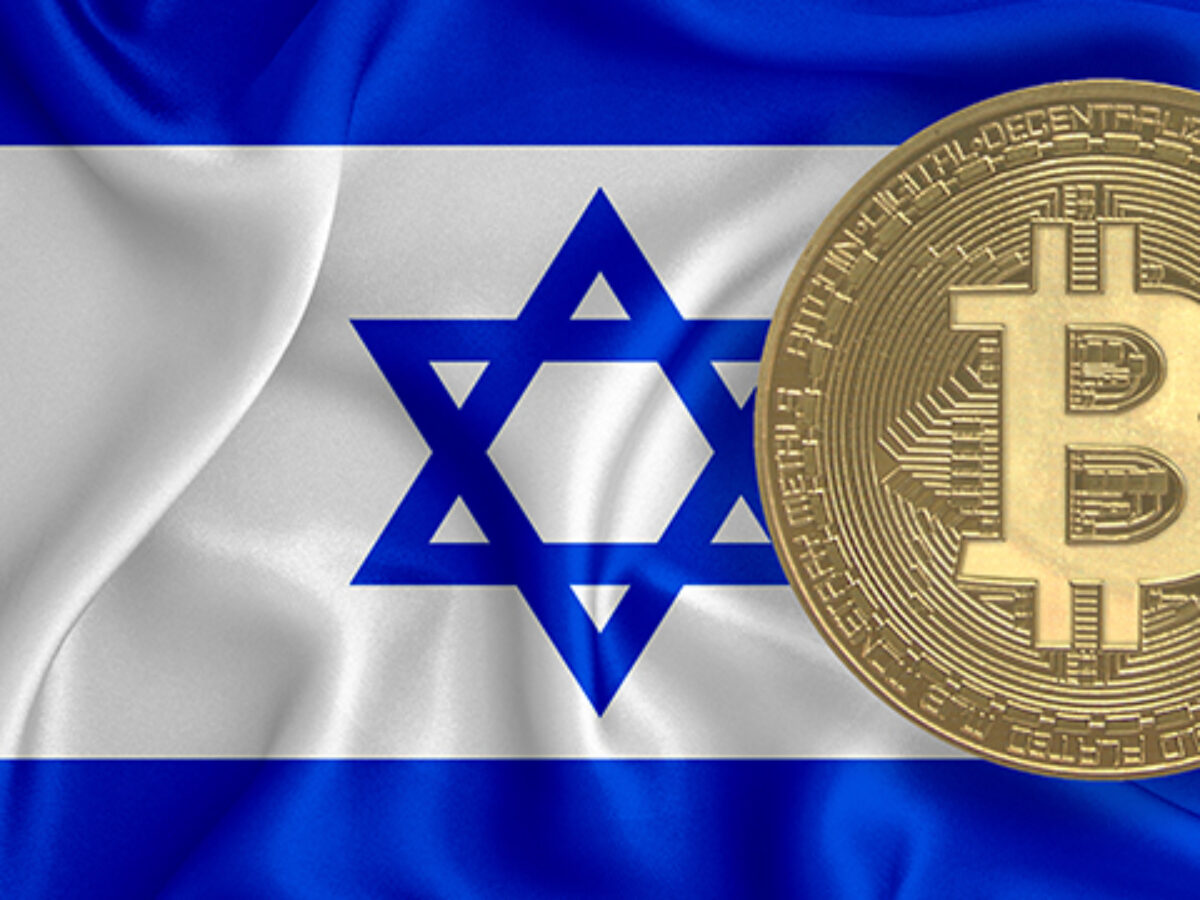
Israel’s Bank Leumi To Start Allowing Crypto Trading

Following a cooperation with blockchain firm Paxos, Israel’s largest bank, Bank Leumi, has announced that it would be the first Israeli bank to permit cryptocurrency trading.

Pepper Invest, Bank Leumi’s digital platform, has secured a deal with Paxos that will allow the bank to allow its clients to purchase, hold, and trade cryptocurrencies, with Bank Leumi anticipated to offer this service to its customers in the near future.

The Israeli bank’s new service is the outcome of a recent collaboration between Leumi group and blockchain infrastructure platform Paxos. Only Bitcoin and Ethereum will be accessible to trade at this early stage, and consumers will not need to download a crypto wallet to transact their trading account at Pepper Invest.

Furthermore, Pepper Invest users will not be obliged to manage their tax under this trading account, since the bank would handle the complexity on their behalf.

According to Bank Leumi’s official statement, the straightforward selling method is a significant innovation in comparison to the present difficulties in converting cryptocurrencies to money available in the current account using the means that are now available.

This new service in Israel gives Israeli banking system customers access to cryptocurrencies in a way that few institutions across the globe have. Leumi will be ready to begin its cryptocurrency trading business as regulatory permission is received.

Uri Natan, CEO of Pepper, stated in a statement that they are proud to be the first in the banking system in Israel, and one of the few in the world, to offer their customers the ability to trade cryptocurrencies in a simple, safe, and reliable manner, without the need to download a wallet or deal with tax authorities.

Categories
Blockchain Gaming News

GameFi PlotX Adds a P2E Feature

PlotX is a long-term X-2-earn GameFi ecosystem that aims to strategically reinvent P2E gaming and user rewards. The project’s goal is to provide P2E inclusion to a diverse variety of gaming fans and gamers. The project offers lowering the barrier to entry with gasless transactions for individuals in order to maximize monetization on the platform for profitability through its unique strategy and concept.

The initiative promises to pave the way for consumers to discover a vast array of earning opportunities in the P2E industry. PlotX is expanding its boundaries beyond prediction markets and into a gamified environment where players from all around the world may optimize their earning potential.

The X-2-Earn GamFi protocol will enable new and interesting methods to produce P2E incentives for users through iconic NFTs and novel play-to-earn mechanisms by expanding its predict2win platform. Users can explore potential beyond simply collecting prizes for correctly predicting cryptocurrency.

PlotX allows gamers and token holders to earn money by staking their PLOT tokens. By staking their $PLOT on the site, they may profit passively without making any predictions. This is one of the ways PlotX is developing a long-term P2E ecosystem that will enable new gaming experiences.

PlotX is fast evolving into a scalable Web 3.0 economy by leveraging the highly scalable Polygon network. By mid-January 2022, the budding blockchain-powered initiative had attracted over 80k participants, expanding at a 144 percent month-on-month rate. PlotX’s quick development appears to be attracting more Web 3.0 users to prediction markets.

The platform includes a solution for automated market building, crypto-asset price forecasts, rewards settlement, automated prediction computation, liquidity mining for any price feed, and the ability to earn rewards on high-yield prediction markets. PlotX also has innovative features for the typical Web 2.0 user who wants to be a part of the burgeoning cryptocurrency business. PlotX simplifies the understanding of DeFi and GameFi for consumers.

This opens the door for anyone to participate in Web 3.0 and explore a rich economy where they may earn up to 400% returns on every contribution. PlotX is well-positioned to welcome more people into the Web 3.0 economy, enabling widespread use and mainstream adoption of blockchain-based games, thanks to its exceptional approach to gaming, forecasts, and P2E monetization.

PlotX has raised $5 million in Pre-Series Round A funding from Hashed, Polygon Studios, Animoca Brands, Alpha Wave Global (previously Falcon Edge), and power angels like Sandeep Nailwal (Co-Founder Polygon), Alan Howard, and others (Co-Founder Brevan Howard Asset Management). Polygon Studios also contributed $2 million to the project.

Previously, in late 2020, the project secured $2.7 million in initial fundraising rounds from reputable players such as NGC Ventures, Brilliance Ventures, Origin Capital, and 3Commas. With $5 million collected, the initiative is preparing to expand its worldwide reach even further.

Categories
Altcoins Blockchain Price Analysis

Cardano (ADA) Forecast 03/25

Cardano has been on a tear recently. The crypto has surpassed other major cryptocurrencies and is still on a strong upswing. Its popularity grew on Thursday as a result of Coinbase’s addition of staking for the crypto currency.

ADA increased by around 18.09 percent to $1.13, a figure not seen in seven weeks. It is now the highest performing asset in the top ten list, with a 40% increase in the previous seven days.

While an overall rebound feeling in the crypto market has led to the ADA price rising, the coin’s gains look to be offset by additional cash streaming into the Cardano ecosystem.

The total value locked (TVL) within the Cardano protocol increased from roughly $130 million at the start of the month to over $421 million (including staked governance tokens) at press time, the greatest amount to date.

Despite Cardano’s explosive expansion this year, the network’s TVL still pales in comparison to those of its main DeFi competitors, such as Ethereum and Solana. According to DeFi Llama, an on-chain statistics platform, the two have a staggering $120.71 billion and $7.3 billion, respectively.

Coinbase, the largest cryptocurrency exchange in the United States, is allowing customers to receive rewards on their Cardano (ADA) assets.

Rupmalini Sahu, senior product manager at the trading platform, announced the addition of ADA to its staking capabilities in a blog post published on March 24. The new staking service allows retail consumers to engage in the Cardano network by staking their crypto assets in return for income.

Sahu added that ADA was chosen because it is presently one of the top ten largest cryptocurrencies on the market, as well as for its “more flexible, sustainable, and scalable” proof-of-stake blockchain design. Cardano, like Ethereum, features smart contracts, which let developers to design their own decentralized apps or mint non-fungible coins (NFTs).

Coinbase is presently giving 3.75 percent payouts for ADA staking, with participants required to retain their tokens for 20 to 25 days. When the term expires, customers can begin getting incentives as frequently as every five days. The return rates are heavily influenced by the quantity of program participants.

Categories
Blockchain News

Global Crypto Market Now At $2 Trillion

Bitcoin (BTC) and the larger crypto market surged on Thursday, as the entire value of digital assets surpassed $2 trillion for the first time in more than three weeks, owing to signals of a dramatic shift in market mood – headed by Goldman Sachs, no less.

According to statistics from Cointelegraph Markets Pro and TradingView, BTC reached an intraday high of $44,253 and gained more than 3% throughout the session. The leading cryptocurrency in terms of market value has already rebounded more than 33% from its January low.

According to Coingecko statistics, the overall crypto market cap has increased by more than 7% since Monday, reaching approximately $2.1 trillion. On CoinMarketCap, the market capitalisation has also surpassed $2 trillion.

While not positive, Bitcoin’s Fear & Greed Index has moved out of “severe fear” and into the fear stage, with a value of 40. The volatility and mood indicator is scaled from 0 to 100, with higher readings indicating a more positive view for BTC.

The apparent reversal in mood in the crypto market comes after months of negative price movement for Bitcoin and altcoins, which caused some investors to speculate about the prospect of a full-fledged bear market. However, in the midst of global upheaval, many of the legacy banking world have seen cryptocurrency as a possible opportunity.

According to Cointelegraph, BlackRock CEO Larry Fink stated that the crisis in Ukraine may compel states to reconsider their currency reliance, potentially opening the way for digital assets.

Crypto has been on Fink’s radar since at least the fourth quarter of 2020. Meanwhile, major investment giant Goldman Sachs appears to have put cryptocurrency on its radar and even changed its website’s homepage to reflect the emergence of digital assets and the metaverse. Goldman referred to these technologies as “megatrends,” and loaded a new “Insights” section of its website with previously issued research on gaming, the metaverse, and Web3.

Goldman Sachs has completed its first over-the-counter crypto options deal with Galaxy Digital. In June 2021, the investment bank introduced its first Bitcoin futures contract for the CME. Finally, Grayscale Investments recently announced the establishment of a new smart contract fund that would allow authorized investors to support Ethereum rivals. The new fund, which has already begun accepting daily subscribers, invests in Cardano (ADA), Solana (SOL), Avalanche (AVAX), Polkadot (DOT), Polygon (MATIC), Algorand (ALGO), and Stellar (XLM).

Categories
Blockchain News

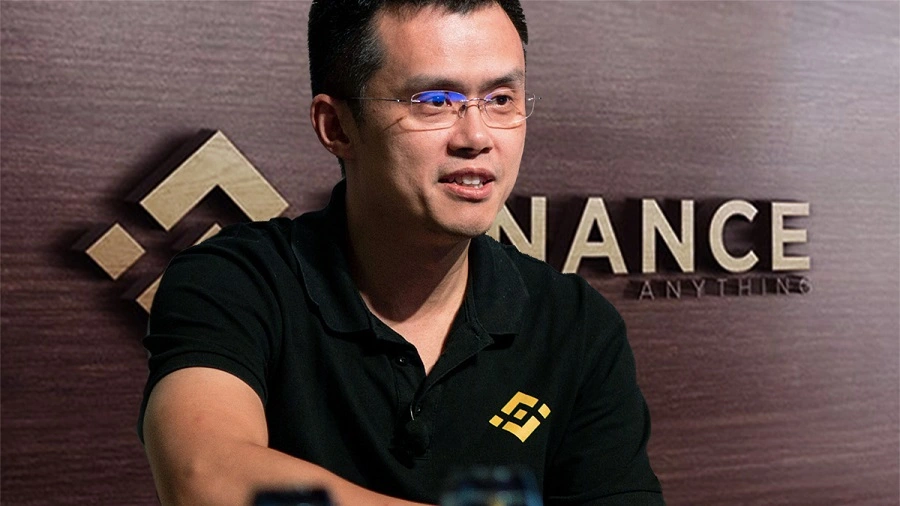
CEO of Binance Changpeng Zhao Has Some Plans For Crypto Evolution

Changpeng Zhao was in Brazil last week, meeting with all of the country’s main stakeholders. Binance is undoubtedly ready to send off some significant pyrotechnics in Brazil. Changpeng Zhao, CEO of the world’s largest cryptocurrency exchange, was in Brazil, South America’s largest country, last week. Zhao used the chance to meet the governors of So Paulo and Rio de Janeiro, as well as to receive a key to the city and gain their support.

Following the conversations with state authorities, CZ attended the ETH Rio conference, where he declared that the exchange has solid intentions to increase its personnel and acquire payment processors and banks in the nation.

CZ used the occasion to inform participants that Binance has recently signed a Memorandum of Understanding to acquire Brazilian securities firm Sim;paul Investimentos. In a statement on the agreement, CZ emphasized that for Binance to achieve its goals, “complete engagement with the local authorities” is required.

He mentioned on Twitter that he had just returned from the ETH Rio conference, in response to the kind reaction he had gotten. The amount of vigor and excitement. Given its population of over 200 million people and sheer size, Brazil appears to be a critical market for Binance. Brazil’s transaction volumes on Binance increased by 125 percent this year compared to 2021.

Following El Salvador’s experiment, Brazil was generally expected to be the next country to accept Bitcoin as legal cash. After the Economic Affairs Committee overwhelmingly adopted the cryptocurrency law, the country erupted in ecstasy.

The bill must still pass through the Senate and Lower Houses before it can be signed into law by the President. The bill’s contents have been praised as a positive step forward for the ecosystem since it clearly specifies what comprises virtual assets and the classification of service providers.

The crypto community is speculating that Binance will open an office in South America, with Brazil being the frontrunner.

Categories
Ethereum

Ethereum Market Cap Today

Ethereum, the second-largest cryptocurrency, has outperformed Bank of America in terms of market value. Despite recent price oscillations in cryptocurrencies in general, Ethereum has risen to $3,043.85 at the time of writing.

The digital coin has also amassed a market valuation of $366.62 billion, ranking it as the world’s 23rd biggest asset. It outperforms Bank of America, which has a market worth of $347.51 billion and is now ranked 27th.

Ethereum’s rapid ascent has also seen it overcome larger corporations like as MasterCard, an American payment services company that presently has a market valuation of $337.12 billion and ranks third.

The cryptocurrency has also surpassed Home Depot, the largest home improvement store in the United States, which has a market worth of $331.07 billion and ranks third. While Ethereum has a large market cap at the moment, Bitcoin, the top cryptocurrency, is not far behind.

Bitcoin now has the ninth greatest market capitalization of $816.04 billion. This puts the trading currency above of prominent corporations like Meta (Facebook), which ranks 12th with a market worth of $610.28 billion. The leading cryptocurrency continues to outperform other corporations like as Visa, Walmart, and Samsung.

The surge in cryptocurrency popularity throughout the world has come at an opportune time, particularly during this period of conflict between Russia and Ukraine. Ukraine, the devastated country, has used cryptocurrency to bolster its economy and help it amid the conflict.

When the battle first broke out, the administration asked for cryptocurrency donations. Individuals, bitcoin exchanges, and even crypto millionaires responded to the call. All of this has contributed to the country raising more than $63.8 million through the contribution of over 120,000 crypto assets.

In the midst of the continuing conflict, the Ukrainian government approved cryptocurrency last week. The administration has stated that it is attempting to change the tax code to accommodate crypto assets. For the people of Ukraine, cryptocurrency has proven to be a lifeline.

Categories
Blockchain

Drake Donates $1 Million in Bitcoin to LeBron Foundation

Drake has vowed to contribute $1 million in Bitcoin to the LeBron James Foundation in collaboration with Stake. Drake’s most recent roulette victories on Stake — his “biggest hit ever” – prompted the contribution. On the same night, Drake also gave $100,000 to a high school basketball player called Michael and his mother.

The rapper documented his strategy and following meeting with LeBron and Michael and shared it on his Instagram account. Both gifts were made at the same restaurant, Harbour 60 in Toronto, Canada.

“As you can see, I was clearly excited. Any time I get blessed like that, I always think it’s luck that needs to be transferred, or it’s good karma that needs to be transferred. I play for fun and I play in the hope that I can spread love, always.”

According to Stake Co-Founder Ed Craven, Stake.com has always been about community. “That extends beyond our players to the general public, particularly those who will benefit the most from acts of kindness and compassion like Drake’s.”

On March 19, LeBron James landed in Canada for a Los Angeles Lakers game versus the Toronto Raptors. The Lakers won the game 128-123 in overtime. LeBron had 36 points, 9 rebounds, and 7 assists in the game.

LeBron James discussed his close bond with rapper Drake in a courtside interview. Drake’s collaboration with Stake.com, a Bitcoin casino and sports betting website, was initially revealed on March 4th of this year. The rapper was already a frequent user of the platform, often publishing his bets and profits on social media.

Since joining the website in late 2021 under the pseudonym “DeepPockets6,” the rapper is said to have wagered over $1 billion.

Furthermore, this isn’t LeBron James’ first foray into cryptocurrencies. On March 10, LeBron filed four trademark applications for his name connected to metaverse and NFTs. In addition, on January 28, Crypto.com announced a collaboration with the LeBron James Foundation to integrate Web3 teaching into its programs.

Categories
Blockchain News

Crypto.com Will Be Sponsoring This Year’s FIFA World Cup

The worldwide governing body of association football, FIFA, said on Tuesday that the cryptocurrency exchange Crypto.com would be an official sponsor of the FIFA World Cup Qatar 2022 competition. According to the release, the digital currency trading platform will activate its official sponsorship in a variety of ways during the tournament.
Crypto.com is continuing its pattern of using sports to promote the business and raise awareness of digital currencies. FIFA announced on March 22 that Crypto.com has been chosen as an official sponsor for this year’s FIFA World Cup. Millions of people across the world tune in to watch the World Cup, which is being held this year in Qatar. The FIFA World Cup Qatar 2022 will begin on November 21 at Al Bayt Stadium in Al Khor.

According to FIFA, Crypto.com will be the official cryptocurrency trading platform sponsor of Qatar 2022, benefiting from enormous branding exposure both within and outside the tournament’s stadiums. FIFA’s chief commercial officer, Kay Madati, stated that the organization is thrilled to have the cryptocurrency exchange sponsor the World Cup in Qatar. Madati went on to say that the platform has already demonstrated a tremendous interest in the realm of sports.

“Crypto.com has already proved a commitment to sponsoring top-tier clubs and leagues, important events, and historic locations all over the globe, and there is no platform bigger, or with a broader reach and cultural influence, than FIFA’s global football platform,” Madati said in a statement.

The platform joins other digital currency companies, such as the crypto asset exchange FTX, in investing heavily in sports sponsorships. Crypto.com announced on Tuesday that it has multiple collaborations with groups in “motor sport, MMA, basketball, and ice hockey, as well as football.”

The exchange secured an agreement with the entertainment firm Ultimate Fighting Championship last summer (UFC). A few months later, Crypto.com acquired the naming rights to the Los Angeles Lakers’ Staples Center, renaming it “Crypto.com Arena.” Crypto.com joined forces with the Angel City Football Club in the end of 2021. (ACFC). According to Kris Marszalek, sponsoring the FIFA World Cup would “raise global exposure of Crypto.com.”

Categories
Bitcoin Blockchain News Regulation

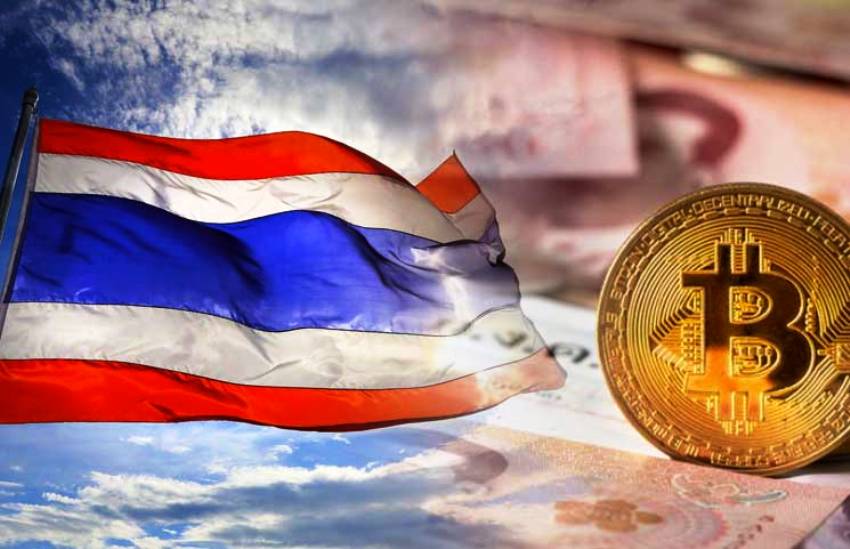
Thailand restricts the use of cryptocurrency as a payment method

Thailand Securities and Exchange Commission announced Wednesday that it has prohibited the use of cryptocurrencies as a payment mechanism, citing the necessity to preserve the country’s economy and financial system as justifications.

Due to their extreme volatility and excessive transaction costs, cryptocurrencies like as bitcoin and Ethereum will no longer be permitted to use to pay for goods and services beginning April 1, 2022, according to the Wednesday announcement.
The approach is consistent with earlier conversations between the Thai Securities and Exchange Commission and the Bank of Thailand (BoT). The duo weighed the benefits and hazards of cryptocurrencies and came to the conclusion that the industry needed some oversight.

By the end of April, crypto exchanges and other crypto-related company owners must cease all ads supporting crypto payments. They must also warn clients against using cryptocurrency for the same purpose. The SEC stated in the statement that the restriction of crypto payments is necessary because they endanger the country’s economy and financial stability.

Using a currency other than the Thai Baht jeopardizes monetary transmission policy. Furthermore, pricing things in cryptocurrency will prevent the BoT from intervening and providing financial assistance in the event of a liquidity crisis in the country. There are also fears that digital assets may be exploited for money laundering or to support terrorism.

Today’s announcement is a significant setback for Thai cryptocurrency investors. Thailand is become one of the world’s top countries in terms of cryptocurrency adoption in recent years. According to a March 4th survey, Thailand is rated eighth in the world in terms of on-chain value received.

Nonetheless, there is a silver lining to the SEC’s new pronouncement. While Thai regulators crack down on cryptocurrency, the SEC reiterated that both it and the central bank recognize the benefits of different technologies underlying digital assets such as blockchain and highlight and promote the use of technology to foster innovation.

The restriction only applies to crypto payments, so users may continue to keep and sell digital assets as they like. Thailand has relaxed tax restrictions for cryptocurrency trading until 2023 in an effort to grow the industry.

Categories
Bitcoin Regulation

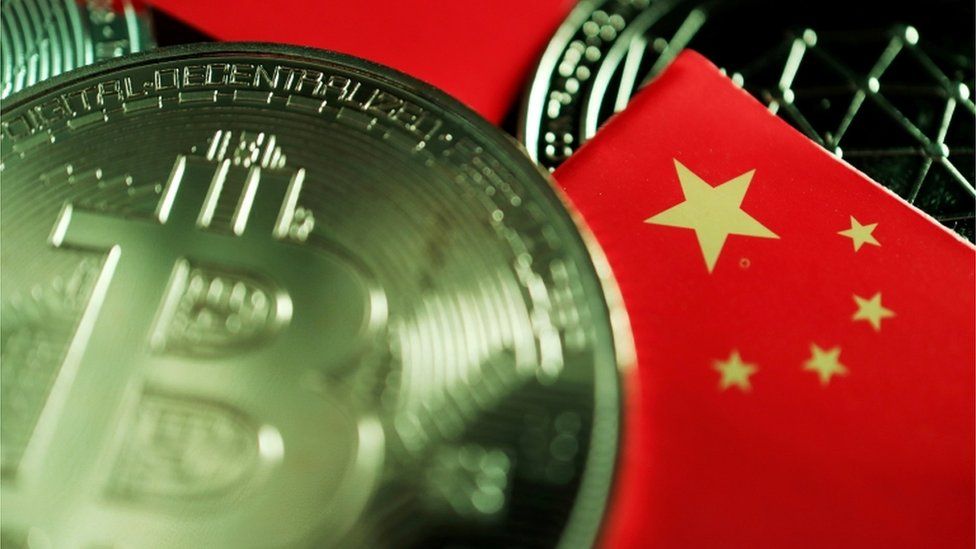
More On China Tussle With Bitcoin

China was famous for having the highest hash rates for Bitcoin mining, accounting for up to 60% of worldwide hash rates. The nation started a big crackdown in the summer of 2021, but a District court rules that mining is not unlawful.

The Chongming District People’s Court in Shanghai ruled over a case in which the defendant was accused with cryptocurrency mining. According to court records, the defendant known as Zhu unlawfully mined Ether on 25 machines by using his position as a company’s network maintenance worker.

According to the prosecution, Zhu installed a graphics card, mining, and remotely operated software, which he used to mine Ether illegally, earning him around 16,000 yuan. They also claimed in court that Zhu did not act alone, but had an accomplice who worked with him to carry out the operation.

Presiding Judge Yang Qingtang convened a collegial panel to investigate the case’s merits in line with the law. In the end, the defendant was sentenced to 11 months in jail and an RMB 5,000 fine, but not for the bitcoin mining accusations. Rather, he was charged with illegally managing a computer information system.

Qingtang extolled the virtues of cryptocurrency mining as an activity that has the potential to improve a country’s economy. However, the judge added that, while not illegal, the activity is incompatible with the current climate of energy conservation and carbon emission reduction. He went on to say that the conviction was due to a violation of the law by unlawfully managing computer systems.

Last year, the Chinese government’s senior brass, including 10 Ministries and Commissions, released the Notice on Rectifying “Virtual Currency Mining Activities,” emphasizing the massive amount of energy needed by cryptocurrency mining operations. Their resolution said that it increased carbon emissions and contributed a negligible amount to the economy.

“Virtual currency mining consumes a lot of energy and emits a lot of CO2, and it doesn’t help industry growth or technical advancement,” said Meng Wei, a spokeswoman for China’s National Development and Reform Commission. “Blind and chaotic growth has a significant negative impact on encouraging high-quality economic and social development, energy conservation, and emissions reduction.”

The ramifications of this resolution were dire for mining businesses in China, as a full-fledged government crackdown ensued. Miners fled the nation, driving Bitcoin hash rates to new lows. As hashrates fell, Bitcoin and the entire cryptocurrency market felt the shockwaves as prices plummeted in the aftermath of the crackdown.

Categories
Blockchain News

Coincheck on Nasdaq Through $1.25 Billion SPAC Merger

Coincheck, a Japanese cryptocurrency and digital asset exchange, is slated to combine with Thunder Bridge Capital Partners IV in a $1.25 billion transaction to go public on the Nasdaq, marking a rare blank-check firm deal in the turbulent market of 2022.

Thunder Bridge, a special-purpose acquisition company, or SPAC, said on Tuesday that it has agreed to merge with Coincheck and list on the Nasdaq Global Select Market by the end of 2022, subject to shareholder and regulatory clearance.

Coincheck is anticipated to go public under the ticker symbol “CNCK.” Thunder Bridge Capital Partners IV (ticker: THCP) shares rose 1.4 percent in early trade in the United States. Monex Group (8698.Japan), Coincheck’s parent firm, saw its shares increase 2.6 percent in Tokyo trade before the acquisition was announced in a news release.

Following the deal, which Thunder Bridge estimated to be worth $1.25 billion, Monex would hold 82 percent of the merged firm, which will be overseen by Oki Matsumoto as executive chair and Thunder Bridge CEO Gary Simanson. Thunder Bridge’s cash holdings of $237 million will also be transferred to the merged business as part of the agreement.

Coincheck, based in Tokyo, is one of Japan’s leading digital asset markets and is regulated by the country’s Financial Services Agency. According to Thunder Bridge, Coincheck has 1.5 million verified consumers and administers a platform with the widest and most extensive selection of tokens accessible in Japan.

“We are excited to partner with Monex to bring Coincheck into the U.S. public markets to facilitate its next stage of growth, and to further unlock the crypto economy for customers and institutions in Japan. We are also excited to work with Oki and his team to build a global digital platform under the Coincheck brand.”

Thunder Bridge and Coincheck together constitute an unusual SPAC deal this year. This sort of merger, in which a publicly traded blank-check company merges with an existing private corporation, exploded in popularity in 2020 but has completely faded by 2022.

Categories
Altcoins Regulation

More on SEC vs. Ripple Case

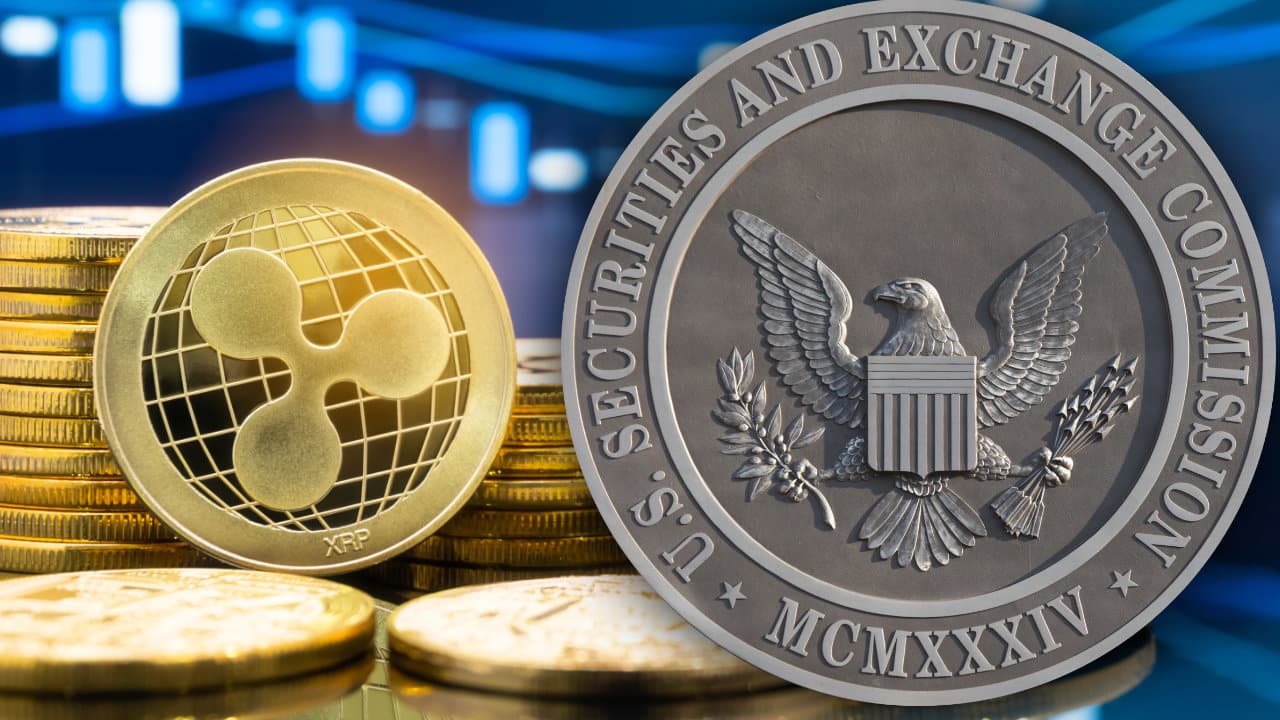
The US Securities and Exchange Commission is seeking to postpone the Ripple case even more. The regulator filed yet another application, asking a brief time extension from the federal judge in the judicial battle that has been ongoing for more than a year. Surprisingly, the SEC’s latest letter included a footnote saying that Ripple proposed filing initial summary judgment papers as early as mid-May.

Trouble in Ripple paradise began in December 2020, when the SEC filed a lawsuit against the San Francisco-based blockchain payments firm and two of its senior executives. The agency said that they sold XRP illegally through an unregistered securities offering for eight years. Since then, Ripple and the SEC have been fighting in court, with neither party willing to settle.

The SEC recently asked a one-week delay to inform the court of its stance on any new discovery.

The individual defendants in the lawsuit are seeking to undertake discovery after the judge delivers her findings on the summary judgment applications. They have not indicated the scope of the investigation, which is why the SEC is requesting additional time to determine if it is warranted. The SEC contends that Ripple’s proposed briefing schedule is premature.

However, Ripple claims that the Securities and Exchange Commission has delayed the conclusion of the erroneous case for far too long.

The business is vehemently opposed to the extension of the March 23 deadline to file a motion concerning any more discovery, noting that nothing should further delay Ripple from moving for summary judgment and establishing to the Court that XRP is not a security.

While Ripple wishes to speed the lawsuit process, the SEC appears hell-bent on postponing the case as it nears its conclusion. Overall, Ripple has had tremendous success in recent months, with optimistic XRP sentiments continuing to rise. Recently, US District Judge Analisa Torres dismissed the SEC’s attempt to prevent Ripple from using its essential fair notice defense. According to reports, Ripple CEO Brad Garlinghouse was happy with the judgment.

He feels that the massive victory was not only for XRP, but for the whole cryptocurrency sector. Garlinghouse is likewise convinced that the charges against him and executive chairman Chris Larsen will be dropped.

It remains to be seen if these positive factors will allow XRP to reclaim its prior all-time high. At press time, the Ripple-affiliated cryptocurrency was trading at roughly $0.8493, representing a 4.02 percent rise in value over the previous day.

Categories
Ethereum Price Analysis

Ethereum (ETH) Forecast 03/22

At the time of writing, Ethereum had flipped the $3,000 barrier level for the first time since March 3. Last week, we witnessed numerous critical level efforts fail. Following a five-day spike that saw the second largest token earn more than 17 percent, the largest alt surged as high as $2, 988 in the last test.

The coin’s victory above the aforementioned level represents a continuation of that upswing, as the bulls rallied it. It is unsurprising given that a prior study revealed that both MACD lines are rising and will soon leave the bearish zone. Furthermore, the mood in the market remained fluid, with the bulls edging — suggesting a likely retest of the crucial barrier.

However, ETH is not immune to the sub-$3,000 price range. The present price of ether remains around $3k, with no movement to the safe side. This is evident in the Relative Strength Index (RSI), which has remained constant at 62. Previously, the EIP-1559 was seen as a critical improvement to the Ethereum ecosystem since it sought to introduce predictability and stability in transaction costs. Proponents say that the merger will put Ethereum under deflationary pressure.

Because burn decreases the overall supply of Ethereum, it may have a favorable impact on the price, spurring an altcoin surge. Analysts have assessed the Ethereum price movement and forecast a trend reversal in the cryptocurrency. Michael van de Poppe, a crypto analyst and trader, believes the price of Ethereum might reach $3,000 in the near future.

According to FXStreet experts, a closing over $3,033 in Ethereum might result in an optimal Ichimoku bullish breakout for the first time since October 2021. Analysts foresee a 20% increase in the price of Ethereum.

Categories
Blockchain News

Founder of DeFiance Capital Lost $1.6 Million to Hackers

Arthur Cheong the founder of large crypto investment firm DeFiance Capital, was hacked on one of his hot wallets, resulting in the loss of more than $1.6 million in nonfungible tokens (NFTs) and bitcoin.

The crypto community has rallied to his assistance to help him recover the stolen stuff after he requested people to blacklist the hacker’s wallet. Several people on Twitter have tried to figure out how the attack happened and where the hacker got access to his wallets.

Cheong tweeted: “Well, this hit me hard but if I got exploited as a fairly sophisticated 5 years crypto user (DeFi user, password manager, mostly hardware wallet), I’m not sure how I can persuade most normal people to put a substantial part of their net worth on chain anymore.”

The venture investor went on to say that the most likely underlying cause was a spear-phishing email purporting to be from one of DeFiance Capital’s portfolio businesses. The attacker reportedly acquired access to the private key of one of Cheong’s hot wallets after opening the file. His profile reveals that he had previously been a victim of rug pulls three times, which most likely influenced his feelings for his fellow victim.

A rug pull occurs when a crypto or NFT project abruptly ceases operations and the value of their token or NFT plummets without warning. Rug pulls are almost often evidence of a hoax.

In total, Arthur appears to have misplaced 78 distinct NFTs from five collections, the majority of which were “Azukis.” In addition, he misplaced 68 wrapped Ether (wETH), 4,349 staked DYDX (stkDYDX), and 1,578 LooksRare (LOOKS) tokens. At around 12:30 a.m. UTC, the hacker began shifting assets and then immediately put all of the NFTs up for auction on the OpenSea NFT marketplace. At the time of writing, the hacker’s wallet had 545 ETH, which was worth around $1.6 million.

Etherscan, a cryptocurrency tracking website, has already identified the in question crypto address as the “Arthur0x Wallet Hacker.” At the time of writing, the address was holding more than 585 Ethereum.

Even if Arthur had utilized a hardware wallet, sometimes known as a cold wallet, he might not have been safe from this assault. A hardware wallet, unlike a hot wallet, is not always connected to the network. This function can protect one’s private key and seed phrase from prying eyes.

However, Arthur believes that the security breach occurred as a result of an on-chain transaction he conducted, which may have also exposed the seed phrase or private key from a hardware wallet.

A hot crypto wallet is one that is always linked to the internet, making it particularly vulnerable to assaults. They are useful for moving payments, but as today’s events show, they are not suitable for securely holding significant quantities of cryptocurrency.

Cold crypto wallets, on the other hand, are wallets that are not linked to the internet; they include paper wallets and hardware wallets, which are physical devices that resemble USB sticks and operate offline. These are not hack-proof, but they are more secure than hot wallets.

Categories
Bitcoin Blockchain News

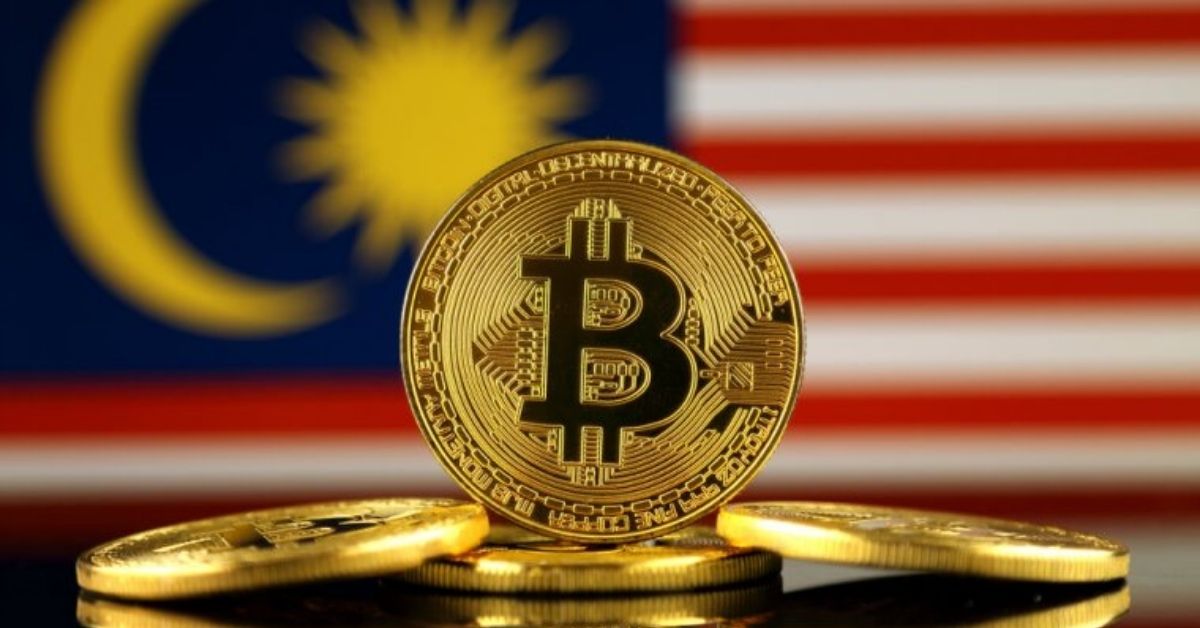
Malaysia Ministry of Communication Thoughts on Bitcoin

Crypto, according to the Malaysia deputy minister of communications and multimedia, represents the “future of money.”

Malaysia Ministry of Communication and Multimedia, through its deputy, Datuk Zahidi Zainul, has requested the government to recognize crypto assets such as bitcoin as legal cash.

Zainul stated that legalizing this asset class will encourage its younger inhabitants to become more interested in cryptocurrency trading, particularly non-fungible tokens (NFTs). The deputy minister also stated that the government would form several committees to encourage young engagement in cryptocurrency because it is the future of finance.

“We hope the government can allow this. We are trying to see how we can legalize this so that we can develop youth participation in crypto and assist them.”

The country’s central bank and securities commission are in charge of cryptocurrencies.

The Central Bank of Malaysia’s president, Nor Shamsiah Mohd Yunus, stated that the country will provide additional digital currency choices, including CBDC, in the future years to help the country’s financial industry leverage on emerging technology.

The BNM Governor indicated in an email conversation with Bloomberg:

“We are going one step further by experimenting with central bank digital currencies (CBDCs) over the next few years. There’s no better way to keep pace with something new than to try it ourselves,” Yunus said in an email interview with Bloomberg.

Since El Salvador became the world’s first government to legally recognize Bitcoin as legal cash, additional countries have been increasingly open to the concept of legalizing the asset class.

For example, Ukrainian President Volodymyr Zelenskyy recently signed into law a new measure to legalize cryptocurrency activity in the nation. Although Ukraine did not designate the commodity legal tender in the same way as El Salvador did, the new legislation makes it permissible for individuals and businesses to engage in crypto activities.

Similarly, Russia said in February that Bitcoin and other cryptocurrencies will be treated as legal tender. In other words, the nation will regard crypto assets as currency analogs rather than digital financial assets (DFA).

Categories
Altcoins Blockchain News

Tether (USDT) Daily Unique Addresses Reach Record Highs

A major trading indicator for leading stablecoin Tether (USDT) reached its highest level this year, signaling increased demand. Based on USDT’s position as a trade facilitator and a safe haven, the statistics might suggest two potential scenarios for the crypto sector.

According to statistics from crypto research firm Santiment, daily active addresses, or the number of unique users that traded the currency in a single day, reached over 83,000 on Thursday and 74,000 on Saturday, the former being the highest level since early December.

According to the statistics, multiple separate dealers appeared to be amassing the world’s largest stablecoin. Tether’s good, if limited, performance last week suggests that people are interested in the coin.

However, rising USDT accumulation has a number of ramifications for the cryptocurrency market. Given its near 1:1 peg to the US dollar, USDT is often utilized in the trading of other crypto tokens. Traders frequently swap their dollars for the token before trading it for other cryptocurrencies.

A high level of accumulation might indicate that the market is preparing for more trading action, implying greater volatility in the short future. A surge in USDT trade might ultimately spread to other coins. On the other hand, increased Tether demand might indicate that safe-haven investors are flocking to USDT.

USDT’s 1:1 peg to the dollar, along with its massive reserves, elevates it to the top of the crypto safe haven list.

Volumes of the token have increased this year, owing mostly to the Russia-Ukraine crisis, which has increased volatility and forced traders towards safe havens.

The token’s accumulation today might also signal that traders are bracing for greater market headwinds and, as a result, are pouring into safer places.

Sentiment is already strained as a result of the Russia-Ukraine war and its economic consequences. Traders must also contend with rising prices and the Federal Reserve’s aggressive measures this year.

The Bitcoin Fear and Greed Index was at fear, and it has been there since February. All of this negative attitude might be a driving factor in Tether demand.

Categories
Bitcoin Blockchain News

Asia’s First Ever ETF Debuting in India

Since November 2021, India investors have been able to take positions in the cryptocurrency market without having to ‘put skin in the game,’ which means that they can actively participate in the market without holding tokens.

On Wall Street, the term “skin in the game” refers to tangible risk exposure; the direct acquisition of a financial asset that you intend to hold without the use of middlemen.

Despite the fact that the majority of cryptocurrency trading activity is generated by active speculators who are constantly looking for opportunities to profit from market fluctuations, the majority of them have skin in the game because they use fiat currencies to acquire digital tokens, which are then exchanged back to fiat when it is time to take profits.

Bitcoin investors who hold onto their tokens for an extended period of time have skin in the game, but they are also vulnerable to market volatility and at the mercy of currency conversion rates.

Indian investors are no longer required to put money at risk in order to profit from cryptocurrency markets. Investors in the Invesco CoinShares Global Blockchain exchange-traded fund (ETF) can now dip their toes in the crypto waters without worrying about whether their tokens will hold up through downturn markets or periods of excessive volatility, thanks to a Securities and Exchange Board approval.

Investing in this ETF, which is openly traded on the National Stock Exchange, does not imply owning any digital currencies; instead, the fund’s managers invest in companies committed to cryptocurrency and blockchain research.

If you are already familiar with the operation of ETFs, the only thing left for you to do before purchasing shares of the Global Blockchain ETF is to review its prospectus and decide whether this is a trading instrument you would like to have in your portfolio.

If you are unfamiliar with ETFs, the first thing you should know is that they are similar to mutual funds in appearance but not in construction.

Mutual funds invest a predetermined amount in a basket of stocks whose value fluctuates in the market, whereas ETFs take positions in securities listed on certain stock exchanges using a composite tracking method.

ETF shares behave similarly to equity instruments in that they can be bought and sold just like business stock.

The Global Blockchain ETF, for example, is designed to track the shares of significant blockchain economy companies such as MicroStrategy and Coinbase. You could easily replicate Invesco’s portfolio by studying its prospectus, but the management of funds and assets would be totally up to you.

Although this ETF does not technically provide much direct access to cryptocurrencies, SEB regulators in India are already evaluating applications for new ETFs based on Bitcoin and Ether futures that would be listed on the India INX trading platform, bringing investors a little closer to actual tokens without actually holding or managing them as currency pairs.

Categories
News NFT

Cheil, a subsidiary of Samsung, Enters the NFT Market

The South Korean Non-Fungible Token (NFT) scene is set to expand much further. Cheil Worldwide, a marketing agency within the Samsung corporation, has announced its desire to be the first advertising organization to join the NFT industry.

According to ChozunBiz, a South Korean news outlet, the advertising firm wants to not only issue NFTs but also to develop a marketplace for trading and minting digital assets.

Cheil is also interested in collaborating with the country’s thriving entertainment industry. It intends to promote intellectual property from K-Drama, music, performances, exhibitions, and games in its marketplace as NFTs. The agreement will considerably benefit from an MOU struck with Studio Dragons, one of the country’s hottest entertainment firms at the moment.

Cheil Worldwide has set a goal of expanding its digital business by 2022, according to CEO and President Jeong-geun Yoo. The NFT business and the creation of metaverse content are on the agenda for the year. Yoo stated at a recent general shareholders’ meeting:

As marketing channels such as metaverse and live commerce have diversified due to the recent corona pandemic (global pandemic), the importance of tech-based content has greatly increased.”

He also stated that entering the NFT industry had the potential to yield practical outcomes. He also stated that entering the NFT sector has the potential to provide the organization with long-term viability even when demand for other traditional marketing media declines.

The subsidiary of Samsung is following in the footsteps of its parent firm. Samsung has been promoting the use of NFTs. Earlier this year, the business unveiled a series of smart TVs that can be used to view and trade NFTs.

According to certain estimations, the Asian continent has not been left out of the NFT market’s above 200 percent increase. Chainalysis, a crypto market and blockchain intelligence organization, reported that the combined regions of Central, Southern, and Eastern Asia account for around 37% of global traffic to the NFT marketplace, OpenSea.

According to some observers, Asia’s interest in NFTs will only grow. This is the view of Yahudah Petscher, the NFT relations strategist at NFT data aggregator CryptoSlam, who anticipates NFT transaction volumes on the continent grow more than 100x.

Categories
Blockchain Ethereum News

Vitalik Buterin Ignores Critics’ Comments About His Appearance

Since Time Magazine released its most recent profile of Ethereum’s co-inventor, Vitalik Buterin, he has become the brunt of jokes. The stinging accusations have done little to damper the Russian-Canadian computer programmer’s spirits.

TIME released an article titled “The Man Behind Ethereum Is Concerned About Crypto’s Future” on March 18th, in which Buterin highlighted his fears about the network’s future. Since its publication, a diverse group of Twitter users has spread the post while mocking Buterin’s appearance.

“I have never seen a face more deserving of being shoved into a locker in my entire life,” read one tweet while another read, “how is it possible to be this rich and still ugly omg get a hair transplant or botox a new wardrobe SOMETHING”.  Others compared him to Tom Brady on dog food as the debate shifted away from cryptocurrency’s physical challenges.

“The quote tweets on the new time article about me are truly amazing. These are barely cherry-picked, it’s pretty much one piece of awesome after another. Highly recommend scrolling.” He went on to say that he didn’t know who Tom Brady was but assumed he was the star from Mission Impossible.

Charles Hoskinson, the co-founder of Cardano and Ethereum, was eager to offer Buterin some advice. “Don’t worry, it gets easier every day dealing with the critics.” Hoskinson has faced some criticism, most notably for the uncertainty surrounding his Ph.D. and Cardano’s slow development speed.

The 27-year-old gave more than a billion Shiba Inu to India’s Covid Relief Fund and other organizations. Buterin, who has been included in both Forbes 30 under 30 and Forbes 40 under 40, has emerged as one of the most powerful voices in the crypto community.

Buterin highlighted concerns in the TIME essay that crypto has a lot of dystopian potential if applied incorrectly. He expressed concern about rising gas prices, overeager displays, and the extravagant display of riches that has become synonymous with cryptocurrencies.

Categories
Ethereum

Ethereum balances on cryptocurrency exchanges at their lowest levels

The amount of Ethereum native token, ETH, held by crypto exchanges has dropped to its lowest level since September 2018, indicating traders’ intent to hold the tokens in anticipation of a price rally in 2022.

According to Glassnode data, nearly 550,000 ETH (worth approximately $1.61 billion) have left centralized trading platforms this year. The massive outflow has reduced the exchanges’ net-Ether balance to 21.72 million ETH, down from 31.68 million ETH in June 2020.

Interestingly, over 30% of all Ether withdrawals from exchanges seen in 2022 appeared earlier this week, according to data from IntoTheBlock. In particular, over 180,000 ETH left crypto trading platforms on March 15, bringing the weekly outflow’s value to slightly more than $500 million as of March 18.

According to Chainalysis data, Ether tokens could have left exchanges at an average of about 120,000 units per day this week, indicating a bullish signal. IntoTheBlock shared a similar bullish outlook, citing a fractal from October 2021 in which the Ether price rose by 15% ten days after the Ethereum network detected massive ETH withdrawals from centralized crypto exchanges.

According to IntoTheBlock, the increase in Ether withdrawals from exchanges this week coincided with approximately 190,000 ETH moving into Lido’s “stETH liquid stakin” pools. To summarize, Lido is a noncustodial staking service that helps users overcome the challenges of staking on the Ethereum 2.0 Beacon Chain, such as the requirement of staking a minimum of 32 ETH or its multiples.

Furthermore, Lido proposes that the capital efficiency problem be solved by issuing stETH, a tokenized version of staked ETH.

Over the last 30 days, Ether holders have invested over 1 million ETH in the Ethereum 2.0 contract. And, as the protocol prepares to transition completely to proof-of-stake (PoS) in the summer — following its “Merge” earlier this week on the Kiln testnet — the likelihood of more Ether tokens leaving active supply has increased.

The optimism surrounding Ethereum’s transition to proof-of-stake has caused Ether to rebound this week. The price of ETH has risen by more than 17% week to date, reaching nearly $3,000. Surprisingly, the upward retracement began at a technical level, with rising trendline support, which has a recent history of limiting Ether’s bearish outlooks.

Ether’s gains could be limited by another technical level, this time a falling trendline resistance that has also played a role in limiting its upside attempts since January 2022.

These trendlines appear to have formed a continuation pattern known as a symmetrical triangle, indicating that Ether will most likely continue in the same direction as before. For the time being, a pullback from the triangle’s resistance trendline could send ETH back toward the triangle’s support trendline.

Categories
Altcoins Price Analysis

Shiba Inu (SHIB) Forecast 03/20

Shiba Inu has had a somewhat melancholy ride since it first appeared on the crypto world in August 2020. The crypto asset that was labeled as a ‘joke coin,’ along with an unnamed developer, quickly shed that label and stormed the crypto market.

SHIB was created to dethrone Dogecoin and was even dubbed the “Dogecoin Killer.” Shiba Inu exceeded DOGE’s market capitalization on October 27, 2021, largely to market commentators, analysts, and traders warming up to the crypto asset, sending its price skyrocketing.

Although the reasoning behind its price increase remained unknown, market analysts ascribed it to speculation rather than technical changes.

SHIB supporters, dubbed the ‘Shib Army,’ tirelessly marketed the coin on social media, with an occasional statement from billionaire investor and SpaceX CEO Elon Musk throwing the community into a frenzy.

Some market observers also attributed the coin’s ascent to the creation of the decentralized exchange ShibaSwap, which prompted many supporters to hold onto their hoard for an extended amount of time in the hope of reaping exceptional returns.

Shiba Inu’s popularity would expand further when the coin was listed on most exchanges in September 2021, prompting a petition to ask Robinhood to do the same.

The price of the digital coin continued to rise the following month, when Elon Musk tweeted a tweet with an image of the Shiba Inu puppy on his Twitter account, generating a 600 percent spike in value.

Shiba Inu, on the other hand, was not immune to the high market volatility and soon found itself in the red.

The excitement around Shiba Inu has subsided, but the coin appears to be making a comeback this year. Despite the fact that SHIB has lost about two-thirds of its value since October 2021, many happenings surrounding it have piqued the curiosity of supporters once more.

ShibaSwap 2.0, the proposed new version of Shiba Inu’s decentralized crypto exchange, would contain a feature that allows the burning of SHIB tokens, reducing its circulating quantity and, perhaps, boosting values, according to a major member of the Shiba Inu team known as ‘Archangel.’

Although ShibaSwap 2.0 is still in the works and no precise launch date has been revealed, many market observers expect it will be available before the third quarter of the year, with the burning process tipped to be a major stimulus for the coin’s growth.

Categories
Bitcoin Blockchain Ethereum Opinion Price Analysis

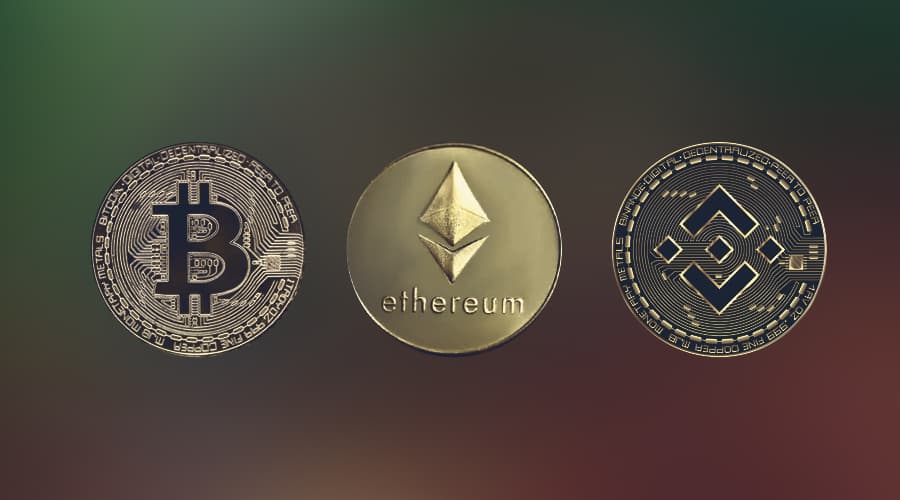
Bitcoin, Ethereum, BNB Forecast 03/20

The last six days appear to be the beginning of a new altseason. Many people were ecstatic to see that many projects had made significant progress. This is reflected in the overall crypto market, which has risen by nearly 9% in the last six days. It began the week worth $1.72 trillion but is now worth $1.87 trillion.

The sector has broken a two-week trend in which it opened and closed an intraweek session at the same valuation. Despite the rise in the prices of most altcoins, general market sentiment has not risen significantly. After a brief overview of the industry, let’s take a look at how some Bitcoin, Ethereum, and BNB performed this week.

The previous intraweek session ended with no discernible increase. Bitcoin began at $38,404 and climbed as high as $42,591 before closing at $37,790. Unfortunately, Bitcoin remains in the $37k – $42k range.

This is especially true given that the top coin has been unable to reach $43k after several attempts above $42,000 in the last six days. It began the current week at $37,763 and has increased by nearly 5% since the first day.

On Tuesday, BTC retraced and failed to close in on the greens, resulting in lower trading volume and increased selling pressure. On the third day, Bitcoin saw a lot of trading, dipping to a low of $38,865 and reaching a high of $41,693.

The largest cryptocurrency, on the other hand, is currently experiencing its largest correction this week. As of the time of writing, it was down by 3%. The on-chain data is consistent with the most recent movement in BTC.

It is printing more bearish than bullish action. Nonetheless, we observed that transactions worth more than $100,000 exceeded $153 billion in the last six days (a slight decrease from the previous six days).

Ethereum reached a high of $2,779 and a low of $2,445. The coin saw a lot of trading activity during that time, but it didn’t record any significant gains or losses at the end of that session.

The failure of ETH to emerge from the previous seven-day period with any discernible growth is the result of nearly equal amounts of both opposing influences. Over the last six days, the second-largest cryptocurrency by market cap has experienced more bullish action than bearish.

Starting the week at $2,516, the largest alt saw a significant boost and was off to a solid start. Following that strong start, the asset remained bullish throughout the week, experiencing uptrends for the majority of the time.

Tuesday witnessed only minor improvements compared to Monday, although it concluded with a green candle, indicating a small increase. On Wednesday, the digital asset saw the greatest increase, rising about 6%.

The second-largest coin, like Bitcoin, showed a bullish divergence on the Moving Average Convergence Divergence (MACD) four days ago, signaling the start of the rise. The asset has moved above its Displaced Moving Average (DMA) and is now above it.

In the end, ethereum gained about 15% in the last six days. Despite optimistic signals from numerous indicators, the Relative Strength Index (RSI) is falling following a more than four-day rise due to a reduction in demand concentration.

Over the weekend, BNB returned to its previous pattern of retracement. The candle for the current intraday session is red, indicating that the asset is down a few percent.

Without a doubt, BNB saw larger price rises than the prior year. Like the previous project, it had a bullish divergence on the Moving Average Convergence Divergence (MACD) four days ago, signaling the beginning of the rise.

It also gained stability above its DMA and pivot point. With a minor uptick at the start of the week, the fourth-largest cryptocurrency got off to a solid start. Apart from Tuesday, the coin has been rising for the majority of the current intraweek session.

BNB soared as high as $406, gaining stability above $400 but only for a short while before retracing below it. Unfortunately, the pullback has resulted in a downturn in the RSI, which is currently at 52.

Categories
Altcoins Blockchain News

Uniswap, Solana, and Cardano networks are rapidly growing

Uniswap, Solana, and Cardano continue to be among the top-performing blockchain networks. Uniswap (UNI), an Ethereum-based decentralized network protocol, has dominated blockchain platforms with the most development activity in the last 30 days.

According to Santiment Data, the Uniswap protocol’s GitHub repository has received 1,070 notable code submissions per day from developers. Uniswap outnumbered the previous leader, Solana, who received 418 submissions. Meanwhile, Cardano, Polkadot, and Kusama rounded out the top five blockchains in terms of developer activity. According to data from the crypto social sentiments tracker, the blockchains saw 386, 381, and 381 daily code submissions, respectively.

The brisk development activity among blockchain platforms is remarkable, especially given the recent market volatility. In the time under consideration, the platforms’ tokens have also generated positive returns.

Uniswap is up 10.5 percent on the 7-day chart, Solana is up 11.48 percent, and Cardano is up 9.33 percent. Polkadot and Kusama are also up 5.16 percent and 17.1 percent in price, respectively.

Uniswap has not only outperformed in terms of development activity. The automatic market maker (AMM) DEX has the second-highest total value locked (TVL) of any decentralized exchange at the moment. According to DefiLlama, a DeFi data aggregator, Uniswap has a TVL of $7.53 billion. Among DEXs, Uniswap is only surpassed by Curve (CRV).

Similarly, Uniswap is ranked seventh on all DeFi platforms by TVL. UNI, the protocol’s governance token, has also been performing well in the market. UNI is currently trading at around $9.29, up 6.79 percent in the last 24 hours and 10.93 percent in the last seven days. The UNI token is ranked 24th in the crypto market, with a market cap of more than $6.6 billion.

Uniswap’s success is undeniably linked to Ethereum’s growing adoption and popularity. The Ethereum blockchain, dubbed the “world computer,” has lived up to its moniker. It continues to outperform other blockchains in terms of total value locked in DeFi.

Ethereum has a TVL of $116.3 billion, giving it a 55.14 percent market share. The blockchain also has the most extensive DeFi ecosystem, hosting 567 top protocols.

Categories
Blockchain News Regulation

Binance will shut down operations in Ontario

Binance confirmed in a Wednesday undertaking to the Ontario Securities Commission, or OSC, in Canada that it will cease activities involving Ontario residents. Binance will also stop opening new Ontario accounts and will offer fee waivers and reimbursements to certain Ontario users under the supervision of a third party, according to the company.

The agreement appears to be the end of a dispute that began in June when Binance announced that it would no longer service Ontario accounts and advised customers to close out active positions by the end of the year. The OSC introduced a new prospectus and registration requirements for cryptocurrency exchanges a month before Binance’s announcement.

Binance informed investors in December that it was permitted to continue operations in the province despite the lack of registration. That claim was quickly debunked by the OSC. Binance admitted in its undertaking submitted on Wednesday that its statement was false. The exchange also admitted that it informed Ontario investors in a January 1 email that trading and onboarding were restricted, but that they could continue to trade as usual. Ontario users were given 90 days to close out their positions in the project.

The OCS stated that it reserves the right to take enforcement action against Binance for any past, present, or future violations of Ontario securities law that are not the result of the events described in the undertaking.

The Ontario regulator is notable for its tough stance on cryptocurrency exchanges. It recently took action against several former province-based exchanges, including Bitfinex, OKEx, Bybit, KuCoin, and Polo Digital Assets. Bitbuy, Coinberry, CoinSmart, Fidelity Digital Assets, and Wealthsimple were the only exchanges permitted to operate in Ontario as of late January. Tether (USDT) was also banned by the OSC in August.

Binance will continue to operate in other provinces of Canada. The Alberta Securities Commission is the country’s primary regulator of the exchange.

Categories
Altcoins Blockchain Interview News

Overview of Vitalik Buterin’s Time Interview

This month, Ethereum co-founder Vitalik Buterin graced the front page of Time Magazine following an interview with the publication about the potential dangers of the industry he helped to create.

During the 80-minute interview, Buterin discussed the “dystopian potential” of digital assets if they are not implemented correctly. Overzealous investors, high transaction fees, and public displays of wealth by those claiming to have made a fortune trading crypto and nonfungible tokens (NFTs) are among his top concerns.

Although Buterin has high hopes for Ethereum — the network that powers the second-largest cryptocurrency by market capitalization and countless other projects — he is concerned that his vision of a more egalitarian digital economy will be overtaken by nefarious actors driven solely by greed.

The interview also delved into Buterin’s other Ethereum-related pain points, such as how much power to wield in the community during highly contentious periods in its evolution, such as the infamous 2016 hack of a Decentralized Autonomous Organization, or DAO. Buterin was portrayed in the interview as a pragmatic leader who takes a “middle ground” approach to resolving community issues.

Buterin has used his personal blog to advocate for technical solutions related to Ethereum’s development over the years. He published “Endgame” in December 2021, a thought experiment that explores the evolution of Ethereum 2.0, which is now referred to as the consensus layer. Vitalik Buterin proposed network scalability improvements with significant trade-offs in the post, the most notable of which was the centralization of block production.

While Ethereum’s transition to a proof-of-stake chain continues to be delayed, the investing community remains optimistic about the future. Beacon Chain on Ethereum now has over 316,000 validators and approximately 10.1 billion ETH staked.

Categories
Blockchain

Altcoins Leading the Crypto Market

Following a tumultuous week, the crypto markets appear to be recouping their losses. The geopolitical tensions between Russia and Ukraine, as well as the EU parliament’s proposal to ban Proof-of-Work, shook markets.

The crypto markets appear to be recovering after falling on Sunday as a result of news of the EU’s proposed rule, which could have effectively banned Proof-of-Work cryptos like bitcoin and Ethereum across the European Union (EU).

Bitcoin gained nearly 7% in 24 hours after the majority of the EU Parliament voted against the provision, bringing it back near the $40k mark as bulls stepped in to buy the dip.

AVAX led the pack in terms of gains this week, rising up to 17 percent to trade at $84.22, while Ethereum rose 15 percent to close at $2,935. Solana performed well with a gain of 12%, while Polkadot and XRP both gained at least 7%.

At press time, Bitcoin’s price has not moved much and is up 2.08 percent in the last 24 hours, trading around the $41k mark. Ethereum, on the other hand, is up 4.38 percent and trading near the $2,933 mark. Avalanche and Solana continue to rise, with gains of 5.66% and 2.29 percent, respectively. AVAX is the biggest gainer among the top ten assets by market cap in the last seven days, up 17.97% to $83.55.

Around $150 billion was wiped out of the crypto market at the start of the week. The market has since recovered some of its losses, gaining an additional $139 billion, bringing the global crypto market cap to around $1.87 trillion.

The Russia-Ukraine crisis has increased global anxiety and panic. The crypto and equity markets began to fall within minutes of Putin’s initial broadcast on Russia’s military operation in Ukraine, as the correlation between the crypto and traditional markets persisted.

The trend has coincided with institutions’ increasing exposure to the nascent market. According to Chris Dick, a quantitative trader at B2C2, this correlation demonstrates that Bitcoin is currently behaving like a risk asset, rather than the safe haven it was touted to be a few years ago.

It is worth noting that, while these markets were collapsing, gold, the traditional inflationary hedge, soared to $2000 per ounce. Despite all of this, MicroStrategy’s Michael Saylor believes that the conflict will only increase Bitcoin’s appeal. He claims that wars cause inflation, stifle commerce, and make Bitcoin more appealing.

Categories
Blockchain News Regulation

The Russian Central Bank tightens its oversight of P2P transactions

According to local media, the Central Bank of Russia (CBR) has recommended that the country’s commercial banks increase their monitoring of users’ transactions that could be aimed at circumventing the CBR’s “special economic measures to counter the outflow of foreign currency abroad.” The recommendation includes tighter oversight of cryptocurrency trading, which is mentioned as one of the methods for withdrawing capital from Russia.

The letter, sent to banking organizations on Wednesday by CBR vice chairman Yuri Isaev, directs them to pay closer attention to instances of “unusual behavior” by their clients. This includes “abnormal” transactional activity and unusual spending patterns. Any money withdrawals made using digital currencies should also be scrutinized more closely, according to the letter.

Suspicious transactions must be blocked if necessary, and information about them must be passed to the Federal Financial Monitoring Service (Rosfinmonitoring).

During the early days of the Ukraine war and the resulting economic sanctions, special measures were put in place to limit the outflow of foreign currency. They include a $5,000 limit on foreign currency transactions for Russian citizens, as well as a $10,000 cash limit for those traveling abroad. Purchasing real estate, securities, and other assets from residents of “unfriendly” jurisdictions necessitates government approval.

The news comes as no surprise given that over 10 million Russian citizens collectively own approximately 5 trillion rubles ($63 billion) in cryptocurrency. With their Visa and Mastercard cards deactivated and their own government imposing strict transaction restrictions, many Russian citizens are left with cryptocurrency as their only option for transferring funds.

Aleksey Voylukov, vice-chairman of the Russian Banks Association, told journalists that the CBR’s recommendations aim to prevent the spread of schemes to circumvent the imposed limits, particularly through crypto exchanges.

Despite widespread perceptions of Russian oligarchs attempting to conceal their wealth, it is ultimately ordinary people who rely on digital asset infrastructure in the face of skyrocketing inflation and tightening government monetary control.

Categories
Blockchain News

Analysts at Coinbase predict $1.2 billion in revenue from NFT business

Needham equity analyst for Coinbase, John Todaro, outlined a bullish case for the cryptocurrency exchange Coinbase in a research note to clients on Thursday.

According to Benzinga, if Coinbase’s new non-fungible token (NFT) business goes as planned, the exchange could see a $1.2B revenue. Benzinga reported that annualized revenue is estimated to be at a scale of [$1.26 billion], which would represent an added EV of $10.1Bn, $12.6Bn, and $13Bn at 8x, 10x, and 13x multiples, respectively.

The analyst based his estimates on comparing Coinbase’s upcoming NFT business to top NFT marketplaces such as OpenSea.

OpenSea is worth more than $13.3 billion and has a total NFT sales volume of more than $20 billion with approximately 1.2 million traders. The platform is the world’s largest NFT marketplace.

Although Coinbase has yet to make its NFT service available to users, the company’s CEO, Brian Armstrong, has stated that he expects the firm’s NFT service to be larger than its current cryptocurrency offerings, according to Benzinga.

Coinbase announced the launch of its NFT marketplace in October of last year. Users were encouraged to join the waitlist in order to gain early access to the platform, which would allow them to mint, trade, and collect various non-fungible tokens.

According to reports, the exchange has a waiting list of over 1 million customers for its NFT marketplace.

While NFT was the hottest topic in 2021, with sales volume reaching $40 billion, the asset class has been relatively quiet this year. An earlier report confirmed that major NFT sales have dropped significantly since the beginning of 2022.

Interestingly, the drop in NFT sales does not appear to be discouraging investors, who are excited about the upcoming Coinbase NFT marketplace and eagerly await its launch. Some customers seem to think that it will be a rival to popular NFT marketplace Opensea.

Categories
Blockchain News NFT

Dogecoin’s Billy Markus Believes Badly Affect the NFT Space

Billy Markus, one of the creators of the meme coin DOGE, has revealed why he opposes the creation of ApeCoin. He expressed his concern that introducing tokens into the NFT space would cause toxicity. Markus revealed that speculations about token markets tend to elicit a lot of negative reactions from people.

https://twitter.com/BillyM2k/status/1504612421687685132?s=20&t=6U7EIdnm6ilmNnJg-I23Pg

ApeCoin was announced on Wednesday by Yuga Labs, the creators of the BAYC collection. The creators revealed that ApeCoin would be the ecosystem’s governing token. The asset would be managed by the ApeCoin DAO, and token holders would be able to vote on and fund projects in the ecosystem.

Billy Markus concluded his thought by saying that it was fine for others to disagree with him, but he urged them to do so constructively rather than attacking him or Dogecoin. He claimed that choosing the latter would only serve to prove his point.

It would not be the first time the creator of the DOGE has been critical of cryptocurrency communities. In many ways, it was the catalyst for the creation of the sensational meme coin, which Markus and his partner Jackson Palmer devised to mock the fervor surrounding cryptocurrencies at the time.

In previous tweets and memes, the Dogecoin co-creator urged the DOGE community to focus on utility if the asset was to gain traction. He stated that the price should not be the primary focus of the community.

It is important to note that Markus is no longer involved in the Dogecoin project. DOGE is down 1.32 percent in the last 24 hours and is trading around $0.11.

Categories
News NFT

Bored Ape Yacht Club Introduces ApeCoin to Bored Ape NFT Holders

The Bored Ape Yacht Club (BAYC), the official project behind the popular Bored Ape NFT collection, announced the launch of ApeCoin, a native token, on Wednesday (APE). According to the project, Bored Ape NFT holders will receive a free airdrop of the newly launched Ape coin in their account within 90 days.

APE is described by BAYC as a governance and utility token that runs on the Ethereum network and is used to empower a decentralized community at the forefront of web3.

In other words, ApeCoin will be the official currency of the BAYC ecosystem, enabling the community to create blockchain games and services, host events in the metaverse or in real life, and create digital and physical products.

According to the NFT project, holding the token is the only requirement for membership in the ApeCoin decentralized autonomous organization (DAO).

According to BAYC, approximately 62 percent of the total supply of ApeCoin will be allocated to the ApeCoin community, with the remaining 15 percent used as airdrops for BAYC and MAYC NFT holders.

While the airdrop is only available to NFT holders, the project stated that once the token is listed on major cryptocurrency exchanges, it will be available to everyone.

ApeCoin has been added to CoinMarketCap as of the time of writing and is currently trading at around $8.15. Binance announced on Thursday that it will list ApeCoin on its platform, following the token’s launch.

Binance announced on Thursday that it will list ApeCoin on its platform, following the token’s launch. APE/BTC, APE/BUSD, and APE/USDT trading pairs will be added to the exchange.

While many BAYC NFT holders and crypto users are pleased with the token’s release, others are skeptical, describing it as the latest pump and dump scheme.

Categories
Blockchain News

Coinbase is being sued in a class action lawsuit again

Three people who purchased cryptocurrency through Coinbase filed a proposed class action in the Southern District Court of New York on March 11 alleging that Coinbase is an unregistered securities exchange. The lawsuit lists 79 tokens as securities that Coinbase is selling in violation of state and federal law, and buyers were not warned of the risks involved in their purchases.

The plaintiffs, Christopher Underwood, Louis Oberlander, and Henry Rodriguez, were represented by the Connecticut law firm Silver Golub & Teitell when they filed the amended complaint, which named Coinbase Global, Coinbase, and CEO Brian Armstrong as defendants. The 255-page document argues that each token in question qualifies as a security under the Howey test as investment of money in a common enterprise with a common purpose.

Furthermore, the suit claims that when an exchange occurs, Coinbase is the “actual seller,” crediting and debiting the parties involved in the transaction in its accounts rather than facilitating a direct exchange between those parties.

“The case is not surprising,” said Philip Moustakis, counsel at Seward & Kissel. After all, the SEC has indicated that it intends to conduct investigations or take action against cryptocurrency exchanges.”

Similar cases arose after the Securities and Exchange Commission, or SEC, cracked down on initial coin offerings in 2018, according to Moustakis.

However, while the SEC has pursued cases against token issuers, such as its current dispute with Ripple, and market participants, such as BlockFi, which offered a lending product based on digital assets, it has yet to take action against an exchange.

The painstaking one-by-one examination of the tokens, according to Moustakis, exemplifies the need for greater regulatory clarity. “Unless and until the SEC provides additional guidance and a path to compliance for token issuers, crypto lending products, exchanges, and other market participants,” he said, “the question of whether any particular cryptoasset or transaction is a security will be litigated one at a time.”

This is because, while the tests for determining whether a token is a security […] are well established, the analysis is based on facts and circumstances, and different evaluators weigh different factors more heavily than others, so the results can vary depending on one’s point of view.

Categories
Altcoins Blockchain News

Ripple’s XRP Ledger with new 1 billion XRP Developer Grant

Ripple, a payment services provider, is gearing up to promote the development of multiple open-source projects based on XRPL. Ripple intends to distribute one billion XRP as grants to developers on the XRP Ledger.

According to a RippleX representative, the Ripple arm will carry out the distribution over the next 10 to 20 years.

The funds will be distributed to projects that develop projects in accordance with its payment-oriented blueprint. At the current XRP price, 1 billion XRP coins are worth approximately $794 million.

Ripple already has a grants program called ‘XRPL Grants,’ which was launched in June of this year. So far, two rounds of project selection have been completed under the scheme.

Out of over 100 applicants, VerifyEd, a UK-based educational blockchain credentialing platform, was awarded a $100,000 grant in the most recent round.

The deadline for submitting projects for consideration in the next round is March 28. New open-source projects on the XRP Ledger will be eligible for the grant, as will projects contributing to existing open-source efforts, adding XRP and XRP Ledger support to projects, and integrating XRPL into APIs, SDKs, and libraries.

It is unclear whether the recently revealed funding plans will be integrated with the XRPL Grants scheme. The news follows RippleX’s recent announcement that it is making progress with the disbursement of the $250 million ‘Creator Fund’ for NFT developers, which was launched last year.

According to Ripple’s report on the developers’ fund, over 4,000 NFT projects applied for grants. It was also noted that the XRPL NFT ecosystem was expanding and diversifying.

Ripple, in addition to supporting the XRP blockchain, is expanding its payments-services provider business through a number of initiatives and partnerships. Ripple recently launched a collaboration with Tranglo, an Asian financial services firm. Tranglo will assist Ripple’s On-Demand Liquidity (ODL) services in establishing a foothold in the Asian market.

Ripple also made a significant regulatory compliance announcement yesterday. It announced the appointment of Michael Warren, MD of Albright Stonebridge Group (ASG), to its board of directors.

Warren has over 20 years of experience navigating regulatory issues and significant clout in the United States, having served under two former Presidents.

However, the price of XRP remains constrained in the market as a result of the SEC’s lawsuit against Ripple. XRP is currently trading at around $0.79, up 3.24 percent on the day. Market participants anticipate that if Ripple’s case with the SEC is successful, the price of XRP will skyrocket.

Categories
Blockchain News

Binance has obtained a permit to operate in Dubai

Binance, a cryptocurrency exchange, announced on Wednesday that it had received a license to operate in Dubai, United Arab Emirates. The company’s presence in the Middle East has been growing recently, with the acquisition of a crypto service provider license in another Gulf market, Bahrain, earlier this week.

Binance will be able to set up an office in the emirate and provide digital asset exchange services to pre-qualified investors and financial firms under the newly adopted regulatory guidelines under the Dubai virtual asset provider (VASP) license.

Dubai is one of the seven emirates that make up the UAE federation. It has 22 VASPs and a new virtual asset exchange (VAX) license in the emirate’s special economic zone.

The first cryptocurrency company to receive one was FTX, which announced the news earlier this week. Binance quickly followed in the footsteps of its competitor.

This move is part of Binance’s Middle East ascension strategy. On March 15, the cryptocurrency exchange announced that it had obtained a license to operate in another Gulf country, Bahrain. It will enable the world’s largest exchange by volume to offer trading, custody, and portfolio management services to Bahraini customers.

Both Bahrain and the UAE (particularly Dubai) take an innovative approach and compete for the title of the region’s most crypto-friendly jurisdiction. The Central Bank of Bahrain (CBB) successfully trialed JP Morgan’s crypto payment system in January 2022.

As the country’s prime minister, Sheikh Mohammed bin Rashid Al Maktoum, put it, the introduction of new crypto legislation in the UAE in March 2022 was a major step in the federation’s ongoing efforts to help the sector grow and protect investors.

Categories
Blockchain News

Coinbase’s Chrome browser extension allows users to fund their wallets

Coinbase launched a new feature called “Coinbase Pay” on Wednesday, allowing users to fund their Coinbase Wallets directly from a Chrome browser extension. Coinbase Pay intends to make it simple for anyone to participate in decentralized finance, or DeFi, swap tokens on decentralized exchanges, or DEXs, and purchase nonfungible tokens, or NFTs, with just a few clicks, according to its staff. They specifically stated:

“Before Coinbase Pay, users who wanted to add funds to their Coinbase Wallet from the browser extension needed to navigate to Coinbase.com, sign in to their account, copy-paste their wallet address, and manually transfer funds from their Coinbase account. The process was not only cumbersome, but also left the user vulnerable to user error.”

With Coinbase Pay, all that is required is to select the currency to add to one’s Chrome wallet, enter the amount, and confirm the transaction. “There will be no more switching between apps, copy-pasting addresses, or manually transferring funds,” a staff wrote.

Users do not need a Coinbase.com account to use Coinbase Wallet, according to the company. However, before using Coinbase Pay as a fiat-to-crypto on-ramp service, they must link their self-custody wallet to their account. Despite coming from a centralized exchange, the extension’s private keys are stored by the user, not by the platform.

The wallets added support for the Ledger hardware wallet last month. By the end of last year, the exchange had grown to store 13% of all cryptocurrency across more than 150 asset types. In addition, the company intends to launch its own NFT marketplace. At the time of publication, 3.86 million email addresses were listed on the platform’s NFT waitlist.

Categories
Blockchain DeFi News News

Nuvei collabs with Ledger to provide direct crypto on-ramp

Nuvei Corporation (“Nuvei” or the “Company”) (Nasdaq: NVEI) (TSX: NVEI) today announced a partnership with Ledger, the leading hardware wallet provider, to enable direct on-ramps for 125+ cryptocurrencies with all leading fiat funding options via its Simplex by Nuvei solution. Ledger users will be able to purchase cryptocurrencies through Ledger Live using Visa, Mastercard, SEPA, SWIFT, and over 100 other fiat funding options for various global currencies.

Nuvei is a global payment technology partner for well-known brands. Through a single integration, we provide businesses with the intelligence and technology they need to succeed locally and globally, propelling them further and faster.

Ledger is a digital asset and Web3 platform. Ledger Nanos are used to secure over 15% of the world’s crypto assets. The platform’s team of over 500 professionals is working on a variety of products and services that will allow individuals and businesses to securely buy, store, swap, grow, and manage crypto assets.

The integration allows Ledger users to buy cryptocurrencies without going through external exchanges or fiat-to-cryptocurrency payment gateways. This is critical for maximizing security and ease of use for hardware wallet users because it avoids the extra steps of interacting with exchanges and temporarily abandoning the device’s security.

Integrating with Nuvei’s platform significantly expands the range of available funding and purchase options for Ledger users, who can now select from a list of the most common combinations of local currencies and digital assets. Simplex by Nuvei ensures protection against chargebacks, fraud, and other annoyances associated with cryptocurrency purchases, allowing Ledger to focus on acquiring new users and providing value to Ledger and Ledger Live users.

Ledger Live is the desktop and mobile companion app to the Ledger hardware wallet products. The app provides users with a simplified interface that allows them to safely interact with their hardware wallet.

From Ledger Live, you can stake assets to verify transactions and earn a passive income, use DeFi platforms, manage NFTs, and purchase cryptocurrencies. Ledger Live becomes a one-stop shop for all of the users’ potential needs with Simplex by Nuvei.

“We’re excited to partner with Ledger to make it easier for more users to acquire crypto with maximum security,” said Philip Fayer, Nuvei’s Chair and CEO. “With the number of possible verified uses of crypto in the ecosystem growing all the time, having easy onramps within the wallet is critical for the sector’s continued growth.”

Categories
Altcoins Bitcoin Blockchain News

President Zelenskyy legalizes crypto in Ukraine

Ukraine Ministry of Digital Transformation has officially confirmed Ukraine President Volodymyr Zelenskyy’s legalization of the crypto sector, as Bitcoin, Ethereum, and Dogecoin donations to the country surpass $100 million.

Last month, Ukraine’s parliament, the Verkhovna Rada, passed legislation legalizing digital assets, including cryptocurrency. President Zelensky has now signed the Law “On Virtual Assets,” completing the final requirement for establishing cryptocurrencies’ legal status in the country.

The law allows Ukrainian and foreign cryptocurrency exchanges to legally operate in the country. Closer government oversight of their activities will be implemented in order to provide additional guarantees to their clients.

Furthermore, new taxation regulations will enable the Ukrainian government to obtain a consistent flow of tax revenues, contributing to greater financial stability. The law also allows banks and other financial institutions to open accounts for cryptocurrency companies, allowing for better integration of traditional financial and cryptocurrency operations.

According to Ukrainian officials, it is a critical step toward the development of a developed virtual assets market in the country. Although Ukraine does not recognize Bitcoin and other cryptocurrencies as legal tender, it does provide crypto holders with the necessary legal protection, allowing them to freely invest in cryptocurrencies and create digital portfolios.

Ukraine is likely to consolidate its position as one of Europe’s major crypto hubs, distinguishing itself from other East European countries with more conservative policies.

According to the Global Crypto Adoption Index, Ukraine ranks fourth in the world in terms of population cryptocurrency use. While the initial adoption of Bitcoin, Ethereum, and other cryptocurrencies in Ukraine was largely driven by high inflation and financial risks, recent regulatory changes have created additional stimuli for the crypto market’s development.

Many crypto investors, in particular, may be interested in legalizing their wealth and virtual assets while paying relatively low taxes. Crypto holders in neighboring countries may reroute their funds to Ukraine in order to avoid economic pressure from their respective governments.

If Ukraine’s regulations are strictly enforced, the crypto and financial sectors will grow rapidly in the coming months. The plausible short-term effects of this policy refer to increased fiscal revenues for Ukraine, which may be critical in light of the country’s current crisis. The main long-term effects of the Law “On Virtual Assets” include the establishment of a strong cryptocurrency market in the country, which combines the major productive efforts of private investors, financial intermediaries, banking institutions, and the Ukrainian government.

Categories
Blockchain News NFT

Instagram will soon be including NFTs

Mark Zuckerberg, CEO of Meta, has revealed that the company’s video and photo-sharing app, Instagram, is planning to integrate nonfungible tokens (NFTs) into the platform.

“We’re working on bringing NFTs to Instagram in the near term,” Zuckerberg reportedly said at the South by Southwest festival in Austin, Texas. The Facebook founder did not specify when the implementation would take place.

Casey Newton, a Platformer newsletter writer, tweeted from the conference that Zuckerberg also stated that he hopes that Instagram users will be able to mint their own NFTs on the platform in the coming months.

Meta did not immediately respond to Cointelegraph’s question about when NFT functionality would be available. Meta famously changed its name from Facebook to focus on its metaverse-related projects last October. For the first time, company reports from the fourth quarter of 2021 revealed that the financial details of its virtual and augmented reality research and development business, Reality Labs, showed losses of more than $10 billion.

To be fair, Meta’s corner of the Metaverse isn’t yet operational, so profiting from it would be difficult. This isn’t Meta’s first foray into a cryptocurrency-related project. In 2019, the company announced plans to launch “Libra,” later renamed “Diem,” a US dollar-pegged stablecoin that failed due to a lack of regulatory approval and community opposition.

The project was purchased by Silvergate Capital, but some ex-Meta employees are now attempting to resurrect the open-source stablecoin by establishing their own network.

Following Twitter’s famous decision to add support for NFT profile pictures in January, social media companies have been looking to integrate cryptocurrencies and NFTs into their platforms. In December 2020, adult site OnlyFans enabled NFT profile pictures from its own collection, and Reddit implemented NFT avatars from its own collection.

It’s not just social media behemoths looking to get in on the crypto action. According to trademark filings, traditional finance companies are showing interest in the space, with major credit card company, American Express, hinting at its expansion into the Metaverse.

Categories
Blockchain DeFi News News

Deus Finance suffers a $3 million loss due to price exploitation

Another DeFi exploit, another day. This time, it’s Deus Finance, a Fantom blockchain-based DeFi technology.

According to a Tuesday update from blockchain security firm PeckShield, the hacker stole over $3 million, including 200,000 DAI ($200,000) and 1101.8 ETH (approximately $2.8 million).

PeckShield, on the other hand, believes Deus Finance may have lost more than $3 million. Deus Finance is a Fantom-based DeFi protocol that provides access to global markets to users and developers.

Following the disclosure of the price exploit, monies were removed from the protocol, reducing its total value locked (TVL) from $18 million to $16.7 million as of press time.

PeckShield claimed in subsequent tweets that the hacker was able to carry out the crime thanks to Deus’ flash loan feature, which aided in manipulating the protocol’s pricing oracle. As a result, asset prices read “from the pair of StableV1 AMM – USDC/DEI, so that even normal users become insolvent.”

The current attack has, as expected, had a detrimental impact on the protocol’s native token, DEUS.

The token, which had reached a new all-time high (ATH) of $444.79 only a day before, fell as low as $286 just minutes after the attack was reported. However, as of press time, the token was trading at $317, reflecting a 23 percent loss in value in the last 24 hours.

Andre Conje and Anton Nell, two of Fantom’s primary developers, declared on Twitter earlier this month that they were quitting the DeFi space and no longer wanted to be involved with the ecosystem, including Fantom.

Although Fantom’s CEO, Michael Kong, stated that the protocols running on the platform will continue to function normally, the revelation shook several Fantom projects. Within 24 hours after the exit announcement, the platform’s TVL dropped by 20%.

The current news of Deus Finance’s adventures is undoubtedly another major setback for Fantom.

Likewise, a security compromise last month cost QiDAO, a decentralized finance protocol built on the Polygon network, $13 million.

Categories
Bitcoin Blockchain News Regulation

Crypto transactions from Russia and Belarus banned in Japan

Following the introduction of anti-Russia sanctions by the Group of Seven (G7) last Friday, Japan has gone into full compliance mode, requiring all 31 active exchanges to block transactions involving Russia.

The measure comes after rumors of significant crypto liquidations related to Russians in the UAE surfaced, raising concerns about possible sanction evasion. In its reaction, the White House press stated:

“We will ensure that the Russian state and elites, proxies, and oligarchs cannot use digital assets to avoid or mitigate the impact of international sanctions, further restricting their access to the global financial system.”

The G7 nations, which include the United States, Germany, France, Canada, Japan, Italy, and the United Kingdom, met over the weekend to devise a new set of tougher penalties against the Russian government. The Kremlin government’s Most Favored Nation status would be revoked, and it would be barred from receiving any type of international financing in the future.

The White House also intends to curb the dissemination of Russian disinformation, reduce all trade relationships with Putin’s regime, and sanction senior Russian oligarchs thought to be close friends of the president.

Following claims of huge crypto-dumping by Russians to the UAE, concerns are growing that cryptocurrency will continue to be used as a viable means of bypassing sanctions. The G7 has now decided to prohibit all Russian access to cryptocurrency transactions, despite the fact that many experts have refuted assertions that cryptocurrency cannot be used to circumvent sanctions.

As the only Asian member of the G7, Japan will have to deal with the new resolution, which suggests 36-month imprisonment or a fine of $8,470 (1,000,000 JPY) for defaulters.

So far, a comprehensive list of 10 Russia-linked groups, 44 Russians, 19 Belarussians, and 15 Belarus-linked organizations has been targeted, including both President Putin and President Lukashenko, and the Japanese government promises to extend the sanctions to all forms of crypto-assets, including NFTs.

VTB Bank, Novikombank, Bank Otkritie, and Sovcombank – four of Russia’s largest banks — will face sanctions on April 2nd. These banks will be withdrawn from the SWIFT interbank communication network, according to the EU.

Categories
Bitcoin Blockchain News

Michael Saylor Explains Why His Company Adopted Bitcoin

Michael Saylor has become a household name in the crypto space as a result of his unwavering support for cryptocurrency. Yesterday, the CEO of MicroStrategy explained why his company has been aggressively adopting Bitcoin over the last year.

Michael Saylor is a well-known Bitcoin promoter who has become more vocal about the primary digital asset since 2021. Yesterday, at the Economic Club of New York meeting, the CEO of software company MicroStrategy explained why the company turned to crypto, specifically Bitcoin.

The executive stated that his company was facing two financial risks at the time: the first was what he called a quick death from the technology space, and the second was a slow death from the increasing fiat supply highlighted by the pandemic.

According to Saylor, the firm chose Bitcoin as an inflationary hedge due to its ability to produce returns comparable to real estate.

While gold is widely regarded as a traditional inflationary hedge, he claims it cannot be developed or rented in the same way that real estate can. He admitted that he preferred real estate to gold, calling it a better idea. Saylor explained that by staking Bitcoin, you can earn returns comparable to rent, and you can always carry it with you in your digital wallet in times of conflict. He pointed out that real estate lacked this ability to transport it.

He expanded on this, demonstrating that properties in Ukraine and Russia were under threat as a result of Putin’s war effort, a risk that a digital asset like Bitcoin is unlikely to face. Taylor asked, “Where can you go if your property isn’t safe outside your country and it’s not safe inside your country?”

It would not be the billionaire’s first time making such comparisons. He stated on the PBD Podcast less than a week ago that he believed Bitcoin was the only true scarce asset. Saylor pointed out that the supply of all other assets or commodities could always increase, citing companies’ ability to create more real estate, bonds, and stock shares.

Saylor remains convinced that Bitcoin is a high-risk investment. For example, the executive stated in a tweet at the start of the Russian invasion, “Wars create inflation, cripple commerce, and make bitcoin compelling.” Indeed, as a result of the conflict, there has been a significant increase in Bitcoin trading activity in Ukraine.

However, Saylor’s view of Bitcoin as a risk-off asset is not shared by everyone. In recent months, the crypto market, including Bitcoin, has been highly correlated with traditional equity markets.

Bitcoin is currently trading at around $39,061 on major exchanges. The asset is up 0.11 percent in the last 24 hours and 0.74 percent in the last seven days, according to CoinMarketCap data.

Categories
Altcoins Bitcoin Blockchain News

Cryptocurrency Volumes in Russia Have Dropped

Binance prohibited Visa and Mastercard cards issued in Russia, causing cryptocurrency trade volumes to plummet. While Russian citizens still have access to cryptocurrency exchanges, sanctions on traditional payment channels appear to be limiting their capacity to trade.

While most crypto exchanges oppose blanket bans on Russian consumers, many have ceased taking payments from sanctioned banks and businesses, limiting Russians’ access to cryptocurrency. People are also afraid about putting their wealth in bitcoin for fear of losing access.

Visa, Mastercard, and American Express have all halted operations in Russia, citing US sanctions as the reason. The majority of foreign banks have likewise stopped doing business in the country.

According to data from digital asset analytics source Kaiko, ruble-denominated Bitcoin and Tether trade volumes have slowly decreased since Binance’s decision last week, and are now at levels observed prior to Russia’s invasion of Ukraine.

A discrepancy between ruble and hyrvnia-denominated crypto trading was also highlighted by Kaiko. Following the invasion, BTC-UAH buying soared, showing that traders in Ukraine were flocking to cryptocurrency in the face of financial turmoil.

Trading volumes in Ukraine have remained high, with Tether in particular showing strong demand. As the hyrvnia plummeted, citizens were spotted paying up to a 20% premium for the stablecoin.

However, it was only after the application of sanctions, notably the exclusion of Russian institutions from the SWIFT network, that BTC-RUB volumes began to rise. Sanctions imposed by the West on Moscow are the toughest they’ve ever been, virtually cutting Russia off from major global financial markets.

The United States recently imposed a ban on Russian oil imports, and Europe is considering doing the same. This would further upset the Russian economy, given that oil is its major export.

The Russian ruble has recovered from record lows against Bitcoin thanks to lower BTC-RUB trading activity. One Bitcoin is now worth roughly 4.6 million rubles, down somewhat from last week’s peg of over 5 million rubles.

In currency markets, the ruble is still under a lot of pressure. It is now trading at near-record lows against the dollar and the euro.

Categories
Blockchain News Opinion

The Russia-Ukraine Crisis Tests Crypto’s Utility

As the US launched an effort against Russia’s use of crypto and fiat to avoid financial penalties for entering into war with Ukraine, the same crypto and fiat are being used to support war activities in Ukraine against Russia. The problem has the potential to divide the world into three groups: those who favor each of the countries, those who oppose them, and those who are indifferent, but it now has a crypto edge to it.

The US Department of Justice has now said that it will investigate and punish cryptocurrency exchanges and their operators who are found to be assisting sanctioned Russians in evading financial sanctions imposed on the country for entering into war with Ukraine.

According to a senior department official, the task force established last week to enforce financial sanctions will also look into lawyers, accountants, and other individuals who are found concealing and facilitating evasion or assisting sanctioned oligarchs and individuals in moving money into or out of Russia in violation of the sanctions.

He stated that the task force would target exchanges and traditional financial institutions who do not have proper anti-money laundering policies and procedures in place, allowing for unlawful transactions. But will these be enough to put a stop to it? Most crypto anti-money laundering attempts, like anti-money laundering initiatives implemented on fiat transactions and payment rails, have proven to be ineffective.

Although this remains to be seen, there are concerns that cryptocurrency might be used to avoid penalties. According to analysts, as a result of the country’s financial sanctions, many more Russians will begin utilizing cryptocurrencies.

Russians collectively own over $214 billion in digital assets, and the country is the world’s third-largest Bitcoin miner. As a result, the country has a sizable crypto user base. It has contributed a significant amount of crypto transactional volume before to the war, but this could alter for the better or for the worse as a result of the sanctions.

It is not apparent whether crypto would aid in dodging penalties in or out of the purview of official censorship. With some degree of anonymity and decentralization, it is unlikely that the DOJ task force efforts will be fruitful if Russians use crypto to evade sanctions, unless a large volume of money is exchanged in a single transaction.

Furthermore, without a blanket prohibition on all transactions entering and exiting Russia, not every transaction would be reported or prevented. No crypto exchange has yet enforced a blanket ban on all Russian transactions, however this may become a possibility as the Russia-Ukraine situation escalates.

According to certain sources, some Russians have used and are using cryptocurrencies to move money from some countries and then re-invest it in real estate and other hard assets in Dubai UAE, afraid that other nations may freeze it as a result of the sanctions. Dubai, like a few other cities, has remained neutral in the Ukraine dispute between Russia and the West. A few other countries have also chosen to remain neutral.

As a result, crypto may be more difficult to utilize in dodging sanctions in countries that have already imposed them. Meanwhile, a portion of the more than $55 million in crypto donations received so far by and for Ukraine has been spent openly fanning the flames of a so-called excellent defensive war front by Ukraine against Russia. The Ukrainian authorities admitted that it was used to purchase vests and other military supplies.

Categories
Bitcoin Ethereum News Regulation

The EU Parliament Decides Against Bitcoin and Ethereum PoW Ban

The EU Economic Committee voted against the MiCA proposal that would effectively outlaw Proof-of-Work (PoW) crypto. It was thought over the weekend that the provision might succeed because it appeared to have majority support.

Members of the European Parliament voted against the MiCA clause, which will be considered as a significant legislative triumph for Bitcoin. The vote was 32 to 24, with 32 voting against and 24 voting in favor of the provision.

The European People’s Party, the European Conservative Party, and the Renew movement were among those that opposed the provision with a majority of legislators. Their votes would eventually outnumber those of the green and regionalist parties, the socialists and democrats, and the green left-wing parties.

As a result of this decision, Bitcoin mining would be governed by the EU Sustainable Finance Taxonomy rather than MiCA. The European Union’s RegTrax contributor Patrick Hansen noted that the “EU taxonomy is a classification system that establishes a list of ecologically (un)sustainable economic activity.” It defines which economic activities can be considered sustainable for corporations, investors, and regulators.”

He believes that under the classification, Bitcoin mining will most likely be deemed unsustainable. As a result, he anticipates that “mining corporations will have a considerably tougher time collecting money from European investors, enterprises, and governments that must spend more and more of their capital to green aims.”

In this regard, unlike the previous bill, exchanges and other crypto-service providers will not be prohibited from providing Bitcoin services in the region. “This is a significant improvement over the last compromise proposal (POW-ban),” he tweeted. Hansen anticipates that once the MiCA draft is approved by the European Commission, Parliament, and Council in the next months, it will be implemented, giving businesses six months to become compliant.

Patrick Hansen points out that the parties to the ban still have a choice. He tweeted, “They could block a MiCA fast-track procedure through the trilogies and bring the discussion to the Parliament’s plenary.” They need one-tenth of the EP’s votes to do so, which they have.”

According to Hansen, the results of such an attempt would be unforeseeable and, as such, “should be avoided.” He recognizes that the votes may not change, but that it will “delay the regulation for at least a couple of months.”

Hansen highlighted that the argument about PoW crypto was far from done, since it will at the very least be mentioned in the taxonomy. He added that, while there was still more work to be done in the coming months and years, today “is a significant political success for crypto in the EU,” he said.

Categories
Altcoins Price Analysis

Binance Coin (BNB) and Solana (SOL) Forecast 03/14

Because of the current level of anxiety and uncertainty in the crypto market, some assets, such as Binance currency and Solana, have been unable to rise. Most tokens in the top ten by market capitalization have recently shown more stability than volatility.

SOL has been the hardest damaged by this pattern of the two highlighted projects, since it has been on a continual slide. We may infer that February was a particularly dismal month for cryptocurrencies, as it failed to close any of the prior five weeks in the green.

BNB, on the other hand, is going through the same thing. However, the exchange token concludes the intraweek session with gains on a few occasions during the span under study.

Based on the current situation of the market, both tokens, particularly SOL, may be doomed. However, due to the continual reduction in price, indicators have been displaying optimistic signals.

We will use the Moving Average Convergence Divergence to monitor this minor shift (MACD). We noted a minor decrease in selling pressure on the weekly chart by focusing on the histogram linked with this signal.

This claim is shown further in the figure below. We noticed that the MACD’s histogram has been printing a progressive decline in bearish actions on BNB over the last four weeks.

A closer check at the Relative Strength Index, similar to binance coin, revealed that, in line with the previous metric, it has seen a lot of stability over the last four weeks.

Solana has not experienced this level of stability since its debut on the market. However, a slow dip in RSI from May to July of last year was followed by a strong rally, which saw the asset reach a new high and ascend up the market cap list.

It is difficult to forecast when the adjustments will cease. Nonetheless, based on the previous year’s experience, we saw that both assets relied on strong fundamentals to reverse their slump.

At the moment, the market was inundated with bullish stories. As the news-induced FOMO subsided, most traders remained positive on the asset and continued to pump.