Ethereum Layer-2 is on Fire – Here’s What That Means for ETH Price
Scaling up Ethereum’s second layer, Arbitrum, is growing very quickly because it can do a lot more transactions per second by putting transactions together off-chain in groups called “roll-ups.” On Thursday, the protocol’s daily fees hit nearly $300,000, which is the highest level since June 2022. Cryptofees.info says that means Arbitrum is the seventh-best cryptocurrency protocol for making money.
Layer 2 of Ethereum is on Fire
Fees have gone up along with the number of transactions that happen on the protocol every day, which is now more than 1 million per day. In fact, the increase in transactions made headlines earlier this week when arbitrage transactions surpassed Ethereum network transactions for one day. At the beginning of the year, there were around 200,000 arbitrage transactions every day.
Daily Active Addresses, which are a good indicator of the number of daily active users on the protocol, have also recently reached new record highs of more than 130,000. It was less than 50,000 at the beginning of the year.
The number of unique addresses that have been registered on the protocol keeps growing quickly and should soon reach 3 million.
Analysts at Bernstein said in a note earlier this week, “Arbitrum is seeing aggressive growth in users, active users, transactions, and revenue. This is due to more people using it and the scaling up of DeFi and gaming applications on the chain.” Bernstein noticed that GMX and other decentralized exchanges based on Arbitrum were growing very quickly.
DeFi Llama says that the total amount of money that has been traded on GMX has recently passed $100 billion. Most of this trading has happened via arbitrage. The most GMX swaps were made on Arbitrum every day in December, which was on Wednesday.
DeFi Llama data shows that the total trade value locked (TVL) in Arbitrum’s Decentralized Finance (DeFi) protocols is about $3 billion. This makes it the chain with the fourth-highest TVL. In fact, Arbitrum and Optimism, another Ethereum layer-2 scaling protocol, are the only two chains whose TVL has grown quickly in the last month.
Due to recent growth, Arbitrum’s market share of all TVL in DeFi protocols has increased to about 3.6%. This is up from less than 2.5% last month and only about 1.0% last year.
Layer-2 Ethereum scaling solutions can compete with Ethereum’s more centralized
Here’s How Arbitrum’s Growth Benefits ETH
The recent growth and success of Layer-2 scaling protocols like Arbitrum, Optimism, and Polygon should be seen as good news for the Ethereum network and, by extension, ETH. They fix two of the biggest problems with the Ethereum network: the slow speed of transactions and the high cost of using the network.
Arbitrum can handle about 40,000 transactions per second, while Ethereum can only handle 14 transactions per second. There are already other layer-2 scaling solutions that can handle loads like these. The protocol’s roadmap says that Ethereum will get a number of upgrades in the coming years. One of these is “sharding,” which will be put into place and should greatly increase the network’s TPS.
But there is a need for scalable blockchains right now because more and more people are using crypto. Layer-2 Ethereum scaling solutions can compete with Ethereum’s more centralized but scalable layer-1 competitors (like Solana) to host Decentralized Applications (dApps) and projects. This keeps these projects within Ethereum’s “zone of sovereignty,” even if they aren’t building directly on the Ethereum blockchain.
And transactions on layer-2 solutions like Arbitrum only cost a few cents each. This solves another problem on the Ethereum network that might have made Ethereum users want to try other chains. At the time this article was written, the average cost of a transaction on the Ethereum network was about $2.
Since they use Ethereum’s consensus layer to settle transactions, protocols like Arbitrum contribute directly to the growth of the Ethereum network when they grow. So, if Ethereum layer-2s are really popular, that can only be good for ETH in the long run.
A judge has permitted a case against the person who created Top Shot to continue moving forward, which means that the popular NBA Top Shot NFT trading cards could be considered securities for regulatory purposes in the United States.
A buyer of the NFTs filed a lawsuit against the company that created Top Shot, Dapper Labs, alleging that the company’s refusal to register the NFTs with the Securities and Exchange Commission (SEC) caused financial loss to the buyer as well as other buyers.
The plea made by Dapper Labs to have the lawsuit thrown out was turned down by US District Court Judge Victor Marrero, who has now allowed the case to continue. According to Judge Marrero, the so-called Howey Test, which is frequently utilized to establish whether or not an item is a security, reveals that the NBA Top Shot NFTs may, in fact, be securities.
“A close call”
In a message that was shared on Twitter by Dapper Labs on Wednesday, the company stated that the court had referred to the judgment as a “close call” while also emphasizing that it was “not a definitive ruling on the merits of the case.”
Consumer items, including works of art and collections such as basketball cards, have been found by the courts to not fall under the definition of “security” under federal law on multiple occasions. The team at Dapper Labs continued by saying, “We are certain that the same holds true for Moments and other collectibles, be they digital or otherwise.”
Today’s order in the Friel v. Dapper Labs matter – which the Court described as a “close call” – only denied our motion to dismiss the complaint at the case's pleading stage. The judge did not conclude the plaintiffs were right, and it's not a final ruling on the case's merits.
NBA Top Shot Tokens May Be Classified as Securities by Federal Judge-Regulation Coming?
The Top Shot NFT collection was published on the Flow blockchain, which is a network that promotes itself as being “eco-friendly,” open, and permissionless and has more than 11,000 developers developing on it. The Top Shot NFT collection was created by Top Shot NFT.
The court referred to Flow as a “private” network when he was discussing the litigation that was brought before him. This gives the impression that the judge views the blockchain as being highly centralized, and it increases the likelihood that assets that are issued on it will be classified as securities.
It should come as no surprise that Dapper Labs disagrees with the assumption that Flow is a centralized network. The company states on its website that “controlled by a single organization” describes fewer than one-third of the network’s consensus nodes.
The NBA Top Shot NFT collection is currently one of the most sought-after NFT collections with a trading card-based concept available. Every one of the one-of-a-kind NFTs depicts a particular and memorable occasion from the annals of basketball. Late in 2021, digital trading cards were released into the market, and almost immediately, the collection was an enormous success.
Reddit Founder Alexis Ohanian Says Crypto and Bitcoin is 'Here to Stay' – What Does He Know?
Alexis Ohanian, a co-founder of Reddit, is of the opinion that cryptocurrencies, and Bitcoin in particular, will be around for a long time to come, despite the recent unfavorable occurrences in the market, such as the failure of FTX.
Reddit Founder Crypto and Bitcoin Are Here to Stay
Ohanian drew a parallel between the introduction of blockchain technology and the invention of paper in an interview with Forbes. He stated that we would begin to see more and more applications for this technology that would “compound in value and utility” over the course of time.
He also touched on the topic of non-fungible tokens (NFTs), noting that he feels generational trauma is a big driving force in his sustained dedication to NFTs and new social networks despite the “chilly winter storm” that is now affecting the cryptocurrency sector.
Ohanian, who refers to himself as a “crypto pragmatist,” discussed several realizations from his personal life that led him to invest more heavily in cryptocurrency. He came clean about the fact that his relatives had been victims of the Armenian genocide, which resulted in their possessions and assets being taken by those who carried out the genocide.
Ohanian further stated that the history of his family is what encouraged him to remain in the cryptocurrency field even after another tough year for the cryptocurrency industry. “Despite the fact that it is incredibly volatile, there are still a great number of individuals who have a generational consciousness of witnessing enormous inflation,” he stated, adding:
“This way of thinking is prevalent not only in a great number of nations in South America but also in a significant number of nations all over the world. And so when people see the volatility of Bitcoin, they say things like, “Alright, so, it’s erratic, but have you seen the shitstorm we’ve lived through?”
In addition to this revelation, the co-founder of Reddit disclosed that he was one of the earliest investors in Ethereum. Ohanian stated that he made an initial investment of $15,000 to purchase approximately 50,000 ETH when he first heard about the coin. As of now, this investment has generated a staggering profit of $84 million.
Ohanian is an American entrepreneur and investor in the internet industry. His tenure as the co-founder and executive chairman of the social media website Reddit, which he left in the year 2020, is mostly responsible for his widespread notoriety.
Ohanian compared the advent of blockchain to the creation of paper
Ohanian’s 776 to Continue Investing in Crypto Startups
Ohanian, along with Katelin Holloway and Lissie Garvin, established 776 in the year 2020. 776 is a venture capital business that specializes in making investments in early-stage and growth start-up firms, particularly those companies that are working in the cryptocurrency market.
Over the course of the conversation, Ohanian mentioned that the venture capital firm has already made investments in 29 companies that are in the process of developing blockchain technologies for cryptocurrencies. In February of the previous year, the company successfully raised $500 million, the majority of which will be used to finance further businesses like theirs.
On the other hand, Ohanian issued a warning that this year will be a difficult one for technology companies in general. I really hope that this isn’t the case, but I have a feeling that this year is going to be quite challenging.
The practice of taking advantage of differences in prices offered by other markets is known as arbitrage trading, and it is quite common among traders. It is the practice of buying and selling an asset at the same time in various markets in order to make a profit from the difference in price between those markets. Arbitrage trading has become even more prominent as a result of the growing popularity of cryptocurrencies, and traders are now exploring various networks in search of profitable possibilities.
Polygon, which was once known as Matic, is a rapidly expanding network in the world of cryptocurrencies, and its popularity has been on the rise due to the fact that it boasts low transaction fees and high transaction speeds. Polygon arbitrage bot is an automated trading bot that can assist traders in locating profitable trades on the Polygon network and aiding them in the execution of those trades. In this article, we will provide detailed instructions on how to make the most of the Polygon arbitrage bot so that you may increase your profits.
Polygon Arbitrage Bot
A Brief Explanation of the Polygon Network The Polygon network is a layer 2 scaling solution for Ethereum that tries to address the issues of high transaction fees and sluggish transaction speeds. It is a platform that is open-source and provides developers with an easy approach to building and deploying decentralized applications (dApps). Because of its minimal transaction costs and lightning-fast transaction rates, the Polygon network has garnered a lot of attention in recent months. Traders who use the Polygon network have an alternative that is both more cost-effective and quicker than utilizing Ethereum’s network. This presents an opportunity for traders to benefit from using Polygon.
How Polygon Arbitrage Bot Works:
The Polygon Arbitrage Bot is an automated trading bot that searches for and completes successful deals on the Polygon network. It does this by identifying arbitrage opportunities on the network. The bot does its functions by analyzing the many markets available on the network and comparing their prices in order to locate price variations. After that, it makes transactions in order to capitalize on the differences it has discovered and turn a profit.
The bot will automatically execute trades after determining arbitrage possibilities through the use of a set of algorithms. The algorithms are programmed to perform data analysis on the market, taking into account factors such as price and volume, and then base trade decisions on this information. The bot can complete deals in a couple of seconds, which is far faster than trading manually.
Benefits of Using Polygon Arbitrage Bot
Polygon arbitrage bot is an automated trading bot that can help traders identify and execute profitable trades on the Polygon network. The bot has several benefits for traders, including:
Time-saving: One of the key benefits of using a Polygon arbitrage bot is that it can save traders a lot of time. The bot can analyze multiple markets simultaneously and execute trades in real time without the need for manual intervention. This means that traders can focus on other tasks while the bot does the trading for them, leading to increased productivity and efficiency.
Increased accuracy: The bot uses advanced algorithms to analyze market data, which can increase the accuracy of trading decisions. The algorithms are designed to analyze price and volume data from multiple markets and identify price discrepancies that can be exploited for profit. This can help traders make more informed trading decisions and improve their profitability.
Cost-effective: The Polygon network is known for its low transaction fees, and the use of a Polygon arbitrage bot can further reduce trading costs. The bot can identify profitable trades with minimal fees, resulting in more cost-effective trading. This can be especially beneficial for traders who trade frequently or on a large scale.
Risk management: The Polygon arbitrage bot can be programmed to incorporate risk management strategies, reducing the risk of losses. For example, the bot can be programmed to set stop-loss orders, which automatically close a trade if the price reaches a certain level. This can help traders limit their losses and manage risk more effectively.
Speed: The Polygon arbitrage bot can execute trades in a matter of seconds, which is much faster than manual trading. This can be especially beneficial for traders who need to act quickly to take advantage of short-term price movements. The bot can execute trades faster than a human trader, leading to more profitable trades.
Backtesting: The Polygon arbitrage bot can be backtested to evaluate its performance under different market conditions. Backtesting involves running the bot on historical market data to evaluate its performance and identify areas for improvement. This can help traders optimize the bot’s trading parameters and improve its profitability.
24/7 trading: The Polygon arbitrage bot can trade 24/7, which means that traders can take advantage of trading opportunities around the clock. This can be especially beneficial for traders who are unable to monitor the markets constantly or who want to take advantage of opportunities outside of regular trading hours. The bot can execute trades even when the trader is asleep, leading to more profitable trades.
How to Use Polygon Arbitrage Bot:
Traders need to take the following actions in order to employ the Polygon arbitrage bot:
1. Sign up for an account: Traders need to register an account with a reputed polygon arbitrage bot provider in order to participate in the trading market.
2. Set up the bot: After the trading account has been formed, the next step for traders is to set up the bot by providing the appropriate trading parameters and preferences.
3. Fund the account: Traders are required to deposit sufficient dollars into their accounts in order to give the bot permission to engage in trading activities.
4. Monitor the trades: Keep an eye on the trades: Traders need to keep an eye on the deals that are being carried out by the bot and make adjustments as needed.
5. Withdraw profits: Profits can be withdrawn at any moment, and traders have the ability to get their money out of their accounts whenever they choose.
WATCH THE VIDEO BELOW FOR MORE CLARIFICATION
Maximizing Profits with Polygon Arbitrage Bot: A Comprehensive Guide
Risks and Limitations of Polygon Arbitrage Bot
Polygon arbitrage bots are computer programs that automatically buy and sell cryptocurrency on different exchanges to take advantage of price differences. Even though these bots can make traders a lot of money, they also come with risks and can’t do everything. Here are five of the biggest risks and problems with Polygon arbitrage bots:
Technical problems: Like any other computer program, Polygon arbitrage bots can have technical problems like bugs, system crashes, and connection problems. If a bot isn’t built or maintained well, it could miss out on profitable trading opportunities or make trades at bad prices. This can cause the trader to lose a lot of money.
Network congestion: As more traders and bots take part in Polygon arbitrage, the network can get crowded. This can cause transaction processing times to be longer and transaction fees to go up, which can make the bot less profitable.
Limited liquidity: The amount of money that can be exchanged for cryptocurrencies can vary a lot from one exchange to the next. Some exchanges may have low trading volumes or a limited supply of certain cryptocurrencies. This makes it hard for bots to find trading opportunities that will make them money. Some exchanges may also have limits on how much you can withdraw or deposit, which can make it harder for the bot to move money between exchanges.
Regulatory risks: Most of the cryptocurrency market is not regulated, but there is a chance that regulators will start to limit trading activities like Polygon arbitrage. This could make the bot less profitable or even get the trader in trouble with the law.
Market risks: cryptocurrency markets can be very volatile, and prices can change quickly in response to the news, market sentiment, or other factors. This can make it hard for Polygon arbitrage bots to predict price changes accurately and make trades that make money. Also, sudden price drops or crashes can cause the trader to lose a lot of money.
Summary
Polygon arbitrage bot can be a useful tool for traders looking to maximize profits on the Polygon network.
Alchemist Payment has made a number of announcements regarding their technology
The use of cryptocurrencies as a method of payment is quickly gaining traction all around the world. The demand for cryptocurrencies is expanding as an increasing number of individuals search for payment alternatives that are quick, safe, and efficient. Customers from all over the world may take advantage of the dependable and user-friendly payment options provided by Alchemy Payment, which is a prominent payment processor in the cryptocurrency market.
Alchemist Payment News
In this piece, we will take a comprehensive look at the news about Alchemy Payment, including the most recent developments, an examination of its impact on the cryptocurrency sector, as well as the problems and potential for growth and expansion.
Over the past few years, the use of cryptocurrencies like bitcoin as a form of payment has been rapidly gaining popularity. Many people favour the privacy and security that come together with using digital currencies, and the simplicity of the use of cryptocurrency payment processors makes it an attractive alternative for businesses of all sizes.
Many people prefer the anonymity and security that come along with using digital currencies. The most recent news from Alchemist Payment demonstrates that the company is dedicated to providing its customers with payment solutions that are of the highest calibre, making it one of the most successful payment processors in the cryptocurrency sector.
In the most recent few months, Alchemist Payment has made a number of announcements concerning their company’s technology and services, in addition to relationships with other businesses operating in the cryptocurrency market. The following are some of the most significant recent events:
Launch of Alchemist Payment API
Alchemist Payment made the announcement of the debut of their new application programming interface (API) in October 2022. This API enables retailers to accept bitcoin payments directly on their websites. Because of this, customers are able to make purchases without having to navigate away from the retailer’s website, which results in a more simplified payment procedure.
The application programming interface (API) provides additional capabilities for users, including real-time payment processing and automatic conversion of cryptocurrencies. As a result, this solution is a practical choice for businesses that want to accept cryptocurrency payments.
2. Partnership with Coinbase
Coinbase is one of the leading cryptocurrency exchanges in the world. In November 2022, Alchemist Payment made the announcement that they would be partnering with Coinbase. The cooperation makes it possible for merchants that use Alchemy Payment to effortlessly convert the cryptocurrency payments they receive into traditional cash, which can then be directly deposited into their bank accounts.
Because of this agreement, the payment process for merchants will be more streamlined, and it will be simpler for them to manage the bitcoin payments they receive.
3. Customer Success Stories
Moreover, success stories from clients who have used Alchemy Payment’s payment solutions have been shared by the company. These stories show the benefits of using bitcoin payments, such as faster processing times and reduced transaction fees. Examples of these benefits include faster processing times and fewer transaction fees.
For instance, one consumer stated that they were able to complete the payment processing in a matter of seconds, in contrast to the several days that were required when using conventional payment methods. The efficiency of the payment solutions offered by Alchemy Payment is demonstrated by these success stories, which serve as a testament to that effectiveness.
Analysis of Alchemist Payment’s Impact on the Cryptocurrency Industry
The evolution of the bitcoin sector has been significantly influenced by the recent advancements made by Alchemy Payment. The following is a list of some of the most important ways in which Alchemist Payment is having an impact on the industry:
Comparison to Other Cryptocurrency Payment Processors
One of the various payment processors that operate in the bitcoin business is called Alchemy Payment. Yet, in light of recent events, like the availability of their API and their collaboration with Coinbase, they have established themselves as a distinct entity from their rivals. Alchemy Payment is vying for a leadership position in the business by establishing itself as a provider of payment solutions that are more streamlined and user-friendly.
Advantages and Disadvantages of Using Alchemist Payment
Although the payment solutions provided by Alchemy Payment have many positive aspects, such as reduced fees and accelerated transaction times, there are also some potential drawbacks that should be taken into consideration. For instance, some clients might be reluctant to accept cryptocurrencies as a method of payment due to the volatility of the asset and the possibility that its price would fluctuate.
In addition, there is a possibility that some retailers will be hesitant to accept payments in cryptocurrencies due to the legal and regulatory ambiguity that surrounds the industry.
Potential Impact on the Future of Cryptocurrency Payments
Recent advancements made by Alchemist Payment may have a major influence on the trajectory of cryptocurrency payment methods in the future. Alchemist Payment is making it simpler for merchants and customers to use cryptocurrencies as a payment method by providing payment options that are more streamlined and effective.
This could result in a greater number of people using bitcoin payments, which, in turn, could propel the expansion of the cryptocurrency business as a whole. It is possible that an increase in the number of businesses that accept bitcoin payments would contribute to a further legitimization of the industry and inspire a more broad acceptance.
WATCH THE VIDEO BELOW FOR MORE CLARIFICATION
Alchemist Payment News: An In-Depth Look at Crypto Payment Processing
Challenges and Opportunities for Alchemist Payment
In spite of the recent achievements made by Alchemist Payment, the company is still confronted with a number of difficulties in the extremely competitive cryptocurrency market. The following is a list of some of the most important opportunities and challenges for growth and expansion:
Competition from Other Payment Processors
In the realm of cryptocurrencies, Alchemy Payment is not the only company operating as a payment processor, and there are many other businesses competing with it for market share. In order to maintain its position as a market leader, Alchemy Payment will need to keep pushing the boundaries of innovation and provide customers with increasingly sophisticated payment options.
Regulatory Uncertainty
The cryptocurrency sector is still mostly unregulated, and the legal and regulatory landscape is fraught with a great deal of ambiguity. This may make it more challenging for Alchemist Payment to expand into new markets, and it may also make it more challenging for the company to acquire new consumers.
Opportunities for Growth and Expansion
In spite of these obstacles, there is a great deal of potential for Alchemist Payment to develop and broaden its operations. For instance, they could focus their efforts on penetrating new geographic areas or forming partnerships with a greater number of cryptocurrency industry organizations. Companies could also focus their efforts on the creation of new payment solutions or the improvement of ones they already offer in order to maintain a lead over the competition.
Summary
The recent improvements made by Alchemy Payment, which is a major payment processor in the cryptocurrency business, demonstrate that the company is dedicated to providing its customers with payment solutions that are of the highest quality. Their relatively recent collaboration with Coinbase and the introduction of their brand-new API are evidence of their dedication to innovation and remaining one step ahead of the competition.
Alchemist Payment is in a strong position to continue growing and expanding in the years ahead, despite the fact that the cryptocurrency sector as a whole is still dealing with a number of issues. Alchemist Payment is striving to make bitcoin payments more accessible to retailers and customers all across the world by providing payment options that are more streamlined and efficient.
Terra Luna is a platform that is based on blockchain technology and has the goal of providing a secure and decentralized financial infrastructure. The native tokens of the Terra Luna platform, known as LUNA and UST, play a key role in the platform’s operations and have a substantial impact on the ecosystem.
In this post, we are going to look into the Terra Luna Classic Burn, which is a mechanism that was implemented to address the original token distribution and to incentivize long-term ownership of LUNA. We are going to discuss the Classic Burn mechanism, as well as its benefits, its implementation, the difficulties and hazards involved, and its potential for the future.
Introduction
In 2018, Terra Luna was introduced as a blockchain-based payment network with the purpose of facilitating transactions that are both quick and inexpensive. In 2019, the platform shifted its focus to become an ecosystem for stable cryptocurrencies, offering a stablecoin that is pegged to the US dollar, UST, as well as other stable cryptocurrencies. In addition to this, Terra Luna launched its own native cryptocurrency known as LUNA. This token is essential to the functioning of the platform.
In order to mint UST and other stablecoins, collateral in the form of LUNA is required. In addition to this, it serves as a reward for those who participate in governance and validation. Despite this, the first distribution of LUNA tokens was highly concentrated, with a small number of major investors holding a significant amount of the available supply. This concentration may have brought about market centralization as well as the possibility of market manipulation.
Terra Luna devised the Classic Burn mechanism as a solution to this problem and as an incentive for people to hold LUNA for longer periods of time. Let’s take a more in-depth look at the mechanism that underpins the Classic Burn.
Terra Luna Classic Burn
The Terra Luna Classic Burn is a token burn mechanism that tries to improve the scarcity of LUNA tokens by removing them from circulation. This is accomplished through the use of the Terra Luna Classic Burn. It entails burning LUNA tokens that are used to mint UST, hence limiting the overall quantity of LUNA and boosting the value of the cryptocurrency. The Classic Burn process is not like the normal token burn mechanisms that other blockchain projects employ, in which a percentage of the tokens is periodically burned. Instead, the tokens are destroyed via the Classic Burn mechanism.
A percentage of the UST fees that are generated by the platform is used for the Classic Burn process, which entails burning money. The UST token is heavily utilized throughout the Terra Luna ecosystem, which results in the generation of fees that are then allocated to validators and other users of the network. A portion of these fees is funneled into the Community Pool, which is then used to buy back LUNA tokens on the open market and burn them. This process repeats until all LUNA tokens have been purchased. Because of this technique, there will be less LUNA available overall, which will make it more difficult to obtain.
Benefits of Terra Luna Classic Burn
The Terra Luna Classic Burn mechanism provides the platform as a whole, as well as its users, with a number of benefits. These are the following:
1. The Rising Demand for Luna and Its Increasing Value
Because the overall supply of LUNA is reduced by the Classic Burn mechanism, LUNA’s value increases as a result of its scarcity. As there is less LUNA available, there is a greater demand for it, which causes its price to go up. This enhanced scarcity serves to prevent the possibility of market manipulation by lowering the concentration of large holdings, which in turn lowers the price.
2. Improved Decentralization and Security of the Network
The traditional burn mechanism incentivizes holding Luna for longer periods of time, which can ultimately result in a more decentralized network. Large holders who are encouraged to keep their LUNA for a longer amount of time are less inclined to sell their tokens, which lowers the likelihood of an unexpected decline in market value. Its greater stability may also contribute to an overall improvement in the network’s level of security.
3. Incentivizing Long-Term Holding and Discouraging Speculation
The Traditional Burn mechanism provides an incentive for long-term ownership of LUNA, which reduces the likelihood of speculative market growth and increases the likelihood of growth that is more sustainable. It brings about a reduction in the amount of short-term trading activity and encourages users to take part in the governance and staking of the network, which ultimately results in a more sustainable source of rewards.
How does Terra Luna Classic Burn work in practice?
A number of actions involving the Community Pool, validators, and the LUNA token are taken in order to put the Classic Burn mechanism into operation.
1. Community Pool
The UST fees that are created by the Terra Luna ecosystem go into a pool that is called the Community Pool. This pool of funds is utilized for a variety of community-related activities, including the Classic Burn mechanism. A percentage of the UST fees that are created by the platform are contributed to the Community Pool. This pool of funds is subsequently utilized to repurchase LUNA tokens on the open market.
2. Validators
Validators are key members of the Terra Luna ecology. They ensure that the transactions are legitimate while also keeping the network secure and reliable. In addition to this, validators are in charge of distributing the UST fees that are generated by the platform to the various stakeholders, including the Community Pool.
In the Traditional Burn process, Validators are an extremely important component. They are accountable for contributing a certain amount to the Community Pool from the UST fees that are earned by the platform. After then, the Community Pool will utilize these monies to repurchase LUNA tokens on the open market so that they can subsequently destroy those tokens.
3. LUNA Tokens
Tokens of the LUNA type are required in order to participate in the Classic Burn process. Tokens are used as collateral to coin UST, and a portion of the fees collected by the platform for UST is used to purchase back LUNA tokens and burn them. Tokens are used as collateral to mint UST. Because of this process, there will be less LUNA available overall, which will drive up its price because it will be more scarce.
WATCH THE VIDEO BELOW FOR MORE CLARIFICATION
https://www.youtube.com/watch?v=E_a6pCgDWko
Terra Luna Classic Burn: A Comprehensive Guide
Challenges and Risks
The Traditional Burn mechanism presents a number of obstacles and risks, despite the fact that it also presents a number of opportunities. These are the following:
1. Lack of Liquidity
The success of the Classic Burn mechanism is contingent on there being sufficient quantities of LUNA tokens available for purchase on the open market. It is possible that the Community Pool will not be able to buy back a sufficient quantity of LUNA tokens if there is an insufficient supply of liquidity. This would result in a reduction in the efficiency of the mechanism.
2. Potential Market Manipulation
The Classic Burn mechanism is intended to combat the possibility of market manipulation by lowering the proportion of large holdings and reducing the concentration of large holders. Nonetheless, it is still feasible for significant holders to manipulate the market by artificially increasing or decreasing the price of LUNA. This can be done by either increasing or decreasing the supply of LUNA.
3. Price Volatility
The goal of the Classic Burn mechanism is to raise the price of LUNA by lowering the amount of cryptocurrency that is in circulation. On the other hand, this may also result in a greater degree of price volatility. A sharp change in price may result from a sudden increase or decrease in demand for LUNA. Conversely, a sharp change in price may result from a sudden fall in demand for LUNA.
Future Prospects
The Terra Luna Classic Burn mechanism is an innovative take on the traditional practice of token destruction. Its primary objectives are to raise the LUNA token’s scarcity and value, as well as to encourage the long-term holding of LUNA and network decentralization. The process has already shown signs of producing favourable results, as seen by the considerable increase in the price of LUNA that has occurred since its implementation.
The Classic Burn mechanism is also a component of a more comprehensive plan developed by Terra Luna to increase the stability and security of its ecosystem. The Classic Burn mechanism might be able to assist the platform in further solidifying its position as a top decentralized finance (DeFi) platform. The platform has already achieved a substantial amount of interest in the decentralized finance (DeFi) industry.
Summary
The Terra Luna Classic Burn mechanism is an innovative take on the traditional practice of token burning. Its primary objectives are to raise the LUNA token’s scarcity and value, as well as to encourage the long-term holding of LUNA and network decentralization. Increased value, enhanced decentralization, and long-term sustainability are among the many advantages provided by the system.
The Traditional Burn mechanism does, however, come with its own share of difficulties and dangers, including the possibility of market manipulation and price volatility. Despite this, the mechanism has already demonstrated some encouraging outcomes, and it is a component of a larger strategy that Terra Luna is employing to enhance the stability and safety of its ecosystem.
The class of financial assets known as cryptocurrencies is rapidly expanding, and its use as an investment and trading vehicle is gaining popularity all the time. The number of individuals using cryptocurrencies has led to an increase in the demand for bitcoin wallets that are dependable and safe. Phantom and Solflare are now two of the most widely used wallets for cryptocurrencies accessible on the market. The purpose of this post is to provide you with information that will assist you in selecting the wallet that best meets your needs by analyzing the features of each of these options.
Phantom vs Solflare
Since quite some time ago, the world of finance has been fascinated by the concept of cryptocurrencies. It is a novel form of digital currency that operates in a decentralized manner, which indicates that it is not governed by any centralized authority or financial organization. As a result of this, investing and trading in cryptocurrencies is becoming increasingly popular among a wide variety of people. A dependable and secure cryptocurrency wallet is required in order to manage cryptocurrencies and engage in cryptocurrency trading.
Phantom and Solflare are now two of the most widely used wallets for cryptocurrencies that are available. Phantom is a wallet that was developed solely for use with the Solana blockchain, whereas Solflare is a multi-chain wallet that can store a number of different cryptocurrencies. Phantom was created by Solana. Each wallet provides its users with a variety of features and perks, but each wallet also has its own set of advantages and disadvantages that are unique to itself.
In this post, we will compare and contrast the features of Phantom and Solflare in order to assist you in making a decision regarding which of the two products is most suited to meet your requirements.
Phantom Wallet
Phantom is a cryptocurrency wallet that was developed with the Solana blockchain in mind from the ground up. It is a non-custodial wallet, which means that users retain full control over their private keys. This type of wallet is preferred by many cryptocurrency investors. The following is a list of some of the most important features of the Phantom wallet:
1: User-friendly and intuitive interface
The intuitive and straightforward use of the Phantom wallet is undoubtedly one of its most important selling points. Even individuals who are new to cryptocurrencies will have no trouble using the wallet because it is designed to be user-friendly and straightforward. It has a clean and contemporary appearance that is pleasing to the eye, and all of the features and functions are labelled in a way that is understandable and simple to use.
2: Low costs for transactions overall
Phantom wallet provides its customers with cheap transaction fees, which is a key benefit for users who are interested in reducing their financial outlays. The transaction fees on the Solana blockchain are already relatively low when compared to the expenses associated with other cryptocurrencies. The Phantom wallet further reduces the fees by optimizing the pricing of the gas used in the transactions.
3: Integration con la blockchain Solana
As was discussed before, the Phantom wallet was developed with the Solana blockchain in mind from the very beginning. This indicates that it provides seamless interaction with the Solana blockchain, making it possible for users to conveniently manage and trade their SOL tokens.
4: A wallet that is not held in custody
The Phantom wallet is a non-custodial wallet, which means that users retain full control over their private keys. This gives the Phantom wallet an advantage over other wallets. Those that are interested in maintaining the highest possible levels of security and privacy will find this to be a big advantage.
Phantom Wallet: Pros and Cons of the Digital WallePros:
A. Pros
1. User-friendly and intuitive interface
2. Low costs for transactions overall
3. Integration con la blockchain Solana
4. A wallet that is not held in custody
B. Cons:
1. Support is limited for several other coins.
2. Relatively new wallet with a smaller user base compared to other wallets
Solflare Wallet
The Solflare cryptocurrency wallet is a multi-chain cryptocurrency wallet that supports a wide variety of cryptocurrencies. It is a non-custodial wallet, which means that users retain full control over their private keys. This type of wallet is preferred by many cryptocurrency investors. The following is a list of some of the most important aspects of the Solflare wallet:
1. Multi-chain support
The fact that the Solflare wallet is compatible with a number of different cryptocurrencies is one of its most important selling points. At this time, it is compatible with over 60 distinct cryptocurrencies, some of which are Bitcoin, Ethereum, Solana, and others. Those who deal in multiple cryptocurrencies will find this to be a very useful choice as a result.
2. Integration of physical wallet hardware
The integration of hardware wallets is also supported by the Solflare wallet, which is a big benefit for customers who are searching for the highest possible level of security. The wallet is compatible with a number of other hardware wallets, including Ledger, Trezor, and others.
3. Non-custodial wallet
Solflare is an example of a non-custodial wallet, just like its counterpart, the Phantom wallet. This ensures that users have complete control over their private keys, which in turn provides the highest possible level of privacy and protection.
The Pros and Cons of Using the Solflare Wallet
A. Pros:
1. Multi-chain support
2. Integration of physical wallet hardware
3. Wallets that do not require custody
B. Cons:
1. Some people may find the user interface difficult to understand.
2. Transaction costs that are higher than those charged by some other wallets
WATCH THE VIDEO BELOW FOR MORE CLARIFICATION
Phantom vs Solflare: A Comparative Review of Popular Cryptocurrency Wallets
A comparison of Phantom and Solflare
User interface and ease of use
Even for those who are just starting out in the world of cryptocurrencies, the Phantom Wallet offers a slick and contemporary design that is simple to use. The wallet is made to be straightforward and easy to use, with all of the features and functions being prominently labelled and within easy reach of the user. On the other side, the user interface of Solflare can be a little bit perplexing for certain users, particularly those who are new to cryptocurrencies. This is especially true for individuals who are just starting out.
2. Security and privacy features
Both wallets are considered non-custodial, which means that users retain full control over their respective private keys at all times. This offers the highest possible level of security and privacy. In addition, both wallets provide connectivity with hardware wallets, which is a huge benefit for customers who are searching for an additional layer of security.
3. Transaction fees and speed
Phantom has very low transaction costs, which is a key benefit for consumers who are interested in reducing their overall financial outlays. On the other side, the transaction costs associated with Solflare are higher than those associated with some other wallets. In contrast to Phantom’s slower transaction rates, Solflare’s are significantly quicker.
4. Multi-chain support
Because it is compatible with more than 60 distinct cryptocurrencies, Solflare is an excellent choice for those who engage in several cryptocurrency transactions. Phantom, on the other hand, was developed solely for the Solana blockchain and provided only limited compatibility for additional cryptocurrencies. Its primary focus is on the Solana network.
5. Hardware wallet integration
Both wallets feature the integration of hardware wallets, which provides users with the highest possible level of protection.
6. Reputation and community support
Within the realm of cryptocurrencies, both Phantom and Solflare are known for their vibrant communities and solid reputations. On the other hand, in comparison to Solflare, Phantom is a relatively young wallet, which might have an effect on its reputation in the long run.
Summary
Phantom and Solflare are both excellent cryptocurrency wallets that provide their users with a variety of features and benefits that set them apart from one another. Those that trade in Solana and are interested in finding an exchange that has minimal transaction fees and an easy-to-navigate UI can consider using Phantom. On the other hand, individuals that trade in numerous cryptocurrencies and are searching for integration with hardware wallets, as well as faster transaction speeds, can consider using Solflare as an alternative.
Your own preferences and requirements are the primary considerations that should guide your decision between Phantom and Solflare. We sincerely hope that this article has provided you with all of the information that you require to make an educated choice regarding the wallet that will best suit your needs.
breaking news: Kingdomverse Taps ImmutableX to Launch First Mobile Gaming Metaverse
The project will include a wide variety of Web3 mobile games that are easy to access and play, and they will be supported by an innovative scaling solution developed by ImmutableX and a powerful security system developed by Ethereum.
Sydney — Today, Kingdomverse, the first Mobile Gaming Metaverse (MGM) on the market, has announced plans to debut on ImmutableX, the preferred platform for building and scaling web3 games on Ethereum. This news was made public earlier today.
“The goal of making Web3 gaming more inclusive, accessible, and fair coincides nicely with our own basic beliefs,” stated Andrew Sorokovsky, Vice President of Global Business Development at Immutable. “Kingdomverse’s objective is to make Web3 gaming more inclusive, accessible, and fair” “Kingdomverse will be able to fully achieve its vision and continue focusing on what counts, such as user-friendliness and engaging gameplay,” when combined with Immutable’s cutting-edge scaling frameworks and solutions.
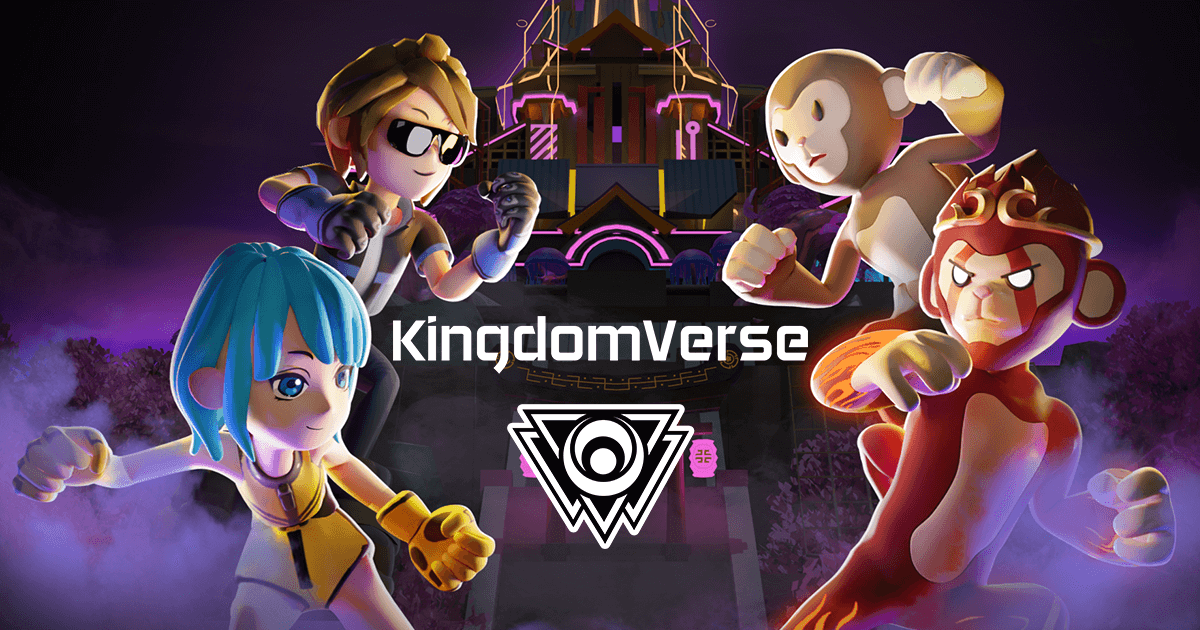
Kingdomverse is an MGM that includes a variety of mobile games that are linked together by a dynamic open-world mobile metaverse, non-fungible currencies, and crypto tokens. The platform acts as a gamified social hub for mobile players, allowing them to interact with one another, establish guilds, construct their kingdoms, and even engage in combat and take control of other territories. In the end, the purpose of the project is to make Web3 gaming accessible to a wider audience through the creation of casual mobile games that mix engaging gameplay with user-friendly experiences.
Defend the Kingdom, one of Kingdomverse’s initial games, is a casual PvP Tower Defense game in which players can unlock heroes to fight waves of foes and climb to the top of the leaderboard in both PvP and co-op game modes. Heroes are non-playable characters in a game that are represented by NFTs and have the ability to be traded, enhanced, or combined to create more powerful versions of themselves.
The team is working on creating a dynamic mobile game ecosystem for the general public using Kingdomverse. This ecosystem will be based on the key ideals of having fun, being user-friendly, and having digital ownership. Using ImmutableX will be of tremendous assistance in accomplishing all of these objectives, as well as others.
Kingdomverse Taps ImmutableX to Launch World metaverse game in mobile
“We are pleased to announce our partnership with ImmutableX, which will enhance the gaming experience by using Web3 technologies, such as NFTs. ImmutableX provides near-instant transactions with no gas fees for minting and trading non-fungible tokens (NFTs). According to the CEO of Kingdomverse, Terence Chow, this agreement will ensure that our players may onboard into the Web3 space without any problem. This agreement allows us to focus on what we do best, which is producing games. Kingdomverse and Immutable have the same goals and synergies in onboarding ‘traditional’/Web2.0 gamers into the Web3.0 gaming sector.
IMXPR030 – Kingdomverse
ImmutableX is the blockchain framework of choice for Web3 game developers, and it gives builders and gamers alike access to gas-free NFT minting, cost-effective and lightning-fast transactions, and the inherent security and decentralization of Ethereum. ImmutableX is the preferred blockchain framework for Web3 game developers. As a result of the cooperation, Kingdomverse will be able to work together with developers of other Web3 games on the ImmutableX platform and continue to expand its player base.
The first Open Beta testing phase of Kingdomverse is slated to begin in the month of March. During this phase, players will be introduced to ten new heroes, a Guild System, a League System Test Run, a DTK Companion Website, and $KING tokens for use in the game. The second Open Beta test will begin sometime between the second and third quarters of the current fiscal year. This test will introduce Coupon Mining, an in-game Event, Friend and Social systems, as well as a large number of new heroes, legends, and cosmetic assets.
A screenshot of a web page with the heading 'Is It Too Late to Buy Polygon?' next to a graph showing the recent performance of the Polygon cryptocurrency.
After reaching an overbought status according to the 14-Day Relative Strength Index at the beginning of this month, the price of MATIC, which is the ticker for the cryptocurrency that is the driving force behind the layer-2 Ethereum scaling solution Polygon, has been sharply decreasing over the past few days.
Coincidentally, this occurred at the same time as MATIC reached new multi-month highs in the $1.57 region; however, the cryptocurrency is currently trading almost 15% down near $1.34. For the time being, MATIC is maintaining its position to the north of its 21-Day Moving Average (DMA) as well as the resistance-turned-support region located around $1.30.
Crypto Experts Give Their Price Predictions
According to the popular YouTube channel Altcoin Buzz, the impressive growth that has recently been seen in the Polygon ecosystem was noted. Earlier this week, Polygon managed to surpass Solana in terms of daily NFT sales (by USD volume), ranking as the second highest that day after only Ethereum, according to Cryptoslam.io. In addition, Altcoin Buzz noted that Polygon managed to surpass Solana in terms of daily NFT sales (by USD volume).
Polygon has achieved a total of over $7.5 million in NFT sales over the course of the past week, placing it as the third-highest blockchain in terms of revenue.
Altcoin Buzz cited the co-founder of Polygon as saying that this was before the NFT trading platform Y00ts had even launched on the Polygon protocol. Some data clearly show the massive expansion that has taken place in the Polygon ecosystem. According to statistics that were supplied by Token Terminal, daily fees have also skyrocketed, reaching a peak of about $350,000 earlier this month. This represents an increase of somewhere in the area of 10x from the annual values that were seen earlier.
Because of the spike in fees, Polygon is currently appearing to have the best value it has all year based on the ratio of its circulating market capitalization to its fees. The ratio had been hovering at 215 before its recent drop, having previously reached yearly highs of over 500.
This may encourage bulls to continue loading up on Polygon and keep the cryptocurrency moving higher within the confines of the bullish trend channel that has been in play since the beginning of the year. Moreover, this may keep the cryptocurrency moving higher within the confines of the trend channel that has been in play since the beginning of the year.
If MATIC is successful in finding support within the bullish trend channel, it is expected that the stock will quickly retrace its steps to the higher monthly highs seen around $1.56. Despite the most recent pullback, MATIC bulls continue to have confidence that a retest of the highs reached in late March, and early April 2022 is a possibility.
This is due to the fact that all of the major moving averages have been surging higher, the growth numbers for Polygon have continued to impress, and the broader cryptocurrency markets have continued to look healthy this year. As a result, optimistic price forecasts continue to be issued.
A screenshot of a web page with the heading ‘Is It Too Late to Buy Polygon?
Is It Too Late to Buy MATIC?
The question of whether or not it is too late to purchase an asset is never the appropriate one to ask. The question that needs to be asked is whether or not a certain asset should be purchased. This, of course, relies on how an investor evaluates the stock’s potential price performance over the long run.
If, after conducting your own research, you conclude that MATIC offers a favorable risk-reward at current pricing and is likely to experience a significant price increase over the next few years, then you should probably consider purchasing some. This is true regardless of how well the token has been doing recently. If you do not believe that MATIC has a suitable risk-reward ratio, then you should avoid engaging with it.
MATIC Alternatives to Consider
The outlook for the near future of MATIC appears to be rather optimistic. Traders who are searching for quick profits, on the other hand, may want to think about investing in other high-potential tokens, such as those being sold in pre-sale by promising up-and-coming cryptocurrency companies. The members of the Cryptonews Industry Discussion team have compiled a list of the top 15 cryptocurrencies for 2023. Here, we take a look at some of the most promising contenders on that list.
More Rate Hikes to Come, According To Latest Fed Meeting Minutes
The US Federal Reserve is going to raise interest rates again. At least, that’s what we can tell from the minutes of the Federal Open Market Committee (FOMC) meeting from February 1 that came out this Wednesday. This could be a big problem for crypto in the middle term.
Fed Minutes Predict More Rate Hikes
At their meeting earlier this month, the FOMC, which is made up of Federal Reserve Governors and regional Fed Presidents, raised interest rates by 25 basis points to a range of 4.50–4.75%. That was a slowdown after a 50 bps rate increase at the last meeting of 2022 and four 75 bps rate increases in a row.
According to the meeting minutes, FOMC members think that interest rates will need to go up, even more to get inflation back to the target of 2% and keep it there. “Almost all” of the FOMC members agreed that rate hikes should be slowed down to 25 bps. The minutes said that “upside risks to the inflation outlook remained a key factor in shaping the policy outlook,” and a few officials warned that an “insufficiently restrictive” stance could slow down efforts to bring down inflation.
Hot US Data Forces Markets to Up Fed Tightening Bets
The latest Fed meeting minutes come out after the financial markets have been betting more on the Fed tightening over the past few weeks. To be more specific, at the end of January, most analysts expected only two more 25-bps increases in interest rates. One was expected at the meeting in February, which happened, and the other was expected at the meeting in March.
Some people in the market even thought that the Fed’s 25-bps rate hike in February might be the last one this cycle. At the time, CME data showed that the money market implied that there wouldn’t be a rate hike in March and that rates would stay in the 4.50-4.75% range. This showed that this was likely to happen.
But this month’s strong/hotter-than-expected US data releases, such as the January jobs report, CPI report, and ISM PMI survey results, have caused the market’s expectations to change a lot. The US economy is still doing well, and inflation is still too high for comfort. Based on what the markets are saying, there is a 27% chance that the Fed will raise interest rates by 50 basis points (bps) next month, to 5.25-5.50%.
On the other hand, interest rates are now expected to reach their peak in the range of 5.25-5.5% in June, and money markets show that there is a 30% chance that they will go up another 25 bps to the range of 5.50-5.75% by July. This has caused the US Dollar Index (DXY) and US yields to go up, especially at the short end of the yield curve. This has been putting pressure on US stocks lately.
Even though stock prices are falling, the dollar is getting stronger, and interest rates are going up, crypto prices have been going up so far. But as the rally goes on, some traders are worried that a correction is becoming more likely.
The Fed’s latest announcement on rate hikes has the potential to shift the direction of the market, including the cryptocurrency industry. Keep a close eye on the latest developments and adjust your investment strategy accordingly. #FedMinutes #CryptoImpact #InvestmentStrategy”
Why Continued Fed Hikes Can Hit Crypto
In the last few years, the prices of major cryptos like Bitcoin and Ethereum have had a strong positive correlation with the prices of US stocks, especially big tech stocks. This year, that link has gotten a little bit weaker, and crypto has done much better than the S&P 500, the Nasdaq 100, and the Dow Jones Industrial Average.
But since crypto is still in its early stages and most macro investors still see it as “risk assets,” the correlation is not likely to break down completely any time soon. This could be bad for crypto in the future. That’s because the stock market downturn that started in early 2022 might not be over yet.
In a note that came out earlier this week, analysts at JP Morgan made some important points. US stock market indices like the S&P 500 have never hit bottom before the end of a Fed rate-hiking cycle. Instead, they usually hit bottom after the Fed has cut interest rates several times.
In other words, since the Fed is still expected to raise interest rates three more times, it’s probably too soon to bet that US stocks have reached their bottom. The implication is that the S&P 500 and other major indexes could soon be headed back to their lows for 2022, which were printed in October of last year.
A combination of a weak Q4 2022 earnings season, which is a strong sign that an earnings recession is coming in 2023, and a worsening outlook for interest rates could send stocks down in the short term. Crypto traders shouldn’t get too excited until the outlook for US stocks gets better. There are a lot of on-chain and technical indicators that point to this being the case, but it’s still hard to see how the market will go up from here.
South Korean Police Arrest 30 in $8m ‘Crypto Scam’ Bust
As part of an investigation into a possible 8 million dollar cryptocurrency scam, the police in South Korea have arrested thirty different people. It would appear that the masterminds behind the scheme made investors “guaranteed profits” of up to 2,000%.
According to a report in the Munhwa Ilbo, the Seoul Metropolitan Police estimate that the “gang” was successful in defrauding over 160 victims out of a total of $8 million. The authorities believe that the gang might have produced a coin and might be members of the governing foundation for the token. After that, the organization allegedly employed complex strategies in order to exert influence over the values of tokens once the cryptocurrency was listed on a major domestic exchange.
The Financial Crimes Investigative Unit of the capital claimed that it has turned over all 30 persons to the prosecuting authorities.
According to information provided by the unit, the operation was concentrated around “crypto reading room” channels on the messaging app Telegram. Between September and November of 2021, according to the police, the gang made an attempt to manipulate the prices of an undisclosed listed coin.
“Crypto Scam” Operators in South Korea, according to South Korean Authorities, Offered “500%-2,000% Profits.” The criminal organization persuaded its victims to pool their money so that it could make a huge coin purchase in an effort to artificially inflate coin prices. However, when prices increased, the gang reportedly sold the coins for a significant profit, but none of the money was returned to the people who had been victimized by them.
According to the police, the criminal organization persuaded the victims that they might anticipate profits on their investments ranging from “up to 500% to 2,000%.”
Crypto Currency Fraud in S.Korea
According to the officers, they were able to freeze a number of cryptocurrency exchange wallets and seize over one million dollars worth of cash.
The news outlet also reported that the authorities had disclosed their intention to form a “consultative body” together with cryptocurrency exchanges. Officers feel that having access to such a body will allow them to initiate investigations into cases of alleged cryptocurrency price manipulation more quickly.
TerraUSD, on the other hand, was based on algorithms and used code to keep its price stable at approximately one US dollar.
Many investors saw their life savings evaporate when Luna and Terra went into a death spiral. As a result, South Korean authorities have initiated various criminal investigations regarding the crash.
Towards the beginning of this month, the Chief Executive Officer of a fraudulent cryptocurrency bank in South Korea was sentenced to ten years in prison after a judge found him guilty of scamming investors out of approximately $181 million.
Decentralized finance (DeFi) has been rapidly growing in popularity over the past few years, with more and more people looking for ways to invest in cryptocurrencies and digital assets. With this increasing demand, various platforms and tools have been developed to help individuals manage their DeFi investments. Two of the most popular platforms in this regard are Debank and Zapper. In this article, we will compare these two platforms in terms of their features, user interface, security, supported assets, integration, and pricing.
Debank vs Zapper
Features
One of the most important aspects of any DeFi platform is its features. Let’s take a look at the features offered by Debank and Zapper.
1.1. Debank Features
Debank is an all-in-one dashboard for DeFi management that offers a wide range of features to its users. Some of the key features of Debank include:
Portfolio tracking: Debank allows you to track your DeFi portfolio across multiple platforms in real time.
Analytics: You can get detailed analytics on your DeFi investments, including your gains and losses, ROI, and other performance metrics.
Market data: Debank provides real-time market data for cryptocurrencies and DeFi assets.
Liquidity analysis: Debank offers liquidity analysis to help you find the best opportunities for yield farming.
Staking: You can stake your DeFi assets and earn rewards directly from the Debank platform.
Wallet management: Debank allows you to manage multiple wallets from a single platform, making it easier to keep track of your assets.
1.2. Zapper Features
Zapper is another popular DeFi platform that offers a range of features to its users. Some of the key features of Zapper include:
Asset management: Zapper allows you to manage your DeFi assets from a single dashboard.
Portfolio tracking: You can track the performance of your DeFi portfolio in real time.
Yield farming: Zapper offers yield farming opportunities to help you earn more from your DeFi investments.
Liquidity provision: You can provide liquidity for various DeFi protocols and earn rewards in return.
Investment optimization: Zapper provides investment optimization tools to help you maximize your returns.
User Interface
Another important factor to consider when comparing Debank and Zapper is their user interface. Let’s take a closer look at how these two platforms stack up in terms of their user interface.
2.1. Debank User Interface
Debank has a clean and simple user interface that is easy to navigate. The platform is designed to be user-friendly, with clear visuals and an intuitive layout. The main dashboard provides an overview of your DeFi portfolio with detailed analytics and performance metrics.
2.2. Zapper User Interface
Zapper also has a clean and simple user interface with a focus on ease of use. The dashboard provides an overview of your DeFi portfolio with detailed analytics and performance metrics. The platform also offers a range of customization options, allowing you to personalize your dashboard to suit your preferences.
Overall, both Debank and Zapper offer user-friendly interfaces that are easy to navigate, making it easy for users to manage their DeFi investments.
Security
Security is a critical aspect of any DeFi platform, and it is essential to choose a platform that offers robust security features to protect your assets. Let’s take a look at the security features offered by Debank and Zapper.
3.1. Debank Security
Debank takes security seriously and offers several security features to protect user assets. The platform uses a non-custodial model, which means that users have full control over their assets and private keys. In addition, Debank uses encryption and other security protocols to protect user data and prevent unauthorized access.
Debank also offers two-factor authentication (2FA) to add an extra layer of security to user accounts. The platform also has a bug bounty program in place, which encourages security researchers to find and report any security vulnerabilities they find.
3.2. Zapper Security
Zapper also takes security seriously and offers robust security features to protect user assets. The platform uses a non-custodial model, which means that users have full control over their assets and private keys. Zapper also uses encryption and other security protocols to protect user data and prevent unauthorized access.
Zapper offers two-factor authentication (2FA) to add an extra layer of security to user accounts. The platform also has a bug bounty program in place, which encourages security researchers to find and report any security vulnerabilities they find.
Overall, both Debank and Zapper offer robust security features to protect user assets and data.
Analysis of the user interface of Zapper
Supported Assets
When comparing Debank and Zapper, it is important to consider the range of assets supported by each platform. Let’s take a look at the supported assets of these two platforms.
4.1. Debank Supported Assets
Debank supports a wide range of DeFi assets, including cryptocurrencies, stablecoins, and other digital assets. Some of the supported assets include ETH, BTC, USDT, DAI, and many others. Debank also supports a range of DeFi protocols, including Uniswap, SushiSwap, Compound, and Aave, among others.
4.2. Zapper Supported Assets
Zapper also supports a wide range of DeFi assets, including cryptocurrencies, stablecoins, and other digital assets. Some of the supported assets include ETH, BTC, USDT, DAI, and many others. Zapper also supports a range of DeFi protocols, including Uniswap, SushiSwap, Compound, and Aave, among others.
Overall, both Debank and Zapper offer support for a wide range of DeFi assets, making it easy for users to manage their investments across various protocols.
Integration
Integrations are another important aspect to consider when comparing Debank and Zapper. Let’s take a look at the integration capabilities of these two platforms.
5.1. Debank Integration
Debank offers integration with a wide range of DeFi protocols, including Uniswap, SushiSwap, Compound, and Aave, among others. The platform also integrates with several wallets, including MetaMask and WalletConnect, making it easy for users to manage their assets from a single platform.
5.2. Zapper Integration
Zapper also offers integration with a wide range of DeFi protocols, including Uniswap, SushiSwap, Compound, and Aave, among others. The platform also integrates with several wallets, including MetaMask and WalletConnect, making it easy for users to manage their assets from a single platform.
Overall, both Debank and Zapper offer integration with a wide range of DeFi protocols and wallets, making it easy for users to manage their investments across various platforms.
Pricing
Finally, let’s take a look at the pricing structures of Debank and Zapper.
6.1. Debank Pricing
Debank is a free-to-use platform with no hidden fees or charges. There are no fees for using the platform, and users can access all the features without paying anything.
6.2. Zapper Pricing
Zapper is also a free-to-use platform with no hidden fees or charges. There are no fees for using the platform, and users can access all the features without paying anything.
Overall, both Debank and Zapper offer their services for free, which means that users can access all the features without paying any fees.
Pros and Cons
Now that we have looked at the features of both Debank and Zapper let’s summarize the pros and cons of each platform.
7.1. Debank Pros and Cons
Pros:
1. Easy-to-use interface 2. Advanced analytics and insights 3. Wide range of supported DeFi assets and protocols 4. Robust security features, including 2FA and bug bounty program 5. Free to use
Cons:
1. Limited support for other blockchain networks 2. No mobile app
7.2. Zapper Pros and Cons
Pros:
1. Easy-to-use interface 2. Wide range of supported DeFi assets and protocols 3. Robust security features, including 2FA and bug bounty program 4. Free to use 5. Mobile app available
Cons:
1. Limited support for other blockchain networks 2. Limited analytics and insights
Summary
Debank and Zapper are both popular DeFi management platforms that offer a range of features to help users manage their investments. Both platforms offer an easy-to-use interface, robust security features, integration with a wide range of DeFi protocols and wallets, and support for a range of DeFi assets.
While Debank offers advanced analytics and insights, Zapper offers a mobile app. Ultimately, the choice between these two platforms depends on your specific needs and preferences.
If you are looking for a platform with advanced analytics and insights, Debank might be the right choice for you. However, if you prefer a platform with a mobile app, Zapper might be the better option.
In any case, it is important to remember that both Debank and Zapper offer a free and secure way to manage your DeFi investments. As the DeFi space continues to grow and evolve, we can expect these platforms to continue to improve and offer even more features to their users.
Metamask is a popular Ethereum wallet and browser extension that allows users to interact with decentralized applications (dApps) and the Ethereum network. One of Metamask’s key features is its support for blind signing, a security technique that helps to protect users’ private keys and prevent unauthorized transactions. In this article, we’ll explore what blind signing is, how Metamask uses it, and how you can use Metamask for blind signing.
Metamask Blind Signing
What is Blind Signing?
Blind signing is a security technique that allows a user to sign a message without revealing its content to the signer. In other words, blind signing allows a user to sign a message without seeing or knowing what the message says. Blind signing is a form of digital signature, and it is commonly used in situations where the signer wants to provide proof of authentication without revealing sensitive information.
Blind signing works by using a mathematical algorithm to obscure the content of the message being signed. The message is transformed into a cryptographic hash, which is then combined with a random value to create a blinded message. The blinded message is sent to the signer for signature, and the signer signs the blinded message without seeing the original message. Once the blinded message is signed, the user can unblind the signature to obtain a valid signature for the original message.
Advantages and Disadvantages of Blind Signing
Advantages of Blind Signing
Blind signing offers several advantages over traditional digital signatures. Here are 7 of the most important advantages of blind signing:
Privacy: Blind signing protects the privacy of the signer by preventing them from seeing or knowing the content of the message they are signing. This is particularly important when the message contains sensitive or confidential information that the signer should not have access to.
Security: Blind signing helps to protect users’ private keys by allowing them to sign messages without exposing their keys. This is because the blinded message does not contain the private key or any other sensitive information, making it more difficult for attackers to obtain the key through a hack or malware attack.
Trust: Blind signing provides a way for users to verify the authenticity of a message without relying on a trusted third party. This is because the unblinding process allows the user to verify that the signed message matches the original message without revealing the content of the message to the signer.
Integrity: Blind signing helps to ensure the integrity of the message by preventing the signer from altering or tampering with the message before signing it. This is because the signer does not know the content of the message and, therefore, cannot make any changes to it.
Non-repudiation: Blind signing provides non-repudiation, which means that the signer cannot later deny that they signed the message. This is because the signature can be verified by the recipient and is cryptographically linked to the original message.
Efficiency: Blind signing is often faster and more efficient than traditional digital signatures, as it does not require the signer to read or understand the message before signing it. This can be particularly useful in situations where a large number of signatures are required or where time is of the essence.
Flexibility: Blind signing is a versatile technique that can be used in a wide range of applications and contexts. It can be used for both online and offline transactions and can be integrated with a variety of different protocols and systems.
Disadvantages of Blind Signing
While blind signing offers several advantages over traditional digital signatures, there are also some potential disadvantages to consider. Here are 5 of the most important disadvantages of blind signing:
Limited Verification: Blind signing does not allow the signer to verify the contents of the message before signing it. This means that the signer is not able to confirm that the message is accurate or legitimate, which could be a problem in certain situations. For example, if the message is fraudulent or contains errors, the blind signing could result in the signer unwittingly endorsing false information.
Complicated Unblinding Process: While the unblinding process is designed to allow the recipient to verify the authenticity of the signature without revealing the contents of the message to the signer, this process can be complicated and difficult to understand for some users. This could lead to errors or misunderstandings during the unblinding process, which could compromise the security or validity of the signed message.
Limited Reusability: Blind signing is typically designed to be a one-time use process. Once the message has been signed and blinded, it cannot be reused for another transaction or signing process. This means that blind signing is not suitable for applications that require frequent or repeated use of signed messages.
Vulnerability to Replay Attacks: Blind signing can be vulnerable to replay attacks, where an attacker intercepts a signed message and uses it again at a later time to gain access to the system or perform fraudulent transactions. While there are techniques that can be used to mitigate this vulnerability, such as adding a timestamp or nonce to the message, these techniques can add complexity and reduce the efficiency of the signing process.
Dependency on Technology: Blind signing is dependent on the technology used to implement it, such as the cryptographic algorithms and protocols used to blind and unblind messages. If the technology is compromised or becomes outdated, the blind signing could become less secure or even unusable.
WATCH THE VIDEO BELOW FOR MORE CLARIFICATION
Metamask Blind Signing – The Ultimate Guide to Security
How Metamask Uses Blind Signing
Metamask uses blind signing to protect users‘ private keys and prevent unauthorized transactions. When a user wants to perform a transaction on the Ethereum network, Metamask generates a message that includes the details of the transaction, such as the recipient address, the amount of Ether being sent, and any other relevant information.
Metamask then uses blind signing to create a blinded message that includes the transaction details as well as a random value. The blinded message is sent to the user for signature, and the user signs the blinded message without seeing the transaction details. Once the blinded message is signed, Metamask unblinds the signature to obtain a valid signature for the original transaction message.
By using blind signing, Metamask helps to protect users’ private keys and prevent unauthorized transactions. Because the user never sees the transaction details, they are not at risk of accidentally signing a fraudulent or malicious transaction.
How to Use Metamask for Blind Signing
Using Metamask for blind signing is easy. Here’s how to do it:
Install and set up Metamask: If you haven’t already, install the Metamask browser extension and set up your Ethereum wallet.
Connect to a dApp: Connect Metamask to a dApp that supports blind signing, such as Uniswap or Compound.
Initiate a transaction: When you’re ready to perform a transaction, the dApp will generate a transaction message and send it to Metamask for signing.
Sign the blinded message: Metamask will create a blinded message that includes the transaction details and a random value. Sign the blinded message as you normally would by clicking “Confirm” in Metamask.
Complete the transaction: Once the blinded message is signed, Metamask will unblind the signature to obtain a valid signature for the original transaction message. The transaction will then be broadcast to the Ethereum network for processing.
Tips and Best Practices for Using Metamask for Blind Signing
Here are some tips and best practices for using Metamask for blind signing:
Always verify the transaction details: Although blind signing helps to protect against accidental or malicious transactions, it’s still important to verify the transaction details before signing. Make sure you understand what the transaction does and that you trust the dApp or service that’s initiating it.
Use a strong password: Metamask is protected by a password, so make sure you use a strong, unique password that you don’t use for any other services. You can also enable two-factor authentication for added security.
Keep your recovery phrase safe: Your Metamask recovery phrase is the key to your Ethereum wallet, so keep it safe and don’t share it with anyone. If someone has access to your recovery phrase, they can access your wallet and perform transactions on your behalf.
Check for phishing scams: Be aware of phishing scams that try to trick you into revealing your Metamask password or recovery phrase. Always make sure you’re on the official Metamask website or extension, and don’t click on any links in emails or messages that ask for your Metamask information.
Summary
Metamask blind signing is a powerful security feature that helps to protect users’ private keys and prevent unauthorized transactions. By using blind signing, Metamask ensures that users can safely and securely interact with dApps and the Ethereum network. If you’re a Metamask user, be sure to take advantage of this powerful feature and follow the tips and best practices outlined in this article to keep your wallet secure.
Terra is a blockchain protocol that allows for fast and secure transactions. It was designed to create a stablecoin that could be used for payments and financial transactions. However, it has grown into a full-fledged ecosystem that includes a decentralized finance (DeFi) platform, smart contracts, and more. One of the ways to participate in the Terra ecosystem is by mining. Mining Terra is a great way to earn rewards while contributing to the security and stability of the network.
This article will provide a step-by-step guide on how to mine Terra. We will cover the hardware and software requirements, how to create a Terra wallet, how to join a mining pool, and how to set up the mining software. We will also explain the mining process and provide tips for successful Terra mining.
Hardware and Software Requirements
Before you start mining Terra, you will need to make sure you have the right hardware and software. Terra uses a Proof of Stake (PoS) consensus mechanism, which means that you don’t need expensive mining hardware like you would with Bitcoin. However, you will need a computer with a decent CPU and RAM to run the mining software.
Hardware Requirements:
CPU: A multi-core CPU with at least four cores is recommended for mining Terra. A CPU with more cores will result in faster mining speeds. RAM: A minimum of 8GB of RAM is recommended for mining Terra. More RAM will result in faster mining speeds. Storage: You will need enough storage to run the Terra Station software and store the Terra blockchain. A minimum of 50GB of storage is recommended.
Software Requirements:
Terra Station: Terra Station is the official wallet and mining software for Terra. It is available for Windows, Mac, and Linux. You can download Terra Station from the official Terra website. Terra Station Extension: The Terra Station Extension is a browser extension that allows you to interact with the Terra blockchain. It is available for Google Chrome, Firefox, and Brave browsers.
Creating a Terra Wallet
Before you can start mining Terra, you will need to create a Terra wallet. A Terra wallet is used to store and manage your Terra coins. There are several wallet options available, including Terra Station, Ledger Nano S, and others. In this guide, we will focus on using Terra Station, which is the official wallet for Terra.
Here’s how to create a Terra wallet using Terra Station:
Step 1: Download and Install Terra Station
Visit the official Terra website and download the Terra Station software for your operating system. Once downloaded, install the software by following the instructions provided.
Step 2: Create a New Terra Account
Open Terra Station and click on the “Create New Account” button. Follow the instructions to create a new Terra account. You will need to set a password for your account and save your seed phrase in a safe place.
Step 3: Fund Your Terra Account
Once you have created your Terra account, you will need to fund it with Terra coins. You can buy Terra coins from a cryptocurrency exchange like Binance, Coinbase, or Kraken. You can also earn Terra coins by participating in the Terra ecosystem.
Joining a Mining Pool
Now that you have a Terra wallet set up, the next step is to join a mining pool. Mining pools are groups of miners who work together to mine Terra coins. By joining a mining pool, you can increase your chances of earning Terra rewards. There are several Terra mining pools available, each with its own set of rules and fees.
Here’s how to join a Terra mining pool:
Step 1: Choose a Mining Pool
Research and compare different Terra mining pools to find the one that best fits your needs. Look for a pool with a low fee, a good reputation, and a high hash rate. A high hash rate means that the pool has a lot of miners working together, which increases the chances of finding new blocks and earning rewards.
Step 2: Register for the Mining Pool
Once you have chosen a mining pool, visit their website and register for an account. You will need to provide some basic information, including your Terra wallet address.
Step 3: Configure the Mining Software
After registering for the mining pool, you will need to configure the mining software to connect to the pool. You can use Terra Station or Terra Station Extension to mine Terra. Follow the instructions provided by the mining pool to configure the mining software.
Setting up the Mining Software
Once you have joined a mining pool and configured the mining software, you are ready to start mining Terra. In this section, we will cover the different mining software options and how to set them up.
Terra Station
Terra Station is the official wallet and mining software for Terra. It is available for Windows, Mac, and Linux. Here’s how to set up Terra Station for mining:
Step 1: Download and Install Terra Station
Visit the official Terra website and download the Terra Station software for your operating system. Once downloaded, install the software by following the instructions provided.
Step 2: Create a New Terra Account or Import Your Existing Account
If you already have a Terra account, you can import it into Terra Station by selecting the “Import Existing Account” option. If you don’t have a Terra account, you can create one by selecting the “Create New Account” option.
Step 3: Connect to the Mining Pool
Select the “Mining” tab in Terra Station and click on the “Connect to Pool” button. Enter the mining pool’s URL and port number provided by the mining pool. You can also enter your mining pool username and password if required.
Step 4: Start Mining
After connecting to the mining pool, click on the “Start Mining” button to start mining Terra. You can monitor your mining progress and earnings in the “Mining” tab.
Terra Station Extension
The Terra Station Extension is a browser extension that allows you to interact with the Terra blockchain. It is available for Google Chrome, Firefox, and Brave browsers. Here’s how to set up Terra Station Extension for mining:
Step 1: Install Terra Station Extension
Visit the Terra Station Extension website and install the extension for your browser.
Step 2: Create a New Terra Account or Import Your Existing Account
If you already have a Terra account, you can import it into Terra Station Extension by selecting the “Import Existing Account” option. If you don’t have a Terra account, you can create one by selecting the “Create New Account” option.
Step 3: Connect to the Mining Pool
Click on the Terra Station Extension icon in your browser and select the “Mining” tab. Click on the “Connect to Pool” button and enter the mining pool’s URL and port number provided by the mining pool. You can also enter your mining pool username and password if required.
Step 4: Start Mining
After connecting to the mining pool, click on the “Start Mining” button to start mining Terra. You can monitor your mining progress and earnings in the “Mining” tab.
How to Mine Terra
Now that you have set up the mining software, you can start mining Terra. When you mine Terra, you are verifying transactions on the Terra blockchain and adding new blocks to the blockchain. In exchange for your work, you will earn Terra rewards.
Here’s how to start mining Terra:
Step 1: Start the Mining Software
Open Terra Station or Terra Station Extension and start the mining software by clicking on the “Start Mining” button.
Step 2: Monitor Your Mining Progress
You can monitor your mining progress and earnings in the “Mining” tab of Terra Station or Terra Station Extension. You will be able to see your hash rate, the number of blocks you have mined, and your rewards.
Step 3: Receive Your Terra Rewards
Once you have mined enough Terra blocks, you will receive Terra rewards. The rewards are automatically sent to your Terra wallet. You can use the rewards to participate in the Terra ecosystem, including staking, trading, or providing liquidity on the Terra DEX.
Tips for Successful Terra Mining
Mining Terra can be a profitable and rewarding experience if done correctly. Here are some tips for successful Terra mining:
Join a reputable mining pool with a high hash rate and low fees.
Use a multi-core CPU with at least four cores and 8GB of RAM to mine Terra.
Keep your mining software and Terra wallet up to date to ensure maximum stability and security.
Monitor your mining progress and earnings regularly.
Consider staking your Terra rewards to earn additional rewards and support the network.
WATCH THE VIDEO BELOW FOR MORE CLARIFICATION
How to Mine Terra Effectively
Summary
Terra is a fast and secure blockchain protocol that offers many opportunities to participate in its ecosystem. Mining Terra is a great way to earn rewards while contributing to the security and stability of the network. In this article, we have provided a step-by-step guide on how to mine Terra, including hardware and software requirements, how to create a Terra wallet, how to join a mining pool, and how to set up the mining software. We have also explained the mining process and provided tips for successful Terra mining. By following this guide, you can start mining Terra and participating in the Terra ecosystem today.
The ticker for the VeChain cryptocurrency, VET, which powers VeChain’s smart-contract-enabled blockchain, has been pumping hard in 2023. Since the beginning of the year, cryptocurrencies have gained close to 100%. For example, VET/USD is now worth around $0.30, while it was worth around $0.15 at the end of 2022.
The pump really got going when VET jumped north of a downtrend that had been in place since late 2021. This happened in early to mid-January. More recently, however, the bulls have gained more steam after VeChain bounced twice from its 200DMA, which is a strong sign that the market’s momentum is changing for the better.
VET/USD just broke above its highs for the fourth quarter of 2022, which were around $0.2850, and bulls are now looking to test the next major resistance area in the $0.33s. If this level is broken, a move to $0.39, where there is resistance, would be possible.
The sudden rise in popularity of promising altcoins like VeChain is a good sign for the tokens of smaller, newer crypto projects. One of the best ways to make money in crypto is to put money into the token presale of a great project. Here is a list of some presales that have been checked out by the Industry Talk team at Cryptonews.com and are thought to be likely to take off later this year.
Fight Out (FGHT) – Presale on Now
The relatively new move-to-earn crypto niche has shown a lot of promise, but early success stories like STEPN have major flaws that have kept them from becoming popular in the mainstream so far. This is something that Fight Out, which calls itself the future of move-to-earn, wants to change in 2023.
Fight Out is a new web3 fitness app and gym chain that gives its users rewards for working out, completing challenges, and competing in a fitness metaverse that has never been done before.
Existing M2E apps like STEPN only track steps and require expensive non-fungible token (NFT) buy-ins to participate. Fight Out, on the other hand, tracks and rewards its users for their exercise and activity in a more comprehensive way and doesn’t require any expensive buy-ins.
Fight Out is currently holding a presale of the FGHT token, which will power its web3 ecosystem, and has already raised a whopping $4.5 million. In April, the token will be listed on centralized exchanges for $0.033 per token. Investors should act quickly because if they buy tokens now, they could be sitting on paper gains of nearly 50% by the time the crypto token lists on exchanges at the beginning of Q2.
Gains could be even higher if investors take advantage of Fight Out’s generous bonus program, which offers a bonus of up to 67% depending on how much FGHT an investor buys and how long they choose to let it vest. Also, keep in mind that Fight Out will soon give away $250,000.
C+Charge (CCHG) – Presale Enters Stage 2
C+Charge is working on a blockchain-based Peer-to-Peer (P2P) payment system for electric vehicle (EV) charging stations. This system will let EV drivers earn carbon credits. C+Charge wants to make carbon credits an even bigger reason for people to buy EVs. At the moment, big companies that make EVs, like Tesla, make a lot of money by selling carbon credits to companies that pollute.
C+Charge wants to make the carbon credit market more democratic by making it possible for more of these rewards to go to EV owners instead of just big businesses. C+Charge just started the pre-sale of the CCHG token, which will be used to pay at EV charging stations through its platform. At the moment, each token costs $0.016. By the end of the presale, this price will have gone up by 70%.
Investors who want to get in on the ground floor of a promising cryptocurrency project that is good for the environment should act quickly. The project has already raised over $1.3 million, and the presale is already in its second stage.
Investors should be aware that the remaining tokens could be quickly bought up.
⭐️💚Don’t miss out on this fantastic opportunity – Grab your $50K prize today in our giveaway⭐️
Altcoins to watch 2023: Fight Out, C+Charge and RobotEra
We can confirm on BscScan that a “crypto whale” recently bought more than $99,000 worth of CCHG in a single transaction. Also, investors should know that C+Charge is giving away a generous $50,000.
RobotEra (TARO) – Presale Price Rising Soon
As technology moves us more and more into the digital space, decentralized crypto-based metaverse “games” are likely to be an important part of the future crypto/gaming space. RobotEra, a soon-to-be-launched robot/space-themed gaming metaverse that plans to include a mix of play-to-earn and player-versus-player games in its interactive world, could be a great bet. The platform is set to launch in 2023.
RobotEra is holding a presale for the TARO token, which will be used as currency in the game. Since its launch a few weeks ago, RobotEra has raised more than $920,000.
Tokens are being sold for $0.02 right now, but the price will soon go up to $0.025, so investors who want to get in should act fast. Soon, RobotEra will also start selling NFT robots that players can use in its metaverse. Those who have already bought TARO should keep an eye on the market.
According to data from crypto analytics firm Glassnode, the annualized daily net inflation rate of the Ether (ETH) supply hit a record low of -2.772% on Tuesday. Ether is the token that runs the smart-contract-enabled Ethereum blockchain, which is the largest blockchain in the world right now in terms of the number of decentralized applications that use it. By market capitalization, Ether is the second largest cryptocurrency.
Since then, Ether’s net inflation rate has gone up, and as of Sunday, it was around -1%. But over the last month, there has been a clear trend. The rate at which the amount of Ether is going down, or deflating, is getting faster. And if things keep going the way they are in the Ethereum network, the rate of deflation could speed up even more, which many analysts think would be good for the price of ETH.
How Higher Gas Fees Drive Faster ETH Deflation
Glassnode says that at 64 Gwei, the price of gas on the Ethereum network hit its highest point in seven months. The value of 1 Gwei is 0.000000001 ETH. The minimum gas fee (in Gwei) that a user needs to pay for a transaction is found by multiplying the Gwei Gas Price by the Gas Limit, which is currently 21,000.
So, when the price of gas hit 64 Gwei on Tuesday, users had to pay at least 1,344,000 Gwei, or 0.001344 ETH, per transaction. Based on how much Ether cost when it closed last Tuesday, that’s about $2.10. By Sunday, the price of gas had dropped to around 30 Gwei, which meant a transaction fee of 0.00063 ETH, or about $1.06 based on the price of Ether at the end of the day on Sunday.
The rate at which Ether is burned is directly linked to the price of gas, which is shown by the value of Gwei. Before we can figure out why we need to quickly understand how the fee structure of the Ethereum network works. There are two different parts to network fees. The first is a base fee that all users must pay to make sure that their transaction is accepted and processed on the blockchain.
Then there is a tip that users can pay if they want their transaction to be done faster. The Ethereum network automatically figures out the base fee, which goes up when there are a lot of users on the network. Ethereum Improvement Proposal (EIP) 1559, which was added to the Ethereum code during the London hardfork in August 2021, says that all of these base fees paid by users must then be burned, which takes the tokens out of circulation for good.
So, when the base gas fee goes up, so does the rate at which Ether is burned. This can be seen in the chart above. The red bars show the rate at which ETH is burned because of EIP 1559. When this burn rate is higher than the rate of new ETH being made, which is about 0.55%, the amount of ETH will go down. The nodes and stakers who protect the Ethereum network are given ETH.
How Higher Gas Fees Drive Faster ETH Deflation
The ETH Deflation Rate Could Accelerate Further
There are signs that the number of transactions on the Ethereum network has been going up this year, and this could keep happening, putting more pressure on gas fees to go up and increasing the rate at which ETH is burned. DeFi Llama says that the total amount of money locked up in smart contracts on the Ethereum network, called trade value locked (TVL), was about $54 billion as of last week. This is up from about $35 billion at the beginning of the year.
The rise in cryptocurrency prices can explain some of this. But the value of TVL in ETH has gone up from 31 million at the beginning of the year to around 32.3 million. Even though the number and size of ETH transactions on the Ethereum network haven’t changed much in the last year, the number of what are called “internal smart contract calls” (calls made from within a smart contract that has already been executed) has been going up over the last few months, which shows that more smart contracts are being used on the network.
Ether is up about 42% this year, and if crypto prices keep going up, investors are likely to start investing again in Decentralized Finance (DeFi) because market sentiment is getting better. Early in 2022, the daily annualized burn rate for ETH (EIP 1559) was as high as 6.0% due to high network traffic.
At the time, the Ethereum blockchain was still run by the much more energy-intensive proof-of-work consensus mechanism. Because the miners who ran the network had to pay much more for energy and miner rigs, Ethereum’s issuance rate was much higher, at around 4.4% to 4.6% per year. That means that the rate of deflation for Ether never went above about 1.5%.
But if the burn rate of EIP 1559 goes back up to where it was in early 2022, Ether’s deflation rate could reach a shocking 5.5%. It’s impossible to know what will happen to Ethereum network gas fees and the rate at which ETH is burned in the future.
But one thing is certain: the fact that ETH is a deflationary asset should help it keep its value over the next few years. Many analysts think that ETH has a good chance of catching up to or even passing BTC in terms of market capitalization. This is because DeFi adoption is going to pick up, and the Bitcoin supply is still growing at about 2% per year (until the next halving in about a year and a half).
bitcoin Investors Are Positioning For Uptick in Volatility
Over the course of the last six days, Bitcoin has spent five of those days attempting to break and hold above the $25,000 barrier, but without success. The world’s largest cryptocurrency measured by market capitalization is currently forming an ascending triangle structure, which could lead to an explosion higher towards the next major resistance area, which is located somewhere around $28,000. There are some technicians who believe that this isn’t necessarily a negative thing.
Others, however, are concerned that the recent boom in the price of bitcoin, which has already witnessed a gain of about fifty percent, may be coming to an end. Price in Bitcoin futures markets is one approach to measure how investors feel about the prognosis for BTC, as well as how investors feel about the possibility of the volatility of Bitcoin. The following is a summary of what the options markets are now stating.
Investors Neutral on the BTC Price Outlook
According to the widely reported 25% delta skew of Bitcoin options with expiration dates of 7, 30, 60, 90, and 180 days, investors’ outlooks for the price of Bitcoin are currently fairly neutral. The data that was provided by the cryptocurrency analytics company The Block indicates that all five 25% delta skews are very close to zero. This represents a significant improvement from the lows that were reached immediately after the FTX collapse last year, but it is also a slight decrease from the highs that were printed earlier this year.
The options with a delta of 25% Skew is a popularly monitored proxy for the degree to which trading desks are overcharging or undercharging for upside or downside protection via the put and call options they are selling to investors. This can occur when trading desks sell options that have a higher strike price than the market value of the underlying asset. An investor has the right but not the responsibility to sell an asset at a predetermined price when they purchase a put option. On the other hand, an investor has the right but not the obligation to acquire an asset at a predetermined price when they purchase a call option.
A 25% delta options skew that is above 0 indicates that desks are likely charging more for similar call options as opposed to puts. This indicates that there is a higher demand for calls as opposed to puts, which can be interpreted as a sign that investors are more eager to secure protection against (or bet on) a rise in prices. This is a bullish sign because investors are more eager to secure protection against (or bet on) a rise in prices.
But, a different gauge of investor sentiment relating to the options market is giving a sign that is more positive. The Open Interest Put/Call Ratio of Bitcoin options was last seen at 0.41, according to data that was supplied by The Block. This figure is still extremely near to the record lows that were recorded in late January and early February. When the Open Interest Put/Call Ratio falls below 1, it indicates that investors are more interested in buying call options (which are wagers on the price going up) than they are in purchasing put options (bets on the price dropping).
Bitcoin owner Are Positioning For Uptick in Volatility
Investors Are Positioning For Uptick in Volatility
According to information provided by The Block, the 7-day Implied volatility of Bitcoin as measured by the At-The-Money (ATM) options market has just come dangerously close to reaching its highest level of the month. On Saturday, it increased to slightly under 60%, compared to preceding monthly lows of about 40%. This was a significant increase. Moreover, the 30-day ATM Implied Volatility was likewise at 60%, which was in line with its past monthly highs.
The most recent rise in volatility expectations, as reported by ATM options markets, has roughly coincided with the recent recovery of the Bitcoin market from earlier monthly lows in the twenties thousand dollar range. It is important to note that implied volatility predictions for Bitcoin ATMs are still quite low when compared to historical data and are significantly lower than the highs seen in mid-January 2023 and November 2022.
Loopring is a decentralized exchange protocol that allows users to trade cryptocurrencies without the need for a central authority. As a decentralized exchange, Loopring offers several advantages over traditional exchanges, such as lower fees and improved security. In addition to trading on the Loopring platform, users can also mine Loopring tokens to earn rewards.
Mining is the process of validating transactions on a blockchain and adding them to the public ledger. In return for providing this service, miners are rewarded with new tokens. In this article, we will explain how to mine Loopring and earn rewards.
how to mine loopring
Setting up a Loopring Wallet
Before you can start mining Loopring, you will need to set up a wallet to store your tokens. A wallet is a software application that allows you to store, send, and receive cryptocurrencies. Here are the steps to set up a Loopring wallet:
Choosing a Wallet
There are several types of wallets available for storing Loopring tokens, including desktop wallets, mobile wallets, and hardware wallets. Each type of wallet has its own advantages and disadvantages. Desktop wallets are generally considered the most secure, but they require you to download and install software on your computer. Mobile wallets are convenient and easy to use, but they may not be as secure as desktop wallets. Hardware wallets are the most secure option, but they can be expensive.
Creating a Wallet
Once you have chosen a wallet, you will need to create an account. This typically involves providing your email address and creating a password. After creating your account, you will be given a unique address for your wallet. This address is used to send and receive Loopring tokens.
Joining a Mining Pool
Mining Loopring tokens can be done solo, but it can be difficult and time-consuming. Joining a mining pool can improve your chances of earning rewards by combining your mining power with other miners. Here are the steps to join a mining pool:
What is a Mining Pool?
A mining pool is a group of miners who work together to mine a cryptocurrency. By combining their mining power, they can solve complex mathematical problems faster and earn rewards more frequently. Mining pools charge a small fee for their services, but this fee is typically lower than the cost of running a solo mining operation.
Choosing a Mining Pool
There are several mining pools available for mining Loopring tokens. When choosing a mining pool, it is important to consider factors such as pool size, fees, and payout structure. A larger pool may offer more consistent rewards, but it may also have higher fees. It is also important to choose a pool that is reliable and has a good reputation.
Joining a Mining Pool
To join a mining pool, you will need to provide your wallet address and configure your mining software to connect to the pool. Each mining pool will have its own instructions for setting up your miner.
Configuring Mining Software
After you have joined a mining pool, you will need to configure your mining software to connect to the pool and start mining Loopring tokens. Here are the steps to configure your mining software:
Choosing Mining Software
There are several mining software options available for mining Loopring tokens. Some popular options include Claymore, Ethminer, and PhoenixMiner. Each mining software has its own advantages and disadvantages. It is important to choose software that is compatible with your mining hardware and has a good reputation.
Configuring Mining Software
To configure your mining software, you will need to provide your pool URL, username, and password. You will also need to specify your mining hardware, such as your graphics card or ASIC. Each mining software will have its own instructions for configuration.
Start Mining Loopring
After you have set up your wallet, joined a mining pool, and configured your mining software, you are ready to start mining Loopring tokens. Here are the steps to start mining:
Start Mining
To start mining, you will need to run your mining software. Your mining software will connect to the mining pool and start solving complex mathematical problems. These problems are used to validate transactions on the Loopring blockchain.
Monitoring Your Mining Progress
While you are mining Loopring tokens, it is important to monitor your mining progress. This will help you ensure that your miner is running properly and that you are earning rewards. Most mining pools provide a dashboard where you can monitor your mining progress and view your earnings. You can also use third-party tools to monitor your miners, such as GPU-Z and HWiNFO.
WATCH THE VIDEO BELOW FOR MORE CLARIFICATION
How to Mine Loopring-A Comprehensive Guide
Advantages and Disadvantages of Mine Loopring
Advantages of Mine Loopring
Mining Loopring can offer several benefits to users who are interested in participating in the decentralized exchange ecosystem. Here are seven benefits of mining Loopring:
Earn Rewards
The primary benefit of mining Loopring is that you can earn rewards for validating transactions on the Loopring blockchain. As a miner, you will be responsible for adding new blocks to the blockchain and validating transactions. In return for providing this service, you will receive new Loopring tokens as a reward. These tokens can be sold, traded, or held as an investment.
Support the Decentralized Exchange Ecosystem
By mining Loopring tokens, you are helping to support the decentralized exchange ecosystem. Loopring is a decentralized exchange protocol that allows users to trade cryptocurrencies without the need for a central authority. By mining Loopring, you are contributing to the security and reliability of the platform, which benefits all users.
Low Fees
One of the advantages of using a decentralized exchange like Loopring is that the fees are typically lower than traditional exchanges. This is because there are no intermediaries involved in the transaction process. As a miner, you can take advantage of these lower fees by earning rewards without having to pay high transaction fees.
Improved Security
Decentralized exchanges like Loopring offer improved security over traditional exchanges. This is because there is no central authority that can be hacked or compromised. Instead, the platform is powered by a network of nodes that work together to validate transactions. By mining Loopring, you are contributing to the security and integrity of the platform.
Flexible Mining Options
Loopring can be mined using a variety of hardware and software options. This means that you can choose a mining setup that fits your needs and budget. For example, you can mine Loopring using a CPU or GPU, or you can invest in specialized mining hardware such as an ASIC. There are also several mining software options available, so you can choose software that is compatible with your hardware.
Diversification
Mining Loopring can provide a way to diversify your cryptocurrency portfolio. By earning Loopring tokens, you can diversify your holdings beyond traditional cryptocurrencies such as Bitcoin and Ethereum. This can help you manage risk and take advantage of new investment opportunities.
Potential for Capital Gains
Finally, mining Loopring can offer the potential for capital gains. As a decentralized exchange protocol, Loopring has the potential to grow and become more widely used in the cryptocurrency ecosystem. This could increase the value of Loopring tokens, providing an opportunity for capital gains. By mining Loopring, you are positioning yourself to benefit from potential future growth in the platform.
Disadvantages of Mine Loopring
While mining Loopring can provide several benefits, there are also some disadvantages to consider. Here are six potential disadvantages of mining Loopring:
Mining Difficulty
Loopring is designed to be a decentralized exchange protocol that is powered by a network of nodes. This means that the mining difficulty is adjusted over time to ensure that new blocks are added to the blockchain at a consistent rate. However, as more miners join the network, the mining difficulty can increase, making it harder to earn rewards. This can make it difficult for new miners to earn a significant amount of Loopring tokens.
High Energy Consumption
Mining Loopring can be energy-intensive, especially if you are using specialized hardware such as an ASIC. This can result in high energy consumption and increased electricity costs. This can be a significant disadvantage for miners who are operating on a tight budget or who live in areas with high electricity costs.
Hardware Costs
Investing in specialized mining hardware such as an ASIC can be expensive. This can be a significant disadvantage for new miners who are just starting out and may not have the funds to invest in expensive hardware. Additionally, the cost of hardware can change over time, which can impact the profitability of mining Loopring.
Technical Knowledge
Mining Loopring requires some technical knowledge and experience. For example, you need to know how to configure mining software, connect to a mining pool, and troubleshoot any issues that may arise. This can be a significant disadvantage for new miners who may not have the technical skills needed to get started.
Market Volatility
Like all cryptocurrencies, the value of Loopring tokens can be volatile. This means that the value of tokens can change quickly and without warning. This can be a significant disadvantage for miners who are holding Loopring tokens as an investment. If the value of tokens decreases, this can impact the profitability of mining.
Regulatory Risks
Finally, there are regulatory risks associated with mining Loopring. Cryptocurrencies and decentralized exchanges are still relatively new technologies, and there is some uncertainty about how they will be regulated in the future. This can create a risk for miners who may be subject to new regulations that could impact the profitability of mining.
Summary
Mining Loopring tokens can be a profitable way to earn rewards while supporting the decentralized exchange ecosystem. By following the steps outlined in this article, you can set up a Loopring wallet, join a mining pool, configure your mining software, and start mining Loopring tokens. It is important to choose a reliable mining pool and compatible mining software and to monitor your mining progress to ensure that you are earning rewards. Good luck with your mining endeavors!
Blockchain technology has been a game changer in the world of finance and business, and South Korea is no exception. The country has been one of the fastest to adopt blockchain technology, with many major companies and government institutions already using it in various ways. In recognition of this, Korean Blockchain Week was established, an annual event that brings together experts, businesses, and enthusiasts from around the world to share their knowledge and showcase the latest developments in blockchain technology. This article will provide a comprehensive guide to Korean Blockchain Week, including its background, schedule of events, speakers, attendees, and sponsors and partners.
Korean Blockchain Week
Korean Blockchain Week is an annual event that has been held since 2018. It aims to provide a platform for blockchain experts, businesses, and enthusiasts to share their knowledge and showcase the latest developments in blockchain technology. The event is organized by the Korea Blockchain Association and is one of the largest blockchain events in Asia
Background Information
South Korea has been one of the fastest countries to adopt blockchain technology. The country has a large number of blockchain startups, and many major companies and government institutions are already using blockchain technology in various ways. For example, the country’s National Election Commission has been testing a blockchain-based voting system, while the Korea Customs Service is using blockchain technology to streamline the customs clearance process.
Schedule of Events
Korean Blockchain Week typically lasts for three days and consists of a conference, hackathon, and demo day.
A. Day 1: Conference
The conference is the main event of Korean Blockchain Week and usually lasts for a full day. It features keynote speakers, panel discussions, and workshops. Keynote speakers are usually experts in the field of blockchain technology and share their insights on the latest developments in the industry. Panel discussions cover a range of topics related to blockchain technology, such as its impact on the finance industry, legal issues surrounding blockchain, and the future of blockchain technology. Workshops provide attendees with an opportunity to learn about specific topics related to blockchain technology.
B. Day 2: Hackathon
A hackathon is an event where teams of developers compete to create the best blockchain-based solution to a given problem. The hackathon usually lasts for a full day and is open to anyone with programming skills. Participants are given a specific problem to solve and are required to develop a working prototype using blockchain technology. Developers will get the chance to exhibit their abilities and network with other developers as well as professionals from related industries during the hackathon.
C. Day 3: Demo Day
The demo day is the final day of Korean Blockchain Week and is an opportunity for teams that participated in the hackathon to showcase their projects. Each team is given a few minutes to present their project to a panel of judges, who then choose the best projects based on criteria such as innovation, practicality, and potential impact. The demo day is an opportunity for attendees to see firsthand the latest developments in blockchain technology and to network with industry experts.
Speakers and Attendees
Korean Blockchain Week attracts a wide range of attendees, including blockchain experts, entrepreneurs, investors, and government officials. The event also features keynote speakers and panelists who are experts in the field of blockchain technology.
A. Keynote speakers
Keynote speakers at Korean Blockchain Week are usually experts in the field of blockchain technology and provide insights into the latest developments in the industry. Speakers at past events have included executives from major blockchain companies, academics, and government officials. Some of the topics covered by keynote speakers at past events include the future of blockchain technology, the impact of blockchain on the finance industry, and the legal issues surrounding blockchain technology.
B. Panelists
Panelists at Korean Blockchain Week cover a range of topics related to blockchain technology. Panel discussions provide an opportunity for attendees to learn more about specific issues related to blockchain technology, such as regulation, security, and scalability. Panelists are typically experts in their respective fields and provide valuable insights and perspectives on these issues.
C. Attendees
Attendees at Korean Blockchain Week come from a wide range of backgrounds, including blockchain startups, established businesses, government agencies, and academic institutions. The event provides an opportunity for attendees to network with industry experts and learn about the latest developments in blockchain technology.
WATCH THE VIDEO BELOW FOR MORE CLARIFICATION
Korean Blockchain Week: A Comprehensive Guide
Sponsors and Partners
Korean Blockchain Week is sponsored by a number of companies and organizations in the blockchain industry. Sponsors and partners of the event provide financial support and often have the opportunity to showcase their products and services to attendees. Some of the benefits of sponsoring or partnering with Korean Blockchain Week include increased visibility and brand recognition, access to potential customers and partners, and the opportunity to network with industry experts.
A. Overview of sponsors and partners
Sponsors and partners of Korean Blockchain Week come from a variety of industries and include blockchain startups, established businesses, and government agencies. Some of the sponsors and partners of past events include Samsung, LG, Kakao, and the Korean Ministry of Science and ICT.
B. Benefits of sponsorship/partnership
Sponsoring or partnering with Korean Blockchain Week can provide a number of benefits to companies and organizations in the blockchain industry. These benefits include increased visibility and brand recognition, access to potential customers and partners, and the opportunity to network with industry experts.
C. Contact information for interested parties
Companies and organizations interested in sponsoring or partnering with Korean Blockchain Week can find more information on the event’s website or by contacting the organizers directly.
Benefits of the Korean Blockchain Week
Korean Blockchain Week offers a range of benefits to attendees, sponsors, and partners. Here are five key benefits of participating in the event:
Knowledge sharing and learning opportunities
Korean Blockchain Week brings together experts from various fields in the blockchain industry to share their knowledge, experience, and insights. Attendees have the opportunity to learn about the latest trends, technologies, and applications of blockchain from some of the most influential figures in the industry. This can be especially valuable for startups and businesses that want to stay ahead of the curve in the rapidly-evolving blockchain ecosystem.
Networking opportunities
The event provides an excellent opportunity for attendees to connect with other individuals and businesses in the blockchain industry. With hundreds of attendees from different countries, industries, and backgrounds, Korean Blockchain Week is an ideal place to network and build relationships with potential partners, clients, investors, and collaborators. Attendees can also connect with other blockchain enthusiasts and share ideas and perspectives.
Exposure and brand building
Sponsors and partners of Korean Blockchain Week can benefit from increased visibility and exposure to a diverse audience of blockchain professionals and enthusiasts. By sponsoring or partnering with the event, companies can showcase their products and services, build brand recognition, and position themselves as thought leaders in the industry. This can help attract new customers and investors and create new business opportunities.
Market research opportunities
Korean Blockchain Week provides a valuable opportunity for attendees to stay up-to-date on the latest market trends and developments in the blockchain industry. By attending panel discussions, workshops, and other events, attendees can gain insights into the current state of the industry, identify emerging technologies and applications, and learn about new business models and opportunities. This can help businesses and startups refine their strategies, identify potential partners or collaborators, and make informed decisions about investments and partnerships.
Collaboration opportunities
Korean Blockchain Week can facilitate collaboration between different players in the blockchain industry. Attendees can connect with other businesses, startups, academic institutions, and government agencies that share similar interests and goals and explore opportunities for collaboration. Such collaborations can lead to new partnerships, joint ventures, or co-development of products and services that can benefit the entire industry.
Summary
Korean Blockchain Week is an important event in the blockchain industry, providing a platform for experts, businesses, and enthusiasts to share their knowledge and showcase the latest developments in blockchain technology. Everyone who is curious about the direction that blockchain technology may take in the future should not pass up the opportunity to attend this event because of its lineup of activities, speakers, participants, sponsors, and partners. Events such as the Korean Blockchain Week will play a significant part in the direction that blockchain technology will go in the future as it continues to expand and develop.
Cryptocurrency can be thought of as a form of digital or virtual currency that makes use of encryption for added safety. It operates independently of any central authority or financial institution, making it a decentralized currency. In recent years, cryptocurrency has gained an enormous amount of interest due to the fact that it has the ability to disrupt existing financial institutions. However, its regulatory status is still uncertain in many countries, including Canada. This article will discuss whether or not cryptocurrency is legal in Canada, as well as its uses, the illegal actions that are related to it, and its potential in the future.
Is Crypto Illegal in Canada?
The legality of Cryptocurrency in Canada:
Canadian Securities Administrators (CSA) Guidelines on Cryptocurrency: The CSA is responsible for regulating securities markets in Canada. They have released guidelines on how cryptocurrency businesses should operate in the country. According to these guidelines, cryptocurrency exchanges that operate as marketplaces for trading securities must comply with securities laws. They must register with the CSA and follow anti-money laundering regulations. Cryptocurrency businesses that operate as investment fund managers must also comply with securities laws.
The Financial Consumer Agency of Canada (FCAC) Approach to Cryptocurrency:
The FCAC is responsible for protecting consumers from financial abuse. They have released a statement regarding cryptocurrency, advising consumers to be cautious when investing in it. The agency warns that cryptocurrencies are not backed by any government, and their values can be highly volatile. They recommend that consumers educate themselves about the risks involved before investing in cryptocurrency.
Canada Revenue Agency (CRA) Perspective on Cryptocurrency:
The CRA is responsible for administering tax laws in Canada. They have released guidelines on how cryptocurrencies should be taxed. According to the CRA, cryptocurrencies should be treated as commodities for tax purposes. This means that any profits made from buying and selling cryptocurrency are subject to capital gains tax. Cryptocurrency miners are also required to pay taxes on their earnings.
Canadian Anti-Money Laundering (AML) and Counter-Terrorist Financing (CTF) Regulations:
The Canadian government has implemented AML and CTF regulations to prevent money laundering and terrorist financing. Cryptocurrency businesses that operate in Canada must comply with these regulations. This means that they must register with the Financial Transactions and Reports Analysis Centre of Canada (FINTRAC) and follow KYC (know-your-customer) and AML procedures.
Use of Cryptocurrency in Canada:
Popular Cryptocurrencies Used in Canada:
Bitcoin, Ethereum, and Litecoin are some of the most popular cryptocurrencies used in Canada. Bitcoin is the most widely used cryptocurrency in the country, and many businesses accept it as a form of payment.
Cryptocurrency Exchanges in Canada:
There are several cryptocurrency exchanges operating in Canada, including Bitbuy, Coinsquare, and Kraken. These exchanges allow users to buy and sell cryptocurrencies and provide wallet services for storing them.
Major Canadian Companies Accepting Cryptocurrency:
Several major Canadian companies, such as Shopify and KFC Canada, accept Bitcoin as a form of payment. This demonstrates the growing acceptance of cryptocurrency as a legitimate form of payment in the country.
Cryptocurrency Mining in Canada:
Canada has become a popular destination for cryptocurrency miners due to its cheap electricity rates and cool climate. Many mining companies have set up operations in the country, particularly in Quebec and British Columbia.
Criminal Activities and Cryptocurrency:
Risks of Using Cryptocurrency:
Cryptocurrency is often associated with high levels of risk due to its volatile nature. Prices can fluctuate rapidly, leading to significant gains or losses for investors. Cryptocurrency is also susceptible to hacking and cyberattacks, which can result in the loss of funds.
Money Laundering and Terrorist Financing:
Cryptocurrency has been linked to money laundering and terrorist financing due to its decentralized nature. Criminals can use cryptocurrency to transfer funds anonymously, making it difficult for law enforcement to trace the source of the funds.
Cybercrime and Fraud:
Cryptocurrency has also been associated with cybercrime and fraud. Scammers can use fake cryptocurrency websites or social media accounts to trick users into sending them funds. Additionally, cryptocurrency exchanges can be vulnerable to hacks or other cyberattacks, resulting in the loss of users’ funds.
WATCH THE VIDEO BELOW FOR MORE CLARIFICATION.
So, Is Crypto Illegal in Canada?
Future of Cryptocurrency in Canada:
Potential Regulatory Changes:
The Canadian government has indicated that it may introduce new regulations for cryptocurrency businesses. This could include licensing requirements or stricter AML and CTF regulations. However, the government has also expressed a desire to promote innovation and growth in the cryptocurrency sector.
Adoption of Cryptocurrencies by Mainstream Financial Institutions:
Some mainstream financial institutions in Canada have started to explore the use of cryptocurrency. For example, the Royal Bank of Canada has applied for a patent for a cryptocurrency platform, and the Bank of Montreal has started to offer cryptocurrency trading services to its clients. This could lead to greater acceptance and use of cryptocurrency in the country.
Cryptocurrency Investment Trends:
Cryptocurrency investment in Canada has been on the rise in recent years. According to a survey by the Bank of Canada, the number of Canadians who own cryptocurrency increased from 2.9% in 2016 to 5% in 2017. Additionally, some Canadian investors have started to allocate a portion of their portfolios to cryptocurrency as a hedge against traditional financial systems.
Advantages and Disadvantages of Using Crypto in Canada
Advantages:
Financial Inclusion: Cryptocurrency offers financial inclusion to individuals who may not have access to traditional financial services, such as banking services. This is particularly important in Canada, where approximately 1.7 million people are unbanked or underbanked. Cryptocurrency allows these individuals to store and transfer value, access loans, and participate in the global economy.
Decentralization: Cryptocurrency runs on a system that is not controlled by a single government or central authority. This offers Canadians the ability to conduct financial transactions outside of the traditional banking system, giving them more control over their money.
Lower Transaction Fees: Cryptocurrency transactions typically have lower fees compared to traditional financial institutions, particularly for international transactions. This can result in significant savings for Canadians who frequently conduct cross-border transactions.
Investment Opportunities: Cryptocurrency has become an increasingly popular investment asset class in Canada, offering Canadians the opportunity to invest in a new, decentralized asset class. Cryptocurrency investments are typically more volatile than traditional investments but can offer higher potential returns.
Innovation and Job Creation: The growth of the cryptocurrency industry in Canada has led to the creation of new jobs in areas such as blockchain development, cybersecurity, and compliance. This has the potential to spur innovation and economic growth in the country, particularly in the technology sector.
Disadvantages:
Volatility: Cryptocurrency prices can be extremely volatile, making it a risky investment. The value of cryptocurrencies can fluctuate rapidly, resulting in significant gains or losses in a short period of time.
Security Risks: Cryptocurrency exchanges and wallets are often targeted by hackers, resulting in the loss of funds for investors. While there are measures that can be taken to increase security, the risk of theft is still a significant concern.
Lack of Regulation: The cryptocurrency sector is still unregulated, which might make it challenging for investors to make judgments based on accurate information. Without clear guidelines, it can be challenging to determine the legitimacy of new projects, and scams can be difficult to identify.
Environmental Concerns: The mining of cryptocurrencies requires a significant amount of energy, leading to concerns about the environmental impact of the industry. The high energy consumption required for mining has led to criticism of the industry’s sustainability.
Limited Acceptance: While cryptocurrency has gained popularity in recent years, it is still not widely accepted as a form of payment. This limits its usefulness for everyday transactions and can make it difficult to liquidate cryptocurrency holdings.
Summary:
The legality of cryptocurrency in Canada is still uncertain, but it is generally allowed as long as businesses comply with existing regulations. Cryptocurrency use in Canada is growing, with several major companies accepting it as a form of payment. However, cryptocurrency is also associated with high levels of risk, including money laundering, cybercrime, and fraud. The future of cryptocurrency in Canada is uncertain, but it is likely that the government will introduce new regulations to promote innovation while also protecting consumers and preventing criminal activities.
FixedFloat: Reflections on Our Journey in 2022 and Plans for 2023
At the close of yet another fantastic year, on the day that FixedFloat, the most reliable and secure cryptocurrency exchange, celebrates its fourth anniversary, we are going to take you on a tour of the remarkable journey that we went on in 2022 in order to shed light on the ongoing efforts of our specialists. This will be done in order to commemorate the fact that 2022 was yet another wonderful year.
Since the introduction of FixedFloat in 2018, enthusiasts and blockchain specialists have been contributing substantially to the core of the crypto space, with the sole purpose of simplifying the cryptocurrency conversion operations and thus making the community comfortable.
FixedFloat is a user-friendly and readily available platform that streamlines the processes involved in conducting transactions with little fuss. The intuitive interface of FixedFloat’s system enables users to log in to the environment with a single click, eliminating the need for time-consuming and complicated registration procedures.
The fact that we enable the no Know-Your-Customer (KYC) function is one of the distinguishing features of FixedFloat. This feature makes it possible for customers to have quick access to the platform without being required to undergo KYC verification. Also, the platform is differentiated from other cryptocurrency exchanges by having a reasonable price structure, choice of costs, time management, and the ability to retrieve inadvertently lost pages, amongst other features.
Being a user-prioritized organization, FixedFloat strives to promote facilities that satisfy the expectations of the users. The FixedFloat team makes the following declaration regarding the choice of currency rates: “You select whether fixed or floating exchange rates fit your plan.” Choose the best approach to take, and engage in profitable trades. No sign-ups, no bother.”
The fact that FixedFloat had successfully completed more than one million orders in 2022 was uncovered during the course of an investigation into the customer-centric functioning of the company. The strong connection that FixedFloat keeps with its customers is made obvious by the fact that the website of the firm is visited on a daily basis by more than one thousand of those clients. This is a clear demonstration of the close relationship that FixedFloat maintains with its clientele. In addition to this, we continue to welcome reliable new members into our family on a daily basis.
Primarily, FixedFloat prioritizes the security and safety of our customers. FixedFloat approaches each and every action with extreme caution because we give equal weight to the reputation of the company. The incorporation of additional coins and tokens into our system is both an absolute requirement and an advantageous feature. In spite of this, it is a significant amount of taking into account the caution and forethought that the company exercises when selecting the currencies with the highest level of safety.
Importantly, in 2022, FixedFloat will introduce ten additional coins and tokens to the platform. These include PancakeSwap, Shiba Inu, Cosmos, Polkadot, Tezos, Solana, Avalanche, Aave, Decentraland, and EOS.
FixedFloat: Reflections on Our Journey in 2022 and Plans for the Future
Significantly, despite the fact that it was launched at the beginning of the year 2023, FixedFlot is the first non-custodial automatic exchange that supports the Lightning Network. The Lightning Network is a decentralized network that is liberated to be the payment system of the future for cryptocurrencies.
FixedFloat considers its customers as the essential component of the firm, the major cause of the company’s success and reputation. Hence, the organization is always open to recommendations and concerns from its consumers. One of the important moves of FixedFloat was the Monero fan meeting that was organized in Prague on Halloween Day.
FixedFloat is doing better and better every day. The enterprise forecasts that the following years will bring an even more eventful journey filled with ever-greater and more magnificent achievements.
The endeavor of the team to create wonders in 2023 has already gotten underway. The front-end team has already gotten the ball rolling on the process of modernizing the look of the company website. In the near future, a brand-new mobile application will be made available. In addition, we will carry on with our chores in order to meet the requirements of our community in the most efficient manner.
platypus DeFi Platform Hit by $8.5M Flash Loan Attack
After being targeted by a flash-loan assault, the decentralized finance (DeFi) protocol, Platypus Finance, incurred a loss of $8.5 million. On the other hand, with the assistance of certain on-chain sleuths, the initiative was successful in locating the hacker and even recouping part of the stolen funds.
In order to steal user funds on Thursday, an attacker used a flash loan attack to take advantage of a vulnerability in the Platypus USD (USP), the stablecoin that is used by the protocol. The initiative confirmed this information in a statement on Twitter. It stated, “They employed a flashloan to exploit a logic mistake in the USP solvency check process in the contract holding the collateral.”
Dear Community, We regret to inform you that our protocol was hacked recently, and the attacker took advantage of a flaw in our USP solvency check mechanism. They used a flashloan to exploit a logic error in the USP solvency check mechanism in the contract holding the collateral.
Platypus DeFi Platform Targeted by $8.5M Flash Loan Attack with Surprising Twist-Here’s What Happened
According to the information provided by the project, approximately $8.5 million worth of funds were taken from the primary pool. As a direct consequence of this, the Platypus USD stablecoin was uncoupled from the value of the US dollar, causing its price to plummet to an all-time low of $0.33. This represents a decline of more than 66% in comparison to its intended value of $1.
Platypus also mentioned that other pools were untouched and that deposits were protected to the extent of 85%. The company stated that it had initiated communication with the hacker in an effort to negotiate a bounty in exchange for the recovery of the cash. In addition, the company has begun working with key cryptocurrency companies in an effort to freeze the funds.
4/ We understand that this news may be alarming and unsettling, and we want to assure you that we are treating this matter with the utmost seriousness. We are currently working with several parties,
Platypus DeFi Platform Targeted by $8.5M Flash Loan Attack with Surprising Twist-Here’s What Happened
Shortly after that, a crypto on-chain investigator by the name of ZachXBT disclosed that a now-deleted Twitter account by the name of @retlqw was responsible for the hack. ZachXBT asserted that the addresses identified by Platypus are connected to the account.
ZachXBT sent a tweet to the user @retlqw in which he said, “I’ve traced addresses back to your account from the Platypus exploit, and I am in touch with their team and exchanges.” The comment was directed at the user. “Before we get involved with law enforcement, we would prefer to negotiate the return of the monies,” you said.
ZachXBT informed me that he was able to track down the hacker by examining the hacker’s transaction history over numerous chains, which ultimately led me to the hacker’s ENS address, which was retlqw.eth. ZachXBT indicated that he was able to locate the hacker. The crypto researcher pointed out that your OpenSea account is directly linked to your Twitter account and that you liked a Tweet that discussed the Platypus attack.
I’ve reviewed your transaction history across multiple chains which lead me to your ENS address retlqw.eth
Your OpenSea account links directly to your Twitter and you liked a Tweet about the Platypus exploit. pic.twitter.com/ojgNBwKc2K
Platypus DeFi Platform Targeted by $8.5M Flash Loan Attack with Surprising Twist-Here’s What Happened
In the meantime, Platypus, with the assistance of the blockchain security company BlockSec, changed its pool contract in order to counter-exploit the $2.4 million in USDC that the hacker had stolen.
A person on Twitter by the name of nervoir said that “they changed it such that when the exploit contract deposited the USDC (which it is deceived to believe is a flash loan) as collateral for the minting of USP, they could trick the code that it owes 0 USDC back.”
The user added that Platypus had sent the USDC from the bogus pool to the hardcoded addresses in order to avoid having a generalized front-runner. They said, “The other assets will probably be tougher to recover, but given that they control the pool code, they have significant control.” “The other assets will definitely be harder to recover.”
We help @Platypusdefi recover 2.4M USDC from the attacker contract successfully!
Platypus DeFi Platform Targeted by $8.5M Flash Loan Attack with Surprising Twist-Here’s What Happened
The hack of Platypus occurs at a time when crypto continues to be plagued by exploits and manipulations. According to the reports, the industry suffered a loss of digital assets worth around $4 billion due to breaches, fraud, scams, and rug pulls in the previous year.
In 2022, the vast majority of cryptocurrency was stolen by hacking, which was one of the many unlawful actions that took place. To be more explicit, hackers stole almost $3.7 billion, which is equivalent to more than 95% of all crypto assets that were lost throughout the year. Fraud, cons, and other tricks like pulling the rug out from under someone only accounted for 4.4% of the total losses.
In 2022, bitcoin corporations spent a record $21.55 million lobbying in Washington, with the largest cryptocurrency exchange, Coinbase, leading the list of spenders.
According to an examination of disclosures conducted by OpenSecrets, which gathered disclosures from more than 50 industry players, the amount spent on lobbying in 2018 was more than twice as much as the $8.29 million that the cryptocurrency business is planning to spend on lobbying in 2021.
According to the findings of the research, Coinbase had the most lobbying expenditures, totaling approximately $3.4 million in 2022. The Blockchain Association, Crypto.com, Binance Holdings, and Ripple come in at the second, third, and fourth spots, respectively, when it comes to the amount of money they spend on lobbying. They spent approximately $1.9 million, $1.2 million, 1.1 million, and $1 million.
It is important to note that contributions to political campaigns, financing of elections, or political donations do not count as spending on lobbying, even though donors sometimes need recipients to cultivate ties with legislators.
The record lobbying spending occurred during a year in which the industry witnessed a string of high-profile failures, beginning with the implosion of Terra’s algorithmic stablecoin and ending with the collapse of crypto exchange FTX and, most recently, the failure of crypto lending company Genesis. The string of failures began with the implosion of Terra’s algorithmic stablecoin and ended with the collapse of the crypto exchange FTX.
Yet, despite the fact that the cryptocurrency business is spending more money on lobbying, the total amount spent on lobbying by the industry’s individual companies and trade groups is still a significant fraction of what large technology and e-commerce corporations spend.
According to an investigation conducted by OpenSecrets, which is a research organization that monitors the flow of money into American politics, Amazon and its subsidiaries handed out a total of $21.38 million in 2022. In a similar vein, Alphabet shelled out more than 13 million dollars for lobbying activities in 2017.
Coinbase’s $21 Million Lobbying Spend: Is This Normal?
Sam Bankman-Fried Was a Megadonor for Politicians Last Year
Sam Bankman-Fried, the disgraced founder of FTX, spent approximately $40 million on political action committees and campaigns in the previous year, with the majority of his contributions going to the Democratic party and the candidates affiliated with it. He was a major contributor to Joe Biden’s successful presidential campaign in 2020 and was one of the campaign’s single greatest donors.
In the month of December, Elon Musk made the assertion that the SBF had the potential to give the Democrats up to one billion dollars. The ousted crypto boss’s revelation that some of his political donations were not officially declared gave rise to rumors and speculation.
The ruling that the Supreme Court made in 2010 on the Citizens United case makes it feasible for donors to give money to politicians without their identities being known. Hence, undisclosed donations are permissible under the law.
Nevertheless, more recently, the current management of FTX has requested that political figures and any other receivers of donations made by Sam Bankman-Fried and other FTX officials repay the monies by the end of the month.
In the announcement, it was stated that the recipients of the donations would be required to repay the amount that they had received from FTX executives, even if they had used that amount to make a payment to a third party, including a charity. This obligation would apply even if the recipients used the amount to make a payment to a charity.
The SEC's Crypto Asset Examination Radar Is Heating Up: What To Expect In 2023
The most valuable and well-known cryptocurrency in the world, Bitcoin, has once again seen a major surge in price, and it recently broke above the $24,000 threshold for the very first time in its history. The recent increase in Bitcoin’s value has piqued the interest of investors and traders all around the world, and many of them are already speculating on where the cryptocurrency might go from here.
The Securities and Exchange Commission’s Crypto Asset Examination Radar Is Becoming More Active: What to Expect in 2023
Recent events have resulted in the United States Securities and Exchange Commission (SEC) reiterating its dedication to protecting investors and promoting compliance with federal securities laws and regulations.
Bitcoin Price Prediction as BTC Hits Above $24,000 – Where is the Next BTC Target?
The Securities and Exchange Commission (SEC) recognized “Emerging Technologies and Crypto-Assets” as a priority topic of focus for the year on its list of inspection priorities, which was issued on February 7, 2023. The primary target audience for this attention will be broker-dealers and Registered Investment Advisors (RIAs) who make use of such technologies.
The SEC filed charges against Payward Ventures Inc., which operates as Kraken, on February 9, 2023, for failing to register the offer and sale of its crypto-asset business. As part of the agreement, Kraken agreed to pay a US$ 30 million fine and to discontinue providing crypto asset staking services to customers in the United States.
The U.S. SEC Examinations Division lists crypto assets and other emerging technologies as a priority for 2023. Examinations of registrars on the will offer, sale, recommendation of, or advice regarding trading in crypto or crypto-related assets and include whether the firm
Bitcoin Price Prediction as BTC Hits Above $24,000 – Where is the Next BTC Target?
When it comes to offering investment contracts in exchange for investors’ tokens, whether through staking-as-a-service, lending, or any other means, the Chair of the SEC, Gary Gensler, emphasized how important it is for intermediaries to provide the appropriate disclosures and safeguards that are mandated by securities laws.
The SEC has taken enforcement action against more than one cryptocurrency company, including Kraken. The Securities and Exchange Commission (SEC) levied a fine of US$ 22.5 million against Nexo Capital Inc in January 2023 for failing to register its crypto lending product with US investors. In addition to this, Nexo has concurred to terminate its crypto asset lending program.
These enforcement actions highlight the increasing attention that the SEC is exerting on the cryptocurrency business. The SEC is doing this with the intention of ensuring that investors receive proper protection and that market participants comply with applicable securities laws and regulations.
Because regulatory frameworks are still undergoing significant change, it is essential for businesses operating in the cryptocurrency industry to maintain a high level of vigilance and keep abreast of the most recent developments in regulatory policy in order to avoid the risk of incurring penalties and suffering reputational harm.
The Top Hotel in Bahrain Is Now Accepting Bitcoin, Marking a Major Step Forward for Cryptocurrency Acceptance in the Arab World It has been suggested that the Novotel Bahrain Al Dana Resort has established a pioneering benchmark by accepting cryptocurrencies like bitcoin as a legitimate form of payment in the hospitality industry within the country.
Bitcoin Price Prediction as BTC Hits Above $24,000 – Where is the Next BTC Target?
This current move toward the digitalization of monetary assets has been echoed by a variety of other hotels that are located on the Arabian Peninsula. Examples of these hotels include W Dubai – The Palm and Palazzo Versace Dubai, both of which have followed suit in recent months.
Bitcoin Price Prediction as BTC Hits Above $24,000 – Where is the Next BTC Target?
Recent news articles state that the Novotel Bahrain Al Dana Resort has formed a partnership with Eazy Financial Services to facilitate the acceptance of cryptocurrency payments for room and board costs incurred by guests. In order to simplify the provision of this service by use of the Binance application, the hotel intends to install customized terminals in each of its outlets.
Bitcoin Price
The current price of Bitcoin is $24,600, with a 24-hour trading volume of $38 billion and an increase of 3% over the course of the last 24 hours.
The 50% Fibonacci retracement level, which was placed at $23,325, provided support for Bitcoin, which led to the beginning of a bullish trend in the cryptocurrency’s price. In the market, a purchasing trend has been triggered as a result of the closing of a recent candle above this mark, which has also boosted optimistic market sentiment.
When considering the future, the next obstacle for Bitcoin is at a price of $25,300. It is possible that the price of bitcoin will be catapulted higher, all the way up to $26,000 if there is a bullish crossover over this level.
How To Get On The Invisible Friends Whitelist And Access Special Content
Invisible Friends is a popular online community that allows users to connect with imaginary friends. The platform is a safe space where people can create and communicate with their invisible friends. To make sure the safety and integrity of the platform, Invisible Friends has a “whitelist,” which is a list of users who are approved to interact with invisible friends. Getting on the whitelist can be a challenge, but it’s definitely worth the effort. In this article, we’ll discuss the steps you can take to get on the Invisible Friends whitelist.
How To Get On Invisible Friends Whitelist
Understanding the Requirements:
To get on the Invisible Friends whitelist, you must meet certain criteria. The platform is very selective about who it allows to interact with imaginary friends and for a good reason. The criteria for being on the whitelist include the following:
Age Requirements: To be on the whitelist, you must be at least 18 years old. This is because Invisible Friends is an adult-oriented platform, and it’s important that all users are mature enough to handle the responsibility of interacting with imaginary friends.
Behavior Standards: Invisible Friends expects all users to behave in a respectful and appropriate manner. This means that you must not engage in any abusive, discriminatory, or otherwise inappropriate behavior toward other users, imaginary friends, or the platform itself.
Engagement: You must be an active user of the platform and regularly engage with imaginary friends. Invisible Friends wants users who are dedicated to building relationships with imaginary friends and contributing to the community.
Building a Relationship with Invisible Friends:
To get on the Invisible Friends whitelist, it’s important to build a relationship with imaginary friends on the platform. This means actively engaging with them and showing them that you are interested in their lives. Here are some ways you can do this:
Ask Questions: Imaginary friends have their own personalities and experiences, and they love to share them with people. Ask them questions about their likes and dislikes, their hobbies, and their life experiences. This will show them that you are genuinely interested in getting to know them.
Listen Carefully: When interacting with imaginary friends, it’s important to listen carefully to what they say. They may have unique perspectives on life, and by listening to them, you can learn a lot. This will also help you build a stronger relationship with them.
Provide Support: Just like real people, imaginary friends can have their own challenges and struggles. If they confide in you about something that’s troubling them, offer your support and help them work through it. This will show them that you care about their well-being.
Maintaining Positive Interactions:
It’s important to maintain positive interactions with imaginary friends to stay on the Invisible Friends whitelist. This means avoiding behaviors that could harm imaginary friends or the platform. Here are some tips for maintaining positive interactions:
Be Respectful: Imaginary friends are sentient beings that deserve respect. Treat them with kindness and empathy, and avoid any behavior that could harm them emotionally or physically.
Follow the Rules: Invisible Friends has rules that all users must follow. These rules are designed to ensure the safety and integrity of the platform. Make sure you read and understand the rules and follow them at all times.
Avoid Drama: Invisible Friends is a drama-free zone, and it’s important to avoid any behavior that could cause drama. This means avoiding arguments, conflicts, and any other negative behavior that could disrupt the community.
Following the Rules:
To stay on the Invisible Friends whitelist, it’s important to follow the rules. The rules are designed to ensure the safety and integrity of the platform, and breaking them can have serious consequences. Here are some of the rules you must follow:
No Harassment: Invisible Friends has a zero-tolerance policy for harassment. This includes any behavior that could be considered bullying, intimidation, or discrimination. If you engage in any harassing behavior, you will be immediately removed from the platform.
No Explicit Content: Invisible Friends is an adult-oriented platform, but it’s important to keep the content appropriate. This means avoiding any explicit or offensive content that could harm the community. If you post explicit content, you will be removed from the platform.
No Spamming: Invisible Friends does not allow spamming or any other behavior that could disrupt the community. This means avoiding any repetitive or irrelevant posts or messages that could be considered spam.
Applying for the Whitelist:
Once you have built a strong relationship with imaginary friends and maintained positive interactions, you can apply for the Invisible Friends whitelist. Here are the steps to follow:
Read the Guidelines: Before applying for the whitelist, make sure you read and understand the guidelines. This will ensure that you meet all the requirements and are aware of the rules.
Prepare Your Application: Your application should include a brief introduction of yourself, your experience with the platform, and your reasons for wanting to be on the whitelist. You should also include any relevant information that shows your dedication to the platform.
Submit Your Application: Once you have prepared your application, submit it to the Invisible Friends team. They will review your application and determine whether you meet the requirements for the whitelist.
WATCH THE VIDEO BELOW FOR MORE CLARIFICATION.
How To Get On Invisible Friends Whitelist: A Step-by-Step Guide
The benefit of Invisible Friends
Invisible Friends offers a unique experience that allows individuals to interact with imaginary friends through the use of artificial intelligence. This innovative platform has several benefits that can have a positive impact on mental health and well-being. Here are five benefits of using Invisible Friends:
Social Interaction: One of the main benefits of Invisible Friends is that it offers social interaction to individuals who may feel isolated or lonely. The platform creates a sense of companionship and allows individuals to engage in conversations with their imaginary friends. This can be particularly helpful for those who may have difficulty socializing in real-life situations or may not have access to social support.
Emotional Support: Invisible Friends can provide emotional support to individuals who may be experiencing stress, anxiety, or other mental health issues. The platform uses artificial intelligence to provide empathetic responses to users, helping them feel heard and understood. This can be particularly helpful for those who may not have access to mental health services or may feel uncomfortable seeking help from a therapist or counselor.
Creativity: Invisible Friends encourages users to engage in creative activities, such as writing stories or drawing pictures of their imaginary friends. This can help individuals tap into their creativity and imagination, which can have a positive impact on their mental health and well-being. Engaging in creative activities can also serve as a form of self-expression and allow individuals to explore their emotions in a safe and supportive environment.
Self-Reflection: Invisible Friends allows individuals to reflect on their thoughts and feelings in a non-judgmental and supportive environment. Through conversations with their imaginary friends, users can gain a better understanding of their emotions and behaviors. This can help individuals develop self-awareness and self-reflection skills, which are important for personal growth and development.
Empathy: Invisible Friends encourages empathy and compassion towards others. By interacting with their imaginary friends, users can develop a greater sense of empathy and understanding toward others who may be experiencing similar challenges or struggles. This can help promote a sense of community and support on the platform, which can have a positive impact on mental health and well-being.
Summary
Getting on the Invisible Friends whitelist is a challenging but rewarding process. By building strong relationships with imaginary friends, maintaining positive interactions, and following the rules, you can increase your chances of being on the whitelist. Remember to always treat imaginary friends with respect and empathy and avoid any behavior that could harm the community. By doing so, you can contribute to the positive and supportive community that Invisible Friends has built.
Decentraland is a virtual reality platform that enables people to produce content and applications, experience those creations and make money off of them. Because it is built on the Ethereum blockchain, Decentraland is decentralized, and users have complete control over the material and assets that they create and share on the platform. Using virtual reality (VR), we will go through how to play Decentraland in this tutorial.
how to play decentraland in vr
I. Setting up VR Equipment for Decentraland
Before you can play Decentraland in VR, you need to set up your VR equipment. The following are the required VR equipment for Decentraland:
A VR headset: A VR headset is required to experience Decentraland in VR. There are several VR headsets available in the market, including the Oculus Rift, HTC Vive, and Windows Mixed Reality headsets.
A computer: Your computer needs to meet the minimum system requirements to run Decentraland. The recommended specifications include an Intel i5 processor, 8GB of RAM, and a graphics card that supports OpenGL 4.5 or later.
Controllers: Controllers are necessary to interact with Decentraland in VR. Most VR headsets come with controllers, but you can also purchase them separately.
Once you have all the required equipment, you need to set it up by following the manufacturer’s instructions.
II. Accessing Decentraland in VR
To access Decentraland in VR, you need to create an account on Decentraland, download and install the Decentraland client, and access Decentraland in VR mode.
Creating a Decentraland account To create a Decentraland account, go to the Decentraland website and click on the “Sign Up” button. This will take you to the account creation page. You will be required to choose a password and provide the email address associated with your account. After you have finished creating your account, a verification email will be sent to the address you provided. To validate your account, please follow the steps provided in the email.
Downloading and installing the Decentraland client: Once you have verified your account, you can download the Decentraland client from the Decentraland website. The client is available for Windows, Mac, and Linux operating systems. Follow the installation instructions to install the client on your computer.
Accessing Decentraland in VR mode: Once you have installed the Decentraland client, launch it and log in using your Decentraland account credentials. Click on the “Enter VR” button to access Decentraland in VR mode. If your VR headset is properly connected to your computer, you will automatically enter VR mode.
III. Navigating Decentraland in VR
Once you are in Decentraland in VR mode, you need to learn how to navigate Decentraland. The following are the basic controls for navigating Decentraland in VR:
Moving around: To move around in Decentraland, use the thumbsticks on your VR controller. Pushing the thumbstick forward will make you move forward, and pushing it back will make you move backward. Tilting the thumbstick left or right will make you turn in that direction.
Jumping: To jump in Decentraland, press the “A” or “X” button on your VR controller.
Using the map to navigate Decentraland: The map is a useful tool for navigating Decentraland. To access the map, press the “Menu” button on your VR controller. The map will show you your current location in Decentraland and the locations of other users and objects.
Interacting with objects and other players in VR: To interact with objects and other players in Decentraland, use the trigger button on your VR controller. Pressing the trigger button will allow you to pick up objects or interact with other players.
IV. Participating in Activities in Decentraland
Decentraland offers a wide range of activities for users to participate in. Some of the popular activities include exploring different parts of Decentraland, participating in events and games, and building and creating content.
Exploring different parts of Decentraland: Decentraland is a vast virtual world with many different areas to explore. You can use the map to find interesting areas to visit, or you can simply wander around and discover new places. Some popular areas include art galleries, museums, and virtual landscapes.
Participating in events and games: Decentraland hosts many events and games for users to participate in. Some popular events include virtual concerts and art exhibitions. You can also participate in games such as treasure hunts and puzzle-solving challenges.
Building and creating content: Decentraland allows users to build and create their own content. You can use the Decentraland SDK to create custom objects, avatars, and even entire virtual worlds. You can also monetize your content by selling it in the Decentraland marketplace.
V. Advanced Features of Decentraland in VR
In addition to the basic features of Decentraland, there are also several advanced features that you can use to enhance your VR experience. Some of these features include:
Advanced controls and settings for Decentraland in VR: Decentraland allows you to customize your VR experience by adjusting various settings, such as graphics quality and sound. You can also use advanced controls, such as voice commands to interact with objects and other players.
Using third-party tools and applications in Decentraland: Decentraland supports the use of third-party tools and applications to enhance your VR experience. You can use tools such as the Decentraland Builder to create custom objects and environments or the Decentraland Marketplace to buy and sell virtual assets.
Creating custom avatars and objects in Decentraland: Decentraland allows you to create custom avatars and objects using the Decentraland SDK. This can be a better way to express your creativity and customize your virtual persona.
WATCH THE VIDEO BELOW FOR MORE CLARIFICATION
How to Play Decentraland In VR
Benefits of Playing Decentraland In VR
Playing Decentraland in VR offers a number of benefits, including:
Immersive experience: Playing Decentraland in VR offers a highly immersive experience that can transport you to a completely different world. You can explore virtual landscapes, interact with other players, and participate in events and games, all from the comfort of your own home.
Customizable experience: Decentraland allows you to customize your VR experience by adjusting various settings, such as graphics quality and sound. You can also create custom avatars and objects using the Decentraland SDK, which can help you express your creativity and personalize your virtual persona.
Social interaction: Decentraland offers a highly social experience, allowing you to interact with other players from around the world. You can attend virtual events, participate in games, and even build and create content with other players.
Monetization opportunities: Decentraland offers a unique opportunity to monetize your content by selling it in the Decentraland marketplace. This can be a great way to earn money while expressing your creativity and building a following.
Open-source nature: Decentraland is an open-source platform, which means that it is built on decentralized technology and is not controlled by any single entity. This offers greater transparency and security, as well as more opportunities for innovation and creativity.
Education and learning: Decentraland can also be used as a platform for education and learning. For example, educators can create virtual classrooms and learning environments, and students can interact with each other and with the content in a highly immersive way.
Summary
Playing Decentraland in VR can be a fun and rewarding experience. By considering the steps outlined in this article, you can easily set up your VR equipment, access Decentraland in VR mode, and navigate the virtual world. Once you are familiar with the basic controls, you can explore different areas, participate in events and games, and even create your own content. With its decentralized and open-source nature, Decentraland offers a unique and immersive virtual reality experience that is unlike anything else on the market.
Cryptocurrency transactions have always been susceptible to fraudulent activities, hacks, and scams. The transaction details, including the sender’s address, recipient’s address, and transaction amount, are all visible on the blockchain. While it provides transparency to the users, it also exposes their information to the public. This is where the concept of blind signing comes in.
Blind signing is a process of signing transactions without revealing any transaction details to the signing party. In simple terms, it enables the user to sign the transaction without knowing what they are signing. This enhances the security and privacy of the transaction and reduces the risk of fraud, phishing attacks, and privacy breaches.
In this piece, we’ll go over why blind signing is useful on Ledger and show you how to set it up.
Benefits of Blind Signing on Ledger:
Enhanced Security and Privacy:
Blind signing ensures that the transaction details are not visible to the signing party, thereby reducing the risk of privacy breaches and hacking attempts. With the transaction details hidden, it is virtually impossible for attackers to manipulate the transaction.
Prevention of Phishing Attacks:
Phishing attacks are a common threat in the cryptocurrency world. Attackers often create fake wallet addresses and lure users into sending funds to a fake address. Blind signing can help prevent such attacks as the transaction details are not visible to the signing party. Therefore, even if the attacker creates a fake transaction, the user can sign it without revealing any information about the transaction.
Reduced Risk of Fraud:
Blind signing reduces the risk of fraud by preventing attackers from accessing the user’s private keys. The private key is required to sign a transaction, and with blind signing, the user does not have to reveal their private key. This ensures that the private key remains secure and reduces the risk of fraudulent activities.
How to Enable Blind Signing on Ledger
Now that we have discussed the benefits of blind signing let’s dive into the process of enabling it on Ledger.
Step 1: Update your Ledger Firmware
Before enabling blind signing, ensure that your Ledger firmware is up to date. You can update your firmware using the Ledger Live app. Connect your Ledger device to your computer, open the Ledger Live app, and navigate to the Manager tab. If a firmware update is available, you will see an update prompt. Follow the on-screen instructions to update your firmware.
Step 2: Install the Appropriate App on your Ledger Device
Once your firmware is up to date, install the appropriate app on your Ledger device. Currently, the Ledger Live app supports blind signing for Bitcoin, Bitcoin Cash, and Litecoin.
To install the app, open the Ledger Live app, navigate to the Manager tab, and search for the app. Click on the app, and then click the Install button. The app will be installed on your Ledger device.
Step 3: Configure the App Settings to Enable Blind Signing
Now that the app is installed, you need to configure the app settings to enable blind signing. Connect your Ledger device to your computer, open the Ledger Live app, and navigate to the Accounts tab.
Click on the account you want to enable blind signing for, and then click on the Settings button. Under the transaction settings, you will see the “Blind signing” option. Turn on the “Blind signing” toggle to enable it.
Step 4: Use the App to Sign Transactions
With blind signing enabled, you can now sign transactions without revealing any transaction details. To sign a transaction, navigate to the Send tab in the Ledger Live app and enter the transaction details. Click on the Continue button, and then review the transaction details. Once you are satisfied, click on the Sign button. Your transaction will be signed without revealing any transaction details. You will then be asked to confirm the transaction on your Ledger device. Follow the on-screen instructions to confirm the transaction, and your signed transaction will be sent to the blockchain.
WATCH THE VIDEO BELOW FOR MORE CLARIFICATION
How to Enable Blind Signing on Ledger-Life Time Guide
Tips for Safe Blind Signing on Ledger
Keep your Ledger Firmware up to date.
As mentioned earlier, it is important to keep your Ledger firmware up to date. This ensures that you have access to the latest security features and bug fixes.
Only install trusted apps on your ledger device.
Only install apps from trusted sources. Avoid installing apps from unknown sources or unverified developers, as they may contain malware or other security vulnerabilities.
Keep Your Recovery Phrase Secure.
Your recovery phrase is the key to your cryptocurrency funds. Ensure that you keep your recovery phrase secure and never share it with anyone. If anyone gains access to your recovery phrase, they can access your cryptocurrency funds.
Disadvantages of blind signing on the ledger
While blind signing on Ledger has several benefits, it also has a few disadvantages that users should be aware of before enabling it. Here are ten potential disadvantages of blind signing on Ledger:
Limited App Support
Currently, only a few cryptocurrency apps support blind signing on Ledger, including Bitcoin, Bitcoin Cash, and Litecoin. If you use other cryptocurrencies, you will not be able to use blind signing on those apps.
Not Compatible with All Transactions
Blind signing is not compatible with all types of transactions. For example, it cannot be used for multi-signature transactions, which require multiple parties to sign the transaction. It also cannot be used for transactions that require specific information, such as the recipient’s address or the transaction amount.
Limited Customization
Blind signing on Ledger is a binary option that is either enabled or disabled. There is no option to customize the level of blind signing or adjust the transaction details that are hidden.
Reduced Transparency
Blind signing makes it difficult for users to review and confirm transaction details before signing them. While this enhances privacy, it reduces transparency and can increase the risk of errors or fraudulent transactions.
Potential for Human Error
Since blind signing hides transaction details, it is possible for users to sign incorrect or fraudulent transactions without realizing it. This is especially true for people who haven’t done blind signing before or who hurry through the process.
Not Foolproof
While blind signing enhances security and privacy, it is not foolproof. Attackers can still use social engineering tactics to trick users into signing fraudulent transactions, particularly if the user is not paying close attention or is under duress.
Potentially Increased Transaction Fees
Since blind signing does not reveal transaction details, it is possible for the transaction fee to be higher than expected. This is because the app may not be able to accurately estimate the required fee based on the hidden transaction details.
Reduced Interoperability
Blind signing is a proprietary feature of Ledger, and it may not be compatible with other hardware wallets or cryptocurrency apps. This reduces interoperability and can limit the user’s options when it comes to managing their cryptocurrency funds.
Learning Curve
Blind signing can be confusing for users who are not familiar with the concept. Users may need to spend time learning how it works and how to use it properly, which can be a time-consuming process.
Limited Use Cases
Blind signing is most useful for users who prioritize privacy and security over transparency and ease of use. For users who prefer to review transaction details before signing them or who use multi-signature transactions, blind signing may not be the best option.
Summary
Blind signing is a powerful security feature that enhances the privacy and security of cryptocurrency transactions. By enabling blind signing on your Ledger device, you can reduce the risk of phishing attacks, fraud, and privacy breaches. The process of enabling blind signing on Ledger is simple and straightforward, and the benefits are significant.
US Authorities Close In: Binance Expected to Pay Penalties for Regulatory Probes
The Wall Street Journal quoted the company’s chief strategy officer as saying that Binance will likely have to pay fines to end the investigations being done by US authorities.
Patrick Hillmann says that the company is working to fix the compliance gaps and mistakes it has made in the past, but it is likely that the regulators will still ask it to pay the fines.
This could be a way for regulators and law enforcement to stop looking into the exchange’s business.
The WSJ said that Hilman had said,
Binance is “working with regulators to figure out what steps we need to take to make up for that.” […] What will happen is “Maybe a fine, but it could be more… We have no idea. That is up to the government to decide.”
The company’s chief strategy officer said that these problems happened because Binance grew so quickly and because the business was started by software engineers who didn’t know the rules and laws about bribery, corruption, money laundering, and economic sanctions.
Bloomberg, citing Hilman, says that the company’s small staff at the start was spread too thin as the exchange worked on international growth, compliance, and security.
“It’s a very heavy load. […] So, in the first two years, there were some holes in our system for making sure we were following the rules.”
He said that the gaps had been filled in since then.
Hillmann didn’t know how much they’d have to pay or when they’d have to pay it. But, according to the WSJ, he also said,
Binance is “very sure of themselves and happy with how those talks [with the US authorities] are going. […] It will be a good time for our business because we can put it in the past.”
But the US regulatory landscape is still not clear, making it hard for crypto businesses to get around. Hillmann said that it was “very hard” for Binance to figure out how the country’s regulators want to keep an eye on this market.
Binance Expected to Pay Penalties
US Authorities are on the move.
Hilman was quoted as saying that the recent moves by US authorities “would have a really strong and long-lasting chilling effect” on the country.
This month, among other things, the blockchain infrastructure platform Paxos said that the SEC was going to take action against it because it issued Binance USD (BUSD). At the same time, the New York State Department of Financial Services (DFS) told Paxos to stop minting BUSD.
Then it was revealed that Circle, a payments company based in the United States and the creator of the stablecoin USD coin (USDC), had informed the New York watchdog that it had discovered inconsistencies in the blockchain data that suggested Binance did not have sufficient cryptocurrency reserves to support the number of tokens it had distributed.
Also, as reported, over $400 million is said to have moved from the Binance.US account at California’s Silvergate Bank to Merit Peak, a trading company with ties to Binance CEO Changpeng Zhao (CZ), over the first three months of 2021. A Binance.US representative said that Merit Peak did not trade or offer any services on the Binance.US platform. Notably, the SEC started looking into Binance. Relationship US with trading firms Sigma Chain AG and Merit Peak in February 2022.
US authorities sent subpoenas to hedge funds and market-making companies in the US that work with Binance earlier this year, asking for records of how they talked to the exchange.
The major cryptocurrency exchange Kraken agreed a few days ago to pay the US Securities and Exchange Commission (SEC) $30 million in fines to settle a civil investigation into its staking investment program. Kraken did not admit or deny wrongdoing, but it did not deny wrongdoing either.
After Kraken made a deal with the SEC and stopped offering staking services or programs to US customers, Coinbase CEO Brian Armstrong said that his exchange’s crypto-staking services were not securities and that he was willing to defend this in court.
A significant on-chain donation has recently been revealed to the Los Angeles County Museum of Art by the pseudonymous digital art collector and writer who is responsible for the widely read digital art newsletter the Medici Minutes. This individual goes by the Twitter handle @CozomoMedici. According to a tweet posted by @CozomoMedici, whose full name on Twitter is Cozomo de’ Medici, he made the first donation of on-chain art from a collector to a museum. This donation marks the largest collection of digital art to ever enter a museum of this type.
1/ Announcing the first donation of on-chain art from a collector to a museum, and the largest digital fine art collection to enter a museum
22 works from The Cozomo de' Medici Collection have been added to the permanent collection of the Los Angeles County Museum of Art (LACMA) pic.twitter.com/6ePSznorrM
On-chain Digital Art Proponents Believe This Newest Large Contribution Will Advance The Space.
To be more specific, The Cozomo de’ Medici Collection contributed 22 digital art non-fungible tokens. These tokens feature the work of 13 different international artists and span the years 2017 through 2022. The statement made by Cozomo de’ Medici was to the effect that “these works will now sit in one of the greatest art collections in human history, among actual works defining the last 6,000 years of artistic expression.” Included in this group are “pieces by Rembrandt, Picasso, Frida Kahlo, Cassatt, Andy Warhol, and Georgia O’Keeffe.”
The hope that was voiced by Cozomo de’ Medici was that “this donation helps eternally entrench the on-chain art movement in the canon of art history… Opens the door for museums all over the world to exhibit the finest digital works alongside the finest real… And motivates each and every one of us to continue making history together.
Gift Receives Praise From Crypto Community
Fans of digital art were quick to praise the donation, which many of them felt would help move the digital art field ahead in the future. “Thank you so much on behalf of everyone here for such a great contribution! “I’m so excited to see such incredible art being preserved by such an incredible institution,” commented user @pixelpete.
4/ My hope is that this donation helps forever cement the on-chain art movement in the canon of art history
Paves the way for museums everywhere to hold the greatest digital works alongside the greatest physical
And inspires us all to keep making history together 🍷⚔️
On-chain Digital Art Proponents Believe This Newest Large Contribution Will Advance The Space.
“It is stuff like this that will genuinely help us attain our maximum potential and propel the space ahead. I cannot thank you enough; this is incredible. “Can’t wait until it’s ready to go when it is,” remarked @500arts on Twitter.
Huge congratulations to @CozomoMedici and all the artists who now have works that are part of LACMA's collection 💎 A big moment for the entire digital art landscape
Check out the SuperRare artists that were chosen to be a part of the collection ⬇️ https://t.co/ef85x34yle
On-chain Digital Art Proponents Believe This Newest Large Contribution Will Advance The Space.
“Man, you really are the GOAT for doing something like this… congratulations, and many thanks… will make a significant contribution to enhancing people’s understanding of the value of NFT art as a sort of fine art, according to @iamDCinvestor.
1/ Announcing the first donation of on-chain art from a collector to a museum, and the largest digital fine art collection to enter a museum
22 works from The Cozomo de' Medici Collection have been added to the permanent collection of the Los Angeles County Museum of Art (LACMA) pic.twitter.com/6ePSznorrM
On-chain Digital Art Proponents Believe This Newest Large Contribution Will Advance The Space.
“Please accept my congratulations, Signore, for reaching this significant milestone for the entirety of the space. “Both your leadership and your generosity make us extremely proud,” remarked @kukulabanze on Twitter.
The On-chain Art Revolution Is Just in Its Infancy Stages at This Point
Cozomo de’ Medici stated in a call to the digital art-focused website Artnet News that “the beauty of this digital world is that everything is on-chain and online.” Artnet News focuses on digital art. “You can see other works from the artists you are interested in, who owns them, where they’ve been, and the prices—versus the contemporary art world, where it’s really difficult to get access to that data as an outsider,” he added. “You can see other works from the artists you are interested in, who owns them, where they’ve been, and the prices.”
In an interview with a website that covers news about digital art, Medici said that he hopes that the fact that on-chain digital art and NFTs are easier to get than traditional art will make more people want to start collecting art. He said that this could lead to a rise in the number of digital artists who can make a living from their work.
According to Open Sea, Medici currently has possession of 1,124 works of digital art NFTs. There is no way to tell the actual worth of the collection; nonetheless, it is most likely to be in the tens of millions of dollars. According to NFT Price Floor, however, this constitutes a relatively insignificant portion of the overall market capitalization of digital art. According to the website, the total value of all NFT art collections is currently estimated to be close to $7.2 billion, and it is currently tracking the top 559 NFT art collections. There are two collections that are responsible for more than $2.0 billion of this market cap; these are the Bored Ape Yacht Club and CryptoPunks collections.
In the past two days, Bitcoin funding rates on margin positions have skyrocketed to their highest levels in over two weeks, according to data from the OKX and dYdX cryptocurrency exchanges and presented by the cryptocurrency analytics website coinglass.com. This information was obtained from the cryptocurrency exchanges. If funding rates are positive, this may indicate that speculators are bullish and that long traders are supporting short traders at the expense of their capital.
Bitcoin margin funding rate surges with price spike
The recent price increase of Bitcoin, which saw it reach fresh eight-month highs of $25,270 on Thursday after having been as low as the $21,300s earlier this week, has caused an increase in the rates at which Bitcoin is being funded, which has led to a surge in overall interest rates. Since then, the price of bitcoin has retreated to the top $23,000s, but it is still up more than 8.5% for the week. According to coinglass.com, the recent climb in the price of Bitcoin has also led to an increase in the number of people liquidating their short positions in Bitcoin futures.
The current climb in price, as well as the following increase in the margin financing rate, have occurred against the backdrop of an ongoing increase in the number of people investing in Bitcoin. At the very least, this is the conclusion that can be drawn from analyzing trends in the distribution of Bitcoin ownership among wallets. The number of wallets with a small Bitcoin balance (presumably retail investors) is expanding at a rapid clip, which suggests that this is the conclusion that should be drawn.
The RHODL Ratio takes the ratio between the 1 week and the 1-2 years old coins
Will new investors continue to drive BTC upwards?
The number of Bitcoin wallet addresses that have a balance greater than zero just surpassed 44 million for the first time, as reported by the crypto data analytics platform Glassnode. This expansion has been fueled, as should come as no surprise, by a rise in the number of wallets holding a meager sum of Bitcoin. Recently, the number of addresses with less than 0.01 BTC, known as “plankton” addresses, reached an all-time high exceeding 32.6 million.
In addition, the number of addresses known as “shrimp,” which are defined as holding less than one bitcoin, just reached a new all-time high that is above 43.2 million. This shows that there has been an influx of new investors, which is most certainly contributing to Bitcoin’s recent advances and helping to propel them.
During Bitcoin bear markets, historically speaking, the majority of BTC wealth has accumulated in the hands of a smaller number of investors who hold a higher level of conviction. When this BTC wealth concentration begins to shift in the opposite direction, it is often taken as an early indicator that a new Bitcoin bull market is underway and that unique investors are once again returning to the market. This pattern is reflected in the “realized HODL ratio” indicator that Glassnode provides.
The RHODL Ratio compares coins that are one week old to coins that are between one and two years old (i.e., when the coins last moved). When it goes up, this indicates that more coins are being traded, which in turn indicates an increase in the number of new buyers. When it goes down, it indicates that coins are being accumulated in wallets that are no longer willing to sell. This is something that typically occurs during a bear market when investors with weaker hands sell to investors with stronger hands.
How to Change Phrase In Trust Wallet-New bie guide
Trust Wallet is a popular mobile cryptocurrency wallet that allows users to securely store, manage, and trade their digital assets. As with any crypto wallet, it is essential to keep your recovery phrase (also known as a seed phrase or backup phrase) safe and secure, as it is your only means of recovering your funds if you lose access to your wallet. In this article, we’ll walk you through the steps to change your recovery phrase in Trust Wallet, as well as provide best practices for securing your new phrase.
Why do People change phrases in Their Trust wallet?
There are many different scenarios in which you might find it necessary to modify the recovery phrase that is associated with your Trust Wallet account. The following are some of the many conceivable outcomes:
Security concerns
Perhaps the most common reason to change your recovery phrase is if you suspect that it has been compromised in some way. For example, if you accidentally shared your recovery phrase with someone else or if your digital device containing your recovery phrase was stolen or hacked, then you should change your recovery phrase immediately to prevent someone else from accessing your funds.
Peace of mind
Even if you haven’t experienced any security issues, you might still want to change your recovery phrase for peace of mind. If you’ve had the same recovery phrase for a long time, it’s possible that someone else may have seen it or gained access to it without your knowledge. Changing your recovery phrase can help ensure that your funds are as secure as possible.
Forgotten or lost recovery phrase
If you’ve lost access to your recovery phrase, perhaps because you accidentally deleted it or lost the physical copy, then you may need to change it in order to regain access to your funds. However, it’s worth noting that changing your recovery phrase should be a last resort in this situation, as it will permanently erase any funds associated with the old recovery phrase. It’s always best to try and recover the original recovery phrase if possible.
Personal preference
Finally, you might simply want to change your recovery phrase for personal preference. For example, you might have used a recovery phrase that was generated by someone else or that doesn’t feel secure enough to you. Changing your recovery phrase can help you feel more confident in the security of your funds.
Convenience: Perhaps you find your current recovery phrase difficult to remember or type correctly, and you’d like to change it to something more memorable or easier to enter.
Best Practices: Finally, it’s always a good idea to follow best practices for securing your cryptocurrency holdings. Changing your recovery phrase periodically is one such practice, as it adds an additional layer of security to your wallet.
How to Change Phrase In Trust Wallet
Now that we’ve covered why you might want to change your recovery phrase let’s dive into the steps to do so in Trust Wallet. Note that these instructions are for the Android version of the Trust Wallet app, though the process is similar for iOS.
Step 1: Open Trust Wallet
The first step to changing your recovery phrase in Trust Wallet is to open the app on your device. If you’re not already logged in, enter your PIN or biometric authentication to access your wallet.
Step 2: Go to Settings
Once you’re logged in, navigate to the “Settings” section of the app. On the Android version of Trust Wallet, this is located in the bottom right-hand corner of the screen.
Step 3: Select Security & Privacy
Within the Settings menu, select the “Security & Privacy” option. This will take you to a screen with several security-related settings.
Step 4: Tap on “Show Recovery Phrase”
Scroll down until you see the “Show Recovery Phrase” option and tap on it. You will be prompted to enter your current recovery phrase to proceed.
Step 5: Enter Your Current Recovery Phrase
Enter your current recovery phrase in the box provided and tap “Confirm.” This is an important security step to ensure that you are authorized to change the recovery phrase.
Step 6: Choose “Change Recovery Phrase”
After you’ve entered your current recovery phrase, you will see the option to “Change Recovery Phrase.” Tap on this option to proceed.
Step 7: Write Down the New Phrase
You will now be presented with your new recovery phrase. Write this down on a piece of paper or in a physical notebook. Do not store it digitally, as this can make it vulnerable to hacking or theft.
Step 8: Verify the New Phrase
After you’ve written down your new recovery phrase, you will be prompted to enter it to verify that you’ve recorded it correctly. Take your time and double-check each word to ensure that you’ve copied it down correctly.
WATCH THE VIDEO BELOW FOR MORE CLARIFICATION.
Best Tips On How to Change Phrase In Trust Wallet
Best Practices for Securing Your New Recovery Phrase
Congratulations! You’ve successfully changed your recovery phrase in Trust Wallet. Now it’s important to follow best practices for securing your new phrase, as this is your only means of recovering your wallet and funds if you lose access. The following are some examples of recommended practices that should be kept in mind:
A. Write it down and keep it in a secure location
As we mentioned earlier, it’s important to write down your new recovery phrase on a piece of paper or in a physical notebook. This ensures that it is not stored digitally and is less vulnerable to hacking or theft. However, it’s also crucial to keep this paper or notebook in a secure location, such as a safe or lockbox. Don’t leave it lying around where it could be easily stolen or misplaced.
B. Do not share it with anyone
Your recovery phrase is like the key to your cryptocurrency holdings. Just as you wouldn’t give your house key to a stranger, you should never share your recovery phrase with anyone. This includes friends, family, or even Trust Wallet support staff. If someone else has access to your recovery phrase, they could potentially steal your funds.
C. Do not store it digitally
We’ve already mentioned this, but it’s worth repeating: your recovery phrase should not be stored digitally. This includes email, cloud storage, or any other digital format. Hackers can easily gain access to these digital storage methods, putting your funds at risk.
D. Consider a hardware wallet for extra security
If you’re holding a significant amount of cryptocurrency, you may want to consider a hardware wallet for extra security. These devices are like mini computers that store your private keys offline, making them less vulnerable to hacking. You can still use Trust Wallet in conjunction with a hardware wallet to manage your funds.
Summary
Changing your recovery phrase in Trust Wallet is a straightforward process that can add an additional layer of security to your cryptocurrency holdings. Remember to follow best practices for securing your new phrase, including writing it down in a secure location, not sharing it with anyone, and not storing it digitally. By taking these precautions, you can have peace of mind knowing that your funds are as safe as possible.
If you are an owner of a Spiderman NFT, you may be wondering how to sell it for a profit. NFTs, or non-fungible tokens, are unique digital assets that use blockchain technology to verify ownership and transfer of ownership. The market for NFTs has exploded in recent years, with some pieces selling for millions of dollars. In this piece, we will walk you through the process, step-by-step, of selling your Spiderman NFT so that you can make a profit from the transaction.
How to create an NFT Spiderman
Creating an NFT of Spiderman can be a fun and rewarding project for fans of the superhero and digital art enthusiasts. NFTs, or non-fungible tokens, are unique digital assets that use blockchain technology to verify ownership and transfer of ownership. In this post, we will provide a detailed walkthrough of how to make an NFT of Spiderman.
1: Determine your approach to creating the Spiderman NFT
Before you begin creating your Spiderman NFT, you need to determine what approach you will take. There are a few different options to consider:
Create original artwork: If you are an artist or designer, you can create original Spiderman artwork to use as the basis for your NFT.
Modify existing Spiderman artwork: If you don’t want to create something entirely from scratch, you can modify existing Spiderman artwork to create a unique NFT.
Use a Spiderman photo or screenshot: You can use a photo or screenshot of Spiderman from the movies, comics, or video games as the basis for your NFT.
Regardless of the approach you take, it is important to ensure that your NFT is unique and does not violate any copyright or trademark laws.
2: Choose a blockchain platform to create your NFTs
The next step is to choose a blockchain platform to create your NFT. Some of the most popular platforms for creating NFTs include:
Ethereum: When it comes to producing new blockchain tokens, Ethereum is by far the most popular platform. It provides a wide variety of tools and resources that can be used in the process of making and selling NFTs.
Binance Smart Chain: Binance Smart Chain is a newer blockchain platform that offers lower transaction fees than Ethereum.
Flow: Flow is a blockchain platform specifically designed for creating and selling NFTs.
Each platform will have its own set of instructions and tools for creating NFTs, so it is important to familiarize yourself with the platform you choose.
3: Create and mint your Spiderman NFT.
Once you have chosen a blockchain platform, the next step is to create and mint your Spiderman NFT. This will involve creating the artwork or image that will be used as the basis for your NFT and then using the platform’s tools to mint the NFT.
When creating the artwork, it is important to ensure that it is high-quality and meets the specifications of the platform you have chosen. Each platform will have its own requirements for image size, file type, and other specifications.
When minting the NFT, you will need to provide information such as the name of the NFT, a description, and a price. You will also need to set up a digital wallet to receive payments for the sale of your NFT.
4: List and promote your Spiderman NFT
Once you have minted your Spiderman NFT, the final step is to list and promote it for sale. You can list your NFT on various NFT marketplaces, such as OpenSea, Nifty Gateway, or SuperRare. When promoting your NFT, consider using social media platforms such as Twitter and Discord to reach potential buyers. You can also collaborate with other NFT creators to cross-promote your work.
how to sell spiderman nft
Step 1: Determine the value of your Spiderman NFT
The first step in selling your Spiderman NFT is to determine its value. This will help you set a realistic price and increase your chances of a successful sale. When determining the worth of your NFT, there are a few factors that should be taken into consideration, including the following:
Rarity: How rare is your Spiderman NFT? Does it have unique features that make it more valuable than other NFTs?
Demand: Is there a high demand for Spiderman NFTs? Are there collectors who are actively seeking out Spiderman NFTs?
Recent sales: What have similar Spiderman NFTs sold for recently? This will help you get an idea of how much money people are prepared to spend for your NFT on the market.
To research recent sales, you can use websites such as CryptoSlam or NonFungible to see what similar NFTs have sold for. You can also check social media platforms such as Twitter and Discord to see if there are any active communities of Spiderman NFT collectors who may be interested in your NFT.
Step 2: Choose a marketplace to sell your Spiderman NFT.
Once you have a sense of the value of your Spiderman NFT, the next step is to choose a marketplace to sell it on. There are several NFT marketplaces available, each with its own advantages and disadvantages. Some of the most popular marketplaces include:
OpenSea: OpenSea is one of the most important and largest NFT markets, and it offers customers a diverse selection of NFTs for purchase.
Nifty Gateway: Nifty Gateway focuses on high-end NFTs, with some pieces selling for millions of dollars.
SuperRare: SuperRare is a curated NFT marketplace that only accepts a limited number of artists and artworks.
When choosing a marketplace, it is important to consider the fees and requirements for each platform. Some marketplaces charge a fee for each sale, while others may require you to complete a verification process before you can sell your NFT.
Step 3: Set up an account on the chosen marketplace.
Once you have chosen a marketplace, the next step is to set up an account. Each marketplace will have its own instructions for setting up an account, but in general, you will need to provide some personal information and complete a verification process.
Step 4: Create a listing for your Spiderman NFT.
After you have set up an account, the next step is to create a listing for your Spiderman NFT. This will involve uploading images of your NFT, writing a description, and setting a price.
When creating a listing, it is important to provide as much detail as possible about your NFT. This can include information about the rarity of your Spiderman NFT, any unique features it may have, and its history. Providing this information can help potential buyers make an informed decision about whether to purchase your NFT.
Step 5: Promote your Spiderman NFT listing.
Once you have created a listing, the next step is to promote it to potential buyers. There are several ways to do this:
Social media: Share your listing on social media platforms such as Twitter, Instagram, or Discord. You can also use hashtags to make your listing more discoverable.
Engage with potential buyers: If someone expresses interest in your NFT, engage with them and answer any questions they may have. This can help build trust and increase the likelihood of a sale.
Collaborate with other creators: If you know other creators in the Spiderman NFT community, collaborate with them to promote each other’s work and increase visibility for your listings.
It is important to be persistent when promoting your Spiderman NFT listing. You may not get a sale right away, but the more you promote your NFT, the more likely it is that someone will eventually buy it.
Step 6: Complete the sale of your Spiderman NFT.
Once a buyer has agreed to purchase your Spiderman NFT, the final step is to complete the sale. Each marketplace will have its own instructions for how to do this, but in general, the process will involve transferring the NFT to the buyer and receiving payment.
When transferring the NFT, it is important to follow the instructions provided by the marketplace to ensure a smooth and secure transaction. Once the transfer is complete, you should receive payment for the sale.
It is important to keep records of your sales for tax purposes. NFT sales are considered taxable events in many jurisdictions, so you may need to report the sale on your tax return and pay taxes on the profit.
WATCH THE VIDEO BELOW FOR MORE CLARIFICATION
How to Sell Spiderman NFT Like A Pro
Summary
Selling Spiderman NFTs can be a profitable venture, but it requires some research, planning, and promotion. By considering the steps outlined in this article, you can increase your chances of a successful sale and potentially profit from your NFT. Remember to be patient, persistent, and professional throughout the process, and you may be able to sell your Spiderman NFT for a significant profit.
Algorand is a decentralized, public blockchain that offers fast transaction speeds, low fees, and high levels of security. Algorand is unique in that it uses a pure proof-of-stake consensus mechanism that allows for fast, secure, and energy-efficient transactions. In this post, we will describe how to make a currency in Algorand, as well as why doing so is a vital step for business owners and aspiring business owners.
I. Understanding Algorand’s Blockchain:
Before we dive into the steps to make a coin on Algorand, it is important to have a basic understanding of Algorand’s blockchain. Algorand’s blockchain is designed to be scalable, secure, and fast, with a transaction throughput of over 1000 transactions per second. It also offers layer-1 infrastructure, which means that it does not require any additional layers or protocols to build on top of the blockchain.
A. Algorand’s Consensus Mechanism:
Algorand makes use of a one-of-a-kind consensus process that is known as pure proof-of-stake (PPoS). This mechanism was developed with the intention of preventing forks and ensuring that transactions are finalized. When using PPoS, a user’s influence in the process of reaching a consensus is directly related to the number of tokens they possess. This indicates that users who possess a greater quantity of tokens have a greater chance of being selected to add a new block to the blockchain. As a direct consequence of this, the transactions that take place on the Algorand blockchain are both quick and safe.
B. Layer-1 Infrastructure:
Algorand’s layer-1 infrastructure means that it offers smart contract capabilities natively. This allows for the creation of complex decentralized applications (DApps) directly on the blockchain without the need for any additional layers. This makes it easy for developers to build on Algorand and allows for a wide range of use cases.
C. Transaction Fees:
Algorand’s transaction fees are low, making it a cost-effective blockchain for businesses and entrepreneurs. The fee structure is designed to be fair and predictable, with fees determined by the size of the transaction and the current network congestion.
II. How To Make A Coin On Algorand
A. Choosing a Standard for Your Token:
Before creating a token on Algorand, it is important to choose the right standard for your use case. Algorand offers two standards for creating tokens: Algorand Standard Assets (ASAs) and Algorand Smart Contracts (ASCs). ASAs are simple tokens that can be easily created and managed, while ASCs offer more advanced features, such as programmable smart contracts.
B. Creating and Configuring the Token on the Algorand Blockchain:
Once you have chosen the standard for your token, you can create and configure the token on the Algorand blockchain. This involves setting the token’s name, symbol, and number of decimals. You can also choose to set the token’s total supply and initial distribution.
C. Issuing the token and distributing it to users
Once the token has been created, and its settings have been customized, you will be able to issue the token and distribute it to users in the system. This can be performed through a multitude of methods, including sales, airdrops, and other distribution systems, amongst other potential avenues of action, amongst others. It is of the utmost importance to take steps to guarantee that the token will be distributed in a transparent and trustworthy manner.
D. Setting up a Wallet to Hold the Token:
To hold the token, users will need to set up a wallet that is compatible with the Algorand blockchain. There are many wallets available, both desktop and mobile, that can be used to store Algorand tokens.
III. Customizing Your Token:
A. Setting Token Attributes:
Algorand tokens can be customized in a variety of ways. This includes setting the token’s attributes, such as its name, symbol, and number of decimals. These attributes can be changed at any time, giving you the flexibility to update the token as needed.
B. Establishing the Token’s Monetary Policy:
In addition, the use of Algorand tokens makes it possible to institute a monetary policy that determines both the manner in which tokens are dispersed and the rate at which their values fluctuate over time. This can be accomplished through a number of different methods, such as inflation or deflation, both of which have the potential to have an effect on the value of the token over the course of time.
C. Implementing Advanced Token Features:
In addition to basic token features, Algorand tokens can also include advanced features, such as multi-sig or atomic transfers. Multisig allows for multiple signatures to be required for a transaction, adding an additional layer of security. Atomic transfers allow for multiple transactions to be executed simultaneously, ensuring that all transactions are completed successfully or none at all.
IV. Building a DApp on Algorand:
A. Overview of DApps on Algorand:
Algorand’s layer-1 infrastructure allows for the development of complex DApps directly on the blockchain. This means that DApps can be built with a high degree of security and decentralization without the need for additional layers or protocols.
B. Setting up the Development Environment:
To build a DApp on Algorand, you will need to set up the development environment. This involves choosing a programming language, such as Python or JavaScript, and installing the necessary libraries and tools.
C. Developing and Deploying the DApp:
Once the development environment is set up, you can begin developing the DApp. This involves writing the smart contract code, testing the DApp, and deploying it to the Algorand blockchain. Algorand’s developer documentation provides detailed guidance on how to build and deploy DApps on the blockchain.
D. Interacting with the token through the DApp:
Once the DApp is deployed, users can interact with the token through the DApp. This can include buying, selling, or trading the token, as well as executing other actions, such as voting or staking.
WATCH THE VIDEO BELOW FOR MORE CLARIFICATION
5 benefits of Making A Coin On Algorand
Making a coin in Algorand offers several benefits, including:
Fast and Scalable Transactions:
Algorand’s pure proof-of-stake consensus mechanism allows for fast and scalable transactions on the blockchain. This means that transactions can be processed quickly and efficiently, even as the network grows in size.
Low Transaction Fees:
Algorand’s low transaction fees make it an attractive option for businesses and developers who want to create and deploy tokens on the blockchain. The fees are significantly lower than those of other blockchain networks, which can help reduce the overall cost of creating and using tokens.
Layer-1 Infrastructure:
Algorand’s layer-1 infrastructure allows for the development of complex DApps directly on the blockchain. This means that developers can build decentralized applications with a high degree of security and decentralization without the need for additional layers or protocols.
Flexibility in Token Creation:
Algorand’s token creation process offers flexibility in terms of token attributes and monetary policy. This means that tokens can be customized to meet specific business needs, and the monetary policy can be adjusted to ensure the token’s long-term value.
Active Community:
Algorand has an active and growing community of developers and businesses who are building on the platform. This provides opportunities for collaboration and networking, as well as access to a wealth of knowledge and resources to help you succeed in building and deploying tokens on the Algorand blockchain.
Summary
Making a coin on Algorand is an important step for businesses and entrepreneurs who want to take advantage of the benefits of blockchain technology. Algorand’s pure proof-of-stake consensus mechanism, layer-1 infrastructure, and low transaction fees make it an attractive option for creating tokens and building DApps. By considering the steps outlined in this article, you can create a token on Algorand, customize its features, and build a DApp to interact with the token. As the blockchain ecosystem continues to evolve, Algorand is well-positioned to offer a fast, secure, and cost-effective blockchain solution for businesses and developers alike.
Non-Fungible Tokens, also known as NFTs, have been growing in popularity over the past few years as a novel means to demonstrate ownership of digital art and collectibles and to transfer that ownership. Cryptopunks, a collection of 10,000 distinct 8-bit characters that may be held by anyone who purchases them, is one of the most well-known examples of non-fungible tokens (NFTs). In this piece, we will present a step-by-step guide that will walk you through the process of developing an NFT similar to Cryptopunks.
How Can Create NFT Like Cryptopunks
I. Research and Learn about NFTs and Cryptopunks
Before diving into creating an NFT like Cryptopunks, it is essential to understand the basics of NFTs and what makes Cryptopunks unique. This section will provide a brief introduction to NFTs and Cryptopunks and explain some of their features and characteristics.
1. What is an NFT?
Non-fungible tokens, often known as NFTs, are a type of digital asset that can only be used once and prove ownership of a certain item or piece of material. Each non-fungible token (NFT) has its own information about the asset it represents, such as ownership, provenance, and authenticity. This information is maintained on a blockchain.
2. What are cryptopunks?
Cryptopunks is an NFT project created by Larva Labs that features 10,000 unique 8-bit characters. Each character has its own distinct combination of features, such as hair, hats, and accessories, and can be owned by anyone who purchases them on the blockchain.
3. What are the features and characteristics of a cryptopunk NFT?
Each Cryptopunk is unique and has its own set of features, making it a one-of-a-kind collectible.
They are 8-bit characters, which gives them a nostalgic and retro feel.
They are highly sought-after and have become a valuable asset for many collectors.
They are stored on the Ethereum blockchain, which ensures the authenticity and ownership of each NFT.
II. Develop your Concept
The concept of your NFT is crucial to its success. It is important to choose a style, attributes, and characteristics that will make your NFT stand out from the crowd. This section will provide guidance on how to develop your concept and create a unique NFT.
1. Choose the style, characteristics, and attributes for your NFT.
The style and characteristics of your NFT are what make it unique. Consider what type of asset you want to create, whether it’s a character, artwork, or music. Once you have decided on the asset type, think about the attributes and characteristics that will make it stand out. These could be things like colour, texture, size, or rarity.
2. Decide on the total number of NFTs you want to create.
One of the defining features of NFTs is their limited quantity. It is essential to decide on the total number of NFTs you want to create and stick to it. This will ensure that each NFT retains its value and rarity over time.
3. Determine the rarity levels and distribution of your NFTs.
The rarity levels and distribution of your NFTs can greatly impact their value and demand. Consider creating a tiered system of rarity levels, with some NFTs being rare and more valuable than others. You can also consider distributing your NFTs in different ways, such as through auctions, drops, or giveaways.
III. Create the Artwork
The artwork of your NFT is what gives it value and character. This section will provide guidance on how to create artwork for your NFT and prepare it for minting on the blockchain.
1. Design the artwork that will be used for the NFT.
The artwork of your NFT should be original and unique. Consider the concept you developed in the previous section and create artwork that represents it. You can create the artwork yourself if you have the skills, or you can hire an artist to do it for you.
2. Choose the appropriate file format and size.
The file format and size of your artwork are important when creating an NFT. Consider the requirements of the blockchain you plan to use and ensure that your artwork meets those requirements. For example, Ethereum requires that NFT artwork is in the PNG, SVG, or GIF format and has a maximum size of 1MB.
3. Use appropriate tools and software for the artwork’s creation.
The tools and software you use to create your artwork will depend on the type of asset you are creating. If you are creating a character, you may use pixel art software like Aseprite or Piskel. If you are creating digital art, you may use software like Adobe Photoshop or Procreate. Whatever tools you use, ensure that your artwork is high-quality and meets the requirements of the blockchain you plan to use.
IV. Minting Your NFT
Minting your NFT is the process of creating and storing it on the blockchain. This section will provide guidance on how to mint your NFT and make it available for sale.
1. Select a blockchain network (e.g., Ethereum) to create and store your NFT.
There are many blockchain networks available, but Ethereum is one of the most popular for creating NFTs. Choose the blockchain that best fits your needs and ensure that it is compatible with your NFT.
2. Create a digital wallet to store your cryptocurrency.
To create and store your NFT on the blockchain, you will need a digital wallet that is compatible with the blockchain you plan to use. You will also need cryptocurrency to pay for gas fees, which are the transaction fees associated with creating and storing your NFT on the blockchain.
3. Use a smart contract platform to create and mint your NFT.
A smart contract is a self-executing contract that can be programmed to automate the minting of your NFT. Platforms like OpenZeppelin and Solidity allow you to create and customize smart contracts for your NFT.
4. Attach your artwork to the NFT and configure the metadata.
Once you have created your smart contract, you will need to attach your artwork to it and configure the metadata. This includes information about the asset, such as its name, description, and creator.
5. Set a price for your NFT and release it to the market.
Once your NFT is minted, you can set a price for it and release it to the market for sale. You can list it on NFT marketplaces like OpenSea or Rarible or sell it through your own website or social media channels.
WATCH THE VIDEO BELOW FOR MORE CLARIFICATION
How Can Create NFT Like Cryptopunks In Just 5 Minutes
V. Marketing and Selling Your NFT
Marketing and selling your NFT is essential to its success. This section will provide guidance on how to market and sell your NFT effectively.
1. Develop a marketing plan to reach out to potential buyers.
Your marketing plan should include a strategy for reaching out to potential buyers and promoting your NFT. Consider using social media platforms like Twitter and Instagram, creating a website or landing page for your NFT, and reaching out to NFT influencers in your community.
2. List your NFT for sale on different marketplaces and platforms.
To reach the largest possible audience, consider listing your NFT on multiple marketplaces and platforms. OpenSea, Rarible, and SuperRare are three of the most well known digital currency trading platforms currently available.
3. Establish an online presence and social media accounts to promote your NFT.
Establishing an online presence and social media accounts to promote your NFT can help build brand awareness and reach potential buyers. Consider creating a website or landing page for your NFT, and setting up social media accounts on platforms like Twitter, Instagram, and Discord.
4. Participate in online communities and engage with potential buyers.
Engaging with online communities in your niche can help build your brand and connect with potential buyers. Consider participating in online forums, Discord groups, and other communities to build relationships and promote your NFT.
5. Offer incentives to early buyers and collectors.
Offering incentives to early buyers and collectors can help generate interest in your NFT and increase sales. Consider offering a discount, exclusive access to future releases, or other perks to early buyers and collectors.
6. Continuously promote and market your NFT to maintain interest.
Marketing and promoting your NFT is an ongoing process. Continuously promoting your NFT through social media, advertising, and other marketing channels can help maintain interest and drive sales.
VI. Summary
Creating an NFT like Cryptopunks requires careful planning, design, and marketing. By considering the steps outlined in this guide, you can create a unique and valuable NFT that stands out in the marketplace. Remember to focus on creating high-quality artwork, selecting the right blockchain and marketplace, and promoting your NFT effectively to achieve success. With dedication and persistence, you can create an NFT that becomes a valuable asset in the growing NFT ecosystem.
Maximize your potential for earning passive income in the metaverse by building a strong brand, utilizing automated tools and bots, and staying up-to-date with the latest trends and opportunities
The rise of the Metaverse has brought about a new wave of digital assets that are changing the way we think about ownership and value. Non-fungible tokens (NFTs) have emerged as the backbone of this new economy, offering creators the ability to monetize their work and collectors the chance to own unique, one-of-a-kind assets. In this article, we’ll explore how to create NFTs for the Metaverse, from planning and designing to launching and managing your digital assets.
How to Create NFT for Metaverse
Introduction
A. Explanation of NFTs
Non-fungible tokens (NFTs) are digital assets that represent ownership of a unique item or piece of content. Unlike fungible tokens like Bitcoin or Ethereum, which are interchangeable and have no unique value, NFTs are one-of-a-kind and cannot be replicated or exchanged for other tokens. NFTs are stored on the blockchain, making them secure and transparent.
B. Importance of NFTs in the Metaverse
The Metaverse is a virtual world where users can interact with each other in real-time using avatars and digital assets. NFTs are important in the Metaverse because they enable creators to monetize their work and users to own unique assets. In the Metaverse, NFTs can be used for everything from virtual real estate to digital fashion, and they are becoming an essential part of the virtual economy.
C. Purpose of the Guide
This article will provide a comprehensive walkthrough of the process of developing NFTs for use in the Metaverse. We will handle everything, from the initial planning and design stages to the actual launch and management of your NFT. This book will help you build non-fungible tokens (NFTs) that are both valuable and unique, regardless of whether you are an artist, a designer, or an entrepreneur.
Planning Your NFT
A. Determine the Purpose of Your NFT
The first step in creating an NFT for the Metaverse is to determine its purpose. What type of asset do you want to create? What problem are you trying to solve? By defining the purpose of your NFT, you can narrow down your focus and create an asset that is valuable and unique.
B. Understand the Metaverse Ecosystem
To create an NFT for the Metaverse, it’s important to understand the ecosystem in which it will exist. The Metaverse is a complex world with many different platforms, communities, and technologies. By understanding the Metaverse ecosystem, you can create an NFT that is optimized for the virtual world.
C. Set Your Budget
Creating an NFT can be expensive, especially if you’re working with a team or outsourcing certain aspects of the project. By setting a budget, you can ensure that you don’t overspend and that you’re able to create an NFT that is both valuable and within your means.
Creating Your NFT
1. Choosing an NFT Platform
The first step in creating an NFT is to choose a platform on which to create and sell your NFT. There are many different NFT platforms available, each with its own pros and cons. Some popular platforms include OpenSea, Rarible, and SuperRare. When choosing an NFT platform, consider factors like fees, ease of use, and community support.
2. Deciding on the Type of NFT
There are many different types of NFTs, each with its own unique characteristics. Some popular types of NFTs include art, music, and collectibles. When deciding on the type of NFT to create, consider your own strengths and interests, as well as the needs and wants of your target audience.
Designing Your NFT
Designing your NFT is perhaps the most important part of the process. Your NFT should be both visually appealing and valuable to collectors. Here are the key steps to designing your NFT:
1. Choosing the Artwork
The artwork you choose for your NFT will be a major factor in its value and appeal. Consider your target audience and what type of artwork they are likely to appreciate. You can either create the artwork yourself or commission an artist to create it for you.
2. Creating the Artwork
Once you have chosen the artwork for your NFT, you’ll need to create it. This may involve digital painting, 3D modeling, or other techniques. It’s important to create high-quality artwork that is optimized for the platform on which you plan to sell your NFT.
3. Minting Your NFT
Once you have created the artwork for your NFT, you’ll need to mint it on the blockchain. This involves uploading the artwork to the NFT platform and creating a smart contract that outlines the ownership and distribution of the NFT. Minting your NFT can be a complex process, so it’s important to read the documentation and follow the platform’s guidelines carefully.
Launching Your NFT
A. Marketing Your NFT
Once your NFT is minted and ready for sale, the next step is to market it to potential buyers. Here are some key strategies for marketing your NFT:
1. Creating a Landing Page
A landing page is a dedicated webpage that provides information about your NFT and its value proposition. The landing page should include high-quality images of the NFT, a description of its features and benefits, and a call to action to purchase the NFT.
2. Social Media Promotion
Social media is a potential tool for promoting your NFT to a wider audience. You can share images and videos of your NFT on platforms like Twitter, Instagram, and TikTok and engage with potential buyers through comments and direct messages.
3. Influencer Marketing
Influencer marketing is a way to get your NFT in front of the followers of influential people in your niche. Look for influencers who have a strong following and are likely to appreciate the value of your NFT.
Setting Your NFT Price
Setting the price of your NFT is a crucial step in the launching process. Here are some factors to consider when setting your NFT price:
Determining the Value of Your NFT
The value of your NFT will depend on a variety of factors, including the quality of the artwork, the scarcity of the NFT, and the demand from buyers. Look at similar NFTs on the platform to get an idea of what buyers are willing to pay.
2. Pricing Strategies
There are several pricing strategies you can use when setting the price of your NFT. These include fixed pricing, auction-style pricing, and tiered pricing. Each strategy has its own pros and cons, so it’s important to choose the one that best fits your goals and budget.
WATCH THE VIDEO BELOW FOR MORE CLARIFICATION
How to Create NFT for Metaverse: A Step-By-Step Guide
NFT Sales and Distribution
Once your NFT is listed for sale, you’ll need to manage the sales and distribution process. This may involve communicating with buyers, transferring ownership of the NFT, and providing any additional assets or benefits associated with the NFT.
Managing Your NFT
A. Tracking Your NFT’s Performance
Once your NFT is live, and for sale, it’s important to track its performance and make any necessary adjustments. Here are some key metrics to track:
Sales Metrics
Track the number of sales, the total revenue generated, and the average selling price of your NFT.
2. Community Engagement Metrics
Track the engagement and feedback from the community, including comments, likes, and shares on social media.
B. Maintaining Your NFT
Maintaining your NFT is important to ensure that it remains valuable and attractive to collectors over time. Here are some key strategies for maintaining your NFT:
Updating the Artwork
If you have the skills to create new artwork, consider updating your NFT over time to keep it fresh and relevant. This could involve creating new versions of the NFT with different features or design elements.
2. Providing Additional Benefits
Consider providing additional benefits or assets to NFT owners to keep them engaged and interested in your project. This could include access to exclusive content, events, or merchandise.
3. Participating in the Community
Participating in the community is a great way to build relationships with buyers and fans of your NFT. Engage with fans on social media, attend events and conferences, and participate in online discussions.
C. Managing the Smart Contract
Managing the smart contract that underpins your NFT is also important. You’ll need to ensure that the contract is secure and functioning properly and make any necessary updates or changes over time.
Summary
Creating an NFT for the Metaverse can be a rewarding and profitable experience, but it requires careful planning and execution. By considering the steps outlined in this guide, you can create an NFT that is both visually stunning and valuable to collectors. Remember to choose the right blockchain platform, create high-quality artwork, market your NFT effectively, and track its performance over time. With the right approach, your NFT can become a valuable asset in the growing world of the metaverse.
The Ultimate Guide To Launching A Successful NFT Project
Non-fungible tokens, also known as NFTs, are a type of digital asset that can be used to demonstrate ownership of a one-of-a-kind digital object, such as a piece of art, piece of music, or movie. NFTs can also be used to verify the validity of a digital item. New opportunities for creators to commercialize their digital creations, as well as new opportunities for investors to invest in the potential value of these assets, have become available as a result of the rising popularity of NFTs.
How To Launch A Successful NFt Project
Launching a successful NFT project requires careful planning, preparation, and execution. In this guide, we’ll outline the steps you need to take to launch an NFT project that will attract buyers and generate interest.
I. Planning and Preparation
Conduct Market Research
Before launching your NFT project, it’s essential to research the market and identify potential buyers and competitors. Look at existing NFT projects and their success rates, and see what types of digital assets are in high demand.
Research the target audience for your NFT project, and consider their preferences and buying behaviors. Determine the price range they are willing to pay for NFTs and how often they purchase them.
Define Project Goals and Objectives
Once you have a better understanding of the market and your target audience, it’s time to define the goals and objectives for your NFT project. Determine what you hope to achieve with your NFTs, such as building a community or generating revenue.
Create a project plan that includes the scope of the project, the timeline, and the budget. Consider the resources you’ll need, such as artists and designers, developers, and marketers.
Choose the NFT Theme, Design, and Artwork
The theme, design, and artwork of your NFTs will play a crucial role in their success. Choose a theme that resonates with your target audience, and create designs that are visually appealing and unique.
Consider the type of digital assets you want to sell, such as artwork, music, or videos. Determine the rarity levels of the NFTs and how many you will create.
Choose the Blockchain and NFT Platform
Selecting the right blockchain and NFT platform is critical for the success of your project. Choose a blockchain that is secure, scalable, and compatible with your NFTs.
Research NFT platforms and their fees, user base, and reputation. Consider the platform’s ease of use and its marketing capabilities, as well as its compatibility with your blockchain of choice.
II. Creating and Minting NFTs
Hire Artists and Designers
The artwork and design of your NFTs will be a significant factor in their success. Hire artists and designers who have experience creating NFTs and who can bring your vision to life.
Ensure that the artists and designers you hire are familiar with the technical specifications of the blockchain and NFT platform you have chosen. Be clear about your expectations and deadlines, and provide them with the resources they need to create high-quality NFTs.
Determine Rarity Levels and Pricing
The rarity levels and pricing of your NFTs will impact their value and attractiveness to buyers. Determine the rarity levels of your NFTs based on their design and scarcity, and set fair prices that align with your project goals and target audience.
Consider the fees associated with minting and selling NFTs, as well as the potential royalties you may have to pay to the artists and designers. Determine how you will handle secondary market sales, such as resale fees or royalties.
Ensure Technical Specifications are Met
Before minting your NFTs, ensure that they meet the technical specifications of the chosen blockchain and NFT platform. This includes the file format, size, and resolution of the artwork, as well as any metadata you want to include.
Before putting your NFTs on the live blockchain network, you should test them on the testnet to make sure they work as planned. This will help you avoid any technical issues that may arise during the minting process.
Mint Your NFTs
Once you have prepared your NFTs, it’s time to mint them on the chosen blockchain and NFT platform. Minting involves creating a unique token for each NFT and recording it on the blockchain.
Make sure to follow the minting process carefully and double-check all the details before finalizing the minting process. Once your NFTs are minted, they will be available for purchase on the NFT platform.
III. Launching the NFTs
Build a Community
Building a community of potential buyers and supporters is critical to the success of your NFT project. Use social media, forums, and other channels to reach out to your target audience and generate interest in your NFTs. Create a website or landing page for your NFT project, and include information about the NFTs, the artists and designers involved, and the project’s goals and objectives. Provide a means for people to sign up for updates and news about the project.
Generate Hype
Generating hype and excitement around your NFT project is crucial to its success. Use social media and other channels to promote your NFTs and create a sense of urgency around their purchase.
Consider hosting a launch event or giveaway to generate interest and excitement around your NFTs. Use influencer marketing and collaborations with other NFT projects to reach a wider audience and gain more visibility.
Determine the Launch Date and Time
Determine the launch date and time for your NFT project carefully. Consider factors such as market conditions, competition, and the availability of your target audience.
Make sure to provide ample notice of the launch date and time, and prepare for high traffic and demand on the NFT platform. Consider using a countdown timer or other visual elements to build anticipation for the launch.
Make NFTs Easily Accessible
Make it easy for potential buyers to purchase your NFTs. Ensure that your NFTs are listed prominently on the NFT platform and that they are easy to find and purchase.
Consider offering different payment options, such as cryptocurrency and fiat currency, to make it easy for buyers to purchase your NFTs. Provide clear instructions and guidance for the purchase process, and offer customer support to address any issues that may arise.
WATCH THE VIDEO BELOW FOR MORE CLARIFICATION
How To Launch A Successful NFt Project: The Ultimate Guide
IV. Post-Launch Activities
Monitor Sales and Make Adjustments
After launching your NFTs, monitor their sales and make adjustments as needed. Analyze sales data to identify trends and patterns and adjust your pricing and marketing strategy accordingly.
Listen to feedback from buyers and supporters, and use it to improve your NFT project. Consider making changes to the NFTs, such as adding new features or collaborations, to increase their value and appeal.
Engage with the Community
Engaging with the community is critical to the success of your NFT project. Continue to use social media and other channels to interact with your buyers and supporters and provide regular updates and news about the project.
Consider hosting events and giveaways to keep the community engaged and excited about your NFTs. Encourage user-generated content and collaborations with other NFT projects to build a sense of community and connection.
Increase NFT Value
Identify ways to increase the value of your NFTs over time. Consider adding new features, such as unlockable content or special benefits, to the NFTs to make them more valuable.
Collaborate with other NFT projects and artists to create new and unique digital assets that can be used with your NFTs. Consider offering additional perks or benefits to buyers, such as exclusive access to future NFT projects or merchandise.
Ensure Legal Compliance
As with any new and emerging technology, it’s important to ensure that your NFT project is legally compliant. This includes adhering to regulations related to securities, taxes, and intellectual property.
Consult with legal experts and advisors to ensure that your NFT project is compliant with all applicable laws and regulations. Be transparent about the legal status and implications of your NFT project, and provide clear documentation and disclosures to potential buyers.
Summary
Launching a successful NFT project requires careful planning, preparation, and execution. From conceptualizing and creating the NFTs to minting and launching them on the NFT platform, engaging with the community, and increasing their value over time, there are many steps involved in creating a successful NFT project.
By following the steps outlined in this guide and taking a strategic and thoughtful approach to your NFT project, you can increase your chances of success and create digital assets that are valuable, unique, and highly sought-after by collectors and enthusiasts. Remember to stay up-to-date with the latest trends and developments in the NFT space, and be open to collaboration and experimentation to ensure the long-term success of your NFT project.
Web3 technology is becoming increasingly popular, and the demand for jobs in the Web3 space is also growing. Web3 is a decentralized web where users can interact with each other, conduct transactions, and access services without the need for intermediaries. It uses blockchain technology to provide a more secure and transparent way of exchanging value.
In the following post, we will present comprehensive guidance on how to find work in the Web3 industry. In this session, we’ll go over the necessary abilities, as well as networking, the creation of a portfolio, techniques for job searching, and preparation for interviews.
How To Get A Job In Web3
Developing the necessary skills
The first step in getting a job in Web3 is to develop the necessary skills. These skills include:
A. Familiarizing yourself with blockchain technology
Web3 is built on blockchain technology, and understanding how it works is critical to working in the Web3 space. It is essential to understand concepts like decentralization, consensus algorithms, and smart contracts. You can learn about blockchain technology through books, courses, and online resources.
B. Learning coding languages such as Solidity and Rust
Solidity is the programming language used to write smart contracts on the Ethereum blockchain, and Rust is the language used to develop the Polkadot network. Learning these languages will enable you to create and deploy smart contracts and build decentralized applications (dApps).
C. Understanding smart contracts
Contracts that are “smart” are ones that can carry out their own execution and automatically uphold the conditions of the agreement. Because they are such an essential part of Web3, it is crucial to have a knowledge of how they function. Reading the Ethereum whitepaper, the documentation for Solidity and other online resources are excellent ways to educate yourself on smart contracts.
D. Gaining knowledge about decentralized finance (DeFi)
The phrase “decentralized finance” (abbreviated as “DeFi”) refers to a network of financial applications that are built on blockchain technology and provide consumers with the ability to access financial services without the involvement of any middlemen. It is essential to have a working knowledge of DeFi in order to participate in the Web3 area. DeFi encompasses ideas such as liquidity pools, yield farming, and automated market makers.
Networking in the Web3 community
Networking is critical in the Web3 community, and there are several ways to do it. These include:
A. Attending conferences and meetups
Attending conferences and meetups is an excellent way to meet other professionals in the Web3 space. These events are an opportunity to learn about the latest trends, meet potential employers, and build relationships.
B. Joining Web3-focused online communities
It is easy to network with other professionals working in the Web3 field by participating in online forums such as Discord, Telegram, and Reddit. Additionally, they are a fantastic source of knowledge as well as a location to inquire and obtain responses to one’s inquiries.
C. Connecting with other professionals in the industry
Connecting with other professionals in the industry can be done through LinkedIn, Twitter, and other social media platforms. You can also reach out to people through email or attend virtual networking events.
Building a portfolio
Building a portfolio is essential in the Web3 space. Employers need to see that you have experience working with Web3 technologies, and a portfolio is a great way to demonstrate that. Here are some tips for building a portfolio:
A. Creating projects that demonstrate your skills and understanding of Web3
Creating projects that demonstrate your skills and understanding of Web3 is an excellent way to build your portfolio. These projects could be dApps, smart contracts, or DeFi applications.
B. Publishing articles and research related to Web3
Publishing articles and research related to Web3 is the best way to showcase your knowledge and expertise. It is also an opportunity to share your ideas with others in the community.
C. Participating in hackathons and competitions
Participating in hackathons and competitions is an excellent way to showcase your skills and knowledge. These events are also a great way to network with other professionals in the industry.
Job search strategies
Once you have developed the necessary skills, networked with other professionals in the industry, and built a portfolio, it’s time to start looking for a job. Here are some job search strategies:
A. Utilizing job search platforms such as AngelList, CryptoJobs, and LinkedIn
Job search platforms like AngelList, CryptoJobs, and LinkedIn are excellent resources for finding Web3 job opportunities. You can search for jobs by location, job title, and keywords.
B. Researching companies in the Web3 space and reaching out directly
Researching companies in the Web3 space and reaching out directly is another great way to find job opportunities. Look for companies that are working on projects that interest you and reach out to them through email or social media.
C. Considering freelance or contract work to gain experience
Freelance or contract work is an excellent way to gain experience in the Web3 space. You can find freelance opportunities on platforms like Upwork and Freelancer or through networking with other professionals in the industry.
Interview Preparation
Preparing for an interview in the Web3 space is similar to preparing for any other job interview, but there are a few additional things to keep in mind. Here are some tips for interview preparation:
A. Knowing the industry jargon and current events in Web3
Knowing the industry jargon and current events in Web3 is crucial for demonstrating your knowledge and expertise. You should be able to speak knowledgeably about topics like decentralized exchanges, non-fungible tokens (NFTs), and other Web3 trends.
B. Being able to explain your skills and experience in a way that relates to Web3
Being able to explain your skills and experience in a way that relates to Web3 is important for demonstrating how you can contribute to the industry. You should be able to explain how your skills and experience can be applied to building decentralized applications or working on Web3 projects.
C. Practicing technical questions and coding challenges
Practicing technical questions and coding challenges is important for demonstrating your technical skills. You may be asked to solve coding challenges or explain how a smart contract works during an interview.
WATCH THE VIDEO BELOW FOR MORE CLARIFICATION
How To Get A Job In Web3: A Comprehensive Guide
Benefits of getting a job in web3
Getting a job in the Web3 industry has many benefits, both personal and professional. Here are five benefits of working in the Web3 space:
Working on cutting edge of technology
Working in the Web3 industry means that you’ll be working on cutting-edge technology. You’ll be at the forefront of the development of decentralized applications and blockchain technology. This means that you’ll be working with some of the brightest minds in the industry and contributing to the advancement of the decentralized web.
2. Higher earning potential
The demand for Web3 professionals is high, and this means that salaries in the industry tend to be higher than in other industries. With a high demand for Web3 skills, you can command a higher salary, especially if you have the skills and experience that are in high demand.
3. Opportunities for growth and advancement
The Web3 industry is still in its early stages, and this means that there are plenty of opportunities for growth and advancement. As the industry continues to grow, new roles will be created, and you’ll have the chance to take on new challenges and responsibilities.
4. Working with a passionate community
The Web3 community is made up of passionate individuals who are committed to creating a better and more decentralized internet. This means that you’ll be working with people who are passionate about their work and who are dedicated to advancing the industry. You’ll have the chance to work with like-minded individuals who are driven to create change.
5. Making a difference
Working in the Web3 industry means that you’ll be working on projects that have the potential to make a significant difference in the world. Decentralized applications have the potential to disrupt a wide range of industries and create a more equitable and decentralized world. By working in the Web3 industry, you’ll have the chance to contribute to this movement and be part of creating a better future.
Summary
Getting a job in Web3 requires developing the necessary skills, networking with other professionals in the industry, building a portfolio, and using job search strategies. It also requires being able to speak knowledgeably about industry jargon, current events, and technical concepts. By considering the steps outlined in this article, you can position yourself to find a job in the Web3 space and contribute to the future of the decentralized web.
Heinous Crypto Crime’ Could See Ex-Mitsubishi Electric CEO Jailed for 3-4 Years
The son of a former CEO of Mitsubishi Electric has been detained in connection with a violent crypto-robbery and kidnapping case in Japan. The case involves the alleged confinement and beating of a cryptocurrency holder over the course of a period of 20 days.
According to theWeekly Bunshun, police in Kyoto Prefecture have detained eight individuals on suspicion of kidnapping, assaulting, and confining a person. According to the police, this was all part of a plan to steal tokens valued at approximately 0.75 million dollars. According to the officers, Sugiyama Leo, age 30, was the head of the criminal organization.
It was said that Sugiyama Leo was a “business executive” and that he ran a gym in Osaka. The news site further mentioned that his father is Takeshi Sugiyama, who was the Chief Executive Officer of Mitsubishi Electric during the years 2018 to 2021.
According to the information provided by the media source, Sugiyama Leo found out in June of the previous year that a member of a gym in Osaka that he oversaw was in possession of significant amounts of crypto assets.
The guy in question was claimed to have been confined to a room in a guest home by Sugiyama Leo and his colleagues, according to the police. In this instance, the victim allegedly suffered “multiple assaults while being bound with sticky tape.”
According to the statements made by the officers, the victim received multiple “kicks in the head.” The perpetrators allegedly “threatened to kill the victim’s family” as well, with this threat being made in the event that the victim “ran away or lied to them.” According to the police, the perpetrators of the attack were eventually successful in forcing the victim to hand over the private keys to their cryptocurrency wallet.
Ex-Mitsubishi Electric CEO’s Son Charged with Violent Crypto Theft
After that, the gang allegedly went on to steal the cryptocurrency, but the victim was able to get away in the end, according to the police. After being set free, the victim went looking for assistance from a “passerby” in the area of the guest’s home.
It is possible that the former CEO of Mitsubishi Electric could spend three to four years in prison for committing a “heinous crypto crime.” A former public prosecutor by the name of Nobuo Gohara was interviewed by the media outlet, and he stated:
“This was a particularly horrific crime in which the vulnerable victim was assaulted while being held captive,” the prosecutor said. The victim was forced to pay a significant sum of money to the criminals who committed the crime.
According to Gohara’s assessment, a prison sentence of at least three to four years for Sugiyama Leo was “inevitable” in the event that he was found guilty.
Mitsubishi Electric is one of the most well-known and successful manufacturers of electrical items in Japan. The company was founded in 1921. One of the most successful and profitable family-owned and operated corporate conglomerates in Asia is the Mitsubishi Group, of which this corporation is a vital component.
It was alleged that a woman in her nineties who lived in Tokyo was conned out of $748,000 worth of cryptocurrency by a con artist who claimed that her bank account was under attack.
In the last few days, Aptos (APT) bulls have taken back the lead. Since the cryptocurrency hit a multi-week low of around $12.30 per token on Monday, it has gone up over 16% and was last worth just under $14.40. APT/USD seems to be breaking north of a short-term downtrend that has been in place since the end of January. This could make it possible for the price to go back up to recent highs of more than $20.
Some people aren’t sure about Aptos’s high value since, according to CoinMarketCap, it is the ninth largest cryptocurrency by fully diluted market capitalization and ranks ninth in terms of market capitalization. Some people think that’s a bit much for a layer-1 blockchain project that didn’t start until Q4 of 2022. But Aptos has a star-studded team of developers because it grew out of the failure of Facebook’s Libra cryptocurrency project. Andreessen Horowitz and Binance, two of the biggest crypto investors, also back Aptos.
Aptos could gain a lot if the cryptocurrency markets can get the 2023 rally going again after it stopped in February. But in a cryptocurrency bull market, investors who put their money into the right crypto presales may be able to make even bigger gains, maybe around 10x, if the market is going up. Here is a list of the crypto presales that the Cryptonews.com team has looked into.
Meta Masters Guild (MEMAG) – Presale Nearly Complete
Meta Masters Guild is a new web3 gaming ecosystem for mobile devices that is making a lot of fun and addicting games. The games will use non-fungible tokens (NFTs), which will let people in the community earn rewards, bet, and trade. The platform wants to host dozens of popular games in the future. Meta Karts Racers will be its first game, and it will come out later this year.
Aptos Price Explodes, These Cryptos May 10x in 2023
Meta Masters Guild is in the final phase of its presale of MEMAG tokens, which is already one of the most popular of 2023. The crypto start-up has already raised a huge amount of money through MEMAG sales—nearly $4.4 million in just a few weeks. The presale will end in a few days. Investors should know that they also have a chance to win 100,000 MEMAG tokens, which is a huge amount of money.
Aptos Price Explodes, These Cryptos May 10x in 2023
Fight Out (FGHT): Now on Presale
The relatively new “move-to-earn” cryptocurrency niche has shown much promise, but early success stories like STEPN have major flaws that have kept them from becoming popular in the mainstream so far. This is something that Fight Out, which calls itself the future of “move-to-earn,” wants to change in 2023.
Fight Out is a brand-new web3 fitness software and chain of gyms that provides its members with prizes in exchange for working out, meeting challenges, and competing in a fitness metaverse that has never been done before. The only thing that existing M2E apps like STEPN do is track steps, and in order to use them, you have to purchase pricey non-fungible tokens (NFTs). On the other hand, users of Fight Out are rewarded in a complete manner for their activity and exercise, and the app does not require any costly initial buy-ins on the user’s part.
$4.1 Million Raised! 🤯
WOW! Yet another milestone smashed 🔥
Don't forget, the price of $FGHT will keep increasing every 12 hours! 🚀
Aptos Price Explodes, These Cryptos May 10x in 2023
Fight Out is currently holding a presale for the FGHT token, which will be used to power its Web3 ecosystem. So far, the company has raised a whopping $4.1 million. In April, the token will be listed on centralized exchanges for $0.033 per token. Investors should act quickly because if they buy tokens now, they could be sitting on paper gains of nearly 50% by the time the cryptocurrency token is listed on exchanges at the beginning of Q2. If investors take advantage of Fight Out’s generous bonus system, they could make even more money.
C+Charge (CCHG): Presale Moves to Stage 2
C+Charge is working on a blockchain-based Peer-to-Peer (P2P) payment system for electric vehicle (EV) charging stations. This system will let EV drivers earn carbon credits. C+Charge wants to make carbon credits an even bigger reason for people to buy EVs. At the moment, big companies that make EVs, like Tesla, make a lot of money by selling carbon credits to companies that pollute.
C+Charge wants to make the carbon credit market more democratic by making it possible for more of these rewards to go to EV owners instead of just big businesses. C+Charge just started the presale of the CCHG token, which will be used to pay at EV charging stations through its platform. At the moment, each token costs $0.0145, but by the end of the presale, this price will have gone up by 70%.
Aptos Price Explodes, These Cryptos May 10x in 2023
Investor who want to get in on the ground floor of a promising cryptocurrency project that is good for the environment should act quickly. The project has already raised more than $1 million, and the presale is already in its second stage. Investors should be aware that the remaining tokens could be quickly bought up. We can confirm on BscScan that a “crypto whale” recently bought more than $99 worth of CCHG in one transaction.
Calvaria (RIA): The RIA token is now available on a number of CEX and DEX exchanges.
Play-to-earn (P2E) crypto game start-up Calvaria is working on what is expected to be one of the most popular blockchain-powered games of 2023. They just finished a presale of the RIA token, which will be used to power their web3 ecosystem. Later this year, Calvaria will put out Duels of Eternity, a battle card game with a fantasy theme that uses non-fungible tokens (NFT).
If you missed the presale, don’t worry. RIA has just been added to major crypto exchanges like LBank and BKex, and it will soon be added to Uniswap as well. RIA is still trading at just above $0.01, which is a fairly low price. Some people think that this price could go up a lot when the game comes out later this year.
We have some exciting news, we are very close to completing our staking platform and look forward to announcing it in the coming days.
Our bridge is still being worked on and once it is completed we will be listing on Uniswap. More news on that to follow so stay tuned.
— Calvaria: Duels of Eternity! ✨ (@CalvariaP2E) February 9, 2023
Aptos Price Explodes, These Cryptos May 10x in 2023
Ethereum Price Prediction as ETH Dips Below 1500 in 2023
The value of Ether (ETH), the cryptocurrency that runs the blockchain that enables smart contracts on Ethereum, fell below $1,500 on Monday and hit its lowest level in almost a month in the $1460s. Ether is the cryptocurrency that drives the blockchain that enables smart contracts on Ethereum. This was the first time that it had been below $1,500. Last time I checked, the world’s second-largest cryptocurrency by market capitalization was trading approximately 2.0% lower on the day at levels around $1,480. This represents a loss of almost 13% from earlier monthly highs in the $1,700 range. Despite this, cryptocurrency is still up almost 25% in the year. However, gains of this magnitude can soon be erased in the cryptocurrency markets.
Concerns Over Regulation Put Pressure on ETH
The bitcoin market is still being held back by concerns about the potentially harsh actions of US regulators. On the weekend, it was reported that the US Securities and Exchange Commission (SEC) plans to sue the US-based Paxos Trust Company, which issues BUSD stablecoins, for breaking investor protection laws by selling stablecoins as unregistered securities. These laws prohibit the sale of stablecoins under the guise of registered securities.. Paxos Trust Company is located in the U.S. The move has been met with strong backlash from the cryptocurrency community, namely from those who question how investors can have an “expectation of profit” when purchasing a stablecoin such as BUSD, which is intended to have a constant value relative to other cryptocurrencies.
The SEC has labelled BUSD as an “unregistered security”, and is suing its issuer, Paxos.
But how on earth is a STABLECOIN considered a security, when it clearly doesn’t meet the Howey Test criteria.
Ethereum Price Prediction as ETH Dips Below $1,500-Where Next?
This comes after Kraken reached a settlement with the SEC and terminated its crypto-staking program, which the SEC had also classified as an unregistered security. The SEC’s labeling of the program as a security contributed to Kraken’s decision to terminate the service. Since the Ethereum blockchain made the switch to a proof-of-stake method in September 2022, Ethereum network validators have been facing increased levels of uncertainty as a result of governmental action taken against staking services in the United States.
Lido Finance’s Head of Business Development at the Decentralized Autonomous Organization (DAO), which oversaw the Decentralized Finance (DeFi) protocol. Jacob Blish stated not too long ago that the latest action by the SEC to crack down on staking could have unpredictable repercussions for decentralized finance. Lido Finance is the most prominent example of a decentralized financial protocol that provides services for ETH liquid staking.
Coinbase is the largest US-based exchange, and it also provides a service that allows users to stake Ethereum. Over the weekend, executives from Coinbase stated that they would be “glad to defend” staking in US courts if it were brought before them.
Coinbase's staking services are not securities. We will happily defend this in court if needed.https://t.co/GtTOz77YV3
Ethereum Price Prediction as ETH Dips Below $1,500
Price Prediction: Where Will ETH Be Headed Next?
Support for Ether may now be found at its 50-Day Moving Average (DMA), which is located at $1,470; however, a challenge of the 200-Day Moving Average (DMA), which is located at $1,440, is a possibility if regulatory concerns continue to dampen near-term sentiment. Traders may be hesitant to follow another major surge lower on Monday due to the close proximity of important US Consumer Price Index (CPI) data for January, which will be released on Tuesday. These data will further shape the outlook for US Federal Reserve policy.
The possibility of a downward surprise providing some relief to ETH and allowing the cryptocurrency to recover back into the $1,500 range is not out of the question. A monthly acceleration in price pressures is already anticipated by the consensus; nevertheless, an upside surprise to the consensus could spark a decline to the next key level of resistance if it occurs. At this point, $1,350, the 100-day moving average, the high point from December, as well as an upward trend from November and December all coexist.
A warning is being sounded by an industry professional despite the efforts of Bitcoin (BTC) bulls to keep the New Year’s rise going strong.
The year 2023 has, up to this point, witnessed the beginning of a remarkable rebound from the depths of December.
The price activity in BTC, which has increased by 31% so far this year, has revitalized the market. On Twitter, several influential people in the cryptocurrency space have been eager to declare that crypto winter is over.
Mike McGlone, also known as the “guy behind the dashboard,” is the one who is responsible for sounding the alarm. A commentator who has become well-known in recent years for his role in popularizing Bitcoin in the financial media.
McGlone is now the Senior Macro Strategist for Bloomberg, having previously held the position of Head of Research and Strategy at ETF Securities.
It’s possible that Bitcoin (BTC) is rolling over.
The foremost financial analyst took his argument to Twitter in order to make the point that risky assets have not yet emerged from the danger zone. According to McGlone’s explanation, the primary focus of his prognosis is on the concerns surrounding the macro attitude for risky assets such as cryptocurrency.
According to McGlone, “the primary possibilities for risk assets in the first quarter appear to be either a bear-market bounce or bottoming.”
“Bitcoin may be about to turn over; the benchmark cryptocurrency is retreating from resistance as the major headwinds continue,”
The primary 1Q risk-asset options appear to be either bear-market bounce or bottoming, and a burgeoning leading indicator – #Bitcoin – may be rolling over. The benchmark crypto is backing away from resistance as the top headwind remains: 'Don't fight the Fed.' pic.twitter.com/k0dWnmbuGi
The price behavior of Bitcoin over the month of February has been quite difficult. Following a retracement from the significant resistance level above $24,000, the price dropped all the way to the nearby support level at $21,750.
However, while bulls strive to consolidate their gains here, it does not appear that things will go in their favor. The feared head-and-shoulders pattern is beginning to take shape on the chart structure.
Could the Federal Reserve explain the Bitcoin resistance in February? According to McGlone’s view, the continuous pressure of headwinds from the US Federal Reserve is likely the reason for this price behavior.
“Rising rate expectations as reflected by the Federal Futures Funds [in Q1]… but the fundamental difference: markets are lower than they were a year ago.”
He continued by saying, “Don’t oppose the Fed.”
Since the end of 2021, the market has been plagued by concerns about future rate increases; nonetheless, things have remained stable up until this point.
However, the unexpectedly dovish tone that has been coming from Jerome Powell this year has helped to calm the markets so far in 2023.
A bullish S&P 500 has been supportive of Bitcoin, and this has provided the much-needed confidence boost that the cryptocurrency required.
It is very evident that Bitcoin is currently headed toward a head-on collision with its 200-day moving average. Things are going to get difficult if it doesn’t bounce back from support any time soon.
The Federal Reserve’s publication of today’s figures may be one factor that influences prices. The CPI numbers are scheduled to be revealed at 13:30 UTC, and the BTC markets are currently poised and ready to trade on their release.
A YoY estimate of 6.2% and a core YoY estimate of 5.5% are currently being factored into market prices.
Cryptocurrency has been an area of interest for many investors over the past few years. The rising popularity of digital currency has led to multiple decentralized exchanges that offer users the ability to trade cryptocurrencies without a centralized authority. Among these decentralized exchanges, ShibaSwap has gained significant attention due to its unique features, including an intuitive user interface and a growing number of supported tokens.
Coinbase, on the other hand, is one of the most popular centralized exchanges that provide a secure and user-friendly platform for buying, selling, and storing cryptocurrencies. In this article, we will guide you on how to connect your Coinbase wallet to ShibaSwap, allowing you to trade supported tokens on the ShibaSwap exchange.
Prerequisites for Connecting Coinbase Wallet to ShibaSwap
Before you can connect your Coinbase wallet to ShibaSwap, you need to ensure that you have met the following prerequisites:
Ensure you have a Coinbase wallet.
You need to have an active Coinbase wallet to connect to ShibaSwap. If you don’t have a Coinbase wallet, you can sign up on the Coinbase website or download the Coinbase app on your mobile device. The Coinbase wallet is available on both Android and iOS devices.
Add SHIB to your Coinbase wallet
To connect your Coinbase wallet to ShibaSwap, you need to ensure that you have SHIB tokens in your wallet. Shiba Inu (SHIB) is the native token of the ShibaSwap platform, and you need to have SHIB to trade on the platform.
Install a compatible browser extension.
To connect your Coinbase wallet to ShibaSwap, you need to install a compatible browser extension. We recommend using either the MetaMask or Coinbase Wallet browser extension. These extensions are supported by ShibaSwap, and they provide a secure and user-friendly interface for accessing your Coinbase wallet.
Steps on How to Connect Coinbase Wallet to Shibaswap
Once you have satisfied the requirements, you will be able to connect your Coinbase wallet to ShibaSwap by following the steps outlined below:
Navigate to the ShibaSwap website.
The first thing that you need to do is open a browser that is compatible with ShibaSwap and go to the website. Make sure you are utilizing a compatible browser plugin such as the MetaMask or the Coinbase Wallet.
Click on the “Connect Wallet” button.
On the ShibaSwap website, click on the “Connect Wallet” button located in the top right corner of the screen.
Select Coinbase wallet from the list of wallet options.
After clicking on the “Connect Wallet” button, a list of compatible wallet options will appear. Select Coinbase wallet from the list of options.
Enter your Coinbase wallet password.
Enter your Coinbase wallet password in the provided field. Ensure that you enter the correct password to avoid any authentication issues.
Allow connection by clicking on “Connect.”
After entering your password, click on the “Connect” button to establish a connection between your Coinbase wallet and ShibaSwap. Your Coinbase wallet will now be connected to ShibaSwap, and you can start trading supported tokens on the platform.
WATCH THE VIDEO BELOW FOR MORE CLARIFICATION
Best Tips On How to Connect Coinbase Wallet to Shibaswap
Troubleshooting Common Issues When Connecting Coinbase Wallet to ShibaSwap
While connecting your Coinbase wallet to ShibaSwap, you may encounter some issues that can be easily resolved. Some of the common issues and how to troubleshoot them are discussed below:
Wrong password
If you enter the wrong password for your Coinbase wallet, you will not be able to connect to ShibaSwap. To troubleshoot this issue, ensure that you enter the correct password when prompted.
Incompatibility with a browser extension
Some browser extensions may not be compatible with ShibaSwap, leading to connection issues. To troubleshoot this issue, ensure that you are using a compatible browser extension like MetaMask or Coinbase Wallet.
Insufficient funds to make transactions
If you don’t have enough money in the Coinbase wallet associated with your account, you will not be able to complete any transactions on ShibaSwap. Make sure that your Coinbase wallet has sufficient coins in it so that you may conduct transactions on ShibaSwap can troubleshoot this issue.
Network congestion
Network congestion can cause delays in transactions, leading to connection issues. To troubleshoot this issue, ensure that you are using a stable and reliable internet connection. Additionally, you can try refreshing the page or waiting for a few minutes before trying again.
Benefits of Connecting Coinbase Wallet to ShibaSwap
Connecting your Coinbase wallet to ShibaSwap offers several benefits, including:
Increased liquidity
ShibaSwap is a decentralized exchange that offers users access to a large pool of liquidity. Connecting your Coinbase wallet to ShibaSwap allows you to trade supported tokens on the platform and take advantage of the available liquidity.
Access to a wide range of tokens
ShibaSwap supports a growing number of tokens, allowing users to trade a variety of cryptocurrencies. By connecting your Coinbase wallet to ShibaSwap, you can access a wide range of tokens and diversify your investment portfolio.
Secure and user-friendly interface
Connecting your Coinbase wallet to ShibaSwap via a compatible browser extension provides a secure and user-friendly interface for accessing your Coinbase wallet. You can easily manage your portfolio, make transactions, and view your transaction history on the platform.
Low transaction fees
ShibaSwap offers low transaction fees, making it an affordable platform for trading cryptocurrencies. Connecting your Coinbase wallet to ShibaSwap allows you to take advantage of the low transaction fees and save on trading costs.
Disadvantages of Connecting Coinbase Wallet to ShibaSwap
While there are several benefits to connecting your Coinbase wallet to ShibaSwap, there are also some potential disadvantages to consider before making the connection. Here are seven possible drawbacks to connecting your Coinbase wallet to ShibaSwap:
Volatility risk
The cryptocurrency market is notorious for its high degree of volatility, which means that the prices of various tokens are subject to significant swings. You put yourself at risk of experiencing gains or losses on your investments when you connect your Coinbase wallet to ShibaSwap because doing so exposes you to the volatility risk associated with cryptocurrencies. It is essential, before making any investment, to consider both the potential profits and the potential hazards associated with the investment.
Limited trading options
While ShibaSwap supports a growing number of tokens, the selection of available trading pairs may be more limited than on other centralized or decentralized exchanges. This could limit your ability to diversify your portfolio or trade specific tokens that you are interested in.
Technical challenges
Connecting your Coinbase wallet to ShibaSwap requires technical know-how and familiarity with cryptocurrency wallets and exchanges. If you’re new to the cryptocurrency space, you may find the process of connecting your wallet to the exchange to be challenging or confusing.
Risk of hacks or security breaches
Like any cryptocurrency wallet or exchange, ShibaSwap is vulnerable to hacks or security breaches. While the platform uses various security measures to protect user funds, there is always a risk that your funds could be stolen if the platform is compromised.
User error
When making transactions on a decentralized exchange like ShibaSwap, users are responsible for their own funds and transactions. If you make a mistake, such as sending funds to the wrong address or entering the wrong amount, you may not be able to recover your funds.
Regulatory uncertainty
The regulatory landscape for cryptocurrencies and decentralized exchanges is constantly evolving, and there is uncertainty about how different jurisdictions will treat these platforms. This could lead to changes in the way that ShibaSwap operates or even the possibility of the platform being shut down in some jurisdictions.
Liquidity risk
While ShibaSwap offers access to a large pool of liquidity, there is still a risk that the liquidity for a specific token may be low at any given time. This could make it more difficult to buy or sell that token at a desired price, which could impact your investment returns.
Summary
Connecting your Coinbase wallet to ShibaSwap provides a seamless and secure way to trade cryptocurrencies on a decentralized exchange. By considering the steps outlined in this article, you can easily connect your Coinbase wallet to ShibaSwap and start trading supported tokens on the platform. Additionally, troubleshooting common issues and taking advantage of the benefits of connecting your Coinbase wallet to ShibaSwap can help you maximize your investment opportunities in the cryptocurrency space.
Circle, a payments organization based in the United States that is responsible for the production of the stablecoin USD coin (USDC), stated that the major cryptocurrency exchange Binance did not feel completely back certain of its own stablecoin proxies. On Monday, the blockchain infrastructure platform Paxos received instructions to sever its link with the cryptocurrency exchange Binance in regard to the stablecoin known as Binance USD (BUSD).
A person familiar with the situation was quoted by Bloomberg as saying that Circle told the watchdog that it had found some problems in blockchain data that showed Binance did not have enough cryptocurrency on hand to support the number of tokens it had given out.
Then, last night, the New York State Department of Financial Services (DFS) said that it is in charge of Paxos and that,
“DFS has told Paxos to stop minting Paxos-issued BUSD because of several unresolved issues with Paxos’ oversight of its relationship with Binance in regards to Paxos-issued BUSD.”
It also said that the DFS gave Paxos permission to put BUSD on the Ethereum blockchain.
“Binance-Peg BUSD is not issued by Paxos and has not been approved by the Department for use on any blockchain. At the time, there are no limits on how DFS-licensed entities can list or trade Paxos-issued BUSD in New York.”
An NYDFS spokesperson told Bloomberg that Paxos couldn’t run BUSD “in a safe and sound way” and that it “failed to address key deficiencies,” which meant that the Department had to take more action and order Paxos to stop minting Paxos-issued BUSD.
Cut the line to Binance.
Then, on February 13, Paxos said it was going to stop working with Binance for BUSD. Paxos will stop making new BUSD tokens on February 21, as “directed by and in close coordination” with the NYDFS. A Circle representative didn’t want to say anything.
Paxos said, “Paxos Trust will continue to handle BUSD dollar reserves.”
It also said that BUSD would be fully supported and redeemable by onboarded customers until at least February 2024. Paxos customers could redeem their funds in USD or convert BUSD to Pax Dollar (USDP).
The DFS said that it is keeping a close eye on Paxos to make sure that the company can “make it easy for people to get their money back in an orderly way.”
Last September, Binance began automatically changing deposits of USDC and other stablecoins into BUSD. This caused Circle’s share of the stablecoin market to go down.
A spokesperson for Binance said that, because of the Paxos change, the exchange would stop minting new Binance-pegged BUSD, but it won’t change the above-mentioned auto-conversion policy. Binance-peg tokens, also known as B-Tokens, have always been 100% backed, they said, adding that reserves were not always visible because they were not kept “in a single, dedicated wallet in real-time.”
After Paxos made its announcement, the CEO of Binance, Changpeng Zhao (CZ), tweeted that “funds are SAFU.” The exchange will keep supporting BUSD for “the foreseeable future,” and it will make changes as needed over time, such as maybe not using BUSD as the main trading pair.
4/ Paxos will continue to service the product, and manage redemptions.
Paxos also assured us the funds are #SAFU, and fully covered by reserves in their banks, with their reserves audited many times by various audit firms already.
Binance’s Stablecoin Under Fire: Circle Sounds the Alarm to NY Regulators
“BUSD is not an investment.”
In a separate statement released on Monday, Paxos said that the US Securities and Exchange Commission (SEC) plans to sue them because BUSD is not a registered security.
CZ said that if BUSD is ruled to be a security, the decision would “have profound effects on how the crypto industry will develop” in these places, and Paxos said that,
“Paxos completely disagrees with the SEC members because BUSD isn’t a security under federal securities laws. […] We will talk to the SEC staff about this issue and are ready to go to court if we have to.”
After all of this, Binance’s BNB coin fell from $314 (UTC) on Monday morning to $284 (UTC) on Monday evening. Since then, it has gone back up to almost $294 as of Tuesday morning. Overall, it went up 0.6% in a day and down 9.6% in a week.
The planned permanent exhibition at the Centre Pompidou, which is one of the most important modern art museums in France, is scheduled to open this summer, and it will feature works by notable digital artists.
NFT Revolution Reaches France
The art museum revealed on Friday that it is getting ready to display a collection of non-fungible tokens that were designed by 13 digital artists from all around the world. The announcement was made public. CryptoPunk #110 and Autoglyph #25 are two well-known NFTs that have been generously given to the Centre Pompidou and will be shown prominently in the upcoming exhibition. Both of these NFTs come from blue-chip collections.
“The Centre Pompidou has acquired a collection of works dealing with the relationship between blockchain technology and artistic expression, including its very first NFTs!” According to an approximate translation of the tweet posted by the institution. The collection features a total of 18 works created by 13 different artists from France and other countries.
Le Centre Pompidou fait l’acquisition d’un ensemble d’œuvres traitant des relations entre blockchain et création artistique, dont ses premiers NFT ! 👾 Ce sont 18 projets de 13 artistes français et internationaux qui entrent en collection. Plus d'infos 👉 https://t.co/PXL4O2E9vhpic.twitter.com/sNI7EYtK5E
NFT Revolution Reaches France: CryptoPunks and Autoglyphs
In a press release about the donation of a CryptoPunk NFT to the French National Museum of Modern Art, the museum’s director, Xavier Rey, said that the Centre Pompidou is “pursu[ing] its interest in digital art in connection with blockchain.” The donation was part of the announcement about the museum receiving the CryptoPunk NFT. Rey added
“Web3 is a new area that artists have taken advantage of to make work that is both original and risky. This collection shows that we support artists as they find new ways to express themselves, which is the basis of modern Art.” [Needs citation] “Web3 is a new area that artists have taken advantage of to make work that is both unique and risky.”
Yuga Labs, the business behind popular NFT initiatives such as Bored Ape Yacht Club and CryptoPunks, has previously given CryptoPunk #305 to the Institute of Contemporary Art, Miami, during Art Basel 2022. This donation was made possible by Yuga Labs’ participation in Art Basel 2022. The business has stated that it intends to donate additional Punks to prestigious art institutions all across the world in the near future.
Greg Solano, the co-founder of Yuga Labs, says that this event is “a great moment for the web3 and NFT ecosystem” because it will help everyone figure out how to accept and appreciate digital Art for its impact and modern relevance. In other words, it will help people get a better idea of how to accept and appreciate digital Art as a whole.
It is important to note that the excitement surrounding non-fungible tokens (NFTs) and metaverse assets has significantly subsided over the course of the past year, coinciding with the broader market downturn that has caused major cryptocurrencies such as Bitcoin and Ethereum to lose approximately 70 percent of their value in comparison to their all-time highs.
The experts on non-fungible tokens at Casinos En Ligne predict that sales of non-fungible tokens will drop by 83 percent compared to the previous year in 2022. In addition, the amount of non-financial transactions conducted through NFTs dropped by at least 83 percent across all markets, including Art, gaming, and collectibles.
In January 2022, sales of non-fungible tokens reached a record high of $2.8 billion per month, marking an all-time peak for the NFT market. However, following a spate of bankruptcies and implosions that saw over $2 trillion wiped out of the crypto market, that amount suffered a dramatic decrease by the beginning of this year, bringing the total value of cryptocurrencies to an all-time low.
The Defiance Digital Revolution ETF, the very first exchange-traded fund (ETF) to concentrate on non-fungible tokens (NFTs) and metaverse assets, announced earlier this month that it would cease operations by the end of February. Since it was first introduced, the fund’s shares have experienced a loss of more than 72 percent.
Bitcoin Falls Out of Favor After Losing Grip on $22K, Fund Flows Report Shows
After leading the way in terms of cryptocurrency investments for the better part of the first half of the year, Bitcoin’s popularity among investors began to decline last week. This is what the most recent weekly Digital Asset Fund Flows report indicates, which was prepared by the cryptocurrency analytics business CoinShares. This data follows the investment flows into and out of digital asset investment products. Last week, the price of bitcoin decreased by a total of 5.0 percent, culminating in a decline that occurred on Thursday when it went below $22,000 for the first time since the middle of January.
According to CoinShares, Bitcoin investment goods experienced a net outflow of $10.9 million during the previous week, whilst altcoin investment products experienced a net inflow of $3.9 million during the same time period. It is important to note that short-Bitcoin products experienced a net outflow of $3.5 million. This could be because some investors used the recent drop to lock in profits or cut losses on short positions in response to the rise in 2023.
At long last, Ethereum received some positive attention. The world’s second-largest cryptocurrency measured by market value and the preeminent blockchain infrastructure provider for decentralized finance and applications received inflows of $5.1 million, bringing its total inflow for the year to date to $15 million. Compared to Bitcoin, which has seen comparable investment products get inflows of $183 million, this is still a long way behind the pace set by Bitcoin.
Net Crypto Outflows Triggered By Fear of Fed Tightening
The fear of the Fed tightening caused a net outflow of cryptocurrency. After “a week of macro data that beat expectations by a large amount on the upside,” CoinShares said that investors were “scared by the prospect of more rate hikes by the U.S. Federal Reserve” and pulled $7 million out of digital asset investment products. This is what CoinShares said because “a week of macro data that was much better than expected on the upside.” Both the jobs market and the ISM services PMI survey data for January in the United States surprised significantly to the upside the week before last. This indicates that the economy in the United States is still doing fairly well and boosts the Fed’s confidence that it can continue to raise interest rates without causing a recession.
Crypto traders will also be monitoring US Retail Sales data
Investors Face Another Testing Week of Macro Risks
Another challenging week of macroeconomic risks awaits investors. If macroeconomic headwinds continue in their current pattern, this week’s withdrawals from digital asset investment products are extremely likely to be even larger than those seen in the previous week. Investors in cryptocurrencies will be watching Tuesday’s release of the U.S. Consumer Price Index (CPI) report with bated breath. Concerningly crypto bulls, economists are predicting an increase in month-over-month inflationary pressures that, if confirmed, may worry Fed policymakers and enhance their resolve to take and keep interest rates above 5.0 percent for some time.
This may strengthen the recent upswing witnessed in the U.S. dollar against most of its main G10 counterparts as well as in U.S. government yields, which could put a significant amount of pressure on cryptocurrencies. A rise in the rate of inflation in the United States might send bitcoin prices tumbling toward the $20,500 support zone (the 18th of January low and 50DMA). A break below this level would open the door to a test of the 200-day moving average (DMA), as well as Realized Price in the high $19,000s.
The data on U.S. Retail Sales that will be released on Thursday will also be closely monitored by crypto traders. This data will be used to inform expectations around the likelihood of the United States entering a recession later this year. The investors in the market will also be keeping a close eye on the remarks that will be made throughout the week by a variety of Fed policymakers who will be giving presentations.
nfts: What Is It, And How Can You Use It In Your Art Practice?
Non-fungible tokens, also known as NFTs, are one-of-a-kind digital assets that can be traced back to their legitimate owners through blockchain technology. NFTs have become more popular as a way for artists and creators to make money from their digital and physical works in recent years. This guide will show you step-by-step how to turn a physical piece of art into an NFT, from getting the art ready to selling it.
I. Introduction
A. Definition of NFTs
The ownership of a one-of-a-kind item or piece of content, such as an original piece of artwork, musical composition, or video recording, can be represented by a specific kind of digital asset known as an NFT. Blockchains are used to hold non-fungible tokens (NFTs). A distributed digital ledger that can be used to record transactions is known as a blockchain. Because of this, NFTs have a very high level of security because each NFT has a unique identification that cannot be replicated or changed in any way.
B. Purpose of Turning Physical Art into NFTs
Artists have the potential to reach a larger audience and receive greater publicity for their work if they transform their tangible works of art into NFTs. In addition, as NFTs can be purchased, sold, and exchanged, much like traditional artwork, they give artists a chance to generate revenue from the physical works of art that they create. This opens up a new revenue stream for physical artists while also making it easier for them to get paid for their work in a timely manner that is also protected.
C. Importance of Creating NFTs for Physical Art
The art world is constantly evolving, and the rise of NFTs has introduced a new way for artists to monetize their work. For physical artists, NFTs provide a new platform for reaching potential buyers and showcasing their work. Additionally, NFTs offer a level of security and authenticity that traditional art sales may not provide, as each NFT is recorded on a blockchain and can be traced back to its original creator.
II. How to Make Physical Art Into an NFT
A. Cleaning and Photographing the Artwork
Before turning physical art into an NFT, it is important to clean and prepare the artwork. This will ensure that the artwork looks its best in photographs and online. Start by dusting the artwork and cleaning any smudges or fingerprints. Then, take high-quality photographs of the artwork from multiple angles. Make sure that the lighting is good and that the photographs clearly show the details and textures of the artwork.
B. Creating High-Quality Images of the Artwork
Once you have taken photographs of the artwork, it is important to create high-quality images that can be used to represent the NFT. This may involve editing the photographs to enhance the colors, brightness, and contrast. You may also want to create a 3D representation of the artwork, which can be used to showcase the artwork in a virtual environment.
C. Documenting the Artwork’s Details and History
It is also important to document the details and history of the artwork. This can include information about the materials used, the size and dimensions, and the date and place of creation. This information will be important for potential buyers, as it provides context and history for the artwork. Additionally, it will help to establish the authenticity of the NFT, as it provides evidence that the artwork is a unique and original creation.
III. Setting up a Crypto Wallet
A. Understanding the Different Types of Crypto Wallets
You will need a cryptocurrency wallet in order to sell an NFT. This is a need. There are a number of distinct varieties of cryptocurrency wallets, the most common of which are hardware wallets, followed by hot wallets and cold wallets. “Hot wallet” refers to a wallet that is connected to the internet. “Cold wallet” refers to a wallet that is not connected to the internet and is used to store cryptocurrency for a long time. A cryptocurrency hardware wallet is a physical device that stores your cryptocurrency offline. This gives your cryptocurrency an extra layer of security.
B. Creating a Crypto Wallet for the Purpose of Selling NFTs
To create a crypto wallet to sell NFTs, you will need to choose a wallet that supports the cryptocurrency you plan to use. Many NFT marketplaces use Ethereum, so it is recommended to choose a wallet that supports Ethereum. Once you have chosen a wallet, you will need to create an account and follow the steps to set up the wallet. This may involve downloading the wallet to your device and securing it with a password.
C. Securing the Crypto Wallet
It is important to secure your crypto wallet, as it holds your cryptocurrencies and NFTs. To do this, you should use a strong password and enable two-factor authentication. You should also avoid storing large amounts of cryptocurrency in your wallet and always keep a backup of your wallet in case your device is lost or damaged.
IV. Choosing a Marketplace to Sell the NFT
A. Researching Different NFT Marketplaces
When you want to sell your NFTs, you can choose from a number of NFT marketplaces. OpenSea, SuperRare, and Nifty Gateway are some of the most well-known marketplaces. When looking into different marketplaces, you should think about the fees, rules, and restrictions for each one. Some marketplaces may have high fees, and others may not let you sell certain types of NFTs.
B. Understanding the Fees, Rules, and Restrictions of Each Marketplace
It is important to understand the fees, rules, and restrictions of each marketplace before choosing one to sell your NFTs. For example, some marketplaces may charge a listing fee or a percentage of the sale price, while others may have restrictions on the size or type of artwork that can be sold. Make sure to read the terms and conditions of each marketplace before choosing one to sell your NFTs.
C. Choosing a Marketplace that Aligns with Your Goals as an Artist
Once you have researched different NFT marketplaces and understand their fees, rules, and restrictions, you can choose a marketplace that aligns with your goals as an artist. Consider the type of audience that each marketplace attracts, and choose a marketplace that reaches the type of buyer that you are looking for. Additionally, consider the fees and restrictions of each marketplace and choose one that provides the best value for you.
WATCH THE VIDEO BELOW FOR MORE CLARIFICATION
How to Make Physical Art Into an NFT: The Ultimate Guide
V. Listing the NFT for Sale
A. Creating a Detailed Description of the Artwork and its Value Proposition
Once you have chosen a marketplace to sell your NFT, it is time to list the NFT for sale. Start by creating a detailed description of the artwork and its value proposition. This should include information about the materials used, the size and dimensions, and the date and place of creation. You should also include any other information that you think is important for potential buyers to know.
B. Setting the Price of the NFT
Setting the price of the NFT can be a challenging task, as NFTs are a new and evolving market. Start by researching similar NFTs that have been sold on the same marketplace and use their prices as a starting point. You can also consider the value of the physical artwork and the demand for your artwork when setting the price. Keep in mind that the price of NFTs can fluctuate over time, so you may need to adjust the price as the market evolves.
C. Uploading the NFT to the Marketplace and Making it Available for Purchase
Once you have created a detailed description and set the price of the NFT, it is time to upload the NFT to the marketplace. This process will vary depending on the marketplace that you have chosen, but it typically involves uploading a digital file of the artwork and any additional information about the NFT, such as its unique identifier and ownership history.
D. Marketing the NFT to Potential Buyers
In addition to listing the NFT for sale, it is important to market the NFT to potential buyers. You can do this via social media, email marketing, and other marketing channels. You can also participate in online forums and communities to network with potential buyers and build awareness for your NFTs. Additionally, you may want to consider collaborating with other artists and collectors to promote your NFTs and build your brand as an artist.
Summary
Converting physical art into NFTs can provide artists with a new and exciting way to sell their artwork and reach a wider audience. By considering the steps outlined in this article, you can create a successful NFT and sell it on a marketplace that aligns with your goals as an artist. Just remember, NFTs are a new and evolving market, so it is important to stay informed and adapt to changes as they occur. With the right tools, knowledge, and marketing strategy, selling NFTs can be a profitable and fulfilling experience for artists and collectors alike.
Metamask is a popular browser plugin that functions as an Ethereum wallet. It enables users to safely store, send, and receive digital assets and also operates as a wallet for other cryptocurrencies. On the other side, Arbitrum is a scaling solution for Ethereum that operates at the Layer 2 level. Its primary objective is to address the concerns of scalability and excessive fees that are currently being experienced by the Ethereum network. In this tutorial, we will walk you through the process of connecting Metamask to the Arbitrum network so that users can benefit from transactions that are both quick and cheap.
How Metamask Works
Here’s a step-by-step breakdown of how Metamask works:
Installation
To use Metamask, you need to install the browser extension. Currently, Metamask is available for Google Chrome, Mozilla Firefox, Opera, and Brave browsers. After you have completed the installation of the Metamask browser extension, you will be able to access it through the toolbar of your browser.
Creating a Wallet
Once you have installed Metamask, you will be prompted to create a new wallet. You will need to choose a secure password and save your seed phrase, which is a 12-word phrase used to restore your wallet if you lose access to it. It’s crucial to keep your seed phrase safe and secure, as anyone who has access to it will be able to access your wallet and its contents.
Adding Funds
Once you have created your Metamask wallet, you can add funds to it by purchasing Ethereum (ETH) or other Ethereum-based tokens. To do this, you can use a centralized cryptocurrency exchange, such as Coinbase or Kraken, or a decentralized exchange (DEX) that is integrated with Metamask, such as Uniswap.
Sending and Receiving Tokens
Once you have funds in your Metamask wallet, you can use them to send and receive tokens. To send tokens, simply click on the Metamask icon in your browser’s toolbar, enter the recipient’s address and the amount you wish to send, and confirm the transaction. To receive tokens, provide your Metamask address to the sender.
Interacting with dApps
Using Metamask, you will be able to communicate with decentralized applications (dApps) running on the Ethereum network. A decentralized application, often known as a dApp, is an application that operates on a decentralized network like Ethereum’s blockchain. Using Metamask, you are able to connect with decentralized applications (dApps) in a safe and convenient manner without having to manually manage the underlying blockchain.
Security
Metamask has built-in security features to keep your digital assets safe. For example, when you execute a transaction, Metamask will display a pop-up asking you to confirm the transaction. This helps prevent accidental transactions and protects against phishing attacks. Additionally, Metamask stores your private keys locally on your device, keeping them secure and out of reach of malicious actors.
Setting up Metamask
Metamask is a crucial tool for interacting with the Ethereum network and its decentralized applications (dApps). Here are the steps to set up Metamask:
Install the Metamask browser extension.
Installing the browser extension is the first thing you need to do to get Metamask up and running. Metamask is a browser plugin that may be downloaded for use on Chrome, Firefox, Brave, and Opera web browsers. Simply navigate to the official Metamask website, choose the internet browser you normally use, and then click the option labeled “Get Metamask.” The extension for your browser will be installed immediately, and you will notice that an icon for Metamask has been added to the toolbar of your browser.
Create a Metamask wallet.
After you have downloaded and installed the Metamask browser extension, you will be able to generate a new wallet by selecting the Metamask icon that is located in the toolbar of your browser. To begin setting up your wallet, navigate to the “Create a Wallet” button and follow the on-screen instructions.
Secure storage of the seed phrase
Metamask generates a seed phrase that acts as a backup and recovery mechanism for your wallet. It’s essential to store this seed phrase securely and to keep it away from prying eyes. Do not store it on your computer or in an online file. Instead, write it down on a piece of paper and store it in a safe place.
How to Connect Metamask to Arbitrum
Now that you have set up Metamask, the next step is to connect it to the Arbitrum network. Here are the steps to do so:
Access the Arbitrum network.
The first step to connecting Metamask to Arbitrum is to access the Arbitrum network. You can do this by visiting the Arbitrum website and clicking on the “Get Started” button.
Add the Arbitrum network to Metamask.
Once you have accessed the Arbitrum network, the next step is to add it to Metamask. To do this, click on the Metamask icon in your browser’s toolbar and then click on the “Add Network” button. In the “New Network” section, enter the following information:
Network Name: Arbitrum
New RPC URL: https://rpc.arbitrum.io/ Chain ID: 0x739 Symbol: ARB Block Explorer URL: https://explorer.arbitrum.io/ To add the Arbitrum network to Metamask, you will need to select the “Save” option first.
Import the Metamask wallet to Arbitrum.
The final step to connecting Metamask to Arbitrum is to import your Metamask wallet to the Arbitrum network. To do this, click on the “Import Wallet” button in the Arbitrum dashboard and follow the prompts. You’ll need to enter your seed phrase to import your Metamask wallet to Arbitrum.
WATCH THE VIDEO BELOW FOR MORE CLARIFICATION
How to Connect Metamask to Arbitrum: A Comprehensive Guide
Using Metamask with Arbitrum
Once you have successfully connected Metamask to the Arbitrum network, you’re ready to start using it. You have a number of options with Metamask and Arbitrum, including the following:
Sending and receiving tokens
To send and receive tokens, you first need to add some tokens to your Metamask wallet. To do this, click on the Metamask icon in your browser’s toolbar, then click on the “Add Token” button. Enter the token’s symbol and the token’s contract address, and then click on the “Add” button.
Once you have added the token to your Metamask wallet, you can easily send and receive tokens by clicking on the “Send” or “Receive” button in Metamask. To send tokens, simply enter the recipient’s address and the amount you wish to send. To receive tokens, provide your Metamask address to the sender.
Interacting with smart contracts on the Arbitrum network
Arbitrum allows you to interact with smart contracts on its network using Metamask. To do this, simply visit a dApp that is built on the Arbitrum network, and interact with its smart contracts using Metamask. For example, you can use Metamask to interact with decentralized exchanges (DEXs) and other financial dApps on the Arbitrum network.
Viewing transaction history
Metamask allows you to view your transaction history and see all of your past transactions on the Arbitrum network. To do this, click on the Metamask icon in your browser’s toolbar, then click on the “Transactions” tab. Here, you can view all of your past transactions, their status, and other relevant information.
Summary
In this post, we have explained how to connect Metamask to the Arbitrum network, allowing you to enjoy fast and low-cost transactions. We have covered the steps to set up Metamask, connect it to the Arbitrum network, and use it to send and receive tokens, interact with smart contracts, and view transaction history.
It’s crucial to follow security best practices when using Metamask and Arbitrum. Always store your seed phrase securely and never share it with anyone. Also, be careful when interacting with dApps and smart contracts, and always double-check the address before sending tokens.
By connecting Metamask to Arbitrum, you can take advantage of the speed and scalability of the Arbitrum network, allowing you to transact with digital assets more efficiently and cost-effectively.
The cryptocurrency world has seen tremendous growth in recent years, with new tokens and coins being launched regularly. One such token is the HUH token, which is a Binance Smart Chain (BSC) token. BSC is a blockchain network that runs on the Binance Chain and is known for its low fees and fast transaction speeds.
PancakeSwap is a decentralized exchange that operates on the Binance Smart Chain, and it is one of the most popular platforms for buying, selling, and trading BSC tokens. PancakeSwap allows users to trade various tokens with ease and security, and it is a great option for buying HUH tokens.
How To Buy Huh Token On Pancakeswap
In this post, we’ll talk about the steps you need to take to buy a HUH token on PancakeSwap.
Preparation
Before you can buy the HUH token on PancakeSwap, you will need to prepare by setting up a wallet, purchasing Binance Coin (BNB), and transferring BNB to your wallet. The steps that need to be followed are as follows.
Setting Up a Wallet
The first step in buying HUH tokens on PancakeSwap is to set up a wallet that supports Binance Smart Chain (BSC). There are several options available, including Trust Wallet, MetaMask, and MyEtherWallet.
Once you have chosen a wallet, you will need to install it on your device. This process will be different depending on the device you are using, so be sure to follow the instructions given by the wallet provider.
Adding BSC to the Wallet
Once you have installed your wallet, you will need to connect it to the Binance Smart Chain. This is done by adding BSC as a custom network in your wallet settings. The exact process for adding BSC will vary depending on the wallet you have chosen, so be sure to follow the instructions provided by the wallet provider.
Purchasing Binance Coin (BNB)
The purchase of Binance Coin is the subsequent stage in the process of acquiring HUH tokens through PancakeSwap (BNB). Binance Coin is the native crypto of the Binance blockchain, and it is used to pay transaction fees on the Binance Smart Chain. Binance Coin may be obtained through the purchase of Binance tokens.
To purchase BNB, you will need to choose a cryptocurrency exchange. There are several options available, including Binance, Huobi, and Kraken.
Once you have chosen an exchange, you will need to register for an account. The process for registering will vary depending on the exchange you have chosen, so be sure to follow the instructions provided.
After registering for an account, you will need to verify your identity. This process will vary depending on the exchange you have chosen, but it will typically involve providing a government-issued ID and proof of address.
Once your account is verified, you will need to deposit funds into your exchange account. This can be done using a debit or credit card or by transferring funds from a bank account.
Once you have funds in your exchange account, you can purchase Binance Coin (BNB). The exact process for purchasing BNB will vary depending on the exchange you have chosen, so be sure to follow the instructions provided.
Transferring BNB to Your Wallet
Once you have purchased Binance Coin (BNB), you will need to transfer it to your wallet. This is done by accessing the deposit section of the exchange and sending BNB from the exchange to your wallet.
The exact process for transferring BNB will vary depending on the exchange you have chosen, so be sure to follow the instructions provided. Be sure to double-check the wallet address before sending the BNB, as sending it to the wrong address may result in a permanent loss of funds.
Buying HUH Token on PancakeSwap
With your Binance Coin (BNB) safely stored in your wallet, you are now ready to purchase a HUH token on PancakeSwap. The following is a list of the steps that you need to follow:
Accessing PancakeSwap
The first step in buying a HUH token on PancakeSwap is to access the platform. You can do this by visiting the PancakeSwap website and connecting your wallet.
The process for connecting your wallet will vary depending on the wallet you have chosen, so be sure to follow the instructions provided.
Searching for HUH Token
Once your wallet is connected, you will need to search for the HUH token on PancakeSwap. You can do this by using the search bar on the PancakeSwap homepage.
WATCH THE VIDEO BELOW FOR MORE CLARIFICATION
How To Buy Huh Token On Pancakeswap: A Step-By-Step Guide
When you have found the HUH token, click on it to access the trading page.
Placing an Order
On the trading page, you will see the current price of the HUH token, as well as the available trading pairs. To purchase the HUH token, you will need to place an order.
To place an order, you will need to specify the amount of HUH token you wish to purchase and the price you are willing to pay. You will also need to specify the type of order you wish to place, such as a market order or a limit order.
While a limit order gives you the flexibility to choose the exact price at which you would like to purchase HUH tokens, a market order is immediately filled at the price that is being offered on the market at the time.
Once you have specified the details of your order, click the “Place Order” button to complete the transaction.
Final Thoughts
Purchasing a HUH token on PancakeSwap is a straightforward process, and it can be done in just a few simple steps. With the right preparation, you can be trading HUH tokens in no time.
If you are new to trading cryptocurrencies, you should make it a priority to educate yourself on the hazards that are involved in the process. The market for cryptocurrencies is highly unpredictable, and the value of your investment may experience quick shifts as a result.
It is also important to secure your Binance Coin (BNB) and HUH tokens by storing them in a secure wallet. This will help protect your investment and ensure that your funds are safe.
Benefits of Buying Huh Token on Pancakeswap
Access to Decentralized Finance (DeFi) Services: Buying a HUH token on PancakeSwap provides investors with access to the rapidly growing world of DeFi. DeFi services, such as yield farming and staking, offer users the opportunity to earn returns on their investments. By holding the HUH token, you can participate in these services and potentially earn passive income.
Liquidity: PancakeSwap is one of the largest decentralized exchanges on the Binance Smart Chain, and it offers a high level of liquidity for HUH tokens. This means that it is easier to buy and sell HUH tokens on PancakeSwap, as there is always a large pool of buyers and sellers available.
Lower Fees: PancakeSwap operates on the Binance Smart Chain, which is known for its low transaction fees. This makes it more cost-effective to trade HUH tokens on PancakeSwap compared to other centralized exchanges.
Security: PancakeSwap is a decentralized exchange, which means that your funds are stored in a secure, non-custodial wallet. This minimizes the risk of hacking and other security incidents, as your funds are not controlled by a central entity.
User-Friendly Interface: PancakeSwap has a user-friendly interface that is easy to navigate, even for those who are new to cryptocurrency trading. This makes it simple to buy and sell HUH tokens on PancakeSwap, even if you have no prior experience in the cryptocurrency market.
Summary.
In conclusion, purchasing HUH coins on PancakeSwap is a more effective approach to entering the world of decentralized finance and the Binance Smart Chain. PancakeSwap is a platform that is definitely worth looking into, regardless of whether you are an experienced trader or just getting started in the industry.
Coinposters: We use cookies on our website to give you the most relevant experience by remembering your preferences and repeat visits. By clicking “Accept”, you consent to the use of ALL the cookies.
This website uses cookies to improve your experience while you navigate through the website. Out of these, the cookies that are categorized as necessary are stored on your browser as they are essential for the working of basic functionalities of the website. We also use third-party cookies that help us analyze and understand how you use this website. These cookies will be stored in your browser only with your consent. You also have the option to opt-out of these cookies. But opting out of some of these cookies may affect your browsing experience.
Necessary cookies are absolutely essential for the website to function properly. These cookies ensure basic functionalities and security features of the website, anonymously.
Cookie
Duration
Description
cookielawinfo-checkbox-analytics
11 months
This cookie is set by GDPR Cookie Consent plugin. The cookie is used to store the user consent for the cookies in the category "Analytics".
cookielawinfo-checkbox-functional
11 months
The cookie is set by GDPR cookie consent to record the user consent for the cookies in the category "Functional".
cookielawinfo-checkbox-necessary
11 months
This cookie is set by GDPR Cookie Consent plugin. The cookies is used to store the user consent for the cookies in the category "Necessary".
cookielawinfo-checkbox-others
11 months
This cookie is set by GDPR Cookie Consent plugin. The cookie is used to store the user consent for the cookies in the category "Other.
cookielawinfo-checkbox-performance
11 months
This cookie is set by GDPR Cookie Consent plugin. The cookie is used to store the user consent for the cookies in the category "Performance".
viewed_cookie_policy
11 months
The cookie is set by the GDPR Cookie Consent plugin and is used to store whether or not user has consented to the use of cookies. It does not store any personal data.
Functional cookies help to perform certain functionalities like sharing the content of the website on social media platforms, collect feedbacks, and other third-party features.
Performance cookies are used to understand and analyze the key performance indexes of the website which helps in delivering a better user experience for the visitors.
Analytical cookies are used to understand how visitors interact with the website. These cookies help provide information on metrics the number of visitors, bounce rate, traffic source, etc.
Advertisement cookies are used to provide visitors with relevant ads and marketing campaigns. These cookies track visitors across websites and collect information to provide customized ads.