Categories
Blockchain News

Binance refutes recent accusations of breach with Russian users

In response to a Reuters investigation published on Friday, Binance, a major global cryptocurrency exchange, vehemently denied it had assisted Russian authorities in tracking down donations to the opposition.

According to Reuters, Gleb Kostarev, Binance’s head of Eastern Europe and Russia, met with Russia’s anti-money laundering agency, Rosfinmonitoring, in April of last year (Rosfin). According to Reuters’ review of Kostarev’s messages, he “consented to Rosfin’s request to agree to share client data,” telling a colleague he didn’t have “much of a choice.”

Reuters reported that around the same time, Rosfinmonitoring was looking for ways to track crypto donations to the organizations of Russia’s opposition leader Alexei Navalny. Navalny received millions of dollars in donations from supporters, including a surge of new funds following his assassination plot and afterwards arrest a year ago.

Binance later stated on its official blog that “suggestions that Binance shared any user data, including Alexei Navalny, with Russian FSB-controlled agencies and Russian regulators are categorically false,” adding that “Binance has not sought to actively assist the Russian state in its efforts to investigate Alexei Navalny.”

In response, Kostarev stated on his Facebook page that it was “an absolute lie” that he or Binance “leaked Navalny or users’ data to Rosfin or FSB.”

“Any government or law enforcement agency in the world can now request user data from Binance as long as it is accompanied by the appropriate legal authority. “Russia is no different,” Binance continued, adding that the cryptocurrency exchange “has not entered into any type of agreement with the Russian government that differs from any other jurisdiction – these obligations are ordinary, and any traditional bank, for example, would be subject to the same requirements.” “Binance will file a formal complaint with Reuters under their own editorial code,” the company said “According to the statement.

Binance also published emails received from Reuters as well as its responses to them. Binance Chief Communications Officer Patrick Hillmann, in particular, approached Reuters journalists about a “off-the-record conversation” and complained that the media company did not agree, “as there is quite an interesting story that should be told here, but we simply can’t share it without putting our people’s lives in danger,” Hillmann wrote. He did not elaborate on the nature of the danger.

Categories
Blockchain News

Twitter and Stripe have launch a USDC compensation program

Twitter and Stripe announced the launch of crypto payouts for Stripe Connect on Friday. According to the two firms, a select set of Twitter producers will soon be able to get their revenues in the form of the USD Coin (USDC) stablecoin on the network.

Payments will be made on the Polygon (MATIC) network, a layer-2 blockchain noted for its low costs, quick transaction speeds, revolutionary zero-knowledge technology, and Ethereum integration (ETH).

As a centralized platform, content authors and freelancers would have to go through Stripe’s Know Your Customer onboarding process. They may then manage their account information, as well as track real-time earnings and upcoming distributions into their cryptocurrency wallets.

Twitter and Stripe intend to expand the initiative to over 120 countries by the end of the year. Esther Crawford, Twitter’s product lead for artists, had this to say about the development:

“We’re delighted to start enabling cryptocurrency rewards to creators through Stripe, giving them more options for how they get paid.”

At the time of writing, billionaire entrepreneur and Tesla CEO Elon Musk is pursuing a hostile acquisition of Twitter. Musk has stated that if his bid for the firm is successful, his top pledges will be to reduce the number of cryptocurrency scam tweets on the site and maybe add a Dogecoin (DOGE) payment option for the company’s Twitter Blue monthly membership service.

Categories
Bitcoin News Price Analysis

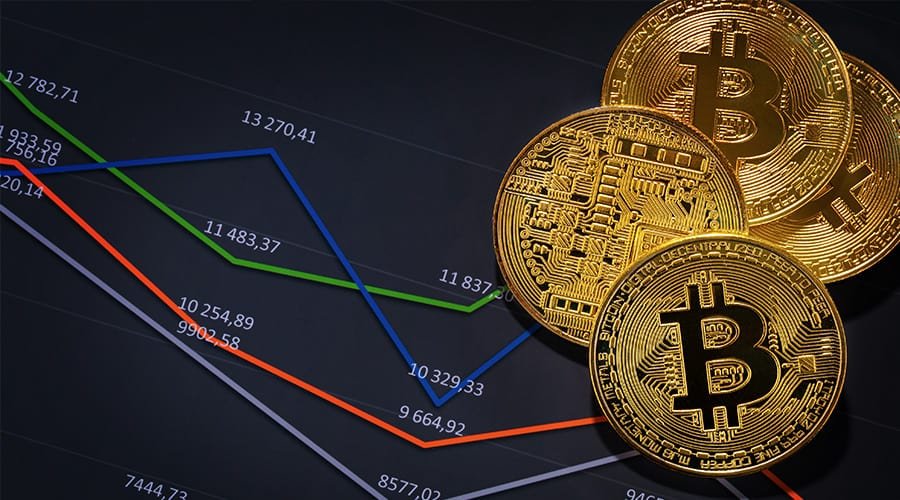
Bitcoin (BTC) is outperforming Wall Street’s top stocks

While Bitcoin (BTC) maintained a tight trading range this year, it outperformed several major technology equities. Year-to-date losses at IT behemoths like Alphabet, Microsoft, Amazon, and Meta were significantly more than at BTC.

In 2022, BTC has generally tracked major US technology equities. However, a disparity in their YTD performance could signal that decoupling is possible in the future. The token has also outperformed the Nasdaq composite index, which is heavily weighted on technology.

The world’s most valuable cryptocurrency is currently down around 12% year to date. Alphabet, Microsoft, and Amazon, on the other hand, are down between 13 and 17 percent. The Nasdaq composite index has also dropped by roughly 16%.

Only Apple has outperformed BTC among the five most valuable equities on Wall Street. The stock of the iPhone maker is down around 9% for the year. Tesla, which has BTC on its balance sheet, has lost approximately 16 percent so far this year.

Meta Platforms, the company that owns Facebook, has dropped 44% this year due to concerns over falling user numbers.

While the underlying emotion driving BTC and stock losses is similar—concerns about increasing inflation and a hawkish Federal Reserve—the token appears to be more immune to market volatility.

However, this resiliency is limited to tech equities. Berkshire Hathaway, the largest non-technology company on the S&P 500, has outperformed Bitcoin this year, rising 13.5 percent.

During periods of high inflation and tighter monetary policy, non-technology sectors tend to perform better. UnitedHealth Group and Johnson and Johnson, a pharmaceuticals major, are both up 7%.

The currency’s obvious sensitivity to inflation and market volatility disqualifies it as a safe haven. In terms of relative performance, it has outperformed large tech equities, but it is far from the best performing asset this year.

Gold prices reached their greatest level in recorded history this year as a result of safe haven demand. The yellow metal is also roughly 7% higher year-to-date.

Categories
Blockchain News

Binance retrieves back $5.8m in Axie Infnity stolen funds

Binance, a leading cryptocurrency exchange, announced the recovery of $5.8 million related to the recent hack of popular blockchain gaming project Axie Infinity.

Binance CEO Changpeng Zhao (CZ) said in a tweet on Friday that the group behind the hack began moving the stolen funds today and deposited about $5.8 million to Binance, possibly in an attempt to launder it.

According to CZ, the hackers skillfully distributed the funds across 86 different accounts. Remember that it was reported last month that the Ronin network, an Ethereum sidechain developed by Axie Infinity, was exploited, resulting in the theft of an estimated $625 million in crypto assets.

Remarkably, the Ronin team did not discover the hack until six days after the network had been compromised. When a user reported being unable to withdraw 5,000 ETH from the network, the team was notified.

Following the hack, the US Treasury Department stated in a report that it was able to link the Axie Infinity hack to Lazarus, a notorious North Korean hacking group that has allegedly stolen approximately $2 billion in assets from cryptocurrency exchanges.

The department stated that it identified the same Ethereum address associated with the group as the one responsible for the Ronin hack.

AXS, the native cryptocurrency of Axie Infinity, has lost more than 30% of its value since the Ronin hack was discovered. AXS was trading around the $70 mark prior to the incident, but at the time of writing, the token was trading at $46, representing a 34% drop since the hack.

The hack also had an impact on the price of Ronin’s native cryptocurrency, RON. The coin is currently trading around $1.35, a 41 percent drop since the exploit. Wormhole, based in Solana, recently lost over $300 million in an exploit similar to Ronin’s.

Categories
Blockchain News

Samsung Electronics Participate in Raising Funds for Metaverse

The largest companies in South Korea, including electronics giant Samsung and investment firms NH Investment and Coentry Investment, have led a $25 million funding round for metaverse startup DoubleMe.

Albert Kim, Michael Kuczynski, and Heeyoung Kim founded DoubleMe in 2015. During its early years, the company provided solutions for converting 2D videos into 3D models.

DoubleMe, a South Korean startup, is one of the market leaders in the metaverse. After launching the metaverse solution TwinWorld, the company attracted a lot of attention. The metaverse platform combines the digital and physical worlds through the use of augmented reality (AR).

According to the company, the latest funding from Samsung, NH Investment, and Coentry Investment will help DoubleMe grow exponentially. The funds will be used for product development, customer acquisition, marketing, and the hiring of new employees.

In addition, the company intends to release a commercial version of TwinWorld. It will bring significant improvements and support for AR devices such as the Nreal headsets. Clients of the company are located in 17 cities around the world.

Many technologies in the metaverse space have been successfully introduced by the metaverse company. DoubleMe’s revenue had also increased to $4.5 million. Previously, the company had raised $1 million in seed funding and received a $16 million government grant from South Korea.

Furthermore, the company has received backing from major global corporations such as T-Mobile, BT, Vodafone, Orange, and Telefonica.

South Korea is at the forefront of the metaverse and NFT races, as well as global crypto adoption. South Korea’s government has even announced a five-year strategy to become a global leader in the metaverse market. More than 200 companies will be involved in the new industry.

South Korean conglomerates such as SK Group, Samsung, and LG have already announced various NFT and metaverse projects. The government’s and leading companies’ support will help metaverse companies like DoubleMe grow even more.

Categories
Blockchain News

Kadena has launched a $100 million Web3 grant program

Kadena, a proof-of-work (PoW) blockchain, has announced a $100 million grant program to encourage Web3 development on its platform, potentially opening the door to more use cases for the layer-one protocol.

The grant program is an extension of Kadena Eco, an initiative aimed at expanding the Kadena ecosystem by developing gaming, metaverse, nonfungible token (NFT), decentralized finance (DeFi), and Web3 projects.

Kadena’s founder and CEO, Stuart Popejoy, stated that his company will use treasury resources to ensure the protocol’s long-term viability.

Venture capitalists have been paying close attention to Web3, which has become a sort of catch-all phrase for the next iteration of the blockchain-powered internet. It was recently reported that the launch of two Web3 developer funds worth $100 million and $135 million, respectively, from crypto exchanges KuCoin and CoinDCX.

In the meantime, decentralized node providers are stepping up to provide the infrastructure required to advance Web3 functionalities. However, competition is fierce because legacy Web2 providers such as Amazon Web Services, Azure, and Infura have emerged as early infrastructure players in the Web3 economy.

Kadena provides scalable architecture and smart contracts backed by a PoW consensus mechanism called Chainweb to support Web3 development on its platform. In theory, Chainweb is said to support high transaction throughput without the need for layer-two scaling solutions.

KDA, Kadena’s native cryptocurrency, is ranked in the top 100 on CoinMarketCap, with a total capitalization of approximately $925 million at the time of writing. KDA surged two weeks ago having followed the release of a new integration procedure and a Binance listing.

Categories
Bitcoin Blockchain Opinion People

Is Bitcoin maximalism causing crypto to fall behind?

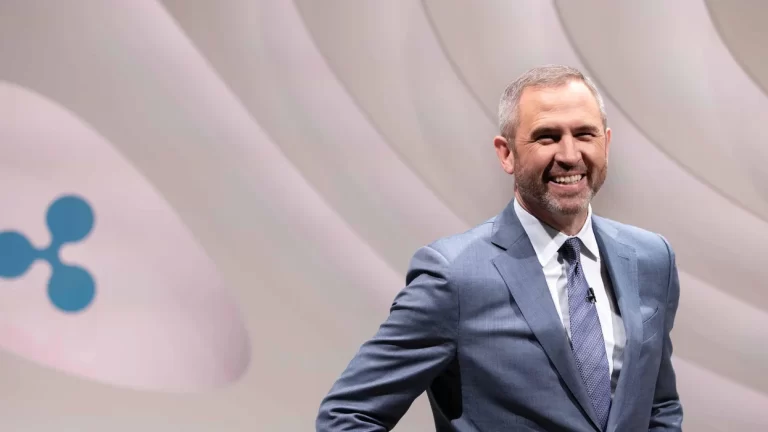
In a recent interview with CNBC, Ripple CEO Brad Garlinghouse stated that tribalism surrounding Bitcoin (BTC) and other cryptocurrencies is impeding the growth of the entire crypto industry.

Tribalism, according to Garlinghouse, is unhealthy, and he believes that holding one digital asset will not impede the growth of another, and that all can grow. The Ripple CEO then compared today’s crypto industry to the dotcom era of the late 1990s and early 2000s.

“I own bitcoin, I own ether, I own some others. I am an absolute believer that this industry is going to continue to thrive. All boats can rise. Yahoo could be successful and so could eBay … They’re solving different problems. There’s different use cases and different audiences and different markets. I think a lot of those parallels exist today,” Garlinghouse said.

He also stated that Bitcoin maximalists have resulted in “fractured representation” when it comes to lobbying US legislators.

Garlinghouse believes that maximalists will only speak out about Bitcoin, which they own, and not about other crypto assets. He went on to say that the lack of cooperation in Washington, D.C. and in the crypto space is shocking.

To be clear, a Bitcoin maximalist is someone who believes Bitcoin is the only crypto asset worth holding and regards other crypto assets as inferior.

Block CEO Jack Dorsey and Microstrategy CEO Michael Saylor are two well-known investors who are only bullish on Bitcoin.

Meanwhile, Ripple and Garlinghouse have been involved in a legal battle with the United States. Since 2020, the Securities and Exchange Commission (SEC) has been investigating XRP-related unregistered securities sales.

Ripple refuted the claims, claiming that XRP, like Bitcoin and Ethereum, is a cryptocurrency. Despite the fact that the lawsuit has been ongoing for more than 15 months, Garlinghouse recently revealed that the case is progressing well and is nearing completion.

Categories
Blockchain Regulation

Binance is Complying With Russian Sanctions

In light of recent European sanctions against Russia, Binance, the world’s largest crypto exchange, claimed it was forced to ban trading activity of Russian users.

Russian entities with crypto assets worth more than 10,000 euros ($10,893) would have their services limited, according to the exchange. These accounts will be unable to trade or deposit tokens, and will only be able to withdraw their funds.

Binance added that deposits into Russian accounts that fit within this category will also be prohibited. All Russian nationals and entities resident in Russia are subject to the rules.

The move comes after the European Union imposed a fifth round of sanctions on Russia in response to the latter’s invasion of Ukraine. The most recent penalties include asset freezes on a number of Russian businesses, as well as a ban on Russians receiving EU money.

Sanctions imposed in response to Russia’s invasion of Ukraine have virtually cut Ukraine off from the international financial system.

Binance’s latest action is a shift from the company’s previous stance on giving services to Russians. The exchange agreed to abide by sanctions imposed on Russian companies. It had, however, flatly refused to quit serving Russian citizens.

Binance, on the other hand, looks to be swimming against the current. The exchange had previously banned support for Visa and Mastercard cards in Russia after the two companies withdrew from the country earlier this year.

Coinbase CEO Brian Armstrong called crypto a “lifeline” for many Russians, and other crypto exchanges had likewise rebuffed calls to discontinue Russian services. It’s unclear how other exchanges will deal with the additional penalties right now.

The general assumption is that Moscow will be unable to use cryptocurrencies to circumvent tough sanctions. However, this hasn’t stopped the country from stepping up its crypto acceptance efforts.

A proposed bill would make certain types of cryptocurrency legal tender. In addition, the measure aims to create a broad regulatory framework for cryptocurrency in Russia.

The Russian government reportedly plans to use its vast energy reserves to mine additional cryptocurrency. It will create an official list of miners and provide mining companies with subsidies.

Categories
Blockchain News NFT

NFT Marketplace Beta Introduced by Coinbase

Coinbase, the world’s second-largest cryptocurrency exchange, announced on Wednesday that it has launched a test version of its much-anticipated NFT trading platform. Trading on the site will be limited to a small set of beta testers at first.

In a blog post, Coinbase stated that beta testers will be chosen depending on their waiting status.

The launch comes six months after the exchange announced that an NFT marketplace will be launched and that a waitlist had been established. In little than a day, the backlog grew to over a million people.

Popular NFT collections such as Doodles, Azuki, and World of Women are currently available on the marketplace.

For a short period, the platform will support any self-custody wallet and will have no transaction costs. The exchange intends to charge fees in the future.

Community features on the site include the ability to follow profiles, comment on NFTs, and vote on comments.

In the following weeks and months, the exchange says it will add more capabilities to the marketplace. Drops, NFT minting, token-exclusive communities, and the ability to buy NFTs with a credit card are all planned.

Earlier this year, the exchange announced a partnership with Mastercard to facilitate NFT purchases on its platform using the payment giant’s cards.

Coinbase is attempting to extend beyond its role as a standard cryptocurrency exchange with this move. Other heavyweights, including as Binance and FTX, have made similar moves and now have their own NFT marketplaces.

The move also coincides with a surge in NFT trade until 2021. The momentum from the 2021 boom isn’t showing any signs of waning.

Coinbase has worked to diversify its revenue streams through a variety of channels. The exchange just announced that a film trilogy based on the Bored Ape Yacht Club NFT collection would be produced.

Coinbase’s NFT marketplace is scheduled to be integrated into the series.

Categories
Blockchain Opinion

Should Elon Musk Be The Owner of Twitter?

Elon Musk, the climate activist, space entrepreneur, and electric vehicle manufacturer, is reportedly bidding for Twitter (TWTR). A good advice will be to get out of there.

According to a financial filing, Musk bought approximately 10% of the microblogging company’s free-floating stock last month, making him the largest stakeholder. What happened next wasn’t entirely clear: The firm, Twitter, awarded him a seat on its board of directors, but also took steps to limit his authority, including instituting a “poison pill” that would diminish everyone’s shares and prevent a “hostile takeover.”

It’s unclear why a man with Twitter’s clout would seek to take it over. Musk has proposed a number of apparent upgrades to the platform as part of his quest to gain widespread support for it.

Musk, like any good populist, wants to give Twitter users what they want: an edit button, longer tweets, and a DOGE tipping system (although, admittedly, the audience for DOGE improvements might be small).

Crypto has a dog in the race and a point of view, to the degree that there is such a thing. Twitter, like other specialized hobbies, is extremely indispensable to the industry.

Twitter, more than any other social or communication network, is where news breaks, reputations are created (and destroyed), and coins are traded. Other centralized platforms in crypto’s communication stack – Discord, Slack, even Gmail – but the “bird app” rises above them all.

Musk, who was once the wealthiest man on the planet, has a lot of clout with the platform. Twitter has sparked revolutions, fueled social movements, and, most recently, may have influenced the outcome of a war.

It’s a serious world-historical media, with its own genre and, most of the time, actual entertainment. However, Twitter, like any other place where huge groups of people meet and communicate on a regular basis, can be ugly and brutish — and not just because the posting structure is so brief.

Categories
Blockchain News Regulation

Nigeria’s SiBAN Against Unlawful Crypto Stance in the Country

The Stakeholders in Blockchain Technology Association of Nigeria (SiBAN), a group formed in 2018 to encourage blockchain adoption in Nigeria, has contacted public institutions to express their dissatisfaction with the country’s incorrect stigmatization of crypto and blockchain users.

SiBAN stated in a press statement shared with Coinfomania that while the use of cryptocurrencies is legal in Nigeria, authorities treat cryptocurrency investors as criminals.

Remember that the Central Bank of Nigeria (CBN) prohibited financial institutions in the country, including Deposit Money Banks (DMBs) and Non-Financial Institutions (NBFIs), from dealing with cryptocurrencies or providing services to crypto organizations, in a circular released early last year.

Customers who deal in cryptocurrencies should be detected and their accounts should be canceled promptly, according to the circular.

Failure to comply with the mandate by any of the aforementioned institutions will result in severe regulatory repercussions.

Following the CBN’s decision, which drew criticism from some Nigerian senators, the Corporate Affairs Commission (CAC), Nigerian Customs Service law enforcement agencies, the Nigerian Financial Intelligence Unit (NFIU), the Nigerian Police, and the Economic and Financial Crimes Commission (EFCC) began discriminating against and stigmatizing crypto users in the country, according to SiBAN.

Even though the CBN crypto directive does not prohibit crypto trading activities in Nigeria, the association claims that public agencies have unfairly treated crypto users by arresting and detaining crypto users, blocking and closing crypto accounts, extorting, harassing, and intimidating crypto traders.

SiBAN also stated that, while blockchain is the foundation of cryptocurrencies, the technology has numerous other applications. Despite this, authorities across the country continue to refuse persons who are developing blockchain applications or promoting the technology banking and financial services.

Categories
Bitcoin Blockchain Price Analysis

Bitcoin (BTC) Market Price Update

The bulls in Bitcoin (BTC) put the pressure on on April 20, with a rebound to $42,000 on the Wall Street open.

BTC/USD reached $42,220 on Bitstamp, the highest since April 11, according to data from Cointelegraph Markets Pro and TradingView.

According to Cointelegraph contributor Michal van de Poppe, the pair was currently in line for fascinating behavior after rising as much as 9.3% versus local lows from April 18.

Despite the recovery to the significant $42,000 milestone, there was a lot of volatility, as some people doubted that Bitcoin’s advances would continue.

However, for popular trader Josh Rager, the drop to $38,600 on April 18 and subsequent recovery was a trend to watch.

On April 19, he wrote, “The last couple of fake-outs resulted in over 30%+ uptrends.”

“Many folks were caught off surprise yesterday, albeit it wasn’t as severe as the day before. It’s possible that Bitcoin may continue to rise over the next week – take it day by day.”

Price performance after wicks down to support was noted in an accompanying chart through 2022. The aim this time was about $48,000, which is where Bitcoin’s 200-day moving average is located.

On the macro level, Rager chastised stock market oscillations, claiming that performance was impeded by shifts in sentiment.

On the day after missed earnings prompted a huge sell-off, unusual changes in Netflix shares became a talking point.

On April 20, however, the Fear & Greed Index, a sentiment gauge, reported a better general attitude, with the Index achieving its best score of April so far – 50/100.

In contrast, the Crypto Fear & Greed Index remained in the “fear” zone at 27/100.

Categories
Blockchain News

Four Indians Arrested For Crypto Fraud of Over $2 Million

Police in the southern Indian city of Bangalore have arrested four people in connection with a crypto ponzi scheme run through an app called ShareHash.

Sheetal Bastawad of Belagavi, taxi driver Imran Riyaz of Gurappana Palya, motorcycle mechanic Rehamatulla Khan, and scrap merchant Zabiulla Khan were among those apprehended, according to local reports.

The crime branch of the Bangalore City Police is still looking for two ShareHash directors identified as Jimmy and Stacy.

According to Kamal Pant, Bengaluru City Commissioner of Police, the group launched a cryptocurrency called Helium Crypto Token (Crypto Miner-HNT) and conducted their activities using the ShareHash app while promising investors high returns.

After tracing 44 bank accounts, authorities seized $1.9 million from the group. 1.6Kg of gold ornaments, more than $100,000 in cash, five company seals, mobile phones, laptops, and 44 Digital Signature Certificate tokens were also discovered and seized by police.

Recently, bad actors have continued to use cryptocurrencies to defraud unsuspecting investors. Earlier this month, Indian authorities seized approximately $286,000 in cryptocurrency used in drug trafficking across the country.

According to another report, the US Department of Justice recently seized $34 million in cryptocurrencies linked to illegal operations on the dark web.

Meanwhile, China’s Director of the Ministry of Public Security’s Criminal Investigation Bureau believes that criminals in the country primarily use USDT to launder their proceeds.

Due to a lack of clarity between cryptocurrency exchanges and the National Payments Corporation of India, which controls the United Payments Interface, cryptocurrency payments have been frozen across India (UPI).

The Indian government is taxing profits from the transfer of any virtual assets, such as Bitcoin, beginning this month. According to Bloomberg, Surojit Chatterjee, the product manager at Coinbase, made an unexpected announcement, resulting in an unanticipated fallout in the Indian crypto market.

Categories
Blockchain News

Robinhood Now Owns Crypto Exchange Firm Ziglu

By acquiring the United Kingdom-based crypto asset startup Ziglu, Robinhood, a popular cryptocurrency-friendly stock trading software, is striving for worldwide development.

The acquisition of Ziglu by Robinhood was officially announced Tuesday, subject to regulatory approvals and other closing conditions. Cointelegraph inquired about the deal’s size, but the firm refused.

The purchase will aid Robinhood’s worldwide expansion, allowing the company to finally reach markets in the United Kingdom and Europe. The move coincides with Robinhood’s revived development attempts this year, following its cancellation of ambitious expansion plans in nations such as the United Kingdom in 2020.

Mark Hipperson, the former Barclays technology head and co-founder of Starling bank, created Ziglu in 2020, according to Cointelegraph. Customers can purchase and trade eleven cryptocurrencies, including Bitcoin (BTC), Ether (ETH), and others, through the company’s digital platform. Users can also earn incentives and pay for services with a debit card on the Ziglu platform.

In the United States, Robinhood is a large online brokerage noted for providing a commission-free investing and trading platform. After launching trading of major cryptocurrencies such as BTC and ETH in 2018, Robinhood became well-known in the crypto industry.

Despite some criticism over its trading procedures and heightened scrutiny from US regulators last year, Robinhood has recently pushed forward with its development. Early in April 2022, the company announced plans to integrate the Lightning Network into its digital wallet function for an additional 2 million customers.

Categories
Altcoins Blockchain News

Offline Dogecoin Transactions Using Starlink the Next Big Thing?

The Dogecoin Foundation is attempting to use Elon Musk’s Starlink satellites to execute DOGE transactions offline.

The team is currently laying the groundwork to incorporate Starlink technology to support Dogecoin offline transactions, according to a recent blog post posted by two prominent members of the Dogecoin Foundation.

The foundation’s progress on Doge-related projects like as Gigawallet and RadioDoge was also highlighted in the recent post, which included important details about the new RadioDoge infrastructure, which seeks to execute offline Dogecoin transactions using Starlink technology.

The blog went into great detail on how the RadioDoge project hopes to perform offline DOGE transactions in order to facilitate global connectivity even in areas where internet access isn’t readily available.

RadioDoge uses a low-cost radio technology called HF/LoRaWAN, which will be integrated with the Starlink satellite network to make Dogecoin offline transactions more cost-effective. People who reside in distant places or in areas where internet infrastructure is still underdeveloped will benefit the most from the technology.

The foundation also wants to increase Dogecoin’s usability by assisting users in getting the most out of their transactions.

Starlink aspires to maximize the potential for Dogecoin to positively touch the lives of humans everywhere by creating projects that allow anyone on the planet to build a non-custodial Dogecoin wallet and transact DOGE for products and services.

The Dogecoin Foundation team is also focusing on laying the framework for the Gigawallet and RadioDoge projects, including boosting the first phase of Libdogecoin, which will serve as the initial introductory block for future DOGE products, according to their blog post.

More information was provided by the foundation, which stated that Doge’s Michi Lumin has developed a Regional Hub that will serve as a testing ground for the technology. Furthermore, the team has begun the first transaction generated with Libdogecoin.

Categories
Altcoins Blockchain Price Analysis

Why Binance Coin (BNB) Is On A Rally

Binance Coin (BNB) prices rose on Tuesday, as investors became more confident that the world’s largest crypto exchange will continue to support the token’s price.

Binance has kept its promise to continue burning BNB. Binance CEO Changpeng Zhao confirmed that $772.3 million in BNB tokens were burned to meet the company’s first-quarter goal. In the last 24 hours, the Binance token has increased by more than 5%.

CZ issued a warning just before the burn that $741 million in BNB tokens would be burned soon. He did, however, mention that the Binance token is deflationary. According to the report, the burn was carried out at an average price of $403 per token. The coin is currently trading at a price of $420 on average at the time of writing.

According to Binance, 1.8 million BNB tokens (worth $741.8 million) were burned in the first quarter of 2022. During the quarter 2 burn, over 1.8 million Binance coins (worth $769.4 million) will be sent to a dead wallet. The second burn will take place at a price of $424 per token on average. Over 2,600 BNB tokens (worth $1.1 million) have been burned in the last 7 days.

Meanwhile, the BNB token’s 24 hour volume ($1,941,224,781) has increased by more than 30%. With a total market capitalization of more than $69 billion, the token is the fourth largest cryptocurrency. Until now, 35.3 million BNB tokens have been sent to a dead wallet, according to Binance.

BNB has an auto-burn feature with the goal of reducing its total token supply to 100 million. It is done to provide the community with transparency and predictability.

Gulf Energy Development, one of Thailand’s largest private power producers, is forming a partnership with cryptocurrency trading platform Binance to enter the digital asset exchange business. According to the report, the venture between the two titans will begin as a 51-49 partnership. Gulf, on the other hand, has invested $20 million for a 0.4 percent stake in Binance US.

Categories
Altcoins Blockchain News

Beanstalk ($BEAN) Hacked Over $180 Million

This weekend, a security flaw was discovered in Beanstalk, a decentralized credit-based stablecoin protocol built on the Ethereum network. According to PeckShield, a blockchain security firm, Beanstalk lost an estimated $182 million due to the security breach.

The exploit has been confirmed by Beanstalk Farms, the team behind the invention and operation of the Beanstalk protocol. The team stated on their official Twitter account that the investigation into the attack is still ongoing. At the time of writing, the price of the $BEAN stablecoin has de-pegged from $1 to $0.19.

This weekend, a security flaw was discovered in Beanstalk, a decentralized credit-based stablecoin protocol built on the Ethereum network. According to PeckShield, a blockchain security firm, Beanstalk lost an estimated $182 million due to the security breach.

The exploit has been confirmed by Beanstalk Farms, the team behind the invention and operation of the Beanstalk protocol. The team stated on their official Twitter account that the investigation into the attack is still ongoing. At the time of writing, the price of the $BEAN stablecoin has de-pegged from $1 to $0.19.

Although the hackers demonstrated some humanitarian feelings by donating $250k in USDC to Ukrainian crypto donation addresses, they have continued to launder the remaining funds with Tornado Cash. Tornado Cash is a non-custodial decentralized protocol that allows for private transactions and has proven useful to hackers looking to launder stolen funds.

Protocol Exploits are on the Rise
Decentralized protocol security breaches are increasing at an alarming rate. Over a billion dollars have been lost this year alone as a result of these exploits. According to earlier reports, the most notable incidents include the theft of over $600 million from blockchain gaming network Ronin and the drain of over $300 million from cross-chain bridge protocol Wormhole.

Categories
Blockchain News Opinion People

Arthur Cheong Thoughts on North Korean Hackers

According to Arthur Cheong, founder of DeFiance Capital, North Korean hackers are actively seeking to compromise top crypto organizations. On April 15, he disseminated this information via a tweetstorm, citing research from leading cybersecurity experts. Cheong specifically mentioned a hacker group called BlueNorOff, which is supported by the North Korean government.

According to him, BlueNorOff’s recent social engineering attacks demonstrate that the group has mapped the entire crypto space’s relationship graph. He went on to say that this ability aids the hacker group in the creation of phishing emails that have a high probability of eluding the defenses of most crypto organizations.

Notably, BlueNorOff is not the only North Korean cybercrime organization focusing on the cryptocurrency space. The US Treasury Department recently linked Lazarus, a notorious North Korean hacking group, to the theft of $625 million from the Axie Infinity Ronin bridge.

Cheong collaborated with Jun Hao, a cybersecurity expert, to propose viable solutions for the problem at hand, in order to assist crypto organizations in protecting their operations from North Korean attacks.

Among the solutions proposed by the duo is the storage of on-chain crypto assets on enterprise-grade custodial solutions. Externally Owned Accounts (EOAs) secured by a hardware wallet, according to Cheong, do not provide adequate protection because attackers can insert a false Metamask browser extension and initiate the approval of unintended transactions.

He suggested using multi-signature wallets like Gnosis Safe, which are secured by multiple hardware wallets. Cheong recommends that crypto platforms use custody solutions with multisig two-factor authentication for increased security (2FA). To name a few, these are Fireblocks, Copper, and Qredo.

Cheong also recommended using 2FA for all sign-ins, bookmarking frequently used crypto dApp websites, rescinding unnecessary token approval, using dedicated computers for crypto transactions, and exercising caution when hiring remote software engineers and developers.

This news comes as hackers continue to launch large-scale attacks on DeFi protocols, with Beanstalk Farms being the most recent victim. Yesterday, malicious actors used a flash loan exploit to steal more than $180 million from the protocol.

Categories
Altcoins Blockchain Price Analysis

Near Protocol NEAR Price Prediction 04/18

As the new trading week begins, the price of NEAR falls. The price opened higher but failed to maintain the positive sentiment as it retraced lower. However, in the late US session, the price rose above $15.0 after briefly hovering around $14.66.

Since April 4, the NEAR price has been trading in a short-term trading range of $14 and $18, with only minor deviations in between. Previously, the price had risen nearly 160 percent from its February low of $7.36. However, the bulls lack the conviction to extend their gains.

Currently, the price is hovering around the critical support-turned-resistance zone of $15.70.

The bearish RSI divergence since April 4 indicates that the price could break $15.70 amid strong selling momentum. If this is the case, investors will face their first downside challenge at the 50-day EMA (Exponential Moving Average) of $13.94.

A break of the aforementioned level will result in a new round of selling in the asset. On the contrary, in a bullish scenario, the NEAR price could extend its rally and reach the recent swing highs of $19.74.

The formation of the ‘hammer’ candlestick pattern is the reason for our bullish argument. This has the potential to reverse the price’s current bearish sentiment.

The momentum oscillator, the moving average convergence divergence, which is still above the midline with a neutral stance, also contributes to the bullish outlook.

Furthermore, if the acceptance rate exceeds the upper target, investors will roll up their sleeves to catch the next upside destination at $20.0.

Categories
Blockchain News

Here’s How Crypto Company Exmo Exits Russia and Belarus

Exmo, a cryptocurrency exchange based in London, is the latest crypto trading platform to formally suspend operations in Russia and Belarus as a result of Russia’s invasion of Ukraine.

Exmo announced on Monday that it is selling its digital asset business in Russia and Belarus to a Russian software development company. The new owner and the size of the transaction were not disclosed at the time of writing.

According to Zhdanov, the deal includes Exmo’s client accounts in Russia and Belarus, as well as local fiat onramp systems. The platform’s technical code is not for sale and is entirely owned by the Exmo group.

As part of the agreement, Exmo’s ultimate beneficial owner, Eduard Bark, will leave the company and transfer his stake to Zhdanov.

Aside from Russia and Belarus, the deal includes Exmo’s operations in Kazakhstan, where the new owner’s team is based. According to the CEO, the unnamed buyer owns both a Russian software development company and a Kazakhstan-based legal entity for a cryptocurrency exchange. 

“We’ve put a lot of effort into the Russian part of the business, so we’ve made sure that now it’s in good hands. The new owner not only follows the roadmap that we’ve created earlier but will get to the new heights much easier. We’ve made this decision for the benefit of both sides.”

In mid-March, the company stated that it would not sanction regular people or block any accounts as a result of the sanctions. Exmo has amended its user agreement to state that Russian, Belarusian, and Kazakh residents will no longer be onboarded on its platform as part of its exit from Russia and Belarus. 

On Friday, the exchange disabled Russian ruble trading pairs. Exmo is a major cryptocurrency exchange founded in 2013 by Russian entrepreneurs Ivan Petuhovski and Pavel Lerner.

The firm’s exit from Russia will have a significant impact on the exchange because Russia was one of its main markets, according to Zhdanov, who stated that a significant portion of their business was located in Russia. They will see a nearly 30% decrease in revenue. He, on the other hand, believes that in the long run, it will hasten their exponential growth and allow the company to become a unicorn within the next three years.

The announcement comes just days after the Belarus-linked cryptocurrency exchange Currency.com announced the closure of its Russian operations last week.

Some major cryptocurrency exchanges, such as Binance, continue to operate in Russia, opting to comply with sanctions against specific sanctioned individuals rather than entire nations.

Categories
Altcoins Blockchain News

TerraUSD (UST) Is Now the World’s Third-Largest Stablecoin

TerraUSD (UST) stablecoin recently surpassed Binance USD in market capitalization, making it the third-largest stablecoin. The total market value of the token is now $17.50 billion, slightly higher than the $17.46 billion of BUSD.

However, actual trading in UST appeared to lag behind its peers, with 24-hour volumes totaling $261 million, ranking fifth among major stablecoins. According to Coinmarketcap, the token’s volumes were a fraction of those seen by larger peers USDT and USDC, and even lagged those of smaller peers BUSD and DAI.

The volumes suggest that the increasing market capitalization of UST is due to its reserves and token circulation rather than actual demand for the token. The Anchor Protocol, Terra’s largest DeFi platform, currently controls nearly two-thirds of UST supply through staking and deposits.

The Luna Foundation Guard (LFG) of the Terra community has been steadily increasing the reserves that support UST. One important aspect of this is the use of LUNA tokens to mint UST. Because UST has a fixed 1:1 peg to the dollar, the creation of more tokens has no direct impact on its price.

Rather than the usual deflationary effects of creating new tokens, minting new UST tends to increase the token’s market capitalization.

According to Terra Analytics, total UST supply increased by about 800 million tokens over the last week, corresponding to a $800 million increase in market capital. LUNA’s burn rate was also consistent during that time, with the exception of the release of 10 million tokens from non-circulating supply.

Despite constant minting, the data shows that Terra founder Do Kwon’s goal of making UST the most widely used stablecoin is still a long way off. Constant efforts by the LFG to replenish reserves have also put some downward pressure on LUNA, which fell 14% last week.

Concerns have also been raised about the protocol’s long-term viability, particularly given its market-beating yield of 20%. A surge in deposits has weighed on its reserves, potentially resulting in a severe liquidity crunch, destabilizing the UST’s peg.

However, the ANC has taken precautions against such a scenario, most recently voting in favor of dynamic yields. To increase its liquidity, the protocol has added support for other blockchains.

Categories
Blockchain News

MetaMask cautions Apple users about iCloud phishing attacks

MetaMask, a crypto wallet provider owned by ConsenSys, has issued a warning to the community about Apple iCloud phishing attacks.

The security issue for iPhone, Mac, and iPad users is caused by default device settings that store a user’s seed phrase or “password-encrypted MetaMask vault” on the iCloud if the user has enabled automatic backups for their application data.

MetaMask noted in a Monday Twitter thread that users risk losing their funds if their Apple password isn’t strong enough and an attacker is able to phish their account credentials.

Users can resolve the issue by disabling automatic iCloud backups for MetaMask, as detailed below:

The MetaMask warning came in response to reports from an NFT collector known on Twitter as “revive dom,” who stated on Friday that their entire wallet containing $650,000 in digital assets and nonfungible tokens (NFTs) was wiped due to this specific security issue.

DAPE NFT project founder “Serpent” — who also helped gain the attention of MetaMask by posting sharing the story with their 277,000 followers — gave a rundown of what happened to the victim in a separate thread earlier today.

They reported that the victim received multiple text messages asking him to reset his Apple ID password, as well as a phony call from Apple that turned out to be a spoofed caller ID.

Because they were apparently unaware of the caller, “revive_dom” provided a six-digit verification code to prove ownership of the Apple account. The scammers then hung up and gained access to his MetaMask account through data stored on iCloud.

While the majority of the community was supportive, others were quick to point out the importance of using cold storage and conducting extensive due diligence when storing assets in a hot wallet.

Categories
Blockchain News

Germany Now The Most Crypto-Friendly Country

Germany has surpassed Singapore and the United States to become the world’s most crypto-friendly country. The data is from Coincub’s 2022 Q1 International Crypto Ranking Guide.

Germany is now the most crypto-friendly country in the world, according to Coincub. Given the current state of crypto regulatory uncertainty in the EU, this is a significant accomplishment and a possible ray of hope.

The European powerhouse jumped from fourth in the fourth quarter of 2021 to first in the first quarter of 2022, dethroning former first-place holder Singapore.

The increasing institutional adoption of cryptocurrency, as well as the country’s progressive taxation of the developing market, are cited as reasons for its rise in the most recent rankings. Cryptocurrency has been accepted by German institutions as a viable long-term investment for savers.

This is reflected in the fact that Sparkasse, a group of traditional savings banks, is currently working on providing crypto transaction capabilities and custody for users. The move means that the institution’s 50 million customers will be able to trade and store their Bitcoin with it.

Singapore, which is currently ranked second, has dropped in the rankings as a result of recent government crackdowns on crypto advertising and Bitcoin ATMs.

The United States, on the other hand, is a force to be reckoned with in terms of sheer numbers, leading in trading volume, domestic mining, and Bitcoin ATMs.

However, these were insufficient to propel it to the top of the rankings. Coincub CEO Sergiu Hamza explained the reasoning behind the rankings:

“We look to give the most accurate picture of crypto worldwide, and to that end, our ranking is always evolving. In Q1 2022, our scoring methodology better reflects the importance of some categories over others, and we have also added new categories including Talent (the availability of crypto courses by leading institutions) Fraud, and numbers of ICOs within each country. As events develop, we go beyond legislation or pure numbers and introduce new dimensions that are crucial for defining a countries ‘crypto friendliness’ or maturity.”

Coincub’s ranking corresponds with KuCoin data on the growing adoption and interest in cryptocurrency in Germany. As previously reported, 7.5 million Germans have already invested in the cryptocurrency market, with another 6.1 million showing interest. According to KuCoin’s data, the majority of German crypto investors were in it for the long haul and were primarily interested in passive income.

According to Coincub’s most recent rankings, other countries are also warming up to cryptocurrency. The Netherlands, France, and Spain all advanced by more than seven places in the rankings. Because of progressive regulations, all three countries have seen an increase in crypto transaction volumes and the proliferation of blockchain startups.

Categories
Bitcoin Ethereum Price Analysis

Bitcoin Ethereum Price Analysis 04/17

Bitcoin, as well as other cryptocurrencies, are still subject to bearish dominance, which is now in its third week. The crypto market has lost a significant amount of value over the last two intraweek sessions.

Since falling below $2 trillion in the previous seven days, the global cryptocurrency market cap has attempted but failed to reclaim this level. Over the last six days, the quest to reclaim $2T has been ongoing.

The listing of Shiba Inu, along with other projects, on Robinhood was one of the most important news stories during this time period. The announcement was met with great enthusiasm by the bulls, who are driving the various assets to new highs.

Bitcoin opened the current intraweek session at $42,129, but experienced an immediate correction, losing more than 6% of its value during the first intraday session. This is the apex coin’s largest move during the time period under consideration.

On Monday, it fell below the $40k support level and closed at $39,500. During that session, price action set up BTC for a battle to hold on to the highlighted support. The cryptocurrency saw minimal gains over the next two days and regained stability above $40,000.

On Wednesday, the apex coin flipped the $41k resistance, resulting in a nearly 3% increase. After losing an equal amount on Thursday, the asset under consideration retested $40k and has since struggled to maintain its position.

Bitcoin came perilously close to being oversold on Monday, with the Relative Strength Index (RSI) dropping as low as 35 before recovering the following day. BTC is still in the danger zone, as evidenced by the fact that the aforementioned indicator remains stable at 40.

As of this writing, the apex coin is trading below its pivot point and is getting closer to its first pivot support. Furthermore, the largest cryptocurrency is trading below its Displaced Moving Average (DMA), adding to the negative vibe surrounding the asset.

In the same situation as Bitcoin, Ethereum opened the week at $3,200 and was met with an immediate correction, losing nearly 7% of its value during the first intraday session.

This is the most significant move made by the largest alt during the time period under consideration. It lost the $3k support and closed at $2,970 on Monday. ETH experienced minimal gains over the next two days before regaining stability above $3,000. On Wednesday, the second largest cryptocurrency gained 3% after breaking through the $3,100 resistance level.

The bears reclaimed control of the market on Thursday, and ether fell more than 3%. It retested $3,000 support and has since struggled to hold the level. Throughout the week, we saw ether come dangerously close to testing the $2,900 support but fail due to an increase in demand concentration at the mark.

Concerns about ethereum becoming oversold loomed on Monday, as the Relative Strength Index (RSI) fell as low as 42 but recovered the next day, similar to BTC. The RSI is still below 50, indicating that ETH has not fully recovered.

During the first intraday session, the largest alt lost its pivot point. Throughout the rest of the week, ether traded above or below the mark. As of this writing, the asset under consideration is considered a bearish asset because it is trading below its pivot point. Furthermore, the second largest cryptocurrency is trading below its Displaced Moving Average (DMA).

Categories
Blockchain News

Biden will appoint an ex-Ripple adviser as Vice Chair for Supervision

US President Joe Biden proposes to name Michael Barr, a Ripple advisor from 2015 to 2017, as the Federal Reserve’s Vice-Chair for Supervision. The White House made the announcement in an official statement yesterday. Governor Randal Quarles’ term expired in October 2021, leaving the seat vacant.

Aside from his tenure at Ripple, Barr was the Treasury Department’s Assistant Secretary for Financial Institutions during the Obama administration, where he was instrumental in the development of the Dodd-Frank Act. He also taught financial regulatory classes at the University of Michigan. Barr also worked for the White House’s National Economic Council.

According to the White House, the Biden administration has so far created more than 8 million jobs. As a result, millions of households now have a basic source of income. However, as consumer prices continue to rise, inflation has proven to be a significant burden for many households.

The White House explained why it is critical to fill the Fed Vice-Chair for Supervision job by stating that the Federal Reserve plays a significant role in controlling inflation. The Fed Board, on the other hand, is currently not full. Barr is an excellent choice, according to the White House, because he has the necessary competence and experience.

Biden added:

“Barr has strong support from across the political spectrum — and has been confirmed by the Senate on a bipartisan basis. He understands that this job is not a partisan one, but one that plays a critical role in regulating our nation’s financial institutions to ensure Americans are treated fairly and to protect the stability of our economy.”

The role is critical because it guarantees that the economy works for everyone, which is especially important as prices continue to rise. Barr, according to Sherrod, recognizes the significance of this role at this vital juncture in our economic recovery.

Sherrod offered his support for Barr and asked his Republican colleagues to reject their old playbook of personal attacks and demagoguery in favor of putting Americans and their wallets first.

The role of Vice-Chairman for Federal Reserve Supervision is bipartisan. However, former Federal Reserve Board Governor Sarah Bloom Raskin, Biden’s original choice for the role, withdrew her name from consideration in the last month.

Raskin claimed attacks from special groups and Republican legislators who held her candidacy hostage as grounds for her withdrawal at the time.

Categories
Altcoins Bitcoin Blockchain Ethereum News Regulation

Iran prison sentence for illegal crypto mining

According to a local media outlet, Iran is planning to tighten punishment for illegal crypto miners that use subsidized electricity. Offenders will face hefty fines, a 3-5 year prison sentence, and the termination of their company licenses under the new legislation.

“Any usage of subsidized electricity, intended for families, industrial, agricultural, and commercial customers, for mining cryptocurrencies is forbidden,” stated Mohammad Khodadadi Bohlouli, an official of Iran’s Power Generation, Distribution, and Transmission Company.

According to the official, crypto miners who unlawfully utilize subsidized electricity deplete the country’s power grid and harm people’s electrical equipment such as televisions, refrigerators, air conditioners, and others.

Iran has swiftly become one of the world’s largest crypto mining hotspots due to its low-cost energy. According to a survey by blockchain analytics firm Elliptic, Iran accounted for 4.5 percent of crypto mining operations between January and April 2021, ranking the country among the top ten mining sites in the world.

Since 2019, cryptocurrency mining has been authorized in Iran. At the same time, the country has clearly expressed its displeasure with unlawful operations, particularly those in which operators are not authorized by the state or energy distribution firms.

In January 2021, Iran authorities seized over 45,000 crypto mining equipment that were unlawfully using subsidized electricity. Authorities also confiscated 7,000 devices tied to unlawful crypto mining operations five months later.

According to the Iranian authorities, 85 percent of crypto mining activities in Iran are unlawful. Unauthorized mining companies are believed to consume up to 3000 MW of power each day, posing a threat to the power grid.

As a result, the harsher penalties proposed in the new development are intended to disincentivize these unscrupulous actors and promote healthy energy consumption, all while giving Iranian authorities complete control of the local mining industry.

Categories
Altcoins Blockchain News

Robinhood CEO And Elon Musk on Dogecoin

Vladimir Tenev, CEO of brokerage platform Robinhood, has discussed how the once-joke cryptocurrency Dogecoin (DOGE) could become the currency of the internet and people in the future.

Tenev offered a few of changes in a 12-part Twitter thread liked by Elon Musk that might help develop the meme-inspired crypto into an asset that can be used for ordinary payments as well as internet transactions.

He emphasized that Dogecoin’s transaction fees of roughly $0.003 per transaction are already low enough to position the digital currency for wider public appeal. Last November, the Dogecoin Core 1.14.5 release significantly cut transaction fees.

Tenev stated that this effectively offers DOGE a less expensive option to the big card networks, which charge 1-3 percent fees per transaction. The Robinhood CEO noted that increasing Dogecoin’s block time and block size is what will propel the token to prominence.

Tenev, in particular, believes that the current 1-minute block period should be reduced to 10 seconds in order for DOGE to compete with the likes of Visa. However, he believes that it should not be so quick that miners squander a lot of energy creating agreement.

Tenev advocated expanding Dogecoin’s block size limit from 1MB to 1GB, and eventually to 10GB. Dogecoin now has a throughput of 40 transactions per second. In comparison, Visa’s overall throughput is 65,000 TPS.

This means DOGE would have to expand its throughput more than 10,000 times to be able to replace Visa. Robinhood’s Tenev asked Dogecoin core developers to prioritize expanding the block size limit as a surefire approach to deliver all of the throughputs required for a global currency in the future.

The Robinhood CEO’s recommendations came shortly after Dogecoin co-founder Jackson Palmer slammed Elon Musk’s aspirations for Twitter.

Elon Musk revealed his bid to take Twitter private, as Coinposters previously reported. Musk, one of Dogecoin’s most ardent supporters, offered to buy the social networking platform for more than $40 billion, stating that it was his “best and final offer.”

Palmer was not pleased with the decision, tweeting that it takes some incredible mental gymnastics to link any type of “freedom” with the richest guy in the world attempting a hostile takeover and forcing one of the largest public social media sites private.

This isn’t the first time Palmer has slammed Tesla’s CEO. Musk was labeled a “self-absorbed grifter” by the developer of Dogecoin in May 2021. He also called Musk’s much-anticipated appearance on Saturday Night Live a “cringe.”

Palmer has subsequently removed himself from the crypto business, believing it to be toxic and dominated by a powerful cartel of affluent persons.

DOGE is now trading at $0.1456 per coin, with a market capitalization of $19.3 billion.

Categories
Altcoins Blockchain Price Analysis

Cardano (ADA) Price Prediction 04/16

The price of Cardano is currently stabilizing near a short-term resistance zone. The price is bouncing around at a major resistance zone. If the price can hold, it will set off a tremendous upswing. Investors may be on the lookout for a dip-buying opportunity.

ADA’s price completed a ‘Cup and Handle’ configuration on the daily chart. After marking the swing highs near $1.24, the price made a hefty 26 percent retracement. A resurgence of buying pressure would push the price upward.

Many in the cryptocurrency sector are still optimistic about Cardano’s potential acceptance. In January, Ethereum co-founder Vitalik Buterin polled the Twitter (TWTR) community to see which currency, other than ETH, they would prefer to dominate transactions in 2035. ADA received 42 percent of the more than 600,000 votes cast, compared to 38.4 percent for bitcoin.

Poll for Ethereum community. You wake up in 2035, and 80% of all transactions + savings in the world are in one currency that is not ETH. Which would you prefer it to be? — vitalik.eth (@VitalikButerin) January 13, 2022

In the midst of the current negative market, one cryptocurrency that investors are anticipating a bullish run is Cardano native token ADA. Due to a 178 percent rise in the global crypto population in 2021, Cardano has positioned itself for adoption by allowing users to build other native assets in the blockchain and execute transactions without the use of a smart contract. As a result, there are now over 2.5 million native tokens. This has enabled ADA investors to obtain a return on investment (ROI) of more than 200 percent in 2021.

Furthermore, it appears that Cardano’s “Alonzo” upgrade is having a big impact on investor mood. In fact, the upgrade is about smart-contract functionality and addresses one of the network’s most visible flaws, according to critics.

While everything appear to be going well for the bulls. A drop below the session’s low, on the other hand, would undermine the pair’s positive prognosis. In that situation, the downside support level may be $0.95. A surge in sell orders would push the price even closer to the horizontal support line at $0.85.

As of press time, the ADA/USD pair was trading at $0.95, down 0.04 percent on the day. According to CoinMarketCap, the 24-hour trading volume of the eighth-largest cryptocurrency by market capitalization is $490,037,557.

Categories
Altcoins Blockchain News Opinion

What Elon Musk’s Offer to Buy Twitter Means For Dogecoin

Following a 9.2 percent share acquisition earlier this month, eccentric Tesla/SpaceX CEO Elon Musk has proposed to buy social media platform Twitter for a total of $43 billion.

Elon Musk has proposed to buy 100% of Twitter stock for $54.20 per share in cash via a text message to Twitter Chairman Bret Taylor, which has been reproduced in a filing with the United States Securities and Exchange Commission (SEC). The $54.20 per share price represents a 38% premium over the day before Musk’s purchase in Twitter was made public.

Twitter now has 800.64 million shares, implying that Musk’s offer values the social media behemoth at at $43.4 billion. The eccentric tech billionaire announces unequivocally that the offer is his best and final.

On April 4, the world’s richest person and founder of Tesla made news when purchasing a 9.2 percent interest in Twitter for an estimated $2.89 billion, making him the company’s largest individual stakeholder. This was quickly followed by the announcement that Musk will be joining the board of directors of the corporation.

However, three days earlier, Twitter current CEO Parag Agrawal stated that Musk would no longer be joining the board, stating that he believed it was for the best.

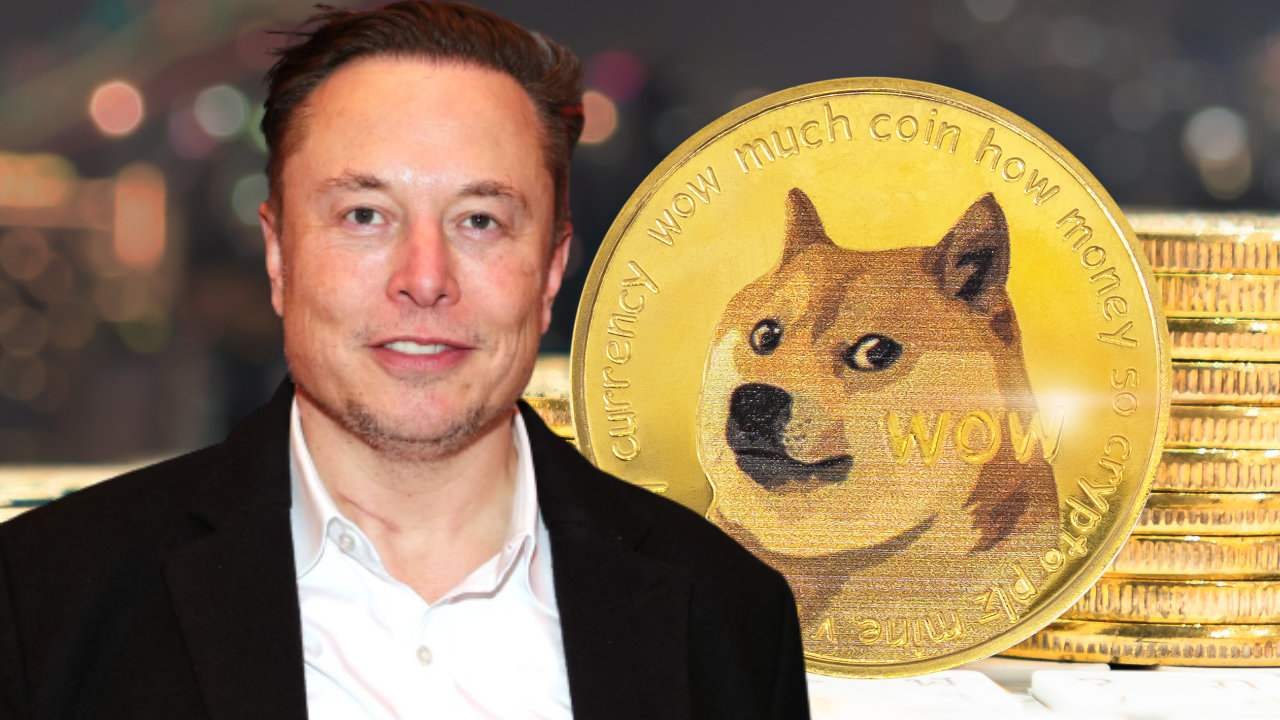
Musk’s favorite cryptocurrency, Dogecoin (DOGE), rallied up10% last week after news of his investment in Twitter fueled speculation that it could be integrated into the site. Later, Musk proposed that the social media platform accept DOGE payments for Twitter Blue subscriptions.

Dogecoin surged 6.0 percent today as rumors of Musk’s potential takeover of Twitter spread, before trimming gains. As of press time, the renowned meme-inspired cryptocurrency was trading at $0.141.

Despite Musk’s continuous support, DOGE is currently 80.5 percent behind its historic high of $0.731578 set in May. If Twitter accepts Elon Musk’s acquisition offer, Dogecoin could see another brief boom.

Categories
Blockchain News NFT

Emirates Airlines intends to launch NFTs and Metaverse experiences

Emirates, a Dubai-based multinational airline, stated on Thursday that it will soon provide non-fungible tokens (NFTs) and exhilarating metaverse experiences for its customers and employees.

The well-known airline intends to invest in the metaverse through the use of collectibles and utility-based NFTs, as well as experiences that will promote its services.

The initial round of projects will be released in the coming months, according to Emirates.

Sheik Ahmed bin Saeed, Chairman and Chief Executive Officer of Emirates Airlines and Group, commented on the company’s foray into the metaverse and the NFT world:

“We are excited about the opportunities in the digital space of the future and are committing a significant investment in financial and resourcing terms to develop products and services using advanced technologies that will deliver on revenue, brand experience, and business efficiencies.” 

The airline stated that it will collaborate with businesses to bring its Web3 plan to life, as well as attract talent for future projects.

The business also stated that its Emirates Pavilion, which was built on the site of the recently ended Expo 2020, will now serve as a hub for innovation.

The Emirates Pavilion will be used to attract talent from around the world to assist bring the company’s ideas and objectives, especially those involving the metaverse and NFTs, to completion.

The Middle East is quickly becoming a cryptocurrency hotspot. Last month, Coinfomania revealed that two cryptocurrency exchanges, ByBit and CryptoCom, had been granted permission to operate in the Middle East. ByBit said that it would establish its worldwide headquarters in Dubai after it obtained an operational license to offer its full range of products and services in the region.

According to another claim, Citizens School is the first in the Middle East to accept bitcoins as payment for tuition.

Meanwhile, Dubai recently passed a new law to govern cryptocurrency activity in the region, as well as a regulatory agency known as the Dubai Virtual Assets Regulatory Authority (VARA) to monitor the local business.

Categories
Altcoins Price Analysis

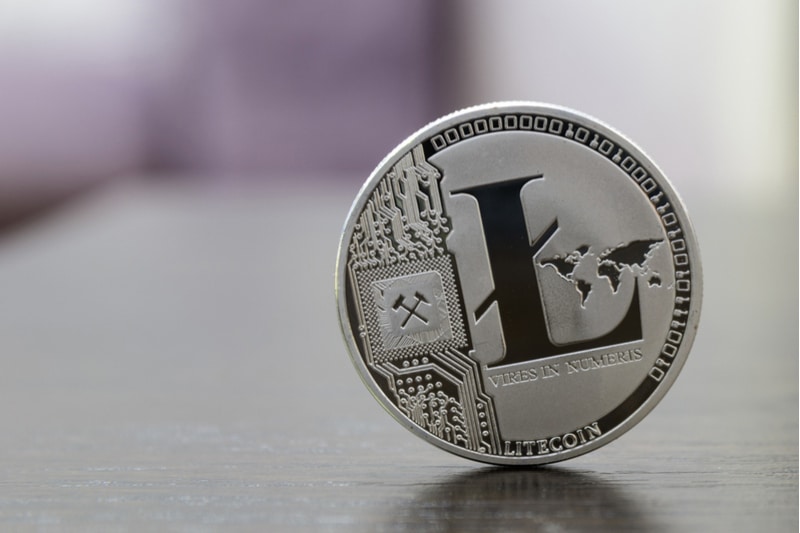
Litecoin (LTC) Price Prediction 04/15

Following the $124 barrier fake out on April 5th, the price of Litecoin (LTC) shows a V-top rejection. The drop resulted in a 15.5 percent loss and pushed the coin price back to the $100 bottom support. Buyers would be able to push cryptocurrency above the $141 resistance zone if they continued to buy.

LTC purchasers’ failed attempts to persist above the $103 resistance resulted in a resistance fakeout. This bear trap prompted aggressive buyers who bought the $103 breakout to liquidate. Sellers continued to put pressure on the coin price, driving it down to the $100 support level. Since last quarter, Litecoin price has recovered from this support level, indicating a downtrend bottom.

On April 13th, the altcoin recovered from its lowest support level ($100), kicking off a new bull cycle. The recovery rally has accelerated by 10%, smashing directly into immediate resistance at $120. As a result, purchasers forecast a positive breakout and sustained resistance above the overhead resistance; the coin price will gain 16 percent to $141.

Bollinger band- the bottom band of the indicator bolstered a bullish reversal from the $100 threshold. However, the indicator’s sideways movement emphasizes a short-term gain.

DMA- The LTC/USDT pair’s decreasing SMAs (20, 50, 100, and 200) signal a bearish trend. A likely crossover between the 50 and 100 SMA, on the other hand, could entice extra buys from traders.

Categories
Altcoins Bitcoin Blockchain News Price Analysis

Bitcoin Solana Terra Cardano Forecast 04/15

Cryptocurrencies have lost 3-5 percent of their value, wiping out the majority of the gains made since the beginning of the month. While Bitcoin was not the heaviest hit, the largest cryptocurrency in the world fell below $40,000.

Bitcoin saw its worst drop in weeks on Tuesday, falling below the $40,000 level for the first time since March. After reaching a high of $47,106 due to the enthusiasm generated by the Bitcoin conference in Miami, the asset fell as much as 13.26 percent over the week.

Several explanations have been advanced in an attempt to explain why prices are falling. A crucial explanation cited by various analysts is the growing correlation between Bitcoin and the US stock market, which has been observed since the beginning of the year.

The Nasdaq 100 was trading below its moving average at the start of last weekend, and it was predicted that Bitcoin would lose part of its value in tandem with stocks.

The weekend saw an increase in rumors of the Fed tightening monetary policy, which most certainly contributed to the price drop. Analysts believe that the Federal Reserve will raise interest rates if inflation exceeds 9% for the first time in more than 40 years.

Bitcoin has dropped more than 8% in the last seven days, bringing its market cap below $800 billion for the first time in weeks. The asset maintained a market domination of more than 40%, while trading volume increased to 117.07 percent as traders sought to fathom the raging turmoil.

Bitcoin was not the hardest hit in this week’s huge price fall, as altcoins appeared to bear the brunt of the wobble. Among the top ten largest cryptocurrencies, Avalanche’s AVAX has lost 10.69 percent in the last seven days, while LUNA has lost 18 percent.

Ethereum lost 7% of its value to trade below the $3,000 barrier, while Solana and Cardano both lost 11% to trade at $101 and $0.9477, respectively.

Categories
Blockchain News NFT

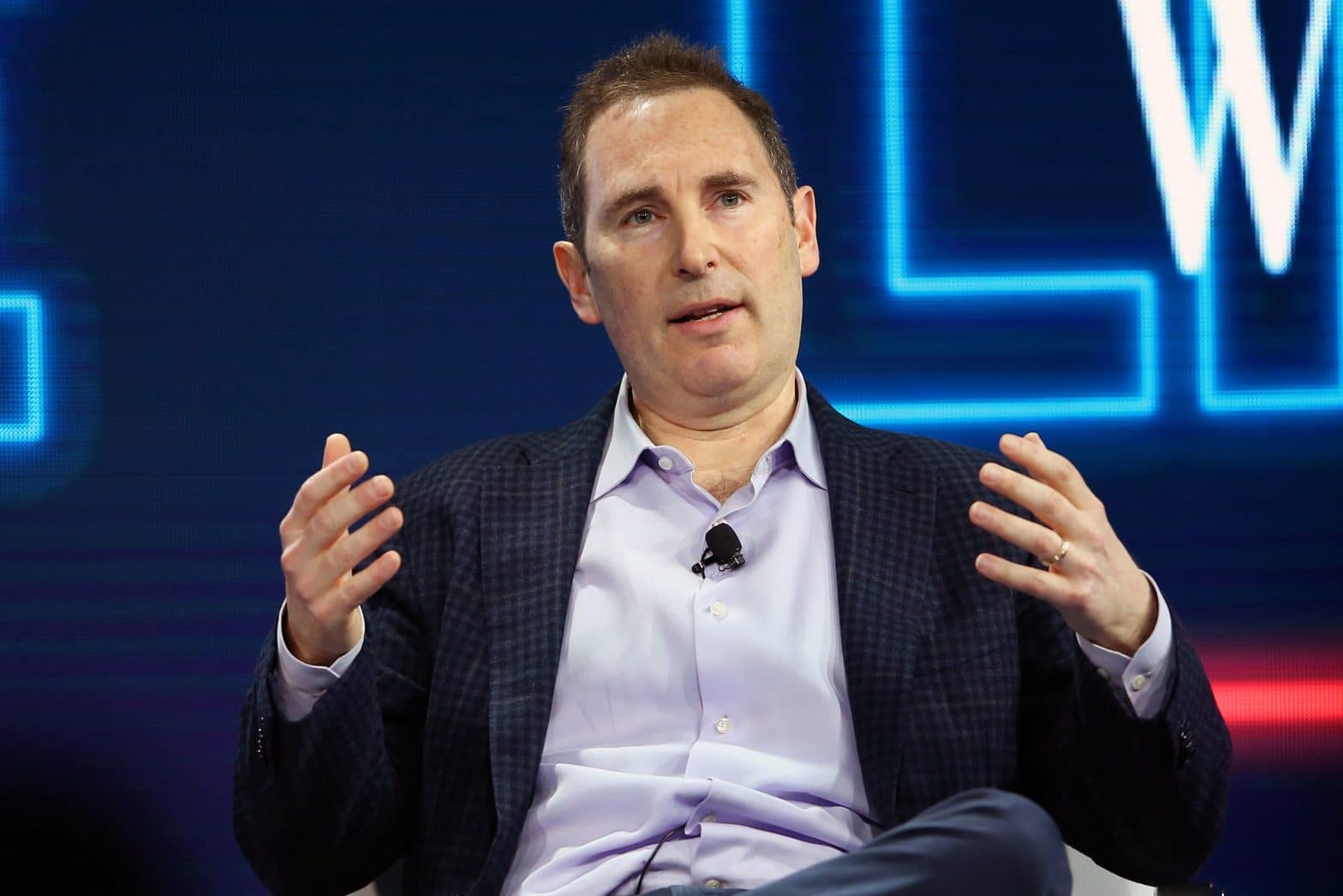
CEO Of Amazon, Andy Jassy, Is Really Into NFTs

Amazon, the cloud computing and e-commerce behemoth, has not ruled out entering the Bitcoin market. Amazon CEO Andy Jassy stated that the corporation views the digital assets industry as a developing one.

In an interview with CNBC, Jassy noted that there was a lot of talk about the highly exciting crypto market. He expects the NFT market, in particular, to do extremely well in the future, adding that it has already begun to take off.

The CEO, who recently took over at Amazon from Jeff Bezos, believes that the company is unlikely to embrace cryptocurrency as a payment mechanism anytime soon. However, as the sector evolves, he does not rule out the possibility in the future.

Jassy stated that he expects NFTs to continue to rise rapidly. The company is probably not near to incorporating cryptocurrency as a payment mechanism in its retail business, but the CEO feels that as crypto and blockchain become more popular, this may become a possibility.

On further investigation, he also stated that an Amazon NFT marketplace is possible in the future. Kassy stated that he does not possess NFTs, Bitcoin, or any other altcoins.

The CEO’s interview comes only days after he issued his first annual shareholder letter, which makes no mention of digital assets. However, Amazon has offered multiple job listings in the past for crypto-related positions.

Amazon’s payment team first listed a position for a digital currency and blockchain expert in July. This was followed by an Amazon Web Services job posting for a financial services specialist who understands cryptocurrency and the digital asset ecosystem.

While Amazon has not announced any concrete plans, its competitors in payment services and online retail purchasing are welcoming cryptocurrency. Bolt, a payments service provider, just paid $1.5 billion for Wyre, a web 3 business.

The company hopes that the contract, which is the largest in the crypto market so far, will allow merchants to accept crypto payments from online buyers.

Similarly, e-commerce platform Shopify announced a collaboration with Strike that will enable Bitcoin-to-cash payments for all of its merchants worldwide. 

The payments will be enabled, in particular, via the highly cost-effective and rapid Bitcoin Lightning Network. Their actions highlight the growing popularity and use of cryptocurrency around the world.

Categories
Blockchain News

Elon Musk Wants to Buy Twitter And Here Are Some of His Plans For It

Elon Musk, CEO of Tesla and SpaceX, has a claimed net worth of more than $300 billion and has stated that he could technically afford to buy Twitter outright, as well as overhaul the user experience of the main social media network.

Musk told curator Chris Anderson in a TED Talk held at a conference on Thursday that if his offer to buy Twitter was successful, he would consider changing the way the platform handles controversial content by not promoting certain tweets and adding the ability to edit tweets as well as show that edit history.

He also stated that, under his proposed leadership, Twitter should be hesitant to delete items and block accounts, but he would work to support free speech in accordance with the laws of the individual countries.

“A top priority I would have is eliminating the spam and scam bots and the bot armies that are on Twitter. They make the product much worse. If I had a Dogecoin for every crypto scam I saw, we’d have 100 billion Dogecoin.”

According to a filing with the US Securities and Exchange Commission on Wednesday, Musk proposed to buy Twitter’s shares — excluding the roughly 9 percent that he already controls — for $54.20 per share, a 38 percent premium over the stock’s closing price on April 1. Twitter shares were trading at $45.08 at the time of publication, up more than 30% in the previous 30 days.

The Tesla CEO’s possible purchase of the popular social networking platform elicited conflicting reactions. Many praised the action as a step forward for free expression, while others cited Musk’s own somewhat juvenile behavior on Twitter and his enormous riches.

The price of Dogecoin (DOGE) was largely unaffected by Musk’s purchase of Twitter stock as well as his offer to buy the company. Musk was the company’s largest shareholder as of April 4, but he was reportedly surpassed Thursday by Vanguard Group, which increased its holdings to more than 10% of Twitter’s shares.

Categories
Blockchain News

Hacking Group Lazarus Might Be Linked to Recent Axie Infinity Hack

The US Treasury Department has linked the renowned North Korean hacking outfit Lazarus to the theft of nearly $600 million from blockchain game business Axie Infinity last month.

The Treasury Department issued a new North Korean Designation update on Friday. The new list names the same Ethereum address (0x098B716B8Aaf21512996dC57EB0615e2383E2f96) as belonging to the Lazarus Group as being behind the Ronin Network breach.

As a result, the US government agency has indirectly acknowledged that the gang is behind the exploit and has added the address to its sanctioned list. Notably, the address still contains a sizable percentage of the stolen assets, totaling 147,753 ETH (about $444 million).

In a record-breaking hack, Ronin Network, an Ethereum-linked sidechain that powers the Axie Infinity game, lost around $625 million. By stealing the network validators’ secret keys, the hackers stole 173,600 ETH and 25.5 million USDC.

At the time, the Ronin Network team explained that the hack was carried out through a social engineering attack. This strategy entails duping an organization or an employee into disclosing highly valuable information that can be used for harmful reasons.

According to the latest findings, the Lazarus Group, which is reportedly run by the North Korean state, employed this strategy to abuse the Ronin Network. In the past, the organization is accused of stealing nearly $2 billion from cryptocurrency exchanges.

The Ronin Network reaffirmed that investigations into the incident are still underway in a new update noting the latest findings by the US Federal Bureau of Investigation (FBI). The findings, however, have no bearing on Ronin Network or Axie Infinity’s advancement.

Sky Mavis, a Vietnam-based business that manages both projects, raised $150 million in an emergency fundraising round headed by Binance. The extra cash, as well as Sky Mavis’ balance sheet assets, will be utilized to compensate gamers affected by the exploit, according to the team at the time.

Categories
Blockchain Gaming News NFT

Epic Games Gets $2 Billion to Create a Metaverse

Epic Games is most known for creating the blockbuster battle royale game Fortnite, in which 100 people compete against each other in a sandbox-like setting until only one remains. It is also the creator of the Unreal gaming engine.

Epic Games stated on Monday in a blog post that it has received money from Sony and KIRKBI Investments, the group behind the LEGO Group, to support its aim to create for the metaverse.

Just last week, the game business announced a collaboration with LEGO for this aim. According to Epic Games’ most recent statement, the firms involved intend to develop an experience that emphasizes the connection between the physical and digital worlds.

“As a creative entertainment firm, we are excited to invest in Epic to extend our partnership in the metaverse sphere, a space where creators and users share their time,” stated Sony Group Corporation CEO Kenichiro Yoshida. “We are also convinced that Epic’s capabilities, particularly their formidable game engine, paired with Sony’s technology can speed our numerous endeavors, such as the development of new digital fan experiences in sports and our virtual production initiatives,” Yoshida said of the investment.

According to the release, KIRKBI CEO Sren Thorup Srensen also stated that a percentage of their investments are focused on trends that they feel will effect the future world in which we and our children will live.

Tim Sweeney, CEO of Epic Games, stated that all parties involved have the same vision for the future of entertainment. Sweeney went on to say that the funding will hasten the building of a metaverse in which gamers could enjoy a joyful and engaging experience.

Morgan Stanley predicted last year that the metaverse will be the next topic for a blockchain bull run. The prediction came less than a month after Facebook Meta rebranded to emphasize its new focus on building technologies around the ecosystem.

While Meta is not the first to propose the concept of a metaverse, its recent rebranding has drawn a lot of attention to the space. Fashion, video games, and even traditional finance have all taken note.

Categories
Blockchain News Regulation

Singapore Relationship With Crypto At the Moment

The Singapore Parliament has enacted the Financial Services and Markets Bill, which will compel all domestic crypto service providers to seek a license if they have been operating outside. The law mandates that any city-state crypto firms operating in other countries abide by tougher regulations, including getting a license to comply with anti-money laundering and counter-terrorism regulations.

According to Bloomberg, a new bill passed by the Singapore Parliament on Tuesday aims to govern virtual asset providers based in the city-state that operate internationally. At the moment, such businesses are not subject to any regulatory oversight in terms of anti-money laundering or anti-terrorism procedures.

Singapore’s new regulation comes as the government tightens its stance on crypto advertising, which includes prohibiting crypto businesses from publically advertising their services.

Singapore has been working on developing a regulatory structure to conduct crypto transactions in an organized manner, and it appears that the country is ready to embrace cryptocurrency and blockchain technology while actively promoting its adoption rather than outright prohibiting it, as China has done.

Furthermore, the bill recognizes the Monetary Authority of Singapore’s (MAS) authority and states that the MAS has complete authority to prevent people deemed unfit from undertaking critical jobs, activities, or functions in the financial industry. Individuals that perform payment services and risk management will now be included in this category.

In addition, the Bill sets a maximum penalty of $1 million on financial institutions if their services are impeded or disrupted, or if cyber assaults occur.

Categories
Altcoins Blockchain News Regulation

Ripple Finally Gains Victory Against SEC

Ripple Labs has dealt a blow to the Securities and Exchange Commission’s (SEC) case after the presiding judge issued a judgement that one Ripple community lawyer describes as “a very important win for Ripple.”

In 2020, the SEC charged Ripple and executives Brad Garlinghouse and Christian Larsen with marketing unregistered securities.

Presiding Judge Sarah Netburn refused the SEC’s motion to reconsider hiding documents under privilege in connection with a lecture given by the SEC’s then-director William Hinman in June 2018. Hinman stated in his lecture that Bitcoin (BTC) and Ether (ETH) are not securities.

The SEC previously did not object to those materials falling outside of deliberative process privilege (DPP) protection because they appeared to concern Hinman’s personal views rather than SEC policy.

The DPP exempts some papers in a case from disclosure by the government so that it can discreetly assess existing policy based on the documents’ materials.

The SEC later revised its position, arguing that the speech reflected Ripple’s practices rather than Hinman’s personal opinions and thus should be protected.

Judge Netburn stated that the SEC should not contradict itself by attempting to change its position. She wrote in her decision:

“The SEC seeks to have it both ways, but the Speech was either intended to reflect agency policy or it was not. Having insisted that it reflected Hinman’s personal views, the SEC cannot now reject its own position.”

Despite this seemingly significant verdict, the matter is far from over, and the SEC now has two weeks to appeal the decision.

Much of the crypto industry is focused on the outcome of this case because it could determine the future of SEC complaints against crypto businesses for sales of unregistered securities.

If Ripple wins, the SEC may reconsider its aggressive litigation against the crypto industry. However, if the SEC prevails, the floodgates may open, and lawyers knowledgeable with cryptocurrency will have a cottage economy waiting for them.

Categories
Blockchain News

Ethereum ex-developer sentenced to jail and fined $100k

Virgil Griffith, a cryptocurrency expert and former Ethereum engineer, was found guilty of attempting to help North Korea dodge sanctions during a crypto conference in 2019.

The former Ethereum developer traveled to Pyongyang, North Korea, to give a seminar about cryptocurrency, which culminated in the leak of critical information on how to avoid US sanctions using cryptocurrency.

Griffith was sentenced to more than five years in jail, ranging from 63 to 78 months, after pleading guilty in September 2021 to conspiring to violate the International Emergency Economic Powers Act, which prohibits US citizens from doing business with sanctioned countries such as North Korea.

Federal prosecutors accused the defendant of endangering US diplomacy and reducing economic sanctions aimed at coercing unfriendly foreign governments.

In addition to the prison sentence, the 39-year-old defendant was fined $100,000 in Federal Court in New York as part of the punishment.

According to the report, despite the fact that the offense carried a potential sentence of 20 years in prison, Griffith’s plea deal with prosecutors reduced the charges to a little more than five years.

During the sentencing, Griffith stated that individuals advised him against the plan, but he believed he knew better.

According to the Daily Beast, the computer programmer had already spent 10 months in federal prison in New York City prior to the COVID 19 outbreak, when he suffered greatly.

Brian Klein, his defense attorney, begged with the Judge to decrease his sentence.

Meanwhile, as the cryptocurrency sector approaches mainstream usage, worldwide watchdogs are on the lookout for violators.

North Korean officials sanctioned V-Global, a local cryptocurrency exchange, and its employees in February 2022 for fraudulently acquiring $1.7 billion from investors.

The exchange corporation advertised its products to the general public, suggesting that investors deposit a minimum of 600 won to the trading platform in exchange for a 300 percent return.

The CEO of V-Global, as well as the company’s employees, were found guilty and sentenced to lengthy prison terms.

Categories
Ethereum Price Analysis

Ethereum (ETH) Price Prediction 04/13

On Wednesday, Ethereum price makes substantial changes, gaining some upside momentum after a downward trend since April 4. Despite finding good support around $2,950, the price remains vulnerable below the crucial moving averages.

The price of ETH has been hovering above $2,950 for the previous three sessions, attempting to recover from the recent downturn. However, the latest technical setup shows that a bullish reversal is just around the corner.

A sustained purchasing pressure would bring the ETH price toward the $3,339.99 horizontal resistance zone. Furthermore, this corresponds to the downward trend line.

A daily candlestick below $2,950, on the other hand, might reintroduce a bearish danger. In that instance, the first negative is around $2,750.

Since January, the price of Ethereum has been fluctuating between $2,300 and $3,400. On April 1, the price attempted to break the range, but the bulls were unable to do so and the price retraced back to the upper border.
The negative trend line, which extends from the November low of $4,867.81, serves as a significant resistance barrier for the bulls.

For the last three sessions, the stochastic oscillator has been in the oversold zone. Any increase in the signal would provide the pair with much-needed positive impetus.

As of press time, Ethereum is trading at $3,102, a 2.41 percent increase.

ETH outpaced Bitcoin during the recent recovery surge, rising 47 percent in the last three weeks. The bullish rise reached a high of $3457, its highest level since early January.

However, sellers took advantage of the present market volatility and drove the altcoin below the $3300 support level. As a result, the ETH price has dropped by 10% since last week and is on track to give a weekly close below the shattered support.

Categories
Altcoins Blockchain News Price Analysis

Shiba Inu (SHIB) Price Analysis 04/12

Shiba Inu (SHIB) prices skyrocketed on April 12 following their introduction on Robinhood, a commission-free trading platform located in the United States.

The SHIB price increased by more than 35% to 0.00003, its highest level in nearly two months, before trimming some gains. Nonetheless, SHIB was on track to have its best daily performance since Feb. 6, when it gained about 27%.

Since the pandemic began in March 2020, Robinhood has evolved as a go-to option for regular investors. Last year, the retail brokerage added 10 million funded accounts to its platform, with first-time investors accounting for more than half of the new sign-ups.

Nonetheless, in its fourth-quarter earnings for 2021, it recorded a net loss of $423 million, noting that its major source of revenue (payments for order flow) made $263 million, compared to $267 million in the same quarter the previous year.

Meanwhile, cryptocurrency trading revenues increased by more than 300 percent during the same time period, putting Robinhood on track to launch more crypto-related services in 2022, including a wallet and the addition of more altcoins and meme tokens to its brokerage platform.
The inclusion of SHIB to Robinhood, according to David Gokhstein, founder of Gokhshtein Media, is “a tremendous thing” for the crypto sector, noting that the cryptocurrency might help attract more users to other prominent coins like Bitcoin (BTC) and Ether (ETH).

According to IntoTheBlock data, the events leading up to Shiba Inu’s big intraday rise included a period of strong accumulation.

The analytics tool discovered that the address that has held SHIB for more than a year has boosted their balance in the last 30 days. As a result, these hodlers now own 2.82 percent of the total quantity in circulation.

Shiba Inu, on the other hand, continues to be threatened by its dominant bearish continuation pattern. Since late December 2021, SHIB has been consolidating inside a so-called symmetrical triangle. It established the pattern after dropping nearly 70% from its October 2021 high of $0.00008894.

SHIB should now break below its triangle to resume its bearish trend, according to general technical trading rules. If SHIB falls below the triangle’s lower trendline, the next downside target will be at a length equal to the maximum distance between the pattern’s upper and lower trendlines calculated from the breakout point.

This bearish scenario lowers the projected price for Shiba Inu to less than $0.00001200, a drop of more than 50% from the price on April 12.

Categories
Altcoins Blockchain News Technology

Robinhood Finally Lists Shiba Inu on Its Platform

Robinhood Markets Inc. added four additional cryptocurrencies to its platform, including the Shiba Inu coin, in a victory for supporters who had long contended that the comedy token should be made available for trading.

The popular daytrading platform has also added Solana’s SOL, Polygon’s Matic, and Compound’s COMP to its list of accessible transactions in a likely appeal to customers now that the increase in retail trading that occurred during the pandemic lockdowns has subsided. All of the mentioned tokens’ prices increased. As of 9:33 a.m. in New York, Robinhood shares were up 4.6 percent.

Each of the tokens listed has struggled in 2022, with SHIB leading the pack by losing only 17% on the year. COMP, SOL, and MATIC are all down by almost 40%. Bitcoin, on the other hand, is only down 15% year to far, and it actually broke even on the year last week before plummeting again.

Customers have been demanding for the ability to purchase and sell additional tokens since Robinhood began offering crypto trading in 2018.

SHIB piqued investor attention in particular because it is viewed as a complimentary token to Dogecoin, which quickly became one of Robinhood’s most traded assets after its addition in the summer of 2018. However, the corporation has delayed listing SHIB until now because to concerns about its extreme volatility.

Users of Robinhood have long requested that SHIB, as the Shiba coin is known, be exchanged; a Change.org petition initiated last year has received over 550,000 signatures in support of the move.

The company has always stated that it carefully evaluates the new coins it adds to its offers; in addition to client demand, its listing committee considers elements such as on-chain analysis, technology and security, as well as legal and financial variables.

Retail investors driving the campaign frequently reference last year’s spectacular ascent of another joke token, Dogecoin, with many at-home traders predicting that the Shiba coin will follow suit.

Categories
Altcoins Bitcoin Blockchain News

35% of Adults in Nigeria Bought Crypto in the Past Six Months

According to a new poll performed by prominent cryptocurrency exchange KuCoin, more than one-third of Nigeria adults presently own or have traded cryptocurrencies in the last six months.

According to KuCoin’s newest Into The Cryptoverse research on cryptocurrency and blockchain adoption in Nigeria, 33.4 million Nigerians between the ages of 18 and 60 hold at least one crypto asset or have engaged in crypto trading in the last six months.

According to the survey, 52 percent of crypto investors in Nigeria have put more than half of their total assets in crypto, and another 70 percent aim to invest more of their assets in digital assets within the next six months.

According to the report, 37 percent of Nigerian crypto investors have been trading cryptocurrencies for more than three years, while 6 percent have been investing for more than six years.

Furthermore, 40% expect to start their own enterprises to better their standard of life, 36% intend to earn passive income in addition to their salary, 34% want to achieve financial freedom, and 26% intend to rely on cryptocurrency as their primary source of income.

The survey also indicated that cryptocurrencies have provided equal chances to both men and women, with women accounting for half of all crypto investors.

Since 2016, the Nigerian currency, the Naira, has declined in value by more than 209 percent, while national inflation and the cost of living have been rising since 2008 as a result of ongoing corruption. The breakout of the COVID-19 pandemic in 2020 also contributed to the country’s bad economic situation.

Nigerian investors have used cryptocurrency as a source of income, for cross-border payment, and to hedge against inflation in an effort to find a solution to the country’s financial woes.

According to the KuCoin survey, 53 percent of Nigerian crypto investors consider cryptocurrencies as a trustworthy store of wealth and medium of exchange, while 50 percent invest in digital assets for higher long-term profits.

According to KuCoin’s Into The Cryptoverse research, Nigerians are adopting cryptocurrencies despite the country’s ban on commercial banks servicing crypto-related organizations since 2021.

Interestingly, Coinfomania reported earlier this month that the Central Bank of Nigeria (CBN) fined four local banks in the country for assisting crypto-related transactions after the prohibition was lifted.

Access Bank Plc, Fidelity Bank Plc, Stanbic IBTC Bank, and United Bank for Africa were among the banks affected (UBA).

Access Bank was fined more than $1.2 million, followed by Stanbic IBTC ($480.594), UBA ($240,298), and Fidelity Bank ($34,362).

Categories
Blockchain News

First Solo Collection of Zara Launches in Metaverse

Zara has released a new Lime Glam line, which is designed to be worn both within and outside of the virtual world. The clothing and accessories are available both in the Zepeto metaverse and in conventional stores.

Wearables are swiftly becoming the current fashion trend and gaining traction in the eyes of the fashion-conscious public, prompting major brands like Zara to go on board.

More wearables are being built with dual purposes, one for your in real life (IRL) appearance and the other for your virtual self, thanks to metaverses like Decentraland, Somnium Space, Zilliqa, and others now giving a home for brands to cater to avatars.

So, how can our avatars and physical personas coexist? Choosing wearables that represent your style is the simplest way to show off your personality in the metaverse.

If a customer purchases the physical edition, they will also have access to the digital version, making the purchasing process more efficient. The Zara website includes a specific section that features avatars wearing the new Lime Glam line, providing inspiration for those interested in purchasing any of the goods.

For this collection, the Zepeto app also includes a photo booth, digital walls, and a floor. Gucci Villa was released in August 2021 on the same virtual portal, Zepeto.

The 3D designs are straightforward in style, reflecting current fashion demands on the high street — the limited edition collection’s primary pieces include short, green ruched dresses, oversized denim jackets, woven shoulder bags, and platform sandals.

As the industry recognizes the metaverse’s promise, fashion and beauty brands are busy experimenting with virtual representations of their products. As consumers spend more time immersed in digital worlds, marketers are looking to create unique experiences that complement their physical items and, in time, may even replace the need for as many physical purchases.

Categories
Altcoins Blockchain Price Analysis

Terra (LUNA) Forecast 04/11

On April 11, the price of Terra (LUNA) fell as a broader slump in crypto assets added to the uncertainty around its token burning mechanism.

The collapse of Bitcoin (BTC) and Ether (ETH) led to a slump in the remainder of the cryptocurrency market, with LUNA’s price falling over 8% to approximately $91.50, and nearly 30% from its record high of $120 reached on April 6.

After the Federal Reserve declared its intentions to hike interest rates and cut balance sheets dramatically to combat growing inflation, the overall drop followed similar swings in the US stock market last week.

Bitcoin’s association with tech equities, according to Arthur Hayes, co-founder of BitMEX exchange, might see it hit $30,000 next.

To put it another way, LUNA’s high correlation with BTC so far this year puts it at danger of further decline if BTC does not recover. At least two “exposé” threads that went popular on Twitter over the weekend provided more adverse cues to LUNA.

The first discussion, started on April 7 by a pseudonymous analyst named @DeFi Made Here, questioned LUNA’s capacity to maintain the peg of TerraUSD (UST), Terra’s native stablecoin, because it is not backed by any actual asset.

The second thread, written by Jack Niewold, an analyst at the Crypto Pragmatist – a DeFi publication — accused Terra co-founder Do Kwon of getting all of the LUNA tokens intended to be “burned” to create UST on April 9.

He further claimed that the Luna Foundation Guard, a non-profit group that supports the Terra ecosystem, has been buying Bitcoin using a portion of the burned LUNA supply.

In a tweet-to-tweet reaction to Niewold, Kwon rejected the charges, calling him a made-up clickbait. Terra burns LUNA 1:1 to create new UST, according to the self-proclaimed “master of stablecoin,” as evidenced by a swap on the Anchor Protocol dashboard.

Jose Maria Macedo, the CEO of crypto research platform Delphi Digital, slammed Niewold’s discussion as “awful.” In addition, the most recent LUNA selloff pushed the currency’s price below its major moving average support against the US dollar.

In more detail, the Terra token has fallen below its 50-day exponential moving average (50-day EMA; red wave in chart below), which is now under $90, almost two months after reclaiming it as support.

The most recent support-to-resistance flip puts LUNA in danger of extending its downtrend toward its 200-day EMA (the blue wave) in April, which is about $67 (around 20% lower than April 11’s price).

The 0.382 Fib line of the Fibonacci retracement graph, drawn from the $4 swing low to the $106 swing high, also coincides with the 200-day EMA, providing LUNA with double-layered support against bears.

An early rebound from the 0.236 Fib line (around $82), on the other hand, may see LUNA retest $106 as an interim upside goal.

Categories
Blockchain News

Report: Over $135 Million Crypto was Withdrawn This Week

According to a recent weekly report on cryptocurrency investment funds from digital asset management firm CoinShares, crypto outflows from exchanges last week were the second greatest weekly outflow this year.

During the recent market downturn, crypto investment products saw a total outflow of roughly $134 million, according to the research. Crypto exchanges in Europe and America saw huge outflows, accounting for 39 percent and 61 percent of total outflows, respectively.

Bitcoin investment products accounted for a large portion of the outflow, followed by Ethereum investment products. The overall outflow of bitcoin was $132 million, while the inflow was $2 million. Ethereum’s outflow was $15.3 million, bringing the total amount since its start to $126 million.

According to the research, blockchain equities received $32 million in inflows, while altcon and multi-asset management products received $6 million and $5 million, respectively.

Bitcoin has failed to maintain over $45,000 since hitting an all-time high of $69,000 last November. Despite a breakout above $47,000 near the end of Q1, the leading cryptocurrency was unable to maintain the upward trend and has lost more than 10% of its value in the last three days.

According to CoinShares, investors may have profited from the increasing trend, with investment product trade volume falling to $2.5 billion from a 2022 average of $2.9 billion.

The trading volume for investment items, on the other hand, accounts for only 7.6% of overall Bitcoin volumes. According to the survey, investors still trade $2.3 billion worth of cryptocurrency on major exchanges every day.

The crypto market is now down, with Bitcoin trading about $40,000 and Ether hanging around $3,000 at the time of writing.

Meanwhile, Ethereum had a large exodus from crypto exchanges during a short boost last month, according to reports. A total of $446.1 million worth of Ether was removed from exchanges in a single day, according to the study.

Categories
Bitcoin Ethereum

Bitcoin and Ethereum’s link to tech stocks is growing

Since the conclusion of the pandemic, the price activity of Bitcoin (BTC) and Ethereum (ETH) has been comparable to that of tech stocks, according to Bloomberg News.

The 40-day correlation between Bitcoin and Nasdaq, according to the research, is at 0.6945, the highest it has ever been.

As a result, some analysts are speculating that Bitcoin may not be the diversifier that many of its proponents portray it to be.

Arthur Hayes, a co-founder of BitMEX, is one such supporter. According to Hayes, the price of BTC could reach $1 million in the future. In a new Medium opinion piece, he addressed the buy or sell debate as well as the present link between the crypto and stock markets.

This is bad for crypto, according to Hayes, because it is supposed to be a hedge. He went on to say that given the significant link between the two, advising people to buy crypto in anticipation of a NASDAQ catastrophe would be foolish.

Hayes, on the other hand, feels that regardless of what happens with cryptocurrency, tech stocks will fall. He pointed out that rising interest rates, along with slowing economic growth and low global liquidity, will inevitably lead to this.

Hayes further pointed out that NASDAQ’s present price levels have only been maintained because the market is dominated by a few profitable corporations.

More than 40% of the index is held by Tesla, Microsoft, Google, and Apple, and their stock performance has been decent, even though they have had some downturns.

According to this study, Hayes believes that the crypto market’s worst is yet to come, as a dip in the NASDAQ would also result in a drop in the value of crypto assets. He believes that by the second quarter of this year, Bitcoin’s value will be about $30,000.

According to Hayes, this may not happen if the link between Bitcoin and the NASDAQ index falls before the NDX’s inevitable implosion.

Categories
Blockchain News Opinion

Crypto Market Overview 04/11

Bitcoin led other crypto in a market-wide drop on Monday, April 11, falling almost 4.75 percent since the market opened, despite reaching $47,000 earlier in the week. Bitcoin is currently selling at roughly $40,878 as of this writing.

The gloom has caused the whole crypto market to drop below $2 trillion, with 121,869 traders having their long positions terminated indefinitely after losing over $100 billion and $352 million in liquidations in the last 24 hours. According to Coinglass, the greatest single liquidation order was for XBTUSD worth $10 million on BitMEX.

Ethereum, which has overtaken Bitcoin in recent weeks, has battled to hold its ground above $3k amid the overnight sell-off, and is now trading at $3,034, down 6.55 percent since the daily begin.

Cardano, Terra (LUNA), Avalanche (AVAX), Solana, and XRP are the largest losses among the top ten currencies, having lost 8.73 percent, 7.57 percent, 9.31 percent, 8.78 percent, and 6.89 percent in the last 24 hours, respectively.

Some have attributed Monday’s market tilt to a variety of factors, including market hesitation following the announcement of a worse-than-expected personal consumption expenditures price index (PCE) on Thursday, which sent US stocks plunging.

In February, the index, which is the Federal Reserve’s favored inflation barometer, reached a 40-year high, climbing by 6.4 percent year-over-year, confirming rising inflation as seen by the Consumer Price Index (CPI) last month. This makes the FED’s strategy to control inflation even more difficult, trapping investors in the process.

Energy costs have risen dramatically as a result of the ongoing conflict between Russia and Ukraine, as the US and its allies move in to shut off Russian energy shipments. Supply chain interruptions, as well as expensive labor and operating costs, have all contributed to the current inflation.

Bitcoin, according to market analyst Gareth Soloway, is expected to fall back below $30,000. He believes that today is “a horrible time to get into Bitcoin,” and that an entry after a decent pullback is preferable.

However, $40,000 is undoubtedly a widely monitored support, with several analysts, like veteran trader Peter Brandt, expecting a retest there following what appeared to be an ascending triangle.