Categories
News NFT

BAYC raised more than $300m in virtual land sales

Bored Ape Yacht Club (BAYC), a leading non-fungible token (NFT) project, has generated over $300 million in virtual land sales from its metaverse called Otherside.

Yuga Labs, the designer of BAYC, has announced that its Otherdeed NFT will be available on Saturday. The NFT collection allows investors to claim land tracts on the Otherside. A total of 55,000 Otherdeed NFTs were available for purchase, each costing 305 ApeCoin. The news came after the business abandoned plans to organize an NFT Dutch auction.

All 55,000 Otherdeed NFTs were sold out on the company’s platform, Otherside.xyz. The entire money raised was 16,775,000 APE, which is about $291 million at current values.

As consumers competed to participate in the Otherdeed NFT sale, Ethereum gas fees skyrocketed. Some users were also unable to finish their network transactions, resulting in the loss of monies paid on gas costs.

Yuga Labs apologized after the transaction and stated that it will repay the lost gas expenses. Due to the growing number of investors, the company has also stated that it would likely begin to investigate establishing its own blockchain.

Following the sale of all 55,000 Otherdeed NFTs, Yuga Labs intends to give an extra 45,000 tokens to BAYC and Mutant Ape NFT holders, as well as developers who contributed to the project’s development.

Another 100,000 NFTs will be issued to Otherdeed holders labeled as “voyagers,” according to the Otherside website. The total number of Otherdeed NFTs now stands at 200,000.

Meanwhile, Yuga Labs secured $4.5 million in a capital round to invest in the Otherside, according to a March article. That same month, BAYC debuted ApeCoin, its native cryptocurrency.

Categories
Blockchain DeFi News News

DeFi Lending Platforms Lost Over $80M in the Recent Attack

DeFi exploits have been a recurrent issue this year, with roughly $1 billion lost in in the first quarter alone. BlockSec, a blockchain analytics and security firm, disclosed a new $80 million DeFi attack.

Hackers have targeted DeFi platform Rari Capital, according to a BlockSec report via their Twitter accounts. According to the tweet, the hackers stole $80 million in digital assets.

Rari Capital’s Fuse Platform, which provides developers with the infrastructure to construct bespoke lending systems, was the focus of the attack, according to BlockSec. The organization stated that hackers exploited a flaw in the Fuse Platform’s smart contract’s reentrancy protocol.

Fei Protocol, the producer of a dollar-pegged stablecoin known as Fei USD, was among the pools attacked by the vulnerability. The vulnerability was discovered by the Fei Protocol team. Rari Capital acknowledged in a message that they had identified the cause of the theft and that lending on the platforms had been halted, offering a $10 million bounty to the hacker for the safe return of the stolen assets.

This year, DeFi vulnerabilities have come to the fore, virtually equaling the $1.3 billion lost to DeFi breaches in 2021 in only five months in 2022. The Rari protocol joins the Ronin Network, Inverse Finance, and Beanstalk as victims of this year’s exploits.

Tornado Cash, an Ethereum mixing protocol, has played a crucial role in several of these attacks, assisting hackers in concealing their tracks.

The Ronin assault was the most costly in terms of digital assets destroyed, with the network losing over $625 million as a result of the breach. Notably, US authorities have subsequently traced the attack to a North Korean State-funded organization known as Lazarus.

According to recent sources, Ronin makers Sky Mavis are presently working on improving security and compensating impacted members of the community. Binance also assisted in recovering a portion of the loot since the hackers attempted to sell it on the main exchange.

Categories
Ethereum Price Analysis

Ethereum (ETH) Price Prediction 05/0

Several horizontal levels and DMAs have been knocked out by the sustained selling in the Ethereum(ETH) market. The altcoin recently broke above $2800, indicating that the sellers are expecting another leg down. Furthermore, under the impact of the downward trendline, the sellers could extend the correction rally to $2500.

With an evening star candle, the Ethereum (ETH) price dropped down from the $3600 resistance on April 5th. With Bitcoin losing support at $40000, altcoins followed suit and demonstrated a V-top reversal.

Sustained selling has broken through three key support levels: $3200, $3000, and, most recently, $2800. Today, however, the ETH price is up 1.24 percent and attempting to retest the previously shattered resistance.

If the selling momentum continues, the price of ETH will fall 11.6 percent to the $2500 support level. Furthermore, the technical chart indicates a powerful declining trendline that acts as persistent resistance to the coin’s price.

This sinking trendline aids traders in selling rallies, potentially bolstering a drop to $2500.

A bullish breakout from the resistance trendline, on the other hand, might signal the end of this modest correction and the start of a new recovery rally. The possible rise might push the price of Ethereum to $3000.

Indicator of Technical Excellence

The 20 DMA, which is aligned with the descending trendline, provides dynamic resistance in the current correction. Furthermore, the coin chart suggests a possible crossover between the 20 and 100 DMA, which would encourage greater selling.

MACD Indicator: The downsloping fast and slow lines with a reasonable spacing between them emphasizes traders’ continued selling.

Categories
Blockchain News Opinion Technology

Europe Will Continue to Be on Top of Worldwide Web3 Development

Ten of the top 30 web3 cities in the world are located in Europe, demonstrating the region’s rapid rise to prominence in web3 technology. According to recent claims made by the European venture capital firm Rockaway Blockchain Fund ahead of their Gateway to Cosmos Conference and Hackathon web3 event in Prague, massive cash influx to European-based web3 firms is also a big element in this supremacy.

Cryptocurrency, DeFi, and NFTs, as well as artificial intelligence, IoT, and machine learning, are among the web3 industries predicted to grow rapidly in the region.

Web3 will also introduce a new era of web design trends that will emphasize more immaculate designs and color schemes. Many DesignRush companies are well aware of these upcoming changes and will no doubt offer potential startups and businesses the possibility of improving their current designs or creating new ones from the ground up.

London, Berlin, Amsterdam, Zurich, and Tallinn are among the greatest web3 cities in terms of job listing counts, according to Web3.career statistics. With 992 job ads, London is ranked fourth, followed by Berlin at number six with 737, Amsterdam at number eighteen with 130, and Zurich at number twenty-two with 96.

Europe’s web3 business is booming, not just in terms of job postings, but also in terms of startup funding. Since the beginning of this year, the EU-Startups website has chronicled dozens of EU-based web3 startups that have successfully raised venture capital funding rounds. Staex, Creandum, Kleoverse, Klima, and Aisti are some examples. Other considerations include a regulatory structure that is designed to promote the growth of this technology, albeit this is not the only one.

“A range of countries are competing to offer the most friendly operational environment for crypto enterprises, with a Q1 report from Coinclub ranking Germany as top of the list of operators to set up shop.”

The Cosmos Conference and Hackathon in Prague will also aim to expand on these advancements by giving regional developers with the appropriate channels, training, resources, and tools to network and improve their developer talent and skills.

According to the Rockaway Blockchain Fund, the EU region will benefit from the global expansion of the web3 business. The global web3 developer ecosystem, for example, has increased dramatically in the previous 12 months, with the number of monthly active developers increasing by 75%. Since 2020, the number of daily active addresses has increased by 65 percent per year.

Furthermore, general tech startup financing has increased by more than 150 percent year over year, with more than $110 billion invested in them this year alone. This represents 18% of the worldwide venture capital market. This year, the Central and Eastern European (CEE) countries alone obtained a record 5.4 billion Euros in funding for tech startups, representing a 2.4-fold increase over 2020 figures. As a result, the overall growth in tech startup investment will be critical to web3 expansion.

Categories
Altcoins News Price Analysis

ApeCoin (APE) Forecast 05/01

ApeCoin (APE) caught its bulls off surprise, with the APE price dropping roughly 40% in three days. The price of APE achieved its second-highest level on April 28, reaching $27.57, a gain of more than 2,650 percent from its mid-March launch.

Nonetheless, traders began unwinding their bets after Yuga Labs, the inventor of the Bored Ape Yacht Club (BAYC) NFT collection, revealed the contents of its Otherside Metaverse regions, called “Otherdeed.”

In contrast to predictions, Yuga Labs disclosed that the NFT mint will cost a flat 305 APE ($5,250 at today’s market). As a result, the revelation may have lessened the desire for users to stockpile additional ApeCoin tokens, resulting in a decrease in demand.

Three days following Yuga Labs’ statement, APE plummeted to as low as $17. Furthermore, the selloff has been intensified as a result of Yuga Labs’ intention to limit the minting of Otherdeed NFTs, beginning with two NFTs per wallet in the initial wave. This might have also contributed to a drop in APE token demand.

ApeCoin is the principal payment cryptocurrency for all Yuga Labs products and services. Furthermore, it serves as a governance asset within the “ApeCoin DAO,” a decentralized autonomous organization that grants APE holders the power to vote on community members’ ideas.

The most important lesson, though, is APE’s strong relationship with Yuga Labs, a blue-chip firm whose value hit $4 billion barely a year after its launch. As a result, the buzz around its metaverse land sales, which are being paid for with ApeCoin, might absorb the continuous selling.

On April 30, OpenSea, the world’s top NFT marketplace, also announced that it has begun accepting APE for payments on its platform. In the meanwhile, Yuga Labs has asked the ApeCoin DAO to take a vote as to whether APE should transfer from Ethereum to its own network.

Despite the recent price drop, Loma, an impartial market analyst, believes APE may have bottomed out, noting interest and speculation about the Otherside mint.

APE/USD has been attempting to recover from the aforementioned confluence, but low volumes suggest that it will continue to decline, with the 0.618 Fib line near $15.72 acting as the next downward target, down more than 10% from today’s price.

The level corresponds to the 200-4H EMA (the blue wave) and the top of a so-called “demand zone,” which served as the starting point for APE’s last 100 percent price advance.

A recovery from the 100-4H EMA, on the other hand, might see APE challenge the 0.382 Fib line at $18.85. With volumes substantially growing, the price might challenge $20 and 24 as the next bullish goals.

Categories
Blockchain News

Will Elon Musk’s Crypto Be Impeded If He Sells Shares to Fund Twitter?

According to data from the Lead Lag report, Tesla’s shares plummeted 5.56 percent on Tuesday as speculations circulated that Musk would be selling part of his huge ownership of the company’s stock to help fund his Twitter purchase.

On April 29, it was announced that Musk had sold around $8.5 billion in Tesla stock. Musk himself stated that the sum would be equal to the value of all of the company’s shares that he would dump.

According to Reuter, Musk is aiming to raise the remaining $44 billion of his offer from banks. This means that he is still keeping his bitcoin assets, as he announced in March of this year.

The move demonstrates his belief in the crypto assets he owns, which include Bitcoin (BTC), Ethereum (ETH), and Dogecoin (DOGE). Remember that the billionaire earlier stated that, aside from shares in his firms, these three cryptocurrencies constitute the majority of his personal property.

Musk has been setting out additional ideas for Twitter as he approaches his aim of taking the business private. According to the Reuters article, he divulged more of his ideas to the banks with whom he is in fundraising talks.

Musk stated that he plans to significantly raise the platform’s income and offer new features, as well as a proposal to charge websites a fee when a viral tweet from verified Twitter accounts is cited, as well as a few tweaks to Twitter Blue.

It has also been revealed that he is exploring a wage freeze for executives and would most likely choose a replacement for Parag Agrawal, who took over as CEO in November.

Non-Fungible Tokens (NFT) have lately become one of the trendiest areas in the crypto industry. The behavior of OpenSea, the largest NFT marketplace by sales volume, in the previous week exemplifies this point the most.

Categories
Ethereum NFT

Ethereum domain name was sold as an NFT for $160,000

A three-number Ethereum Name Service (ENS) domain called 555.eth was just sold for 55.5 ETH, which is worth more than $160,000. It is presently the most expensive ENS domain name ever sold.

ENS domains allow users to represent traditional addresses such as wallet addresses, hashes, website URLs, and so on in a simpler format using the.eth alias. ENS domain names can be purchased and minted directly from the ENS platform or through secondary trading on exchange platforms such as OpenSea.

The domain, 555.eth, was purportedly purchased by a Chinese collector who claimed to have purchased the domain for fun during the continuing rush for numeric ENS domains.

The new data come amid a frenzy that has overtaken the NFT community in recent weeks. Many investors are betting on the value of numeric Ethereum domain names spanning from 0-9999.eth in the future.

NFT collectors who own four-digit ENS domain names join the so-called “10k club,” which is characterized as a “social group for ENS holders 0-9999.” The trend has resulted in an increase in secondary trade volume for ENS domains during the last week. The trade volume reached an all-time high of $2.8 million on April 28 alone.

This month has witnessed an enormous surge in the number of newly registered domains. Over 139,000 addresses were registered in April, according to Dune, a huge rise from the 66,900 addresses registered in January.

Meanwhile, the rise in demand for ENS domain names has impacted the project’s primary asset, ENS. Despite current market circumstances, the governance token has remained optimistic in recent days. At the time of writing, the token is trading around $16.35, representing a 20% rise in the previous week.

Categories
Blockchain News

How the Ripple vs. SEC Case is Going

Judge Analisa Torres has revised a planned timeline in the SEC v. Ripple case in an attempt to conclude hearings before the end of the year.

According to the Thursday document, the Judge issued further instructions requiring parties to make any petitions to exclude expert witness by July 12, and any oppositions by August 9 this year. Parties were also expected to make any responses, if any, by August 30 in order to file any applications for summary judgment by September 13.

Furthermore, the court ordered the parties to file their oppositions and responses to the summary judgment files by October 13, and any additional responses by November 15, bringing the stage of the proceedings to a close.

This will now allow the court enough time to issue a binding ruling on the almost three-year-long legal struggle, putting it one and a half months ahead of the anticipated timetables.

Both parties had previously requested that “oppositions to any moves for summary judgment, replies to Rule 56.1 Statements, and responses to petitions to exclude testimony be submitted by November 2, 2022.” They had also asked that “responses to any opposition be provided by December 20, 2022,” lowering the spirits of an already battered XRP community.

Thursday’s instructions came after Ripple Labs CEO Brad Garlinghouse expressed confidence that Ripple will win the dispute. Brad told Bloomberg on Wednesday that a win for Ripple would be a big deal.

He did add, however, that despite being on the wrong side of the SEC, Ripple had a record year in 2021 and in Q1 of 2022, with cross-border transactions using XRP increasing 8x year on year in Q1 of 2022.

Having said that, while Judge Torres’ instructions on Wednesday may not have had much of an impact on the price, the XRP community anticipates that a resolution of the lawsuit by the end of the year would lay the stage for a parabolic rise when U.S. exchanges relist XRP.

At the time of writing, XRP was up 0.75 percent to $0.6113. Given the current market turpitude, the price will require broader market support to advance above $0.66, its most immediate overhead barrier.

Categories
Altcoins Blockchain News

Garlinghouse in Support For United States Crypto Bill

Ripple CEO Brad Garlinghouse praised both Democrat and Republican politicians on Saturday for their efforts to achieve comprehensive crypto regulation in the United States.

Garlinghouse’s remarks were in response to a recent bipartisan campaign to shift cryptocurrency regulation to the Commodity Futures Trading Commission (CFTC) rather than the Securities and Exchange Commission (SEC) (SEC).

The Digital Commodity Exchange Act (DECA) proposes to define cryptocurrency as a digital commodity rather than a securities. The nature of cryptocurrency has been a source of contention, and it is the central subject of a nearly two-year court struggle between Ripple and the SEC.

Given the harsh rhetoric between his business and the SEC, the Ripple CEO’s views should come as no surprise. The CEO has regularly chastised the SEC for impeding progress toward US crypto legislation, as well as accusing the agency of hypocrisy in its methods.

A bipartisan leadership approach by Congress on regulatory clarity for bitcoin is EXACTLY what we need.

On Saturday, Garlinghouse tweeted

The impending DECA law has the support of both Democratic and Republican Representatives, making it one of the few times when both parties can set aside their differences and work together on legislation.

The move is also consistent with the decentralized structure of cryptocurrency, which is excellent for being placed above politicians.
The proposed law is sponsored by numerous legislators, including Tom Emmer and Darren Soto, who are already supporters of crypto legislation in the United States.

The law proposes that cryptocurrency exchanges register with the CFTC, which will also monitor the space’s spot and futures markets.

For digital commodities markets to encourage innovation and consumer safety, regulatory certainty is important… DECA will give all participants in digital commodities markets with the appropriate consumer safeguards, competent federal monitoring, and regulatory certainty.

Soto, Representative

The bill comes in the midst of mounting criticism of the SEC’s handling of cryptocurrency legislation. Critics contend that by stalling regulation, the government risks lagging behind other nations in accepting the expanding asset class.

Categories
Blockchain News

Over 60% of Brazil Thinks Crypto is the Future of Finance

According to a research by the crypto exchange Kucoin, more than half of the Brazil adult citizens believe that crypto will eventually take over as a store of value and a means of payment.

Brazil, the world’s sixth most populated country, has endured an economic downturn, with inflation more than tripling in the last year to 10% per year. Furthermore, a sizable proportion of people remain unbanked or underbanked, resulting in a sizable proportion of the population shifting to cryptocurrencies.

“Growing inflation in the country has forced 62% of Brazilian crypto investors to consider cryptocurrencies to be the “future of finance”, while 53% regard cryptocurrencies as a reliable way to store the value of their assets.”

According to the survey, 34.5 million Brazilians, or 26 percent of the population aged 18 to 60, had used cryptocurrencies in the last six months. One out of every six Brazilian crypto investors commits more than 90% of their investment portfolio to cryptocurrencies, with up to 75% of investors trading fiat for crypto each month.

In general, 64 percent of crypto investors in Brazil responded that they planned to raise their investments by 20 percent, indicating that they were thinking about investing in crypto.

The bulk of crypto investors in the South American country predict strong long-term gains from crypto, while others are just hoping to enhance their living standards. Around 36% use cryptocurrency to augment their other sources of income.

Nonetheless, despite the fact that crypto adoption has reached a tipping point in Brazil, the survey indicated that most crypto users require investing education. Three-thirds of those polled said they were unsure about market signals, and two-sevenths don’t grasp how cryptocurrency works.

With the crypto market capitalization expected to reach $3 trillion in 2021 after Bitcoin reached an all-time high of $68,000 in November, making it the top performing asset in the last decade, cryptos have seen a parabolic adoption rate, a trend that is expected to continue, particularly in light of the Russia/Ukraine conflict.

According to a Gemini survey, 41 percent of crypto owners worldwide made their first crypto purchase in 2021, with 54 percent of Brazilians purchasing their first coin last year.

As a result of the high demand for cryptocurrency in this Latin American country, several crypto exchanges, including Binance and Coinbase, are eyeing Brazil as a huge prize in 2022, with Dubai-based Bybit announcing its debut on Thursday, April 28.

Categories
Altcoins Price Analysis

How the month has been for Avalanche (AVAX)

The price of Avalanche (AVAX) has dropped by more than 30% in April, but the smart contract platform remains a strong candidate for decentralized applications because to its scalability, low-cost transactions, and huge presence in the decentralized finance (DeFi) environment.

The network is compatible with the Ethereum Virtual Machine (EVM) and is distinct in that it does not encounter the same operational limitations of high transaction fees and network congestion as the EVM.

By providing a proof-of-stake (PoS) layer-1 scaling solution, Avalanche was able to acquire over $9 billion in total value locked (TVL). This metric is particularly important since it monitors the deposits made on the network’s smart contracts. For example, the BNB Chain, which has been in operation since September 2020, has $10.4 billion in TVL.

Despite the fact that the AVAX token price has fallen and the TVL is trailing some of its competitors, investors remain enthusiastic on the basis of fundamentally favorable developments that occurred in April.

Bloomberg reported on April 14 that Ava Labs, the principal creator of the Avalanche blockchain, has raised $350 million from investors. This transaction valued the firm at $5.25 billion, and Avalanche now has roughly 100 active apps ranging from decentralized banking to nonfungible token (NFT) markets and games, according to DappRadar statistics.

Earlier last month, the Terra USD algorithmic stablecoin’s backers acquired a total of $200 million in AVAX for their tactical Terra USD reserves. Do Kwon, Terra’s co-founder, emphasized Avalanche’s strong ecosystem growth and massive user base.

Despite the good news, AVAX’s price is still 53% lower than its all-time high of $147, resulting in a market value of $18.4 billion. Terra (LUNA) has a market cap of $31.0 billion, while Solana (SOL) has a total worth of $33.3 billion. In the previous 30 days, Avalanche’s major DApp measure improved as the network’s TVL recovered to 121 million AVAX.

The graph above depicts how Avalanche’s DApp withdrawals soared at 132.9 million AVAX on March 14, before plummeting to their lowest level since January 3. As a consequence, the present TVL of $8.5 billion is down 10.5 percent in the previous 30 days.

Despite the fact that Avalanche’s TVL has been struck the most when compared to rival smart contract platforms, network adoption in the DeFi category is strong. For example, Trader Joe’s 180,830 active addresses outweigh those of MetaMask Swap, Ethereum’s biggest DeFi service, which has 116,210 active users.

According to the statistics presented above, Avalanche is maintaining its lead over competitor chains. Despite the fact that the AVAX price has dropped 29.5 percent in the last 28 days, investors need not be alarmed because the decentralized application network has reported strong TVL and DApp use figures.

Categories
Bitcoin Blockchain News Opinion Price Analysis

Bitcoin halving research suggests a bottom of $24,000 before year end

One of the most hotly debated subjects in the crypto industry is the four-year halving cycle for Bitcoin (BTC) and its impact on the leading cryptocurrency’s long-term pricing.

After failing to reach the long-anticipated $100,000 milestone in 2021, many crypto specialists are now concerned about the prospects for the next six to twelve months.

BTC is currently trading below $40,000, and multiple technical indicators show that additional decline is more possible than a return to the $40,000 to $45,000 region. Let’s see what analysts have to say about Bitcoin’s long-term potential.

Crypto analyst and pseudonymous Twitter user “Wolves of Crypto” provided a general overview of the four-year cycle idea in a Twitter thread, claiming that “the most likely bear market bottom for Bitcoin will take place around November/December 2022.”

This forecast assumes that the peak BTC price of $68,789 on November 10, 2021 was the previous cycle’s high, and that the market is currently in the corrective period that follows a cycle top.

The 200–week SMA has been the long-tested bear market bottom indicator for Bitcoin, according to the analyst, and hence the bottom will most likely be located at $24,000.

If this model is correct, the price of Bitcoin will rise above its previous all-time high in August or September 2023.

Willy Woo, an independent market expert, hinted about the likelihood of a BTC bottom before the end of 2022 when he uploaded the chart below, claiming that the “Orange currency seems a tad undervalued here.”

In general, Bitcoin’s price looks to be following the previously established four-year cycle, albeit with a smaller percentage gain than projected.

Categories
Blockchain News

Goldman Sachs Now Offering Bitcoin-backed Loans

Goldman Sachs, a Wall Street heavyweight, has made its first Bitcoin-backed loan to a client. According to a Bloomberg article published on Thursday, the banking giant’s secure lending facility allowed a borrower to borrow money using his Bitcoin holdings as security.

The offer was attractive, according to a Goldman Sachs spokesperson, because of its structure and 24-hour risk management.

The bank’s Bitcoin-backed loan may have been in the works since last year, as various reports appeared in December that the firm is seeking approval to offer such services to its clients.

While this is a first for Goldman Sachs, other prominent US banks, such as Silvergate Capital Corp., have already offered clients Bitcoin-backed loans.

Goldman Sachs has recently made attempts to strengthen its position in the cryptocurrency sector.

The financial behemoth reopened its bitcoin trading desk a year ago. The service was first introduced in 2018 by Goldman Sachs, but it was later shut down due to the crypto bear market at the time.

Last month, the Wall Street behemoth completed its first over-the-counter (OTC) cryptocurrency transaction with Galaxy Digital, a crypto investment management firm, in the form of a Bitcoin non-deliverable option (NDO).

Meanwhile, a number of other big banking institutions in the United States have begun to offer crypto-related services to its customers. Customers’ rising demand for these products has prompted financial institutions to adopt crypto.

Morgan Stanley, a multinational financial firm based in the United States, said in March 2021 that it would be selling three Bitcoin funds to its rich clients via an internal letter.

Five months later, JPMorgan Chase jumped on board and began selling six crypto funds founded by digital asset startup New York Digital Investment Group to its clients (NYDIG).

BlackRock, the asset management giant, announced in February that it plans to offer crypto trading services to clients through its investment platform, Aladdin.

Categories
Blockchain News

Deus Finance hacked for over $13 million

The DeFi protocol, Deus Finance, has recently been attacked, with hackers siphoning out $13.4 million in cryptocurrency, according to blockchain security firm PeckShield, which notified on Twitter in the early hours of Thursday. PeckShield speculated that the quantity lost might be more.

According to the security firm’s research, the assault looks to be a flash loan exploit. The hackers modified the USDC/DEI pair’s price oracle, then borrowed and drained the pool using the falsified price of collateral DEI.

To eliminate traces, the monies are now being handled through Tornado Cash, an Ethereum mixer.

The Deus Finance team verified the breach a few hours later, assuring customers that their assets are secure and that the DEI peg has been restored.

The exploit lowered the value of DEUS, the protocol’s native token. DEUS is down 6.50 percent in the last 24 hours and is currently trading at $584.83.

Unfortunately, this will be the protocol’s second attack in less than two months, with both carried out using a similar method.

In March, it was revealed that Deus Finance suffered a flash loan vulnerability, with hackers taking almost $3 million from the network, including 200,000 DAI ($200,000) and 1101.8 ETH.

With DeFi protocols gaining investors and recording considerable numbers, they have now become a key target for thieves.

Inverse Finance, a DeFi protocol, was attacked earlier this month, with hackers obtaining around $15 million.

Another protocol, Beanstalk, was recently hacked for nearly $180 million using a flash loan attack.

According to a recent research by blockchain analytics firm Chainalysis, 97 percent of the cryptocurrency stolen in the first three months of this year came via DeFi protocols, a 72 percent increase from 2021.

Categories
Blockchain News

Cuba Is Adopting Cryptocurrency Regulation

According to Reuters, Cuba central bank issued new directions for virtual asset service providers operating in the nation in order to tighten control of the crypto industry.

Cuban people will be able to utilize cryptocurrency starting in 2021.

The bank announced in its official gazette issued on April 26 that any crypto project wishing to operate in the country must apply for a license with the regulator.

This license will only be valid for one year at first.

Some have speculated that Cuba’s use of cryptocurrency could be a means of evading US sanctions. For decades, the United States has imposed severe sanctions on the island nation, making it difficult for its banking system to thrive.

Traditional financial markets and payment systems are mostly unavailable to Cubans. They also lack access to debit or credit cards for foreign payments because to the US trade embargo.

Since the arrival of mobile internet a few years ago, crypto usage in Cuba has exploded. People now have a new way to participate in cross-border transactions from within the country.

Pavel Vidal, a former economist at the Cuban central bank who is now a professor at Columbia’s Pontificia Universidad Javeriana Cali, said of the new rules:

The central bank is developing a cryptocurrency-friendly legislative framework since it has already determined that it can benefit the country.

Although he does not envision crypto becoming Cuba’s official currency, he believes it can nonetheless provide the country with a viable alternative.

This can lower the cost of foreign transactions and provide an alternative to dollar-based operations that are less susceptible to penalties.

As cryptocurrencies and virtual assets gain in popularity, more countries around the world are considering how to regulate them.

In September 2021, El Salvador declared Bitcoin to be its official currency.

Meanwhile, in the week of April 25, the Central African Republic made Bitcoin legal tender in an effort to rescue the country’s ailing economy.

Categories
Altcoins Blockchain News

Cardano wallet addresses have reached 3.6 million

The Cardano blockchain is gaining traction, with 3.6 million wallets holding its native coin, according to on-chain data aggregator Messari.

According to Messari, the majority of these network wallets have approximately 100 ADA, with over 3,000 wallets owning at least 1 million tokens. This indicates that the network has more whales than most of its competitors, owing to its low pricing.

Typically, a growth in the number of wallets holding a token indicates that the ecosystem is expanding, and this is no different for ADA, whose parent firm, IOHK, stated in a Twitter thread that there are about 900 decentralized apps now being created on the blockchain.

According to the thread, the blockchain’s first non-fungible tokens (NFT) loan platform, Lending Pond, has seen a meteoric rise in the sector. According to available data, the initiative registered almost 90,000 units of ADA in its first week of operation.

Aside from that, the Cardano Summit NFTs, which introduce Terra Virtua to Cardano, were also formally released. Over 3000 Summit NFTs have already been issued.

Furthermore, Emurgo, Cardano’s commercial arm, has teamed with Blockpass to provide on-chain KYC services for the Cardano ecosystem.

The thread also included numerous additional updates regarding new Cardano projects, demonstrating that the ecosystem has grown significantly and that more is on the way for users.

Nonetheless, despite the bustle of activity within the ecosystem, the digital asset has yet to see a favorable price shift.

According to CryptoSlate statistics, the asset achieved an all-time high of $3.10 after adding smart contract capabilities into the blockchain.

However, it has only been able to reach a high of $1.26 in the previous three months since then. According to IntoTheBlock data, less than 10% of coin holders make a profit from their holdings, with the great majority losing money.

As of press time, ADA was trading at $0.83, down more than 2% in the previous 24 hours.

Categories
Blockchain News Regulation

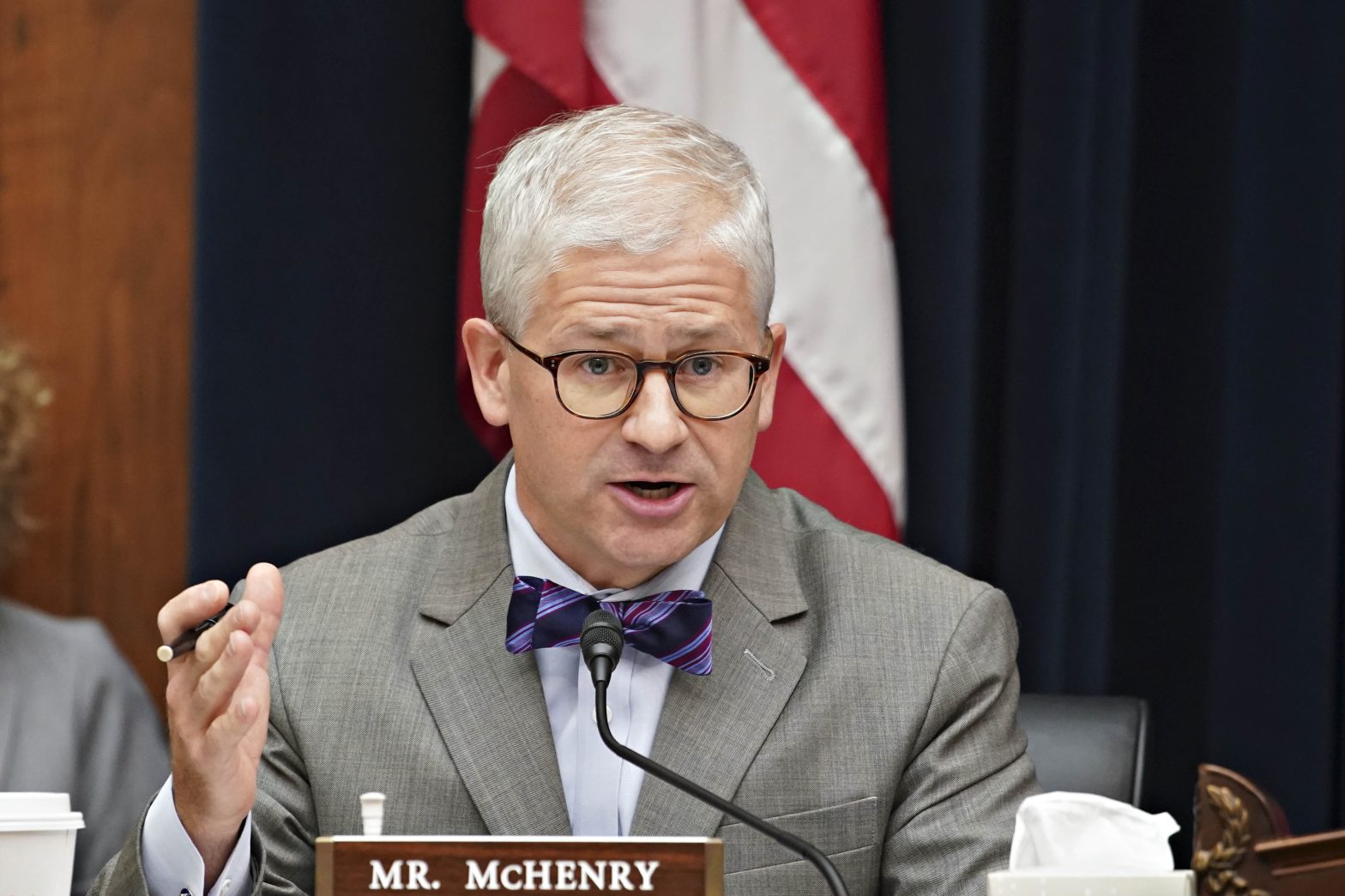
Patrick McHenry calls for a separate regulatory body for crypto

Representative Patrick McHenry of the United States has chastised both the Commodity Futures Trading Commission (CFTC) and the Securities and Exchange Commission (SEC) for their handling of digital asset rules. McHenry mentioned the necessity for a distinct regulatory organization to govern virtual assets.

McHenry’s remarks come as the SEC and other U.S. officials face increased criticism for alleged mismanagement of the burgeoning cryptocurrency sector. Currently, the United States lacks comprehensive federal crypto legislation.

Rep. McHenry stated in an interview with Punchbowl that we need to correctly identify digital assets. He considers cryptocurrencies to be neither a commodity nor a security, and he sees Bitcoin (BTC) as its embodiment.

McHenry believes that the developing digital asset business need a new regulating organization in addition to the SEC and CFTC. However, he claims that it is entirely the responsibility of Congress to examine a definition of digital assets. It is critical to do so because there is now no Federal clarity on the subject and no specialized regulatory organization to keep an eye on it.

He also chastised current authorities for their lack of grasp of the quickly expanding field.

Fundamentally, I believe that the Securities and Exchange Commission and the Commodity Futures Trading Commission lack the competence to effectively govern this new invention.

Patrick McHenry, North Carolina Representative

The long-running case between the US SEC and Ripple is a prime illustration of this problem. According to the Commission, Ripple’s native coin XRP is a “security,” although the payment system argues it is not.

During the trial, several concealed exhibits were revealed in the contentious case. Ripple and other defendants also alleged that SEC authorities pulled the XRP coin into the litigation while allowing other cryptocurrencies a free pass.

Meanwhile, the newly issued summary decision indicates that this disagreement might be resolved by 2023. The outcome of this action will eventually present the watchdogs with a different regulatory viewpoint.

Rep, McHenry’s initiatives have the potential to attract the backing of other digital business titans. Gary Gensler, the chairman of the Securities and Exchange Commission, has stated that trading platforms for cryptocurrencies should be registered with the commission.

Categories
Altcoins Bitcoin Blockchain Ethereum News

Members of U.S. Congress own nearly $2 million in crypto assets

According to recent statistics from 2iQ Research, more than 20 members of the United States Congress, including Democrats and Republicans, have invested nearly $1.8 million directly in crypto assets or indirectly through crypto-related goods and stocks.

Pat Toomey and Marie Newman, both U.S. senators, have apparently invested in Grayscale Investments LLC.

Other senators possess stock in cryptocurrency businesses like as Coinbase Global Inc. and Block Inc., which have spent money on lobbying. They have also invested in cryptocurrencies such as Bitcoin, Basic Attention Token (BAT), and Stellar Lumens.

Because of the increased engagement of U.S. senators in crypto, commentators such as Richard Painter, a former senior White House ethics lawyer and University of Minnesota law professor, are concerned that such involvement would undermine public trust in the crypto market.

The latest exposé on members of Congress’ crypto holdings has also brought to light the issue over whether senators still serving terms should trade assets, including crypto.

In response to the incident, a spokeswoman for Senator Toomey stated in an email that Senator Toomey is worried that prohibiting elected officials and their families from trading stocks may prevent qualified persons from entering public service. He went on to say that Congress touches every aspect of the economy, from housing to agriculture.

Representative Bill Huizenga, a key member of the Financial Services Committee in the United States, proposed in 2018 that members of Congress work with existing regulators such as the Securities Exchange Commission (SEC) and the Commodity Futures Trading Commission (CFTC) to regulate the crypto space.

Earlier this year, another member of the United States Congress, Joshua S. Gottheimer, the country’s representative for New Jersey, introduced the Stablecoin Innovation and Protection Act, which aims to regulate stablecoins and safeguard investors’ interests.

In contrast to the enthusiasm expressed by both U.S. senators investing in crypto and those advocating for crypto regulation, there are individuals who are opposed to the asset class.

Categories
Blockchain News Regulation

New York State Assembly New Crypto Legislation

The New York Assembly enacted legislation to prevent new crypto mining operations from opening in the Empire State that use non-renewable energy sources.

Assembly Bill A7389C, introduced by Democrat Anna Kelles, would put a two-year prohibition on new crypto mining companies that employ carbon-based electricity. A companion measure is now being debated in the state Senate.

On Monday, an assembly committee agreed to forward the measure to the whole legislative body for a vote. The crypto sector was outspoken in its opposition to the measure, arguing that it may lead to miners moving, affecting jobs or the United States’ geopolitical interests.

However, supporters of the bill pointed out that existing facilities, as well as any facilities that use renewable resources, would be unaffected by the legislation. The measure states that the New York Department of Energy shall not grant or issue a new permit… for an electric generating facility that utilizes a carbon-based fuel and supplies, in whole or in part, behind-the-meter electric energy used or utilized by cryptocurrency mining operations that employ proof-of-work authentication techniques to authenticate blockchain transactions.

Another clause would prohibit the renewal of current permits for similar facilities if the renewal applicant intends to expand their facility. The measure also requires the state to develop a general environmental impact assessment that assesses PoW mining and mining facilities in the state.

Categories
Bitcoin Price Analysis

Bitcoin recovering from its 6-week low point?

According to data from Cointelegraph Markets Pro, and TradingView, the largest cryptocurrency, Bitcoin, was trading at $39,268 on Bitstamp at the time of writing, a 2.5 percent increase.

As soon as Wall Street trading began on April 26, Bitcoin followed stocks downhill once more, reaching $37,700 twice.

Despite the fact that that location was already on the radar as a potential liquidity grab, others were skeptical that the sell-off was complete.

Popular trader Kaleo contended that the recent reprieve was really a dead-cat bounce, and that the real suffering would begin when momentum stopped.

The price has recovered from the $40K mark and is attempting to break over the 100-day moving average. If a bullish breakout happens, the 50-day moving average and the $42K zone will provide substantial resistance, followed by the 200-day moving average.

If demand fails and the price is rejected by the 100-day moving average, the $36 level will be the first important support. Bitcoin’s price has been unable to close below this level for several months, and it’s a critical milestone for the bulls to defend.

Despite the fact that risky assets have been punished in recent days, Bitcoin hodlers are focused on the long-term optimistic predictions and disregarding the short-term downturn. According to Glassnode statistics, Bitcoin’s supply that has not moved in at least a year has surpassed 64 percent for the first time ever.

Bitcoin fell just below immediate support level of $38,536 on April 2, but the bears were unable to capitalize on their advantage. The extended tail on the day’s candlestick indicates heavy buying around the ascending channel’s support line.

Buyers will now try to push the price over the 20-day EMA ($40,974). If they succeed, the BTC/USDT pair might reach $43,000.

If the price falls below the 20-day EMA, it indicates that sentiment is still bearish and bears are trading on rises to strong upward resistance levels. The pair might then fall to the channel’s support line.

Categories
Altcoins Price Analysis

Shiba Inu Retaining Top Position in Whales Holdings

Shiba Inu (SHIB) price drops appear to have drawn acquisition from holders of the largest Ethereum wallets.

Shiba Inu price fell 3% in the last 24 hours, erasing the majority of their recent gains, mirroring larger dips in the crypto market. Top Ethereum (ETH) whales, on the other hand, have regularly expressed interest in the token.

According to WhaleStats, the SHIB token has once again flipped the FTX token to become the largest token owned by the top 100 ETH wallets. Ethereum whales appear to be on a buying binge. In the last 24 hours, SHIB token was among the top ten tokens purchased by ETH wallets.

SHIB coins are now valued more than $1.2 billion to top Ethereum whales. It accounts for more than 14% of its overall holdings. According to the statistics, an ETH whale known as “BlueWhale0073” has added more than $7 million in Shiba Inu tokens in the last 24 hours. Meanwhile, the world’s second largest meme cryptocurrency may be found on the list of smart contracts most commonly employed by ETH whales.

FTX has officially surpassed ETH as the second most valuable token held by ETH whales. Top wallets currently contain more over $1 billion in FTT tokens. It accounts for more than 12% of the whales held. Shiba Inu just developed a token burning portal in order to reduce its supply.

Since its start, nearly 17 billion SHIB tokens (worth around $404K) have been delivered to a dead wallet, according to the Shibaburn portal. However, SHIB’s 24 hour trading volume of $712,882,041 has dropped by more than 35%.

The recent Robinhood listing and creation of its own Metaverse, as well as other projects surrounding it, may have given the SHIB token a boost. While the BTC price drop has shook the entire crypto market. Bitcoin has fallen by roughly 7% in the last 7 days, whereas SHIB has fallen by 8% in the same period.

Categories
Blockchain News NFT

NFT Purchases Are Soaring!

Despite the current slump in the crypto market, NFT volumes appear to be prospering, according to data. The present boom is being driven by a mix of old and new companies.

While most major cryptocurrencies have remained inside a narrow trading range for the majority of 2022, NFT volumes and holdings have surged, even eclipsing the previous year’s increase.

For the most part of the year, the whole crypto market capitalization has remained between $1.6 trillion and $2.2 trillion, with majors like as Bitcoin and Ethereum consolidating around $40,000 and $3000, respectively.

Data from blockchain analytics firm Into The Block, on the other hand, shows that NFT trading volumes increased dramatically this year, more than tripling from the start of the year to $56 billion.

The increase in NFT volumes is followed by an increase in the number of NFT collections, which considerably outnumber gains seen even in 2021. NFTs are now present at a record number of over 3.5 million addresses.

The majority of the recent surge can be attributed to revived interest in long-standing mainstays like the Bored Apes collection. The anticipated debut of a metaverse caused the collection’s floor price to skyrocket this week. Price increases were also seen in Mutant Apes and Kennel Club spinoffs.

However, flamboyant new arrivals appear to have captivated the market as well. The Moonbirds collection, which debuted earlier this month, has frequently topped sales statistics in the week following its release.

The increase in NFT volumes is followed by an increase in the number of NFT collections, which considerably outnumber gains seen even in 2021. NFTs are now present at a record number of over 3.5 million addresses.

The majority of the recent surge can be attributed to revived interest in long-standing mainstays like the Bored Apes collection. The anticipated debut of a metaverse caused the collection’s floor price to skyrocket this week. Price increases were also seen in Mutant Apes and Kennel Club spinoffs.

However, flamboyant new arrivals appear to have captivated the market as well. The Moonbirds collection, which debuted earlier this month, has frequently topped sales statistics in the week following its release.

According to NFT Go data, despite a disastrous debut, the Akutars initiative beat volumes in the previous 24 hours.

Based on the facts, one can conclude that the NFT boom in 2021 shows no indications of abating. A big aspect in this is that the medium is likely to be far more accessible than cryptocurrency and is subject to less governmental scrutiny.

Countries that have banned cryptocurrency, such as China, yet allow some commerce in NFTs. Their connection to sports and pop culture has also made them appealing to individuals who are not typically interested in cryptocurrency.

Web3 and non-web3 enterprises are still making inroads into the market. Coinbase just debuted its much-anticipated NFT marketplace, while Japanese social media company Line debuted its own initiative.

Categories
Blockchain News

Elon Musk Taking Over Twitter vs. Crypto

Elon Musk, the CEO of Tesla and a billionaire, has acquired Twitter, a prominent social media program. The acquisition comes after the tech mogul turned down an offer to join Twitter’s board of directors.

Twitter has evolved into a hub for crypto users, allowing the establishment of a variety of crypto-related companies. The current $44 billion acquisition is intended at reaching a variety of goals that should improve the app and maybe have an impact on the crypto market in the short and long run.

What will the impact of this deal be on cryptocurrencies?

Musk stated that if he were to buy Twitter, he would eliminate spam bots. Spam bots have significantly clogged the social media app. Any cryptocurrency Twitter user can witness for themselves how these automated algorithms have inundated the social service.

Dogecoin, a cryptocurrency inspired by memes, was founded as a prank earlier in 2013. As Musk backs the token, the value of this memecoin has increased.

Dogecoin’s price had increased by around 20% in the last 24 hours, with a massive 78 percent spike in volume transaction. This rise is most likely due to traders speculating that Twitter will integrate the memecoin in some form.

Musk has shown to be an ardent backer of this memecoin over time. He has demonstrated this by using the token as a means of payment for services in his businesses.

Last December, the tech mogul announced that Tesla Inc., his electric manufacturing company, will begin accepting Dogecoin as a medium of exchange.

According to statistics, Tesla is now the second largest bitcoin holding business, after only MicroStrategy Inc. Tesla now has 48,000 bitcoin at the time of writing.

As the new CEO of Twitter, the crypto billionaire might easily persuade Twitter to join the bitcoin bandwagon over time. He has a great relationship with former Twitter CEO Jack Dorsey, who is a big proponent of Bitcoin.

Twitter has been increasingly implementing Ethereum-based non-fungible coins since last year (NFTs). Previously, former CEO Jack Dorsey sold his first tweet as an NFT. Following that, the social networking app published a collection of NFTs on Rarible, an NFT marketplace based on the Ethereum network.

Twitter has launched a feature that allows Twitter Blue subscribers to upload JPEG and PNG NFTs as profile images, which will be shown in a hexagonal shape rather than the native circular shape. However, this advancement is currently confined to static picture NFTs available on the Ethereum blockchain, and the service is only available on iOS devices.

Categories
Blockchain News NFT

NFTs from the BAYC stolen in an Instagram phishing attack

According to developers at Bored Ape Yacht Club (BAYC), hackers infiltrated the popular nonfungible token (NFTs) collection’s official Instagram page on Monday and published links to a bogus airdrop with the project’s followers.

Crypto fans who linked their MetaMask wallets to the bogus website had their Ape NFTs drained. The attempt appears to have been timed to coincide with the one-year anniversary of the BAYC collection’s introduction, improving the perceived trustworthiness of the phishing link.

According to unconfirmed social media sources, roughly 100 NFTs were stolen during the phishing attack. According to CoinGecko data, the floor price of each BAYC NFT is approximately 139 Ether (ETH), or $400,726.

Thus, if the reports are correct, the attack resulted in the loss of more than $40 million in assets. However, because the figures are based on the floor price, they may only represent the lower end of the estimate.

It was unknown at the time of writing how hackers got access to BAYC’s official Instagram account. While some social media users emphasize the necessity of two-factor authentication as an effective barrier against illegal log-ins, others argue that such systems are not completely foolproof and can be defeated by a SIM-card swap.

BAYC has developed to become an all-time favorite NFT collection in the crypto world, with sales exceeding $1 billion in 2021. The supply of the collection is limited to 10,000 NFTs.

Categories
Altcoins Price Analysis

Shiba Inu (SHIB) Market Forecast 04/25

Shiba Inu price began the session on a lower note, but quickly recovered in the afternoon trade. The technical chart shows a lengthy consolidation that began in March. The accumulation of the token near $0.000022 pulls demand as investors view it as a discount purchasing opportunity and anticipate a big up move in the price from here on out.

SHIB’s price has been on a long-term downtrend since October 2021, with a solid support level at $0.00002080.
The creation of a bullish candlestick pattern on the daily chart indicates a price rebound in the near term.

The recent downturn drove Shiba Inu into a vital demand zone, which could trigger a new run-up.

On the daily chart, the recent price movement has left investors perplexed as to who wants to profit from the asset given the large variation. SHIB oscillates between highs of $0.000024 and lows of $0.000022 during the day, sending mixed signals.

The creation of the “Dragonfly Doji” candlestick pattern on April 13 suggests that the bulls are weary after the largest single-day gain since February 7, implying that a reversal is on the way. As a result, for the last two weeks, the token has been hovering at $0.0000020.

The ‘Hammer’ candlestick formation, which is a bullish reversal pattern, now gives bulls hope for a swift price recovery. The 50-day Exponential Moving Average at $0.000025 provided the initial upward filter.

On the daily chart, the recent price movement has left investors perplexed as to who wants to profit from the asset given the large variation. SHIB oscillates between highs of $0.000024 and lows of $0.000022 during the day, sending mixed signals.

The creation of the “Dragonfly Doji” candlestick pattern on April 13 suggests that the bulls are weary after the largest single-day gain since February 7, implying that a reversal is on the way. As a result, for the last two weeks, the token has been hovering at $0.0000020.

The ‘Hammer’ candlestick formation, which is a bullish reversal pattern, now gives bulls hope for a swift price recovery. The 50-day Exponential Moving Average at $0.000025 provided the initial upward filter.

The market participant would then seek to withdraw $0.000028. A break below the session’s low, on the other hand, would dismiss the asset’s bullish reasons. In such situation, the price would revert to its April 11 low of $0.000024.

The Relative Strength Index (RSI) is currently fluctuating around 47.  SHIB/USD is now trading at $0.000024, up 2.32 percent as of publishing time.

Categories
Blockchain News

Kraken receives full financial license in Abu Dhabi

Abu Dhabi Global Market (ADGM) has granted famous crypto exchange platform, Kraken, a Financial Services Permission (FSP) license to operate as a regulated virtual asset exchange platform in its jurisdiction. Kraken is the first cryptocurrency exchange to do so.

According to the regulator’s official announcement, the permission will allow Kraken users in the region to buy, sell, withdraw, and deposit digital assets directly in United Arab Emirates Dirham (AED).

Kraken has also established a regional office in Abu Dhabi to expand its activities throughout the Middle East and North Africa (MENA).

According to reports, ADGM was one of the first regulators in the region to build a supportive regulatory environment for digital assets.

The UAE is one of the most financially innovative jurisdictions in the world, with region-leading crypto participation rates by both consumer and professional investors. The ADGM and its financial regulator have been true pioneers for global crypto regulation. We are excited to expand our products and services in the MENA region in the months and years ahead,” Curtis Ting, Managing Director of EMEA at Kraken, said.

Dhaher bin Dhaher, CEO of the ADGM Registration Authority, stated that the regulator has been double down on advancing new development and investment prospects, such as the virtual assets industry, while supporting Abu Dhabi’s financial sustainability and economic diversification.

As officials in the UAE continue to implement crypto-friendly rules, the region is quickly becoming a hotbed for crypto companies.

Leading cryptocurrency exchange FTX got a virtual-asset license in Dubai in March and wants to establish a regional headquarters in the city. Binance, the world’s largest cryptocurrency exchange, said shortly after that it had obtained a virtual asset license from Dubai’s Virtual Asset Regulatory Authority (VARA).

Other cryptocurrency companies, such as Bybit and CryptoCom, are aiming to open headquarters in Dubai.

Categories
Altcoins Ethereum Price Analysis

Ethereum BNB Price Analysis 04/24

Another unproductive week is drawing to a close, with Bitcoin, Ethereum, and most other cryptocurrencies down a few percent over the last six days. At the start of the current intraweek session, the crypto market was worth $1.8T.

During the week, the market gained a small amount of value, reaching a high of $1.95T. Unfortunately, the momentum that propelled the sector to a seven-day high has dwindled as we have seen a gradual decline in value, and the industry may close at $1.84T.

Nonetheless, market movements revealed that the bulls and bears had a nearly equal share of dominance. The crypto Fear and Greed Index paints a small picture of the reason for the current market situation.

Ethereum, like BTC, experienced an immediate retracement as the week began. As a result of these corrections, the asset flipped the $2,900 support. It quickly recovered, finding support at $2,880 and closing with a nearly 3% gain.

The second intraday period signaled the end of the two-day rise, as it was followed by high volatility, which saw the bears gradually tighten their grip on the market. The downtrend began on Wednesday, when an upward trend was halted by sellers’ congestion.

The red candle representing that session, despite being small, indicates that the largest alt lost some of its value per unit. Thursday saw the most significant loss of the week, with ETH losing more than 3%.

Over the next two days, there were only minor losses, and the $2,900 support is under threat. The candle representing the current intraday session is a doji, but it indicates that the bears are gaining ground in their battle for dominance.

After regaining its pivot on Tuesday, it was lost the following day. Since the dip below the support level, ETH has maintained a price near the level, and the first pivot support appears to be safe at the time of writing. The Relative Strength Index (RSI), which is currently at 41.8, suggests that the most recent retracement may continue.

Most traders have been on edge due to the Moving Average Convergence Divergence (MACD), which indicates that ether is approaching a bullish convergence. Unfortunately, both MAs have been closed since Wednesday and are currently closed.

In comparison to BTC, Binance coin demonstrated significant resistance to bearish dominance. Nonetheless, as with most cryptocurrencies, it was characterized by almost immediate sellers’ congestion as the week began.

After losing the $400 support and rebounding to $396, BNB recovered completely and closed the intraday session with a significant gain. The uptrends continued the next day, with only minor gains recorded.

The fourth largest coin, like most assets, retraced on Wednesday after encountering strong resistance at $430. The digital asset fell more than 3% on Thursday, retesting the $400 support level.

The bulls regained control of the market the next day, with BNB recording minimal gains. However, it gave up its gains on Saturday. The asset under consideration, which is currently up a few percent, may close with a few gains.

The level was lost on the fourth day of the week after regaining its pivot on Monday. Since falling below the mark, the fourth largest cryptocurrency has kept its prices close to the mark, and the first pivot support appears to be safe at the time of writing. The Relative Strength Index (RSI) indicates that the most recent retracement may be extended, as it is currently at 43.7.

Categories
Altcoins Price Analysis

TRON (TRX) Market Forecast 04/24

The price of TRON (TRX) reverted from the $0.075 resistance, triggering a new bear cycle within an inverted flag pattern. If buyers fail to break through the dynamic support trendline, this continuation pattern could extend the current downtrend.

The TRON (TRX) price increased significantly last week, pushing the altcoin to $0.075 per coin. This bull cycle has been accelerated by founder Justin Sun’s recent announcement of plans to launch a decentralized algorithmic stablecoin-USDD. The coin price accounted for a 25% ROI from the $0.06 support in just four days.

The bulls, on the other hand, were exhausted by the sudden rally signaled by a higher price rejection candle. The TRX price fell 16 percent after turning down from the overhead resistance due to the influence of the inverted flag pattern.

The bears smash through the critical EMAs (20, 50, and 100) and charge straight to the bottom support trendline. The bearish inverted pattern, on the other hand, would support the continuation of the current downtrend and drive the TRX price down to $0.05.

However, if bullish momentum resumes at the dynamic support trendline, the altcoin will rebound from the support trendline.

Indicator technical
TRX buyers did not act on the bullish crossover of the 20-and-50-day EMAs. As a result, sellers took advantage of the situation and reestablished negative alignment in these EMAs.

The RSI slope has dropped below the equilibrium and 14-SMA lines, indicating that traders are feeling pessimistic.

$0.062 and $0.071 are the resistance levels.
$0.058 and $0.0511 are the levels of support.

Categories
Bitcoin Price Analysis

Bitcoin (BTC) Price Analysis 04/24

The repercussions of the three-month-old rising channel suggest that the price of Bitcoin (BTC) will continue to fall. The coin price has fallen below the $40000 support after a successful retest of the breach resistance trendline. A positive divergence in the RSI chart, on the other hand, casts doubt on a genuine breakdown.

The Bitcoin (BTC) price has been resonating in an ascending channel of an inverted flag pattern for the past three months. This price pattern, however, may be deceptive because it violates some important horizontal resistance levels without a genuine follow-up.

On April 6th, the BTC price witnessed this activity with a $45000 fakeout, which triggered a significant sell-off. On April 11th, the sellers continued to pressurize the coin price, resulting in a massive breakdown from the inverted flag pattern.

The BTC price has tested the flipped resistance trendline twice, after nearly two weeks of retesting. These reversals indicate that traders are selling at higher levels, leading to a $40000 breakdown.

By the time this article is published, the BTC price is $39576, up 0.34 percent on the day. As a result, if sellers keep the coin price below $40000, the selling momentum will build, teasing a return to $36400 support, followed by a January low of $33000.

Alternatively, the $40000 breakdown was not as significant, and thus a move above $40000 remains possible.

EMAs are a technical indicator. A recent bearish crossover of the 20- and 50-day EMAs re-establishes a bearish alignment among the key EMAs (20,50, 100, and 200). Furthermore, the fact that these EMAs are steadily declining suggests that the sellers are in command.

RSI indicator: If the RSI slope remains below the neutral zone during the retest, it indicates that traders are still bearish. Furthermore, a recent break below the 14-SMA may bolster the $40000 support level.

$40000, $42365 are the resistance levels.
Levels of support: $36400, $33000

Categories
Blockchain News

DEX Lifinity, based in Solana, raises $9.6 million in IDO

Lifinity, a Solana-based decentralized exchange, recently raised $9.6 million in an initial decentralized offering (IDO). The amount was raised by over 2400 contributors who represented wallet addresses that committed funds to the token sale.

Lifinity describes itself as a “proactive market maker with concentrated liquidity.” Unlike competing DEXes, Lifinity intends to own its liquidity and does not rely on third-party market makers or venture capital liquidity providers to fund pools.

The project had seeded its initial pools with 15,000 SOL (approximately $3 million) raised in December from the sale of so-called Lifinity Flares NFTs. The project repurchases NFTs with a portion of the fees generated by the provided liquidity, thereby creating value for holders.

Lifinity plans to do the same with the $6.8 million it recently raised through the sale of LFNTY tokens. Over 80% of the funds raised will be added to the platform’s existing liquidity pools in order to generate profit that will be distributed as a reward to holders of veLFNTY, a locked version of LFNTY.

Although Lifinity hopes that its unique funding model and proactive approach to DEX operation will give it staying power, the project still has a long way to go before becoming the preferred option for Solana’s growing user base.

Solana is already home to a number of notable DEXes, such as Raydium, Orca, and Saber. Smaller projects, such as Lifinity, are currently attracting trading volume by offering the best swap rates on DEX aggregators such as Jupiter.

Meanwhile, Lifinity’s $9.6 million raise while pioneering a model that favors community liquidity providers over venture capital liquidity providers may set a new precedent for the IDO landscape. Orca raised $18 million in a funding round led by Polychain and Three Arrows Capital in September.

Lifinity’s arguably successful funding round amid varying market conditions may persuade projects pursuing similar efforts to take a community-based approach rather than the more popular VC-first approach.

Categories
Bitcoin Blockchain News Opinion People

Kevin O’Leary Discusses Bitcoin Mining and the Elon Musk Twitter

Kevin “Mr. Wonderful” O’Leary is a serial entrepreneur, author, and chairman of O’Shares, a wealth management firm, as well as a major cryptocurrency investor. The Canadian-born TV personality is one of the world’s wealthiest businessmen, with a net worth of $400 million.

On Earth Day, O’Leary appeared on CoinDesk TV’s “First Mover” with his back to a palm tree-lined green screen to discuss his support for bitcoin mining in the face of climate change concerns, as well as why he believes Tesla (TSLA) CEO Elon Musk should run Twitter (TWTR).

O’Leary has previously criticized bitcoin mining, arguing that businesses should move to separate clean BTC from dirty BTC mined using carbon-intensive processes.

According to the database company Statista, bitcoin miners use an estimated 2,260 kilowatt-hours to mine each bitcoin.

This process of separating “clean” bitcoin from dirty bitcoin may jeopardize bitcoin’s fungibility, according to experts, but it may encourage certain investors who would otherwise enter the crypto industry but have made other ESG (environmental, social, and corporate governance) commitments to consider bitcoin, according to O’Leary.

Nuclear and hydropower, according to O’Leary, will likely play a larger role in the crypto-mining energy mix. Many new power plants have come online in the United States in the last year, primarily in Texas, Oklahoma, upstate New York, and the Pacific Northwest, using both renewable and nonrenewable energy sources.

O’Leary, like other crypto-minded businessmen, proposed that the energy-intensive proof-of-work algorithm used to mine bitcoin could drive greater adoption of green energy. Bitcoin, he claimed, could put capital to work there, allowing it to build data centers for all sectors of the economy.

Although politicians such as Sen. Elizabeth Warren (D-Mass.) have been critical of the mining industry, O’Leary believes they will not stifle growth, especially once crypto miners realize it may be more profitable to work within the regulatory system.

Categories
Blockchain News

Hoskinsea sells out 80 percent of its token allocation

The largest NFT marketplace on the Cardano network is Hoskinsea. The platform is prepared to implement all of the advanced functionalities of the NFT marketplace, as well as some of its features from other blockchain networks.

Hoskinsea intends to solve the Cardano NFT Minting issue by granting multiple minting access, unlimited NFT purchase orders, and much more.

Hoskinsea has announced the launch of its native cryptocurrency HSK token, which will be used on the marketplace for a variety of purposes; early birds can participate in the ongoing HSK token private sale.

Purchase of NFT – Token holders will be able to purchase NFTs at a reduced price from the Hoskinsea marketplace.

Transaction Fees – NFT minting fees are payable with HSK tokens.

Governance and Voting – Holders of HSK tokens will be included in the decision-making process for issues affecting our Ecosystem. As a result, only holders of our tokens will be able to vote on critical decision-making processes affecting our ecosystem.

It is important to note that the number of votes you can cast and your participation in the voting process will be determined by the number of tokens you possess.

Exclusive Privileges – Top HSK token holders will have exclusive access to rare edition NFTs that will be available only during the public mint.

Purchase AD Slots – Due to the large number of NFTs that will be on the platform, users will be able to use HSK Token to purchase ad slots for their NFTs.

Redistribution of Transaction Fees – Top holders will also benefit from our platform by earning a fixed percentage of profits made from all transactions carried out on the platform using the HSK token.

Creator Verification and Voting – On our platform, users are more likely to buy or transact with verified creators.

Categories
Bitcoin News Price Analysis

What Bitcoin Funding Rates Are Doing to the Market

On April 23, Bitcoin (BTC) consolidated below $40,000 as market expectations favored further losses.

Following a bearish BTC/USD after the pair touched $39,200 on Friday’s Wall Street open, data from Cointelegraph Markets Pro and TradingView followed.

Falling in line with stocks, Bitcoin now faced the prospect of resistance settling in at the $40,000 level, with traders expressing skepticism about a short-term rebound.

According to data from the on-chain analytics site Coinglass, funding rates across derivatives exchanges remained firmly negative into the weekend, implying that the majority of market participants expected shorting to be a profitable next trade.

The ratio of long to short positions was a further source of concern for analyst Filbfilb, co-founder of trading suite Decentrader.

Bitcoin has returned to this critical level. Losing this -> $36K appears to be the next step, according to a new Twitter update from Cointelegraph contributor Michael van de Poppe on the day.

BTC/USD was trading around $39,800 at the time of writing, avoiding a trip to take buy liquidity below $38,000 thus far.

Traders’ trepidation was mirrored in sentiment gauges, with the Crypto Fear & Greed Index returning to the “extreme fear” zone on Saturday.

Despite their lack of confidence, not everyone was willing to give up on Bitcoin in the long run.

“Get ready for the next runup. Historically, this has been one of the best price ranges for purchasing Bitcoin!” Crypto Rover, a popular YouTuber, argued alongside a chart comparing Bitcoin price performance to the strength of the US dollar.

The US dollar currency index (DXY), as reported by Cointelegraph, is currently near two-year highs, and a reversal has historically provided Bitcoin with the fuel to break long-term downtrends.

Categories
Bitcoin Blockchain News

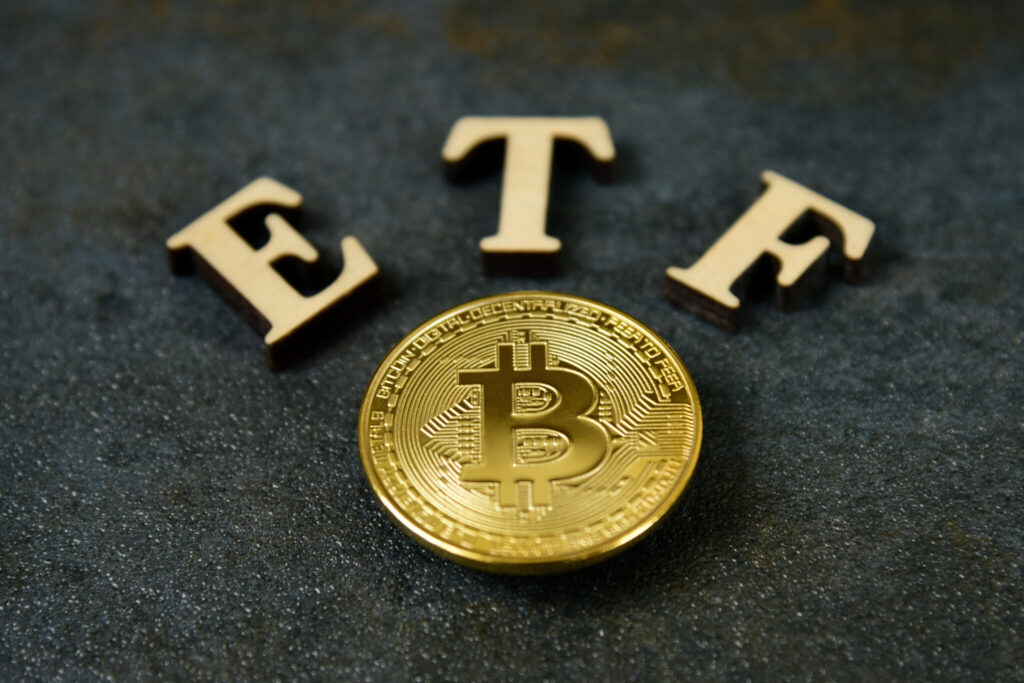
Grayscale Takes a New Approach To Bitcoin ETF Approval

Grayscale, a digital asset management, has launched a new attempt to obtain the US Securities and Exchange Commission to approve the BTC ETF.

The demand for Bitcoin exchange traded funds (ETFs) is increasing as the year 2022 approaches. Experts predict it will eventually make its way to the Wall Street exchanges.

According to a report, Grayscale prepared a letter to the commission emphasizing legal minutiae in order to strengthen its case. The asset manager wants to turn its $40 billion in Bitcoin into an ETF. Grayscale’s approach comes at a time when the Securities and Exchange Commission is debating the future of exchange traded funds. The verdict on Grayscale’s plea, on the other hand, may come as early as July.

According to reports, three such crypto-related ETFs are already in the queue for approval. Grayscale’s proactive strategy, on the other hand, will eventually force the SEC to make a timely decision.

In the letter, Grayscale stated that there is no reason to treat spot bitcoin products differently than bitcoin futures products when it comes to approval.

Grayscale’s CLO, Craig Salm, has voiced the concern that the commission is losing its ability to depend on the difference between ETF and spot ETF regulations.

The key reason for the rejection of spot crypto ETFs was “difficulty in tracking and manipulation in the market,” according to the commission. Because their trades are being watched by regulators, exchange funds holding crypto futures are already active in the market.

Meanwhile, SEC Chairman Gary Gensler has been a vocal critic of the cryptocurrency business. He emphasized that the digital asset market is uncontrolled, which raises worries about manipulation and fraud. Previously, the SEC took moves toward registering crypto platforms with the agency.

Categories
Blockchain News

Binance refutes recent accusations of breach with Russian users

In response to a Reuters investigation published on Friday, Binance, a major global cryptocurrency exchange, vehemently denied it had assisted Russian authorities in tracking down donations to the opposition.

According to Reuters, Gleb Kostarev, Binance’s head of Eastern Europe and Russia, met with Russia’s anti-money laundering agency, Rosfinmonitoring, in April of last year (Rosfin). According to Reuters’ review of Kostarev’s messages, he “consented to Rosfin’s request to agree to share client data,” telling a colleague he didn’t have “much of a choice.”

Reuters reported that around the same time, Rosfinmonitoring was looking for ways to track crypto donations to the organizations of Russia’s opposition leader Alexei Navalny. Navalny received millions of dollars in donations from supporters, including a surge of new funds following his assassination plot and afterwards arrest a year ago.

Binance later stated on its official blog that “suggestions that Binance shared any user data, including Alexei Navalny, with Russian FSB-controlled agencies and Russian regulators are categorically false,” adding that “Binance has not sought to actively assist the Russian state in its efforts to investigate Alexei Navalny.”

In response, Kostarev stated on his Facebook page that it was “an absolute lie” that he or Binance “leaked Navalny or users’ data to Rosfin or FSB.”

“Any government or law enforcement agency in the world can now request user data from Binance as long as it is accompanied by the appropriate legal authority. “Russia is no different,” Binance continued, adding that the cryptocurrency exchange “has not entered into any type of agreement with the Russian government that differs from any other jurisdiction – these obligations are ordinary, and any traditional bank, for example, would be subject to the same requirements.” “Binance will file a formal complaint with Reuters under their own editorial code,” the company said “According to the statement.

Binance also published emails received from Reuters as well as its responses to them. Binance Chief Communications Officer Patrick Hillmann, in particular, approached Reuters journalists about a “off-the-record conversation” and complained that the media company did not agree, “as there is quite an interesting story that should be told here, but we simply can’t share it without putting our people’s lives in danger,” Hillmann wrote. He did not elaborate on the nature of the danger.

Categories
Blockchain News

Twitter and Stripe have launch a USDC compensation program

Twitter and Stripe announced the launch of crypto payouts for Stripe Connect on Friday. According to the two firms, a select set of Twitter producers will soon be able to get their revenues in the form of the USD Coin (USDC) stablecoin on the network.

Payments will be made on the Polygon (MATIC) network, a layer-2 blockchain noted for its low costs, quick transaction speeds, revolutionary zero-knowledge technology, and Ethereum integration (ETH).

As a centralized platform, content authors and freelancers would have to go through Stripe’s Know Your Customer onboarding process. They may then manage their account information, as well as track real-time earnings and upcoming distributions into their cryptocurrency wallets.

Twitter and Stripe intend to expand the initiative to over 120 countries by the end of the year. Esther Crawford, Twitter’s product lead for artists, had this to say about the development:

“We’re delighted to start enabling cryptocurrency rewards to creators through Stripe, giving them more options for how they get paid.”

At the time of writing, billionaire entrepreneur and Tesla CEO Elon Musk is pursuing a hostile acquisition of Twitter. Musk has stated that if his bid for the firm is successful, his top pledges will be to reduce the number of cryptocurrency scam tweets on the site and maybe add a Dogecoin (DOGE) payment option for the company’s Twitter Blue monthly membership service.

Categories
Bitcoin News Price Analysis

Bitcoin (BTC) is outperforming Wall Street’s top stocks

While Bitcoin (BTC) maintained a tight trading range this year, it outperformed several major technology equities. Year-to-date losses at IT behemoths like Alphabet, Microsoft, Amazon, and Meta were significantly more than at BTC.

In 2022, BTC has generally tracked major US technology equities. However, a disparity in their YTD performance could signal that decoupling is possible in the future. The token has also outperformed the Nasdaq composite index, which is heavily weighted on technology.

The world’s most valuable cryptocurrency is currently down around 12% year to date. Alphabet, Microsoft, and Amazon, on the other hand, are down between 13 and 17 percent. The Nasdaq composite index has also dropped by roughly 16%.

Only Apple has outperformed BTC among the five most valuable equities on Wall Street. The stock of the iPhone maker is down around 9% for the year. Tesla, which has BTC on its balance sheet, has lost approximately 16 percent so far this year.

Meta Platforms, the company that owns Facebook, has dropped 44% this year due to concerns over falling user numbers.

While the underlying emotion driving BTC and stock losses is similar—concerns about increasing inflation and a hawkish Federal Reserve—the token appears to be more immune to market volatility.

However, this resiliency is limited to tech equities. Berkshire Hathaway, the largest non-technology company on the S&P 500, has outperformed Bitcoin this year, rising 13.5 percent.

During periods of high inflation and tighter monetary policy, non-technology sectors tend to perform better. UnitedHealth Group and Johnson and Johnson, a pharmaceuticals major, are both up 7%.

The currency’s obvious sensitivity to inflation and market volatility disqualifies it as a safe haven. In terms of relative performance, it has outperformed large tech equities, but it is far from the best performing asset this year.

Gold prices reached their greatest level in recorded history this year as a result of safe haven demand. The yellow metal is also roughly 7% higher year-to-date.

Categories
Blockchain News

Binance retrieves back $5.8m in Axie Infnity stolen funds

Binance, a leading cryptocurrency exchange, announced the recovery of $5.8 million related to the recent hack of popular blockchain gaming project Axie Infinity.

Binance CEO Changpeng Zhao (CZ) said in a tweet on Friday that the group behind the hack began moving the stolen funds today and deposited about $5.8 million to Binance, possibly in an attempt to launder it.

According to CZ, the hackers skillfully distributed the funds across 86 different accounts. Remember that it was reported last month that the Ronin network, an Ethereum sidechain developed by Axie Infinity, was exploited, resulting in the theft of an estimated $625 million in crypto assets.

Remarkably, the Ronin team did not discover the hack until six days after the network had been compromised. When a user reported being unable to withdraw 5,000 ETH from the network, the team was notified.

Following the hack, the US Treasury Department stated in a report that it was able to link the Axie Infinity hack to Lazarus, a notorious North Korean hacking group that has allegedly stolen approximately $2 billion in assets from cryptocurrency exchanges.

The department stated that it identified the same Ethereum address associated with the group as the one responsible for the Ronin hack.

AXS, the native cryptocurrency of Axie Infinity, has lost more than 30% of its value since the Ronin hack was discovered. AXS was trading around the $70 mark prior to the incident, but at the time of writing, the token was trading at $46, representing a 34% drop since the hack.

The hack also had an impact on the price of Ronin’s native cryptocurrency, RON. The coin is currently trading around $1.35, a 41 percent drop since the exploit. Wormhole, based in Solana, recently lost over $300 million in an exploit similar to Ronin’s.

Categories
Blockchain News

Samsung Electronics Participate in Raising Funds for Metaverse

The largest companies in South Korea, including electronics giant Samsung and investment firms NH Investment and Coentry Investment, have led a $25 million funding round for metaverse startup DoubleMe.

Albert Kim, Michael Kuczynski, and Heeyoung Kim founded DoubleMe in 2015. During its early years, the company provided solutions for converting 2D videos into 3D models.

DoubleMe, a South Korean startup, is one of the market leaders in the metaverse. After launching the metaverse solution TwinWorld, the company attracted a lot of attention. The metaverse platform combines the digital and physical worlds through the use of augmented reality (AR).

According to the company, the latest funding from Samsung, NH Investment, and Coentry Investment will help DoubleMe grow exponentially. The funds will be used for product development, customer acquisition, marketing, and the hiring of new employees.

In addition, the company intends to release a commercial version of TwinWorld. It will bring significant improvements and support for AR devices such as the Nreal headsets. Clients of the company are located in 17 cities around the world.

Many technologies in the metaverse space have been successfully introduced by the metaverse company. DoubleMe’s revenue had also increased to $4.5 million. Previously, the company had raised $1 million in seed funding and received a $16 million government grant from South Korea.

Furthermore, the company has received backing from major global corporations such as T-Mobile, BT, Vodafone, Orange, and Telefonica.

South Korea is at the forefront of the metaverse and NFT races, as well as global crypto adoption. South Korea’s government has even announced a five-year strategy to become a global leader in the metaverse market. More than 200 companies will be involved in the new industry.

South Korean conglomerates such as SK Group, Samsung, and LG have already announced various NFT and metaverse projects. The government’s and leading companies’ support will help metaverse companies like DoubleMe grow even more.

Categories
Blockchain News

Kadena has launched a $100 million Web3 grant program

Kadena, a proof-of-work (PoW) blockchain, has announced a $100 million grant program to encourage Web3 development on its platform, potentially opening the door to more use cases for the layer-one protocol.

The grant program is an extension of Kadena Eco, an initiative aimed at expanding the Kadena ecosystem by developing gaming, metaverse, nonfungible token (NFT), decentralized finance (DeFi), and Web3 projects.

Kadena’s founder and CEO, Stuart Popejoy, stated that his company will use treasury resources to ensure the protocol’s long-term viability.

Venture capitalists have been paying close attention to Web3, which has become a sort of catch-all phrase for the next iteration of the blockchain-powered internet. It was recently reported that the launch of two Web3 developer funds worth $100 million and $135 million, respectively, from crypto exchanges KuCoin and CoinDCX.

In the meantime, decentralized node providers are stepping up to provide the infrastructure required to advance Web3 functionalities. However, competition is fierce because legacy Web2 providers such as Amazon Web Services, Azure, and Infura have emerged as early infrastructure players in the Web3 economy.

Kadena provides scalable architecture and smart contracts backed by a PoW consensus mechanism called Chainweb to support Web3 development on its platform. In theory, Chainweb is said to support high transaction throughput without the need for layer-two scaling solutions.

KDA, Kadena’s native cryptocurrency, is ranked in the top 100 on CoinMarketCap, with a total capitalization of approximately $925 million at the time of writing. KDA surged two weeks ago having followed the release of a new integration procedure and a Binance listing.

Categories
Bitcoin Blockchain Opinion People

Is Bitcoin maximalism causing crypto to fall behind?

In a recent interview with CNBC, Ripple CEO Brad Garlinghouse stated that tribalism surrounding Bitcoin (BTC) and other cryptocurrencies is impeding the growth of the entire crypto industry.

Tribalism, according to Garlinghouse, is unhealthy, and he believes that holding one digital asset will not impede the growth of another, and that all can grow. The Ripple CEO then compared today’s crypto industry to the dotcom era of the late 1990s and early 2000s.

“I own bitcoin, I own ether, I own some others. I am an absolute believer that this industry is going to continue to thrive. All boats can rise. Yahoo could be successful and so could eBay … They’re solving different problems. There’s different use cases and different audiences and different markets. I think a lot of those parallels exist today,” Garlinghouse said.

He also stated that Bitcoin maximalists have resulted in “fractured representation” when it comes to lobbying US legislators.

Garlinghouse believes that maximalists will only speak out about Bitcoin, which they own, and not about other crypto assets. He went on to say that the lack of cooperation in Washington, D.C. and in the crypto space is shocking.

To be clear, a Bitcoin maximalist is someone who believes Bitcoin is the only crypto asset worth holding and regards other crypto assets as inferior.

Block CEO Jack Dorsey and Microstrategy CEO Michael Saylor are two well-known investors who are only bullish on Bitcoin.

Meanwhile, Ripple and Garlinghouse have been involved in a legal battle with the United States. Since 2020, the Securities and Exchange Commission (SEC) has been investigating XRP-related unregistered securities sales.

Ripple refuted the claims, claiming that XRP, like Bitcoin and Ethereum, is a cryptocurrency. Despite the fact that the lawsuit has been ongoing for more than 15 months, Garlinghouse recently revealed that the case is progressing well and is nearing completion.

Categories
Blockchain Regulation

Binance is Complying With Russian Sanctions

In light of recent European sanctions against Russia, Binance, the world’s largest crypto exchange, claimed it was forced to ban trading activity of Russian users.

Russian entities with crypto assets worth more than 10,000 euros ($10,893) would have their services limited, according to the exchange. These accounts will be unable to trade or deposit tokens, and will only be able to withdraw their funds.

Binance added that deposits into Russian accounts that fit within this category will also be prohibited. All Russian nationals and entities resident in Russia are subject to the rules.

The move comes after the European Union imposed a fifth round of sanctions on Russia in response to the latter’s invasion of Ukraine. The most recent penalties include asset freezes on a number of Russian businesses, as well as a ban on Russians receiving EU money.

Sanctions imposed in response to Russia’s invasion of Ukraine have virtually cut Ukraine off from the international financial system.

Binance’s latest action is a shift from the company’s previous stance on giving services to Russians. The exchange agreed to abide by sanctions imposed on Russian companies. It had, however, flatly refused to quit serving Russian citizens.

Binance, on the other hand, looks to be swimming against the current. The exchange had previously banned support for Visa and Mastercard cards in Russia after the two companies withdrew from the country earlier this year.

Coinbase CEO Brian Armstrong called crypto a “lifeline” for many Russians, and other crypto exchanges had likewise rebuffed calls to discontinue Russian services. It’s unclear how other exchanges will deal with the additional penalties right now.

The general assumption is that Moscow will be unable to use cryptocurrencies to circumvent tough sanctions. However, this hasn’t stopped the country from stepping up its crypto acceptance efforts.

A proposed bill would make certain types of cryptocurrency legal tender. In addition, the measure aims to create a broad regulatory framework for cryptocurrency in Russia.

The Russian government reportedly plans to use its vast energy reserves to mine additional cryptocurrency. It will create an official list of miners and provide mining companies with subsidies.

Categories
Blockchain News NFT

NFT Marketplace Beta Introduced by Coinbase

Coinbase, the world’s second-largest cryptocurrency exchange, announced on Wednesday that it has launched a test version of its much-anticipated NFT trading platform. Trading on the site will be limited to a small set of beta testers at first.

In a blog post, Coinbase stated that beta testers will be chosen depending on their waiting status.

The launch comes six months after the exchange announced that an NFT marketplace will be launched and that a waitlist had been established. In little than a day, the backlog grew to over a million people.

Popular NFT collections such as Doodles, Azuki, and World of Women are currently available on the marketplace.

For a short period, the platform will support any self-custody wallet and will have no transaction costs. The exchange intends to charge fees in the future.

Community features on the site include the ability to follow profiles, comment on NFTs, and vote on comments.

In the following weeks and months, the exchange says it will add more capabilities to the marketplace. Drops, NFT minting, token-exclusive communities, and the ability to buy NFTs with a credit card are all planned.

Earlier this year, the exchange announced a partnership with Mastercard to facilitate NFT purchases on its platform using the payment giant’s cards.

Coinbase is attempting to extend beyond its role as a standard cryptocurrency exchange with this move. Other heavyweights, including as Binance and FTX, have made similar moves and now have their own NFT marketplaces.

The move also coincides with a surge in NFT trade until 2021. The momentum from the 2021 boom isn’t showing any signs of waning.

Coinbase has worked to diversify its revenue streams through a variety of channels. The exchange just announced that a film trilogy based on the Bored Ape Yacht Club NFT collection would be produced.

Coinbase’s NFT marketplace is scheduled to be integrated into the series.

Categories
Blockchain Opinion

Should Elon Musk Be The Owner of Twitter?

Elon Musk, the climate activist, space entrepreneur, and electric vehicle manufacturer, is reportedly bidding for Twitter (TWTR). A good advice will be to get out of there.

According to a financial filing, Musk bought approximately 10% of the microblogging company’s free-floating stock last month, making him the largest stakeholder. What happened next wasn’t entirely clear: The firm, Twitter, awarded him a seat on its board of directors, but also took steps to limit his authority, including instituting a “poison pill” that would diminish everyone’s shares and prevent a “hostile takeover.”

It’s unclear why a man with Twitter’s clout would seek to take it over. Musk has proposed a number of apparent upgrades to the platform as part of his quest to gain widespread support for it.

Musk, like any good populist, wants to give Twitter users what they want: an edit button, longer tweets, and a DOGE tipping system (although, admittedly, the audience for DOGE improvements might be small).

Crypto has a dog in the race and a point of view, to the degree that there is such a thing. Twitter, like other specialized hobbies, is extremely indispensable to the industry.

Twitter, more than any other social or communication network, is where news breaks, reputations are created (and destroyed), and coins are traded. Other centralized platforms in crypto’s communication stack – Discord, Slack, even Gmail – but the “bird app” rises above them all.

Musk, who was once the wealthiest man on the planet, has a lot of clout with the platform. Twitter has sparked revolutions, fueled social movements, and, most recently, may have influenced the outcome of a war.

It’s a serious world-historical media, with its own genre and, most of the time, actual entertainment. However, Twitter, like any other place where huge groups of people meet and communicate on a regular basis, can be ugly and brutish — and not just because the posting structure is so brief.

Categories
Blockchain News Regulation

Nigeria’s SiBAN Against Unlawful Crypto Stance in the Country

The Stakeholders in Blockchain Technology Association of Nigeria (SiBAN), a group formed in 2018 to encourage blockchain adoption in Nigeria, has contacted public institutions to express their dissatisfaction with the country’s incorrect stigmatization of crypto and blockchain users.

SiBAN stated in a press statement shared with Coinfomania that while the use of cryptocurrencies is legal in Nigeria, authorities treat cryptocurrency investors as criminals.

Remember that the Central Bank of Nigeria (CBN) prohibited financial institutions in the country, including Deposit Money Banks (DMBs) and Non-Financial Institutions (NBFIs), from dealing with cryptocurrencies or providing services to crypto organizations, in a circular released early last year.

Customers who deal in cryptocurrencies should be detected and their accounts should be canceled promptly, according to the circular.

Failure to comply with the mandate by any of the aforementioned institutions will result in severe regulatory repercussions.

Following the CBN’s decision, which drew criticism from some Nigerian senators, the Corporate Affairs Commission (CAC), Nigerian Customs Service law enforcement agencies, the Nigerian Financial Intelligence Unit (NFIU), the Nigerian Police, and the Economic and Financial Crimes Commission (EFCC) began discriminating against and stigmatizing crypto users in the country, according to SiBAN.

Even though the CBN crypto directive does not prohibit crypto trading activities in Nigeria, the association claims that public agencies have unfairly treated crypto users by arresting and detaining crypto users, blocking and closing crypto accounts, extorting, harassing, and intimidating crypto traders.

SiBAN also stated that, while blockchain is the foundation of cryptocurrencies, the technology has numerous other applications. Despite this, authorities across the country continue to refuse persons who are developing blockchain applications or promoting the technology banking and financial services.

Categories
Bitcoin Blockchain Price Analysis

Bitcoin (BTC) Market Price Update

The bulls in Bitcoin (BTC) put the pressure on on April 20, with a rebound to $42,000 on the Wall Street open.

BTC/USD reached $42,220 on Bitstamp, the highest since April 11, according to data from Cointelegraph Markets Pro and TradingView.

According to Cointelegraph contributor Michal van de Poppe, the pair was currently in line for fascinating behavior after rising as much as 9.3% versus local lows from April 18.

Despite the recovery to the significant $42,000 milestone, there was a lot of volatility, as some people doubted that Bitcoin’s advances would continue.

However, for popular trader Josh Rager, the drop to $38,600 on April 18 and subsequent recovery was a trend to watch.

On April 19, he wrote, “The last couple of fake-outs resulted in over 30%+ uptrends.”

“Many folks were caught off surprise yesterday, albeit it wasn’t as severe as the day before. It’s possible that Bitcoin may continue to rise over the next week – take it day by day.”

Price performance after wicks down to support was noted in an accompanying chart through 2022. The aim this time was about $48,000, which is where Bitcoin’s 200-day moving average is located.

On the macro level, Rager chastised stock market oscillations, claiming that performance was impeded by shifts in sentiment.

On the day after missed earnings prompted a huge sell-off, unusual changes in Netflix shares became a talking point.

On April 20, however, the Fear & Greed Index, a sentiment gauge, reported a better general attitude, with the Index achieving its best score of April so far – 50/100.

In contrast, the Crypto Fear & Greed Index remained in the “fear” zone at 27/100.

Categories
Blockchain News

Four Indians Arrested For Crypto Fraud of Over $2 Million

Police in the southern Indian city of Bangalore have arrested four people in connection with a crypto ponzi scheme run through an app called ShareHash.

Sheetal Bastawad of Belagavi, taxi driver Imran Riyaz of Gurappana Palya, motorcycle mechanic Rehamatulla Khan, and scrap merchant Zabiulla Khan were among those apprehended, according to local reports.

The crime branch of the Bangalore City Police is still looking for two ShareHash directors identified as Jimmy and Stacy.

According to Kamal Pant, Bengaluru City Commissioner of Police, the group launched a cryptocurrency called Helium Crypto Token (Crypto Miner-HNT) and conducted their activities using the ShareHash app while promising investors high returns.

After tracing 44 bank accounts, authorities seized $1.9 million from the group. 1.6Kg of gold ornaments, more than $100,000 in cash, five company seals, mobile phones, laptops, and 44 Digital Signature Certificate tokens were also discovered and seized by police.

Recently, bad actors have continued to use cryptocurrencies to defraud unsuspecting investors. Earlier this month, Indian authorities seized approximately $286,000 in cryptocurrency used in drug trafficking across the country.

According to another report, the US Department of Justice recently seized $34 million in cryptocurrencies linked to illegal operations on the dark web.

Meanwhile, China’s Director of the Ministry of Public Security’s Criminal Investigation Bureau believes that criminals in the country primarily use USDT to launder their proceeds.

Due to a lack of clarity between cryptocurrency exchanges and the National Payments Corporation of India, which controls the United Payments Interface, cryptocurrency payments have been frozen across India (UPI).

The Indian government is taxing profits from the transfer of any virtual assets, such as Bitcoin, beginning this month. According to Bloomberg, Surojit Chatterjee, the product manager at Coinbase, made an unexpected announcement, resulting in an unanticipated fallout in the Indian crypto market.

Categories
Blockchain News

Robinhood Now Owns Crypto Exchange Firm Ziglu

By acquiring the United Kingdom-based crypto asset startup Ziglu, Robinhood, a popular cryptocurrency-friendly stock trading software, is striving for worldwide development.

The acquisition of Ziglu by Robinhood was officially announced Tuesday, subject to regulatory approvals and other closing conditions. Cointelegraph inquired about the deal’s size, but the firm refused.

The purchase will aid Robinhood’s worldwide expansion, allowing the company to finally reach markets in the United Kingdom and Europe. The move coincides with Robinhood’s revived development attempts this year, following its cancellation of ambitious expansion plans in nations such as the United Kingdom in 2020.

Mark Hipperson, the former Barclays technology head and co-founder of Starling bank, created Ziglu in 2020, according to Cointelegraph. Customers can purchase and trade eleven cryptocurrencies, including Bitcoin (BTC), Ether (ETH), and others, through the company’s digital platform. Users can also earn incentives and pay for services with a debit card on the Ziglu platform.

In the United States, Robinhood is a large online brokerage noted for providing a commission-free investing and trading platform. After launching trading of major cryptocurrencies such as BTC and ETH in 2018, Robinhood became well-known in the crypto industry.

Despite some criticism over its trading procedures and heightened scrutiny from US regulators last year, Robinhood has recently pushed forward with its development. Early in April 2022, the company announced plans to integrate the Lightning Network into its digital wallet function for an additional 2 million customers.