beginner crypto investing
beginner cryptocurrency guide
Bitcoin for beginners
crypto inflation hedge
crypto investment strategy
crypto portfolio allocation
crypto risk management
crypto scams
Crypto security
cryptocurrency fundamentals
cryptocurrency investing for beginners
dollar-cost averaging
Ethereum for beginners
first cryptocurrency
hardware wallets
HODL strategy
hot vs cold wallets
How beginners can invest in cryptocurrency
how to buy cryptocurrency
low-risk crypto strategy

Coinposters
How Beginners Can Invest in Cryptocurrency: Low-Risk Strategy to Beat Inflation

How Beginners Can Invest in Cryptocurrency: Low-Risk Strategy to Beat Inflation
How beginners can invest in cryptocurrency with minimal risk is no longer a complicated question — proven strategies like dollar-cost averaging and buy-and-hold make crypto accessible to anyone willing to invest consistently over time. Your savings account is quietly losing value to inflation, and cryptocurrency approached the right way might be one of the most practical tools to fight back.
Article at a Glance
- Low-risk crypto investing is real — strategies like dollar-cost averaging and buy-and-hold have helped everyday investors build wealth without gambling their savings.
- Bitcoin and Ethereum are the two safest starting points for beginners, with longer track records and wider adoption than any other cryptocurrency.
- You do not need a lot of money to start — most exchanges let you buy fractions of a coin for as little as $10.
- Crypto can act as a hedge against inflation, but only if you manage your risk correctly.
- The biggest beginner mistakes are avoidable — panic selling, over-investing, and chasing hype are the top reasons new investors lose money fast.
Table of Contents
- Inflation Is Eating Your Savings — Here Is What to Do About It
- What Is Cryptocurrency and Why Does It Matter for Beginners
- The Biggest Mistakes Beginners Make in Crypto
- The Safest Low-Risk Crypto Investment Strategies for Beginners
- How to Start Investing in Crypto Step by Step
- How to Keep Your Crypto Investment Safe
- How Much of Your Portfolio Should Be in Crypto
- Start Small, Stay Consistent, and Let Time Do the Work
- Frequently Asked Questions
Inflation Is Eating Your Savings — Here Is What to Do About It
The U.S. Federal Reserve targets an annual inflation rate of around 2%, but in recent years inflation surged well above that benchmark. When inflation runs hot, the purchasing power of cash declines. A dollar today simply does not buy what it bought five years ago. For anyone relying solely on a savings account or low-yield bonds, this is a slow financial erosion that is easy to ignore until it becomes impossible to.
Cryptocurrency, particularly Bitcoin, was designed with scarcity in mind. Bitcoin has a hard cap of 21 million coins — no government or central bank can print more of it. That fixed supply is one reason many investors treat it as a store of value, similar to gold. While crypto carries its own risks, understanding how beginners can invest in cryptocurrency with a low-risk mindset can make it a genuinely useful part of a diversified financial strategy. For those interested in secure storage options, exploring the safest hardware wallets can be beneficial.
The Inflation Problem
Traditional savings accounts offer interest rates well below inflation rates
Money sitting in the bank is effectively shrinking in purchasing power
A dollar today does not buy what it bought five years ago
Bitcoin’s hard cap of 21 million coins prevents unlimited supply printing
What Is Cryptocurrency and Why Does It Matter for Beginners
Cryptocurrency is digital money secured by cryptography and recorded on a decentralized network called a blockchain. Unlike traditional currency, no single bank or government controls it. Transactions are verified by a distributed network of computers, making it transparent and difficult to manipulate.
How Cryptocurrency Works in Simple Terms
Think of the blockchain as a public ledger that records every transaction ever made with a particular cryptocurrency. When you send Bitcoin to someone, that transaction gets added to a block, which is then permanently added to the chain of previous transactions. This system makes it nearly impossible to alter records or counterfeit coins. You store your cryptocurrency in a digital wallet, which can either be connected to the internet (hot wallet) or kept offline (cold wallet) for maximum security.
Why Crypto Has Become a Popular Hedge Against Inflation
Bitcoin’s fixed supply of 21 million coins directly contrasts with fiat currency, which central banks can issue in unlimited quantities. Historically, assets with limited supply tend to hold or grow in value when inflation rises. Ethereum, the second-largest cryptocurrency, adds another dimension — it powers a massive ecosystem of decentralized applications and financial products, giving it utility beyond just being a store of value. Both assets have shown long-term price appreciation over multi-year periods, despite extreme short-term volatility.
Bitcoin vs. Altcoins: What Beginners Should Focus On First
Bitcoin (BTC) and Ethereum (ETH) are the two most established cryptocurrencies in the world by market capitalization, liquidity, and institutional adoption. For beginners, these are the natural starting point. Altcoins — any cryptocurrency that is not Bitcoin — can offer higher potential returns but come with significantly greater risk, lower liquidity, and less regulatory clarity. Many altcoins launched during hype cycles have lost 90% or more of their value. Starting with Bitcoin and Ethereum keeps your risk manageable while you learn how the market behaves.
The Biggest Mistakes Beginners Make in Crypto
Most beginner losses in crypto are not caused by bad luck — they are caused by avoidable behavior patterns. The market is emotional, fast-moving, and full of noise, which makes it easy to make decisions that feel right in the moment but destroy long-term returns. Understanding these mistakes before you invest is one of the most valuable things you can do.
The Most Common Beginner Mistakes:
Investing money they cannot afford to lose, which forces panic selling during downturns
Buying at the peak of a hype cycle after seeing explosive price headlines
Selling during a market dip instead of holding through volatility
Skipping basic research and trusting social media tips or influencer endorsements
Putting everything into one coin, leaving zero room for error
Ignoring wallet security, leading to lost or stolen funds
Investing More Than You Can Afford to Lose
Crypto markets can drop 30% to 50% in a matter of weeks. If the money you invest is also money you need for rent, bills, or emergencies, a market dip stops being a paper loss and becomes a financial crisis. The golden rule is simple: only invest what you could lose entirely without it affecting your daily life. This mindset removes the emotional pressure that leads to panic selling at the worst possible time.
Reacting to Market Volatility With Panic Selling
Bitcoin dropped from nearly $69,000 in November 2021 to around $16,000 by November 2022 — a drop of over 75%. Investors who panic sold at the bottom locked in devastating losses. Those who held through the downturn saw Bitcoin recover and surpass its previous all-time high in 2024. Volatility is not a flaw in crypto — it is a feature you need to plan for. A low-risk strategy accounts for these swings rather than reacting to them.
Skipping Research and Following Hype
“Do Your Own Research” (DYOR) is one of the most repeated phrases in the crypto community for good reason. Coins promoted aggressively on social media, in forums, or by celebrities have historically been the highest-risk investments. Before putting any money into a cryptocurrency, understand what problem it solves, who built it, what its supply mechanics are, and how it has performed historically. If you cannot answer those questions, you are not investing — you are gambling.
The Safest Low-Risk Crypto Investment Strategies for Beginners
Low-risk does not mean zero risk. In crypto, risk management is about reducing your exposure to the worst outcomes while staying positioned to benefit from long-term growth. The strategies below have been used by experienced investors specifically because they remove emotional decision-making from the equation and replace it with a consistent, disciplined approach.
None of these strategies require advanced knowledge, large amounts of capital, or constant monitoring of price charts. They are designed for real people with real budgets who want to participate in the crypto market without the stress of day trading.
Dollar-Cost Averaging: The Simplest Way to Start
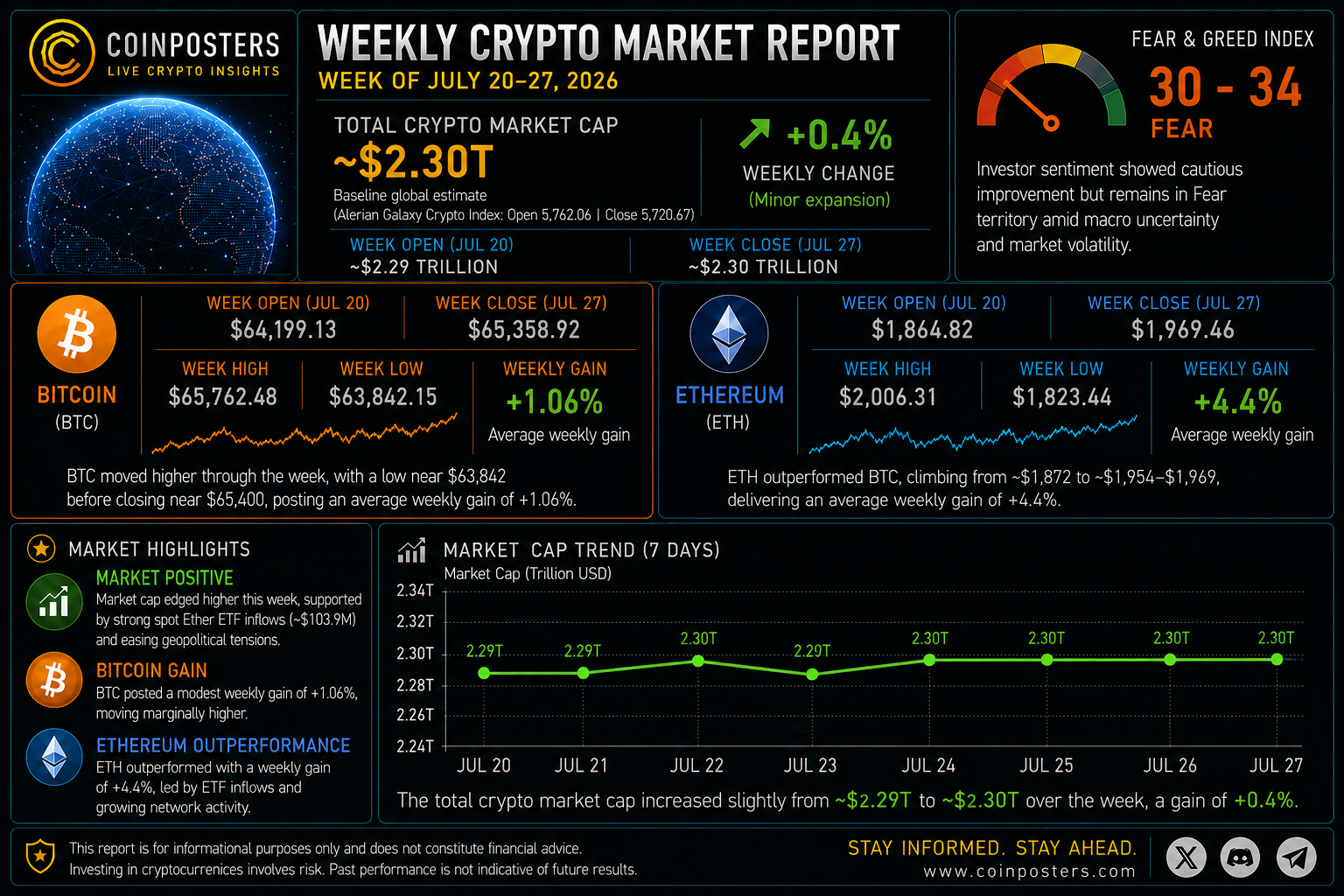
Dollar-cost averaging (DCA) means investing a fixed dollar amount into cryptocurrency at regular intervals — weekly, bi-weekly, or monthly — regardless of the current price. Instead of trying to time the market perfectly, you buy consistently over time. When prices are high, your fixed amount buys fewer coins. When prices are low, it buys more. Over time, this smooths out your average purchase price and removes the stress of trying to pick the perfect entry point. For a more detailed analysis, you can check out the weekly analysis of the crypto market.
For example, if you invest $50 in Bitcoin every two weeks, you are building a position steadily without exposing yourself to the risk of putting a large lump sum in at exactly the wrong moment. Many exchanges like Coinbase and Kraken have built-in auto-buy features that automate this process entirely, making DCA one of the most beginner-friendly strategies available.
Buy and Hold: How Patience Pays Off in Crypto
Buy and hold — often called “HODLing” in the crypto community — is exactly what it sounds like. You purchase a cryptocurrency and hold it for an extended period, typically years, regardless of short-term price swings. This strategy is grounded in the belief that high-quality assets like Bitcoin and Ethereum will be worth more in five to ten years than they are today, even if they go through brutal downturns along the way.
The historical data supports this approach. Bitcoin’s price was under $1 in 2011. It crossed $1,000 in 2013, hit nearly $20,000 in 2017, pulled back sharply, then surged past $69,000 in 2021 before recovering to new all-time highs in 2024. Every major crash was followed by a new peak — but only patient holders captured those gains. Panic sellers at each dip locked in losses instead.
Real-World Example: The Power of Holding
An investor who put $1,000 into Bitcoin in January 2020 at approximately $7,200 per coin and held through the COVID crash, the 2021 bull run, and the 2022 bear market would have seen their investment grow to over $9,000 by early 2024 — without making a single additional trade.
The key psychological challenge with buy and hold is doing nothing when the market drops 40% and every headline screams disaster. Having a clear plan before you invest — knowing you will hold for a set period no matter what — is the only way to stay the course when emotions run high.
Buying the Dip: What It Means and How to Do It Without Emotion
Buying the dip means purchasing cryptocurrency after a significant price drop, with the expectation that the asset will recover over time. The logic is straightforward — you are buying the same asset at a discount. When Bitcoin drops 30% in a month, long-term believers in the asset see it as a sale, not a disaster. Done with discipline and a long-term view, this can meaningfully lower your average cost per coin. For a deeper understanding of market trends, you can refer to the Bitcoin consolidation report.
The danger is that without rules, “buying the dip” can turn into catching a falling knife. To keep it low-risk, only buy dips on assets you already researched and believe in long-term. Set a threshold — for instance, only buy additional Bitcoin if it drops more than 20% from its recent high — and stick to it. Never invest borrowed money or emergency funds to buy a dip, no matter how confident you feel.
Portfolio Diversification: Do Not Put Everything Into One Coin
A Beginner’s Diversified Crypto Portfolio
Bitcoin (BTC) — The most established store of value in crypto, with the longest track record and deepest liquidity
Ethereum (ETH) — Powers a vast ecosystem of decentralized applications and has strong long-term utility
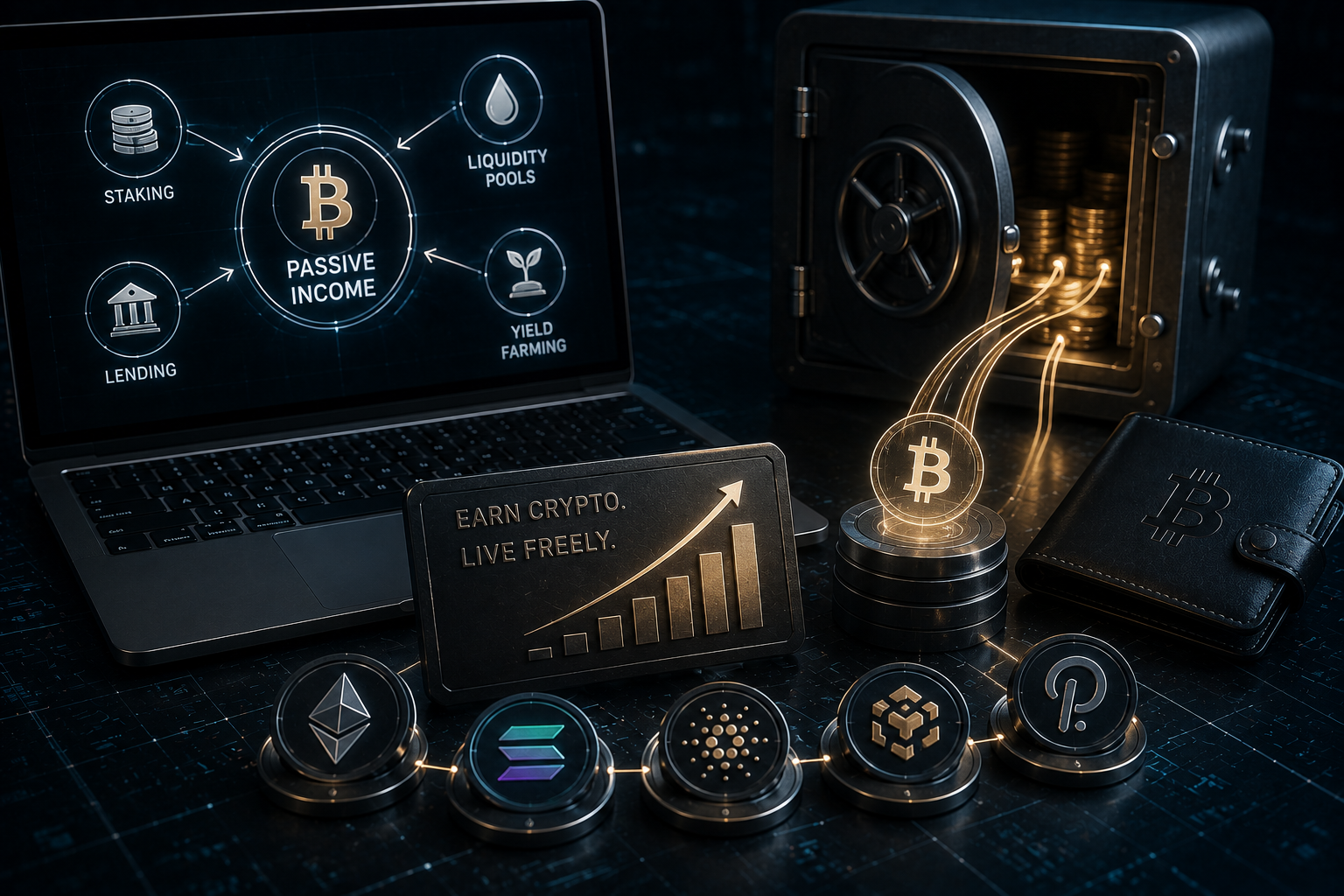
Stablecoins (USDC, USDT) — Dollar-pegged assets that preserve value and can be used to earn yield through staking or lending
Large-cap altcoins (selectively) — Projects like Solana (SOL) or Chainlink (LINK) with real use cases and established teams, kept to a small portfolio percentage
A simple beginner allocation might look like 60% Bitcoin, 30% Ethereum, and 10% in one or two researched altcoins. This structure keeps the majority of your exposure in the two most proven assets while leaving a small window for higher-growth opportunities.
Diversification within crypto does not eliminate risk, but it does prevent a single bad outcome from wiping out your entire portfolio. If one altcoin collapses to zero — which has happened many times in crypto history — a well-diversified portfolio absorbs that loss without catastrophic damage.
How to Start Investing in Crypto Step by Step
Getting started is far simpler than most beginners expect. The entire process from opening an account to making your first purchase can be completed in under an hour. What matters more than speed, though, is doing each step correctly so your investment is secure from day one.
Step 1: Set a Budget You Are Comfortable Losing
Before you open a single exchange account, decide exactly how much money you are willing to invest — and mentally accept that it could go to zero. Financial advisors commonly suggest limiting crypto to no more than 5% to 10% of your total investment portfolio, particularly for beginners. Start with an amount that will not affect your emergency fund, monthly bills, or existing financial obligations. This boundary protects you from the emotional spiral of investing money you cannot afford to lose.
Step 2: Choose a Reputable Crypto Exchange
A crypto exchange is the platform where you buy, sell, and manage your cryptocurrency. For beginners, the most important factors are security reputation, regulatory compliance, ease of use, and fee structure. Well-established exchanges operating in regulated markets include Coinbase, Kraken, and Gemini in the United States, and Binance internationally.
Look for exchanges that offer two-factor authentication (2FA), cold storage for customer funds, and clear fee disclosures. Avoid obscure exchanges with no regulatory oversight — this is one of the most common ways new investors lose funds to exchange collapses or exit scams.
Step 3: Pick Your First Cryptocurrency
For most beginners, Bitcoin or Ethereum should be the first purchase. Both have proven track records, genuine real-world use cases, and are accepted on every major exchange worldwide. They are also the most researched and analyzed assets in the crypto market, meaning there is no shortage of credible information to help you make an informed decision.
Avoid starting with meme coins, newly launched tokens, or anything being heavily promoted on social media. These assets carry disproportionately high risk and very little fundamental backing. The goal at this stage is to get comfortable with how crypto markets work, not to swing for the highest possible return.
| Cryptocurrency | Best For | Risk Level | Key Feature |
|---|---|---|---|
| Bitcoin (BTC) | Store of value, long-term hold | Moderate | Fixed supply of 21 million coins |
| Ethereum (ETH) | Utility + growth exposure | Moderate | Powers DeFi and smart contracts |
| USD Coin (USDC) | Stability, yield earning | Low | Pegged 1:1 to the US Dollar |
| Solana (SOL) | Higher growth, higher risk | High | Fast, low-cost transactions |
Step 4: Make Your First Purchase
Once your exchange account is verified and funded, making your first purchase is straightforward. Search for the cryptocurrency you want, enter the dollar amount you wish to invest — not the number of coins — and confirm the transaction. You do not need to buy a whole Bitcoin; you can purchase as little as $10 worth, which gives you a fractional share of the coin proportional to your investment. If you are interested in stablecoins like USD Coin, you might want to explore stablecoin yield strategies to maximize your returns.
Review the transaction fee before confirming. Most exchanges charge between 0.5% and 1.5% per transaction for standard purchases. Some offer lower fees if you use their native platform token or opt for limit orders instead of market orders. These fees add up over time, so it is worth understanding the fee structure of your chosen platform before you start trading frequently.
Step 5: Store Your Crypto Safely
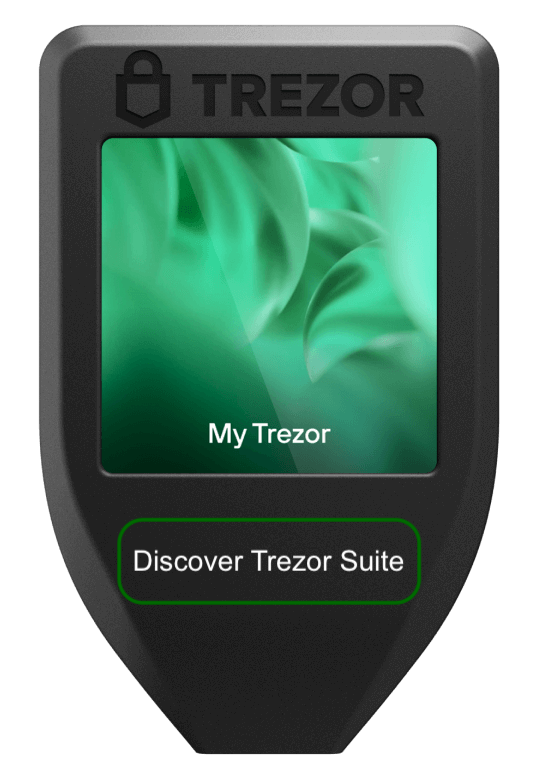
Leaving your cryptocurrency on an exchange is convenient but carries risk — exchanges can be hacked, frozen, or in rare cases, shut down entirely. For any amount you plan to hold long-term, transferring your crypto to a personal wallet gives you full control over your own funds. The two main options are hot wallets (software-based, connected to the internet, such as MetaMask or Trust Wallet) and cold wallets (hardware devices kept offline, such as the Ledger Nano X or Trezor Model T), with cold wallets offering the highest level of security for larger holdings.
How to Keep Your Crypto Investment Safe
Security is not an optional extra in crypto — it is a core part of your investment strategy. Unlike a bank account, there is no customer service line to call if your funds are stolen and no government insurance to cover losses. The responsibility for keeping your crypto safe falls entirely on you, which makes understanding the basics of crypto security non-negotiable.
The most important habits every crypto holder should build are enabling two-factor authentication on every account, never sharing your private keys or seed phrase with anyone, using unique strong passwords for each platform, and being deeply skeptical of any unsolicited investment advice or offers that arrive via email, social media, or messaging apps.
Security Checklist for Crypto Beginners:
✓ Enable 2FA on your exchange and wallet accounts
✓ Write down your seed phrase and store it offline in a secure location
✓ Never enter your seed phrase into any website or app
✓ Use a hardware wallet (Ledger Nano X or Trezor Model T) for long-term holdings
✓ Verify all wallet addresses character by character before sending funds
✓ Never invest based on tips from social media or unsolicited messages
Phishing attacks are one of the most common ways crypto investors lose funds. These involve fake websites, emails, or messages that mimic legitimate exchanges or wallets to steal your login credentials or seed phrase. Always navigate directly to exchange websites by typing the URL yourself rather than clicking links in emails, and double-check that the URL is correct before entering any sensitive information.
Hot Wallets vs. Cold Wallets: Which One Should You Use
A hot wallet is any wallet connected to the internet — this includes exchange wallets, mobile apps like Trust Wallet, and browser extensions like MetaMask. They are convenient for frequent transactions but are vulnerable to hacking because they are always online. A cold wallet, by contrast, is a physical hardware device that stores your private keys completely offline. The Ledger Nano X retails for around $149 and the Trezor Model T for around $219 — a worthwhile investment once your holdings grow beyond a few hundred dollars.
The practical rule is simple: use a hot wallet for small amounts you trade or spend regularly, and move anything you plan to hold long-term into a cold wallet. Think of it like carrying a small amount of cash in your physical wallet for daily use while keeping your savings in a bank vault. The hardware wallet does not connect to the internet unless you physically plug it in, which makes remote hacking virtually impossible. For a deeper understanding of crypto storage options, you might want to explore how to navigate DeFi protocols safely.
How to Spot and Avoid Crypto Scams
The most common crypto scams follow predictable patterns once you know what to look for. Rug pulls involve developers launching a new token, generating hype to drive up the price, then disappearing with investor funds — leaving the token worthless. Pump-and-dump schemes work similarly, where a group artificially inflates a coin’s price before selling their holdings and crashing the value for everyone else. Romance scams, also called “pig butchering,” involve fraudsters building fake relationships online before convincing victims to invest in fraudulent crypto platforms. If someone you have never met in person is giving you investment advice, treat it as a red flag without exception. Legitimate investments do not require urgency, guaranteed returns, or secrecy. For those navigating these challenges, learning how to navigate DeFi protocols safely can be crucial.
How Much of Your Portfolio Should Be in Crypto
Most financial professionals suggest keeping cryptocurrency between 5% and 10% of your total investment portfolio as a starting point, particularly for beginners. This allocation is large enough to generate meaningful returns if crypto performs well, but small enough that a major market downturn does not compromise your overall financial health. If your total investable assets are $10,000, that means starting with $500 to $1,000 in crypto — an amount that creates real exposure without creating real danger. As your confidence and knowledge grow, you can reassess that allocation, but there is no rush to go heavier early on.
Recommended Crypto Allocation for Beginners:
Total portfolio: 5-10% in cryptocurrency
Within crypto allocation: 60% Bitcoin, 30% Ethereum, 10% other assets
Example: If you have $10,000 to invest, allocate $500-$1,000 to crypto
This creates meaningful exposure while preventing dangerous overconcentration
Start Small, Stay Consistent, and Let Time Do the Work
The most successful crypto investors are rarely the ones who made one massive bet at the perfect moment. They are the ones who started small, stuck to a plan, and did not let fear or greed pull them off course. The strategies in this guide — dollar-cost averaging, buy and hold, diversification — all share a common theme: consistency beats timing every single time.
Crypto markets will always be volatile. There will be crashes that feel catastrophic and rallies that feel like they will last forever. Neither feeling is a reliable guide to action. What does work is having a clearly defined strategy before you invest, an allocation you are genuinely comfortable with, and the discipline to ignore the noise. The investors who let time work in their favor are the ones who benefit most from crypto’s long-term growth trajectory.
Starting with as little as $50 a month using dollar-cost averaging into Bitcoin and Ethereum puts you ahead of the majority of people who are watching from the sidelines. You do not need to understand every aspect of blockchain technology, follow daily price charts, or listen to market predictions. You just need a plan and the patience to follow it.
How Beginners Can Invest in Cryptocurrency Successfully:
Start with Bitcoin or Ethereum — they are the most proven assets with the longest track records
Use dollar-cost averaging — invest a fixed amount on a regular schedule, regardless of price
Only invest what you can afford to lose — this single rule prevents most beginner disasters
Keep 5% to 10% of your portfolio in crypto — meaningful exposure without dangerous overconcentration
Secure your holdings — use a hardware wallet like the Ledger Nano X for any long-term holdings
Ignore short-term noise — volatility is normal and expected, not a signal to sell
Frequently Asked Questions
| Question | Short Answer |
|---|---|
| Is crypto safe for beginners? | It carries real risk, but low-risk strategies make it manageable |
| How much do I need to start? | As little as $10 on most major exchanges |
| What should I buy first? | Bitcoin (BTC) or Ethereum (ETH) for lowest beginner risk |
| Can crypto beat inflation? | Historically yes over long periods, but not guaranteed short-term |
| What if the market crashes? | Hold your position if you invested within your means — crashes have historically recovered |
Is Cryptocurrency a Safe Investment for Beginners?
Cryptocurrency is not a risk-free investment — no honest source will tell you otherwise. Prices can fall dramatically in short periods, projects can fail, and exchanges can be compromised. However, “risky” and “unmanageable” are not the same thing. With the right strategies — starting small, diversifying across proven assets, using dollar-cost averaging, and securing your holdings properly — beginners can participate in the crypto market with a level of risk that is proportionate and deliberate rather than reckless.
The key is approaching crypto as one component of a broader financial plan, not as a shortcut to wealth. Investors who treat it that way have a fundamentally different experience from those who go all-in chasing headlines. Managed correctly, how beginners can invest in cryptocurrency becomes a meaningful and empowering part of a long-term investment strategy.
How Much Money Do I Need to Start Investing in Crypto?
The barrier to entry in crypto is genuinely low. You do not need thousands of dollars or a background in finance. Most major exchanges allow fractional purchases, meaning $50 buys you a fraction of a Bitcoin proportional to its current price, and you own that fraction outright with the same rights as someone who owns a whole coin.
How Much Do You Need to Start?
Minimum to start: As little as $10 on platforms like Coinbase or Kraken
Recommended starting point: $50 to $100 per month using dollar-cost averaging
Portfolio allocation: No more than 5% to 10% of your total investable assets
Hardware wallet budget: Factor in $149 to $219 for a Ledger Nano X or Trezor Model T once holdings grow
What matters far more than the amount you start with is the consistency with which you invest. A person investing $50 every two weeks for three years builds a far more resilient position than someone who invests $3,000 all at once at the wrong moment in the market cycle.
What Is the Best Cryptocurrency for Beginners to Buy First?
Bitcoin (BTC) is the best first cryptocurrency for most beginners. It has the longest track record, the highest liquidity, the most regulatory clarity, and the widest institutional adoption of any digital asset. Ethereum (ETH) is an excellent second choice, offering additional utility through its role in powering decentralized applications and smart contracts. Both assets have survived multiple major market cycles and have historically recovered from every significant crash to date. Avoid altcoins and meme coins until you have a solid foundational position in both.
Can Cryptocurrency Really Beat Inflation Over Time?
Over multi-year time horizons, Bitcoin in particular has vastly outperformed inflation as measured by the U.S. Consumer Price Index. While past performance does not guarantee future results, Bitcoin’s hard cap of 21 million coins creates a supply scarcity that is structurally different from fiat currency, which can be printed in unlimited quantities. Ethereum has also introduced a deflationary burning mechanism post-merge, which reduces supply over time. Neither asset is guaranteed to beat inflation in any given year, but for investors with a long time horizon and a disciplined approach, the structural case for crypto as an inflation hedge remains compelling. For more insights on the crypto market, check out the Crypto Market Report.
What Happens If the Crypto Market Crashes After I Invest?
Market crashes in crypto are not rare events — they are a predictable feature of the asset class. Bitcoin has experienced multiple drawdowns of 70% to 80% from peak to trough throughout its history. Each time, it has recovered and reached new all-time highs, though the timeline for recovery has varied. The critical factor is whether you invested an amount you could afford to leave untouched through a downturn.
If you followed the strategies in this guide — investing only what you can afford to lose, using dollar-cost averaging, and holding established assets like Bitcoin and Ethereum — a market crash is uncomfortable but not catastrophic. In fact, for investors still in the accumulation phase, a crash is an opportunity to buy more at lower prices, which lowers your overall average cost per coin.
DYOR Disclaimer: This article is for educational purposes only and should not be considered financial or legal advice. Cryptocurrency investing carries substantial risk, including the potential loss of your entire investment. Market conditions, regulatory environments, and exchange security are subject to change. Always conduct your own research (DYOR) and consult with qualified financial advisors before making investment decisions. Past performance does not guarantee future results. The information presented reflects market conditions as of 2026. Crypto markets are highly volatile — never invest money you cannot afford to lose. Always verify current security practices and regulatory status of any exchange or wallet service before using it. Tax obligations vary by jurisdiction — consult a tax professional about your reporting requirements.