Coinposters
NFT vs DeFi Token: Which Delivers Better Returns for Diversifying a Portfolio?
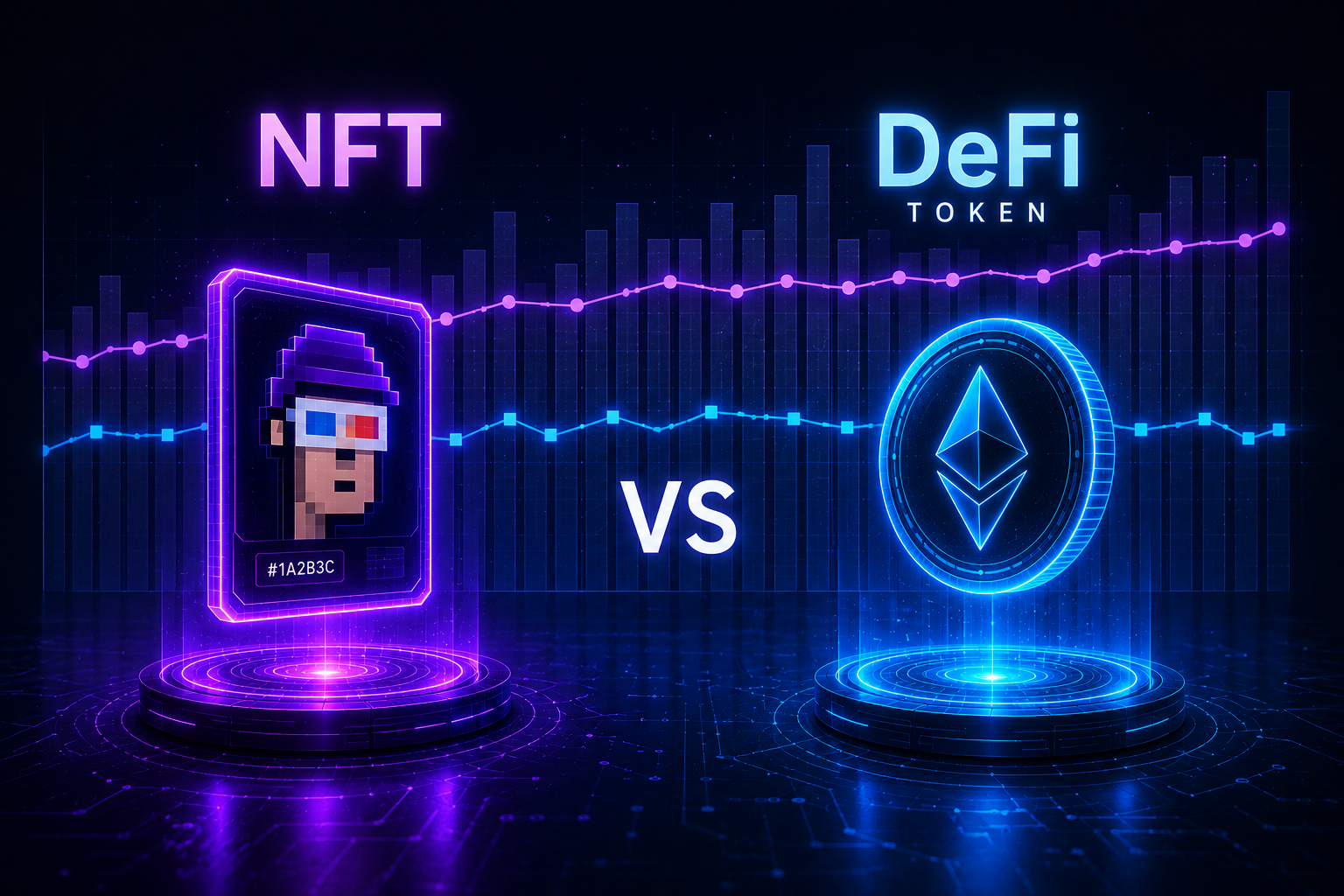
In the NFT vs DeFi token comparison, DeFi tokens win on predictable, recurring yield, while NFTs offer rare asymmetric upside for patient, culturally-informed investors, most serious portfolios use both rather than choosing one.
Article at a Glance
Here’s the short version of the NFT vs DeFi token question:
- NFTs and DeFi tokens are fundamentally different: NFTs represent unique, non-fungible ownership of digital assets, while DeFi tokens are fungible instruments used to access decentralized financial services.
- DeFi tokens can generate passive income through yield farming, staking, and liquidity pools, something traditional NFT ownership does not offer by default.
- NFT staking is an emerging middle ground that combines the uniqueness of NFTs with the income-generating mechanics of DeFi, keep reading to find out how it works.
- Both asset types carry significant risks including market volatility, smart contract vulnerabilities, and evolving regulatory pressure.
- The right choice depends on your goals: DeFi tokens suit investors seeking active, recurring yield, while NFTs suit those with a longer time horizon and genuine conviction in specific digital assets or communities.
Table of Contents
- NFTs vs DeFi Tokens: What You Need to Know First
- What Is an NFT?
- What Is a DeFi Token?
- NFT vs DeFi Token: The Core Differences
- Which Delivers Better Returns?
- How Each Asset Fits Into a Diversified Portfolio
- NFT Staking: The Best of Both Worlds
- NFTs or DeFi Tokens: Which Should You Choose?
- Frequently Asked Questions
NFTs vs DeFi Tokens: Here Is What You Need to Know First – NFT vs DeFi Token
Crypto is no longer just about holding Bitcoin and hoping for the best. Two of the most talked-about corners of the blockchain world, non-fungible tokens (NFTs) and decentralized finance (DeFi) tokens, offer completely different opportunities for what you can actually do with your digital assets. This NFT vs DeFi token breakdown covers exactly what sets them apart.
Both are built on blockchain infrastructure. Both are decentralized, transparent, and traded on crypto-native platforms. But the similarities largely stop there. One is designed to prove ownership of something unique. The other is engineered to replace traditional financial systems entirely. Understanding which fits your goals starts with understanding exactly what each one is, and how each one behaves as an investment.
Platforms like Coinposters have covered both asset classes extensively, offering investors practical guidance on navigating the crypto landscape beyond simply buying coins. Whether you are a collector, a yield-seeker, or just trying to diversify intelligently, knowing the difference between NFTs and DeFi tokens is a critical first step.
What Is an NFT?
An NFT, or non-fungible token, is a unique digital asset stored on a blockchain that verifies ownership of a specific item. That item could be digital art, music, video game assets, virtual real estate, or even a tweet. What makes an NFT distinct is that it cannot be replicated or exchanged on a one-to-one basis with another token, each one is one-of-a-kind.
NFTs are most commonly minted and traded on Ethereum-based marketplaces like OpenSea and Blur, though other blockchains including Solana and Polygon now support NFT ecosystems as well. When you buy an NFT, you are not just buying a file, you are buying a cryptographic proof of ownership recorded permanently on-chain.
How NFT Value Is Determined
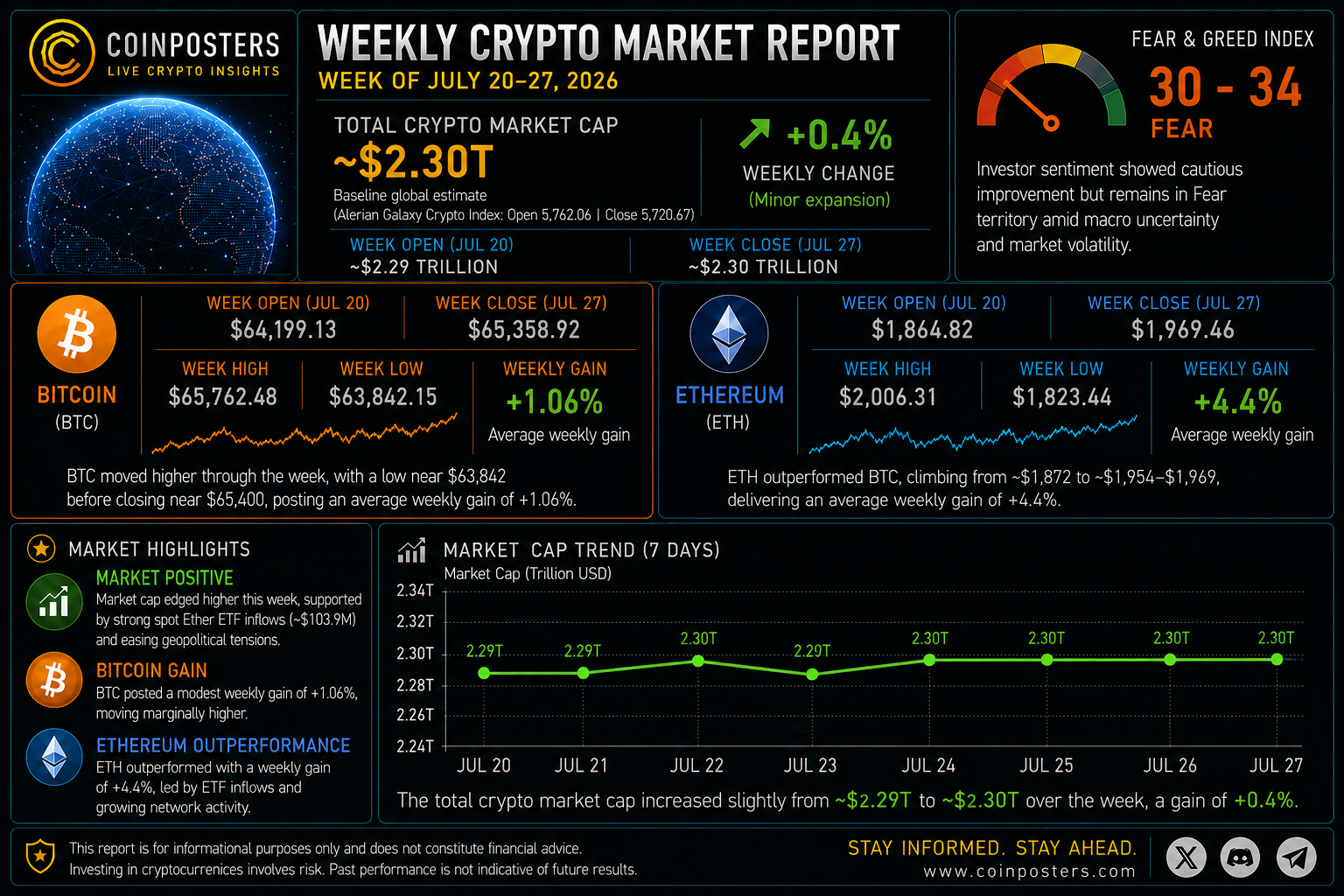
NFT valuation is far more subjective than most financial assets. Value is driven by a combination of the creator’s reputation, the rarity of the token within a collection, community demand, and trends in the secondary market. A single NFT from the Bored Ape Yacht Club collection, for example, sold for millions at peak market, not because of any underlying cash flow, but because of cultural cachet and scarcity. To explore more about the evolving crypto landscape, check out the crypto market report.
Unlike stocks or DeFi tokens, NFTs do not generate income simply by being held. Their value is almost entirely speculative and market-driven, which makes timing and community sentiment critical factors in any NFT investment decision.
Common Use Cases for NFTs
NFTs have expanded well beyond digital art. Today they are being used across a surprisingly wide range of applications:
- Digital art and collectibles, the original and still most active use case
- Gaming assets, in-game items, characters, and skins that players truly own
- Music and media rights, artists selling albums or royalties directly as NFTs
- Virtual real estate, parcels of land in metaverse platforms like Decentraland
- Ticketing and event access, NFT-based tickets that prevent fraud and enable resale royalties
- Identity and credentials, verifiable digital certificates and memberships
What Is a DeFi Token?
Decentralized finance (DeFi) refers to a blockchain-based ecosystem of financial services that operates without banks, brokers, or centralized intermediaries. DeFi tokens are the native currencies and governance instruments that power these platforms, used for everything from paying transaction fees to voting on protocol changes to earning yield.
Well-known DeFi tokens include UNI (Uniswap), AAVE (Aave), COMP (Compound), and MKR (MakerDAO). Each of these tokens is fungible, meaning one UNI token is identical in value and function to any other UNI token, making them directly tradeable on decentralized exchanges (DEXs) like Uniswap or SushiSwap.
How DeFi Tokens Generate Returns
Unlike NFTs, DeFi tokens are specifically built with income-generating mechanics baked in. Holders can put their tokens to work in several ways, staking them to validate transactions, supplying them to lending protocols in exchange for interest, or providing liquidity to trading pools in exchange for a share of transaction fees.
The annual percentage yields (APY) available through DeFi protocols can far exceed anything offered by a traditional savings account, though they come with commensurately higher risks. Protocols like Aave allow users to lend assets and earn variable interest rates, while platforms like Curve Finance offer stablecoin liquidity pools with more predictable, lower-risk yield profiles.
“Unlike NFTs, DeFi tokens are specifically built with income-generating mechanics baked in.”
Yield Farming and Staking Explained
Yield farming involves moving crypto assets across multiple DeFi protocols to maximize returns, often by supplying liquidity and earning reward tokens on top of base interest. It is high-effort and high-reward but carries significant risk including impermanent loss, a situation where the value of your deposited assets shifts unfavorably relative to simply holding them.
Staking, by contrast, is more straightforward. You lock up a DeFi token in a protocol to help secure the network or provide liquidity, and in return you earn additional tokens as a reward. Both strategies share common risks: dramatic price drops, smart contract bugs, and outright scams that exploit protocol vulnerabilities.
NFT vs DeFi Token: The Core Differences
At their core, NFTs and DeFi tokens solve entirely different problems. One gives digital creators and collectors a way to prove and transfer ownership. The other gives anyone with an internet connection access to financial services previously gated by banks and institutions. The table below breaks down the key structural differences:
| Feature | NFT | DeFi Token |
|---|---|---|
| Fungibility | Non-fungible (unique) | Fungible (interchangeable) |
| Primary Purpose | Ownership of digital assets | Access to financial services |
| Income Generation | Limited (unless staked) | Yes, staking, yield farming, lending |
| Typical Marketplace | OpenSea, Blur, Magic Eden | Uniswap, Aave, Curve Finance |
| Value Driver | Rarity, community, creator reputation | Market demand, protocol performance |
| Liquidity | Lower, depends on buyer demand | Higher, traded on DEXs continuously |
Fungibility: Unique Assets vs Interchangeable Tokens
Fungibility is the defining technical difference between these two asset types. A DeFi token like AAVE is fungible, every single AAVE token is worth exactly the same as every other AAVE token and can be swapped freely. An NFT, by definition, cannot be exchanged on equal terms with another NFT because no two NFTs are identical. This single distinction shapes everything else about how they are valued, traded, and used.
Purpose: Ownership vs Financial Services
NFTs exist to solve a specific problem: how do you prove you own something digital when digital files can be copied infinitely? The answer is blockchain-verified ownership. DeFi tokens exist to solve a completely different problem: how do you access lending, borrowing, trading, and earning without a bank? These two purposes rarely overlap, which is exactly why they appeal to different types of crypto participants.
Where Each Asset Is Traded
NFTs are bought and sold on dedicated NFT marketplaces. OpenSea remains the largest by volume, while Blur has aggressively captured market share among professional traders with its zero-fee structure and airdrop incentive model. Magic Eden dominates on the Solana blockchain. DeFi tokens, on the other hand, are traded primarily on decentralized exchanges like Uniswap, SushiSwap, and Curve Finance, where automated market makers (AMMs) set prices based on liquidity pool ratios rather than order books.
How Risk Differs Between NFTs and DeFi
Both asset classes carry substantial risk, but the type of risk differs significantly. NFT investors face illiquidity risk, there is no guarantee a buyer exists for your specific token when you want to sell. They also face trend risk: entire NFT collections can collapse in value almost overnight when community interest evaporates. The floor price of many once-popular collections has dropped more than 90% from peak valuations.
DeFi token holders face a different set of dangers. Smart contract vulnerabilities have led to some of the largest hacks in crypto history, the Ronin Network breach in 2022 resulted in over $600 million in losses. Beyond hacks, DeFi participants must also contend with impermanent loss, rug pulls, and protocol failures. Both NFTs and DeFi are also subject to evolving and unpredictable regulatory pressure from governments worldwide, which can impact token values and platform availability with little warning.
Which Delivers Better Returns?
There is no clean universal answer here, and anyone who tells you otherwise is selling something. Returns in both NFTs and DeFi are highly dependent on timing, strategy, and risk tolerance. What we can do is look at each asset class honestly and evaluate where the realistic return potential lies.
The Case for DeFi Tokens
DeFi tokens offer something NFTs fundamentally cannot by default: predictable, recurring yield. When you stake AAVE or provide liquidity on Curve Finance, you earn returns on a continuous basis. These are not hypothetical future gains, they are real token rewards distributed on a regular schedule. For investors prioritizing cash flow over speculation, DeFi has a structural advantage.
The numbers can be compelling. Stablecoin yield strategies on platforms like Convex Finance have historically offered APYs ranging from 4% to upward of 20%, depending on market conditions and incentive structures, significantly higher than anything available in traditional finance for comparable liquidity. Governance tokens like UNI and COMP have also delivered significant price appreciation during bull cycles, combining speculative upside with utility-driven demand. For more insights, check out this report on DeFi tokens.
The Case for NFTs
At peak market conditions, NFT returns have been nothing short of extraordinary. Early minters of CryptoPunks, originally available for free in 2017, saw individual tokens sell for millions of dollars by 2021. The Bored Ape Yacht Club collection launched at 0.08 ETH per token and reached floor prices exceeding 100 ETH within a year. These are asymmetric return profiles that DeFi yield strategies simply cannot replicate.
The caveat is brutal: for every CryptoPunks, there are thousands of NFT collections that went to zero. Timing the NFT market requires reading cultural momentum, community strength, and creator credibility, none of which follow predictable financial models. NFTs are better understood as high-risk, high-ceiling speculative assets rather than reliable investment instruments, at least in their current form.
What Experts Say About Long-Term Potential
DeFi is seen by many analysts as the more immediately productive asset class, generating real economic activity today through lending, trading, and liquidity provision. The consensus among experienced crypto investors tends to be that DeFi tokens reward short-to-medium term active strategies, while NFTs reward patience, cultural insight, and the ability to identify genuinely scarce digital assets before the market does.
How Each Asset Fits Into a Diversified Portfolio
Thinking about NFTs and DeFi tokens as competitors misses the point. They serve different portfolio functions. A well-structured crypto portfolio might use DeFi tokens to generate baseline yield on idle assets while allocating a smaller, higher-risk portion to NFTs with genuine long-term cultural or utility-based value. The key is matching each asset to its actual role rather than treating all crypto as interchangeable speculation.
Diversification within crypto follows the same logic as traditional portfolio construction, you want assets with low correlation to each other. NFT valuations are driven by community trends and creator markets. DeFi token performance is tied more closely to overall protocol usage and broader crypto market cycles. Holding both gives you exposure to different demand drivers, which is exactly the point of diversification.
Using DeFi Tokens for Passive Income
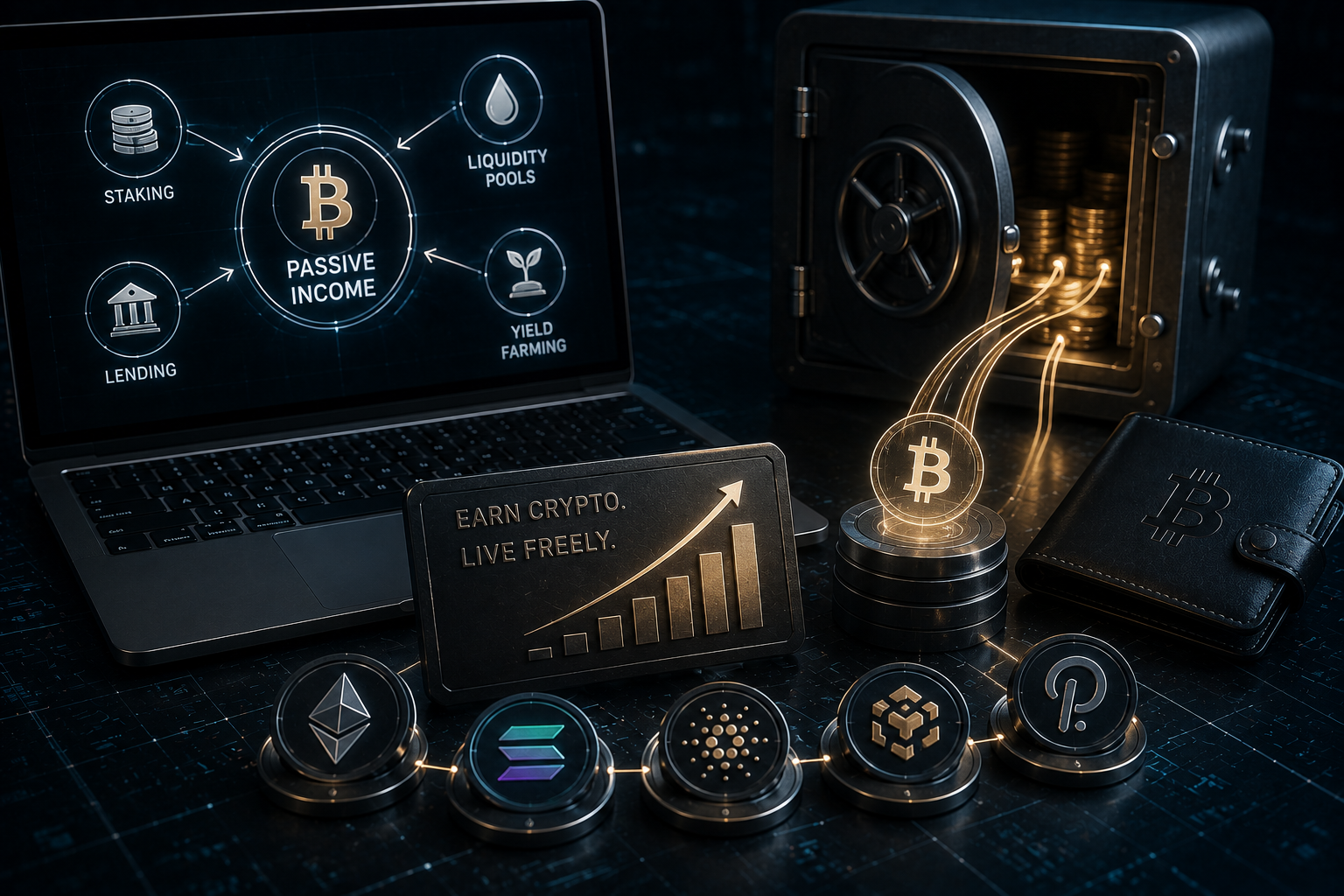
The most practical use case for DeFi tokens in a diversified portfolio is passive income generation. Rather than letting crypto assets sit idle in a wallet, investors can deploy them into lending protocols like Aave or Compound, where they earn variable interest paid by borrowers. Liquidity providers on platforms like Uniswap V3 earn a percentage of every trade that passes through their liquidity range, a continuous, automated income stream.
The risk management piece matters here. Concentration in a single DeFi protocol exposes you to that protocol’s specific smart contract risk. Spreading exposure across multiple audited protocols, particularly those with long track records and significant total value locked (TVL), reduces single-point-of-failure risk while maintaining yield exposure. Protocols with higher TVL, such as Lido Finance for ETH staking, tend to offer more stability than newer, higher-APY alternatives that carry greater unknown risk.
Using NFTs as a Long-Term Store of Value
NFTs function best in a portfolio when treated as long-term, high-conviction bets on digital cultural assets rather than short-term trades. The investors who have generated the most consistent returns from NFTs are those who identified collections with genuine utility, strong community governance, and creators with track records, then held through volatility rather than panic-selling during market downturns. Think of it less like day-trading and more like buying emerging art from an artist whose work you believe will matter in ten years.
The key filter when evaluating an NFT for long-term holding is asking whether the underlying asset has value beyond speculation. Does it grant access to something? Does it carry on-chain royalties? Is the creator continuing to build? Collections that answer yes to these questions have a far better chance of retaining value as the NFT market matures and separates legitimate digital ownership infrastructure from speculative noise.
NFT Staking: The Best of Both Worlds
NFT staking is one of the most significant developments bridging the gap between the two asset classes. It allows NFT holders to lock their tokens into a DeFi-compatible protocol and earn rewards, typically in the form of the platform’s native token, without selling the NFT itself. Platforms like NFTX, Reaper Farm, and game-specific ecosystems like Axie Infinity have pioneered this model, effectively turning static digital collectibles into yield-generating instruments.
The mechanics work similarly to traditional DeFi staking. You deposit your NFT into a smart contract, the protocol uses it to provide liquidity or collateral within its ecosystem, and you receive token rewards proportional to the staking period and the NFT’s assessed value. This unlocks passive income from an asset class that previously offered none, and it does so without forcing you to give up ownership of the underlying NFT. For investors who already hold high-value NFTs, staking is increasingly a logical next step rather than a niche experiment.
NFTs or DeFi Tokens: Which Should You Choose?
Your answer depends entirely on what you are trying to accomplish. If your priority is generating consistent yield on crypto you already hold, DeFi tokens and protocols are the more direct path. They are more liquid, more immediately productive, and better suited to investors who want their assets actively working rather than sitting in a wallet waiting for cultural momentum to shift in their favor.
If you have a longer time horizon, a higher risk tolerance, and genuine interest in the digital ownership economy, gaming, digital art, virtual identity, or creator ecosystems, then a selective NFT allocation makes sense as part of a broader portfolio. The ideal approach for most serious crypto investors is not an either/or decision. Use DeFi tokens to generate baseline yield and maintain liquidity. Use a disciplined, smaller allocation to NFTs with real utility or cultural longevity. The two asset classes complement each other far more effectively than they compete.
Frequently Asked Questions
Here are the most common questions investors ask when comparing NFTs and DeFi tokens side by side.
Can You Invest in Both NFTs and DeFi Tokens at the Same Time?
Yes, and for many investors, holding both is the smarter strategy. DeFi tokens and NFTs have low correlation to each other in terms of what drives their value, which means combining them in a portfolio gives you exposure to different demand drivers simultaneously. You can use DeFi yield strategies to generate ongoing income while maintaining a separate, higher-risk allocation to NFTs with strong long-term utility or cultural value. The key is sizing each position according to its actual risk profile rather than treating them as equivalent bets.
Are DeFi Tokens Safer Than NFTs as an Investment?
Neither asset class is safe by traditional investment standards, both carry substantial risk. However, DeFi tokens tend to offer greater liquidity, which means you can exit a position more quickly if market conditions deteriorate. NFTs are significantly harder to sell during downturns because you need a willing buyer for your specific token, not just the asset class in general.
That said, DeFi carries its own category of risks that NFTs do not. Smart contract exploits, protocol failures, and impermanent loss can result in total or near-total loss of capital even when the broader market is stable. The Ronin Network hack and the collapse of the Terra/Luna ecosystem in 2022 are stark reminders that DeFi risk is real, structural, and can materialize extremely quickly. Risk in both asset classes should be actively managed, not assumed away.
What Is the Minimum Amount Needed to Start Investing in DeFi?
Technically, there is no minimum, you can supply as little as a few dollars worth of crypto to a lending protocol like Aave or Compound. The practical consideration is gas fees. On the Ethereum mainnet, transaction costs can quickly eat into returns on small positions, making micro-investments economically inefficient. Most experienced DeFi users either operate on lower-fee Layer 2 networks like Arbitrum or Optimism, or start with a minimum of a few hundred dollars to ensure fees do not outpace yield. Stablecoin strategies on Layer 2 protocols are often the most accessible starting point for new DeFi investors.
Do NFTs Generate Passive Income Like DeFi Tokens?
Standard NFT ownership does not generate passive income on its own, holding an NFT in your wallet produces no yield. However, there are two emerging mechanisms that change this. First, some NFT projects include built-in royalty structures that pay creators (and sometimes holders) a percentage of every secondary sale. Second, NFT staking platforms allow holders to deposit their NFTs into compatible protocols and earn token rewards over time.
These income mechanisms are still maturing and are far less reliable or standardized than DeFi yield strategies. Not all NFTs are stakeable, and royalty enforcement on secondary markets has become inconsistent following marketplace policy changes on platforms like OpenSea and Blur. If passive income is your primary goal, DeFi tokens remain the more reliable and transparent vehicle, NFT income strategies are a useful supplement, not a replacement.
Is NFT Staking Available on Most DeFi Platforms?
NFT staking is not yet a universal feature across DeFi platforms. It is primarily available on NFT-native protocols and blockchain gaming ecosystems that have specifically built staking mechanics into their infrastructure. Platforms like NFTX allow users to deposit NFTs into vaults to create fungible ERC-20 tokens that can then be used across broader DeFi protocols, effectively bridging the two worlds. Game ecosystems like Axie Infinity and The Sandbox have their own staking mechanisms tied directly to gameplay and governance.
Mainstream DeFi platforms like Uniswap or Aave are not designed to handle non-fungible assets natively, so NFT staking remains somewhat fragmented across specialized platforms. The infrastructure is improving rapidly, but investors should carefully evaluate each staking protocol’s smart contract audit history, TVL, and token economics before committing assets. Unaudited or low-TVL NFT staking platforms carry meaningfully higher risk than established DeFi protocols.
DYOR Disclaimer
This article is for informational purposes only and does not constitute financial, investment, or tax advice. NFTs and DeFi tokens both carry substantial risk, including volatility, smart contract vulnerabilities, and illiquidity. Always do your own research (DYOR) and consult a qualified financial professional before making any investment decisions.


Latest
DeFi News
08 Jul 2026
DeFi News
04 Jul 2026
DeFi News
21 May 2026
DeFi News
13 May 2026
DeFi News
15 Mar 2026