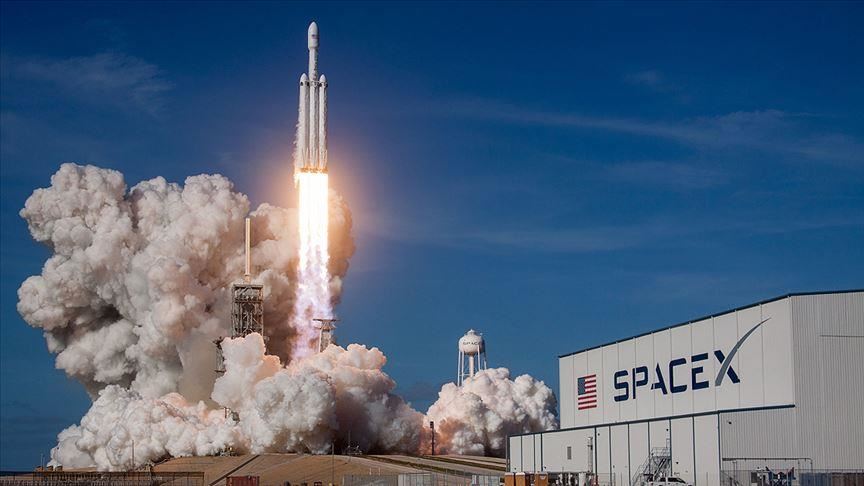
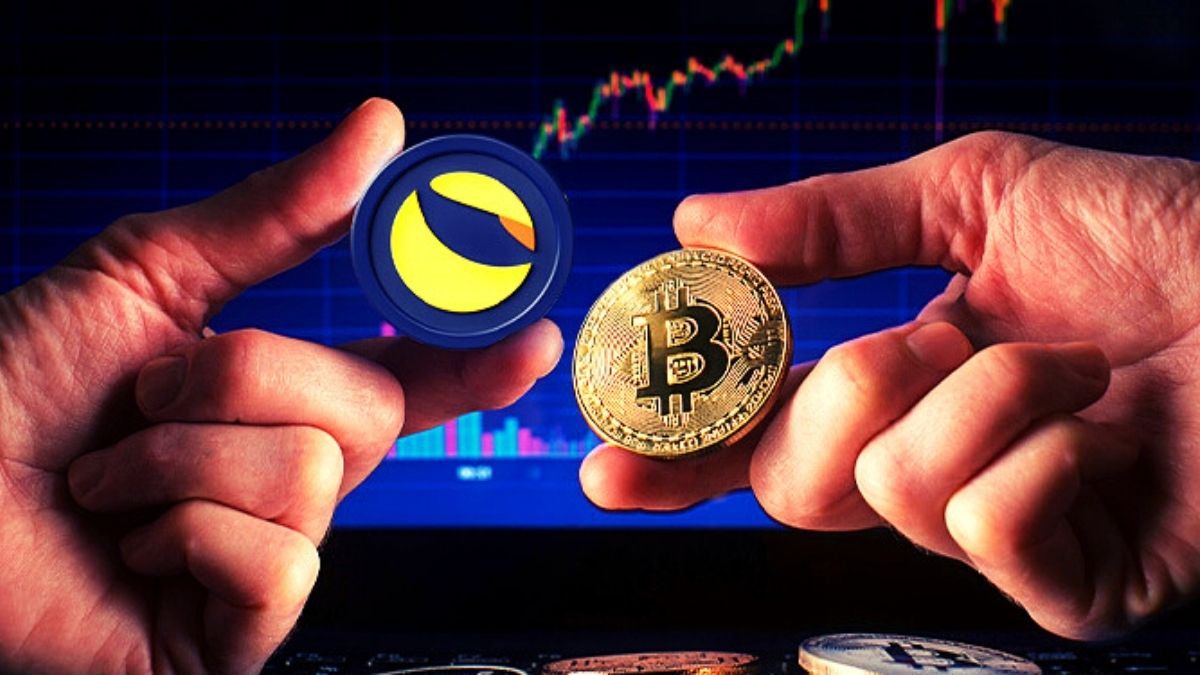
On Friday, Tesla CEO Elon Musk stated on Twitter that Spacex would soon accept the meme cryptocurrency Dogecoin for the purchase of items. This news provided a modest lift for the value of Dogecoin. The CEO of SpaceX tweeted that “Tesla gear can be purchased with DOGE, and shortly Spacex apparel will be available as well.”
In addition, Musk said that memberships to SpaceX’s Starlink might “one day” be paid for using dogecoin in the future. According to the information provided on their website, Starlink is able to deliver “High-speed, low-latency broadband internet in distant and rural regions around the world.”
The value of the meme cryptocurrency saw a significant increase when Elon Musk tweeted that SpaceX will begin accepting dogecoin. During the moment he sent out the tweet, the price of a single Dogecoin was $0.078399. Almost immediately, it increased by more than 8 percent, reaching $0.084927. However, most of the gains made by the meme currency were quickly reversed, and it is presently trading at $0.081469 USD.
In January, Tesla started taking dogecoin as payment for some items, but the electric vehicle business does not presently accept any other cryptocurrencies. The firm no longer takes bitcoin as payment for its goods because of their commitment to protecting the environment. Musk said in June of the previous year that Tesla would begin taking Bitcoin if miners could verify that they were using 50 percent renewable energy. On the other hand, he has not yet returned to the topic.
Dogecoin has long had Musk’s backing as an advocate. In the world of cryptocurrency, many refer to him as “the Dogefather.” The CEO of Tesla has admitted in the past that he had Bitcoin, Ether, and dogecoin in his possession. However, SpaceX only has bitcoin in its possession. In April, Tesla’s financial sheet included digital assets worth a total of $1.26 billion.
In May, the CEO of SpaceX said that dogecoin has the potential to become a currency, but bitcoin is more suited to functioning as a store of wealth.
The CEO of Tesla and SpaceX is now exploring the possibility of purchasing Twitter. But for the time being, the business transaction has been put on hold until further evidence is gathered to back up the figure that the percentage of users on the social networking platform who are spam and fraudulent accounts is fewer than 5%.
Bitcoin (BTC) is decoupling from conventional markets, but not in a favorable manner, this week as the stock markets started to flash a little of green. Bitcoin is down 3%, while the Nasdaq Composite tech-heavy index is up 3.1 percent.
Cryptocurrency traders are concerned about deteriorating global macroeconomic circumstances, which might increase investors’ resistance to risky assets, according to May 27 statistics from the US Commerce Department.
There is a $160 billion exchange-traded fund called Invesco QQQ Trust, which has lost 23% of its value this year. It has also dropped 20% in 2022 for iShares MSCI China ETF, a $6.1 billion tracker of Chinese equities.
Traders should examine Bitcoin derivatives data in order to gain a better understanding of how crypto traders are positioned. Investors may borrow bitcoin via margin trading, allowing them to boost the possible return on their investment. To increase one’s exposure, one might, for example, purchase cryptocurrencies using borrowed Tether (USDT).
Unlike futures contracts, where margin longs and shorts are always equal, Bitcoin borrowers may only short the cryptocurrency if they bet on its price falling.
The data above illustrates that traders have lately borrowed more USD Tether, as the ratio has climbed from 13 on May 25 to the current 20. Professional traders are more confidence in Bitcoin’s price when the indicator is higher.
A sign of positive optimism was shown on May 18 when the margin lending ratio jumped to 29 percent, the highest in over six months. It’s always a bad warning if the USDT/BTC margin lending ratio falls below 5.
Terra USD (UST) demise on May 10 may have been a factor in the BTC margin trading and option price divergence. Stablecoin traders and arbitrage desks may have suffered significant losses as a result of the loss of the peg, which has reduced their appetite for risk in BTC option trading since then.
Furthermore, according to Loanscan.io, the annual interest rate for USD Tether loans on Aave and Compound has reduced to 3%. As a result, the USDT/BTC margin lending ratio will rise as traders take advantage of the low-cost leverage technique.
The present adverse trend in Bitcoin cannot be predicted, thus the availability of low-cost financing does not ensure a good price movement.
Terra’s Airdrop brings an end to a month that started with the collapse of Terra’s LUNA 2.0 and TerraUSD (UST). However, after only a few hours in circulation, the new renamed Terra prices suffered a huge collapse.
The creator, DO Kwon, and the rest of the Terra community came up with a few ideas in an effort to resurrect the game. Terra (LUNA) was chosen as the name of the new chain, while Terra Classic (LUNC) was chosen as the name of the old chain. Airdropping additional tokens was also part of the plan, which was made available to all holders.
Earlier today, Terra announced the creation of the first block of the new Terra blockchain. In the meanwhile, the new token’s values have plunged by 60% in the hours after its debut. According to the statistics, Terra (LUNA) 2.0 was launched between $17 and $18. The cost subsequently skyrocketed to above $20 per unit.
Terra’s cost was fallen to $6.30 at the time of publication. The company’s trading volume has increased by 2408 percent to $97.5 million dollars. Market capitalization of the coin is around $5.95 billion according to Coinmarketcap’s calculations. It’s getting close to zero on the Terra Classic pricing.
Users who are eligible for the LUNA airdrop may now check their wallets on the new Chain, Terra announced earlier this week. Select the Phoenix-1 network in their browser addon. Additionally, the Airdrop’s supply is restricted to 1 billion units. Pre-attack LUNA holders will get 35% of the total, with the remaining 30% going to the communal pool. While pre- and post-attack aUST and LUNA holders will each get 10%. Holders of USTs that are not yet attached will be eligible for a 15% airdrop.
Terra said that liquid LUNA may be used in a variety of ways. Rewards and participation in governance may be gained by placing it on the Terra station.
According to a story from the Hindustan Times, the Reserve Bank of India (RBI) recommended a phased introduction of the central bank digital currency on May 27, 2022. (CBDC).
RBI said in a paper it issued earlier in the day that it was weighing the merits and drawbacks of implementing CBDC in India. Before the formal launch, it should go gradually via phases of proof of concept and pilots.
The plan also sought to guarantee that the CBDC complies with current monetary policy and financial stability goals.
According to the RBI report, the Reserve Bank is implementing a central bank digital currency (CBDC) in India. CBDC’s design must align with the stated goals of monetary policy, financial stability, and efficient currency and payment system operations.
RBI said that it intends to use a phased approach to the deployment of CBDC, proceeding progressively through Proof of Concept, pilot, and launch phases.
CBDC is the widely-discussed alternative to cryptocurrencies. It will have all the qualities of the present fiat money and will be legal tender like paper cash.
Finance Minister of India Nirmala Sitharaman said in her budget statement on 17 April 2022 that digital money would result in a more efficient and less expensive currency management system.
Former finance secretary Subhash Chandra Garg said that Cryptos raise issues on two fronts: monetary stability and financial stability. The RBI is primarily concerned with monetary stability.
Binance, the biggest cryptocurrency exchange in the world has been granted regulatory license in Italy as it continues to expand into new territories.
Binance Italy has registered with the Organismo Agenti e Mediatori (OAM) as a cryptocurrency service provider, as required by Italian law. The permission permits the firm to provide crypto goods to Italian consumers, as well as create offices and grow its personnel in the nation.
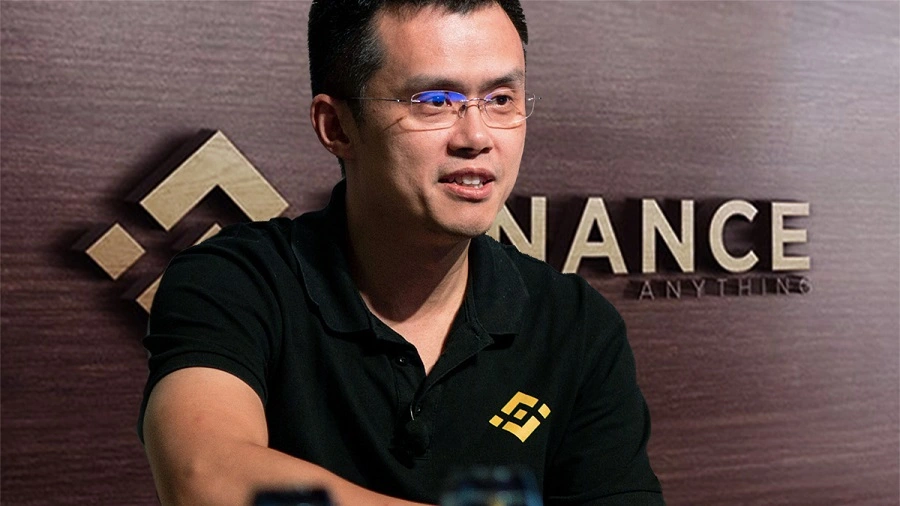
“Clear and effective regulation is necessary for the widespread acceptance of cryptocurrencies,” stated Changpeng Zhao, CEO of Binance. “Binance has always prioritized its consumers, and the introduction of the register gives them confidence that our platform is among the safest and most reliable in the world.”
A spokesman for Binance did not immediately respond to a request for comment about the exact items it may seek regulatory license to provide in Italy and other areas.
The announcement followed Binance’s registration as a digital asset service provider in France by the Autorité des marchés financiers earlier this month (AMF).
The CEO of Binance France, David Princay, referred to the registration as “an important milestone for crypto in Europe,” stressing that the additional levels of anti-money laundering protection would contribute to the expansion of crypto acceptance and liquidity throughout the continent.
In March, the cryptocurrency exchange also received a virtual asset license from Dubai’s government, enabling it to sell restricted exchange goods and services to pre-qualified investors and professional financial service providers.
Binance has been in conflict with authorities in the past for allegedly failing to apply for or register for financial services licenses. In a July 2021 blog post, Zhao said that compliance is a journey.
In addition to recent regulatory certifications, Binance’s commitment to compliance has permeated its employment and partnering practices. This week, Binance.US recruited Josh Wilsusen as its first chief policy officer and added former Uber Technologies employee Krishna Juvvadi as its director of legal affairs.
This week, Binance also teamed with data analytics company Kharon and cloud-native screening service Neterium to identify unlawful cryptocurrency activities on its platform more effectively.
According to a story that was just published by the Wall Street Journal, four of the most senior executives of Coinbase have collectively gained more than one billion dollars by selling their shares of the firm since the exchange went public a year ago.
According to the article, the executives who were engaged in the act were Brian Armstrong and Fred Ehrsam, who were the co-founders of the company, as well as Emilie Choi, who is the Chief Operating Officer, and Surojit Chatterjee, who is the Chief Product Officer.
According to the study, Fred Ehrsam had the greatest sales with “almost half a billion dollars in stock transactions,” while other individuals, such as Armstrong, had sold shares for $292 million.
The other executives, Choi and Chatterjee, have collectively disposed of shares worth a total of $226 million and $110 million respectively.
It was reported that the shares were sold at various periods throughout the market, with some transactions taking place while the stock was trading for as much as $422 and others taking place when the stock was trading for $189.
According to the WSJ, a spokeswoman for Coinbase was quoted as saying that the aforementioned Coinbase executives hold prominent roles inside the firm, which reflects their dedication to our long-term potential.
“The pricing performance of the single publically traded cryptocurrency exchange has not been all that promising in the most recent times,” the author writes.
The company disclosed on its results call for the first three months of 2022 (Q1 2022) that its revenue was declining, and that it also saw a shrinking user base during this same time period. This decrease has been the impetus for some of the recent moves taken by the company as it strives to expand its presence into new regions.
The price of Coinbase shares, which was trading at $74.69 at the time of this publication, is down by more than 70 percent compared to its year-to-date (YTD) indicator.
Despite this, the stock market was nevertheless able to make it into the list of the 500 most profitable companies in the world. Coinbase is the first company in the cryptocurrency industry to make it into the Fortune 500 list, which ranks the biggest 500 firms in the United States based on their gross revenue.
Coinbase apparently profited from the “freakish conditions of COVID,” as stated in the preface that was penned by Alyson Shontell, the Chief Editor of Fortune.
Tether Operations Limited, the originator of Tether (USDT), the biggest stablecoin by market valuation, has introduced a stablecoin linked to the Mexican peso.
According to a May 26 release, the company’s new stablecoin will be called as “Tether tokens” and would be tied 1:1 to the Mexican peso. The stablecoin will be denoted by the sign “MXN.” According to the business, the new stablecoin will initially be available on three blockchains: Ethereum, Polygon, and Tron.
According to Tether, the decision was prompted by rising demand for stablecoin use in Mexico, where conventional financial transfer methods were causing issues for the majority of users. The World Bank listed Mexico as one of the top five nations in the world in terms of remittance receivers in US dollars last year. According to the country’s central bank, nationals residing abroad would send $51.6 billion home in 2021.
According to statistics from Triple-A, a cryptocurrency payments startup located in Mexico, 40% of Mexican enterprises are contemplating implementing blockchain and cryptocurrencies for their operations, with 71% of that group explicitly focused on employing cryptocurrencies. This need, according to Tether, offered an opportunity to launch a stablecoin that would place the Mexican peso on the blockchain and “enable quicker and less expensive choices for asset transactions.” Furthermore, the business added that their pioneering action will “pave the way for future fiat-pegged currencies to be introduced in the area.”
This need has piqued the interest of several major crypto businesses, like Coinbase, Bitso, and Circle, who have launched crypto services in the Latin American country.
Tether currently has four stablecoins on the market, in addition to three additional fiat-pegged tokens. These include the CNH linked to the Chinese Yuan, the EUR pegged to the Euro, and the USD fixed to the US dollar.
Tether’s action comes after two weeks of stablecoins decoupling from the US dollar as a result of UST’s decline. The USDT was not immune to the attack, falling as low as $0.95 in the second week of May. Tether, on the other hand, managed to allay depeg worries with a good reserves report.
Proposals to Exempt Crypto Issuers from Russia Taxes Approved
Faced with financial sanctions in response to the invasion of Ukraine, Russia authorities are intensifying their use of cryptocurrencies to circumvent the restrictions. The country’s central bank recently proposed allowing stock exchanges access to cryptocurrencies.
According to Reuters, the nation is considering allowing the use of cryptocurrencies for international transactions. Ivan Chebeskov, head of the financial policy department of the finance ministry, was quoted by Interfax on Friday as saying,
The concept of using digital currencies in international transactions is actively being discussed. As a result of western sanctions, Russia’s access to traditional cross-border payment mechanisms has been’restricted.’ Permitting crypto as a means of international trade settlement would help mitigate this effect.
Last month, it was reported that the country’s new cryptocurrency bill draft proposed positive changes. It was proposed that digital currencies could be accepted as payment methods other than the Russian Federation’s monetary unit.
The proposed legislation also calls for the creation of a registry of crypto mining businesses in Russia. The proposal aims to legalize cryptocurrency mining under a regulatory framework. After numerous Russian ministers advocated for legalizing the industry in the country, the proposals were made.
Earlier this month, Russia’s Minister of Industry and Trade Denis Manturov speculated that the country would soon make a Bitcoin breakthrough. He stated at the time that Russia would legalize cryptocurrencies as a form of payment sooner or later. The question is how it will be regulated when this occurs, given that the central bank and government are actively working on it.
The remark suggested that the Russian government and central bank may be closer to resolving their differences regarding the adoption of cryptocurrencies. The most recent statement by Chebeskov only improves the country’s chances of becoming crypto-friendly. Additionally, Russia intends to issue its own central bank-issued digital currency (CBDC).
The Winklevoss Twins Are Still Very Much Into Crypto
Twins Winklevoss and Miami Mayor Suarez discussed their hopeful outlook on the cryptocurrency business despite its recent slump. Suarez said that he is being paid in Bitcoin, whilst the twins are investing during the drop.
Even after the aftermath from the Terra LUNA scam, the millionaire Winklevoss Twins and Miami’s mayor Francis Suarez stated their positive outlook on the cryptocurrency industry on two different occasions.
While the twins chose to grow their crypto company investments, Suarez continues to get compensated in Bitcoin (BTC). They do so because they trust in the underlying cryptographic technology.
In the aftermath of the recent LUNA-related meltdown, crypto and blockchain firms raised much less capital. The Winklevoss twins capitalized on this fall by increasing their stakes in numerous cryptocurrency firms.
Cameron Winklevoss remarked on the investments and said that they believe in investing in the next generation of builders and dreamers who are expanding the limits of possibility. They are risk takers who want to improve the human experience and are unafraid of bold ideas and failure.
Gemini was co-founded by the 40-year-old billionaire twins Cameron and Tyler Winklevoss, who have a combined wealth of $6.4 billion. Additionally, they are one of the top Bitcoin holders and have invested in fifty crypto or blockchain firms.
Mayor Francis Suarez of Miami recently discussed the future of cryptocurrency at the World Economic Forum. Whether he knew the LUNA collapse would occur, he was asked if he would want to get his income in Bitcoin. Suarez verified that he continues to accept my compensation in Bitcoin. He stated for the record that it is not his sole source of income. He believes it is a different option than if a person decided to accept their wage in Bitcoin if Bitcoin was their sole source of income.
Since the beginning, Mayor Suarez has had a favorable view on cryptocurrencies. He persists in his efforts to make Miami a crypto-friendly city. His agency is now attempting to enable companies to pay their taxes in cryptocurrency.
Controversial behavior by new LUNA validators has been detected
To celebrate Terra 2.0’s forthcoming debut on Friday, May 27th 2022, LUNA will be airdropped to all holders of LUNC, USTC, and UST who qualify.
Pre-attack users with wallets holding fewer than 10,000 LUNA or those who had put their UST in Anchor, a lending and borrowing protocol, would get 30% of the LUNA airdrop “immediately” at Genesis, Terra team members said on Medium on May 26. If LUNA and/or UST were airdropped to post-attack users prior to the attack, they would also be distributed to other qualified users.
This new chain will support all assets, chains, bridges and Centralized exchange (CEX) and allow token holders to trade right away. As a result of the statement, cryptocurrency exchanges have acted.
Rebranding and air drops will be supported by the biggest crypto exchange in South Korea by traded volume, Upbit. Luna classic (LUNC) will be renamed “existing LUNA” and “new LUNA tokens will be airdropped to current LUNA holders,” according to a Thursday release from the exchange. On May 26, at 19:00 Korean time, the exchange announced that it will temporarily halt the withdrawal of LUNC (previously Luna).
In addition, FTX has said that it will assist the LUNA airdrop and halt LUNA and UST deposits and withdrawals today.. Details such as date, implementation, and amounts, however, were addressed individually in the trade.
Gate.io also declared their support for the relocation, adding that LUNA and UST would be renamed LUNC and USTC, respectively, in accordance with governance proposal 1623 from the Terra team. As of this writing, Gate.io has ceased LUNA margin borrowing and lending services and modified perpetual contracts to operate in reduce-only mode.
The biggest cryptocurrency exchange, Binance, published a statement later in the day supporting Terra’s “rebirth” plan, stating that it “will support the rebranding of the Terra network to the Terra Classic network and its airdrop program.” The exchange went on to say that it will suspend trading on LUNA and UST today and resume trading on Monday, May 30.
Wednesday, Binance stated that it was “working closely with the Terra team on the recovery process, attempting to serve affected users on Binance with the best possible treatment,” which explains the lengthy wait compared to other exchanges in resuming trade. Additionally, Kucoin, Bitfinex, Bitrue, Huobi, and Bybit have expressed their support for the airdrop.
On Wednesday, the creator of Terraform Labs, Do Kwon, rejected a story that he had contacted the top five exchanges in Korea requesting a LUNC and USTC listing.
TCG World Sold a $5 Million Virtual Property In the Metaverse
TCG World has announced an exciting new strategic partnership with Curzio Research Inc., which has purchased 19 commercial real estate properties within the TCG World Metaverse for $5,000,000. The acquisition will be one of the largest virtual property purchases in the metaverse to date. Curzio Research intends to establish its headquarters in TCG World’s Asia region, near WallStreetBets.
Curzio VIP members can meet with other investors here, as well as attend live events, educational seminars, and conferences, as well as listen to exclusive Wall Street Unplugged podcasts and build an investment community. Curzio Research, Inc. is a financial publishing firm that focuses on independent investment research and analysis.
This includes, but is not limited to, capital expenditures, acquisitions, infrastructure and personnel, product and service development, and legal and accounting expenses.
According to Curzio Research founder Frank Curzio, the metaverse is what the internet was supposed to be. A decentralized, permissionless environment in which individuals can freely create and own their digital content.
TCG World had all of the elements — gamification, entertainment, social, and commerce — to create a true open metaverse, according to my research. Furthermore, its low fee structure encourages user and developer innovation. We’re excited to be a part of this pro-growth model in an industry with enormous upside potential.
TCG World will co-host The Metaverse Expo 2022, a three-day event held at the Las Vegas Convention Center from July 8th to July 10th, 2022. Over 6000 visitors from all over the world will attend the event, which will cover topics such as the Metaverse, NFT, Gaming, and Blockchain.
The Curzio Research headquarters are expected to be completed before the official launch of TCG World, or before September 2022. TCG World is one of the largest open-world metaverse projects currently in development on the blockchain, and it has recently begun giving some of its users and investors Alpha access.
Ark Investment Is Trying to Get a Spot Bitcoin ETF Again
Ark Investment and 21Shares have submitted a new application with the Securities and Exchange Commission (SEC) to establish a spot Bitcoin ETF on the Cboe BZX Exchange. The businesses have filed an application under BZX Rule 14.11(e)(4), Commodity-Based Trust Shares, after the SEC rejected the ARK 21Shares Bitcoin ETF in early April.
Several Bitcoin ETFs were rejected by the SEC due to investor protection concerns. Under the Securities Exchange Act of 1934, the SEC has approved futures Bitcoin ETFs such as Teucrium Bitcoin Futures Fund and Valkyrie’s XBTO Bitcoin Futures Fund.
After the SEC rejected their first application under the Securities Exchange Act of 1933, Ark Investment and 21Shares have filed again for the Ark 21Shares Spot Bitcoin ETF.
Under BZX Rule 14.11(e), the companies propose to launch and trade the spot Bitcoin ETF (4). The BZX Rule governs the Cboe BZX Exchange’s listing of commodity-based trust shares.
The Ark 21Shares Bitcoin ETF will track the current market price of Bitcoin. The SEC, on the other hand, has yet to approve any spot crypto ETF, including a spot Bitcoin ETF. Because the SEC has maintained a negative posture toward cryptocurrencies, the odds of approval appear to be slim. Furthermore, the regulatory authority is concerned about investor protection.
However, as the US lags behind other nations in licensing a Bitcoin ETF, pressure on the SEC to approve a spot Bitcoin ETF is growing. Bitcoin ETFs have been allowed in countries such as Canada, Switzerland, and Australia.
The exchange and firms are requesting clearance based on the fact that CME Bitcoin Futures is a regulated market for spot Bitcoin.
As it applies both to the CME Bitcoin Futures market and to the spot bitcoin market, the CME Bitcoin Futures market constitutes a regulated market of large size, and this proposal should be accepted.
A spot Bitcoin ETF has yet to be approved by the SEC. Grayscale Investments is hoping for the approval of a spot Bitcoin ETF. The corporation is attempting to convert its Bitcoin Trust into a Bitcoin ETF. Michael Sonnenshein, CEO of Grayscale, is optimistic about the conversion’s acceptance. Furthermore, Sonnenshein believes that if the application is denied, the corporation will sue the SEC.
Asset brokers, politicians, financial advisers, and social media influencers have all talked about Bitcoin as well as its rapid development in the past few years. The whole world looks into how to fully support it as money into their respective economies. Many businesses already accept it as payment and it is traded around frequently by corporations.
Needless to say, Bitcoin has already integrated with the way finance works today and joining now still offers great opportunities benefiting from its growth. If you are new to this asset and is not familiar with it or how it works, then here’s a guide to help you catch up:
What is Bitcoin and how it works
The quick answer to the question ‘what is Bitcoin?’ is that it’s a type of money. You can spend it, store it at banks and wallets, as well as earn it through various means. However, it is completely different from paper money known as fiat.
Bitcoin is data that can stack in a cluster known as a block that connects to other blocks in a network called a blockchain. In lay-man’s terms, Bitcoin is a form of digital money and the blockchain is the World Bank. The main difference is that this system runs using an algorithm rather than relying on organisations.
The blockchain is the platform for the crypto’s network
While paper money can be given to someone and its new possessor is the owner, Bitcoin works in a different way. It cannot be stored, taken, or transferred as it only stays on the blockchain as a piece of data accessible to the public. Despite this, none of them can be stolen as each unit is coded to represent its current owner. If you are to give Bitcoin to somebody else, you just give the blockchain the permission to do this and it will change the current owner for the recipient.
Blocks
Bitcoin is created through a process called ‘mining’. Just like how real miners crack rocks and ore veins to extract the ore, blockchain miners complete codes to generate a new Bitcoin. In doing so, they also create a new block to expand the network. The blockchainwill stop growing once all 21-million Bitcoin is mined.
Nodes
Blocks are stored in hardware devices that must remain connected to the internet so its blocks can still be accessed by the blockchain. This is called a node and it can be a computer or an internet server. On top of that, it needs to have processing power to provide the network the power to work and 24/7 energy. Nodes continuously working as long as it’s active as every second is important for the network.
The blockchain is operated by various actors
People involved in the blockchain are called under the technical term ‘actors’ within the crypto industry. Each one can be divided into three categories although many belong in two or all of them depending on how involved they are in its development.
People who simply own and trade Bitcoin are called ‘users’. Even influencers who promote the technology and investors of the assets fall under this simple category. Those who maintain the nodes are called ‘miners’ as they are incharge of the systems for mining Bitcoin. They invest in building the device known as the mining rig as well as the energy needed to keep it active.
The third type of actor is the developer who belongs in a community of other developers deciding the next step for the blockchain. Their goal is to have a consensus on how to improve Bitcoin as a mode of payment or fix its underlying issues addressed by current users.
A split between developers can happen which often result in different hard forks, another word for ‘major updates’, that ultimately creates two versions of Bitcoin. This is the case with Bitcoin Cash as the most popular example within the community.
Bitcoin is the beginning of a new age of finance, to summarise all the answers to the question ‘what is Bitcoin?’, it can be described as the herald for a new age of finance. It seeks to change how payment and trading works by proposing an alternative to traditional banking. By being completely operational using an algorithm, it is independent from human-operated organisations.
This opens the opportunity to allow users to have full autonomy over their finances in Bitcoin. It is now accepted as a legal tender in one country, El Salvador, and a frequent asset used for trading by major corporations around the world. Its system works wonderfully and it is still developing into an even better mode of payment. Join now and become a part of its ever growing economy.
MonkeyPoxInu (MPOX) coin was introduced on May 21 and lost 99 percent of its value three days later on May 23. It was named after the recent return of the MonkeyPox virus.
According to a tweet by CryptoWhale, MPOX’s value plummeted when its developers reportedly conducted an exit fraud, disappearing with more than $400 million.
MPOX was not featured on popular crypto data websites like CoinMarketCap or CoinGecko since it is a new coin. It’s a BEP-20 token with the address 0xE0934870Bcb3EF47c9Ff61BDa47CBdA74F1D0DC3 that was exclusively featured on PancakeSwap.
Some residents questioned how much money the developers allegedly took. They reasoned that $400 million was an excessive amount of money to invest in a three-day-old currency.
The matter was also highlighted by the Financial Times. According to an article published yesterday, MonkeyPoxInu’s Telegram channel has 13 followers and 90 subscribers. According to the story, it would be ludicrous to suppose that the developers got away with $400 million or more without first washing it up to that level.
There have been no updates on the sum reportedly taken by the programming team as of this writing.
The community was expecting the departure fraud, based on the comments on Twitter. Many people compared MonkeyPoxInu to the Squid Game Token fraud, in which producers took advantage of a popular subject’s popularity before disappearing with the funds generated. Many mocked the story, implying that it was the result of a rug-pulling hoax.
In the midst of the outrage produced by TerraUSD (UST) de-pegging, the project’s co-founder Do Kwon looks to have steel nerves, remaining undisturbed by the upheaval. He maintains that the in-house legal staff quit only because of the challenging circumstances, not because of any “shady” activity.
Last week, news surfaced that Terra’s founder, Do Kwon, was about to face tax fraud charges in South Korea, and speculations circulated that the business had relocated its offices to Singapore only days before the accident.
When asked about it, Do Kwon said the “time was completely coincidental” and that he had been planning to go to Singapore since 2021, as indicated in several interviews and podcasts. Regarding tax avoidance, he stated that “we have no ongoing tax liabilities in Korea” and dismissed the charges as mere rumor.
According to a community member, it appears that the project will not provide any income to supplement the compensation plan. Kwon added that this is due to the business being “lost $30 billion this year” and having liquidated all Bitcoin assets save 313 BTC in a heroic effort to salvage UST.
A significant majority of users have been calling for a LUNA burn, and a community member used the Q&A session to question Kwon about his lack of enthusiasm in the burn plan.
Kwon suggested last week forking a new blockchain from Terra sans the algorithmic stablecoin, UST. Developers and holders will get airdropped Terra (LUNA) 2.0 tokens, with both IBC DEX and CEX indexed in the snapshot.
The Terra community has finally endorsed Do Kwon’s plan to construct a new Terra blockchain without an algorithmic stablecoin.
Lido Finance, the world’s largest liquidity staking pool platform, said on Wednesday that the Lido staking pool will not be available on Terra 2.0. The Lido DAO community rejected the idea to support Terra’s reboot with 94.57 percent voting no. Terra was, in reality, the second-largest platform for liquidity staking behind Ethereum, with around $10 billion in total value locked (TVL) before the meltdown, according to Lido Finance.
On May 22, the Lido DAO proposed a vote on whether Lido should be launched on the new Terra platform. However, owing to perceived hazards, the community has decided to oppose the re-launch of the Lido staking pool on Terra 2.0.
“No relaunch” earned 94.57 percent of the votes, with 54 million LDO tokens, while “Relaunch” received just 5.43 percent of the votes, with 3.1 million LDO tokens. The governance procedure affirmed Terra’s rejection once the Lido community voted.
Despite the $19,250 monthly revenue proposed by Terra, the community has overwhelmingly decided against adopting Terra 2.0. If the Lido DAO rejects the proposal, bLUNA and stLUNA holders can still claim LUNA, according to the proposal.
Terra’s new coin will be distributed to bLuna and stLuna holders regardless of the DAO’s decision. In other words, even if the DAO decides not to support the reboot, bLuna and stLuna users who were present at the time of the snapshots will be able to collect their allocations.
Furthermore, Lido Finance will soon disclose information about Lido on Terra Classic for the benefit of bLuna and stLuna holders. Meanwhile, Terra 2.0 proposal 1623 for the new blockchain has been approved. The proposition gained 65.5 percent support, 20.98 percent abstention, and 0.33 percent opposition.
Do Kwon, the creator of Terraform Labs, obtained support from validators and the Terra Builders Alliance, but community support is still unknown at this time. In reality, due to current investigations, South Korean exchanges including as Upbit, Coinone, Cobit, Bithumb, and Gopax appear to be rejecting the listing of the new LUNA cryptocurrency.
Central African Republic will open its first crypto investment hub
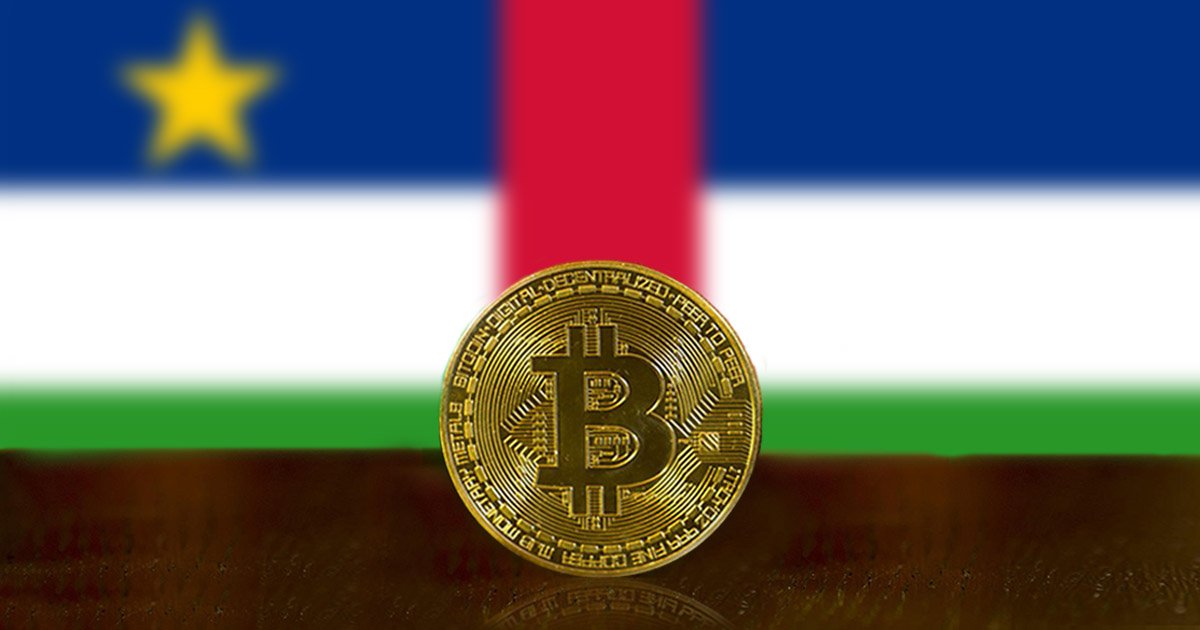
The Central African Republic (CAR) has announced intentions to open its first cryptocurrency investment hub, only a month after recognizing bitcoin as legal cash. The president of the Central African Republic, Archange Touadera, announced the start on Tuesday.
According to SANGO’s official website, the National Assembly of CAR proposed the creation of a crypto infrastructure with President Touadera’s approval.
CAR has released very little information on SANGO and how it will work. The specific date of its release has yet to be revealed. Interested investors can join the waiting list by visiting SANGO’s official website.
The Central African Republic legalized bitcoin last month, enabling residents to pay for products and services using the cryptocurrency as well as the native currency.
CAR became the first African country and the second country in the world to accept bitcoin as legal money, following El Salvador.
CAR’s decision to accept bitcoin, like El Salvador’s, did not meet with universal approval. Concerns were raised, among other things, about the move’s effectiveness, given the African country’s low internet usage and inconsistent electrical supply.
The International Monetary Fund (IMF) was not forgotten either. The government has been warned by the institution about its decision to make cryptocurrencies official tender.
President Touadera, on the other hand, appears unconcerned with these issues, since he recently declared intentions to establish a crypto investment infrastructure in the country.
The traditional economy is no longer a viable alternative. Touadera allegedly stated in a Monday statement that an opaque bureaucracy is keeping them locked in systems that do not allow them to compete.
Billionaire Ray Dalio Still Going Strong on Bitcoin
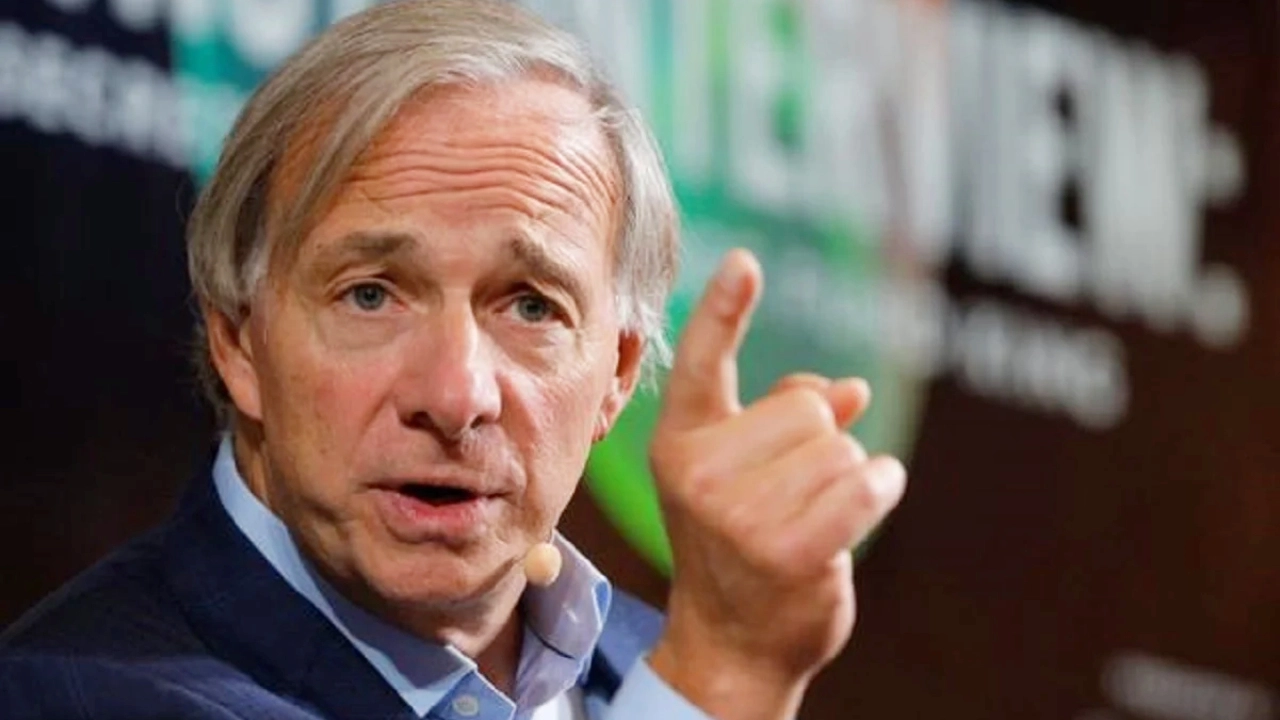
Ray Dalio, the billionaire CEO of a $150 billion hedge fund, has stated that he is still positive on Bitcoin. Dalio recently stated in an interview with CNBC that fiat currency is still inferior.
Ray Dalio reaffirmed his stance on Bitcoin, saying that cryptocurrencies in particular are “digital gold.” In comparison to gold, a digital gold [such as Bitcoin] has a little place.
He went on to say that the economic situation is shifting to the point where the question of what fresh money is going to appear. He went on to explain why fiat currency will not rise with the tide, claiming that its use for goods and services will dwindle over time.
His words imply, as many other cryptocurrency supporters have already stated, that the features of fiat currencies are not long-term sustainable in the same way as cryptocurrencies are.
“When I say cash is garbage,” he means that all currencies, in respect to the Euro and the Yen, will be currencies that will fall down in proportion to goods and services, just as they did in the 1930s.
He believes that easy money movement between countries, as well as currencies serving as a large store of value, will be necessary for any currency that survives.
The billionaire’s Bitcoin convictions go all the way back to May of 2021. The billionaire claimed to holding Bitcoin but then admitted that the cryptocurrency was too volatile despite his ownership.
Coindesk revealed in March 2022 that the billionaire has purportedly been putting a small sum in a cryptocurrency fund. Ray Dalio’s story is similar to that of many others who were first skeptical of Bitcoin before becoming early adopters.
If present negative tendencies persist, Scott Minerd, the firm’s founding managing partner and chief investment officer (CIO), believes bitcoin (BTC) may trade as low as $8,000.
Minerd recently warned in an interview with CNBC Squawk Box that the top cryptocurrency might fall to $8,000 in the near future. He cautioned, though, that this could only happen if bitcoin’s price remains below $30,000.
When you continually break below $30,000, the ultimate bottom is $8,000, so I believe we have a lot more downside room, he added.
Bitcoin is now selling slightly around $29,000 at the time of writing. However, according to a new research, the cryptocurrency might conclude the week on an uptick.
Meanwhile, this isn’t the first time Minerd has predicted bitcoin’s price. In the previous two years, the Guggenheim’s founding partner has made many bullish and negative predictions.
He projected that BTC will exceed $600,000 in February of last year, when it was trading at $60,000. He has previously predicted that bitcoin will trade at $400,000.
Apart from his forecasts on bitcoin price swings, Minerd believes that the king coin would be one of the few cryptocurrencies to survive in a market flooded with others.
He did add, though, that the top digital asset has yet to come, and that neither Bitcoin nor Ethereum are the crypto market’s dominating players.
According to Minerd, crypto should be a store of wealth, a means of trade, and a unit of account. However, none of the existing cryptocurrencies, he claims, satisfy this need.
He believes that the dominating actors in crypto have yet to emerge. According to Minerd, none of these things (cryptocurrencies) pass, and they don’t even pass on a single basis.
The Indian government has taken a hard line on cryptocurrency use and trade. The administration, on the other hand, has yet to develop a regulatory framework for digital assets. Meanwhile, Binance, the world’s largest cryptocurrency exchange, is looking for a crypto future in India.
According to sources, Leon Foong, Binance’s Head of APAC, sees several opportunities in India’s growing cryptocurrency market. He stated that Binance and other IT gurus have recognized the country’s growing Blockchain firms. Foong emphasized that India has several fundamental advantages over other countries. The country boasts a significant crypto market and a large number of well-trained engineers.
India’s digital venture capital investment climbed to $44 billion in 2021, according to Binance’s APAC CEO. If the right blockchain entrepreneurs are linked with the requisite funding and skill, a tremendous quantity of crypto and Web 3 related enterprises might leave the nation.
A comprehensive regulatory framework to control digital assets is still missing in India. Meanwhile, the government has placed a 30 percent tax on cryptocurrency earnings and a 1% Tax Deducted at Source (TDS) on all trades. As a result, there has been a significant reduction in the number of investors entering the digital asset markets. The dealers are pessimistic about its prospects in the nation.
Restrictive rules, according to Leon Foong, prohibit the ecology from reaching its full potential. The digital assets market is immense, and as the Web 3 business grows, it will undoubtedly provide a great number of employment for the country. Eventually, this will undoubtedly aid the Indian economy’s future growth.
Binance conducted a poll to determine demographic trends in India, according to the article. According to the poll, more than half of the Indian population is under the age of 25 years. While around 34% of the population recognizes them as Millennials. Because youthful generations are skilled at embracing new technology, these are ideal circumstances for digital assets to thrive in a country.
ECB President Says Crypto Is Worth Nothing and Should Be Regulated
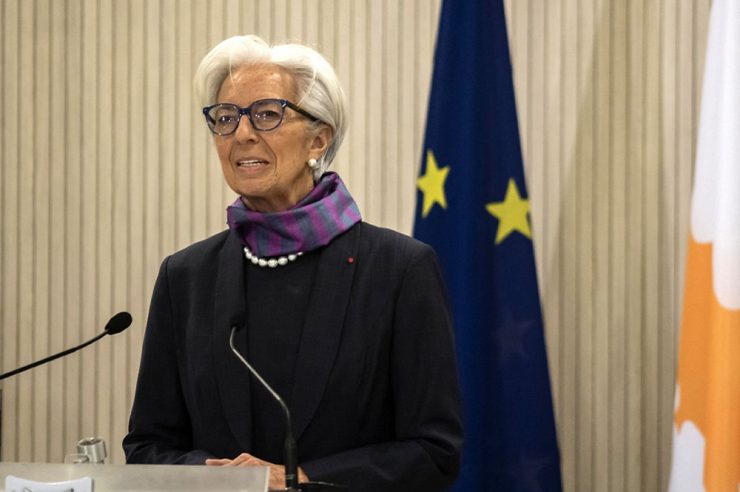
According to Bloomberg, European Central Bank (ECB) President Christine Lagarde recently expressed her views on crypto, stating that digital assets are not only hazardous but also useless.
She stated that her modest opinion is that it is worthless, that it is founded on nothing, and that there is no underlying asset to operate as a safety net.
Crypto assets, according to Lagarde, should be strictly controlled to deter investors from investing in them. The ECB president expressed concern about those who are unaware of the dangers of investing in digital assets, which can result in their losing all of their money.
Lagarde also stated that she does not own any cryptocurrency in order to practice what she teaches. She did, however, admit that one of her sons had made his own decision to invest in crypto.
She went on to compare crypto assets to the European Central Bank’s digital euro, claiming that unlike the CBDC, which will be issued by the European Central Bank, crypto has no issuing or regulatory body, making it risky.
She stated, “The day we get the central bank digital currency out, any digital euro, I guarantee, the central bank will back it, and I believe it will be radically different than many of those things.”
Meanwhile, Christine Lagarde and other ECB officials have already slammed cryptocurrencies.
Last year, bank executive board member Isabel Schnabel stated that Bitcoin cannot be regarded money since it lacks the core characteristics of money.
Lagarde called for worldwide regulation of Bitcoin earlier this year, claiming that crypto assets are being used for money laundering.
Following the Terra LUNA fiasco, Lagarde’s latest remarks come at a time when the crypto market is in chaos.
PayPal could soon start accepting cryptocurrencies
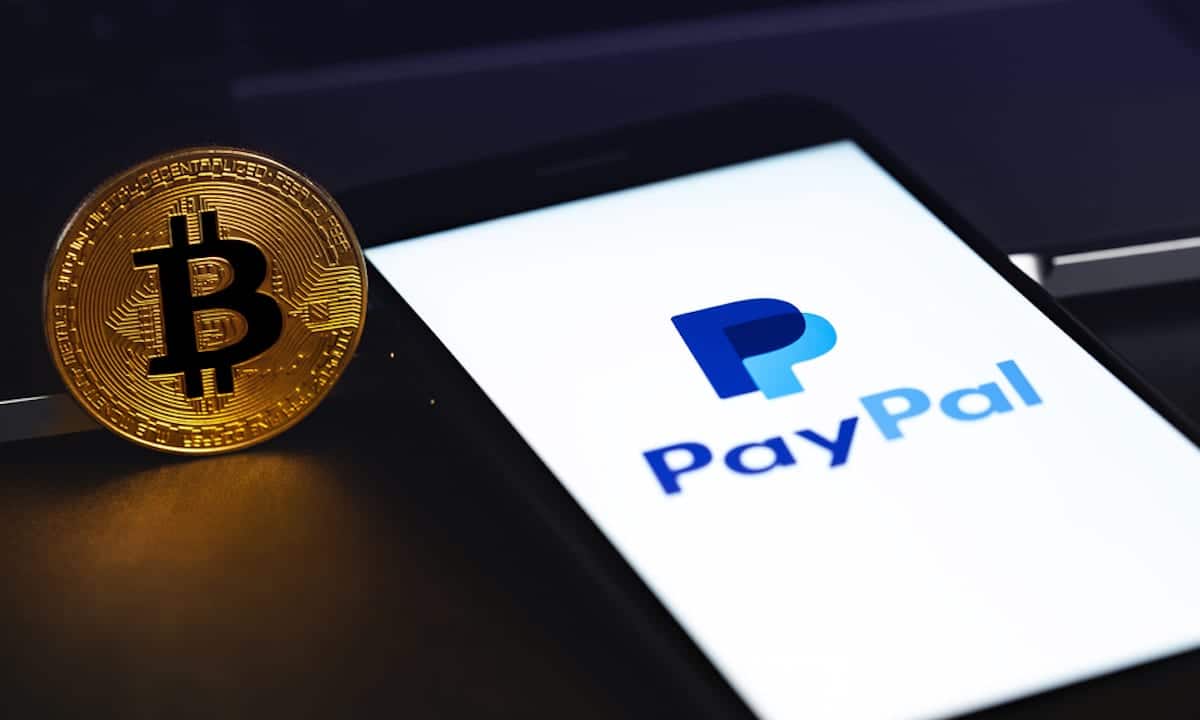
PayPal, one of the world’s most popular online payment systems, will soon accept all types of crypto and blockchain services. Richard Nash, the company’s vice president, informed me of this.
Nash shared the latest PayPal development in an exclusive statement to Cointelegraph today at the World Economic Forum. According to him, the firm is working to make all digital services available on the PayPal platform.
The news comes two years after the business launched similar crypto services in the United States for the world’s most popular cryptocurrency, Bitcoin. Digital currencies, as well as central bank digital currencies (CDBC), would be included in the concept.
Nash gave critics and doubters an early red card by implying his personal attitude and expertise with cryptocurrencies. When asked if he had any cryptocurrency, he gave a statement that obviously implies he has, albeit not being specific.
However, Nash is not the only senior executive with bitcoin experience. PayPal CEO Dan Schulman was discovered to be a Bitcoin holder in a prior article by Cointelegraph three years ago. PayPal might potentially introduce PayPal Coin, their own stablecoin.
PayPal’s embrace of cryptocurrency represents a watershed moment for both the firm and its consumers. While PayPal is already widely used for daily money transactions, particularly by online gamblers, the idea of a better deal is tantalizing.
The platform’s security is a safeguard against cryptocurrency frauds. PayPal has previously served as a wallet for goods and service deposits and payments. The ability to acquire leading cryptocurrencies is a significant added benefit.
The addition of bitcoin to the site implies that it may now be used as a payment method. Increased cryptocurrency adoption has been considered as a way to bridge the economic divide in the United States.
PayPal’s senior vice president of blockchain, crypto, and digital currencies, Jose Fernandez da Ponte, announced the move in a blog post on Coindesk.com, citing the rising popularity of cryptocurrencies.
He presents a strategy centered on user experience familiarity. Ponte thinks that any future success is contingent on providing solutions to current challenges and allowing for creativity.
Following a relatively tranquil weekend, bitcoin began a spectacular run up and surpassed $30,000 for the first time. The majority of cryptocurrencies are also up, with ETH trading near $2,000 and BNB hitting a fresh two-week high.
The last seven days were far less volatile than the prior week, when BTC dropped $15,000 at one point. The asset has hovered mostly around the $30,000 mark for the past week or two, with multiple tries to firmly break through that level but with little-to-no success.
BTC soared beyond $31,000 on May 16 but was swiftly halted in its tracks and retraced by almost $2,000 in hours.
This scenario played out a couple more times, the most recent being on Friday, when bitcoin fell below $29,000 as a result of the rejection. The cryptocurrency traded basically sideways throughout the weekend, failing to break beyond the $30,000 barrier.
BTC, on the other hand, went on the offensive late yesterday night and surged to an intraday high of almost $30,500. As a result, the company’s market valuation has risen to almost $580 billion.
The altcoins were likewise very quiet over the weekend, although the majority have now gone green. After a 5% daily rise, Ethereum, the second-largest cryptocurrency, has recaptured $2,000 and is approaching $2,100.
BNB has reached $330 thanks to a similar pump, which is the asset’s highest price since May 10. Solana, Avalanche, and Shiba Inu have made even more amazing advances. Ripple, Cardano, Polkadot, Dogecoin, and Tron are all in the green, but in smaller amounts.
Terra’s two contentious cryptocurrencies, UST and LUNA, have also risen in the last 24 hours, but are still far from their two-week-old highs. In the end, the crypto market cap increased by more over $50 billion in a single day, reaching $1.3 trillion.
Balenciaga, a high-end fashion house, has announced that bitcoin, Ethereum, and other cryptocurrencies would be accepted as payment methods both online and in select shops.
Although the timing may not have been ideal, the company will accept cryptocurrencies at its prominent boutiques, including Madison Avenue in New York and Rodeo Drive in Beverly Hills, as well as on balenciaga.com, beginning in the United States. Other locations and e-commerce, according to the corporation, will follow.
According to the article, Balenciaga has yet to choose a bitcoin payment gateway supplier. The firm announced that it will accept bitcoin and Ethereum first, with the intention of adding other cryptocurrencies afterwards.
The French luxury fashion business recently announced the debut of the “Cristóbal Balenciaga: To the Moon” NFT line on the Crypto.com NFT marketplace. The NFT line was named after the firm’s founder, Cristobal Balenciaga, who started the company in 1919 and later sold it to the French luxury giant Kering.
In December of last year, Balenciaga revealed a metaverse business unit. Several other luxury brands have said that they will accept bitcoin payments in addition to the Paris-based fashion house.
At March, Off-White opened comparable payment arrangements in its flagship stores in Paris, London, and Milan. Other companies, like Tag Huer and the LVMH Hot, revealed earlier this month that customers will be able to pay using cryptocurrencies such as Bitcoin, Dogecoin, and Ethereum at checkout.
According to experts, widespread cryptocurrency acceptance by luxury enterprises will have a significant influence, culminating in crypto adoption throughout other industries.
Do Kwon says he's not on the run despite being missing
Terra’s Do Kwon has been sued by the impacted investors in both criminal and civil cases. The outraged investors are presently seeking fraud charges and an order to confiscate Kwon’s assets, represented by the law firm RKB & Partners.
As the Terra tale unfolds, the project’s creators have come under fire from the crypto community. South Korean investors are actively pursuing legal action against Terra’s co-founders in the wake of the company’s disastrous collapse.
Another group of South Korean investors, dubbed “Victims of Luna, UST coins,” has swelled to almost 1,500 members. This vast group of investors is also reportedly preparing to sue Kwon and Terra’s other co-founder, Shin Hyun-Seong, for unlawful fundraising.
Because Terra’s legal staff unexpectedly terminated relations with the firm throughout the disaster, these new developments may prove inconvenient for the co-founders. While the majority of the crypto community criticized the legal team for quitting, some praised them.
Bitcoin supporter Stacy Herbert stated Terraform Labs’ legal staff resigned in response to the lawsuit. There’s nothing they can do when the CEO refuses to stop emailing whales with ridiculous’rescue’ schemes and then tweeting about them as if they’re done—which they aren’t. If you adore disasters, stay away from shitcoins.
While dealing with other legal issues, Terra’s CEO is presently facing tax evasion allegations from South Korea’s tax commission, for which the business has been ordered to pay a fine of up to $78 million.
While Terraform Labs subsidiaries were incorporated in Singapore and the Virgin Islands, investigations by South Korea’s National Tax Service (NTS) discovered that they were administered in the nation, namely in Seoul and Busan, resulting in tax fraud charges.
Before catastrophe struck, Kwon resolved to disband the company’s headquarters in South Korea and relocate its activities overseas to avoid paying taxes. He has, however, refuted the allegations, claiming that Terra owes no taxes to the government.
Kwon disbanded the Terraform Labs Korea firm just days before the ecosystem’s catastrophic collapse, according to new court filings. The project’s management unanimously resolved to disband its Seoul and Busan headquarters on May 4 and 6, respectively, during a general shareholder meeting on April 30.
Around the same time, UST launched its depeg, triggering a chain reaction that wiped out almost $26 billion from the stablecoin market, declared LUNA useless, and left investors with enormous unrealized losses. The link between these two occurrences sparked discussion regarding the Terra collapse.
Terra’s LUNA has had a terrible few weeks as its price plummeted after a solid start to the year. Last week, the price of $Luna plummeted to the level of a penny stock, with its companion, TerraUSD, also linked to the blockchain, falling. LUNA reached an all-time high of $119 in April before plummeting 99 percent of its value in the following weeks.
Over $30 billion in crypto value was lost as a result of LUNA’s fall, shocking the crypto sector and catching the attention of outsiders. The decline of Terra’s UST has also put into doubt stablecoins, as it was the cornerstone of the Terra ecosystem in April, with a market valuation of more than $18 billion.
Although the price of Luna is still a small shadow of what it was only a month ago, any upward trend in its price is critical since many believers foresee redemption. However, reactions to LUNA’s recent price action have been mixed.
Some market analysts and participants say that LUNA’s fall was unlike anything else seen in the market and that any further action should be based on a comprehensive examination supported by facts and numbers.
Despite the fact that the cryptocurrency industry is very volatile, several analysts thought the coin had strong support as well as a huge market valuation to make it a top performer for the year. Its abrupt demise has now called into doubt even the most minor development around it.
Despite the fact that the current surge in LUNA’s price has not been attributable to any significant developments in its camp, investors hurting from the unexpected demise of their assets are hopeful that it is the start of something wonderful. Some in the crypto industry are rooting for the currency to return from its slide, since a coin large enough to hold the fourth slot on the crypto ladder is unlikely to stay down for long.
Terra’s team recently came under fire for changing the plan mid-vote. Although Terra’s chairman, Do Kwon, has been creating up plans for investors to recoup part of their capital, he also changed one, and more significantly, he did so when proposal 1623 was being voted on.
Binance CEO Changpeng Zhao recently offered his opinions on the Terra ecosystem’s demise. While CZ feels there are several lessons to be drawn from the catastrophic occurrence, he did identify some of the shortcomings that contributed to the accident.
Earlier this month, the Terra blockchain collapsed because its algorithm stablecoin UST lost its peg to the dollar, causing LUNA, its governance tokens, to drop from almost $100 to $0.0001 in a matter of days.
The fall sent tremors across the entire cryptocurrency market, leaving investors to calculate their losses. According to reports, the event harmed both individual investors who invested in LUNA/UST and crypto companies who worked with the Terra blockchain, as over $40 billion vanished into thin air.
As industry experts continue to comment on the dramatic catastrophe, Binance CEO claimed the Terra network’s architectural architecture led to its downfall.
Changpeng Zhao remarked that pegging UST to the dollar and using a different asset as collateral was a terrible idea since there was always the risk of inadequate collateralization or depegging.
The greatest irrational design fault is believing that minting more of an asset would raise its overall worth (market cap). Printing money creates no value; it only dilutes current holders. Exponentially minting LUNA exacerbated the situation. He suggested whoever planned this should get their brain tested.
CZ also mentioned incentives and high APY as weaknesses with Terra. While the blockchain had a solid use case, he believed that the incentives utilized to drive its expansion were superfluous.
The Binance CEO stated that employing incentives to recruit clients necessitates earning more money in order to sustain the ecosystem, which implies creating more profits than spending. He then labeled the Terra ecosystem’s growth rate as hollow, observing that the speed of its expansion outpaced the incentives supplied.
Aside from the design problems, Zhao stated that the entire disaster might have been prevented if the team had begun their recovery trip at the earliest stage of the depegging when the UST value was at 5% rather than 99.5%.
When the stablecoin began depegging, LUNA foundation Guard (LFG) spent $1.5 billion and depleted its $2.2 billion Bitcoin Reserve to restore the peg. Terra CEO Do Kwon has promised collateral support to repair the Terra environment. Unfortunately, none of the attempts were successful, as UST and LUNA both collapsed to zero.
CZ went on to say that, in addition to acting quickly to restore the network, the team behind the ecosystem’s design is also guilty of a lack of effective communication.
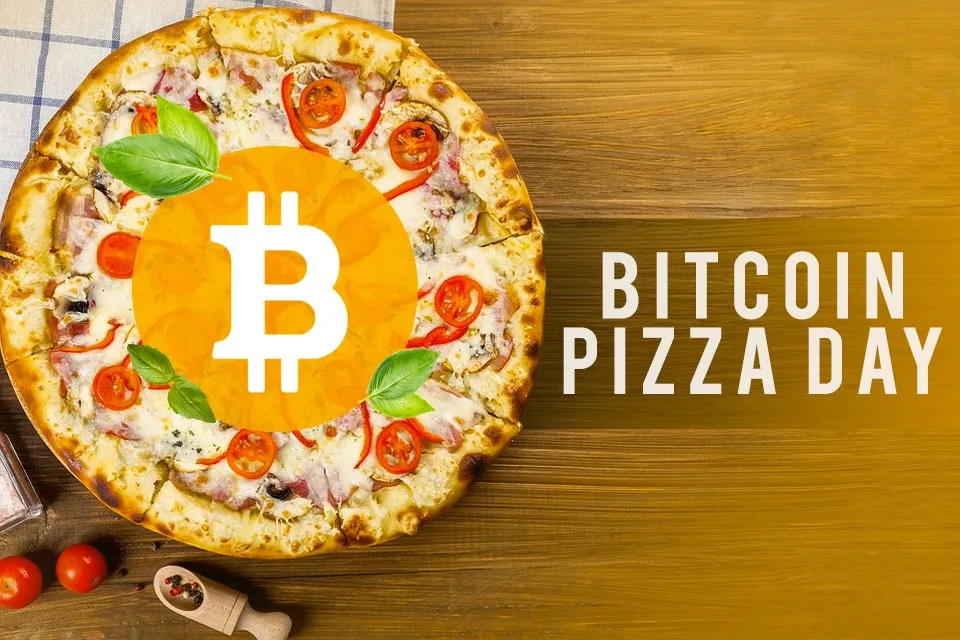
Cheers to Bitcoin Pizza Day! Before you order a Margherita to honor the world’s first real-world Bitcoin transaction, consider this fact:
A family vacation to Japan, a 50 Cent record, a steak supper, and a framed cat portrait all have something in common.
Members of the Cointelegraph Bitcoin community paid for them all with Bitcoin (BTC)! And, like the 10,000 BTC Bitcoin pizzas, which are now valued more than $300 million, the community’s Bitcoin purchases have surged.
“I spent 7 BTC on a family trip to Japan a few years ago,” Benjamin de Waal, VP of Engineering at Bitcoin exchange Swan Bitcoin, told Cointelegraph. 7 BTC is now worth much over $200,000 in today’s currency.
Previously, cryptos were not accepted as a method of payment, but after a man from Florida paid for his breakfast with bitcoins, everyone was talking about it. Previously, cryptos were not accepted as a method of payment, but after a man from Florida paid for his breakfast with bitcoins, everyone was talking about it.
Hanyecz spent 10,000 BTC on his infamous pizza buy. This sum was worth around $41 at the time. The cryptocurrency’s value has risen quickly over time. Currently, 10,000 BTC are worth almost $300 million.
Obviously, the value of these identical bitcoins climbed dramatically over the next decade.
In fact, if Hanyecz had sold his whole stash at bitcoin’s all-time high of $68,990, he would have made almost $690 million – enough to buy 46 million large Papa John’s pizzas for $15 apiece.
In a 2019 interview with CBS, Hanyecz stated that the purchase made bitcoin a reality for certain individuals. It certainly did for me.
Because of the price of bitcoin, Hanyecz’s tale became viral in the US, with The Wall Street Journal, ABC News, Slate, and TechCrunch joining TechCrunch and Slate in popularizing the transaction.
On the same day as the first Bitcoin pizza order, the celebrations for what has become a crypto culture staple continues. Happy Bitcoin Pizza day to you!
The UK digital minister is emphasizing his government's desire to make the nation a global center for cryptocurrency activity, while
The United Kingdom announced aspirations in April to become a crypto center and legalize stablecoin transfers. Following last week’s events, many expected Her Majesty’s Treasury to put these intentions on hold, but it appears that the regulators are proceeding with their preparations. Surprisingly, despite the fact that crypto markets, including stablecoins, witnessed significant volatility last week, the department remained unfazed.
Notably, Her Majesty’s Treasury disclosed plans in April to make the United Kingdom a hub for crypto-assets and blockchain technology. In keeping with the stated aim, the Treasury Department said that the government will draft legislation to allow stablecoins to be accepted as payment for products and services in the United Kingdom.
However, given the widespread market volatility seen in the cryptocurrency market last week, many speculated that the regulator could have to reconsider its strategy. TerraUSD, a famous algorithmic stablecoin, not only lost its peg but also fell below $0.2 in a matter of days. While many believed this was a sad but predictable end for the algorithmic stablecoin, leading collateralized stablecoin Tether also lost its dollar peg, albeit by a few decimals, raising questions about the asset class’s durability.
Despite this, the UK Treasury says it would proceed with its stablecoin adoption strategy. According to the Telegraph, a Treasury spokeswoman stated that the Financial Services and Markets Bill, which was introduced in the Queen’s Speech, would include legislation to regulate stablecoins, which were used as a form of payment.
The spokesman explained that the law will support the expansion of crypto service providers in the UK while also establishing safeguards to allow individuals to use these stablecoins securely and reliably.
Furthermore, the representative stated that the government has made it apparent that certain stablecoins are not acceptable for payment purposes due to similarities with unbacked crypto assets. We will continue to watch the broader crypto asset market and are prepared to take additional regulatory action if necessary.
Last week, G7 Finance Ministers and Central Bank Governors convened to discuss global economic circumstances, including cryptocurrencies.
The committee was joined by the heads of the International Monetary Fund, World Bank Group, Organization for Economic Cooperation and Development, and Financial Stability Board, some of whom had previously been anti-crypto.
According to the paper, the G7 is collaborating with the FSB to “monitor and handle financial stability issues emanating from all types of crypto-assets.” It cites the recent crypto market downturn as justification for accelerating the development and implementation of consistent and comprehensive regulation of crypto-asset issuers and service providers, with the goal of holding crypto-assets, including stablecoins, to the same standards as the rest of the financial system.
There is no mention of the Dow Jones’ 20% drop in relation to the crypto market’s downturn. Surprisingly, a drop in crypto suggests that further regulation is needed quickly.
Traditional markets, on the other hand, are said to be efficient and well-regulated. While effective regulation is almost certainly required in the new crypto business, it is equally critical to recognize and appreciate the complexities of blockchain protocols.
Traditional norms and regulations were created for the real world and may not be applicable to the complicated nature of DeFi, GameFi, and other digital financial assets. To claim that the establishment of crypto law must be finished quickly begs the question of whether this regulation will be comprehensive and supportive of innovation.
The research does highlight, however, that stablecoin regulation must appropriately satisfy key legal, regulatory, and supervision needs through suitable design and adherence to applicable standards.
It goes on to say that digital payments innovation is a crucial engine of economic advancement and development, particularly through quicker, cheaper, more transparent, and inclusive cross-border payment services.
However, the next portion of the paper does not cover the cryptocurrency markets in general. Instead, it assesses the viability and execution of Central Bank Digital Currencies, which it thinks must be transparent. It emphasizes that CBDCs, rather than current cryptocurrencies, might be the answer to cross-border payments and innovation.
CBDCs with cross-border capability have the potential to stimulate innovation and offer up new avenues for meeting customers’ need for more efficient international payments.
There are several possible solutions, such as Bitcoin’s Lightning Network, Ethereum Layer 2 solutions, and numerous additional layer-1 blockchains that can handle, process, and settle international payments in seconds with minimum fees. These initiatives, on the other hand, are public, open-source, and decentralized.
They are not governed by the same laws and authorities as CBDCs. The G7 thinks that financial system governance must stay within their purview. With global inflation over 6% and GDP falling month after month, some may wonder if it is time for a change and a shift toward decentralization.
The CFTC has accused two people of $44 million in crypto fraud
The United States Community Futures Trading Commission (CFTC) has accused two US individuals, Sam Ikkurty and Ravishankar Avadhanam, of participating in a cryptocurrency Ponzi scheme that defrauded investors out of nearly $40 million. The defendants were also charged with conducting an unlicensed commodities pool, according to the Commission.
According to the formal complaint, the duo duped the victims into investing in three bogus digital asset income vehicles.
Ikkurty and Avadhanam began operations in January 2021 and sought funding from investors via their official website and YouTube channel. According to the CFTC, they offered to assist clients in investing their monies in digital assets to earn profits.
The partners raised $44 million from 170 investors but did not invest it in digital assets as promised. Instead, the defendants used a Ponzi scheme to disperse part of the monies to other investors. According to the accusation, they also pocketed part of the money for themselves and moved several million dollars to their own accounts.
The CFTC is requesting, among other things, that the deceived investors be paid, that the ill-gotten earnings from the scam be recovered from the defendants, and that they be forcefully admonished not to violate any CFTC laws in the future. The suspected fraudsters have been served with a restraining order, and all of their assets have been frozen.
The US Department of Justice (DOJ) arrested and prosecuted two men in March for their alleged involvement in a $1.1 million wire fraud and money laundering scheme involving a non-fungible token (NFT) project.
The Securities and Exchange Commission (SEC) of the United States accused a Latvian citizen in December of allegedly scamming at least $7 million from hundreds of retail investors in the United States and other countries.
After a short surge on Friday, Bitcoin has struggled to maintain its position over the $30,000 mark. It has already corrected 3% since then and is now trading at $29,330 with a market worth of $557 billion.
As this occurs, Bitcoin might be in for another huge price correction, and if history repeats itself, it could go all the way to $15,000 or less. The author of Rekt Capital Newsletter has given a thorough case study of previous bitcoin death cross cycles and the subsequent Bitcoin corrections.
So, what exactly is a death cross? On a technical chart, a Death Cross happens when the 50 EMA crosses UNDER the 200 EMA. Bitcoin has gone through many death cross cycles over the last decade.
The author offers historical examples, such as how the largest crypto underwent an even steeper correction following the demise of the cross. For example, in 2013, Bitcoin corrected 70% after the death cross; in 2017, it corrected 65% after the death cross; and in 2019, it corrected 55% after the death cross.
However, following the death cross, Bitcoin really rose significantly in 2020 and 2021. In both cases, the death cross appeared at the bottom.
According to Rekt Capital analysts, BTC is more likely to follow the trajectory of 2013, 2017, and 2019. This is due to the fact that Bitcoin has already corrected more than 36% since January 2022, rather than reversing the trend.
In addition, Bitcoin has fallen 43 percent from its top in November 2021 before striking the death cross. A comparable 43 percent retracement following the death cross would imply that the BTC price may hit $22,700.
The king crypto might reach $18,000 if it corrects by 5% from the January 2022 death cross. A 65 percent correction would imply a low of $13,800. Bitcoin would reach a low of $11,500 if it fell 71%. The BTC price would have fallen by more than 80% since its high in November 2021.
According to Rekt Capital, “what’s noteworthy about the scenario of a -43 percent post-Death Cross catastrophe is that it would result in a $22,000 loss.” According to the expert, it would provide wonderful purchasing chances for BTC investors with significant ROI.
Panama President Will Not Be Signing a Crypto Bill Right Now
Panama President, Laurentino Cortizo, has stated that he will not sign off on a cryptocurrency bill just adopted by the country’s National Assembly until further anti-money laundering rules are enacted.
Cortizo said on Wednesday at the Bloomberg New Economy Gateway Latin America conference that the measure just approved by Panama’s legislature must go through legal procedures before reaching his desk, but that he wanted more information before potentially signing it into law.
The president described the legislation as innovative and outstanding and said he approved of certain portions of it but hinted at potential illegal uses of cryptocurrency that needed to be handled.
Panama’s “Crypto Law” was approved by the National Assembly on April 28 after a third discussion. The law was intended to regulate the trade and use of crypto assets, the issue of digital value, the tokenization of precious metals and other assets, payment systems, and other regulations, according to the parliamentary body.
Unlike El Salvador’s Bitcoin Law, which obliged local companies to accept Bitcoin, the Panama Crypto Law, if approved, would most likely allow people and businesses to use and accept cryptocurrency. Many firms would not require a special license to take cryptocurrency, according to an early draft of the law.
Gabriel Silva, a pro-crypto politician, has claimed that passing the Crypto Law will help develop financial inclusion in Panama and offer more job prospects.
Nevertheless, expert Ernesto Bazán has called on President Cortizo to veto the law, stating that the country’s lack of clear rules is unlikely to inspire faith in cryptocurrencies, putting banks’ and the local economy’s financial stability in danger.
According to Bazán, it is critical to have skilled specialists, supervision competence, and sufficient, especially in such a fresh and specialized field. Weak regulation would allow for more fraud, hacking, and criminal activity, implying a loss of trust in the country and its International Banking Center.
He also stated that they are awaiting the law’s veto and that a thorough investigation of the hazards that this rule entails be conducted. For the benefit of the country.
Officials in India Fear Dollarization of Economy If Crypto Is Accepted
Top Reserve Bank of India (RBI) officials have informed a parliamentary committee that the acceptance of cryptocurrencies may lead to a degree of dollarization of the economy. It will limit the central bank’s ability and independence to conduct monetary inputs and actions effectively. “It will severely damage the RBI’s ability to formulate monetary policy and control the country’s monetary system,” an RBI official warned.
They went on to say that doing so would jeopardize the country’s sovereignty. According to a Press Trust of India (PTI) report, top RBI officials warned a parliamentary committee that the acceptance of cryptocurrencies might result in partial dollarization of the economy, posing a threat to the financial system’s stability.
Because almost all virtual currencies are dollar-denominated and issued by foreign private organizations, a media source quoted an RBI official as stating at the current proceedings of the Parliamentary Standing Committee on Finance.
Former Minister of State for Finance Jayant Sinha chairs the Parliamentary Standing Committee on Finance. The RBI is a statutory authority that reports to parliament. As part of its parliamentary responsibilities, the panel is deliberating extensively on economic and financial matters.
One point raised by RBI officials was that it may harm the financial sector. Cryptocurrencies may appear to be a more appealing alternative, and individuals may move cash away from banks and onto crypto assets, leaving banks with less resources to lend.
In recent weeks, Indian authorities have responded more regularly to cryptocurrency-related matters. During her visit to the IMF Springs Meeting 2022 last month, Indian Finance Minister Nirmala Sitharaman discussed cryptocurrency in an IMF-hosted panel discussion and another event at a university. She stated that blockchain has enormous promise, but India would not hurry to make a judgment on crypto adoption or regulation. She recently takes issue with blockchain technology’s anonymity aspect.
Congress Pushing the U.S. Stablecoins Bill Until After the August Break
When Terra LUNA and its UST stablecoin crashed, Stablegains allegedly placed investor assets in Anchor Protocol without alerting them, losing around $42 million.
Yield calculator After losing more than $42 million in UST via Anchor protocol without alerting clients, Stablegains faces claims of abusing clients’ money – and even a lawsuit.
According to social media reports, the company guaranteed clients a 15% profit on both USDC and fiat USD investments. However, it took the money and invested it in UST in Anchor at a 20% yield, skimming the gains above 15%. Clients were unaware of this until UST depegged from the dollar and fell to less than 1 cent, causing the firm to lose millions of dollars.
The story initially broke online when an investor shared a letter from law firm Erickson Kramer Osborne to Stablegains. The letter stated that all communications and records should be preserved and kept in case of any lawsuit.
Stablegains has officially refuted the charges, claiming that it has always been open about its UST and Anchor yield.
Stablegains further stated that all funds deposited are placed in Anchor Protocol utilizing UST and that this is the only DeFi protocol they interface with, as stated in pertinent learning center articles and their Terms of Use.
However, additional social media charges indicate that the corporation has begun changing and updating its terms of service in order to avoid culpability. It has also altered the currency on its page from USD to UST.
Since the UST fall, investors believe the corporation has become less honest and has begun to modify information on numerous pages of its website.
Investors who want to withdraw their funds must additionally sign a waiver agreeing that Stablegains is not responsible for any losses incurred as a result of exchanging UST for USDC and fiat.
Investors are being compelled to withdraw because if they keep their UST in Stablegains, they will not be eligible for an airdrop of the forked Terra LUNA coin.
The Stablegains debacle is a continuation of the UST debacle’s consequences. The crash cost several retail investors billions of dollars. Binance also suffered a setback as the $1.6 billion LUNA tokens fell below $3,000.
Hashed Ventures is one of the largest losers. After LUNA plummeted owing to staking around 50 million LUNA tokens, the venture capital firm based in Seoul appeared to have lost $3.5 billion.
Delphi Digital has also stated that the Terra disaster cost them money. The research firm and investor expressed reservations about LUNA and UST, but believed that Bitcoin reserves would keep the currency from collapsing.
TAG Heuer, a Swiss watchmaker owned by LVMH, and online marketplace Shopify now accept crypto payments, which is a huge step forward for crypto adoption.
The announcement comes only days after Gucci, the luxury brand, began accepting cryptocurrency payments in the United States.
In the United States, there is a growing interest among brands and shops in embracing bitcoin and other cryptocurrencies. Several additional businesses, including AMC Theatres and Starbucks, accept cryptocurrency in some manner.
TAG Heuer, a Swiss luxury watchmaker, has joined with BitPay to accept cryptocurrency payments for online sales in the United States, according to a news statement. TAG Heuer will accept cryptocurrency payments up to $10,000 per transaction, with no minimum amount.
Customers can use 12 cryptocurrencies to purchase timepieces and accessories. Bitcoin (BTC), Bitcoin Cash (BCH), Wrapped Bitcoin (WBTC), Ethereum (ETH), Litecoin (LTC), Dogecoin (DOGE), and Shiba Inu are some of them (SHIB). BUSD, USDC, DAI, GUSD, and USDP are among the five stablecoins accepted.
TAG Heuer CEO Frederic Arnault stated that the company has been closely watching cryptocurrency developments since Bitcoin first began trading. TAG Heuer, as an avant-garde watchmaker with a pioneering attitude, realized that despite the swings, they would adopt what promised to be a globally integrated technology in the near future, one that would profoundly impact their business and beyond.
Surprisingly, Shopify’s move into crypto for payments has the potential to accelerate cryptocurrency acceptance. Shopify has joined with Crypto.com Pay to allow businesses to accept payments in over 20 cryptocurrencies. Strike, Coinbase Commerce, and BitPay are all options for accepting cryptocurrency through Shopify.
As a result, with an increasing number of customers regularly using or earning digital currencies, brands and retailers want to lead the e-commerce and retail spaces through the coming transformation.
Bitcoin and other cryptocurrencies have plummeted from their all-time highs. As a result, “Buy-the-Dip” chances are now available to investors. Acceptance of cryptocurrencies marks the beginning of the Web3 ecosystem’s shift. Many brands have even made their way into the metaverse.
After the stablecoin lost its peg to the US dollar last week amid the $UST drop, Tether Holdings Limited has stepped out to allay fears of a probable USD/USDT decline. The world’s largest stablecoin, Tether (USDT), lost its peg to the US dollar earlier this month, causing panic among investors and traders.
Tether (USDT) has tried to ease investor and trader concerns by publishing its quarterly assurance opinion on its website, reiterating that the stablecoin is fully backed.
Tether Holdings Limited released its most recent quarterly assurance opinion, proving the health of its reserves by indicating large decreases in commercial paper assets and an overall gain in US Treasury bills. It also shows that the company’s consolidated assets outnumber its consolidated liabilities.
Tether shows a further approximately 17 percent fall in its asset – backed commercial holdings over the previous quarter from $24.2B to $20.1B; a move Tether has pursued with a further 20 percent reduction since April 1 2022 and which will be shown in the Q2 2022 report, according to the statement.
Tether’s Paolo Ardoino took to Twitter to comment on Tether’s strength in the wake of UST’s large and possibly irreversible depeg. The world of stablecoins has taken a major hit in recent weeks, as one of the largest stablecoins, UST, has vanished. This appears to have impacted USDT as well, since the coin lost its peg and fell as low as $0.95.
Tether is designed to be backed by cash and short-term debt commitments equal to the amount of dollars deposited by its users. Those assets are kept in a reserve controlled by the same company. Since then, the stablecoin has restored its peg.
This article provides the latest update and a quick summary of all you need to know about the new and improved online platforms – the BTC betting sites. People hoping to start their journey on the BTC betting sites can use this guide to make the best selection decisions and discover why these platforms are vital for betting in 2022. Firstly, let’s discuss what you will get when you play on BTC betting sites.
What do BTC Betting Sites Offer you?
If you are new to the BTC betting platform but are conversant with gambling operations, you might wonder why these sites are the best options. After all, some bettors have made a lot of cash using the fiat currency betting platforms. However, this article will now explain why the BTC betting sites are way superior to the conventional ones.
Positive Prospects
We cannot deny that the fiat currency time has passed, and it is now an era of cryptocurrency. However, the fiat’s old-fashioned systems and outdated features make it unsuitable for online operations.
Moreover, the constant printing of these currencies for an extended period has reduced their purchasing power drastically. However, the situation means that what you can afford now with a certain amount of money may not be available for you in two years to come as the value of your fund will be way less.
Fortunately, BTC is here with a lot of positive prospects. Using BTC betting sites means that the amount of money in your account will always increase as Bitcoin itself always increases. Experts predict the complete takeover of fiat currencies by digital currencies. Therefore, they are the best for betting operations.
Privacy Protection
Bettors who play games with the fiat currency face a lot of stigma from their immediate community and financial institutions. These platforms discredit betting operations and view punters as irresponsible individuals.
In order to simplify operations, BTC betting sites keep you anonymous from that set of individuals. Therefore, the customers of BTC betting sites do not have to face the trauma of inferiority as their operations are not visible to the public.
Furthermore, most financial organizations completely restrict detected gamblers from loan applications. Therefore with the use of BTC, people can benefit from loans and still enjoy betting operations.
More Enjoyable UX
Outdated features of the fiat currency betting platforms often put people out of the mood. However, the Latest parts of BTC betting sites do otherwise; it sets them right in the air. In addition, the platform has many entertaining features that make winning look easier on their media. Here are some of the features that make the BTC betting site UX more enjoyable than the conventional betting platforms.
Quick processes, which means you can send and receive the money within a concise period
Low deposit/withdrawal fees
Special bitcoin use bonuses
Easy to navigate platforms
Excellent deposit/withdrawal limits for high stakers
Few restrictions and free operations
Better Safety
Hackers and internet fraudsters have continuously operated on traditional betting platforms. They feel these sites are their most accessible opportunity at scamming people as their operations are fluid and outdated. However, BTC betting sites have the latest security systems like end-to-end encryption to prevent scammers. This system offers solid protection against all dubious individuals.
Furthermore, reviews reveal the hacking and theft-related problems encountered on BTC betting sites are not the fault of the platforms. These issues are traced to the loopholes of the exchange websites and not the betting system. Additionally, BTC betting sites offer a private key with complex characters to prevent any form of hacking or theft.
What to Consider Before Selecting A Bitcoin Betting Sites In 2022
It is delightful to hear that there are now several betting platforms that accept BTC transactions. Nonetheless, some shady individuals are still persistent in extortion of funds through these digital platforms. Consequently, we will outline the top ways to differentiate an infamous BTC betting website from a reliable one.
Reputation
A good reputation should be your foremost factor when looking for a place to bet without hassles. Betting sites with good reputations offer people the best gambling experience. Moreover, these platforms payout your winnings whenever you need them and do not give excuses.
Crypto transactions are non-reversible; therefore, the probability of getting your funds back when you lose to a shady platform is low. However, verify from notable blogs or ask experienced gamblers about the operations of your desired casino before picking them.
Quality and Quantity of Options
If the BTC betting site does not offer several options, it’s not a suitable platform for gambling. Bettors who have a variety of games and markets at their disposal also have better winning chances than the ones with limited options.
Not only does a Bitcoin betting site provide a variety of options, but they also offer the best games on the internet. For example, supporters of a particular sport can get the best markets and long odds when they use these platforms. Additionally, Slot lovers can find the top slot games with a progressive jackpot on the BTC betting site.
Bonuses & Rewards
What kept many punters playing at a particular site was bonuses and rewards. Fortunately, these whooping bonuses are all some bettors need to make huge profits on the BTC sportsbook. Below are the top prizes of BTC betting sites:
Welcome bonus
Unique Bitcoin Bonuses
VIP special arrangement
No deposit bonuses
Reload bonuses
Some of these bonuses have a few specifications that help you qualify for them. All these specs are carefully written in the terms and conditions of the bookie. For example, some sportsbooks require customers to play a certain number of games before qualifying for VIP promotions.
Customer Helpline
There is no good BTC betting site without a dedicated customer helpline. This section is essential in every management as it helps cater to customers’ issues. Inquiries and gambling problems are quickly attended to by the qualified professionals of Bitcoin betting sites. Therefore, BTC betting sites guarantee you the best betting experience.
NOTE: Coinposters offers articles for purpose information, and does not have any intention of promoting casinos or suggesting users to bet. Bet at your own responsibility and this is purely for informational purposes.
Jack Dorsey Thinks Bitcoin Is the Currency of the Internet
According to CNBC, Jack Dorsey, CEO and co-founder of Block (previously known as Square), has reaffirmed Bitcoin’s potential as a native digital money.
Dorsey said today at the Block’s investor conference that the internet deserves a native digital currency, and that only Bitcoin is fit for the job.
According to him, the internet requires a local currency, and when looking at the full ecosystem of technology to serve this function, bitcoin is presently the only possibility.
Bitcoin, according to Dorsey, is an open standard for global money transfer, and it will allow Block’s entire operation to move faster around the world.
The former Twitter CEO has previously stated that Bitcoin has the potential to become the internet’s global currency. In truth, the Bitcoin maximalist has never changed his mind on the subject.
Dorsey stated in September 2019 that Twitter had no intentions to establish a cryptocurrency since he believes Bitcoin is the future of the Internet. He also declined to participate in Facebook’s Libra cryptocurrency project, which subsequently collapsed owing to legal issues.
Apart from publicly stating that Bitcoin is the only digital currency suitable for use as native internet money, Dorsey has made deliberate efforts through his enterprises to promote Bitcoin’s growth and adoption.
Dorsey proposed the “Bitcoin Legal Defense Fund” in January as a way to help the growth and development of the Bitcoin system. The fund will be used to defend Bitcoin developers against lawsuits that would prevent them from encouraging the development of Bitcoin, according to the Twitter co-founder.
Block said last year that it would construct a Bitcoin hardware wallet to make BTC custody more popular, and it is already working on a Bitcoin mining infrastructure.
In the United States, cryptocurrency exchange FTX has purportedly begun commission-free stock and ETF trading. However, the service will initially be limited to a small number of customers, with a complete launch of services including stocks, ETFs, cryptocurrencies, futures, and other assets to follow in a few months.
FTX will also let users to deposit monies into their accounts using USDC. The transaction follows the recent acquisition of a 7.6% share in Robinhood by FTX founder Sam Bankman-Fried. The organization wants to be a one-stop shop for financial services.
According to the Wall Street Journal on May 19, one of the top crypto exchanges, FTX, has moved into a broader financial services sector by starting to provide stocks and ETFs trading for US users.
The FTX.US mobile app will allow users to trade stocks. Furthermore, the firm plans to provide trading in hundreds of US-listed firms as well as exchange-traded funds.
They eventually hope to provide an all-in-one financial services app. However, we will not route client orders to high-speed traders in return for cash, which is known as payment for order flow.
Following the trade in GameStop and other meme stocks last year, politicians and regulators have strengthened their scrutiny of the paying for order flow practice. Since then, the stock market has dropped over 50%.
As a result, FTX prioritizes establishing itself in the regulated financial services business in the United States, as shifting away from the payment for order flow approach would cost it money.
According to Harrison, the corporation has been working on it since January, and a wait list for the new service was established in February. Other firms, such as Robinhood, Block’s Cash App, and Public.com, have integrated stock and cryptocurrency trading. FTX, on the other hand, is the first cryptocurrency exchange to access regular financial markets.
Under the direction of Sam Bankman-Fried, FTX is exploding this year. In January, the crypto exchange located in the Bahamas upped its worth to $32 billion. Australia, the United Arab Emirates, and Europe were also added. Sam Bankman-Fried purchased a 7.6% interest in Robinhood for investment purposes last week.
In South Korea, Terraform workers investigated for the UST disaster
The TerraBuilderAlliance, Do Kwon, and other members of the community have agreed to fork Terra Luna in order to save the Terra environment. The voting is now open on Terra Station, and LUNA token holders can vote using their governance tokens.
There are 116,045,229 “yes” votes and 30,227,625 “no with veto” votes as of this writing. A quorum of 2 million votes is required to pass the proposition.
Yes votes presently account for 78 percent of the overall vote. The regulations, however, provide that if 33 percent of the voters veto the plan, it would be defeated. The current percentage of ‘no with veto’ votes is 20%, which means that if the next 48 million votes are ‘no with veto,’ the plan would fail.
In addition, if the ‘no with veto’ vote exceeds 33%, the deposit necessary to propose the motion is forfeited. The minimum deposit is now 50 LUNA, which is only a fraction of a penny at today’s exchange rate.
The revised and final plan, which contains revisions to the prior proposal, is accessible on the LUNA forum. The following distribution for token holders is included in the proposal up for vote:
Terra infrastructure provider Orbital Command, which has 1.39 percent of the voting power, is the biggest validator to come out in favour of the proposal at the time of writing. Major validators with more than 2% voting power, such as cross-chain stablecoin bank Orion, have yet to make a judgment. Money with a yield of 8.63 percent.
Users’ current Luna tokens will become “Luna Classic” tokens, allowing holders to receive an airdrop of fresh Luna tokens, according to the new plan. Holders of UST will be able to exchange their stablecoins for the new tokens.
The most noticeable difference in the new environment will be the lack of the algorithmic stablecoin, which was the network’s and business model’s backbone.
Despite the recent crypto market massacre, Binance, the world’s largest crypto exchange by trading volume, is not abandoning its attempts to stretch its tentacles to new jurisdictions and grow its worldwide reach.
Changpeng Zhao, the CEO of the top exchange, announced on Wednesday that the company is asking for formal licenses to operate its regulated trading platform in Germany.
Zhao disclosed that Binance is now negotiating with German regulators while speaking at the Online Marketing Rockstars Festival in Hamburg. In addition, the exchange is growing its compliance staff and seeking for German licenses.
Binance’s aspirations to operate in Germany coincide with the country being recognized as the world’s most crypto-friendly. Crypto investments are now accepted as part of the European nation’s domestic savings business. Furthermore, Germany’s federal finance ministry just published the country’s first-ever cryptocurrency tax handbook.
If authorized, Germany will become the second major European country and G-7 member to permit Binance to operate within its borders specifically. The company received regulatory permission in France earlier this month. Binance had just received provisional authorization in Abu Dhabi to operate as a virtual asset broker-dealer.
Binance was under regulatory scrutiny at this time last year. Financial regulators in the United States, Europe, China, the United Kingdom, and other countries have issued warnings to investors about the crypto exchange.
CZ subsequently claimed Binance would be more aggressive in complying with local rules in order to gain the approval of authorities.
Despite formerly operating on a decentralized model with no official business headquarters, the firm is presently in the process of creating corporate offices in several locations across the world. According to Zhao, Binance plans to establish a European headquarters in Paris and utilize it as a launching pad as it grows to other territories.
Cardano, a notable blockchain project, has published a new study paper on decentralized blockchain governance aspects.
Aggelos Kiayias and Philip Lazos, blockchain experts at IOHK, blockchain research and engineering firm best known for the Cardano project, did the research.
The document, which Cardano co-founder Charles Hoskinson initially posted, identified numerous basic qualities that decentralized protocols like Bitcoin and Ethereum may use to make decisions in order to improve their system evolution.
Although each blockchain is unique in functionality and performance, the research identified four key traits that blockchains might use to strengthen their governance.
The first class is concerned with decision-making voting systems. Users’ eligibility to vote on improvements and ideas, cryptographic cyber security, and incentives are all covered.
According to the report, in the decision-making process, blockchain platforms should constantly examine who is allowed suffrage. According to academics, blockchain engineers should always utilize a one-person voting method, allowing just one user to vote.
The paper also mentioned Pareto efficiency as a way that blockchain platforms might utilize to improve their voting mechanism. Pareto aids blockchain decision-making by breaking down each data into particular actions.
According to the paper, modifications in blockchain governance depend on two key industry participants: developers who create apps and propose changes and the community that determines whether or not to implement the changes. According to the experts, these prominent actors’ efforts help the platform flourish and deserve recognition.
The paper’s last category of blockchain governance systems was timeliness, which included the concept of liveness. In the event of assaults or other emergency situations requiring rapid decision-making, blockchain protocols should be able to conclude in the quickest time feasible, according to the research.
Terra has made many ideas in an attempt to resurrect the LUNA and TerraUSD following the recent historic crash. Terra’s UST prices spiked slightly during the continuing vote on the freshly modified plan. The token increased by 160 percent to $0.3 before rapidly solidifying its gains.
Do Kwon, Terra’s founder, proposed a new resurrection plan and allowed voting among the community to determine Terra’s fate. According to CoinMarketCap, the UST price spiked by more than 160 percent. The price of TerraUSD unexpectedly increased to $0.31. However, no such transaction was documented to support the spike.
According to the crypto data tracker, the price surged from $0.10 to $0.31 at about 4:10 PM (IST). The price remained at its peak until 5:40 PM (IST). On the other hand, UST prices fell to a new low of $0.098. At the time of writing, the TerraUSD was trading at an average price of $0.0908.
Meanwhile, Terra’s LUNA prices have risen by 7% in the previous 24 hours. At the time of writing, LUNA was trading at an average price of $0.00019.
The vote to revive the Terra and its token is now open and will be available for 7 days. Do Kwon advocated launching a new Terra chain sans the algorithmic stablecoin.
He proposes naming the old chain Terra Classic (LUNC), while the new chain Terra (LUNA). The new LUNA will be distributed through airdrop to existing LUNA stakeholders, holders, TerraUSD holders, and app developers.
Kwon’s latest idea aims to make Terra a completely community-owned chain. Over 64.7 million people (roughly 90 percent) have voted “Yes” on the proposition so far. While 7.2 million people (about 10%) voted “No with veto,” However, this is only an early result of the election because over 303 million citizens have still to vote.
Axie Infinity will compensate Ronin victims and reopen bridge
Axie Infinity revealed on Twitter that the MEE6 bot on its Discord channel had been compromised. The MEE6 team has denied that its bot was attacked.
The MEE6 bot is quite popular on Discord, and many servers use it to automate messages and other activities.
According to Axie Infinity, the attackers hacked the bot and used it to grant rights for a false Jiho account, which they then used to make a fraudulent mint announcement on May 18.
Fortunately, the coders caught on immediately. They erased the messages and uninstalled the hacked bot. According to the gaming platform, there will never be a surprising mint, and all such events will be announced on Twitter, Facebook, Discord, and Substack.
However, it was also stated that some users may still be able to access erased messages until they restart Discord. At least one user says that the attack resulted in losing an NFT and a domain.
Axie Infinity indicated that the hack is not unique to their server and that numerous servers using MEE6 Bot have experienced similar difficulties in the past. Cool Cats, RTFKT, PXN, PROOF/Moonbirds, and Memeland, have all stated that their admin accounts have been compromised due to the bot.
Those familiar with Discord security believe the hackers targeted admin accounts first. Then, using the MEE6 bot’s response role capability, they assigned the admin position to another account.
They may send webbook messages this way without exposing the hacked administrator account.
On its Discord channel, MEE6 has disputed the accusation of a breach. It claimed that its bot had caused no harm to any NFT community.
Any genuine community owners have not contacted them at the time of this communication, nor have they been contacted through Discord or any other Support Communication Channels. According to the statement, we reviewed the problem with their engineers and found no evidence of suspicious activity.
Blockchain technology is allowing for new and exciting innovations in the world of modern business. One example of this is the emerging concept of Polkadot, which is a platform that can truly bring about significant changes to how we transact online.
Before we look at the uses of Polkadot, let’s have a look at what it is in detail, how it works, and how you can buy it. Let’s get started!
What is Polkadot and How Does It Work?
Polkadot is a cryptocurrency that enables users to transact and communicate with each other without the need for a central authority. It is similar to Bitcoin in that it uses a public ledger to record transactions, but it differs in that it allows for more flexibility in how transactions are processed. It is designed to be scalable and efficient, and its developers hope that it will eventually be able to support thousands of different cryptocurrencies.
One of the main features of Polkadot is its unique governance model. Unlike traditional blockchain platforms, which rely on miners to confirm transactions and secure the network, Polkadot uses validators who are responsible for confirming transactions and maintaining the network’s security. Validators stake their DOTs (the native token of the Polkadot platform) as collateral in order to be selected as a validator, ensuring that there is no single point of failure or central authority within the network.
Polkadot also features a unique “Parachain” architecture, which allows multiple blockchains (called “Parachains”) to connect to and interact with each other on the Polkadot network. This enables a wide range of applications and uses cases that were not possible on previous blockchain platforms.
How Can One Buy Polkadot?
If you are thinking about buying Polkadot, there are a few things that you should be aware of. In this section, we will go over the steps needed to purchase your DOTs, as well as some of the risks and considerations that you should take into account before making your purchase.
Step 1: Choose a Polkadot Wallet: The first step is to choose a suitable wallet. You will need a place to store your DOTs after you purchase them, and a wallet is the best way to do this. There are many different wallets available for storing DOTs, and the best one for you will depend on your individual needs and preferences.
If you want the simplest and most user-friendly option, we recommend using the official Polkadot Wallet. This wallet is developed by the team behind Polkadot and is the easiest way to manage your DOTs. It is available for both desktop and mobile devices, so you can access your tokens from anywhere at any time.
Alternatively, you may want to consider a hardware wallet such as Ledger Nano S or Trezor One. These wallets offer greater security and reliability than software wallets, but they can be slightly more complex to use and may not be as convenient.
Step 2: Find an Exchange or Brokerage: Once you have chosen a Polkadot wallet, the next step is to find an exchange or brokerage where you can buy DOTs. There are many different exchanges and brokerages available, but it is important to choose an exchange or brokerage that is reputable and reliable. You can buy Polkadot on Moonpay as it is easier and safer. Other good options that you can buy are Poloniex, Bittrex, and Kraken.
Step 3: Complete the Purchase of DOTs: Once you have chosen a suitable wallet and found an exchange, you will be ready to purchase your DOTs. The exact process for doing this will vary depending on the exchange or brokerage that you use, but the general process is as follows:
1) Register for an account on the exchange or brokerage.
2) Deposit funds into your account using a supported payment method (usually bank transfer or credit/debit card).
3) Place an order to buy DOTs using the deposited funds.
4) Once your order is filled, you will have purchased your DOTs and they will be stored in your selected wallet.
Keep in mind that there are certain risks and considerations when buying cryptocurrencies, such as price volatility and security threats. Make sure to do thorough research before making any purchase
Polkadot is still in its early stages of development, but its potential has already led to it being listed on a number of major exchanges and there are many ways you can use it. Below are 5 ways to use Polkadot.
5 Brilliant Ways To Use Polkadot
1) Streamlining Online Payments
Polkadot is an innovative blockchain platform that has been designed to facilitate a variety of transactions and applications. One major use for Polkadot is streamlining online payments, making it easier and faster for customers to make purchases on e-commerce websites. Additionally, Polkadot can help to enhance data security by using encryption and decentralized technology, reducing the risk of customer information being compromised.
Another key feature of Polkadot is its ability to facilitate trustless transactions. By using smart contracts, this platform allows businesses to automate their transactions and ensure that both parties uphold their end of the deal. Furthermore, all items are tracked on the blockchain and provide greater transparency throughout the process.
With its decentralized nature and built-in encryption, Polkadot is an ideal platform for enhancing data security in businesses. By providing increased protection for customer data and other sensitive information, this platform helps to reduce the risk of a security breach that could lead to financial or reputational damage for companies.
Additionally, Polkadot uses smart contracts to facilitate trustless transactions, which further enhances the security of online payments and other business dealings.
Transactions made on the Polkadot platform also are facilitated in a trustless manner, which means that both parties involved can feel confident in the security and legitimacy of the transaction. This is thanks to the use of smart contracts, which help to automate the process and ensure that all parties uphold their end of the deal.
Overall, Polkadot represents a major step forward in the field of data security, making it a highly useful tool for businesses looking to safeguard their digital assets.
3) Improving Supply Chain Management
Polkadot is also used to improve supply chain management by tracking items on the blockchain and providing greater transparency throughout the process. This would allow businesses to more easily identify any issues that may arise and take action to resolve them in a timely manner.
Additionally, the increased transparency provided by Polkadot could help to build trust between businesses and their customers, as they would be able to see exactly where their products are at all times. Overall, this would lead to a more efficient and effective supply chain that is better able to meet the needs of businesses and consumers alike.
4) Building New Decentralized Applications
Polkadot is ideal for building new decentralized applications (dApps) that aim to transform the way we live and work. Some possible examples of dApps that could be developed using this platform include innovative financial services, social networking platforms, or data storage solutions.
Additionally, Polkadot allows different blockchains to work together. It is a consensus application where each blockchain is represented by an independent validator, while the guardians are in charge of maintaining and improving the entire network. This provides new layers of governance for web 3.0.
This provides new layers of governance for Web 3.0 which enable users to create and manage rules and incentives for different blockchains in order to maintain the integrity and security of each one. It also offers tools that allow developers to access information from several chains at once, as well as more advanced applications such as file sharing between multiple chains or decentralized exchanges.
Another main advantage of Polkadot in building decentralized applications is its ability to connect different blockchains so they can communicate with each other easily. This means that applications running on different blockchains can interact without having to worry about transferring funds or data between them; all parties involved in accessing information from several blockchains would only interact with a single Polkadot application.
5) Useful in Securely Storing and Tracking Information
Polkadot is a popular blockchain technology that enables secure and transparent storage and tracking of information such as financial transactions and medical records. It uses high-level encryption to protect user data while providing a decentralized, tamper-proof record of all transactions on the network.
Users can easily track information across multiple nodes in real-time. This makes it an ideal solution for businesses that rely on accurate and up-to-date information for things like supply chain management or inventory control.
Polkadot also works by creating a new kind of database. This database is distributed across the nodes in the Polkadot network and it allows fast access to stored data.
Having looked at the brilliant uses of Polkadot, it’s good to have a look at the challenges too so that you can be informed.
Conclusion
As Polkadot evolves and continues to gain traction in the world of blockchain technology, we are sure to see even more exciting uses over time. Whether it’s improving online payments, enhancing data security, or streamlining supply chain management, Polkadot offers a wealth of potential for businesses looking to take advantage of cutting-edge blockchain technology. So, keep an eye out for Polkadot and be prepared to embrace the change it could bring about.
Bitcoin surpasses $25k for the First Time in Nine Weeks
Investors feel the worst of the Terra (LUNA) crash is past, and there are early indications of the dust settling in the crypto market. While the repercussions was extensive and rather damaging for altcoins, Bitcoin’s chart shows that BTC has held up pretty well.
Despite the fact that the May 12 price drop to $26,697 was the lowest since 2020, numerous measures imply that the current levels might be a suitable entry point for BTC.
The retest of Bitcoin’s 200-week exponential moving average (EMA) at $26,990 was important in the decline to this level. This indicator has traditionally acted as a crucial region for past price bottoms, according to cryptocurrency analysis firm Delphi Digital.
On May 12, it wasn’t only Bitcoin that had a bad day. The stablecoin market also experienced its highest degree of volatility and divergence from the dollar peg since the beginning of the Terra saga, with Tether (USDT) showing the most variance among the major stablecoin projects, as demonstrated in the graphic below from blockchain data source Glassnode.
The top four stablecoins by market cap have all managed to return to within $0.001 of their dollar peg, but the events of the previous two weeks have shattered crypto investors’ faith in their capacity to hold. The price of Bitcoin is presently trading the closest it has ever been near its realized price as a result of the market retreat.
The realized price, according to Glassnode, has traditionally offered solid support during bad markets and warnings of market bottom formation when the market price trades below it.
During previous bear markets, the price of BTC traded below its realized price for lengthy periods of time, but the length of time has reduced with each cycle, with Bitcoin only trading below its realized price for 7 days during the 2019-2020 bear market.
In South Korea, Terraform workers investigated for the UST disaster
The legal team at Terraform Labs has resigned. Marc Goldich, Lawrence Florio, and Noah Axler, all members of the Counsel team, left the firm in May, according to their LinkedIn accounts. The Block announced their departure on Tuesday.
After the collapse of the stablecoin TerraUSD, the LUNA token, and the whole Terra ecosystem last week, employees have deserted Terraform Labs, the firm behind the Terra network.
Terraform Labs has had a difficult week, according to a spokesman, and a small number of team members have departed in recent days. The great majority of team members are still fully dedicated to completing the project’s objectives. Terra is more than $UST; it has a highly dedicated community and a clear plan for rebuilding.
The resignations come after a difficult week for Terraform Labs, located in Singapore, and the blockchain it manages.
The Terra blockchain is powered by Terraform Labs, which was created by Do Kwon and Daniel Shin in 2018. Early last week, Terra’s UST, the third largest stablecoin by issue, de-pegged substantially from its target price of $1. In a desperate attempt to reestablish the peg, billions of dollars in bitcoin were sold and enormous numbers of Terra’s native currency LUNA were created, but to no effect.
Both LUNA and UST saw their prices plummet. Terra’s blockchain has been shut down twice, resulting in significant losses for investors.
Coinposters: We use cookies on our website to give you the most relevant experience by remembering your preferences and repeat visits. By clicking “Accept”, you consent to the use of ALL the cookies.
This website uses cookies to improve your experience while you navigate through the website. Out of these, the cookies that are categorized as necessary are stored on your browser as they are essential for the working of basic functionalities of the website. We also use third-party cookies that help us analyze and understand how you use this website. These cookies will be stored in your browser only with your consent. You also have the option to opt-out of these cookies. But opting out of some of these cookies may affect your browsing experience.
Necessary cookies are absolutely essential for the website to function properly. These cookies ensure basic functionalities and security features of the website, anonymously.
Cookie
Duration
Description
cookielawinfo-checkbox-analytics
11 months
This cookie is set by GDPR Cookie Consent plugin. The cookie is used to store the user consent for the cookies in the category "Analytics".
cookielawinfo-checkbox-functional
11 months
The cookie is set by GDPR cookie consent to record the user consent for the cookies in the category "Functional".
cookielawinfo-checkbox-necessary
11 months
This cookie is set by GDPR Cookie Consent plugin. The cookies is used to store the user consent for the cookies in the category "Necessary".
cookielawinfo-checkbox-others
11 months
This cookie is set by GDPR Cookie Consent plugin. The cookie is used to store the user consent for the cookies in the category "Other.
cookielawinfo-checkbox-performance
11 months
This cookie is set by GDPR Cookie Consent plugin. The cookie is used to store the user consent for the cookies in the category "Performance".
viewed_cookie_policy
11 months
The cookie is set by the GDPR Cookie Consent plugin and is used to store whether or not user has consented to the use of cookies. It does not store any personal data.
Functional cookies help to perform certain functionalities like sharing the content of the website on social media platforms, collect feedbacks, and other third-party features.
Performance cookies are used to understand and analyze the key performance indexes of the website which helps in delivering a better user experience for the visitors.
Analytical cookies are used to understand how visitors interact with the website. These cookies help provide information on metrics the number of visitors, bounce rate, traffic source, etc.
Advertisement cookies are used to provide visitors with relevant ads and marketing campaigns. These cookies track visitors across websites and collect information to provide customized ads.