Categories
Blockchain News

Unknown Amount Invested by Binance Labs in PancakeSwap (CAKE)

Binance Labs, the investment and incubation arm of leading cryptocurrency exchange Binance, announced on Monday that it had made a strategic investment in leading BNB Chain-based decentralized exchange PancakeSwap.

Binance Labs is a subsidiary of Binance, which is a market leader in the cryptocurrency industry. A few days before to the investment, Binance Labs successfully raised $500 million in financing to boost blockchain and web3 ecosystems.


According to the official statement, Binance Labs made an investment in PancakeSwap for a value that was not revealed in order to promote the platform’s native cryptocurrency, which is known as CAKE.

The investment company said that providing financial help to potential blockchain and web3 initiatives in their development stage, early-stage growth, or late-stage growth was one of its missions, and that providing support to PancakeSwap was a part of that purpose.

PancakeSwap, with its big user base, has contributed to the increased acceptance of the BNB chain, according to a spokeswoman for Binance Labs who commented on the latest development.

PancakeSwap is a popular BNB Chain platform that has more than 40,000 active daily users. It offers its customers a complex ecosystem in which they can access various Defi services, such as a decentralized exchange and several staking pools.

CAKE achieved its high point earlier in April 2021, when it sold for $44. However, at the time of this writing, the token is trading at a price that is 90% lower than its ATH. CAKE’s share price increased by 8% in response to the most recent statement, and it is now trading at $4.7.

Up until this point, the supply of CAKE was infinite, and the platform relied on a burn mechanism to control the amount of the token that was in circulation.

However, in May, the PancakeSwap team came to the conclusion that the overall quantity of CAKE tokens should be capped at 750 million, and they made the observation that the new supply restriction corresponds with the project’s objective and also provides improved support for the BNB chain.

Categories
Blockchain News

More On Elon Musk’s Twitter Acquisition

A letter from Tesla CEO Elon Musk outlining his concerns about a Twitter transaction might spell the end of Elon Musk’s Twitter takeover plan. Musk brought up Twitter’s treatment of phony accounts once again in an SEC filing, this time expressing his displeasure with the company’s approach.

Regarding data on user accounts, Musk believed that Twitter was openly refusing to comply with its commitments under the merger agreement. That information was not available, he said since Twitter declined to provide it to him. In a letter to him, his legal team explains:

Tweeting new information about the testing methods used by Twitter is equal to denying Mr. Musk’s data demands, regardless of how they are presented. In an effort to obscure and confound the problem, Twitter has attempted to portray itself in a different way.

Last month, Musk raised the problem of spam accounts on Twitter and his concerns about their composition. Tesla’s CEO put a stop to the Twitter acquisition on May 13 because of information supporting the account composition calculation. As a result, the purchase was essentially put on hold until the issue of spam and false accounts was resolved.

Added to that, Twitter was obligated under its Elon Musk Twitter partnership to give data, according to a new letter from the company.

Mr. Musk has a legitimate claim to the sought information since he is a potential buyer of the social media platform’s assets. This is so that he may begin the process of taking over Twitter’s company. For the sake of making his deal more financially feasible. Twitter’s active user base is at the heart of the company’s economic model, and he has to know it through and out if he is to succeed in both roles.

Twitter’s reluctance to provide information to Musk’s staff has fueled more skepticism, according to the company. Concerns about what Tesla CEO Elon Musk may discover prompted the business to withhold the required information.

As Musk argues in his letter, Twitter is attempting to obstruct his access to information protected by the merger agreement. A clear and serious violation of Twitter’s responsibilities under the merger agreement has occurred in this instance.

Categories
Bitcoin News

What does the fact that Bitcoin miners sell during a slump indicate?

Bitcoin miners are liquidating their holdings against the background of fiscal consolidation and sluggish crypto sector development. Lark Davies, a crypto YouTuber, said that this has been occurring since the beginning of the crypto market meltdown.

Typically, miners retain tokens during down markets and sell them after the bear market has gone. Consequently, miners may maximize their profits.

However, selling during a decline shows that miners anticipate additional Bitcoin price declines.

Davies published a Glassnode graph depicting the Bitcoin miner’s net change position, which refers to the 30-day rate of change in miners’ unspent supply, or the change in supply stored in miners’ addresses.

Recent behavior reveals a substantial decline in miner distribution during the last few weeks, ranging from -5,000 to -8,000 BTC each month.

Since then, the figures have decreased to a current net change position of -3,300 BTC/month, indicating that the trend may reverse in the next weeks.

Prior to this, a negative net position move of this magnitude happened between January and April of 2021. This period reached a maximum of -26,000 BTC/mo.

Bitcoin surged to a new all-time high of $65,000 between January 2021 and mid-April 2021. This phase was marked by euphoric disbelief and red-hot overbought Relative Strength Index (RSI) values.

Typically, miners sell Bitcoin during times of market strength, such as January to April 2021, and keep tokens during market declines.

The recent negative shift in net position, however, is contrary to expectations.

Will Foxley, a director at Compass Mining, said that the decision is only a precautionary response to the macro environment, as opposed to a clear indication of miner pessimism. He stated that selling Bitcoin at this time is a wise decision for maintaining mining operations throughout the uncertainties.

He believes that miners are only discussing the macro climate and that it would be good to sell Bitcoin at current prices in order to maintain operations secure.

The result will maintain selling pressure on the dominant cryptocurrency until miners have adequate liquidity to continue operations.

In the meanwhile, Bitcoin reversed its weekly slump of nine straight weekly losses. Despite the fact that it’s too early to proclaim a bottom, particularly in light of macroeconomic uncertainties, the news is a welcome respite for investors.

Categories
Bitcoin Opinion People Price Analysis

Bloomberg analyst predicts Bitcoin will exceed $100K by 2025

Mike McGlone, Bloomberg’s Senior Commodity Strategist, was recently a guest on Kitco News. A thorough examination of the present market conditions led him to the conclusion that Bitcoin will beat all other forms of investment and reach a value of $100,000 by the year 2025.

McGlone believes that the big reversal has just begun. The present market exhibits the first big inflation in the lifespan of the majority of people in 40 years. It’s possible that Bitcoin may rise and become the finest asset in the world once this era is finished, though.

Both Bitcoin and the S&P 500 have returned to their 100-week mean for the first time in two years, according to McGlone. The $30,000 support level for Bitcoin was broken by Nasdaq, causing a significant drop in the stock market. It’s now a matter of who will emerge first and when, according to McGlone.

While he didn’t provide a specific amount, he did say that for the time being, he anticipates Bitcoin’s price will fall, maybe as low as $20,000, but he doubts it would. It doesn’t matter what happens, he expects it to reach $100,000 in two years.

McGlone cited the adoption rate of all crypto assets, particularly Bitcoin, to illustrate the reasons for his claim.

He provided the following data to drive home the importance of adoption:

According to the overall market value of all stocks on the earth, crypto represents just approximately 1% of that. Only 0.01 percent of the population used to have access to the Internet. Prior to it, there were fewer of them.

In an increasingly digital world, he said, Bitcoin is the equivalent of physical gold. Additionally, as its use grows, so does the available supply owing to the nature of its coding. This means that Bitcoin prices will only continue to rise over the next several years.

As a platform that revolutionizes the financial business and has a very high acceptance rate, he briefly discussed Ethereum. As soon as the bad market ends and the correct supports are established, Bitcoin and Ethereum will outperform all other assets since their desire for adoption is considerably stronger than the others.

Categories
News NFT

Soulja Boy stokes Cardano NFT craze

Charles Hoskinson, the developer of Cardano, said that by the year 2020, the Cardano ecosystem would have thousands of decentralized applications (DApps), hundreds of assets, loads of intriguing initiatives, and a great deal of originality and usefulness.

Hoskinson also said that there was a significant increase in Cardano’s 24-hour transaction volumes across all of the different blockchains on May 29. Hoskinson’s findings were supported by data obtained from Messari, which indicated that the 24-hour transaction volume for Cardano was $9.57 billion. In addition to this, the transaction volume was more than that of Ethereum and was only surpassed by that of Bitcoin. Since the beginning of the previous month, this has been the situation.

Up from 943 at the beginning of the year, there are currently 986 projects based on Cardano. Recent activity on Cardano has resulted in the launch of 88 new projects in total. Over the course of the last week, IOHK reports that 3,028 new connections were created on Github.

In addition, Cardano observed some optimistic data in the NFT zone as a result of the minting of more over five million native assets. The data that were supplied by pool.pm indicate that the total amount of native assets that have been minted on the Cardano blockchain has reached 5,019,030, and there have been 54,831 distinct minting operations used.

Astarter, a Defi infrastructure center dedicated to offering “fair, secure, and accessible open finance services on Cardano, producing decentralized finance apps for the Cardano ecosystem,” has also developed a new NFT comic studio that is hosted on Cardano.

According to the statement made by the platform, it made the decision to embrace Cardano because “hundreds of projects are built on Cardano and they want to be one of them.” They went on to say that since Cardano introduced smart contracts, the demand for decentralized applications (dapps) has skyrocketed. They are of the opinion that Cardano exceeds the competition and is the most promising blockchain for the future generation.

In addition to these factors, interest in Cardano NFTs is continuing to increase as a result of a statement that was recently published on Twitter by the rapper Soulja Boy, who said that “#Cardano NFTs looking really spicy right now! What should I get?”

The total value of Cardano NFT transactions for the month of April was $27 million. After the news was made public, ADA was trading at $0.52, down 1.64 percent from its previous price.

Categories
Ethereum

Ethereum (ETH) Price Prediction For June 2022

While losing value versus Bitcoin (BTC), Ethereum (ETH), the native currency of Ethereum, has shed more than half its value in dollar terms in 2022, it has remained anchored below $2,000 for a variety of reasons at this point.

A number of other variables, some of which we’ll address in more detail below, might cause the ETH price to plummet even more in June.

According to CoinShares’ weekly market report, investors have withdrew $250 million from Ethereum-based investment funds in 2022.

Other cryptocurrencies are not seeing such a large outflow. For example, in 2022, Bitcoin-based investment vehicles attracted $369 million from investors.

Meanwhile, layer-one blockchain protocols such as Solana and Cardano, which compete with Ethereum, have each received $104 million in funding.

As TerraUSD (UST) and Terra (LUNA), two tokens in Terra’s algorithmic stablecoin ecosystem, recently crashed, investors’ enthusiasm for decentralized finance (DeFi) has waned, as seen by the withdrawals from Ethereum funds.

As long as the DeFi market continues to grow, the optimistic outlook for Ethereum (ETH) will stay anchored on expectations of an increase in the number of financial apps running on Ethereum’s blockchain. Entire TVL (TVL) in Ethereum-based applications was $68.71 million on June 5, which is about two-thirds of the total TVL in DeFi.

Even still, Ethereum’s DeFi pools, which had been hovering above $100 billion until the May 9 collapse of Luna Classic (LUNC) and TerraUSD Classic (USTC), are still reflected in the TVL.

According to Tagus Capital partner Ilan Solot, Ether’s slide is likely to continue in June due to macro concerns posed by the Federal Reserve’s aggressive policies and a cautious prognosis for the DeFi industry.

Data from CryptoQuant reveals a rise of 550,459 ETH in the worldwide sum of Ether balances since May.

In all, about $950 million has been deposited into the hot wallets of exchanges since the Terra crisis began in 2013.

Investors who want to swap tokens for other assets often transfer them to a crypto exchange for that purpose. If the decline in ETH reserves on exchanges starts to reverse, then selling pressure will certainly intensify.

Categories
Altcoins News

USDD breaks collateralization record amid stablecoin concerns

Despite the recent upheaval surrounding stablecoins, Tron’s USDD has continued to make substantial progress over the previous month. The stablecoin has made significant progress since its inception one month ago.

‘The first over-collateralized decentralized stablecoin’ has been upgraded by the TRON DAO Reserve. The coin’s entire circulating quantity is close to 700 million, making it the currency with the greatest global collateral ratio.

The USDD’s collateral ratio is now 205.54 percent, according to the most recent information on the company’s website. According to a blog post from USDD tea,

USDD has a guaranteed collateral ratio of at least 130%, making it one of the safest decentralized stablecoins. By over-collateralizing assets under the TRON DAO Reserve, the update maintains USDD’s stability and trustworthiness, while enabling Reserve members to continue minting USDD by burning TRX (TDR).

There would be a reserve of BTC and TRX, as well as many stablecoins, at a ratio of 130 percent to back USDD. In the TRON DAO Reserve, there are now 10,500 BTC, 240 million USDT, and 1.9 billion TRX held in reserve. An additional 8.29 billion TRX will be burned as a result. The real-time collateral ratio now exceeds 200 percent, implying that the 667 million USDD in circulation are backed by assets worth $1.37 billion.

According to Justin Tron, the Tron creator, the improved, over-collateralized USDD will lead the Stablecoin 3.0 age by adding more diverse features to support its stability. Decentralized stablecoin USDD will have the greatest collateral ratio in blockchain history, according to TDR’s guarantee of $10 billion in reserves. As of now, the 200 percent Plus collateral ratio provides USDD with a fairly solid safety net.

Stablecoin regulation is now being considered by a number of nations. The United Kingdom has recently stepped up to fill the regulatory void in crypto-related matters. The “Financial Market Infrastructure Special Administration Regime” was recommended to be changed by the government. In the event of a collapse, the Bank of England will be able to maintain stablecoin payments.

Categories
Altcoins Blockchain News

During May, Tether’s USDT lost ground to the USDC

Several stablecoins have come under scrutiny following the recent collapse of TerraClassicUSD (USTC). Regulators around the world have begun to take action to safeguard and control them. Stablecoins’ market capitalization has dropped to $160.9 billion. In the last 30 days, the USD Coin (USDC) has outperformed the largest stablecoin, USDT.

Tether’s market capitalization has fallen by more than 12.7 percent in the last 30 days, according to data from Coingecko. At this point, the total is somewhere around $72.7 billion. The USDC, on the other hand, has risen by nearly 11% in the same period. There has been a $54.1 billion market value registered for the USD coin.

The trading volume of stabecoins 24 has decreased to $32.8 billion. With a market share of 79 percent (approximately $30.7 billion), the USDT dominates. While the USDC (approximately $3.7 billion) accounts for 9.5 percent. Binance USD’s market capitalization has risen by about 1.5% in the last 30 days. It has now reached $18 billion in value. At $6.4 billion in market value, Dai Stablecoin’s market value has fallen by more than 21%.

The global crypto market crashed in May, and many major stable tokens were de-pegged. The collapse of Terra’s USTC served as a catalyst for it. More than $18 billion worth of TerraClassicUSD crashed to $186 million in value. Traded at $0.018 a token, which is supposed to be backed by the value of the dollar.

From $116 to $0.000093, Terra Classic’s (LUNC) price has plummeted. LUNC was once valued at more than $40 billion. This amount has risen to about $608 million.

Whales are the largest cryptocurrency holders – institutional investors, exchanges, and wealthy individuals – who can move large amounts of tokens and influence market prices. Analysts keep a close eye on their activity in order to spot trends and predict large price swings.

Categories
Blockchain News

More than $1 billion has been lost by victims of crypto frauds since 2021

Crypto appears to have resurrected internet fraud, which is nothing new. Since 2021, at least 46,000 people have been swindled by crypto frauds, according to a new FTC report.

On Friday, the Federal Trade Commission (FTC) reported that over $1 billion had been lost by approximately 46,000 people since 2021 due to crypto scams. According to the report, $680 million was lost in 2021, and about $329 million was lost in Q1 2022 due to these scams.

It is estimated that each victim lost an average amount of $2600, with most of the money being held in Bitcoin. Scammers received more than two-thirds of their cryptocurrency from the scam in Bitcoin, with Tether and Ether each receiving a small percentage of the total.

Cryptocurrency scam losses have increased 60-fold since 2018, according to the most recent findings. It was found that nearly half of these losses were caused by people engaging in fraudulent activity on social media. According to the FTC, about 40% of the money victims lose to social media scammers is in cryptocurrency.

Instagram, Facebook, WhatsApp, and Telegram are some of the most frequently used platforms by scammers, who rely on deceptive investment schemes to defraud unsuspecting victims out of their money by promising unrealistically high returns in a short period of time. More than $575 million has been lost to these investment scams since 2021, according to the Federal Trade Commission (FTC).

Romance scams came in second place with $185 million in revenue, according to the report. Third is a $133 million loss in business and government impersonation scams. Investors are advised by the FTC not to choose investments that guarantee returns, not to buy crypto at the direction of another to protect their wealth, and not to take investment advice from an online love interest to avoid becoming victims of these scams.

In the first quarter of 2022, internet fraudsters lost nearly half as much money in crypto as they did in the entire year of 2021. FTC estimates that these figures do not represent the full extent of this crisis. The FTC, for example, estimates that only 5% of people who lose money to crypto fraud report it to them in another paper.

On the proliferation of scams in the cryptocurrency space, Billy Markus co-created Dogecoin, which was created as a joke in 2013. He claimed that investors are encouraging it.

Categories
Blockchain News Regulation

South Korea is beefing up its crypto investigations and regulations

The Financial Supervisory Service (FSS) of South Korea launched an investigation into payment gateway services that work with digital assets on Friday, June 3. The Financial Services Commission (FSC) is South Korea’s financial regulator, which reports to the FSS. Both are government institutions.

According to local news outlet Money Today Co., the FSS recently demanded reports from 157 payment gateways on any crypto-related services, future plans, and digital asset disclosure. However, according to an FSS report, only 6 had any digital assets.

Although the FSS is currently the primary financial regulator, South Korea announced the formation of the Digital Assets Committee on May 31, 2022. Following the Luna-Terra crash, this is a temporary solution to bring structure to the virtual asset industry, according to the announcement.

The guidelines include screening criteria for newly-listed assets, market monitoring, trade monitoring, a level of disclosure, and other investor protections, according to the announcement. The country’s five major exchanges appear to agree on the standards and have formed their own committee to help prevent another incident like Terra (LUNA).

Soon after the FSS launched its investigation, it announced a remote meeting with other financial supervisory authorities from five Asian countries. The Indonesian Financial Supervisory Service hosted this event, which also included Australia, China, and Japan.

The discussion focused on global market conditions, as well as big tech and cryptocurrency. The Korean representative emphasized the importance of cryptocurrency regulation, disciplinary action regarding virtual assets, and the expansion of financial regulatory frameworks.

South Korean officials launched an investigation into Do Kwon, the main figure in the Luna incident, on Tuesday, May 24th, 2022. Yoon Chang-Hyeon, the chairman of the People’s Strength Virtual Assets Special Committee, who met with top exchanges in response, will lead the aforementioned Digital Assets Committee.

Categories
Blockchain News NFT

Bored Ape Yacht Club Discord Gets Hacked Again

A phishing attack appears to have compromised the Discord servers of Yuga Lab projects Bored Ape Yacht Club (BAYC) and Otherside.

Over 145 Ethereum ($256,000) worth of tokens were allegedly stolen by the attackers. It appears that a community manager’s account was hacked, giving the attackers access to the servers’ admin accounts.

They then posted a link to a phishing site where users were encouraged to link their wallets in order to gain access to a “exclusive giveaway.” The BAYC Discord has been disabled, and moderators on the Otherside server are advising users to turn off direct messages.

This isn’t the first time BAYC has hacked Discord this year. In the last three months, the project has been the target of a series of phishing attacks, which resulted in the theft of several NFTs.

32 NFTs were stolen, according to data from blockchain security firm PeckShield, including one BAYC token, two Mutant Apes, five Otherdeeds, and one Bored Ape Kennel Club token.

The hack appears to be one of the most damaging in recent memory. In previous attacks this year, one to two tokens were stolen per attack.

Yuga Labs has yet to make a public statement on the subject. According to Coingecko data, BAYC’s floor price has also dropped by 2.9 percent in the last 24 hours.

The project has been the target of several phishing and hacking attempts since its inception, owing to its status as the most valuable NFT collection.

In April, the project’s social media platforms were hacked twice. Seth Green, an actor and producer, had his Bored Ape stolen recently.

It’s unclear whether Yuga, the owner of Bored Ape Yacht Club, has taken any security measures so far. With ownership of the most valuable collections, the company is by far the most powerful player in the NFT space.

Categories
Blockchain News Regulation

Armenia Central Bank Looking Into Crypto Regulations

Armenia central bank has been urged to do its job and put the country’s crypto space back in order. In order to keep cryptocurrencies out of the wrong hands, regulators from both the federal government and the financial industry agree that the industry needs regulation.

The Central Bank of Armenia (CBA) has been urged to ensure that Armenia’s crypto market is regulated by the State Revenue Committee (SRC), the country’s regulatory body for tax and customs services. The head of the agency, Rustam Badasyan, elaborated in Armenian parliament:

Tax avoidance and money laundering have been made possible through the use of cryptocurrencies because of the lack of regulation in this area.

According to Armbanks.am, the financial and banking news portal, the SRC official made the statement during parliamentary hearings on the execution of the state budget from last year. In conjunction with the CBA, the committee keeps a close eye on the small country of South Caucasus’ customs and tax departments.

Furthermore, according to Badasyan, the authorities are no longer able to intervene in transactions involving digital assets. He cited a case in which a large sum of fiat money was exchanged for cryptocurrency, but no results were found because there was no legal framework in place.

According to Seyran Sargsyan, ED, UBAN of AR, the issues of identifying cryptocurrency users and the transparency of crypto transactions need to be addressed. Sargsyan made a similar statement. Banks in Armenia, according to the banker, don’t deal in digital coins and don’t offer any related services.

Eurasian Economic Union members failed to agree on a common approach for adopting rules for the crypto economy in their jurisdictions in March 2021, according to a report from Forklog, the cryptocurrency news outlet. Armenians are calling for crypto regulation at a time when Russia’s regulatory framework is being delayed by ongoing discussions on the subject.

Categories
Blockchain News

Brazil central banker says CBDCs can stop bank runs

Fabio Araujo, an economist at the Brazil central bank responsible for its CBDCs work, revealed in a paper recently published by the Bank for International Settlements (BIS) that the monetary authority will have greater control over the population’s money once its CBDC is rolled out. The central bank will be able to stop bank runs and impose other restrictions on citizens’ access to money through the so-called Real Digital.

It has been debated at the central bank since 2015 and will be tested in 2023 through nine solutions presented by private companies at the recent Lift Challenge event that was carried out by the CBB.

As reported by Cointelegraph, the value of the new CBDC will be based on the national fiat payment system STR, or Reserve Transfer System.

The central bank says it wants to enable “smart payments” in a regulated environment through Real Digital. Smart payments include smart contracts, transactions with IoT devices, and even DeFi applications.

CBDCs are intended to provide entrepreneurs with a safe and reliable environment in which they can innovate using programmability technologies that make smart payments possible, according to Araujo’s BIS document.

Smart payment technologies such as crypto assets allow for new business models that are better suited to meet people’s needs, he said.

This paper by Araujo emphasizes the need for the central bank and the private sector to continue working together to supply the market with liquidity. Coexistence between the CBB-regulated Real Digital and private money issued by financial institutions regulated by the CBB is envisaged, according to Araujo.

People could use their deposits to convert them into tokens that could be used to access the new platform’s services under the promise that these tokens would be converted into Real Digital. The bank’s balance in Real Digital will act as a guarantee for the operations of tokens aimed at smart contract applications.

CBDCs will have a locking system for withdrawals, unlike the cryptocurrency ecosystem, where users own their assets and no one can lock their operations.

Categories
Altcoins Blockchain News

A Terra insider accuses Do Kwon of gaining power through nepotism

Despite Terra CEO Do Kwon launch of the new Luna 2.0, the project appears to have lost faith. Even the launch of the new blockchain came amid much discussion about Do Kwon investment after the crash wiped out billions of dollars in investor funds.

Kwon’s name first rose to prominence in 2016 after he received a $550,000 grant from Infobank, a Korean communications corporation. Kwon’s first startup, Anify, which provided a peer-to-peer communications solution, received funding.

FatMan, on the other hand, questioned how the grant was given without even having a product in place. FatMan, as he is known on Twitter, is a Terra team insider.

According to FatMan, who cites a report, Kwon received the investment due to nepotism. According to reports, Kwon’s connections with the CEO of Infobank landed him the large funding through the Korean government’s TIPS incubation program.

Jang Jun-ho, Jang Ki-father, seok’s was revealed to be Infobank’s CEO. Ki-father seok’s recommended the project to the TIPS board, and he received a large investment into Anify’s bank as a result. Ki-seok was an Infobank shareholder, it was discovered.

According to Fatman, the investment made Kwon greedy for money. Kwon’s Terra was created in collaboration with Daniel Shin, a man with family ties to Samsung and the Korean CIA, he added. Shin’s power shielded Kwon, Fatman said, adding that the Terra leader was well aware that the project would most likely fail.

However, not all investors believe FatMan’s claims. One user, DefiZealot, who claims to have been rekt by Luna, requested FatMan to provide sources. These are serious allegations that, if true, would be a huge disservice.

FatMan stated on Tuesday that Kwon may launch a new decentralized stablecoin on Terra 2.0. This is in stark contrast to Terra’s revival plan, which was to completely abandon the UST stablecoin.

Categories
Altcoins Bitcoin Blockchain News

Attorney General of New York Warns Crypto Investors

On June 2, Attorney General Letitia James issued a “alert” warning New Yorkers of the risks associated with investing in cryptocurrencies.

The message arrives as cryptocurrency markets continue to reel from the aftermath of Terra’s implosion. In May, the total crypto market capitalization decreased by $446 billion, marking the sector’s eleven-month low.

James issued a fresh warning to investors, asserting that digital assets are among the riskiest investments available.

Cryptocurrencies are susceptible to extreme and unpredictable price fluctuations, making them among the riskiest investments available.

The last time Attorney General James issued a similar warning was in March 2021, as Bitcoin rallied to new all-time highs and sentiment spiked. However, the message then had a greater emphasis on the industry.

She informed the members of the New York crypto industry that they would be shut down if they did not comply with the rules.

We are sending a clear message to the entire industry that if you do not comply with the rules, we will close you down.

James specifically mentioned state regulatory requirements to register with the Investor Protection Bureau of the Office of the Attorney General. She stated that non-compliant parties would be subject to civil and criminal enforcement.

Her message was unambiguous: the New York Attorney General’s Office is cracking down on crypto firms that take unnecessary risks with investor funds.

We are sending a clear message to the entire industry that if you do not comply with the rules, we will close you down.

James specifically mentioned state regulatory requirements to register with the Investor Protection Bureau of the Office of the Attorney General. She stated that non-compliant parties would be subject to civil and criminal enforcement.

Her message was unambiguous: the New York Attorney General’s Office is cracking down on “greedy crypto firms” that take unnecessary risks with investor funds.

Today, we are leveling the playing field by issuing alerts to both investors and industry members nationwide.

Now, however, James cautions retail investors against investing in cryptocurrencies, stating that doing so can result in more anxiety than wealth.

Too often, cryptocurrency investments cause investors more pain than gain. I urge New Yorkers to exercise caution before investing their hard-earned money in speculative cryptocurrencies, which can produce more anxiety than wealth.
In the press release, James listed seven specific considerations for investing in digital assets.

Categories
Bitcoin Blockchain News

White House Developing Policy to Reduce Bitcoin Energy Consumption

Bloomberg Law reported on Thursday that the White House is working on policy recommendations to limit Bitcoin energy consumption and carbon footprint in the United States.

Following a series of complaints from critics that Bitcoin’s high energy consumption for mining operations endangers the country’s environmental goals and strains its national grid, the government has taken this action.

The White House’s Chief Energy Policy Advisor, Costa Samaras, stated that if digital assets are to be a part of the financial ecosystem, it must be climate and energy neutral.

If this is to play a significant role in their financial system, it is crucial that it is developed responsibly and total emissions are minimized. When considering digital assets, they must consider climate and energy conservation, said Samaras.

The Bitcoin energy use policy is anticipated to be published in August, but it is unclear whether the law will be passed immediately.

Mining refers to the process of using powerful computers to solve complex computational puzzles in order to create blocks on the blockchain.

Bitcoin, for example, employs a Proof-of-Work (PoW) consensus algorithm that necessitates a high amount of energy to verify and process transactions.

Some global regulators have expressed concern over decentralized assets such as Bitcoin and Ethereum, whose transactions require a great deal of processing power.

China, for instance, has outlawed crypto mining after launching a massive crackdown in Q4 2021 against all crypto mining facilities in the region.

Similarly, in March, the Conversation Committee of the New York State Assembly passed a bill prohibiting Bitcoin mining operations in the region for two years. Nevertheless, the law is still awaiting approval from the Assembly and Senate. It must also be approved by the governor of the state.

Greenpeace was reported to have launched an anti-Bitcoin and anti-environmental effects campaign in the same month.

The “Change The Code, Not The Climate” campaign received $5 million in funding from the chairman of Ripple, Chris Larsen.

The EU parliament also passed a proposal to restrict the use of Proof-of-Work (PoW) crypto assets, but the bill was defeated by a vote of 34 to 24.

Categories
Bitcoin Price Analysis

Bitcoin (BTC) Price Analysis 06/02

Twenty-three long days have gone since Bitcoin (BTC) last closed over $32,000, and the 10% surge that occurred on May 29 and 30 is already dissipating as BTC price retraces around $30,000. The return to $30,000 only underlines the strong link to conventional assets, as the S&P 500 likewise fell 0.6 percent over the same time.

According to Citi economist Jamie Fahy, lower corporate earnings might put pressure on the stock market as inflation rises and the Federal Reserve raises interest rates in the United States. Citi’s research letter to customers, as published by Yahoo! Finance, stated:

In a nutshell, the investment bank anticipates that deteriorating macroeconomic circumstances would limit company profitability, causing investors to reprice the stock market lower.

“We should be in some type of recession quite rapidly,” says Jeremy Grantham, co-founder and chief investment strategist of GMO, “and profit margins from a true high have a long way to fall.”

Because the connection to the S&P 500 remains very strong, Bitcoin investors are concerned that a possible stock market fall may result in a retest of the $28,000 level.

The correlation measure varies from a negative one, indicating that certain markets move in different ways, to a positive one, indicating flawless and symmetrical movement. A difference or absence of link between the two assets is denoted by 0.

The 30-day correlation between the S&P 500 and Bitcoin is at 0.88, which has been the average for the previous several months.

Bitcoin bears must push the price below $30,000 on June 3 in order to profit by $115 million. The bulls, on the other hand, need a surge over $33,000 to expand their winnings to $225 million.

According to Coinglass statistics, Bitcoin bears liquidated $289 million in leverage short bets on May 29. As a result, they have less margin to drive the price down in the near term.

With that stated, the most likely outcome is a tie, leading Bitcoin to trade around $31,000 ahead of the June 3 options expiration.

Categories
Blockchain News

Gemini Is Shrinking its Workforce By 10%

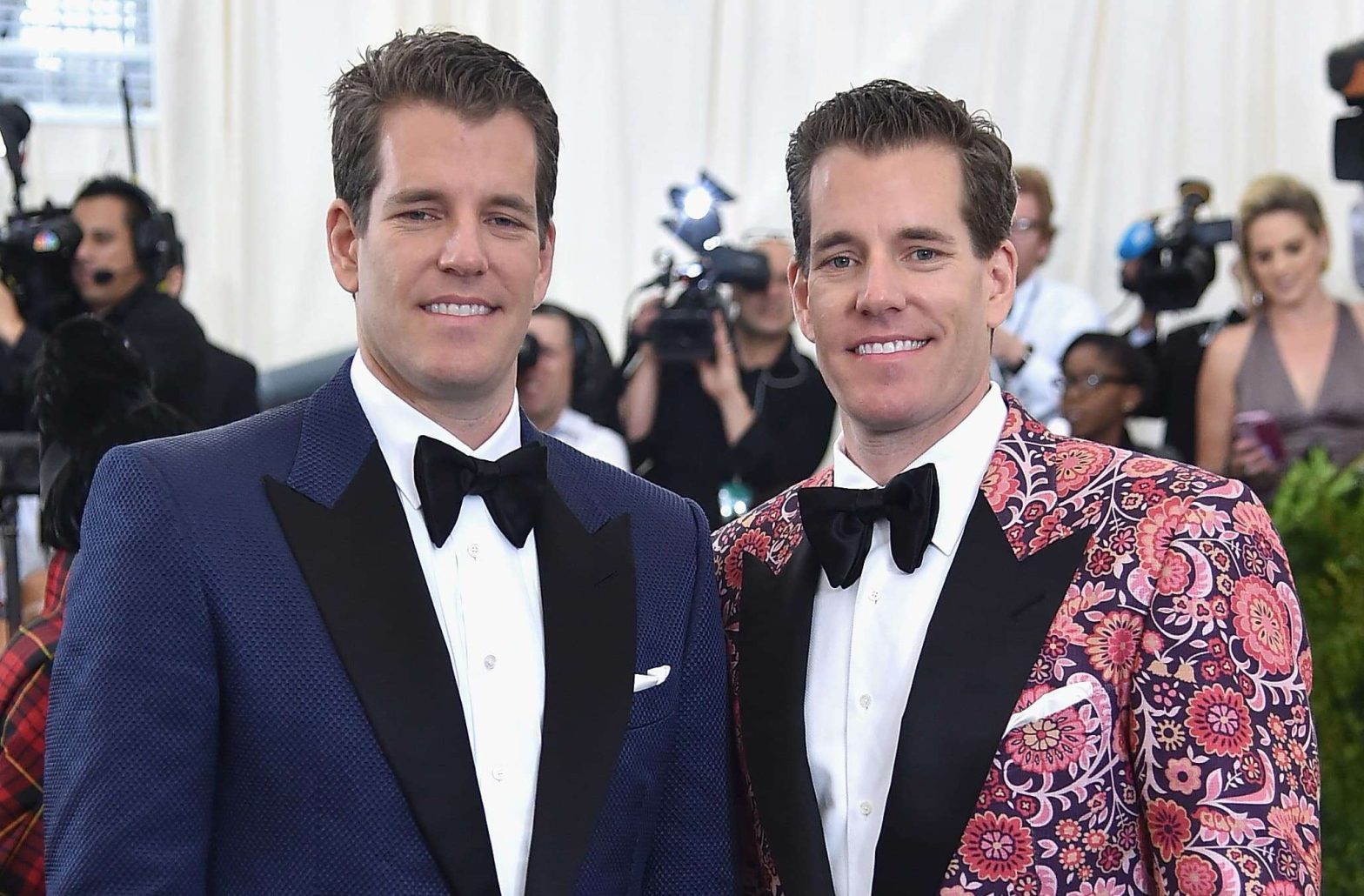
Gemini Trust, a cryptocurrency exchange created by Cameron and Tyler Winklevoss, has let off 10% of its employees due to a large decline in trading activity.

This is the first time the exchange has let off employees since its inception in 2014, and the first time its founders have said that market instability has had a significant impact on them.

The announcement was made in a letter issued to workers on June 2, in which the Winklevoss twins said that decreasing crypto values, stagnant development, and geopolitical upheaval have impacted everyone in the sector, including Gemini.

According to the document obtained by Bloomberg News, Gemini intends to restructure its operations in order to weather the approaching crypto winter. The Winklevoss twins said that the firm will only concentrate on goods that are vital to its purpose, but Bloomberg did not give any additional insights on what those products may be.

The layoffs will be handled by team leaders, who have been urged to examine their teams’ headcount based on “turbulent market circumstances that are anticipated to endure for some time,” according to the message.

While Gemini does not reveal the amount of staff it employs, based on LinkedIn profiles, Bloomberg estimates that the exchange employs roughly 1,000 individuals. This implies that around 100 individuals may be laid off in the next weeks.

Gemini’s website now has roughly 70 available vacancies ranging from software engineers and product managers to legal and design positions. It is unknown if the corporation will fill the other unfilled jobs or continue to hire in the future.

Employees affected by the layoffs will get a calendar invitation for online sessions to discuss the parting compensation and health-care benefits that Gemini will provide. The company’s physical headquarters in New York will be closed on June 2 and return on June 3 for a company-wide “standup” to discuss its future.

Categories
Bitcoin Blockchain News

How Will the Market Respond to Bitcoin Miners Chucking Tokens?

Bitcoin miners have began selling their holdings on the open market in response to the precipitous decline in the cryptocurrency’s value. According to a report by Bitcoin miner Compass Mining, a number of U.S.-based miners have began selling their holdings on the open market.

In addition to a fall in Bitcoin pricing, miners are also facing an increase in mining difficulty. This diminishes mining’s profitability.

The profitability of Bitcoin mining has plummeted to its lowest level since the middle of 2020, with Bitcoin prices hanging at comparable lows.

According to statistics from Coinmetrics, miner flows to exchanges have hit their highest level since January, as reported by Compass. Before March, the selling had preceded a precipitous drop in the price of Bitcoin during the following month.

Cathedra, a miner from Canada, is the most recent to sell the token. According to its most recent financial report, the miner sold 235 tokens in May for a total of $8.8 million, almost all of its holdings.

The firm said that the sales were to “isolate itself” from further price decreases. It currently has around 3.7 tokens.

Miners may begin selling Bitcoin they have accumulated on the open market. At the very least, they are suffering following the most recent significant price decline. Coupled with a downward difficulty adjustment, which indicates that miners are shutting down, it seems that profitability has reached a ceiling for miners.
Analyst for Compass Mining Mitch Klee

With Bitcoin now undoing a recent relief surge, market mood has generally deteriorated. For over a month, the token has failed to surpass $30,000 in value.

While a new research implies that the market bottom may have been reached, recovery will be very tough. Due to the Federal Reserve’s policy tightening, increasing inflation, and the Russia-Ukraine conflict, Bitcoin is expected to see a strong ascent to past highs.

Nonetheless, when Ethereum transitions to a proof-of-stake mechanism in 2018, Bitcoin may witness an infusion of miners from the latter.

Categories
Altcoins Blockchain News

Solana Blockchain Stopped for 8 Hours

According to tweets from the project’s Twitter account, Solana is suffering yet another outage but will shortly be restored.

According to block explorer statistics, Solana has not processed any blocks or transactions since shortly after noon UTC on June 1.

The Solana team blamed the incident on Twitter to a fault in the durable nonce transactions feature of the blockchain. This resulted in non-determinism, as various nodes returned different outputs for the same block and were unable to establish agreement.

Solana stated that both the network and the cash are protected. It has also issued restart instructions for validators within the last hour, indicating that the network will soon be operational again.

Solana has often experienced outages and congestion issues. The most recent incident happened on April 30 when bots that mine NFTs overwhelmed the network with transactions.

Prior to today’s outage, there were at least four earlier events, including a 47-hour outage in January 2022, at least two incidents in December 2021, and at least one incident in September 2021.

Today’s downtime seems to have caused the Solana (SOL) token to lose 10.9 percent of its value in the last 24 hours. Additionally, it is down 84% from its all-time high of $259.96, reached in November 2021.

However, this tendency is expected to be exacerbated by a widespread market decline in cryptocurrencies. Bitcoin, a market benchmark, is down 5.7% over the previous 24 hours and down 56% from its all-time high, which was also reached in November 2021.

Solana is considered a contender to Ethereum owing of its high transaction throughput, which Ethereum has not yet attained. Additionally, the large exchange FTX, which has worked substantially on the project, has been a strong supporter.

These benefits have allowed SOL to become the ninth-largest cryptocurrency by market capitalization. However, persistent outages will probably harm its market worth and reputation.

Categories
Blockchain News

Binance Labs start a $500 million fund that will focus on Web3

Binance Labs, the investment arm of the world’s biggest cryptocurrency exchange Binance, announced on Wednesday the formation of a $500 million fund to support the web3 and blockchain ecosystems.

Participating in the $500 million transaction were venture capital companies including DST Global Partners, Breyer Capital, and Whampoa Group.

According to the release, the new fund will be used to assist initiatives that seek to promote the use of cryptocurrencies, including web3 and blockchain technology.

The organization said that development-stage, early-stage venture, and growth-stage crypto companies are eligible to apply for investment.

Changpeng Zhao (CZ), the CEO of Binance, indicated that the purpose of the new fund is to promote initiatives with the potential to accelerate the expansion of web3 across the realm of decentralized finance (DeFi) and the metaverse.

In a Web3 environment, the link between values, people, and economies is crucial, and if these three aspects come together to establish an ecosystem, it will speed up the widespread adoption of blockchain technology and cryptocurrencies, he added.

Since its inception in 2018, Binance Labs has sponsored several global initiatives. The venture capital company has invested in several startups at different stages of development, such as Axie Infinity, Polygon, Sandbox, STEPN, and others.

Last year, the firm began season three of its incubation program, which supported emerging ideas with growth potential. Seasons one and two had already concluded with remarkable success.

Additionally, Binance Labs launched its season four incubator program for ideas with a potential future in March 2022.

Over the last several years, venture capital companies have provided significant funding to the Bitcoin business.

Andreessen Horowitz (a16z) has secured a $4.5 billion financing round for the creation of web3 apps.

Ox Labs, a blockchain-based crypto infrastructure provider, got $70 million in Series B investment in April to expand its global business offerings.

Categories
News NFT

Ex-OpenSea executive accused of NFT insider trading

Last year, OpenSea claimed it was undertaking an independent investigation into claims of insider trading. As a result of these instances, the platform has taken safeguards to prevent them from happening again.

The first-ever case of digital asset insider trading was brought against an official of the NFT marketplace on Wednesday. The US Department of Justice issued a news statement stating that the defendant allegedly traded on NFT inside information. According to the announcement, the NFTs would be advertised prominently on the OpenSea webpage.

On Wednesday, Chastain was detained in New York City as a result of this. The US District Court for the Southern District of New York is where he will be arraigned, according to the department. 4

Despite the fact that NFTs are relatively new, criminal schemes of this kind are not. It has been claimed that Nathaniel Chastain violated OpenSea by profiting from its exclusive business knowledge. We will not tolerate any kind of insider trading, no matter how little or large, on the stock or blockchain markets.

According to the FBI’s associate director-in-charge, Michael J. Driscoll, Chastain engaged in an age-old practice of insider trading when she was arrested. He conducted the fraud by purchasing hundreds of NFTs before they were listed on the marketplace, taking advantage of his access to sensitive information.

There are individuals who will take advantage of any new financial instrument, such as blockchain-supported non-fungible tokens, for their own benefit. FBI agents are pursuing anyone who attempt to manipulate the market in this manner.

According to the lawyer, the NFTs listed on the NFT platform were hand-picked by Chastain. NFTs that Chastain selected for OpenSea’s webpage were mentioned as part of his job.

Chastain utilized OpenSea’s sensitive business information from at least June 2021 through at least September 2021.

It was a stealth purchase of hundreds of NFTs before they were posted on the webpage based on knowledge about the upcoming NFTs.

Categories
Blockchain News

Nigeria to create an IP exchange marketplace and wallet on Algorand

The Nigeria government has signed a three-year exclusive IPR deal with Developing Africa Group to build a national wallet that would enable worldwide commercialization of any IP forms generated and registered in the country, domestically and globally.

The IPR exclusivity agreement involves the government granting Developing Africa Group, a regional software development company, the right to build the country’s official platform, which will allow its citizens to upload any form of IP rights and trade, sell, or exchange them abroad while collecting royalties and proceeds in their wallets.

This agreement covers trademarks, patents, copyrights, music, lyrics, videos, shows, lectures, podcasts, and any streamable material. The Developing Africa Group has picked Koibanx as the tokenization and payments engine for the nation and Algorand Blockchain as the protocol to develop on.

Koibanx, an American asset tokenization and Blockchain financial infrastructure company, will implement the wallet, token for the IP being sold, and stable token (equivalent to the Naira) to pay the creators, as well as the overall technical integration of the different vendors in play, which include one of the top card issuing companies worldwide, a content streaming platform, and top legal and data miners.

Algorand Blockchain will launch all tokens. “Algorand’s protocol provides the performance, scalability, security, and functionality needed to implement such a large project. It’s also environmentally friendly, which is important to the government, and has a huge philosophical match with the ‘creators economy industry’ we’re targeting,” said Ben Oguntala, CEO of Developing Africa Group.

This is not the first “Koibanx-Algorand” implementation; the synergy already extends to several recent national public and private initiatives across Latin America, including a blockchain-based citizens ID and information program in Colombia (with +12M users), El Salvador’s National Registration platform (which comprehends IP but also land, vehicles, and legal entities titles), and over 10 different payments implementations for banks in the region. Koibanx-Algorand is improving Latin American infrastructure.

Categories
Ethereum

Beacon Chain from Ropsten ready for the merge

Public test network Ropsten will be the first to switch from a PoW consensus mechanism to one that uses the Ethereum blockchain’s “Merge” event, which is scheduled for August of this year.

Ethereum’s Ropsten testnet was launched in advance of the Merge, which will implement the proof-of-stake (PoS) consensus mechanism.

Ropsten’s new Beacon Chain was announced by Ethereum core engineer Tim Beiko on Tuesday. The week of June 8th is set aside for final merge testing. To prepare for that, this test is necessary.

If Ropsten testnet and beacon chain merge successfully, it will be a good indicator of how well the mainnet transition will go.

Several blocks have been created on the testnet since the activation of the beacon chain. At this point, there are about 160 epochs left in the testnet, and the participation rate is very high.

Preston Van Loon, a fellow Ethereum developer, thinks this would be a huge step forward for the development of Ethereum.

Ropsten’s newly launched beacon chain will receive an upgrade called “Bellatrix” on or around June 2 to make it Merge-compatible.

After a few days, miners will begin the transition by selecting a value known as the Terminal Total Difficulty (TTD). After that, miners will have to change the value of their nodes to match this.

Previously known as 2.0, Ethereum’s long-awaited major upgrade will switch the network from a subsistence PoW consensus algorithm similar to Bitcoin (where trades are validated by miners with a large amount of computing power) to PoS (in which miners who put up the most assets validate the most transactions).

It’s been a long time coming, but it’s finally here. A 99.5 percent reduction in the overall energy consumption of the blockchain is expected as a result of this.

Categories
Altcoins Bitcoin Blockchain News

Cryptocurrency investment received $87 million in inflows

The CoinShares weekly report shows that despite a generally bearish market sentiment, cryptocurrency investment products saw inflows of $87 million during the week of May 23.

There were $69 million in inflows for Bitcoin (BTC), bringing the total year-to-date inflows of $369 million. The asset’s price performance last week brought its total value under management to $24.7 billion, the lowest since July 2021 when it traded below the $30,000 level.

Its short BTC positions, which received close to $2 million in inflows, show a negative sentiment.

Ethereum’s negative fund flow trajectory continued in 2022 with an outflow of $11.6 million, bringing the total to $250 million. Investors, on the other hand, believe this is a non-issue because of the impending merger of Ethereum.

Because they’ve been buying Ether every day, we’re risk-on, Wes Cowan, a managing director at Valkyrie, reportedly said in an interview.

Positive inflows were also seen in major altcoins like Algorand, Solana, and Tron. Algorand received a record $20 million in inflow, while Solana received $1.8 million and Tron received $0.4 million, according to the data.

In an interview with Bloomberg News, Hayden Hughs, the CEO of Alpha Impact, said:

Ether and other altcoins are being heavily purchased, and these patterns mirror those seen in the bear market bottom in July 2021 and the local bottom in January 2022.

Purpose The Bitcoin ETF, which received $75.6 million in inflows from investors this week, has a market capitalization (AUM) of $1.35 billion.

A total of $15.5 million and $72 million have been invested in investment products across Europe and North America, indicating that investors have the same outlook.

These investments, on the whole, represent a positive change in performance for the industry, which had previously recorded $141 million in outflows. By the end of 2021, cryptocurrency investment products had already raked in over $500 million in investment dollars.

Categories
Blockchain News

Thailand police have nabbed six men in connection with a crypto scam

The Bangkok Police Cyber Taskforce (PCT) arrested six Taiwanese men on Tuesday for allegedly engaging in cryptocurrency fraud, according to the Nation Thailand.

More than 500 Chinese and Taiwan citizens were duped into investing in fake cryptocurrency schemes, according to a report. An undisclosed amount of money was lost as a result.

The arrest was made public today by Damrongsak Kittiprapas, the director of the PCT and deputy National Police chief.

According to the police chief, the defendants were arrested on May 27 in a rented apartment in the Prawet district of the country following an anonymous tip-off. Two wanted Taiwanese men were allegedly involved in suspicious activities in the district, according to PCT and the Immigration Bureau, according to him.

Before storming the apartment on Friday to make the arrests, Kittiprapas noted that the suspects were being monitored by both agencies. Seven laptop computers and 45 cell phones were seized from the gang by the police.

There were other criminal activities uncovered after the suspects were taken into custody, such as operating a crypto exchange without proper authorization.

Trading services without a license are among the additional charges against the six men.

At least four of the defendants have been charged with working illegally in the United States. The fifth person was charged with possession of narcotics, while the sixth person was accused of overstaying his visitor’s visa.

Immigrant Police Chief Pol Lt-General Phakphum Phipat said that the six men would be deported back to their home countries after the case had been resolved and appropriate punishments had been handed down.

During this time, new crypto-related crime reports are emerging from Thailand. A fake cryptocurrency exchange, BitVex, which claimed to be owned by billionaire Dogecoin proponent Elon Musk, was reported to have collapsed just last week. In order to lure unsuspecting investors, the platform advertised phony cryptocurrency offerings by using deep-fake videos of industry leaders.

Categories
Altcoins Price Analysis

Ripple is looking into possible acquisitions

It’s time for Ripple, the company behind the XRP cryptocurrency, to expand its business model by acquiring or merging with other companies.

On CNBC, a report stated that this business was actively looking to acquire other startups of the highest caliber in order to help fuel its own growth.

Since its inception, Ripple has made a number of acquisitions in the merger and acquisition (M&A) space, including Trianglo and Algrim. When it comes to growth, the company hasn’t slowed down despite a well-publicized battle with the Securities and Exchange Commission (SEC).

You may have heard that the SEC is suing Ripple and two of its top execs in December 2020 for allegedly issuing and selling unlicensed securities in the form of XRP, which is the cryptocurrency that Ripple uses.

Ripple CEO Brad Garlinghouse told CNBC that the company’s financial position is excellent. According to him, there will be a lot of mergers and acquisitions in the crypto industry in the near future.

It is Ripple’s goal to create a more manageable ecosystem for developers to create projects around XRP, which in turn encourages businesses to use the cross-border payments token.

According to some prominent cryptocurrency analysts, XRP’s performance has been disappointing despite positive developments in the SEC lawsuit and notable deals in the Asian cryptocurrency market.

In the top ten cryptocurrencies, XRP is the only one that hasn’t broken its all-time highs from the 2017-2018 bull market. Cardano’s ADA recently overtook it as the second largest cryptocurrency by market cap. In the cryptocurrency market, XRP has a market capitalization of around $20.1 billion, making it the seventh-largest coin after ADA.

It’s possible that an SEC victory and more large-scale XRP deals will significantly boost the coin’s upside potential, but this isn’t universally agreed upon.

Categories
Blockchain News

Shiba Inu Founder, Ryoshi, Wipes Himself Off The Internet

As it turns out, the identity of the enigmatic man behind the Shiba Inu’s creation has come to light. As Ryoshi, the creator of SHIB has always kept his or her identity a secret.

On Monday, Ryoshi erased all of his Twitter activity, as well as his four Medium blogs. Deleted tweets, media, and likes give the Twitter account a barren appearance.

His location was listed as “Decentalized,” with almost 2 million followers. ‘SHIB and LEASH Founder,’ Ryoshi used to call himself.

In addition, Ryoshi took down all four of his Medium blogs. As a result, the SHIB author has removed all previous Medium articles. This implies that Ryoshi no longer has any social media presence.

The recent development has elicited a range of emotions among SHIB devotees and followers. While some speculated that this may be a sign of good things to come, others voiced skepticism.

The mysterious Ryoshi put out a Medium statement in the midst of uncertainty and disagreement about the move. Ryoshi hinted in a cryptic manner that he may vanish without a trace at any time.

With her Twitter handle Lady Crypto, Lady Crypto, a supporter of the SHIB, thought Ryoshi wanted to leave something behind. It seems that the SHIB ARMY is the only hope for Ryoshi’s Vision to come to fruition, she tweeted. For the benefit of the general public! It’s not impossible, we can accomplish it!

Another fan, SHIB JOE, claims that the token’s roadmap has not yet been completed. “We’re Ryoshi.” The narrative of #SHIB continues since Ryoshi’s roadmap has not yet been finished.”

SHIB’s price has risen in the last 24 hours, compared to where it was only a few hours ago. According to CoinMarketCap, SHIB was trading at $0.000012 as of the time of this writing, up 0.24 percent in the previous day.

Big Ethereum (ETH) whales have profited from the recent market collapse triggered by the Terra crisis. SHIB emerged as the whales’ preferred option despite the upheaval. According to latest statistics, SHIB has overtaken the top 500 ETH whales in terms of holdings. Flipping the FTT token (FTT) to the top slot was achieved by the token.

Categories
Blockchain News

Binance has become a legal entity in Italy

Binance, the world’s biggest cryptocurrency exchange by trading volume, has been granted permission by the Italian regulator Organismo Agenti E Mediatori (OAM) to operate as a virtual asset service provider in the nation. With the clearance, the exchange said that it will be allowed to open offices in Italy and expand its employees to better service users.

Clear and effective regulation is required for cryptocurrency general acceptance. We congratulate the Ministry of Economy and Finance and the OAM for their work in establishing and managing the conditions for fully transparent operations in Italy. Binance has always prioritized its users, as seen by moves such as the establishment of the register, according to Changpeng Zhao (CZ), co-founder and CEO of Binance.

As previously reported, Binance faced blowback from an Italian regulator, Consob, who ruled the exchange’s activities unlawful last year. In the past, the main exchange has faced regulatory challenges from other European authorities such as Germany, the United Kingdom, and others.

Following regulatory problems in the past, Binance has recently gained traction with authorities, allowing it to continue its expansion into the European and Middle East and North Africa (MENA) markets.

In March, the company got a virtual asset license from Dubai’s Virtual Asset Regulatory Authority (VARA) to serve as a basis for regional development under Dubai’s ‘test-adapt-scale’ virtual asset market model.

Binance received regulatory authorisation in France a few weeks ago to provide its services to French investors.

The firm just became the first crypto exchange in Bahrain to get a Category 4 license from the Central Bank of Bahrain (CBB) to provide full suite crypto services.

Remember that Binance was granted In-Principle permission by the authorities late last year. According to rumors, the exchange is also attempting to register as a legal organization in Germany.

Categories
Blockchain News

In South Korea, Terraform workers investigated for the UST disaster

According to reports, officials in South Korea have summoned all of Terraform Labs’ personnel in an effort to find out what caused Terra’s ecosystem to collapse earlier this month.

It has been reported that all Terraform Labs personnel have been subpoenaed by the combined financial and securities criminal investigation section of the Seoul Southern District Prosecution’s Office.

The report said that one of Terra’s workers had previously testified that there were internal worries about Terra’s viability. The unidentified employee engaged in building the coins in 2019 cautioned Terra creator Do Kwon that the tokens may collapse at any point. There were warnings from an employee, but CEO opted to disregard them, and pushed token launch, he stated.

Additionally, despite the failure of a company-wide pilot program, these tokens were nonetheless introduced, according to the employee.

Authorities in South Korea are conducting an inquiry to see whether LUNC or UST prices were manipulated intentionally. The authorities are also investigating whether the tokens were listed on domestic markets in accordance with appropriate procedures.

Since UST was not tied to any secure collateral and had no sustainable business model, investigators are worried that Terra’s tokenomics were incorrect.

CEO of Circle Jeremy Allaire told Protocol after the collapse that Terra was a “house of cards” that was doomed to fail, he said.

The Financial Services Commission in Korea estimates that 280,000 investors have lost money as a result of Terra’s demise. Do Kwon and Terra co-founder Shin Hyun-Seung have been named in a class-action lawsuit brought by some of the impacted investors.

Additionally, legislators hope that Do Kwon would appear before South Korea’s parliament to discuss the disaster. Financial institutions in Terra have been ordered to freeze the assets of the non-profit Luna Foundation Guard as a result of a request from the police.

As a result of the Terra debacle, officials are scrambling to increase their monitoring of the country’s crypto exchanges.

Luna 2.0 is Do Kwon’s newest effort to resurrect the Terra biosphere. Shortly after its May 28 introduction, the new token suffered an almost 80% decline in value.

Categories
Blockchain News Regulation

A New ECB Survey Reveals That 10% Of EU Households Own Crypto

In recent months, the European Central Bank (ECB) has grown more vocal against cryptocurrencies. Crypto assets have been found to be held by 10% of households in Eurozone, according to a poll by the main financial authority

The European Central Bank (ECB) conducted a study on Tuesday that found that one in ten households in the European Union (EU) owns cryptocurrency. It is part of the European Central Bank’s Consumer Expectation Survey, which gathers data from six nations and analyzes it.

The data shows that the majority of crypto owners have less than €5000 (about $5,366) in crypto, while just 6% of those with more than €5000 have more than €30,000 (roughly $32,189) in crypto. According to the findings, educated people were more inclined to invest in cryptocurrency.

While this is good news for the European Central Bank (ECB), it is not such good news for the rest of the world. In the opinion of the European Central Bank (ECB), the vast majority of individual investors are unsuitable for investing in cryptocurrency.

For most retail investors (either as an investment, a store of wealth, or a method of payment), crypto-assets are not a good fit, according to the survey.

In addition, the European top bank has worries about expanding retail crypto investment. Another issue highlighted by the European Central Bank (ECB) was the rising engagement of financial institutions in the early stages of the market. “Crypto-assets will represent a danger to financial stability if current growth and market integration trends remain,” the paper said.

EU regulators have urged for regulatory action, stressing that this has become an issue of global concern while also pointing out that crypto lending might fall under current banking rules in the United States, citing recent incidents in this regard.. Regulators and supervisors must consequently keep an eye on developments and fix any regulatory loopholes or arbitrage opportunities.” Worldwide coordination of regulatory actions is important since this is an international market and a global problem,” the paper said.

Categories
Bitcoin Blockchain News

Bank of America is Still Against Crypto

Brian T. Moynihan, CEO of Bank of America, told Yahoo! Finance that the bank was not in a hurry to become involved in cryptocurrencies.

There is nothing lacking in our lives. “Payments are going through the ceiling,” Moynihan boasted.

A valid use case for cryptocurrencies is cross-border payments, but Moynihan added that tight regulation prevented it from interacting with this new commodity.

Bank of America is only able to do research on the trading side of cryptocurrencies, but it is unable to manage clients’ digital asset accounts. A specialized crypto research team was established by the bank in July, according to U.Today.

What they said was, “You have to ask us first, and by the way don’t ask,”” When asked about regulatory monitoring, Moynihan said, “It was just the tone.”

Moynihan emphasized that his bank has made tremendous progress in the digitization of its operations:.

“To put it another way: we’re in the payments industry. It cost billions of dollars a day to operate. And it’s all done digitally these days.”

It is estimated that digital channels account for 53 percent of Bank of America’s customers’ sales. 54 million digital customers are estimated by Moynihan.

A Bank of America employee was also aware that the bank owned “hundreds” of blockchain-related patents. In fact, the number of patents relating to blockchain technology is expected to rise by 86% by 2021.

Even though Bank of America has more blockchain patents than any other financial business in the world, the bank isn’t completely convinced on the technology. Bank executive board member Cathy Bessant said that she was negative on the blockchain in 2019.

Categories
Blockchain News Regulation

Behnam: CFTC will boost resources to fight crypto fraud

In recent decades, cryptocurrency fraud and exploitation have become even more widespread. Because of this, CFTC Chair Rostin Behnam has said that the agency would increase its resources to address these concerns.

In a taped address at the Chainalysis conference on Wednesday, CFTC head Behnam expressed worries about the fast increase of crypto-related fraud. As reported by The Wall Street Journal, Behnam indicated that the CFTC plans to step up its efforts and resources to enforce laws relating to digital currencies, such as Bitcoin.

According to Behnam, “headlines about tens of millions in digital assets being lost as a result of protocol flaws, phishing attacks, preying on susceptible individuals, and other fraudulent and manipulative schemes have become much too regular.”.

Since 2015, the CFTC has brought more than 50 actions involving crypto enforcement. There were 23 incidences of fraud in fiscal year 2014 alone, according to Behnam.

Other financial regulators are also trying to step up enforcement, including the Securities and Exchange Commission (SEC). The SEC added 20 additional staff to its crypto enforcement division earlier this month.

The SEC’s head, Gary Gensler, argued for an increase in the commission’s budget during a Wednesday appearance before the House Appropriations Committee. Gensler argued that even with the recent additions, the SEC still needed more staff to effectively monitor the developing markets. As Gensler pointed out, the public is not safeguarded, using the Terra ecosystem catastrophe as an example.

SEC and CFTC are still at odds over which agency should be in charge of regulating the crypto exchanges, with both maintaining that the monitoring of the young sector should fall squarely on their shoulders. Many members of the crypto business are siding with the CFTC in the impasse talks and legislative battles.

A CFTC-regulated crypto market would be ideal, according to Behnam, while Gensler believes that an SEC-regulated market would be better for most of the industry. Interestingly, Behnam had previously said that both parties were in the process of agreeing on how the authorities should share monitoring of the cryptocurrency business.

Even if regulators are increasingly moving toward enforcement, it’s not unexpected. Funds lost to crypto vulnerabilities in the first half of the year are already approaching the entire amount lost in 2021.

Categories
Blockchain News Technology

Zilliqa provides Unity SDK for Metapolis developers

Valentin Cobelea, Zilliqa’s Head of Gaming Technology, is pushing the development of Zilliqia SDKs to link game creators to the web3.

The Zilliqa blockchain will be connected to Unity 3D developers through a UnitySDK for the first time. “Frictionless gaming environment for the Web3 world” is the stated goal of Zilliqa.

As part of its Metapolis platform, Zilliqa has revealed that it would support Unity, Unreal Engine and the Nvidia Omniverse virtual reality technology. Many prominent games are based on Unity include Among Us, Pokemon Go, Hearthstone, and Fall Guys.

An SDK for Unity 3D has been announced, demonstrating a commitment to bringing game developers on board with web3. Software Developer Kits (SDKs) are a collection of tools that may be used to speed up the development process.

This is the first of several Zilliqa SDKs that will be released. Metapolis and Zilliqa want to create a series of SDKs to provide the groundwork for a larger gaming environment that can be integrated into each other.

The purpose of the SDK extends beyond onboarding new developers to the Zilliqa ecosystem by “allowing games established on other blockchains to seamlessly interface with our network.”

With more than two decades of expertise in AAA game production companies, Zilliqa’s “gaming powerhouse” is directed by Cobelea, a “veteran of industry.” As a whole, the group’s goal is to raise awareness about the benefits of web3 gaming.

The current state of the Unity 3D SDK may be seen on GitHub. Version 2.1 of the software now incorporates NFT functionality. Zilliqa looks committed to making improvements to its service.. With the addition of additional top-level and senior people with considerable knowledge in Unity3D internals and blockchain themes, we expect more functionality to be introduced in the future.”

The Zilliqa SDK provides a wide range of resources for developers, including example code, scenes, prefabs, scripts, and other materials. To help developers become more proficient in the ecosystem, the SDK includes extensive documentation.

Web3 gaming differs from conventional gaming in that it relies on a blockchain connection to validate in-game purchases. If these transactions cannot keep up with the game engine’s pace, it will have an effect on the game’s performance.

Web3 gaming experiences have been hindered by the delay between user input and blockchain transaction completion. With sharding, Zilliqa can handle up to 2,500 transactions per second, making it a strong contender for metaverse web3 access.

Categories
Altcoins Blockchain News

Chief Investigator: Belarus Seized Millions in Crypto

In the beginning, cryptocurrencies were used for drug trafficking and then for economic crimes, according to Dmitry Gora, chairman of Belarus Investigative Committee, who spoke to the state-run ONT channel. Authorities have already recovered cryptocurrency worth hundreds of millions of Belarusian rubles, according to the law enforcement official (millions of U.S. dollars).

President Vladimir Putin issued a presidential order in May 2018 legalizing a wide range of crypto operations, including mining, trading, and more. The paper included tax discounts and other incentives for crypto firms working at the Hi-Tech Park (HTP) in Minsk as part of the country’s digital economy development plans.

By 2021, President Alexander Lukashenko said that the country’s crypto rules may be tightened, citing China as an example. Belarusian officials, on the other hand, indicated that tighter regulations for the business were not in the works. And the finance ministry has suggested revisions that would permit digital asset acquisition by investment funds.

As of April of this year, the Ministry of Justice created a legislative mechanism that allows for seizures of crypto money as part of enforcement action. In February, Lukashenko issued another edict requiring the development of a special record for crypto wallets used for illegal purposes.

“Advanced subordinates” were quoted by Dmitry Gora as suggesting that bitcoin was “digital rubbish.” My responsibility is to come up with a way to pay for the harm that has been done to our state. There are several ways to turn rubbish into cash. I won’t get into specifics, but suffice it to say that we’ve figured it out. The procedures that enable us to deal with these difficulties are in place, and they work well,” he went on to explain.

According to the executive in charge of law enforcement, both public and private sector groups are participating in the investigation. Because of this, Gora said that “the sums that are already in the shape of good, regular money are on the accounts of the Investigative Committee.”

Categories
Altcoins Blockchain News

SpaceX Now Accepts Dogecoin (DOGE)

On Friday, Tesla CEO Elon Musk stated on Twitter that Spacex would soon accept the meme cryptocurrency Dogecoin for the purchase of items. This news provided a modest lift for the value of Dogecoin. The CEO of SpaceX tweeted that “Tesla gear can be purchased with DOGE, and shortly Spacex apparel will be available as well.”

In addition, Musk said that memberships to SpaceX’s Starlink might “one day” be paid for using dogecoin in the future. According to the information provided on their website, Starlink is able to deliver “High-speed, low-latency broadband internet in distant and rural regions around the world.”

The value of the meme cryptocurrency saw a significant increase when Elon Musk tweeted that SpaceX will begin accepting dogecoin. During the moment he sent out the tweet, the price of a single Dogecoin was $0.078399. Almost immediately, it increased by more than 8 percent, reaching $0.084927. However, most of the gains made by the meme currency were quickly reversed, and it is presently trading at $0.081469 USD.

In January, Tesla started taking dogecoin as payment for some items, but the electric vehicle business does not presently accept any other cryptocurrencies. The firm no longer takes bitcoin as payment for its goods because of their commitment to protecting the environment. Musk said in June of the previous year that Tesla would begin taking Bitcoin if miners could verify that they were using 50 percent renewable energy. On the other hand, he has not yet returned to the topic.

Dogecoin has long had Musk’s backing as an advocate. In the world of cryptocurrency, many refer to him as “the Dogefather.” The CEO of Tesla has admitted in the past that he had Bitcoin, Ether, and dogecoin in his possession. However, SpaceX only has bitcoin in its possession. In April, Tesla’s financial sheet included digital assets worth a total of $1.26 billion.

In May, the CEO of SpaceX said that dogecoin has the potential to become a currency, but bitcoin is more suited to functioning as a store of wealth.

The CEO of Tesla and SpaceX is now exploring the possibility of purchasing Twitter. But for the time being, the business transaction has been put on hold until further evidence is gathered to back up the figure that the percentage of users on the social networking platform who are spam and fraudulent accounts is fewer than 5%.

Categories
Bitcoin Blockchain News

Bitcoin (BTC) Forecast 05/28

Bitcoin (BTC) is decoupling from conventional markets, but not in a favorable manner, this week as the stock markets started to flash a little of green. Bitcoin is down 3%, while the Nasdaq Composite tech-heavy index is up 3.1 percent.

Cryptocurrency traders are concerned about deteriorating global macroeconomic circumstances, which might increase investors’ resistance to risky assets, according to May 27 statistics from the US Commerce Department.

There is a $160 billion exchange-traded fund called Invesco QQQ Trust, which has lost 23% of its value this year. It has also dropped 20% in 2022 for iShares MSCI China ETF, a $6.1 billion tracker of Chinese equities.

Traders should examine Bitcoin derivatives data in order to gain a better understanding of how crypto traders are positioned. Investors may borrow bitcoin via margin trading, allowing them to boost the possible return on their investment. To increase one’s exposure, one might, for example, purchase cryptocurrencies using borrowed Tether (USDT).

Unlike futures contracts, where margin longs and shorts are always equal, Bitcoin borrowers may only short the cryptocurrency if they bet on its price falling.

The data above illustrates that traders have lately borrowed more USD Tether, as the ratio has climbed from 13 on May 25 to the current 20. Professional traders are more confidence in Bitcoin’s price when the indicator is higher.

A sign of positive optimism was shown on May 18 when the margin lending ratio jumped to 29 percent, the highest in over six months. It’s always a bad warning if the USDT/BTC margin lending ratio falls below 5.

Terra USD (UST) demise on May 10 may have been a factor in the BTC margin trading and option price divergence. Stablecoin traders and arbitrage desks may have suffered significant losses as a result of the loss of the peg, which has reduced their appetite for risk in BTC option trading since then.

Furthermore, according to Loanscan.io, the annual interest rate for USD Tether loans on Aave and Compound has reduced to 3%. As a result, the USDT/BTC margin lending ratio will rise as traders take advantage of the low-cost leverage technique.

The present adverse trend in Bitcoin cannot be predicted, thus the availability of low-cost financing does not ensure a good price movement.

Categories
Altcoins Blockchain News

How Terra LUNA 2.0 is Doing After the Airdrop

Terra’s Airdrop brings an end to a month that started with the collapse of Terra’s LUNA 2.0 and TerraUSD (UST). However, after only a few hours in circulation, the new renamed Terra prices suffered a huge collapse.

The creator, DO Kwon, and the rest of the Terra community came up with a few ideas in an effort to resurrect the game. Terra (LUNA) was chosen as the name of the new chain, while Terra Classic (LUNC) was chosen as the name of the old chain. Airdropping additional tokens was also part of the plan, which was made available to all holders.

Earlier today, Terra announced the creation of the first block of the new Terra blockchain. In the meanwhile, the new token’s values have plunged by 60% in the hours after its debut. According to the statistics, Terra (LUNA) 2.0 was launched between $17 and $18. The cost subsequently skyrocketed to above $20 per unit.

Terra’s cost was fallen to $6.30 at the time of publication. The company’s trading volume has increased by 2408 percent to $97.5 million dollars. Market capitalization of the coin is around $5.95 billion according to Coinmarketcap’s calculations. It’s getting close to zero on the Terra Classic pricing.

Users who are eligible for the LUNA airdrop may now check their wallets on the new Chain, Terra announced earlier this week. Select the Phoenix-1 network in their browser addon. Additionally, the Airdrop’s supply is restricted to 1 billion units. Pre-attack LUNA holders will get 35% of the total, with the remaining 30% going to the communal pool. While pre- and post-attack aUST and LUNA holders will each get 10%. Holders of USTs that are not yet attached will be eligible for a 15% airdrop.

Terra said that liquid LUNA may be used in a variety of ways. Rewards and participation in governance may be gained by placing it on the Terra station.

Categories
Blockchain News Regulation

India Central Bank’s Proposal For CBDCs

According to a story from the Hindustan Times, the Reserve Bank of India (RBI) recommended a phased introduction of the central bank digital currency on May 27, 2022. (CBDC).

RBI said in a paper it issued earlier in the day that it was weighing the merits and drawbacks of implementing CBDC in India. Before the formal launch, it should go gradually via phases of proof of concept and pilots.

The plan also sought to guarantee that the CBDC complies with current monetary policy and financial stability goals.

According to the RBI report, the Reserve Bank is implementing a central bank digital currency (CBDC) in India. CBDC’s design must align with the stated goals of monetary policy, financial stability, and efficient currency and payment system operations.

RBI said that it intends to use a phased approach to the deployment of CBDC, proceeding progressively through Proof of Concept, pilot, and launch phases.

CBDC is the widely-discussed alternative to cryptocurrencies. It will have all the qualities of the present fiat money and will be legal tender like paper cash.

Finance Minister of India Nirmala Sitharaman said in her budget statement on 17 April 2022 that digital money would result in a more efficient and less expensive currency management system.

Former finance secretary Subhash Chandra Garg said that Cryptos raise issues on two fronts: monetary stability and financial stability. The RBI is primarily concerned with monetary stability.

Categories
Blockchain News

Binance Gets the Green Card In Italy

Binance, the biggest cryptocurrency exchange in the world has been granted regulatory license in Italy as it continues to expand into new territories.

Binance Italy has registered with the Organismo Agenti e Mediatori (OAM) as a cryptocurrency service provider, as required by Italian law. The permission permits the firm to provide crypto goods to Italian consumers, as well as create offices and grow its personnel in the nation.

“Clear and effective regulation is necessary for the widespread acceptance of cryptocurrencies,” stated Changpeng Zhao, CEO of Binance. “Binance has always prioritized its consumers, and the introduction of the register gives them confidence that our platform is among the safest and most reliable in the world.”

A spokesman for Binance did not immediately respond to a request for comment about the exact items it may seek regulatory license to provide in Italy and other areas.

The announcement followed Binance’s registration as a digital asset service provider in France by the Autorité des marchés financiers earlier this month (AMF).

The CEO of Binance France, David Princay, referred to the registration as “an important milestone for crypto in Europe,” stressing that the additional levels of anti-money laundering protection would contribute to the expansion of crypto acceptance and liquidity throughout the continent.

In March, the cryptocurrency exchange also received a virtual asset license from Dubai’s government, enabling it to sell restricted exchange goods and services to pre-qualified investors and professional financial service providers.

Binance has been in conflict with authorities in the past for allegedly failing to apply for or register for financial services licenses. In a July 2021 blog post, Zhao said that compliance is a journey.

In addition to recent regulatory certifications, Binance’s commitment to compliance has permeated its employment and partnering practices. This week, Binance.US recruited Josh Wilsusen as its first chief policy officer and added former Uber Technologies employee Krishna Juvvadi as its director of legal affairs.

This week, Binance also teamed with data analytics company Kharon and cloud-native screening service Neterium to identify unlawful cryptocurrency activities on its platform more effectively.

Categories
Blockchain News

Coinbase officials earned more than $1 billion selling stock

According to a story that was just published by the Wall Street Journal, four of the most senior executives of Coinbase have collectively gained more than one billion dollars by selling their shares of the firm since the exchange went public a year ago.

According to the article, the executives who were engaged in the act were Brian Armstrong and Fred Ehrsam, who were the co-founders of the company, as well as Emilie Choi, who is the Chief Operating Officer, and Surojit Chatterjee, who is the Chief Product Officer.

According to the study, Fred Ehrsam had the greatest sales with “almost half a billion dollars in stock transactions,” while other individuals, such as Armstrong, had sold shares for $292 million.

The other executives, Choi and Chatterjee, have collectively disposed of shares worth a total of $226 million and $110 million respectively.

It was reported that the shares were sold at various periods throughout the market, with some transactions taking place while the stock was trading for as much as $422 and others taking place when the stock was trading for $189.

According to the WSJ, a spokeswoman for Coinbase was quoted as saying that the aforementioned Coinbase executives hold prominent roles inside the firm, which reflects their dedication to our long-term potential.

“The pricing performance of the single publically traded cryptocurrency exchange has not been all that promising in the most recent times,” the author writes.

The company disclosed on its results call for the first three months of 2022 (Q1 2022) that its revenue was declining, and that it also saw a shrinking user base during this same time period. This decrease has been the impetus for some of the recent moves taken by the company as it strives to expand its presence into new regions.

The price of Coinbase shares, which was trading at $74.69 at the time of this publication, is down by more than 70 percent compared to its year-to-date (YTD) indicator.

Despite this, the stock market was nevertheless able to make it into the list of the 500 most profitable companies in the world. Coinbase is the first company in the cryptocurrency industry to make it into the Fortune 500 list, which ranks the biggest 500 firms in the United States based on their gross revenue.

Coinbase apparently profited from the “freakish conditions of COVID,” as stated in the preface that was penned by Alyson Shontell, the Chief Editor of Fortune.

Categories
Blockchain News

Tether has launched a stablecoin pegged to the Mexican peso

Tether Operations Limited, the originator of Tether (USDT), the biggest stablecoin by market valuation, has introduced a stablecoin linked to the Mexican peso.

According to a May 26 release, the company’s new stablecoin will be called as “Tether tokens” and would be tied 1:1 to the Mexican peso. The stablecoin will be denoted by the sign “MXN.” According to the business, the new stablecoin will initially be available on three blockchains: Ethereum, Polygon, and Tron.

According to Tether, the decision was prompted by rising demand for stablecoin use in Mexico, where conventional financial transfer methods were causing issues for the majority of users. The World Bank listed Mexico as one of the top five nations in the world in terms of remittance receivers in US dollars last year. According to the country’s central bank, nationals residing abroad would send $51.6 billion home in 2021.

According to statistics from Triple-A, a cryptocurrency payments startup located in Mexico, 40% of Mexican enterprises are contemplating implementing blockchain and cryptocurrencies for their operations, with 71% of that group explicitly focused on employing cryptocurrencies. This need, according to Tether, offered an opportunity to launch a stablecoin that would place the Mexican peso on the blockchain and “enable quicker and less expensive choices for asset transactions.” Furthermore, the business added that their pioneering action will “pave the way for future fiat-pegged currencies to be introduced in the area.”

This need has piqued the interest of several major crypto businesses, like Coinbase, Bitso, and Circle, who have launched crypto services in the Latin American country.

Tether currently has four stablecoins on the market, in addition to three additional fiat-pegged tokens. These include the CNH linked to the Chinese Yuan, the EUR pegged to the Euro, and the USD fixed to the US dollar.

Tether’s action comes after two weeks of stablecoins decoupling from the US dollar as a result of UST’s decline. The USDT was not immune to the attack, falling as low as $0.95 in the second week of May. Tether, on the other hand, managed to allay depeg worries with a good reserves report.

Categories
Bitcoin Blockchain News

Update on Russia Crypto Adoption

Faced with financial sanctions in response to the invasion of Ukraine, Russia authorities are intensifying their use of cryptocurrencies to circumvent the restrictions. The country’s central bank recently proposed allowing stock exchanges access to cryptocurrencies.

According to Reuters, the nation is considering allowing the use of cryptocurrencies for international transactions. Ivan Chebeskov, head of the financial policy department of the finance ministry, was quoted by Interfax on Friday as saying,

The concept of using digital currencies in international transactions is actively being discussed. As a result of western sanctions, Russia’s access to traditional cross-border payment mechanisms has been’restricted.’ Permitting crypto as a means of international trade settlement would help mitigate this effect.

Last month, it was reported that the country’s new cryptocurrency bill draft proposed positive changes. It was proposed that digital currencies could be accepted as payment methods other than the Russian Federation’s monetary unit.

The proposed legislation also calls for the creation of a registry of crypto mining businesses in Russia. The proposal aims to legalize cryptocurrency mining under a regulatory framework. After numerous Russian ministers advocated for legalizing the industry in the country, the proposals were made.

Earlier this month, Russia’s Minister of Industry and Trade Denis Manturov speculated that the country would soon make a Bitcoin breakthrough. He stated at the time that Russia would legalize cryptocurrencies as a form of payment sooner or later. The question is how it will be regulated when this occurs, given that the central bank and government are actively working on it.

The remark suggested that the Russian government and central bank may be closer to resolving their differences regarding the adoption of cryptocurrencies. The most recent statement by Chebeskov only improves the country’s chances of becoming crypto-friendly. Additionally, Russia intends to issue its own central bank-issued digital currency (CBDC).

Categories
Bitcoin Blockchain News

The Winklevoss Twins Are Still Very Much Into Crypto

Twins Winklevoss and Miami Mayor Suarez discussed their hopeful outlook on the cryptocurrency business despite its recent slump. Suarez said that he is being paid in Bitcoin, whilst the twins are investing during the drop.

Even after the aftermath from the Terra LUNA scam, the millionaire Winklevoss Twins and Miami’s mayor Francis Suarez stated their positive outlook on the cryptocurrency industry on two different occasions.

While the twins chose to grow their crypto company investments, Suarez continues to get compensated in Bitcoin (BTC). They do so because they trust in the underlying cryptographic technology.

In the aftermath of the recent LUNA-related meltdown, crypto and blockchain firms raised much less capital. The Winklevoss twins capitalized on this fall by increasing their stakes in numerous cryptocurrency firms.

Cameron Winklevoss remarked on the investments and said that they believe in investing in the next generation of builders and dreamers who are expanding the limits of possibility. They are risk takers who want to improve the human experience and are unafraid of bold ideas and failure.

Gemini was co-founded by the 40-year-old billionaire twins Cameron and Tyler Winklevoss, who have a combined wealth of $6.4 billion. Additionally, they are one of the top Bitcoin holders and have invested in fifty crypto or blockchain firms.

Mayor Francis Suarez of Miami recently discussed the future of cryptocurrency at the World Economic Forum. Whether he knew the LUNA collapse would occur, he was asked if he would want to get his income in Bitcoin. Suarez verified that he continues to accept my compensation in Bitcoin. He stated for the record that it is not his sole source of income. He believes it is a different option than if a person decided to accept their wage in Bitcoin if Bitcoin was their sole source of income.

Since the beginning, Mayor Suarez has had a favorable view on cryptocurrencies. He persists in his efforts to make Miami a crypto-friendly city. His agency is now attempting to enable companies to pay their taxes in cryptocurrency.

Categories
Altcoins Blockchain News

LUNA Sees Huge Comeback In Time For Terra 2.0

To celebrate Terra 2.0’s forthcoming debut on Friday, May 27th 2022, LUNA will be airdropped to all holders of LUNC, USTC, and UST who qualify.

Pre-attack users with wallets holding fewer than 10,000 LUNA or those who had put their UST in Anchor, a lending and borrowing protocol, would get 30% of the LUNA airdrop “immediately” at Genesis, Terra team members said on Medium on May 26. If LUNA and/or UST were airdropped to post-attack users prior to the attack, they would also be distributed to other qualified users.

This new chain will support all assets, chains, bridges and Centralized exchange (CEX) and allow token holders to trade right away. As a result of the statement, cryptocurrency exchanges have acted.

Rebranding and air drops will be supported by the biggest crypto exchange in South Korea by traded volume, Upbit. Luna classic (LUNC) will be renamed “existing LUNA” and “new LUNA tokens will be airdropped to current LUNA holders,” according to a Thursday release from the exchange. On May 26, at 19:00 Korean time, the exchange announced that it will temporarily halt the withdrawal of LUNC (previously Luna).

In addition, FTX has said that it will assist the LUNA airdrop and halt LUNA and UST deposits and withdrawals today.. Details such as date, implementation, and amounts, however, were addressed individually in the trade.

Gate.io also declared their support for the relocation, adding that LUNA and UST would be renamed LUNC and USTC, respectively, in accordance with governance proposal 1623 from the Terra team. As of this writing, Gate.io has ceased LUNA margin borrowing and lending services and modified perpetual contracts to operate in reduce-only mode.

The biggest cryptocurrency exchange, Binance, published a statement later in the day supporting Terra’s “rebirth” plan, stating that it “will support the rebranding of the Terra network to the Terra Classic network and its airdrop program.” The exchange went on to say that it will suspend trading on LUNA and UST today and resume trading on Monday, May 30.

Wednesday, Binance stated that it was “working closely with the Terra team on the recovery process, attempting to serve affected users on Binance with the best possible treatment,” which explains the lengthy wait compared to other exchanges in resuming trade. Additionally, Kucoin, Bitfinex, Bitrue, Huobi, and Bybit have expressed their support for the airdrop.

On Wednesday, the creator of Terraform Labs, Do Kwon, rejected a story that he had contacted the top five exchanges in Korea requesting a LUNC and USTC listing.

Categories
Blockchain News NFT

TCG World Sold a $5 Million Virtual Property In the Metaverse

TCG World has announced an exciting new strategic partnership with Curzio Research Inc., which has purchased 19 commercial real estate properties within the TCG World Metaverse for $5,000,000. The acquisition will be one of the largest virtual property purchases in the metaverse to date. Curzio Research intends to establish its headquarters in TCG World’s Asia region, near WallStreetBets.

Curzio VIP members can meet with other investors here, as well as attend live events, educational seminars, and conferences, as well as listen to exclusive Wall Street Unplugged podcasts and build an investment community. Curzio Research, Inc. is a financial publishing firm that focuses on independent investment research and analysis.

This includes, but is not limited to, capital expenditures, acquisitions, infrastructure and personnel, product and service development, and legal and accounting expenses.

According to Curzio Research founder Frank Curzio, the metaverse is what the internet was supposed to be. A decentralized, permissionless environment in which individuals can freely create and own their digital content.

TCG World had all of the elements — gamification, entertainment, social, and commerce — to create a true open metaverse, according to my research. Furthermore, its low fee structure encourages user and developer innovation. We’re excited to be a part of this pro-growth model in an industry with enormous upside potential.

TCG World will co-host The Metaverse Expo 2022, a three-day event held at the Las Vegas Convention Center from July 8th to July 10th, 2022. Over 6000 visitors from all over the world will attend the event, which will cover topics such as the Metaverse, NFT, Gaming, and Blockchain.

The Curzio Research headquarters are expected to be completed before the official launch of TCG World, or before September 2022. TCG World is one of the largest open-world metaverse projects currently in development on the blockchain, and it has recently begun giving some of its users and investors Alpha access.

Categories
Bitcoin Blockchain News

Ark Investment Is Trying to Get a Spot Bitcoin ETF Again

Ark Investment and 21Shares have submitted a new application with the Securities and Exchange Commission (SEC) to establish a spot Bitcoin ETF on the Cboe BZX Exchange. The businesses have filed an application under BZX Rule 14.11(e)(4), Commodity-Based Trust Shares, after the SEC rejected the ARK 21Shares Bitcoin ETF in early April.

Several Bitcoin ETFs were rejected by the SEC due to investor protection concerns. Under the Securities Exchange Act of 1934, the SEC has approved futures Bitcoin ETFs such as Teucrium Bitcoin Futures Fund and Valkyrie’s XBTO Bitcoin Futures Fund.

After the SEC rejected their first application under the Securities Exchange Act of 1933, Ark Investment and 21Shares have filed again for the Ark 21Shares Spot Bitcoin ETF.

Under BZX Rule 14.11(e), the companies propose to launch and trade the spot Bitcoin ETF (4). The BZX Rule governs the Cboe BZX Exchange’s listing of commodity-based trust shares.

The Ark 21Shares Bitcoin ETF will track the current market price of Bitcoin. The SEC, on the other hand, has yet to approve any spot crypto ETF, including a spot Bitcoin ETF. Because the SEC has maintained a negative posture toward cryptocurrencies, the odds of approval appear to be slim. Furthermore, the regulatory authority is concerned about investor protection.

However, as the US lags behind other nations in licensing a Bitcoin ETF, pressure on the SEC to approve a spot Bitcoin ETF is growing. Bitcoin ETFs have been allowed in countries such as Canada, Switzerland, and Australia.

The exchange and firms are requesting clearance based on the fact that CME Bitcoin Futures is a regulated market for spot Bitcoin.

As it applies both to the CME Bitcoin Futures market and to the spot bitcoin market, the CME Bitcoin Futures market constitutes a regulated market of large size, and this proposal should be accepted.

A spot Bitcoin ETF has yet to be approved by the SEC. Grayscale Investments is hoping for the approval of a spot Bitcoin ETF. The corporation is attempting to convert its Bitcoin Trust into a Bitcoin ETF. Michael Sonnenshein, CEO of Grayscale, is optimistic about the conversion’s acceptance. Furthermore, Sonnenshein believes that if the application is denied, the corporation will sue the SEC.

Categories
Altcoins Bitcoin Blockchain Guides & Tutorials Press Release

Bitcoin introduction for beginners to cryptocurrency

Asset brokers, politicians, financial advisers, and social media influencers have all talked about Bitcoin as well as its rapid development in the past few years. The whole world looks into how to fully support it as money into their respective economies. Many businesses already accept it as payment and it is traded around frequently by corporations.

Needless to say, Bitcoin has already integrated with the way finance works today and joining now still offers great opportunities benefiting from its growth. If you are new to this asset and is not familiar with it or how it works, then here’s a guide to help you catch up:

What is Bitcoin and how it works

The quick answer to the question ‘what is Bitcoin?’ is that it’s a type of money. You can spend it, store it at banks and wallets, as well as earn it through various means. However, it is completely different from paper money known as fiat.

Bitcoin is data that can stack in a cluster known as a block that connects to other blocks in a network called a blockchain. In lay-man’s terms, Bitcoin is a form of digital money and the blockchain is the World Bank. The main difference is that this system runs using an algorithm rather than relying on organisations.

The blockchain is the platform for the crypto’s network

While paper money can be given to someone and its new possessor is the owner, Bitcoin works in a different way. It cannot be stored, taken, or transferred as it only stays on the blockchain as a piece of data accessible to the public. Despite this, none of them can be stolen as each unit is coded to represent its current owner. If you are to give Bitcoin to somebody else, you just give the blockchain the permission to do this and it will change the current owner for the recipient.

Blocks

Bitcoin is created through a process called ‘mining’. Just like how real miners crack rocks and ore veins to extract the ore, blockchain miners complete codes to generate a new Bitcoin. In doing so, they also create a new block to expand the network. The blockchain will stop growing once all 21-million Bitcoin is mined.

Nodes

Blocks are stored in hardware devices that must remain connected to the internet so its blocks can still be accessed by the blockchain. This is called a node and it can be a computer or an internet server. On top of that, it needs to have processing power to provide the network the power to work and 24/7 energy. Nodes continuously working as long as it’s active as every second is important for the network.

The blockchain is operated by various actors

People involved in the blockchain are called under the technical term ‘actors’ within the crypto industry. Each one can be divided into three categories although many belong in two or all of them depending on how involved they are in its development.

People who simply own and trade Bitcoin are called ‘users’. Even influencers who promote the technology and investors of the assets fall under this simple category. Those who maintain the nodes are called ‘miners’ as they are incharge of the systems for mining Bitcoin. They invest in building the device known as the mining rig as well as the energy needed to keep it active.

The third type of actor is the developer who belongs in a community of other developers deciding the next step for the blockchain. Their goal is to have a consensus on how to improve Bitcoin as a mode of payment or fix its underlying issues addressed by current users.

A split between developers can happen which often result in different hard forks, another word for ‘major updates’, that ultimately creates two versions of Bitcoin. This is the case with Bitcoin Cash as the most popular example within the community.

Bitcoin is the beginning of a new age of finance, to summarise all the answers to the question ‘what is Bitcoin?’, it can be described as the herald for a new age of finance. It seeks to change how payment and trading works by proposing an alternative to traditional banking. By being completely operational using an algorithm, it is independent from human-operated organisations.

This opens the opportunity to allow users to have full autonomy over their finances in Bitcoin. It is now accepted as a legal tender in one country, El Salvador, and a frequent asset used for trading by major corporations around the world. Its system works wonderfully and it is still developing into an even better mode of payment. Join now and become a part of its ever growing economy.