Coinposters
How to Build a Passive Crypto Income Stream Without Active Trading

You can build a passive crypto income stream without active trading through staking, yield farming, lending, cloud mining, and long-term holding, each offering a different balance of yield and risk. The right mix depends on how much volatility and smart contract risk you’re willing to accept in exchange for higher returns.
Article At A Glance
- You can earn crypto passively through staking, yield farming, lending, cloud mining, and long-term holding, no active trading required.
- Passive crypto income ranges from roughly 4% to 20% APY depending on the strategy, with higher returns usually carrying higher risk.
- Smart contracts are the engine behind most DeFi passive income strategies, understanding how they work is key to protecting your assets.
- Every passive crypto strategy carries real risks, including smart contract exploits, platform failures, and market volatility that can erase gains.
- One passive income method stands out as significantly safer than the others, and it’s probably not the one you’d expect.
Table of Contents
- What Passive Crypto Income Actually Means
- 1. Crypto Staking: Earn Rewards by Locking Your Tokens
- 2. Yield Farming: Put Your Crypto to Work in DeFi Protocols
- 3. Crypto Lending: Earn Interest by Supplying Assets
- 4. Cloud Mining: Earn Mined Coins Without Owning Hardware
- 5. The HODL Strategy: Passive Income Through Long-Term Holding
- Risks Every Passive Crypto Investor Must Know
- How to Start Earning Passive Crypto Income Today
- Frequently Asked Questions
Your crypto can be working for you right now, even while you sleep.
Most people think making money in crypto means staring at charts and timing trades perfectly. That’s one way, but it’s exhausting, high-stress, and honestly, most active traders underperform the market anyway. The smarter play for long-term crypto holders is building passive income streams that generate returns without requiring you to be glued to a screen, an approach covered in more depth in this dollar-cost averaging vs lump sum strategies guide.
Passive income in crypto is broader than most people realize. From locking tokens in a proof-of-stake network to supplying assets to a decentralized lending protocol, the blockchain ecosystem has created multiple legitimate ways to put your holdings to work.
What Passive Crypto Income Actually Means
Passive crypto income is any earnings generated from your digital assets without actively trading or managing positions on a daily basis. You’re essentially deploying capital into blockchain-based services, staking networks, lending markets, liquidity pools, and receiving rewards in return. The key difference from trading is that you’re not trying to profit from price movements. You’re earning yield on what you already hold.
This matters because it fundamentally changes your relationship with market volatility. A trader loses when prices drop. A passive income earner continues collecting staking rewards, interest payments, or liquidity fees regardless of short-term price swings, though the value of those rewards can still fluctuate.
How Smart Contracts Replace the Need for Active Management
The reason passive crypto income is even possible at scale comes down to smart contracts. These are self-executing programs stored on a blockchain that automatically enforce the rules of an agreement without any human intermediary. When you deposit tokens into a DeFi lending protocol, a smart contract handles the entire process, matching lenders with borrowers, calculating interest, and distributing payments, all without anyone manually managing the transaction.
This automation is what makes passive income truly passive. Once you’ve supplied liquidity or staked your tokens, the protocol runs itself. There’s no bank manager approving your deposit, no broker executing your trade. The code does it. That’s powerful, but it also means if the code has a flaw, there’s no customer service line to call, which is why understanding risk is non-negotiable before you deploy any capital.
How Crypto Passive Income Compares to Traditional Passive Income
Traditional passive income, dividend stocks, savings accounts, rental income, typically offers predictable but modest returns. A high-yield savings account might offer 4% to 5% annually in a favorable rate environment. Dividend stocks from blue-chip companies average around 2% to 4%. Crypto passive income strategies can target returns in the same range on the conservative end, or significantly higher through DeFi protocols, though with proportionally greater risk attached.
1. Crypto Staking: Earn Rewards by Locking Your Tokens
Staking is the most straightforward and widely used passive income strategy in crypto. You lock up your tokens to help validate transactions on a proof-of-stake blockchain, and in return, the network pays you newly minted tokens as a reward. It’s the crypto equivalent of earning interest, except instead of a bank using your money to make loans, a blockchain network is using your staked tokens to secure itself.
How Proof-of-Stake Networks Pay You
In a proof-of-stake system, validators are chosen to confirm new blocks of transactions based on how many tokens they’ve staked. The more you stake, the higher your chances of being selected, and the more rewards you earn. Networks like Ethereum, Cardano (ADA), and Solana (SOL) all operate on proof-of-stake or similar consensus mechanisms. When you stake through a platform or validator pool, your tokens contribute to network security, and the network distributes newly created tokens as compensation.
You don’t need to run your own validator node to stake. Most major exchanges and dedicated staking platforms let you stake with any amount, pooling your tokens with others to participate collectively. This makes staking accessible even with a small starting balance.
What Annual Percentage Yield (APY) Means for Stakers
APY, Annual Percentage Yield, is the annualized rate of return on your staked assets, including the effect of compounding. If you stake Ethereum at 4% APY, you’d theoretically earn 4 ETH for every 100 ETH staked over a year, assuming rewards are compounded. Some platforms offer flexible staking with no lock-up period, while others require you to lock tokens for 30, 60, or 90 days in exchange for higher rates.
Which Cryptocurrencies Are Best for Staking
Not all stakeable assets are equal. Here’s a quick breakdown of some well-established staking options and their approximate yields.
| Cryptocurrency | Consensus Type | Approximate Staking APY | Lock-Up Period |
|---|---|---|---|
| Ethereum (ETH) | Proof-of-Stake | 3% – 5% | Flexible (varies by platform) |
| Cardano (ADA) | Proof-of-Stake | 3% – 6% | No lock-up (epoch-based) |
| Solana (SOL) | Proof-of-Stake | 5% – 8% | Varies |
| Polkadot (DOT) | Nominated Proof-of-Stake | 10% – 14% | 28-day unbonding period |
| Cosmos (ATOM) | Delegated Proof-of-Stake | 8% – 12% | 21-day unbonding period |
These figures are approximate and change based on network participation rates, token inflation schedules, and platform-specific terms.
2. Yield Farming: Put Your Crypto to Work in DeFi Protocols
Yield farming takes passive income a step further into decentralized finance (DeFi). Instead of staking tokens to secure a blockchain, you’re supplying assets to DeFi protocols, primarily decentralized exchanges (DEXs) like Uniswap or Curve Finance, so other users can trade against your capital. In exchange, you earn a share of the trading fees generated by the protocol, often supplemented by additional token rewards.
How it works in practice: You deposit an equal value of two tokens (e.g., ETH and USDC) into a liquidity pool on Uniswap V3. Every time a trader swaps between those two tokens, they pay a fee, typically 0.05% to 1% depending on the pool tier. That fee gets distributed proportionally to all liquidity providers in the pool. The more volume the pool processes, the more you earn.
Yield farming returns are highly variable. A high-volume stablecoin pool on Curve Finance might generate 4% to 8% APY with relatively low risk, while a newly launched protocol offering 50% to 100% APY in token incentives carries significant smart contract and tokenomics risk. The golden rule: if the yield seems impossibly high, the risk attached to it usually is too.
How Liquidity Pools Generate Returns
Liquidity pools work through an automated market maker (AMM) model. Instead of a traditional order book matching buyers and sellers, prices are determined algorithmically based on the ratio of assets in the pool. When you add liquidity, you receive LP tokens (liquidity provider tokens) representing your share of the pool. These LP tokens can sometimes be staked in additional reward contracts, a process called liquidity mining, to stack yield on top of trading fee income.
The returns from a liquidity pool depend on two things: trading volume and your share of the total pool. A pool with $10 million in daily volume generating $50,000 in fees distributes those fees proportionally. If you own 1% of the pool, you’d earn $500 per day from that activity alone.
What Impermanent Loss Means and Why It Matters
Impermanent loss is the single most misunderstood concept in yield farming, and ignoring it has cost liquidity providers real money. It occurs when the price ratio of your two deposited tokens changes after you’ve supplied them to a pool. The AMM automatically rebalances the pool as prices shift, which means you end up holding more of the token that decreased in value and less of the token that increased. When you withdraw, you receive fewer dollars than you would have if you’d simply held both tokens in your wallet.
The word “impermanent” is technically accurate, if prices return to exactly where they were when you deposited, the loss disappears. But in practice, crypto prices rarely return to precise entry points, making the loss very often permanent. The risk is highest in pools pairing two volatile assets. It’s significantly lower in stablecoin-to-stablecoin pools (like USDC/USDT on Curve) where price ratios barely move.
The practical takeaway: impermanent loss doesn’t automatically make yield farming unprofitable, but it must be factored into your real return calculation. If your pool generates 12% APY in trading fees but you experience 8% impermanent loss due to price divergence, your actual net gain is closer to 4%. Always model worst-case price scenarios before committing capital to a volatile liquidity pool.
3. Crypto Lending: Earn Interest by Supplying Assets
Crypto lending is one of the most straightforward passive income strategies available. You supply your crypto assets to a lending protocol or platform, and borrowers pay interest to access those funds. Your cut of that interest is deposited directly into your account, automatically and continuously. It’s structurally similar to a savings account, except the rates are often significantly higher and the mechanisms are entirely different.
Example: You deposit 10,000 USDC into Aave, a decentralized lending protocol on Ethereum. Borrowers who need USDC for trading, arbitrage, or leverage pay an interest rate determined algorithmically by supply and demand. That interest is distributed continuously to all USDC suppliers. If the current supply APY is 6%, you’d earn approximately $600 over the year, paid in USDC, directly to your wallet, with no manual action required after the initial deposit.
The mechanics differ slightly between platforms, but the core loop is consistent: you supply, borrowers pay, you earn. The interest rate fluctuates based on pool utilization, the percentage of supplied assets currently borrowed. High utilization means higher rates for lenders. Low utilization means lower rates. On established platforms like Aave and Compound, these rates update in real time every Ethereum block. For those new to the field, understanding crypto trading mistakes can be crucial to avoid common pitfalls.
Stablecoins are the most popular assets for lending because they eliminate price volatility from the equation. You supply $10,000 worth of USDC, and when you withdraw, you still have USDC, not an asset that may have dropped 30% while it was earning 8% interest. For investors who want predictable, dollar-denominated returns, stablecoin lending is one of the cleanest strategies in the entire passive income toolkit.
The risk isn’t zero, though. Your funds are locked in smart contracts, and if the protocol is exploited, recovery is not guaranteed. Platform selection and contract auditing history matter enormously here.
Centralized vs. Decentralized Lending Platforms
Centralized lending platforms like Nexo act as intermediaries, you deposit funds with the company, they lend them out, and you earn interest. It’s simpler and more beginner-friendly, but it introduces counterparty risk: you’re trusting a company with your assets, not a transparent smart contract. Decentralized platforms like Aave and Compound operate entirely through on-chain smart contracts, meaning you retain custody-adjacent control and can verify exactly where your funds are at any time, but the interface is more technical and smart contract risk applies.
Realistic Interest Rates You Can Expect
Interest rates in crypto lending are dynamic and platform-dependent, but here’s a realistic range based on current market conditions:
- Stablecoins (USDC, USDT, DAI): 3% – 10% APY on established protocols
- Ethereum (ETH): 1% – 4% APY on most lending platforms
- Bitcoin (BTC) wrapped equivalents: 0.5% – 3% APY
- Altcoins: Highly variable, often 2% – 15%+ depending on demand
These rates shift constantly. During periods of high borrowing demand, typically in bull markets when traders are leveraging up, lending rates spike significantly. During quieter markets, rates compress. Monitoring rates across platforms and rebalancing your lending positions periodically can meaningfully improve your annual yield without adding meaningful complexity.
4. Cloud Mining: Earn Mined Coins Without Owning Hardware
Cloud mining lets you earn cryptocurrency through the mining process without purchasing, housing, or maintaining physical hardware. You pay a company to rent hash power from their mining infrastructure, and they credit your account with a share of the mined coins proportional to your contribution. Companies like NiceHash and BitDeer operate large-scale mining farms and offer contracts to retail investors looking for exposure to mining economics without the operational headache. For those interested in a broader understanding of crypto investments, exploring crypto portfolio rebalancing can be beneficial.
The honest reality of cloud mining is that it comes with significant caveats. Profitability depends on cryptocurrency prices, network difficulty, and the contract terms, all of which can shift dramatically over the life of a contract. The space has also historically attracted scams; many cloud mining platforms have folded or turned out to be Ponzi schemes. If you pursue cloud mining, stick exclusively to established providers with verifiable operations, transparent pricing, and a long public track record, ideally ones with public financial disclosures such as publicly traded mining companies. Calculate your break-even point before signing any contract, and treat it as a speculative allocation rather than a reliable income stream.
5. The HODL Strategy: Passive Income Through Long-Term Holding
HODLing, holding your crypto assets long-term rather than trading them, is arguably the most passive strategy of all, and for many investors, it has outperformed more complex active strategies over multi-year periods. The premise is simple: buy fundamentally sound crypto assets, hold through volatility, and let the market’s long-term upward trend do the work. While it doesn’t generate yield in the traditional sense, the capital appreciation over time functions as a form of passive return, particularly powerful when combined with staking rewards on the held assets.
Why the Crypto Market’s Bullish Bias Works in Your Favor
Despite brutal bear markets, Bitcoin has posted positive returns over every four-year window in its history. Ethereum has followed a similar pattern since its launch. The crypto market’s long-term trajectory has been upward, driven by growing adoption, institutional entry, and expanding use cases. HODLing leverages this structural bias. It also eliminates the tax drag and transaction costs that active traders accumulate, letting compounding work uninterrupted over time.
How to Pick Assets Worth Holding Long Term
Not every crypto asset is worth holding long-term, most altcoins from previous cycles have gone to zero. The filter for long-term holding should be strict: focus on assets with genuine network utility, strong developer activity, deep liquidity, and growing real-world adoption. Bitcoin (BTC) and Ethereum (ETH) are the clearest candidates. Beyond those, assets like Solana (SOL), Chainlink (LINK), and Polkadot (DOT) have demonstrated sustained development and ecosystem growth, though they carry significantly more risk than the top two.
Risks Every Passive Crypto Investor Must Know
Passive crypto income is real, but it is not risk-free, and anyone telling you otherwise is either uninformed or selling something. Every strategy outlined in this article carries its own distinct risk profile. The key to long-term success is not avoiding risk entirely (that’s impossible in crypto) but understanding exactly what risks you’re taking on so you can size your positions appropriately and avoid catastrophic losses. For more insights, consider reading about crypto risk management rules that can help you navigate these challenges.
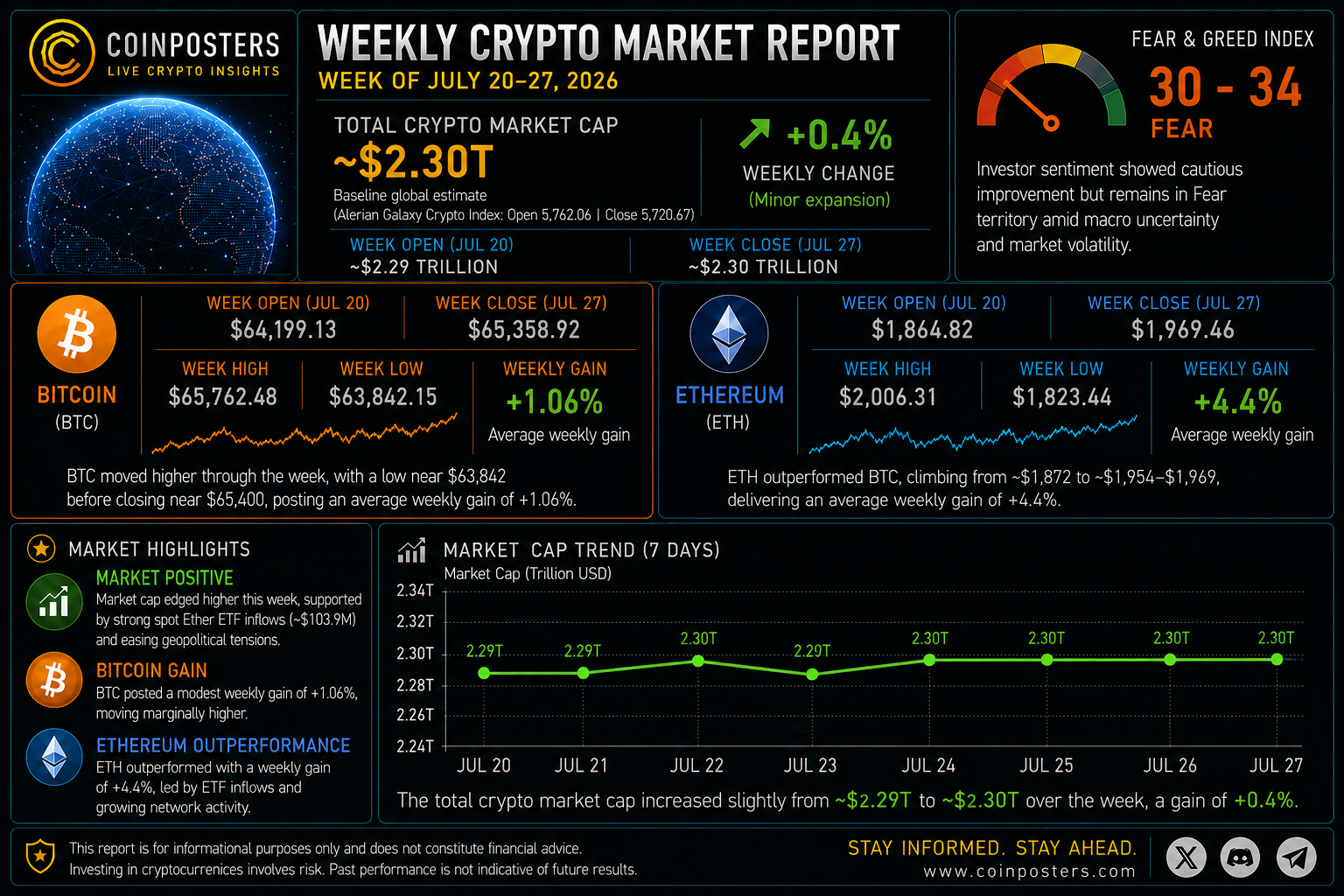
The risks broadly fall into three categories: technical risk (smart contract exploits), platform risk (centralized counterparty failures), and market risk (price volatility eroding real returns). Each one has played out in real, costly ways for investors who didn’t fully account for them before deploying capital. For more insights, you might want to explore the crypto market report to understand the broader market trends.
Smart Contract Vulnerabilities and What They Cost Investors
Smart contracts are only as secure as the code they’re written in. Vulnerabilities in DeFi protocols have resulted in hundreds of millions of dollars in losses. The Ronin Network hack in 2022 resulted in approximately $625 million stolen. The Poly Network exploit in 2021 saw over $600 million drained in a single attack, though the funds were eventually returned in that specific case. Before depositing into any DeFi protocol, check whether its smart contracts have been audited by reputable firms like CertiK or Trail of Bits, how long the protocol has been running without incident, and what its total value locked (TVL) history looks like.
Counterparty Risk on Centralized Platforms
The collapse of Celsius Network in 2022 wiped out billions in customer deposits that were supposed to be earning passive income. Users had deposited crypto expecting steady interest payments, and instead found their funds frozen and eventually lost in bankruptcy proceedings. Celsius was a centralized platform, meaning users trusted the company, not a transparent smart contract. The lesson is stark: on centralized platforms, your crypto is not truly yours once deposited. You’re an unsecured creditor.
This doesn’t mean centralized platforms are always wrong for passive income. It means you need to treat them like counterparty exposure, limit concentration, choose only regulated and well-capitalized platforms, and never deposit funds you can’t afford to have locked for an extended period.
How Market Volatility Affects Your Real Returns
Earning yield does not protect you from losing money, it offsets losses but rarely eliminates them during severe market downturns.
Market volatility is the most persistent threat to passive crypto income returns, and it operates in a way that’s easy to underestimate. You might stake Solana at 7% APY, but if SOL drops 40% in value during your staking period, your real return, measured in dollars, is deeply negative despite the yield you earned. The rewards are denominated in the same asset you staked, so price movements amplify or destroy your actual gains regardless of the APY figure.
The practical defense against this is stablecoin-denominated strategies. When you lend USDC or provide liquidity in a stablecoin pool, your principal doesn’t fluctuate with the market. You earn yield in dollar terms, and you withdraw in dollar terms. This is why experienced DeFi participants often rotate a meaningful portion of their passive income allocation into stablecoin strategies during periods of high market uncertainty, not because the yields are always higher, but because the real return is far more predictable.
How to Start Earning Passive Crypto Income Today
Getting started with passive crypto income doesn’t require a technical background or a large amount of capital. The barrier to entry has dropped dramatically as platforms have simplified the user experience. What it does require is a methodical approach, starting with the least complex, lowest-risk strategies before moving into more sophisticated DeFi territory.
Your first step is securing a reputable exchange or wallet that supports the strategy you’re targeting. For staking, platforms like Coinbase, Kraken, and CoinMetro offer user-friendly interfaces that let you stake directly without managing your own validator node. For DeFi lending and yield farming, you’ll need a self-custody wallet like MetaMask and a basic understanding of how to interact with protocols like Aave or Uniswap V3.
Before you deploy a single dollar, define your risk tolerance clearly. Passive income strategies exist on a spectrum, from conservative stablecoin lending at 4% APY all the way to high-risk liquidity mining at 40%+ APY. Where you sit on that spectrum should be determined by how much you can afford to lose, not by how much you want to earn. Set that boundary first, then select strategies that fit within it.
Start Small and Scale Gradually
Regardless of how confident you feel, start with a small test allocation, ideally no more than 5% to 10% of your total crypto portfolio, when entering any new passive income strategy for the first time. This lets you verify that the platform works as expected, understand the actual mechanics of deposits and withdrawals, and identify any unexpected fees or lock-up complications before committing significant capital. Once you’ve run a strategy successfully through a full cycle (including a withdrawal), scaling up is a far less risky proposition. Many experienced DeFi participants still follow this discipline with every new protocol they explore, regardless of how established it appears.
How to Diversify Across Multiple Passive Income Strategies
Concentrating all your passive income activity in a single strategy or platform introduces unnecessary platform-specific risk. A well-structured passive crypto income portfolio spreads exposure across multiple methods, asset types, and risk levels simultaneously. A reasonable allocation framework might look like this:
A Sample Diversified Passive Income Allocation
| Allocation | Strategy | Risk Level |
|---|---|---|
| 40% to 50% | Stablecoin lending on established platforms like Aave | Low, predictable dollar-denominated returns |
| 20% to 30% | Staking blue-chip assets like ETH or SOL | Moderate, rewards in assets you’d hold anyway |
| 10% to 20% | Liquidity provision on established DEXs | Moderate to higher, higher yield potential |
| 10% to 20% | Long-term HODLing of high-conviction assets | No yield, but capital appreciation upside |
This isn’t a one-size-fits-all prescription, your personal allocation should reflect your specific risk appetite, time horizon, and tax situation. But the underlying principle holds: diversification across passive income strategies reduces the damage any single failure can cause, while still allowing meaningful overall portfolio yield.
Crypto passive income is not a myth, and it’s not a shortcut to effortless riches. It’s a legitimate financial toolkit, one that rewards investors who take the time to understand how each mechanism works, what risks are attached, and how to size their exposure accordingly. The strategies covered here, staking, yield farming, lending, cloud mining, and long-term holding, each represent a real, functioning part of the blockchain economy that pays participants for providing value to the network.
The investors who build sustainable passive crypto income streams are not the ones chasing the highest APY they can find. They’re the ones who prioritize capital preservation first, understand the risk-adjusted return of every strategy they deploy, and build diversified income portfolios that can survive a bear market without being wiped out. Start conservative, scale with knowledge, and let compounding do the heavy lifting over time.
Frequently Asked Questions
What Is the Safest Way to Earn Passive Income With Crypto?
The safest way to earn passive income with crypto is lending or saving stablecoins through established, well-audited platforms. Because stablecoins like USDC and USDT are pegged to the US dollar, your principal doesn’t fluctuate with crypto market movements. Platforms like Aave and Compound have operated for multiple years with extensive smart contract audits, making them among the more battle-tested options in DeFi.
Staking blue-chip assets like Ethereum through major regulated exchanges is the next safest tier. You accept price volatility on the staked asset, but the staking mechanism itself is straightforward, and the counterparty risk on large regulated exchanges is substantially lower than on smaller DeFi protocols.
How Much Can You Realistically Earn Passively From Crypto?
Realistic passive crypto income ranges from approximately 3% to 20% APY depending on your chosen strategy, the assets involved, and current market conditions. The conservative end of that range, stablecoin lending and blue-chip staking, is where most risk-adjusted returns actually land for careful investors. The high end, aggressive yield farming with volatile token pairs, is achievable in some market conditions but comes with proportionally higher risk of loss.
For context, if you deploy $10,000 across a diversified passive income portfolio averaging 7% APY, you’d generate approximately $700 in annual yield. At $50,000 deployed at the same rate, that figure climbs to $3,500. Compounding those rewards back into the same strategies accelerates growth over time. The returns are meaningful, but they’re not “get rich quick” numbers at moderate capital levels.
- Stablecoin lending: 3% – 10% APY
- Blue-chip staking (ETH, SOL, ADA): 3% – 8% APY
- Liquidity provision on established DEXs: 5% – 15% APY
- High-risk yield farming: 15% – 50%+ APY (with significantly elevated risk)
- Cloud mining: Highly variable; profitability depends on contract terms and market prices
These ranges represent realistic steady-state conditions. During bull markets, rates spike, and during bear markets, they often compress. Building your income projections around the lower end of these ranges keeps your expectations grounded in sustainable reality.
Can You Lose Money While Earning Passive Crypto Income?
Yes, and this is critical to understand before deploying any capital. Smart contract exploits can drain protocol funds entirely. Centralized platforms can freeze withdrawals and enter bankruptcy. Impermanent loss can make a yield farming position less profitable than simply holding the underlying tokens. And even while earning 8% APY in staking rewards, a 50% price drop in the staked asset produces a deeply negative real return. Earning yield does not protect you from losing money, it offsets losses but rarely eliminates them during severe market downturns.
Do You Need a Lot of Money to Start Earning Passive Crypto Income?
No, most passive income strategies in crypto have no meaningful minimum investment. You can stake Cardano (ADA) with any amount, supply as little as $50 in stablecoins to Aave, or add a small position to a Uniswap V3 liquidity pool. The barrier is knowledge, not capital.
That said, small positions generate small absolute returns. Earning 6% APY on $500 is $30 per year, meaningful for learning the mechanics, but not life-changing income. The practical path is to start small to learn the system, then scale your allocation as your confidence and understanding grow. Capital builds over time, and the skills you develop managing a small passive income portfolio are directly transferable when the numbers get larger. For more insights on effective strategies, consider exploring dollar-cost averaging vs lump sum investing in crypto.
Is Passive Crypto Income Taxable?
In most jurisdictions, yes. In the United States, staking rewards, lending interest, and yield farming income are generally treated as ordinary income at the time they’re received, based on the fair market value of the tokens at receipt. This means you owe income tax on rewards even if you don’t sell them, a cash flow consideration worth planning for, especially in high-APY strategies.
When you eventually sell your earned tokens, any gain above the value at which they were taxed as income becomes a capital gain. This creates a two-layer tax event, income tax on receipt, capital gains tax on sale, that makes tax-loss harvesting and record-keeping essential components of any serious passive crypto income strategy.
Tax treatment varies significantly by country, and the regulatory landscape for crypto taxation continues to evolve. Consulting a tax professional familiar with cryptocurrency is strongly recommended before deploying significant capital into any passive income strategy.
DYOR Disclaimer: This article is for informational and educational purposes only and does not constitute financial, investment, or tax advice. APY figures, protocol examples, and third-party platforms mentioned are subject to change and should be independently verified before you deploy capital. Cryptocurrency passive income strategies carry real risk of loss, including total loss of principal. Always do your own research (DYOR) and consult a qualified financial and tax advisor before making investment decisions.