Coinposters
CoinDesk vs Bloomberg Crypto News: Which Source Delivers Better Market Intelligence in 2026?

CoinDesk generally wins for crypto-native traders and DeFi participants who need protocol-level depth, while Bloomberg Crypto wins for institutional investors and portfolio managers who need digital assets connected to macro markets. For a deeper look at building your own strategy around either source, see this guide to crypto investment strategies.
Article At A Glance: CoinDesk vs Bloomberg Crypto in 2026
- CoinDesk leads in protocol-level depth, covering Web3 developments, on-chain data, and regulatory developments like the pending CLARITY Act with a frequency and granularity Bloomberg simply doesn’t match.
- Bloomberg Crypto connects digital assets to macro forces, think ETF flows, interest rate expectations, and equity correlations, making it the go-to for institutional and portfolio-level decision-making.
- Your trading or investment strategy should determine your source, crypto builders and daily traders will find CoinDesk more actionable, while macro strategists and enterprise investors will lean Bloomberg.
- CoinDesk Data publishes institutional-grade research reports, including exchange reviews and stablecoin analysis, that most retail traders overlook entirely.
- There’s a case for using both, and how you combine them could be the edge that separates informed decisions from reactive ones in 2026’s volatile market landscape.
Table of Contents
- Two Different Beasts, One Goal: Better CoinDesk vs Bloomberg Crypto Intelligence
- What CoinDesk Actually Covers in 2026
- What Bloomberg Crypto Brings to the Table
- Head-to-Head: Market Intelligence Comparison
- Who Should Use CoinDesk
- Who Should Use Bloomberg Crypto
- CoinDesk Data: The Institutional Layer Most Traders Miss
- The Verdict: Pick Your Source Based on Your Strategy
- Frequently Asked Questions
Your crypto news source isn’t just a preference, it’s a strategic decision that directly shapes how you read the market, and the CoinDesk vs Bloomberg Crypto choice is one of the biggest calls you’ll make.
In 2026, the two dominant forces in crypto financial intelligence are CoinDesk and Bloomberg Crypto. They both cover digital assets, but they’re built for fundamentally different readers with fundamentally different goals. One is native to the crypto ecosystem, tracking protocols and tokenomics from the inside. The other applies a century of financial journalism infrastructure to decode Bitcoin through the same lens it uses for equities and commodities.
Neither is universally better. But one is almost certainly better for you, and understanding the difference could sharpen every market call you make this year.
Two Different Beasts, One Goal: Better CoinDesk vs Bloomberg Crypto Intelligence
CoinDesk was built from the ground up for the crypto industry. It speaks the language of validators, liquidity pools, and governance votes. Bloomberg Crypto is an extension of the world’s most powerful financial data terminal, translating digital assets into the vocabulary of institutional capital allocation.
That distinction matters more in 2026 than it ever has. With Bitcoin ETFs now deeply embedded in traditional portfolios, regulatory frameworks like the pending CLARITY Act working their way through Congress to reshape the U.S. market, and institutional inflows hitting new benchmarks, the gap between “crypto-native news” and “macro-financial crypto coverage” has never been wider, or more consequential.
What CoinDesk Actually Covers in 2026
CoinDesk remains the closest thing the crypto industry has to an industry-specific financial newspaper of record. Its editorial scope spans breaking market news, deep-dive technology analysis, regulatory developments, and community sentiment, all within a single platform that also houses professional-grade data tools.
Protocol-Level and Web3 Coverage
CoinDesk tracks protocol upgrades, Layer 2 developments, DeFi liquidity shifts, and DAO governance decisions with a depth that no traditional financial outlet comes close to replicating. When a major Ethereum upgrade hits or a new consensus mechanism is proposed, CoinDesk already has context-rich analysis live, not a wire summary written by someone who learned what a validator is last Tuesday.
This matters enormously for anyone actively participating in the Web3 ecosystem, whether you’re a developer, a liquidity provider, or a trader whose edge depends on understanding protocol mechanics before price action reflects them.
On-Chain Data, Indices, and Sector Sentiment
Through CoinDesk Data, the platform delivers institutional-grade crypto data streamed live from over 300 exchanges via its API. It publishes proprietary indices and sector-specific sentiment tracking tools tailored specifically for crypto-native operators, not retrofitted from equity market models. If you’re making decisions based on market structure rather than headlines, this layer of CoinDesk is where real signal lives.
Regulatory Tracking: The CLARITY Act and Beyond
CoinDesk has been among the most consistent trackers of the CLARITY Act, the landmark U.S. legislation working its way through Congress that would reshape how digital assets are classified and regulated. Its regulatory coverage isn’t just reactive; it provides granular legislative analysis, stakeholder commentary, and downstream implications for specific token categories. For any operator navigating compliance in 2026, this coverage is practically required reading.
What Bloomberg Crypto Brings to the Table
Bloomberg Crypto operates in a different dimension entirely. It doesn’t try to out-CoinDesk CoinDesk. Instead, it does something arguably more valuable for a specific type of reader: it contextualizes digital assets within the broader global financial system with a precision and data infrastructure that is genuinely unmatched.
Macro-Financial Lens on Digital Assets
When Bitcoin drops 12% in 48 hours, CoinDesk will tell you what happened on-chain. Bloomberg will tell you why it happened in the context of Fed policy signals, dollar strength, and institutional risk-off behavior across asset classes. That macro framing is Bloomberg Crypto’s core competitive advantage, and for portfolio managers or anyone trading crypto alongside traditional assets, it’s not a nice-to-have, it’s essential. For those interested in managing crypto risk, check out these crypto risk management rules for active traders.
ETF, Futures, and Institutional Positioning Data
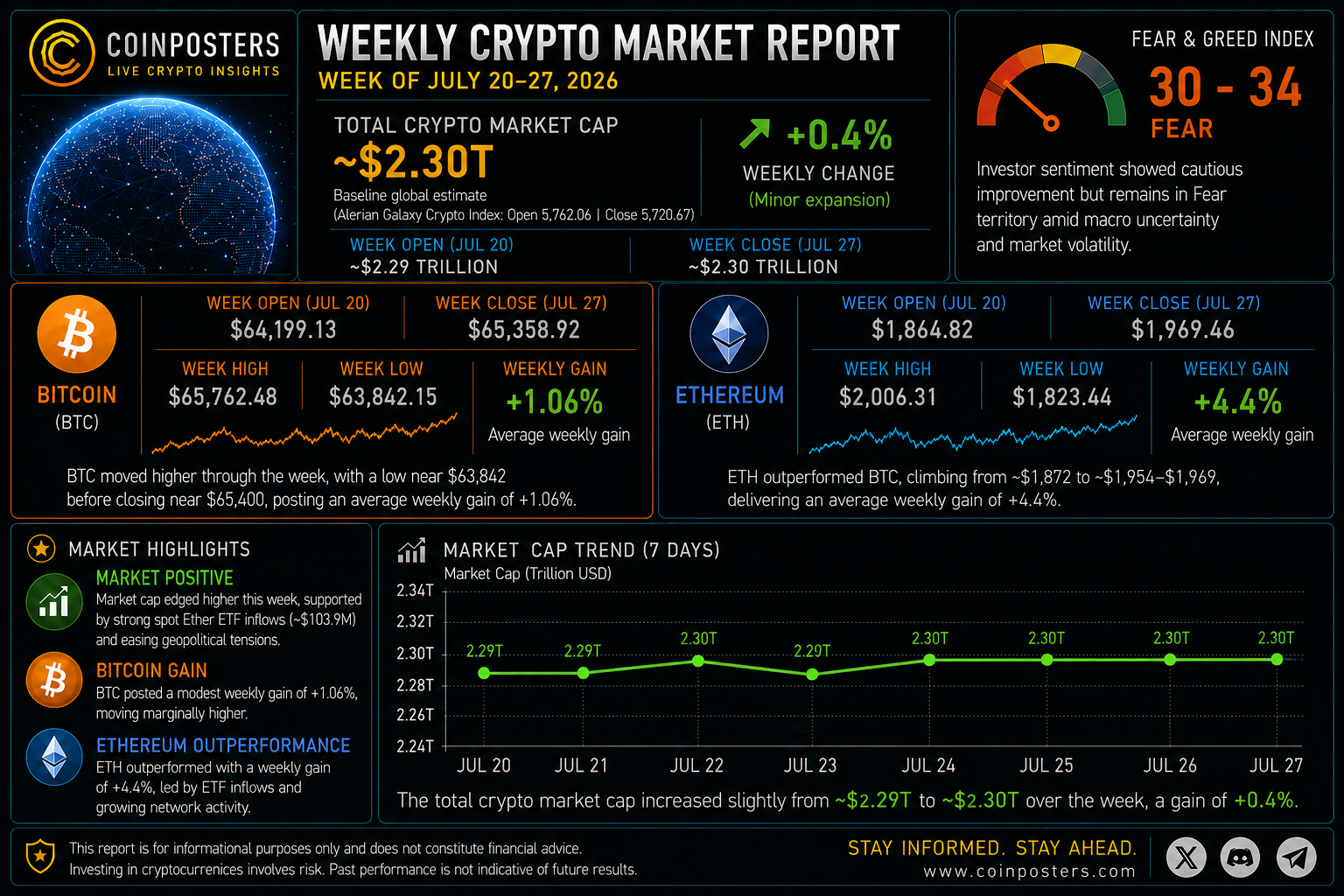
Bloomberg Crypto’s coverage of Bitcoin and Ethereum ETFs is comprehensive and analytically rigorous. It tracks futures curve structures, open interest dynamics, and institutional positioning in ways that directly inform how large capital flows are moving through the crypto market. This is the kind of intelligence that retail platforms rarely surface with the same depth or speed. For insights into recent market trends, you can refer to the crypto market report.
For anyone managing a portfolio where crypto represents one allocation among many, equities, bonds, commodities, Bloomberg’s ability to map digital assets onto the same analytical framework as everything else is a significant operational advantage.
Terminal-Grade Data Integration
Bloomberg Terminal subscribers get crypto data integrated directly alongside every other asset class in the world. That means real-time price feeds, historical datasets, correlation tools, and custom alert systems, all within the same environment a fund manager uses to monitor their entire book. For enterprise-level users, this integration eliminates friction and enables the kind of multi-asset analysis that simply isn’t possible on standalone crypto platforms.
The Terminal also enables cross-asset correlation modeling. You can pull Bitcoin price history against 10-year Treasury yields, S&P 500 volatility indices, or global M2 money supply, the kind of macro stress-testing that is increasingly relevant as crypto matures into a recognized asset class. For those interested in optimizing their strategies, exploring crypto indicators and chart patterns can provide valuable insights.
It’s worth noting that full Bloomberg Crypto intelligence requires a Terminal subscription, which carries significant cost, a barrier that makes this platform structurally inaccessible to most individual traders and small funds, regardless of how valuable the data is. For those looking to explore other strategies, understanding day trading vs swing trading in crypto might offer alternative ways to engage with the market.
- Bloomberg Terminal access: Required for full data integration and advanced analytics
- CoinDesk API access: Available for institutional clients via CoinDesk Data, with broader free editorial access
- Bloomberg free crypto coverage: Limited; most deep analysis sits behind the Terminal paywall
- CoinDesk newsletters: Free access to Crypto Daybook Americas, State of Crypto, and Crypto Long & Short
- CoinDesk Research Reports: Institutional-grade reports including the Exchange Review and Stablecoins & Tokenized Assets Report available via CoinDesk Data
Head-to-Head: Market Intelligence Comparison
Putting both platforms side by side reveals something important: they don’t actually compete for the same reader in most scenarios. Their strengths are complementary rather than contradictory. But where they do overlap, breaking news, Bitcoin price analysis, and regulatory coverage, the differences in approach and depth are stark enough to matter for how you act on that information.
The real question isn’t which platform is objectively better. It’s which one gives you a faster, clearer path from information to decision. That answer changes depending on what you’re trying to accomplish.
Breaking News Speed and Depth
CoinDesk has a structural speed advantage on crypto-native breaking news. Because its entire editorial team is focused exclusively on the digital asset space, protocol exploits, exchange outages, governance votes, and token delistings hit CoinDesk’s feed faster and with more immediate technical context than Bloomberg can typically match.
Bloomberg counters with superior speed on macro-driven crypto events. When the Federal Reserve signals a policy shift or a major sovereign wealth fund announces a Bitcoin allocation, Bloomberg’s global financial newswire infrastructure means that story, and its crypto market implications, is contextualized almost instantly for institutional readers.
For day traders and DeFi participants, CoinDesk’s breaking news edge is more operationally relevant. For macro-driven swing traders or fund managers, Bloomberg’s speed on systemic events is the more critical advantage.
Bitcoin Flows vs. Macro Shocks: Who Connects the Dots Better
This is where the platforms diverge most dramatically. CoinDesk excels at tracing on-chain Bitcoin flows, exchange inflows and outflows, whale wallet movements, miner selling pressure, and UTXO age distribution. These metrics give a granular picture of supply-side dynamics that directly precede price moves.
Bloomberg Crypto, by contrast, is superior at connecting Bitcoin price behavior to external macro shocks. When Bitcoin drops in correlation with a Nasdaq selloff or rallies alongside a weakening dollar, Bloomberg’s analytical framework explains those relationships with a precision rooted in decades of multi-asset market modeling.
Both perspectives are genuinely valuable, and here’s the honest take: the traders who consistently outperform are often the ones reading both. On-chain flow data from CoinDesk combined with Bloomberg’s macro correlation analysis creates a more complete picture than either source delivers alone.
Tokenomics and Protocol Mechanics Coverage
CoinDesk wins this category without serious competition. Its coverage of tokenomics, emission schedules, staking yields, liquidity incentive structures, and governance token dynamics, is native, detailed, and written by journalists who actively follow specific protocols over time. Bloomberg treats tokenomics as a secondary consideration at best, typically only engaging with it when a specific token makes headlines for macro-relevant reasons.
Equity Correlations and Interest Rate Context
Bloomberg dominates here, and it’s not particularly close. The ability to model Bitcoin’s rolling 90-day correlation to the S&P 500, map crypto volatility against VIX readings, or analyze how rate futures pricing affects institutional crypto appetite, that’s Bloomberg Terminal territory. CoinDesk acknowledges these relationships in its reporting, but the analytical depth and raw data infrastructure Bloomberg provides for cross-asset correlation work is simply in a different class.
| Platform | Best For | Free Access? | Data Depth | Macro Coverage |
|---|---|---|---|---|
| CoinDesk | Crypto-native traders, builders, DeFi participants | Yes (editorial + newsletters) | On-chain, protocol, indices | Moderate |
| Bloomberg Crypto | Institutional investors, macro strategists | Limited | ETF, futures, cross-asset | Institutional-grade |
Who Should Use CoinDesk
CoinDesk is built for anyone whose edge depends on understanding what’s happening inside the crypto ecosystem. That includes active traders monitoring DeFi protocols, developers tracking network upgrades, compliance teams following regulatory developments like the CLARITY Act, and retail investors who want professional-grade news without a five-figure Terminal subscription.
The platform’s free newsletter suite, including Crypto Daybook Americas, State of Crypto, and Crypto Long & Short, delivers a meaningful amount of actionable intelligence at zero cost. For crypto-native professionals who need daily sector coverage, CoinDesk is the default choice, and its Research and Insights reports add an institutional layer that elevates it well beyond a standard news outlet.
Who Should Use Bloomberg Crypto
Bloomberg Crypto is purpose-built for readers who view digital assets as one component of a broader, multi-asset investment universe, not as a standalone market to be understood on its own terms.
Enterprise Investors and Portfolio Managers
If you’re allocating capital across Bitcoin ETFs, traditional equities, fixed income, and commodities simultaneously, Bloomberg’s integrated Terminal environment is genuinely indispensable. The ability to run crypto analytics inside the same platform you use to monitor your entire portfolio eliminates the analytical friction that comes from portfolio rebalancing from multiple sources, and at institutional scale, that friction has real dollar cost.
Macro Strategists Treating Crypto as an Asset Class
For strategists whose mandate includes assessing Bitcoin’s role in a global liquidity cycle, modeling its behavior under different interest rate regimes, or evaluating crypto exposure as a hedge against currency debasement, Bloomberg provides the data infrastructure that makes those analyses credible and reproducible. CoinDesk simply wasn’t built for that use case, and it doesn’t pretend to be.
CoinDesk Data: The Institutional Layer Most Traders Miss
Most casual CoinDesk readers consume the editorial content and stop there, completely overlooking the platform’s most powerful offering. CoinDesk Data is a dedicated institutional data infrastructure that streams live market data from over 300 exchanges, publishes proprietary research reports, and provides indices used by professional operators across the digital asset industry. The Exchange Review June 2026 report and the Stablecoins & Tokenized Assets Report are two recent examples of the kind of data-driven institutional analysis that rivals what you’d expect from a dedicated financial research firm, not a news outlet.
Exchange Review Reports and Volume Tracking
CoinDesk Data publishes its Exchange Review on a regular cadence, the June 2026 edition being one of the most recent. These reports go well beyond surface-level volume rankings. They analyze liquidity depth, fee structures, market maker activity, and cross-exchange arbitrage dynamics using data aggregated from over 300 exchanges. For traders evaluating where to execute large positions, this kind of structural market intelligence is genuinely difficult to source anywhere else at this level of specificity.
The Exchange Review reports are particularly valuable for institutional operators managing execution risk across multiple venues. Understanding which exchanges carry real liquidity versus which are inflating volume metrics is a distinction that directly affects slippage, fill rates, and ultimately, trade profitability. CoinDesk Data’s methodology for separating real from artificial volume has become a recognized standard in the industry.
Stablecoins and Tokenized Assets Coverage
The Stablecoins & Tokenized Assets Report published by CoinDesk Data in June 2026 represents one of the most comprehensive publicly available analyses of the stablecoin landscape and the accelerating tokenization of real-world assets. It covers market share dynamics between USDT, USDC, and emerging institutional stablecoins, alongside a rigorous breakdown of tokenized asset categories including Treasuries, real estate, and private credit. As tokenized assets move from niche experiment to mainstream institutional infrastructure, this report sits at the intersection of traditional finance and on-chain markets in a way very few research products manage effectively.
The Data layer is the part of CoinDesk most professional operators discover last, but end up relying on most.
The Verdict: Pick Your Source Based on Your Strategy
CoinDesk is the sharper tool for anyone operating inside the crypto ecosystem, traders, builders, DeFi participants, and compliance-focused professionals who need daily protocol-level intelligence. Bloomberg Crypto is the right choice for institutional investors, macro strategists, and portfolio managers who need digital asset analysis woven into the broader fabric of global financial markets. If your budget and workflow allow it, using both in tandem, CoinDesk for on-chain depth, Bloomberg for macro context, creates a market intelligence stack that covers the full spectrum of what drives crypto prices in 2026. The worst move is treating either one as a complete picture on its own.
Frequently Asked Questions
The most common question readers ask is a simple one: which platform should I actually open every morning? The honest answer depends entirely on whether your first question of the day is “what happened on-chain overnight?” or “how is macro risk sentiment positioning crypto relative to equities?” Those two questions live in different analytical worlds, and the platform you choose should match the world you operate in. For those interested in understanding crypto risk management, CoinDesk might be more aligned with your needs.
Both platforms have evolved significantly heading into 2026. CoinDesk has deepened its data infrastructure through CoinDesk Data while maintaining its editorial breadth. Bloomberg has progressively integrated crypto more deeply into its Terminal environment, reflecting the institutionalization of digital assets as a recognized asset class. Neither is standing still, which makes the comparison more dynamic than it was even two years ago.
What hasn’t changed is the fundamental reader profile each platform serves best. Crypto-native professionals continue to find Bloomberg’s macro framing intellectually interesting but operationally distant from the decisions they make daily. Institutional investors, conversely, find CoinDesk’s protocol-level coverage granular and valuable but disconnected from the cross-asset framework they actually use to allocate capital. That gap is unlikely to close entirely, and it’s exactly why the right answer for serious participants often involves both.
Is CoinDesk Reliable for Professional Crypto Traders in 2026?
Yes. CoinDesk is one of the most reliable sources of crypto-native market intelligence available to professional traders in 2026. Its editorial team covers protocol developments, regulatory changes, and market structure with consistent depth, and its CoinDesk Data layer, streaming live data from 300+ exchanges, adds a quantitative dimension that elevates it well beyond a standard news outlet. The Exchange Review reports and sector-specific research are used by institutional operators as primary reference documents, not supplementary reading.
The platform’s free newsletter suite, Crypto Daybook Americas, State of Crypto, and Crypto Long & Short, provides a meaningful daily intelligence briefing without any subscription cost. For professional traders who need protocol-level signal delivered fast and with context, CoinDesk remains the benchmark crypto-native source in 2026.
Does Bloomberg Crypto Require a Terminal Subscription to Access Crypto News?
For the full depth of Bloomberg Crypto’s analytical capability, including cross-asset correlation tools, institutional positioning data, futures curve analysis, and integrated Terminal data feeds, yes, a Bloomberg Terminal subscription is required. Bloomberg does publish some crypto news content through its general website that is accessible without a subscription, but the analytical rigor and data integration that makes Bloomberg Crypto genuinely valuable to institutional users lives exclusively behind the Terminal paywall. For individual traders and small funds, the Terminal’s cost structure makes it prohibitive, which is a structural reality worth factoring into any platform comparison.
Which Platform Covers Altcoins and DeFi Protocols Better?
CoinDesk covers altcoins and DeFi protocols with a depth and consistency that Bloomberg Crypto does not attempt to match. Bloomberg’s crypto coverage concentrates heavily on Bitcoin and Ethereum as macro-relevant assets, with altcoin and DeFi coverage appearing primarily when specific tokens generate institutional-scale news flow. CoinDesk, by contrast, maintains ongoing coverage of a broad spectrum of protocols, governance developments, liquidity dynamics, and tokenomics across the entire digital asset ecosystem.
For anyone whose activity extends beyond Bitcoin and ETH, whether you’re yield farming, providing liquidity on a DEX, or evaluating Layer 2 token exposure, CoinDesk is categorically the better-equipped source. Specific areas where CoinDesk’s altcoin and DeFi coverage excels include the kind of on-the-ground crypto market reports that provide valuable insights for informed decision-making.
- Layer 2 protocol upgrades, sequencer changes, fee restructuring, and bridging infrastructure updates covered in real time
- DAO governance votes, proposal analysis and outcome tracking across major decentralized protocols
- DeFi liquidity events, incentive launches, liquidity migrations, and TVL shifts across major protocols
- Tokenomics analysis, emission schedules, vesting unlock timelines, and staking yield dynamics
- New token launches, including regulatory classification considerations under the proposed CLARITY Act framework
Bloomberg may occasionally publish macro-relevant commentary on a major DeFi protocol, but it lacks the sustained editorial infrastructure to track these ecosystems over time with the granularity that active DeFi participants actually need.
Can I Use Both CoinDesk and Bloomberg Crypto Together Effectively?
| Use Case | Primary Source | Secondary Source |
|---|---|---|
| Daily protocol and DeFi tracking | CoinDesk | N/A |
| Bitcoin macro positioning | Bloomberg Crypto | CoinDesk on-chain data |
| Regulatory intelligence | CoinDesk | Bloomberg for institutional response coverage |
| ETF and futures analysis | Bloomberg Crypto | N/A |
| Altcoin and tokenomics research | CoinDesk | N/A |
| Cross-asset portfolio decisions | Bloomberg Crypto | CoinDesk Data reports |
Absolutely, and for serious market participants, combining both platforms is arguably the most sophisticated approach available in 2026. The two sources cover fundamentally different dimensions of the same market, which means their outputs are additive rather than redundant.
A practical workflow that many professional traders use is to start the morning with CoinDesk’s Crypto Daybook Americas newsletter for a rapid-fire briefing on overnight on-chain developments, protocol news, and regulatory updates. Bloomberg Crypto then provides the macro overlay, rate expectations, institutional flow data, and cross-asset risk positioning, that gives those on-chain developments their broader market context.
The most actionable intelligence often emerges at the intersection. When CoinDesk’s on-chain data shows sustained Bitcoin exchange outflows, a historically bullish supply signal, while Bloomberg’s macro analysis indicates institutional risk appetite is expanding, those two data streams together create a higher-conviction setup than either would signal alone. That kind of layered analysis is what separates informed positioning from reactive trading.
The primary constraint on combining both platforms is Bloomberg’s Terminal cost. For individual traders, the most practical approach is pairing CoinDesk’s free editorial and newsletter content with CoinDesk Data reports for professional-grade research, while selectively accessing Bloomberg’s public-facing crypto coverage for macro context, capturing a significant portion of the combined intelligence value without the Terminal subscription overhead.
Does CoinDesk Publish Institutional-Grade Data Reports?
Yes, and this is one of the most underappreciated aspects of the CoinDesk platform. CoinDesk Data operates as a dedicated institutional data infrastructure layer, publishing research reports that are used as primary reference documents by professional operators across the digital asset industry. The most recent examples include the Exchange Review June 2026, a rigorous analysis of exchange volume, liquidity, and market structure across 300+ venues, and the Stablecoins & Tokenized Assets Report June 2026, which provides comprehensive coverage of stablecoin market dynamics and the accelerating tokenization of real-world assets.
Beyond periodic research reports, CoinDesk Data provides a live API delivering institutional-grade crypto market data streamed from over 300 exchanges, proprietary indices, and sector-specific analytical tools designed for professional operators. These aren’t retail-facing dashboards; they’re data infrastructure products built to the specifications that funds, exchanges, and market makers actually require.
For institutional professionals who assumed CoinDesk was primarily an editorial news outlet, the Data layer represents a meaningful re-evaluation of the platform’s capabilities. You can explore the full research and data suite at CoinDesk Data’s Research and Insights page, it’s the part of the platform that most professional operators discover last, but end up relying on most.
Staying ahead in crypto means reading the market through the right lens, and CoinDesk gives crypto enthusiasts, traders, and institutional operators the data infrastructure, breaking news coverage, and research depth needed to make that possible every single day.
DYOR Disclaimer: This article is for informational and educational purposes only and does not constitute financial or investment advice. Legislative status, including the CLARITY Act, and platform pricing or features mentioned are subject to change and should be independently verified before making decisions based on them. Always do your own research (DYOR) and consult a qualified financial advisor before making investment decisions.