Coinposters
Biggest Crypto Trading Mistakes Beginners Make in 2026 and How to Avoid Them

The biggest crypto trading mistakes beginners make in 2026, skipping research, trading on emotion, ignoring risk management, and misusing leverage, are almost entirely avoidable once you know what to watch for, and fixing them is the single biggest lever on whether you survive long enough to become profitable.
Article at a Glance
Here’s the short version of the biggest crypto trading mistakes beginners make:
- The most common beginner crypto trading mistake is skipping research and buying based on hype or social media buzz, this alone wipes out more accounts than any market crash.
- Emotional trading, particularly FOMO-driven buying at market peaks, is one of the fastest ways to lose capital in 2026’s faster, more algorithm-driven crypto markets.
- Risk management is not optional, beginners who ignore stop-loss orders and position sizing are one bad trade away from losing everything.
- Crypto scams have become more sophisticated in 2026, and knowing how to spot them before you invest could save your entire portfolio.
- There is one mistake that quietly destroys more beginner accounts than all the others combined, and most beginners never even realize they are making it.
Table of Contents
- Most Beginners Lose Money Before They Learn These Lessons
- 1. Skipping Research and Buying on Hype
- 2. Trading Based on Emotions and FOMO
- 3. Ignoring Risk Management Completely
- 4. Using Leverage Without Experience
- 5. Neglecting Wallet and Exchange Security
- 6. Falling for Crypto Scams and Fraudulent Projects
- 7. Trading With No Strategy or Plan
- 8. Ignoring Transaction Fees and Hidden Costs
- 9. Focusing Only on Short-Term Gains
- The Biggest Mistake Is Thinking You Can Skip the Learning Curve
- Frequently Asked Questions
Most Beginners Lose Money Before They Learn These Lessons
Most people enter crypto trading with high hopes and exit with hard lessons, but the good news is that nearly every costly mistake is avoidable if you know what to look for. This guide covers the biggest crypto trading mistakes beginners make, and how to fix each one before it costs you.
The crypto market in 2026 is faster, more competitive, and more unforgiving than ever before. Institutional players, algorithmic bots, and experienced traders are on the other side of almost every beginner trade. That does not mean you cannot succeed, it means the margin for error is smaller, and the old rookie mistakes hit harder and faster than they did even two or three years ago.
This guide exists to close that gap. Whether you have just bought your first coin or you are a few months in and wondering why your portfolio keeps bleeding, understanding these mistakes and how to fix them is the single most important step you can take right now.
Why Crypto Mistakes Hit Harder in 2026
The 2026 crypto landscape has matured significantly, but that maturity cuts both ways. On one side, there are more legitimate projects, clearer regulations in many regions, and better trading tools available to retail investors. On the other side, the market moves faster, scams are more convincing, and the emotional traps are more engineered than ever. Social media algorithms now actively amplify hype cycles, meaning a coin can go from obscure to overhyped in hours, pulling unprepared beginners in right at the worst possible time.
What Separates Traders Who Survive From Those Who Don’t
It is rarely raw intelligence or even market knowledge that separates survivors from those who blow up their accounts. It comes down to discipline, process, and the ability to manage risk before a bad trade becomes a catastrophic one. The traders who last are not the ones who never make mistakes, they are the ones who build systems that keep single mistakes from destroying everything.
1. Skipping Research and Buying on Hype
Buying a coin because someone on social media said it would “10x” is not investing, it is gambling with extra steps. Lack of research is the single most cited mistake across experienced crypto traders when reflecting on their early days, and in 2026, the hype machine is louder than it has ever been.
Before putting a single dollar into any project, you should be able to answer these basic questions: Are you familiar with investment strategies such as dollar-cost averaging vs. lump sum?
- What problem does this project actually solve?
- Who is on the development team, and are they publicly verifiable?
- What is the total supply, and how is it distributed?
- Is there a working product, or just a whitepaper and promises?
- What does the on-chain activity and transaction volume actually look like?
If you cannot answer those questions after 30 minutes of research, that is a signal, not to dig deeper, but to walk away entirely.
How to Spot a Project Worth Investing In
Legitimate projects have verifiable teams, open-source code that has been audited by reputable third-party firms, and real use cases that extend beyond speculation. Look at the project’s GitHub activity to see if developers are actively building. Check whether the whitepaper is original or copied from another project, a tactic that has been used repeatedly in low-effort scam coins. Community engagement should feel organic, not manufactured through coordinated Telegram pump groups.
Tokenomics matter more than most beginners realize. A coin where 60% of the supply is held by the founding team is a red flag regardless of how exciting the pitch sounds. Look for a distribution model that incentivizes long-term growth rather than early-investor exits at your expense.
Red Flags to Check Before You Buy Any Coin
Some warning signs are easy to miss when excitement takes over. Watch out for anonymous teams with no track record, promises of guaranteed returns, aggressive influencer promotion without disclosure, and launch structures that reward early insiders disproportionately. If a project’s entire marketing strategy is built around urgency, “buy now before it’s too late,” that urgency is manufactured to bypass your critical thinking. Slow down. The good opportunities do not disappear in 24 hours.
2. Trading Based on Emotions and FOMO
Fear of Missing Out is not just a feeling, in crypto trading, it is a mechanism that transfers money from impulsive beginners to patient, strategic traders. FOMO buying happens when a coin has already made a significant move upward and you jump in because you cannot stand watching others profit. The problem is that by the time most beginners hear about a rally, the smart money is already preparing to sell into that excitement.
Emotional trading also shows up on the downside as panic selling, dumping an asset at a loss the moment the price drops, only to watch it recover days later. Both behaviors are driven by the same root cause: making decisions based on how you feel rather than what your plan says.
“The FOMO buyer funds the exit of the early investor.”
What FOMO Actually Costs You in Real Money
Consider a straightforward scenario: a token runs 40% in a single day due to a viral social media post. A FOMO buyer jumps in near the top. The next 72 hours see a 35% correction as early holders take profits. The FOMO buyer is now down significantly, holding a coin they did not research, bought for the wrong reasons, with no exit plan in place.
This cycle repeats constantly in crypto markets. The numbers change, but the pattern is almost identical every time. The FOMO buyer funds the exit of the early investor. Understanding this dynamic is one of the most valuable things a beginner can internalize early.
Emotional decisions also compound over time. Each impulsive trade that loses money tends to trigger another emotional trade, either revenge trading to recover losses quickly, or panic-driven inaction when a planned trade should have been executed. Left unchecked, emotional trading becomes a destructive loop.
How to Build Emotional Discipline as a Beginner
The most practical solution is removing emotion from the equation before a trade even happens. Set your entry price, your target exit, and your stop-loss before you buy, not after. Write it down. When the market moves and your emotions spike, refer back to the plan you made when your head was clear. This simple habit alone puts you ahead of a large portion of retail traders in the market.
3. Ignoring Risk Management Completely
You can have a winning strategy and still blow up your account if your risk management is poor. Risk management is the framework that ensures no single trade, no matter how confident you feel, can do irreparable damage to your portfolio. Most beginners skip this entirely because it feels like an advanced concept. It is not. It is the foundation everything else is built on.
The 1% Rule Every Beginner Should Know
The 1% rule is straightforward: never risk more than 1% of your total trading capital on a single trade. If your account holds $1,000, your maximum loss on any one trade should be capped at $10. This sounds conservative, and it is, intentionally. The goal is to ensure that even a losing streak of 10 consecutive trades only draws your account down by 10%, leaving you with enough capital to recover and continue trading. Professional traders use variations of this rule because it is the mathematical foundation of long-term survival in any market.
How Stop-Loss Orders Protect Your Capital
A stop-loss order automatically closes your trade when the price hits a level you define in advance. It removes the emotional decision of “should I hold or cut the loss?” from the equation entirely. Set your stop-loss when you enter the trade, place it at a level that reflects genuine market invalidation, not just a round number, and let it do its job. The biggest reason beginners avoid stop-losses is the fear of being stopped out before a reversal. That fear costs far more in blown accounts than stop-losses ever do in missed recoveries.
Why Diversification Is Not Optional in Crypto
Putting all your capital into a single coin is one of the fastest ways to go from excited beginner to frustrated quitter. Crypto assets are individually volatile in ways that traditional stocks simply are not, a single negative news event, a smart contract exploit, or a regulatory announcement can drop a coin 50% or more in hours. Spreading your capital across several uncorrelated assets does not eliminate risk, but it ensures that one catastrophic event does not end your trading journey entirely.
A practical starting point for beginners is allocating the majority of your crypto portfolio to established assets like Bitcoin and Ethereum, while keeping a smaller percentage in higher-risk altcoins. This structure gives you exposure to upside potential without concentrating all your risk in assets that can disappear overnight. As your knowledge and experience grow, you can adjust those allocations based on real research, not hope.
4. Using Leverage Without Experience
Leverage is one of the most dangerous tools available to beginner traders, and exchanges make it far too easy to access. At its core, leverage lets you control a position larger than your actual capital, a 10x leverage position means you are controlling $10,000 worth of an asset with only $1,000 of your own money. The appeal is obvious. The consequences are less obvious until it is too late. For those interested in trading strategies, understanding the difference between day trading and swing trading can be crucial.
What most beginners do not fully grasp until they experience it firsthand is that leverage amplifies losses just as aggressively as it amplifies gains. A 10% move against a 10x leveraged position wipes out 100% of your margin. In a market where 10% swings can happen in a single hour, that is not a rare scenario, it is a routine one.
How Leverage Can Wipe Out Your Account Overnight
Liquidation is the word every leveraged trader dreads, and beginners encounter it far more often than they expect. When your leveraged position moves against you far enough, the exchange automatically closes your trade to prevent your losses from exceeding your margin deposit. You do not get a warning call. You do not get a chance to react. The position is simply gone, and so is the capital backing it.
- 5x leverage: A 20% price move against you results in total liquidation of your margin.
- 10x leverage: A 10% price move against you wipes out your entire position.
- 20x leverage: A 5% move in the wrong direction is enough to liquidate your trade completely.
- 50x leverage: A 2% adverse move eliminates everything, in a market that regularly moves 2% in minutes.
These are not edge cases. They are the mathematical reality of how leverage works, and crypto markets are volatile enough to hit these thresholds regularly within a single trading session.
Beyond the math, leverage also intensifies the emotional pressure of trading. Watching a leveraged position move against you triggers stress responses that cause poor decision-making, holding too long hoping for a reversal, adding to losing positions, or abandoning a stop-loss that would have saved most of your capital. The combination of financial pressure and emotional decision-making is what turns a manageable loss into a total wipeout.
When Beginners Should Actually Start Using Leverage
The honest answer is: not yet. Before touching leverage, a beginner should have at least six months of consistent profitable trading using only spot positions, a fully documented trading plan with proven results, and a deep understanding of how liquidation mechanics work on the specific exchange they are using. Even then, starting with 2x leverage maximum and treating it as an advanced tool, not a shortcut, is the only responsible approach.
5. Neglecting Wallet and Exchange Security
Security is the part of crypto that beginners treat as optional until the day their funds disappear. Unlike a bank, there is no customer service line to call, no insurance to recover your assets, and no reversal button for a transaction that has already been confirmed on the blockchain. The responsibility for protecting your crypto sits entirely with you, and the cost of getting it wrong is permanent. To understand more about the costs involved, you can compare Bitcoin ATM vs. crypto exchange fees.
Hot Wallets vs. Cold Wallets: Which One You Need
A hot wallet is any wallet that is connected to the internet, including exchange wallets, browser extension wallets like MetaMask, and mobile app wallets. They are convenient for active trading but are exposed to online threats including exchange hacks, phishing attacks, and malware. A cold wallet, such as the Ledger Nano X or Trezor Model T, stores your private keys completely offline, making them essentially immune to remote hacking attempts. The rule is simple: any crypto you are not actively trading should be moved to a cold wallet. Leaving significant amounts on an exchange long-term is not a storage strategy, it is an unnecessary risk.
Two-Factor Authentication and Why Skipping It Is Dangerous
Two-factor authentication (2FA) adds a second verification step beyond your password when logging into an exchange or wallet. Using an authenticator app like Google Authenticator or Authy, rather than SMS-based 2FA, which is vulnerable to SIM-swapping attacks, is a non-negotiable baseline security measure. SIM-swap attacks, where a bad actor convinces your mobile carrier to transfer your phone number to their device, have been used to drain crypto accounts of significant sums. An app-based authenticator eliminates this vulnerability entirely because the codes never touch your phone carrier’s network.
Using Public WiFi and Safe Personal Computing Habits
Accessing your crypto accounts over public WiFi, in a coffee shop, airport, or hotel, is a serious security risk. Public networks can be monitored or spoofed by attackers looking to intercept login credentials and session data. If you must check your portfolio on the go, use a VPN with a no-logs policy, or better yet, use your mobile data connection instead of joining an open network.
Beyond WiFi, personal computing hygiene matters enormously. Keep your operating system and browser updated, use a dedicated email address exclusively for crypto accounts, never store seed phrases or private keys in cloud storage or screenshot folders, and run reputable antivirus software. One piece of malware on your device can silently monitor clipboard activity, meaning it can replace a crypto wallet address you copy with an attacker’s address the moment you paste it during a transaction. This type of attack, known as a clipboard hijacker, has resulted in significant losses for unprepared users.
6. Falling for Crypto Scams and Fraudulent Projects
- Rug pulls: Developers launch a project, build hype, attract investment, then drain the liquidity pool and disappear with investor funds.
- Pump and dump schemes: A coordinated group artificially inflates a low-cap coin’s price through mass buying, then sells at the peak while latecomers absorb the losses.
- Phishing sites: Fake versions of real exchange websites or wallet interfaces designed to steal your login credentials or seed phrase.
- Fake giveaways: Social media posts impersonating well-known figures or projects, promising to double any crypto you send them.
- Romance and investment scams: Long-term manipulation schemes where a scammer builds trust over weeks or months before directing the victim to a fraudulent investment platform.
In 2026, scams have reached a level of sophistication that even experienced traders occasionally get caught out. AI-generated deepfake videos of credible crypto figures promoting fraudulent projects have become a real and documented threat, making visual verification alone completely unreliable. The speed at which these scams can be deployed and the quality of their presentation has increased dramatically.
The financial damage from crypto scams is substantial across the industry. Losses from crypto fraud and scams have consistently represented billions of dollars annually, with rug pulls and phishing attacks among the most damaging categories for retail investors. Beginners are disproportionately targeted because their inexperience makes them more susceptible to urgency tactics and social proof manipulation.
The psychological mechanism behind most crypto scams is consistent: they create a sense of urgency, leverage social proof (everyone else is investing), and promise returns that bypass critical thinking. Recognizing these tactics as manipulation tools, regardless of how professional or legitimate the presentation looks, is your primary defense.
Most Common Scam Types Targeting Beginners in 2026
Rug pulls remain the most financially destructive scam category for beginners in the current market. They are particularly effective because the project often looks legitimate during the early phase, there is a working website, an active Telegram community, and early price performance that appears to confirm the hype. The exit happens suddenly, often within days or weeks of launch, when liquidity is pulled and the token becomes worthless. Decentralized exchanges with no liquidity lock mechanisms are the most common venue for this type of fraud.
How to Verify a Project Is Legitimate Before Investing
Start by checking whether the project’s smart contract has been audited by a reputable third-party firm such as CertiK or Hacken, and verify that the audit report is publicly available and recent. Confirm that liquidity is locked, meaning developers cannot withdraw it suddenly, using on-chain tools. Look up the team members on LinkedIn and verify their professional histories independently. Cross-reference the project’s claims against blockchain data rather than taking marketing materials at face value. If something cannot be independently verified, treat it as unverified, because in crypto, that distinction can cost you everything.
7. Trading With No Strategy or Plan
Walking into a crypto trade without a plan is the equivalent of driving to an unfamiliar destination with no map and no address, you might get somewhere, but it probably will not be where you intended. A trading strategy is not a guarantee of profit; it is a framework that ensures your decisions are consistent, measurable, and improvable over time. Without one, every trade is a fresh gamble with no data to learn from.
Beginners often mistake activity for progress. Checking prices constantly, making frequent trades based on chart patterns that “look right,” and jumping between strategies every few days are all signs of trading without a real plan. The result is a messy track record that is impossible to analyze, a portfolio shaped by impulse rather than logic, and the persistent feeling that the market is working against you personally.
The Difference Between a Trading Plan and Just Guessing
A real trading plan defines your entry criteria, exit targets, stop-loss levels, position sizing rules, and the specific market conditions under which you will and will not trade, all decided before any money is at risk. Guessing is opening a trade because the chart looked bullish and closing it because you got nervous. The difference between the two is not sophistication, it is simply having rules written down and following them consistently, even when your emotions are pushing you in a different direction.
Establishing a Non-Negotiable Exit For Every Trade
Every trade needs two exits defined before you enter: the profit target and the stop-loss. The profit target is the price at which you will close the trade and take your gains. The stop-loss is the price at which you will close the trade and accept your loss. Both numbers need to be set in advance, based on your analysis, not adjusted mid-trade because the market is moving in a way you did not expect. Moving your stop-loss further away to avoid being stopped out is one of the most common and costly mistakes beginners make. It turns a planned, controlled loss into an uncontrolled one.
Simple Strategies That Work for Beginners
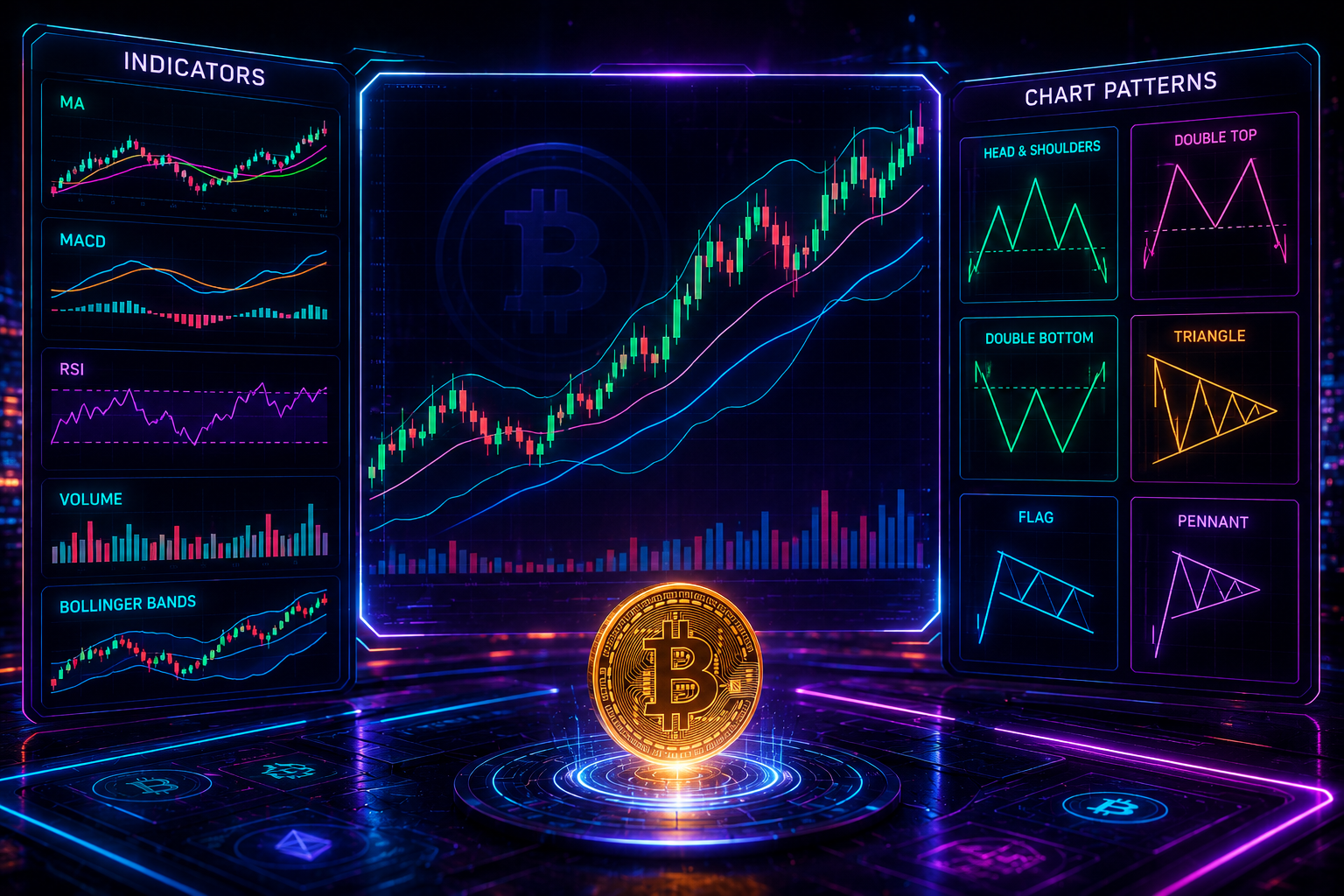
The best strategy for a beginner is not the most complex one, it is the one simple enough to follow consistently under pressure. Three approaches that work well for beginners include trend following, where you trade in the direction of the established trend rather than trying to pick tops and bottoms; range trading, where you buy at established support levels and sell at resistance; and dollar-cost averaging for longer-term holdings, where you invest a fixed amount at regular intervals regardless of price. Each of these removes the pressure of perfect timing and replaces it with a repeatable, rule-based process.
Beginner Strategy Comparison
Trend Following: Trade in the direction of the market’s established momentum. Best used in clearly trending markets. Risk level: Moderate. Requires: Basic chart reading, moving averages.
Range Trading: Buy at support, sell at resistance within a defined price channel. Best used in sideways, consolidating markets. Risk level: Moderate. Requires: Identifying key support and resistance levels.
Dollar-Cost Averaging (DCA): Invest a fixed dollar amount at regular intervals regardless of price. Best used for long-term holdings in established assets like Bitcoin or Ethereum. Risk level: Lower. Requires: Consistency and patience, no active chart reading needed.
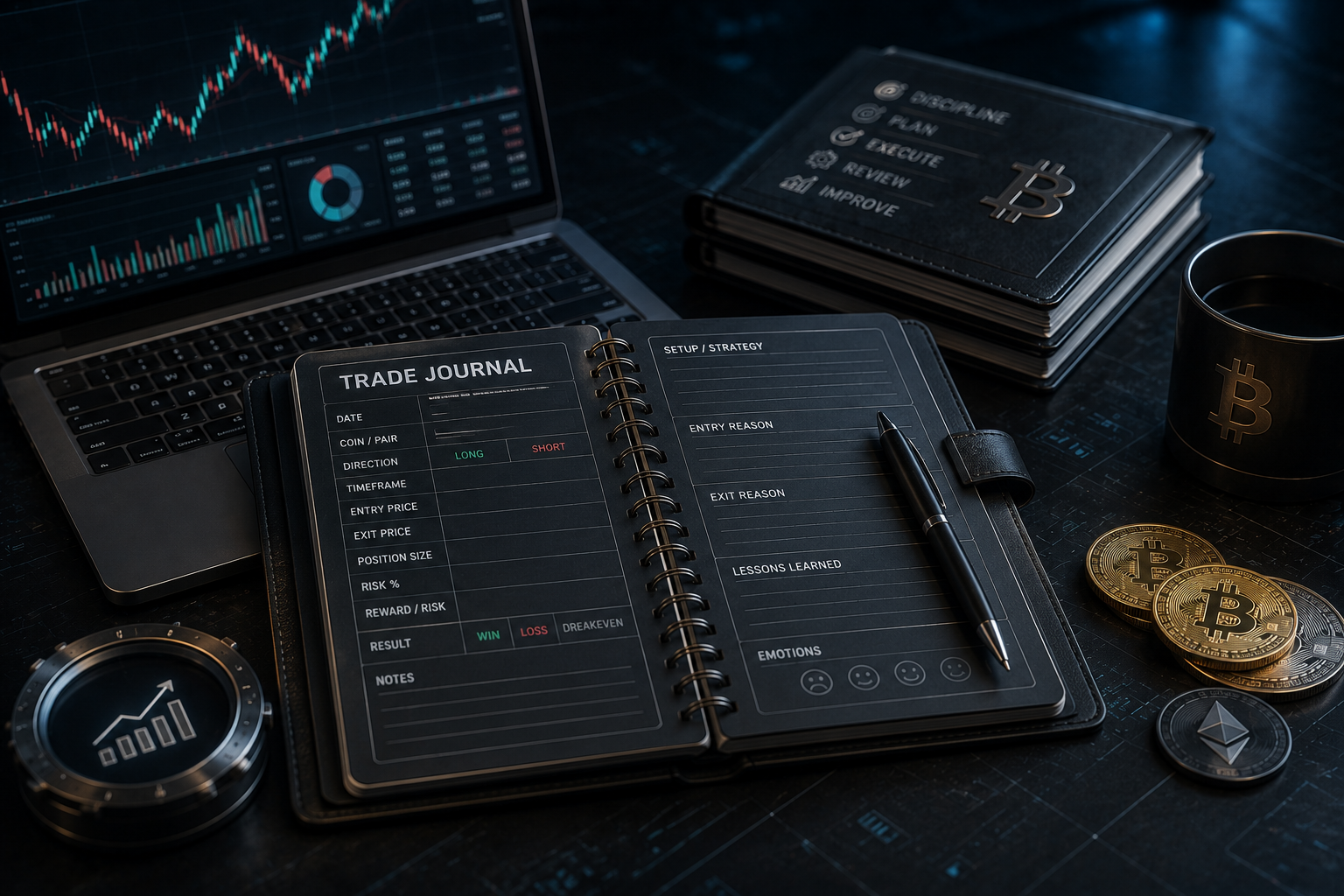
No strategy works 100% of the time, and that is not the goal. The goal is a strategy with a positive expectancy over many trades, meaning the average winning trade makes more than the average losing trade costs. Track every trade in a journal, including your entry rationale, exit outcome, and what you would do differently. Over time, that journal becomes your most valuable trading asset.
Switching strategies every time you hit a losing trade is one of the most effective ways to ensure you never develop real skill in any of them. Give a strategy enough trades, at least 20 to 30, before drawing conclusions about whether it works for you. One losing week does not invalidate a solid approach; it is just part of the statistical reality of trading in volatile markets.
8. Ignoring Transaction Fees and Hidden Costs
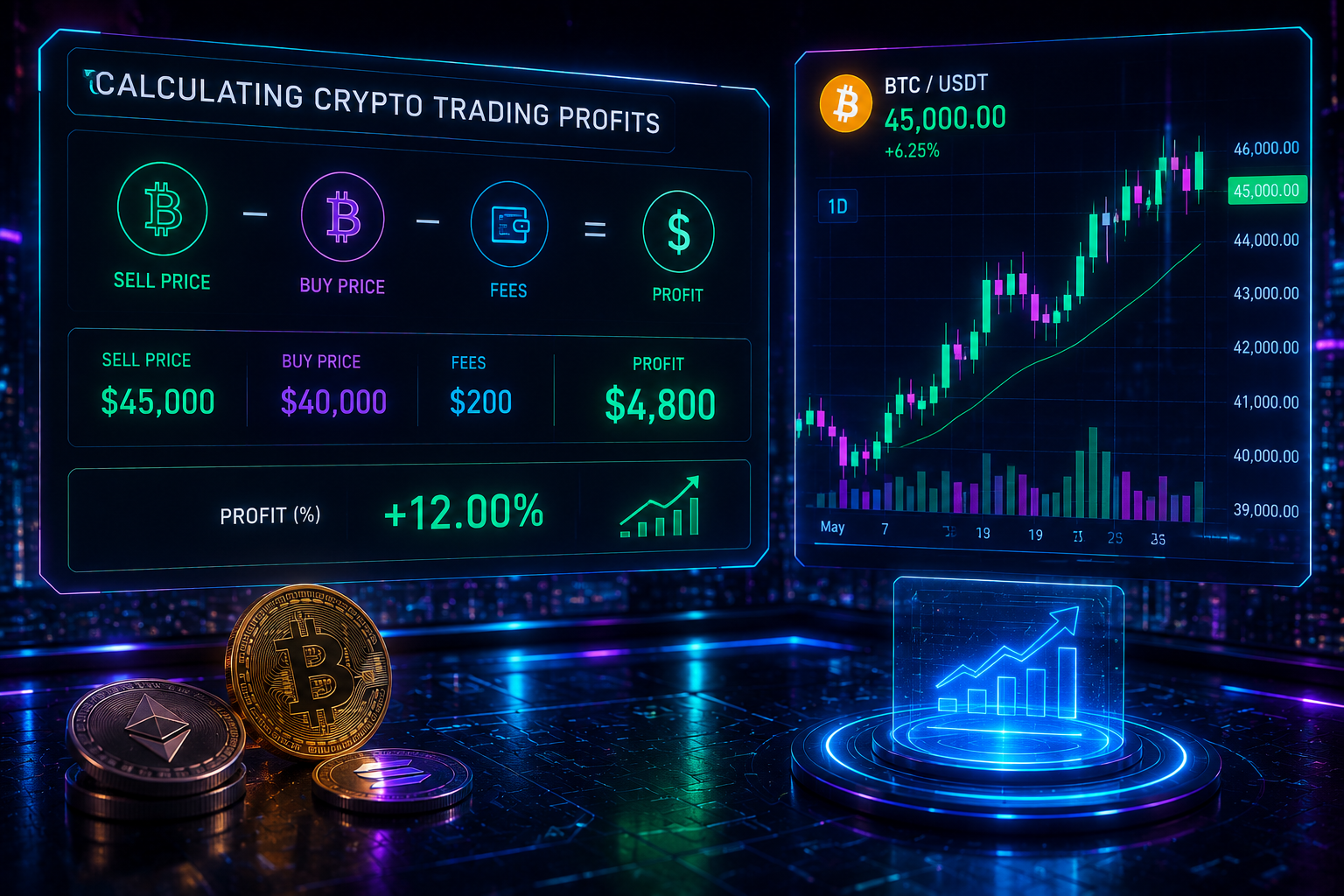
Fees are the silent killer of beginner trading accounts. Every trade you make on an exchange comes with a cost, maker fees, taker fees, withdrawal fees, network gas fees, and in some cases, conversion fees when moving between trading pairs. On major exchanges in 2026, spot trading fees typically range from 0.1% to 0.5% per trade depending on your volume tier. That might sound insignificant, but a beginner who makes 10 trades a day at 0.5% per side is paying 1% per trade round-trip, meaning the asset needs to move 1% in your favor just to break even before profit. Multiply that across weeks of active trading and fees can account for a substantial portion of losses in a beginner’s account, often going entirely unnoticed because they are deducted automatically. Before choosing an exchange, compare fee structures directly. Factor gas fees into every DeFi transaction, as Ethereum network fees in particular can make small trades completely uneconomical. The habit of calculating your break-even point, including all fees, before entering a trade is a simple discipline that separates thoughtful traders from those who wonder where their money went.
Overlooking Your Tax and Legal Obligations
Tax bills can quietly undo a lot of trading profits, and it’s on you to understand the crypto tax obligations and legislation in your jurisdiction before they catch up with you. Building these habits from day one saves enormous time and avoids potential penalties down the road.
Consult a tax specialist early and stay current on how your jurisdiction treats crypto gains, since the rules shift more often than most traders expect. Keep detailed records of every transaction as you go, rather than trying to reconstruct a year of trades from memory in April. And file annual tax returns that disclose your crypto gains and losses honestly, every year, without exception.
9. Focusing Only on Short-Term Gains
The crypto market’s volatility makes it tempting to chase every price movement, treating every green candle as an opportunity and every red candle as a crisis. But obsessing over short-term price action is exhausting, statistically difficult to profit from consistently, and often causes beginners to miss the much larger opportunity sitting right in front of them.
The majority of significant wealth built in crypto has come not from day trading, but from identifying strong projects early and holding through volatility with conviction. That does not mean ignoring price action entirely, it means understanding that short-term noise and long-term value are two completely different things, and that most beginners are so focused on the former that they completely miss the latter.
Why Long-Term Thinking Wins in Crypto
Bitcoin’s historical price trajectory is the most documented example of long-term thinking outperforming short-term trading. Every major cycle has seen short-term traders exit during corrections that long-term holders simply waited through, often to see the asset reach new all-time highs in the subsequent cycle. The same pattern has played out across Ethereum and other major assets. Long-term holders are not smarter than traders, they are simply less exposed to the psychological noise that drives poor short-term decisions. For those interested in strategies that align with long-term thinking, dollar-cost averaging is a noteworthy approach.
Beyond the psychological advantage, long-term holding also carries a tax efficiency benefit in many jurisdictions. Assets held for longer than 12 months often qualify for lower capital gains tax rates compared to short-term trades, meaning the after-tax return on a long-term position can significantly exceed an equivalent short-term gain of the same nominal size. Understanding the tax implications of your trading frequency is not an advanced consideration, it is a basic part of calculating your actual net return.
How to Balance Short-Term Trades With Long-Term Holdings
The most practical approach for beginners is a portfolio structure that separates long-term holdings from active trading capital completely. Allocate the majority of your crypto capital, a figure often cited among disciplined retail investors is 70% to 80%, to long-term positions in established assets you have thoroughly researched. Treat this portion as untouchable during market volatility. The remaining capital can be used for active trading, with full risk management rules applied to every position.
This separation does two things simultaneously: it protects your core holdings from the impulsive decisions that active trading triggers, and it gives you a defined sandbox for developing trading skills without putting your entire portfolio at risk. Many beginners who start with this structure find that after six to twelve months, their long-term holdings have outperformed their active trading results, a humbling but valuable data point that informs how they allocate capital going forward.
Keeping a strict separation between these two buckets also prevents a common and destructive behavior: raiding long-term holdings to fund short-term trades after a losing streak. When trading capital and long-term holdings are pooled together, a bad run of short-term trades can erode positions that were never meant to be touched, compounding losses far beyond what the trading activity alone would have caused.
The Biggest Mistake Is Thinking You Can Skip the Learning Curve
Every mistake covered in this guide shares a common root: the belief that success in crypto trading can be achieved without putting in the foundational work first. The market does not care how motivated you are, how much you need the money, or how many success stories you have read about. It responds only to the quality of your decisions, and decision quality is a direct product of knowledge, preparation, and disciplined practice. The learning curve in crypto trading is not optional. It is the price of admission. The traders who pay it upfront with time and education are the ones who go on to trade profitably. The ones who try to skip it pay it instead with real money, often repeatedly, until they either learn or leave the market entirely. Start with the fundamentals, build a process, manage your risk, and treat every losing trade as tuition rather than failure. The market rewards patience and preparation, and it has always punished the shortcut.
Frequently Asked Questions
Beginners entering crypto trading in 2026 tend to share the same core questions, and getting clear answers to them early can prevent the most costly mistakes from happening in the first place. For example, understanding the differences between day trading and swing trading can significantly impact your trading strategy.
The crypto market has enough complexity that even experienced traders are constantly learning, so if you are just starting out and feel overwhelmed, that feeling is completely normal and shared by virtually everyone who has ever traded seriously.
What follows are direct answers to the questions beginners ask most frequently, without the vague reassurances that tend to fill generic crypto content. For instance, understanding the differences between Bitcoin and Ethereum can be crucial for making informed investment decisions.
What Is the Number One Crypto Trading Mistake Beginners Make?
The number one mistake is trading without a plan, entering positions based on hype, emotion, or social media pressure rather than defined criteria. This single behavior is the root cause behind most of the other mistakes on this list, from FOMO buying to ignoring stop-losses. Without a plan, every market movement triggers a reactive decision, and reactive decisions in a volatile market almost always favor the other side of the trade. The fix is deceptively simple: write your trading plan before you open a position. Define your entry, your target, your stop-loss, and your position size. Commit to those numbers in advance. This one habit, applied consistently, will do more for your results than any indicator, signal group, or trading course you will ever encounter.
How Much Money Should a Beginner Start With in Crypto Trading?
Start with an amount you can afford to lose entirely without it affecting your financial stability or mental health. This is not pessimism, it is the realistic acknowledgment that most beginners lose money in their first months of trading, and the size of those losses should not create financial hardship or force panic decisions. For those considering crypto portfolio rebalancing, it’s crucial to understand the risks involved.
A practical starting range that many educators and experienced traders suggest for beginners is between $100 and $500 for active trading, with a separate, larger amount set aside for long-term holding in established assets if your financial situation allows. The key principles for managing beginner capital are:
- Never trade money that is earmarked for rent, bills, or emergency savings.
- Keep active trading capital separate from long-term investment capital from day one.
- Start on a paper trading account or with the smallest possible real-money positions to develop skills without full financial exposure.
- Only increase position sizes after you have demonstrated consistent results over at least 30 to 50 trades with smaller amounts.
- Treat early losses as tuition costs, not failures, they are part of the education process for every trader who eventually becomes profitable.
Scaling up your capital before you have demonstrated repeatable results is one of the most reliable ways to turn a manageable learning experience into a serious financial setback. Earn the right to trade bigger by proving your process works small first.
Is Crypto Trading Safe for Beginners in 2026?
Crypto trading carries real financial risk for traders at every level, and that risk is higher for beginners due to the learning curve involved. That said, it is not inherently more dangerous than other forms of speculative trading, provided you approach it with proper risk management, start with capital you can afford to lose, and invest time in education before investing significant money. The danger is not the market itself; it is entering the market unprepared, undercapitalized in terms of knowledge, and emotionally reactive to price movements. Beginners who take the time to understand the basics, use stop-losses consistently, and avoid leverage in their early months can participate in the market without catastrophic risk.
How Do Beginners Avoid Crypto Scams?
The most reliable defense against crypto scams is a consistent application of skepticism to anything that promises high returns with low risk, creates artificial urgency, or cannot be independently verified through on-chain data and public records. Legitimate projects do not pressure you to invest immediately. Real opportunities do not disappear in 24 hours. Any communication that tries to bypass your rational thinking with excitement, fear, or urgency should be treated as a manipulation attempt until proven otherwise.
Practically speaking: never share your seed phrase or private key with anyone, ever, for any reason. Verify every wallet address before sending funds, character by character, not just the first and last few digits. Use bookmarked URLs for exchanges rather than clicking links from emails or social media. And when in doubt, the single most valuable action you can take is to wait. Scams rely on speed. Patience is your most powerful protection.
Should Beginners Use Leverage When Trading Crypto?
No. Leverage is not a tool for beginners, regardless of how accessible exchanges make it appear. The combination of crypto’s natural volatility and the amplifying effect of leverage creates conditions where a beginner’s account can be liquidated in a single trading session, not because they made a terrible decision, but simply because the market moved in a normal, expected way that their leveraged position could not absorb. For those interested in different trading strategies, exploring day trading vs swing trading might provide safer alternatives.
The appeal of leverage is obvious, the potential to multiply gains without needing more capital. But the mathematical reality is that leverage multiplies losses with exactly the same efficiency, and in a market that moves as unpredictably as crypto, that asymmetry destroys accounts far more often than it builds them for inexperienced traders.
If you feel the urge to use leverage because your spot trading profits feel too slow, that feeling is a signal to focus on improving your strategy, not to increase your risk exposure. Consistent profitability in spot trading is the prerequisite for even considering leverage, not an optional step you can skip by adding a multiplier to your position.
DYOR Disclaimer
This article is for informational purposes only and does not constitute financial, investment, or tax advice. Trading cryptocurrency carries substantial risk of loss and is not suitable for all investors. Always do your own research (DYOR) and consult a qualified financial and tax professional before making any trading decisions.