AMM trading pairs
automated market makers
crypto passive income 2026
Curve Finance pools
decentralized exchange liquidity
DeFi liquidity pools
DeFi yield farming
impermanent loss explained
liquidity mining rewards
liquidity pool risks
liquidity pools investment strategy 2026
Uniswap liquidity provider

Coinposters
What Are Liquidity Pools And Are They a Good Investment Strategy in 2026?
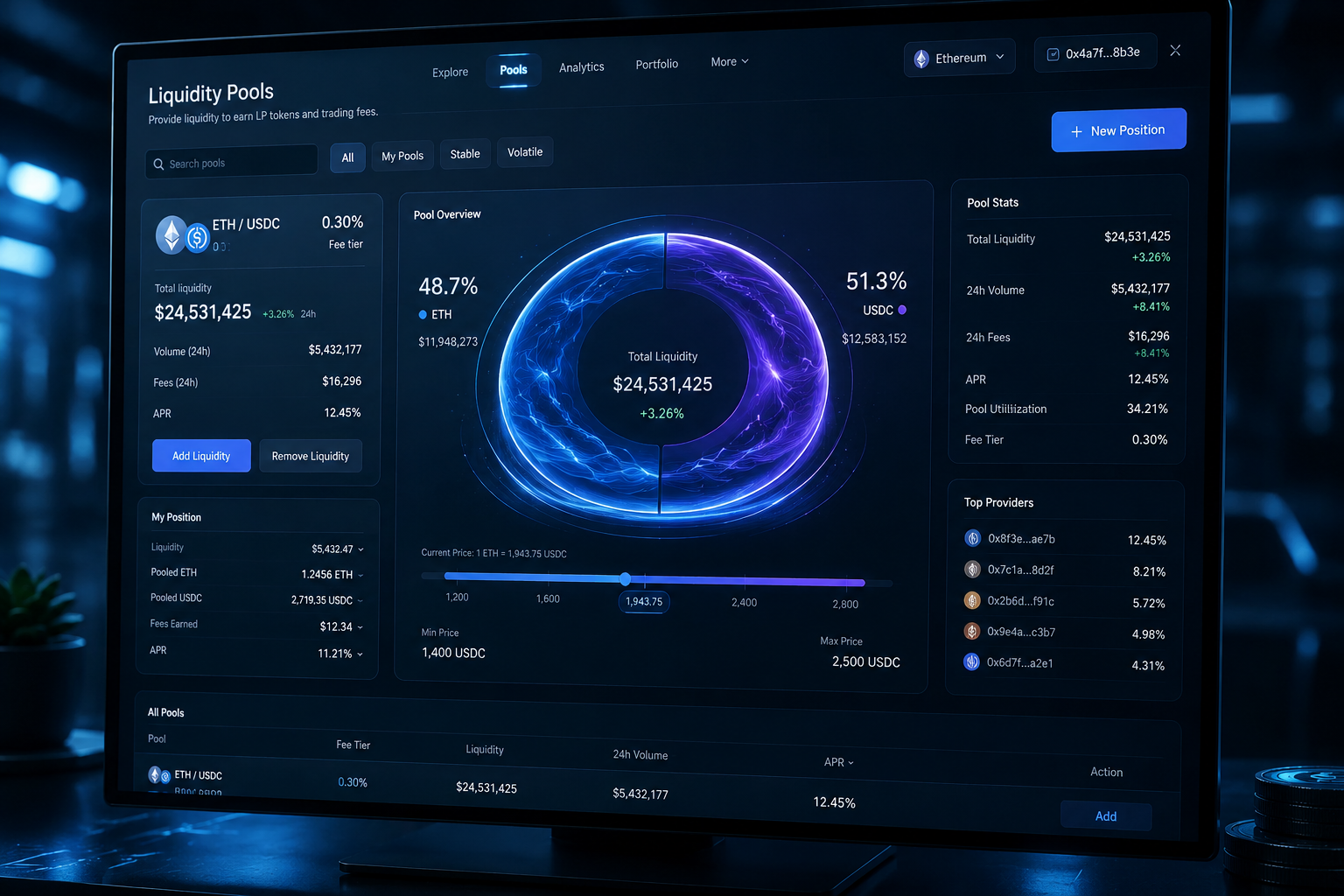
Liquidity pools are a legitimate and increasingly sophisticated investment strategy in 2026 — but whether they’re right for you depends entirely on your risk tolerance, technical understanding, and investment goals. For investors who understand the mechanics, perform proper due diligence, and manage position sizes responsibly, liquidity pools represent one of the few genuine passive income opportunities in crypto that doesn’t require speculation on price direction alone. The key is treating liquidity provision like a business: tracking performance, rebalancing positions, and cutting exposure when conditions shift, while understanding that impermanent loss, smart contract risks, and regulatory uncertainty remain real threats that can erase gains if ignored.
Article At A Glance
- •Liquidity pools are smart contract-based reserves that power decentralized trading, lending, and yield generation — no banks or brokers required
- •Investors can earn passive income through trading fees, yield farming rewards, and governance token incentives by becoming liquidity providers
- •Impermanent loss is the single biggest risk unique to liquidity pools — and most new investors don’t fully understand it until it’s too late
- •Choosing the right liquidity pools investment strategy in 2026 comes down to three factors: trading volume, token pair stability, and pool depth — all covered in detail below
- •LiquidityFinder tracks and compares active liquidity pools across protocols, making it easier to find opportunities that match your risk profile
Table of Contents
- What Exactly Is a Liquidity Pool?
- How Automated Market Makers Price Your Trades
- How Liquidity Pools Make You Money
- The Real Risks You Need to Know Before Investing
- How to Choose the Right Liquidity Pool
- Security Tips Every Liquidity Provider Should Follow
- Are Liquidity Pools a Good Investment Strategy in 2026?
- Frequently Asked Questions
Liquidity pools are quietly powering billions of dollars in daily crypto trades — and most people still have no idea how they work or how to profit from them.
Before diving into strategy, it helps to understand what’s actually happening under the hood. A liquidity pool is a collection of cryptocurrency tokens locked inside a smart contract. Instead of matching a buyer with a seller the way traditional exchanges do, these pools act as always-available reserves that traders swap against directly. The result is a market that never closes, never needs a middleman, and runs entirely on code. Platforms like LiquidityFinder help investors navigate these pools by surfacing data on depth, volume, and performance across protocols.
This matters because the mechanics of how a pool is structured directly affects how much money you make — or lose — as a participant. Whether you’re looking to generate passive income or diversify your crypto strategy heading into 2026, understanding liquidity pools from the ground up is non-negotiable.
What Exactly Is a Liquidity Pool?
A liquidity pool is a store of cryptocurrency locked into one place via a smart contract, designed to create continuous liquidity for decentralized exchanges (DEXs) and other DeFi protocols. Unlike traditional finance, where a market maker or financial institution provides the liquidity, these pools are funded by everyday users like you. Every time someone trades on a DEX like Uniswap or Curve Finance, they’re trading against the assets sitting inside one of these pools.
The core innovation here is the removal of the order book. In traditional markets, a trade only happens when a buyer and seller agree on a price. Liquidity pools eliminate that dependency entirely, enabling trades to execute instantly, 24/7, at algorithmically determined prices.
Smart Contracts: The Engine Behind Every Pool
Every liquidity pool is governed by a smart contract — self-executing code stored on a blockchain that automatically enforces the rules of the pool. When you deposit tokens into a pool, the smart contract locks them in and issues you LP (liquidity provider) tokens in return, representing your share of the pool. When fees are earned or you want to withdraw, the smart contract handles all of it without any human involvement. This automation is what makes DeFi possible at scale, but it also means the code itself becomes a critical point of failure if vulnerabilities exist.
Liquidity Providers vs. Liquidity Takers: Who Does What
Inside every liquidity pool, there are two distinct roles that keep the system functioning.
Two Key Roles in Every Liquidity Pool
Liquidity Providers (LPs): These are investors who deposit tokens into the pool. They earn a share of trading fees generated by the pool proportional to their contribution. In return for providing liquidity, they take on the risk of impermanent loss.
Liquidity Takers: These are traders who use the pool to swap one token for another. They pay a small fee on each trade — typically between 0.01% and 1% depending on the protocol — which flows back to the liquidity providers.
The relationship is symbiotic. Traders need deep pools to execute large trades with minimal slippage. Providers need active traders to generate the fees that make their deposits profitable. When both sides are healthy, the pool thrives. For a deeper understanding of trading fees, check out this comparison of trading fees between major platforms.
How Token Pairs Work Inside a Pool
Most liquidity pools are built around token pairs — two assets deposited in equal value. A classic example is an ETH/USDC pool, where a provider deposits $500 worth of ETH and $500 worth of USDC simultaneously. This 50/50 split is standard on most AMM-based protocols, though newer designs like Balancer allow for weighted pools with different ratios. The pairing matters enormously for your risk exposure, as we’ll break down when we get to impermanent loss.
How Automated Market Makers Price Your Trades
The pricing mechanism inside a liquidity pool is handled by an Automated Market Maker (AMM) — an algorithm that sets prices based on the ratio of assets in the pool rather than supply and demand from buyers and sellers. This is what makes decentralized trading possible without an order book. The AMM adjusts prices automatically as the composition of the pool changes with each trade, keeping the market in constant equilibrium.
The Constant Product Formula (x*y=k) in Plain English
The AMM Formula: x * y = k
The most widely used AMM model runs on a deceptively simple formula: x * y = k. Here, x and y represent the quantities of the two tokens in the pool, and k is a constant that never changes.
How It Works: Every trade must maintain this constant product. So if someone buys ETH from an ETH/USDC pool, the ETH supply in the pool drops, and the price of ETH in that pool rises automatically to keep k stable.
Origin: Uniswap V2 popularized this formula, and it remains the foundation for most AMM-based DEXs operating today.
How Pool Balances Shift With Every Trade
Each trade reshapes the pool. When traders buy large amounts of one token, its proportion in the pool decreases while the other token’s proportion increases, pushing prices in a direction that incentivizes arbitrageurs to step in and rebalance. This constant push and pull between traders and arbitrage bots is what keeps pool prices aligned with the broader market. For liquidity providers, every shift in pool balance is also a shift in the value of their deposited assets — which is the root cause of impermanent loss.
How Liquidity Pools Make You Money
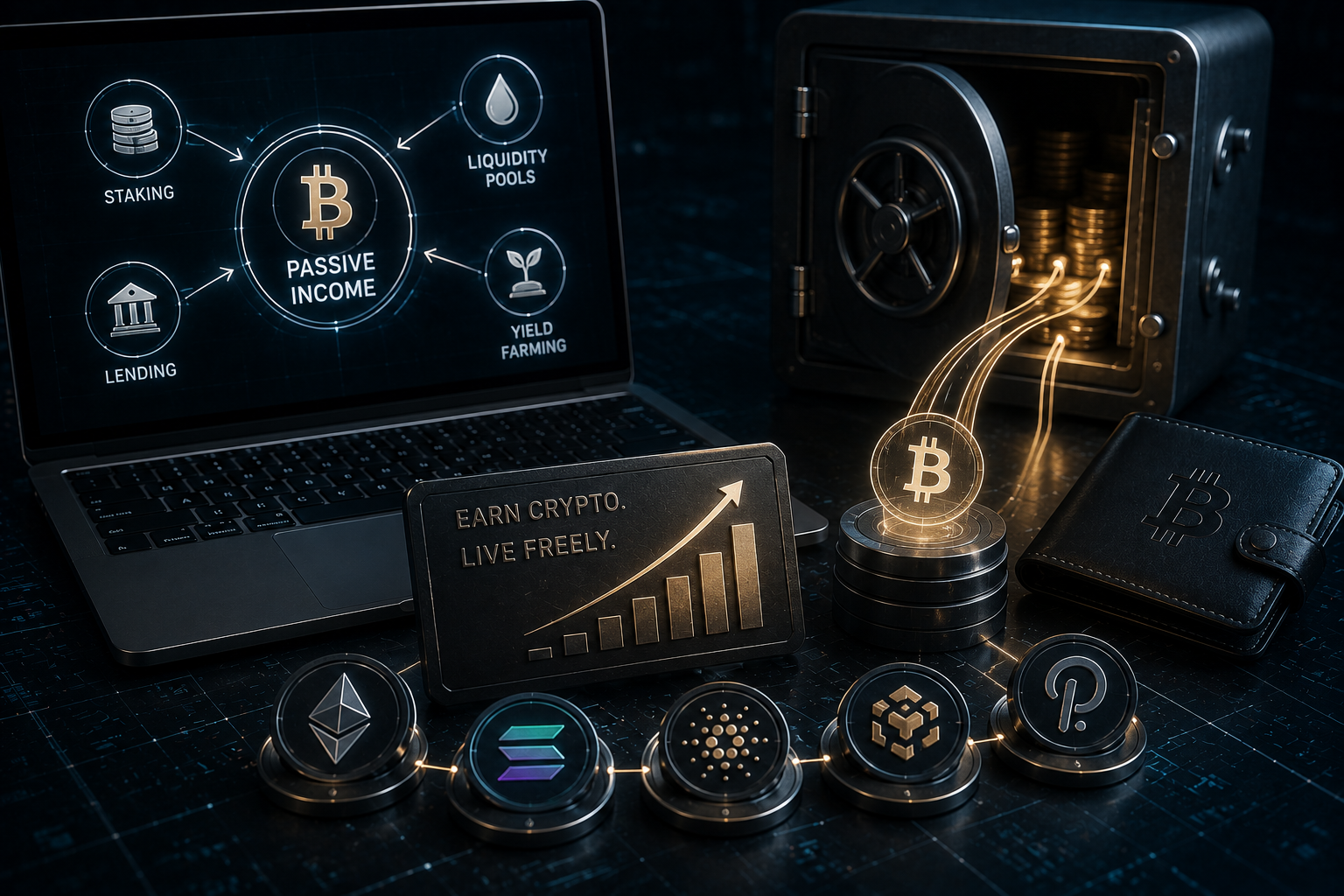
There are three primary ways liquidity pools generate returns for investors, and the best strategies in 2026 often combine more than one of them. The yield potential varies significantly depending on the protocol, the token pair, and current market conditions — but understanding each revenue stream is the foundation of any informed investment decision.
Three Ways Liquidity Pools Generate Returns
1. Trading Fee Revenue: Earn proportional share of fees from every swap (0.01% to 1% per trade depending on protocol)
2. Yield Farming and Liquidity Mining Rewards: Additional token rewards distributed to incentivize liquidity provision
3. Governance Token Incentives: Voting rights tokens with real financial value, tradable or stakable for additional yield
1. Trading Fee Revenue
Every swap that occurs inside a liquidity pool generates a fee, and that fee is distributed proportionally among all liquidity providers in the pool. On Uniswap V3, fee tiers range from 0.01% for stable pairs to 1% for exotic pairs. On Curve Finance, fees on stablecoin pools typically sit around 0.04%. The math is straightforward: higher trading volume in the pool means more fees collected, which means higher returns for providers. A pool processing $50 million in daily volume at a 0.3% fee tier generates $150,000 in fees per day — distributed among all LPs based on their pool share.
This makes volume the single most important metric when evaluating a pool’s fee-generating potential. A pool with $10 million in liquidity but $40 million in daily trading volume will almost always outperform a pool with $100 million in liquidity but minimal activity.
2. Yield Farming and Liquidity Mining Rewards
Beyond trading fees, many protocols incentivize liquidity provision by distributing additional token rewards to LPs — a practice known as liquidity mining or yield farming. When you deposit into an incentivized pool, you receive LP tokens that can often be staked in a separate rewards contract to earn the protocol’s native governance token on top of your base fee income. Platforms like Aave, Compound, and SushiSwap have all used this model to bootstrap liquidity. The APYs on these programs can be eye-catching — sometimes triple digits — but they are heavily influenced by the price of the reward token itself, meaning returns can evaporate quickly if that token depreciates.
3. Governance Token Incentives
Some protocols take incentives a step further by rewarding liquidity providers with governance tokens — assets that grant holders voting rights over the protocol’s future development. Holding these tokens isn’t just about voting; in many cases they carry real financial value and can be sold, staked for additional yield, or used within the broader DeFi ecosystem. Curve Finance’s CRV token and Uniswap’s UNI token are two of the most well-known examples. The catch is that governance token rewards are subject to inflation — as more tokens are distributed, their value can dilute over time, which is something to factor into your yield calculations.
The Real Risks You Need to Know Before Investing
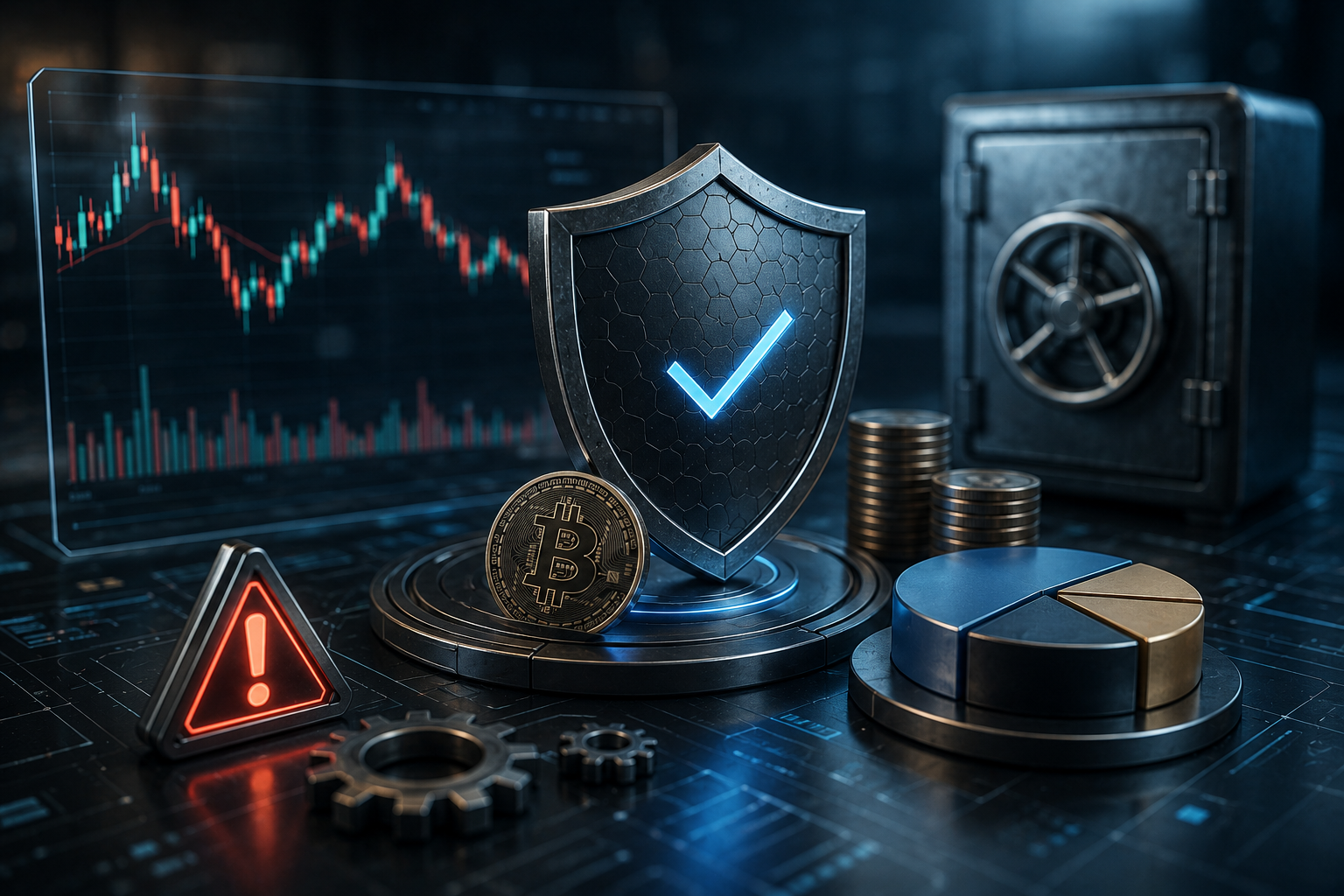
Liquidity pools can generate compelling returns, but they come with a unique risk profile that is fundamentally different from simply holding crypto in a wallet. The risks below aren’t theoretical — they have cost investors real money, and going into 2026 with eyes open is the only responsible approach to this asset class.
Impermanent Loss: The Risk Unique to Liquidity Pools
Impermanent loss occurs when the price ratio of your deposited token pair changes after you enter the pool. Because the AMM constantly rebalances the pool, you end up holding more of the token that declined in value and less of the one that appreciated — compared to simply holding both tokens in your wallet. The loss is called “impermanent” because it only becomes permanent when you withdraw. If prices return to their original ratio, the loss disappears. In practice, however, prices rarely return to exactly where they started, and for volatile token pairs, impermanent loss can significantly outpace the fees earned. A 2x price change in one token relative to the other results in roughly a 5.7% impermanent loss, while a 5x change results in approximately 25.5% — numbers that can easily dwarf fee income in a high-volatility environment.
Impermanent Loss Impact on Returns
2x Price Change = 5.7% Loss
5x Price Change = 25.5% Loss
These losses can easily outpace fee income in high-volatility environments
Smart Contract Vulnerabilities and Exploits
Notable DeFi Exploits Caused by Smart Contract Vulnerabilities
| Protocol | Year | Amount Lost | Exploit Type |
|---|---|---|---|
| Ronin Network | 2022 | $625 million | Validator key compromise |
| Wormhole Bridge | 2022 | $320 million | Smart contract bug |
| Euler Finance | 2023 | $197 million | Flash loan attack |
| Curve Finance | 2023 | $70 million | Reentrancy vulnerability |
Smart contracts are only as safe as the code they’re written in. Even audited contracts have been exploited, and when a vulnerability is found, attackers can drain an entire pool in a single transaction. The decentralized nature of these protocols means there is no customer support line, no insurance fund in most cases, and no way to reverse a transaction once it hits the blockchain.
Flash loan attacks are particularly devastating because they allow attackers to borrow massive amounts of capital within a single transaction, manipulate pool prices, and repay the loan — all before a single block is confirmed. The Euler Finance exploit in 2023 is a stark reminder that even well-audited protocols aren’t immune.
Before depositing into any pool, always verify that the smart contract has been audited by a reputable firm like CertiK, Trail of Bits, or OpenZeppelin. A clean audit doesn’t guarantee safety, but an unaudited contract is an unacceptable risk.
Rug Pulls and Malicious Pool Creators
A rug pull happens when the creators of a liquidity pool — typically on a new or obscure protocol — suddenly withdraw all the liquidity and disappear with investor funds. This is especially common with anonymous teams launching new token pairs on permissionless DEXs where anyone can create a pool. The pattern is predictable: hype builds around a new token, retail investors rush in as liquidity providers chasing sky-high APYs, and then the founders drain the pool and vanish. Sticking to established protocols with transparent teams and long operational track records is the most effective defense against this risk.
Regulatory Uncertainty Heading Into 2026
The regulatory landscape for DeFi and liquidity pools remains one of the most unpredictable variables heading into 2026. Multiple jurisdictions are actively developing frameworks that could classify liquidity provision as a financial service, impose KYC requirements on DEX participants, or restrict access to certain DeFi protocols entirely. The U.S. SEC and CFTC have both signaled interest in DeFi oversight, and the EU’s MiCA regulation is already reshaping how crypto services operate in Europe. Any significant regulatory shift could affect pool liquidity, token values, and the accessibility of specific protocols in your region — making this a risk that belongs in every LP’s calculus.
How to Choose the Right Liquidity Pool
Not all pools are created equal, and selecting the right one is where strategy separates informed investors from gamblers. Three factors consistently matter most: how much trading volume the pool generates, how stable the token pair is, and how deep the pool’s overall liquidity runs. For more insights on this topic, check out how crypto liquidity pools work. Evaluate all three before committing a single dollar.
Three Key Factors for Pool Selection
1. Trading Volume and Fee Generation: Higher volume = more fees collected = higher returns for providers
2. Token Pair Stability: Stablecoin pairs (low risk, lower fees) vs volatile pairs (high risk, higher fees)
3. Pool Size and Depth: Total value locked (TVL) impacts slippage and individual fee share
Trading Volume and Fee Generation
Volume is the engine of fee income. A pool sitting idle with minimal trades generates almost nothing for its liquidity providers, regardless of how attractive its APY looks on paper. Always check the pool’s 24-hour and 7-day trading volume relative to its total value locked (TVL). A healthy volume-to-TVL ratio — sometimes called the pool’s fee efficiency — indicates that the pool is actively being used by traders and generating real returns rather than just inflated token incentives.
Resources like pools.fyi allow you to compare volume and depth across liquidity pools on major protocols. Cross-referencing data from multiple sources before committing capital is a habit that separates disciplined investors from impulsive ones.
Keep in mind that volume spikes during market volatility — which simultaneously increases your fee income and your impermanent loss exposure. High-volume periods on volatile pairs are a double-edged sword that requires careful management.
Token Pair Stability
The token pair you choose to provide liquidity for is one of the most consequential decisions you’ll make. Stablecoin pairs like USDC/DAI or USDT/USDC carry virtually zero impermanent loss risk because both assets are pegged to the same value — but they also generate lower fees. Pairs involving two volatile assets like ETH/LINK carry the highest impermanent loss exposure but can generate significantly higher fee income when volume is strong.
For most investors entering liquidity provision for the first time in 2026, starting with a stablecoin pair or a paired asset pool like ETH/stETH — where both assets move in close correlation — is the most sensible approach. It lets you understand the mechanics of the pool without taking on excessive price divergence risk while you build experience.
Pool Size and Depth
Pool depth refers to the total value locked in the pool and directly impacts how much slippage traders experience. Deeper pools attract larger trades, which means more fee revenue — but they also mean your individual share of that revenue is smaller since it’s distributed among more capital. Shallow pools offer a larger share of fees per dollar deposited but expose traders to higher slippage, which can drive volume away over time.
A pool with consistently growing TVL alongside growing volume is generally a healthy sign. Declining TVL paired with declining volume is a warning flag that liquidity providers may be exiting — and it’s worth understanding why before you decide to enter. For more insights, consider exploring DeFi vs Traditional Finance to understand the broader context of liquidity trends.
Security Tips Every Liquidity Provider Should Follow
Security in DeFi is entirely your responsibility — there is no fraud department to call and no chargeback process when things go wrong. The following practices aren’t optional guardrails; they’re the baseline for anyone serious about protecting their capital in liquidity pools heading into 2026.
4 Critical Security Steps for Liquidity Providers
1. Verify Smart Contract Audits: Locate and read audit reports from CertiK, Trail of Bits, OpenZeppelin, or Quantstamp before depositing
2. Use a Hardware Wallet: Ledger Nano X or Trezor Model T keeps private keys offline and requires physical confirmation
3. Start With Established Protocols: Uniswap, Curve Finance, Aave, and Balancer have battle-tested code and deep security infrastructure
4. Never Invest More Than You Can Afford to Lose: Position size LP contributions as a defined percentage of portfolio, not total capital
1. Verify Smart Contract Audits Before Depositing
Before you deposit a single token into any liquidity pool, locate the protocol’s smart contract audit report and read it. Reputable audit firms like CertiK, Trail of Bits, OpenZeppelin, and Quantstamp publish detailed reports that flag vulnerabilities, rate severity, and confirm whether identified issues were resolved before deployment. If a protocol cannot point you to a published audit from a recognized firm, that is a hard stop — not a yellow flag.
Even with a clean audit on record, check when it was conducted. A protocol that was audited in 2021 but has deployed new contract versions since then without follow-up audits is operating on outdated assurances. Smart contract code changes with upgrades, and each change introduces new potential attack surfaces. Always verify the audit covers the specific contract version currently in production.
2. Use a Hardware Wallet
Connecting a software wallet like MetaMask directly to DeFi protocols exposes your private keys to browser-based attacks, malicious browser extensions, and phishing sites designed to mimic legitimate DEX interfaces. A hardware wallet — such as a Ledger Nano X or Trezor Model T — keeps your private keys stored offline and requires physical confirmation for every transaction. Even if your computer is fully compromised, an attacker cannot drain your wallet without physical access to your device. For more insights on how DeFi compares to traditional finance, check out this beginner guide.
This step is non-negotiable once your liquidity positions start representing meaningful capital. The one-time cost of a hardware wallet is trivially small compared to the downside of a single successful phishing attack. Pair it with bookmark-only navigation to your DeFi platforms and never click wallet connection links from social media, Discord, or email.
3. Start With Established Protocols Like Uniswap or Curve
Uniswap, Curve Finance, Aave, and Balancer have all been operating at scale for multiple years, have survived multiple market cycles, and carry billions of dollars in TVL that has been stress-tested by real adversarial conditions. Starting with these protocols doesn’t mean the risk disappears — it means you’re operating within ecosystems that have the most battle-tested code, the largest bug bounty programs, and the deepest security infrastructure in DeFi. Chasing 300% APY on a two-week-old protocol with an anonymous team is how investors learn expensive lessons they didn’t need to learn.
4. Never Invest More Than You Can Afford to Lose
This isn’t a disclaimer — it’s the foundational risk management principle that every serious DeFi investor operates by. Liquidity pool positions carry layered risks: smart contract exploits, impermanent loss, token depreciation, regulatory action, and protocol governance failures can all converge simultaneously. Position sizing your LP contributions as a defined percentage of your overall portfolio — not your total available capital — is the only way to participate in this space without catastrophic downside exposure if something goes wrong. For more insights, you can explore the evolving landscape of crypto regulations in 2026.
Are Liquidity Pools a Good Investment Strategy in 2026?
Liquidity pools are a legitimate and increasingly sophisticated investment vehicle — but whether they’re the right strategy depends entirely on your risk tolerance, technical understanding, and investment goals. For investors who understand the mechanics, perform proper due diligence, and manage position sizes responsibly, they represent one of the few genuine passive income opportunities in crypto that doesn’t require speculation on price direction alone. To explore more about this, you can read about the comparison between DeFi and traditional finance.
The honest answer is that liquidity pools work best as one component of a diversified crypto investment strategy, not as a standalone wealth-building approach. Stablecoin pools on established protocols like Curve can generate consistent, relatively low-risk yields — often outpacing traditional savings rates. Volatile pair pools on high-volume DEXs can generate significantly higher returns but require active monitoring and a genuine understanding of impermanent loss dynamics. Heading into 2026, with DeFi infrastructure maturing, Layer 2 networks dramatically reducing gas costs, and concentrated liquidity mechanisms like those on Uniswap V3 improving capital efficiency, the investment case for informed participation is stronger than it’s ever been.
That said, the risks haven’t disappeared — they’ve evolved. Regulatory uncertainty, increasingly sophisticated smart contract exploits, and the complexity of newer pool designs mean that the knowledge gap between informed and uninformed liquidity providers has widened, not narrowed. The investors winning in this space in 2026 are the ones who treat liquidity provision like a business — tracking performance, rebalancing positions, and cutting exposure when conditions shift.
Liquidity Pool Strategy Comparison: Risk vs. Return Profile (2026)
| Pool Type | Example Protocol | Typical APY Range | Impermanent Loss Risk | Best For |
|---|---|---|---|---|
| Stablecoin Pairs (USDC/DAI) | Curve Finance | 3% – 8% | Very Low | Conservative investors, first-time LPs |
| Correlated Asset Pairs (ETH/stETH) | Curve, Balancer | 5% – 15% | Low | ETH holders seeking yield on existing positions |
| Blue-Chip Volatile Pairs (ETH/USDC) | Uniswap V3 | 10% – 40% | Medium–High | Experienced LPs comfortable with active management |
| Exotic/New Token Pairs | SushiSwap, new DEXs | 50%+ | Very High | High-risk tolerance only, small position sizes |
Frequently Asked Questions
Here are answers to the most common questions investors have when they’re evaluating liquidity pools as part of their 2026 crypto investment strategy.
What is the minimum amount needed to join a liquidity pool?
Technically, most liquidity pools on Ethereum-based DEXs have no minimum deposit requirement — you can contribute any amount. The practical reality, however, is that Ethereum mainnet gas fees make very small deposits economically unviable, since transaction costs can easily exceed the fee income generated by a small position.
For investors starting with smaller amounts — say under $1,000 — Layer 2 networks like Arbitrum, Optimism, or Base offer access to the same major protocols like Uniswap V3 and Curve at a fraction of the gas cost. Depositing on these networks makes small LP positions financially practical while maintaining exposure to the same underlying DeFi infrastructure.
Can you lose all your money in a liquidity pool?
Yes — in specific scenarios, you can lose your entire deposit. A smart contract exploit that drains the pool entirely, a rug pull by malicious protocol creators, or a catastrophic collapse in the value of both tokens in your pair can all result in total or near-total loss of deposited capital.
Impermanent loss alone will not cause a total loss under normal conditions — it represents a relative underperformance compared to holding the assets outright, not an absolute wipeout. However, if you’re providing liquidity for a token that drops to zero, the impermanent loss becomes very much permanent and very much total.
This is exactly why sticking to established protocols with audited contracts, choosing token pairs with fundamentally sound underlying assets, and never over-concentrating in a single pool are the practices that separate investors who survive long-term from those who don’t. Risk management in liquidity pools is not optional — it’s the strategy.
What is the difference between yield farming and providing liquidity?
Providing liquidity means depositing token pairs into a pool to earn a share of trading fees. Yield farming is a broader strategy that typically involves taking the LP tokens you receive from depositing into a pool and staking them in additional reward contracts to earn bonus token emissions on top of your base fee income. In practice, yield farming usually includes liquidity provision as its first step — but yield farming specifically refers to the practice of actively chasing and compounding token reward incentives across multiple protocols, often moving capital between pools as reward rates shift. For a deeper understanding of these strategies, you might explore the risks and strategies associated with stablecoins.
Which liquidity pools have the highest returns in 2026?
The highest nominal APYs are almost always found on new or exotic token pair pools on smaller DEXs, where protocols offer aggressive liquidity mining rewards to attract initial capital. But high APY in these environments is frequently a combination of inflated governance token emissions and unsustainable incentive programs — not genuine fee income. For sustainable, risk-adjusted returns, pools on Uniswap V3 with concentrated liquidity positions in high-volume pairs, and incentivized stablecoin pools on Curve Finance, consistently rank among the strongest performers when measured by actual fee generation relative to deposited capital. Always evaluate yield by separating base fee APY from token reward APY before making deposit decisions.
How do taxes work when you earn fees from a liquidity pool?
Tax treatment of liquidity pool income varies significantly by jurisdiction, and the regulatory guidance in many countries is still evolving — making this an area where consulting a qualified crypto tax professional is genuinely important rather than optional boilerplate advice. In the United States, the IRS generally treats fee income and liquidity mining rewards as ordinary income at the time of receipt, valued at the fair market price of the tokens when earned. Impermanent loss is not a recognized deductible event at the time of occurrence — it only becomes relevant for tax purposes when you actually withdraw from the pool and can calculate realized gains or losses.
Depositing into and withdrawing from a liquidity pool may also trigger taxable events in some jurisdictions, as the exchange of tokens for LP tokens can be classified as a disposition. Keeping detailed records of every deposit, withdrawal, fee accrual, and reward distribution — including timestamps and token values — is essential for accurate tax reporting and becomes increasingly complex the more active your liquidity provision strategy becomes.
Tax Record-Keeping Essentials
Tools for LP Tax Tracking: Koinly, CoinTracker, and TokenTax integrate with DeFi wallets and automatically calculate LP income and realized gains across multiple protocols
Critical Records to Maintain: Every deposit, withdrawal, fee accrual, and reward distribution with timestamps and token values
Best Practice: Start proper record-keeping from day one — far easier than reconstructing transaction history after the fact
Tools like Koinly, CoinTracker, and TokenTax are designed to integrate with DeFi wallets and automatically calculate LP income and realized gains across multiple protocols, which significantly reduces the manual burden of tracking these positions across an entire tax year. Starting with proper record-keeping from day one is far easier than reconstructing transaction history after the fact.
Liquidity pools are an essential component of decentralized finance (DeFi), allowing users to trade cryptocurrencies without the need for a traditional order book. By providing liquidity to these pools, investors can earn a portion of the trading fees. However, it’s important to understand the risks and rewards associated with this investment strategy. For those interested in exploring more about DeFi and its comparison to other crypto strategies, check out this NFT vs DeFi investment comparison to make informed decisions in 2026.
DISCLAIMER: This article is for informational purposes only and does not constitute financial, investment, or legal advice. Liquidity pool investment strategies carry significant risk including impermanent loss, smart contract vulnerabilities, and total loss of capital. Cryptocurrency markets are highly volatile and regulatory frameworks continue to evolve. Always conduct your own research (DYOR), verify all information independently, consult with qualified financial and tax professionals, and never invest more than you can afford to lose. Past performance does not guarantee future results. The information presented reflects conditions as of 2026 and may become outdated.



Latest
DeFi News
08 Jul 2026
DeFi News
04 Jul 2026
DeFi News
21 May 2026
DeFi News
13 May 2026
DeFi News
15 Mar 2026