blockchain investment comparison
cross-chain NFT staking
crypto portfolio allocation
crypto yield farming 2026
decentralized finance returns
DeFi smart contract risk
DeFi total value locked
NFT collateral lending
NFT vs DeFi investment
NFT-Fi convergence strategies
non-fungible token utility
stablecoin supply growth

Coinposters
NFT vs DeFi Investment: Where Smart Money Is Flowing in 2026?
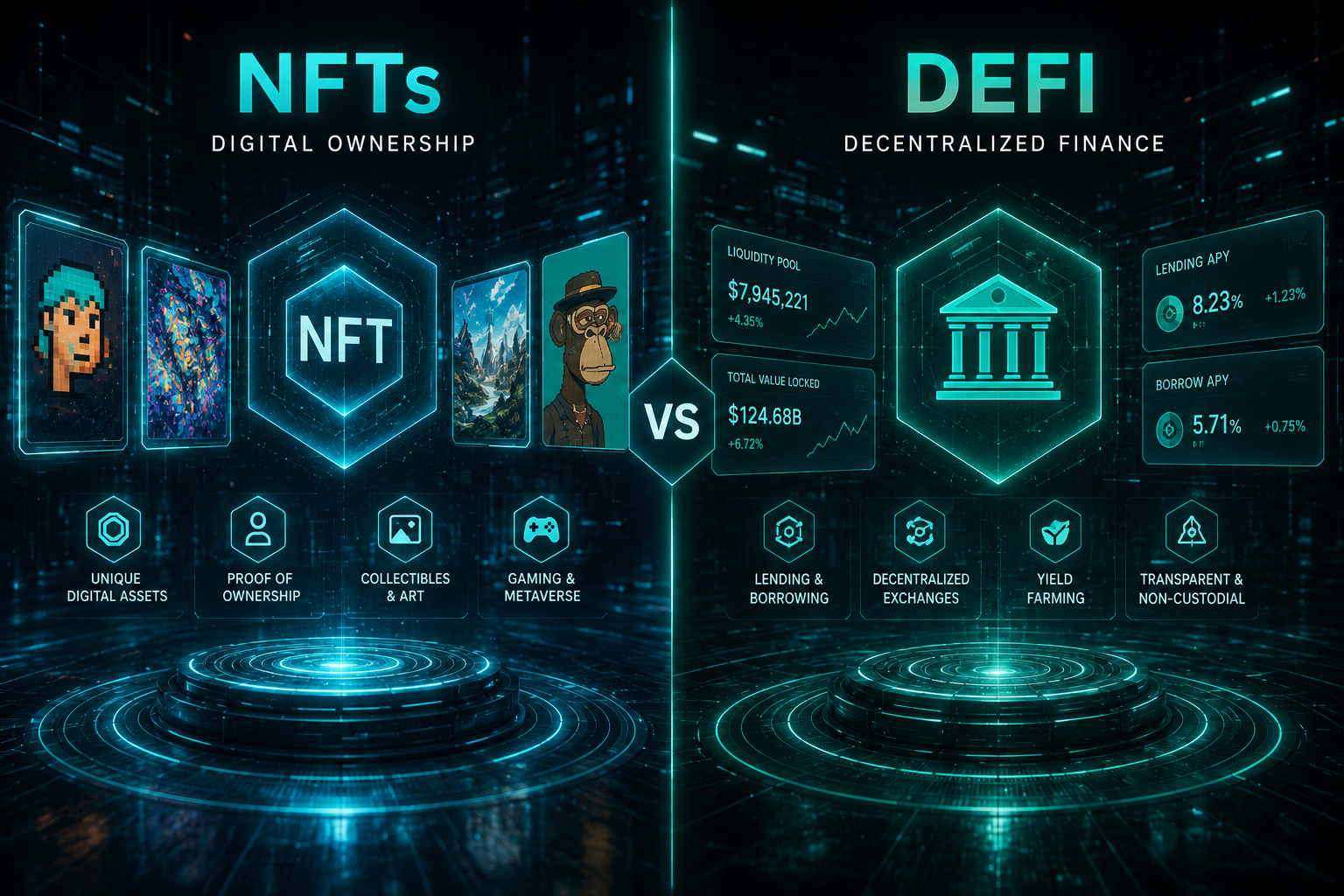
NFT vs DeFi Investment: Where Smart Money Is Flowing in 2026
Article at a Glance
- •DeFi’s total value locked (TVL) hit $129 billion in January 2026, signaling serious institutional and retail confidence in decentralized financial infrastructure.
- •NFTs are no longer just collectibles — in 2026, they function as loan collateral, governance tokens, and yield-generating instruments inside DeFi protocols like Aave.
- •The convergence of NFTs and DeFi, known as NFT-Fi, is arguably the most important development in crypto investing this year — and most investors are still sleeping on it.
- •Stablecoin supply reaching $311 billion is a strong signal of DeFi’s maturation and reduced reliance on pure price speculation for returns.
- •Choosing between NFT and DeFi investment comes down to your risk tolerance, liquidity needs, and whether you want predictable yield or asymmetric upside — this article breaks down exactly how to decide.
Table of Contents
- Smart Money Is Already Picking Sides in 2026
- What NFTs Actually Are (Beyond the Hype)
- What DeFi Actually Does With Your Money
- The Real Case for DeFi Investment in 2026
- The Real Case for NFT Investment in 2026
- Top NFT and DeFi Projects Leading the Merge in 2026
- How to Decide Where to Put Your Money
- NFT-Fi Is the Convergence That Changes Everything
- Frequently Asked Questions
The smartest crypto investors in 2026 aren’t arguing about which is better — they’re figuring out how to use both.
NFTs and DeFi started as completely separate corners of the crypto world. NFTs were about ownership, culture, and digital identity. DeFi was about rebuilding finance without banks. But the line between them has blurred fast, and where that line used to be is now where some of the most interesting investment opportunities in crypto currently sit. Understanding the differences — and the overlap — is what separates informed investors from those chasing yesterday’s trends when evaluating NFT vs DeFi investment strategies.
NFT vs DeFi Investment at a Glance: 2026
| Category | NFTs | DeFi |
|---|---|---|
| Asset Type | Unique, non-fungible digital assets | Fungible tokens, liquidity positions |
| Primary Use | Ownership, collateral, access, identity | Lending, borrowing, yield farming, swaps |
| Return Mechanism | Price appreciation, staking, royalties | Interest, liquidity fees, yield farming |
| Liquidity | Lower (market-dependent) | Higher (protocol-dependent) |
| Risk Profile | High volatility, demand-driven | Smart contract risk, protocol risk |
| 2026 Trend | NFT-Fi, RWA tokenization | AI integration, L2 scaling, stablecoins |
Smart Money Is Already Picking Sides in 2026
DeFi’s TVL crossing $129 billion in January 2026 wasn’t just a headline number — it was a confidence signal. Institutional capital, retail investors, and on-chain protocols all contributed to that figure, and it reflects a market that has moved well past the experimental phase. At the same time, NFT-Fi platforms are pulling serious liquidity by allowing NFT holders to unlock capital without selling their assets. Both sectors are growing, but they’re growing differently, and that distinction matters enormously for how you allocate when comparing NFT vs DeFi investment opportunities.
What NFTs Actually Are (Beyond the Hype)
NFTs — non-fungible tokens — are blockchain-based assets where each token is cryptographically unique. No two are identical, and ownership is verified on-chain without needing a central authority. That uniqueness was initially used for digital art and collectibles, but it’s now the foundation for a much broader set of financial instruments. In 2026, an NFT might represent a piece of real estate, a position in a liquidity pool, a membership in a DAO, or collateral in a lending protocol.
NFTs as Financial Instruments, Not Just Digital Art
The shift from NFTs as collectibles to NFTs as financial instruments is the single most important evolution in this space. Uniswap V3, for example, represents liquidity provider positions as NFTs — meaning your share of a liquidity pool is itself a unique, transferable token. This has real implications: you can sell your LP position, use it as collateral, or transfer it without unwinding the underlying liquidity. Projects like Blur and Tensor have also moved aggressively toward financializing NFT markets, introducing perpetuals and leverage trading on top of NFT floor prices.
Real-world asset (RWA) tokenization is accelerating this shift even further. Tokenized real estate, tokenized treasury bonds, and tokenized commodities are all being issued as NFTs — giving them the on-chain verifiability and programmability that traditional assets simply don’t have. This isn’t theoretical. Platforms like Centrifuge and Maple Finance are actively managing hundreds of millions in tokenized real-world debt instruments.
How NFT Value Is Determined in 2026
NFT valuation has become more sophisticated than “floor price times volume.” In 2026, value is driven by a combination of factors that go well beyond aesthetics or celebrity association.
Key NFT Value Drivers in 2026:
- Utility: Does the NFT unlock access, generate yield, or serve as collateral?
- Rarity: Trait scarcity within a collection still matters for speculative demand.
- Creator reputation: Established projects and verified creators command premium floors.
- Community and governance rights: DAOs that use NFTs for voting rights carry governance premiums.
- Cross-chain compatibility: NFTs that retain staking history and utility across multiple networks have a significant edge in liquidity and perceived value.
The days of purely speculative NFT buying based on hype cycles haven’t disappeared, but the investors making real returns in 2026 are focused on utility-backed NFTs — assets that do something, not just sit in a wallet looking rare.
The Rise of NFT-Fi: When NFTs Meet DeFi
NFT-Fi is the convergence category where NFTs and DeFi infrastructure collide, and it’s producing some of the most novel financial products in crypto right now. At its core, NFT-Fi allows NFT holders to access liquidity without selling — using their NFTs as collateral to borrow stablecoins or other assets through on-chain lending protocols.
How NFT-Fi Works in Practice (2026):
1. Collateralized NFT Lending: A holder deposits a blue-chip NFT (e.g., a CryptoPunk or a tokenized RWA) into a protocol like Aave or BendDAO and borrows against its appraised value.
2. NFT Staking: Some protocols allow NFTs to be staked in pools, generating yield in the protocol’s native token or in stablecoins.
3. NFT Fractionalization: High-value NFTs are split into fungible ERC-20 tokens, allowing smaller investors to gain exposure to assets they couldn’t otherwise afford.
4. NFT Perpetuals: Platforms like Blur allow traders to open leveraged long or short positions on NFT collection floor prices — introducing derivative mechanics directly into the NFT market.
This infrastructure is still maturing, but it’s already changing how serious investors think about NFT exposure. Instead of binary buy-and-hold or sell decisions, NFT-Fi creates a spectrum of strategies that mirror what DeFi has offered fungible token holders for years.
The wallet experience matters enormously here. Most NFT-Fi actions — collateralizing, staking, bridging cross-chain — happen inside a single wallet interface, and in 2026 the focus has shifted toward making risk visible during these interactions. Poor UX in collateral flows has caused real losses in prior cycles, and the leading protocols are actively engineering around that problem. For a deeper understanding of these challenges, explore why most crypto investors lose money and the strategies to avoid such pitfalls.
What DeFi Actually Does With Your Money
DeFi replaces traditional financial intermediaries — banks, brokers, clearinghouses — with smart contracts running on public blockchains. When you deposit assets into a DeFi protocol, a self-executing piece of code manages the lending, borrowing, or trading on your behalf, 24/7, without a human middleman taking a cut or gating your access.
Lending, Liquidity, and Yield: The Core DeFi Mechanics
The three primary ways DeFi generates returns for investors are lending, liquidity provision, and yield farming. Each carries a different risk profile and requires a different level of active management.
Lending is the most straightforward: you deposit an asset like ETH or USDC into a protocol like Aave or Compound, and borrowers pay interest to use it. You earn a portion of that interest automatically, with rates adjusting algorithmically based on supply and demand. It’s the closest DeFi equivalent to a high-yield savings account, except the rates are set by code and market conditions, not a board of directors.
Liquidity provision involves depositing two assets into an automated market maker (AMM) like Uniswap or Curve to facilitate trading. In return, you earn a share of the trading fees generated by every swap that routes through your liquidity pool. The risk here is impermanent loss — when the price ratio of your deposited assets shifts, you can end up with less value than if you’d simply held them.
Leading DeFi Protocols in 2026:
- Aave: Leading money market protocol, supports NFT collateral for select assets, multi-chain deployment
- Uniswap V3: Concentrated liquidity AMM, LP positions represented as NFTs, dominant DEX volume
- Curve Finance: Stablecoin-optimized AMM, critical infrastructure for stablecoin liquidity across DeFi
- Pendle Finance: Yield tokenization protocol, allows trading of future yield separately from principal
- MakerDAO (Sky): Decentralized stablecoin issuer, DAI backed by on-chain collateral including RWAs
Yield farming stacks multiple DeFi strategies on top of each other — depositing LP tokens into additional protocols to earn governance token rewards on top of base fees. It generates the highest potential returns but compounds smart contract risk with every additional protocol layer you add.
How Returns Are Generated in Each Model
DeFi and NFTs generate returns through fundamentally different mechanisms, and understanding that difference is the starting point for any serious allocation decision. DeFi returns are largely protocol-driven — interest rates, fee shares, and token incentives that are algorithmically determined and visible on-chain before you commit a single dollar. NFT returns, by contrast, are market-driven — dependent on buyer demand, cultural momentum, and increasingly, the utility the NFT unlocks within a broader ecosystem.
NFT vs DeFi Return Mechanisms:
- DeFi lending yield: Earned passively by supplying assets to money markets like Aave or Compound — rates fluctuate with borrow demand
- Liquidity provider fees: Earned by facilitating trades on AMMs like Uniswap V3 — proportional to your share of the pool and trading volume
- Yield farming rewards: Governance tokens distributed as incentives for providing liquidity — high APY but subject to token price volatility
- NFT price appreciation: The most common NFT return mechanism — buy low, sell when demand drives the floor price up
- NFT staking rewards: Some collections pay holders in native tokens for locking NFTs in protocol vaults
- NFT royalties (creator-side): Creators earn a percentage of every secondary sale — a passive income stream for original minters
- Collateral borrowing: NFT holders borrow against their assets in NFT-Fi protocols, accessing liquidity without triggering a taxable sale
The critical distinction is predictability. DeFi yields, while variable, can be modeled, backtested, and stress-tested against historical borrow rates. NFT returns cannot — they are subject to sentiment shifts that can move floor prices 70% in either direction within a single week. That unpredictability is both the risk and the opportunity, depending on your entry point and exit strategy.
For investors who want compounding, on-chain yield with defined risk parameters, DeFi has a structural advantage. For investors willing to do deep research on specific collections or RWA-backed NFT projects, the asymmetric upside of a well-timed NFT position still exists — it just requires a completely different analytical framework than traditional asset investing.
Risk Profiles: Volatility, Smart Contract Exposure, and Market Demand
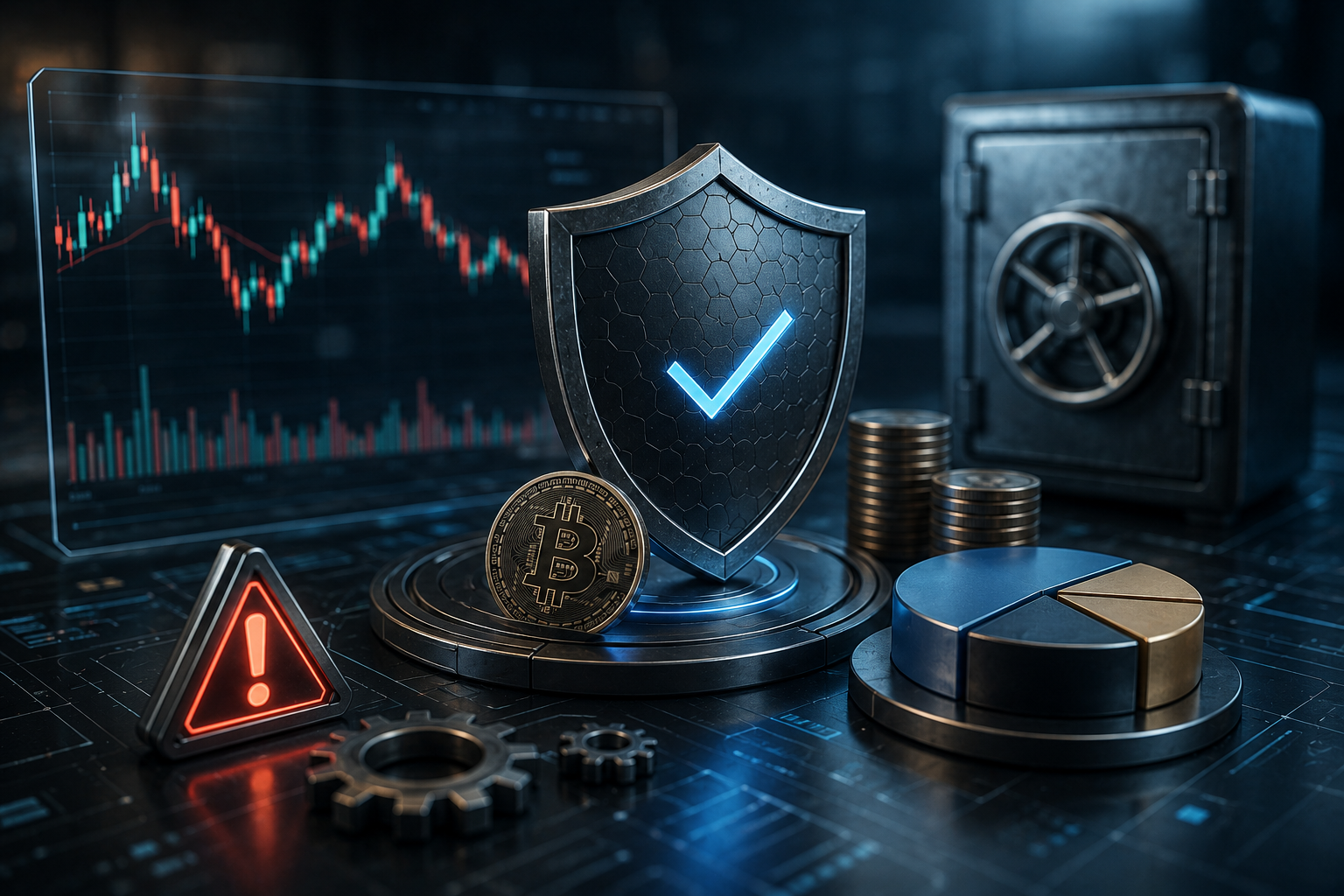
Every investment in crypto carries risk, but the type of risk in DeFi versus NFTs is different enough that they require separate risk management frameworks. DeFi’s primary risks are technical: smart contract vulnerabilities, oracle manipulation, liquidity crises, and governance attacks. The 2022 Wormhole bridge exploit ($320 million lost) and the 2023 Euler Finance hack ($197 million lost and largely recovered) are reminders that code risk is real, even in audited protocols. In 2026, formal verification and AI-assisted audit tools have raised the security bar, but they haven’t eliminated the risk entirely.
NFT risk is predominantly market and sentiment risk. A collection that commands a 10 ETH floor today can drop to 0.5 ETH within a quarter if the team abandons the project, a larger cultural trend shifts, or whale holders decide to exit simultaneously. Unlike DeFi positions that generate yield while you hold, an NFT sitting in your wallet in a declining market is purely a depreciating asset with no income offset. The exception, increasingly, is utility-backed NFTs inside NFT-Fi protocols where the asset is actively generating yield or serving as collateral — but even those carry liquidation risk if the NFT’s appraised value drops below the loan threshold.
Regulatory risk applies to both, but differently. MiCA (Markets in Crypto-Assets regulation) in Europe has introduced clearer frameworks for DeFi-adjacent activities, while NFTs sit in a grayer regulatory zone — particularly those that function more like securities than collectibles. Investors in both spaces should be monitoring how regulators classify yield-generating NFTs and whether DeFi protocols serving retail users face additional compliance requirements in 2026 and beyond.
Where Each Asset Is Bought, Sold, and Managed
DeFi positions are managed directly through protocol interfaces like app.aave.com, app.uniswap.org, or aggregators like DeFiLlama and Zapper that give you a unified view across multiple positions. NFTs are primarily traded on marketplaces — OpenSea, Blur, and Tensor (Solana) dominate volume — with Blur’s pro-trader interface now setting the standard for high-frequency NFT trading. Cross-chain NFT management has improved significantly, with wallets like Rabby and Rainbow offering multi-chain portfolio views that track NFT positions alongside DeFi holdings in a single dashboard.
The Real Case for DeFi Investment in 2026
DeFi in 2026 is not the wild west it was in 2021. The infrastructure is more robust, the user experience has improved dramatically, and the capital flowing through these protocols is increasingly institutional. That maturation doesn’t eliminate risk, but it does mean the risk-to-reward ratio for thoughtful DeFi participation looks meaningfully different than it did three years ago. The core thesis for DeFi investment is simple: permissionless access to financial primitives that generate real, on-chain yield from real economic activity — without a single gatekeeper deciding whether you qualify.
Permissionless Access: Anyone With a Wallet Can Participate
One of DeFi’s most underappreciated advantages is that it doesn’t care who you are. No credit check, no KYC for base-layer protocol access, no minimum account balance, no business hours. A wallet and an internet connection are the only requirements to deposit into Aave, provide liquidity on Uniswap, or mint a yield-bearing stablecoin through MakerDAO. For investors in markets where traditional financial infrastructure is unreliable or exclusionary, this isn’t a minor feature — it’s the entire value proposition.
Stablecoin Supply at $311B: What It Signals for DeFi Stability
The global stablecoin supply reaching $311 billion is one of the most significant macro signals for DeFi’s health in 2026. Stablecoins are the lifeblood of DeFi — they’re the primary collateral in lending markets, the dominant trading pair on DEXs, and the preferred yield-bearing asset for risk-averse participants. When stablecoin supply grows, it means more capital is entering the on-chain ecosystem and staying there, rather than cycling back to fiat. That sustained on-chain liquidity directly supports DeFi TVL and keeps lending rates competitive.
What’s particularly notable about the $311 billion figure is the composition. It’s no longer dominated by a single issuer — USDT and USDC remain the largest, but decentralized stablecoins like DAI (now rebranded under the Sky ecosystem) and newer entrants like Ethena’s USDe have captured meaningful market share. A diversified stablecoin ecosystem is a more resilient one, and for DeFi investors, that resilience translates directly into more stable lending markets and more reliable yield generation across protocols.
AI-Powered DeFi Protocols Are Reducing Human Error
AI Integration in DeFi (2026):
- Automated risk scoring: AI models now assess borrower collateral health in real time, flagging at-risk positions before liquidation thresholds are breached
- Dynamic fee optimization: Protocols like Uniswap V4 are integrating hooks that use predictive models to adjust LP fee tiers based on expected volatility
- Yield routing: Aggregators like Yearn Finance use AI-assisted strategies to automatically shift capital toward the highest risk-adjusted yield across dozens of protocols
- Wallet simulation: Leading wallets now simulate transactions before execution, showing users exactly what will happen to their collateral ratio or LP position before they sign
These AI integrations aren’t just quality-of-life improvements — they’re materially changing the risk profile of DeFi participation. The biggest source of user losses in prior DeFi cycles wasn’t smart contract hacks; it was user error: misconfigured positions, misunderstood liquidation mechanics, and missed rebalancing windows. AI-assisted interfaces are closing that knowledge gap for retail investors in a way that protocol documentation never could.
The practical implication for investors is that DeFi strategies that previously required active monitoring and deep technical knowledge are becoming increasingly accessible to those who understand the fundamentals but don’t want to live in a terminal. Automated vaults, AI-optimized yield strategies, and smart transaction simulation are lowering the operational barrier to serious DeFi participation.
That said, automation doesn’t eliminate the need for understanding. An investor who blindly deposits into an AI-managed vault without understanding the underlying strategy — the collateral types, the liquidation conditions, the withdrawal mechanics — is still exposed to compounded risk if something goes wrong at the protocol level. The AI handles execution; the investor still needs to handle strategy selection.
The Real Case for NFT Investment in 2026
NFTs have gone through a brutal correction since the 2021 peak, and that shakeout has actually made the remaining landscape more investable. The purely speculative, hype-driven collections have largely lost their floors, leaving behind projects with genuine utility, institutional backing, or real-world asset integration. The NFT market in 2026 is smaller by collection count but stronger by infrastructure — and the introduction of NFT-Fi mechanics means that holding an NFT no longer has to mean illiquid, yield-free exposure.
The investors making money in NFTs right now aren’t generalists — they’re specialists who understand specific niches: RWA tokenization, gaming asset economies, or protocol-owned NFT positions inside DeFi infrastructure. That specificity is the key. Broad exposure to “the NFT market” as a category is a losing strategy. Targeted exposure to NFTs that serve a defined financial or utility function within a growing ecosystem is where the asymmetric opportunity sits in 2026.
NFTs as Collateral on Lending Platforms Like Aave
Aave’s integration of NFT collateral marked a turning point in how the market perceives NFT liquidity. Instead of being forced to sell an NFT to access capital, holders can now deposit select blue-chip NFTs as collateral and borrow stablecoins against their appraised value — with loan-to-value ratios typically ranging from 30% to 60% depending on the collection’s liquidity and price stability. This fundamentally changes the holding calculus: an NFT is no longer a purely illiquid asset. It’s a collateral position that can generate working capital while the holder maintains long exposure.
The risk in this model is liquidation. If the NFT’s floor price drops significantly and the borrowed position exceeds the protocol’s LTV threshold, the NFT can be liquidated — sold at auction to repay the loan. This happened to several holders during sharp market corrections in 2023, and it remains the primary risk in any NFT collateral strategy. Managing that risk means maintaining a conservative LTV (borrowing well below the maximum), monitoring floor prices actively, and having capital available to repay or add collateral if needed.
BendDAO and NFTfi remain the more specialized NFT lending platforms alongside Aave, each with different liquidity models. BendDAO uses a pooled liquidity model where lenders deposit ETH and earn interest from NFT-backed loans. NFTfi operates peer-to-peer, matching individual lenders and borrowers directly — which often results in more favorable terms for rare or high-value NFTs that don’t fit neatly into pool-based pricing models. Knowing which platform suits your specific NFT is itself a skill worth developing in 2026.
Cross-Chain NFTs That Retain Staking History Across Networks
Cross-chain NFT infrastructure has matured significantly, and one of the most valuable features emerging in 2026 is staking history portability — the ability for an NFT to carry its on-chain activity record across multiple networks. This matters because some protocols assign additional utility, governance weight, or yield multipliers based on how long and how consistently an NFT has been staked. An NFT that has been actively staked for 18 months carries verifiably more on-chain history than one that was just minted, and that history is increasingly being used as a signal for reputation, access tiers, and reward rates within multi-chain ecosystems.
Projects building on LayerZero’s Omnichain NFT (ONFT) standard and Chainlink’s Cross-Chain Interoperability Protocol (CCIP) are leading this development. The practical investor implication is straightforward: NFTs with cross-chain utility and portable staking history have a defensible value floor that purely aesthetic collectibles do not. They’re embedded in protocol economics in a way that creates sustained demand beyond speculative trading — which is exactly the kind of structural support that produces durable returns rather than cycle-dependent spikes.
Top NFT and DeFi Projects Leading the Merge in 2026
The most interesting projects in crypto right now aren’t purely NFT or purely DeFi — they’re the ones building at the intersection. Aave has expanded NFT collateral support and is actively developing cross-chain liquidity infrastructure. Uniswap V3 and V4’s LP-as-NFT model has already blurred the line between DeFi position management and NFT ownership. Blur has evolved from a marketplace into a full financial stack for NFTs, with lending, perpetuals, and aggregated liquidity tools that mirror what DeFi offers for fungible tokens. On the RWA side, Centrifuge is tokenizing real-world debt instruments as NFTs and plugging them directly into DeFi lending markets — a use case that bridges traditional finance, NFTs, and DeFi in a single transaction flow.
Solana-based projects deserve attention here as well. Tensor has become the dominant NFT marketplace on Solana, and its integration with DeFi primitives native to the Solana ecosystem — particularly around compressed NFTs and staking — is producing a user experience that Ethereum-based platforms are actively trying to match. For investors willing to operate across chains, the Solana NFT-Fi ecosystem offers some of the most capital-efficient strategies available in 2026, with lower gas costs enabling strategy sizes that would be economically impractical on Ethereum mainnet.
How to Decide Where to Put Your Money
The NFT vs DeFi question isn’t really a binary choice in 2026 — it’s a portfolio construction question. The right answer depends on three variables: your risk tolerance, your liquidity needs, and whether you have the time and knowledge to actively manage positions. If you answer those three questions honestly, the allocation decision becomes significantly clearer.
If You Want Steady Yield, DeFi Has the Edge
DeFi’s yield mechanisms are transparent, on-chain, and algorithmically consistent in a way that NFT returns simply aren’t. When you deposit USDC into Aave, you can see the current supply APY, the historical rate range, the total liquidity in the pool, and the utilization rate that drives the interest calculation — all before you commit a single dollar. That level of pre-investment visibility is something no NFT marketplace can offer, because NFT returns depend on future buyer demand that no smart contract can predict or guarantee. For a deeper understanding, explore this comparison of DeFi yield farming vs traditional savings.
For investors prioritizing capital preservation with yield generation — particularly those entering from traditional finance backgrounds — DeFi’s stablecoin strategies offer the most familiar risk profile. Supplying USDC or USDT to Aave or Compound generates yield without taking on crypto price volatility, because the principal is denominated in a dollar-pegged asset. The risk is protocol risk, not price risk, and that’s a distinction sophisticated investors understand how to underwrite.
Top DeFi Yield Strategies (2026):
- Aave USDC supply: Variable APY driven by borrow demand, low liquidation risk, multi-chain deployment on Ethereum, Arbitrum, Polygon, and Base
- Curve Finance stablecoin pools: Earn trading fees from stablecoin swaps, lower impermanent loss risk due to like-asset pairing
- Pendle Finance yield trading: Lock in fixed yield by separating principal tokens from yield tokens — a more advanced strategy for predictable return modeling
- Ethena USDe staking: Earn yield from delta-neutral ETH derivatives strategies, higher APY than traditional stablecoin lending but with additional complexity
- Yearn Finance vaults: AI-optimized automated yield strategies that route capital across protocols to maximize risk-adjusted returns without active management
The compounding effect in DeFi is also worth emphasizing. Unlike NFT holding, where your asset either appreciates or doesn’t, DeFi yield compounds continuously — and in protocols with auto-compounding vaults like Yearn or Beefy Finance, that compounding happens automatically without you paying gas on every reinvestment transaction. Over a 12-month horizon, the difference between manually compounding and auto-compounding a mid-range DeFi position can represent a meaningful percentage of total return.
If You Want High-Risk, High-Upside Bets, NFT-Fi Is Worth Watching
NFT-Fi is where the asymmetric upside lives in 2026, but it requires a completely different investment mindset. You’re not modeling yield curves — you’re making directional bets on specific ecosystems, collections, or RWA categories, then using DeFi infrastructure to amplify or hedge those positions. A well-researched NFT with strong utility, cross-chain staking history, and integration into an active DeFi protocol can outperform any stablecoin yield strategy by orders of magnitude. The catch is that the downside can be equally severe, and the research burden is substantially higher. This isn’t passive investing — it’s active, high-conviction positioning that requires ongoing monitoring and a clear exit strategy defined before entry.
Cross-Chain and Multi-Chain Strategies That Combine Both
The most sophisticated investors in 2026 aren’t choosing between NFTs and DeFi — they’re building multi-layered strategies that use both. A common structure looks like this: hold a utility-backed NFT with cross-chain staking history, deposit it as collateral on a lending platform like Aave or BendDAO, borrow stablecoins against it, then deploy those borrowed stablecoins into a DeFi yield strategy on a Layer 2 network like Arbitrum or Base where gas costs are low enough to make the math work. The NFT retains its long exposure and staking accrual. The borrowed capital generates DeFi yield. The net position earns from two directions simultaneously — provided the NFT’s floor price stays above the liquidation threshold. This is advanced capital efficiency, not speculation, and it’s the strategy architecture that institutional NFT-Fi desks are increasingly standardizing around in 2026.
NFT-Fi Is the Convergence That Changes Everything
The NFT vs DeFi debate was always a false dichotomy — and NFT-Fi has made that undeniable. The most durable investment opportunities in crypto in 2026 exist at the intersection: NFTs that generate yield, carry on-chain history, serve as collateral, and plug into DeFi infrastructure that transforms illiquid digital assets into active financial instruments. DeFi provides the rails. NFTs provide the unique, programmable containers of value. Together, they’re building a financial system that traditional markets genuinely cannot replicate — and the investors who understand both sides of that equation are the ones positioned to capture the returns that come with being early to a structural shift rather than late to a trend. The convergence isn’t coming. It’s already here. The only question is whether you’re building a strategy around it or watching from the sidelines.
The NFT-Fi Reality: The most durable investment opportunities in crypto exist at the intersection — NFTs that generate yield, carry on-chain history, serve as collateral, and plug into DeFi infrastructure. DeFi provides the rails. NFTs provide the unique, programmable containers of value. The convergence isn’t coming. It’s already here.
Frequently Asked Questions
What is the main difference between NFT and DeFi investment?
NFT investment involves buying unique, non-fungible digital assets whose returns are driven by market demand, utility, and rarity. DeFi investment involves deploying capital into decentralized financial protocols — lending markets, liquidity pools, yield vaults — that generate returns through algorithmically determined interest rates and fee distributions. The core difference is return mechanism: NFT returns are market-driven and unpredictable, while DeFi returns are protocol-driven and transparently modeled on-chain.
NFT vs DeFi Investment: Key Differences
- NFTs: Non-fungible, unique, value driven by demand and utility, lower liquidity, asymmetric upside
- DeFi: Fungible positions, value driven by protocol economics, higher liquidity, more predictable yield
- NFT-Fi: Hybrid strategies that use NFTs as collateral or yield-generating instruments within DeFi infrastructure
- Risk type differs: NFT risk is primarily sentiment and market risk; DeFi risk is primarily smart contract and protocol risk
In 2026, the distinction has blurred significantly. Uniswap V3 LP positions are NFTs. RWAs are tokenized as NFTs and deployed into DeFi lending markets. Understanding both sides is no longer optional for serious crypto investors — it’s the baseline. For more insights, explore the comparison between DeFi yield farming and traditional savings.
Can you use NFTs to earn passive income through DeFi?
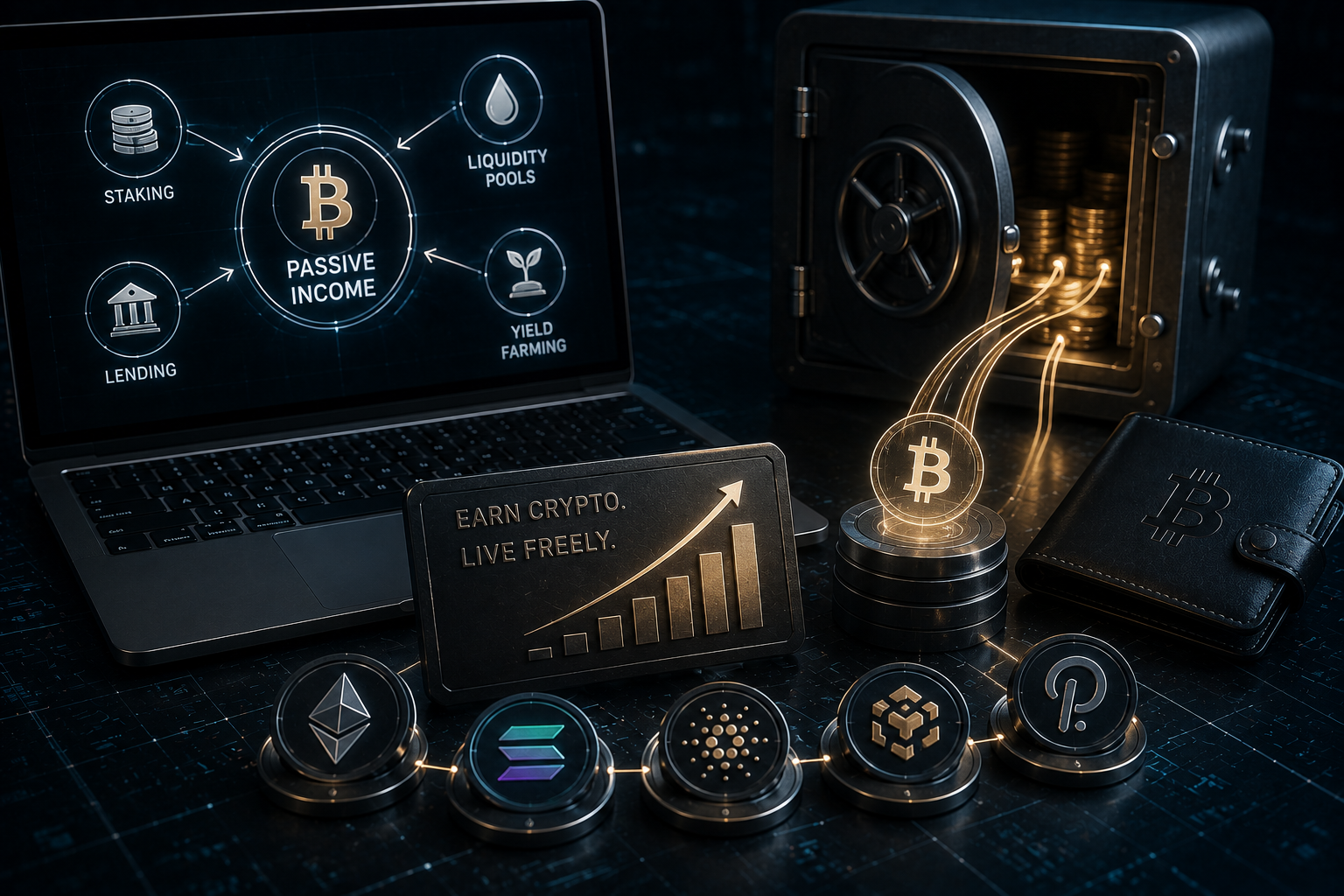
Yes — and this is one of the most important developments in crypto investing in 2026. Through NFT-Fi protocols like Aave, BendDAO, and NFTfi, holders can deposit qualifying NFTs as collateral and borrow stablecoins against their value, which can then be deployed into yield-generating DeFi strategies. Additionally, some protocols allow direct NFT staking for token rewards, and fractionalized NFTs can be deposited into liquidity pools to earn trading fees. The passive income isn’t automatic — it requires active monitoring of collateral ratios and market conditions — but the mechanics exist and are increasingly accessible to non-technical investors through improved wallet interfaces and protocol UX.
Is DeFi safer than NFT investing in 2026?
Neither is “safe” in the traditional sense, but the risk types are different enough that comparing them requires clarity on what kind of risk you’re evaluating. DeFi carries smart contract risk, oracle risk, and protocol governance risk — these are technical risks that can result in sudden, large losses if a vulnerability is exploited. The 2023 Euler Finance hack ($197 million) and similar incidents are reminders that even audited code can fail. That said, formal verification, AI-assisted auditing, and bug bounty programs have materially improved protocol security standards in 2026.
NFT investing carries market and sentiment risk that can be equally devastating but manifests more gradually. A collection’s floor price can decline 80% over months as cultural interest fades, and unlike a DeFi hack, there’s no exploit to point to — just a market that moved on. For investors who want more defined risk parameters and yield that doesn’t depend on finding a willing buyer, DeFi stablecoin strategies offer a more controlled risk environment. For investors willing to accept higher variance in exchange for asymmetric upside, NFT-Fi positions in utility-backed collections represent a different — not necessarily larger — category of risk.
What is NFT-Fi and why does it matter for investors?
NFT-Fi is the category of financial products and protocols that combine NFTs with DeFi infrastructure to unlock liquidity and yield from non-fungible assets. It matters for investors because it fundamentally changes the liquidity profile of NFT ownership. Before NFT-Fi, holding an NFT meant holding an illiquid asset — your only option to access its value was to sell it. NFT-Fi introduces a third option: collateralize it, borrow against it, stake it, or fractionalize it — all while maintaining your long position and continuing to accumulate staking history and governance rights.
For the broader market, NFT-Fi matters because it creates sustained demand for high-quality NFTs beyond speculative trading cycles. When an NFT has utility inside a financial protocol — as collateral, as a yield-generating stake, as a governance instrument — it has a value floor that doesn’t evaporate when speculative sentiment shifts. That utility-backed floor is what separates investable NFT assets from pure collectibles in 2026, and NFT-Fi is the infrastructure making it possible.
Which blockchains are leading NFT and DeFi activity in 2026?
Leading Blockchains for NFT & DeFi (2026):
- Ethereum: Dominant for DeFi TVL and blue-chip NFT collections; highest security and liquidity but highest gas costs on mainnet
- Arbitrum: Leading Ethereum Layer 2 for DeFi activity; lower fees enable smaller position sizes and more frequent compounding
- Base: Coinbase-backed L2 with rapidly growing DeFi ecosystem and increasing NFT activity; consumer-focused UX improvements driving retail adoption
- Solana: Dominant for high-frequency NFT trading via Tensor; fast finality and low fees make it ideal for NFT-Fi strategies that require active position management
- Polygon: Strong RWA tokenization activity and enterprise DeFi deployments; significant institutional usage for tokenized real-world assets
Ethereum remains the settlement layer of choice for high-value positions where security trumps cost. But the practical reality of investing in DeFi and NFT-Fi in 2026 is that most active strategies run on Layer 2 networks — Arbitrum and Base for DeFi, Solana for NFT trading — where transaction costs don’t erode the economics of smaller position sizes.
Cross-chain infrastructure has improved to the point where operating across multiple networks is no longer the technical barrier it was in 2022. Bridges like Stargate (built on LayerZero) and Chainlink’s CCIP have made asset transfers between chains faster, cheaper, and more secure. Multi-chain portfolio management tools like Zapper and DeBank aggregate positions across all major networks in a single dashboard, removing the operational complexity that previously kept retail investors siloed on a single chain. For those interested in the broader implications, check out this Ethereum vs Solana blockchain comparison to understand how different networks are evolving.
For new investors entering the space in 2026, the recommended starting point is Ethereum mainnet for understanding protocol mechanics, followed by migration to a preferred Layer 2 for active strategy execution. Starting on a lower-security chain to save on fees before understanding what you’re protecting is a risk management mistake that experienced investors consistently flag as a source of avoidable losses.
The bottom line is that chain selection is itself a strategic decision in 2026 — not just a UX preference. Where you deploy capital determines what protocols you can access, what fees you’ll pay, and how quickly you can move in response to market conditions. Understanding the trade-offs between security, cost, and ecosystem depth on each chain is a core skill for anyone building a serious NFT or DeFi portfolio this year. For more insights, consider exploring common mistakes and winning strategies in the crypto investment landscape.
DISCLAIMER: This article is for informational purposes only and does not constitute financial advice. Cryptocurrency investments, including both NFT and DeFi strategies, carry significant risk. Always Do Your Own Research (DYOR) before making any investment decisions. The NFT vs DeFi investment comparison provided here is for educational purposes only.




Latest
DeFi News
08 Jul 2026
DeFi News
04 Jul 2026
DeFi News
21 May 2026
DeFi News
13 May 2026
DeFi News
15 Mar 2026