Categories
Altcoins News

Polkadot Founder Donates Nearly $6M in DOT To Ukraine

Source: Twitter

The crypto community’s call for Ukraine to accept other cryptocurrencies has been answered. The official Ukraine Twitter account announced that it will now accept Polkadot (DOT) donations, with other cryptocurrencies to follow.

Polkadot co-founder Gavin Wood previously stated that if Ukraine wallets added DOT, he would personally contribute $5 million. He followed through on his promise, donating 298,367.2269896686 DOT (approximately $5.7 million) to Ukrainian wallets.

According to estimates, total cryptocurrency donations to Ukrainian charities, the military, and the government have exceeded $37 million. Wood’s single donation accounts for more than 10% of all crypto donations.

Wood’s donation is, in fact, one of the largest individual crypto donations to date. FTX, Sam Bankman-exchange Fried’s platform, donated $25 to each Ukrainian on his platform, while Chain.com CEO Deepak Thapliyal donated 100 Ether (ETH), or over $280,000 USD.

According to Polkadot blockchain data, the Polkadot ecosystem has already contributed over $210,000 to the official DOT wallet for Ukraine since this morning.

Coingate, a Lithuanian-based fintech, provides a workaround for cryptocurrencies that are not accepted in Ukraine. Coingate, as a cryptocurrency payment gateway, enables holders of other cryptocurrencies to donate to Ukraine.

Coingate handles cryptocurrency payments for over 70 different cryptocurrencies, eventually crediting the Ukraine bank account with euros. Coingate stated that they have raised 7000 EUR from various crypto communities in the last five days.

Up to now, the crypto community has been quick to respond to Ukraine’s plight with donations and words of encouragement. Ukraine’s innovative crypto activity, according to Twitter users, was an attempt to make history.

Categories
Blockchain News

Hashstack To Bring Under-Collateralized Loans to DeFi Space

Hashstack Finance is pleased to announce the completion of its $1 million seed funding round, which follows the launch of its Open Protocol testnet. The funds will be used to further develop the Open Protocol, attract top talent, and grow the community.

Hashstack Finance is a DeFi platform with an Open protocol that seeks to disrupt the DeFi lending market by providing uncollateralized loans. It highlights the lack of under-collateralized loaning opportunities for retail cryptocurrency investors by allowing loans at up to three times collateral to serve personal financial needs and trading capital requirements. Users can obtain under-collateralized loans to avoid selling long-term holdings to meet short-term cash needs.

Several well-known investors participated in the seed round, including GHAF Capital Partners, Moonrock Capital, Kane & Rao Group, Nimrod Lehavi, MarketAcross, and Chainridge Capital.

Vinay, the founder of Hashstack Finance, stated that bringing under-collateralization to the DeFi is critical to Hashstack’s mission. “We are grateful to have the support of some of the most astute investors in this ecosystem.” The funds raised will be used to hire new employees, develop new products, and expand the company.

Hashstack’s Open Protocol is the only autonomous lending solution in DeFi that allows for non-custodial, under-collateralized loans with a collateral-to-loan ratio of up to 1:3. It means you can borrow up to $300 while only putting up $100 as collateral. You can withdraw $70 (i.e. up to 70% collateral) while using $230 as in-platform trading capital.

According to Kevin Kurian, General Partner at Kane & Rao Group, “Getting the maximum value out of your assets is essential in any market. Hashstack offers a solution that the market has not really seen before. We backed Vinay and his team at Hashstack with our capital to bring forward these new ideas.”

While current DeFi lending protocols necessitate over-collateralization, Hashstack is excited to show borrowers what DeFi lending will look like in the future. Open protocol provides instant under-collateralized loans for personal cash needs, leveraged investments in IDOs, or trading capital.

While current DeFi lending protocols necessitate over-collateralization, Hashstack is excited to show borrowers what DeFi lending will look like in the future. Open protocol provides instant under-collateralized loans for personal cash needs, leveraged investments in IDOs, or trading capital.

Categories
Blockchain News

The United States Blocks Russia’s Crypto Access

According to recent reports, the US government is currently in discussions with some of the largest US-based crypto companies about ways to limit Russia’s access to crypto services. The move is the latest in a series of significant steps taken by the White House to deter Russia aggression.

Crypto.com, Binance, Kraken, and Bittrex are among the country’s largest crypto exchange service providers, with strong regulatory ties to the US market. The US government will focus on these exchanges and other crypto service providers in order to limit undue profit exploitation from frantic Russian users.

Foreign policy experts warned last week that the Russian government was bracing for a barrage of Biden sanctions and would seek to avoid them through the use of crypto.

As the conflict enters its fifth day and a delegate meeting in Belarus fails to reach a ceasefire, Russia continues to bear the brunt of a barrage of international sanctions aimed at its financial services and access to foreign investment.

At the moment, many of Russia’s top energy and finance companies have been barred from meeting global deadlines due to a list of assets allegedly linked to Vladimir Putin that have been targeted for seizure.

The EU’s top nations have already moved to exclude Russia’s entire banking system from the Society for Worldwide Interbank Financial Telecommunication (SWIFT) network, limiting access to desperately needed funds for war sustenance.

Other digital financial services, such as Apple Pay and Google Pay, have expressed their support for Ukraine. Hundreds of Russians were stranded at pay points after these services were temporarily disconnected, unable to make purchases. Even conflict-free countries, such as Switzerland, have expressed support for Ukraine and threatened sanctions against Russia.

Although it is unclear whether the US is acting in response to Ukraine’s request that the world restrict Russia’s access to crypto-financial services, its decision is favorable in all aspects. A few weeks ago, the Kremlin government struggled to legalize digital currencies before agreeing to a conditional approval in the first week of February.

Categories
Blockchain News

Ukraine Gets $5 Million in Crypto Donations

To repel the Russian invasion, the Ukraine government is seeking cryptocurrency donations. According to government tweets, wallets for Bitcoin and Ethereum have already received $4.9 million in cryptocurrency. On Saturday, nearly $3 million was donated to Ethereum wallets.

The Bitcoin wallet had received nearly $1 million in bitcoin, some of which had already been sent. Vice Prime Minister Mykhailo Fedorov offered addresses for donating Bitcoin, Ether, and the stablecoin Tether (USDT) in a tweet posted by Ukraine’s official Twitter account.

Due to the ongoing conflict, civilians-turned-refugees in Ukraine report losing access to their account balances and credit cards. According to the United Nations, over 150,000 people had fled Ukraine as of February 26. (UN).

While there was confusion over the intended use of the crypto donations, Ethereum’s Russian-born co-founder, Vitalik Buterin, shared a decentralized autonomous organization (DAO) initiative that focuses solely on Ukraine.

Pussy Riot member Nadya Tolokonnikova led UkraineDAO in releasing a 1/1 nonfungible token (NFT) of the Ukrainian flag in order to raise funds for Ukrainian nonprofits assisting victims of Putin’s war.

Despite the lack of confirmation, it now appears likely that communications to Ukrainian government addresses will be used directly by the government, while communications to the DAO will be redirected to the welfare of citizens via an NGO.

As soon as the Russia-Ukraine conflict erupted, prominent cryptocurrency entrepreneurs stepped in to help Ukrainians. FTX CEO Sam Bankman-Fried was one of the first Ukrainian traders to receive financial assistance from FTX.

Categories
Blockchain News Technology

Binance and Kraken Will Not Seize Russian Crypto Accounts

Following the European Union’s recent sanctions against Russia, leading cryptocurrency exchanges such as Binance and Kraken have stated that they have no plans to freeze the accounts of Russian nationals (EU).

Following a request by Ukraine’s vice prime minister, Mykhailo Fedorov, for major cryptocurrency exchanges to freeze accounts held by Russian citizens, the latest response from exchange operators became relevant.

Binance has confirmed that it will not freeze Russian users’ accounts. Providing the reasoning behind the platform’s decision, as stated by a spokesperson. They have no plans to unilaterally freeze the accounts of millions of innocent users. Cryptocurrency is intended to give people all over the world more financial freedom. That would be contradictory to the reason for the existence of crypto.

In a similar vein, Jesse Powell, the CEO of Kraken, stated in a Twitter thread that the platform will not seize the accounts of its Russian clients unless there is a legal requirement to do so.

Even though Binance and Kraken have refused to comply with the request to freeze Russian-held cryptocurrency accounts, the former crypto exchange has clarified that it will take a different approach to dealing with Russian authorities that have received sanctions without affecting innocent users.

Nevertheless, Binance has stated that if the sanctions increase, it may later block the accounts of any individuals on sanctions lists in order to ensure that all sanctions are fully met.

Following in the footsteps of Binance and Kraken, Dmarket, a platform that allows people to trade virtual in-game items, has barred users from Russia and Belarus from registering while also freezing their accounts. The Russian ruble has also been removed from Dmarket’s platform.

The ongoing conflict between Russia and Ukraine has had an impact on the cryptocurrency market in some way. From causing most cryptocurrencies’ prices to fall over the last week to increasing crypto transactions.

Ukraine’s non-governmental organizations (NGOs) and volunteer groups, including Come Back Alive, raised approximately $4 million in bitcoin donations to support soldiers in the ongoing conflict with Russia.

Categories
Blockchain News

Ukraine Wants CeXs to Freeze the Assets of Russian Crypto Traders

Mykhailo Fedorov, Ukraine Vice Prime Minister and Minister of Digital Transformation, has urged cryptocurrency exchanges to block Russian-based customers’ addresses.

 Fedorov said in a tweet on Sunday that it is critical to freeze not only the addresses associated with Russian and Belarusian politicians, but also to sabotage ordinary users.

Since Russian President Vladimir Putin launched a full-fledged military strike on Ukraine, there has been bloodshed and tears. In response to the unjustified assault, the international community has slapped Russia with a slew of sanctions.

For example, Russia’s central bank’s assets, as well as those of President Putin and Foreign Minister Sergey Lavrov, have been frozen. Furthermore, the United States, United Kingdom, and European Union have removed Russia from the international financial intermediary SWIFT, effectively preventing Russia from sending and receiving transactions to and from its allies such as Belarus.

Nonetheless, there are concerns that the Russian government, as well as the heinous oligarchs, may turn to crypto to avoid the crippling sanctions imposed on the country following the invasion of Ukraine. Cryptocurrencies, according to observers, can be used as a workaround for the sanctions because they allow for borderless payments.

As of now, no major cryptocurrency exchange has chosen to freeze Russian users’ accounts. However, the Ukraine-based digital asset marketplace DMarket has “severed all ties with Russia and Belarus as a result of Ukraine’s invasion.” As a result, DMarket will freeze all previously registered users’ accounts and donate the proceeds to the war effort.

Meanwhile, the Ukrainian government is accepting cryptocurrency donations to help fund its military campaign against Putin’s army. Since the start of the donation campaigns, Ukraine has received over $30 million in various cryptocurrencies, according to estimates. Bitcoin has been trading sideways in recent months, with the latest hostilities between Ukraine and Russia only worsening its prospects.

Following Russia’s invasion of Ukraine, Bitcoin plummeted last week, triggering a crypto market freefall that saw more than $200 billion in value wiped out in less than 24 hours, a loss of more than 11%. The market’s decline boded ill for its safe-haven status, as investors unloaded their holdings as a result of the chaos caused by Russia’s invasion of Ukraine.

The crypto market correction was mirrored in mainstream financial markets, with the American S&P 500 and Nasdaq both falling by more than 2% in response to geopolitical developments.

BTC is currently trading at $41,207. The global cryptocurrency market cap is estimated to be around $1.8 trillion. It remains to be seen whether BTC and the broader crypto market will rise further as peace talks between Ukraine and Russia begin in Belarus.

Categories
Blockchain Business News

Visa and Tribal Partner To Expand Financing Options

Tribal Credit, a cryptocurrency-focused enterprise payment platform, has partnered with Visa to expand credit and financing options for small and medium-sized businesses across Latin America, highlighting the growing synergies between traditional payment providers and the blockchain industry.

Tribal’s collaboration with Visa enables it to issue business credit cards in local denominations and currencies throughout Latin America, including Mexico, Brazil, Colombia, Argentina, Chile, Peru, Panama, Uruguay, and the Dominican Republic. According to a Tribal spokesperson, the company’s initial focus will be on providing this credit facility to the countries of Colombia, Peru, and Chile.

While the Visa partnership focuses on providing traditional financing solutions to small businesses, Tribal’s technology also allows enterprises to accept payments and transfer funds using cryptocurrencies and blockchain technology. Tribal collaborated with Latin American crypto exchange Bitso and the Stellar Development Foundation in December 2021 to launch a new enterprise cross-border payment service based on Stellar’s USD stablecoin.

Tribal cited El Salvador’s Bitcoin Law and Latin America’s growing acceptance of cryptocurrencies as reasons to continue developing blockchain-based payment solutions.

Visa, too, has broadened its view of cryptocurrencies, even developing a blockchain interoperability project for digital payments. The Universal Payment Channel project is investigating blockchain interoperability with the goal of streamlining digital asset transfers across chains. The credit card company announced a new crypto consulting service in December 2021 to assist merchants and banks in integrating digital assets into their business models.

Visa, surprisingly, has dabbled in the nonfungible token market, purchasing a CryptoPunk for $150,000 in August 2021. In the same month, Visa released a white paper promoting NFTs as a promising medium for fan engagement.

Categories
Altcoins Price Analysis

Terra (LUNA) Price Analysis 02/27

Terra LUNA’s price has broken through the $75 barrier, presenting a retest entry opportunity to reach the $90 mark. The rally that began at $50 has gained more than 50% in the last five days, resulting in the breaking of multiple barriers on the way to the top. However, the retracement suggests a retest in order to gain bullish momentum and reach $90. Will this breakout provide the best opportunity to buy?

LUNA price is consolidating near the horizontal level of $75 on the 4-hour time frame chart. However, recent lower price rejections suggest that the resistance has shifted to support. The bullish crossover of the 100 and 200-period EMAs signals an increase in underlying bullishness, which will fuel the current rally.

If buyers regain momentum, which is followed by tail formations, altcoin prices may reach $90 after surpassing the $84 level. A reversal to $60 is possible if the bears overtake the trend control, according to another viewpoint.

With the increase in bullish momentum, the LUNA price has remained above $50 for the past week and has risen by more than 50% to surpass the $75 mark within a week. The sellers, on the other hand, make a comeback to force a $75 retest.

Last week’s rally follows the $60 breakout, which suggests a double bottom pattern as the Terra token price action shows 2 separate dips at $50. The $1B funding, on the other hand, can be credited with keeping the bullish zeal that kept the altcoin in the top gainers list during the bearish week alive.

The slope of the RSI indicator (69 percent) shows a brief pullback from the overbought zone, but the overall signal remains bullish. Furthermore, the 14-day average rises above the halfway point. The MACD histograms indicate a bullish trend in action, with the fast and slow lines breaking above zero.

Categories
Altcoins Bitcoin Ethereum News Price Analysis

Ethereum, Bitcoin, Ripple, Tezos Forecast

Bitcoin and other crypto-assets rose after Russia agreed to negotiate with Ukrainian officials on Friday. For the day, Ethereum, XRP, and LUNA tokens gained 6%, 8%, and 10%, respectively, while Bitcoin remained roughly flat. FTM and Tezos are two other notable gainers in the cryptocurrency market.

Dmitry Peskov, a Kremlin spokesman, said on Friday that Russian President Vladimir Putin is ready to send a delegation to Minsk. However, the situation remains volatile, with Russian forces stepping up their attacks on Kyiv.

The Russian President later stated that he did not take the talks seriously. On Friday, bitcoin underperformed most alternative cryptocurrencies (altcoins), indicating that investors were more willing to take risks.

According to analysts, Bitcoin’s unexpected rebound in the last few days could be the result of a so-called short squeeze. After reaching oversold conditions, several altcoins experienced a short squeeze.

The one-week implied volatility of the flagship cryptocurrency jumped to an annualized 75 percent on Thursday, surpassing the one, three, and six-month indices, similar to what happened after the May 2021 crash.

The implied volatility of an investor describes their expectation of price volatility during a specific time period. However, the spot price of Bitcoin may not rise significantly until the volatility spikes subside.

Despite large movements in the crypto space, consumer volumes on the exchange remain tepid, indicating a lack of risk appetite and a lack of market positioning.

On Thursday, Coinbase announced its fourth-quarter earnings, which exceeded revenue expectations. However, the exchange warned shareholders that due to high volatility, trading volumes may fall during the first quarter of this year.

Due to the downside risks that remain in the cryptocurrency market in the face of high global inflation, investors are seeking protection by holding US dollar cash positions and Treasury bills. This is especially true when the market is extremely volatile.

Categories
Bitcoin Blockchain News

What the Ukraine Russia Invasion Means For Bitcoin Future

The crypto market has been impacted by Russia’s military activity against Ukraine. While Sam Bankman-Fried is still undecided about Bitcoin’s long-term prospects in the middle of the crisis, he has identified numerous scenarios that could play out in the market.

SBF, as Bankman-Fried is known, stated in a lengthy Twitter thread that market dynamics in a war situation are highly unpredictable. Regardless, the FTX CEO believes the Bitcoin market might go in one of two paths, depending on how different types of investors trade.

For one thing, the main crypto could be ruled by fundamental investors. Because they are focused on the benefits of Bitcoin, these investors remain unaffected and even acquire the asset during times of panic.

On the other hand, algorithmic investors, as he refers to them, are skeptical of Bitcoin. The benchmark cryptocurrency is viewed as a risk asset that is correlated with the stock market by these investors. As a result, when the stock market reacts to hostilities, they liquidate their Bitcoin positions.

“Fundamental investors are neutral, but algorithmic investors see the S&P500 go down 4%, and so expect BTC to go down 4*4%=16% based on historical studies.”

However, SBF admits that it’s still unclear which side of the divide investors should be on. This is due to the fact that no one viewpoint can be regarded correct. But, he says, in the long run, these conflicting forces will tend to collide in the middle of the market.

The crypto executive concludes that the Bitcoin market is in a different phase than it was a year and a half ago based on this data.

SBF observes that war is still a net negative event in the world, particularly for the regions participating in the conflict.

Other market participants agreed with SBF’s judgment. On-chain activity, according to Ki-Young Ju, CEO of Crypto Quant, now points to the scenarios that are already playing out.

Institutional investors who acquired Bitcoin directly from the market, according to Ju, were not selling. Those using algorithmic trading bots, on the other hand, were dealing with the most valuable crypto-like tech stocks.

The issue has elicited reactions from prominent figures in the crypto sector. Vitalik Buterin, co-founder of Ethereum, has criticised Russia’s decision to abandon peace talks and invade Ukraine. Buterin, who is of Russian nationality, has declared that he supports Ukraine.

Categories
Blockchain News

Ukraine Gets BTC, ETH, USDT Donations Amidst War

The Ukraine government reached out to the crypto community on Twitter during the first week of the Russia-Ukraine war to raise funds to support its civilians and troops. Ukraine has begun accepting donations in the form of Bitcoin (BTC), Ethereum (ETH), and Tether (USDT).

The Ukrainian government sought assistance from a number of international organizations in response to military threats across the country. However, because time is of the essence, Ukraine’s official Twitter account extended its call for help to Crypto Twitter.

Furthermore, Ukraine’s Vice Prime Minister, Mykhailo Fedorov, shared three crypto wallet addresses, urging the crypto community to donate and assist Ukraine in its fight against Russian troops. While the BTC and ETH addresses remain unchanged, Fedorov’s USDT wallet address is TRC20-based (as opposed to the address shared by Ukraine’s official Twitter handle).

Notable crypto entrepreneurs, such as Ethereum co-founder Vitalik Buterin, suspected that the accounts requesting crypto donations had been hacked at first. However, Ukraine Ambassador Olexander Scherba later confirmed its legitimacy to American diplomat Tomicah Tillemann.

Ukrainian civilians who have become refugees have reported losing access to their fiat savings and credit cards. As of Feb. 26, the United Nations (UN) reported that over 150,000 people had been displaced from Ukraine.

While there was some confusion about the intended use of the cryptocurrency donations, Buterin shared another decentralized autonomous organization (DAO) initiative that is solely focused on Ukrainian citizens.

UkraineDAO, led by Nadya Tolokonnikova of Pussy Riot, launched with the release of a 1/1 nonfungible token (NFT) of the Ukrainian flag to raise funds for Ukrainian civilian organizations to assist those suffering from Putin’s war. On February 24, it was reported that Ukraine’s Ministry of Defense had received numerous requests for cryptocurrency donations from foreigners.

However not confirmed, it is now believed that proceedings to the addresses shared by the Ukrainian government will be used directly by the government, whereas DAO proceedings will be redirected to citizen welfare via an NGO.

Categories
Blockchain News

Coinbase Has Earned Nearly $7 Billion This Year in Transaction Revenue

Coinbase released its fourth-quarter 2021 report, which revealed that the company generated total transaction revenue of $6.8 billion in the year in question, up 523.73 percent from the $1.09 billion generated in 2020.

The financial report far exceeded market expectations, with the company reporting $2.5 billion in net revenue for the fourth quarter, outperforming analyst predictions by 27%.

Coinbase was expected to generate $1.9 billion in revenue in the fourth quarter of 2021, according to FactSet consensus. Notably, the popular cryptocurrency exchange more than doubled transaction revenue from Q3 to Q4, accounting for 91 percent ($2.276 billion) of total Q4 revenue.

Coinbase reported a strong fourth-quarter performance, as the quarter saw the firm’s highest transaction revenue generation. Bitcoin reached an all-time high of $68,789.63 on November 10th, 2021, during the quarter in question.

Despite the report showing $840 million in net income and significant growth from 7.4 million monthly transacting users (MTU) in Q3, the company now boasts of 11.4 million users in Q4. However, COIN share prices are down 28.48 percent year to date.

Retail customers accounted for approximately $6.5 billion of total transaction revenue, accounting for 94.94 percent of total income generated. The rest came from institutional clients. It’s also worth noting that non-trading products like lending and staking only accounted for $213 million, or 9% of Q4 revenue.

According to Coinbase, there has recently been a decrease in crypto market volatility and asset prices when compared to the all-time high conditions of the fourth quarter of 2021. They blamed it on global market insecurity. Coinbase anticipates a comparative decline in MTUs and subsequent transaction revenue in Q1 2022, according to the report.

Despite a potentially slow first quarter, Coinbase wrote to investors that it intends to make aggressive internal investments in 2022, while also preparing for any potentially unfavorable market conditions. They said,

In the event of a material decline in our business, below the ranges we have planned for, we may slow down our investments and would expect to manage our adjusted EBITDA losses to approximately $500 million on a full-year basis.”

Coinbase also cited the rapid growth of Web3, NFTs, and DeFi as potential future growth sources for the company, citing the rapid increase in NFT sales last year as an example. The company also stated that it plans to hire 6,000 people by 2022, with a strong emphasis on customer support and reliability, which Coinbase has previously struggled with.

Coinbase estimates that between $4.25 and $5.25 billion will be spent in 2022, with a strong emphasis on technology and development teams. At the time of writing, COIN is down 5.80 percent in pre-market trading.

Categories
Bitcoin News

Brazil Following in El Salvador’s Footsteps on Bitcoin Adoption

Brazil Senate Committee on Economic Activities has approved the crypto bill after nearly three years of deliberation. If passed, they would be the most populous Latin American country to do so.

The Brazilian Senate committee announced on their official website that they had unanimously approved the country’s crypto bill, bill PL 3825/19. It’s worth noting that the bill was originally drafted collaboratively by Senator Flavio Arns, the original author, the Central Bank, the nation’s Securities and Exchange Commission, and the tax authorities.

The committee’s approval of the bill marks the start of a process that could result in Brazil having clear regulations governing everyday transactions involving cryptocurrencies in the country.

If it is approved by both the Senate and the House, it will be sent to the President for his signature before becoming law.

The bill proposes tax breaks for Bitcoin miners as well as regulations to combat financial crime in the space. Miners who use renewable energy sources would be exempt from import tax under the bill, in an effort to encourage green mining of Bitcoin. In order to combat illicit activity in the nascent market, the bill also emphasizes anti-money laundering regulations.

Senator Iraja Abreu, the committee’s appointed spokesperson, stated:

“The intention of the project is to curb or restrict illegal practices, such as money laundering, tax evasion, and many other crimes. There is a market that is licit, legal, which is the vast majority of this market, but there are exceptions.

If the bill is passed, it is likely that there will be increased adoption of cryptocurrencies in the country, including institutional adoption, because they will be clear on the requirements to remain compliant.

Latin American countries appear to be very interested in the cryptocurrency space. El Salvador is currently the most popular, having adopted Bitcoin as legal tender and launching a Bitcoin-backed bond.

Categories
Blockchain News

Ukraine Asks For Crypto Donations via Twitter

On Saturday, Ukraine official Twitter account issued direct appeals for cryptocurrency donations in the midst of Russia’s ongoing invasion.

The official account, @Ukraine, had shared three such messages as of press time, though the first two had been deleted. The addresses posted remained consistent – for both bitcoin and ether/USDT – though the wording of the appeals changed with each iteration. It is unclear whether the messages were deleted and reposted on purpose, or if the inclusion of cryptocurrency addresses triggered Twitter controls implemented in the aftermath of the 2020 account hacks.

The donation addresses were also shared by Vice Prime Minister Mykhailo Fedorov’s verified Twitter account and Telegram channel.

The Ukrainian Ministry of Digital Transformation, which Fedorov leads, stated that communications channels of the Ministry of Digital Transformation of Ukraine and Minister Mykhailo Fedorov are secure when reached via a press contact email listed on its website. They have not been hacked, it has been added. This is their official position and the messages they wish to convey.

“We are attempting to contribute to Ukraine’s victory and to raise international society’s awareness of what is going on in Ukraine. We will assist you in any way we can “The representative went on.

Olexander Scherba, a Ukrainian diplomat, also shared the Ukrainian account’s donation appeal. According to blockchain data, the BTC address has received a total of 9.78612041 BTC as of press time, with the first transaction occurring on February 24.

Approximately 85 ETH has been sent to the specified address. According to Etherscan data, donations have also been made in the form of USDT, USDC, and several non-fungible tokens.

Nonetheless, the messages have raised questions about their veracity, particularly given that the Russian military conducted cyberattacks during its invasion. Ethereum co-founder Vitalik Buterin was among those urging caution, advising people to avoid sending donations in the absence of additional verification.

Buterin stated that there have been numerous hacks in conjunction with this invasion, and that this could easily be a hack. This information environment is as hostile as it gets, so exercise extreme caution.

Buterin later stated that he would be deleting his message, writing: “I’ve received confirmation from a couple of sources that it’s genuine. For the time being, I’m removing my warning. However, remain vigilant, and always proceed with caution when sending irreversible crypto transactions.”

Justin Sun, the founder of Tron, claimed on Twitter that he spoke with the World Trade Organization’s Ukrainian embassy and that the messages were confirmed by the embassy.

Elliptic, a blockchain analytics firm that has been tracking donations during the Ukrainian invasion, announced on Saturday that $5.1 million in cryptocurrency has been donated in the last few days across nearly 3,000 donations.

When reached for comment on the donations, Elliptic co-founder Tom Robinson told The Block that about $200,000 in bitcoin donations were sent to an exchange in Ukraine. “It’s a little suspicious that the funds are being transferred to an exchange so quickly,” he wrote. “I haven’t been able to verify whether this is a genuine fundraising campaign.”

The posts come as Russian invasion forces approach Kyiv, Ukraine’s capital. According to reports, Ukraine’s president, Volodymyr Zelenskiy, has turned down US offers to evacuate.

Categories
Blockchain Business News

BitConnect Founder Convicted of a $2 Billion Fraud

The US Department of Justice (DOJ) has charged Satishkumar Kurjibhai Kumbhani with using the infamous BitConnect cryptocurrency platform to commit fraud.

According to US Attorney Randy Grossman, the indictment alleges a massive cryptocurrency scheme that defrauded investors out of more than $2 billion. The United States Attorney’s Office and their law enforcement partners are dedicated to bringing victims of cryptocurrency fraud to justice.

According to the DOJ, Kumbhani, an Indian citizen, conspired with others to defraud investors out of more than $2 billion. It is believed to be the largest cryptocurrency fraud case ever prosecuted.

The court claims BitConnect deceived investors by promoting its Lending Program, which it claims uses proprietary technology known as the BitConnect Trading Bot and Volatility Software to generate massive profits and returns. Meanwhile, BitConnect was merely used to promote a Ponzi scheme, in which the funds of new investors were used to pay the earlier investors.

Kumbhani was also charged in a separate conspiracy to manipulate the price of BitConnect’s token, known as BCC, causing increased demand for the cryptocurrency.

The DOJ also charged the BitConnect founder with operating an unlicensed money transmitting business, as well as his participation in a money laundering conspiracy involving the transfer of Bitcoin (BTC) and BCC to investors and crypto purchasers using funds obtained through the alleged fraud.

Glenn Arcaro pleaded guilty to his role in the alleged scheme last September, prompting the charges. Arcaro, 44, was BitConnect’s director and promoter. When he is sentenced on May 6, 2022, he faces up to 20 years in prison.

In the meantime, the DOJ has asked BitConnect victims to identify themselves, providing a link to a form where an impact statement can be submitted. As the cryptocurrency industry grows and mainstream adoption increases, bad actors have turned it into a playground for their nefarious activities.

Categories
News Regulation

European Central Bank Wants Crypto Regulation to be Expedited

Christine Lagarde, President of the European Central Bank (ECB), has now urged the European Union to expedite MiCA regulations in order to prevent Russia from evading new sanctions.

She made the remarks during a press conference when asked if Russia could use cryptocurrency to circumvent sanctions.

“There are always criminal ways to try to get around a prohibition,” she said. “That’s why it’s critical that MiCA is pushed through as soon as possible so we have a regulatory framework.”

Markets in Crypto-Assets, or MiCA, is a regulation introduced by the EU two years ago that governs distributed ledger technology (DLT) and digital asset operations while protecting investors from risk. The regulation has yet to be made into law.

Furthermore, six European countries, including Germany, Austria, Italy, Luxembourg, Spain, and the Netherlands, are attempting to bring crypto firms under the supervision of the EU’s financial crime watchdog in order to prevent financial crimes such as money laundering and terrorist financing. The new regulatory body will go into effect in 2024.

Russia launched a full-scale invasion of Ukraine in the early hours of Thursday, targeting the country’s capital, Kyiv, as well as several other major cities. Many countries around the world have condemned Russia’s attack on Ukraine, which was sanctioned by President Vladimir Putin.

Russia’s move has elicited harsh criticism from European Union (EU) leaders and other world leaders, who have described it as senseless aggression.

Provoked by Russia’s continued attacks on Ukraine, the EU has joined other global leaders such as the United Kingdom and the United States in imposing sanctions on Russia, limiting Russia’s access to E.U. financial and capital markets.

Following the sanctions, media reports suggest that Russia may use cryptocurrency to avoid sanctions because the asset class’s decentralized nature allows it to circumvent restrictions imposed by any government or financial institution.

President Putin only recently urged the government and the Bank of Russia to reach an agreement on crypto regulations, citing the benefits that the asset class offers. As a result, the European Central Bank appears concerned that Russia may turn to cryptocurrency, though only time will tell if this occurs.

Categories
Blockchain News

The Crypto Community on Russia’s Ukraine Invasion

The crypto community has reacted strongly to Russia’s military incursion in Ukraine. The invasion’s news sent Bitcoin (BTC) and other cryptocurrencies plummeting at first.

Since then, the US government has retaliated against Russia’s invasion with tough economic sanctions, which have helped cryptocurrency prices recover from their initial price drop. There are a few voices of hope in the crypto world among all the doom and gloom.

Vitalik Buterin, the co-founder of Ethereum and a Russian citizen, has spoken out against Russia’s invasion, saying that the country should not have given up hope of a peaceful conclusion.

Sam Bankman-Fried, the CEO of FTX, has committed to help Ukrainian traders financially. Bankman-Fried declared on Twitter that any Ukrainian account holder enrolled on the FTX cryptocurrency platform is eligible for $25 in free money, writing: “we just awarded $25 to everyone Ukrainian on FTX do what you need do.”

The crypto community reacted to a Twitter message calling for donations to the country’s troops by urging the Ministry of Defense to develop a crypto wallet; due to the country’s restrictions, none has yet been formed.

As the situation between Russia and Ukraine worsens, more people are turning to Bitcoin to help fund the Ukrainian military. People have donated almost $400,000 worth of BTC to the non-governmental organization Come Back Alive, according to a report from blockchain analysis firm Elliptic. The local army receives military equipment, as well as medical and food supplies, from the NGO. In addition, an anonymous donor recently donated 80 BTC to a charity group helping the Ukrainian army, which is worth over $3 million at current pricing.

Over the preceding year, the Cyber Alliance, a community of Ukrainian cyber activists, received around $100,000 in Bitcoin, Ether (ETH), Litecoin (LTC), and a mix of stablecoins.

UkraineDAO was created by Pussy Riot, a Russian rock band famed for its anti-government protests, in collaboration with Trippy Labs and PleasrDAO. The UkraineDAO will sell Ethereum NFTs to help Ukrainians who have been displaced by the conflict. The NFT drop will consist of 10,000 NFTs of the Ukrainian flag. The proceeds from the sale of this coin will go to the Proliska NGO and the Return Alive Foundation.

Categories
Bitcoin News

Bitcoin Rises Above the $40k Mark Amidst Ukraine Russia Invasion

Bitcoin, the flagship cryptocurrency asset, briefly traded above the $40,000 trading zone late last night, after falling below the $35,000 trading zone due to Russia’s invasion of Ukraine. Bitcoin rose more than $5,000, or 16.80 percent, from its low of $34,459 yesterday to trade as high as $40,250 in what many are calling a relief rally.

Markets around the world were affected by Russia’s special military operation in Ukraine, which marked the start of a full-scale invasion of its neighbor. The cryptocurrency market was not spared, as its market capitalization fell below $1.5 trillion. However, it has recovered and is now worth $1.72 trillion at the time of writing.

Altcoins have also recovered from yesterday’s losses, as expected. Ether, for example, which briefly fell below the $2,300 mark, quickly recovered alongside Bitcoin and now trades at $2,603 per coin.

As of the time of writing, the top 20 cryptocurrencies are seeing gains of 10% or more, with Terra’s LUNA token leading the charge with a gain of more than 20%. The token also made it into the top ten in terms of market capitalization, and it is currently ranked #9 with a market capitalization of $25.3 billion.

The late-afternoon rally seen at the start of the Asian session means that the cryptocurrency market has fully recovered from the losses seen earlier in the day yesterday.

The rally is largely due to Bitcoin reaching a critical support zone, where many buy orders were filled. According to Coinglass data, 94,769 traders were liquidated in the last 24 hours, totaling $439.61 million in liquidations. Longs accounted for $155.45 million, or 35.36 percent of the total, with shorts accounting for the remainder.

This also indicated that the majority of liquidation occurred near the end of the New York/beginning of the Asian session, when Bitcoin experienced a significant price increase.

Categories
Blockchain News

Ukraine Military Receives $4 million in Bitcoin Donations

Non-governmental organizations (NGOs) and volunteer groups in Ukraine have raised $4 million in bitcoin donations to aid soldiers fighting in the ongoing conflict with Russia.

According to Elliptic, a blockchain analytics firm, the NGOs had received several bitcoin donations in varying amounts, with one donor sending more than $3 million in digital currency.

The NGO Come Back Alive is one of the recipients of these donations. Come Back Alive, a Ukraine non-governmental organization founded in May 2014, raises funds to assist soldiers in times of war.

The organization, which began accepting cryptocurrency as a donation option in 2018, provides medical supplies, humanitarian aid, weapons, and psychological support.

This news comes at a time when Ukrainian NGOs and volunteer groups are raising funds through crowdfunding. Elliptic recently revealed that in 2021, these organizations raised a total of $570,000, with Come Back Alive receiving $200,000 in bitcoin.

Previously, NGOs and volunteer groups all over the world received donations in fiat currency. However, in recent years, these organizations have turned to crypto, viewing it as a dependable funding option and accepting it as donations.

One of the primary reasons crypto is being used as an option recently is because of its decentralized nature, which allows it to circumvent restrictions imposed by banks and other financial institutions.

A growing number of non-governmental organizations (NGOs) and volunteer groups are now accepting cryptocurrency as a means of raising funds.

In 2020, an NGO called the “Human Rights Foundation,” or HRF, began accepting Bitcoin donations through BTCPayServer, a self-hosted, open-source crypto payment processor.

Susan G. Komen, a breast cancer organization in the United States, announced a partnership with The Giving Block last month to accept cryptocurrency donations.

Meanwhile, Ukraine Vice Prime Minister, Mykhailo Fedorovon, recently announced on Twitter that the country’s parliament passed legislation making Bitcoin and other cryptocurrencies legal in the country.

Categories
Ethereum News

Ethereum Creator Vitalik Buterin On Russia’s Attack Against Ukraine

Many cryptocurrency market participants have weighed in on the conflict between Ukraine and Russia. Vitalik Buterin, the co-founder of Ethereum, has stated that his personal opinions have no bearing on Ethereum’s position in the ongoing crisis.

Buterin has condemned Russia’s actions, pledging his support for Ukraine. Buterin stated in a Russian tweet that he is dissatisfied with Vladimir Putin’s decision to abandon the peaceful resolution of the dispute. He goes on to say that the move will only lead to a situation in which no one will be safe.

Buterin has made no secret of his dissatisfaction with the situation. He warned earlier this month that an attack on Ukraine would only harm Russia, Ukraine, and humanity.

The announcement by Russia that it will conduct special military operations in Ukraine has sparked a strong reaction in global markets. The market fell further after it was revealed that Russia had begun launching attacks across Ukraine.

Over $300 billion has been deducted from the crypto market cap, which has dropped 10.6 percent on the day and is now worth $1.5 trillion. Bitcoin, the most important cryptocurrency, has plummeted significantly. Bitcoin (BTC) is currently trading at around $35,343, a 9.64 percent decrease in the last 24 hours. Bitcoin fell to an intraday low of $34,522.

Ethereum (ETH) is also down 13.2 percent and is currently trading around $2,400. Cardano (ADA) suffered the greatest percentage loss among the top ten cryptocurrencies by market cap, falling 17.8 percent. BNB, XRP, and LUNA are down 12.4%, 13.6%, and 8.29%, respectively.

Meanwhile, the values of stablecoins such as Tether (USDT), Binance USD (BUSD), and USD Coin (USDC) increased slightly on the day. Stablecoin trading volumes have skyrocketed as safe-haven demand has risen.

Aside from the crypto market, the stock market has also crashed, while oil prices have risen. According to The Guardian, Russian stock markets have dropped to their lowest level since 2016. According to the report, the price of oil has risen from $60 per barrel to more than $100 per barrel.

Categories
News NFT

Porn Actress Runs Away With $1.5M of CryptoSis

Lana Rhoades, an ex-adult film star turned social media influencer, has abandoned her NFT project dubbed CryptoSis and fled with funds raised by the project’s community.

According to a recent report, Rhoades decided to abandon ship less than a month after unveiling the CryptoSis NFT Collection, withdrawing an estimated $1.5 million in investor funds.

The explosive growth of the NFT space has attracted a number of creators, collectors, and investors. Last year, Rhoades announced her CryptoSis project, which was set to introduce several other adult film personalities to the NFT industry.

According to Rhoades, the CryptoSis NFT Collection would include various tokenized cartoon images of the actress, which would become extremely valuable. Rhoades became the first film star in her industry to jump on the NFT bandwagon as a result of the project.

Using her celebrity, she allegedly grew the project’s investor pool to over 100,000 members in just a few days without using any paid advertisements. The platform’s TikTok account (now deleted), @CryptoSisNFT, gained over 50,000 followers in less than 48 hours, with one of the videos receiving over 3 million views.

According to Rhoades, investors were drawn to the CryptoSis project because of its massive potential and wanted to be a part of its journey. Rhoades did not present the CryptoSis NFT Collection to her fans as purely digital artworks when marketing it to them. She claimed on several occasions that they were valuable investments that would grow in value as more investors came in.

She claimed that she was working to raise the value of CryptoSis and make it a profitable investment for holders, allowing them to sell it for more than they paid to mint it. She also mentioned that the project would kick off a sort of NFT franchise, and that other actresses have agreed to create their own collections.

Even though some found these assertions to be unpersuasive, others invested because the project’s roadmap promised to reward investors with a variety of incentives once NFT sales attained a certain threshold.

However, in a tragic turn of events for CryptoSis NFT investors, Rhoades cashed out the $1.5 million raised by the community and left the space, claiming that users had become negative and rude to her.

Categories
Altcoins News

Dogecoin Creator Against Meme Coins?

Billy Markus, the founder of the Dogecoin (DOGE), appeared to be frustrated by the number of meme coin spammers flooding his Twitter threads, and blasted the crypto shillers in a series of tweets.

Markus recounts how DOGE was created more than eight years ago as a true meme mocking idiotic coins. However, the creator points out that meme coins are no longer memes. Markus stated that they are created by people who want to get rich off of other people who want to get rich.

https://twitter.com/BillyM2k/status/1496525816490074118?s=20&t=0fV4TqGYqcmEdJ1VlYBeHg

Markus proceeded with his rant by displaying Binance Smart Chain tokens. According to him, these cryptocurrencies have harmed the internet in every way. He also stated that he doesn’t mind if people want to gamble, but he asked that spam ads be removed from his threads. Finally, he stated that these inconsequential advertisements make the internet less enjoyable.

Many of Markus’ over one million Twitter followers saw the tweets and expressed their own frustrations. Despite the fact that the DOGE creator made his points clearly, meme coin spammers continued to flood the thread with meme coin advertisements.

In January 2021, Dogecoin became one of the top ten cryptos in terms of market capitalization. According to Cointelegraph Markets Pro,  DOGE is currently trading at $0.11 per token, keeping it in the top nine cryptos by market capitalization despite a 17% drop on the day.

One of Cointelegraph’s experts recently suggested DOGE as a token with a high return on investment in 2022, citing notable backers Elon Musk and Mark Cuban in a recent discussion of meme coins.

Categories
Altcoins Guides & Tutorials

Celsius (CEL): What You Need To Know

The Celsius Network is a blockchain-enabled fintech platform that anyone with a smartphone can access. The network, through its suite of lending, yield creation, and payments solutions, provides access to financial services and conditions not available through traditional institutions. The Celsius mandate is simple at its core: provide financial services while doing what is best for the community, not the intermediaries.

What is Celsius?

Celsius (CEL) offers peer-to-peer lending services to DeFi users all over the world. The network combines a new cryptocurrency with DeFi lending pools to allow users to access funding while also earning money by lending out their cryptocurrency. Notably, the DeFi lending sector is currently one of the fastest-growing blockchain industries.

It is one of the market’s best-performing peer-to-peer protocols. The network has over one million registered users and has lent $25.2 billion in assets. Furthermore, since its inception, the network has distributed over $929 million in yield rewards.

It officially entered the market in June 2018. Investors jumped on board right away. This success aided the protocol’s expansion of operations. Notably, the platform recently closed another $400 million funding round.

How it Works

The Celsius Network is made up of hosted accounts on Celsius and a variety of crypto exchanges with the goal of minimizing crypto-asset transfers outside of its system.

Finally, there are four major players in the system:

  • Depositors who earn interest on their account holdings are referred to as lenders.
  • Borrowers are margin traders who want to trade leveraged short or long positions.
  • Celsius Platform – Allows trades to take place, manages risk, and determines trading fees.
  • Markets for foreign exchange – Conducts trades and lends/provides liquidity

Participants who use the Celsius network to earn extra income deposit crypto assets on the platform and earn rewards in a variety of cryptocurrencies such as Bitcoin, Ethereum, or USDC.

Celsius manages deposited funds in a ‘Lending Stake Pool,’ which are then lent to external exchanges, with the interest earned distributed among the users.

Celsius uses a modified Proof-of-Stake (PoS) formula to determine the distribution paid to lenders, where the interest paid to lenders is a function of the funds deposited and the number of days participating in Celsius’ consensus mechanism.

There are several types of users who might want to borrow from the Celsius platform.

  • Users who deposit crypto on the Celsius Network and use the funds as collateral to receive a loan are referred to as general users.
  • Traders – Accredited investors (or SEC-registered funds) who borrow capital to trade from Celsius lending pools. To cover potential losses and fees associated with certain trading activities, these accounts require a minimum balance of $10,000.
  • Exchanges – Institutions that borrow from Celsius lending pools in the event that they require additional liquidity to settle trades.

What Makes it Unique

Celsius brings some significant advantages to the DeFi lending market. For one thing, the network’s collateral options are extremely flexible. To secure a loan, users can select from +40 options. Instead of selling your cryptocurrency, you can use it to secure funding with the altcoin. Your collateral is returned once you have paid off your loan.

Lenders have a lot to gain by joining Celsius. The platform offers rewards up to a 17 percent yield. The system calculates and distributes these rewards based on your loan terms every Monday. The lack of human interaction in the process ensures that these rewards are always delivered on time.

Another significant advantage of Celsius is its high transparency. The developers are forthcoming about the network’s current state. They provide social media channels as well as direct contact information. They also regularly publish information on the blockchain. In addition, Chainalysis is used for third-party verifications on the platform.

Celsius borrowers can repay their loans in a variety of ways. You can pay off your loans with either fiat currency or stablecoins. When it comes time to fulfill their loan commitment, this added flexibility can save borrowers time and effort.

Bottomline

Celsius offers the market a valuable service. A global audience of disenfranchised borrowers can now gain access to liquidity thanks to the platform. It also allows lenders to earn passive income without having to sell their digital assets. These features will keep it a popular choice for users now and in the future.

Categories
Bitcoin News

Drake Gives $300,000 in Bitcoin to Kodak Black

Bill Kahan Kapri, better known by his stage name Kodak Black, just said that he got $300,000 in bitcoin as a gift from another rapper, Drake, who is also the creator of OVO Sound.

During his most recent visit to The Breakfast Club, a New York-based syndicated radio show hosted by DJ Envy, Angela Yee, and Charlamagne Tha God, Kodak Black revealed the facts of the 6.6 BTC gift he got.

Charlamagne Tha God asked Kodak about his friendship with the OVO Sound founder while chatting about some of his personal experiences.

Kodak described the circumstances behind the gift.

“We do a lot of behind-the-scenes talking and s**t. I ain’t tell nobody but the other week that n***a sent me bitch a quarter-million dollars for no f***ing reason. I don’t even know. Me and my brother Lance, we in the car and s**t. This n***a text me like ‘You got bitcoin?’ I was like ‘nah.’ He was like, ‘Set up a bitcoin then.’ So you know, I’m like, ok, I’m putting two and two together, that’s four, you know what I’m sayin’?”

In regards to the bitcoin in his wallet, Kodak stated that he had no plans to sell the assets. Instead, the American rapper intends to keep the 6.6 BTC present, which is currently valued roughly $254,000, for at least a time.

Celebrities have recently expressed interest in the crypto community. Drake, who gave the bitcoins to Kodak Black, just won more than $1 million in Super Bowl bitcoin wagers. Aubrey Drake Graham, the rapper’s full name, is also a singer and actress.

Drake used his Bitcoin holdings to place three significant bets, including one on the Los Angeles Rams to win the Super Bowl LVI finals versus the Cincinnati Bengals. He was able to win more than a million dollars in bitcoin with the three bets.

Recently, Twitter CEO Jack Dorsey also teamed up with American rappers Michael Carter (a.k.a. Lil Wayne) and Shawn Carter (a.k.a. Jay-Z) to donate 500 bitcoins to a bitcoin development trust, which was valued roughly $23.7 million at the time.

Categories
Altcoins Price Analysis

Crypto 02/23 Forecast: Cardano, LINK, Polygon

Credit: Twitter

Santiment analysts have presented a strong and oversold screener for ADA, MATIC, CRO, and LINK, accounting for transaction volume, high market capitalization, and active addresses, all of which correspond to low returns at the moment.

The underlying logic is that the high disparity between fundamental factors and current market conditions suggests that these crypto-assets are currently undervalued, and prices are poised to surge further in the coming weeks. Santiment’s experts identified the following oversold (undervalued) tokens by applying this methodology to the current market situation: Cardano (ADA), Polygon (MATIC), Crypto.com Coin (CRO), and Chainlink (LINK).

In terms of price variation from the model’s theoretically expected level, these altcoins show double-digit percentages.

Cardano and Polygon’s high valuations make them prime acquisition targets. If the cryptocurrency market continues to recover, ADA and MATIC prices may rise at a faster rate. Santiment’s methodology can be supported by technical analysis, which can be used to identify bullish and bearish patterns.

According to the Strong and Oversold Screener, Cardano and Polygon may exit the oversold area due to price appreciation. Crypto.com Coin and Chainlink may have a similar dynamic, but at a slower rate of price fluctuation.

As the cryptocurrency market enters a retention phase, with less fluctuation in the prices of Bitcoin, Ether, and other cryptocurrencies, traders tend to invest in tokens that they believe have a better chance of breaking out of the bearish circle.

The disparity among fundamental and technical factors is influenced by various factors, and Santiment’s analysis is useful for determining which cryptocurrencies are likely to rise in value. Historical data confirms the strategy’s ability to outperform average crypto market returns.

Categories
Bitcoin Regulation

Bill to Regulate Crypto in Brazil is Being Debated in the Senate

The Brazilian Senate is set to vote on a bill that would make Brazil the largest Latin American country to regulate cryptocurrency.

On Feb. 22, the Senate’s Economic Affairs Committee unanimously approved the crypto bill, potentially increasing the likelihood that it will pass a vote on the Senate floor. It will be sent to President Jair Bolsonaro for signature once it has been passed by both the Senate and the lower house.

According to the legislation, it establishes guidelines for the provision of virtual asset services.  Brazilian Senator Irajá Abreu stated on February 22 that he hopes the bill will reduce various financial crimes committed with cryptocurrency.

“The intention of the project is to curb or restrict illegal practices, such as money laundering, tax evasion and many other crimes. There is a market that is licit, legal, which is the vast majority of this market, but there are exceptions.”

The bill, which has been in the works for nearly three years, defines various aspects of what constitutes a virtual asset (VA), a broker or exchange, and which branches of the federal government would have jurisdiction over the matter.

A virtual asset is defined in the bill as a digital representation of value that can be traded or transferred electronically and used to make payments or for investment purposes.

A crypto broker or exchange, according to the bill, is a legal entity that allows participation in financial services and provisions and performs exchanges between VA and fiat currency, VA and other VA, VA transfer, and VA custody.

If the bill is passed, Brazil will become the largest Latin American country to regulate cryptocurrency. El Salvador, whose President Nayib Bukele has been vocal about his ambitions to make the country independent of US dollar reliance through the use of Bitcoin, is likely the most well-known LATAM nation to have such regulations (BTC).

Embracing cryptocurrency may have unanticipated benefits. Since last September, when BTC was made legal tender, the tourism industry in El Salvador has grown by 30 percent.

Categories
Altcoins Guides & Tutorials

Loopring (LRC): What You Should Know

Loopring, one of a growing number of decentralized finance (DeFi) protocols, provides its platform by combining multiple cryptocurrencies, including its own LRC cryptocurrency.

Most prominently, Loopring claims that its platform will enable exchanges built on it to avoid the slow speeds and high costs associated with decentralized exchanges on Ethereum by utilizing a newer type of cryptography known as low rollups, or zkRollups.

What is Loopring?

Loopring (LRC) is a second-layer Ethereum protocol that allows anyone to create responsive DEXs. Notably, it was the first protocol to take advantage of the second layer advancements made possible by Ethereum’s introduction of the zkRollup protocol. It provides a wide range of powerful tools, protocols, and infrastructures to help DEX creation and operation. Here’s why Loopring continues to attract new users on a daily basis.

How it Works

Loopring’s architecture enables it to provide all of these advantages. In a novel way, the platform integrates powerful Ethereum smart contracts and ZK circuits. New users can quickly find everything they need to get started with Loopring. The platform explains how to create secure, scalable orderbook-based DEXs, AMMs, and payment apps.

The network employs Zero-Knowledge Proofs as one of its core technologies. This technology is a system that allows users to prove they have access to specific information without directly revealing any of the data. Traditional methods that gradually reveal vital information to the public provide less security than zero-knowledge proofs.

zkRollups use the same technique to combine hundreds of transfers into a single transaction, allowing for quick and cheap trades to take place outside of the Ethereum blockchain. These transactions are then settled on the blockchain, where zero-knowledge proofs are used to validate the accuracy of off-chain transactions.

Users must first send their funds to a smart contract managed by the protocol in order to begin trading on a Loopring exchange, which exchanges then offload the computation required to complete trades from the main Ethereum blockchain. This information includes things like a user’s account balances and order histories.

Loopring then settles transactions on the Ethereum blockchain to complete trades initiated off-chain. These trades are batch-processed in order to reduce costs and increase speed. Loopring claims that using this technique, it can perform over 2,000 trades per second.

Each batch of transactions is then added to the Ethereum blockchain with zero-knowledge proofs, allowing anyone to reconstruct the off-chain transactions. This gives users confidence that the transactions are genuine and have not been tampered with by unauthorized parties.

What Makes it Unique

Loopring offers numerous advantages to the market. For starters, Ethereum has the world’s largest Dapp and DeFi ecosystem. Loopring enhances Ethereum’s functionality and usability by providing a low-cost way to interact with this network. As a result, the platform has become an important saving tool for investors and developers.

Loopring also benefits from Ethereum’s full security guarantees. Ethereum, the world’s second-largest PoW network, is one of the most secure blockchains. Loopring demonstrated its dedication to security by launching with open-source code.

This code has been subjected to multiple third-party audits and has passed them all. Loopring allows developers to create complex DEXs, non-custodial AMMs, orderbook exchanges, payment protocols, and more.

Loopring has the same scalability as top exchanges. The network is built to batch-process thousands of requests off-chain, allowing for high throughput at low cost. Because less data is included, validating a block of transactions is faster and less expensive when using zkRollups and Loopring.

Traditional Ethereum-based DEXs, on the other hand, can settle 2-3 trades per second. Loopring allows for 2,025 trades per second. This scalability is extended to the Loopring network’s exchanges as well.

Bottomline

Loopring is an excellent example of how creative minds can devise novel solutions to blockchain problems. Ethereum is still playing an important role in the market. The protocol reduces the cost of interacting with Ethereum while also assisting in the network’s expansion via DEXs. As a result, the market capitalizations of Ethereum and LRC both rise.

Categories
Altcoins News

Dogecoin-Themed Restaurant Opens in Dubai

A Dubai restaurant took to Instagram to announce that it accepts a variety of cryptocurrencies. Bitcoin, ETH, BNB, CRO, XRP, USDT, SHIB, and DOGE are among them.

According to a local news outlet, Time Out Dubai, it was launched by Rocket Kitchen, a chain of virtual restaurants that also prepares the all-American menu. Because it is a virtual restaurant, it only accepts orders and delivers burgers to customers. The packaging’s branding reflects the company’s affinity for Dogecoin.

However, it is not the only restaurant in Dubai that accepts cryptocurrencies. Other restaurants have been accepting cryptocurrency since 2014, according to Time Out Dubai. Doge Burger is not the first cryptocurrency-themed restaurant. Welly’s, which opened in Naples last month, is a Shiba Inu-themed restaurant.

Memecoins are rapidly gaining traction in the cryptocurrency space. Elon Musk’s Tesla is among the other companies that have begun to accept DOGE. Tesla plans to accept DOGE at its SuperCharger stations, according to Musk. Musk also intends to open a chain of drive-in restaurants at Tesla’s SuperChargers that will accept DOGE.

Despite its growing popularity, memecoin remains highly volatile. DOGE is currently trading at $0.13, down -6.05 percent in the last 24 hours.

Doge Burger is just the latest company attempting to increase cryptocurrency acceptance in the UAE. The country’s government intends to attract even more cryptocurrency investors. This month, the UAE announced plans to issue federal licenses to cryptocurrency businesses.

The UAE also intends to increase the number of crypto miners in the country. The Middle Eastern country claims that regulating the crypto sector will benefit its economy more. Meanwhile, the UAE is the Middle East’s third-largest crypto market in terms of transaction volume.

Categories
Bitcoin Blockchain News

Russia Finance Ministry Submits Crypto Bill To Parliament

Russia Ministry of Finance has advanced its plan to regulate the crypto sector by introducing a cryptocurrency bill to parliament, despite a public spat with the country’s central bank over how to handle the asset class.

Despite the central bank’s objections to regulating the burgeoning industry, Russia’s Ministry of Finance has submitted a draft crypto bill to parliament. According to a press release issued by the Finance Ministry on Monday, the proposed bill, which was submitted on February 18, would allow Russian citizens to invest in digital assets such as bitcoin but not use them to pay for goods and services.

According to the announcement, the use of digital currencies as a means of payment in the Russian Federation will remain illegal. Digital currencies are only regarded as a tool for investment within the framework of the proposed regulation.

It went on to say that the proposal does not seek to make cryptocurrencies legal tender. Furthermore, crypto exchanges and OTC desks will be required to meet certain criteria in order to obtain a license and register with the government.

For a long time, Russia’s government and central bank have been at odds over how to approach cryptocurrencies in the country.

Unlike the Finance Ministry, the Bank of Russia insists on a complete ban on crypto mining and trading, citing concerns about the country’s financial stability and volatility.

The Ministry of Finance stated in the statement that the central bank’s concerns will be considered in future work on this bill where they do not contradict the Ministry of Finance’s approach.

The Finance Ministry’s legislation also specifies that crypto transactions must be conducted only through bank accounts. Furthermore, both cryptocurrency platforms and banks require users to go through know your customer (KYC) checks.

Customers must also be informed of the risks associated with crypto investments by exchange operators. Retail investors will be required to pass an exam that assesses their knowledge of cryptocurrencies and the risks associated with them. Those who pass the online tests can invest up to 600,000 Russian rubles per year in cryptocurrency, while those who do not can only invest 50,000 rubles per year, according to the press release. There will be no yearly limits for businesses or qualified investors.

Categories
Gaming News

NFT Game Axie Infinity Makes $4 Billion in NFT Sales

Axie Infinity, a blockchain-based play-to-earn game, has reached a new milestone. According to data from industry tracking site CryptoSlam, the total value of non-fungible tokens (NFTs) sold in the game has surpassed $4 billion for the first time.

Axie Infinity’s gaming model entails converting in-game assets into NFTs, which players can freely trade through an in-house marketplace. The majority of Axies (in-game characters that players collect and breed) account for the majority of Axie Infinity’s NFT trading volume. Since the game’s release in 2018, there have been over 2.8 million Axie holders and over 14 million Axie-related transactions.

Axie Infinity has maintained its market leadership position during a period of increased public interest in NFTs. The value of traded Axie Infinity assets is nearly twice that of the closest NFT collection, CryptoPunks ($2 billion), and three times that of the Bored Ape Yacht Club collection.

Axie Infinity’s latest milestone, however, comes at a time when daily trading volumes for the game’s assets are near yearly lows. This month, Axie Infinity’s marketplace has seen a daily average of $3.2 million in transactions, which is significantly less than the $40 million recorded during the market’s peak in November.

In the run-up to the market decline, the Axie community recorded its largest NFT land sale, worth $2.3 million. However, the current drop in volume reflects the broader crypto market, which has struggled to recover since hitting an all-time high around the same time.

Sky Marvis, the company behind the Axie Infinity game, raised $152 million in October to accelerate development and recently unveiled Ronin, an Ethereum sidechain that now houses the game’s resources. Ronin, in particular, makes transactions cheaper and faster for the Axie gaming community, and has played a significant role in the project’s recent growth.

Categories
Altcoins Guides & Tutorials

Everything to Know About Rally (RLY)

Rally (RLY) is a decentralized network that allows organizations and communities to create social tokens. The project’s goal is to enable these organizations to engage with their followers in more meaningful and impactful ways. Notably, Rally offers creators a variety of one-of-a-kind ways to collaborate with their followers.

RLY is the Rally ecosystem’s primary utility token. This token can be used as a cryptocurrency on its own. Its primary goal is to allow users to securely interact with Rally’s features and services. RLY is an ERC-20 token that adheres to Ethereum’s most popular protocol. As a result, RLY can be stored in any ERC-20 compliant wallet. It’s also available on a number of DEXs, including Uniswap.

How it Works

Rally is a public network based on the Ethereum blockchain. The protocol is fully guaranteed by the world’s largest DeFi ecosystem. This technical structure also means that Rally users can seamlessly interact with the vast Ethereum DeFi ecosystem.

On the Rally network, social tokens are created. These tokens can be configured in a variety of ways to meet the needs of the community to which they are intended to serve. Users can enter critical information such as total amount, value, and technical specifications. Smart contracts encrypt the data and incorporate it into the token’s core protocol.

Rally can be used by anyone to create NFTs. Using the network’s NFT dashboard, the NFT minting process is simple. With these digital assets, creators have a lot of leeway. They can enter important information such as the NFT title, issuance data, royalty amount, sales prices, and method.

There are also numerous methods for launching your NFT. The platform allows for both direct sales and auctions. There are also some one-of-a-kind strategies, such as the Open Edition Drop. This feature limits the amount of time people have to buy your collectibles. There are also numerous giveaway options that can help you drive fan engagement.

Using the creator resources feature, content creators can gain valuable insight into the entire token issuance process and launch strategies. This section contains detailed documentation, videos, and tutorials. The creator resources section can assist you in determining the best launch strategy for your token as well as other important project details.

What Makes it Unique

Rally offers a plethora of features and services that are not available on other blockchain platforms to creatives. The entire project is centered on the development of self-sufficient digital economies. These micro-economies can be designed to be both sustainable and profitable.

Rally’s zero-fee structure is one of its most significant advantages. The network does not charge fans for interacting with creators or vice versa. This strategy enables communities to maximize the benefits of crypto integration. It also allows the tokens to be used as part of a community governance mechanism.

The Rally concept’s creators wanted to make sure their project was environmentally friendly. As part of this strategy, they used protocols with low environmental impact. Rally consumes far less energy than early Proof-of-Work (PoW) networks like Bitcoin.

Another significant benefit of Rally is its interoperability. The network was designed from the ground up to work with social media channels and other popular communication channels for creators and fans. A Reddit group, for example, could create a cryptocurrency to provide specialized services to their most valued content providers, among other things.

Bottomline

There is so much to gain from blockchain integration for large communities. The ability to reach instant consensus over large groups is a powerful tool for ensuring community cohesion. It also opens up new avenues for driving innovation and engagement. When using Rally, both content creators and fans gain more ROI opportunities. As a result, the network’s market adoption continues to rise.

Categories
News People

Jake Paul and Soulja Boy Among those Sued for Safemoon Scam

Jake Paul, Soulja Boy, and Nick Carter are being sued for their involvement in the SafeMoon crypto scheme. According to the claims, the hired stars made “false or misleading statements” in order to entice fans to invest in the digital coin.

SafeMoon LLC, the company behind the $SAFEMOON Token, has been sued, along with several celebrity promoters and social media stars, for allegedly misleadingly promoting and selling a bogus scheme.

The company is accused of conspiring with celebrities and others to make the investment appear legitimate and to attract investors on social media, all while “disguising their control” over the tokens being sold.

A scheme like this is popularly referred as Pump and Dump, which is a felony offense intended to increase the price of a stock or security by making baseless, factually inaccurate, or greatly exaggerated insinuations by well-known figures.

The defendants have requested a jury trial, wanting to bring the class action lawsuit on behalf of themselves and everyone who purchased the tokens between March last year and yesterday.

According to the lawsuit, Jake Paul and Soulja Boy were liable for participating in a scheme that involved a gradual sell-off of holdings while trading volume from normal investors remained overvalued.

According to the lawsuit, the Promoter Defendants’ improper promotional activities generated enough trading volume for all of the defendants to sell their $SAFEMOON Tokens to unsuspecting investors.

According to reports, SafeMoon founder and CEO Braden John Karony and the company’s other top executives launched the digital token with the intention of selling their holdings for a profit when the numbers reach a certain peak.

Even as the blockchain industry gains unstoppable momentum, crypto exchange company Binance has not steered away from alerting the masses about the risks of making an investment in upcoming cryptocurrencies, which is mostly hyped by mainstream celebrities.

Categories
Bitcoin News People Price Analysis

Joe Biden Meeting Vladimir Putin as Bitcoin Aims for $40k Mark

Bitcoin bulls appear to be reawakening as geopolitical parameters improve. Reports that Joe Biden has agreed in principle to meet with Russian President Vladimir Putin in what could be a last-ditch diplomatic effort to resolve tensions surrounding Ukraine and avert a Russian invasion have crypto investors virtually going long.

At the time of writing, BTC is trading at around $39K, with a market capitalization of $741 billion.

During an interview on Sunday night, US press secretary Jen Psaki said the meeting would come after a meeting between Secretary of State Antony Blinken and his Russian counterpart, Foreign Minister Sergey Lavrov. The meeting is scheduled for later this week.  Psaki stressed that this agreement is conditional on Moscow refraining from an invasion.

In a statement, Psaki stated that the president repeatedly stated that diplomacy would continue until an invasion occurred. Following the completion of the engagement with President Putin, Biden agreed to meet him in principle, assuming there is no invasion. “Diplomacy continues to be our top priority.”

Before this week’s price recovery, Bitcoin fell below $40,000 and dropped sharply as tensions on the Ukraine-Russia border grew and inflationary fears persisted. The majority of other major crypto assets have also declined.

Investors may have also fled cryptocurrency due to an exploit of OpenSea, the leading NFT platform. Over the last year, $40k has been a critical level for Bitcoin. Every time the price fell below and then reclaimed it, we saw a large rally to the upside. This could be an important area to keep an eye on right now.

Categories
Altcoins Bitcoin News

Chainalysis Report: Majority of Crypto Whales are Criminals

According to the Chainalysis 2022 crypto crime report, criminals account for 3.7 percent of crypto whales. This comes as the blockchain analytics firm notes that criminal activity has increased in tandem with market growth over the last year.

According to the latest Chainalysis report, there are approximately 4,068 criminal whales, accounting for 3.7 percent of all crypto whales. According to the report, these criminals have approximately $25 billion in crypto assets. According to the report, Chainalysis has identified 4,068 criminal whales with over $25 billion in cryptocurrency. Criminal whales account for 3.7% of all cryptocurrency whales.

In their report, Chainalysis revealed their method for identifying these criminal whales. Only private crypto addresses with over $1 million in holdings and more than 10% of their holdings obtained from illicit sources were placed in this category, according to the firm.

The report claims that 1,361 of these addresses received 90 percent to 100 percent of their holdings from known criminal addresses. A breakdown of the sources of funds received by criminal whales revealed that the Darknet market was the primary source of funds, accounting for 37.7 percent, followed by crypto scams (32.4 percent), and stolen funds, fraud shops, and ransomware attacks accounting for the remainder. Ransomware attacks accounted for only 1.9 percent of the total, making them the smallest source on the list.

Chainalysis was able to use timezones to try to give strong estimates of the whales’ longitudinal location using data from 768 of these whales. According to the firm, the majority of the 768 criminal whales’ activities could have originated in countries such as South Africa and Saudi Arabia.

According to Chainalysis, illicit crypto transactions accounted for only 0.15 percent of all crypto transactions in 2021. According to the company, the share of cryptocurrency transaction volume accounted for by illegal activity has never been lower. This was stated despite the fact that illicit crypto transactions were at their peak in terms of volume. However, the firm admits that the sheer volume of these activities is still a source of concern, posing a risk to innocent individuals and the crypto space as regulations become unfavorable.

Categories
Altcoins Guides & Tutorials

Convex Finance (CVX): What to Know

Convex Finance (CVX) is a novel DeFi protocol built on the Curve Finance stablecoin exchange. Convex’s core concept is to reward Curve liquidity providers and CRV stakeholders with additional DeFi yields.

Convex’s aggressive push to secure as much Curve liquidity as possible has pushed the protocol into a DeFi war with Yearn Finance. Both projects require as many CRV tokens as possible in order to continue raising interest rates for Curve LPs.

Curve Finance has grown to become the world’s largest decentralized exchange in terms of total value locked ($8.76 billion). As a result, any DeFi protocol that absorbs that liquidity into its own protocol will be enormous by default, which is why Yearn and Convex are competing.

The CVX Token

Convex Finance’s native token is CVX. CVX can be used to earn a portion of Curve LP’s CRV earnings by staking it on Convex Finance. As cvxCRV, Staked CVX will receive a portion of the fees (tokenized veCRV). This is done to keep CRV in the system as a boost, but users can trade out their cvxCRV via the cvxCRV/CRV liquidity pool.

Convex CRV fees that would otherwise be returned to CVX stakeholders are locked in veCRV, tokenized as cvxCRV, and distributed to CVX stakeholders. CVX is used to vote on how Convex Finance’s veCRV is allocated to Curve.fi gauge weight votes. To participate, users must vote-lock their CVX tokens. More information can be found on the “Voting and Gauge Weights” page.

How it Works

The product’s features are fairly simple, but the overall goal is to provide an easy way for Curve users to earn more rewards with minimal effort.

When CRV tokens are staked, CRV stakers are rewarded with a share of the platform. The advantages are as follows:

  • Earn a percentage of Convex platform fees in CRV.
  • Earn trading commissions from the Curve platform (3CRV).
  • Receiving liquid cvxCRV enables anyone to exit their staked CRV position.
  • Take advantage of CVX rewards.
  • Claim veCRV airdrops such as EPS (we will do our best to distribute airdrops). Will necessitate collaboration from the other platforms).

While liquidity providers can earn trading fees and claim increased CRV without locking in CRV. Liquidity providers can benefit from increased CRV and liquidity mining rewards with little effort:

  • Earn a high boost and claimable CRV without locking any CRV.
  • Earn CVX points.
  • There are no deposit or withdrawal fees.
  • There are no fees for additional incentive tokens (SNX, etc).

Closing Thoughts

Convex Finance surpassed $1 billion in Total Value Locked (TVL) in just two weeks after its launch and now has $4.87 billion in TVL. Despite the fact that the project is only a few months old, it has already received enthusiastic support from some members of the crypto community. Convex Finance is a promising DeFi project that acts as a yield optimizer for the Curve protocol.

Categories
News NFT

Open Losses Millions Worth of NFTs To Hackers

Hackers are purportedly targeting high-value NFTs on the OpenSea marketplace. Hackers are actively stealing NFTs and flipping them for a profit on OpenSea, the world’s largest NFT platform, according to reports. NFT holders across the board are in turmoil. This attack on the OpenSea occurred shortly after it was disclosed that bad actors may steal NFTs using outdated stated prices without the owner’s awareness owing to a fault in the code.

Despite the fact that OpenSea has yet to discover the hack, the marketplace has issued a warning to its consumers via its website and Twitter.

“We are actively investigating rumors of an exploit associated with OpenSea related smart contracts. This appears to be a phishing attack originating outside of OpenSea’s website. Do not click links outside of opensea.io.” 

Because all blockchain transactions are available to everyone, the attacker was able to transfer many NFTs from different users to their own addresses without paying for them. The popular Bored Ape Yacht Club and the Mutant Ape Yacht Club own some of these NFTs. The hacker also took an NFT from the Azuki collection, which he later sold for 13.4 ETH ($36,000).

The attacker still has roughly 600 ETH in his wallet, which is worth a whopping $2 million. The attacker is also behaving strangely, since it returned numerous NFTs stolen from a single victim in one occasion. However, among the stolen NFTs was a BAYC NFT, which the market has frozen.

The most recent smart contract on OpenSea aims to address the problem of dormant listings, which allowed criminals to steal NFTs from collectors by paying a small fraction of the previously listed pricing. Many NFT holders on the site had unknowingly lost their NFTs at a fraction of their current value as a result of this error.

To fix the problem, the marketplace is now requesting that customers switch to the new smart contract. However, it appears that users of this platform are still in risk, as a new threat has emerged. A hostile agent is phishing consumers using a false page that looks exactly like the one produced for the smart contract upgrade.

Users who aren’t aware of the differences are mindlessly following the bogus page, resulting in the loss of personal information as well as valuable NFTs. This is not an OpenSea breach, but rather a phishing issue, according to Ethereum core developer Hudson Jameson.

Categories
News NFT

Web3 In Bringing Crypto into the Mainstream Market

Non fungible token (NFT) was named word of the year in 2021, decentralized finance was trending in mainstream media, and crypto companies made headlines for a variety of announcements. This is undoubtedly due to the effects of COVID-19 on the economy, with many people looking for new ways to diversify their finances and a shift to working from home giving people more time to pursue new interests. Many people have chosen to invest in cryptocurrency.

As discussions shifted away from Bitcoin and toward larger crypto projects such as Ethereum network upgrades and central bank digital currencies, or CBDCs, news coverage would suggest that mainstream crypto adoption is already well underway.

Web3 represents the future of the internet, with an emphasis on community, in which users operate in a decentralized manner rather than relying on large private businesses or centralized government bodies.

Many see this as the next logical step for the internet, with the concept partially based on the shortcomings of Web 1.0 and 2.0, such as the concentration of power within centralized entities and privacy concerns.

We’ve all seen instances of this in the crypto and DeFi spaces, such as the MakerDAO project, which aims to create a fair global financial system run by the community. As the notoriety of DeFi grew in 2021, more projects and protocols appeared on the market, all striving to bring the benefits of DeFi to as many people as possible. Correspondingly, protocols like Nereus have been designed to address issues like fair governance and user experience, which reflects existing Web 2.0 issues.

Web3 In Bringing Crypto into the Mainstream Market

While cryptocurrency use has increased since the pandemic, the number of new wallet holders has begun to slow. This would imply that something is impeding the next stage of mainstream adoption. While it’s possible that waiting for Web3 to be implemented is the reason, government regulation could also play a role in driving crypto into the mainstream.

Previously, due to its complexity and perceived volatility, crypto was not seen as easily accessible to the mass market. Opinions are beginning to shift as more accessible crypto products, such as stablecoins, crypto-enabled debit cards, and DeFi products, enter the market.

Despite the numerous benefits that crypto and DeFi can provide, some people remain skeptical due to a lack of government oversight, which is understandable. Would crypto enter the mainstream if governments began to establish guidelines?

Given the evidence we’ve seen, the answer is unquestionably yes. Cryptocurrency is arguably already mainstream in countries with comprehensive regulation, such as Singapore, or countries with governments strongly supportive of cryptocurrencies, such as El Salvador and, most lately, Tonga. It is only on the sidelines in countries that are still developing frameworks and deciding on their stances on cryptocurrency.

Categories
Blockchain News

Super Bowl Commercials Raise The Rate of Crypto App Downloads

The money spent on Super Bowl advertising by crypto companies has paid off. According to new data, crypto app installs in the United States increased 279 percent week over week. Following the Super Bowl, Coinbase, eToro, and FTX were among the top five most downloaded apps.

The data was provided by Sensor Tower, a market intelligence platform. Coinbase, which featured only a QR code bouncing around the screen in its advertisement, saw the greatest increase in new downloads. Downloads of Coinbase’s mobile apps increased 309 percent across the App Store and Google Play. The app’s ranking on the US App Store has also risen to No. 2 from No. 124.

Similarly, eToro’s app installs increased by 132% week over week. On February 13, crypto exchange platform FTX saw a 130 percent increase in week over week downloads.

According to the data, the other apps in the top five were the DraftKings Sportbook app and the Caesars Sportbook app, which saw 197 percent and 147 percent growth, respectively. Despite the increased app installations, the cryptocurrency market has been in a downward trend in recent days. The benchmark cryptocurrency, Bitcoin (BTC), is down 5.93 percent in the last week. It is now trading at around $39,973, down 2.25 percent on the day. Ether (ETH), the second-largest crypto by market capitalization, has once again fallen below $3,000. It is currently trading at $ 2,787, down -3.25 percent on the day.

To gain more exposure, crypto companies are increasingly leveraging the sports industry. Aside from the Super Bowl, other sporting events that have recently seen an increase in the presence of crypto advertising include Formula One racing. Bybit announced a $150 million multi-year partnership with Oracle Red Bull Racing this week.

As a result of the increased visibility, there has been an influx of new users into the cryptocurrency market. According to Glassnode’s Bitcoin on-chain data, the number of daily active entities on the Bitcoin network has increased. While the level of activity is not indicative of a bull market, Glassnode claims that it reflects long-term network effects.

Categories
Altcoins Guides & Tutorials

Everything to Know About Curve DAO Token

Curve DAO Token is an Ethereum-based token that powers the Curve.fi ecosystem, which is a blockchain-based decentralized exchange with an automated market maker. Curve DAO Token is the focal point of the one-of-a-kind user interface that taps into the potential of the decentralized finance market.

Curve protocol facilitates the exchange of various ERC-20 tokens while also providing swap support for Bitcoin tokens based on Ethereum and stablecoins such as DAI. Curve acts as a decentralized exchange that connects users to exchanges with the best rates by offering low slippage rates and low fees for exchanging tokens.

Curve DAO Token (CRV) has intrigued your interest, but you’re not sure what it’s all about or where to start? No problem. This article will tell you everything you need to know about cryptocurrency.

What is Curve DAO Token?

Curve (CRV) is a decentralized exchange (DEX) and liquidity provider created specifically for stablecoin users to provide DeFi services. Many Uniswap concepts, such as the integration of an AMM and liquidity pools, are borrowed by the network. As a result, its developers frequently refer to it as the “Uniswap of stablecoins.”

Since the concept was first introduced in 2019, curve has grown in popularity. Today, the project is popular among stablecoin traders and liquidity providers seeking low slippage and deep liquidity. Curve currently has $10,151,190,151.29 in locked liquidity, which includes factory pools. The platform has a daily trading volume of +$166,000,000 on average.

History

Curve DAO was founded and launched in 2020, making it one of the most recent projects in the decentralized finance sector. Michael Egorov, a Russian scientist, developed and created the Curve DAO Token.

Michael Egorov has prior experience with blockchain and cryptocurrency startups, having co-founded and served as CTO of NuCypher. NuCypher is primarily concerned with developing privacy-oriented protocols and infrastructure.

How it Works

The Curve DAO token is the fuel that drives the Curve.fi financial platform, which functions as an exchange and automated market maker. AMMs enable a new trading model in which assets can be exchanged permissionlessly and automatically. Trading is done automatically through liquidity pools rather than through order books.

Liquidity providers are rewarded for creating pools and depositing tokens. Each pool contains token pairs that are supported by that liquidity pool. Pools contain similar assets to minimize impermanent loss and increase the likelihood of returns.

The exchange market is built on liquidity pools, and the protocol connects users to various exchange markets in order to find the best fee rates. Curve.fi ensures low slippage and thus allows traders to maximize their returns. When a network user trades on the Curve network, liquidity providers are compensated for their participation with a portion of the trading fee.

What Makes it Unique

Curve assisted DeFi investors in overcoming some of the issues with Uniswap V1. The developers included some proprietary systems that allowed for efficient stablecoin trading, low-risk transactions, and passive rewards for liquidity providers.

When you first visit Curve, you will notice that the protocol is very simple in both design and technical structure. It’s clear that the developers wanted their platform to work on any internet-enabled device. You can easily navigate the platform and find the critical pool data you need to make investment decisions.

The difference between your trade price and what you actually pay for your assets is referred to as slippage. It is the result of price movement between the time your order enters the market and the time your trade is executed.

Slippage is a major issue for early DEXs. Curve addresses these concerns by emphasizing assets that are directly linked to national currencies.

Curve’s technical structure allows it to provide competitive exchange rates for stablecoins. The low fees are the result of the smart contract’s straightforward design. The system completes the trade in a single transaction, lowering traders’ gas costs. On average, traders pay 30% less in fees when trading stablecoins on Curve versus Uniswap.

Curve’s network capabilities are expanding. The platform currently supports many of the top stablecoins. DAI, USDC, USDT, TUSD, BUSD, PAX, and sUSD are all available for trading. The protocol also supports some BTC-pegged pools via RenBTC, WBTC, sBTC, and HBTC.

Bottomline

Curve DAO and Curve.fi have risen to prominence in the decentralized finance sector in a relatively short period of time since the project’s inception in 2020. Curve.fi makes exchanging ERC-20 tokens and stablecoins simple and cost-effective by offering some of the lowest fee rates and lowest slippage.

Curve’s role in the stablecoin market is growing as the market for stablecoins grows. The network is uniquely positioned to provide stablecoin users with a variety of features that are difficult to find elsewhere. For these reasons, Curve will likely continue to expand its operations in the future.

Categories
Altcoins News

Dogecoin Creator, Billy Markus, Wants Twitter to Allow Tipping in DOGE

Billy Markus, co-creator of the original meme cryptocurrency Dogecoin, has revealed that he will strongly advocate for Twitter to add DOGE as a payment option via its tipping jar, following the addition of bitcoin and, most recently, Ethereum. Twitter has expanded its bitcoin tipping feature to include Ethereum wallet addresses, months after introducing it.

According to a Wednesday announcement, the social media platform has expanded its tipping feature to include a variety of payment options, including Ethereum. This means that users of its mobile app can now tip their favorite content creators in Ethereum, the second-largest cryptocurrency, as well as ERC-20 tokens. The new feature, however, will not support Ethereum Name Service (ENS) domain names.

The tip jar feature on Twitter was first announced in May of last year. Later in September, the San Francisco-based firm released bitcoin tips. Users who want to tip in BTC can do so by copying and pasting the recipient’s BTC address or by sending payments directly through the Strike app.

Former CEO Dorsey is a well-known bitcoin enthusiast who has stated on numerous occasions that he is not a fan of Ethereum. Notably, now that Dorsey is no longer CEO of the company, Twitter has begun to accept Ethereum tips on its app.

https://twitter.com/BillyM2k/status/1494093976860643328?ref_src=twsrc%5Etfw%7Ctwcamp%5Etweetembed%7Ctwterm%5E1494093976860643328%7Ctwgr%5E%7Ctwcon%5Es1_&ref_url=https%3A%2F%2Fzycrypto.com%2Fdogecoin-creator-billy-markus-pushes-twitter-to-enable-doge-tipping-after-ethereum-wallet-support-was-added%2F

Markus, the founder of Dogecoin, has stated that he intends to send at least one tweet with the hashtag #DogeTwitterTipJar every day in order to bring the attention of the Twitter team to the fact that the dog-themed cryptocurrency should be added.

Markus mentioned that current Twitter CEO Parag Agrawal, who took over for Jack Dorsey after his resignation at the end of November 2021, is currently on paternity leave. Nonetheless, he will continue bugging Twitter because he believes Dogecoin tips should be permitted on the platform. “What is crypto tipping without the original tipping currency?” asked the Dogecoin co-founder.

In another tweet, Markus explained why Twitter should add Dogecoin wallet support to the tipping feature, claiming that the coin would be most popular due to its low fees and community ethos. At the time of publication, a Change.org petition urging Twitter to accept Dogecoin had received 333 of the required 500 signatures.

Categories
Business News

Sequoia Capital Will Launch a Crypto Fund Worth $600M

Sequoia Capital, one of the world’s oldest and most successful venture capital firms, has announced the launch of a new cryptocurrency-focused fund. This will be the venture capital firm’s first sector-specific fund since its inception in 1972.

In an interview with The Block, Shaun Maguire, Partner at Sequoia Capital, stated that the Sequoia Crypto Fund will primarily invest in “liquid tokens,” which are tokens that are already listed on cryptocurrency exchanges and those that are yet to be listed.

The fund is $500-600 million in size and is part of the larger Sequoia Capital Fund, which was formed in October 2021 as part of the VC firm’s restructuring. The Sequoia Capital Fund now owns all of the firm’s investments in the United States and Europe, including stakes in publicly traded companies.

In addition to the crypto sub-fund, Sequoia stated that it will continue to invest in cryptocurrency startups through its main seed, venture, growth, and expansion funds, which have a total capital commitment of over $7.5 billion.

Sequoia is not a newcomer to the cryptocurrency space. Since 2015, the VC has been investing in cryptocurrency in both equity and token deals. Last year, the cryptocurrency space accounted for 20% of the firm’s new investments in the US and Europe.

FTX, Fireblocks, StarkWare, and Filecoin are among its portfolio companies. When asked why they’re launching a crypto-focused fund now, Shaun Maguire explained that many founders have increasingly asked Sequoia to take a more active role in token management.

The company will now begin staking tokens, providing liquidity, participating in governance, and trading them in addition to investing in and holding them. According to the company, their network of builders at Ethereum, Solana, major DeFi protocols, and elsewhere urged them to do the same.

Michelle Bailhe, another crypto-focused partner at Sequoia, told The Block in the interview that crypto is still in its early stages and will only grow from here.

Categories
Altcoins Price Analysis

Shiba Inu (SHIB) Forecast 02/18

Another wave of risk aversion hit the financial market, resulting in a significant drop in the cryptocurrency market, with Bitcoin losing nearly $4,000 in value and falling to $40,000. While the majority of altcoins are attempting to recover from a flash crash, Shiba Inu appears unconcerned.

According to TradingView, Shiba Inu is currently experiencing a 5% price increase, following a 57 percent increase in three days. Despite an impressive price increase followed by a significant volume increase, whales and retail traders were unable to sustain the selling pressure for long enough, causing SHIB to drop below the $0.00003 threshold once more.

As for the Shiba Inu whales, who frequently completely change the market’s shape, previously existing buying power is no longer anywhere near the same levels, as the majority of whales have abandoned the market and prefer holding onto the asset rather than accumulating more coins.

Shiba Inu’s main competitor, Dogecoin, was unable to match the same positive performance and is still trading near the month’s low. The most recent market surge did not help the first meme cryptocurrency, which failed to break through the $0.15 resistance zone.

The market’s second-largest cryptocurrency, Ethereum, is also following the general trend and has lost approximately 8% of its value in the last 24 hours, causing the same price action on smaller cryptocurrencies.

Following a sharp market drop, some digital assets are beginning to show signs of recovery, with Bitcoin trading with a 0.6 percent price increase in the last 24 hours. Traders, however, are not rushing to support the recovery, according to volume profiles.

Categories
Bitcoin News

Colorado To Start Accepting BTC Tax Payments By Summer

The race to be the first state in the United States to accept cryptocurrencies has begun. Colorado Governor Jared Polis recently announced that the state will begin accepting cryptocurrency as a form of payment for taxes. The governor also stated that the plan is to eventually extend cryptocurrency acceptance to all payments made in the state.

This was stated by Polis during an interview with CNBC. According to the governor, the state government will begin accepting cryptocurrency this summer, which is less than five months away.

Payments for driver’s and hunting licenses are among the other crypto payments that will be accepted in the state over time. The state aspires to be the center of cryptocurrency adoption in the US.

The Western United States’ governor has also stated that his crypto acceptance plan will not expose the state to the cryptocurrency market. This is because the government will convert all cryptocurrency payments to dollars without holding them for any period of time.

Polis explained that an intermediary will be used to convert the cryptos back to dollars for their purposes. Last month, the governor made a similar clarification while speaking at a National Governors Association meeting.

Aside from Colorado, two other US states may be on the verge of accepting cryptocurrencies. Wyoming legislators have proposed allowing residents to pay their taxes in cryptocurrency.

A close proposition would make Bitcoin legal tender in Arizona and allow it to be used to pay taxes. Other state legislators in the United States have expressed a desire to accept cryptocurrency, attract cryptocurrency investors, and serve as hubs for the rapidly expanding industry.

Furthermore, the US government maintains its skepticism toward cryptocurrencies. Federal financial regulators in the Biden administration have continued to warn about the economic risks posed by digital assets. One such regulator is the SEC, whose chairman Gary Gensler continues to refer to the cryptocurrency industry as the “Wild West.”

Categories
Altcoins Guides & Tutorials

Enjin Coin (ENJ): What To Know

Non-fungible tokens (NFTs) gained enormous popularity in 2020, both among investors and the general public. Enjin, a market leader in the NFT industry, is a platform that has been enabling users and other projects to create their own NFTs (and FTs) since 2017.

Enjin offers a complete and easy-to-use tokenization solution with broad applications, with a focus on enabling blockchain and NFTs to evolve the gaming industry, retail reward programs, art, fashion, and other industries.

Enjin (ENJ) has piqued your interest, but you’re not sure what it is or where to start? No problem. This article will tell you everything you need to know about the cryptocurrency.

What is Enjin Coin?

Enjin is a cryptocurrency that was created in 2017 by the company Enjin. 1 Enjin Coin is an ERC-20 token that can be sent and received using an Ethereum wallet. However, the technology that underpins Enjin is capable of much more than just dealing with a single currency.

Enjin is designed to be used in games—you can buy, sell, and trade NFTs using Enjin Coin and the Enjin wallet. For example, MMORPG players may buy an item in Enjin that is usable across multiple games and easily tradeable or sellable in an online marketplace.

The network’s parent company is based in Singapore, and it assists businesses in implementing their own solutions on the platform.

How it Works

Enjin helps with the creation, distribution, storage, trading, and integration of tokenized digital assets in a variety of industries, primarily gaming. The network uses ENJ-backed digital assets to create digital vouchers, NFTs used in gaming, and more.

The network assigns real-world value to every in-game or platform-based asset using a gamified approach. Furthermore, its community management services (CMS) platform enables users to create websites, stores, and forums, as well as modules such as in-game plugins, while reducing fraud, improving settlement times, and lowering transaction costs.

Enjin is well-known for its community management tools, which have helped over 20 million Minecraft users stay connected and form strong networks with other players.

Tokens and NFTs based on blockchain technology can be easily integrated into multiple platforms, allowing for cross-platform collaborations between game developers and major gaming brands such as Minecraft.

What Makes it Unique

According to co-founder Witek Radomski, ENJ is unique in that every token minted using the platform is directly backed by ENJ, the platform’s token. It essentially grants real-world liquidity to in-game items, opening the door to crypto-powered and blockchain gaming, as well as gamified real-world platforms.

Furthermore, Blagov stated that the company’s current focus is on the new platform’s adoption. He imagines a future in which millions of gamers use digital items backed by Enjin Coin without even realizing it. Enjin’s strong use case, combined with the intrinsic scarcity of the ENJ token, creates an excellent value proposition for the project as a whole.

Bottomline

Enjin’s software allows developers to create and manage virtual goods on the Ethereum blockchain. The mission of ENJ is to manage in-game items across multiple properties. This is accomplished by lowering transaction fees, eliminating duplication, and preventing fraud. Millions of transactions take place on the marketplace each month. It provides virtual goods owners with true ownership while providing users with a seamless NFT experience.

Categories
Bitcoin News

The FBI is Establishing a National Crypto Unit 

According to Reuters, the US Justice Department FBI recently appointed Eun Young Choi, an experienced computer crimes prosecutor, to lead its new national cryptocurrency enforcement division. Deputy Attorney General Lisa Monaco made the announcement on Thursday at the Munich Cyber Security Conference in Germany.

Young is well-known for leading the prosecution team in a case in which a Russian hacker was sentenced to 12 years in prison earlier this month for stealing the private information of approximately 100 million customers from JPMorgan, the Wall Street Journal, and other institutions. He is now in charge of leading a team of cyber and legal experts in prosecuting accused individuals in the new cryptocurrency department.

Monaco also stated that the FBI was establishing a “virtual asset exploitation” unit that would be in charge of investigating suspected crypto crimes and seizing virtual assets. The two organs would cooperate and work with international sleuths to bring criminals in the blockchain sector to justice.

The announcement comes just days after the DOJ arrested a New York couple for attempting to launder a large sum suspected of being stolen during the infamous 2016 Bitfinex hack, which resulted in Bitcoins worth more than $4.4 billion going missing. As a result of that recovery, crime watchdogs have pushed crypto-related crimes to the top of their priority lists, as crimes in the sector have increased.

Following a string of cyberattacks that frequently result in extortion, such as the one that rocked the United States’ fuel pipeline network and beef supplier JBS by a notorious Russian group called REvil, which frequently demands a ransom in cryptocurrency, Biden and other like-minded leaders have increasingly called for increased scrutiny on the crypto sector.

Despite various countries recovering and prosecuting suspected crypto criminals, there are still 4,068 “criminal whales” with a combined cryptocurrency value of $25 billion, according to a Wednesday report by leading blockchain data analysis website Chainalysis. With the DOJ and FBI stepping up their investigations, it will be interesting to see how these villains navigate the intricate web of snares laid out for them.

Categories
Bitcoin News

President Nayib Bukele Slams US Senators

El Salvador’s President, Nayib Bukele, asked US Senators to stay out of the country’s internal affairs on Wednesday after they demanded an investigation into the economic risks the US faces as a result of the Central American country’s adoption of Bitcoin as legal tender.

Senators Jim Risch, Bill Cassidy, and Bob Menendez introduced bipartisan legislation in the United States Senate requiring a State Department report on Bitcoin adoption in El Salvador.

The proposed Accountability for Cryptocurrency in El Salvador Act (ACES) aims to reduce potential threats to the US financial system, such as money laundering and terrorist financing.

If the bill is passed, federal agencies in the United States would have 60 days to submit a report evaluating various aspects of the Central American country’s cybersecurity and financial stability capabilities.

Bukele, 40, responded on Twitter, saying, “Okay, baby boomers… You have no power over a sovereign and independent country. We are not your colony, nor are we in your back or front yard. Please stay out of our internal affairs. Don’t try to control something over which you have no control.”

El Salvador was the first country in the world to legalize cryptocurrency alongside the US dollar, a move that drew harsh criticism from the International Monetary Fund (IMF).

Senators in the United States have also expressed concern that the adoption of Bitcoin will weaken the US government’s sanctions policy and increase criminal organization activity.

The Salvadoran government has been chastised by economists and the opposition for failing to be transparent in the process of purchasing and managing the funds, despite having purchased 1,801 Bitcoins since September.

El Salvador-US relations have deteriorated since the White House publicly condemned cases of corruption in Bukele’s government, as well as an escalation of measures to consolidate power.

Categories
Altcoins Guides & Tutorials

What You Should Know About 1inch Network

1inch became a phenomenon in August 2020 after receiving $2.8 million in funding from a slew of well-known venture capital firms, including Binance Labs, FTX, Galaxy Digital, Libertus Capital, Greenfield One, and others. Later in December 2020, 1inch will raise an additional $12 million in a Series A for Early-stage Ventures.

This article will introduce you to the 1inch Protocol, how it works, and everything else you need to know about 1inch and the 1INCH Token.

What is 1inch?

The 1INCH Network (1INCH) is a DeFi ecosystem and multi-chain DEX aggregator. The protocol includes a proprietary aggregation system that can search multiple DEXs (decentralized exchanges) for the best prices and rates. As a result, the network and its token have seen widespread adoption since their inception.

The 1INCH token is a multi-chain token that is available on Ethereum, Polygon, and Binance Smart Chain (BSC). The integration with BSC was accomplished through the use of a bridge, implying that no additional tokens were issued on BSC.

The protocol can be used as a utility token as well as a governance token. In terms of utility, 1inch is used as a connector to improve the 1inch Liquidity Protocol’s routing efficiency.

History

At the 2019 ETHNewYork hackathon, 1inch made its public debut. The project’s creators are Sergej Kunz and Anton Bukov. Since its inception, the platform has piqued the interest of investors. Notably, well-known tech firms such as Binance Labs, Galaxy Digital, and Pantera Capital invested $15 million in the company.

The network will release its most significant update to date in November 2020. The platform’s functionality and responsiveness were enhanced with the V2 update. It also enabled the system to carry out more complex trades in order to maintain low prices. The aggregator can now reroute money designated as collateral for loans using the decentralized lending protocols Aave and Compound.

How it Works

The network currently supports three protocols: Aggregation Protocol, Liquidity Protocol, and Limit Order Protocol. We’ll go over each of them and examine how they work.

The 1inch Aggregation Protocol addresses the issue of sharding liquidity throughout the market. By utilizing Pathfinder – a routing algorithm that enables 1inch to source liquidity from multiple DEXs – users benefit from the lowest slippage and gas cost possible.

To swap tokens, 1inch searches multiple DEXs such as Uniswap, Sushiswap, and Curve. Following that, it determines the best way to divide the trade into various swap transactions in order to produce the highest quality of trade.

When compared to traditional AMM swaps, 100 percent token Y is still received without the need for any additional procedures.

In order for this model to run smoothly and efficiently, 1inch requires liquidity pools from as many sources as possible. As a result, it has integrated with a wide range of AMMs, including Ethereum, Polygon, and Binance Smart Chain, as well as Uniswap, Sushiswap, Pancakeswap, and others. (A complete list is provided below.)

1inch, as a go-to source for AMMs, has also developed an AMM product, the Liquidity Protocol. Both assets in the pool, including 1INCH, benefit liquidity providers. Here are a few examples of pools: 1″OPIUM, 1″ICHI, 1″VSP

What Makes it Unique

The platform is deployed using an innovative method known as routing and a Pathfinder algorithm. This algorithm parses all of the available options in the liquidity pool and automatically routes a client’s trades through the least expensive path.

To obtain a lower rate, the Network can perform multi path swaps, which involve swapping the source token to its destination over multiple paths. No other DeFi aggregation protocol has this feature.

The network is managed by the 1inch community using a proprietary process known as Instant Governance. Holders of 1INCH can vote on key protocol parameters and earn multiple rewards as a result. It is simple for community members to participate in and benefit from the process.

Conclusion

Today, 1inch is very important in the DeFi industry. Users can use the platform to generate passive income, save money on trades, and find the best rates. Furthermore, developers are constantly updating the network to include new features and services. As a result of these considerations, 1inch is expected to remain a popular choice for DeFi users in the future.

The protocol of the network provides an excellent crypto experience and adds significant value to users. Aside from finding the best exchange rates for your tokens, the platform also helps the DeFi space by accelerating transparency and decentralization. The network is a trailblazer in reshaping the way decentralized protocols are managed by offering rewards via an innovative governance model.
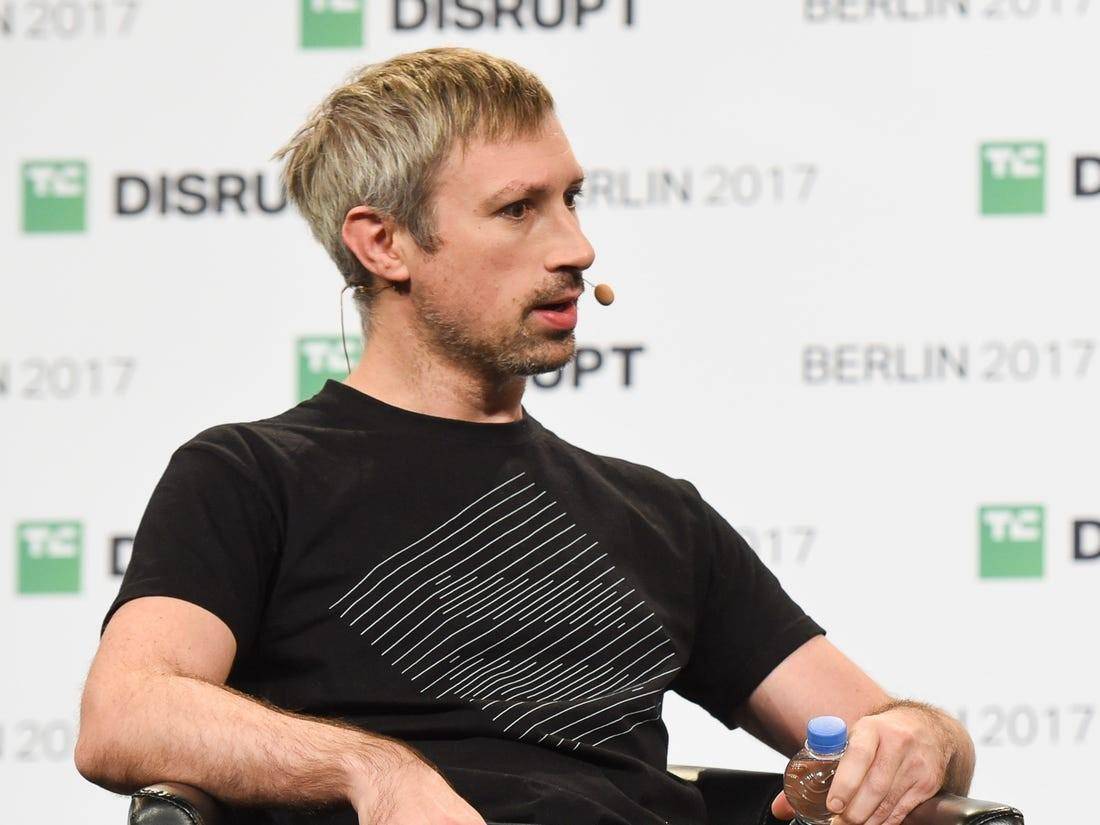
Categories
News Regulation

Concerns over Binance Deal With Paysafe

The Financial Conduct Authority (FCA), UK’s main financial regulator, has expressed worry over the recent Binance deal with Paysafe, a retail payment processor.
The U.K. financial watchdog claimed the latest Binance arrangement gives it access to the huge retail payments network via Faster Payment Services, a vital function that the crypto exchange halted due to regulatory concerns. In June, the FCA ordered Binance to suspend all of its services. Banks such as Barclays have withdrew their backing for the exchange, causing financial services to be suspended.

Following its cooperation with Paysafe, Binance was able to reintroduce Sterling deposits to its customers and resumed Single Euro Payments Area transactions on January 26.

The exchange has become a source of concern for the financial watchdog, which has labeled it a “serious risk.” However, the financial regulator also stated that it has little influence in these kind of collaborations, according to the Financial Times.

Paysafe, according to the FCA, is aware of their concerns and is subject to close continuing monitoring, which is consistent with their policy for enterprises of its size. He also stated that they are unable to talk further.

The cryptocurrency exchange has claimed that it has been working with the FCA in the aftermath of the warnings to become a compliant exchange in the country. Binance’s regulatory problems in 2021 began in the United Kingdom, when regulators issued repeated compliance warnings to the cryptocurrency exchange, followed by an order to shut down operations.

Hong Kong, Thailand, the Cayman Islands, Japan, and other jurisdictions issued similar regulatory warnings. By the end of the year, the crypto exchange behemoth had mended its ties with a number of Asian countries.

Although the United Kingdom’s crypto regulatory frameworks have yet to be finalized, crypto trading is not prohibited. The lack of a clear framework, on the other hand, forces crypto firms to rely on regulator guidelines, which change on a regular basis. In the United Kingdom, the current regulatory debate is centered on decentralized finance lending and staking. Nonetheless, lawmakers in the country are divided; some want to turn the UK into a crypto hub, while others remain opposed.