altcoin investing risks
beginner crypto investment strategies
Bitcoin dollar cost averaging
Bitcoin four year cycle
crypto investment mistakes
crypto portfolio management
crypto trading vs investing
emotional trading psychology
FOMO buying cryptocurrency
long term crypto holding strategy
panic selling crypto
why most crypto investors lose money

Coinposters
Why Most Investors Lose Money In Crypto… Even When They Guess The Trend Right (And What To Do Instead)
Crypto Investment Psychology · Risk Management · 2026 Guide
Article-At-A-Glance: Why Most Crypto Investors Lose Money
- •Most crypto investors lose money not because they pick the wrong coins, but because of emotional decisions, poor timing, and no exit strategy
- •The difference between traders and investors is critical — frequent trading almost always underperforms simply holding Bitcoin over four or more years
- •Dollar-cost averaging (DCA) is the single most endorsed strategy among profitable long-term crypto investors, and the math behind why it works might surprise you
- •Meme coins and low-cap altcoins behave more like lottery tickets than investments — and pump-and-dump schemes are specifically designed to target retail buyers
- •There’s a specific mindset shift that separates investors who consistently profit from those who keep losing — and it has nothing to do with finding the next 100x gem
Table of Contents
- You Called The Trend Right And Still Lost Money — Here’s Why
- The Real Reason Most Crypto Investors Lose Money
- The Shitcoin Trap That Wipes Out Portfolios
- Trading vs. Investing — Most People Don’t Know Which One They’re Doing
- The Four-Year Rule That Most Retail Investors Ignore
- What Consistently Profitable Crypto Investors Do Differently
- How to Protect Yourself When Markets Turn Volatile
- The Mindset Shift That Separates Winners From Losers in Crypto
- Frequently Asked Questions
You called the trend right, bought in with conviction, and still watched your portfolio bleed — that’s the part nobody warns you about when explaining why most crypto investors lose money.
Crypto has minted millionaires, but it has quietly wiped out far more portfolios than it has built. The failure rate among retail crypto investors is staggering — some experienced voices in the space put it between 90% and 99%. And the uncomfortable truth is that most of those losses weren’t caused by bad market conditions or bad luck. They were caused by predictable, repeatable behavioral mistakes that the average investor never even recognizes as mistakes.
For those looking to understand the full picture of crypto investing — including the psychological traps and strategic blind spots that derail most portfolios — the Coinposters blog provides ongoing market insight to help investors make more informed decisions. The goal of this article is to walk you through exactly why most crypto investors lose money, and what the consistently profitable minority does differently.
You Called The Trend Right And Still Lost Money — Here’s Why
Real Scenario: Calling It Right, Losing Anyway
An investor sees Bitcoin trending upward in late 2020. They buy in at $18,000, feeling confident. Bitcoin rises to $64,000 by April 2021. Instead of taking any profit, they hold — expecting $100,000. By July 2021, it drops back to $29,000. Panic sets in. They sell at $31,000, locking in a smaller gain than they could have taken — or worse, they bought more altcoins at the peak and are now deep in the red. They called the trend correctly. They still lost.
This scenario plays out millions of times across every bull cycle. Getting the direction of the market right is only one piece of the puzzle — and honestly, it might be the easiest piece. What destroys returns is everything that happens after the initial buy: the holding through irrational highs, the failure to take profit, the emotional decisions in both directions.
The market doesn’t reward people for being right about the trend. It rewards people who have a plan and execute it without letting emotion override logic. That gap — between being right and being profitable — is where most investors fall apart and is a key reason why most crypto investors lose money.
The Real Reason Most Crypto Investors Lose Money
Strip away all the noise and the core reason why most crypto investors lose money comes down to one thing: they treat a volatile, 24/7 speculative market like a slot machine, then expect it to behave like a savings account. They come in without defined rules, without an exit strategy, and without any real understanding of the difference between speculative trading and long-term investing.
Emotional Trading Destroys Returns Faster Than Bad Picks
Your emotions are not calibrated for crypto markets. Human psychology evolved to avoid loss more intensely than it pursues gain — a concept called loss aversion — and crypto markets exploit this at scale. When prices drop 30% in 48 hours, the emotional pressure to sell is overwhelming, even when the rational move is to hold or accumulate. When prices spike, the emotional pressure to buy more is equally irrational.
Emotional trading doesn’t just cost you on individual trades. It compounds. Every panic sell followed by a FOMO rebuy means you’re systematically buying high and selling low — the exact opposite of what generates returns. Studies in behavioral finance consistently show that the average investor’s actual return significantly underperforms the funds they invest in, purely because of poorly timed emotional decisions.
FOMO Buying at the Top Is More Common Than You Think
Fear Of Missing Out is the most expensive emotion in crypto. It hits hardest when a coin has already made a massive move and every news outlet, Twitter account, and group chat is talking about it. That’s precisely the moment most retail investors pile in — right as the smart money is quietly exiting.
Bitcoin hitting mainstream headlines for crossing a new all-time high is not a buy signal. It’s almost always a lagging indicator that the move has already happened. The investors who profited were the ones who accumulated during the boring, quiet periods when nobody was talking about it. The ones who lose are those who show up to the party at 3 AM right before it ends.
Classic FOMO Warning Signals
- Prices spike on news coverage — retail investors pile in as institutional investors begin distributing
- Social media hype reaches peak volume — historically one of the most reliable indicators of a local top
- Everyone in your social circle is suddenly talking about crypto — a classic signal that the market is overheated
- A coin has already 10x’d in 30 days — FOMO buying here means you’re the exit liquidity for earlier investors
Panic Selling at the Bottom Locks In Permanent Losses
The flip side of FOMO is panic selling — and it’s just as destructive. When markets crash, and in crypto they crash hard, the psychological pressure becomes almost unbearable. A 50% portfolio drop feels catastrophic, and the instinct is to sell and stop the bleeding. But selling during a crash doesn’t stop the loss. It makes it permanent.
Unrealized losses only become real losses when you sell. Investors who panic-sold Bitcoin during the 2018 crash at $3,200 or during the March 2020 COVID crash at $4,000 locked in devastating losses. Those who held — or better yet, bought more — saw Bitcoin eventually trade above $60,000. The market recovered. The panic sellers didn’t.
The Loss Aversion Trap: Unrealized losses only become real losses when you sell. Understanding why most crypto investors lose money starts with recognizing that panic selling during crashes — not the crashes themselves — is what makes losses permanent.
The Shitcoin Trap That Wipes Out Portfolios
Bitcoin is volatile. Altcoins are a different category of risk entirely. The lower the market cap of a coin, the easier it is to manipulate its price, and the higher the probability that the project either fails, disappears, or was never legitimate to begin with. Yet this is exactly where most retail investors concentrate their attention and their capital — chasing the promise of 1000x returns on coins that will most likely return zero. For those considering alternatives, crypto hedge funds offer professional portfolio management that might mitigate some of these risks.
The allure makes sense on the surface. If you missed Bitcoin at $1, maybe you can find the next Bitcoin at a fraction of a cent. That logic has made a very small number of investors wealthy and has destroyed the portfolios of millions more. The uncomfortable math is simple: for every altcoin that 100x’s, there are thousands that go to zero.
Why Meme Coins and Low-Cap Altcoins Are Closer to Gambling Than Investing
A genuine investment has underlying fundamentals — revenue, utility, adoption, technology, or some combination of these. Most meme coins and low-cap altcoins have none of these things. They exist purely on narrative and speculative momentum. When the narrative dies — and it always does eventually — so does the price. Calling this investing is generous. It’s closer to buying a lottery ticket where someone else controls whether you win.
How Pump-and-Dump Schemes Target Retail Investors
Pump-and-dump schemes in crypto follow a predictable playbook. A coordinated group — sometimes influencers, sometimes anonymous Telegram channels — accumulates a low-cap coin quietly, then begins aggressively promoting it to retail audiences. The price spikes on manufactured hype. Retail investors, driven by FOMO, buy in during the spike. The promoters sell their holdings into that buying pressure. The price collapses. Retail investors are left holding worthless tokens. This isn’t a rare edge case — it’s a routine feature of the low-cap altcoin space and a major reason why most crypto investors lose money.
Trading vs. Investing — Most People Don’t Know Which One They’re Doing
Here’s a question most crypto participants can’t answer clearly: are you a trader or an investor? It sounds simple, but the distinction is fundamental — and confusing the two is one of the most reliable paths to losing money in this market.
A trader is someone who actively buys and sells positions based on short-term price movements, technical analysis, or market signals. A trader has defined entry points, exit points, stop-losses, and accepts that most individual trades won’t be winners — the edge comes from the system over many trades. An investor, by contrast, buys assets they believe will be worth significantly more in three to five or more years, and holds through volatility without constantly reacting to price movements.
Trader vs Investor: Understanding the Difference
- Traders need deep technical knowledge, emotional discipline, and hours of active market engagement daily
- Investors need conviction in their thesis, patience, and the ability to ignore short-term noise
- Most retail participants do neither consistently — they invest, then panic-trade during downturns, combining the worst of both approaches
The problem is that most people enter crypto thinking they’ll be investors but behave like traders the moment prices move against them. They hold during gains because they want more, and they sell during losses because they can’t handle the pain. This pattern — holding winners too short and losers too long — is one of the most well-documented wealth destroyers in both crypto and traditional markets.
Why Frequent Trading Almost Always Underperforms Holding
The data on active trading versus passive holding is remarkably consistent across asset classes, and crypto is no exception. Every time you execute a trade, you pay a fee. Every time you realize a gain, you may trigger a taxable event. Every time you exit a position, you risk missing the next leg of a move. These frictions add up fast, and over a full market cycle, they create a significant performance drag that most active traders never account for in their mental math.
The investors who simply bought Bitcoin and held through multiple cycles — including brutal 80%+ drawdowns — have, in most four-year-plus timeframes, outperformed the vast majority of active traders. This isn’t a coincidence. It reflects the mathematical reality that compounding works best when you stop interrupting it.
How Transaction Fees and Taxes Silently Eat Your Profits
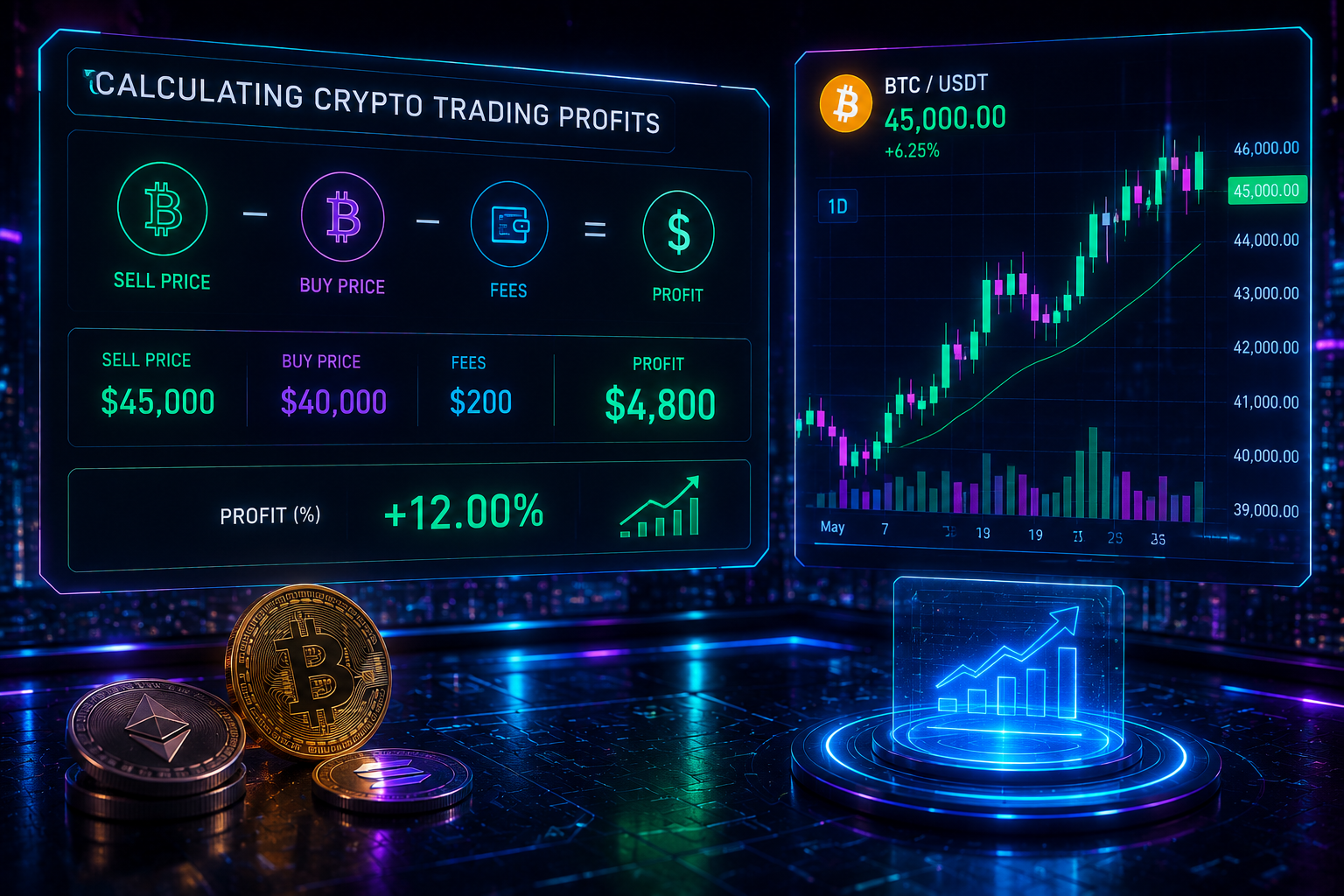
Every trade has a cost, and in crypto those costs are easy to ignore in the moment but impossible to ignore at year-end. Exchange fees, gas fees on Ethereum transactions, and spread costs on smaller coins all chip away at your returns with every single trade. An active trader executing dozens of trades per month can easily pay thousands of dollars in fees annually — money that a passive holder never loses at all.
The tax dimension makes this worse. In most jurisdictions, every crypto-to-crypto trade is a taxable event. That means swapping Bitcoin for Ethereum, then Ethereum for a stablecoin, then back to an altcoin creates three separate taxable transactions — even if you never touched fiat currency. Active traders who don’t account for this carefully can end up owing taxes on gains that no longer exist in their portfolio by the time the tax bill arrives.
The Difference Between a Trader’s Mindset and an Investor’s Mindset
A trader wakes up thinking about price action. An investor wakes up thinking about whether the fundamental thesis for their holdings has changed. These are genuinely different mental frameworks, and operating with the wrong one for your actual strategy is a guaranteed way to make bad decisions under pressure.
Traders accept volatility as their working environment and have predefined rules for every scenario. Investors use volatility as an opportunity to accumulate more of what they already believe in at lower prices. The investor who genuinely understands why they own Bitcoin isn’t frightened by a 40% correction — they’re calculating how much more they can buy. That psychological difference is not innate. It’s built through education, planning, and knowing your own strategy before the market tests you.
The Four-Year Rule That Most Retail Investors Ignore
If there is one pattern in Bitcoin’s history that every retail investor should understand before putting a single dollar into crypto, it’s the four-year cycle. Bitcoin has historically operated in cycles roughly tied to its halving events — periods where the reward for mining new Bitcoin is cut in half, reducing new supply entering the market. Understanding this cycle doesn’t guarantee profits, but ignoring it has contributed to the losses of countless investors who bought near cycle tops and sold during the subsequent bear market lows.
Why Bitcoin’s Four-Year Cycle Changes the Risk Calculation
Bitcoin’s halving events have historically preceded major bull runs by approximately 12 to 18 months. The halvings occurred in 2012, 2016, and 2020 — and each was followed by a significant price appreciation cycle and then a significant correction. This doesn’t mean the pattern will repeat indefinitely or with perfect timing, but it does mean that an investor who holds Bitcoin for any four-year period that includes a halving has historically had a very high probability of being in profit.
The investors who consistently lose are those operating on a 3-month or 6-month time horizon in an asset that moves in 4-year cycles. They’re using the wrong clock. Buying near a cycle top and expecting returns within months puts you in direct conflict with the historical rhythm of this market. Extending your time horizon to four or more years doesn’t eliminate risk, but it dramatically changes the statistical probability of a positive outcome based on Bitcoin’s track record.
What Dollar-Cost Averaging Actually Does to Your Entry Price Over Time
Dollar-cost averaging (DCA) means buying a fixed dollar amount of an asset at regular intervals — weekly, bi-weekly, or monthly — regardless of the current price. When prices are high, your fixed amount buys less. When prices are low, it buys more. Over time, this mechanically lowers your average entry price compared to making one large lump-sum purchase at a random point in the cycle. It also removes the emotional burden of trying to time the market perfectly, which as established, almost nobody does successfully.
Why Dollar-Cost Averaging Works in Crypto
Mathematical Advantage: Automatically lowers your average entry price by buying more when prices are low and less when prices are high
Psychological Advantage: Removes the emotional burden of trying to time the market perfectly
Historical Evidence: Investors who DCA’d into Bitcoin consistently over any four-year period in its history have been in profit
Discipline Framework: Creates a simple, consistent routine that continues working even through bear markets
What Consistently Profitable Crypto Investors Do Differently
The investors who consistently come out ahead in crypto aren’t necessarily smarter or better at predicting prices. What they do differently is structural — they follow a defined strategy, maintain emotional discipline, and make decisions based on rules they set before the market got emotional, not during it.
The Core Difference: Losing investors react to the market. Winning investors respond to their pre-defined plan. The market will always create scenarios designed to make you abandon your strategy — a sudden crash, an unexpected rally, a coin everyone is talking about. The investors who profit are the ones who have already decided what they will do in each of those scenarios before they happen.
This isn’t about being emotionless. It’s about building a system that accounts for the fact that you will be emotional, and removes your worst impulses from the equation before they can do damage. Here’s exactly what that looks like in practice, as seen in high-frequency crypto trading vs hodling.
1. They Buy Bitcoin Over Altcoins as a Default
Why Bitcoin Is the Rational Default
- Bitcoin has the longest track record of any cryptocurrency — over 15 years of price history across multiple market cycles
- Bitcoin’s liquidity is unmatched — it’s the hardest crypto asset to manipulate at scale compared to any altcoin
- Bitcoin dominance historically rises during bear markets — meaning it loses less value relative to altcoins when conditions deteriorate
- Most altcoins are priced in Bitcoin terms — if Bitcoin drops, almost everything else drops harder and faster
- Regulatory clarity around Bitcoin is further advanced than most other cryptocurrencies, reducing a layer of structural risk
This doesn’t mean altcoins have no place in a crypto portfolio. It means that for investors who don’t have the time, expertise, or risk tolerance to deeply research individual altcoin projects, Bitcoin is the rational default — not because it’s exciting, but because it has the strongest risk-adjusted profile in the asset class.
The investors who consistently lose in crypto are disproportionately concentrated in altcoins — specifically low-cap altcoins with no real fundamentals and high susceptibility to manipulation. The investors who consistently grow wealth over multiple cycles tend to be heavily weighted toward Bitcoin and treat altcoin exposure as a calculated, limited side bet rather than a core strategy.
2. They Use Dollar-Cost Averaging Instead of Timing the Market
Nobody — not professional fund managers, not quantitative trading firms, not the most plugged-in insiders — consistently times crypto market entry and exit perfectly. DCA removes this impossible requirement from the equation entirely. By committing to a regular purchase schedule and sticking to it through both bull runs and bear markets, long-term investors accumulate Bitcoin at a blended average price that accounts for the full range of market conditions rather than a single high-risk moment of decision.
The psychological benefit of DCA is just as important as the mathematical one. When you’re on a scheduled buying plan, a market crash stops being a catastrophe and starts being a discount. That reframe — from panic to opportunity — is only possible when you’ve already committed to a strategy that tells you exactly what to do when prices fall.
3. They Hold for Years, Not Weeks
Every Bitcoin investor who has held for any continuous four-year period in Bitcoin’s history has come out in profit. That’s not a guarantee of future performance, but it’s a data point worth taking seriously. The investors who lose are overwhelmingly operating on short time horizons in an asset built for long ones. Extending your holding period from months to years is probably the single highest-leverage change most retail investors could make to their strategy.
4. They Only Invest What They Can Afford to Lose
This sounds like a disclaimer, but it’s actually a strategic principle. When you invest money you can genuinely afford to lose — not money you need for rent, emergency funds, or near-term goals — you remove the emotional pressure that forces bad decisions. The investor who put their savings into crypto in 2021 and needed that money back in 2022 had no choice but to sell at a loss during the bear market. The investor who used truly discretionary capital could hold through the downturn and wait for recovery.
Position sizing relative to your overall financial situation is one of the most underrated risk management tools in crypto. It doesn’t matter how good your strategy is if the size of your position creates enough emotional pressure to override that strategy when things get hard.
5. They Treat Speculative Bets as a Small, Separate Slice of Their Portfolio
Profitable crypto investors who do allocate to higher-risk altcoins treat that allocation as a completely separate, mentally ring-fenced portion of their portfolio — typically a small percentage they are genuinely prepared to lose entirely. They don’t let a speculative altcoin bet bleed into their Bitcoin core position, and they don’t chase losses in the speculative bucket by moving money from their long-term holdings. The discipline to keep these two buckets completely separate — and to size the speculative one conservatively — is what allows investors to participate in higher-upside opportunities without exposing their entire portfolio to the risks that come with them.
How to Protect Yourself When Markets Turn Volatile
Volatility in crypto isn’t a bug — it’s a permanent feature of the market. The investors who get destroyed by it aren’t the ones who experience it. They’re the ones who never built a system to handle it before it arrived. Protecting yourself from volatility isn’t about predicting when it will happen. It’s about deciding in advance exactly what you will do when it does, such as considering crypto hedge funds for professional portfolio management.
The most dangerous moment in any market downturn is the 48-hour window when prices are falling fast and your portfolio is down significantly. That’s when the worst decisions get made — panic sells, desperate altcoin rotations, doubling down on losing positions without a plan. Every single one of those decisions gets made because the investor had no pre-defined rules for that exact scenario.
Building protection against volatility means creating rules before the market tests you. Not guidelines. Not general principles. Specific, written rules: what percentage drop triggers a review of your thesis, what conditions would cause you to add to a position versus hold versus exit, and what portion of your portfolio is truly untouchable regardless of short-term price action.
| Scenario | Undisciplined Response | Disciplined Response |
|---|---|---|
| Bitcoin drops 30% in a week | Panic sell to stop the bleeding | Review thesis — if unchanged, hold or DCA more |
| A meme coin is up 500% in your feed | FOMO buy with core portfolio funds | Ignore or allocate only from speculative bucket |
| Portfolio hits a new all-time high | Hold everything expecting more | Execute pre-planned partial profit-taking |
| Market enters confirmed bear territory | Sell everything and wait for bottom | Continue DCA schedule, reduce speculative exposure |
| A coin you hold gets negative press | Sell immediately on emotion | Research the specific claim before taking any action |
Set Your Exit Strategy Before You Enter a Position
Before you buy any crypto asset, you need to answer two questions with specific numbers: at what price or portfolio value will you take profit, and at what price will you accept you were wrong and cut the position? These aren’t comfortable questions to answer upfront, but they are the difference between investing with a plan and gambling with hope. A position entered without an exit strategy has no defined outcome — it just runs until emotion makes a decision for you.
Profit-taking doesn’t have to be all-or-nothing. Many disciplined investors take partial profits at predetermined levels — selling 20% of a position at a 3x gain, another 20% at 5x, and letting the remainder ride. This approach locks in real gains without requiring you to perfectly call the top, which nobody does consistently. The key is that these levels are set before the position is entered, not decided in the heat of a euphoric market.
Why Diversifying Beyond Crypto Reduces Your Overall Risk
Crypto should not be your entire investment portfolio. Full stop. Holding index funds, bonds, real estate, or other non-correlated assets alongside your crypto positions means that a crypto bear market — which can and does last 12 to 24 months — doesn’t devastate your entire financial picture. Diversification across asset classes is one of the most basic principles of risk management, and the investors who ignore it in favor of going all-in on crypto are taking on a level of concentration risk that most professional investors would never accept.
The Mindset Shift That Separates Winners From Losers in Crypto
The investors who consistently profit from crypto have internalized one fundamental truth that the losing majority never grasps: this market is not designed to make you rich quickly. It’s a long-duration game that rewards patience, discipline, and emotional control above all else. The moment you approach crypto as a vehicle for fast wealth — chasing 100x altcoins, day-trading on leverage, jumping between narratives — you become the exit liquidity for the investors who are playing a longer, quieter game.
The mindset shift isn’t complicated, but it is genuinely hard to maintain when markets are moving violently in either direction. It comes down to this: stop trying to beat the market through cleverness and start trying to outlast it through discipline. The investors who win in crypto over full market cycles aren’t the ones who found the best gems or called the tops and bottoms. They’re the ones who built a sensible strategy, executed it consistently, and refused to let short-term price action rewrite their long-term plan. That’s the edge. And it’s available to everyone who chooses to use it.
The Winning Edge: Stop trying to beat the market through cleverness and start trying to outlast it through discipline. Understanding why most crypto investors lose money reveals that the winners aren’t the ones who found the best gems or called the tops and bottoms — they’re the ones who built a sensible strategy and refused to let short-term price action rewrite their long-term plan.
Frequently Asked Questions
Below are the most common questions retail investors have about why most crypto investors lose money and how to avoid them.
Why do most crypto investors lose money even in a bull market?
Most investors lose money in bull markets because they buy late — after major price appreciation has already occurred — and then hold through the subsequent correction expecting further gains that don’t materialize. They also rotate profits from Bitcoin into higher-risk altcoins at cycle tops, amplifying losses when the market turns. Being in a bull market doesn’t protect you from bad entry timing, poor position sizing, or the absence of a profit-taking plan. The bull market creates the illusion of easy money, which is precisely when the most expensive mistakes get made. For a deeper dive into common pitfalls, you might want to explore crypto trade alert services and how they compare.
Is it possible to consistently profit from crypto trading?
Consistent profitability from active crypto trading is possible, but it requires a level of skill, discipline, time commitment, and emotional control that the vast majority of retail investors don’t have and aren’t willing to develop. Professional traders use sophisticated risk management frameworks, accept that many individual trades will be losses, and derive their edge from a systematic approach executed over hundreds of trades — not from a handful of big wins.
For the average retail investor, attempting to trade actively almost always produces worse returns than a simple long-term holding strategy in Bitcoin with regular DCA purchases. The few traders who do profit consistently treat it as a full-time profession, not a side activity. If you’re not prepared to commit at that level, the data strongly suggests that investing and holding is a more reliable path to positive returns.
What is dollar-cost averaging and does it actually work in crypto?
Dollar-cost averaging is the practice of investing a fixed dollar amount into an asset at regular intervals — for example, $100 into Bitcoin every week — regardless of the current price. When prices are high, you buy less Bitcoin. When prices are low, you buy more. Over time, this creates a blended average purchase price that is lower than a single lump-sum investment made at a random high point in the cycle.
The historical evidence for DCA in Bitcoin is compelling. Investors who DCA’d into Bitcoin consistently over any four-year period in its history have been in profit at the end of that period. The strategy works not just mathematically but psychologically — it removes the paralyzing decision of when to buy and replaces it with a simple, consistent routine that continues working even through bear markets. It won’t make you rich overnight, but it significantly improves the probability of being in profit over a full market cycle.
How much of my portfolio should I put into speculative altcoins?
The amount you allocate to speculative altcoins should reflect the realistic probability that those positions go to zero — because for most altcoins, that probability is genuinely high. A common framework used by experienced crypto investors is to keep speculative altcoin exposure to no more than 5% to 10% of their total crypto portfolio, treating it as a separate, ring-fenced bet rather than a core position.
More importantly, speculative altcoin allocations should only ever come from capital that is truly discretionary — money you have consciously accepted may be entirely lost. If a full loss of your altcoin positions would materially impact your financial situation or cause you to need to liquidate your core Bitcoin holdings, your speculative allocation is too large. The purpose of keeping this bucket small isn’t to eliminate upside — it’s to ensure that when speculative bets don’t work out, and many won’t, they don’t take down your entire portfolio with them.
What is the safest way to invest in crypto as a beginner?
Beginner’s Framework for Safer Crypto Investing
Step 1 — Start with Bitcoin only. Bitcoin has the longest track record, the deepest liquidity, and the clearest regulatory status of any cryptocurrency. It’s the logical starting point before considering anything else.
Step 2 — Use a reputable, regulated exchange. Stick to well-established exchanges with strong security track records and regulatory compliance in your jurisdiction. Never leave large amounts on an exchange long-term — move holdings to a hardware wallet once your position grows.
Step 3 — Set up a DCA schedule and automate it. Decide on a fixed weekly or monthly amount you can genuinely afford to invest and automate the purchases. Remove the decision from your hands entirely.
Step 4 — Define your time horizon before you buy. Commit to a minimum holding period of four or more years. If you need this money in less than two years, it should not be in crypto.
Step 5 — Set a profit-taking plan. Decide in advance at what price levels or portfolio values you will take partial profits. Write it down. Do not change it based on market emotion.
The safest approach to crypto for a beginner is a disciplined, long-term Bitcoin accumulation strategy using dollar-cost averaging, combined with a strict rule of only investing capital you can genuinely afford to lose entirely. This approach doesn’t require you to predict market movements, identify winning altcoins, or spend hours analyzing charts.
The biggest risk for beginners isn’t picking the wrong coin on their first purchase. It’s starting with a sensible strategy and then abandoning it the first time the market drops 40% and every voice online is telling them to panic. Building the discipline to stick to the plan — especially when it’s hardest — is the actual work of crypto investing, and it starts before you make your first purchase.
Keep your portfolio structure simple. Heavy Bitcoin weighting, consistent DCA purchases, a long time horizon, and a pre-written exit strategy covers the vast majority of what separates investors who come out ahead from those who don’t. The complexity can come later, if it comes at all. The fundamentals, executed consistently, are genuinely enough.
Protect your downside by keeping crypto as one component of a broader diversified investment portfolio — not your entire financial strategy. The investors who thrive through full crypto market cycles are those who can hold through 80% drawdowns without their financial life falling apart. Position sizing and diversification across asset classes is what makes that possible.
Finally, treat education as an ongoing investment. The crypto landscape changes rapidly — new regulation, new technology, new market dynamics. The beginner who commits to continuous learning, rather than jumping straight to speculative trades, builds the knowledge base that makes every future investment decision more informed and more disciplined. For ongoing market intelligence and investor-focused analysis, CoinGecko is a resource built specifically to help crypto investors navigate these markets with clarity and confidence.
Investors often face challenges in the crypto market due to its volatile nature. Even when they predict trends correctly, unforeseen factors can lead to losses. It’s crucial to understand the dynamics of the market and stay informed. For instance, some countries have implemented strict regulations on cryptocurrencies, which can impact investment strategies. To navigate these complexities, it’s beneficial to be aware of the worst countries for crypto investors due to bans and restrictions.
DYOR (Do Your Own Research)
This article is for informational purposes only and does not constitute financial advice. Cryptocurrency investments carry substantial risk, including the potential for total loss of principal. The failure rate among crypto investors is high, and past performance does not guarantee future results. Market conditions, regulatory changes, and technological developments can significantly impact cryptocurrency values. Dollar-cost averaging, Bitcoin holding strategies, and diversification do not eliminate risk or ensure profitability. Always conduct thorough research, understand your risk tolerance, and consult with qualified financial and legal professionals before making investment decisions. Never invest more than you can afford to lose entirely. The information provided reflects market conditions and investment strategies as understood at the time of writing and may not remain accurate or applicable in the future.