Coinposters
What Are NFTs – And Should You Trade Them in 2026?
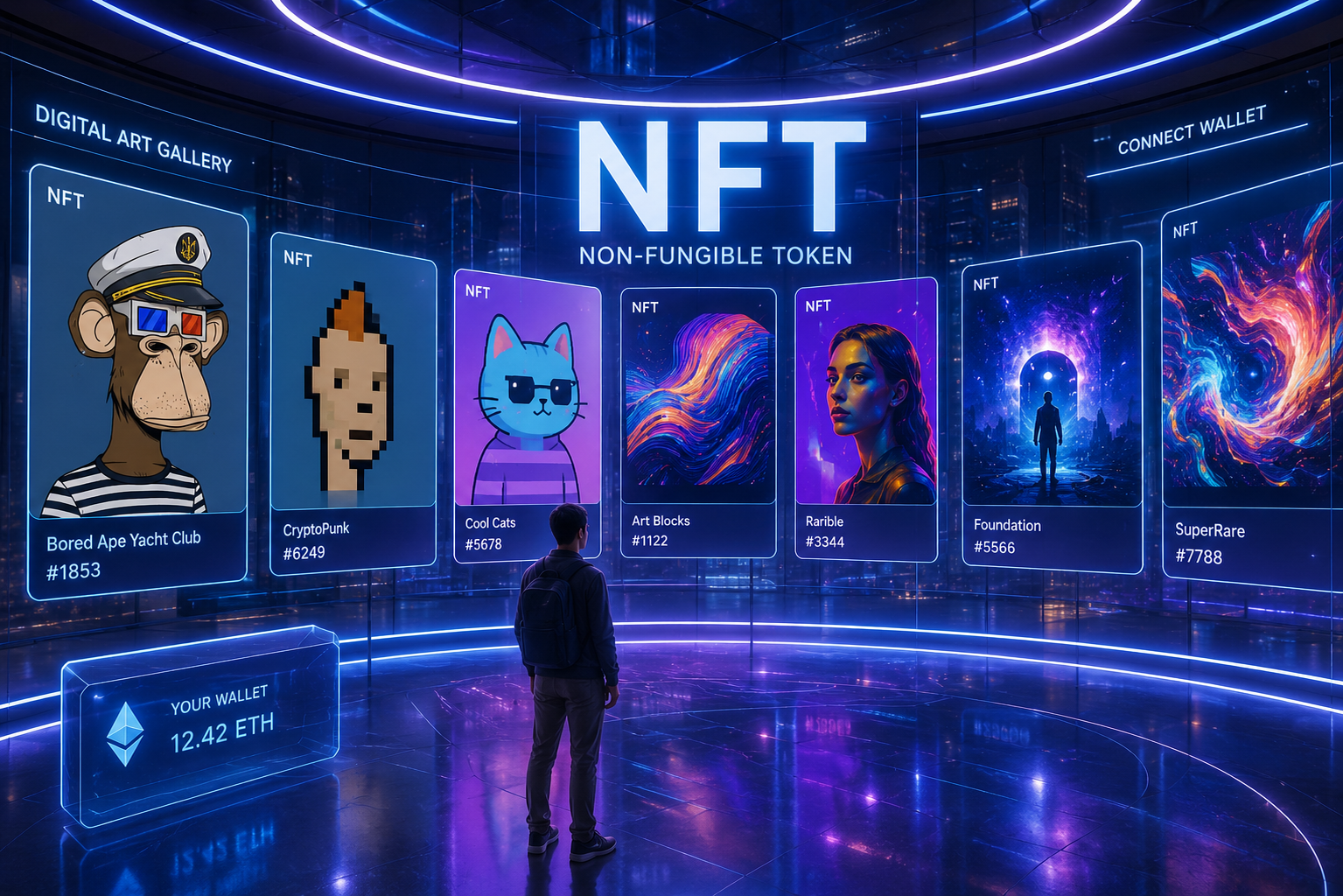
NFTs didn’t disappear after the 2022 crash — they evolved into a leaner, more utility-focused market. Whether you should trade NFTs in 2026 depends entirely on understanding what separates real utility from speculation, and knowing which risks destroy accounts faster than price swings ever do.
Key Takeaways
- •NFTs didn’t die after the 2022 crash — they shed the speculation and kept the utility, creating a leaner, more structured market in 2026.
- •Not all NFTs are equal: gaming assets, tokenized real-world assets, and brand membership NFTs now dominate the surviving projects.
- •Floor price, trading volume, and community activity are the three core signals experienced traders use to evaluate any NFT project before buying.
- •NFT trading still carries serious risk — liquidity traps, rug pulls, and tax obligations catch new traders off guard more than price swings do.
- •Whether you should trade NFTs in 2026 depends entirely on your goals — keep reading to find out if NFTs fit your strategy or not.
Table of Contents
NFTs Are Still Here — And Smarter Than Ever
The NFT market didn’t collapse — it filtered out everyone who was only there for the hype. What remains in 2026 is smaller, quieter, and considerably more serious than the circus of 2021. Projects that survived did so because they offered something real: access, ownership of tangible assets, in-game utility, or community infrastructure that people actually use.
The shift matters because it changes how you approach trading entirely. Buying an NFT in 2021 often meant betting on attention. Buying one in 2026 means evaluating a project the way you would evaluate any asset — by asking what it does, who holds it, and whether demand is growing or shrinking.
What Is an NFT, Exactly?
An NFT, or non-fungible token, is a unique digital record stored on a blockchain that proves ownership of a specific item. Unlike Bitcoin or Ethereum — where every unit is interchangeable — each NFT is one-of-a-kind and cannot be copied or replicated. That uniqueness is what gives NFTs their value, and it is enforced not by a company or government, but by the blockchain itself.
The word “non-fungible” simply means it cannot be swapped on a one-to-one basis with something else. A dollar bill is fungible — any dollar equals any other dollar. A signed original painting is non-fungible. NFTs apply that same logic to digital files, contracts, tickets, and now even deeds to physical property.
How Blockchain Makes NFTs Unique
Every NFT contains metadata recorded permanently on a blockchain — usually Ethereum, Solana, or Polygon. That record includes the item’s origin, ownership history, and any rules attached to it, such as royalty payments to the original creator on every resale. No one can alter that history, and no one can fake ownership without controlling the private wallet key associated with the NFT.
How NFT Ownership Works on the Blockchain
When an NFT is created (minted), a unique token ID is written to a smart contract on the blockchain. That token ID is permanently linked to a wallet address — the owner. When the NFT is sold, the smart contract updates the ownership record. Every transaction is public, timestamped, and irreversible. No middleman required.
This is what separates an NFT from a simple JPEG. Anyone can screenshot a digital image, but only one wallet holds the verified, blockchain-confirmed ownership record. That distinction — provable scarcity on a public ledger — is the entire technical foundation of NFT trading.
NFTs vs. Cryptocurrency: What Is the Difference?
Cryptocurrency is fungible — one ETH equals one ETH, always. NFTs are non-fungible, meaning each token is distinct and carries its own value based on rarity, demand, and utility. You use cryptocurrency to buy NFTs, but the two assets behave completely differently in a portfolio.
What Can an NFT Actually Represent?
In 2026, NFTs represent far more than profile pictures. Common categories include digital art, gaming items (weapons, characters, land), event tickets with access rights, music royalty shares, tokenized real-world assets like real estate or luxury goods, and brand loyalty credentials that unlock exclusive products or experiences. Tokenizing real-world assets makes buying, selling, and verifying ownership dramatically more efficient — and makes counterfeiting those assets significantly harder.
How NFT Trading Works
NFT trading means buying and selling NFTs on dedicated marketplaces, which function similarly to stock exchanges but for digital collectibles and tokenized assets. You connect a crypto wallet, fund it with the required cryptocurrency, browse listings, and either buy at a fixed price or place a bid in an auction. When a deal is made, the blockchain automatically transfers ownership to your wallet and sends payment to the seller.
How NFT Marketplaces Operate
Major NFT Marketplaces and Their Strengths
| Marketplace | Blockchains | Best For | Fees |
|---|---|---|---|
| OpenSea | Ethereum, Polygon, Solana | General collections, beginners | 2.5% seller fee |
| Blur | Ethereum | Professional traders, high volume | 0% base fee (optional royalties) |
| Magic Eden | Solana, Ethereum, Bitcoin | Gaming NFTs, multi-chain traders | 2% seller fee |
| Rarible | Ethereum, Tezos, Immutable X | Creators, independent artists | 1% buyer + 1% seller fee |
Each marketplace attracts a different type of trader. Blur dominates among high-frequency Ethereum traders who prioritize speed and zero fees. Magic Eden leads in gaming NFTs and has grown its multi-chain presence significantly since 2023. OpenSea remains the most accessible entry point for beginners due to its interface and breadth of collections.
Wallets are non-negotiable. MetaMask remains the dominant browser wallet for Ethereum-based NFTs, while Phantom handles Solana transactions. You cannot trade on these platforms without a self-custody wallet — the marketplace never holds your assets. For those interested in the technical side, understanding blockchain technology is crucial.
Gas fees are the often-forgotten cost. On Ethereum, every transaction requires a gas fee paid in ETH to compensate network validators. These fees fluctuate based on network congestion and can range from a few dollars to over $50 during peak periods. Solana‘s fees stay consistently under $0.01, which is one reason gaming NFTs migrated heavily to that network.
How NFT Prices Are Set
NFT prices are set entirely by supply and demand with no central authority controlling valuation. A seller lists at whatever price they choose, and buyers decide whether that price is worth paying. This creates extreme price volatility — a collection can double overnight on a celebrity tweet and crater just as fast when attention moves elsewhere.
What “Floor Price” Means and Why Traders Watch It
The floor price is the lowest listed price for any NFT within a specific collection — essentially the minimum buy-in.
Traders watch floor price movements the way equity traders watch stock price trends. A rising floor signals growing demand; a falling floor signals that holders are losing confidence and undercutting each other to exit. For any collection you are considering, tracking floor price over 7 to 30 days gives you a cleaner picture of momentum than any single listing does.
The NFT Market in 2026: What Changed After the Crash
The 2022 collapse wiped out over 95% of NFT collections by trading volume. Projects built on hype alone — no utility, no roadmap, no community governance — simply stopped trading. What that correction did was painful for speculators and clarifying for everyone else: it separated the NFTs people wanted to own from the ones people only wanted to flip.
What Happened to NFT Prices After 2022
Peak NFT trading volume hit approximately $17 billion in January 2022. By late 2023, monthly volumes had dropped to under $500 million across all major marketplaces combined. That is not a dip — that is a structural reset. Prices for even blue-chip collections fell 80 to 90% from their all-time highs, and thousands of smaller collections simply stopped recording any sales at all.
Which NFT Projects Survived and Why
The collections that kept trading volume through the downturn shared one consistent trait: they gave holders something to actually do with the NFT. Axie Infinity evolved its game economy. Pudgy Penguins launched physical toy lines through retail partnerships. Yuga Labs built interconnected experiences across its IP. These were not just JPEGs — they were memberships, gaming assets, and brand ecosystems.
Collections with strong Discord communities, transparent founding teams, and active development roadmaps also held up better than anonymous projects with no post-mint communication. The survivors proved that NFT value is not inherent to the token — it is built by the team and community around it.
How Institutional Adoption Changed the Market
By 2025 and into 2026, institutional interest shifted away from speculative digital art and toward tokenized real-world assets (RWAs). Major financial firms began experimenting with NFTs as legal instruments for representing fractional ownership of real estate, private equity shares, and luxury assets. This brought compliance requirements, legal frameworks, and a level of due diligence that the 2021 market never had. The result is a two-tier NFT market: a speculative collectibles layer and a growing institutional utility layer operating with entirely different risk profiles.
How Traders Evaluate NFT Projects
Buying an NFT without research is the fastest way to lose money in this market. The traders who consistently find value — or avoid disasters — are the ones who treat every project like a business before they treat it like an opportunity. There are four core signals worth examining before committing any funds.
Core Signals to Check Before Buying
- →Community size and engagement rate on Discord and X (formerly Twitter)
- →Team identity and track record — doxxed founders with verifiable history
- →Utility beyond the image — what does holding the NFT actually unlock?
- →Trading volume and floor price trends over 7, 14, and 30-day windows
- →Royalty structure — how much goes back to the creator on secondary sales
- →Smart contract audit status — has the contract been independently reviewed?
None of these signals work in isolation. A project can have a massive Discord and a completely illiquid market. Another can have low social numbers but steady organic trading volume driven by real utility. You need the full picture.
Tools like Nansen, Dune Analytics, and OpenSea’s own analytics dashboard let you pull on-chain data for any collection — number of unique holders, wallet concentration, wash trading flags, and volume history. If more than 50% of a collection is held by five or fewer wallets, that concentration risk alone should give you pause.
Beyond the data, read the whitepaper or roadmap if one exists. Projects with vague promises and no delivery timeline have historically underperformed. Projects that ship updates, hold community votes, and communicate setbacks openly tend to maintain holder trust longer — and holder trust is what sustains floor prices.
1. Community Size and Activity Levels
A large follower count means very little. What matters is active participation — daily Discord messages, response rates from the team, user-generated content, and organic conversation that is not dominated by bots or paid promoters. Check the Discord member-to-active-user ratio. A server with 50,000 members and 200 daily active users is a ghost town, not a community.
2. Team Transparency and Track Record
Anonymous teams are not automatically red flags — some of the most credible developers in crypto operate pseudonymously. The real question is whether the team has a verifiable history of delivering on commitments. Have they launched successful projects before? Do they communicate regularly? Are they responsive when things go wrong?
Doxxed founders — those who have publicly confirmed their identities — carry accountability that anonymous handles do not. When a project encounters trouble, known founders have reputational skin in the game. That matters when you are deciding whether to hold through volatility or cut your position.
3. Utility Beyond the Image
The NFT projects that held value through the bear market almost universally offered something beyond digital ownership of an image. Token-gated communities with real networking value, gaming assets with in-game function, music NFTs with royalty shares, and event passes with recurring access rights all gave holders a reason to keep the NFT rather than sell at the first sign of a price drop. For more insights on blockchain’s potential, explore blockchain technology explained.
Ask one simple question before buying: if this NFT drops 60% in price tomorrow, would I still want to hold it? If the answer is yes because of what it gives you access to, that is a utility-backed purchase. If the answer is no, you are speculating on price — which is fine, but go in knowing that. For more insights on how to navigate the crypto market, consider exploring the latest crypto regulations.
In 2026, the most traded utility NFTs sit in three main categories: gaming items on Solana-based platforms, tokenized access passes for private investment groups, and brand loyalty NFTs from companies like Nike’s .SWOOSH platform and similar corporate Web3 initiatives. These categories move on fundamentals, not just hype cycles.
4. Trading Volume and Liquidity
Liquidity is the most overlooked risk in NFT trading. Unlike fungible tokens, you cannot sell an NFT instantly at market price — you need a specific buyer willing to pay what you are asking. Collections with low daily trading volume can leave you holding an asset with no exit, even if the floor price technically looks healthy on paper. For those interested in understanding more about liquidity, exploring liquidity pools can provide valuable insights into investment strategies and potential risks.
Before buying into any collection, check the 24-hour and 7-day volume on platforms like CoinGecko’s NFT tracker or OpenSea analytics. A healthy collection maintains consistent daily volume relative to its market cap. If a collection’s total market cap is $5 million but only $2,000 trades in a typical week, your exit options are extremely limited.
The Real Risks of NFT Trading
Price risk is the obvious one — NFTs can lose most of their value fast. But experienced traders will tell you that price risk is actually the easiest to manage with position sizing and stop-loss discipline. The risks that genuinely destroy accounts are the ones traders do not see coming: liquidity traps, sophisticated scams, and tax bills that arrive months after the trades are long forgotten.
Liquidity Risk: NFTs Can Be Hard to Sell
Unlike selling ETH or Bitcoin where a buyer exists within milliseconds at market price, selling an NFT means waiting for a specific buyer who wants that specific item at your price. In a declining market, that wait can stretch from days to weeks to indefinitely. Many traders discovered this during the 2022 crash when floor prices were falling but actual sales were almost nonexistent — meaning the floor price was theoretical, not real. If you cannot afford to hold an NFT for months without needing that capital back, you are taking on more liquidity risk than most people realize.
Scams and Rug Pulls Still Happen
Rug pulls — where a project team collects mint revenue and disappears — remain one of the most common NFT fraud patterns in 2026. The mechanics have evolved though. Modern rug pulls often involve months of community building, a credible-looking roadmap, and even partial delivery before the team exits with remaining treasury funds. Phishing attacks targeting NFT wallets through fake marketplace links and malicious smart contract approvals are also prevalent. Never connect your primary holding wallet to a new, unverified platform — use a separate wallet with only the funds needed for a specific transaction.
Tax Implications Most New Traders Miss
Most new NFT traders focus entirely on buying low and selling high, then get blindsided when tax season arrives. In most jurisdictions, including the United States, NFTs are treated as capital assets. Every sale, every trade, and in some cases every use of an NFT to access a service is a taxable event. That means if you bought an NFT for 0.5 ETH and sold it for 1.2 ETH, you owe capital gains tax on the difference — and the fact that you were paid in cryptocurrency instead of dollars does not change that obligation.
NFT Tax Events: What Triggers a Tax Obligation
| Action | Taxable? | Tax Type |
|---|---|---|
| Selling an NFT for crypto | Yes | Capital gains (short or long term) |
| Trading one NFT for another | Yes | Capital gains on the swap value |
| Minting an NFT (as a creator) | Yes (on sale) | Ordinary income |
| Receiving an NFT as a gift | Depends on jurisdiction | May trigger gift tax above thresholds |
| Holding an NFT without selling | No | No tax until disposal |
| NFT airdrop received | Yes (at receipt) | Ordinary income at fair market value |
Keeping detailed records is not optional — it is the difference between an accurate tax return and an audit risk. Track the date of every purchase, the price paid in both cryptocurrency and USD equivalent at the time of transaction, and the same data for every sale. Tools like Koinly, CoinTracker, and TaxBit are specifically built for crypto and NFT tax reporting and can sync directly with major wallets and marketplaces to automate most of this work.
One detail that catches traders off guard: if you held an NFT for less than one year before selling, the gain is taxed as short-term capital gains, which is the same rate as your ordinary income. Hold longer than one year and you qualify for the lower long-term capital gains rate. That single distinction can meaningfully change your after-tax return on a profitable trade, making holding period part of your actual trading strategy — not just an afterthought.
Should You Trade NFTs in 2026?
The honest answer is that NFT trading is not for everyone, and it never should have been sold as a universal opportunity. The 2021 narrative that anyone could flip JPEGs into life-changing returns was always going to end badly for the majority of participants. In 2026, the question is more specific: does the current NFT market match your financial situation, your risk tolerance, and your actual goals?
When NFT Trading Makes Sense for You
NFT trading makes the most sense if you already understand crypto fundamentals, have capital you can genuinely afford to lose, and have a specific reason for entering a particular project — whether that is gaming utility, verified real-world asset tokenization, or access to a community you value independently of price. It also makes sense if you are a creator looking to monetize digital work directly, since NFTs still offer one of the most direct creator-to-audience revenue structures available. Traders who thrive in this market treat it with the same discipline as any other speculative asset class: defined position sizes, pre-planned exit points, and no emotional attachment to individual tokens.
When You Should Probably Skip NFTs
If your primary motivation is fear of missing out, or you are drawn in by a project because of celebrity endorsements or viral social media momentum without understanding what the NFT actually does, that is a strong signal to step back. NFTs are also a poor fit if you need liquidity on short notice, are new to crypto wallets and self-custody, or are not prepared to handle the tax reporting complexity that comes with active trading. The market rewards patience and research — it punishes impulsive buying driven by hype cycles that the 2026 market still produces, just at smaller scale than before.
NFTs Evolved — Your Strategy Should Too
The NFT market that exists in 2026 rewards a completely different approach than the one that briefly made speculation look effortless in 2021. Utility, liquidity, team credibility, and on-chain data are now the filters that separate informed entry points from expensive mistakes. Whether you are evaluating a gaming asset on Solana, a tokenized real-world asset on Ethereum, or a brand loyalty NFT from an established company, the framework is the same: understand what you are buying, verify the data behind it, manage your position size, and know your exit before you enter. The NFT space did not disappear — it grew up. Your strategy should too.
Frequently Asked Questions
These are the questions traders ask most often when approaching NFTs for the first time in 2026. The answers are direct and based on how the market actually functions today.
Are NFTs still worth buying in 2026?
NFTs can still be worth buying in 2026, but the answer depends entirely on why you are buying. Speculative purchases based purely on price appreciation carry significant risk in a market that is a fraction of its 2021 size. However, NFTs tied to genuine utility — gaming assets, tokenized real-world assets, or access credentials for communities and events — can offer real value independent of price movement.
The key shift is that “worth buying” no longer means “likely to 10x.” It means: does this NFT give you something useful, exclusive, or financially meaningful at its current price? If the answer is yes based on verifiable utility rather than speculation, then yes — it can absolutely be worth buying. If the answer relies on someone else paying more for it later, proceed with extreme caution.
What is the best NFT marketplace to use in 2026?
The best marketplace depends on what you are trying to trade and how experienced you are. There is no single answer, but here is how the major platforms break down by use case. For those new to NFTs, understanding the differences between DeFi and traditional finance can be beneficial.
Marketplace Recommendations by Use Case
- →OpenSea — Best for beginners and general collections across Ethereum, Polygon, and Solana with the widest inventory available
- →Blur — Best for experienced Ethereum traders who need speed, advanced analytics tools, and zero base fees on high-volume trading
- →Magic Eden — Best for gaming NFTs and traders working across Solana, Ethereum, and Bitcoin Ordinals simultaneously
- →Rarible — Best for independent creators who want to mint and sell directly with flexible royalty settings across multiple blockchains
- →Nifty Gateway — Best for high-value curated digital art with a more traditional collector audience and credit card payment support
If you are just starting out, OpenSea is the most straightforward entry point. The interface is clean, the collection range is massive, and the buyer protections are the most developed of any general marketplace currently operating.
Regardless of which marketplace you use, always verify you are on the official URL before connecting your wallet. Phishing sites that clone legitimate marketplace interfaces are one of the most common attack vectors targeting NFT traders in 2026, and the losses are irreversible once a transaction is signed.
How much money do you need to start trading NFTs?
Technically, you can enter the NFT market for under $50 on Solana-based marketplaces where gas fees are negligible and entry-level collections exist at low floor prices. On Ethereum, realistically budget $200 to $500 minimum to account for gas fees on top of the NFT purchase price itself, since gas alone can cost $20 to $80 per transaction during moderate network activity. The more important question is not the minimum required — it is how much you can afford to lose entirely, because that is the number that should define your position size in any NFT purchase.
Can you lose all your money trading NFTs?
Real Risk Scenarios in NFT Trading
| Risk Scenario | Likelihood | Potential Loss |
|---|---|---|
| Project abandonment (rug pull) | High for unverified projects | Up to 100% of investment |
| Floor price collapse with no buyers | Common in bear markets | 80–95% value loss |
| Wallet compromise via phishing | Moderate without precautions | 100% of wallet contents |
| Buying into wash-traded volume | Moderate on unvetted platforms | Full investment if no real demand |
| Smart contract exploit | Low on audited contracts | Partial to full collection value |
Yes, you can lose everything. This is not a disclaimer buried in fine print — it is a documented reality for a significant percentage of NFT traders who participated in the 2021 to 2023 market cycle. Rug pulls, phishing attacks, catastrophic floor price collapses, and smart contract exploits have each destroyed accounts in full. The difference between traders who survived those years and those who did not largely came down to position sizing: never putting more into a single NFT or collection than they were prepared to write off completely.
The risk profile varies significantly by project type. Blue-chip collections on audited smart contracts with institutional holders carry lower catastrophic risk than anonymous mint projects with no track record. But even the most established NFT collections saw 80 to 90% price drawdowns from peak valuations, which means “lower risk” in NFT terms still means substantial potential loss compared to more conventional assets.
Protect yourself with basic but non-negotiable security practices: use a hardware wallet like a Ledger Nano X for storing any NFT you plan to hold long-term, never share your seed phrase, use a separate hot wallet for active trading, and revoke smart contract approvals regularly using a tool like Revoke.cash. These steps do not eliminate risk, but they remove the most preventable loss vectors entirely.
What is the difference between minting and buying an NFT?
Minting an NFT means you are the first person to create it on the blockchain — you are purchasing directly from the project at its original release price, called the mint price. The NFT does not exist on the blockchain until you mint it. Think of it like buying a book directly from the publisher on release day at the cover price.
Buying an NFT on a secondary marketplace means purchasing from another holder who already owns the token. The NFT was previously minted, and the seller is offering it at whatever price the market will bear — which can be higher or lower than the original mint price depending on how demand has shifted since launch.
Minting carries higher risk and potentially higher reward. You do not know exactly what you are getting (for randomized trait collections), and the project’s future value is entirely unproven at mint. Secondary buying lets you see the full collection, analyze existing trading data, and make a more informed decision — but you typically pay a premium above mint price for that certainty. For a deeper understanding of the technology behind these transactions, explore blockchain technology.
Gas fees also differ between the two. Minting on Ethereum during a high-demand launch can cost significantly more in gas than a standard secondary transfer, because all minters are competing for block space simultaneously. Failed mint transactions can still charge partial gas fees, meaning a high-demand Ethereum mint can cost you real money even if you never successfully receive the NFT.
DISCLAIMER: This article is for informational purposes only and does not constitute financial, investment, legal, or tax advice. NFT trading involves substantial risks including market volatility, liquidity risk, smart contract vulnerabilities, regulatory changes, rug pulls, and total loss of capital. Tax treatment of NFTs varies significantly by jurisdiction and individual circumstances — consult with a qualified tax professional before engaging in NFT transactions. Always conduct your own research (DYOR), verify all information independently, consult with qualified professionals, and never invest more than you can afford to lose. Past performance does not guarantee future results. The information presented reflects conditions as of 2026 and may become outdated as markets, technologies, regulations, and legal frameworks evolve.