Coinposters
Safest Crypto Portfolio Strategy for Beginners: Risk-Adjusted, Backtested & Proven

Beginner Strategy Guide · 2026
Safest Crypto Portfolio
Strategy for Beginners:
Risk-Adjusted,
Backtested & Proven
Most people who lose money in crypto do not lose it because the market is rigged against them — they lose it because they never had a real strategy to begin with.
Article at a Glance: Safest Crypto Portfolio Strategy for Beginners
- →The safest crypto portfolio strategy for beginners combines Bitcoin and Ethereum as core holdings, stablecoins as a buffer, and strict position sizing rules — not guesswork.
- →Most beginners lose money not because crypto is inherently dangerous, but because they skip risk assessment entirely before buying their first coin.
- →Three proven allocation strategies covered in this article range from ultra-conservative to beginner-friendly growth — each backtested and built around real market data.
- →Dollar-cost averaging has historically outperformed lump-sum investing for beginners in volatile markets, and setting it up takes less than five minutes on most exchanges.
- →Keep reading to find out which of the three strategies matches your risk profile — and the one rebalancing mistake that quietly destroys even well-built portfolios.
Table of Contents
- Most Beginners Lose Money in Crypto — Here’s Why That Does Not Have to Be You
- How to Assess Your Risk Tolerance Before Buying a Single Coin
- Strategy 1: The Bitcoin-Heavy Core Portfolio (Low Risk)
- Strategy 2: The Core-Satellite Portfolio (Moderate Risk)
- Strategy 3: The DCA Growth Portfolio (Beginner Friendly)
- The Risk Management Rules That Protect All 3 Strategies
- How to Rebalance Your Crypto Portfolio Without Making Costly Mistakes
- The Emotional Discipline That Separates Profitable Beginners From Losing Ones
- Which of These 3 Strategies Should You Start With Today
- Frequently Asked Questions
Building a safest crypto portfolio strategy starts with understanding what crypto investing actually demands from you as a beginner. For a grounding in what cryptocurrency is at a foundational level, Wikipedia provides a clear technical overview. To track real-time market data as you build your portfolio, Investing.com’s crypto dashboard and Crypto.com are two reliable starting points.
The good news is that building a safe crypto portfolio is not complicated. It does require understanding a few core principles, picking the right allocation for your risk tolerance, and having the discipline to stick with it. That last part is harder than it sounds — but this guide makes all three steps as clear as possible.
Most Beginners Lose Money in Crypto — Here’s Why That Does Not Have to Be You
The story is almost always the same. Someone hears about a friend doubling their money on a new altcoin, throws in more than they can afford to lose, watches it drop 70%, and either panic-sells or holds a worthless bag for years. It is not a knowledge problem at the start — it is a strategy problem.
Crypto markets are uniquely brutal for unprepared investors. Bitcoin alone has experienced drawdowns of over 80% multiple times in its history. Altcoins regularly lose 90% or more of their value within a single bear market cycle. Without a structured approach to allocation and risk management, even smart people make catastrophically bad decisions when prices move fast.
The solution is not to avoid crypto. It is to enter it the same way serious investors approach any asset class: with a plan that accounts for downside before it ever happens.
The Right Approach — Before You Buy Anything
- ◆Decide how much of your total net worth can go into crypto before buying anything
- ◆Choose an allocation strategy that matches your actual risk tolerance — not the one that sounds most exciting
- ◆Use position sizing, stablecoins, and rebalancing rules to protect what you build
- ◆Automate where possible to remove emotion from the equation
The Biggest Mistake Beginners Make With Crypto Portfolios
Concentration is the silent killer of beginner crypto portfolios. Putting 80% of your crypto allocation into a single altcoin because it had a great month is not investing — it is speculation with no downside protection. Diversification across asset types, not just across coin names, is what actually reduces risk.
Many beginners also confuse price with value. A coin trading at $0.01 is not automatically cheaper or safer than Bitcoin at $60,000. Market capitalization, liquidity, development activity, and real-world adoption are the metrics that matter when evaluating whether an asset belongs in a safe portfolio.
What “Risk-Adjusted” Actually Means in Plain English
Risk-adjusted return simply means how much gain you are getting for the amount of risk you are taking on. Two portfolios can both return 30% in a year, but one might have swung wildly between +80% and -60% to get there, while the other moved steadily upward. The second portfolio has a far better risk-adjusted return — and it is far less likely to cause a panic sell at the worst possible moment.
Why Backtested Strategies Beat Gut Feelings Every Time
Backtesting means running a strategy against historical price data to see how it would have performed. It is not a guarantee of future results, but it is the closest thing to evidence you can get in investing. A strategy that held up through the 2018 crypto winter, the March 2020 COVID crash, and the 2022 bear market carries far more credibility than one that looks good only in a bull market. Gut feelings tend to be driven by recency bias — whatever just happened feels like what will always happen. Markets punish that thinking consistently. Structured, rule-based strategies remove that bias and give you a repeatable process that works across market conditions.
How to Assess Your Risk Tolerance Before Buying a Single Coin
Risk tolerance is not just about how much money you can technically afford to lose. It is about how you will actually behave when your portfolio drops 40% in two weeks — because in crypto, that will happen. If that scenario would cause you to sell everything in a panic, your real risk tolerance is lower than you think, and your portfolio should reflect that before you invest a single dollar.
Start by asking yourself two concrete questions: How long can I leave this money completely untouched? And what is the maximum percentage drop I could watch without making an emotional decision? Your honest answers to both questions should determine everything about your allocation before you look at a single coin.
The 3 Risk Profiles Every Beginner Falls Into
The 3 Beginner Risk Profiles
Conservative
Minimal volatility. Prioritizes capital preservation. Comfortable with lower returns in exchange for stability.
Moderate
Can handle meaningful short-term swings. Investing with a 3-to-5-year horizon and clear expectations.
Aggressive
Chasing high returns. Understands most of the investment could be lost. Long horizon with genuinely disposable capital.
How Much of Your Portfolio Should Ever Be in Crypto
Most financial frameworks suggest limiting speculative, high-volatility assets like crypto to no more than 5–10% of your total investment portfolio if you are conservative, and up to 20% if you have a higher risk tolerance and a long time horizon. These are not arbitrary numbers — they reflect the reality that crypto can and does drop 80% in bear markets, and your overall financial health should never depend on what happens in a single asset class.
The “Sleep Test” — A Simple Way to Know If You Are Overexposed
“If your current crypto holdings dropped 50% overnight, would you be able to sleep without checking your phone every hour? If the answer is no, you are overexposed.”
The sleep test is exactly what it sounds like. If your current crypto holdings dropped 50% overnight, would you be able to sleep without checking your phone every hour? If the answer is no, you are overexposed. Reduce your position until the answer honestly becomes yes. No potential return is worth the kind of stress that leads to panic decisions at 3 a.m. during a market crash.
Strategy 1: The Bitcoin-Heavy Core Portfolio (Low Risk)
This is the most straightforward safe crypto strategy available, and for many beginners, it is the right starting point. It keeps the vast majority of crypto exposure in the two most established, most liquid, and most widely adopted digital assets in existence, with a stablecoin buffer that reduces overall volatility.
Why Bitcoin Remains the Safest Crypto Asset by Market Data
Bitcoin has the longest track record of any cryptocurrency, having survived multiple 80%+ drawdowns and consistently recovered to new all-time highs over 4-to-5-year cycles. It has the highest market capitalization in the crypto space, the deepest liquidity, the most institutional adoption, and the most well-understood supply mechanics — a fixed cap of 21 million coins with a predictable issuance schedule.
No other cryptocurrency comes close to Bitcoin’s combination of age, liquidity, and institutional credibility. Ethereum is the second strongest candidate due to its smart contract infrastructure and developer ecosystem, but even ETH carries meaningfully more risk than BTC in terms of regulatory uncertainty and technical complexity.
The Exact Allocation Split: 70% BTC, 20% ETH, 10% Stablecoins
Strategy 1 — Bitcoin-Heavy Core Portfolio
70%
Bitcoin (BTC)
Core anchor — capital preservation and long-term growth
20%
Ethereum (ETH)
Secondary blue-chip — utility exposure and growth potential
10%
USDC Stablecoin
Volatility buffer and dry powder for market dips
The stablecoin component serves a dual purpose. It acts as a psychological buffer — when your portfolio drops, a portion of it holds its value, which reduces the urge to panic sell. It also gives you deployable capital when the market pulls back sharply, letting you buy more BTC or ETH at lower prices without adding new money from outside the portfolio.
This allocation is deliberately boring, and that is the entire point. The goal of a low-risk crypto portfolio is not to maximize upside — it is to stay in the game long enough to benefit from the multi-year growth cycles that have historically rewarded patient holders.
USDC, issued by Circle, is generally considered the more transparent and regulated stablecoin option compared to USDT, with regular attestation reports on its reserve backing. For a safety-first portfolio, USDC is the stronger choice for the stablecoin allocation.
Historical Drawdown Data That Supports This Strategy
During the 2022 bear market, Bitcoin dropped approximately 77% from its November 2021 peak to its November 2022 low. A portfolio that was 100% BTC would have felt devastating. A 70/20/10 split between BTC, ETH, and USDC would have experienced a significantly cushioned drawdown — and the stablecoin portion would have been available to accumulate more BTC near the $16,000 lows, dramatically improving long-term performance.
Diversification between BTC and ETH has also historically reduced single-asset risk, as the two assets do not always move in perfect lockstep, especially during sector-specific news events that may affect one more than the other.
Who This Strategy Is Best For
The Bitcoin-heavy core portfolio is ideal for complete beginners who want crypto exposure without sleepless nights, anyone investing money they might need access to within 2–3 years, and conservative investors who view crypto as a small portion of a larger traditional investment portfolio. If you are still learning how markets work or you have never held a volatile asset through a major downturn before, this is your starting point. For those interested in different approaches, you might want to explore hodling vs active trading strategies.
It is also a strong choice for anyone who wants a set-and-check-quarterly approach rather than active management. This portfolio does not require constant monitoring, complex decisions, or deep altcoin research — just consistent contributions and periodic rebalancing. That said, if your risk tolerance is moderate and you have a longer time horizon, Strategy 2 introduces a more dynamic allocation that has historically produced stronger returns — with a manageable increase in volatility.
Strategy 2: The Core-Satellite Portfolio (Moderate Risk)
If the Bitcoin-heavy portfolio is the foundation, the core-satellite model is where you start building real diversification without throwing caution out the window. It is the strategy professional fund managers have used in traditional markets for decades, and it translates remarkably well to crypto — giving you stability at the center and calculated growth potential at the edges. For those exploring diversification options, understanding the difference between altcoin investing and DeFi investing can be beneficial.
What the Core-Satellite Model Is and Why It Works
Core-Satellite Framework at a Glance
- CORE (60–70%)Bitcoin and Ethereum — established, liquid, multi-year track records. These holdings anchor the portfolio and absorb market volatility without triggering catastrophic losses.
- SATELLITE (25–30%)Carefully selected mid-cap altcoins with real utility — Solana (SOL), Chainlink (LINK), or Avalanche (AVAX) as examples. Higher growth potential, limited to a controlled slice of the total portfolio.
- BUFFER (5–10%)USDC or similar, held as dry powder for dip-buying and as a volatility dampener across the full portfolio.
The core-satellite model works because it separates two very different jobs within the same portfolio. The core is not supposed to make you rich quickly — it is supposed to keep you in the game. The satellite positions are where you take calculated, research-backed risks that have the potential to outperform the broader market without endangering your entire allocation if one bet goes wrong.
This structure also makes portfolio management psychologically easier. When a satellite altcoin drops 60%, it hurts — but it does not destroy your portfolio because it only represents a fraction of your total holdings. That emotional insulation is not a small thing. It is what prevents the panic selling that turns paper losses into permanent ones.
The core positions in Bitcoin and Ethereum provide a natural counterbalance. During broad market downturns, BTC and ETH tend to recover faster and more reliably than most altcoins, which means the core of your portfolio is doing its job even when the satellite positions are struggling.
Historically, this approach has outperformed both all-in Bitcoin strategies and diversified altcoin-heavy portfolios on a risk-adjusted basis across multiple market cycles. The key is maintaining discipline on the satellite allocation — never letting it drift above 30% no matter how exciting a particular altcoin looks.
How to Pick Satellite Altcoins Without Gambling
The difference between a satellite altcoin and a gamble comes down to three things: real utility, liquidity, and development activity. A coin that solves a genuine problem, has a market cap above $1 billion, active GitHub commits, and consistent trading volume across multiple exchanges is a candidate for a satellite position. A coin that exists primarily because of social media hype, has anonymous developers, and no clear use case beyond speculation is not — no matter what the price chart looks like.
Stick to projects that have survived at least one full bear market cycle. Solana launched in 2020 and survived the brutal 2022 downturn, recovering to new highs in 2023 and 2024. Chainlink has maintained its position as the dominant blockchain oracle network since 2019 through multiple market cycles. These are the kinds of track records that belong in a satellite allocation. Coins with six-month histories do not.
A Real Allocation Example: 50% BTC, 25% ETH, 25% Altcoins
Strategy 2 — Core-Satellite Example Allocation
| Asset | Allocation | Role |
|---|---|---|
| Bitcoin (BTC) | 50% | Core anchor |
| Ethereum (ETH) | 25% | Secondary core |
| Solana (SOL) | 10% | Satellite — high-growth L1 |
| Chainlink (LINK) | 8% | Satellite — oracle infrastructure |
| Avalanche (AVAX) | 7% | Satellite — scaling ecosystem |
The 25% altcoin allocation should never be concentrated into a single project. Even if you have extremely high conviction on one coin, capping any individual satellite position at 10% is a hard rule that protects you from the kind of single-asset collapse that has wiped out countless beginner portfolios. Spread the risk, and let the core do the heavy lifting.
How Often to Rebalance This Portfolio
For most beginners running a core-satellite portfolio, rebalancing once per quarter is the right cadence. A threshold-based trigger also works well alongside time-based rebalancing — if any single position drifts more than 5–10% away from its target allocation due to price movement, that is a signal to rebalance regardless of where you are in the calendar. The goal is not to time the market with rebalancing — it is simply to restore the risk profile you intentionally designed. For those interested in different strategies, consider exploring hodling vs active trading to understand more about managing your crypto investments.
Strategy 3: The DCA Growth Portfolio (Beginner Friendly)
Dollar-cost averaging is the closest thing to a cheat code that exists for beginner crypto investors — not because it guarantees profits, but because it systematically eliminates the single biggest mistake beginners make: trying to time the market.
Why Dollar-Cost Averaging Removes the Biggest Risk for Beginners
Timing the market means trying to buy at the bottom and sell at the top. Professional traders with decades of experience, sophisticated algorithms, and real-time data feeds fail at this consistently. The idea that a beginner with a few months of crypto experience will succeed where they fail is not realistic. Dollar-cost averaging (DCA) sidesteps this problem entirely by investing a fixed amount at regular intervals — weekly, bi-weekly, or monthly — regardless of what the price is doing.
When prices are high, your fixed amount buys fewer coins. When prices are low, it buys more. Over time, this naturally produces a lower average cost per coin than most manual buying strategies — and it does it without requiring you to predict anything. It also converts a potentially overwhelming lump-sum decision into a simple, automatic habit that removes emotion from the process almost entirely.
How to Set Up Automatic DCA Buys on Coinbase, Binance, or Kraken
Setting Up Recurring Buys — Step by Step
- CoinbaseNavigate to the asset → “Buy” → “Recurring Buy.” Set your dollar amount and frequency (daily, weekly, bi-weekly, or monthly) and confirm.
- BinanceGo to “Buy Crypto” → “Recurring Buy.” Choose your asset pair, set your spend amount, choose your frequency, and activate. Supports BTC, ETH, SOL, BNB, and more.
- KrakenUnder “Buy Crypto” → “Recurring Order.” Set your currency pair, investment amount, and schedule. Allows multiple recurring orders across different assets simultaneously.
Once your recurring buys are set up, the most important thing you can do is leave them running. The worst DCA outcomes come from people who pause their purchases when prices drop — which is exactly the opposite of what the strategy is designed for. Price drops during a DCA plan are not a problem. They are the mechanism that lowers your average cost.
For a beginner DCA growth portfolio, a sensible starting allocation for automatic purchases is 60% Bitcoin, 30% Ethereum, and 10% into a single high-conviction altcoin like Solana. This keeps the automatic investing simple while still capturing diversified exposure across the three most widely adopted crypto ecosystems.
One practical detail worth noting: both Coinbase and Binance charge slightly higher fees on recurring buy orders compared to manual limit orders. On Coinbase, recurring buys use a spread-based fee model rather than the flat fee structure of Coinbase Advanced Trade. If you are investing larger amounts — say $500 or more per month — it is worth executing your DCA purchases manually through the advanced trading interface to reduce fee drag over time.
Consistency matters more than the exact day or time you choose to buy. Weekly purchases reduce timing variance more than monthly ones, but monthly DCA is still dramatically more effective than trying to pick optimal entry points manually. Pick a schedule you can realistically maintain and automate it.
What Returns DCA Has Historically Produced Over 3 to 5 Years
An investor who DCA’d $100 per week into Bitcoin from January 2019 through January 2024 — a five-year period that included a full bull market, the COVID crash, a new all-time high, and one of the worst bear markets in crypto history — would have invested approximately $26,000 in total and accumulated a portfolio worth significantly more due to the compounding effect of buying heavily during the 2022 lows. The strategy does not eliminate losses during bear markets, but it dramatically reduces average cost basis and positions the investor strongly for the subsequent recovery cycle.
The same logic applied to Ethereum over any rolling 3-to-5-year period in its history has produced similar risk-adjusted outcomes. The consistent thread across all backtested DCA scenarios for Bitcoin and Ethereum is that time in the market — not timing the market — is what drives long-term results for investors who stay disciplined through full market cycles.
The Risk Management Rules That Protect All 3 Strategies
Regardless of which of the three strategies you choose, risk management is the layer underneath all of them that determines whether you actually keep what you build. Every strategy in this article can be undone by a single bad risk management decision — and most of those decisions happen in the first 60 seconds of a market panic.
Non-Negotiable Risk Management Rules
- ◆Never invest more in crypto than you could afford to lose entirely without affecting your financial obligations
- ◆Keep an emergency fund in traditional cash or savings completely separate from any crypto portfolio
- ◆Never use leverage or margin as a beginner — the liquidation risk in volatile markets is catastrophic
- ◆Diversify custody across at least two storage methods: an exchange account for active positions and a hardware wallet for long-term holdings
- ◆Document your strategy in writing before you invest, and review it before making any emotional decision
These rules are not suggestions for cautious investors — they are baseline requirements for anyone who wants to stay in the crypto market long enough for a strategy to actually work. The investors who get wiped out are almost never the ones who picked the wrong coin. They are the ones who ignored position sizing, used leverage, or kept everything on a single exchange that got hacked or collapsed. For more on secure storage options, you can explore the differences between a mobile wallet and a desktop wallet.
FTX, once the second-largest crypto exchange in the world, collapsed in November 2022, and an estimated $8 billion in customer funds became inaccessible. Every investor who held long-term crypto assets on FTX instead of a self-custody wallet lost access to those funds. That single risk management failure — not diversifying custody — cost people everything that years of sound portfolio strategy had built.
How to Use Stop-Loss Orders Without Overcomplicating Things
A stop-loss order automatically sells an asset when it reaches a predetermined price, limiting your downside on any given position. For a beginner with a long-term portfolio strategy, stop-losses are most useful on satellite altcoin positions rather than core Bitcoin or Ethereum holdings. Setting a stop-loss 20–25% below your entry price on an altcoin position gives that asset room to breathe through normal volatility while protecting you from a catastrophic collapse.
The mistake beginners make with stop-losses is setting them too tight — placing them 5–8% below entry on a crypto asset that regularly moves 10–15% in a single day. This results in getting stopped out of solid positions during normal market noise, only to watch the asset recover and continue upward without you. Give your stop-losses enough room to account for the volatility of the specific asset you are holding.
Position Sizing: Never Put More Than This Percentage in One Coin
The hard rule for beginners is this: no single altcoin should ever represent more than 10% of your total crypto portfolio. Bitcoin and Ethereum are the only exceptions to this rule because their market depth, liquidity, and track record justify larger allocations. Everything else — regardless of how confident you feel about it — stays at or below 10%. If a position grows beyond that threshold due to price appreciation, that is a rebalancing trigger, not a reason to celebrate and let it run unchecked.
How Stablecoins Act as a Safety Valve in Your Portfolio
Holding 5–10% of your crypto portfolio in a stablecoin like USDC serves two concrete functions. First, it dampens overall portfolio volatility because that portion of your holdings does not move with the market. Second, it gives you immediate liquidity to buy assets at a discount when the market sells off sharply — without needing to add new money or sell other positions at a loss. Think of the stablecoin allocation not as idle cash, but as a loaded tool waiting for the right moment to deploy.
The Role of Cold Wallets in Protecting Long-Term Holdings
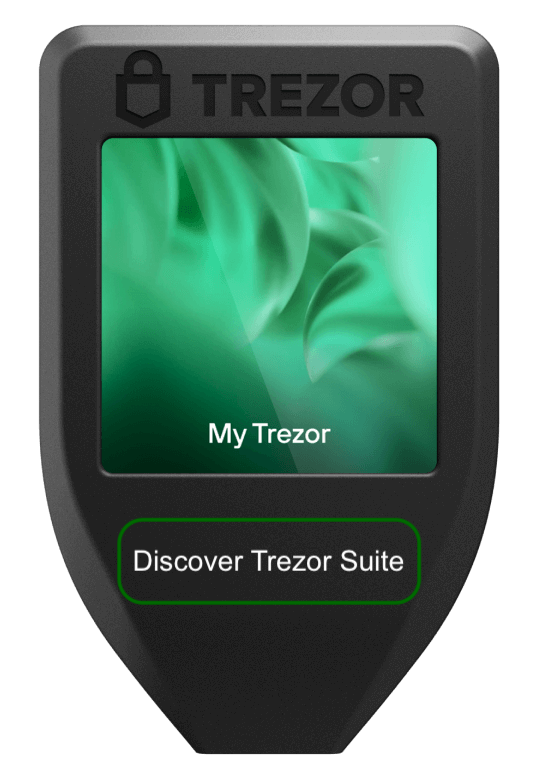
Any crypto you are not actively trading should be in self-custody on a hardware wallet — the Ledger Nano X and the Trezor Model T are the two most widely trusted options at the consumer level. A hardware wallet stores your private keys completely offline, meaning no exchange hack, platform collapse, or regulatory freeze can touch your assets. For beginners building a long-term portfolio strategy, moving holdings you plan to hold for 12 months or longer off exchanges and onto a hardware wallet is one of the highest-value security decisions you can make. To understand the differences between storage options, consider reading about hardware vs. software wallets.
How to Rebalance Your Crypto Portfolio Without Making Costly Mistakes
Rebalancing is the process of restoring your portfolio back to its original target allocation after price movements have shifted the percentages. It sounds simple, but most beginners either never do it, do it too often out of anxiety, or do it at exactly the wrong moment for the wrong reasons. Getting this right is what separates a strategy that compounds over time from one that slowly drifts into an unrecognizable risk profile.
The core problem with ignoring rebalancing is drift. If Bitcoin runs up 200% in a bull market while your altcoins stay flat, what started as a 50% BTC allocation might become 75% or 80% of your total portfolio. That concentration means your risk profile has quietly changed without you making a single conscious decision — and when BTC corrects sharply, the damage is far worse than your original strategy was designed to absorb.
Rebalancing Best Practices
- ◆Review your target allocation percentages before you invest so you have a clear baseline to return to
- ◆Check your actual allocation once per quarter at minimum — more frequently is not necessary and often leads to over-trading
- ◆When a position has drifted more than 5–10% from its target weight, treat that as a rebalancing trigger regardless of market conditions
- ◆Sell the overweight positions partially and use the proceeds to buy underweight positions — do not add new money just to avoid selling
- ◆Document every rebalancing decision with a date and rationale, even a single sentence, to keep yourself accountable to your strategy rather than market emotion
The most common rebalancing mistake beginners make is letting winners run indefinitely because selling them feels counterintuitive when everything is going up. Rebalancing forces you to take partial profits from outperformers and add to underperformers — which is essentially a systematic buy-low-sell-high mechanism built into your portfolio management process.
When to Rebalance: Time-Based vs. Threshold-Based Triggers
Time-based rebalancing means reviewing and restoring your allocation on a fixed schedule — quarterly works well for most beginners because it is frequent enough to prevent significant drift while avoiding the trap of over-managing. Threshold-based rebalancing means acting whenever a position moves more than a set percentage from its target, regardless of timing. Using both together is the most effective approach: do a scheduled quarterly review, but also check your allocations after any major market event — a 20%+ market move in either direction — and rebalance if any position has drifted beyond your 5–10% threshold. This hybrid method keeps your portfolio disciplined without turning portfolio management into a part-time job.
Tax Implications of Rebalancing You Need to Know
In most jurisdictions, selling any crypto asset — even to rebalance into another crypto asset — is a taxable event. Short-term capital gains, triggered by selling assets held less than 12 months, are typically taxed at a higher rate than long-term gains in countries like the United States. This means that frequent rebalancing in a bull market can create a significant and unexpected tax bill. The practical solution is to prioritize rebalancing through new contributions where possible — directing fresh capital toward underweight positions rather than selling overweight ones — and to time necessary sell-to-rebalance transactions with a clear understanding of your holding period and the tax rate that applies. Consulting a tax professional who understands crypto is not optional if you are managing a portfolio of meaningful size.
The Emotional Discipline That Separates Profitable Beginners From Losing Ones
“The investors who build real wealth in crypto are not the ones with the best entry points or the most exotic strategies. They are the ones who had a written plan before the market went sideways and stuck to it.”
CoinPosters · Beginner Strategy Guide 2026
Every strategy in this article works on paper. The reason most beginners do not see the results these strategies produce is not a flaw in the allocation math — it is a failure of emotional discipline at the worst possible moments. Bear markets feel permanent when you are inside them. Bull markets feel like they will never end. Both feelings are wrong, and acting on either one is what turns a sound strategy into a series of expensive mistakes.
The investors who build real wealth in crypto are not the ones with the best entry points or the most exotic strategies. They are the ones who had a written plan before the market went sideways and stuck to it when everything in their gut was telling them to do something else. Discipline is not a personality trait you either have or do not — it is a system you build before you need it.
Why Panic Selling Is the Number One Portfolio Killer
Panic selling locks in losses permanently. When you sell during a sharp market downturn, you convert a paper loss into an actual loss — and then face the nearly impossible psychological challenge of buying back in at the right time during a recovery. Most panic sellers do not buy back in at all, or they wait until prices have already recovered significantly, which means they absorbed the full downside of the crash and missed most of the upside of the recovery. Bitcoin’s price history shows that virtually every major panic-sell point over the last decade was followed by a recovery to new highs within 18 to 36 months. The investors who held through those crashes were rewarded. The ones who sold were not.
How to Build a Personal Investment Policy Statement
A Personal Investment Policy Statement (IPS) is a one-page written document that defines your strategy before emotions get involved. It should include your target allocation percentages, your rebalancing triggers and schedule, the maximum percentage of your net worth allocated to crypto, your intended holding period, and a single sentence that answers the question: “Under what conditions would I sell my entire portfolio?” — because the answer to that question, written down in advance, is the most powerful tool you have against panic selling. Keep it somewhere you will actually see it before making any portfolio decision. Reading your own pre-committed reasoning during a market crash is often enough to stop an impulsive move that would set your strategy back by years. If you’re deciding between hodling vs active trading, ensure your IPS reflects your choice.
Which of These 3 Strategies Should You Start With Today
The right strategy is the one that matches your actual risk tolerance, not the one that looks best in a bull market scenario. Here is a direct framework for choosing:
Which Strategy Is Right for You?
| Strategy | Choose This If… |
|---|---|
| Bitcoin-Heavy Core 70% BTC / 20% ETH / 10% USDC |
You are a complete beginner, have never held a volatile asset through a major drawdown, or are investing money you may need within 3 years |
| Core-Satellite 50% BTC / 25% ETH / 25% Altcoins |
You have a 3-to-5-year horizon, held crypto through at least one downturn without panic selling, and are willing to research individual altcoin projects |
| DCA Growth Portfolio 60% BTC / 30% ETH / 10% Altcoin |
You are starting with a small amount, want to remove timing decisions entirely, or are still learning and want a strategy you can automate while building your knowledge base |
None of these strategies require you to monitor charts daily, make complex trades, or predict market direction. They require consistent contributions, periodic rebalancing, and the discipline to leave your plan intact when the market tests it — which it absolutely will.
Start with the strategy that lets you sleep at night. A conservative strategy you actually stick to for five years will always outperform an aggressive strategy you abandon during the first bear market. The best crypto portfolio is not the most sophisticated one — it is the one you can hold through the full cycle.
Frequently Asked Questions
Below are direct answers to the most common questions beginners have when building their first crypto portfolio strategy.
What is the safest crypto portfolio strategy for a complete beginner?
The safest crypto portfolio strategy for a complete beginner is a Bitcoin-heavy allocation anchored by the two most established digital assets — Bitcoin and Ethereum — with a stablecoin buffer for volatility protection. This approach limits exposure to unproven projects while still providing meaningful participation in the crypto market’s long-term growth cycles.
A practical starting allocation:
| Asset | Allocation | Role in Portfolio |
|---|---|---|
| Bitcoin (BTC) | 70% | Core anchor — capital preservation and long-term growth |
| Ethereum (ETH) | 20% | Secondary blue-chip — utility exposure and growth potential |
| USDC (Stablecoin) | 10% | Volatility buffer and dry powder for market dips |
Adjust allocations based on individual risk tolerance. This is not financial advice.
As your confidence and knowledge grow, you can graduate toward the core-satellite model, adding a controlled altcoin allocation of no more than 25–30% while keeping Bitcoin and Ethereum as the dominant positions.
How much Bitcoin should a beginner hold in their crypto portfolio?
For most beginners, Bitcoin should represent at least 50% of their total crypto allocation — and closer to 70% if they are risk-averse or investing with a shorter time horizon. Bitcoin’s combination of liquidity, institutional adoption, fixed supply mechanics, and decade-plus track record makes it the most reliable risk-adjusted holding available in the crypto space. No altcoin, regardless of how compelling its use case, carries the same depth of market validation. Think of your Bitcoin allocation as the foundation that holds the portfolio together when everything else gets volatile.
Is dollar-cost averaging really effective for crypto investing?
Yes — and for beginners specifically, it is arguably the most effective strategy available because it directly addresses the biggest mistake most new investors make, which is trying to time entry points in a highly volatile market. By investing a fixed amount at regular intervals, DCA naturally produces a lower average cost basis over time compared to lump-sum investing at unpredictable market peaks.
The strategy does not eliminate the experience of watching your portfolio drop in value during bear markets, but it ensures you are accumulating more coins at lower prices during those periods — which dramatically improves your position when the market recovers. The historical track record of consistent Bitcoin DCA across any rolling three-to-five-year window supports this approach across multiple full market cycles. For those considering different strategies, understanding the difference between hodling and active trading can also be beneficial.
How often should a beginner rebalance their crypto portfolio?
Quarterly rebalancing is the right default for most beginners — it is frequent enough to prevent significant allocation drift without encouraging the kind of over-management that leads to emotional decisions and unnecessary tax events. Pair quarterly reviews with a threshold trigger: if any single position moves more than 5–10% away from its target allocation before the quarter ends, that is a signal to rebalance early. Avoid rebalancing in response to short-term price noise or market anxiety — every rebalancing decision should be driven by allocation drift from your target, not by what the market did yesterday.
Can you lose all your money even with a risk-adjusted crypto strategy?
Yes — and any honest answer to this question has to start there. Crypto is a high-risk asset class, and no portfolio strategy eliminates the possibility of total loss. A project in your satellite allocation can collapse to zero. A stablecoin can depeg under extreme conditions — as TerraUSD (UST) demonstrated catastrophically in May 2022, losing nearly all of its value within days despite being designed as a stable asset. Exchange failures like FTX in 2022 have wiped out investor holdings that were not in self-custody. Risk-adjusted strategies significantly reduce the probability of catastrophic loss — they do not reduce it to zero.
What a sound strategy does is ensure that no single failure point can destroy your entire portfolio. Keeping individual altcoin positions at or below 10%, holding a stablecoin buffer, storing long-term holdings in self-custody on a hardware wallet like the Ledger Nano X or Trezor Model T, and limiting your total crypto exposure to money you genuinely could afford to lose — these rules work together to contain the damage from any single event while preserving your ability to stay in the market and recover.
The investors who have genuinely lost everything in crypto almost universally made one of a small number of identifiable mistakes: they used leverage, they concentrated everything in a single asset or exchange, they chased high-yield DeFi protocols without understanding the underlying risk, or they invested money they could not afford to lose and panic-sold at the bottom. A structured strategy does not prevent market losses — but it does prevent the kind of catastrophic, unrecoverable loss that comes from those specific decisions. For those considering different investment strategies, understanding the differences between altcoin and DeFi investing can be crucial for long-term returns.
Disclaimer
This article is for informational and educational purposes only and does not constitute financial or investment advice. Do Your Own Research (DYOR) before making any cryptocurrency investment decision. All crypto investments carry substantial risk of loss, including the potential loss of your entire investment. Past performance of any asset, strategy, or backtested model is not indicative of future results. CoinPosters is not responsible for any financial losses arising from actions taken based on the information provided in this article. Always consult a qualified financial advisor before investing.
CoinPosters
Your guide to navigating crypto in 2026 and beyond.