alert tools
announcement monitoring
Binance announcements
bot alerts crypto
Coinbase listings
crypto alerts
Crypto News
exchange listings
listing alerts
listing detection
market monitoring
market notifications
real-time alerts
real-time monitoring
RSS feed vs bot alerts
RSS feeds crypto
RSS monitoring
trading alerts
trading infrastructure
web monitoring

Coinposters
Crypto News RSS Feed vs Bot Alerts: Which Works Better for Real-Time Market Monitoring?
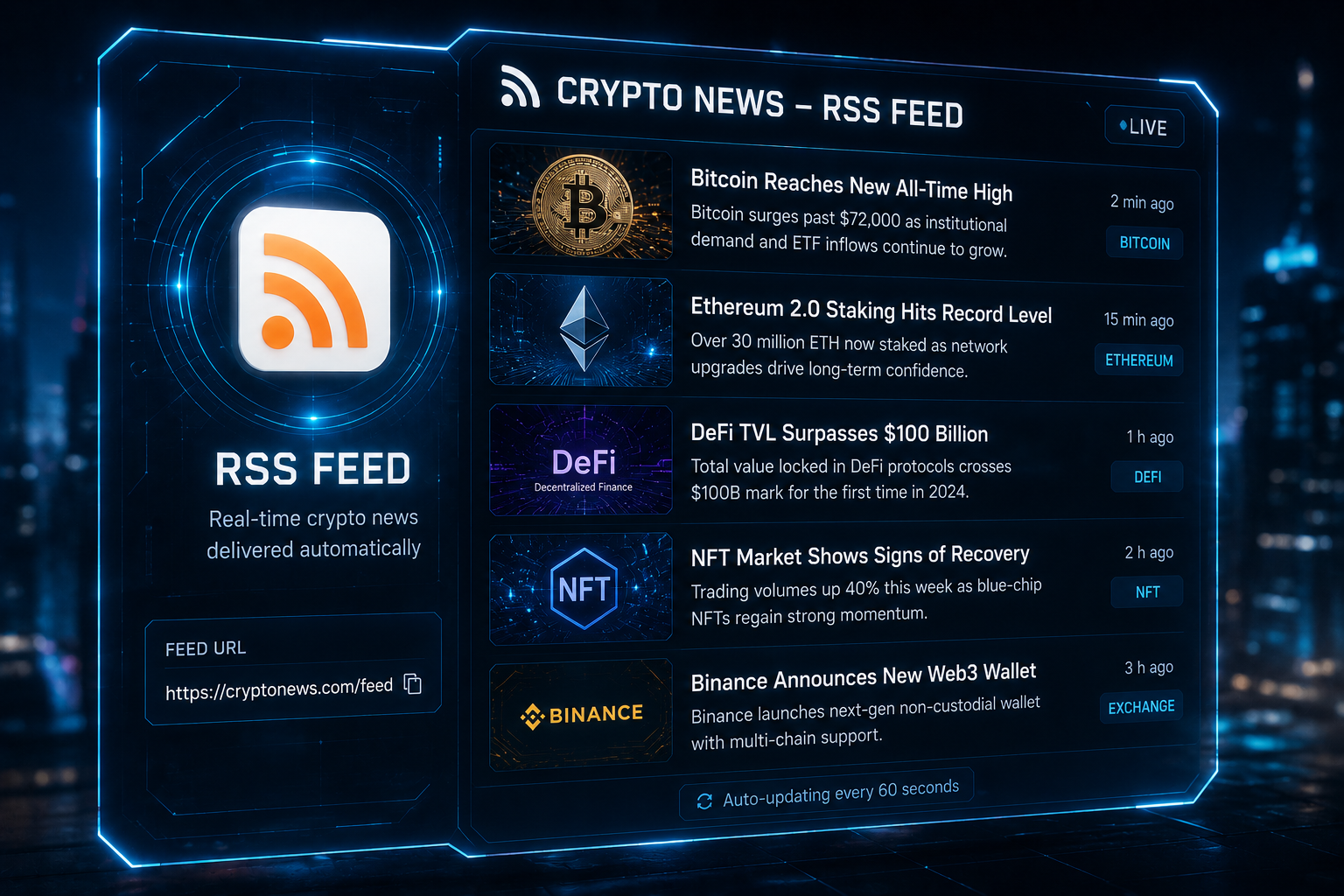
The choice between RSS feed vs bot alerts determines how fast you catch crypto exchange listings and market announcements. Here’s the direct comparison of RSS feed vs bot alerts, which method actually wins for real-time monitoring, and the layered approach that combines both for maximum speed and reliability.
Key Takeaways: RSS Feed vs Bot Alerts
- •RSS feed vs bot alerts differs fundamentally in speed: RSS feeds typically lag behind real-time market events by seconds to minutes — a critical gap in fast-moving crypto markets.
- •Bot alerts detect exchange listing announcements within seconds of publication, giving active traders a meaningful edge when comparing RSS feed vs bot alerts.
- •The fastest monitoring stack combines multiple methods — when deciding RSS feed vs bot alerts, consider that using both web monitoring tools and exchange-native alerts provides redundancy.
- •Fake listing scams and market manipulation are real risks that no monitoring tool can fully protect against — knowing how to verify announcements matters more than choosing RSS feed vs bot alerts.
- •Keep reading to find out which specific tools and configurations give you the tightest alert windows when comparing RSS feed vs bot alerts for Binance and Coinbase listing announcements.
Article at a Glance: When choosing between RSS feed vs bot alerts for crypto monitoring, speed is only part of the equation. This article compares RSS feed vs bot alerts across detection speed, reliability, automation potential, and cost. You’ll understand why RSS feed vs bot alerts represents a fundamental tradeoff, how to build a layered monitoring system combining both, and what risks no monitoring tool can protect you from.
Table of Contents
- RSS Feeds Catch Headlines, But Bot Alerts Catch Opportunities
- What RSS Feeds Actually Do in Crypto News Monitoring
- How Bot Alerts Work for Real-Time Crypto Monitoring
- RSS Feed vs Bot Alerts: The Head-to-Head Breakdown
- The Real Risks of Listing-Based Trading Either Method Misses
- The Right Monitoring Stack for Serious Crypto Traders
- Frequently Asked Questions
In crypto, seconds separate a profitable trade from a missed opportunity — and the tool you use to monitor the market determines which side of that line you land on.
Whether you are tracking new exchange listings, watching for regulatory announcements, or staying ahead of breaking market news, the method you choose for real-time crypto market monitoring has a direct impact on your results. Web monitoring tools allow active traders to monitor exchange announcement pages directly, sending alerts the moment a page changes — no manual checking required.
RSS Feeds Catch Headlines, But Bot Alerts Catch Opportunities
RSS feeds have been a staple of news monitoring since the early 2000s. They are clean, structured, and easy to plug into automation workflows. But in crypto markets — where a Binance listing announcement can trigger a 200% price spike within minutes — “clean and structured” is not always fast enough. Bot alerts, particularly those monitoring exchange pages directly, operate on a different level of urgency. When evaluating RSS feed vs bot alerts, speed becomes the critical differentiator.
What RSS Feeds Actually Do in Crypto News Monitoring
An RSS feed is a standardized XML file that a website updates whenever new content is published. Your RSS reader or monitoring tool polls that file at regular intervals — typically every 5 to 15 minutes — and delivers new entries to you. For general crypto news, this works well. For time-sensitive listing announcements, those polling intervals can cost you the trade. The debate between RSS feed vs bot alerts often comes down to this fundamental timing issue.
How RSS Feeds Pull and Deliver Exchange Announcements
The RSS polling cycle works like this: a publisher updates their feed file, your reader checks for updates on its next scheduled poll, detects the new entry, and sends you a notification. The delay between the actual page update and your notification is entirely dependent on the polling frequency. Most free RSS tools poll every 15 minutes. Even paid services rarely poll faster than every 1 to 5 minutes.
How RSS Polling Works:
Step 1: Publisher updates RSS feed file with new content
Step 2: Your RSS reader polls the feed at scheduled interval (5-15 minutes)
Step 3: Reader detects new entry in the file
Step 4: Notification sent to you (total delay: minutes)
Which Major Exchanges Offer RSS Feeds
Not every major exchange maintains an active, reliable RSS feed for their announcement pages. Here is what is currently available:
- •Binance — Offers an RSS feed for its official announcement blog, covering new listings, delistings, and maintenance notices.
- •Coinbase — Provides an RSS feed through its blog, though listing-specific announcements are sometimes mixed with general company news.
- •Kraken — Maintains a blog RSS feed, but listing announcements are not always separated from other content types.
- •OKX and Bybit — RSS availability is inconsistent and may require third-party scraping tools to replicate similar functionality.
The Delay Problem: Why RSS Feeds Can Miss the Trade Window
The core problem with RSS in crypto trading is the polling gap. If Binance publishes a new listing announcement at 2:03am and your RSS reader polls every 15 minutes, you might not receive the alert until 2:15am or later. By that point, algorithmic trading bots that monitor the page directly have already executed. The price has moved. The opportunity window has narrowed or closed entirely.
This is not a theoretical problem — it is a documented pattern. The “buy the rumor, sell the news” cycle in crypto moves faster than most RSS configurations can track. For traders who rely on listing announcements as an entry signal, even a 2-minute delay can be the difference between a 40% gain and a breakeven trade.
How Bot Alerts Work for Real-Time Crypto Monitoring
Bot alerts for crypto monitoring work by continuously or frequently checking a target URL — an exchange announcement page, a regulatory update page, or a news aggregator — and triggering a notification the moment the content changes. Unlike RSS, which depends on the publisher updating a separate feed file, bot monitoring goes directly to the source page. When comparing RSS feed vs bot alerts, this direct approach offers a fundamental advantage.
Exchange-Native Alerts: Fast but Limited
Most major exchanges offer built-in price alerts and some form of notification for account activity. Binance’s mobile app, for example, allows users to set price alerts and receive push notifications for order fills. Coinbase offers similar functionality through its app. These are useful for price-based triggers, but they are not designed to alert you when a new listing announcement is published on the exchange blog.
The limitations are significant. Exchange-native alerts are siloed — each app only covers its own ecosystem. They offer no webhook or API integration options for feeding alerts into a broader trading workflow. And critically, they do not monitor announcement pages for new content, which is where the highest-value listing intelligence lives.
Dedicated Crypto Alert Services: Speed vs. Cost
Services like Token Metrics, CoinGecko Alerts, and various Telegram-based listing bots specifically target the listing announcement use case. Some of these services claim detection windows as fast as 10 to 30 seconds after a new listing is published. The trade-off is cost — quality dedicated alert services typically run $30 to $150 per month — and reliability, which varies significantly between providers. For those interested in keeping up with important market events, using crypto news calendars can be a valuable addition to your strategy.
One important consideration with dedicated services: many of them sell access to the same alert pool. If hundreds of subscribers receive the same listing alert simultaneously, the price impact of the announcement is absorbed faster, compressing the window even further. The edge narrows as the user base grows.
Web Monitoring Tools: Direct Page Monitoring Approach
Web monitoring tools take a fundamentally different approach than RSS feeds. Instead of waiting for a publisher to update an RSS file, these tools (such as PageCrawl, Distill, or similar services) check the actual exchange announcement page at your configured interval and fire an alert the moment the page content changes. This means you are monitoring the source of truth — the live webpage — rather than a secondary feed that depends on the publisher’s update workflow. For a comprehensive look at real-time alerts, explore the best crypto news aggregators available in 2026.
The practical setup is straightforward with most web monitoring tools. You point the tool at Binance’s announcement blog URL, set your check interval (typically 30 seconds to 5 minutes depending on your plan), and configure your notification channel — Telegram, email, Slack, or webhook. When a new listing post appears on that page, the change is detected and the alert goes out. No reliance on RSS feed update timing, no dependency on a third-party alert service’s infrastructure. Just direct page monitoring with configurable speed.
RSS Feed vs Bot Alerts: The Head-to-Head Breakdown
Choosing between RSS feed vs bot alerts is not just a technical decision — it is a strategic one. The right choice depends on your trading style, how actively you are monitoring markets, and how much a delayed alert actually costs you in real terms. Here is how the two approaches compare across the dimensions that matter most.
Speed: Which Delivers Alerts First
Bot alerts win on speed, and it is not particularly close. A web monitoring bot checking a page every 30 to 60 seconds will detect a new listing announcement significantly faster than an RSS reader polling every 5 to 15 minutes. For dedicated services claiming sub-30-second detection, the gap is even wider. In a market where algorithmic bots can execute trades within milliseconds of a listing announcement hitting a page, every second of alert latency matters. The RSS feed vs bot alerts comparison on speed is decidedly one-sided.
Reliability: What Happens at 3am When You Are Not Watching
RSS feeds are passive — they work silently in the background, which sounds reliable until you realize that feed update delays, reader app crashes, and missed polls all happen without any visible warning. Bot monitoring services run continuously on cloud infrastructure, meaning your Binance announcement page is being checked around the clock regardless of whether your phone is on, your app is open, or you are asleep. For traders who cannot afford to babysit their monitoring tools at odd hours, automated web monitoring is a more dependable foundation.
Automation: Which Fits Into a Trading Workflow
RSS feeds integrate well with tools like Zapier, Make (formerly Integromat), and n8n, which means you can build workflows that route new RSS entries into Telegram messages, Google Sheets logs, or even trading triggers. Bot monitoring tools with webhook support offer the same downstream automation potential — with the added advantage of monitoring pages that do not have RSS feeds at all. If your workflow requires monitoring OKX or Bybit announcement pages that lack reliable RSS feeds, web monitoring is the only option.
Cost: Free Tools vs. Paid Services
RSS monitoring can be done for free using tools like Feedly or Inoreader at the basic tier. Web monitoring tools offer entry-level plans that cover essential use cases without significant cost. Dedicated crypto alert services are the most expensive option, with serious services running $50 to $150 per month. For traders operating at meaningful volume, that cost is easily justified. For casual traders, the free and low-cost RSS plus web monitoring combination delivers strong value, especially when using crypto news aggregators for real-time alerts.
RSS Feed vs Bot Alerts: Quick Comparison
| Dimension | RSS Feed | Bot Alerts |
|---|---|---|
| Speed | 5-15 minutes (polling delay) | 30 seconds – 2 minutes |
| Reliability | Passive, manual intervention needed | 24/7 automated cloud monitoring |
| Automation | Integrates with Zapier, Make, n8n | Webhook + API integration available |
| Cost | Free to $20/month | Free to $150+/month |
| Best For | General news monitoring | High-speed listing tracking |
The Real Risks of Listing-Based Trading Either Method Misses
Critical Risk Summary: What Your Alert Tool Cannot Protect You From
| Risk | RSS Feed Protection | Bot Alert Protection | What Actually Protects You |
|---|---|---|---|
| Fake listing announcements on social media | None | None | Monitoring official exchange pages directly |
| Price already moved before your alert | None | Partial — faster alerts help | Faster check intervals + pre-set execution |
| Market manipulation around listing | None | None | Post-announcement price analysis before entry |
| Listing delay or cancellation after announcement | None | None | Monitoring follow-up announcements |
Every monitoring tool — RSS or bot — operates on the same fundamental limitation: it tells you something happened, not whether you should act on it. The alert is the starting gun, not the finish line. What you do in the seconds and minutes after receiving a listing notification determines your actual outcome far more than the alert method itself.
Listing-based trading carries structural risks that have nothing to do with how fast your alert fires. Token liquidity at the moment of listing can be razor thin, meaning even a modest buy order can move the price against you. Slippage on volatile newly-listed tokens can erode a significant portion of any theoretical gain before your order fills.
There is also the broader market context to consider. A token listing on Binance during a broader market downturn behaves very differently than the same listing during a bull run. Your alert tool has no awareness of market conditions — it simply tells you a page changed. Building a checklist for post-alert evaluation, even a fast 60-second one, meaningfully reduces reactive trading mistakes.
The Announcement-to-Price-Move Window Is Getting Shorter
The window between a listing announcement and a meaningful price move has compressed significantly as more sophisticated monitoring tools have entered the market. What used to be a 5 to 10 minute window for retail traders to act on a Binance listing has, in many cases, narrowed to under 60 seconds as institutional-grade bots compete for the same entry points. This makes the choice of monitoring method more consequential, not less — but it also means that speed alone is no longer sufficient. Execution infrastructure, pre-configured orders, and clear entry criteria matter just as much as how fast your alert arrives.
Fake Listings and Social Media Scams
One of the most underappreciated risks in listing-based trading is the prevalence of fake announcements. Scammers regularly post fabricated listing announcements on X (Twitter), Telegram, and Discord — sometimes using spoofed account names that closely mimic official exchange handles.
Traders who rely on social media as their primary monitoring source are directly exposed to this risk. Monitoring official exchange pages directly — rather than social media accounts or third-party aggregators — provides a meaningful layer of protection against fake listing scams. When your alert comes from a verified change on the actual Binance or Coinbase announcement page, you can act with confidence that the listing is real. This is one of the strongest arguments for direct web monitoring over social media-based alert methods, regardless of speed.
Market Manipulation Around Listing Announcements
Market manipulation around listing announcements is a documented and persistent problem in crypto markets. Coordinated pump-and-dump schemes targeting newly listed tokens are common, where organized groups accumulate a token before a listing announcement leaks or is published, then sell into the retail buying frenzy that follows the alert. By the time your RSS feed or bot alert fires, the manipulators may already be exiting their positions — directly into your buy order.
The best defense is not a faster alert — it is a smarter response protocol. Before entering any position triggered by a listing alert, check order book depth, look for unusual pre-announcement volume spikes, and verify the announcement through multiple official channels. A 30-second verification habit protects you from being the exit liquidity in someone else’s trade.
The Right Monitoring Stack for Serious Crypto Traders
No single monitoring method covers every scenario. The traders who consistently catch listing opportunities — while avoiding the traps — run layered monitoring stacks that combine the strengths of multiple tools. The goal is redundancy, speed, and verification working together.
Here is what a practical, high-performance monitoring stack looks like for tracking Binance and Coinbase listings specifically:
5-Layer Monitoring Stack for Maximum Coverage
Layer 1 — Direct Web Monitoring: Use a web monitoring tool to monitor Binance and Coinbase announcement blog pages directly, with the shortest check interval your plan supports. Configure Telegram webhook notifications for instant delivery.
Layer 2 — RSS Feed Backup: Subscribe to official exchange RSS feeds through a tool like Inoreader or Feedly as a secondary confirmation source. If your web monitor fires and the RSS confirms shortly after, you have two independent signals pointing to the same announcement.
Layer 3 — Exchange-Native App Alerts: Keep Binance and Coinbase apps installed with push notifications enabled. These won’t catch listing announcements, but they will catch price movement triggers and order fills in real time.
Layer 4 — Selective Dedicated Alert Service: If you are trading at meaningful volume, one quality dedicated crypto alert service adds a professional-grade layer of speed. Evaluate based on demonstrated detection times, not marketing claims.
Layer 5 — Post-Alert Verification Checklist: Before executing any listing-triggered trade, run a fast verification: confirm the announcement on the official exchange page, check order book depth, and review pre-announcement volume. Thirty seconds of verification is worth more than 30 seconds of faster alert delivery.
The goal of a layered stack is not to generate more noise — it is to create a system where a missed alert from one layer is caught by another, and where every alert you act on has been verified through at least two independent sources. Speed matters, but so does signal quality.
Frequently Asked Questions
Real-time crypto market monitoring raises a lot of practical questions, especially when you are trying to build a system that is both fast and reliable. Below are direct answers to the questions traders ask most when comparing RSS feeds and bot alerts.
Can RSS feeds provide real-time crypto price alerts?
RSS feeds are not designed for real-time price alerts. They are content syndication tools — they deliver new articles, announcements, and blog posts, not live price data. For real-time price alerts, exchange-native apps, dedicated services like CoinGecko Alerts, or direct API connections to exchange data feeds are the appropriate tools.
Where RSS feeds do provide value is in news and announcement monitoring. If your primary goal is tracking new content published on exchange blogs or crypto news sites, RSS remains a functional and low-cost option — provided you accept the inherent polling delay.
What is the fastest way to get notified about new exchange listings?
The fastest reliable method is direct web monitoring of exchange announcement pages using a tool set to the shortest available check interval, combined with Telegram webhook delivery for near-instant notification. Dedicated crypto alert services that claim sub-30-second detection can be faster in ideal conditions, but their reliability varies and they are more expensive. The combination of direct web monitoring plus a dedicated service provides the tightest detection window available to retail traders. For more insights on real-time alerts, you can explore some of the best crypto news aggregators available.
Are free crypto alert tools reliable enough for active trading?
Free tools are reliable enough for casual monitoring, but they carry limitations that matter for active trading. Free RSS readers typically poll every 15 minutes. Free tiers of web monitoring tools may have longer check intervals and limited notification channels. For traders where a missed listing alert has real financial consequences, the cost of a paid monitoring tool is typically well justified.
The more honest question is: what is the cost of a missed alert compared to the cost of a paid tool? If you are trading $500 per listing event, a $50/month monitoring upgrade that catches two additional opportunities per month pays for itself immediately.
How do bot alerts reduce the risk of missing a listing announcement overnight?
Bot alerts run continuously on cloud infrastructure, which means they monitor exchange pages 24 hours a day regardless of your activity. RSS readers and social media monitoring both require some form of active engagement to be effective — you need to check your feed, or your phone needs to receive a push notification you might sleep through. A properly configured web monitoring bot sends a Telegram or SMS alert the moment a listing is detected, whether it is 2pm or 4am, ensuring overnight announcements are captured with the same speed as daytime ones.
Is it worth paying for a dedicated crypto alert service over free RSS monitoring?
It depends entirely on your trading volume and how much listing announcements factor into your strategy. For traders who actively pursue listing-based opportunities as a core part of their approach, the speed advantage of a dedicated service over free RSS monitoring is worth the monthly cost. The detection window difference — potentially minutes versus seconds — directly impacts entry price and profitability. For more insights on tracking market events, check out this guide on crypto news calendars.
For traders who use listing monitoring as a supplementary information source rather than a primary trading trigger, free RSS feeds combined with a low-cost web monitoring tool provide solid coverage without significant expense. The key is matching the tool’s capability to the actual financial stakes of your monitoring use case.
Official Exchange Announcement Pages to Monitor
Binance: https://www.binance.com/en/support/announcement
Coinbase: https://x.com/coinbase?lang=en
Kraken: https://www.kraken.com/press
Bybit: https://announcements.bybit.com/en/
The Real Question: RSS feed vs bot alerts is not actually about which is “better” — it’s about matching the tool to your actual trading needs and financial stakes. Fast execution means nothing without proper verification. Speed without accuracy is just expensive mistakes happening faster.
DISCLAIMER: This article is for informational purposes only and does not constitute financial, investment, legal, or trading advice. The comparison of RSS feeds vs bot alerts reflects general monitoring approaches and may not apply equally to all traders based on their specific risk tolerance, experience levels, or trading objectives. Always conduct your own research (DYOR), verify information from multiple sources, understand that your optimal monitoring setup may differ from the recommendations provided, and never make investment decisions based solely on alert speed or monitoring method selection. Past results from listing-based trades do not guarantee future results. The monitoring tools and exchanges mentioned are referenced for example purposes and do not represent endorsements or guarantees of performance or reliability. Listing-based trading carries substantial risk of loss. Before using any monitoring tool for trading, ensure you fully understand your exchange’s terms of service and local trading regulations.