Coinposters
Precious Metals vs Cryptocurrency for Portfolio Diversification in 2026

Precious Metals vs Cryptocurrency · Portfolio Strategy · 2026 Analysis
2025 was a reality check: Gold rose +62.6% while Bitcoin fell -6.4%. The debate between precious metals and cryptocurrency is not about which one wins — it’s about understanding what each asset actually does when markets get uncomfortable.
Coinposters Research Team · Updated 2026 · 24 min read
Key Takeaways
2025 was a reality check: Gold rose +62.6% while Bitcoin fell -6.4% on a calendar-year basis, according to CoinGecko’s 2025 Annual Crypto Industry Report — the clearest evidence yet that these two assets do not play the same role.
Bitcoin behaved like a risk asset, not a safe haven: During stress episodes in 2025, Bitcoin sold off alongside equities while gold held firm — its correlation with the S&P 500 rose to 0.86.
Central banks are still buying gold in size: 863 tonnes of gold were purchased by central banks, reinforcing gold’s role as a reserve asset with no crypto equivalent.
Spot Bitcoin ETFs changed institutional access but not Bitcoin’s risk profile: Easier ownership does not mean lower volatility — something 2025 made very clear.
The smartest portfolios in 2026 use both — but for different jobs: Allocation ranges, rebalancing rules, and stress-test data should shape your decision.
Gold Rose 62.6%, Bitcoin Fell 6.4%: What 2025 Taught Us
The headline numbers from 2025 tell a clear story. Gold finished the year up +62.6% while Bitcoin ended down -6.4% on a calendar-year basis, according to CoinGecko’s 2025 Annual Crypto Industry Report.
2025 Calendar Year Performance — The Reality Check
+62.6%
Gold
Safe haven behavior validated
-6.4%
Bitcoin
Risk asset correlation confirmed
This happened in the same year Bitcoin hit a headline all-time high — which tells you something important: peak price and annual return are two very different things, and timing risk in crypto is real.
How Gold Behaved During Risk-Off Episodes in 2025
Every time markets shifted into risk-off mode in 2025, gold did exactly what a safe haven asset is supposed to do — it held value or moved higher. By late January into early February 2026, gold pushed to new all-time highs, with the LBMA close printing $4,946/oz during one particularly strong week — a +7.3% weekly gain.
Why Bitcoin’s All-Time High Did Not Make It a Safe Haven
Bitcoin did hit an all-time high in 2025. That is a fact. But finishing the calendar year down -6.4% despite that headline print reveals something critical about how Bitcoin actually trades — it is driven by momentum, leverage, and liquidity cycles, not by the kind of steady demand that underpins gold.
Bitcoin’s Correlation Shift — 2024 vs 2025
→Bitcoin’s correlation with the S&P 500 rose from 0.75 in 2024 to 0.86 in 2025
→Its correlation with gold weakened to 0.53 as of August 2025
→During liquidation-heavy episodes, Bitcoin fell sharply while gold held or rose
→The “digital gold” narrative weakened significantly as these correlations diverged
→Bitcoin increasingly behaved like a high-beta risk asset, not a monetary alternative
These numbers matter because correlation data strips away the narrative and shows you what actually happened in real market conditions. When the S&P 500 dropped, Bitcoin dropped with it — often harder. That is not what a safe haven does.
The simple way to read 2025: gold acted like insurance, Bitcoin acted like a high-volatility growth trade.
Central Banks Bought 863 Tonnes of Gold: What That Signals
Central bank gold demand is one of the most reliable demand signals in the precious metals market, and 2025 saw 863 tonnes purchased globally. This buying is driven by de-dollarization strategies, reserve diversification, and geopolitical risk management — none of which are motivations that point toward Bitcoin as an alternative.
That institutional floor under gold matters enormously for portfolio construction. It means gold has a structural buyer base that is not sentiment-driven. This is the kind of demand profile that makes gold a genuine ballast asset, not just a speculative trade wearing a “store of value” label.
Gold vs Bitcoin: They Are Not Competing for the Same Job
One of the most persistent mistakes investors make is treating this as a binary choice. The far more useful lens is to ask what job each asset is doing in your portfolio and whether it is actually qualified for that job based on its real-world behavior. For insights into how digital assets are evolving, explore the viability of Web3 communities in 2026.
Different Assets, Different Jobs
What Gold Actually Does:
Gold’s job is ballast. It reduces overall portfolio volatility, holds value during inflationary periods, and tends to rise when equities fall. Central bank demand, a 5,000-year history as a store of value, and a mature global trading infrastructure make it the most credible hard asset available.
What Bitcoin Actually Does:
Bitcoin’s job is convexity — asymmetric upside exposure for a small portion of capital. In a strong risk-on environment, Bitcoin can generate returns that no other asset class matches. But it comes with a tradeoff: Bitcoin behaves like a leveraged risk asset in downturns, dropping faster and harder than most equity positions.
The Real Difference Is How Each Asset Behaves Under Stress
Performance in calm markets is easy. The real test of a diversification tool is what it does when conditions deteriorate — and 2025 gave us a sharp, well-documented stress test to work with.
Gold During Market Panic: Historical Pattern
Gold’s crisis behavior follows a consistent pattern across decades: when investors panic, gold either holds its value or rises as capital rotates out of risk assets. During the 2008 financial crisis, gold initially dipped during the acute liquidity crunch but recovered quickly. During COVID-19 volatility in early 2020, the same pattern played out.
October 2025 Liquidation: A Side-by-Side Stress Test
The October 2025 liquidation episode was one of the clearest natural experiments the market produced all year. As leveraged positions were forcibly closed and risk appetite collapsed, Bitcoin fell sharply in a compressed timeframe. Gold, during the same window, held firm and in some sessions moved higher as safe-haven demand absorbed the capital fleeing risk assets.
This was not a subtle difference — it was a clean, observable divergence that matched the theoretical role each asset is supposed to play.
How to Own Each Asset Without Getting Burned
Choosing between gold and Bitcoin is only half the decision. How you actually hold each asset determines your real-world risk exposure just as much as the asset itself. The ownership layer is where most retail investors make avoidable mistakes.
Physical Gold, Allocated Accounts, and Gold ETFs Explained
Physical gold — coins and bars held directly — gives you zero counterparty risk and full ownership, but it introduces storage costs and insurance requirements. Allocated accounts through a custodian give you legal title to specific bars held in a vault. Gold ETFs like the SPDR Gold Shares (GLD) or iShares Gold Trust (IAU) offer liquid, low-cost exposure with no storage complexity, but they are securities claims, not direct metal ownership.
Spot Bitcoin ETFs vs Direct Custody: Tradeoffs to Know
The SEC approval of spot Bitcoin ETFs in the U.S. — including products from BlackRock (iShares Bitcoin Trust, IBIT) and Fidelity (Wise Origin Bitcoin Fund, FBTC) — fundamentally changed how institutional and retail investors access Bitcoin.
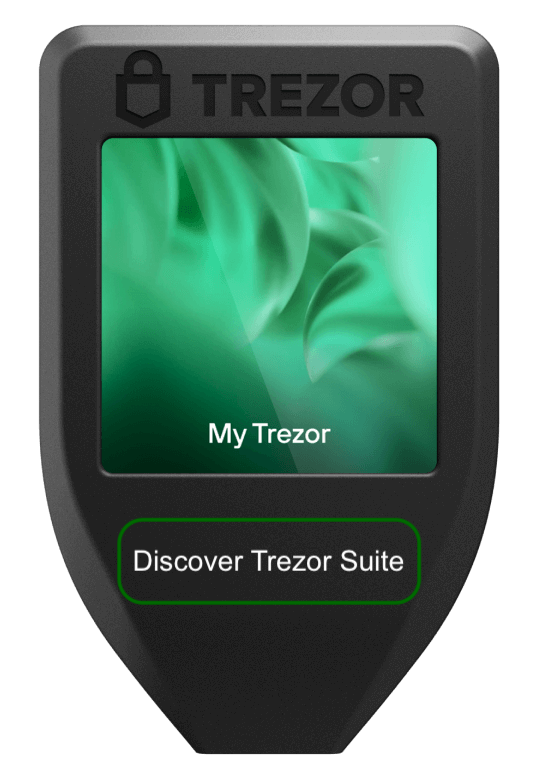
Direct custody — holding Bitcoin in a hardware wallet like a Ledger Nano X or Trezor Model T — gives you full sovereignty but demands technical competence. For those interested in how these financial instruments are evolving, stablecoins vs altcoins in 2026 is worth exploring.
Regulation Is Not Equal Across Both Assets
Gold operates inside one of the most mature, globally standardized regulatory frameworks of any asset class. Bitcoin and the broader crypto market do not — and in 2026, that gap still matters significantly.
Gold’s Established Legal Framework
→LBMA sets global standards for gold bar quality and chain of custody
→Gold ETFs are regulated securities subject to SEC oversight
→Physical gold ownership is legal and unrestricted with clear property rights
→Allocated gold accounts carry legal protections separating client metal from custodian balance sheets
→Capital gains tax treatment is well-established and consistent
→Gold futures trade on regulated exchanges including CME Group COMEX
Crypto’s Region-by-Region Regulatory Patchwork in 2026
Crypto regulation in 2026 remains fragmented by jurisdiction. In the U.S., spot Bitcoin ETFs resolved one major piece of regulatory ambiguity. The EU’s Markets in Crypto-Assets (MiCA) regulation introduced a comprehensive framework. For investors with cross-border holdings, understanding the specific regulatory environment in each jurisdiction is not optional. For a broader perspective, see how silver’s performance surprised crypto investors.
What to Watch in 2026 for Gold
Gold’s 2026 outlook is driven by three forces that are all currently pointing in the same direction: central bank demand, de-dollarization momentum, and real interest rate trajectory.
Key Macro Signals to Track for Gold in 2026
📈Central bank purchases — World Gold Council quarterly data. Sustained buying above 800 tonnes annually is structurally bullish.
📉Real interest rates — Track the 10-year TIPS yield. Falling or negative real rates are historically the most reliable gold tailwind.
🌍USD strength index (DXY) — Gold is priced in dollars; a weakening dollar amplifies gold returns.
⚠️Geopolitical risk events — Escalation in any major conflict or financial system stress triggers safe-haven flows.
What to Watch in 2026 for Crypto
Bitcoin’s 2026 outlook is shaped by: liquidity conditions, regulatory developments, ETF flows, and the halving cycle’s lagging effect. The April 2024 halving reduced Bitcoin’s block reward from 6.25 BTC to 3.125 BTC. Watch whether that delayed supply effect plays out more forcefully in 2026 as liquidity conditions potentially improve.
How to Actually Build a Portfolio With Both
The most practical framework is to assign each asset a clearly defined role and size the position according to that role. Gold is your ballast. Bitcoin is your convexity.
Allocation Ranges Based on Your Risk Tolerance
Gold vs Bitcoin Allocation by Risk Profile
| Risk Profile | Gold Allocation | Bitcoin/Crypto Allocation | Primary Goal |
|---|---|---|---|
| Conservative | 10% – 15% | 0% – 2% | Capital preservation, inflation hedge |
| Moderate | 7% – 10% | 3% – 5% | Diversification with limited upside exposure |
| Aggressive | 5% – 8% | 5% – 10% | Growth with hard asset ballast |
Ranges are general guidelines only. Individual circumstances and tax situation should inform final allocation decisions.
Rebalancing Rules That Remove Emotion From the Decision
Rebalancing is the mechanism that keeps your allocation doing the job you designed it for. Without a clear rebalancing rule, most investors end up overweight whatever asset has performed best recently — which is precisely the wrong time to be adding exposure.
Simple Rebalancing Playbook for Gold + Crypto Portfolio
📅Review frequency: Quarterly at minimum, or whenever a position drifts more than 5% from target
✂️Trim rule: If Bitcoin or gold exceeds target by 5%+, sell excess and reallocate
📈Add rule: If an asset falls 5%+ below target, consider adding from pre-allocated capital
🚫Override rule: Do not rebalance during acute crisis. Wait for 5+ trading day stabilization
📝Tax awareness: Check short-term gain triggers. Harvest losses to offset rebalancing costs
The 2025 data makes this framework concrete: Gold provided portfolio ballast. A disciplined Bitcoin allocation captured upside without creating catastrophic drawdown risk.
If You Want Stability, Upside, or Both: Here Is What to Do
Most investors want a clear, actionable answer. Here it is, broken down by what your actual priority is.
Decision Framework: Which Approach Fits Your Priority?
🛡️Priority: Capital preservation / drawdown protection
→ Lean gold (10–15%), Bitcoin at 0–2% or zero. Physical gold or regulated ETF. Rebalance annually.
📈Priority: Asymmetric upside / growth exposure
→ Bitcoin at 5–10%, gold at 5–8% as anchor. Use spot ETF (IBIT or FBTC). Rebalance on 5% drift.
⚖️Priority: Both stability and upside (hybrid)
→ Gold at 7–10%, Bitcoin at 3–5%. Review quarterly. Never let Bitcoin exceed 10% without deliberate decision.
Frequently Asked Questions
Is Gold or Bitcoin a Better Hedge Against Inflation in 2026?
Gold is the better-evidenced inflation hedge as of 2026. Its 2025 performance — up 62.6% — added to a multi-decade track record of preserving purchasing power. Bitcoin’s inflation hedge thesis is theoretically sound (fixed supply, no central bank control) but has not consistently held up empirically.
Can You Hold Both Gold and Cryptocurrency in the Same Portfolio?
Yes — and for most investors with a long-term horizon, holding both makes more sense than choosing one. The key is assigning each asset a distinct role and sizing the positions accordingly. Bitcoin’s correlation with gold fell to 0.53 as of August 2025, providing genuine diversification benefit. For more insights, check out the 322% return that shocked crypto investors.
Why Did Bitcoin Fall in 2025 if It Is Supposed to Be Digital Gold?
Bitcoin fell in 2025 because the “digital gold” label describes a narrative, not a proven behavioral characteristic. The 2025 data showed clearly why: Bitcoin’s correlation with the S&P 500 rose to 0.86, meaning it was trading more like a high-beta equity than a monetary metal. When liquidity tightened, Bitcoin sold off alongside other risk assets. Gold absorbed safe-haven flows and finished up 62.6%. For more on crypto regulations in 2026, see our comprehensive guide.
The Verdict for 2026
Use Gold for Ballast, Bitcoin for Convexity
A hybrid portfolio — gold for ballast, Bitcoin for convexity, a clear rebalancing rule to maintain the ratio — is the most complete answer. It does not require you to pick a winner. It requires you to understand what each asset does, size each position appropriately, and maintain the discipline to rebalance systematically. The 2025 data showed exactly why this works: gold cushioned the risk-off episodes while Bitcoin captured the momentum phases.
Disclaimer: This article is for informational purposes only and does not constitute financial, investment, or legal advice. Gold and Bitcoin carry significant risks including total loss of capital, extreme volatility, and regulatory uncertainty. Past performance does not guarantee future results. Statistics cited from CoinGecko’s 2025 Annual Crypto Industry Report and other sources are for illustrative purposes. Always conduct thorough research, understand the risks, and consult appropriate professionals before making investment decisions. Coinposters is not responsible for decisions made based on this content.




Latest
Bitcoin
25 Feb 2026
Bitcoin
21 Feb 2026
Bitcoin
13 Feb 2026
Bitcoin
07 Feb 2026