Coinposters
Physical Gold vs Digital Bitcoin for Retirement Portfolio Strategy

In the gold vs Bitcoin retirement debate, 2025 and 2026 data both point the same direction: gold has behaved like a genuine safe haven while Bitcoin has moved more like a high-volatility risk asset. Our guide to retirement investing breaks down exactly how much of each actually belongs in a retirement portfolio.
Article At A Glance: Gold Anchors, Bitcoin Edges
- Gold surged ~62.6% in 2025 while Bitcoin fell ~6.4% on a calendar-year basis, proving these two assets behave very differently when markets get stressed.
- Physical gold has acted as a reliable store of value for thousands of years and remains the preferred safe-haven asset for central banks and conservative retirees alike.
- Bitcoin’s correlation with the S&P 500 rose to 0.86 in 2025, meaning it moved more like a risk asset than a hedge, critical information for anyone near or in retirement.
- A hybrid approach, gold as your portfolio’s anchor, Bitcoin as a small speculative edge, is how experienced investors are thinking about both assets heading into 2026.
- Keep reading to find out exactly how each asset held up during the 2025 and 2026 market stress tests, and what that means for your retirement allocation strategy.
Table of Contents
- Gold vs Bitcoin Retirement: Two Assets, Two Very Different Jobs
- How Each Asset Actually Performed Under Stress
- Physical Gold: What Retirees Need to Know
- Bitcoin for Retirement: The Opportunity and the Risk
- Gold vs Bitcoin: Head-to-Head Comparison
- The Case for Holding Both: A Hybrid Strategy
- Gold Is the Anchor, Bitcoin Is the Edge
- Frequently Asked Questions
Two assets dominate every gold vs Bitcoin retirement conversation right now, and they could not be more different in how they protect, or expose, your wealth.
Gold and Bitcoin both carry the “store of value” label, but in 2025, that label held for one and cracked for the other. For retirees building or preserving wealth, understanding that distinction is not optional, it is the difference between a portfolio that holds steady and one that loses a significant chunk of purchasing power when you can least afford it. There are companies that have long operated within the gold royalty and streaming space, giving investors structured exposure to gold’s fundamentals without the direct risks of mining operations.
Gold vs Bitcoin Retirement: Two Assets, Two Very Different Jobs in Your Portfolio
Before comparing performance numbers, you need to get clear on what each asset is actually supposed to do inside a retirement portfolio. Treating gold and Bitcoin as interchangeable alternatives is one of the most common and costly mistakes newer investors make.
Gold: Thousands of Years of Proven Store of Value
Gold has been used as currency, collateral, and a crisis hedge across every major civilization for over 5,000 years. It does not corrode, it cannot be printed, and its supply grows at roughly 1-2% per year through mining, slow enough that inflation cannot easily erode its purchasing power. Central banks around the world hold it precisely because it is no one’s liability. When credit systems crack, gold typically holds or appreciates. That is not a coincidence; it is a structural feature baked into how the global financial system treats physical gold.
Bitcoin: A High-Risk, High-Reward Digital Newcomer
Bitcoin was created in 2009 and has a hard-coded maximum supply of 21 million coins. Its supporters argue that scarcity makes it “digital gold,” and over short windows, that argument has looked compelling. But Bitcoin is only 15 years old, trades 24/7 on global exchanges, and has shown it can lose 50-80% of its value during risk-off periods. That kind of volatility is tolerable, even exciting, when you are 30 years old and building wealth. It is a very different conversation when you are 65 and drawing down your savings.
Why Retirees Cannot Treat Them the Same Way
The core issue is sequence-of-returns risk. If your portfolio drops 40% in the first two years of retirement because a high-volatility asset cratered, you may never fully recover, even if the asset eventually rebounds. Gold’s role in a retirement portfolio is to reduce that drawdown risk. Bitcoin’s role, if it has one, is to provide a small allocation of asymmetric upside that does not threaten the overall plan if it falls sharply. These are fundamentally different jobs, and sizing them accordingly matters more than almost any other portfolio decision you will make.
How Each Asset Actually Performed Under Stress in 2025
2025 was the year the “digital gold” narrative got a serious stress test, and the results were unambiguous. For those interested in understanding trading dynamics during such turbulent times, exploring the differences between day trading and swing trading can provide valuable insights.
Gold Futures Climbed ~62.6% While Bitcoin Dropped ~6.4% on a Calendar-Year Basis
According to CoinGecko’s 2025 Annual Crypto Industry Report, gold rose approximately 62.6% across the full calendar year while Bitcoin finished down approximately 6.4% on the same basis. That divergence matters enormously for retirement investors. Gold did not just outperform, it moved in the opposite direction at the moments when risk appetite dried up. During liquidation-heavy episodes, particularly in October 2025, Bitcoin fell sharply while gold held its ground or continued climbing. That is exactly the behavior a retirement portfolio needs from a safe-haven position.
Bitcoin Hit an All-Time High But Still Finished the Year Down
Bitcoin did reach a headline all-time high during 2025, which generated significant media attention and drew in newer investors. But calendar-year returns tell a different story. An investor who bought Bitcoin at the start of 2025 and held through year-end finished in the red, despite living through a record-breaking peak. This is a pattern Bitcoin has repeated before, dramatic intra-year swings that produce headlines but not necessarily returns for investors who did not time entry and exit perfectly. Retirees, who generally cannot afford to wait out multi-year drawdown cycles, should weigh this reality carefully.
Central Banks Bought 863 Tonnes of Gold in 2025, Reinforcing Its Structural Demand
Central bank gold buying reached 863 tonnes in 2025, adding to what has been a multi-year accumulation trend by sovereign institutions. This is not speculative demand, it is institutional, structural buying by the entities that manage national reserves and understand better than anyone what happens to fiat currencies during prolonged fiscal stress. When the world’s central banks are net buyers of gold at scale, it signals something meaningful about how professional reserve managers view the asset relative to alternatives. No central bank has added Bitcoin to its official reserves at anywhere near a comparable scale.
CoinGecko’s data also highlighted a significant shift in Bitcoin’s correlation profile. Its correlation with the S&P 500 rose from 0.75 in 2024 to 0.86 in 2025, while its correlation with gold weakened to just 0.53 as of August 2025. In plain terms: Bitcoin moved more like tech stocks and less like a safe-haven asset throughout the year. For retirement investors counting on crypto to zig when equities zag, that is a meaningful red flag.
2026 confirmed the pattern: gold climbed to a fresh all-time high in Q1 before cooling, while Bitcoin posted its third-worst first quarter on record and kept falling through Q2.
Gold H1 2026: Gold climbed to a new all-time high above $5,400/oz in Q1, up roughly 6% for the quarter according to World Gold Council data, before pulling back around 8% from that record average in Q2 amid a stronger dollar and rising yields. Even after the pullback, gold prices remained about 37% above year-ago levels.
Bitcoin H1 2026: Bitcoin fell approximately 22-23% in Q1, its third-worst first-quarter performance on record, then fell another 13-14% in Q2, bringing its total first-half 2026 decline to roughly 33%, even as the S&P 500 and Nasdaq posted strong gains over the same stretch.
Physical Gold: What Retirees Need to Know
If gold belongs in your retirement strategy, and the 2025 and 2026 data makes a strong case that it does, the next question is how to actually own it. The answer depends on your priorities around control, cost, and convenience.
Physical gold comes in several forms, each with distinct trade-offs. Gold bullion bars offer the lowest premium over spot price per ounce but require secure storage. Government-minted coins like the American Gold Eagle or Canadian Gold Maple Leaf carry slightly higher premiums but are universally recognized and easier to sell quickly. Allocated vaulting services let you own specific, registered physical bars held by a third-party custodian, a popular option for larger holdings where home storage is not practical. Gold ETFs like the SPDR Gold Shares (GLD) offer stock-market-style liquidity and no storage headaches, though you do not hold the physical metal directly. Each path is legitimate; the right one depends on how much direct control you want over the underlying asset.
How to Own It: Bars, Coins, ETFs, and Allocated Vaulting
Physical gold comes in several forms, each with distinct trade-offs worth understanding before you commit capital. Gold bullion bars offer the lowest premium over spot price per ounce but require secure storage. Government-minted coins like the American Gold Eagle or Canadian Gold Maple Leaf carry slightly higher premiums but are universally recognized and easy to liquidate quickly. Allocated vaulting services let you own specific, registered physical bars held by a third-party custodian, a practical solution for larger holdings where home storage becomes a liability. Gold ETFs like the SPDR Gold Shares (GLD) offer stock-market-style liquidity with no storage headaches, though you do not hold the physical metal directly.
How Gold Is Taxed and Regulated in the U.S.
The IRS classifies physical gold as a collectible, which means long-term capital gains on gold held more than one year are taxed at a maximum rate of 28%, higher than the standard 15-20% long-term capital gains rate that applies to most stocks. Short-term gains, for gold held less than one year, are taxed as ordinary income. Gold ETFs that hold physical bullion, such as GLD, are taxed the same way as physical gold under current IRS rules. If you hold gold inside a Traditional IRA or SEP-IRA through an approved custodian, gains are tax-deferred until withdrawal. A Roth IRA structure can eliminate the tax on gains entirely, provided you meet the holding and contribution requirements, making account type a critical variable in your overall gold strategy.
The Real Cost of Storing and Protecting Physical Gold
Storage costs are the hidden expense most first-time gold buyers underestimate. A home safe provides direct control but creates insurance complications and security risks that grow with the value of your holdings. Bank safe deposit boxes are affordable, typically $50-$200 per year, but are not insured by the FDIC and may be inaccessible during banking emergencies. Professional vault storage through services like Brinks or Delaware Depository runs approximately 0.12-0.5% of asset value annually, depending on the amount stored, and typically includes full insurance coverage.
When you factor in storage fees, insurance, and the buy-sell spread on physical coins or bars, gold is not a zero-cost investment. But for a retirement portfolio where capital preservation is the primary objective, those carrying costs are the price of genuine downside protection, and in 2025, that protection paid off significantly.
Bitcoin for Retirement: The Opportunity and the Risk
Bitcoin’s potential upside is real, and dismissing it entirely would be intellectually dishonest. But understanding exactly what you are taking on, technically, legally, and financially, is non-negotiable before any retirement capital goes near it. To navigate these complexities, consider learning about crypto risk management rules to make informed decisions.
What It Means to Actually Own Bitcoin
When you buy Bitcoin directly, you own a cryptographic entry on a decentralized blockchain ledger. There is no certificate, no vault, and no custodian in the traditional sense. Ownership is proven through a private key, essentially a long password, that grants access to your Bitcoin wallet. Lose that key, and your Bitcoin is gone permanently. There is no customer service line, no account recovery process, and no FDIC insurance. This is a fundamentally different ownership experience than anything else in a traditional retirement portfolio.
For investors who want exposure without managing private keys directly, centralized exchanges like Coinbase allow you to hold Bitcoin in a custodial account, meaning the exchange holds the keys on your behalf. This is more convenient but introduces counterparty risk. The collapse of FTX in 2022 remains the clearest recent example of what happens when a centralized crypto custodian fails. Direct custody versus exchange custody is one of the first real decisions a Bitcoin investor must make, and both options carry distinct risks.
Wallets, Private Keys, and Why Digital Security Is Non-Negotiable
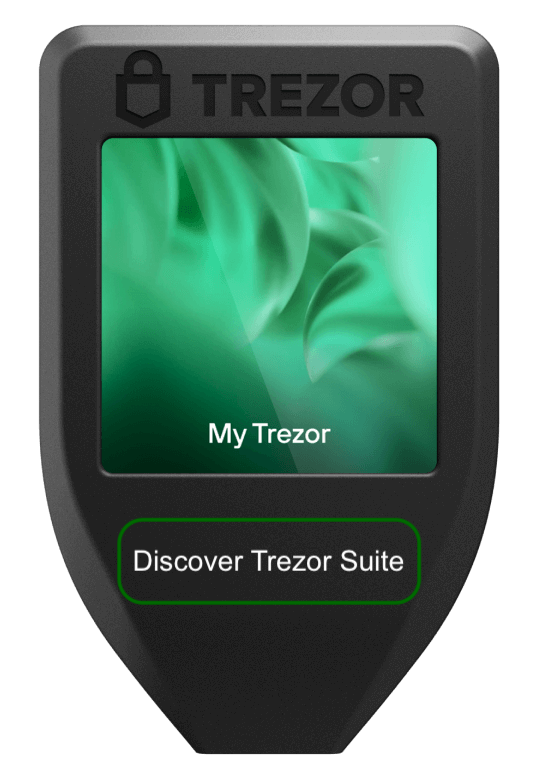
If you choose to self-custody Bitcoin, a hardware wallet is the gold standard for security. Devices like the Ledger Nano X or Trezor Model T store your private keys offline, making them immune to online hacks as long as the physical device is secured. Your seed phrase, a 12 to 24-word recovery sequence, must be stored separately from the device itself, ideally in multiple secure physical locations. Writing it on paper and storing it in a fireproof safe is standard practice among serious Bitcoin holders.
The stakes here are not abstract. Chainalysis has estimated that approximately 3-4 million Bitcoin, worth hundreds of billions of dollars, are permanently lost due to forgotten keys, discarded hard drives, and lost seed phrases. For retirees managing meaningful wealth, the operational burden of self-custody deserves serious weight in the decision of whether to hold Bitcoin directly or through a regulated vehicle like an ETF.
How the IRS Taxes Bitcoin and Why Record-Keeping Is Critical
The IRS treats Bitcoin as property, not currency. Every taxable event, selling Bitcoin, trading it for another cryptocurrency, or using it to purchase goods or services, triggers a capital gains calculation based on your cost basis at the time of acquisition. Short-term gains (assets held under one year) are taxed as ordinary income, which for many retirees can reach 22-32%. Long-term gains (held over one year) qualify for the 0%, 15%, or 20% preferential rates depending on your total income. Unlike gold, Bitcoin does not face the 28% collectibles cap, which is actually a tax advantage for long-term holders in lower income brackets.
Record-keeping is where most retail Bitcoin investors fall short. Every purchase, sale, and transfer needs a timestamp, USD value at the time of the transaction, and a clear record of fees paid. The IRS has been increasingly aggressive in pursuing crypto tax compliance, and the 2021 Infrastructure Investment and Jobs Act expanded reporting requirements for crypto brokers significantly. Tools like Koinly or CoinTracker can automate much of this tracking, but the responsibility ultimately sits with the investor.
Spot Bitcoin ETFs and What They Changed for Mainstream Investors
The SEC’s approval of spot Bitcoin ETFs in January 2024 was genuinely significant for retirement investors. For the first time, U.S. investors could gain direct Bitcoin price exposure through a regulated brokerage account without managing wallets, private keys, or exchange custody risks. Products like the iShares Bitcoin Trust (IBIT) and the Fidelity Wise Origin Bitcoin Fund (FBTC) brought Bitcoin into the same account infrastructure that retirees already use for stocks and bonds.
The practical implications are substantial. You can hold a spot Bitcoin ETF inside a Traditional IRA or Roth IRA through most major brokerages, giving you tax-advantaged exposure to Bitcoin’s price movements. Management fees on the leading spot ETFs have been competitive, iShares Bitcoin Trust (IBIT) launched with a fee waiver period before settling at 0.25% annually, while Fidelity’s FBTC came in at 0.25% as well. These costs are meaningfully lower than the operational overhead of self-custody for most retail investors.
Spot ETFs do remove one of the most significant barriers to Bitcoin ownership for retirees, technical complexity. But they do not change Bitcoin’s underlying volatility profile. Owning IBIT instead of actual Bitcoin does not protect you from a 40% drawdown; it just means you experience that drawdown inside your brokerage account rather than a crypto exchange.
- Direct Bitcoin ownership: Maximum control, but requires managing private keys, seed phrases, and self-custody security protocols.
- Centralized exchange custody (e.g., Coinbase): Convenient but introduces counterparty risk if the exchange fails or freezes withdrawals.
- Spot Bitcoin ETFs (e.g., IBIT, FBTC): Regulated, brokerage-accessible, and IRA-compatible, the lowest-friction path for most retirees.
- Bitcoin futures ETFs (e.g., ProShares BITO): Do not track spot price precisely due to futures roll costs, generally less efficient for long-term holders.
- Bitcoin IRAs (e.g., iTrustCapital, Bitcoin IRA): Offer direct Bitcoin exposure within a retirement account structure, but fees and custodian risks vary significantly by provider.
Gold vs Bitcoin: Head-to-Head Comparison for Retirement Investors
Now that you understand how each asset works in isolation, the more useful question is how they stack up directly against each other across the dimensions that matter most to retirement investors, inflation protection, volatility, and liquidity.
Inflation Hedge: Which Asset Actually Delivers
Gold’s track record as an inflation hedge is well-documented but more nuanced than the headline narrative suggests. It performs best during sustained, high-inflation regimes, the 1970s being the classic example, where gold appreciated dramatically as the U.S. dollar lost purchasing power rapidly. In moderate inflation environments, gold’s performance is less consistent. What it reliably does is preserve long-term purchasing power across decades, which is the time horizon that matters most for retirement planning.
- Gold in the 1970s inflation crisis: Gold rose from $35/oz to over $800/oz as inflation and dollar weakness combined, a generational safe-haven move.
- Gold in 2022 (Fed tightening cycle): Gold underperformed early in the cycle as real yields rose, demonstrating that inflation alone does not guarantee gold gains.
- Gold in 2025: Rose approximately 62.6% while inflation concerns and geopolitical risk drove institutional and central bank demand simultaneously.
- Gold H1 2026: Climbed to a new all-time high above $5,400/oz in Q1, then pulled back roughly 8% in Q2, remaining well above year-ago levels throughout.
- Bitcoin in 2022: Fell over 65% during the same inflationary period, the opposite of what an inflation hedge should do.
- Bitcoin in 2025: Fell approximately 6.4% on a calendar-year basis despite the macro environment that sent gold sharply higher.
- Bitcoin H1 2026: Fell approximately 33% across the first half of the year, its worst first-half start in years, even as major equity indices rallied.
Bitcoin’s inflation hedge narrative is largely theoretical at this stage. It is based on the fixed 21 million supply cap and the logic that scarcity should preserve value as fiat currencies inflate. In practice, Bitcoin has not yet demonstrated the consistent counter-cyclical behavior that defines a true inflation hedge. During the most significant inflation events of the past decade, including 2022 and 2025, Bitcoin moved with risk assets, not against them. For a deeper comparison, check out this analysis of Bitcoin vs Gold.
That does not mean Bitcoin can never function as an inflation hedge as the asset matures and its market deepens. But for a retiree who needs inflation protection now, relying on a 15-year-old asset’s theoretical properties over gold’s 5,000-year track record is a significant bet. The evidence through 2026 continues to favor gold for this specific portfolio role. For more insights into the market dynamics, check out this market intelligence comparison.
Volatility and Drawdown Risk During Market Panics
Volatility is where the gap between gold and Bitcoin is most stark, and most consequential for retirement investors. Bitcoin’s annualized volatility has historically ranged between 50-100%, compared to gold’s typical range of 12-18%. During the October 2025 liquidation events, Bitcoin fell sharply while gold held or continued climbing. This pattern has repeated across multiple crisis episodes, including Bitcoin’s rough start to 2026: Bitcoin tends to sell off alongside equities when investors need liquidity quickly, while gold either holds value or appreciates as a flight-to-safety destination.
Liquidity, Market Maturity, and 24/7 Trading Realities
Gold is one of the most liquid assets on the planet. The London Bullion Market Association (LBMA) oversees a market that clears hundreds of billions of dollars in gold trades daily. Physical gold coins and bars can be sold to dealers, pawn shops, and private buyers in virtually every country on earth. Gold ETFs like GLD trade on major exchanges during standard market hours with tight bid-ask spreads. For a retiree who may need to liquidate part of a position quickly and predictably, gold’s liquidity profile is nearly unmatched among alternative assets.
Bitcoin trades 24 hours a day, 7 days a week, 365 days a year, including holidays, weekends, and market crises. On the surface, that sounds like superior liquidity. In practice, it is more complicated. During sharp sell-offs, crypto exchange order books can thin out rapidly, spreads widen, and withdrawal queues can form on centralized platforms. The 24/7 nature of Bitcoin trading also means volatility events can accelerate overnight when traditional market participants are not active. For retirees accustomed to equity market hours and regulated exchange infrastructure, Bitcoin’s always-on trading environment introduces a different kind of risk management challenge.
Market maturity is the underlying issue. Gold has centuries of price discovery, regulatory clarity, and institutional infrastructure behind it. Bitcoin, despite its rapid growth and the arrival of spot ETFs, remains a relatively young market with a much smaller total market cap than gold. Following gold’s 2025-2026 price surge, its total above-ground stock is now valued at approximately $27 trillion to $30 trillion or more, depending on the exact spot price used, while Bitcoin’s total market cap, even at its late-2025 peak, remained a fraction of that. Depth of market matters when you are managing a retirement portfolio that may need to liquidate in adverse conditions.
| Feature | Physical Gold | Bitcoin |
|---|---|---|
| Asset Age | 5,000+ years | ~15 years |
| 2025 Calendar-Year Return | +62.6% | -6.4% |
| H1 2026 Performance | New all-time high, then a modest pullback | ~-33% |
| Annualized Volatility | 12-18% | 50-100% |
| Inflation Hedge Track Record | Proven over decades | Theoretical, unproven |
| IRS Classification | Collectible (max 28% LT cap gains) | Property (0-20% LT cap gains) |
| Central Bank Adoption | 863 tonnes purchased in 2025 | Negligible sovereign reserves |
| Storage Risk | Physical security required | Private key / cybersecurity risk |
| Liquidity | Deep, global, regulated markets | 24/7 but thinner in stress events |
| IRA Compatible | Yes (Gold IRA, ETFs) | Yes (Bitcoin IRA, spot ETFs) |
| S&P 500 Correlation (2025) | Low / negative in crises | 0.86 (moves with risk assets) |
The Case for Holding Both: A Hybrid Retirement Strategy
The most sophisticated retirement investors in 2025 and 2026 are not asking whether to choose gold or Bitcoin, they are asking how much of each belongs in a portfolio designed to preserve wealth while capturing a measured amount of upside. The data from this period actually supports a hybrid approach, provided the sizing is disciplined and the two assets are understood for what they are, not what investors hope they will be.
Gold for Stability, Bitcoin for a Small Dose of Upside
The framework that resonates most clearly with retirement investors is this: gold is your portfolio’s ballast, and Bitcoin, if it belongs at all, is a small convexity position. Ballast means gold holds the portfolio stable when markets are turbulent, when inflation spikes, or when geopolitical risk sends investors scrambling for safety. A 5-15% allocation to gold has been shown across multiple market cycles to meaningfully reduce portfolio drawdowns without sacrificing long-term return. Convexity means a small Bitcoin allocation, typically cited in the 1-5% range by most institutional frameworks, gives you asymmetric upside exposure. If Bitcoin appreciates significantly, a 3% allocation can add meaningful performance. If it falls 50%, a 3% position costs you 1.5% of total portfolio value, painful but survivable for a well-constructed retirement portfolio.
The key is that these two allocations serve entirely different functions. Gold is not there to generate alpha. It is there to be the thing that works when everything else does not. Bitcoin is not there to replace gold’s stability role. It is there because a small, rule-based exposure to a high-potential asymmetric asset can improve risk-adjusted returns over a full market cycle, if and only if you are disciplined enough not to increase that allocation after a strong run.
How to Rebalance a Gold-Crypto Mix Without Letting Risk Creep Up
Rebalancing discipline is what separates a thoughtful hybrid strategy from a portfolio that gradually takes on more risk than intended. Bitcoin’s volatility means that a 3% allocation can drift to 8% or 10% after a strong bull run, which is exactly when most retail investors make the mistake of letting it ride. A calendar-based rebalancing rule, quarterly or semi-annually, forces you to trim Bitcoin back to your target allocation and redeploy the proceeds into gold or other lower-volatility assets. This approach systematically captures Bitcoin gains while preventing any single volatile asset from dominating your retirement portfolio’s risk profile. The same logic applies in reverse: if Bitcoin falls sharply and drops to 1% of your portfolio, your rebalancing rule prompts you to buy more at lower prices, a disciplined, unemotional approach to position management that most individual investors fail to execute without a predefined rule in place.
Gold Is the Anchor, Bitcoin Is the Edge
The 2025-2026 data delivered a clear verdict: gold acted like insurance when it was needed most, while Bitcoin behaved like a high-volatility risk asset that moved with, not against, market stress. For retirees, that distinction is not just interesting academic information; it is the foundation of how these two assets should be sized, structured, and maintained inside a portfolio designed to last 20-30 years in retirement. Gold earns its place as the anchor. Bitcoin, for those with the risk tolerance and discipline to manage it properly, can earn a small place at the edge, but never at the center.
Frequently Asked Questions
Retirees and pre-retirees consistently ask the same sharp questions when they start evaluating gold and Bitcoin side by side. The answers below cut through the noise and focus on what actually matters for retirement planning decisions.
These are not theoretical edge cases, they are practical questions that directly affect how you structure your accounts, manage your tax liability, and protect purchasing power across a multi-decade retirement horizon.
Is Bitcoin Really Digital Gold?
Bitcoin shares some surface-level characteristics with gold, a fixed supply, no central issuer, and global transferability. Those similarities are real, and they are why the “digital gold” framing gained traction. But the comparison breaks down under stress. In 2025, gold rose 62.6% while Bitcoin fell 6.4% on a calendar-year basis, and Bitcoin extended that underperformance with a roughly 33% decline through the first half of 2026. Bitcoin’s correlation with the S&P 500 rose to 0.86, meaning it moved in lockstep with risk assets rather than functioning as a safe haven. Gold’s correlation with equities remained low and in some stress windows went negative, exactly what you want from a crisis hedge.
The honest answer is that Bitcoin is not digital gold yet, and may never fully replicate gold’s safe-haven behavior. It is a high-volatility speculative asset with a fixed supply and genuine long-term potential, but its behavior in real crisis environments has consistently looked more like Nasdaq than like gold. For retirement investors, that distinction is decisive when determining how much of each asset belongs in a portfolio built for capital preservation.
How Much of a Retirement Portfolio Should Be in Bitcoin?
Most institutional frameworks that include Bitcoin in a retirement context cap the allocation at 1-5% of total portfolio value. At 3%, a complete Bitcoin wipeout costs the portfolio 3 percentage points, serious but survivable. At 10% or more, Bitcoin’s volatility can overwhelm the stability provided by the rest of the portfolio and introduce sequence-of-returns risk that directly threatens retirement income sustainability. The exact right number depends on your age, overall portfolio size, income needs, and emotional capacity to watch a position fall 50-70% without panic-selling.
For retirees already drawing down their portfolios, erring toward the lower end of that range, or avoiding Bitcoin entirely, is a defensible and often prudent decision. The asymmetric upside that makes a small Bitcoin allocation intellectually attractive is less relevant when your primary objective is not growing wealth but sustaining it through a 20-30 year withdrawal phase.
Is Physical Gold Safer Than a Gold ETF for Retirement?
Physical gold gives you direct ownership with no counterparty risk, if you hold a gold coin, no financial institution’s failure can impair your ownership. That is a genuine advantage in tail-risk scenarios. The trade-offs are storage costs, insurance requirements, and the logistical complexity of liquidating physical metal quickly. A professional vault service like Delaware Depository or Brinks mitigates some of these concerns but adds an ongoing annual fee of approximately 0.12-0.5% of asset value.
A gold ETF like SPDR Gold Shares (GLD) or iShares Gold Trust (IAU) offers regulated, exchange-traded exposure to gold prices with high daily liquidity and no personal storage burden. The underlying metal is held by a custodian, which introduces a layer of institutional intermediation that physical holders deliberately avoid. For most retirement investors, the practical answer is to hold the majority of gold exposure through an ETF for liquidity and convenience, with a smaller allocation to physical coins or bars as a true off-system hedge, the portion of your gold that remains accessible and valuable even if financial system infrastructure is disrupted.
Does the IRS Treat Gold and Bitcoin the Same Way?
No, and the difference matters for after-tax retirement returns. The IRS classifies physical gold and gold ETFs that hold physical bullion as collectibles. Long-term capital gains on collectibles are taxed at a maximum rate of 28%, which is higher than the standard long-term capital gains rates of 0%, 15%, or 20% that apply to most other investments. Short-term gains on gold are taxed as ordinary income, same as most other assets.
Bitcoin is classified by the IRS as property, not a collectible, which means long-term Bitcoin gains are taxed at the standard preferential capital gains rates of 0%, 15%, or 20% depending on your total taxable income. For retirees in lower income brackets, long-term Bitcoin gains could qualify for the 0% rate, while the same holding period on a gold ETF would face a minimum 28% collectibles rate. That is a meaningful after-tax difference that is worth factoring into your asset location decisions.
- Physical gold / gold ETFs: Collectible classification, maximum 28% long-term capital gains rate.
- Bitcoin (direct or spot ETF): Property classification, standard 0%, 15%, or 20% long-term capital gains rates.
- Gold inside a Traditional IRA: Gains are tax-deferred; taxed as ordinary income on withdrawal.
- Bitcoin inside a Roth IRA: Gains can grow and be withdrawn tax-free if Roth conditions are met.
- Bitcoin taxable events: Every sale, trade, or use of Bitcoin as payment triggers a capital gains calculation, record-keeping is essential.
Account type is as important as asset type in determining your real after-tax return. Placing gold inside a Roth IRA eliminates the 28% collectibles cap entirely on qualifying withdrawals. Placing Bitcoin inside a Roth IRA removes capital gains tax on potentially large appreciation events. Both strategies require working with a custodian that supports these asset types within IRA structures, and contribution limits still apply.
Can You Hold Physical Gold or Bitcoin Inside a Retirement Account?
Yes to both, but the mechanics are specific and the rules matter. A Self-Directed IRA (SDIRA) allows you to hold IRS-approved physical gold inside a retirement account. The gold must meet IRS purity standards, at minimum .995 fineness for bars, or be an approved government-minted coin like the American Gold Eagle or Canadian Gold Maple Leaf. The physical metal must be held by an IRS-approved custodian and stored in an approved depository, you cannot store your IRA gold at home without triggering a taxable distribution.
Bitcoin can be held inside a retirement account through two main vehicles. Bitcoin IRAs, offered by providers like iTrustCapital and Bitcoin IRA, allow direct Bitcoin ownership within a tax-advantaged account structure, though fees vary significantly and custodian vetting is critical. The second and increasingly popular option is holding a spot Bitcoin ETF like iShares Bitcoin Trust (IBIT) or Fidelity Wise Origin Bitcoin Fund (FBTC) inside a standard IRA or Roth IRA through a major brokerage. This is simpler, lower-cost, and accessible through platforms most retirees already use.
The tax advantages of holding either asset inside an IRA are substantial. A Traditional IRA defers all gains until withdrawal, converting what might be a 28% collectibles rate on gold into ordinary income tax treatment, which may actually be higher for some retirees, so Roth structures are worth evaluating carefully. A Roth IRA is the most powerful vehicle for both assets: contributions are made with after-tax dollars, but qualifying withdrawals, including all accumulated gains, are completely tax-free. For an asset like Bitcoin that has historically produced large appreciation events, eliminating capital gains tax through a Roth structure is one of the highest-leverage retirement planning decisions available.
Investing in cryptocurrencies can be a lucrative venture, but it requires careful planning and strategy. Many beginners often make mistakes that can be costly. Understanding the biggest crypto trading mistakes is crucial for anyone looking to succeed in the crypto market. By learning from the experiences of others, investors can avoid common pitfalls and make more informed decisions.
DYOR Disclaimer: This article is for informational and educational purposes only and does not constitute financial, investment, or tax advice. Prices, valuations, and performance figures reflect data available at the time of writing and are subject to change. Always do your own research (DYOR) and consult a qualified financial advisor before making retirement planning decisions.