Coinposters
Bitcoin ETF vs Direct Crypto Ownership: Which Strategy Grows Wealth Faster in 2026?
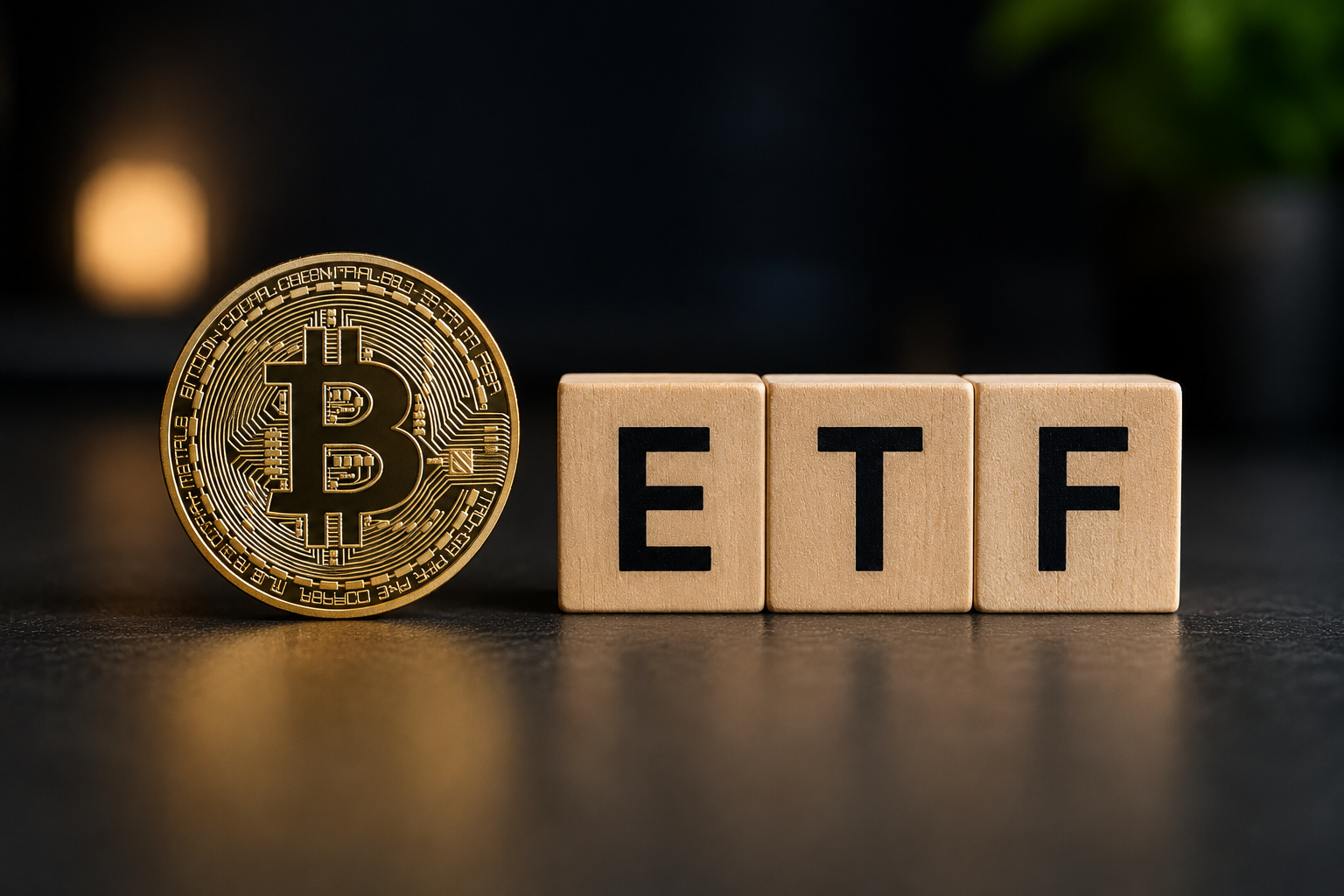
INVESTMENT STRATEGY · BITCOIN ETF · SELF-CUSTODY
Article At A Glance
- The Bitcoin ETF vs holding Bitcoin directly debate centers on a critical distinction: BlackRock’s IBIT crossed $75 billion in assets—but ETF investors own zero actual Bitcoin, and that distinction changes everything about how you build wealth
- Annual ETF fees of 0.19%–0.30% compound silently over time, eroding long-term returns in ways most investors never calculate until it’s too late
- Direct Bitcoin ownership unlocks capabilities ETFs simply cannot offer—from DeFi participation to borrowing against your holdings—but comes with real risks that demand serious preparation
- There’s a hybrid approach gaining traction among sophisticated investors that captures the convenience of ETFs and the utility of direct ownership simultaneously—covered in detail below
- The right choice between a Bitcoin ETF and direct ownership depends almost entirely on your specific financial situation, technical comfort, and what you actually plan to do with the asset
Table of Contents
- Bitcoin ETF vs Holding Bitcoin Numbers
- What a Bitcoin ETF Actually Is (And What You Do Not Own)
- What Direct Bitcoin Ownership Actually Means
- Bitcoin ETF vs Holding Bitcoin: Side-by-Side Comparison
- Bitcoin ETF vs Holding Bitcoin: Which Strategy Grows Wealth Faster
- Bitcoin ETF vs Holding Bitcoin Security
- Bitcoin Inheritance and Estate Planning
- The Hybrid Strategy: Splitting Between ETFs and Direct Bitcoin
- Bitcoin ETF vs Holding Bitcoin: How to Choose
- Both Strategies Carry Serious Risk
- Frequently Asked Questions
The decision between a Bitcoin ETF vs holding Bitcoin directly is not just a preference—it’s a strategic choice that will shape your returns, your risk exposure, and your flexibility for years to come. Understanding Bitcoin ETF vs holding Bitcoin trade-offs determines whether you build wealth efficiently or pay unnecessary costs that compound silently over decades.
With $115 billion sitting in Bitcoin ETFs as of early 2026 and 85 million people worldwide holding Bitcoin directly, both camps have serious money behind them. The Bitcoin ETF vs holding Bitcoin debate isn’t theoretical—it’s a practical question with real financial consequences. Understanding the real mechanics behind each approach is the edge most investors skip over entirely—and it costs them. This article breaks down exactly what you get, what you give up, and which path actually builds more wealth based on your situation.
$115 Billion in Bitcoin ETFs vs 85 Million Direct Owners: Bitcoin ETF vs Holding Bitcoin Numbers
BlackRock’s IBIT alone holds $75 billion. That is not a niche product anymore—that is institutional validation at a scale Bitcoin has never seen before. Yet at the same time, tens of millions of individuals continue choosing to hold Bitcoin directly, often in self-custody wallets they fully control. The Bitcoin ETF vs holding Bitcoin comparison shows both groups are growing. Both are making rational decisions. The numbers don’t tell you which is better—they tell you that both strategies have serious merit worth understanding.
The Bitcoin ETF vs Holding Bitcoin Landscape
$115 Billion — Total assets in Bitcoin ETFs (early 2026)
$75 Billion — BlackRock’s IBIT alone
85 Million — People worldwide holding Bitcoin directly
Both groups are growing. Both are making rational decisions.
What a Bitcoin ETF Actually Is (And What You Do Not Own)
A Bitcoin ETF is a fund that holds Bitcoin on your behalf and issues shares that trade on traditional stock exchanges like the NYSE or Nasdaq. When you buy shares of an ETF, you are buying a financial instrument that tracks Bitcoin’s price. You are not buying Bitcoin. That is the single most important distinction in this entire discussion, and it has real consequences for what you can and cannot do with your investment.
For many traditional investors—particularly those operating through brokerage accounts or 401(k)s—this structure is actually ideal. It removes the technical complexity of wallets, private keys, and exchange accounts entirely. You buy shares the same way you’d buy Apple stock, and your exposure to Bitcoin’s price moves with it.
How BlackRock’s IBIT and Similar Funds Work
BlackRock’s iShares Bitcoin Trust (IBIT) works by purchasing and holding actual Bitcoin in a custodial account, then issuing shares that represent fractional ownership of that trust. When you buy IBIT shares, you are buying a claim on the fund’s Bitcoin holdings—not the Bitcoin itself. The share price tracks Bitcoin’s spot price closely, but it is the fund, not you, that owns the underlying asset. Fidelity’s FBTC operates on the same model, as do competing products from Invesco, VanEck, and others approved after the SEC’s landmark January 2024 decision.
Who Holds the Actual Bitcoin: The Coinbase Custodian Role
For most spot Bitcoin ETFs approved in the U.S., Coinbase Custody acts as the institutional custodian holding the actual Bitcoin. This means the Bitcoin backing your ETF shares sits in Coinbase’s cold storage infrastructure, secured under institutional-grade protocols. Coinbase Custody is a separate legal entity from the Coinbase exchange, regulated as a qualified custodian, and holds billions in assets under custody. BlackRock, Fidelity, and several other ETF issuers rely on this infrastructure to keep the underlying Bitcoin secure.
This arrangement provides meaningful security. Coinbase Custody uses air-gapped cold storage, multi-signature authorization, and geographically distributed key management. For investors who worry about the complexity of self-custody, this setup offers serious institutional protection that most individuals would struggle to replicate on their own.
Why ETF Investors Have No Private Keys
In Bitcoin, private keys are proof of ownership. The phrase “not your keys, not your coins” has been a foundational principle of the Bitcoin community since its earliest days. ETF investors have no private keys. They have no wallet addresses. They cannot send Bitcoin, receive Bitcoin, use it in any application, or access it outside of the fund structure. If you own IBIT shares and Bitcoin’s network upgraded to allow some new financial capability tomorrow, ETF holders would have no access to it. That is not a flaw in the ETF design—it is simply what the product is and is not. For more insights on the differences between these investment methods, explore this comparison of Bitcoin ETF vs holding coins.
What ETF Investors Actually Own
You Own: Shares of a fund that tracks Bitcoin’s price
You Don’t Own: Actual Bitcoin, private keys, wallet addresses
Who Holds Bitcoin: Coinbase Custody (institutional custodian)
Key Principle: “Not your keys, not your coins” — ETF investors have neither
What Direct Bitcoin Ownership Actually Means
Buying Bitcoin directly means acquiring actual Bitcoin that is credited to a wallet—either one you control or one held on an exchange on your behalf. The experience varies significantly depending on where and how you store it, and that variation carries real financial and security implications.
Self-Custody vs Exchange Custody: A Critical Difference
When you buy Bitcoin on an exchange like Coinbase, Kraken, or Binance and leave it there, you technically own Bitcoin—but you’re relying on that exchange to hold it for you. This is called exchange custody, and while it is convenient, it carries counterparty risk. Exchanges have been hacked, frozen, and collapsed before. The 2022 FTX implosion wiped out billions in customer funds that were held on the exchange.
Self-custody is the alternative. This means transferring your Bitcoin off the exchange into a wallet where you—and only you—hold the private keys. A hardware wallet like the Ledger Nano X or Trezor Model T stores your private keys in an offline device, completely isolated from internet-connected systems. This eliminates exchange counterparty risk entirely, but places the full responsibility of securing those keys on you.
Neither approach is objectively superior. Exchange custody is simpler but carries platform risk. Self-custody is more secure from external threats but vulnerable to user error—including losing your recovery phrase, device damage, or physical theft.
How Hardware Wallets and Private Keys Work
A private key is a 256-bit string of data that mathematically proves ownership of Bitcoin on the blockchain. It is paired with a public address, which functions like an account number others can send Bitcoin to. When you sign a transaction with your private key, you authorize the movement of your Bitcoin—no institution, no intermediary, no approval required. This is the core of Bitcoin’s value proposition as a permissionless asset.
Hardware wallets like the Ledger Nano X or Trezor Model T generate and store private keys in a secure chip that never exposes the key to an internet connection. When you set one up, you receive a 12 or 24-word seed phrase—your master recovery key. This phrase can restore your entire wallet on any compatible device if the hardware is lost or damaged.
The seed phrase is everything. Anyone who has it has your Bitcoin. Anyone who loses it permanently loses access if the hardware fails. This is the single biggest operational risk in self-custody, and it is not theoretical—an estimated 3 to 4 million Bitcoin have been permanently lost due to lost keys or forgotten access credentials.
Hardware Wallet Options for Self-Custody
Ledger Nano X — Bluetooth-enabled hardware wallet, supports 5,500+ assets, retails around $149
Trezor Model T — Touchscreen interface, fully open-source firmware, strong community trust record
Coldcard Mk4 — Bitcoin-only device favored by advanced users and security professionals
Seed Phrase Storage — Steel backup plates like Cryptosteel Capsule protect against fire and water damage
Bitcoin ETF vs Holding Bitcoin: Side-by-Side Comparison
At the price-exposure level, the Bitcoin ETF vs holding Bitcoin choice appears similar—Bitcoin ETFs and direct Bitcoin ownership both go up when Bitcoin goes up, and both go down when it falls. But beneath that surface similarity, the two strategies operate in fundamentally different ways that affect cost, access, utility, and long-term compounding. The table below lays out the core differences clearly.
| Feature | Bitcoin ETF | Direct Bitcoin Ownership |
|---|---|---|
| Actual Bitcoin ownership | No | Yes |
| Annual management fee | 0.19%–0.30% | None |
| Trading hours | Market hours only | 24/7/365 |
| Retirement account eligible | Yes (IRA, 401k) | Only via specialized accounts |
| Self-custody possible | No | Yes |
| DeFi & lending access | No | Yes |
| Tax reporting complexity | Standard 1099 | Requires crypto-specific reporting |
| Technical knowledge required | Minimal | Moderate to High |
Fees: Annual ETF Costs vs One-Time Network Fees
BlackRock’s IBIT charges 0.25% annually. Fidelity’s FBTC charges 0.25%. Bitwise’s BITB comes in at 0.20%. These numbers sound tiny, but on a $100,000 position held for 10 years with Bitcoin’s price held constant, a 0.25% annual fee costs $2,500 in pure fee drag—before compounding is factored in. Direct Bitcoin ownership has no annual fee. You pay a one-time network transaction fee when you move Bitcoin on-chain, which fluctuates with network demand but is typically a few dollars for standard transactions outside of congestion events.
Access and Trading Hours
Bitcoin trades 24 hours a day, 7 days a week, including weekends and holidays. Bitcoin ETFs do not. They trade only during NYSE market hours—9:30 AM to 4:00 PM Eastern, Monday through Friday. If Bitcoin crashes or surges at 2 AM on a Saturday, ETF holders can do nothing until Monday morning. Direct owners can act immediately, for better or worse.
Security Risks on Both Sides
ETF investors face custodial risk—their Bitcoin is held by a third party, and while institutional custodians like Coinbase Custody maintain strong security, they remain a concentrated target. Direct owners face personal security risk—human error, phishing attacks, physical theft, and the irreversible consequences of losing a seed phrase. Neither option is risk-free. The risk profile simply shifts depending on which strategy you choose, and understanding that difference is essential to managing it properly.
Tax Reporting Differences
Bitcoin ETFs generate standard tax forms—specifically a 1099-B from your brokerage, the same form you’d receive from selling stocks or mutual funds. Your gains and losses are automatically calculated and reported. Direct Bitcoin ownership requires significantly more work. Every on-chain transaction, every trade, and every disposal event is a taxable occurrence that must be individually tracked, reported, and categorized as either short-term or long-term capital gains. Software tools like Koinly, CoinTracker, or TaxBit exist specifically to handle this complexity, but they add both cost and administrative burden to direct ownership.
One important nuance: the IRS treats Bitcoin ETF shares exactly like other securities. Wash sale rules, which prevent investors from claiming a loss and immediately rebuying the same asset, currently apply to ETF shares. As of 2026, direct Bitcoin sales are still exempt from wash sale rules—meaning you can sell Bitcoin at a loss to harvest the tax benefit and buy it back the same day. That is a meaningful tax advantage for direct holders that ETF investors do not have access to.
Retirement Account Eligibility
This is one area where Bitcoin ETFs have a clear, practical advantage. Because ETF shares trade like stocks, they are fully eligible to be held in traditional IRAs, Roth IRAs, and 401(k) accounts that offer brokerage windows. Fidelity and Schwab customers can hold IBIT or FBTC inside a tax-advantaged retirement account with zero structural complications. The tax-deferred or tax-free growth potential of holding Bitcoin exposure inside a Roth IRA is genuinely significant over long time horizons.
Direct Bitcoin ownership inside a retirement account is possible, but requires a self-directed IRA (SDIRA) through a specialized custodian. These accounts come with higher administrative fees, more complex compliance requirements, and fewer mainstream provider options. For investors whose primary goal is Bitcoin exposure inside a retirement account, ETFs are the simpler and more cost-effective path by a considerable margin.
ETF Fee Impact Over Time
$100,000 position at 0.25% annually
10 years = $2,500 in fees (before compounding)
$500,000 position = $1,250 per year in fees
Direct ownership: Zero annual fees after initial purchase
Bitcoin ETF vs Holding Bitcoin: Which Strategy Actually Grows Wealth Faster Over Time
The honest answer is that Bitcoin’s price performance—not the vehicle you use to access it—will determine the majority of your outcome. Whether you hold IBIT shares or actual Bitcoin in a Ledger Nano X, if Bitcoin goes from $100,000 to $500,000, you will have made significant money either way. But at meaningful investment sizes and over long holding periods, the structural differences in the Bitcoin ETF vs holding Bitcoin decision start to compound in ways that matter.
There are three cost factors that determine which strategy pulls ahead over time: annual management fees, network transaction fees, and tax treatment efficiency. Understanding how each of these behaves at different investment sizes and holding periods gives you a much clearer picture of where real wealth erosion—or preservation—actually occurs.
How Annual ETF Fees Erode Long-Term Returns
At 0.25% annually, IBIT’s fee seems negligible. But compounding changes the math significantly. On a $50,000 Bitcoin ETF position held for 20 years, assuming Bitcoin’s price stays flat for this exercise, you would pay approximately $2,500 in cumulative fees in simple terms—but the actual drag is higher because the fee reduces the base on which future gains are calculated. Now layer in Bitcoin price appreciation, and the fee is being applied to a growing asset base every single year. At $500,000 in ETF holdings, 0.25% is $1,250 per year in fees alone—every year, automatically deducted, with no option to avoid it.
Direct Bitcoin ownership has no equivalent recurring cost. Once you own Bitcoin on-chain, no annual fee is deducted from your holdings. The cost difference between ETF and direct ownership does not show up dramatically in year one, but over a 10 to 20-year hold—which is how many Bitcoin investors think about the asset—the fee drag on large positions becomes a real and compounding disadvantage for ETF holders.
When Direct Ownership Becomes the Cheaper Option
For small investment amounts, Bitcoin ETFs may actually be the cheaper entry point. Buying $500 worth of IBIT through a Fidelity account costs nothing in trading commissions and a few cents in annual fees. Buying $500 in Bitcoin directly, transferring it to a hardware wallet ($50–$150 purchase cost), and paying on-chain network fees could cost proportionally more upfront. The crossover point—where direct ownership becomes structurally cheaper than an ETF—typically occurs somewhere between $5,000 and $20,000 in holdings, depending on fee rates and how frequently you transact.
Bitcoin Network Fee Spikes and When They Matter
On-chain Bitcoin transaction fees fluctuate based on network demand. During calm periods, moving Bitcoin costs a few dollars. During congestion events—like the Ordinals inscription surge in early 2023 or post-halving periods with high mempool activity—fees can spike to $30, $50, or even higher per transaction. For investors making frequent small moves on-chain, these spikes can meaningfully increase the cost of direct ownership.
That said, network fees only apply when you actually move Bitcoin on-chain. Long-term holders who buy Bitcoin and store it in cold storage for years may pay network fees only two or three times total: once to receive and once to eventually send. For these investors, network fees are essentially a non-issue compared to the annual recurring cost of ETF management fees on large positions.
Bitcoin ETF vs Holding Bitcoin Security: Who Really Protects Your Investment
Security is where the Bitcoin ETF vs holding Bitcoin debate gets genuinely complex, because both approaches carry serious risks—they just manifest in completely different ways. Neither strategy is unconditionally safer than the other, and the right answer depends entirely on the individual investor’s operational security capabilities.
How Institutional Custodians Store Bitcoin
Coinbase Custody, which holds Bitcoin for most major U.S. spot ETFs, uses a multi-layered cold storage architecture. The Bitcoin is stored in air-gapped systems—meaning the private keys never touch an internet-connected device. Multi-signature authorization requires multiple independent parties to approve any movement of funds. Keys are geographically distributed across multiple secure facilities. This infrastructure is audited, insured, and regulated at a level that individual investors simply cannot replicate. For the vast majority of investors, institutional custody provides a higher baseline of security than most people could achieve through self-custody at home.
The Real Risk of Losing Private Keys
Self-custody is only as secure as the person managing it. An estimated 3 to 4 million Bitcoin—worth hundreds of billions of dollars at current prices—are believed to be permanently inaccessible due to lost private keys, forgotten passwords, and damaged hardware. James Howells’ story of a hard drive containing 8,000 Bitcoin sitting in a Welsh landfill is extreme, but the underlying failure mode is not uncommon. Seed phrase mismanagement, inadequate physical backup, and simple human error are real threats that no technical solution fully eliminates. Anyone considering self-custody needs a documented, tested, and physically secured recovery plan before transferring significant value off an exchange.
Security Risks: ETF vs Direct Ownership
ETF Security Risks:
- Custodial risk (third-party holds Bitcoin)
- Regulatory changes affecting ETF operations
- Tracking error during market stress
Direct Ownership Security Risks:
- Lost seed phrases (3-4M Bitcoin permanently lost)
- Exchange hacks if left on platforms
- Phishing attacks and user error
- Physical theft of hardware wallets
Bitcoin Inheritance and Estate Planning: ETFs Win by Default
Estate planning is one of the most overlooked dimensions of the Bitcoin ETF vs direct ownership debate, and it is one where ETFs have a structural advantage that is difficult to argue against. Bitcoin ETF shares are financial securities held in a named brokerage account. When you die, they transfer to your beneficiaries through exactly the same legal process as stocks, bonds, or mutual funds—a standard beneficiary designation or estate process that any attorney, executor, or financial institution knows how to handle.
Direct Bitcoin inheritance is operationally complicated in ways that have cost families significant sums. If you die without leaving accessible, secure instructions for recovering your private keys or seed phrase, your Bitcoin is likely gone forever—no court order, no institution, and no technical expert can recover it. Secure inheritance planning for self-custodied Bitcoin requires deliberate documentation, secure physical storage of recovery information, and clear instructions for heirs who may have no technical background. Products like Casa’s inheritance protocol and Unchained’s collaborative custody model exist to address this problem, but they add complexity and cost that ETF holders never have to think about.
The Hybrid Strategy: Splitting Between ETFs and Direct Bitcoin
The most sophisticated approach in 2026 is not choosing one strategy exclusively—it is combining both in a deliberate allocation that captures the advantages of each. An increasing number of experienced Bitcoin investors maintain ETF positions alongside direct holdings, using each vehicle for what it does best rather than treating them as mutually exclusive options. For those interested in the broader landscape, understanding crypto regulations in 2026 can provide additional insights into strategic investment decisions.
The logic is straightforward: ETFs are ideal for tax-advantaged retirement accounts, for capital you want accessible through traditional brokerage infrastructure, and for portions of your allocation where simplicity and institutional security outweigh the need for direct utility. Direct ownership is ideal for capital you want full sovereignty over, for accessing DeFi and lending protocols, and for the portion of your Bitcoin where long-term fee savings on large positions justify the operational responsibility of self-custody.
How a 60/40 Split Works in Practice
A practical hybrid structure might look like this: 60% of your total Bitcoin allocation held directly in self-custody via a hardware wallet like the Ledger Nano X or Coldcard Mk4, and 40% held in ETF shares inside a Roth IRA through Fidelity or Schwab. The self-custodied portion grows without fee drag, remains available for any on-chain utility, and is fully sovereign. The ETF portion compounds tax-free inside the retirement account, benefits from institutional custody security, and is positioned for eventual tax-efficient distribution in retirement.
The specific split varies by investor. Those with large retirement account balances and simpler technical setups might reverse the ratio—60% ETF, 40% direct. Others who prioritize sovereignty and are comfortable with self-custody best practices might hold 80% or more in direct ownership. The point is not the specific percentage—it is the deliberate use of both tools based on what each does well, rather than defaulting to one out of habit or convenience.
Who This Approach Works Best For
The hybrid strategy is not for everyone, but it is particularly well-suited for investors who have accumulated meaningful Bitcoin positions—typically $25,000 or more—and want to optimize across multiple dimensions simultaneously: tax efficiency, long-term cost reduction, security, and optionality. If you are just starting out with a few hundred dollars, the complexity of maintaining both structures is not worth the marginal benefit. Start simple and add layers as your position grows. For more insights on investment strategies, you might find this comparison between Bitcoin ETF and holding coins useful.
Hybrid Strategy: Best Fit Investors
Retirement-focused investors — Use ETFs inside Roth IRAs for tax-free Bitcoin exposure, with direct holdings outside for flexibility
High-net-worth holders ($50,000+) — Fee savings on large direct holdings are substantial over time; ETF portion sized to retirement account limits
DeFi-active investors — Maintain direct on-chain position for protocol participation while keeping stable ETF allocation for long-term holding
Estate-conscious holders — ETF portion simplifies inheritance for heirs; direct portion remains sovereign for investor’s own active use
Technically capable beginners — Start with ETF for simplicity, transition a portion to direct ownership after mastering seed phrase security
Bitcoin ETF vs Holding Bitcoin: How to Choose Based on Your Situation
Your answers to these questions will point you in a clear direction faster than any generic recommendation. The Bitcoin ETF vs holding Bitcoin choice ultimately depends on your specific financial situation, technical capabilities, and investment goals:
- Do you want to hold Bitcoin inside a retirement account like a Roth IRA or 401(k)?
- Are you comfortable generating and securely storing a 24-word seed phrase?
- Do you plan to use Bitcoin in DeFi, lending, or as an actual transactable currency?
- Is your primary goal price appreciation, or do you want functional ownership of the asset?
- How important is it to you that no third party can freeze or restrict access to your Bitcoin?
- Does your estate plan need to account for digital asset inheritance?
You Should Buy a Bitcoin ETF If…
A Bitcoin ETF makes the most sense if you want simple, regulated Bitcoin price exposure through a brokerage account you already use, if you want to hold Bitcoin inside a Roth IRA or traditional IRA without setting up a self-directed account, if you are not yet comfortable with the technical requirements of wallet management and seed phrase security, if inheritance and estate planning simplicity is a priority for your situation, or if you are investing an amount where the ETF management fee is not yet a significant dollar-figure drag on your position.
You Should Own Bitcoin Directly If…
Direct Bitcoin ownership is the stronger choice if you want full sovereign control over your asset with no third-party intermediaries, if you plan to use Bitcoin functionally—lending it, borrowing against it, participating in DeFi protocols, or transacting peer-to-peer—if you are holding a large enough position that the cumulative ETF fee drag over your intended holding period represents a meaningful sum, or if you believe in Bitcoin’s core value proposition strongly enough to take responsibility for your own custody security.
Quick Decision Framework
Buy a Bitcoin ETF if: You want IRA/401(k) eligibility, you prefer simplicity, you are new to crypto, or your position is under $10,000
Consider a hybrid approach if: Your total position exceeds $25,000, you have both retirement and non-retirement capital to allocate, or you want both utility and tax efficiency
Own Bitcoin directly if: You are technically prepared for self-custody, you want full sovereignty, you plan to use Bitcoin functionally, or you are holding a large long-term position where fee drag is a real number
Both Strategies Carry Serious Risk: Do Not Overlook This
Risk Reality Check
Bitcoin itself lost over 70% of its value in the 2022 bear market. Both ETF holders and direct owners experienced that drawdown in full. No custody structure, fee optimization, or strategy selection protects you from Bitcoin’s intrinsic price volatility. Every dollar you put into Bitcoin—through any vehicle—should be capital you are prepared to see decline significantly before potentially recovering.
Direct Bitcoin ownership carries its own distinct risk profile. Exchange hacks and insolvencies remain a real threat for those who leave Bitcoin on exchanges rather than in self-custody. Self-custody introduces irreversible loss risk—a lost seed phrase, a damaged hardware wallet with no backup, or a phishing attack that compromises your private keys can result in permanent, unrecoverable loss with no legal recourse, no insurance, and no institution to appeal to. This is not a scare tactic—it is the operational reality of sovereign asset ownership that every direct holder must take seriously from day one.
Frequently Asked Questions
The following questions come up consistently when investors are deciding between Bitcoin ETFs and direct ownership. The answers here are direct and specific—designed to give you clarity on the practical details that matter most when making this decision.
Can You Hold a Bitcoin ETF in a Roth IRA?
Yes. Bitcoin ETFs like BlackRock’s IBIT and Fidelity’s FBTC are fully eligible to be held inside a Roth IRA through any major brokerage that offers them. The tax implications of doing so are significant. Inside a Roth IRA, contributions are made with after-tax dollars, and all future growth—including Bitcoin price appreciation—is completely tax-free upon qualified withdrawal. For long-term Bitcoin believers, this is one of the most compelling structural advantages ETFs offer over direct ownership in taxable accounts.
What Happens to Your Bitcoin ETF If BlackRock Shuts Down IBIT?
If BlackRock were to liquidate or shut down IBIT, the fund would go through an orderly wind-down process regulated by the SEC. The underlying Bitcoin held in custody would be sold, and shareholders would receive cash proceeds based on the net asset value of their shares at the time of liquidation. You would not lose your investment due to a fund closure—you would simply receive cash equivalent to your share of the fund’s Bitcoin holdings, minus any liquidation costs.
Is Direct Bitcoin Ownership Legal in All Countries?
No. Bitcoin ownership and trading is restricted or outright banned in several countries. China imposed a comprehensive ban on cryptocurrency trading and mining in 2021. Algeria, Bangladesh, Egypt, Iraq, Morocco, Nepal, Qatar, and Tunisia have various levels of prohibition on Bitcoin ownership or use. Regulations change frequently, and the legal status of Bitcoin in any given country can shift based on new legislation or regulatory guidance. If you are considering direct Bitcoin ownership outside of the United States, the European Union, or other jurisdictions with clear regulatory frameworks, verifying the current legal status in your specific country before purchasing is essential.
Can You Convert Bitcoin ETF Shares Into Actual Bitcoin?
No—not through the standard retail process. When you sell Bitcoin ETF shares, you receive cash, not Bitcoin. If you want to move from an ETF position to direct Bitcoin ownership, the process is: sell your ETF shares for cash, transfer that cash to a Bitcoin exchange, purchase Bitcoin directly, and then transfer it to your self-custody wallet. It is a multi-step process, and each step may have tax implications depending on your cost basis in the ETF shares.
What Is the Minimum Amount Needed to Buy Bitcoin Directly vs Through an ETF?
Bitcoin ETFs have no practical minimum beyond the price of a single share. IBIT shares are accessible through fractional share programs at major brokerages for as little as $1. Direct Bitcoin ownership is similarly accessible—you can buy as little as $1 worth of Bitcoin on most major exchanges. The practical minimum for direct ownership becomes relevant when you factor in the cost of a hardware wallet for self-custody ($50–$150) and on-chain transaction fees. For very small positions, these fixed costs make the percentage cost of direct ownership disproportionately high compared to the seamless zero-minimum ETF approach.
Roth IRA Bitcoin ETF Example
Investor contributes $7,000 (2024 Roth IRA limit) annually into IBIT shares inside a Roth IRA
Over 20 years, assuming Bitcoin’s long-term appreciation, the entire balance grows tax-free
At withdrawal in retirement, zero federal capital gains tax is owed on any appreciation
Compare this to a taxable account where the same gains would be subject to long-term capital gains rates of 15%–20% plus potential state taxes
Do Your Own Research (DYOR): This article is for educational purposes only and does not constitute financial, investment, or legal advice. Bitcoin investments carry significant risks regardless of whether you use ETFs or direct ownership. Bitcoin’s price is highly volatile and past performance does not guarantee future results. Always conduct thorough research, understand the risks of both custody approaches, and consult with qualified professionals before making any financial decisions related to Bitcoin or cryptocurrency investments.



Latest
Bitcoin
08 Jul 2026
Bitcoin
04 Jul 2026