Anti-CBDC Act
blockchain regulation
CLARITY Act
consumer protection fund segregation
Crypto Compliance
Crypto Legislation
crypto regulation
cryptocurrency law
digital asset regulation
digital commodity
digital currency regulation
GENIUS Act
government CBDC
investor protection
market structure
regulatory news
regulatory updates
SEC CFTC jurisdiction
stablecoin regulation
Trump crypto policy

Coinposters
Will The Trump Policy & Clarity Act Impact You? How to Follow Crypto Regulation News Effectively
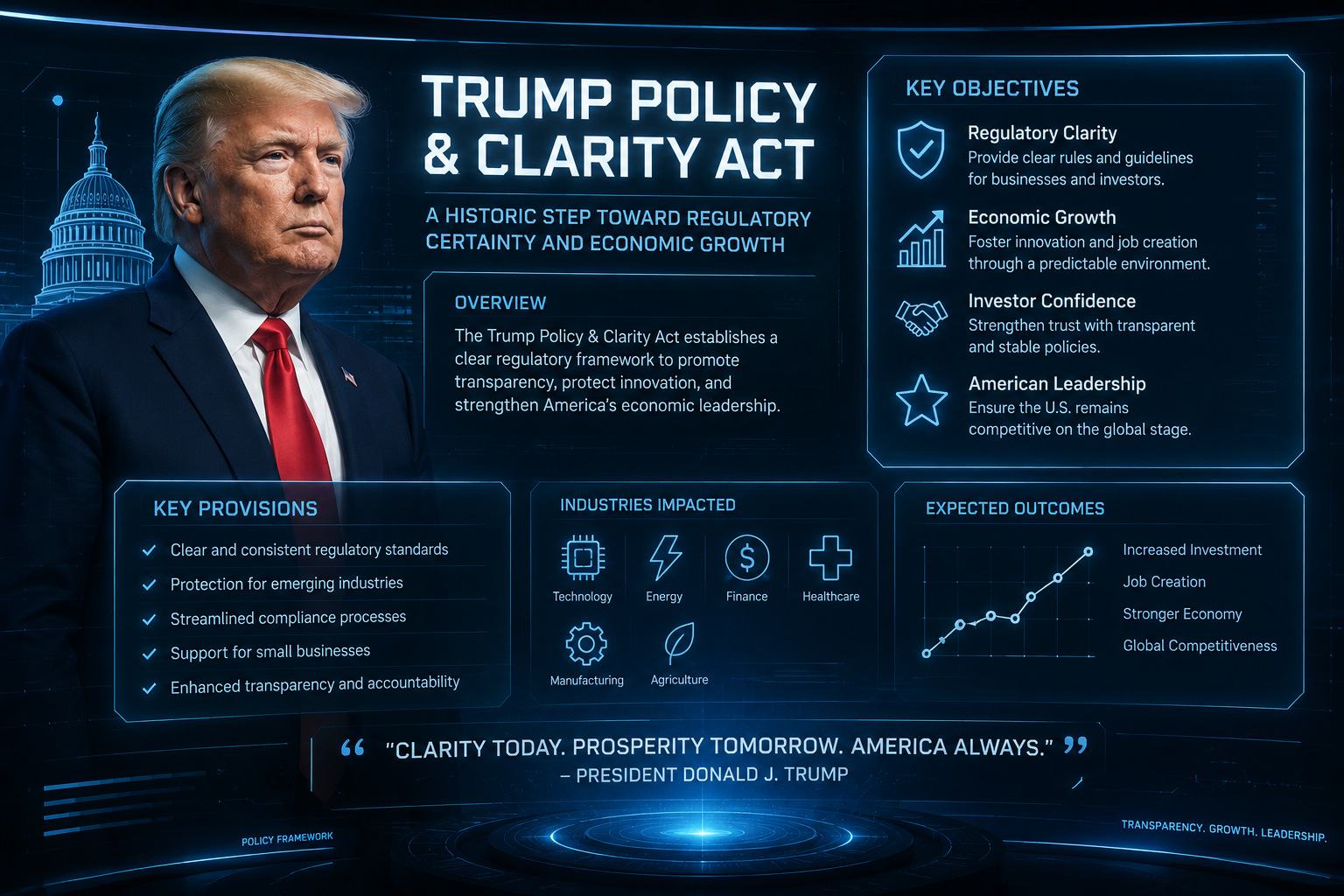
The US House just passed landmark crypto regulation that ended years of jurisdictional chaos between the SEC and CFTC, but most crypto holders still have no idea what changed or how to follow the news without getting lost in misinformation. Here’s what you actually need to know about the CLARITY Act, GENIUS Act, and Anti-CBDC Surveillance State Act—and where to get reliable crypto regulation updates.
Key Takeaways
- •The CLARITY Act passed the House 294-134 in July 2025, drawing a firm regulatory line between SEC-overseen securities and CFTC-overseen digital commodities — ending years of jurisdictional uncertainty for crypto regulation.
- •Three major bills are reshaping US crypto regulation simultaneously: the CLARITY Act for market structure, the GENIUS Act for stablecoins, and the Anti-CBDC Surveillance State Act prohibiting government digital currencies.
- •The CLARITY Act still needs Senate approval before it reaches President Trump’s desk — and a heated debate over stablecoin interest payments is threatening to slow things down significantly.
- •Regular crypto holders are directly affected, not just institutions — new consumer protection rules and fund segregation requirements will change how exchanges handle your assets.
- •Knowing where to get reliable crypto regulation updates is just as important as understanding the laws themselves — and most people are following the wrong sources.
Article at a Glance: Crypto just had its biggest legislative week in US history, and most people still have no idea what actually changed. Understanding these laws is no longer optional for anyone holding, building, or trading digital assets. This article breaks down the CLARITY Act, GENIUS Act, and Anti-CBDC Surveillance State Act in plain language, shows you exactly who is affected and how, and provides the most reliable sources for following crypto regulation news without getting lost in misinformation.
Table of Contents
- The Clarity Act Is Already Changing Crypto — Here Is What You Need to Know
- Who Does the Clarity Act Directly Affect
- Key Provisions You Cannot Afford to Ignore
- The Anti-CBDC Surveillance State Act and Your Privacy
- What Is Happening With Stablecoin Regulation Globally
- How to Follow Crypto Regulation News Without Getting Lost
- The Clarity Act Is Not Final Yet — Here Is What Comes Next
- Frequently Asked Questions
Crypto just had its biggest legislative week in US history, and most people still have no idea what actually changed.
On July 17, 2025, the US House of Representatives passed two landmark digital asset bills in a single session. The vote sent shockwaves through the industry because it did something years of SEC enforcement actions and court battles never managed to do: it started drawing actual legal lines around what crypto is, who regulates it, and what rights you have when you use it. For anyone holding, building, or trading digital assets, understanding crypto regulation is no longer optional.
The Clarity Act Is Already Changing Crypto — Here Is What You Need to Know
- •The House passed the CLARITY Act with a 294-134 vote on July 17, 2025
- •It defines which digital assets fall under SEC jurisdiction and which fall under the CFTC
- •Developers, exchanges, and institutional investors now have a legal framework to build around
- •The bill still needs Senate passage before becoming law
- •Stablecoin interest payments have emerged as the primary sticking point in Senate debate
The CLARITY Act — formally known as the Digital Asset Market Clarity Act, House Bill 3633 in the 119th Congress — is the most comprehensive piece of crypto regulation the US has ever produced. It does not just tweak existing rules. It rebuilds the entire regulatory foundation that digital assets sit on.
Before this bill, the core problem was jurisdictional ambiguity. The SEC claimed authority over most tokens by treating them as securities under the Howey Test, while the CFTC argued that Bitcoin and Ethereum were commodities under its watch. Projects lived in a legal gray zone where launching a token could invite enforcement from either agency — or both. That uncertainty killed innovation and pushed projects offshore.
The CLARITY Act ends that standoff with precise statutory definitions, mandatory rulemaking timelines for both agencies, and clear disclosure requirements tied to each category of asset.
What the Clarity Act Actually Does in Plain Terms
The CLARITY Act sorts digital assets into defined regulatory buckets. Payment stablecoins go to banking regulators under the GENIUS Act framework. Digital commodities — defined as assets intrinsically linked to a blockchain system whose value derives from the use of that blockchain — fall under CFTC oversight. Assets that function as investment contracts remain with the SEC. Every token issuer, exchange, and developer now knows which rulebook applies to them before they launch, not after they get sued.
Why Trump’s Digital Asset Strategy Pushed This Bill Forward
The Trump administration made digital asset policy a priority from day one. The White House actively pushed for passage of both the GENIUS Act and the CLARITY Act as part of a broader strategy to position the US as the global leader in digital finance. That political backing gave Congressional sponsors the momentum needed to move both bills through the House in the same session — something that would have been nearly impossible under the previous administration’s enforcement-first approach to crypto regulation.
The Three Bills Reshaping US Crypto Regulation Right Now
These three pieces of legislation are not operating in isolation. They are designed to work together as a comprehensive regulatory stack for the entire digital asset ecosystem.
| Bill | Primary Focus | Regulator Assigned | Current Status |
|---|---|---|---|
| CLARITY Act (H.R. 3633) | Market structure & jurisdiction | SEC / CFTC | Passed House; awaiting Senate |
| GENIUS Act | Payment stablecoin framework | Banking regulators | Passed House July 17, 2025 |
| Anti-CBDC Surveillance State Act | Prohibiting a government-issued digital dollar | Federal Reserve / Congress | Advancing alongside CLARITY |
Together, these three bills address every major unresolved question in US crypto regulation: what crypto is, how stablecoins work, and whether the government can issue its own programmable surveillance currency. None of them are fully law yet, but the direction is unmistakable.
Who Does the Clarity Act Directly Affect
The short answer is: nearly everyone in the crypto space. But the depth of the impact varies significantly depending on your role in the ecosystem.
Whether you hold Bitcoin on Coinbase, build smart contracts on Ethereum, or run a crypto hedge fund, crypto regulation touches your operating reality. The provisions around consumer protection, fund segregation, and disclosure requirements are not abstract policy — they translate directly into how platforms are structured, how your assets are held, and what information you are legally entitled to receive.
- •Retail investors gain new consumer protections and the right to fund segregation, meaning exchanges cannot commingle your assets with their own operating capital
- •Developers and project teams finally have a legal framework that tells them whether their token is a security or a commodity before they launch — reducing the risk of retroactive enforcement
- •Exchanges and broker-dealers must now meet specific registration, disclosure, and operational standards depending on which category of asset they list
- •Institutional investors — hedge funds, asset managers, family offices — now have the regulatory certainty needed to build compliant long-term digital asset strategies
Crypto Investors and Everyday Holders
For the average person holding crypto, the most immediate impact comes from the consumer protection provisions. The CLARITY Act requires platforms handling digital commodities to segregate customer funds — meaning your assets cannot be used to cover the platform’s own liabilities. This is a direct response to what happened with FTX, where customer funds were mixed with exchange operating capital and lost. The bill essentially codes FTX-style commingling into a federal crime going forward.
Disclosure requirements also become mandatory. Before you trade on a platform or hold a specific token, issuers and exchanges are required to provide material information about the asset’s structure, risks, and the blockchain system it is tied to. This is the crypto equivalent of a securities prospectus — simplified but legally enforceable.
Developers and Blockchain Project Builders
Builders have arguably the most to gain from the CLARITY Act. The previous environment forced project teams to either structure their tokens around SEC safe harbors — which were never designed for crypto — or launch offshore and block US users entirely. The new framework creates a defined pathway: if your token is intrinsically linked to a functioning blockchain and its value derives from that network, it qualifies as a digital commodity under CFTC oversight rather than an SEC-regulated security. That is a fundamentally lighter regulatory burden, and it removes the existential legal risk that killed dozens of legitimate projects between 2018 and 2024. For a better understanding of how this technology works, you can explore blockchain technology explained.
Exchanges, Broker-Dealers, and Institutional Players
Exchanges must now operate under specific registration regimes tied to the asset categories they list. A platform listing digital commodities registers with the CFTC. One listing digital securities registers with the SEC. Platforms listing both must comply with both frameworks. For institutional players, this clarity is exactly what compliance teams have been waiting for — it allows firms to build digital asset divisions without betting the entire legal strategy on regulatory guesswork. For more insights into the evolving landscape, explore the risks and regulations surrounding stablecoins.
Key Provisions You Cannot Afford to Ignore
The CLARITY Act is a dense piece of legislation, but a handful of provisions will have outsized real-world impact. These are the ones that will reshape how the industry operates — and how regulators enforce the rules going forward.
Beyond jurisdiction, the bill mandates that both the SEC and CFTC issue specific rules and guidance within defined timeframes. This is critical because it removes regulatory inaction as a strategy — agencies can no longer simply refuse to write rules and use that ambiguity as an enforcement tool, which was a documented tactic used against the crypto industry for years.
How Regulatory Jurisdiction Gets Divided Between the SEC and CFTC
The CLARITY Act draws the jurisdictional boundary based on the nature of the asset itself. The CFTC takes oversight of digital commodities — assets intrinsically linked to a blockchain system where value is derived from the actual use of that blockchain. Most non-stablecoin crypto assets, including Bitcoin and Ethereum, are expected to fall into this category. The SEC retains authority over digital assets that function as investment contracts — where buyers expect profit primarily from the efforts of others. Stablecoins sit in their own category, governed by banking regulators under the GENIUS Act framework. This three-way split is the structural foundation everything else in the bill builds on.
New Disclosure Requirements for Developers and Exchanges
The CLARITY Act mandates that anyone issuing a digital commodity provide a detailed disclosure document before that asset trades on any registered platform. This document must cover the technical architecture of the blockchain the asset is tied to, the identity and background of the development team, the total token supply and distribution schedule, and any material risks specific to that asset. It is not a one-time filing either — issuers must update disclosures whenever material changes occur. For exchanges, the requirements include clear documentation of fee structures, listing criteria, conflicts of interest, and how customer funds are held and protected.
Consumer Protection Rules and Customer Fund Segregation
The fund segregation requirement is the single most important consumer protection provision in the entire bill. Platforms handling digital commodities must keep customer assets completely separate from the platform’s own operating funds. This means an exchange cannot use your Bitcoin as collateral for its own business loans, cannot lend it out without your explicit consent, and cannot touch it if the platform becomes insolvent. Your assets are yours — the platform is simply the custodian.
This provision addresses the exact mechanism that caused billions in customer losses during the FTX collapse in November 2022.
At that time, no federal law explicitly prohibited an exchange from commingling customer and operational funds. The CLARITY Act closes that gap permanently and gives regulators explicit enforcement authority when violations occur. Non-compliant platforms face mandatory remediation timelines and escalating penalties.
How Payment Stablecoins Will Be Overseen Under the GENIUS Act
Payment stablecoins — digital assets pegged to a fiat currency and used primarily for transactions — are carved out of the CLARITY Act and handled entirely by the GENIUS Act. Under that framework, stablecoin issuers must maintain 1:1 reserves backed by high-quality liquid assets, including US dollars, Treasury bills, or insured bank deposits. Issuers must publish monthly reserve attestations audited by a registered public accounting firm.
The GENIUS Act assigns oversight of stablecoin issuers to banking regulators rather than the SEC or CFTC. Federally chartered institutions are supervised by the Office of the Comptroller of the Currency, while state-chartered issuers can operate under state banking frameworks that meet federal minimum standards. This tiered approach allows smaller issuers to remain viable while ensuring the largest stablecoin networks — those with over $10 billion in circulation — face the most stringent federal oversight.
The sticking point in the Senate right now is whether stablecoin issuers should be allowed to pay interest to holders. Banks oppose it because interest-bearing stablecoins would compete directly with bank deposits. Crypto advocates argue that prohibiting yield on stablecoins artificially limits their utility. This single policy question has become the primary obstacle to Senate passage of both the GENIUS Act and, by extension, the CLARITY Act — since lawmakers have linked the two bills procedurally. For more on this topic, explore stablecoin risks and regulation.
The Anti-CBDC Surveillance State Act and Your Privacy
Running parallel to the CLARITY and GENIUS Acts is a third piece of legislation that does not regulate crypto at all — it stops the government from creating its own version of it. The Anti-CBDC Surveillance State Act is a direct legislative prohibition on the Federal Reserve issuing a retail Central Bank Digital Currency, or CBDC, to the American public.
A CBDC is a government-issued digital dollar — programmable money created and controlled directly by the central bank. Unlike Bitcoin or even regulated stablecoins, a CBDC would give the issuing government unprecedented visibility into every transaction, the ability to set expiration dates on funds, and the technical capacity to restrict purchases of specific goods or services. The bill argues this level of financial surveillance is fundamentally incompatible with constitutional protections around privacy and economic freedom. For a deeper understanding of how this compares with other financial systems, explore DeFi vs Traditional Finance.
The Trump administration has been vocal in its opposition to a US retail CBDC, with executive orders issued early in the term directing federal agencies not to develop or promote one. The Anti-CBDC Surveillance State Act converts that executive policy position into permanent statutory law — meaning a future administration could not reverse it without an act of Congress.
What a Government CBDC Could Enable
- •Programmable spending restrictions — a government CBDC could technically be coded to prevent purchases of certain goods, effectively weaponizing money as a policy tool
- •Real-time transaction surveillance — every payment made in a CBDC would be logged and accessible to the issuing authority without a warrant requirement
- •Expiring funds — stimulus payments or government benefits issued as CBDCs could be programmed to expire, removing individual financial discretion entirely
- •Account freezing at scale — unlike cash or even crypto, a CBDC balance could be frozen centrally with no recourse, as seen in Canada during the 2022 trucker convoy protests with traditional bank accounts
What a Government-Controlled Digital Currency Could Mean for You
Access to how people use digital currencies could potentially reveal a significant amount of personal data. A retail CBDC would make that data collection systematic and permanent. Every coffee purchase, political donation, or medical payment would exist in a government-accessible ledger. For ordinary citizens who have nothing to hide, the concern is not about what they are doing today — it is about what future administrations might do with that infrastructure once it exists.
Why This Bill Exists Alongside the Clarity Act
The Anti-CBDC Surveillance State Act and the CLARITY Act are designed to work as a policy pair. The CLARITY Act builds a regulated, market-driven framework for private digital assets. The Anti-CBDC Act ensures that framework never gets crowded out by a government-issued alternative that operates outside the competitive market entirely.
Without the Anti-CBDC Act, a future administration could theoretically build a government digital dollar that competes directly with regulated stablecoins and crypto assets — but with the full backing of the US Treasury and no requirement to meet the consumer protection standards the CLARITY Act imposes on private issuers. That asymmetry would effectively undermine the entire private digital asset market the CLARITY Act is designed to legitimize.
Together, the three bills send a coherent policy signal: the US government wants a regulated, privately driven digital asset market — not a state-controlled one. Whether the Senate agrees is still an open question, but the direction set by the House and the White House is clear.
What Is Happening With Stablecoin Regulation Globally
The US is not operating in a vacuum. While Congress debates the final details of the GENIUS and CLARITY Acts, other major economies are already moving — and some are moving faster. The global race to establish credible stablecoin and digital asset frameworks is accelerating, and the regulatory choices being made right now will determine which jurisdictions attract the next generation of crypto infrastructure.
CFTC Now Recognizes National Trust Banks as Stablecoin Issuers
In a significant regulatory update that aligns with the GENIUS Act framework, the CFTC has updated its stablecoin definition to recognize national trust banks as eligible stablecoin issuers. This change matters because it expands the pool of institutions that can legally issue regulated stablecoins in the US, bringing in chartered trust companies that operate under OCC supervision. It is a practical signal that regulators are already adapting their frameworks in anticipation of the GENIUS Act becoming law, rather than waiting for full legislative passage before making operational adjustments.
Hong Kong’s First Stablecoin Licenses Are Coming
Hong Kong is preparing to issue its first batch of stablecoin licenses under its new regulatory framework, positioning the city as Asia’s primary hub for regulated digital asset issuance. The Hong Kong Monetary Authority has been developing its stablecoin licensing regime throughout 2024 and 2025, with full-reserve requirements and stringent AML standards at the core of the framework. For global stablecoin issuers, Hong Kong’s approach represents an alternative regulatory pathway — particularly relevant for issuers targeting Asian markets who cannot or do not want to wait for US Senate passage of the GENIUS Act.
China Has Confirmed Its Ban on Stablecoins
China has officially confirmed that its prohibition on private stablecoins remains firmly in place, doubling down on its strategy of channeling all digital currency activity through the state-controlled digital yuan (e-CNY). This is a deliberate policy choice — China views privately issued stablecoins as a threat to monetary sovereignty and capital controls. The confirmation of the ban effectively closes the Chinese market to USD-pegged stablecoins like USDT and USDC, cementing the digital yuan as the only legally permissible digital payment instrument within mainland China.
Why the EU Risks Falling Behind in the Global Tokenization Race
The European Union implemented its Markets in Crypto-Assets (MiCA) regulation in 2024 — and while MiCA is comprehensive, critics argue its stablecoin provisions are so restrictive that they are actively pushing tokenization activity out of Europe. MiCA caps the daily transaction volume of non-euro stablecoins at 200 million euros per day, which immediately limits the utility of USD-pegged stablecoins for large-scale institutional use cases within the EU. For tokenized real-world assets and institutional DeFi, this cap is a structural barrier that jurisdictions like the US, UK, and Hong Kong do not impose.
The deeper issue is that tokenization — converting real-world assets like bonds, real estate, and equities into blockchain-based tokens — is becoming one of the fastest-growing sectors in global finance. If EU regulations make it impractical to use the dominant global stablecoins as settlement infrastructure for tokenized assets, European firms will simply execute those transactions on platforms domiciled elsewhere. The regulatory arbitrage risk is real, and European financial institutions are already flagging it with policymakers in Brussels.
Global Stablecoin Regulatory Snapshot — Mid-2025
| Jurisdiction | Framework | USD Stablecoins Permitted | Key Restriction |
|---|---|---|---|
| United States | GENIUS Act (pending Senate) | Yes | Interest payments under debate |
| European Union | MiCA (active) | Limited | 200M€/day transaction cap |
| Hong Kong | HKMA licensing (in progress) | Yes | Full reserve + AML requirements |
| China | Digital Yuan only | No | Complete ban on private stablecoins |
| United Kingdom | FCA framework (developing) | Yes | Regulatory sandbox stage |
The table above illustrates how dramatically regulatory approaches diverge across major economies. The US, if it passes the GENIUS Act in its current form, will have one of the most permissive and clearly defined stablecoin frameworks in the world — which is precisely why the Senate debate over interest payments matters so much. A watered-down version of the GENIUS Act could push USD stablecoin issuance toward more favorable jurisdictions like Hong Kong or the UK, undermining the very dollar dominance the legislation is designed to protect.
For traders and investors watching these developments, the global regulatory picture is not just background noise — it directly affects which platforms remain accessible, which assets stay liquid, and where the next wave of institutional capital flows into the digital asset market. The regulatory map is being redrawn in real time, and the decisions made in Washington and Brussels over the next six to twelve months will set the trajectory for the rest of the decade.
How to Follow Crypto Regulation News Without Getting Lost
Most crypto holders are flying blind when it comes to regulatory news — and that information gap is costing them real money.
The problem is not a shortage of information. It is the opposite. Every day there are dozens of headlines about bills, rulings, agency statements, and Senate hearings — and most of them are either premature, misinterpreted, or written by people who have not read the actual legislation. Learning to navigate that noise is a skill, and it is one that directly affects your ability to make informed decisions about your portfolio, your platform choices, and your tax obligations.
The Best Sources for Reliable Crypto Regulation Updates
For primary sources, go directly to congress.gov for bill text, the SEC’s official rulemaking page at sec.gov/rules, and the CFTC’s website for commodity-side guidance. For analysis, Elliptic’s regulatory affairs blog consistently produces accurate, jargon-free breakdowns of major legislative and enforcement developments. CoinDesk and The Block both maintain dedicated regulation sections with reporters who cover Capitol Hill and agency proceedings directly. For global stablecoin and market structure news, follow the Financial Stability Board’s public publications at fsb.org — they track cross-border regulatory alignment across G20 economies and are often six to twelve months ahead of what makes mainstream crypto news.
How to Filter Signal From Noise in Regulatory Reporting
The single most reliable filter is this: did the reporter cite the actual bill number, the specific agency document, or the official vote count? If a headline says “crypto regulation is coming” without referencing a specific legislative vehicle or regulatory docket, it is speculation — not news. The CLARITY Act is H.R. 3633 in the 119th Congress. The GENIUS Act passed the House on July 17, 2025, with a 294-134 vote. When you see those details, you are reading sourced reporting. When you do not, treat it as commentary until you can verify it independently. Price-moving regulatory headlines are also frequently mischaracterized — a Senate committee scheduling a hearing is not the same as a bill advancing to a floor vote, but both get reported with similar urgency.
How Often You Should Check for Regulatory Changes
For active traders, a weekly check of official SEC and CFTC dockets is enough to stay ahead of enforcement patterns and rulemaking timelines. For long-term holders, a monthly review of legislative status — particularly the GENIUS Act and CLARITY Act Senate progress — keeps you informed without creating information overload. The exception is during active congressional sessions or after major enforcement actions, where the news cycle compresses and material changes can happen within days. To better understand the dynamics of DeFi vs traditional finance, staying updated with these changes is crucial.
Setting up Google Alerts for terms like “GENIUS Act Senate,” “CLARITY Act vote,” “SEC crypto rulemaking,” and “CFTC digital commodity” takes about five minutes and ensures you catch breaking developments without having to monitor a dozen websites manually. Pair that with following the official Twitter/X accounts of the SEC, CFTC, and relevant Senate Banking Committee members, and you will have a regulatory monitoring setup that outperforms most retail traders’ information workflows entirely. For more insights on regulations, check out this guide on stablecoin risks and regulation.
The Clarity Act Is Not Final Yet — Here Is What Comes Next
The House passage of the CLARITY Act was historic — but it is only half the legislative process. The bill now moves to the US Senate, where it faces a more unpredictable environment. The stablecoin interest payment debate is the most immediate obstacle. Banking industry lobbyists have been aggressive in pushing for a prohibition on yield-bearing stablecoins, arguing that interest-paying digital assets would drain deposits from the traditional banking system. Crypto advocates counter that blocking yield is an arbitrary restriction that kneecaps the utility of regulated stablecoins and benefits incumbent banks at the expense of innovation. Senate negotiators are actively working through this specific provision as of mid-2025, and the outcome will determine whether the GENIUS Act and CLARITY Act move together or separately through the chamber.
Next Steps in the Legislative Process
Beyond the interest debate, the Senate may also seek to amend provisions around decentralized finance protocols — specifically whether DeFi platforms that operate without a central intermediary should face the same registration requirements as centralized exchanges. This is a technically complex question that House drafters largely sidestepped, and Senate staff are under pressure from both industry groups and consumer advocates to address it directly.
If Senate amendments are substantial enough, the bill would need to return to the House for a reconciliation vote before reaching President Trump’s desk. The White House has signaled strong support for passage, which provides meaningful political pressure for the Senate to move quickly — but legislative timelines in a divided Congress are never guaranteed. The most realistic path to both bills becoming law runs through the Senate Banking Committee, and the committee’s chair has publicly stated the goal of completing markup before the end of 2025.
Frequently Asked Questions
The CLARITY Act and GENIUS Act have generated an enormous volume of questions from investors, developers, and traders trying to understand what these laws mean for them practically. Below are the most common questions — answered directly, without the legal hedging that makes most regulatory commentary useless.
What exactly does the CLARITY Act regulate?
The CLARITY Act is a US federal law that defines what kind of digital asset each cryptocurrency is — and therefore which government agency is responsible for regulating it. It draws a clear line between digital commodities (overseen by the CFTC), digital securities (overseen by the SEC), and payment stablecoins (overseen by banking regulators under the GENIUS Act). Before this bill, regulators fought over jurisdiction and projects launched without knowing which rules applied to them.
In practical terms, the CLARITY Act means that a token issuer, exchange, or investor can now look at a specific digital asset and determine — based on statutory definitions — exactly which regulatory framework governs it. That legal certainty is the foundational change the bill delivers, and everything else — the disclosure requirements, the consumer protections, the exchange registration rules — flows from that definitional clarity.
Does the Clarity Act affect regular crypto investors or just big institutions?
The CLARITY Act directly affects regular investors through two key provisions: mandatory customer fund segregation and disclosure requirements. Fund segregation means the exchange or platform holding your crypto cannot legally mix your assets with their own operating capital — a protection that did not exist in federal law before this bill. Disclosure requirements mean you are entitled to material information about any digital asset you trade, including its technical structure and risk factors.
The bill also affects how platforms are built and operated, which changes your experience as a user indirectly. Exchanges that list digital commodities must register with the CFTC and meet specific operational standards — so the platforms you use to buy and sell crypto will be operating under enforceable federal rules rather than self-imposed terms of service. That shift in accountability runs all the way down to individual account holders.
What is the difference between the GENIUS Act and the CLARITY Act?
The GENIUS Act deals exclusively with payment stablecoins — digital assets pegged to a fiat currency and used for transactions. It sets reserve requirements, mandates monthly audited attestations, and assigns oversight to banking regulators. The CLARITY Act handles everything else — defining market structure, dividing jurisdiction between the SEC and CFTC, and establishing the consumer protection and disclosure framework for the broader digital asset market. Think of them as complementary pieces: the GENIUS Act governs the on-ramp (stablecoins used for payments), while the CLARITY Act governs the market itself (trading, issuance, and exchange operations).
When will the GENIUS Act officially take effect?
The GENIUS Act passed the House on July 17, 2025, but it must still pass the Senate before the President can sign it into law. As of mid-2025, the Senate debate is ongoing, with the primary sticking point being whether stablecoin issuers should be permitted to pay interest to holders. Banking industry opposition to that provision has slowed Senate progress, though the White House has actively pushed for passage before the end of 2025.
Once signed, the GENIUS Act does not take effect immediately for all provisions. Agencies will be given defined rulemaking windows — typically 180 days to one year — to publish final implementing rules before issuers are required to comply. The practical implication is that full compliance requirements for stablecoin issuers are unlikely to be enforced before mid-to-late 2026 at the earliest, even if the bill is signed into law by the end of 2025. Watch for Senate Banking Committee markup sessions as the clearest leading indicator of when a final vote might occur.
Where can I find trustworthy crypto regulation news updates?
For primary sources, use congress.gov for bill text and vote records, sec.gov/rules for SEC rulemaking activity, and CFTC.gov for commodity-side guidance and enforcement notices. These sources are unfiltered and free — they tell you exactly what has happened without interpretation or agenda.
For analysis you can trust, Elliptic’s regulatory affairs blog, The Block’s policy section, and CoinDesk’s regulatory coverage are the most consistently accurate options for English-language readers. For global stablecoin and tokenization developments, the Financial Stability Board at fsb.org publishes cross-border regulatory comparisons that most crypto outlets do not cover until months after the fact. Additionally, explore best crypto newsletters to stay informed on all developments.
DISCLAIMER: This article is for informational purposes only and does not constitute financial, investment, legal, or regulatory advice. The CLARITY Act, GENIUS Act, and Anti-CBDC Surveillance State Act are complex legislative documents subject to interpretation, amendment, and Senate negotiation. Always conduct your own research (DYOR), verify information from multiple official sources including congress.gov and agency websites, understand that legislative timelines and provisions are subject to change, and never make investment decisions based solely on regulatory analysis. Past legislative intentions do not guarantee final enacted language. The information presented reflects the status of these bills as of mid-2025 and may become outdated as the legislative process evolves. For the most current information, consult the official bill text and statements from the relevant regulatory agencies.