Coinposters
Is Crypto Mining Still Worth It In 2026? The Simple Way Beginners Can Turn Electricity Into Digital Profit
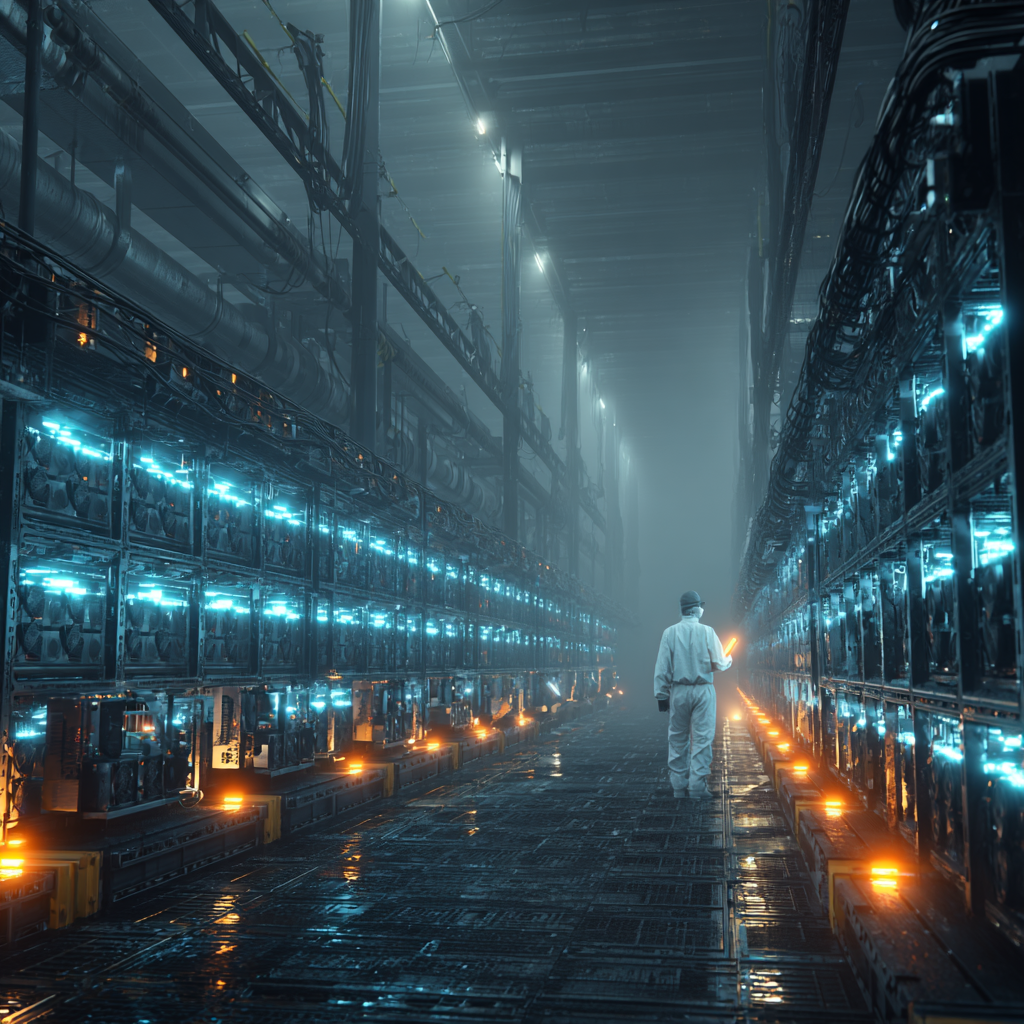
Mining Guide · 2026
Crypto Mining Profitability
in 2026: Is It Still
Worth It?
Crypto mining can still be a serious income stream in 2026 — but walking in without the right information is how most people lose money instead of make it.
Article at a Glance
- →Crypto mining is still profitable in 2026, but success depends heavily on your hardware, electricity costs, and which coin you’re mining.
- →Bitcoin’s 2024 halving cut block rewards from 6.25 BTC to 3.125 BTC, making efficiency more critical than ever for miners.
- →Solo mining Bitcoin is nearly impossible for individual miners today — mining pools and cloud mining have changed the game entirely.
- →The global hash rate surge in 2025 means competition is fiercer, and only miners with optimized setups are consistently turning a profit.
- →There’s one mining strategy quietly outperforming the rest in 2026 — and it’s not what most beginners expect.
The landscape has shifted dramatically over the last few years. Rising hardware costs, the Bitcoin halving, and a global surge in mining competition have thinned the margins for casual miners. That said, miners who understand the mechanics and plan their setup strategically are still generating consistent returns. Resources like SoFi’s crypto mining profitability guide break down the numbers clearly for anyone trying to figure out if crypto mining profitability makes sense for their situation.
Crypto Mining Is Still Profitable in 2026, But Not For Everyone
The honest answer is: it depends. Crypto mining profitability isn’t a single number — it’s the result of several moving parts all working together (or against you). Hardware efficiency, local electricity rates, the current price of the coin you’re mining, network difficulty, and whether you’re mining solo or in a pool all play a role in what ends up in your wallet.
What’s changed most dramatically is the barrier to entry. In the early days of Bitcoin, mining was something you could do on a standard laptop. Today, that same approach would cost you more in electricity than you’d ever earn back. The introduction of Application-Specific Integrated Circuits (ASICs) and the explosive growth of industrial-scale mining farms have fundamentally changed who can profitably mine and how.
Key Factors Affecting Mining Profitability in 2026
- ◆Electricity costs are the single biggest ongoing expense for most miners
- ◆The 2024 Bitcoin halving reduced block rewards to 3.125 BTC, compressing margins
- ◆Global hash rate increases in 2025 have raised the difficulty of mining Bitcoin significantly
- ◆Miners using outdated hardware face near-certain losses in the current environment
- ◆Cloud mining and hosting solutions have opened new doors for miners without large upfront capital
None of this means mining is dead — far from it. It means the game has matured, and staying profitable requires the same level of strategic thinking you’d apply to any serious investment.
What Is Crypto Mining?
Crypto mining is the process by which new transactions are verified and added to a blockchain, and new cryptocurrency coins are introduced into circulation. Miners use powerful computers to solve complex mathematical puzzles, and the first miner to solve the puzzle gets to add the next block of transactions to the chain — earning a block reward in the process.
How Blockchain Networks Use Mining to Validate Transactions
Every time someone sends cryptocurrency to another wallet, that transaction needs to be verified before it’s permanently recorded. Mining is the engine that powers this verification process on Proof of Work blockchains. When miners compete to solve a cryptographic puzzle, the winner broadcasts the solved block to the network. Other nodes confirm the solution is valid, and the block is added to the chain. This decentralized validation system is what makes blockchains trustless — no bank or central authority is needed to confirm your transaction is legitimate.
Proof of Work vs. Proof of Stake
Proof of Work vs. Proof of Stake
Proof of Work (PoW)
Examples: Bitcoin, Litecoin, Monero
- Miners expend computational energy
- Energy-intensive but battle-tested
- Mineable — earns block rewards
- Strong decentralization track record
Proof of Stake (PoS)
Examples: Ethereum (post-2022), Cardano
- Validators lock up crypto as collateral
- Energy-efficient alternative
- Not mineable in traditional sense
- Different decentralization trade-offs
Not all blockchains use mining. Proof of Work (PoW) blockchains like Bitcoin require miners to expend computational energy to validate blocks. Proof of Stake (PoS) blockchains like Ethereum (post-2022 Merge) use validators who lock up cryptocurrency as collateral instead. PoW is energy-intensive but battle-tested for security. PoS is more energy-efficient but introduces different trade-offs around decentralization. If you want to mine, you’re working within PoW networks — PoS chains don’t have mineable rewards in the traditional sense.
Which Cryptocurrencies Can Still Be Mined in 2026
Bitcoin remains the most well-known mineable cryptocurrency, but it’s far from the only option. Several altcoins still operate on Proof of Work consensus and can be mined with varying levels of hardware investment.
Mineable Cryptocurrencies in 2026
| Cryptocurrency | Algorithm | Best Hardware | Difficulty |
|---|---|---|---|
| Bitcoin (BTC) | SHA-256 | ASIC (e.g. Antminer S21) | Very High |
| Litecoin (LTC) | Scrypt | ASIC (e.g. Antminer L9) | High |
| Ethereum Classic (ETC) | Etchash | GPU (e.g. NVIDIA RTX 4090) | Medium |
| Monero (XMR) | RandomX | CPU / GPU | Medium |
| Kaspa (KAS) | kHeavyHash | ASIC / GPU | Medium-High |
Kaspa has emerged as one of the more interesting mining opportunities in recent years due to its blockDAG architecture and growing miner interest. Monero remains a favorite for CPU miners because its RandomX algorithm is specifically designed to resist ASIC dominance.
How Does Crypto Mining Actually Work?
At its core, mining is a competition. Thousands of miners around the world are simultaneously trying to solve the same cryptographic puzzle — a process called hashing. The miner who finds the correct hash first wins the right to add the next block and collects the block reward plus any transaction fees included in that block.
The Role of Computational Power in Mining
Hash rate measures how many calculations per second your mining hardware can perform. The higher your hash rate, the better your odds of solving the puzzle before anyone else. This is measured in terahashes per second (TH/s) for Bitcoin ASIC miners. The Bitmain Antminer S21 Pro, for example, delivers around 234 TH/s — a significant leap over older generation machines that top out under 100 TH/s. More hash rate means more chances to win block rewards, but it also means higher electricity consumption.
What Happens When a Block Is Successfully Mined
Once a miner finds the correct hash, the new block is broadcast to the entire Bitcoin network. Other nodes verify the solution independently, and once confirmed, the block is permanently added to the blockchain. The winning miner receives the block reward — currently 3.125 BTC after the April 2024 halving — plus all the transaction fees from the transactions included in that block. The network then automatically adjusts its difficulty every 2,016 blocks (roughly every two weeks) to ensure blocks are produced approximately every 10 minutes, regardless of how much total mining power joins or leaves the network.
“The network automatically adjusts difficulty every 2,016 blocks — keeping block times at 10 minutes whether one miner is running or one million.”
The Real Costs of Crypto Mining
This is where most beginner miners get caught off guard. The revenue side of mining gets a lot of attention, but the cost side is what actually determines whether you profit or bleed money. There are four major cost categories every miner needs to account for before plugging anything in. Understanding crypto taxes is crucial in this process.
Ignoring even one of these can turn what looks like a profitable operation on paper into a money-losing endeavor in practice.
01. Mining Hardware
Your mining rig is your biggest upfront investment. For Bitcoin, the only competitive option in 2026 is an ASIC miner. Consumer-grade GPU setups simply can’t compete with the hash rates ASICs produce on the SHA-256 algorithm. A new-generation ASIC like the Bitmain Antminer S21 Pro retails for roughly $2,500 to $4,000 depending on market conditions, while the MicroBT WhatsMiner M60S sits in a similar range. Older units like the Antminer S19j Pro can be found secondhand for less, but their lower efficiency (measured in joules per terahash, or J/TH) means higher electricity costs that eat into your margins.
For altcoin mining — particularly Ethereum Classic or Monero — high-end GPUs like the NVIDIA RTX 4090 or AMD RX 7900 XTX remain viable options. GPU mining rigs offer more flexibility since you can switch between mineable coins based on profitability, something ASIC miners generally can’t do.
02. Electricity Costs
Electricity is the make-or-break factor in crypto mining profitability, and it’s non-negotiable — your rigs run 24/7 or they don’t run at all. The Bitmain Antminer S21 Pro consumes approximately 3,510 watts under full load. At the U.S. average residential electricity rate of $0.16 per kWh, that single machine costs roughly $13.50 per day just to power. Multiply that across a multi-unit operation and you’re looking at electricity bills that can easily exceed your mining revenue if you haven’t done the math first.
The miners consistently turning a profit in 2026 are the ones who’ve secured electricity rates below $0.07 per kWh — either through industrial power agreements, location in low-cost energy regions, or by co-locating their hardware at a mining hosting facility. Countries like Kazakhstan, Russia, and parts of the United States (particularly in the Pacific Northwest and Texas) have historically offered competitive energy rates that make large-scale mining viable. If your local rate is above $0.10 per kWh, your profitability window narrows significantly on Bitcoin. For insights into which jurisdictions are attracting builders and capital, explore crypto regulation in 2026.
03. Mining Pool Fees
Almost every miner today participates in a mining pool, and pools charge a fee for their service — typically between 1% and 3% of your earnings. Foundry USA Pool, one of the largest Bitcoin mining pools by hash rate, charges around 0% to 2.5% depending on the payout method selected. Antpool and F2Pool both charge approximately 2.5%. These fees might sound small, but on a high-volume operation pulling in thousands of dollars monthly, a 2.5% pool fee is a meaningful reduction in take-home revenue that must be factored into your profitability calculations from day one.
04. Maintenance and Upgrades
Mining hardware runs hot, runs hard, and runs constantly. Fan replacements, thermal paste reapplication, hash board repairs, and occasional full unit replacements are all part of the operational reality. A single hash board replacement on an Antminer S19 series can cost $300 to $600 depending on the supplier, and that’s before labor if you’re not doing it yourself. It is important to consider these costs when evaluating crypto taxes and overall profitability.
Beyond repairs, the upgrade cycle is relentless. As newer, more efficient ASIC generations are released, older machines become less competitive — not just because they hash slower, but because their higher energy consumption per terahash makes them more expensive to run relative to the rewards they generate. Miners who fail to budget for hardware depreciation and eventual replacement consistently underestimate their true cost of operation.
Mining Cost Summary — What to Budget For
| Cost Category | Typical Range | Frequency |
|---|---|---|
| ASIC Hardware | $2,500 – $4,000 per unit | Upfront / every 18–24 months |
| Electricity | ~$13.50/day per S21 Pro at $0.16/kWh | Ongoing (daily) |
| Pool Fees | 1% – 2.5% of earnings | Ongoing (per payout) |
| Maintenance / Repairs | $300 – $600 per hash board | Periodic |
How to Calculate Your Crypto Mining Profitability
Before you spend a single dollar on hardware, you need to run the numbers. Mining profitability calculators like those offered by CryptoCompare, NiceHash, and WhatToMine let you input your hardware’s hash rate, power consumption, electricity cost, and pool fee to generate an estimated daily, monthly, and annual return. These tools are essential — but they only give you a snapshot based on current network difficulty and coin price, both of which change constantly. For a deeper understanding of the market dynamics, you might want to explore crypto trading vs. forex trading to maximize your ROI.
Key Metrics You Need to Know Before You Start
The 5 Core Mining Profitability Metrics
Hash Rate
Your share of block rewards (TH/s)
Power Draw
Drives your electricity bill (watts)
Elec. Cost
Biggest variable expense ($/kWh)
Network Diff.
How hard the puzzle is right now
Coin Price
The ultimate revenue multiplier (USD)
Understanding how these five variables interact is the difference between mining confidently and mining blindly.
How Bitcoin Halving Affects Mining Rewards
Every 210,000 blocks — approximately every four years — Bitcoin’s block reward is cut in half. This event, known as the halving, is baked into Bitcoin’s code as a deflationary mechanism. The April 2024 halving reduced the block reward from 6.25 BTC to 3.125 BTC. Historically, halvings have preceded significant price increases as the reduced supply of new Bitcoin entering circulation creates upward pressure on price — but that price appreciation is never guaranteed, and it doesn’t happen overnight.
For miners, the halving is a direct revenue cut on day one. A miner earning $500 per day before the halving is suddenly earning $250 per day in block rewards, assuming coin price stays flat. This is why the most efficient miners — those with the lowest electricity costs and newest hardware — are the ones who survive halving events while less efficient operations are forced to shut down. The next Bitcoin halving is projected for 2028, and planning for it now is a core part of any serious long-term mining strategy.
How Market Volatility Impacts Your Returns
Real-World Example
Consider a miner running two Bitmain Antminer S21 Pro units at $0.07/kWh electricity:
| Bitcoin Price | Est. Daily Profit | Status |
|---|---|---|
| $100,000 | $60 – $75 | Strong Profit |
| $60,000 | $25 – $30 | Moderate Profit |
| $40,000 | Break-even or small loss | Marginal |
The hardware didn’t change. The electricity didn’t change. Only the market moved.
This volatility cuts both ways. Bull markets can turn modest mining setups into surprisingly strong cash flow generators. Bear markets can make even well-optimized operations unprofitable for extended periods. The miners who weather downturns best are those who’ve calculated their break-even Bitcoin price — the minimum BTC price at which their operation covers all costs — and have cash reserves to keep hardware running through periods of compressed margins.
One strategy experienced miners use is to hold a portion of mined Bitcoin rather than converting it all to fiat immediately. This approach introduces its own risk, but it also allows miners to benefit from potential price appreciation on coins mined during lower-price periods. It’s a long-term bet on Bitcoin’s trajectory, and it’s a meaningful part of how many professional mining operations think about their total return.
There’s no way to eliminate volatility risk in crypto mining — it’s inherent to the asset class. What you can control is your cost structure, your hardware efficiency, and your strategy for managing the coins you mine. Those three variables are entirely within your power to optimize, especially in light of evolving crypto regulation.
Solo Mining vs. Mining Pools vs. Cloud Mining
How you mine matters almost as much as what you mine. The structure of your mining operation — whether you go it alone, join a pool, or rent hash power from a cloud provider — has a direct impact on how frequently you receive rewards and how predictable your income stream is.
Each approach has a distinct risk-reward profile, and the right choice depends on your budget, technical comfort level, and how much variance you can stomach in your monthly returns.
Mining Approach Comparison
| Approach | Income Consistency | Barrier to Entry | Best For |
|---|---|---|---|
| Solo Mining | Very Low (lottery-like) | Very High | Industrial-scale only |
| Mining Pool | High (proportional) | Medium | Most serious miners |
| Cloud Mining | Variable (contract-based) | Low | No-hardware investors (caution advised) |
Why Solo Mining Is Nearly Impossible for Most People Today
Solo mining means competing against the entire global Bitcoin network on your own. Your odds of solving a block alone with one or two ASIC miners are statistically similar to winning a lottery. The global Bitcoin hash rate reached all-time highs in 2025, meaning the network’s combined computational power is staggering. A single Antminer S21 Pro at 234 TH/s represents a fraction of a fraction of a percent of total network hash rate — statistically, a solo miner at that level might wait years between block rewards, if they ever find one at all. To understand more about the feasibility, you can explore whether Bitcoin mining is still profitable.
Solo mining isn’t entirely extinct — there are occasional stories of small miners getting lucky and solving a block — but it is not a reliable income strategy. The variance is simply too extreme for most people to sustain financially. For all practical purposes, if you’re serious about mining as an income stream, solo mining is off the table unless you’re operating at an industrial scale.
How Mining Pools Split Rewards Among Participants
Mining pools solve the variance problem by combining the hash rate of thousands of miners and distributing rewards proportionally based on each miner’s contributed hash power. When the pool successfully mines a block, the reward is split among all participants according to their share of the total pool hash rate — minus the pool’s fee. This creates a much more consistent, predictable income stream compared to solo mining.
The most common payout methods are PPS (Pay Per Share), which pays a fixed amount for every valid share submitted regardless of whether the pool finds a block, and PPLNS (Pay Per Last N Shares), which ties your payout more directly to the pool’s actual block-finding success. PPS offers more income stability; PPLNS can pay more over time if the pool performs well but introduces more short-term variability. Major pools like Foundry USA, AntPool, and F2Pool each support multiple payout structures so miners can choose what fits their preference.
The Risks of Cloud Mining Platforms
Cloud mining lets you rent hash power from a provider’s existing mining infrastructure without owning any hardware yourself. In theory, it removes the barriers of hardware costs, electricity management, and maintenance. In practice, it’s the segment of the crypto mining industry most riddled with scams, misleading contracts, and disappointing returns.
Legitimate cloud mining providers do exist — Genesis Mining and NiceHash are among the more established names — but the business model makes it structurally difficult to profit. By the time you account for the provider’s cut, contract fees, and the fact that you have no control over the hardware being used, your effective mining efficiency is almost always lower than running your own optimized setup.
The most important red flag to watch for in cloud mining is any platform promising guaranteed fixed returns regardless of market conditions. Legitimate crypto mining profitability fluctuates with Bitcoin price and network difficulty — any platform claiming otherwise is either misleading you or operating unsustainably.
Cloud Mining Red Flags — What to Watch For
- ⚠Verify the company has a verifiable physical mining operation before committing funds
- ⚠Read contract terms carefully — many lock you in for 12 to 24 months with no exit
- ⚠Avoid platforms with no transparent fee structure or hash rate verification
- ⚠Check independent reviews on forums like BitcoinTalk and Reddit’s r/gpumining before signing up
- ⚠Be especially cautious of platforms promoted primarily through referral and affiliate programs with unrealistic income claims
The Biggest Risks Every Miner Needs to Know
Profitability calculations are only one side of the equation. Before committing capital to a mining operation, you need a clear-eyed view of what can go wrong — and in crypto mining, there are several ways a setup that looks good on paper can underperform or fail entirely in the real world. For those interested in diversifying their investments, it might be worth exploring cryptocurrency for portfolio diversification.
The risks in crypto mining aren’t just financial. They span technical, regulatory, and environmental dimensions that every serious miner needs to account for before flipping the switch on their first rig.
“The miners winning in 2026 treat it like a business — not a hobby. That mindset shift is ultimately what separates those who profit from those who don’t.”
CoinPosters · Mining Guide 2026
Financial Risk and Upfront Costs
The upfront capital required to enter crypto mining competitively is substantial. A single top-tier ASIC like the Bitmain Antminer S21 Pro costs $2,500 to $4,000 at retail, and most serious operations run multiple units. Add infrastructure costs — proper ventilation, electrical upgrades, networking equipment — and a small home mining setup can easily require $10,000 or more before earning a single satoshi. If Bitcoin’s price drops sharply after you’ve made that investment, your break-even timeline extends dramatically. Hardware also depreciates fast in this industry; a machine that’s highly efficient today may be outcompeted by next-generation ASICs within 18 to 24 months, eroding your return on investment before you’ve fully recouped the initial outlay. The regulatory landscape adds another layer of financial uncertainty — in 2025, countries across South America and Russia introduced new frameworks around cryptocurrency mining that increased operational costs for miners in those regions, and similar shifts could emerge elsewhere with little warning.
Environmental Impact of Running Mining Rigs
Bitcoin mining’s energy consumption is well-documented and remains one of the most debated aspects of the industry. Running multiple high-wattage ASICs continuously generates significant heat and noise — both of which are non-trivial problems in a home environment. Beyond the personal operational challenges, the broader environmental conversation around Proof of Work mining has led to regulatory pressure in several jurisdictions, with some regions introducing energy usage restrictions or carbon reporting requirements specifically targeting mining operations. Miners increasingly need to consider not just whether they can afford the electricity, but whether their energy source aligns with tightening environmental standards that could affect their ability to operate long-term.
Is Crypto Mining Worth It in 2026?
For miners with access to sub-$0.07/kWh electricity, modern hardware, and a disciplined approach to cost management, crypto mining profitability absolutely remains worth pursuing in 2026. For everyone else, the margins are tighter than they’ve ever been, and the gap between a well-optimized operation and a poorly planned one is the difference between consistent profit and a slow, expensive loss.
Is Mining Worth It For You in 2026?
✓ Mining Makes Sense If…
- Electricity below $0.07/kWh
- Access to current-gen ASIC hardware
- Capital to survive a bear market
- Treating it as a business
- Long-term BTC holding strategy
✗ Mining Is Risky If…
- Electricity above $0.10/kWh
- Using outdated hardware
- No cash buffer for downturns
- Treating it as a get-rich-quick scheme
- No plan for hardware depreciation
Frequently Asked Questions
Crypto mining raises a lot of practical questions — especially for people trying to figure out if it makes sense for their specific situation. The answers aren’t always simple because profitability depends on so many variables. But these are the questions that come up most often, and they deserve direct, honest answers.
Whether you’re weighing your first GPU purchase or trying to decide between joining a mining pool and buying Bitcoin outright, the information below will help you make a more informed decision.
Each question below is answered based on the current state of the market in 2026, with the real-world nuances that generic guides tend to gloss over. For those interested in the evolving landscape of cryptocurrency, understanding crypto regulation in 2026 is crucial as it highlights the jurisdictions attracting builders and capital.
Can I make a profit mining crypto with just one GPU?
- →Single GPU mining Bitcoin is not viable in 2026 — ASIC miners dominate the SHA-256 network entirely
- →GPU mining remains relevant for altcoins like Ethereum Classic (Etchash) and Monero (RandomX)
- →An NVIDIA RTX 4090 hashes Ethereum Classic at approximately 130 MH/s with ~200–250 watts of power draw
- →At $0.10/kWh, a single RTX 4090 mining ETC may generate $1–$4 per day in profit depending on ETC’s price
- →Monero’s RandomX is CPU-friendly — a high-core AMD Ryzen 9 7950X can mine XMR competitively
The honest answer is: possibly, but your expectations need to be calibrated to reality. A single GPU is unlikely to generate life-changing income, but it can serve as a low-stakes entry point to learn the mechanics of mining without committing to a full multi-rig operation. For those interested in the broader landscape of crypto, understanding crypto taxes in 2026 is also essential.
The key variable is your electricity rate. If you’re paying residential rates above $0.12/kWh, a single GPU mining altcoins is likely to generate marginal profits at best — and could run at a small loss during bear market periods when coin prices compress. At $0.05 to $0.07/kWh, the same setup becomes meaningfully more viable.
One approach that works well for single-GPU miners is using a profitability switcher tool like NiceHash or HiveOS, which automatically directs your GPU toward whichever algorithm is most profitable at any given moment. This dynamic switching can meaningfully improve returns compared to locking into a single coin.
GPU mining with a single card is best thought of as a learning experience and a modest supplemental income — not a primary revenue stream. If the goal is significant mining income, scaling to multiple GPUs or transitioning to ASIC mining on a competitive coin is the logical next step.
What is the most profitable cryptocurrency to mine in 2026?
Bitcoin remains the most valuable cryptocurrency to mine by total reward value, but it’s also the most difficult and expensive to mine competitively. For miners without industrial-scale operations and sub-$0.07/kWh electricity, altcoins like Kaspa (KAS), Ethereum Classic (ETC), and Monero (XMR) often offer better profitability per dollar of hardware and electricity invested. Kaspa in particular has attracted significant miner interest due to its high transaction throughput and growing ecosystem, with both ASIC and GPU miners finding it competitive in 2025 and into 2026. The most profitable coin for your specific setup depends on your hardware type, electricity rate, and risk tolerance — use profitability comparison tools to input your exact specs and compare real-time returns across dozens of mineable coins simultaneously.
How long does it take to recoup the cost of mining equipment?
The payback period on mining hardware — often called ROI timeline or break-even period — is one of the most important calculations any miner needs to make before purchasing equipment. It’s also one of the most variable, because it depends entirely on coin price, network difficulty, and your electricity cost at the time you’re mining.
Under favorable conditions — strong coin prices, efficient hardware, and low electricity costs — a well-configured ASIC operation can recoup its initial investment in six to twelve months. Under less favorable conditions, that timeline stretches to eighteen months, two years, or longer. Some miners who purchased hardware at peak prices during the 2021 bull market and then mined through the 2022 bear market took three or more years to break even.
The 2024 Bitcoin halving made this calculation more complex. With block rewards cut to 3.125 BTC, miners who purchased hardware in the months before the halving at high Bitcoin prices needed a sustained price increase just to maintain their pre-halving payback timelines. This is why timing your hardware purchase relative to market cycles and halving events matters enormously to your actual realized ROI.
A practical rule of thumb used by experienced miners is to only enter a new hardware investment if you can model a break-even scenario at Bitcoin prices 30–40% below current market levels. Here’s how to calculate your break-even yourself:
- →Calculate daily revenue using current network difficulty and coin price via CryptoCompare or WhatToMine
- →Subtract daily electricity cost (hardware wattage ÷ 1000 × 24 hours × $/kWh)
- →Subtract daily pool fee (typically 1–2.5% of gross revenue)
- →Divide total hardware and setup cost by daily net profit to get your break-even days
- →Run the same calculation at coin prices 20%, 30%, and 40% lower to stress-test your model
Is crypto mining considered passive income?
Crypto mining has the characteristics of passive income in that your hardware earns rewards continuously without requiring you to actively trade or make daily decisions. Once your rigs are set up, connected to a mining pool, and running stable, the income flows without constant hands-on involvement. Cloud mining and co-location hosting services take this a step further — miners who use hosting facilities like Compass Mining or Core Scientific can earn mining rewards without ever physically interacting with their hardware.
In practice, however, mining is more semi-passive than fully passive. Hardware requires monitoring, occasional maintenance, and eventual replacement. Mining software and pool connections sometimes need troubleshooting. Market conditions shift, and smart miners adjust their strategies accordingly — switching coins, adjusting overclocking profiles, or temporarily powering down during periods of extreme unprofitability.
The more automated your setup and the more you leverage professional hosting, the closer to true passive income it becomes — but zero-touch, set-and-forget mining is rarely the reality for small to mid-scale operators. For those interested in understanding the broader financial landscape, exploring cryptocurrency for portfolio diversification can provide valuable insights.
What is the difference between mining crypto and buying crypto?
Mining crypto means you’re actively participating in the network to earn cryptocurrency as a reward for contributing computational power. Buying crypto means you’re purchasing it directly on an exchange using fiat currency or another asset. Both result in you holding cryptocurrency, but the path, risk profile, and cost basis are very different.
When you buy crypto, your entry cost is straightforward — the price you paid per coin. When you mine crypto, your effective cost basis is the total cost of hardware, electricity, and fees divided by the coins you’ve mined. In a strong bull market, this mined cost basis can end up being significantly lower than the market price, meaning your unrealized gain per coin is higher than if you’d simply purchased at market. In a bear market, the inverse can be true — your all-in mining cost per coin may exceed market price, leaving you technically underwater even as the hardware keeps running.
Mining also gives you exposure to cryptocurrency without requiring a large lump-sum purchase at current market prices. Instead, you’re accumulating coins gradually over time, which some miners view as a form of dollar-cost averaging — spreading your effective purchase price across many different market conditions rather than committing all capital at once.
The right choice between mining and buying ultimately depends on your goals, capital availability, and operational capacity. Buying is simpler, more liquid, and accessible to anyone. Mining is operationally complex and capital-intensive upfront, but it can generate a lower effective cost basis per coin and provides the additional benefit of earning transaction fees as a network participant — something you never receive as a passive coin holder. Both strategies have their place, and many seasoned crypto participants use a combination of both to build their positions over time.
For anyone looking to go deeper on crypto mining strategy and stay informed as the landscape evolves, SoFi’s crypto education platform offers consistently updated resources to help miners and investors make smarter decisions at every stage of their journey.
Disclaimer
This article is for informational purposes only and does not constitute financial, legal, or investment advice. Do Your Own Research (DYOR) before purchasing mining hardware, joining a mining pool, or committing capital to any crypto mining operation. Mining profitability is highly variable and depends on factors including hardware efficiency, electricity costs, network difficulty, and cryptocurrency market prices — all of which change constantly. Always consult a qualified financial advisor before making significant investment decisions. CoinPosters is not responsible for any actions taken based on the information provided in this article.
CoinPosters
Your guide to navigating crypto in 2026 and beyond.



Latest
Bitcoin
08 Jul 2026
Bitcoin
04 Jul 2026