Coinposters
How to Find Undervalued Crypto Gems: On-Chain Fundamentals & Whale Tracking Combined

On-Chain Research Guide · 2026
How to Find
Undervalued Crypto
Gems: On-Chain
Fundamentals &
Whale Tracking
Combined
Most retail investors chase price action — the real edge comes from reading on-chain data before the crowd moves.
Article at a Glance
- →Most retail investors chase price action — the real edge comes from reading on-chain data before the crowd moves.
- →An undervalued crypto gem is defined by utility, network activity, and developer momentum — not just a low token price.
- →Whale wallet accumulation consistently precedes significant price increases, and you can track it for free using tools like Etherscan and BscScan.
- →Combining on-chain fundamentals with technical analysis like RSI and Bollinger Bands dramatically improves your entry timing.
- →There are specific red flags — including supply concentration and dormant GitHub repos — that separate real gems from traps, and we cover all of them below.
Table of Contents
- Most Crypto Investors Are Looking in the Wrong Place
- What “Undervalued” Actually Means in Crypto
- On-Chain Fundamentals Every Investor Should Track
- How Crypto Whales Move Markets
- How to Track Whale Wallets Step-by-Step
- The Best Tools for On-Chain and Whale Analysis
- How to Combine On-Chain Data With Technical Analysis
- Red Flags That Signal a Fake Gem
- Combine Both Strategies Before You Buy Anything
- Frequently Asked Questions
Finding undervalued crypto gems before the crowd arrives is the difference between meaningful returns and buying the top. Most retail investors scroll Twitter, watch YouTube thumbnails, and chase whatever coin just posted a 40% gain. By the time a token is trending, the early money has already positioned itself and is quietly preparing to exit. The opportunity to find undervalued crypto gems was never in the hype — it was in the data that showed up weeks before the hype arrived. Our guide to on-chain analysis vs fundamental analysis covers the broader research framework for identifying mispriced assets. For a deep dive into whale wallet behaviour specifically, Nansen’s step-by-step whale tracking guide is the most practical resource available.
On-chain analytics and whale tracking change that equation entirely. Instead of reacting to price, you learn to read the signals that precede price — wallet accumulation patterns, transaction volume spikes, developer commits, and exchange outflows that indicate smart money is loading up quietly. This guide breaks down exactly how to identify undervalued crypto gems using both on-chain fundamentals and whale tracking — and how to combine them before making any buy decision.
Most Crypto Investors Are Looking in the Wrong Place
Most people find out about undervalued crypto gems after the pump — and that’s the entire problem.
The typical retail investor scrolls Twitter, watches YouTube thumbnails, and chases whatever coin just posted a 40% gain. By the time a token is trending, the early money has already positioned itself and is quietly preparing to exit. The opportunity was never in the hype. It was in the data that showed up weeks before the hype arrived. On-chain analytics and whale tracking change that equation entirely. Instead of reacting to price, you learn to read the signals that precede price — wallet accumulation patterns, transaction volume spikes, developer commits, and exchange outflows that indicate smart money is loading up quietly.
What “Undervalued” Actually Means in Crypto
Undervalued does not mean cheap. A token priced at $0.0001 is not automatically a deal, and a coin trading at $200 is not automatically expensive. Those numbers mean almost nothing on their own.
A genuinely undervalued crypto gem is one where the current market price does not reflect the actual or near-future utility, adoption, and network strength of the project. Think of it like a stock trading below its intrinsic value — except in crypto, the signals are on-chain and visible to anyone who knows where to look.
Signals of a Genuinely Undervalued Crypto Gem
- ◆Real transaction demand from actual users, not bots or wash trading
- ◆Developer activity that shows a team actively building and shipping
- ◆Network growth measured by new wallet addresses and retention
- ◆Token distribution that isn’t dangerously concentrated in a few wallets
- ◆Market cap that is low relative to the protocol’s real-world usage
Market Cap vs. Real Utility in Undervalued Crypto Gems
Market capitalisation is calculated by multiplying price by circulating supply. A project can have a $500M market cap and virtually no real users, or a $20M market cap with thousands of daily active wallets and growing developer traction. The second scenario is where undervalued crypto gems live. For those new to investing, understanding crypto portfolio strategies can be beneficial in identifying these opportunities.
When comparing projects, look at the ratio between market cap and actual on-chain activity — things like total value locked (TVL), daily active addresses, and protocol revenue. A low market cap paired with strong, growing utility metrics is a classic signal of an undervalued asset.
Why Low Price Alone Does Not Mean Undervalued
This is one of the most common and costly mistakes new investors make. A token can be priced at fractions of a cent and still be massively overvalued if there is no real demand, no active development, and no reason for anyone to use the network.
Price reflects sentiment. Value reflects fundamentals. The two can diverge for months, sometimes years. Your job is to find situations where fundamentals are strong but sentiment hasn’t caught up yet — that gap is the opportunity.
Tokens that have experienced a sharp price correction but maintained or grown their on-chain activity during that same period are among the strongest candidates. The market sold the narrative; the users didn’t leave. That divergence matters enormously.
On-Chain Metrics That Reveal the True Value of Crypto Gems
The blockchain doesn’t lie. Every transaction, wallet interaction, and smart contract call is permanently recorded and publicly visible. On-chain metrics give you a direct window into what’s actually happening with a project — independent of what the team says in their Telegram or what influencers are posting.
On-Chain Fundamentals Every Investor Should Track
There are dozens of on-chain metrics available, but only a handful consistently separate signal from noise when evaluating undervalued crypto gems. Focus on these.
Active Wallet Addresses and Network Growth
The number of daily and monthly active wallet addresses is one of the clearest indicators of real network demand. Growing active addresses means more people are actually using the protocol — not just holding the token speculatively. To explore more about identifying undervalued crypto gems, you can read this guide on how to identify undervalued cryptocurrencies.
Look for consistent upward trends in unique active addresses over a 30 to 90-day window. A project showing 15–20% month-over-month growth in active wallets while still sitting at a low market cap is worth serious attention. Glassnode and Token Terminal both provide this data in clean, trackable formats.
Transaction Volume vs. Price Movement
When transaction volume is rising but price has not yet followed, that divergence is often an early accumulation signal. Volume precedes price — this is true in both traditional markets and crypto, and on-chain data makes it easier to spot than almost any other asset class.
Pay specific attention to sustained volume increases over multiple days or weeks rather than single-day spikes. Single-day volume spikes can be manipulation. Multi-week volume growth with increasing active addresses is the combination you want to see.
Token Supply Distribution and Concentration Risk
Pull up any token on Etherscan and scroll to the top holders list. If the top 10 wallets hold 60%, 70%, or more of the total supply — and those wallets are not clearly labelled as exchanges or project treasuries — that is a major red flag. High concentration means a small number of actors can dump the price at any time.
Developer Activity as a Value Signal
Check the project’s GitHub repository. Consistent commits, recent code updates, and multiple active contributors signal a team that is genuinely building. A dormant repo with no updates in three to six months, regardless of how loud the marketing is, is a warning sign that should not be ignored.
How Crypto Whales Move Markets
Whales — wallets holding disproportionately large amounts of a token — are not passive investors. Their buying and selling decisions create the price waves that retail investors ride or get crushed by. Understanding how they move is one of the most powerful edges available to any investor seeking undervalued crypto gems.
The key insight is this: whales rarely move all at once. Accumulation happens gradually, quietly, and usually during periods of low public interest. By the time a token is generating headlines, whales are already positioned — and in many cases, already planning their exit.
The Four Wallet Types That Matter for Crypto Gem Research
- Smart MoneyInstitutional and sophisticated individual investors with a verified track record of profitable positioning
- Exchange WalletsHot and cold wallets belonging to centralised exchanges like Binance and Coinbase
- Fund & InstitutionalVenture capital and crypto-native fund addresses
- Project TreasuryWallets controlled by the protocol’s founding team or DAO
Isolating smart money wallets from exchange and treasury addresses gives you a cleaner picture of genuine accumulation versus internal token transfers that carry no market signal. For those interested in understanding the nuances of on-chain analysis, this knowledge can be invaluable.
What Counts as a Whale and Why It Matters
There’s no universal threshold, but in practice, a whale is any wallet holding enough of a token’s circulating supply to meaningfully move the price when it transacts. For a small-cap token with a $10M market cap, a wallet holding $500,000 worth qualifies. For Bitcoin or Ethereum, the bar is much higher — typically wallets holding 1,000 BTC or more are tracked as whales.
How Whale Accumulation Precedes Price Pumps in Crypto Gems
“The gap between when whales finish accumulating and when retail price discovery begins is your window. On-chain data is how you find it.”
When smart money starts accumulating a token, the on-chain footprint is unmistakable — if you know what to look for. Large wallets typically buy in tranches over days or weeks, avoiding single massive purchases that would spike the price and attract attention. What you see instead is a steady pattern of medium-sized buy transactions flowing into a small cluster of wallets, with those wallets showing zero exchange outflows during the same period.
Historical patterns across multiple market cycles show this accumulation phase consistently precedes significant price appreciation. The gap between when whales finish accumulating and when retail price discovery begins is your window. Once volume starts picking up on exchanges and social mentions begin to climb, accumulation is usually already over. The best entries come before that inflection point — and on-chain data is how you find them.
Exchange Inflows and Outflows as Sell Signals
When whale wallets start sending large token amounts to exchange deposit addresses, that is one of the clearest early warning signals available. Tokens moved to exchanges are being prepared for sale. A sudden spike in exchange inflows from previously dormant large wallets — especially after a sustained price run — means distribution is beginning. Conversely, when tokens are flowing off exchanges into private wallets, that indicates accumulation and reduced sell pressure. Tracking exchange inflows and outflows in real time using Nansen’s whale tracking tools or Glassnode gives you a significant timing advantage over investors relying on price charts alone.
How to Track Whale Wallets Step-by-Step
Whale tracking is not as complicated as it sounds. The data is public, the tools are accessible, and the process can be broken down into five repeatable steps. Here is exactly how to do it when researching undervalued crypto gems.
1. Find the Top Token Holders Using Etherscan or BscScan
Go to Etherscan.io (for Ethereum-based tokens) or BscScan.com (for BNB Chain tokens), search for the token contract address, and click on the “Holders” tab. This gives you a ranked list of every wallet holding the token, sorted by balance. Focus on the top 50 to 100 holders. Note which addresses appear to be exchange cold wallets (often labelled directly on Etherscan), and flag any large unlabelled wallets for deeper investigation. If the top 10 non-exchange wallets collectively hold more than 40–50% of supply, document that as a concentration risk before going further.
2. Label Smart Money Wallets With Nansen
Take the unlabelled whale wallet addresses you identified and run them through Nansen. Nansen’s wallet labelling engine cross-references on-chain behaviour with a proprietary database to classify wallets — distinguishing smart money traders, VC funds, exchange wallets, and project treasuries from anonymous retail holders.
If Nansen identifies several of the top holders as smart money or institutional funds, that is a strong signal the project has already caught the attention of sophisticated capital. When multiple independent smart money wallets are accumulating the same token simultaneously, that convergence is one of the most reliable early signals in the entire on-chain toolkit.
3. Analyse Transaction Patterns for Accumulation vs. Distribution
For each flagged whale wallet, review the last 30 to 90 days of transaction history. You are looking for a consistent pattern of inbound token transfers with minimal outbound movement — that is accumulation. If you see frequent transfers to exchange deposit addresses or rapid movement between multiple wallets followed by exchange deposits, that is distribution. The frequency, size, and destination of transactions together paint a clear behavioural picture that price charts simply cannot show you.
4. Monitor Exchange Inflows for Early Sell Warnings
Set up alerts — either through Nansen’s alert system or manually via Etherscan’s wallet notification feature — on your top whale wallets. The moment a previously accumulating wallet starts routing tokens toward exchange addresses, you want to know immediately. Even a single large exchange inflow from a key smart money wallet can be enough to reassess your position ahead of broader market movement.
5. Align Whale Activity With Upcoming Token Events
Cross-reference whale accumulation patterns with the project’s upcoming token unlock schedule, mainnet launches, exchange listings, or partnership announcements. Whales with access to project insiders often accumulate ahead of catalysts. If you spot heavy accumulation two to four weeks before a major scheduled event, the probability that the price move is informed — rather than random — increases significantly. Use Token Unlocks or CryptoRank to track vesting schedules alongside your whale data.
The Best Tools for On-Chain and Whale Analysis
You do not need a dozen subscriptions to research undervalued crypto gems well. A focused stack of three to four tools covers the full picture — from macro network health to individual wallet behaviour — and most of them offer meaningful free tiers to get started.
The tools worth your time fall into two categories: wallet intelligence platforms that label and track specific addresses, and macro on-chain analytics platforms that give you the broader network health picture. Using both together is where the real insight lives. For a broader overview, explore the best crypto research platforms available in 2026.
Core On-Chain Research Tools — 2026 Stack
| Tool | Primary Use | Free Tier? |
|---|---|---|
| Nansen | Labelled wallet tracking, smart money signals | Limited |
| Glassnode | Macro on-chain metrics, exchange flows | Yes |
| Etherscan | Raw Ethereum transaction and holder data | Yes |
| BscScan | Raw BNB Chain transaction and holder data | Yes |
| Token Terminal | Protocol revenue, P/S ratios, TVL trends | Yes |
| CryptoRank | Token unlock schedules, fundraising data | Yes |
Nansen for Labelled Wallet Intelligence
Nansen is the most powerful wallet intelligence platform available for on-chain research. Its core value is in the labelling — over 250 million wallets are tagged with behavioural and identity data, so when you look up a token’s top holders, you are not just seeing anonymous addresses. You are seeing whether those holders are hedge funds, early-stage VCs, historically profitable smart money traders, or protocol treasuries. That context transforms raw blockchain data into actionable investment intelligence.
Glassnode for Macro On-Chain Trends
Glassnode specialises in aggregated network-level data — the kind of metrics that tell you about the overall health and behaviour of a blockchain ecosystem rather than individual wallets. Its exchange flow data, HODL wave charts, and spent output profit ratio (SOPR) metrics are particularly useful for gauging whether a market is in an accumulation or distribution phase at the macro level.
The free tier gives access to a solid range of Bitcoin and Ethereum metrics. For altcoin-specific data and advanced indicators, the paid tiers unlock significantly more depth. Even at the free level, Glassnode’s exchange inflow and outflow charts are among the most reliable sell-pressure indicators available anywhere.
Etherscan and BscScan for Raw Blockchain Data
These are your ground-level verification tools. Every piece of wallet intelligence you gather from Nansen should be cross-checked against raw transaction data on Etherscan or BscScan. They are completely free, require no account, and give you unfiltered access to every transaction ever recorded on the respective chains. When you need to verify that a wallet labelled “smart money” is actually accumulating — and not just being used for internal transfers — this is where you confirm it.
How to Combine On-Chain Data With Technical Analysis
On-chain data tells you what is happening beneath the surface of potential undervalued crypto gems. Technical analysis tells you when price structure might be ready to move. Used together, they dramatically improve both your conviction on entry and your precision on timing.
Using RSI and Bollinger Bands to Confirm Oversold Conditions
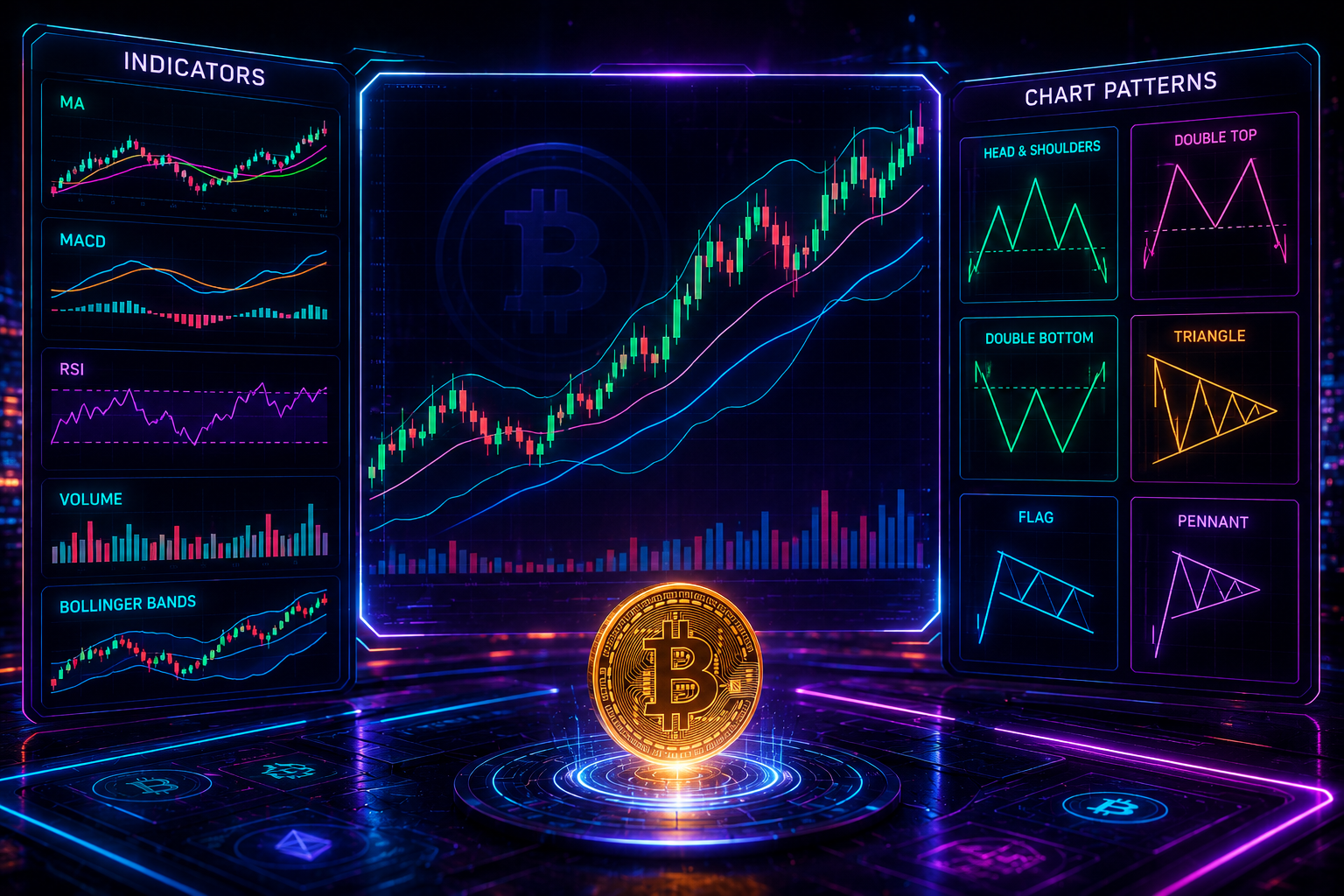
The Relative Strength Index (RSI) and Bollinger Bands are two of the most reliable technical indicators for confirming that a token is in oversold territory — meaning price has dropped beyond what fundamentals justify. When RSI drops below 30 on the weekly chart and Bollinger Bands show price touching or breaking below the lower band, that combination signals extreme selling pressure that has historically preceded reversals in fundamentally strong projects. The key word is fundamentally strong — these signals mean very little on their own without on-chain data confirming that real users and smart money are still present.
The most powerful setup is when RSI is below 30, price is at the lower Bollinger Band, and on-chain active addresses are flat or growing during the same period. That combination — technical oversold plus on-chain stability — is a much higher-conviction entry signal than either indicator alone. Add whale accumulation to that picture and you have one of the strongest setups available in crypto markets.
Spotting Bullish Divergence When Whales Are Accumulating
Bullish divergence occurs when price is making lower lows on the chart but RSI or MACD is making higher lows — meaning momentum is quietly shifting even while price still looks bearish. This divergence frequently appears during the late stages of whale accumulation, precisely because large buyers are absorbing sell pressure without letting price recover yet. When you identify bullish divergence on the daily or weekly chart at the same time that on-chain data shows whale wallets increasing their holdings and exchange outflows rising, the probability of a significant upside move in the near term increases substantially.
Red Flags That Signal a Fake Gem
For every genuine undervalued crypto gem, there are dozens of projects engineered to look like one. The difference between a hidden gem and a well-disguised trap often comes down to a handful of specific on-chain and structural signals that most retail investors either overlook or don’t know to check. These are the red flags that should make you walk away immediately, regardless of how compelling the narrative sounds.
Token Supply Concentrated in Too Few Wallets
If the top five to ten non-exchange wallets control more than 40% of a token’s total circulating supply, the project carries extreme dump risk. Any one of those wallets deciding to sell creates immediate, severe downward pressure that retail holders absorb with no warning. Cross-check the holder list on Etherscan against Nansen’s wallet labels — if those concentrated wallets are not identifiable as reputable institutions or locked vesting contracts, treat the concentration as a critical red flag. Legitimate projects with strong tokenomics typically show a much broader distribution curve, with no single anonymous wallet dominating the supply.
Low Liquidity Paired With Sudden Volume Spikes
A token with thin liquidity — meaning low total value in its trading pools or order books — that suddenly posts a dramatic volume spike is one of the classic signatures of coordinated manipulation. Low liquidity makes it cheap to move price with relatively small capital, which is exactly what pump-and-dump operators exploit. Genuine volume growth in undervalued crypto gems tends to be gradual and sustained, not vertical and sudden. Always check liquidity depth on DEX platforms like Uniswap or PancakeSwap alongside volume data, and be deeply sceptical of any token where the 24-hour volume is approaching or exceeding its total liquidity pool size.
No Developer Activity or Dormant GitHub
A project that isn’t actively building has no path to delivering the utility its token price is supposed to reflect. Check the GitHub repository directly — look at the commit history, the number of active contributors, and how recently the codebase was updated. A repository with fewer than five commits in the last 90 days, a single contributor, or no meaningful code changes beyond minor text edits is a serious warning sign. Marketing can run indefinitely without a working product, but on-chain value creation requires real engineering work. For more insights on evaluating crypto projects, you can explore how to identify undervalued cryptocurrencies. No work means no value. It is that straightforward.
Red Flag Checklist — Walk Away If You See These
- ⚠Top 5–10 wallets control more than 40% of circulating supply
- ⚠Sudden vertical volume spike on a low-liquidity token
- ⚠GitHub repo with fewer than 5 commits in 90 days
- ⚠24-hour volume approaching or exceeding total liquidity pool size
- ⚠Anonymous concentrated wallets with no Nansen label or vesting lock
- ⚠Active marketing with no verifiable product or protocol activity
Combine Both Strategies Before You Buy Any Crypto Gem
“On-chain fundamentals tell you a project is worth buying. Whale tracking tells you that sophisticated capital agrees. Technical analysis tells you the market structure is ready to reflect that value.”
CoinPosters · On-Chain Research Guide 2026
On-chain fundamentals tell you a project is worth buying. Whale tracking tells you that sophisticated capital agrees with you. Technical analysis tells you the market structure is ready to reflect that value. None of these three lenses is sufficient on its own — but when all three align, the risk-adjusted case for entering a position in undervalued crypto gems becomes genuinely compelling. Before committing capital to any token, run it through the full checklist: strong and growing on-chain metrics, smart money accumulation confirmed through wallet analysis, no critical red flags in supply distribution or developer activity, and a technical setup that confirms oversold or early-reversal conditions. That process takes time, but it is the difference between informed positioning and expensive guesswork.
Frequently Asked Questions
These are the most common questions crypto investors ask when starting out with on-chain analysis and whale tracking as a method for finding undervalued crypto gems — answered directly and without unnecessary complexity.
What Is the Best Free Tool to Track Crypto Whale Wallets?
Etherscan and BscScan are the best completely free options for tracking whale wallet activity on Ethereum and BNB Chain respectively. Both platforms show full transaction histories, token holder rankings, and wallet-to-wallet transfer data without requiring any account or subscription. For more insights on crypto tracking, you might explore best crypto research platforms available in 2026.
For a step up in intelligence without a paid plan, Nansen offers a limited free tier that still surfaces some labelled wallet data and smart money signals. Combining Etherscan’s raw data with Nansen’s free-tier labelling gives you a surprisingly capable research setup at zero cost.
How Do You Know If a Cryptocurrency Is an Undervalued Crypto Gem?
A cryptocurrency qualifies as an undervalued crypto gem when its current market price is significantly lower than what its on-chain activity, network growth, developer traction, and real utility would justify. The clearest signal is a low market cap relative to strong and growing usage metrics — active wallet addresses increasing, transaction volume sustained, protocol revenue visible, and liquidity healthy. For a deeper understanding, explore the differences between on-chain analysis and fundamental analysis in identifying undervalued crypto.
Compare the project’s market cap to its total value locked or protocol revenue using Token Terminal. If the price-to-sales or price-to-fees ratio is dramatically lower than comparable projects in the same category, that gap is a quantifiable measure of potential undervaluation — not just a gut feeling.
Is It Legal to Track Whale Wallet Activity On-Chain?
Yes, completely. Blockchain data is public by design — every transaction recorded on a decentralised network is openly accessible to anyone. Viewing wallet addresses, transaction histories, and token holdings through block explorers like Etherscan or analytics platforms like Nansen involves no breach of privacy laws or financial regulations. You are simply reading publicly available data. This is fundamentally different from insider trading in traditional markets because the information is accessible to everyone simultaneously, with no privileged access required.
What On-Chain Metric Is Most Reliable for Spotting Undervalued Coins?
The ratio of daily active addresses to market capitalisation is one of the most consistently reliable single metrics for identifying undervalued crypto gems. It directly measures how much real network usage a project is generating relative to what the market is pricing in. A rising active address count paired with a flat or declining market cap is a textbook divergence between value and price.
Exchange outflow data — specifically, the sustained movement of tokens off centralised exchanges into private wallets — is a close second. It indicates accumulation and reduced sell pressure simultaneously, which is structurally bullish. When both metrics align positively at the same time, the signal strength increases considerably.
Can Retail Investors Realistically Use Whale Tracking to Profit?
Yes — with realistic expectations and the right process. Retail investors cannot compete with institutional speed or capital size, but they do not need to. The advantage of on-chain whale tracking is not in reacting to whale moves in real time; it is in identifying accumulation patterns early enough to position before price discovery begins. That window is often measured in weeks, not milliseconds.
The key is consistency. Running the same research process — checking top holders, flagging smart money activity, monitoring exchange flows, and cross-referencing with technical structure — across multiple projects over time builds the pattern recognition needed to act with conviction. Reactive investors lose to whales. Informed, patient investors can move alongside them.
To effectively find undervalued crypto gems, it is crucial to combine on-chain fundamentals with whale tracking. This strategy allows investors to identify potential opportunities by analysing the activity of large holders and the movement of funds on the blockchain. For a deeper understanding of these techniques, consider exploring the differences between technical analysis and on-chain analysis in the crypto market.
Disclaimer
This article is for informational and educational purposes only and does not constitute financial or investment advice. Do Your Own Research (DYOR) before making any cryptocurrency investment decision. On-chain data, whale tracking signals, and technical analysis indicators discussed in this article are not guarantees of future price performance. All crypto investments carry substantial risk of loss. CoinPosters is not responsible for any financial losses arising from actions taken based on the information provided in this article. Always consult a qualified financial advisor before investing.
CoinPosters
Your guide to navigating crypto in 2026 and beyond.


Latest
Markets
08 Jul 2026
Markets
04 Jul 2026