Coinposters
Silver Just Beat Bitcoin: The 322% Return That Shocked Crypto Investors (And What It Means for 2026)
Market Analysis · Silver vs Bitcoin · 2026 Outlook
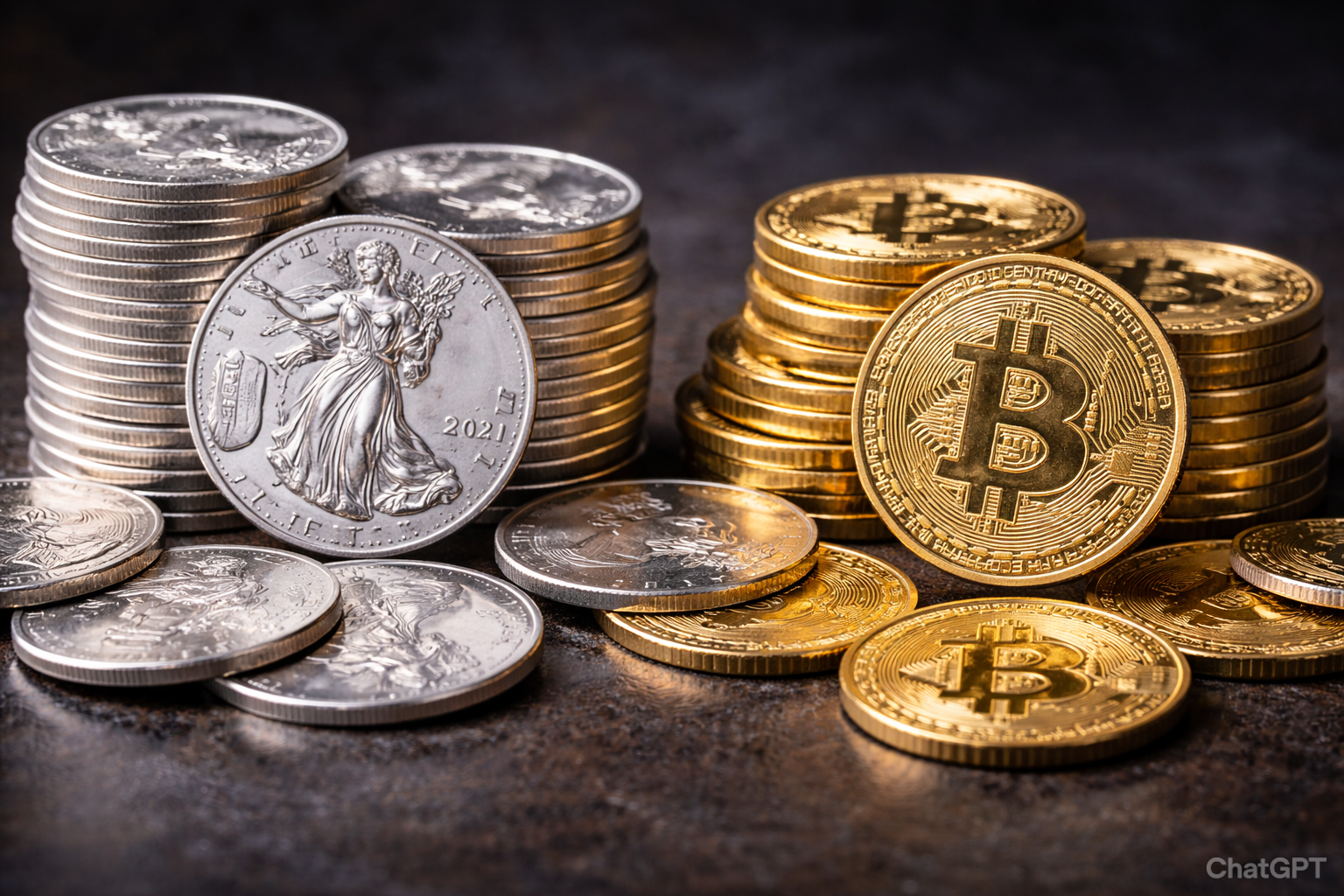
Something broke from the script in late 2025 — the asset known for boring stability became wilder than the one built on pure speculation. Silver’s 30-day volatility surged past Bitcoin’s for the first time, and since early 2021, silver returned 322% versus Bitcoin’s 130%. Here’s what changed.
Coinposters Market Research · Updated February 2026 · 16 min read
Key Takeaways
In December 2025, silver’s 30-day realized volatility surged into the mid-50% range, actually overtaking Bitcoin’s compressed mid-40s — a historic reversal almost no one saw coming.
Since early 2021, silver returned approximately 322% versus Bitcoin’s 130%, delivering roughly 84% more total wealth on a like-for-like starting dollar.
Bitcoin and silver crash for entirely different reasons — understanding the mechanics of each could be the edge that protects your portfolio in 2026.
Silver’s industrial demand from solar energy, EVs, and electronics creates a hard floor that crypto simply doesn’t have — but that doesn’t mean silver is “safe.”
Keep reading to find out whether silver’s outperformance since 2021 is a structural shift or a temporary macro anomaly before Bitcoin reasserts dominance.
Something broke from the script in late 2025 — the asset known for boring stability became wilder than the one built on pure speculation.
For years, the narrative was simple: Bitcoin is the volatile, high-risk rocket ship, and silver is the slow, steady metal your grandfather held. That story got completely rewritten in December 2025, when silver’s 30-day realized volatility surged into the mid-50% range while Bitcoin’s compressed into the mid-40s.
If you’ve been sleeping on silver as a crypto enthusiast, this comparison is going to change how you think about risk, crashes, and where money actually hides during macro stress. Coinposters has been tracking this volatility inversion closely, providing crypto-native audiences with the kind of macro context that most trading desks miss.
December 2025 Volatility Inversion — Historic Reversal
|
Mid-50%
SILVER 30-Day Realized Volatility The “stable” metal became the wild one |
Mid-40%
BITCOIN 30-Day Realized Volatility The “volatile” asset compressed into calm |
This isn’t about abandoning Bitcoin. It’s about understanding the full picture — because the way silver crashes and the way Bitcoin crashes are fundamentally different beasts, and knowing that difference is genuinely useful.
How Bitcoin Crashes Actually Play Out
Bitcoin doesn’t decline — it collapses. That’s not hyperbole; it’s just what the data shows repeatedly. A typical Bitcoin sell-off doesn’t look like a gradual slide. It looks like a cliff edge followed by a long, quiet desert before the next peak.
The Anatomy of a Bitcoin Sell-Off
Bitcoin crashes tend to follow a recognizable pattern. First, a catalyst hits — whether it’s a regulatory announcement, a macro shock, or a high-profile exchange failure. Sentiment flips almost instantly because Bitcoin’s price is almost entirely driven by market psychology and speculative positioning rather than underlying cash flows or industrial utility.
Within hours, not days, the price can drop 15–30%. What makes Bitcoin sell-offs uniquely brutal is the leverage embedded across the ecosystem.
The Leverage Feedback Loop
Crypto exchanges allow retail traders to take on enormous leveraged positions — sometimes 10x, 20x, or even 100x their capital. When price drops, those positions get liquidated automatically, which pushes the price down further, which triggers more liquidations.
It’s a mechanical feedback loop with no natural brake. This is why Bitcoin drawdowns of 50–80% from peak to trough have occurred multiple times — not as black swan events, but as recurring features of the asset class.
Unlike traditional markets, Bitcoin trades continuously with no halts, no circuit breakers, no market makers obligated to provide liquidity, and no central bank backstop.
How Long Bitcoin Recoveries Actually Take
Bitcoin’s recoveries are as dramatic as its crashes, but they demand patience most investors underestimate:
- After the 2018 peak near $20,000, it took approximately three years to reclaim that level
- After the 2021 peak near $69,000, the recovery extended well into 2024
- By late 2025, Bitcoin had tumbled from above $126,000 to roughly $89,000
- As of that point, Bitcoin was trading roughly 30% below its prior peak while gold was hitting all-time highs
The recovery timeline is never guaranteed, and that’s the honest truth about holding Bitcoin through a crash.
How Silver Crashes Differ From Crypto Collapses
Silver crashes are real, sharp, and can be genuinely painful — but they’re a different animal from what happens to Bitcoin. The mechanisms, the depth, and the recovery dynamics all operate through a completely different set of forces.
Silver’s Structural Advantage: The Industrial Demand Floor
Here’s the key structural difference: silver has a use case that doesn’t care about market sentiment. Approximately 50% of annual silver demand comes from industrial applications — solar panels, electric vehicles, semiconductors, and medical devices all consume physical silver that cannot simply be replaced with another input.
This creates what traders call a demand floor. When silver prices drop sharply, industrial buyers step in to secure supply at discounted prices, which naturally limits how far and how fast silver can fall.
Why Silver Moves Fast in Both Directions
Silver’s industrial demand floor doesn’t make it slow — it makes it a coiled spring. When macro conditions shift, silver can move with shocking speed in either direction. The difference from Bitcoin is that silver’s sharp moves are driven by real-world supply and demand dynamics, not just speculative repositioning.
China’s export restrictions on silver in late 2025 tightened physical availability at exactly the moment industrial demand was accelerating, creating a supply shock that sent prices surging to $84 per ounce.
December 2025: The Month Silver Became More Volatile Than Bitcoin
December 2025 will be remembered as the month the volatility playbook got thrown out entirely. The asset class that built its entire identity around being the most volatile thing in mainstream finance quietly became the calmer trade, while a metal that has existed for thousands of years started moving like a speculative growth stock.
The inversion wasn’t a one-day anomaly. It reflected weeks of sustained repricing in silver markets against a backdrop of Bitcoin trading in an unusually tight range between approximately $86,000 and $90,000.
Three Macro Drivers That Sent Capital Into Metals Over Crypto
1Geopolitical stress elevated safe-haven demand at a moment when Bitcoin’s narrative as “digital gold” failed to translate into actual buying pressure
2China’s export restrictions tightened physical silver availability globally, creating a genuine supply squeeze that pushed spot prices sharply higher
3Accelerating industrial demand from solar panel manufacturing and EV battery production created structural buying that didn’t exist at this scale even five years ago
When the macro story shifts to physical scarcity and industrial necessity, silver captures flows that crypto simply cannot compete for.
Silver Returned 322% vs. Bitcoin’s 130% Since Early 2021
The five-year scoreboard between silver and Bitcoin is not what most crypto enthusiasts expect to see. Since early 2021, silver delivered approximately 322% in returns compared to Bitcoin’s 130% — that’s roughly 193 percentage points of outperformance, translating to about 84% more total wealth generated on a like-for-like starting dollar.
5-Year Return Comparison — Early 2021 to Late 2025
| Asset | Total Return | $100 Becomes | Wealth Advantage |
|---|---|---|---|
| Silver | ~322% | $422 | +$192 vs Bitcoin |
| Bitcoin | ~130% | $230 | 84% less total wealth |
Why Entry Point Changes Everything
Raw return comparisons only tell part of the story. Entry point is everything in both assets. An investor who bought Bitcoin at its January 2021 peak near $40,000 and held through the 2022 crash endured a drawdown exceeding 75% before eventually seeing positive returns.
A silver buyer entering at the same time experienced a far shallower drawdown, with industrial demand providing consistent price support even during the Federal Reserve’s aggressive rate hiking cycle. The psychological experience of holding each asset through that period was completely different.
Is Silver’s Outperformance Structural or Temporary?
Five Factors to Watch in 2026
→Silver’s industrial demand from solar, EVs, and semiconductors is accelerating, not plateauing — this is a multi-decade tailwind, not a cyclical blip
→Bitcoin’s volatility compression in 2025 likely reflects maturing market structure — institutional spot ETF participation is smoothing short-term moves
→China’s export restrictions on silver created a one-time supply shock that amplified 2025 returns — some of that premium will normalize as global supply chains adapt
→Bitcoin’s fixed supply of 21 million coins remains mathematically unchanged — no industrial shift alters that scarcity dynamic
→Gold hitting all-time highs above $4,550 while Bitcoin traded 30% below its peak suggests the current macro cycle favors hard assets — but cycles turn
The honest answer is: probably both. Silver’s outperformance since 2021 has genuine structural components — the green energy transition is a decades-long industrial demand driver that will keep consuming physical silver at growing rates. Solar panel manufacturing alone requires significant silver for photovoltaic cells, and that demand curve is still in its early innings.
But some of silver’s 2025 surge was clearly situational. The specific convergence of a China supply shock, peak macro uncertainty, and Bitcoin’s unusual volatility compression created a perfect environment for silver to outshine crypto.
Silver finished 2025 up 151% while Bitcoin ended down 7% — but that divergence itself tells you how extreme the situational factors were.
What This Means for Crypto Enthusiasts Going Into 2026
If you came to this comparison expecting validation that Bitcoin is always the superior trade, the data offers a more nuanced message. Silver quietly delivered 84% more total wealth than Bitcoin on a like-for-like basis since early 2021, and it did it with shallower drawdowns and a hard industrial demand floor underneath every dip.
That doesn’t make silver a replacement for Bitcoin in a growth-oriented portfolio — but it absolutely makes it worth understanding as a complementary position, particularly during macro environments where physical scarcity commands a premium over digital scarcity.
The Real Takeaway for Crypto Enthusiasts
The same instinct that draws you to Bitcoin — the recognition that traditional financial systems are being disrupted and that hard, scarce assets deserve a premium — applies equally to silver in an era of accelerating industrial transformation.
Holding both isn’t a contradiction. It’s a more complete expression of the same macro thesis. Bitcoin handles the digital monetary layer. Silver handles the physical industrial scarcity layer.
Frequently Asked Questions
Why did silver outperform Bitcoin since 2021?
Silver’s outperformance since early 2021 came from two converging forces hitting simultaneously. Industrial demand from solar energy manufacturing, electric vehicles, and semiconductor production accelerated dramatically over this period. At the same time, supply constraints — including China’s export restrictions — tightened physical availability globally.
With Bitcoin facing headwinds from rising interest rates, regulatory pressure, and multiple exchange collapses during 2022, silver’s real-world demand floor provided resilience that crypto couldn’t match. The result: approximately 322% for silver versus 130% for Bitcoin.
Do Bitcoin and silver crash for the same reasons?
No — and understanding this distinction is genuinely important for portfolio construction:
Crash Mechanics Comparison — Bitcoin vs Silver
| Factor | Bitcoin | Silver |
|---|---|---|
| Primary Driver | Digital monetary scarcity narrative | Industrial & monetary demand combined |
| Crash Mechanism | Leverage cascade & sentiment collapse | Demand slowdown & dollar strength |
| Demand Floor | None (narrative-driven) | ~50% industrial consumption |
| Drawdown Depth | 50–80% from peak (historical) | Typically 30–50% from peak |
| Recovery Catalyst | Risk appetite & adoption cycles | Industrial demand & supply squeeze |
| 5-Year Return | ~130% (since 2021) | ~322% (since 2021) |
Bitcoin crashes are primarily sentiment and liquidity events. Silver crashes are fundamentally different — driven by industrial demand slowdowns, stronger dollar environments, or macro deflation scares. Both can fall hard and fast, but the mechanisms, depth, and recovery dynamics operate through completely separate forces.
Should crypto investors hold silver as a hedge?
Silver is not a perfect hedge against Bitcoin crashes — correlation between the two can rise sharply during broad liquidation events when investors sell everything to raise cash. During acute risk-off episodes like March 2020, silver and Bitcoin fell simultaneously.
What silver does offer is a structurally different return profile over full market cycles, driven by industrial demand dynamics that have no relationship to crypto market sentiment. The strongest argument for crypto investors holding some silver isn’t that it hedges Bitcoin crashes perfectly — it’s that silver’s return drivers are fundamentally uncorrelated to Bitcoin’s narrative cycle over multi-year periods.
Coinposters Market Analysis Insight
Whether you’re navigating your first Bitcoin crash or your fifth, the comparison with silver reveals something fundamental: different assets crash differently, recover differently, and serve different roles in a resilient portfolio. Knowing which dynamics apply to which asset — and when — is the kind of edge that separates informed holders from reactive traders. For data-driven crypto and market analysis that helps you make sense of cross-asset macro shifts as they happen, Coinposters delivers the comprehensive research you need.