Coinposters
NEW 2026 Data: Silver vs Ethereum Showdown: What Investors Over 55 Need to Know
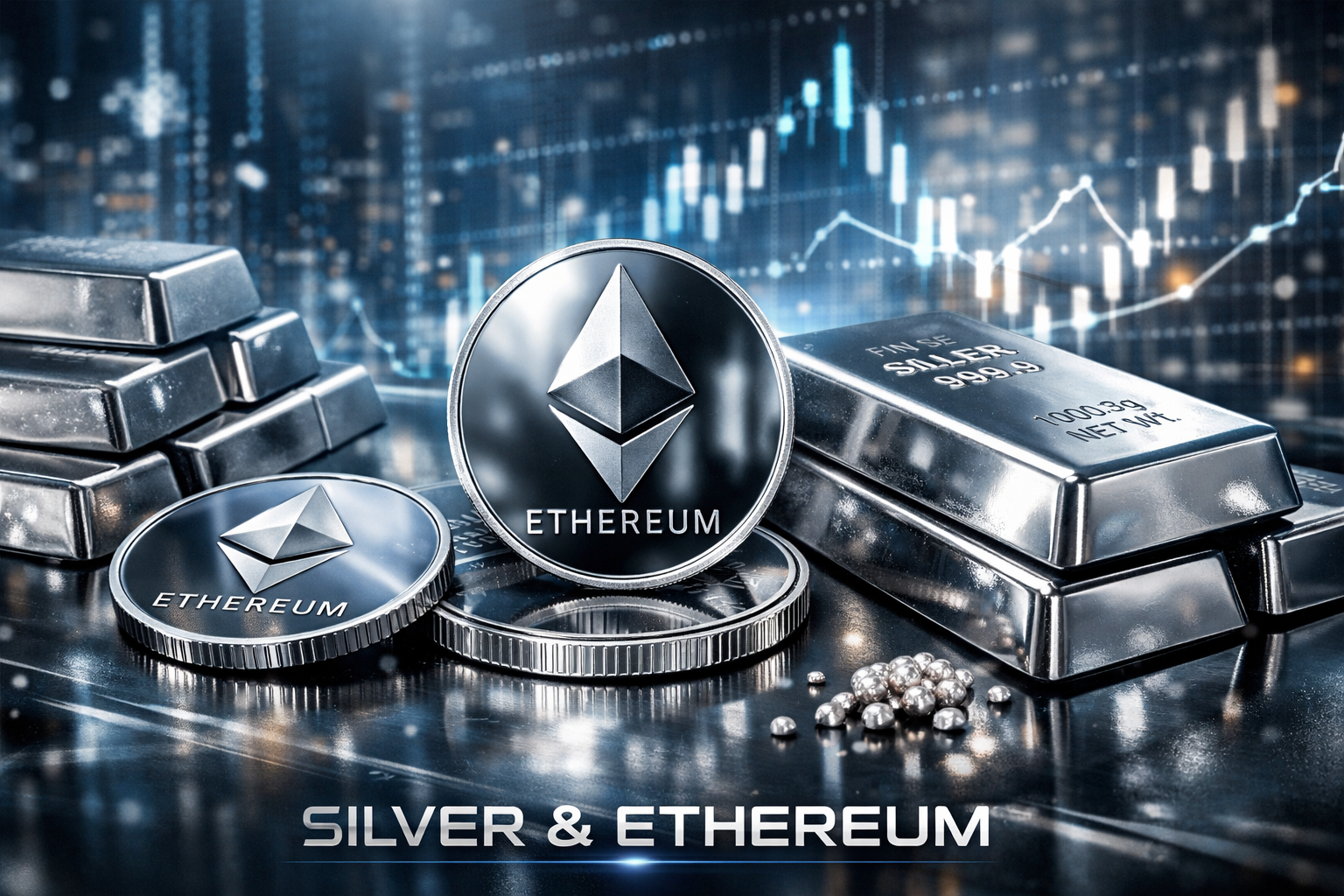
Silver vs Ethereum: Which Should Investors Over 55 Choose for Retirement in 2026?
A comprehensive guide to navigating alternative investments as traditional retirement strategies face unprecedented economic pressures.
⚡ Key Takeaways
- Silver has outperformed Ethereum in early 2026, with a 112% return compared to Ethereum’s flat performance, making it a compelling consideration for risk-averse retirement portfolios
- Despite short-term fluctuations, Ethereum’s staking rewards offer retirement investors passive income potential of 3-4% annually, potentially supplementing traditional retirement income
- Investors over 55 should consider limiting alternative assets like silver and Ethereum to 5-10% of their portfolio to balance growth potential with preservation needs
- Silver offers physical ownership benefits and inflation protection while Ethereum provides exposure to financial innovation and potential higher returns
- Hybrid allocation strategies that include both assets may provide optimal diversification for retirement portfolios navigating economic uncertainty
The silver versus Ethereum debate has taken center stage as investors over 55 navigate the challenging investment landscape of 2026. With traditional retirement strategies facing unprecedented pressures from persistent inflation and economic uncertainty, alternative investments have moved from the fringe to essential portfolio considerations. This comprehensive analysis breaks down what mature investors need to know when evaluating these two distinctly different asset classes.
Silver vs Ethereum in 2026: What Older Investors Need to Know
The investment landscape has shifted dramatically since late 2025. While younger investors might have the time horizon to weather significant volatility, those in or approaching retirement face different considerations. Understanding the fundamental differences between a physical precious metal and a digital network asset is essential for making informed decisions that align with your retirement goals.
Recent Performance Comparison
Recent market data shows a remarkable shift in performance metrics between these assets. Since the beginning of 2025, silver has returned an impressive 112%, while Ethereum has remained relatively flat after its earlier gains. This marks a significant departure from previous years where Ethereum dramatically outpaced traditional assets. Silver’s outperformance has been driven by what Reuters described as a “perfect storm” of supply tightness, increasing industrial demand, and growing investment interest. The ETH/XAG ratio, which measures the relative value between Ethereum and silver, has become a closely watched metric for investors seeking to time allocation shifts between digital and physical assets.
| Asset | 2025 Return | 3-Year Return (2023-2026) | Volatility (Annual) | Income Potential |
|---|---|---|---|---|
| Silver | +112% | +154% | 20-30% | None (price appreciation only) |
| Ethereum | Flat | +177% | 70%+ | 3-4% (staking rewards) |
| S&P 500 | — | +42% | 15-18% | 1.5-2% (dividends) |
| US Treasury Bonds | — | +8% | 5-8% | 4-5% (interest) |
Risk Profiles for Retirement-Age Investors
For investors over 55, risk management takes precedence over speculative growth. Silver typically demonstrates lower volatility than Ethereum, though still experiences significant price swings compared to traditional fixed-income investments. Historical data indicates silver’s standard deviation of returns hovering around 20-30% annually, while Ethereum has exhibited volatility exceeding 70% in some years. This stark difference becomes particularly relevant as your investment time horizon shortens near retirement.
Moreover, silver maintains its status as a tangible asset with intrinsic value tied to industrial applications and centuries of monetary history. Ethereum, while innovative, derives its value from network adoption and technological utility—factors that can change rapidly with technological advances or regulatory shifts. For retirement portfolios, this distinction represents a fundamental risk consideration that extends beyond simple price volatility.
Portfolio Allocation Considerations
Financial advisors specializing in retirement planning have increasingly recommended a balanced approach to alternative assets. The traditional portfolio wisdom suggesting a 60/40 split between stocks and bonds has evolved to potentially include a 5-10% allocation to alternative assets like precious metals and select digital assets. This measured exposure aims to capture potential upside while limiting downside risks that could jeopardize retirement security.
When determining your personal allocation strategy, consider your overall retirement timeline, income needs, and existing portfolio composition. Investors with substantial traditional retirement assets may have more flexibility to explore higher allocations to alternatives, while those with limited savings might prioritize more conservative approaches. The key lies in thoughtful integration rather than impulsive reallocation based on recent performance trends.
Silver: +154% (3-year return)
Ethereum: +177% (3-year return)
S&P 500: +42% (3-year return)
US Treasury Bonds: +8% (3-year return)
Why Traditional Investors Are Adding Silver to Their Portfolios
The renewed interest in silver among retirement-focused investors stems from several fundamental advantages that align well with later-life financial planning. Unlike purely speculative assets, silver’s value proposition encompasses both industrial utility and investment merit. This dual-nature creates potential resilience during various economic conditions that might impact retirement security.
⚙️ Industrial Demand Growth
- Exceptional conductivity for electronics and solar panels
- Essential for medical devices and antibacterial applications
- Green energy transition projected to consume 80M+ ounces annually by 2027
- Demand foundation separate from investment interest
🛡️ Inflation Protection
- 37% appreciation during 2021-2023 inflation spike
- 5,000-year history as store of value
- Protection for 40+ years of retirement longevity
- Hedge against healthcare and housing cost increases
Physical Asset Ownership Benefits
Direct ownership of physical silver offers unique advantages for older investors concerned about counterparty risks. Unlike securities that depend on the financial stability of issuers or custodians, physical silver bullion represents direct ownership of a tangible asset. This can provide peace of mind during periods of financial system stress when institutional reliability may come into question.
Additionally, physical silver offers privacy benefits not available with digital assets or electronically-tracked investments. For generations that value confidentiality in financial matters, this feature remains compelling, though it should be balanced against practical security considerations and reporting requirements.
Historical Performance During Economic Uncertainty
Silver has demonstrated value preservation during significant economic downturns, though with notable volatility. During the 2008 financial crisis, silver initially declined but subsequently rallied over 440% from its lows by 2011. More recently, during the pandemic market disruption of 2020, silver recovered quickly and outpaced many traditional assets. For retirement investors concerned about sequence-of-returns risk, silver’s historical tendency to recover strongly following market dislocations offers potential portfolio stabilization.
The Case for Ethereum in Retirement Planning
While silver represents a traditional alternative asset, Ethereum offers exposure to technological innovation and the evolving digital economy. For retirement portfolios seeking balanced exposure to future growth trends, Ethereum presents distinct characteristics worth considering, particularly for those with adequate risk tolerance and diversified foundational assets.
Ethereum’s Evolution Beyond Cryptocurrency
Ethereum has matured beyond its perception as merely a speculative digital currency. As the leading smart contract platform, Ethereum now powers thousands of decentralized applications spanning finance, insurance, supply chain management, and digital identity. This utility-driven value proposition differentiates it from purely speculative digital assets and potentially provides more sustainable long-term value for retirement portfolios.
The network’s 2022 transition to proof-of-stake consensus dramatically reduced its energy consumption while enabling new yield-generating opportunities for holders. These fundamental improvements have attracted institutional adoption, with major financial firms now offering Ethereum custody and investment services specifically targeting retirement-age investors.
Staking Rewards as Passive Income
Ethereum’s proof-of-stake mechanism allows investors to earn regular passive income through staking—essentially earning rewards for helping secure the network. Current staking yields range between 3-4% annually, comparing favorably to many traditional income investments in the 2026 environment. For retirees seeking income-generating assets, these rewards can supplement traditional dividend and interest income streams.
Annual Yield: 3-4% (current rates)
Tax Treatment: Staking rewards typically taxed as ordinary income when received
Access: Simplified participation through regulated staking services and IRA providers
Benefit: Passive income that supplements traditional retirement income streams
Regulated staking services now offer simplified participation for non-technical investors, eliminating earlier barriers to entry. Several retirement account providers have introduced Ethereum staking options within traditional IRA structures, allowing tax-advantaged exposure to both potential appreciation and staking rewards.
Growth Potential Through 2030
While past performance never guarantees future results, Ethereum’s growth trajectory has attracted attention from forward-thinking retirement planners. The continued digitization of financial services, expanding tokenization of real-world assets, and increasing adoption of Web3 technologies could potentially drive sustained network growth. Conservative analysts project potential annual returns of 15-25% through 2030, though with significant volatility expected.
For retirement portfolios with adequate diversification in traditional assets, a modest allocation to Ethereum may provide enhanced growth potential without compromising overall stability. This approach recognizes both the risks and opportunities presented by technological innovation while maintaining prudent portfolio construction principles. For more insights on managing your investments, check out these tips and tricks for managing your crypto portfolio.
5 Critical Risk Factors for Investors Over 55
1. Time Horizon Limitations
Investors approaching or in retirement face compressed time horizons for recovering from potential investment losses. Both silver and Ethereum have experienced dramatic drawdowns historically—silver declined nearly 75% from its 2011 peak to its 2020 lows, while Ethereum has weathered multiple 80%+ corrections. With potentially 20-30 years in retirement, significant allocations to volatile assets could jeopardize financial security if substantial drawdowns occur early in retirement.
Financial planning experts recommend that retirement portfolios maintain sufficient stable assets to fund at least 5-7 years of expected withdrawals, insulating essential spending needs from market volatility. This structure creates space for modest exposure to more volatile assets like silver and Ethereum without compromising retirement security.
2. Volatility Tolerance
The psychological impact of volatility often increases with age, as wealth preservation instincts naturally strengthen. Ethereum’s price can fluctuate 10-15% in a single day—volatility that many retirement investors find incompatible with their peace of mind. Silver, while less volatile than Ethereum, still exhibits price swings that can test investor resolve during market stress.
Before adding either asset to a retirement portfolio, honestly assess your emotional reaction to potential temporary losses. Many financial advisors recommend a “sleep test”—if potential volatility would cause significant anxiety or sleep disruption, allocation adjustments may be necessary regardless of the theoretical investment case. For insights on managing such risks, consider learning how to maximize trading profits.
3. Liquidity Considerations
Both silver and Ethereum offer generally good liquidity, but with important distinctions. Physical silver requires selling to dealers or through auction houses, potentially at discounts to spot price during market stress. Ethereum can be sold quickly on exchanges, but transaction fees and potential price slippage must be considered, especially for larger positions.
4. Regulatory Uncertainty
Ethereum faces evolving regulatory frameworks that could significantly impact its value and usability. Changes to securities classification, taxation treatment, or permissible use cases could materially affect investment returns. Silver’s regulatory environment is more established, though potential changes to capital gains treatment remain possible.
5. Storage and Security Risks
Physical silver requires secure storage solutions, whether home safes, safety deposit boxes, or professional vault services—each with associated costs and risks. Ethereum requires robust digital security practices, including hardware wallets, secure key management, and awareness of evolving cyber threats. For retirement investors less familiar with digital security, this represents a meaningful consideration.
Which Asset Performs Better During Economic Uncertainty?
The performance of silver and Ethereum during economic turbulence has become a critical consideration for retirement planning in 2026. Historical patterns reveal distinct behavior between these assets when markets face systemic stress or macroeconomic shocks. Understanding these patterns helps investors prepare portfolios that remain resilient regardless of economic conditions.
Past Performance During Market Downturns
Silver has demonstrated mixed performance during previous economic crises. During the 2008 financial crisis, silver initially dropped alongside most assets, falling nearly 60% before staging a remarkable recovery that eventually saw prices increase more than 440% from crisis lows. More recently, in the March 2020 COVID-19 market crash, silver initially declined sharply before rebounding to multi-year highs within months. This pattern suggests silver can experience initial correlation with broader market selloffs before potentially serving as a recovery asset. For a deeper understanding of market dynamics, explore the lessons learned from FTX bankruptcy.
Correlation with Traditional Retirement Assets
Silver typically maintains a low long-term correlation with traditional retirement assets like bonds and dividend stocks, making it valuable for diversification. The precious metal’s correlation coefficient with the S&P 500 has historically ranged from 0.2 to 0.4, indicating some relationship but not lockstep movement. During periods of elevated inflation or dollar weakness, silver often moves inversely to fixed-income assets, potentially offsetting bond portfolio losses.
Ethereum, meanwhile, has shown evolving correlation patterns. From 2018-2022, Ethereum maintained high correlation with growth technology stocks (0.7-0.8 correlation coefficient), offering limited diversification benefits. However, data from 2023-2026 shows this correlation weakening to moderate levels (0.4-0.6), suggesting Ethereum is developing more independent price action as the asset class matures. During the banking mini-crisis of 2023, Ethereum temporarily served as a financial system alternative, appreciating while bank stocks declined. For more on cryptocurrency trends, check out the top 9 crypto trends to track in 2023.
| Asset Pair | 2018-2022 Correlation | 2023-2026 Correlation | Diversification Benefit |
|---|---|---|---|
| Silver vs S&P 500 | 0.2 – 0.4 | 0.2 – 0.4 | High |
| Ethereum vs S&P 500 | 0.7 – 0.8 | 0.4 – 0.6 | Moderate (improving) |
| Silver vs Bonds | -0.1 to 0.2 | -0.2 to 0.1 | High |
| Ethereum vs Bonds | -0.3 to 0.0 | -0.2 to 0.2 | High |
Expert Forecasts for 2026-2030
Financial analysts remain divided on which asset will perform better during future economic turbulence. Silver forecasts from major investment banks project potential upside of 30-50% through 2030, primarily driven by industrial demand and monetary policy impacts. Ethereum projections show a wider range of outcomes, with conservative estimates suggesting 80-120% appreciation potential through 2030, while more optimistic scenarios envision significantly higher returns based on mainstream financial system integration. Both assets face significant regulatory uncertainties that could dramatically impact performance, making modest allocations and regular reassessment the prudent approach for retirement investors.
The Hybrid Approach: Why You Might Not Need to Choose
Rather than viewing silver and Ethereum as competing alternatives, forward-thinking retirement planning increasingly incorporates both assets in carefully calibrated allocations. This hybrid approach recognizes the complementary risk profiles and potential benefits each asset brings to a comprehensive portfolio. By maintaining exposure to both physical and digital alternative assets, retirement investors can potentially reduce overall portfolio volatility while maintaining exposure to multiple growth catalysts.
Diversification Benefits
The fundamental diversification case for combining silver and Ethereum stems from their distinct value drivers. Silver responds primarily to industrial demand, inflation trends, and monetary policies. Ethereum’s performance correlates more closely with technological adoption, regulatory developments, and digital economy growth. These different influence factors create natural diversification, potentially smoothing portfolio performance across varying economic scenarios.
Quantitative portfolio analysis conducted by several wealth management firms in 2025 found that a combined allocation to both assets typically produced better risk-adjusted returns than equivalent allocation to either asset individually. This effect was particularly pronounced during periods of market stress, when the different risk factors affecting each asset prevented simultaneous drawdowns of similar magnitude.
Additionally, the hybrid approach creates exposure to both the traditional physical economy and the emerging digital economy. For retirement investors concerned about positioning portfolios for long-term structural economic shifts, this dual exposure provides a hedge against uncertainty about which economic paradigm will dominate in the coming decades.
Percentage Allocation Guidelines
| Age Range | Total Alternative Assets | Silver Allocation | Ethereum Allocation | Typical Ratio |
|---|---|---|---|---|
| 55-65 | 5-10% of portfolio | 4-8% | 1-2% | 4:1 or 3:1 |
| 65-75 | 3-7% of portfolio | 2.5-6% | 0.5-1% | 5:1 or 6:1 |
| 75+ | 1-5% of portfolio | 1-4.5% | 0-0.5% | Primarily silver |
| High Net Worth (Any Age) | Up to 15% of portfolio | 9-10% | 3-5% | 2:1 to 3:1 |
Financial advisors specializing in retirement planning have developed these age-based allocation frameworks for alternative assets like silver and Ethereum. These represent maximum allocations rather than requirements—there’s no obligation to include alternative assets if traditional investments adequately meet retirement needs.
Rebalancing Strategies for Older Investors
The significant volatility of both silver and Ethereum necessitates regular portfolio rebalancing to maintain target allocations. Most financial planners recommend quarterly assessment and annual rebalancing at minimum, with more frequent adjustments during periods of extreme price movement. This disciplined approach enforces the investment principle of “selling high and buying low” by trimming overweight positions after significant appreciation and adding to positions after substantial declines.
Frequency: Quarterly review, annual rebalancing minimum
Trigger: Rebalance when allocation drifts 20%+ from target
Tax Efficiency: Execute within tax-advantaged accounts when possible
Coordination: Align with broader tax planning to minimize impact
Tax-efficient rebalancing becomes particularly important for retirement investors, who should consider executing these adjustments within tax-advantaged accounts when possible to avoid triggering taxable events. For positions held in taxable accounts, coordinating rebalancing with broader tax planning strategies can minimize the impact on retirement income and potential Medicare premium surcharges. For those interested in digital assets, managing your crypto portfolio effectively can also be part of a comprehensive investment strategy.
Making Your Final Decision: Next Steps
Before incorporating silver or Ethereum into your retirement portfolio, consult with a financial advisor familiar with both traditional and alternative investments. Your advisor can help customize allocation percentages based on your specific retirement timeline, existing portfolio composition, and income needs. Start with modest positions that can be increased gradually as you become more comfortable with each asset’s characteristics. Remember that financial planning is a journey rather than a destination—regularly reassess your alternative asset exposure as market conditions and your personal circumstances evolve through retirement.
Frequently Asked Questions
The questions below address common concerns retirement investors express when considering silver and Ethereum allocations. These practical considerations go beyond theoretical investment cases to address real-world implementation challenges faced by investors in or approaching retirement.
How much of my retirement portfolio should I allocate to alternative assets like silver or Ethereum?
Three Allocation Approaches:
- Conservative: 2-5% combined (80% silver, 20% Ethereum)
- Moderate: 5-10% combined (70% silver, 30% Ethereum)
- Aggressive (substantial assets beyond retirement needs): 10-15% combined (60% silver, 40% Ethereum)
Your specific allocation should reflect your overall financial situation, risk tolerance, and retirement timeline. Most financial advisors recommend starting with conservative allocations and potentially adjusting based on comfort level and market conditions. Remember that these percentages represent maximums rather than targets—there’s no requirement to allocate to alternative assets if traditional investments adequately meet your retirement needs.
Consider implementing a dollar-cost averaging strategy when establishing positions rather than investing lump sums. This approach reduces timing risk and allows you to gradually become familiar with how these assets behave in various market environments.
Regularly reassess your allocation as you age, typically reducing alternative asset exposure as you move deeper into retirement years when capital preservation becomes increasingly important. This gradual reduction helps protect against sequence-of-returns risk that could impact retirement security.
Can I hold Ethereum in my IRA or other retirement accounts?
Yes, specialized custodians now offer self-directed IRAs that support Ethereum and other digital asset investments. Major providers like BitcoinIRA, Equity Trust, and iTrustCapital offer IRS-compliant retirement accounts for cryptocurrency exposure. These accounts provide tax advantages similar to traditional retirement accounts while enabling direct Ethereum ownership.
However, fees for crypto-focused IRAs typically exceed traditional retirement account costs, with annual custody fees ranging from 0.5-2.5% plus transaction fees. For silver, both traditional IRAs supporting precious metals and specialized self-directed IRAs are available through custodians like Equity Trust, New Direction IRA, and established precious metals dealers.
What are the tax implications of selling silver versus Ethereum in retirement?
Silver Tax Treatment: Classified as a collectible by the IRS, subject to a maximum long-term capital gains tax rate of 28%—higher than the 0-20% rates applying to most financial assets. This makes holding physical silver in tax-advantaged accounts particularly beneficial when possible.
Ethereum Tax Treatment: Currently taxed as property by the IRS, making gains subject to either short-term (ordinary income) or long-term capital gains rates depending on holding period. Each sale or exchange constitutes a taxable event requiring reporting. Staking rewards are typically taxed as ordinary income when received, creating potential tax liabilities even without selling the underlying asset.
Specialized tax professionals with cryptocurrency experience can help navigate the complex and evolving tax implications of Ethereum transactions.
How do I protect myself from scams when investing in either silver or cryptocurrency?
Silver Protection Strategies:
- Work exclusively with established dealers who are members of professional organizations like the American Numismatic Association or Industry Council for Tangible Assets
- Verify physical silver authenticity using precise weight measurements, magnet tests, and ice tests
- Consider professional authentication for large purchases
- Avoid dealers advertising silver significantly below spot price or using high-pressure sales tactics
Ethereum Protection Strategies:
- Use only regulated exchanges with strong security practices like Coinbase, Gemini, or Fidelity Digital Assets
- Implement comprehensive security: hardware wallets for significant holdings, two-factor authentication, unique passwords
- Never share private keys or seed phrases with anyone
- Be extremely cautious of “investment opportunities” promising guaranteed returns
Should I consider other precious metals or cryptocurrencies beyond silver and Ethereum?
Diversification within alternative asset classes can provide additional risk management benefits for some retirement investors. Within precious metals, gold offers typically lower volatility than silver and often performs differently during specific economic conditions, making a combined allocation potentially beneficial. Platinum and palladium present interesting industrial demand profiles but introduce additional volatility and liquidity considerations that may be suboptimal for retirement portfolios.
In the cryptocurrency space, Bitcoin represents the most established digital asset with the longest track record and broadest institutional adoption. Some financial advisors recommend a Bitcoin allocation alongside or instead of Ethereum, particularly for more conservative investors seeking digital asset exposure with relatively lower volatility. However, retirement investors should approach smaller cryptocurrencies with extreme caution, as they typically introduce substantially higher volatility, liquidity risks, and potential for permanent capital loss. For those interested in understanding more about Bitcoin, here’s an in-depth look at Bitcoin addresses and their functions.
Ready to Build a Retirement Portfolio for 2026 and Beyond?
Consult with a financial advisor familiar with both traditional and alternative investments to customize your allocation strategy based on your unique retirement timeline and goals.
© 2026 Coinposters · All Rights Reserved



Latest
Ethereum
25 Feb 2026
Ethereum
21 Feb 2026
Ethereum
13 Feb 2026
Ethereum
07 Feb 2026
Ethereum
06 Feb 2026