Coinposters
The Other 20,000 Coins: A Beginner’s Guide to Alt Coin Investing in 2026
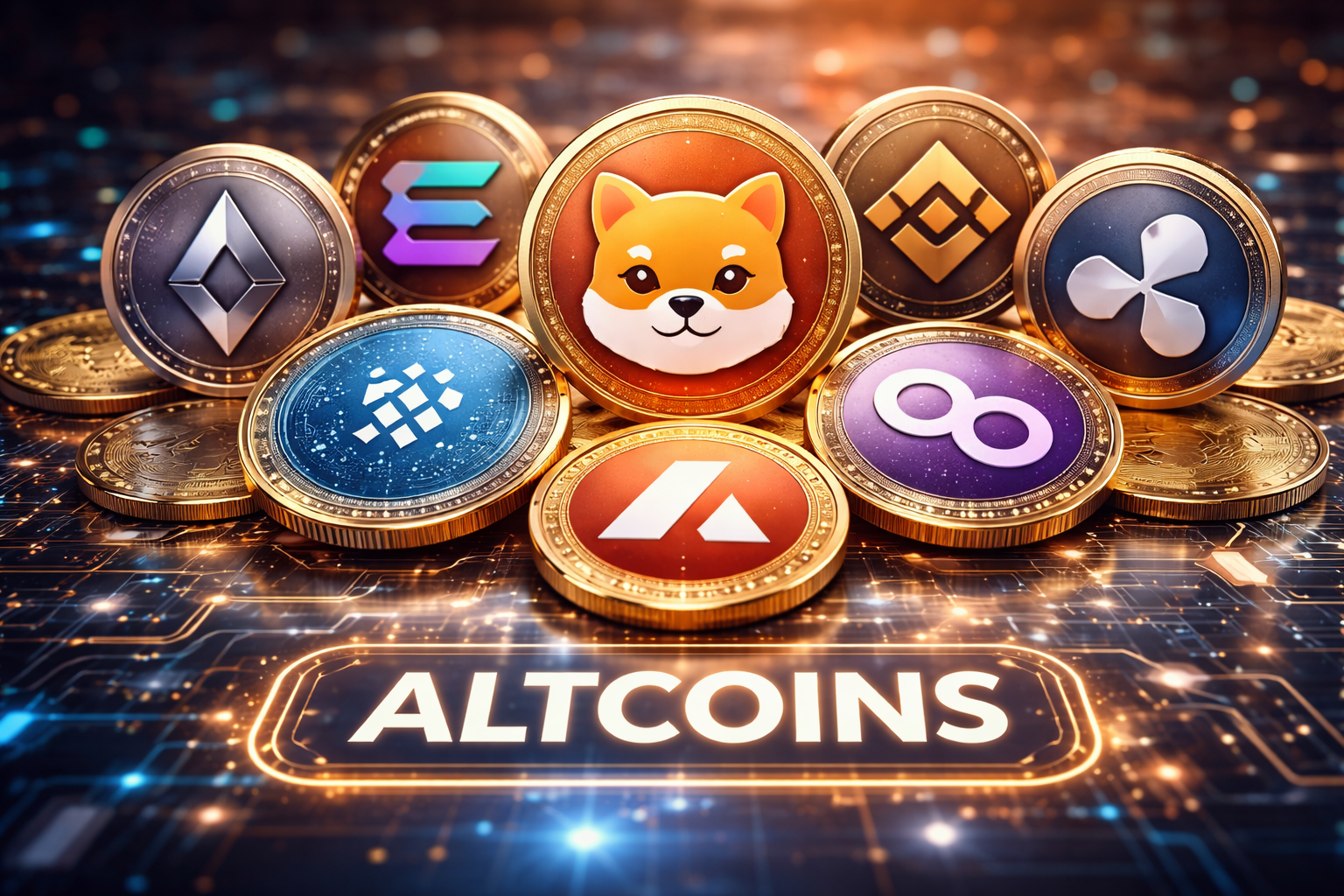
Alt Coins for Beginners: The Complete 2026 Guide to Investing Beyond Bitcoin
Navigate 20,000+ cryptocurrencies with confidence—your strategic roadmap to evaluating, selecting, and managing altcoin investments
⚡ Key Takeaways
- Altcoins represent over 20,000 cryptocurrency options beyond Bitcoin, offering diverse investment opportunities with varying risk-reward profiles
- Successful altcoin investing requires understanding market capitalization, real-world utility, team credibility, community engagement, and tokenomics
- Layer 1 blockchains, Layer 2 solutions, DeFi tokens, and Web3 infrastructure projects represent the most promising altcoin categories for 2026
- Different investment strategies like blue-chip, ecosystem, sector-focused, and dollar-cost averaging can be tailored to your risk tolerance
- Portfolio management tools help beginners navigate altcoin investments with confidence through automated strategies and risk management
Beyond Bitcoin: Why Alt Coins Matter in 2026’s Crypto Landscape
Bitcoin may have started the cryptocurrency revolution, but it’s just one player in an expansive digital ecosystem. The term “altcoin” encompasses every cryptocurrency that isn’t Bitcoin—over 20,000 digital assets with unique purposes, technologies, and potential returns. While Bitcoin still commands roughly half of the total crypto market cap, altcoins represent where much of the innovation, development, and opportunity exists in blockchain technology.
Think of Bitcoin as the first-generation smartphone and altcoins as the thousands of apps and advanced devices that followed. They’re built to solve specific problems, improve efficiency, create new financial systems, or enable entirely novel digital experiences. From smart contract platforms like Ethereum to privacy-focused coins like Monero, from utility tokens powering decentralized applications to governance tokens giving users voting rights—altcoins have evolved far beyond simple Bitcoin clones.
For investors in 2026, altcoins offer exposure to cutting-edge technology sectors that traditional markets can’t match: decentralized finance revolutionizing banking, Web3 infrastructure rebuilding the internet, NFT platforms transforming digital ownership, and countless niche innovations. While Bitcoin serves as digital gold and a store of value, altcoins often function as investments in specific blockchain applications, protocols, and services—more akin to technology stocks than commodities. This distinction is crucial for beginners to understand.
How to Choose Promising Alt Coins from 20,000+ Options
Navigating the vast altcoin landscape can feel overwhelming, especially for beginners. With thousands of options—many promising revolutionary technology while others destined to fail—developing a systematic approach to evaluation is essential. Think of it as building a filter that helps separate legitimate projects with long-term potential from hyped tokens with little substance. For a comprehensive understanding, you might explore this beginner’s guide to blockchain technology.
The most successful crypto investors aren’t necessarily those who understand every technical detail, but rather those who can consistently identify projects with strong fundamentals. A comprehensive evaluation framework should include analysis of market capitalization, real-world utility, team credibility, community engagement, and tokenomics.
Market Capitalization: What Size Matters
Market capitalization—calculated by multiplying a coin’s price by its circulating supply—serves as the single most important metric for understanding an altcoin’s risk-reward profile. Large-cap altcoins (typically those ranked in the top 20 by market cap) offer greater stability and liquidity but generally lower growth potential. Mid-cap altcoins balance reasonable stability with stronger growth prospects, while small-cap projects provide the highest potential returns alongside substantially increased risk.
When examining market cap, also consider the fully diluted valuation, which accounts for all tokens that will eventually enter circulation. Many projects launch with only a small percentage of their total supply, meaning current prices may be artificially inflated. A project with a $100 million market cap but 90% of tokens yet to be released faces significant potential selling pressure that could impact long-term price performance. For a deeper understanding of these dynamics, explore our Cryptocurrencies 101 guide.
Market Cap Tiers at a Glance
Large-Cap (Top 20)
Higher stability · Lower growth potential · Best for beginners
Mid-Cap
Balanced stability · Stronger growth prospects · Intermediate risk
Small-Cap
Highest potential returns · Substantially increased risk · Advanced investors
Real-World Utility vs. Speculative Hype
The most sustainable altcoin investments solve real problems with blockchain-based solutions that outperform existing alternatives. Ask yourself: What specific issue does this project address? How large is the market for this solution? Does blockchain technology actually improve the current process, or is it unnecessarily complex? Genuine utility creates natural demand for tokens beyond pure speculation.
Examine adoption metrics critically rather than accepting marketing claims. Monthly active users, transaction volume, total value locked, developer activity, and integration with other platforms or services all provide tangible evidence of real-world utility. Projects with growing usage statistics typically outperform those relying solely on future promises, regardless of short-term price movements.
Team Credibility and Development History
The team behind an altcoin project often determines its ultimate success or failure. Evaluate the background, experience, and track record of key team members, particularly the technical leaders. Have they successfully delivered blockchain projects previously? Do they have relevant expertise in the industry they’re targeting? Anonymous teams should raise immediate caution flags unless the project has an established history and community governance.
Development activity provides one of the most reliable indicators of project health. Actively maintained repositories with regular, substantive commits from multiple contributors signal ongoing improvement and adaptation. Conversely, dormant GitHub repositories or development concentrated among just one or two individuals often precede project abandonment.
⚠️ Developer Activity Red Flags
- Infrequent commits or long periods of silence
- Forked code with minimal original development
- Closed-source components despite claims of decentralization
- Abandoned improvement proposals
- Missed roadmap deadlines repeatedly
Community Strength and Engagement Metrics
The strength and behavior of an altcoin’s community often predict its long-term success more accurately than technical features alone. Vibrant communities provide liquidity, marketing, user testing, and resilience during market downturns. Evaluate community size across platforms like Discord, Telegram, and Twitter, but more importantly, assess the quality of engagement. Are discussions technical and constructive, or focused primarily on price speculation?
Healthy communities demonstrate balanced growth, educational initiatives, and active participation in governance decisions. Beware of communities that show explosive short-term growth followed by declining engagement, as this often indicates manipulative marketing rather than organic adoption. Geographic distribution of community members provides another valuable signal—projects with global, diverse communities tend to be more resilient than those concentrated in single regions vulnerable to regulatory changes.
Tokenomics: Supply, Distribution, and Inflation Rate
An altcoin’s economic design—its “tokenomics”—fundamentally shapes its investment potential. Supply mechanics (fixed vs. inflationary), distribution schedule, and utility within the ecosystem all influence long-term value accrual. Examine token allocation carefully, as heavily skewed distributions toward team members, early investors, or foundations can create selling pressure as vesting periods conclude. Ideally, no single entity should control more than 10-15% of the supply, with gradual vesting schedules extending several years.
The most sophisticated projects implement mechanisms that balance network security, user adoption incentives, and investor value accrual. Look for tokens with clear utility functions: governance rights, staking requirements, transaction fee mechanisms, or network security roles. These fundamental demand drivers create natural market participants beyond speculators, providing price support during market downturns and sustainable value capture during growth phases.
Top Alt Coin Categories Worth Exploring in 2026
The altcoin market has evolved into distinct categories, each with unique risk profiles, growth drivers, and investment characteristics. Understanding these categories helps investors build diversified portfolios aligned with specific market hypotheses and risk tolerance.
| Category | Examples | Risk Level | Best For |
|---|---|---|---|
| Layer 1 Blockchains | Solana, Avalanche, Cosmos | Medium | Ecosystem growth bets |
| Layer 2 Solutions | Arbitrum, Optimism, zkSync | Medium-Low | Broader ecosystem exposure |
| DeFi Tokens | Aave, Compound, Uniswap | Medium-High | Finance sector exposure |
| Web3 Infrastructure | Storage, oracles, identity | Medium | Broad ecosystem growth |
Layer 1 Blockchain Alternatives (Ethereum Competitors)
Layer 1 blockchains provide the foundational infrastructure upon which decentralized applications are built. While Ethereum pioneered programmable blockchains, competing Layer 1s like Solana, Avalanche, and Cosmos have gained significant traction by offering different tradeoffs in scalability, security, and decentralization. These “Ethereum alternatives” typically offer faster transactions, lower fees, or specialized features targeting specific use cases or developer preferences.
When evaluating Layer 1 investments, pay particular attention to developer tools, documentation quality, and funding initiatives. The platforms making it easiest for developers to build and deploy applications tend to experience the most sustainable ecosystem growth.
Layer 2 Scaling Solutions
Layer 2 technologies operate atop existing blockchains, primarily Ethereum, to improve scalability through various compression and batching mechanisms. Projects like Arbitrum, Optimism, and zkSync process transactions off the main chain while inheriting its security guarantees, offering significantly lower fees and higher throughput. For beginners, Layer 2 investments often offer exposure to blockchain scaling with potentially lower risk profiles than many application-layer tokens, as they benefit from broader ecosystem growth rather than relying on individual application success.
DeFi (Decentralized Finance) Tokens
Decentralized finance represents one of blockchain’s most developed use cases, with protocols offering lending, trading, derivatives, insurance, and asset management services without traditional intermediaries. DeFi tokens typically provide governance rights over these protocols while capturing value through fee sharing, staking rewards, or token appreciation mechanisms tied to protocol usage.
When evaluating DeFi tokens, examine protocol revenue relative to token market capitalization, security track record, governance participation, and competitive positioning. The most sustainable projects generate actual revenue rather than relying solely on token incentives.
Web3 Infrastructure Projects
Web3 infrastructure provides the technological foundation for decentralized applications beyond financial services. This category includes decentralized storage networks, computation platforms, identity solutions, data oracles, indexing protocols, and communication infrastructure. The investment thesis for Web3 infrastructure centers on becoming critical, widely integrated components that capture value as the broader ecosystem grows.
5 Alt Coin Investment Strategies for Different Risk Profiles
Different investors have varying risk tolerances, time horizons, and expertise levels. Rather than a one-size-fits-all approach, successful altcoin investing requires selecting strategies aligned with your personal circumstances and investment goals.
1. The Blue-Chip Strategy (Lower Risk)
Focus on established altcoins with large market capitalizations, proven track records, and substantial ecosystems. This approach typically limits investments to the top 10-20 non-Bitcoin cryptocurrencies by market cap, emphasizing projects with years of operational history, strong developer communities, and demonstrable adoption.
2. The Ecosystem Approach (Medium Risk)
Concentrate on projects within a specific blockchain environment rather than spreading investments across multiple chains. This allows investors to develop deeper expertise in a single ecosystem while capitalizing on the network effects within that environment. Allocate 40-60% to the base layer token, with the remainder spread across 5-10 promising projects within the ecosystem.
3. The Sector-Focused Strategy (Medium Risk)
Target particular use cases or technology categories across multiple chains—DeFi, gaming, AI applications, or privacy technologies. Maintain a watchlist of 15-20 projects in your focus sector, with active investments in the 5-7 demonstrating the strongest fundamentals and growth metrics.
4. The Small-Cap Treasure Hunt (High Risk)
For investors with higher risk tolerance, allocating a portion of a portfolio to small-cap altcoins can provide outsized returns. Limit small-cap exposure to 10-20% of your total crypto allocation, spreading this portion across 5-10 carefully selected projects. Consider taking partial profits as these investments appreciate substantially to reduce risk while maintaining upside exposure.
5. The Dollar-Cost Averaging Method (Variable Risk)
Invest fixed amounts at regular intervals regardless of market conditions, reducing the impact of volatility and emotional decision-making. Implement DCA by establishing a regular schedule (weekly, bi-weekly, or monthly) and predetermined allocation across your selected altcoins. Automation through exchange recurring buy features can remove emotional barriers to purchasing during downturns.
Red Flags That Signal an Alt Coin Might Be a Bad Investment
Identifying potential scams and weak projects early can save investors significant losses in the altcoin space. When evaluating projects, maintain a systematic approach that considers the cumulative impact of potential problems. The presence of three or more major red flags typically warrants extreme caution regardless of other positive factors.
Anonymous Teams Without Verifiable Track Records
While some legitimate privacy-focused projects maintain team anonymity for philosophical reasons, most quality projects feature identified teams with verifiable experience. Anonymous teams without established track records in the space significantly increase rug pull risk, as team members can abandon the project without reputational consequences. Even for projects with supposedly doxxed teams, verify credentials independently rather than accepting website claims at face value.
Unrealistic Promises and Marketing Hype
Projects promising revolutionary technology without technical specifications or realistic development timelines often fail to deliver. Be particularly wary of marketing that emphasizes token price potential or guaranteed returns rather than technological innovation or actual utility. Excessive marketing spending early in a project’s lifecycle can signal misaligned priorities—the strongest projects typically grow through organic community building and demonstrable results.
Poor Code Quality and Lack of Audits
For open-source projects, code repositories provide transparent insight into development quality and activity. Low-quality projects often feature unoriginal code, poor documentation, limited test coverage, and irregular commit patterns. Lack of independent security audits from reputable firms represents a major red flag, particularly for projects managing significant value. Quality projects typically undergo multiple audits, publicly address identified vulnerabilities, and implement formal security practices like bug bounty programs.
Centralized Token Distribution
Examining token distribution provides critical insight into project incentives and potential market manipulation risks. Ideally, no single entity should control more than 15% of circulating supply, with substantial tokens in community hands. Be particularly cautious of projects with unclear circulating supply, hidden team allocations, or complex token release mechanisms that obscure actual distribution.
Your Alt Coin Investment Roadmap for 2026 and Beyond
Successful altcoin investing requires progressive skill development and strategy evolution rather than immediate mastery. Begin with conservative approaches focused on established projects before gradually incorporating higher-risk opportunities as your knowledge and confidence grow.
The Beginner’s Altcoin Learning Timeline
Focus on research fundamentals, wallet security, and position sizing with blue-chip altcoins
Develop deeper ecosystem knowledge in 1-2 specific chains or sectors
Begin implementing more sophisticated strategies with carefully sized experimental positions
Refine personal investment framework based on experience and demonstrated strengths
Frequently Asked Questions
Ready to Start Your Altcoin Journey?
The altcoin market offers extraordinary opportunity for investors willing to do the work. Start small, stay disciplined, and build your knowledge systematically.
Remember: sustainable investing requires psychological management alongside technical skills—these temperamental qualities ultimately determine success more reliably than any specific altcoin selection methodology.
© 2026 Coinposters · All Rights Reserved


Latest
Altcoins
25 Feb 2026
Altcoins
21 Feb 2026
Altcoins
13 Feb 2026
Altcoins
07 Feb 2026
Altcoins
06 Feb 2026