Coinposters
How Much Time and Money Does it Really Take to Trade Crypto (and is it Worth it in 2026)

Crypto Trading Reality Check · 2026
Crypto Trading Costs
in 2026: How Much
Time and Money Does
it Really Take
(and is it Worth it)
The real crypto trading costs in 2026 go far beyond the fee displayed on an exchange’s pricing page — and that gap is where most beginners lose money.
Article at a Glance
- →The fee displayed on an exchange’s pricing page is rarely the fee you actually pay — hidden spreads, withdrawal costs, and payment processing charges can push your real cost 10–50x higher than advertised.
- →You can technically start trading crypto with as little as $10, but a practical starting range of $250–$1,000 gives you enough room to diversify, absorb fees, and actually learn something useful.
- →Your time cost depends entirely on your strategy — day trading can consume 40+ hours a week, while long-term holding requires as little as a few hours per month.
- →Most retail traders underestimate both the time and money required to trade profitably, and that gap between expectation and reality is where most beginner accounts go to zero.
- →AI-powered platforms and automation tools are changing the math in 2026 — cutting research time dramatically and giving smaller traders access to insights previously reserved for institutional desks.
Table of Contents
- Crypto Trading Costs More Than You Think
- The Real Cost of Crypto Trading Fees in 2026
- How Much Money Do You Actually Need to Start
- How Much Time Does Crypto Trading Really Take
- The Tools You Need and What They Cost
- Is Crypto Trading Actually Worth It in 2026
- How to Trade Smarter Without Burning Out
- The Verdict on Crypto Trading in 2026
- Frequently Asked Questions
Crypto Trading Costs More Than You Think
Most people who open a crypto exchange account for the first time see a 0.1% trading fee and think they’ve figured out their crypto trading costs. They haven’t even scratched the surface. Understanding the full picture of crypto trading costs is the single most important step any new trader can take before placing an order. For context on how to approach portfolio building alongside cost management, our guide to crypto portfolio diversification strategies covers the full framework.
The reality is that crypto trading carries multiple layers of cost, only one of which is ever prominently displayed. The others are baked into spreads, embedded in “simple mode” interfaces, charged at withdrawal, and quietly skimmed during fiat-to-crypto conversions. Platforms like Token Metrics exist specifically to help traders cut through this noise with data-driven clarity, offering AI-powered insights that make the real economics of crypto trading visible before you place a single order.
This isn’t a reason to avoid crypto. It’s a reason to go in with your eyes open.
The Gap Between Advertised Crypto Trading Costs and Real Fees
There’s a number on every crypto exchange’s pricing page — usually sitting between 0.01% and 0.25% — displayed in a clean table designed to make you think the cost is negligible. That number is the maker/taker fee, and while it’s real, it’s only one piece of a much larger puzzle. The actual gap between what’s advertised and what you pay can be staggering: on some beginner-friendly platforms running “Instant Buy” or “Simple Trade” modes, hidden spreads alone run 2.0%–2.5%, while the platform still advertises zero trading fees.
Zero fees. 2.5% spread.
The math still works against you.
Why Most Traders Underestimate Their Total Crypto Trading Costs
The problem isn’t that traders are careless — it’s that the cost structure is deliberately fragmented. You see the trading fee. You don’t see the spread unless you compare the quoted price against an independent source like CoinGecko or a competing exchange. You notice the withdrawal fee only when you try to move funds. And the payment processing charge only appears when you’re already committed to depositing. Each layer, in isolation, looks minor. Together, they compound into a serious drag on performance.
The Real Cost of Crypto Trading Fees in 2026
When you execute a trade on a centralised exchange, you’re navigating up to five separate crypto trading cost layers simultaneously. Understanding each one changes how you evaluate platforms and how you structure your trades.
Maker vs. Taker Fees: The First Layer of Crypto Trading Costs
The maker/taker model is the baseline fee structure across virtually every major exchange. Makers add liquidity to the order book by placing limit orders that don’t fill immediately. Takers remove liquidity by executing market orders or crossing the spread. Taker fees are almost always higher. On a $10,000 trade at a standard 0.1% taker fee, that’s $10 — manageable, and easy to plan around. The problem begins with everything that sits on top of it.
Spread Costs: The Hidden Fee Nobody Talks About
The spread is the difference between the best available buy price and the best available sell price at any given moment. On liquid pairs like BTC/USDT on Binance, this might be razor-thin — a few cents on a $60,000 asset. But on smaller altcoins, or on beginner-facing “simple” interfaces, the spread can be enormous. Some platforms running Instant Buy modes embed spreads of 2.0%–2.5% while simultaneously advertising zero trading fees. That’s not a discount. That’s a misdirection — and it’s one of the most common hidden crypto trading costs beginners encounter.
Worse, these costs are invisible unless you actively compare the quoted conversion rate against an independent mid-market source. The average beginner never does this.
Withdrawal and Network Fees: Hidden Crypto Trading Costs That Drain Your Account
When you move crypto off an exchange to your own wallet, you pay a withdrawal fee — and these vary wildly depending on the platform, not just the blockchain. Bitcoin withdrawals range from $5 to $35 depending on where you’re withdrawing from. Ethereum withdrawals typically run $3–$15. Even USDT on the TRC-20 network, one of the cheapest options available, costs $0.50–$5 per withdrawal depending on the platform. These aren’t blockchain fees — they’re platform fees layered on top of the actual network cost.
How Fee Structures Compare Across Binance, Coinbase, Kraken, and Bybit
Here’s a simplified breakdown of standard taker fees and known spread practices across four major platforms in 2026:
Exchange Fee Comparison — 2026
| Exchange | Standard Taker Fee | Simple/Instant Buy Spread | Credit Card Deposit Fee |
|---|---|---|---|
| Binance | 0.10% | ~0.5% | ~1.8% |
| Coinbase | 0.05–0.60% | ~1.5–2.0% | ~3.99% |
| Kraken | 0.26% | ~1.5% | ~3.75% |
| Bybit | 0.10% | ~1.0–1.5% | ~2.0–3.5% |
The pattern is consistent: the more beginner-friendly the interface, the higher the embedded cost. If you’re using “Simple Mode,” you’re almost certainly paying a premium for the convenience.
How Much Money Do You Actually Need to Start — and What Are the Crypto Trading Costs at Each Level
The honest answer is that you can start with $10. The more useful answer is that starting with $10 will likely teach you very little and cost you proportionally a lot in fees. Your starting capital shapes everything — which strategies are available to you, how much a single bad trade hurts, and whether crypto trading costs eat your returns before the market even has a chance to move in your favour.
Starting With $10–$50: What You Can and Cannot Do
Platforms like Binance, Coinbase, and Kraken all allow deposits as low as $10–$50, and technically you can buy a fractional amount of Bitcoin or Ethereum immediately. But here’s the real-world math at that level — if you’re interested in exploring further, consider learning about crypto portfolio diversification strategies to make informed decisions.
Real-World Example: The True Cost of a $50 Deposit
You deposit $50 via credit card on Coinbase.
- Step 13.99% card fee takes $2.00 → you have $48.00
- Step 21.8% simple interface spread takes $0.86 → you have $47.14 in ETH
- ResultETH needs to climb nearly 6% before you’ve made a single dollar
That’s not trading. That’s paying to learn.
At this range, you’re not building a portfolio — you’re buying experience. That’s not a bad thing if you treat it that way consciously, but most beginners don’t. They expect returns, encounter fees, and quit frustrated.
The practical limitations at the $10–$50 level are significant. You can’t meaningfully diversify. You can’t absorb a 15% market correction without your position becoming near-worthless in real dollar terms. And on most platforms, withdrawal fees alone can represent 10–20% of your total account value if you try to move your funds off-exchange.
The $250–$500 Range: Where Crypto Trading Costs Stop Killing Your Returns
At $250–$500, the math starts to shift in your favour — not dramatically, but enough to make the experience genuinely educational and potentially profitable. Fees become a smaller percentage of your total capital, you can spread across two or three assets, and you have enough buffer to survive short-term volatility without being wiped out by a single bad day.
This is also the range where different trading strategies start becoming distinguishable from each other. Below $250, almost every strategy collapses into “buy something and hope it goes up.” At $250–$500, you can begin experimenting with limit orders, cost-averaging, and basic risk management — all of which require some capital room to execute properly.
For most beginners in 2026, $250–$500 represents the practical floor for a meaningful first experience with crypto trading. It’s not life-changing money, but it’s enough to learn with real stakes without risking your financial stability.
How Your Starting Capital Affects Which Strategies Are Available to You
Capital isn’t just a number — it’s a gating factor on strategy. Here’s how the landscape changes as your starting amount increases:
Starting Capital vs Available Strategy
| Capital Range | What’s Realistic |
|---|---|
| $10–$50 | Spot buying only. No meaningful diversification. High fee-to-capital ratio. Best treated as a hands-on tutorial, not a trading account. |
| $250–$500 | Basic spot trading across 2–3 assets becomes viable. Dollar-cost averaging works here. Swing trading is possible with discipline. |
| $500–$1,000 | Diversify across 4–6 tokens, set aside a reserve for dip-buying, begin using basic technical analysis with meaningful positions. |
| $1,000+ | Day trading becomes financially viable (though still time-intensive). Futures and leveraged products start making mathematical sense — though they amplify losses equally. |
“The strategies most aggressively marketed to beginners require the most capital to execute safely. Starting with $50 and trying to day trade is not a path to wealth.”
How Much Time Does Crypto Trading Really Take
Time is the cost nobody puts in their fee schedule — and for most traders, it ends up being more expensive than anything an exchange charges.
The amount of time crypto trading demands varies wildly depending on your strategy. A day trader and a long-term holder are essentially doing different jobs. Before committing to any approach, you need to be brutally honest about how many hours per week you actually have — and whether those hours are worth what the strategy might return.
Day Trading: The Time Commitment Most Beginners Ignore
Day trading in crypto means opening and closing positions within a single trading day, sometimes within minutes. To do it seriously, you’re looking at 6–10 hours of active screen time per day, plus pre-market research, post-session reviews, and ongoing news monitoring. That’s not an exaggeration — that’s the baseline for anyone attempting to do it with real consistency and a real edge.
The failure rate at this level is high, and the time cost is a significant reason why. Most retail day traders don’t fail purely because the market moves against them. They fail because they can’t sustain the attention, the emotional discipline, and the research workload simultaneously — especially while holding a job, managing a family, or simply living a normal life. Day trading crypto is a second full-time job, and it needs to be treated as one before you start.
Swing Trading: A Realistic Time Estimate Per Week
Swing trading — holding positions for days to weeks and targeting larger price movements — is far more compatible with a normal schedule. A realistic time estimate for a disciplined swing trader is 5–15 hours per week. That includes chart analysis, reviewing macroeconomic signals, setting limit orders, and monitoring open positions. It’s not passive, but it’s manageable alongside other commitments.
The tradeoff is that swing trading requires patience and the ability to hold through short-term volatility without panic-selling. You might enter a position on Monday, watch it drop 8% by Wednesday, and need the conviction to hold through to a Friday recovery. That emotional discipline is harder than it sounds, and it’s something no tool or platform can provide for you.
Long-Term Holding: The Lowest Time Cost With Competitive Returns
Long-term holding — often called HODLing in crypto culture — has historically been one of the most time-efficient strategies available. It requires perhaps 2–5 hours per month: enough time to review your portfolio, stay current on major project developments, and decide whether your original thesis still holds. You’re not reacting to daily price movements. You’re making considered, infrequent decisions.
The data on long-term Bitcoin and Ethereum holders over 4+ year cycles has consistently shown strong returns relative to the time invested. For beginners, exploring crypto investment strategies can provide valuable insights into managing risks and maximising returns.
Time Commitment by Strategy
| Strategy | Weekly Time Required | Suitable For |
|---|---|---|
| Day Trading | 40–70 hours | Full-time traders only |
| Swing Trading | 5–15 hours | Part-time with discipline |
| Long-Term Holding | 2–5 hours per month | Anyone with limited time |
The Tools You Need and What They Cost
Beyond exchange fees and starting capital, crypto trading costs include an entire ecosystem of tools — some free, some surprisingly expensive, and some genuinely worth every dollar if you’re trading at volume.
Charting and Analysis Tools
TradingView is the industry standard for charting, with a free tier that covers basic needs and paid plans starting at $14.95/month for the Essential tier, scaling to $59.95/month for the Premium plan. For serious technical analysts, the paid tiers unlock multiple charts simultaneously, more indicators, and faster data refresh rates. Coinigy and GoCharting are alternatives worth considering, particularly for traders who want deeper order book data or multi-exchange views in a single interface. For those looking to enhance their trading strategies, exploring the best crypto analysis tools can provide additional insights and capabilities.
Portfolio Trackers and Tax Software
CoinStats and Delta are the leading portfolio trackers, both offering free tiers with paid upgrades for more connected wallets and exchanges. The real cost consideration in this category is tax software. Koinly, CoinTracker, and TaxBit all charge based on transaction volume — Koinly’s plans run from $49/year for up to 100 transactions to $279/year for up to 10,000. If you’re an active trader making dozens of trades per month, tax reporting is a real crypto trading cost that is not optional — and the cost of getting it wrong with the IRS or HMRC is considerably higher than the software subscription.
AI-Powered Trading Platforms Worth Considering in 2026
The most significant shift in retail crypto trading infrastructure in 2026 is the mainstream availability of AI-driven research and signal platforms. Token Metrics uses artificial intelligence to analyse on-chain data, market sentiment, and price models — producing trader grades, investor grades, and price predictions across hundreds of tokens simultaneously. For a trader who previously spent 3–4 hours per day on research, a platform like this can compress that to under an hour while improving the quality of the analysis.
Other platforms in this space include Messari Pro for institutional-grade data and research, Santiment for on-chain and social sentiment analytics, and CryptoQuant for exchange flow data and miner behaviour metrics. None of these replace judgment — but they dramatically reduce the raw time cost of building an informed trading thesis.
Is Crypto Trading Actually Worth It in 2026
This is the question most crypto content refuses to answer honestly. The truth is layered: for some people, with the right strategy, capital base, and time availability, crypto trading delivers exceptional returns. For others — and this is the majority of retail participants — it’s a slow bleed of both money and hours.
The market in 2026 is more sophisticated than it was in 2017 or even 2021. Institutional participants, algorithmic traders, and highly capitalised market makers now dominate order flow on major exchanges. The information edge that early retail traders enjoyed has largely evaporated. What remains is a market where skill, discipline, and the right tools still create genuine opportunity — but the floor for entry has risen considerably.
What the Data Says About Retail Trader Profitability
The data on retail trader profitability in crypto mirrors what we see in forex and equities: the majority of active short-term traders lose money over a 12-month period. The losses aren’t always dramatic — often it’s the cumulative weight of fees, poor timing, and emotional decision-making that grinds accounts down rather than a single catastrophic trade. Long-term holders in Bitcoin and Ethereum over multi-year cycles have fared significantly better, with positive returns in the majority of 4-year rolling windows historically.
When Crypto Trading Costs Are Worth Paying
Crypto trading makes the most financial sense when you have discretionary capital you can genuinely afford to lose, a clear strategy matched to your available time, and a fee-aware approach that accounts for the real cost of every trade. It also makes sense if you’re using long-term holding as your primary vehicle and treating active trading as a small, contained portion of your overall crypto allocation — keeping your speculation budget separate from your core position. For those new to the market, consider exploring a diversification strategy to balance your investments effectively.
When It Probably Does Not Make Sense
If you’re starting with under $100, working a full-time job, and hoping to day trade your way to meaningful income — the math does not support that outcome. The fee drag alone at small account sizes makes consistent profitability nearly impossible before skill and market conditions are even factored in. Similarly, if the money you’re planning to trade with is money you’d need back within six months, crypto’s volatility profile makes it an inappropriate vehicle regardless of strategy.
The Opportunity Cost Nobody Calculates
Someone spending 40 hours a week day trading with a $2,000 account and generating 15% annual returns has earned $300 — roughly $0.14 per hour. The same person investing those hours in a marketable skill, a side business, or even a high-yield savings account would almost certainly come out ahead. The math has to work before the enthusiasm does.
How to Trade Smarter Without Burning Out Your Time or Budget
The traders who last in crypto — the ones who are still active and profitable five years in — share a common trait: they treat trading like a business, not a lottery. That means defined budgets, defined hours, and a clear-eyed view of what they’re actually trying to achieve.
Burnout in crypto trading comes from two sources: financial stress caused by overexposure, and time stress caused by a strategy that demands more hours than you can sustainably give. Both are avoidable with the right framework from the start.
1. Start With a Fixed Amount You Can Afford to Lose Entirely
Before you deposit a single dollar, decide on a number you could watch go to zero without it affecting your rent, your savings, or your ability to sleep at night. This isn’t pessimism — it’s the foundation of every sustainable trading operation. The traders who blow up their accounts aren’t usually the ones who made bad trades. They’re the ones who traded with money they couldn’t afford to lose, which turned every losing position into an emotional crisis and every emotional crisis into a worse decision.
For most beginners, that number lands somewhere between $250 and $1,000. Below $250, fees consume too large a percentage of your capital to make the experience financially meaningful. Above $1,000, the emotional stakes for an inexperienced trader often become counterproductive — leading to panic selling, over-leveraging, or chasing losses. Find your number, deposit it once, and treat it as tuition rather than investment capital until you have a track record worth building on.
One practical rule worth adopting immediately: never add more capital to a losing strategy. If your first $300 disappears in two months, the answer is not to deposit another $300 and do the same thing faster. Review what went wrong, adjust the approach, and only re-enter when you have a clear reason to believe the outcome will be different.
2. Choose a Strategy That Matches Your Available Time
The single biggest mismatch in retail crypto trading is between the strategy a person chooses and the time they actually have available. Day trading sounds exciting. It’s also a 40+ hour per week commitment that demands consistent focus, fast execution, and deep market knowledge. Choosing it when you have 5 free hours a week isn’t ambitious — it’s a setup for failure.
Be honest about your schedule before you choose your strategy. Not aspirationally honest. Realistically honest.
Match Your Strategy to Your Actual Schedule
- Under 3 hrs/weekLong-term holding is your lane. Buy Bitcoin or Ethereum on a DCA schedule and review quarterly.
- 3–10 hrs/weekSwing trading becomes viable. Focus on 2–4 assets, use limit orders, and base entries on weekly chart patterns.
- 10–20 hrs/weekMore active swing trading, deeper fundamental research, and a more nuanced multi-asset portfolio.
- 20+ hrs/weekDay trading is a possibility — but only with the capital base, emotional discipline, and technical skills to support it. Time alone is not enough.
3. Use Automation and AI Tools to Cut Research Time
The research burden in crypto trading is one of the most underestimated time costs in the space — monitoring on-chain metrics, tracking macro signals, reading project updates, and analysing chart patterns across dozens of assets simultaneously is a full-time job on its own. AI-powered platforms like Token Metrics have fundamentally changed this equation, compressing hours of manual research into actionable signals and token grades that a trader can review in minutes. Setting price alerts on TradingView, using automated portfolio rebalancing tools, and leveraging exchange APIs for conditional orders all reduce the hours you need to be actively present while keeping your strategy executing consistently. In 2026, the traders who manage their time best aren’t the ones working the hardest — they’re the ones who’ve automated the parts of the process that don’t require human judgment.
4. Track Every Crypto Trading Cost So Your Profits Are Real, Not Theoretical
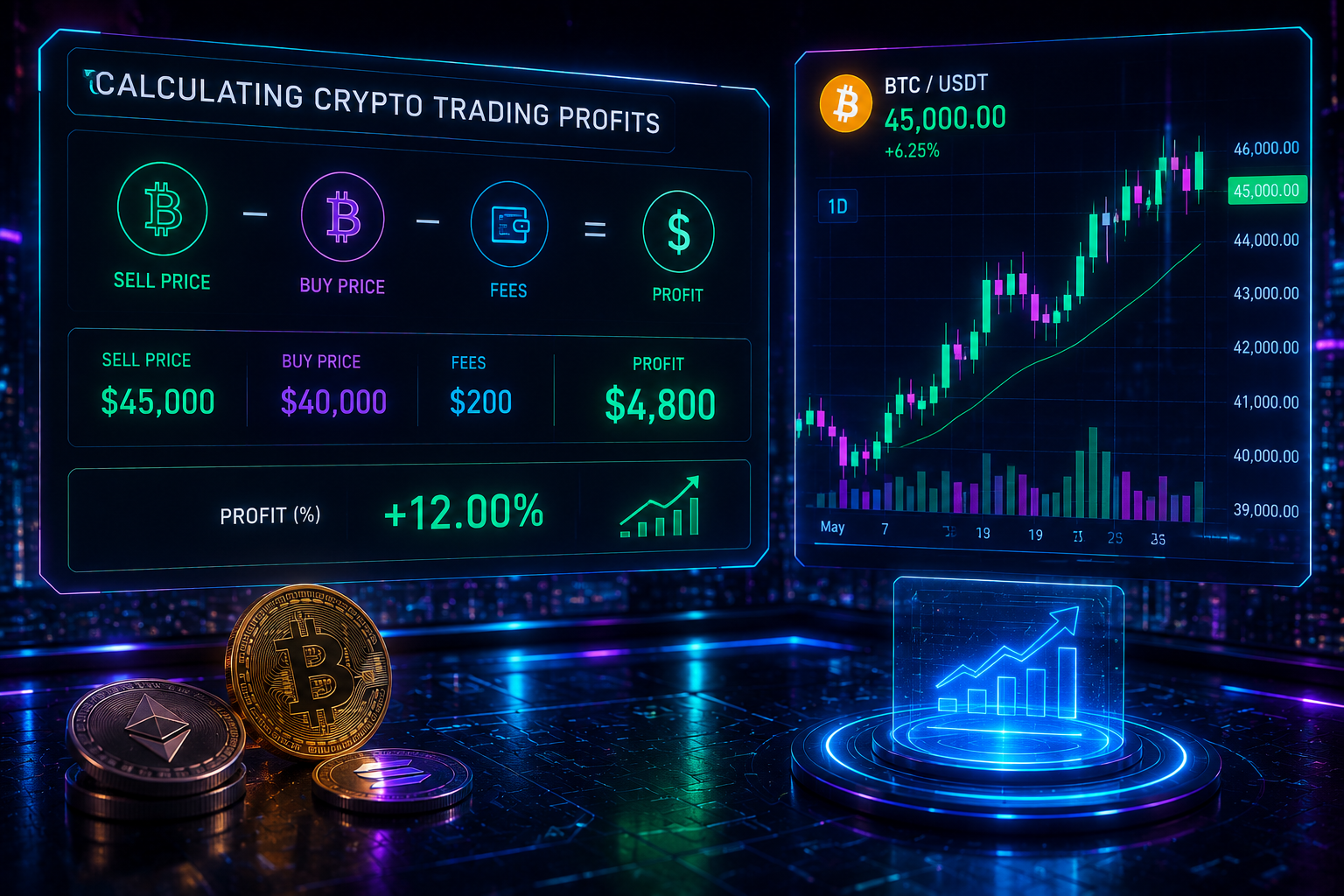
A trade that shows a 5% gain on paper might be a 2% gain in reality once you account for the taker fee on entry, the spread on execution, the taker fee on exit, and the withdrawal fee when you move profits off the exchange. Most traders track their positions obsessively and their fees almost never — which means their profit calculations are consistently overstated. Use a portfolio tracker like CoinStats or Delta that integrates fee data directly, and reconcile your actual returns against your theoretical returns at least once a month. The gap between those two numbers will tell you more about the quality of your trading operation than any single win or loss ever could.
5. Set a Monthly Time and Money Budget Before You Place a Single Trade
Decide in advance how many hours per week you will dedicate to trading, and how much new capital — if any — you will add each month. Write it down. Treat it like a business operating budget, because that’s exactly what it is. When the month ends, review whether you stayed within both budgets and what your actual returns were after fees. This single habit separates traders who improve over time from traders who repeat the same expensive mistakes on an endless loop.
The money budget and the time budget are equally important. Overrunning your time budget is a signal that your strategy is too complex for your actual schedule and needs to be simplified. Overrunning your money budget is a signal that emotions are driving decisions rather than your plan. Both are fixable — but only if you’re tracking them in the first place.
The Verdict: Are Crypto Trading Costs Worth It in 2026
“Crypto trading in 2026 is not a get-rich-quick mechanism. It’s a skill-based activity with real financial upside for those who approach it with the right capital base, the right strategy, and a clear-eyed understanding of what they’re actually paying to participate.”
CoinPosters · Crypto Trading Reality Check 2026
The hidden crypto trading costs are real. The time costs are real. The emotional demands are real. But so is the opportunity, for traders who respect all three — and who go in with a clear understanding of their total crypto trading costs. For a deeper understanding of trading strategies, consider exploring technical analysis vs. on-chain analysis.
The most honest summary: if you have $500 or more in discretionary capital, 5+ hours per week of genuine availability, and the discipline to follow a defined strategy without chasing losses — crypto trading is worth exploring seriously in 2026. If any of those three conditions aren’t met, long-term holding in Bitcoin and Ethereum with an AI-assisted research tool is a more reliable path to building wealth in this asset class without burning out your time or your budget in the process.
Frequently Asked Questions
Below are the most common questions from traders evaluating whether crypto is the right move for their time and money in 2026.
How much money should a complete beginner start with in crypto trading?
A complete beginner should start with between $250 and $500 — enough to experience real market dynamics and practise actual strategies without the fee-to-capital ratio making profitability mathematically impossible. Starting with $10–$50 is technically possible on platforms like Binance and Coinbase, but at that level, fees consume such a large percentage of your capital that the experience teaches frustration more than it teaches trading. For those interested in learning more about effective strategies, check out these beginner crypto investment strategies. Treat your first deposit as tuition: sized large enough to be meaningful, small enough that losing it entirely won’t damage your financial situation.
How many hours a week does crypto trading take?
It depends entirely on your strategy. Day trading demands 6–10 hours of active screen time per day — making it a legitimate full-time job. Swing trading runs 5–15 hours per week for a disciplined practitioner. Long-term holding, the most time-efficient strategy available, requires as little as 2–5 hours per month once your initial research and position setup is complete.
The critical mistake most beginners make is choosing a strategy based on its earning potential rather than its time requirements. Day trading promises the most activity but delivers the worst outcomes for traders who can’t dedicate the hours consistently. Match your strategy to your calendar first, and your capital second.
What are the biggest hidden crypto trading costs?
The biggest hidden crypto trading costs are spread markups on beginner-facing “simple” interfaces (often 1.5%–2.5%), payment processing fees on credit card deposits (typically 1.5%–4%), withdrawal fees that are set by the platform rather than the blockchain ($5–$35 for Bitcoin withdrawals depending on the exchange), and the invisible cost of trading illiquid altcoins where the spread alone can represent 3–5% of the trade value. Together, these can push your real cost of trading to 10–50x the advertised maker/taker fee — a gap that wipes out profits on otherwise well-executed trades.
Is crypto trading profitable for the average retail trader in 2026?
For the average retail trader engaging in short-term active trading, the honest answer is: not consistently. The combination of fee drag, emotional decision-making, and competing against algorithmic and institutional participants means the majority of active retail traders underperform a simple long-term holding strategy over any meaningful timeframe. Profitability is achievable — but it requires a defined edge, disciplined execution, and a fee-aware approach to crypto trading costs that most beginners don’t start with. Long-term holders in Bitcoin and Ethereum across multi-year cycles have historically achieved significantly better outcomes than active short-term traders at the retail level.
What is the least time-intensive way to make money in crypto?
Long-term holding of established assets — primarily Bitcoin and Ethereum — is the least time-intensive strategy with a historically validated track record. Buying on a regular dollar-cost averaging schedule, reviewing your portfolio quarterly, and holding through market cycles has outperformed the majority of active trading strategies over any 4-year rolling window in crypto’s history.
To reduce research time further without sacrificing decision quality, AI-powered platforms like Token Metrics provide token grades, price models, and market sentiment analysis that compress hours of manual research into a format reviewable in under 30 minutes. This means you can maintain an informed, active position on your portfolio without the daily time drain that active trading demands.
Disclaimer
This article is for informational and educational purposes only and does not constitute financial or investment advice. Do Your Own Research (DYOR) before making any cryptocurrency trading or investment decision. All crypto trading carries substantial risk of loss. Fee data and exchange comparisons reflect approximate figures available at time of writing and may change. CoinPosters is not responsible for any financial losses arising from actions taken based on the information provided in this article. Always consult a qualified financial advisor before investing.
CoinPosters
Your guide to navigating crypto in 2026 and beyond.




Latest
Markets
08 Jul 2026
Markets
04 Jul 2026