Coinposters
Hodl vs Trade in 2026: What is The Best Crypto Investment Strategy For Building Wealth
Strategy Guide · 2026
HODLing vs
Active Trading:
Which Crypto Strategy
Wins in 2026?
The single most important crypto decision you’ll make in 2026 isn’t which coin to buy — it’s whether to hold it or trade it.
Article at a Glance
- →HODLing has historically outperformed active trading for most retail investors across every major Bitcoin cycle since 2013.
- →Active trading requires technical expertise, daily time commitment, and emotional discipline that most investors significantly underestimate before starting.
- →The 2024 Bitcoin halving has set the stage for a specific volatility pattern in 2026 that changes the math for both strategies — more on that below.
- →A hybrid Core-Satellite approach lets you benefit from long-term compounding while still capitalizing on short-term market moves.
- →Transaction fees, tax events, and the bid-ask spread silently drain active trading profits in ways that rarely show up in beginner strategy guides.
Both HODLing vs active trading have produced life-changing wealth for investors who understood what they were actually signing up for. The problem is that most people pick a strategy based on what sounds exciting rather than what fits their skills, schedule, and risk tolerance. That mismatch is one of the most common reasons crypto investors underperform the market they’re participating in. For a solid grounding in what HODL means and where it came from, Binance Academy’s glossary is a reliable starting point. For those exploring active trading platforms, Crypto.com offers a broad range of tools for both holders and active traders.
This comparison breaks down both strategies with specifics — not generalities — so you can make a decision backed by data and real market context heading into 2026.
What HODLing Actually Means (And What Most People Get Wrong)
Most people think HODLing just means buying crypto and forgetting about it. That’s not quite right. Done properly, HODLing vs active trading isn’t a passive vs. active choice — it’s an active research process with a passive execution phase. And those two things are very different.
The Origin of HODL and Why It Became a Strategy, Not a Meme
The term originated in December 2013 when a Bitcoin Talk forum user named GameKyuubi posted a typo-filled rant titled “I AM HODLING” during a sharp Bitcoin price crash. He wasn’t advocating a strategy — he was admitting he lacked the trading skills to time the market and was choosing to hold instead. That honesty accidentally became one of the most sound investment principles in crypto history. “Time in the market beats timing the market” — a principle long associated with index fund pioneer John Bogle — maps directly onto what HODLing has proven to deliver across multiple Bitcoin cycles.
Which Assets Are Worth HODLing in 2026
Not every cryptocurrency is worth holding long-term, and choosing the wrong asset to HODL is where many investors go wrong. The assets with the strongest case for long-term holding in 2026 share a few key characteristics:
Best Assets for HODLing in 2026
- ◆Bitcoin (BTC) — Fixed, verifiable supply cap of 21 million coins and the deepest institutional adoption, including spot Bitcoin ETFs trading in the US and Hong Kong.
- ◆Ethereum (ETH) — Dominant smart contract platform with a deflationary supply mechanism post-Merge and growing real-world asset tokenization use cases.
- ◆Solana (SOL) — High throughput, low fees, and strong developer ecosystem growth — though higher volatility than BTC or ETH makes position sizing critical.
- ◆Chainlink (LINK) — The leading decentralized oracle network with deep integration across DeFi and traditional finance infrastructure.
Meme coins, low-cap altcoins with no clear utility, and tokens tied to single-use applications are generally poor candidates for long-term holding. The volatility in those assets favors traders, not holders.
The Real Time Commitment: 20–40 Hours Upfront, Then 2–5 Hours a Month
The upfront research phase of HODLing is where the real work happens. Before committing capital, serious HODLers spend 20 to 40 hours researching tokenomics, team credibility, on-chain metrics, macro cycle positioning, and competitive landscape. Once positions are established, ongoing management drops to roughly 2 to 5 hours per month — portfolio rebalancing, monitoring on-chain signals, and staying current on regulatory developments. This makes HODLing genuinely compatible with a full-time career in a way that active trading simply is not.
Active Trading: What It Really Takes to Win
Active trading is not a side hustle. It is a skill-intensive, time-demanding discipline that most retail participants enter underprepared — and the data on profitability reflects that reality sharply.
The appeal is obvious. Crypto markets run 24/7, volatility is high, and the potential for rapid gains feels accessible in a way that traditional markets don’t. But accessibility is not the same as profitability. The same volatility that creates opportunity also creates the conditions for rapid, significant losses — especially for traders without a structured edge.
Day Trading vs. Swing Trading vs. Position Trading
These three active trading styles sit on a spectrum of time commitment and technical intensity. Day trading involves opening and closing positions within a single 24-hour window, often multiple trades per day, requiring near-constant screen time and real-time technical analysis. Swing trading holds positions for days to weeks, targeting price swings driven by technical patterns and short-term momentum — less intense than day trading but still demanding several hours of analysis daily. Position trading holds for weeks to months and leans heavily on macro fundamentals and Bitcoin cycle context — it sits closest to HODLing on the spectrum but still requires active management and defined exit strategies.
Active Trading Styles Compared
| Style | Hold Period | Daily Time | Primary Focus |
|---|---|---|---|
| Day Trading | <24 hours | 6–10 hours | Real-time technical analysis |
| Swing Trading | Days to weeks | 2–3 hours | Technical patterns, momentum |
| Position Trading | Weeks to months | 1–2 hours | Macro fundamentals, cycle context |
| HODLing | Months to years | 2–5 hrs/month | Research, rebalancing, on-chain signals |
The Skills Gap Most New Traders Underestimate
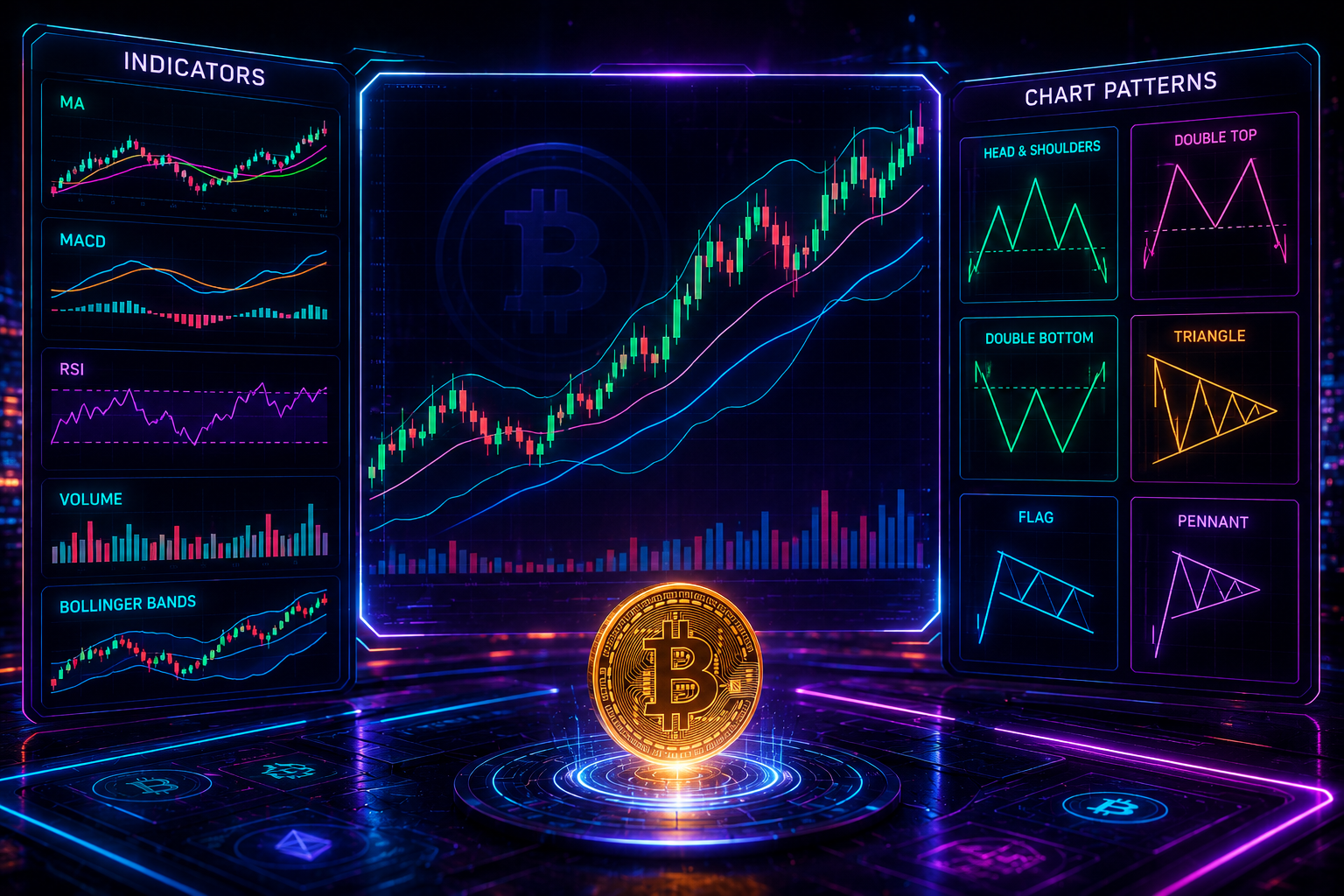
Profitable active trading requires fluency in technical analysis — support and resistance levels, moving averages, RSI, MACD, volume profile, and order flow reading at minimum. Beyond the technical layer, risk management is non-negotiable: position sizing, stop-loss placement, and maximum daily drawdown limits are what separate traders who survive from those who blow up their accounts in a single bad week. Most new traders spend months learning chart patterns while completely ignoring risk management — and that sequencing is backwards.
The psychological demands compound everything. Making fast decisions under financial pressure, cutting losing trades before they compound, and avoiding revenge trading after a loss are skills built through experience, not reading. Research consistently shows that emotional discipline is the single largest differentiator between consistently profitable traders and the rest of the market.
How Transaction Fees and Tax Events Eat Into Trading Profits
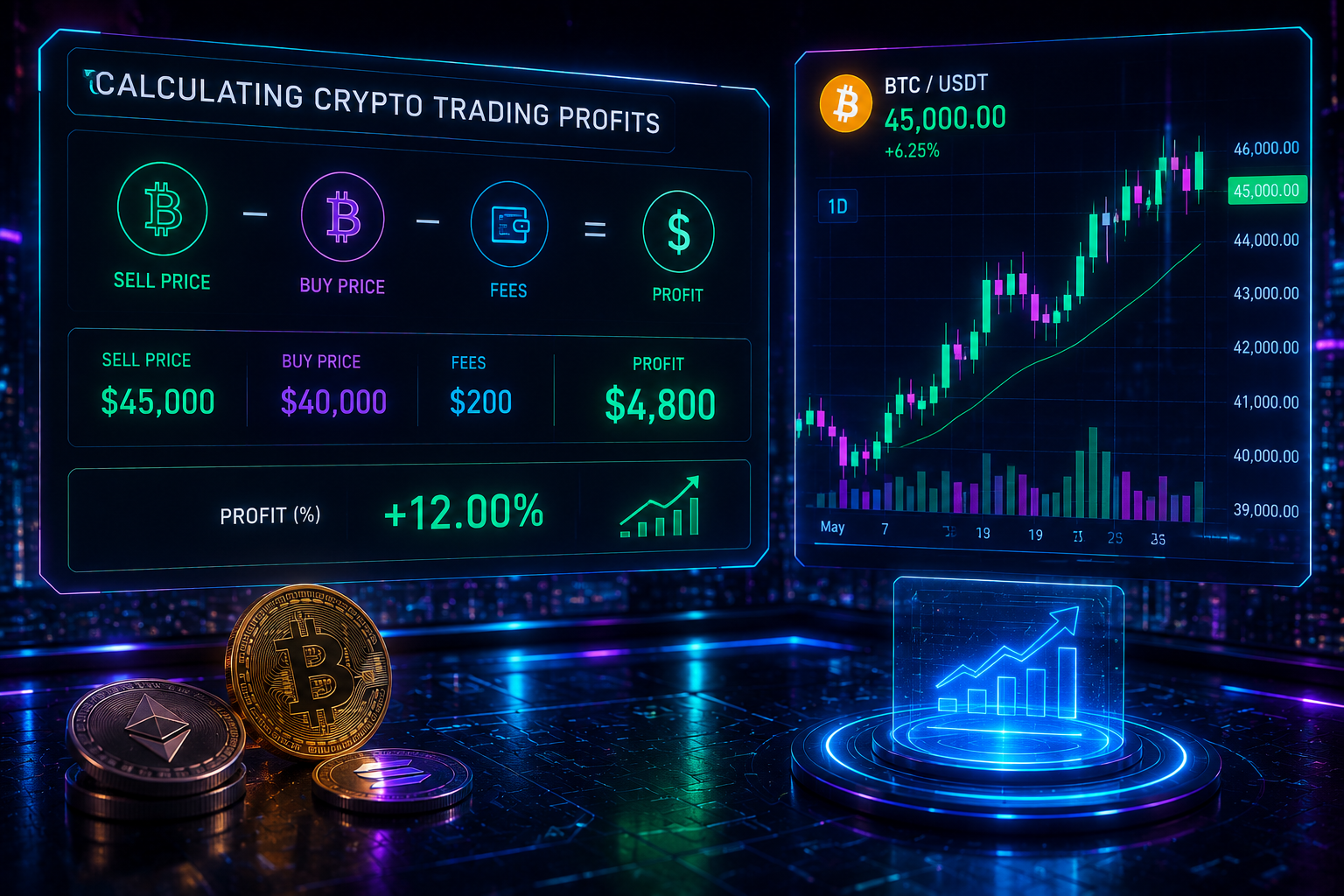
This is the most overlooked cost center in active trading. Every trade on a centralized exchange carries a maker or taker fee — typically ranging from 0.02% to 0.10% per side on major platforms. On a $10,000 position with a 0.10% taker fee, that’s $10 per trade, or $20 round-trip. Execute 5 trades per day and you’re paying $100 daily in fees before accounting for slippage on larger positions.
The tax impact is equally significant. In most jurisdictions, including the United States, every crypto trade is a taxable event. Short-term capital gains — assets held under one year — are taxed at ordinary income rates, which can reach 37% federally for high earners. A HODLer who holds Bitcoin for over a year benefits from long-term capital gains rates of 0% to 20% depending on income bracket. This tax differential alone can represent a meaningful performance gap between an active trader and a long-term holder with identical gross returns.
The Hidden Cost of Active Trading — Fee Math
$20
Round-trip fee on a
$10,000 position at 0.10%
$100
Daily fee cost at
5 trades per day
37%
Max US federal rate
on short-term gains
0–20%
Long-term capital gains
rate for HODLers
HODLing vs. Trading: A Direct Performance Comparison
When you strip away the narrative and look at actual return data across Bitcoin’s major market cycles, the comparison between HODLing vs active trading tells a clear story — one that most trading content conveniently skips over.
Bitcoin Long-Term Returns vs. Average Active Trader Returns
Bitcoin’s long-term return profile is extraordinary by any asset class standard. An investor who bought Bitcoin at $1,000 in early 2017 and held through to 2024 — weathering an 84% drawdown in 2018, a 50% crash in 2020, and a 77% decline in 2022 — still ended up with returns that dwarfed virtually every other asset available to retail investors during that same period. The key variable wasn’t timing. It was staying in. For those interested in comparing different investment strategies, exploring options vs. crypto trading could provide valuable insights.
Active traders, by contrast, face a steep statistical headwind. Research across traditional financial markets consistently shows that the majority of retail day traders lose money over any 12-month period, and crypto markets — with their 24/7 operation, thinner liquidity in altcoins, and higher manipulation risk — present an even more challenging environment. The traders who do profit consistently are typically operating with sophisticated tooling, significant capital, and years of refined edge-building behind them.
The honest performance comparison between a disciplined HODLer and the average active trader across a full Bitcoin cycle — from halving to peak to bear market and back — almost always favors the HODLer on a net, after-tax, after-fee basis. That doesn’t mean trading can’t be profitable. It means the bar to beat a simple buy-and-hold strategy is significantly higher than most people expect when they start.
HODLing vs Active Trading — Full Strategy Comparison
| Strategy | Time / Year | Tax Treatment (US) | Fee Impact | Historical Win Rate |
|---|---|---|---|---|
| HODLing (BTC/ETH) | 2–5 hrs/month | Long-term gains (0–20%) | Minimal (1–2 trades/yr) | Positive every 4-yr cycle |
| Swing Trading | 2–3 hrs/day | Short-term income (up to 37%) | Moderate ($20–$100/wk) | Minority profitable |
| Day Trading | 6–10 hrs/day | Short-term income (up to 37%) | High ($100–$500+/wk) | Majority unprofitable |
| Position Trading | 5–10 hrs/month | Mixed (short + long-term) | Low to moderate | Better than day trading; cycle-dependent |
The Emotional Cost of Active Trading in a Volatile Market
Crypto’s volatility doesn’t just create financial risk — it creates psychological risk that compounds over time. A 20% portfolio drop in a single day is a routine event in crypto markets. For an active trader with leveraged positions, that same move can mean account liquidation. The chronic stress of managing open positions, watching price feeds in real time, and making fast decisions under financial pressure has measurable psychological costs.
“Early success builds overconfidence, which leads to larger position sizes, which eventually produces a catastrophic loss that wipes out months of gains.”
Emotional discipline isn’t a soft skill in trading — it’s the primary edge separating profitable traders from the rest.
Which Strategy Fits Your Life in 2026
The right strategy isn’t the one with the highest theoretical ceiling — it’s the one you can execute consistently given your actual life circumstances, capital base, and psychological makeup. Both HODLing and active trading can generate significant wealth. Both can also destroy capital when applied by the wrong person in the wrong context. Understanding crypto psychology is crucial to choosing the right approach.
You Should HODL If…
HODLing is the right primary strategy if you have a full-time career that limits your screen time, a medium-to-high risk tolerance for drawdowns but a low tolerance for daily stress, and a time horizon of three or more years. It’s also the better fit if you’re newer to crypto and still building your understanding of how markets work — the research skills you develop as a HODLer form the foundation of every other strategy. You don’t need to be passive; you need to be patient and thorough upfront.
You Should Trade If…
Active trading makes sense if you can genuinely dedicate the time it requires — not the time you wish you had, but the time you actually have available. Swing trading at a competitive level requires two to three hours of analysis daily minimum. Day trading is effectively a second full-time job. Beyond time, you need either a proven technical edge already developed through practice, or a disciplined plan to build one before deploying significant capital. For more insights, you might want to explore the differences between Forex trading and crypto trading for maximum ROI in 2026.
A few honest self-assessment questions worth sitting with before deciding:
Are You Ready to Trade? — Honest Self-Assessment
- □Can you take a 30% loss on a trade, close the position, and not immediately try to recover it with a larger trade?
- □Do you have $500 to $1,000 in paper trading experience before risking real capital?
- □Is your trading capital fully separate from money you need for living expenses within the next 12 months?
- □Have you back-tested your strategy across at least one bear market cycle in crypto?
- □Do you have a written risk management plan with defined stop-loss levels before entering any position?
If you answered no to two or more of these questions, starting with a HODLing strategy while building trading skills in parallel is almost certainly the more financially sound path.
Risk Tolerance, Time, and Capital: The Three Deciding Factors
Every investor brings a different combination of these three variables to the table, and your honest assessment of each should be driving your strategy decision more than any market prediction or social media trend.
Risk tolerance isn’t just about how much you can afford to lose — it’s about how a significant loss will affect your decision-making. If a 40% portfolio drawdown would cause you to panic-sell or abandon your strategy entirely, active trading will almost certainly hurt you. Time availability is binary in a practical sense: either you have 2+ hours daily for serious market engagement or you don’t. There’s no half-measure version of swing trading that works reliably. Capital size matters because fees and tax drag are proportionally more damaging at smaller account sizes — a $5,000 account paying $100/week in trading fees is losing 2% of its capital weekly before a single trade goes wrong.
Strategy by Capital Size
Under $10K
HODLing Recommended
Fee drag at small account sizes makes HODLing almost always more capital-efficient.
$10K–$50K
Hybrid Approach Viable
Core HODL positions with a small active satellite allocation becomes workable.
$50K+
Trading More Viable
Active trading becomes more economically viable, though the skill requirement doesn’t change with account size.
Capital size is often mistaken as the most important variable when it’s actually third. Emotional discipline and time availability will determine your outcomes long before account size becomes the limiting factor.
The Hybrid Approach: Core-Satellite Portfolio Strategy
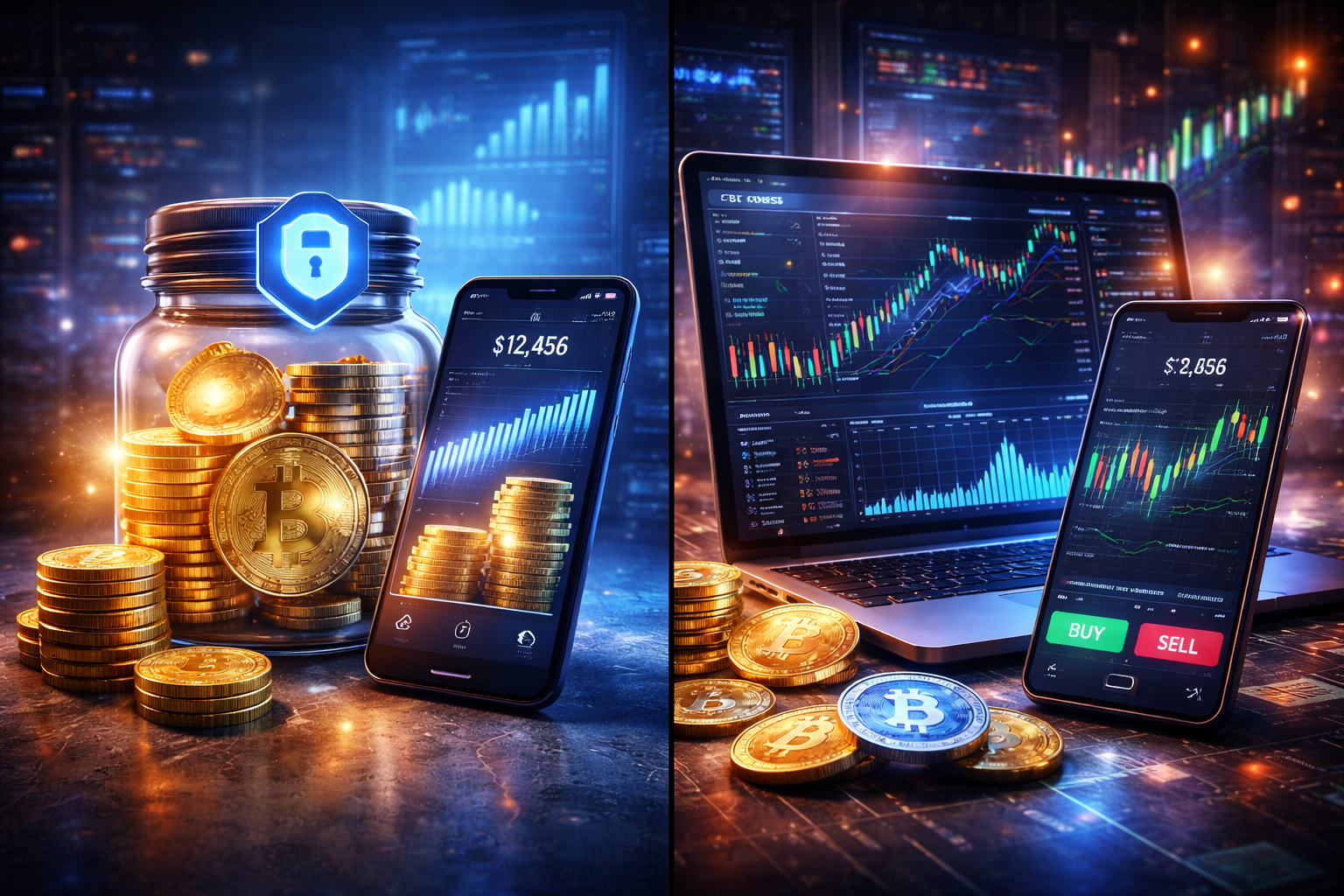
For investors who want exposure to both long-term compounding and short-term opportunity, the Core-Satellite model offers a structured framework that keeps risk compartmentalized while leaving room for active participation in market moves.
How to Split Your Portfolio Between Long-Term Holdings and Active Trades
The Core-Satellite model divides your total crypto portfolio into two distinct buckets with different rules, time horizons, and risk parameters. The core — typically 70% to 80% of total crypto capital — is allocated to high-conviction long-term holdings like Bitcoin and Ethereum, managed with a HODLing approach. The satellite — the remaining 20% to 30% — is the active allocation used for swing trades, momentum plays, or higher-risk altcoin positions. For those interested in maximizing returns, it’s essential to understand the differences between forex trading and crypto trading.
The critical rule is that losses in the satellite bucket never trigger reallocation from the core. These are structurally separate pools of capital with different mandates, and keeping that separation intact is what makes the model work over time.
Core-Satellite Portfolio Model
Using Dollar-Cost Averaging Alongside Active Positions
Dollar-cost averaging (DCA) is the practice of investing a fixed amount into an asset at regular intervals regardless of price — weekly or monthly Bitcoin purchases being the most common example. When layered into a Core-Satellite structure, DCA handles the core allocation automatically, removing timing decisions and emotional buying pressure from the equation entirely. This frees up cognitive bandwidth and active attention for the satellite positions where timing actually matters.
The practical implementation is straightforward: set a recurring Bitcoin and Ethereum purchase on a platform that supports automatic buys, define the fixed amount and interval you can sustain through a bear market, and treat that as non-negotiable. Then operate your active satellite trades completely independently of that schedule. Most major platforms support automated recurring purchases alongside active spot and futures trading from the same account, which makes this structure operationally simple to maintain.
2026 Market Conditions That Change the Equation
The macro and on-chain context of 2026 is meaningfully different from previous years — not because crypto has fundamentally changed, but because the market structure around it has. Three specific developments are reshaping the risk-reward calculus for both HODLers and active traders in ways that deserve direct attention rather than generic market commentary.
How Institutional Adoption Affects HODLing vs. Trading Outcomes
The approval of spot Bitcoin ETFs in the United States in January 2024 marked a structural shift in how institutional capital flows into crypto — and that shift has direct implications for both strategies in 2026. BlackRock’s iShares Bitcoin Trust (IBIT) accumulated over $17 billion in assets within its first year, making it one of the fastest-growing ETF launches in history. That level of institutional buying creates sustained demand pressure that fundamentally changes the downside risk profile for long-term Bitcoin holders. HODLers in 2026 are holding an asset with a significantly deeper institutional bid underneath it than existed in any previous cycle.
For active traders, institutional participation cuts both ways. On one hand, deeper liquidity reduces the kind of extreme volatility spikes that create easy trading opportunities. On the other hand, institutional order flow introduces more sophisticated counterparties into the market — meaning the person on the other side of your trade in 2026 is increasingly likely to be an algorithmic system with better data and faster execution than any retail trader can match. This doesn’t make trading impossible, but it does raise the skill floor for consistent profitability in ways that weren’t as pronounced in the 2020 or 2021 cycles.
Regulatory Shifts in 2026 and Their Impact on Active Traders
The regulatory landscape for crypto in 2026 is meaningfully clearer than it was two years prior, but that clarity comes with compliance costs that active traders need to account for. In the United States, the passage of crypto market structure legislation has established clearer jurisdiction between the SEC and CFTC, reducing the legal ambiguity around which tokens are securities and which are commodities. For HODLers focused on Bitcoin and Ethereum, this primarily means greater confidence in the long-term legal standing of their holdings. For active traders, it means stricter KYC requirements on exchanges, more robust tax reporting infrastructure, and in some jurisdictions, mandatory reporting of gains above specific thresholds. To navigate these changes, understanding the best crypto trading platforms in the US is crucial.
The most significant regulatory impact for active traders in 2026 is the expanded implementation of crypto tax reporting requirements. In the US, the Infrastructure Investment and Jobs Act’s crypto broker reporting provisions are now in effect, meaning exchanges are issuing 1099-DA forms that report cost basis and proceeds directly to the IRS. Every taxable trade is now formally tracked and reported — which has always been the legal requirement, but the enforcement infrastructure is now operationally real. Active traders who haven’t built proper accounting systems using tools like Koinly, CoinTracker, or TaxBit are running a compliance risk that could significantly erode their net returns at tax time.
Volatility Patterns Post-Bitcoin Halving and What They Mean for Each Strategy
Bitcoin’s fourth halving occurred in April 2024, reducing the block reward from 6.25 BTC to 3.125 BTC. Historical post-halving patterns show that the most explosive price appreciation typically occurs 12 to 18 months after the halving event — which places the peak performance window squarely in late 2025 through mid-2026. For HODLers, this is the phase where patience gets rewarded most visibly, but it’s also where the temptation to sell early is strongest. For active traders, post-halving bull market conditions historically produce strong trending moves in both Bitcoin and high-beta altcoins — which favors swing trading strategies over mean-reversion approaches. The follow-on bear market, typically beginning 6 to 12 months after the cycle peak, reverses that dynamic sharply and punishes traders who don’t adapt their strategy to the changing regime.
“The worst outcome in crypto isn’t choosing the wrong strategy — it’s switching strategies mid-cycle based on fear, greed, or recency bias.”
CoinPosters · Strategy Guide 2026
Pick Your Strategy and Commit to It
The worst outcome in crypto isn’t choosing the wrong strategy — it’s switching strategies mid-cycle based on fear, greed, or recency bias. HODLers who panic-sell during drawdowns and active traders who abandon their edge after a losing streak both underperform the market they’re participating in. Choose the approach that genuinely matches your time availability, emotional makeup, and capital base — then execute it with discipline across a full market cycle before evaluating the results. For more insights, explore the crypto psychology guide to better understand the emotional aspects of investing.
Frequently Asked Questions
Whether you’re just getting started or reassessing your approach heading into a new market cycle, these are the questions that come up most often when investors are deciding between HODLing vs active trading in 2026.
Is HODLing still profitable in 2026?
Yes — particularly for Bitcoin and Ethereum, HODLing remains one of the most reliably profitable strategies available to retail investors who are willing to hold through full market cycles. Bitcoin has delivered positive returns over every rolling 4-year period in its history, including periods that contained 80%+ drawdowns. The 2024 halving and expanding institutional adoption via spot ETFs have strengthened the long-term demand case for Bitcoin in ways that make the HODLing thesis more structurally supported in 2026 than in previous cycles.
The key caveat is asset selection. HODLing a low-quality altcoin with no fundamental utility, weak tokenomics, or centralized token distribution is not the same strategy as HODLing Bitcoin. The profitability of HODLing scales directly with the quality of the asset — and the research you do before entering a position is the most important determinant of your long-term outcome. For those interested in maximizing returns, understanding the differences in crypto trading strategies can be crucial.
How much capital do you need to start active crypto trading?
There is no hard minimum, but there is a practical minimum below which active trading becomes economically irrational. With an account under $5,000, trading fees and tax events as a percentage of your capital make it extremely difficult to generate meaningful net returns through active trading. A $5,000 account paying $50 per week in fees is losing 1% of its capital weekly before a single trade goes wrong — that’s a 52% annual drag just from transaction costs at that account size.
A more realistic starting point for swing trading is $10,000 to $25,000 — enough that fees represent a manageable percentage of capital and position sizing can be done with meaningful risk management. More importantly, regardless of account size, you should never trade with capital you can’t afford to lose entirely. Trading capital should be completely separate from emergency funds, living expenses, and any money with a time horizon under two years.
What percentage of active crypto traders are consistently profitable?
Consistent profitability in active crypto trading is rare at the retail level. Research from traditional markets — which serve as a reasonable proxy given the skill set overlap — shows that the majority of retail day traders lose money over any 12-month measurement period, with some studies suggesting fewer than 10% of day traders are consistently profitable over multiple years. Crypto markets are widely considered more difficult than traditional equity markets for retail traders due to 24/7 operation, lower overall liquidity in altcoin markets, higher manipulation risk in smaller-cap tokens, and the presence of sophisticated algorithmic trading systems. For those considering different trading avenues, exploring Forex trading vs crypto trading might provide additional insights into market dynamics.
This data point isn’t meant to discourage trading — it’s meant to calibrate expectations honestly. The traders who do achieve consistent profitability almost universally share three traits: a clearly defined and back-tested strategy, strict risk management with defined maximum loss limits per trade and per day, and years of experience refining their edge through real market participation. If you’re in the early stages of building those capabilities, starting with a predominantly HODLing approach while paper trading your active strategy is the most financially prudent path to developing trading skills without destroying capital in the process.
Can you HODL and trade at the same time?
Absolutely — and the Core-Satellite model described earlier in this article is specifically designed for that combination. The critical discipline is maintaining a hard structural separation between your long-term holdings and your active trading capital. Your HODL positions should have no stop-losses, no short-term price targets, and no connection to your trading activity. Your trading positions should be sized from a completely separate capital pool with defined risk parameters. When investors allow their HODL positions to become trading positions — or use their long-term holdings as collateral for leveraged trades — the risk management logic of both strategies breaks down simultaneously.
Which cryptocurrencies are best suited for long-term HODLing in 2026?
Bitcoin remains the strongest single asset for long-term holding based on its fixed supply, established security model, deepest liquidity, and growing institutional ownership through spot ETFs. No other crypto asset has Bitcoin’s combination of network effect, regulatory clarity, and verifiable scarcity. For investors seeking additional exposure beyond Bitcoin, Ethereum is the second-strongest candidate given its dominant position in smart contract infrastructure, deflationary supply mechanics post-Merge, and real-world asset tokenization growth driving genuine on-chain demand.
Beyond BTC and ETH, the HODLing case becomes more selective and more research-intensive. Solana has demonstrated genuine product-market fit in high-throughput applications and consumer-facing crypto products, though its history of network outages introduces infrastructure risk that Bitcoin and Ethereum don’t carry. Chainlink’s oracle infrastructure is embedded across hundreds of DeFi protocols and is increasingly integrated with traditional financial institutions — creating a durable utility case for long-term holding. Any asset outside these four requires a significantly higher research burden and a clear-eyed view of the specific risks involved.
One framework worth applying to any long-term holding candidate: ask whether the asset would still exist and still be used if its price dropped 80% tomorrow. Assets where the answer is clearly yes — because genuine users depend on the network for real activity — are the ones with the strongest fundamental case for long-term holding. Assets where the answer is uncertain or no are trading assets, not HODLing assets, regardless of how compelling the short-term price thesis might appear.
Disclaimer
This article is for informational purposes only and does not constitute financial, investment, or tax advice. Do Your Own Research (DYOR) before adopting any crypto investment or trading strategy. Past performance of Bitcoin or any other asset is not indicative of future results. Trading and investing in cryptocurrency involves substantial risk of loss. Always consult a qualified financial advisor before making investment decisions. CoinPosters is not responsible for any financial losses incurred based on the information provided in this article.
CoinPosters
Your guide to navigating crypto in 2026 and beyond.


Latest
Markets
08 Jul 2026
Markets
04 Jul 2026